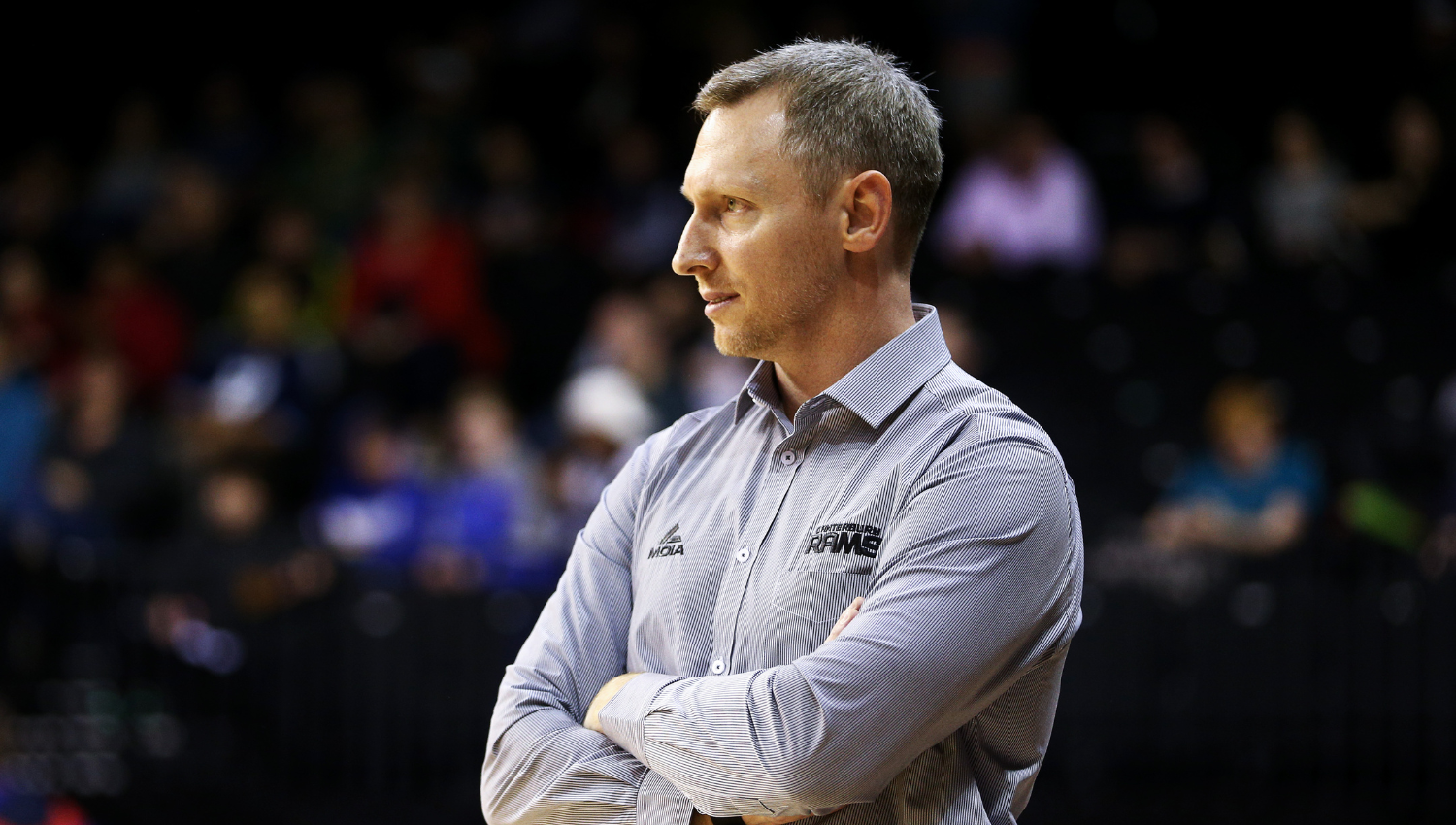
Emmanuel Malou
August 21, 2026



BIO: Born in Wichita, Kansas (USA) in 1975, Calvin Thomas “C.J.” Bruton, Jr. moved to Australia at the age of three when his father Calvin Bruton, Sr. moved to Australia to play for the Brisbane Bullets in 1979. CJ grew up primarily in Perth and played his junior basketball at the Perry Lakes Stadium while his father was playing for the Wildcats.
FAMILY: CJ Bruton is the son of Cal Bruton who played 250 games in the NBL. He and his wife, Jessica, have three sons: Rio, Roc and Diggy.
CJ Bruton made his NBL debut with the Perth Wildcats at 18 years of age. He scored six points in his first game.
1994 saw Perth return with almost its entire roster after falling short against Melbourne in the previous year’s Grand Final, with only Steve Davis retiring. In a effort to build towards the future, up and coming talent in the form of AIS graduate Aaron Trahair and Bruton (4.9 points, 1.5 rebounds, and 1.5 assists), son of Wildcats’ legend Cal, were added to the roster.
Perth started the season by winning their first three games, with Bruton adding useful minutes behind Ricky Grace. In a 105-87 road win over Canberra on April 9, Bruton finished with 4 assists as Perth continued its unbeaten start and sat atop the NBL ladder with a record of 7-2 after the first five rounds.
Around the halfway mark of the season, Perth suffered losses to Brisbane (127–126), Hobart (93–92) and South East Melbourne (112–94), which saw them drop down to the middle of the ladder with a record of 10-5. On May 28, South East Melbourne again exposed Perth’s inconsistency, winning 113-106 at the Perth Entertainment Centre, with Bruton adding 2 points and 1 rebound in limited minutes.
Perth showed signs of brilliance, as they did in their beat down of Melbourne in Round 18 (131–108), but they also lost to multiple team’s that weren’t even in the playoff picture. On June 11, the Wildcats bounced back with a 101-75 win over Canberra, with Bruton knocking down a three-pointer and adding a steal, while the season’s struggles continued when Newcastle later blew Perth out 111-80, despite Bruton contributing 3 assists.
Scott Fisher (20.5 points, 9.5 rebounds, 3.2 assists, and 1.4 steals) led the team in scoring for the second year in a row, with the Wildcats’ other key players Ricky Grace (18.7 points, 3.9 rebounds, 6.2 assists, and 1.5 steals), James Crawford (18.1 points, 8.7 rebounds, 1.6 assists, and 1.3 blocks) and Andrew Vlahov (17.5 points, 9.8 rebounds, 4.7 assists, and 2.1 steals) putting up great numbers all season but Perth was unable to recapture the success of the previous season.
Perth finished the season with a record equal to Sydney (16-10) but was given the higher playoff seed (sixth) thanks to a 2-0 head to head record against the Kings. In the quarterfinals, Perth would face South East Melbourne, who outclassed them in game one, winning by 31 points (113-82). With the series then returning to Melbourne, the Magic defeated them by 14 points (100-86) to end the Wildcats season prematurely.
Rookies Trahair (5.4 points, 3.4 rebounds, and 2.0 assists) and Bruton showed enough to get fans excited about the future. Playing as a backup to Perth Wildcats legend Grace, Bruton decided college was a better place to develop his game and chose to play college basketball in the United States the following season.
BRISBANE BULLETS
1998
Brisbane entered 1998 after four consecutive first-round playoff exits, prompting the Bullets to release head coach David Ingham and bring Brian Kerle back to the club after he had previously coached Brisbane to championships in 1985 and 1987. Mike McKay (to Canberra), Dwayne McClain, Mark Dalton (to Wollongong), Robert Sibley, Leonard White, Toby Zaremba and Bruce Hamilton departed, while captain Leroy Loggins, Steve Woodberry, Rodger Smith, Ben Thompson, John Szigeti and Aaron Honeyman returned. Kerle rebuilt the frontcourt with import Chuck Kornegay and Mark Nash, added CJ Bruton (via Indian Hills CC) and Ben Castle, while Ryan Stolberg returned to the club after being absent from the previous season’s roster.
Bruton returned to the NBL after two seasons at Indian Hills Community College, where he helped the Warriors win the 1997 NJCAA championship and was named the national tournament MVP before being selected by the Vancouver Grizzlies with the 52nd pick in the 1997 NBA Draft.
The high cost of playing home games at the Brisbane Entertainment Centre, combined with falling attendances, also resulted in the Bullets moving into the smaller 4,000-seat Brisbane Convention & Exhibition Centre from the beginning of the season.
Brisbane opened the season at its new home against defending champion Melbourne on January 30, where Bruton (14 points, 1 rebound, 6 assists, and 3 steals) made an immediate impact as the Bullets won 105-97. Woodberry (32 points, 8 rebounds, 4 assists, 2 steals, and 1 block) and Loggins (27 points, 7 rebounds, 7 assists, 1 steal, and 1 block) led Brisbane.
Bruton (15.4 points, 4 assists, and 1.8 steals across 34 games) appeared in every Brisbane game and immediately became a major part of Kerle’s backcourt, providing shooting, playmaking and defensive pressure throughout his first season with the Bullets.
Bruton’s best all-around performance came at the Sydney Entertainment Centre on February 21, when Bruton (24 points, 4 rebounds, 7 assists, and 7 steals) made six three-pointers as Brisbane defeated Sydney 109-100. Loggins (24 points, 2 rebounds, 5 assists, and 2 steals) and Woodberry (21 points, 6 rebounds, 3 assists, 1 steal, and 1 block) provided support.
One week later, Bruton (15 points, 1 rebound, 2 assists, and 2 steals) made four of five three-pointers as Brisbane defeated South East Melbourne 81-76 at the Brisbane Convention & Exhibition Centre, handing the eventual minor premiers one of only four regular-season losses. Woodberry (22 points, 7 rebounds, and 3 assists) and Loggins (15 points, 6 rebounds, and 3 assists) provided support, while Clinton McDaniel (21 points, 2 assists, and 2 steals) led the Magic.
Bruton reached his season-high against Sydney on April 3, finishing with 26 points, 3 rebounds, 2 assists, and 2 steals while making four three-pointers as Brisbane defeated the Kings 112-82. Loggins (27 points, 5 rebounds, 4 steals, and 1 block) and Woodberry (21 points, 12 rebounds, 9 assists, 1 steal, and 2 blocks) helped the Bullets record a 30-point victory.
He matched that scoring high in Canberra on May 30, where Bruton (26 points, 2 rebounds, 3 assists, and 1 steal) made 11-of-18 shots and four three-pointers. Woodberry (31 points, 9 rebounds, 2 assists, and 3 blocks) and Loggins (17 points, 4 rebounds, 4 assists, and 1 block) provided support, but the Cannons defeated Brisbane 114-102.
Woodberry (26.4 points, 7.7 rebounds, 4.3 assists, and 1.4 steals across 34 games) produced the highest-scoring season of his NBL career to that point, led Brisbane in scoring, topped the NBL in free-throw percentage at 92.2 percent and earned All-NBL First Team honours for the first time. Loggins (17.8 points, 4.7 rebounds, and 1.5 steals across 26 games) remained another major scoring option, while Kornegay (16.7 points, 11.7 rebounds, and 1.8 blocks across 32 games) gave Kerle a strong interior presence. Nash (9.8 points and 8.2 rebounds across 34 games) and Thompson (6.3 points across 13 games) provided further frontcourt depth.
Brisbane closed the regular season against Adelaide at the Brisbane Convention & Exhibition Centre on June 7, where Bruton (15 points, 3 rebounds, 5 assists, and 3 steals) helped the Bullets to a 101-89 victory. Woodberry (24 points, 13 rebounds, 10 assists, and 1 block) recorded a triple-double and Loggins (16 points, 3 rebounds, 3 assists, 2 steals, and 1 block) provided support, while John Rillie (19 points, 17 rebounds, and 3 assists) was one of Adelaide’s best. The victory left Brisbane fourth with a 16-14 record, tied with Melbourne but holding home-court advantage through the head-to-head tie-breaker.
The elimination finals opened in Brisbane, where Bruton (11 points, 4 rebounds, 6 assists, and 3 steals), Woodberry (24 points, 10 rebounds, 1 assist, and 1 block) and Loggins (14 points, 5 rebounds, 2 assists, 1 steal, and 2 blocks) helped the Bullets defeat defending champion Melbourne 93-80. Andrew Gaze (34 points, 6 rebounds, 5 assists, and 1 steal) led the Tigers as Brisbane moved within one victory of advancing beyond the opening round.
Game two moved to Melbourne Park, where Bruton (14 points, 4 rebounds, 3 assists, 1 steal, and 1 block), Loggins (27 points, 5 rebounds, 6 assists, 2 steals, and 1 block) and Kornegay (18 points, 5 rebounds, and 5 assists) led Brisbane to a 114-81 victory. Lanard Copeland (22 points, 5 rebounds, 3 assists, 1 steal, and 1 block) was Melbourne’s best as the Bullets completed the sweep and advanced beyond the first round for the first time since 1993.
Brisbane returned home for game one of the semifinals against South East Melbourne, where Bruton (17 points, 2 rebounds, 4 assists, and 1 steal), Woodberry (46 points, 12 rebounds, and 4 assists) and Kornegay (19 points, 14 rebounds, 3 assists, 1 steal, and 3 blocks) led the Bullets. Tony Ronaldson (26 points, 4 rebounds, and 4 assists), Mike Kelly (25 points, 4 rebounds, 1 assist, 1 steal, and 2 blocks) and McDaniel (19 points, 5 rebounds, 6 assists, and 2 steals) carried the Magic to a 106-98 victory.
Game two moved to Melbourne Park, where Bruton (15 points and 5 assists), Woodberry (28 points, 8 rebounds, 4 assists, and 2 steals) and Loggins (13 points, 6 rebounds, and 2 steals) kept Brisbane close. Sam Mackinnon (30 points and 10 rebounds) and Ronaldson (19 points and 5 rebounds) led South East Melbourne to a 90-84 victory, completing the semifinal sweep and ending Brisbane’s season one round short of the Grand Final.
WOLLONGONG HAWKS
1998/99
The published 1998/99 Wollongong Hawks team roster listed C.J. Bruton as a guard. The roster also named Cameron Dickinson, Jason Brettell, Matthew Oyston, Glen Saville, David Andersen, Eric Cooks, C.J. Bruton, Theron Wilson, Mat Campbell, Mark Dalton and Clayton Ritter.
Brendan Joyce was Wollongong’s head coach.
Wollongong finished the 1998/99 regular season with 16 wins and 10 losses and reached the semifinals. Brendan Joyce shared the NBL Coach of the Year award, C.J. Bruton won the Most Improved Player award and earned All-NBL Second Team honours, while Glen Saville ranked third in NBL steals with 2.1 per game. Bruton also won Wollongong’s team MVP award.
Elliot Hatcher and Matt Zauner were not retained after Wollongong’s 14-win playoff season, while Clayton Ritter, Mat Campbell, Glen Saville, Eric Cooks, Cameron Dickinson and Mark Dalton returned under head coach Brendan Joyce.
As the NBL moved to a summer schedule, the club shifted from Beaton Park to the Wollongong Entertainment Centre and replaced the Illawarra prefix with Wollongong.
Joyce added CJ Bruton (via Brisbane), import Theron Wilson and David Andersen (via AIS), with the new guard immediately installed as Wollongong’s starting point guard and given greater responsibility as the team’s primary offensive weapon.
Wollongong opened its new home on October 9 against Newcastle, where CJ (12 points, 6 rebounds, 3 assists, and 2 steals) played all 48 minutes in his Hawks debut, but the Falcons won 100-76.
Bruton (20.8 points, 4.3 rebounds, 3.5 assists, and 1.9 steals) appeared in all 30 games and was given the green light to attack, lifting his scoring by more than five points per game while averaging almost 46 minutes and earning the NBL’s Most Improved Player award and All-NBL Second Team honours.
Ritter (17.6 points and 6.3 rebounds) and Campbell (15.0 points and 3.6 rebounds), who finished third in voting for the NBL’s Best Defensive Player award, provided Wollongong’s other main scoring threats, while Saville (12.1 points, 8.5 rebounds, 4.7 assists, and 2.0 steals) led the team in rebounding, assists and steals.
Wilson (7.6 points and 4.9 rebounds), Andersen (6.2 points and 4.0 rebounds) and Cooks (4.2 points and 3.3 rebounds) added depth to the frontcourt, while Joyce shared the NBL Coach of the Year award with Melbourne’s Lindsay Gaze.
Wollongong collected its first win of the season in Townsville on October 17, with Bruton (37 points, 4 rebounds, 2 assists, and 2 steals), Campbell (21 points), Ritter (15 points, 6 rebounds, and 3 steals) and Saville (2 points, 16 rebounds, 6 assists, and 2 steals) leading the Hawks to a 99-86 victory, while Robert Rose (20 points, 5 rebounds, 4 assists, and 4 steals), David Pennisi (17 points) and Sam Mackinnon (11 points, 12 rebounds, 3 assists, and 2 steals) were best for Townsville.
One week later, Bruton (38 points, 6 rebounds, 2 assists, and 4 steals) made five three-pointers and played all 53 minutes as Wollongong defeated Perth 83-80 in overtime at the Wollongong Entertainment Centre.
On January 15, Bruton (26 points, 2 rebounds, 4 assists, and 3 steals), Saville (24 points, 9 rebounds, 5 assists, and 4 steals) and Campbell (23 points, 6 rebounds, and 5 assists) powered Wollongong to a 110-94 win over Newcastle, while Pat Reidy (26 points and 8 rebounds) led the Falcons.
Wollongong produced one of its most dominant performances against Sydney on February 21, with Bruton (24 points, 3 rebounds, 5 assists, and 1 steal), Campbell (20 points and 4 assists), Saville (17 points, 14 rebounds, and 4 assists) and Wilson (13 points and 10 rebounds) leading a 95-68 victory, while Acie Earl (24 points, 9 rebounds, 3 steals, and 5 blocks) was Sydney’s best.
His best game of the season came against his former club on February 27, when Bruton (43 points, 2 rebounds, 2 assists, and 2 steals) shot 17-of-24 from the field and made four three-pointers as Wollongong defeated Brisbane 100-92 at the Brisbane Convention & Exhibition Centre.
Wollongong closed the regular season with a 96-79 win over Canberra on March 12, with Bruton (22 points, 4 rebounds, 3 assists, and 1 steal), Campbell (18 points and 4 assists), Saville (16 points, 9 rebounds, 4 assists, and 5 steals) and Ritter (13 points) leading the Hawks, while Melvin Thomas (19 points and 7 rebounds) was best for the Cannons.
The victory left Wollongong third with a 16-10 record, finishing level with Victoria but claiming the higher position through the head-to-head tiebreaker.
Victoria opened the qualifying finals at Melbourne Park with a 96-65 win over Wollongong, with Ben Pepper (16 points) leading the Titans, while Bruton (11 points, 1 rebound, 1 assist, and 3 steals), Saville (10 points) and Andersen (7 points) were best for the Hawks.
Game two moved to the Wollongong Entertainment Centre, where Bruton (20 points, 5 rebounds, 6 assists, and 2 steals) led Wollongong, but Victoria won 91-82 to complete the sweep.
Despite losing the series, Wollongong advanced as the highest-placed losing team under the NBL’s lucky-loser rule, setting up a semifinal series against Adelaide.
Adelaide opened the semifinals in Wollongong with a 93-81 win, with Ritter (23 points, 12 rebounds, and 3 steals), Campbell (15 points and 4 assists), Bruton (13 points and 5 rebounds) and Saville (10 points, 6 rebounds, 7 assists, and 3 steals) leading the Hawks, while Brett Maher (25 points, 7 rebounds, and 3 assists), Kevin Brooks (22 points, 8 rebounds, and 4 assists) and Martin Cattalini (14 points and 5 rebounds) starred for Adelaide.
Game two moved to Adelaide Arena, where Campbell (20 points, 4 rebounds, and 4 assists), Cooks (9 points and 10 rebounds) and Saville (8 points, 8 rebounds, and 7 assists) kept Wollongong close, while David Stiff (22 points, 7 rebounds, and 6 blocks), Maher (19 points), Brooks (16 points and 7 rebounds) and Darnell Mee (9 points, 12 rebounds, 6 assists, 3 steals, and 3 blocks) led Adelaide.
With Adelaide trailing by three in the final seconds, Stiff collected Paul Sapwell’s missed three-pointer and returned the ball to Sapwell (11 points and 4 rebounds), who made his second attempt to force overtime before the 36ers won 99-98 and completed the sweep. Bruton (27 points, 7 rebounds, and 7 assists) played 48:41 minutes in the loss.
1999/00
After a disappointing playoff campaign that ended in four consecutive losses, Wollongong entered the 1999/00 season eager to re-establish themselves as a contender. Coach Brendan Joyce made significant changes to the roster, opting not to re-sign Clayton Ritter (to Canberra) and bringing back former Hawks MVP Melvin Thomas after a four-year absence. The return of Thomas, along with the continued development of rising star CJ Bruton, gave the team renewed optimism heading into the season.
Mat Campbell, Glen Saville, Eric Cooks and Mark Dalton also returned, with Campbell appointed captain for the first time, while Joyce added Mike McKay (via Canberra), former NBA lottery pick Todd Mundt (via Newcastle) and Darren Perry, who returned to the NBL after five years playing in the state league.
Wollongong opened the season in Townsville on October 9, where CJ (15 points, 5 rebounds, and 2 steals) helped keep the Hawks within reach, but the Crocodiles won 99-88.
The Hawks responded in their first home game against Sydney, with CJ (26 points, 4 rebounds, 4 assists, and 3 steals) leading a 99-77 victory at the WIN Entertainment Centre.
Bruton (22.1 points, 3.5 rebounds, 3.3 assists, and 2.2 steals) appeared in all 28 games and remained Wollongong’s primary offensive weapon, using his speed and outside shooting to carry an increased share of the scoring while running the offence.
Thomas (19.6 points, 8.6 rebounds, and 1.2 steals) provided the Hawks with another major scorer and rebounder, while Saville (14.0 points, 7.8 rebounds, 4.0 assists, and 1.9 steals) continued to produce across every area of the game.
Campbell (14.2 points) supplied further perimeter scoring in his first season as captain, with McKay (5.5 points) providing experience in the backcourt.
Bruton’s best game of the season came against West Sydney at the Whitlam Centre on November 20, where he made eight three-pointers and finished with 34 points, 10 assists, and 3 steals as Wollongong won 111-99.
Saville (22 points and 13 rebounds) and Campbell (20 points) provided the support, while Derek Rucker (34 points) and John Rillie (21 points) were best for the Razorbacks.
On December 10, Bruton (26 points, 4 rebounds, 6 assists, and 1 steal), Saville (25 points and 6 assists) and Thomas (21 points) kept Wollongong competitive against Adelaide, but Martin Cattalini (35 points) led the 36ers to a 111-103 win.
Bruton delivered another major scoring performance against Melbourne on January 7, making eight three-pointers and finishing with 32 points, 5 rebounds, 2 assists, 3 steals, and 1 block.
Gaze (36 points, 8 rebounds, and 9 assists) and Bennett Davison (29 points and 12 rebounds) led the Tigers to a 112-94 win despite Bruton’s outside shooting.
One week later, Bruton (34 points, 3 rebounds, 1 assist, and 2 steals) made five three-pointers against his former club, with Thomas (18 points, 7 rebounds, and 2 blocks) providing support for Wollongong.
Simon Kerle (22 points, 6 rebounds, and 4 assists) and Kelvin Price (16 points, 21 rebounds, and 3 blocks) led Brisbane to a 99-90 win as the Hawks again fell short against one of the league’s stronger teams.
Mundt (8.8 points and 4.9 rebounds) struggled to play extended minutes and failed to provide the frontcourt production Wollongong expected, leading the Hawks to release him with nine games remaining and sign Matt Garrison as his replacement.
Garrison (17.2 points, 7.0 rebounds, and 1.7 steals) immediately strengthened the interior across the final nine games and played well enough to earn another contract for the following season, but his arrival came too late to move Wollongong back into playoff contention.
The Hawks continued to rely heavily on Bruton’s scoring throughout the campaign, while Thomas and Saville were named Wollongong’s co-MVPs.
Wollongong completed the season at the WIN Entertainment Centre on March 11, defeating Canberra 86-78 to finish eighth with an 11-17 record and miss the playoffs.
Bruton (20 points and 2 steals) played 31:50 minutes in the win.
Simon Kerle thought he had sent it to OT. but CJ single handedly dismantled the D and hit the game winner!! @NBL @nblhistory pic.twitter.com/bavjukBB4s— RANDOM HOOPS (@HoopsRandom) March 18, 2023
CANBERRA CANNONS
2001/02
After a season playing in Europe, CJ Bruton signed a deal with Canberra, aiming to help his father and head coach Calvin turn the team around after a woeful season where the Cannons managed only three wins for the season.
Jayson Wells (to Cairns), Nate Green, Troy Pilon, Demetris Montgomery, Tonny Jensen, Andrew Clarke, Willie Simmons, Dave Simmons and Paul Vandenbergh departed, while Brad Williams and Geordie Cullen remained from the previous team.
Coach Bruton added George Banks (via Perth), Brendan Mann (via Brisbane), Dave Thomas, Mickey Dennis Jnr and rookies Cameron Rigby and Michael Hill to the rebuilt roster.
Canberra opened the season in Wollongong on October 12, where CJ (13 points, 4 rebounds, and 7 assists) played 43:54 minutes in a 108-97 loss to the Hawks.
Bruton (19.2 points, 4.5 rebounds, 3.9 assists, and 1.4 steals) appeared in 29 games and immediately took control of Canberra’s backcourt, leading the Cannons in assists while providing another major scoring option.
Banks (23.1 points, 8.4 rebounds, 2.3 steals, and 1.6 blocks) led Canberra in scoring, rebounding and blocks and was selected to the All-NBL Third Team, while Thomas (13.7 points, 9.9 rebounds, and 2.3 steals) provided rebounding and defence alongside the team’s two leading scorers.
Williams (10.5 points and 5.3 rebounds), Dennis (8.9 points), Cullen (7.6 points and 4.3 rebounds), Rigby (7.3 points and 3.7 rebounds) and Mann (6.1 points) added further depth to the rotation.
Charles Gosa joined the Cannons during the season and appeared in their final 15 games.
Gosa (19.1 points and 6.7 rebounds) provided another high-scoring option and became an important part of Canberra’s improved finish to the year.
The Cannons responded to their opening loss by defeating Brisbane 87-75 at the AIS Arena on October 13, with Bruton (21 points, 5 rebounds, 2 assists, and 2 steals), Cullen (21 points, 10 rebounds, and 3 steals), Dennis (16 points, 5 rebounds, and 3 assists), Rigby (15 points, 8 rebounds, 4 assists, 2 steals, and 1 block) and Thomas (10 points, 11 rebounds, 6 assists, 4 steals, and 3 blocks) combining to secure Canberra’s first win.
Randy Rutherford (19 points, 5 assists, and 3 steals), Simon Kerle (17 points, 6 rebounds, 3 assists, and 2 steals) and Wade Helliwell (17 points and 9 rebounds) led Brisbane.
Canberra then defeated Perth 81-80 on October 19, with Cullen (23 points, 15 rebounds, 2 steals, and 1 block), Bruton (18 points, 5 rebounds, and 2 assists), Dennis (16 points, 6 rebounds, and 2 steals) and Thomas (11 points, 7 rebounds, 3 assists, and 4 blocks) giving the Cannons consecutive wins and already two-thirds of their victory total from the previous season.
Ricky Grace (27 points, 5 rebounds, and 5 assists), Paul Rogers (13 points, 12 rebounds, and 4 blocks) and Ben Thompson (13 points and 5 rebounds) were best for Perth.
The early turnaround continued at the AIS Arena on October 26, where Bruton (33 points, 5 rebounds, 4 assists, and 1 block) shot 12-of-14 from the field and made six of seven three-pointers as Canberra defeated Sydney 108-98 and improved to 3-1.
Thomas (14 points, 12 rebounds, 3 assists, 3 steals, and 2 blocks), Williams (14 points, 4 rebounds, 2 assists, 2 steals, and 4 blocks) and Banks (14 points, 4 rebounds, 2 assists, and 2 steals) provided support, while Shane Heal (30 points and 4 assists), Frank Drmic (21 points, 10 rebounds, 4 assists, and 3 steals) and Matthew Nielsen (12 points, 12 rebounds, 5 assists, and 2 steals) led Sydney.
The Cannons were unable to sustain their strong start against the league’s leading teams, with their 128-99 loss to Adelaide on New Year’s Eve showing the distance that remained between Canberra and the eventual champions.
Bruton (15 points, 3 rebounds, and 3 assists) led the backcourt, but Adelaide broke the game open by scoring 48 points in the final quarter.
Bruton produced one of his strongest shooting performances on February 2, making eight three-pointers and finishing with 32 points, 6 rebounds, and 2 steals as Canberra pushed Adelaide before losing 95-91.
Gosa (14 points and 7 rebounds), Thomas (14 points, 9 rebounds, and 7 steals) and Banks (10 points, 10 rebounds, and 4 blocks) helped keep the Cannons within four points, while David Stiff (16 points, 3 rebounds, 2 steals, and 1 block) and Paul Rees (12 points, 10 rebounds, 3 assists, and 2 blocks) contributed for Adelaide.
Canberra recorded its first road win of the season in Brisbane on March 9, with Gosa (39 points and 4 rebounds), Bruton (32 points, 3 rebounds, and 7 assists), Thomas (16 points, 14 rebounds, 3 assists, and 3 steals) and Mann (11 points and 6 assists) leading a 112-92 victory.
Bobby Brannen (21 points and 10 rebounds), Helliwell (21 points and 6 rebounds) and Rutherford (17 points and 4 rebounds) led the Bullets.
Bruton’s best game of the season came in Canberra’s final home game on March 15, when he shot 12-of-17 from the field, made six of eight three-pointers and finished with 36 points, 5 rebounds, and 4 assists as the Cannons defeated Adelaide 121-94.
Gosa (28 points, 9 rebounds, and 3 assists) and Banks (23 points, 13 rebounds, and 4 steals) helped Canberra deliver one of its strongest performances of the season, while Willie Farley (22 points and 5 rebounds), Brett Maher (20 points and 2 steals) and Jason Williams (14 points and 3 rebounds) were best for Adelaide.
Canberra closed the season at the Whitlam Centre on March 23, defeating West Sydney 102-95 to finish 10th with a 12-18 record and miss the playoffs despite improving their victory total by nine games. Bruton (12 points, 3 rebounds, and 3 assists) played 26:11 minutes in the win.
2002/03
George Banks, Charles Gosa, Mickey Dennis Jnr and Geordie Cullen (to Wollongong) departed Canberra after the Cannons improved by nine wins the previous season, while CJ Bruton returned for a second year under his father Calvin, who continued as head coach and chief executive despite the financial concerns surrounding the club.
Dave Thomas, Brad Williams, Cameron Rigby, Brendan Mann and Michael Hill also remained, while Mike Chappell (via Wollongong), Reginald Poole (via Europe), Blake Truslove (via Adelaide) and Pero Vasiljevic (via Victoria) were added to what appeared to be one of Canberra’s strongest rosters in years.
Canberra opened the season at the AIS Arena on October 2, where CJ (23 points, 3 rebounds, 3 assists, and 3 steals) led the Cannons to a 94-88 win over Townsville.
Bruton (15.9 points, 3.9 rebounds, 4.2 assists, and 2.1 steals) appeared in 15 games, running the offence and leading Canberra in assists while again ranking among the league’s leading guards in steals.
Chappell (21.3 points and 6.0 rebounds) led Canberra in scoring, while Thomas (18.2 points, 12.3 rebounds, and 1.4 steals) controlled the glass and provided another major offensive option inside.
Poole (14.1 points, 9.4 rebounds, 1.7 steals, and 2.2 blocks) led the NBL in blocked shots, while Williams (12.7 points and 6.9 rebounds) and Hill (11.1 points and 4.0 rebounds) also averaged double figures.
Rigby (9.5 points and 4.4 rebounds), Mann (9.1 points, 3.7 rebounds, and 3.7 assists), Vasiljevic (5.1 points) and Truslove (5.0 points and 3.8 rebounds) completed the main rotation.
The Cannons won four of their first five games before travelling to the United States for an exhibition tour organised through Calvin’s relationship with NBA legend Magic Johnson.
The opportunity emerged when a European team withdrew from an exhibition game against Johnson’s former college, Michigan State, leaving Calvin approximately three weeks to raise the required money through jersey auctions and other fundraisers.
The recently inducted Basketball Hall of Famer joined Canberra’s starting lineup under the name Magic Johnson All-Stars at the Breslin Center on November 1, helping the Cannons defeat Michigan State 104-85.
Johnson (12 points, 10 rebounds, and 10 assists) recorded a triple-double, while Chappell (27 points and 5 rebounds), Thomas (18 points and 3 steals), Bruton (12 points, 3 assists, and 2 steals) and Mann (12 points and 4 assists) helped Canberra shoot 66 per cent from the field and nine-of-13 from three-point range.
Williams later described playing alongside one of his childhood heroes as an amazing experience, with the exhibition giving the Cannons a rare connection to one of the most successful players in NBA history.
Canberra returned to NBL action on November 9, with Bruton (24 points, 5 rebounds, 4 assists, 4 steals, and 1 block), Thomas (19 points, 7 rebounds, and 2 steals), Chappell (18 points and 7 rebounds), Williams (13 points, 4 rebounds, 4 assists, and 2 blocks) and Poole (11 points, 8 rebounds, 3 steals, and 6 blocks) leading a 118-99 win over Victoria.
Bruton’s best game of the season came at the Sydney Entertainment Centre on November 17, where he made six three-pointers and finished with 33 points, 5 rebounds, 5 assists, and 3 steals as Canberra defeated Sydney 100-98.
Chappell (18 points), Rigby (16 points), Thomas (16 points and 15 rebounds) and Mann (11 points and 8 assists) provided support, while Matthew Nielsen (27 points and 11 rebounds), Jason Franklin (20 points, 7 rebounds, and 4 assists), Chris Williams (19 points, 6 rebounds, and 5 assists) and Shane Heal (11 points and 9 assists) led Sydney.
Six days later, Chappell (34 points), Williams (28 points, 7 rebounds, 3 assists, and 4 blocks), Bruton (21 points, 3 rebounds, 10 assists, 2 steals, and 1 block) and Thomas (21 points and 16 rebounds) powered Canberra to a 123-107 win over Brisbane.
Randy Rutherford (26 points) and Kevin Freeman (22 points and 10 rebounds) led the Bullets as Canberra improved to 7-2 and remained firmly inside the playoff positions.
The part of the plan that involved building a competitive team had worked, but the 5,000-seat AIS Arena had fallen behind the league’s newer venues and restricted the revenue Canberra could generate as the club’s debts continued to rise.
Only weeks after returning from the historic tour with Johnson, players and staff were called into an emergency meeting and told the Cannons had ceased operations and entered voluntary administration.
The shutdown left the playing group and staff without jobs or salaries only weeks before Christmas, while Canberra was suspended from the NBL and its scheduled games were postponed.
The Cannons eventually returned to complete the season while administrators searched for new ownership, but the original roster had already started to break apart and the missed games created a gruelling compressed schedule.
Thomas departed despite having recently signed a two-year contract, while Vasiljevic (to Victoria) also left in search of secure employment before Bruton and Chappell requested and received releases.
Canberra added Matthew Shanahan (via Wollongong) and 40-year-old Willie Simmons to provide enough players to complete the remaining schedule.
Shanahan (14.5 points, 4.6 rebounds, and 3.9 assists) became one of Canberra’s main scorers across eight games, while Simmons (6.9 points and 5.1 rebounds) also made eight appearances.
The depleted roster included 41-year-old veteran guard Butch Hays, who returned to the NBL for four games, while three-time champion and Perth Wildcats great James Crawford came out of retirement for a one-game cameo.
Cal Bruton would hand the coaching role to assistant Lloyd Klaman in February so he could concentrate on raising funds and finding a way to keep the franchise operating.
Canberra went 4-17 after its 7-2 start, finishing ninth with an 11-19 record and missing the playoffs.
The Cannons were sold to a Newcastle-based ownership group before the end of the season, with the licence relocated and relaunched as the Hunter Pirates for 2003/04.
Bruton (to Sydney) did not relocate with the franchise, instead joining the Kings and beginning the most successful chapter of his career.
His final appearance for Canberra came at Adelaide Arena on January 11, where Adelaide defeated the Cannons 100-82. Bruton (11 points and 6 rebounds) played 38:52 minutes in the loss.
SYDNEY KINGS
2003/04
Fresh from winning the club’s first NBL championship, Sydney entered its title defence without captain Shane Heal (to San Antonio), Chris Williams (to Europe) and Kavossy Franklin (to Europe), leaving head coach Brian Goorjian to replace his starting point guard and both imports.
Goorjian retained Matthew Nielsen, David Stiff, Brad Sheridan and Luke Martin, signing CJ Bruton (via Canberra) to take control of the backcourt while adding import Ebi Ere, Jason Smith (via Europe) and Brett Wheeler (via Perth), with Smith and Wheeler both having previously played for him with the Victoria Titans.
Sydney opened the season at Challenge Stadium on October 4, where CJ (11 points, 2 rebounds, 2 assists, 1 steal, and 1 block) helped the Kings defeat Perth 114-95 and begin their title defence with a road win.
Bruton (16.7 points, 3.6 rebounds, 3.8 assists, and 1.4 steals) appeared in all 40 games and immediately settled into the starting point guard role, giving Sydney another scorer, outside shooter and defensive presence alongside its championship core.
With Ere beginning the year as Sydney’s only import, Nielsen (22.2 points, 10.6 rebounds, 3.5 assists, and 2.5 blocks) was given a larger role and delivered a breakout season, while Ere (19.6 points, 5.7 rebounds, and 1.2 steals) became the team’s second-leading scorer.
Stiff (8.5 points and 6.6 rebounds) and Wheeler (8.3 points and 7.9 rebounds) provided size inside, while Sheridan (7.9 points) and Martin (5.3 points) added further scoring from the backcourt.
Sydney remained unbeaten on October 26, with Bruton (29 points, 6 rebounds, 4 assists, and 1 steal) making seven three-pointers as the Kings defeated Wollongong 95-80 at the WIN Entertainment Centre. Nielsen (20 points) and Wheeler (14 points and 5 rebounds) provided support, while Glen Saville (24 points, 10 rebounds, and 7 assists) was best for Wollongong.
The Kings then defeated Townsville 118-106 on November 9, with Bruton (30 points, 5 rebounds, 4 assists, and 2 steals), Ere (21 points and 6 rebounds), Nielsen (21 points, 10 rebounds, 5 assists, and 4 steals), Wheeler (15 points, 8 rebounds, 2 steals, and 2 blocks) and Smith (15 points) delivering a balanced offensive performance. Jeremy Veal (25 points and 7 rebounds) and Robert Rose (15 points, 6 rebounds, 7 assists, and 2 steals) led Townsville.
Six days later, Bruton (33 points, 3 rebounds, 3 assists, and 2 steals) made three three-pointers and converted 16 free throws as Sydney again defeated Townsville 106-94, giving the defending champions 10 consecutive wins to begin the season.
The strong start was disrupted when Smith (11.5 points and 4.7 rebounds) suffered a season-ending injury after 13 appearances, forcing Sydney to change its rotation and use its vacant import position.
Goorjian signed Chris Carrawell as his replacement, with Carrawell (13.2 points, 7.2 rebounds, and 1.3 blocks) appearing in the final 11 regular-season games and providing another scorer, rebounder and defender heading into the playoffs.
Bruton produced another strong shooting performance against Perth on December 17, finishing with 29 points, 3 assists, and 5 steals while making eight three-pointers as Sydney defeated the Wildcats 115-82.
Ere (24 points and 2 steals) and Nielsen (23 points, 6 rebounds, 5 assists, and 6 blocks) also starred, while Matthew Burston (18 points, 9 rebounds, and 4 steals) and Ricky Grace (18 points, 4 rebounds, and 8 assists) led Perth.
Nielsen was named NBL Most Valuable Player, won the league scoring title and earned All-NBL First Team selection, while Bruton was selected to the All-NBL Third Team, Ere was named NBL All-Star Game MVP and Goorjian received Coach of the Month honours for October.
Sydney completed the regular season in Brisbane on February 28, where Bruton (17 points and 1 steal), Ere (24 points, 4 rebounds, and 3 steals), Carrawell (16 points, 8 rebounds, and 2 blocks) and Nielsen (11 points, 16 rebounds, and 3 blocks) led the Kings, but the Bullets held on for a 94-93 win. Stephen Black (21 points and 4 steals) leading the way for Brisbane as Sydney finished first with a 26-7 record.
Sydney opened the semifinals at the Sydney Entertainment Centre, recovering from a 23-point halftime deficit to defeat Brisbane 104-100 behind Bruton (21 points, 3 rebounds, 3 assists, and 3 steals), Nielsen (21 points, 8 rebounds, and 5 assists), Stiff (13 points, 6 rebounds, 3 steals, and 4 blocks) and Carrawell (9 points, 11 rebounds, and 6 assists). Castle (20 points, 8 rebounds, and 3 assists) and Derek Rucker (20 points, 3 rebounds, 4 assists, and 4 steals) led Brisbane.
Game two moved to the Brisbane Entertainment Centre, where Bruton (26 points, 4 assists, and 5 steals), Carrawell (25 points, 9 rebounds, and 3 blocks), Ere (23 points, 5 rebounds, and 2 steals) and Nielsen (12 points, 9 rebounds, and 3 assists) led Sydney to a 101-96 win and completed the sweep. Brannen (22 points and 12 rebounds) and Black (22 points and 4 assists) were best for Brisbane.
The Grand Final series opened at the Sydney Entertainment Centre, where Bruton delivered his best game of the season, making nine three-pointers and finishing with 35 points, 5 rebounds, 6 assists, and 2 steals as the Kings defeated West Sydney 96-76. His nine three-pointers set a new NBL Grand Final record, while Carrawell (26 points, 9 rebounds, and 3 assists) and Nielsen (8 points, 17 rebounds, 3 assists, and 2 blocks) helped Sydney take game one. Simon Dwight (23 points, 12 rebounds, 6 assists, and 2 blocks) led the Razorbacks in scoring.
Game two moved to the State Sports Centre, where Rillie (18 points, 7 rebounds, 7 assists, and 3 steals), Aaron Trahair (17 points, 5 rebounds, and 5 assists) and Sam Mackinnon (15 rebounds, 7 assists, 4 steals, and 4 blocks) led West Sydney to an 87-72 win. Ere (17 points, 3 rebounds, and 2 assists), Bruton (13 points, 2 assists, and 1 steal), Stiff (13 points, 7 rebounds, and 1 block) and Nielsen (12 points, 14 rebounds, and 3 blocks) led Sydney as the Razorbacks levelled the series.
Game three returned to Sydney, where Nielsen (28 points, 19 rebounds, 5 assists, and 5 blocks), Ere (22 points and 6 rebounds) and Bruton (7 points, 3 rebounds, 5 assists, and 1 block) led the Kings, but West Sydney won 82-80 in overtime to take a 2-1 series lead. Rillie (18 points, 4 rebounds, and 4 assists), Dwight (17 points, 6 rebounds, 4 assists, and 3 blocks), Trahair (15 points, 5 rebounds, and 3 assists) and Mackinnon (14 points, 17 rebounds, and 6 assists) led the Razorbacks.
Facing elimination at the State Sports Centre, Ere (24 points and 3 rebounds), Nielsen (17 points, 10 rebounds, and 3 assists), Wheeler (7 points, 15 rebounds, 2 steals, and 5 blocks) and Bruton (5 points, 4 rebounds, and 3 assists) helped Sydney defeat West Sydney 82-77 and force a deciding fifth game. Rillie (31 points, 5 rebounds, and 2 steals) top scored for the Razorbacks.
The deciding game returned to the Sydney Entertainment Centre, where West Sydney led by 11 points with four minutes remaining before Ere scored eight points in less than a minute and the Kings held the Razorbacks scoreless for the remainder of the game to win 90-79. Ere (25 points and 6 rebounds), Wheeler (18 points, 11 rebounds, and 4 blocks), Nielsen (14 points, 12 rebounds, and 3 assists) and Carrawell (8 points, 5 rebounds, and 2 blocks) led Sydney, while Trahair (20 points), Dwight (18 points, 12 rebounds, and 5 assists), Rillie (12 points and 10 rebounds) and Mackinnon (9 points, 12 rebounds, 3 assists, and 2 steals) were best for West Sydney.
Nielsen was named Grand Final MVP as Sydney completed the first successful championship defence in club history. Bruton (15 points, 8 rebounds, and 5 assists) played 46:19 minutes in the championship-clinching win.
2004/05
With back-to-back championships secured, Sydney entered the 2004/05 season without Matthew Nielsen (to PAOK), Ebi Ere, Chris Carrawell, David Stiff, Adrian Bauk and Joe Brown as the Kings attempted to become the first team in NBL history to win three consecutive titles.
Captain Jason Smith, CJ Bruton, Brad Sheridan, Luke Martin, Brett Wheeler, BJ Carter and David Barlow returned, while head coach Brian Goorjian added Mark Sanford, Ben Knight (via Wollongong), rookie guards Luke Kendall and Luke Brennan and import Thalo Green.
Sydney opened the season in New Zealand on October 10, where CJ (5 points, 4 rebounds, and 2 assists) helped force overtime before the Breakers held on for a 96-94 win.
Bruton (16.3 points, 3.9 rebounds, 5.7 assists, and 1.8 steals across 30 games) again became Sydney’s main guard, providing scoring, outside shooting, playmaking and defensive pressure as the Kings adjusted to life without Nielsen and Ere.
Kendall (12.3 points, 4.6 rebounds, 5.3 assists, and 2.7 steals across 12 games) began his rookie season alongside Bruton in the backcourt, allowing the veteran to move between point guard and shooting guard while Kendall handled stretches of the playmaking load.
The Kings rebounded from their opening loss with consecutive victories over Melbourne, first winning 90-89 at home behind Bruton (8 points, 5 rebounds, and 8 assists) before he added 19 points, 5 rebounds, and 2 assists in a 112-109 road win over the Tigers.
Sydney then defeated Brisbane 120-99 behind Bruton (14 points, 8 assists, 4 steals, and 1 block), before he finished with 18 points, 3 rebounds, and 6 assists in a 107-94 win over Hunter and 21 points, 6 rebounds, and 8 assists as the Kings defeated Cairns 98-82.
Bruton delivered one of his best performances against Adelaide on November 3, shooting 12-of-18 from the field and finishing with 29 points, 5 rebounds, and 6 assists as Sydney defeated the ladder-leading 36ers 122-106 at the Sydney Entertainment Centre, with Knight (18 points, 15 rebounds, and 4 assists), Sanford (20 points, 7 rebounds, and 3 blocks) and Smith (16 points, 10 rebounds, and 6 assists) providing support, while Brett Maher (28 points) and Willie Farley (26 points) led Adelaide.
Three days later, Bruton (24 points, 3 rebounds, and 5 assists) helped Sydney defeat New Zealand 108-94 at the Trusts Arena, with Martin (20 points) and Knight (20 points) providing support, while Ben Pepper (22 points), Shawn Redhage (21 points) and Pero Cameron (13 points) led the Breakers.
Bruton’s best regular-season scoring game came in Cairns on November 8, where he made seven three-pointers and finished with 32 points, 4 rebounds, 4 assists, and 2 steals as Sydney defeated the Taipans 107-91 and collected its fifth consecutive win, with Smith (20 points) and Knight (19 points) helping the Kings improve to 8-2 and consolidate first place, while Chris Burgess (22 points) was Cairns’ leading scorer.
Sydney’s strong start was disrupted on November 17 when Bruton (3 points and 1 steal) suffered an elbow injury during a 109-91 home loss to Townsville, ruling him out for the remainder of the year.
The Kings then lost Kendall to a season-ending ACL injury after only 12 appearances, removing both members of their starting backcourt and ending his push for Rookie of the Year.
Kendall’s injury forced Bruton back into his primary role as Sydney’s floor general once he returned, with the Kings again leaning heavily on his ability to organise the offence, create for teammates and defend opposing guards.
Eight games into the season, Sydney also released Green (5.3 points across 8 games) after a lingering virus limited his impact, replacing him with import big man Rolan Roberts.
Roberts (16.4 points, 9.1 rebounds, and 1.7 blocks across 23 games) provided the energy and interior presence the Kings had been missing, moving into the centre position and allowing Sanford to spend more time at forward.
Behind the title chase, players sometimes received their salaries late and Sydney averaged fewer than 4,700 supporters at home, while Goorjian tried to shield the roster from the club’s financial problems and keep the focus on winning another championship.
Bruton returned against Townsville on January 2, finishing with 18 points, 3 rebounds, 8 assists, and 4 steals as Sydney edged the Crocodiles 109-108 and began rebuilding its rhythm with its starting guard back in the lineup.
#VALUE!
| SEASON | AGE | TEAM | TEAM RECORD | GP | MINS | PTS | REB | AST | OR | DR | STL | BLK | TO | PF | FGM | FGA | FG% | 3PM | 3PA | 3P% | FTM | FTA | FT% | TS% | EFG% | HS |
|---|---|---|---|---|---|---|---|---|---|---|---|---|---|---|---|---|---|---|---|---|---|---|---|---|---|---|
| 2013-14 | 38 | New Zealand | 11-17 (7) | 27 | 522 | 165 | 33 | 58 | 4 | 29 | 18 | 1 | 19 | 48 | 47 | 122 | 39% | 28 | 84 | 33% | 43 | 51 | 84% | 56% | 50% | |
| 2012-13 | 37 | New Zealand | 24-4 (1) | 32 | 639 | 248 | 57 | 40 | 13 | 44 | 20 | 2 | 41 | 46 | 69 | 186 | 37% | 48 | 127 | 38% | 62 | 85 | 73% | 55% | 50% | 21 |
| 2011-12 | 36 | New Zealand | 21-7 (1) | 28 | 693 | 305 | 53 | 51 | 18 | 35 | 17 | 1 | 29 | 51 | 96 | 247 | 39% | 67 | 179 | 37% | 46 | 57 | 81% | 56% | 52% | 21 |
| 2010-11 | 35 | New Zealand | 22-6 (1) | 34 | 858 | 373 | 58 | 61 | 14 | 44 | 22 | 7 | 47 | 72 | 117 | 287 | 41% | 70 | 190 | 37% | 69 | 77 | 90% | 58% | 53% | 25 |
| 2009-10 | 34 | New Zealand | 15-13 (5) | 28 | 893 | 471 | 93 | 93 | 23 | 70 | 38 | 3 | 54 | 71 | 142 | 324 | 44% | 82 | 202 | 41% | 105 | 119 | 88% | 62% | 56% | 32 |
| 2008-09 | 33 | New Zealand | 18-12 (3) | 30 | 1,020 | 487 | 102 | 161 | 23 | 79 | 52 | 4 | 72 | 78 | 149 | 308 | 48% | 90 | 183 | 49% | 99 | 115 | 86% | 67% | 63% | 30 |
| 2007-08 | 32 | Brisbane | 20-10 (3) | 33 | 1,173 | 631 | 105 | 154 | 26 | 79 | 38 | 5 | 64 | 97 | 192 | 407 | 47% | 112 | 243 | 46% | 135 | 167 | 81% | 65% | 61% | 33 |
| 2006-07 | 31 | Brisbane | 28-5 (1) | 39 | 1,265 | 547 | 101 | 174 | 30 | 71 | 33 | 6 | 74 | 109 | 170 | 412 | 41% | 94 | 239 | 39% | 113 | 137 | 82% | 57% | 53% | 32 |
| 2005-06 | 30 | Sydney | 26-6 (1) | 33 | 1,163 | 601 | 121 | 188 | 34 | 87 | 57 | 4 | 85 | 74 | 198 | 436 | 45% | 102 | 228 | 45% | 103 | 130 | 79% | 60% | 57% | 34 |
| 2004-05 | 29 | Sydney | 21-11 (1) | 30 | 1,076 | 490 | 118 | 171 | 34 | 84 | 54 | 3 | 71 | 93 | 154 | 366 | 42% | 77 | 185 | 42% | 105 | 132 | 80% | 57% | 53% | 32 |
| 2003-04 | 28 | Sydney | 26-7 (1) | 40 | 1,502 | 668 | 142 | 152 | 28 | 114 | 56 | 5 | 101 | 91 | 214 | 503 | 43% | 106 | 278 | 38% | 134 | 159 | 84% | 58% | 53% | 35 |
| 2002-03 | 27 | Canberra | 11-19 (9) | 15 | 571 | 238 | 59 | 63 | 19 | 40 | 31 | 4 | 37 | 43 | 76 | 189 | 40% | 31 | 89 | 35% | 55 | 67 | 82% | 54% | 48% | 33 |
| 2001-02 | 26 | Canberra | 12-18 (10) | 29 | 1,134 | 556 | 130 | 114 | 30 | 100 | 41 | 8 | 70 | 94 | 178 | 414 | 43% | 77 | 208 | 37% | 123 | 141 | 87% | 58% | 52% | 36 |
| 1999-00 | 24 | Wollongong | 11-17 (8) | 28 | 1,142 | 620 | 97 | 93 | 29 | 68 | 62 | 1 | 83 | 114 | 200 | 470 | 43% | 91 | 223 | 41% | 129 | 162 | 80% | 57% | 52% | 34 |
| 1998-99 | 23 | Wollongong | 16-10 (4) | 30 | 1,381 | 623 | 129 | 105 | 36 | 93 | 56 | 2 | 107 | 108 | 212 | 497 | 43% | 88 | 222 | 40% | 111 | 133 | 83% | 56% | 52% | 43 |
| 1998 | 22 | Brisbane | 16-14 (4) | 34 | 1,255 | 524 | 92 | 137 | 38 | 54 | 61 | 3 | 79 | 114 | 177 | 422 | 42% | 79 | 197 | 40% | 91 | 107 | 85% | 55% | 51% | 26 |
| 1994 | 18 | Perth | 16-10 (6) | 26 | 411 | 127 | 39 | 39 | 19 | 20 | 13 | 3 | 34 | 45 | 42 | 111 | 38% | 19 | 51 | 37% | 24 | 28 | 86% | 51% | 46% | 14 | Totals | 516 | 16698 | 7674 | 1529 | 1854 | 418 | 1111 | 669 | 62 | 1067 | 1348 | 2433 | 5701 | 42.7% | 1261 | 3128 | 40.3% | 1547 | 1867 | 82.9% | 59% | 54% | 43 |
| SEASON | AGE | TEAM | TEAM RECORD | GP | MINS | PTS | REB | AST | OR | DR | STL | BLK | TO | PF | FGM | FGA | FG% | 3PM | 3PA | 3P% | FTM | FTA | FT% | TS% | EFG% | HS |
|---|---|---|---|---|---|---|---|---|---|---|---|---|---|---|---|---|---|---|---|---|---|---|---|---|---|---|
| 2013-14 | 38 | New Zealand | 11-17 (7) | 27 | 19.3 | 6.1 | 1.2 | 2.1 | 0.1 | 1.1 | 0.7 | 0.0 | 0.7 | 1.8 | 1.7 | 4.5 | 39% | 1.0 | 3.1 | 33% | 1.6 | 1.9 | 84% | 56% | 50% | |
| 2012-13 | 37 | New Zealand | 24-4 (1) | 32 | 20.0 | 7.8 | 1.8 | 1.3 | 0.4 | 1.4 | 0.6 | 0.1 | 1.3 | 1.4 | 2.2 | 5.8 | 37% | 1.5 | 4.0 | 38% | 1.9 | 2.7 | 73% | 55% | 50% | 21 |
| 2011-12 | 36 | New Zealand | 21-7 (1) | 28 | 24.8 | 10.9 | 1.9 | 1.8 | 0.6 | 1.3 | 0.6 | 0.0 | 1.0 | 1.8 | 3.4 | 8.8 | 39% | 2.4 | 6.4 | 37% | 1.6 | 2.0 | 81% | 56% | 52% | 21 |
| 2010-11 | 35 | New Zealand | 22-6 (1) | 34 | 25.2 | 11.0 | 1.7 | 1.8 | 0.4 | 1.3 | 0.6 | 0.2 | 1.4 | 2.1 | 3.4 | 8.4 | 41% | 2.1 | 5.6 | 37% | 2.0 | 2.3 | 90% | 58% | 53% | 25 |
| 2009-10 | 34 | New Zealand | 15-13 (5) | 28 | 31.9 | 16.8 | 3.3 | 3.3 | 0.8 | 2.5 | 1.4 | 0.1 | 1.9 | 2.5 | 5.1 | 11.6 | 44% | 2.9 | 7.2 | 41% | 3.8 | 4.3 | 88% | 62% | 56% | 32 |
| 2008-09 | 33 | New Zealand | 18-12 (3) | 30 | 34.0 | 16.2 | 3.4 | 5.4 | 0.8 | 2.6 | 1.7 | 0.1 | 2.4 | 2.6 | 5.0 | 10.3 | 48% | 3.0 | 6.1 | 49% | 3.3 | 3.8 | 86% | 67% | 63% | 30 |
| 2007-08 | 32 | Brisbane | 20-10 (3) | 33 | 35.5 | 19.1 | 3.2 | 4.7 | 0.8 | 2.4 | 1.2 | 0.2 | 1.9 | 2.9 | 5.8 | 12.3 | 47% | 3.4 | 7.4 | 46% | 4.1 | 5.1 | 81% | 65% | 61% | 33 |
| 2006-07 | 31 | Brisbane | 28-5 (1) | 39 | 32.4 | 14.0 | 2.6 | 4.5 | 0.8 | 1.8 | 0.8 | 0.2 | 1.9 | 2.8 | 4.4 | 10.6 | 41% | 2.4 | 6.1 | 39% | 2.9 | 3.5 | 82% | 57% | 53% | 32 |
| 2005-06 | 30 | Sydney | 26-6 (1) | 33 | 35.2 | 18.2 | 3.7 | 5.7 | 1.0 | 2.6 | 1.7 | 0.1 | 2.6 | 2.2 | 6.0 | 13.2 | 45% | 3.1 | 6.9 | 45% | 3.1 | 3.9 | 79% | 60% | 57% | 34 |
| 2004-05 | 29 | Sydney | 21-11 (1) | 30 | 35.9 | 16.3 | 3.9 | 5.7 | 1.1 | 2.8 | 1.8 | 0.1 | 2.4 | 3.1 | 5.1 | 12.2 | 42% | 2.6 | 6.2 | 42% | 3.5 | 4.4 | 80% | 57% | 53% | 32 |
| 2003-04 | 28 | Sydney | 26-7 (1) | 40 | 37.6 | 16.7 | 3.6 | 3.8 | 0.7 | 2.9 | 1.4 | 0.1 | 2.5 | 2.3 | 5.4 | 12.6 | 43% | 2.7 | 7.0 | 38% | 3.4 | 4.0 | 84% | 58% | 53% | 35 |
| 2002-03 | 27 | Canberra | 11-19 (9) | 15 | 38.1 | 15.9 | 3.9 | 4.2 | 1.3 | 2.7 | 2.1 | 0.3 | 2.5 | 2.9 | 5.1 | 12.6 | 40% | 2.1 | 5.9 | 35% | 3.7 | 4.5 | 82% | 54% | 48% | 33 |
| 2001-02 | 26 | Canberra | 12-18 (10) | 29 | 39.1 | 19.2 | 4.5 | 3.9 | 1.0 | 3.4 | 1.4 | 0.3 | 2.4 | 3.2 | 6.1 | 14.3 | 43% | 2.7 | 7.2 | 37% | 4.2 | 4.9 | 87% | 58% | 52% | 36 |
| 1999-00 | 24 | Wollongong | 11-17 (8) | 28 | 40.8 | 22.1 | 3.5 | 3.3 | 1.0 | 2.4 | 2.2 | 0.0 | 3.0 | 4.1 | 7.1 | 16.8 | 43% | 3.3 | 8.0 | 41% | 4.6 | 5.8 | 80% | 57% | 52% | 34 |
| 1998-99 | 23 | Wollongong | 16-10 (4) | 30 | 46.0 | 20.8 | 4.3 | 3.5 | 1.2 | 3.1 | 1.9 | 0.1 | 3.6 | 3.6 | 7.1 | 16.6 | 43% | 2.9 | 7.4 | 40% | 3.7 | 4.4 | 83% | 56% | 52% | 43 |
| 1998 | 22 | Brisbane | 16-14 (4) | 34 | 36.9 | 15.4 | 2.7 | 4.0 | 1.1 | 1.6 | 1.8 | 0.1 | 2.3 | 3.4 | 5.2 | 12.4 | 42% | 2.3 | 5.8 | 40% | 2.7 | 3.1 | 85% | 55% | 51% | 26 |
| 1994 | 18 | Perth | 16-10 (6) | 26 | 15.8 | 4.9 | 1.5 | 1.5 | 0.7 | 0.8 | 0.5 | 0.1 | 1.3 | 1.7 | 1.6 | 4.3 | 38% | 0.7 | 2.0 | 37% | 0.9 | 1.1 | 86% | 51% | 46% | 14 | Total | 516 | 32.4 | 14.9 | 3.0 | 3.6 | 0.8 | 2.2 | 1.3 | 0.1 | 2.1 | 2.6 | 4.7 | 11.0 | 42.7% | 0.0 | 0.0 | 40.3% | 2.4 | 6.1 | 82.9% | 59% | 54% | 43 |
| POINTS | REBOUNDS | ASSISTS | STEALS | BLOCKS | TURNOVERS | TRIPLE DOUBLES | 43 | 9 | 12 | 7 | 3 | 9 | 0 |
|---|
Bruton joined Perry Lakes for the 1992 SBL season, beginning a three-year run with the Hawks that covered 47 games from 1992 to 1994 and produced 726 points at 15.4 points per game.
Bruton remained with Perry Lakes in 1993 and was named the men’s SBL Most Improved Player while continuing his development in the Hawks backcourt.
Perry Lakes kept Bruton in its rotation for the 1994 SBL season and won the men’s championship, defeating Swan City 107–86 in the Grand Final.
Bruton joined Wanneroo for the 1995 SBL season and played 19 games for the Wolves, averaging 23.5 points per game in his lone season with the club.
Bruton returned to the Western Australian state league with Lakeside in 2001, appearing in three games for the Lightning and averaging 12.0 points per game.
Bruton joined Brisbane for the 2016 SEABL season as player-coach of the Spartans, returning to the floor in state league competition while guiding the team to a 15–9 season and its first playoff run in four years.
In 2005, with Heal having retired from international basketball, Bruton was thrust into the starting point guard role as the team played 15 matches in 2005, winning 13 of them. Bruton played in all but the last match, succumbing to a ankle injury sustained in the second game against New Zealand. These games included co-captaining the team with Glen Saville in Japan’s Kirin Cup, the Boris Stankovic Cup (Beijing, China) where Bruton and Saville again shared the captaincy and the 4-Nations Tournament in Perth and Sydney in August that saw Bruton named in the All-Star 5 and win tournament MVP.
Australia then faced New Zealand for the FIBA Oceania Qualifying Series a week after. Bruton led the team in scoring (32 points) in the opening game and led the team to a 3-0 sweep of the Kiwis.
In 2006, Bruton played for Australia at the 2006 FIBA World Championship in Japan. The Boomers started the tournament with a opening victory over Brazil (83-79) but then lost their next three games in a row. Bogut (12.8 points and 6.2 rebounds) led the team in points and rebounds and helped the team deliver a convincing win over Qatar (93–46) which qualified the team for the second round. Their poor record (2-3) saw them draw USA who soundly defeated Australia (113-73) and ended their campaign tied for ninth place.
| YEAR | AGE | GP | MINS | PTS | REB | AST | OR | DR | STL | BLK | TO | PF | FGM | FGA | FG% | 3PM | 3PA | 3P% | FTM | FTA | FT% |
|---|---|---|---|---|---|---|---|---|---|---|---|---|---|---|---|---|---|---|---|---|---|
| 2008 | 33 | 6 | 136 | 39 | 13 | 18 | 5 | 8 | 10 | 0 | 4 | 10 | 11 | 28 | 39.3% | 7 | 19 | 36.8% | 10 | 10 | 100.0% |
| 2006 | 31 | 6 | 188 | 70 | 16 | 20 | 4 | 12 | 14 | 0 | 20 | 18 | 22 | 54 | 40.7% | 11 | 30 | 36.7% | 15 | 21 | 71.4% |
| 2004 | 29 | 6 | 86 | 40 | 1 | 4 | 0 | 1 | 1 | 0 | 5 | 12 | 13 | 24 | 54.2% | 7 | 12 | 58.3% | 7 | 8 | 87.5% | Total | 18 | 410 | 149 | 30 | 42 | 9 | 21 | 25 | 0 | 29 | 40 | 46 | 106 | 43% | 25 | 61 | 41% | 32 | 39 | 82% |
| YEAR | AGE | GP | MINS | PTS | REB | AST | OR | DR | STL | BLK | TO | PF | FGM | FGA | FG% | 3PM | 3PA | 3P% | FTM | FTA | FT% |
|---|---|---|---|---|---|---|---|---|---|---|---|---|---|---|---|---|---|---|---|---|---|
| 2008 | 33 | 6 | 22.7 | 6.5 | 2.2 | 3.0 | 0.8 | 1.3 | 1.7 | 0.0 | 0.7 | 1.7 | 1.8 | 4.7 | 39.3% | 1.2 | 3.2 | 36.8% | 1.7 | 1.7 | 100.0% |
| 2006 | 31 | 6 | 31.3 | 11.7 | 2.7 | 3.3 | 0.7 | 2.0 | 2.3 | 0.0 | 3.3 | 3.0 | 3.7 | 9.0 | 40.7% | 1.8 | 5.0 | 36.7% | 2.5 | 3.5 | 71.4% |
| 2004 | 29 | 6 | 14.3 | 6.7 | 0.2 | 0.7 | 0.0 | 0.2 | 0.2 | 0.0 | 0.8 | 2.0 | 2.2 | 4.0 | 54.2% | 1.2 | 2.0 | 58.3% | 1.2 | 1.3 | 87.5% | Total | 18 | 22.8 | 8.3 | 1.7 | 2.3 | 0.5 | 1.2 | 1.4 | 0.0 | 1.6 | 2.2 | 2.6 | 5.9 | 43% | 1.4 | 3.4 | 41% | 1.8 | 2.2 | 82% |
CJ Bruton was drafted by the Vancouver Grizzlies with pick #52 in the 1997 NBA Draft.
Brutons draft rights were later traded to the Portland Trail Blazers in a draft night trade.
In October 2000, he spent training camp with the Portland Trail Blazers. In November 2000, he joined the Sioux Falls Skyforce for the 2000/01 CBA season.
In 2006, Bruton had an unsuccessful try-out with the NBAs Cleveland Cavaliers, and attended the veterans training camp with fellow Australian Chris Anstey. This try-out almost forced him to miss the 2006 World Championships. He did eventually compete in the championships as the Boomers made the round of sixteen.
Bruton played games in the NBA. He averaged 0 points, 0 rebounds, and 0 assists per game over his NBA career.
In 2001, C.J. Bruton played in Venezuela for Marinos de Anzoategui, a club that competes in the country’s Liga Profesional de Baloncesto under the Marinos de Oriente name.
In March 2009, after finishing his domestic season, Bruton joined Ironi Ashkelon for the remainder of the 2008–09 Israeli Basketball Super League season, and in the playoffs he appeared in four games and averaged 10.3 points and 4.0 assists in 29.5 minutes per game while shooting 36.4% from three-point range.
In April 2010, after finishing his domestic season, Bruton joined Piratas de Quebradillas for the 2010 Baloncesto Superior Nacional season alongside fellow Boomer Shawn Redhage, and in the semi-finals against Capitanes de Arecibo he combined with Joel Jones for 47 points in an 84–82 Game 1 win before Bruton and Redhage scored 19 points each in a 125–100 Game 2 win as Quebradillas took a 2–0 series lead.
Quebradillas ultimately fell one win short of the finals in 2010, losing the best-of-seven semi-final series 4–3 to Arecibo, and Bruton later returned to Quebradillas midway through the 2011 season, joining fellow Boomer Mark Worthington before being released during the 2011 playoffs and replaced by Darius Washington, only to be appointed head coach two days later after Manolo Cintron was fired mid-series, with Bruton then coaching Quebradillas to eliminate Vaqueros de Bayamón and advance to the league finals.
C.J. Bruton committed to Iowa State to play under Tim Floyd but shortly after the NCAA learnt of Bruton's rookie season and in what some say was a "clawback" for Andrew Gaze being allowed to play for Seton Hall in 1989 despite having played multiple seasons in the NBL, Bruton was deemed ineligible to play in the NCAA.
In 1995, he enrolled at Indian Hills Community College of the National Junior College Athletic Association (NJCAA) where he was the starting point guard for the Warriors in both his freshman and sophomore seasons.
Bruton ended his career as the single–season and career steals leader at Indian Hills. He averaged 13.2 points per game as a freshman and 12.1 as a sophomore. He also led the team with 5.3 assists per game as a sophomore.
In 1997, he led Indian Hills to the school's first championship and was named as a NJCAA All-American and the MVP of the 1997 national tournament.
Indian Hills’ 1996–97 national title team went 38–1 and played at a fast pace that outscored opponents by an average of 92.9–69.3, with a balanced rotation where nine different players led the team in scoring at least once, and four Warriors finished with double-figure scoring averages: Pete Mickeal (14.3), J.J. Green (13.5), Bruton (12.1) and D.J. Dunbar (10.6).
Indian Hills won the NJCAA championship game 89–80 over San Jacinto (TX) at Hutchison Sports Arena in Hutchinson, Kansas, where Bruton was named to the All-Tournament Team and collected the William B. French National Tournament Most Valuable Player award, a title run that was later recognised by the college in its Hall of Fame celebrations of the 1996–97 national champions.
- NBL Most Improved Player (1999)
- 3x All-NBL First Team
- 3x All-NBL Second Team
- 2x All-NBL Third Team- Gaze Medal (2005)
- No. 23 retired by New Zealand Breakers
- SBL Most Improved Player (1993)
- Bruton was named to the Sydney Kings 25th Anniversary Team in 2013
Bruton moved into coaching while still playing. During the 2007 NBL offseason, he coached the South West Metro Pirates in Queensland’s state league.
In 2011, after playing for Piratas de Quebradillas in Puerto Rico, Bruton was appointed the club’s head coach during the season and guided Quebradillas to the BSN Finals.
On 1 December 2014, Bruton was appointed head coach of the Brisbane Spartans men for the 2015 SEABL season. He continued with the Spartans in 2016 as player-coach, guiding Brisbane to a 15–9 record and the club’s first playoff appearance in four years.
In September 2015, Bruton joined the returning Brisbane Bullets as assistant coach and Basketball Operations Manager ahead of the club’s 2016/17 NBL comeback. He remained an assistant coach with Brisbane for five seasons through 2020/21, working under Andrej Lemanis.
Bruton was also an assistant coach with the Australian Boomers at the 2018 Commonwealth Games on the Gold Coast, where Australia went undefeated and won the gold medal.
During his time with Brisbane, Bruton was also linked to NBA coaching opportunities, including discussions with the Detroit Pistons in 2018 and Toronto Raptors in 2021.
On 10 September 2021, Bruton was appointed head coach of the Adelaide 36ers on a three-year deal, giving him his first NBL head-coaching position.
Adelaide finished 10–18 in Bruton’s first season in 2021/22 and 13–15 in 2022/23, missing the playoffs in both seasons.
Bruton began the 2023/24 season as Adelaide head coach before the 36ers and Bruton parted ways by mutual agreement on 7 December 2023. He finished his Adelaide tenure with a 27–40 record across 67 games, with assistant Scott Ninnis taking over as interim head coach.
In 2024, Bruton moved to China and joined the Beijing Ducks of the Chinese Basketball Association as an assistant coach, continuing his coaching career overseas.
Whilst we try to source as much information as we can for every player who has ever played in the NBL some information on a player profile may be missing. If you have additional information on a player you'd like us to add to a profile, please send it to us using the enquiry form below.
Submissions are then sent to info@aussiehoopla.com