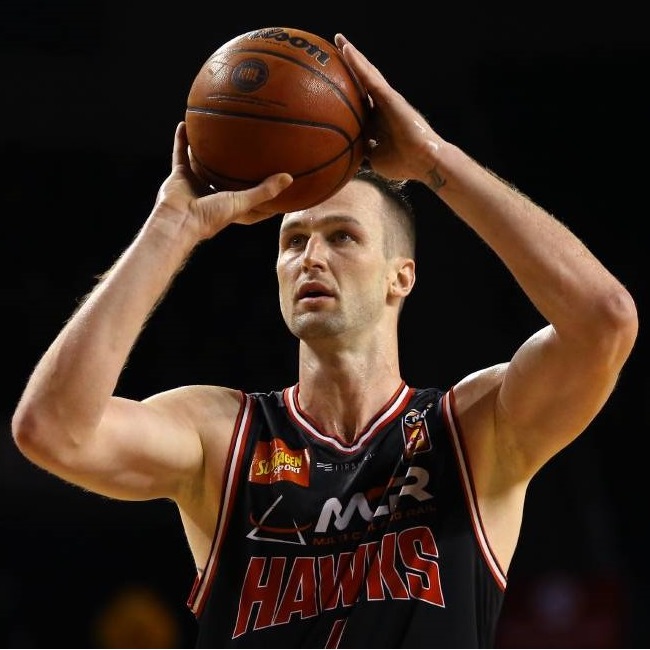
AJ Ogilvy
February 2, 2021


BIO: Cedric Lamar Jackson was born in Alamogordo, New Mexico (USA). As a high school freshman living in Medical Lake, Washington, Jackson attended Medical Lake High School in 2000/01, where he steered the Cardinals to within a point of a trip to the state tournament.
He was enrolled as a sophomore at Ferris High before his Air Force-obligated family moved east.
Jackson subsequently enrolled at Northern Burlington County Regional High School in Columbus, New Jersey. He was a first-team all-state selection his senior year among other selections and averaged 26 points per game.
After high school, Jackson played at St. John’s University from 2004 to 2006 before transferring to Cleveland State University. He sat out the 2006/07 season under NCAA transfer rules and played two seasons with the Vikings, where he became a leading defender and playmaker. His 2009 NCAA tournament appearance followed the Horizon League tournament championship.
After going undrafted in 2009, Jackson played in the NBA Development League for Erie and Idaho, earned 10-day NBA opportunities with Cleveland, San Antonio and Washington in 2010, and spent time in Italy with Enel Brindisi in 2011. He joined the New Zealand Breakers in August 2011 ahead of his first NBL season.
Cedric Jackson made his NBL debut with the New Zealand Breakers at 25 years of age. He scored 11 points in his first game.
2011/12
After winning their first NBL championship, the Breakers suffered two major losses, the first being leading scorer Kirk Penney’s decision to play in Europe and an off-season Achilles injury to Kevin Braswell that saw him still unable to play at the beginning of the 2011/12 season. Coach Andrej Lemanis recruited Cedric Jackson and then finalised their roster by adding Daryl Corletto, who the Melbourne Tigers had just released to make room for NBA star Patty Mills.
Jackson (12.8 points, 5.4 rebounds, 6.5 assists, and 2.2 steals) would lead the league in both assists and steals and ensure the Breakers didn’t skip a beat as the defending champs. Gary Wilkinson (16.6 points, 5.8 rebounds, and 1.2 assists) and Thomas Abercrombie (15.2 points, 4.6 rebounds, and 1.6 assists) both boosting their offensive output in the absence of Penney, propelling New Zealand to a first-place finish (21-7) for the second consecutive season.
New Zealand would meet Townsville in the semifinals where they would lose the opening contest (82-99) behind big games from Crocodiles stars Peter Crawford (26 points) and Eddie Gill (21 points and 4 steals).
The Breakers re-grouped with CJ Bruton (18 points) top scoring in a game two win (94-83) that saw five New Zealand players all score in double figures. Bruton (20 points) continued to lead the way offensively in game three (97-80), winning the series for New Zealand and propelling them into the Grand Final.
New Zealand would go on to face Perth, winning the opening game in a overtime victory at home (104–98). Bruton (20 points and 3 assists) and Jackson (25 points and 8 assists) finished as the Breakers top scorers.
Despite Wilkinson (28 points, 7 rebounds, and 5 assists) delivering his best game of the season, the Wildcats would rebound from the loss and claim a narrow victory in their second meeting (87-86). Jesse Wagstaff (15 points) and Kevin Lisch (15 points and 5 rebounds) led the way for Perth, while six other Wildcats players also scored in double figures. This set up a third game back in Auckland, where the Wildcat’s built up a slight lead in the second quarter through some brilliant play from Matthew Knight (17 points and 6 rebounds), who had 11 points in the quarter. With centre Luke Nevill (4 points and 3 rebounds in 9 mins) getting into foul trouble and the Breakers defence all but neutralising Shawn Redhage (18 points, 4 rebounds and 3 assists), the Breakers clinched back-to-back titles with a six-point victory (79–73) in front of 9,000 fans.
After Perth levelled the score with seven minutes to go, Abercrombie (12 points and 4 rebounds) pulled in a offensive rebound and set up Bruton (16 points, 3 rebounds, 3 assists, and 2 steals), who nailed a three-point dagger to extend the lead to seven with less than two minutes to play. Gary Wilkinson (23 points) led all scorers, while Alex Pledger (13 points on 4-of-6 shooting) made huge contributions from the bench. The Breakers became the first side to win consecutive titles since Sydney in 2002-2005, a championship team that Bruton was also a part of. Bruton finished 4-of-7 from downtown and was awarded the Larry Sengstock Medal for the Most Valuable Player of the series.
This season, Lemanis was recognised as Coach of the Year, Jackson and Abercrombie were selected to the All-NBL First Team, and Wilkinson gained All-NBL Second Team recognition as well. Jackson was also voted as the Breakers club MVP and finished fourth in the NBL MVP voting.
2012/13
In 2012, the Breakers looked to become the second team in league history to record a three-peat. While Cedric Jackson, Leon Henry, Thomas Abercrombie, Dillon Boucher, Mika Vukona, CJ Bruton, and Daryl Corletto all re-signed, a major decision made this off-season was to not re-sign leading scorer Gary Wilkinson (to Europe) in favour of elevating promising Kiwi centre Alex Pledger into the starting lineup. Import forward Will Hudson (via Gold Coast) signed as Wilkinson’s replacement, while Corey Webster returned after serving a 12-month suspension for the use of a banned substance.
The Breakers recorded a number of historic moments this season, beginning with Jackson recording his first career triple-double with 28 points, 10 rebounds and 10 assists against the Melbourne Tigers (November 30, 2012). It was only the second triple-double recorded since the NBL went to 40-minute games at the start of the 2009/10 season.
By February, the Breakers extended their longest winning streak record to 11, Jackson picking up Player of the Week for Round 17 (his fourth NBL weekly award that season) and by mid-March had extended that to fifteen straight games.
New Zealand (24-4) finished on top of the ladder for a second consecutive season with Jackson (14.6 points, 5.9 rebounds, 6.8 assists, and 2.8 steals) leading the league in assists and steals for the second straight season. Jackson was a obvious choice for the league’s Most Valuable Player and was also selected to the All-NBL First Team for the second consecutive season. Mika Vukona and Thomas Abercrombie were selected to the All-NBL Second and Third team’s, respectively, and Andrej Lemanis was voted the Coach of the Year.
New Zealand faced Sydney in the semifinals and swiftly eliminated them in two games. Abercrombie (15 points and 3 rebounds) and Jackson (11 points, 9 rebounds, 6 assists, and 3 steals) leading the Breakers in game one (81-64) and Bruton (21 points, 3 rebounds, and 3 assists) and Pledger (18 points and 12 rebounds) taking charge in game two (99-88). New Zealand progressed to the Grand Final series, where they would face off against Perth in a Grand Final re-match of the previous year. The Wildcats entered the series shorthanded, having lost starting guard Damian Martin to a Achilles injury prior to the playoffs. Brad Robbins came out of retirement to cover the loss, but with the team missing Martin, the Breakers defeated Perth easily in two straight games. Game one (79-67) saw Corletto (19 points on 7-10 shooting) catch fire and in game two (70-66), the Breakers were led by Bruton (16 points) and Jackson (14 points, 6 rebounds, 5 assists, and 3 steals). Jackson, who had already won the NBL’s 2012/13 regular-season MVP award and an All-NBL First Team selection, was subsequently named Grand Final MVP as the team completed its historic three-peat.
2014/15
After winning three consecutive NBL championships between 2011 and 2013, New Zealand finished seventh with an 11-17 record in 2013/14, missing the playoffs for the first time in four years. Dean Vickerman returned for his second season as head coach, with imports Kerron Johnson and Gary Wilkinson departing alongside CJ Bruton (retired) and Daryl Corletto (to Melbourne). The Breakers retained captain Mika Vukona, Thomas Abercrombie, Corey Webster and Alex Pledger, while adding two-time championship winner Cedric Jackson (via Slovenia), Ekene Ibekwe (via Puerto Rico), Rhys Carter (via Adelaide) and Tai Wesley (via Southland Sharks), who qualified as a local player under the NBL’s Asian player rule due to being born in Guam.
After spending the previous season playing for Union Olimpija in Slovenia, Jackson signed a two-year deal with New Zealand on July 17, 2014, returning to the club for a second stint. Having led the Breakers to consecutive championships in 2012 and 2013, including winning the league’s Most Valuable Player and Grand Final MVP awards in 2013, his departure had left a significant hole in the team’s backcourt the previous season. His return gave Vickerman an established leader capable of controlling the offence, creating opportunities for teammates and applying defensive pressure, while allowing Webster to take on greater scoring responsibility.
New Zealand opened the season against defending champions Perth at Perth Arena on October 10, where Jackson (22 points, 5 rebounds, 5 assists, and 1 steal) made eight of his 11 field-goal attempts, including three three-pointers, in an outstanding return to the NBL. Carter (14 points, 3 rebounds, and 7 assists) provided important backcourt support after Webster left the game early with a back complaint, while Ibekwe (10 points, 6 rebounds, 1 steal, and 1 block) contributed inside. Shawn Redhage (20 points) led Perth, but the Breakers established a 49-26 halftime advantage before holding off a Wildcats comeback to win 80-70 in front of 12,903 fans.
Jackson (14.9 points, 5.8 rebounds, 6 assists, and 2.2 steals across 32 games) quickly re-established himself as one of the NBL’s leading point guards, controlling New Zealand’s offence while remaining a disruptive defensive presence. He started all 28 regular-season games and all four postseason contests, leading the team in assists and steals while providing the leadership it had lacked during the previous season. With Webster developing into one of the league’s premier scorers and Ibekwe providing additional athleticism around the basket, the Breakers were no longer as reliant on their established frontcourt players to generate offence. After opening with consecutive victories over Perth and Adelaide, New Zealand suffered back-to-back losses to Melbourne and Cairns before recovering to establish itself among the competition’s leading teams.
New Zealand put together multiple five-game winning streaks during the first half of the season, with Jackson producing several strong all-around performances as the Breakers climbed towards the top of the ladder. He was named NBL Player of the Week for Round 10 in December, continuing the form which had made him the league’s MVP two seasons earlier. By the middle of December, New Zealand had established a 10-4 record, with Jackson’s passing and ability to create scoring opportunities for Webster, Abercrombie and Ibekwe proving central to the team’s improved offence.
Jackson’s best overall performance came against Melbourne United at Vector Arena on January 18, where he recorded his second career NBL triple-double with 16 points, 10 rebounds, 11 assists, 3 steals, and 2 blocks. Playing in front of his parents, who were visiting New Zealand to watch him play for the Breakers for the first time, Jackson controlled the contest at both ends. Webster (17 points) provided the main scoring support after being moved to the bench in favour of Carter, while Ibekwe (15 points, 9 rebounds, 1 assist, 3 steals, and 3 blocks) dominated defensively. Stephen Dennis (18 points) led Melbourne, with Daniel Kickert (15 points and 9 rebounds) also contributing, but New Zealand held the league’s leading scorer Jordan McRae to just two points on 1-of-14 shooting. With the game remaining close throughout the first three quarters, the Breakers pulled away during the final minutes to win 88-75, moving to a 15-5 record and strengthening their position at the top of the ladder. Jackson’s performance was also the second triple-double in Breakers history, with both belonging to him.
The Breakers encountered a difficult stretch during February, losing three of four games as Cairns and Perth challenged them for the top two positions. Against Adelaide at Vector Arena on February 12, Jackson (11 points, 11 rebounds, 11 assists, and 1 steal) recorded his third career triple-double, becoming the first player in NBL history to record three triple-doubles. Webster (26 points) and Abercrombie (15 points) provided the main scoring support, while Jamar Wilson (28 points) and Brock Motum (18 points) led Adelaide. The 36ers established a double-digit advantage before New Zealand fought back during the fourth quarter and moved three points ahead with less than a minute remaining. However, Adelaide converted its free throws in the closing seconds to win 93-88, extending its winning streak to eight games and leaving the Breakers second with an 18-8 record, one victory behind Cairns with two regular-season games remaining.
Three days later, Jackson produced one of the most memorable plays in NBL history against Perth at Perth Arena. Jackson (22 points, 7 rebounds, 6 assists, and 4 steals) equalled his highest-scoring total of the season and delivered a remarkable game-winning performance as New Zealand attempted to secure home-court advantage for the playoffs. Webster (27 points) produced a career-high scoring effort, while Ibekwe (11 points, 7 rebounds, and 6 blocks) provided a strong defensive presence before fouling out during the first overtime period. DeAndre Daniels (24 points and 10 rebounds) and Jermaine Beal (24 points and 3 rebounds) led Perth, which recovered from a 12-point deficit during the fourth quarter to force overtime. The teams were tied at 68-68 at the end of regulation and 80-80 after the first overtime before Beal made two free throws to give Perth an 87-86 lead with two seconds remaining in double overtime. With no timeouts left, Jackson received the inbound pass, took three dribbles and launched a desperate shot from beyond halfway. The ball banked off the backboard and dropped through the basket as time expired, giving New Zealand an extraordinary 89-87 victory and silencing the 13,241 fans at Perth Arena. The result completed the Breakers’ first-ever 4-0 regular-season sweep of Perth, with Jackson subsequently named NBL Player of the Week for Round 19 and Player of the Month for February.
Webster (15.3 points across 32 games) emerged as New Zealand’s leading scorer after moving into the starting lineup, producing the highest-scoring season of his career to that point and developing into one of the competition’s premier offensive guards. Ibekwe (11.8 points, 6.1 rebounds, and 1.9 blocks across 32 games) provided athleticism and rim protection, finishing with a Breakers single-season record of 62 blocked shots and earning All-NBL Second Team selection. Abercrombie (11.2 points and 4.3 rebounds across 29 games) remained an important perimeter contributor despite battling injuries, while Vukona (8.3 points and 6.7 rebounds across 32 games) provided leadership, rebounding and physical defence. Wesley (8 points and 4.8 rebounds across 32 games), Carter (6.6 points across 32 games) and Pledger (5.5 points and 3.7 rebounds across 30 games) provided the other main contributions. Jackson led the NBL in assists for the third consecutive season he had played in the competition, while earning All-NBL First Team honours for the third time in three seasons. Despite losing their final regular-season game against Cairns, the Breakers finished second with a 19-9 record, completing a major turnaround from their seventh-place finish the previous season and securing home-court advantage for the semifinals.
New Zealand faced third-placed Adelaide in the semifinals, with the 36ers entering the playoffs on a 10-game winning streak. Game one was played at Vector Arena on February 26, where Jackson (13 points, 3 rebounds, 10 assists, and 3 steals) recorded a double-double and controlled the backcourt as the Breakers established an early advantage. Webster (24 points, 5 rebounds, and 3 assists) led New Zealand’s scoring, while Vukona (12 points, 10 rebounds, and 3 assists) produced another double-double. Wilson (21 points) and Daniel Johnson (14 points and 8 rebounds) led Adelaide, but New Zealand jumped out to a 16-2 lead before taking a 56-41 advantage into halftime. Jackson made a basket on the halftime buzzer, and the Breakers dominated the third quarter 33-15 to establish a 33-point lead at the final break. New Zealand went on to win 111-82, ending Adelaide’s winning streak and taking a 1-0 series lead.
Game two moved to the Adelaide Arena on February 28, where Jackson (18 points, 10 rebounds, 6 assists, and 4 steals) produced another outstanding all-around performance, leading New Zealand through a physical contest despite committing six turnovers. Ibekwe (18 points, 4 rebounds, and 2 blocks) dominated inside, making seven of his eight field-goal attempts, while Webster (15 points, 4 assists, and 5 steals) provided important defensive pressure. Wilson (23 points, 4 rebounds, 4 assists, and 4 steals) led Adelaide, with Johnson (16 points and 7 rebounds) providing support. The Breakers established a 49-39 halftime advantage and extended their lead to 17 points by the final break before holding off a late 36ers comeback to win 94-83. The victory completed the semifinal sweep and advanced New Zealand to its fourth Grand Final in five seasons.
New Zealand faced minor premiers Cairns in the Grand Final, with the Taipans becoming the first regional team to finish on top of the NBL ladder since the Geelong Cats in 1984. Game one was played at the Cairns Convention Centre on March 6, where Jackson (22 points, 7 rebounds, 3 assists, 1 steal, and 1 block) led New Zealand’s scoring, making nine of his 20 field-goal attempts as the Breakers established an early advantage. Ibekwe (19 points, 8 rebounds, and 2 blocks) dominated inside, while Abercrombie (13 points, 4 rebounds, and 1 block) provided important perimeter support. Scottie Wilbekin (16 points) and Cameron Gliddon (13 points and 9 rebounds) led Cairns, which recovered from a 50-34 halftime deficit to cut the margin to one point at the final break. New Zealand responded during the fourth quarter, with Carter (12 points) making two crucial three-pointers to help the Breakers regain control. Jackson continued creating opportunities for his teammates as New Zealand outscored Cairns 25-11 during the final period and pulled away to win 86-71, moving within one victory of the championship.
Game two returned to Auckland’s North Shore Events Centre on March 8, where Jackson (15 points, 6 rebounds, 7 assists, and 3 steals) played a central role in one of the most memorable championship finishes in NBL history. Abercrombie (19 points, 3 rebounds, and 3 steals) led New Zealand’s scoring, while Ibekwe (14 points, 4 rebounds, and 2 blocks) and Wesley (12 points, 5 rebounds, and 2 assists) provided important support inside. Cameron Tragardh (17 points and 5 rebounds), Gliddon (16 points and 4 rebounds) and Torrey Craig (16 points and 5 rebounds) led Cairns, which recovered from a five-point halftime deficit to take a 59-58 lead into the final quarter. The Taipans then moved six points ahead with three minutes remaining, but Abercrombie made a crucial three-pointer before Vukona scored a put-back with 40 seconds remaining to tie the scores at 78-78. Both teams exchanged free throws in the closing seconds, with Jackson giving New Zealand an 81-79 lead before Wilbekin converted two free throws with 1.2 seconds remaining to level the scores and seemingly force overtime. Coming out of a timeout, Jackson inbounded the ball to Ibekwe, who caught the pass near the free-throw line, turned and made a fadeaway jumper as the buzzer sounded. The Breakers defeated Cairns 83-81 to complete a 2-0 Grand Final sweep and claim their fourth NBL championship in five seasons. Jackson was awarded the Larry Sengstock Medal as Grand Final MVP for the second time after leading New Zealand with 22 points in game one and adding 15 points, 6 rebounds, 7 assists, and 3 steals in game two. The victory gave Jackson his third NBL championship and made him the first player in league history to win three titles in his first three seasons.
2015/16
After winning the 2015 NBL Championship and claiming their fourth title in five years, the New Zealand Breakers retained almost all of their championship-winning roster under coach Dean Vickerman, with Rhys Carter (to Sydney) and Ekene Ibekwe (to Europe) departing. Shane McDonald (via Nunawading – SEABL) and rookie American big man Charles Jackson (via Tennessee Tech) were added, while New Zealand’s preseason was disrupted by Alex Pledger recovering from off-season foot surgery, Thomas Abercrombie dealing with a hamstring injury and Corey Webster leaving for the United States to trial with the NBA’s New Orleans Pelicans. Shea Ili and Tai Wynyard were elevated as development players, while Everard Bartlett (via Hawke’s Bay) was brought in as a temporary replacement for Webster.
New Zealand opened the season in Adelaide on October 7 without Webster, Abercrombie and Pledger, where Cedric Jackson (14 points and 6 assists) led the Breakers, while Bartlett (13 points, 4 rebounds, and 3 steals) and Charles Jackson (12 points and 7 rebounds) provided support. Matthew Hodgson (18 points, 9 rebounds, and 3 blocks) led Adelaide to a 90-71 victory, with New Zealand trailing 51-26 at halftime as the Breakers recorded their second-lowest first-half score and second-largest halftime deficit in club history at the time.
Jackson (12.8 points, 6 rebounds, 6.3 assists, and 1.3 steals across 33 games) started and appeared in every one of New Zealand’s 28 regular-season games and five playoff games. He was completing the second year of the two-year contract he had signed when returning to the Breakers in 2014 and once again directed New Zealand’s offence, ultimately leading the NBL in assists for the fourth time in his four seasons in the league.
The Breakers responded in their second game against Townsville on October 11, which was also Jackson’s 99th NBL appearance. Jackson (14 points, 10 rebounds, 14 assists, and 2 steals) recorded the fourth triple-double of his career and a career-high 14 assists as New Zealand defeated the Crocodiles 89-81. Bartlett (19 points and 2 steals) led the scoring and Charles Jackson (12 points, 8 rebounds, and 3 blocks) provided support, while Jordair Jett (17 points and 4 rebounds) led Townsville. The victory gave Jackson 77 wins from his first 99 NBL appearances, with his 77.7 percent winning rate ranking first in league history at the time.
Three days later, Jackson’s 100th NBL game produced the opposite result against Illawarra at the WIN Entertainment Centre. Jackson (1 point, 5 rebounds, and 6 assists) failed to make a field goal, shooting 0-of-7 from the field, 0-of-3 from three-point range and 1-of-5 from the free-throw line, while Charles Jackson (20 points and 9 rebounds) and Tai Wesley (14 points) led New Zealand. Former Breaker Kirk Penney (36 points) and AJ Ogilvy (23 points, 10 rebounds, 4 steals, and 2 blocks) powered Illawarra to a 96-75 victory, leaving New Zealand 1-2.
With the Breakers slipping to 1-3, Webster (19.8 points across 28 games) returned after failing to secure a roster position with New Orleans. Duane Bailey (0.7 points across 3 games) (to Plymouth) was removed from New Zealand’s full-time roster to make room for Webster and was offered the opportunity to remain as a training player and provide injury cover before signing with the Plymouth Raiders in November. Bartlett (4.7 points across 32 games), who had initially returned only as Webster’s temporary replacement, was rewarded for his performances during the opening four games and retained on the full-time roster for the remainder of the season. Webster’s return transformed New Zealand’s season, with the Breakers winning nine of their next eleven games to improve to 10-5.
Jackson delivered another major performance in Melbourne on November 8, recording the fifth triple-double of his NBL career. Jackson (16 points, 14 rebounds, 10 assists, and 2 steals), Abercrombie (24 points and 8 rebounds) and Webster (15 points and 2 steals) led New Zealand, while Stephen Holt (21 points, 7 rebounds, and 3 assists) and Chris Goulding (21 points and 5 rebounds) led Melbourne. Holt made the decisive free throw as United escaped with an 87-86 victory.
New Zealand’s form deteriorated during the middle of the season, with five losses from six games dropping the Breakers to 11-10 before their losing streak eventually reached six. Jackson played much of January with toe and Achilles heel problems but did not miss a game. During a 103-96 double-overtime loss to Illawarra on January 17, Jackson (18 points, 6 rebounds, 4 assists, and 3 steals) and Webster (22 points, 5 assists, 3 steals, and 2 blocks) led the backcourt, while Charles Jackson (11 points, 18 rebounds, and 3 steals) collected 10 offensive rebounds, becoming the first Breakers player to reach double figures in offensive boards in a game and the first NBL player to do so since Rosell Ellis in 2007. Kevin Lisch (40 points, 5 rebounds, and 4 steals) led Illawarra through the double-overtime victory.
Jackson’s best game of the season came in Adelaide on February 3, where Jackson (31 points, 10 rebounds, 6 assists, and 1 steal) made seven of 13 three-pointers and committed no turnovers as New Zealand defeated the 36ers 106-84 and kept its playoff hopes alive. Webster (28 points) and Pledger (17 points and 6 rebounds) provided the major support, while Mitchell Creek (16 points and 2 steals) led Adelaide. Jackson became the first NBL player since John Rillie in 1998 to combine seven three-pointers with at least 10 rebounds and six assists, with his return to form helping him earn the NBL’s Player of the Month award for February.
New Zealand recovered from its six-game losing streak by winning its final five regular-season games. Webster led the team in scoring and earned All-NBL Second Team honours, while Abercrombie (14 points and 6.3 rebounds across 31 games), Wesley (11.7 points and 4.9 rebounds across 26 games), Charles Jackson (10.2 points and 7.7 rebounds across 33 games), Pledger (6.5 points, 5.7 rebounds, and 1.5 blocks across 31 games) and Vukona (6.2 points and 7.4 rebounds across 29 games) provided the other major contributions.
The final regular-season game came against minor premiers Melbourne at Hisense Arena on February 14, where Jackson (5 points, 6 rebounds, and 4 assists), Wesley (23 points, 5 rebounds, 2 steals, and 2 blocks) and Vukona (10 points, 10 rebounds, and 3 assists) helped New Zealand complete its late-season turnaround with a 70-68 victory, while Goulding (22 points and 3 assists) led Melbourne. The win completed a five-game winning streak and left the Breakers fourth at 16-12, edging Adelaide for the final playoff position.
New Zealand opened its semifinal series against ladder-leading Melbourne at Hisense Arena, where Jackson (20 points, 4 rebounds, and 2 steals), Abercrombie (16 points and 4 rebounds) and Vukona (11 points, 13 rebounds, 5 assists, and 4 steals) helped the Breakers overcome a second-half deficit and win 91-82. Pledger (8 points, 12 rebounds, and 3 blocks) also controlled the paint, while Hakim Warrick (24 points, 13 rebounds, and 4 blocks) and Goulding (23 points and 5 rebounds) led Melbourne.
Game two moved to Auckland, where Jackson (19 points, 8 rebounds, 5 assists, and 2 steals), Abercrombie (23 points and 4 rebounds), Wesley (16 points, 6 rebounds, and 2 blocks) and Webster (13 points, 4 rebounds, 5 assists, and 3 steals) led New Zealand. Goulding (23 points, 4 rebounds, and 3 assists), Warrick (17 points, 6 rebounds, and 2 blocks) and Daniel Kickert (16 points) led Melbourne, but the Breakers pulled away during the fourth quarter for a 91-78 victory, completing the 2-0 sweep and reaching their fifth Grand Final in six seasons.
Perth hosted game one of the Grand Final at Perth Arena, where Jackson (14 points, 6 rebounds, 4 assists, and 2 steals), Webster (19 points and 2 steals), Charles Jackson (11 points, 10 rebounds, and 2 blocks) and Vukona (11 points, 6 rebounds, and 3 assists) helped New Zealand recover from a 13-point deficit and briefly take the lead during the second half. Nathan Jawai (15 points), Matthew Knight (14 points and 5 rebounds) and Damian Martin (9 points, 10 rebounds, and 5 assists) led Perth, with the Wildcats regaining control late for an 82-76 victory.
Game two returned to Auckland, where Jackson (13 points, 9 rebounds, 8 assists, and 2 steals) came within two assists of a triple-double as Abercrombie (12 points and 5 rebounds), Pledger (11 points and 4 rebounds), Wesley (11 points and 2 steals) and Webster (10 points) provided support. Jermaine Beal (20 points, 4 rebounds, and 4 assists) and Jesse Wagstaff (13 points) led Perth, but Webster made a crucial three-pointer with 18 seconds remaining to give New Zealand a four-point advantage before the Breakers held on for a 72-68 victory and forced a deciding game.
The deciding game was played at Perth Arena in front of 13,090 fans, where Jackson (0 points, 5 rebounds, and 2 assists) missed all five of his field-goal attempts and fouled out early in the fourth quarter as Perth’s defence controlled the Breakers. Abercrombie (21 points, 6 rebounds, and 4 steals) was New Zealand’s only player to reach double figures and Charles Jackson (7 points and 12 rebounds) battled inside, while Casey Prather (19 points and 5 rebounds), Beal (14 points, 4 rebounds, and 4 assists) and Martin (10 points, 8 rebounds, and 2 steals) led Perth. Martin was named Grand Final MVP as the Wildcats claimed their seventh NBL championship with a 75-52 victory, handing New Zealand its first playoff series loss to Perth and its first Grand Final series defeat.
MELBOURNE UNITED
2016/17
After finishing first with an 18-10 record in 2015/16 before being swept by New Zealand in the semifinals, Melbourne United entered Dean Demopoulos’ second season with another major roster change. With the league allowing three imports per team, Stephen Holt (to Europe), Hakim Warrick (to Olympiacos) and Daniel Kickert (to Brisbane) departed, while Cedric Jackson (via New Zealand), Ramone Moore (via Europe), Devin Williams (via West Virginia), Tai Wesley (via New Zealand) and David Andersen (via Europe) joined the team. Wesley was able to sign as a local under the NBL’s Asian player rule, while David Barlow re-signed after missing the previous season with an Achilles injury, although a calf injury kept him out of the first nine games.
The three-time NBL champion and former league MVP signed a two-year deal with Melbourne on May 10 after New Zealand chose not to enter a bidding war to retain him. Demopoulos played a major role in his decision to join United, saying, “Coach Dean was the reason I wanted to sign with Melbourne.”
Jackson (14 points, 13 rebounds, and 6 assists) produced his best game of the season in Melbourne’s opening game against his former team at Vector Arena on October 7. Wesley (15 points) led United in scoring, while Thomas Abercrombie (14 points and 5 rebounds) and Corey Webster (11 points and 6 assists) helped New Zealand overturn a four-point three-quarter-time deficit with a 28-point final quarter to defeat Melbourne 76-71.
Jackson (10.0 points, 4.9 rebounds, 5.4 assists, and 1.4 steals across 9 games) started all nine games he played for Melbourne and did not miss a game through injury or illness while on the roster.
Jackson’s highest-scoring game came two days later against Adelaide at Hisense Arena, where Jackson (15 points, 4 rebounds, 7 assists, and 2 steals) and Moore (15 points) led Melbourne, with Todd Blanchfield (11 points and 4 rebounds) providing support. Jerome Randle (30 points, 3 rebounds, and 5 assists) and Daniel Johnson (17 points and 7 rebounds) led Adelaide to an 87-79 victory.
One week later, Jackson (14 points, 3 rebounds, 5 assists, 1 steal, and 1 block) made 7-of-10 field goals as Melbourne defeated Illawarra 95-83 at Hisense Arena. Blanchfield (27 points and 6 rebounds) made eight three-pointers and Chris Goulding (16 points, 3 rebounds, and 7 assists) provided support, while Marvelle Harris (20 points and 5 steals) and Michael Holyfield (15 points and 12 rebounds) led the Hawks.
Melbourne collected its third consecutive win against Brisbane on October 20, where Jackson (14 points, 2 rebounds, 2 assists, and 1 steal) helped United hold on after Goulding (13 points) left the game with an ankle injury early in the fourth quarter and did not return. Andersen (15 points) and Moore (13 points) also stepped up, while former United big man Kickert (23 points) led Brisbane in Melbourne’s 78-70 victory.
Jackson’s final game for Melbourne came against Illawarra at WIN Entertainment Centre on November 6, where Jackson (5 points, 8 rebounds, and 5 assists) was also whistled for a technical foul as an injury-hit United played without Goulding and Blanchfield. Andersen (23 points and 8 rebounds) and Williams (13 points and 7 rebounds) led Melbourne, while Nicholas Kay (15 points and 5 rebounds), Rotnei Clarke (14 points) and Mitch Norton (13 points and 6 assists) helped Illawarra win 82-73. It was Melbourne’s fourth consecutive loss and left United with a 3-6 record.
Three days later, Melbourne released Jackson nine games into his two-year deal. The club publicly described the move as a strategic decision rather than an injury or disciplinary absence, with chief executive Vince Crivelli saying it was “based on giving us the best chance of winning as many games as we possibly can this season.” Jackson had started every game while on the roster, with his remaining 19 missed games coming because he was released.
Casper Ware (via Washington) was signed five days later as Jackson’s replacement and Melbourne’s third import after being waived by the Washington Wizards during the NBA preseason. Ware (22.1 points, 4.5 assists, and 1.3 steals across 18 games) played every remaining game, with Melbourne going 10-8 after his arrival, and was later selected to the All-NBL First Team.
United continued to deal with injuries and roster changes throughout the season. Goulding (16.4 points across 22 games) missed six games with ankle problems, Barlow (5.1 points across 19 games) missed the first nine with a calf injury and Blanchfield (7.9 points and 3.6 rebounds across 22 games) spent time sidelined with a groin injury and later a concussion. Andersen (9.8 points and 4.4 rebounds across 19 games) suffered a knee injury, while Williams (3.2 points and 3.9 rebounds across 16 games) missed five weeks with a knee injury. Josh Boone (via İzmir) initially joined as a temporary injury replacement before Boone (10.1 points and 9.3 rebounds across 12 games) was retained for the remainder of the season, with Williams released after returning to full fitness so he could pursue opportunities in the United States. Moore (10 points across 20 games) later suffered a season-ending calf injury and Lasan Kromah (via Patras) joined as his injury replacement, with Kromah (1 point across 3 games) appearing in three games.
Wesley (8.5 points and 3.3 rebounds across 28 games) and Majok Majok (5.5 points and 5.5 rebounds across 28 games) were the only Melbourne players to appear in all 28 games. Melbourne and Demopoulos parted ways after the season. United finished sixth with a 13-15 record and missed the playoffs.
ILLAWARRA HAWKS
2018/19
After falling short of the playoffs the previous season, Illawarra lost Demitrius Conger (to Serbia), Rotnei Clarke (to Greece), Nicholas Kay (to Perth), Delvon Johnson (to Slovakia), while Cody Ellis and Rhys Martin retired. AJ Ogilvy, Tim Coenraad, Nic Pozoglou and captain Kevin White returned, with Todd Blanchfield (via Sydney), David Andersen (via Melbourne), Jordair Jett (via Townsville Heat), Brian Conklin (via France), rookies Emmett Naar and Daniel Grida and Cedric Jackson (via Yakima SunKings) added under coach Rob Beveridge. The three-time NBL champion signed on July 5, returning to the league after Melbourne had released him nine games into the 2016/17 season. He spent the previous months with Yakima, helping the SunKings win their first championship in 11 years, before receiving another NBL opportunity. Beveridge said, “Everywhere Cedric goes he wins.”
Illawarra opened the season against defending champion Melbourne at WIN Entertainment Centre on October 12, where the former NBL MVP (7 points, 6 rebounds, and 3 assists) helped the Hawks take United through four overtimes before losing 123-122. With Illawarra three points behind late in the second overtime, he brought the ball up the floor and delivered the hand-off that created the three-pointer which forced a third overtime, before the Hawks eventually fell in one of the longest games in NBL history.
Jackson (8.0 points, 3.1 rebounds, and 3.8 assists across 28 games) played every game and did not miss any time through injury, starting 27 times and leading Illawarra in assists. His outside shooting remained a weakness, making only three three-pointers for the season, but he provided the Hawks with an experienced ball-handler alongside Jett and Naar.
Two days after the four-overtime opener, Jackson (4 points, 5 assists, and 2 steals) was unable to prevent Illawarra suffering its heaviest loss of the season, with Perth defeating the Hawks 101-61 at RAC Arena.
Illawarra responded in Cairns on October 21, where Jackson (12 points, 3 rebounds, 5 assists, and 2 steals) helped the Hawks collect their first victory of the season with a 104-93 win over the Taipans.
Jackson (15 points and 5 assists) produced his second-highest scoring game of the season against Melbourne on October 29, making 5-of-9 from the field as Illawarra remained close throughout before United won 99-93 behind Ware (26 points).
His best game of the season came against Perth on November 11, where Jackson (16 points, 4 rebounds, 5 assists, and 1 steal) made 7-of-12 from the field and shared team-high scoring honours as Illawarra fell 90-81. Perth led from start to finish after building a 36-21 advantage during the opening quarter, with Cotton (19 points), Kay (18 points and 11 rebounds) and Steindl (18 points) leading the Wildcats.
Another of his best all-around performances came in Melbourne on January 23, where Jackson (10 points, 6 rebounds, 4 assists, 3 steals, and 1 block) contributed across the board, but United defeated Illawarra 113-89 behind Ware (25 points) and Kennedy (17 points, 10 rebounds, and 4 assists).
Jackson produced one of his strongest performances of the year against Cairns on February 4, making all five of his field-goal attempts and finishing with 13 points, 10 assists, and 3 steals as Illawarra won 110-95. Named Bunnings Player of the Game, he directed an offence that had seven players score in double figures as the Hawks recorded their biggest victory of the season and remained alive in the race for fourth place, while Newbill (20 points), Loe (16 points and 7 rebounds) and Trimble (13 points, 4 rebounds, and 11 assists) led Cairns.
Conklin (14.4 points and 5.1 rebounds) led Illawarra in scoring, while Blanchfield (13.5 points and 4.2 rebounds) was named the Hawks’ club MVP. Jett (11.8 points and 1.5 steals), Ogilvy (9.4 points and 6.6 rebounds), Coenraad (8.7 points and 4 rebounds), Andersen (8.3 points and 3.5 rebounds) and Grida (5.1 points) were the other major contributors as Illawarra was unable to find enough consistency to reach the playoffs.
Following the season, Jackson (free agent) was not retained by Illawarra and was listed among the Hawks’ free agents alongside the team’s departing imports as the club rebuilt its roster for 2019/20. His single season with Illawarra proved to be his final NBL campaign.
Across four seasons with New Zealand, Jackson made four NBL Grand Finals and won three championships (2012, 2013 and 2015). He won the NBL MVP award in 2013, two Grand Final MVP awards (2013 and 2015) and All-NBL First Team honours in 2012, 2013 and 2015. He also led the league in assists in all four seasons with the Breakers.
Illawarra closed the season in Wellington on February 14, where Jackson (2 points and 1 steal) made his 28th appearance and played his final NBL game as New Zealand defeated the Hawks 130-96. Grida (17 points), Ogilvy (12 points and 4 rebounds) and Coenraad (11 points, 6 rebounds, and 4 assists) led Illawarra, while Long (21 points and 8 rebounds) led the Breakers as the Hawks finished seventh with a 12-16 record.
Cedric Jackson played six seasons across three NBL teams. This included the New Zealand Breakers, Melbourne United and Illawarra Hawks. He averaged 12.6 points, 5.3 rebounds, and 5.9 assists in 167 NBL games.
– 30th in assists per game.
HIGHLIGHTS:
| SEASON | AGE | TEAM | TEAM RECORD | GP | MINS | PTS | REB | AST | OR | DR | STL | BLK | TO | PF | FGM | FGA | FG% | 3PM | 3PA | 3P% | FTM | FTA | FT% | TS% | EFG% | HS |
|---|---|---|---|---|---|---|---|---|---|---|---|---|---|---|---|---|---|---|---|---|---|---|---|---|---|---|
| 2018-19 | 33 | Illawarra | 12-16 (7) | 28 | 637 | 224 | 88 | 107 | 26 | 62 | 31 | 3 | 59 | 71 | 92 | 216 | 43% | 3 | 22 | 14% | 37 | 66 | 56% | 45% | 43% | 16 |
| 2016-17 | 31 | Melbourne | 13-15 (6) | 9 | 260 | 90 | 44 | 49 | 14 | 30 | 13 | 2 | 20 | 21 | 36 | 95 | 38% | 2 | 17 | 12% | 16 | 33 | 48% | 41% | 39% | 15 |
| 2015-16 | 30 | New Zealand | 16-12 (4) | 33 | 1,059 | 424 | 197 | 207 | 30 | 167 | 43 | 8 | 98 | 96 | 149 | 379 | 39% | 47 | 155 | 30% | 102 | 224 | 46% | 44% | 46% | 31 |
| 2014-15 | 29 | New Zealand | 19-9 (2) | 32 | 1,056 | 478 | 186 | 193 | 45 | 141 | 71 | 7 | 106 | 86 | 172 | 455 | 38% | 45 | 160 | 28% | 89 | 150 | 59% | 45% | 43% | |
| 2012-13 | 27 | New Zealand | 24-4 (1) | 32 | 974 | 468 | 188 | 219 | 38 | 150 | 90 | 5 | 93 | 87 | 178 | 428 | 42% | 41 | 131 | 31% | 71 | 132 | 54% | 48% | 46% | 32 |
| 2011-12 | 26 | New Zealand | 21-7 (1) | 33 | 1,042 | 422 | 179 | 213 | 43 | 136 | 74 | 9 | 107 | 85 | 149 | 350 | 43% | 25 | 98 | 26% | 99 | 162 | 61% | 49% | 46% | 28 | Totals | 167 | 5028 | 2106 | 882 | 988 | 196 | 686 | 322 | 34 | 483 | 446 | 776 | 1923 | 40.4% | 163 | 583 | 28.0% | 414 | 767 | 54.0% | 47% | 45% | 32 |
| SEASON | AGE | TEAM | TEAM RECORD | GP | MINS | PTS | REB | AST | OR | DR | STL | BLK | TO | PF | FGM | FGA | FG% | 3PM | 3PA | 3P% | FTM | FTA | FT% | TS% | EFG% | HS |
|---|---|---|---|---|---|---|---|---|---|---|---|---|---|---|---|---|---|---|---|---|---|---|---|---|---|---|
| 2018-19 | 33 | Illawarra | 12-16 (7) | 28 | 22.8 | 8.0 | 3.1 | 3.8 | 0.9 | 2.2 | 1.1 | 0.1 | 2.1 | 2.5 | 3.3 | 7.7 | 43% | 0.1 | 0.8 | 14% | 1.3 | 2.4 | 56% | 45% | 43% | 16 |
| 2016-17 | 31 | Melbourne | 13-15 (6) | 9 | 28.9 | 10.0 | 4.9 | 5.4 | 1.6 | 3.3 | 1.4 | 0.2 | 2.2 | 2.3 | 4.0 | 10.6 | 38% | 0.2 | 1.9 | 12% | 1.8 | 3.7 | 48% | 41% | 39% | 15 |
| 2015-16 | 30 | New Zealand | 16-12 (4) | 33 | 32.1 | 12.8 | 6.0 | 6.3 | 0.9 | 5.1 | 1.3 | 0.2 | 3.0 | 2.9 | 4.5 | 11.5 | 39% | 1.4 | 4.7 | 30% | 3.1 | 6.8 | 46% | 44% | 46% | 31 |
| 2014-15 | 29 | New Zealand | 19-9 (2) | 32 | 33.0 | 14.9 | 5.8 | 6.0 | 1.4 | 4.4 | 2.2 | 0.2 | 3.3 | 2.7 | 5.4 | 14.2 | 38% | 1.4 | 5.0 | 28% | 2.8 | 4.7 | 59% | 45% | 43% | |
| 2012-13 | 27 | New Zealand | 24-4 (1) | 32 | 30.4 | 14.6 | 5.9 | 6.8 | 1.2 | 4.7 | 2.8 | 0.2 | 2.9 | 2.7 | 5.6 | 13.4 | 42% | 1.3 | 4.1 | 31% | 2.2 | 4.1 | 54% | 48% | 46% | 32 |
| 2011-12 | 26 | New Zealand | 21-7 (1) | 33 | 31.6 | 12.8 | 5.4 | 6.5 | 1.3 | 4.1 | 2.2 | 0.3 | 3.2 | 2.6 | 4.5 | 10.6 | 43% | 0.8 | 3.0 | 26% | 3.0 | 4.9 | 61% | 49% | 46% | 28 | Total | 167 | 30.1 | 12.6 | 5.3 | 5.9 | 1.2 | 4.1 | 1.9 | 0.2 | 2.9 | 2.7 | 4.6 | 11.5 | 40.4% | 0.0 | 0.0 | 28.0% | 1.0 | 3.5 | 54.0% | 47% | 45% | 32 |
| POINTS | REBOUNDS | ASSISTS | STEALS | BLOCKS | TURNOVERS | TRIPLE DOUBLES | 32 | 14 | 14 | 6 | 2 | 6 | 0 |
|---|
After going undrafted in the 2009 NBA draft, Jackson joined the Erie BayHawks of the NBA Development League for the 2009/10 season. In 34 games, he averaged 16.4 points, 5.6 rebounds, 7.4 assists and 2.1 steals per game.
Between January and April, Jackson had multiple stints in the NBA with the Cleveland Cavaliers, San Antonio Spurs and Washington Wizards.
In 12 NBA regular-season games in 2009/10, Jackson made five appearances for Cleveland, three for San Antonio and four for Washington, with no starts. He totalled 20 points, eight rebounds, 14 assists, three steals and two blocks in 74 minutes, averaging 1.7 points, 0.7 rebounds and 1.2 assists per game. His NBA career-high was eight points against Indiana on 14 April 2010.
After his first year in the NBL he played for the San Antonio Spurs during the 2012 NBA Summer League.
After spending preseason with the Cavaliers, Jackson re-joined the BayHawks for the 2010–11 season. On December 29, 2010, he was traded by Erie to the Idaho Stampede. In 50 games during the 2010–11 season, Jackson averaged 13.1 points, 5.5 rebounds, 7.3 assists and 2.1 steals per game. He also played in the 2011 NBDL All-Star Game.
Jackson spent the 2013 NBA Summer League playing for the Miami Heat and Portland Trail Blazers.
In February 2018, Jackson joined the Yakima SunKings of the NAPB, a US developmental league. He led the SunKings to their first championship in 11 years. In 13 games, he averaged 11.8 points, 3.8 rebounds, 5.2 assists and 1.5 steals per game.
Jackson played 12 games in the NBA. He averaged 1.7 points, 0.7 rebounds, and 1.2 assists per game over his NBA career.
NBA TRANSACTIONS:
- January 23, 2010: Signed the first of two 10-day contracts with the Cleveland Cavaliers.
- February 2, 2010: Completed his first Cleveland Cavaliers 10-day contract and signed a second 10-day deal.
- February 12, 2010: Became a free agent after his second Cleveland Cavaliers 10-day contract ended.
- March 10, 2010: Signed a 10-day contract with the San Antonio Spurs.
- March 20, 2010: Became a free agent after his San Antonio Spurs 10-day contract.
- March 31, 2010: Signed a 10-day contract with the Washington Wizards, then signed a contract for the rest of the season.
- April 10, 2010: Signed with the Washington Wizards for the remainder of the season after his 10-day contract ended.
- June 29, 2010: The Washington Wizards extended a qualifying offer to make him a restricted free agent.
- July 1, 2010: Became a free agent after his Washington Wizards contract.
- July 22, 2010: The Washington Wizards withdrew his qualifying offer.
- July 29, 2010: The Washington Wizards renounced their free-agent exception rights to him.
- September 25, 2010: Signed as a free agent with the Cleveland Cavaliers.
- October 13, 2010: Waived by the Cleveland Cavaliers.
- October 15, 2010: Became a free agent after Cleveland waived him.
| Season | Team | PTS | AST | STL | BLK | FGM | FGA | FG% | 3PM | 3PA | 3P% |
|---|---|---|---|---|---|---|---|---|---|---|---|
| 1 | 0 | 75% | 99% | 97% | 63% | ||||||
| 2 | 0 | 32 | 14 | 6 | 2 | ||||||
| Total | 776 | 1923 | 40.4% | 163 | 583 | 28.0% |
| YEAR | AGE | TEAM | POS | GP | GS | MINS | PTS | TRB | AST | ORB | DRB | STL | BLK | TOV | PF | FG | FGA | FG% | 3P | 3PA | 3P% | FT | FTA | FT% | TS% | EFG% |
|---|---|---|---|---|---|---|---|---|---|---|---|---|---|---|---|---|---|---|---|---|---|---|---|---|---|---|
| 2009-10 | 23 | Cleveland | PG | 5 | 0 | 10 | 1 | 1 | 2 | 0 | 1 | 0 | 0 | 1 | 0 | 0 | 2 | 0% | 0 | 1 | 0% | 1 | 4 | 25% | 13% | 0% |
| 2009-10 | 23 | San Antonio | PG | 3 | 0 | 25 | 7 | 4 | 6 | 1 | 3 | 3 | 2 | 2 | 2 | 2 | 7 | 29% | 0 | 2 | 0% | 3 | 4 | 75% | 40% | 29% |
| 2009-10 | 23 | Washington | PG | 4 | 0 | 39 | 12 | 3 | 6 | 1 | 2 | 0 | 0 | 8 | 5 | 4 | 11 | 36% | 1 | 3 | 33% | 3 | 4 | 75% | 47% | 41% | Total | 12 | 0 | 74 | 20 | 8 | 14 | 2 | 6 | 3 | 2 | 11 | 7 | 6 | 20 | 30% | 1 | 6 | 17% | 7 | 12 | 58% |
| YEAR | AGE | TEAM | POS | GP | GS | MINS | PTS | TRB | AST | ORB | DRB | STL | BLK | TOV | PF | FG | FGA | FG% | 3P | 3PA | 3P% | FT | FTA | FT% | TS% | EFG% |
|---|---|---|---|---|---|---|---|---|---|---|---|---|---|---|---|---|---|---|---|---|---|---|---|---|---|---|
| 2009-10 | 23 | Cleveland | PG | 5 | 0 | 2.0 | 0.2 | 0.2 | 0.4 | 0.0 | 0.2 | 0.0 | 0.0 | 0.2 | 0.0 | 0.0 | 0.4 | 0% | 0.0 | 0.2 | 0% | 0.2 | 0.8 | 25% | 13% | 0% |
| 2009-10 | 23 | San Antonio | PG | 3 | 0 | 8.3 | 2.3 | 1.3 | 2.0 | 0.3 | 1.0 | 1.0 | 0.7 | 0.7 | 0.7 | 0.7 | 2.3 | 29% | 0.0 | 0.7 | 0% | 1.0 | 1.3 | 75% | 40% | 29% |
| 2009-10 | 23 | Washington | PG | 4 | 0 | 9.8 | 3.0 | 0.8 | 1.5 | 0.3 | 0.5 | 0.0 | 0.0 | 2.0 | 1.3 | 1.0 | 2.8 | 36% | 0.3 | 0.8 | 33% | 0.8 | 1.0 | 75% | 47% | 41% | Total | 12 | 0 | 6.2 | 1.7 | 0.7 | 1.2 | 0.2 | 0.5 | 0.3 | 0.2 | 0.9 | 0.6 | 0.5 | 1.7 | 30% | 0.1 | 0.5 | 17% | 0.6 | 1.0 | 58% |
Jackson joined Enel Brindisi for the 2011 Italian League season, playing his first non-USA season in Italy, and he signed on April 18, 2011 before playing two games and totaling 20 points, 10 rebounds and six assists.
Jackson joined Union Olimpija for the 2013–14 Slovenian League season after signing on August 3, 2013, and he averaged 4.3 points, 2.8 rebounds and 3.0 assists in 14 Adriatic League games.
Jackson also played 13 EuroCup games for Union Olimpija during the 2013–14 season, averaging 5.9 points, 3.8 rebounds and 3.8 assists before the club ended his contract on March 6, 2014.
Following the 2014/15 NBL season, Jackson had a 13-game stint in Puerto Rico with Mets de Guaynabo, averaging 10.5 points, 4.6 rebounds, 8.8 assists and 2.1 steals in the 2015 BSN season.
Following the 2015/16 NBL season, Jackson had a six-game stint in Puerto Rico with Atléticos de San Germán, averaging 4.8 points, 2.7 rebounds and 4.8 assists in the 2016 BSN season.
Cedric Jackson began his NCAA career with St. John's University in the Big East Conference, playing for the Red Storm under coach Norm Roberts in 2004/05 and 2005/06. He made 54 appearances across those two seasons, averaging 4.3 points, 3.5 rebounds, 1.7 assists and 1.6 steals, but sought a larger role as a primary ball-handler.
Jackson announced his transfer to Cleveland State University in April 2006. NCAA transfer rules required him to sit out the 2006/07 campaign, giving him a year to develop within Gary Waters' program before making his debut for the Vikings in 2007/08.
In 2007/08, Jackson started all 34 games for Cleveland State and averaged 13.9 points, 4.9 rebounds, 4.9 assists and 2.6 steals. The Vikings went 21–13, reached the Horizon League tournament championship game and played in the National Invitation Tournament (NIT), losing 66–57 to Dayton in the opening round. Jackson was named to the All-Horizon League Second Team and All-Defensive Team.
On 15 December 2008, Jackson produced one of the most famous shots in Cleveland State history. With Syracuse having tied the game at 69–69 and only 2.2 seconds remaining, he took an inbounds pass and made an extraordinary two-handed shot from around 60 feet as time expired. The Vikings upset No. 11 Syracuse 72–69 at the Carrier Dome; Jackson finished with 13 points, four rebounds, five assists and three steals.
During his 2008/09 senior season, Jackson averaged 10.9 points, 5.8 rebounds, 5.4 assists and 3.0 steals across 37 games. He helped the Vikings finish 26–11, including a 12–6 Horizon League regular-season record, and win the conference tournament. In the 57–54 championship-game victory over top-seeded Butler, Jackson scored 19 points and earned tournament MVP honours. He was also named Horizon League Defensive Player of the Year and to the All-Horizon League Second Team; Butler's Matt Howard, not Jackson, was the regular-season Player of the Year.
Cleveland State entered the 2009 NCAA Tournament as the No. 13 seed in the Midwest Region. On 20 March, Jackson delivered 19 points, seven rebounds, eight assists and three steals as the Vikings defeated fourth-seeded Wake Forest 84–69 in the first round. They then lost 71–57 to Arizona in the second round on 22 March, ending their tournament run before the Sweet Sixteen. Jackson had 15 points, five rebounds and five steals against Arizona.
Across his two Cleveland State seasons, Jackson appeared in 71 games and averaged 12.3 points, 5.3 rebounds, 5.2 assists and 2.8 steals. His combined St. John's and Cleveland State career covered 125 games, and he entered the 2009 NBA Draft but went unselected.
- 1x time NBL Most Valuable Player (2013)
- 2x time NBL Finals MVP (2013, 2015)
- 3x All-NBL First Team
- 4x NBL Assists Leader
- 2x NBL Steals Leader
- NAPB champion (2018)
- NBA D-League All-Defensive Second Team (2011)
- NBA D-League All-Star (2011)
- Horizon League Tournament MVP (2009)
- Horizon League Defensive Player of the Year (2009)
- 2× Horizon League All-Defensive Team (2008, 2009)
- 2× Second-team All-Horizon League (2008, 2009)
- Horizon League All-Newcomer Team (2008)
Whilst we try to source as much information as we can for every player who has ever played in the NBL some information on a player profile may be missing. If you have additional information on a player you'd like us to add to a profile, please send it to us using the enquiry form below.
Submissions are then sent to info@aussiehoopla.com

