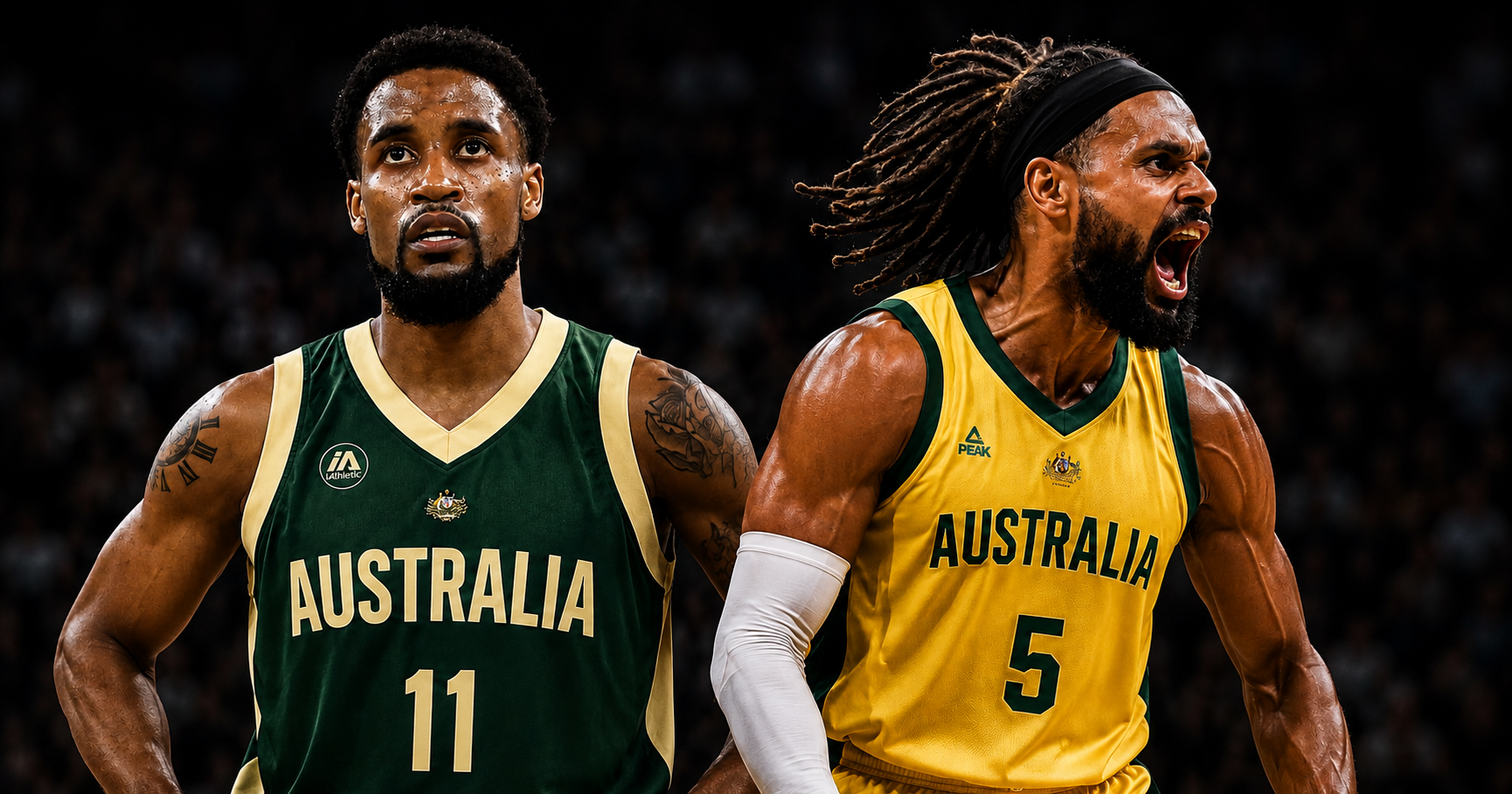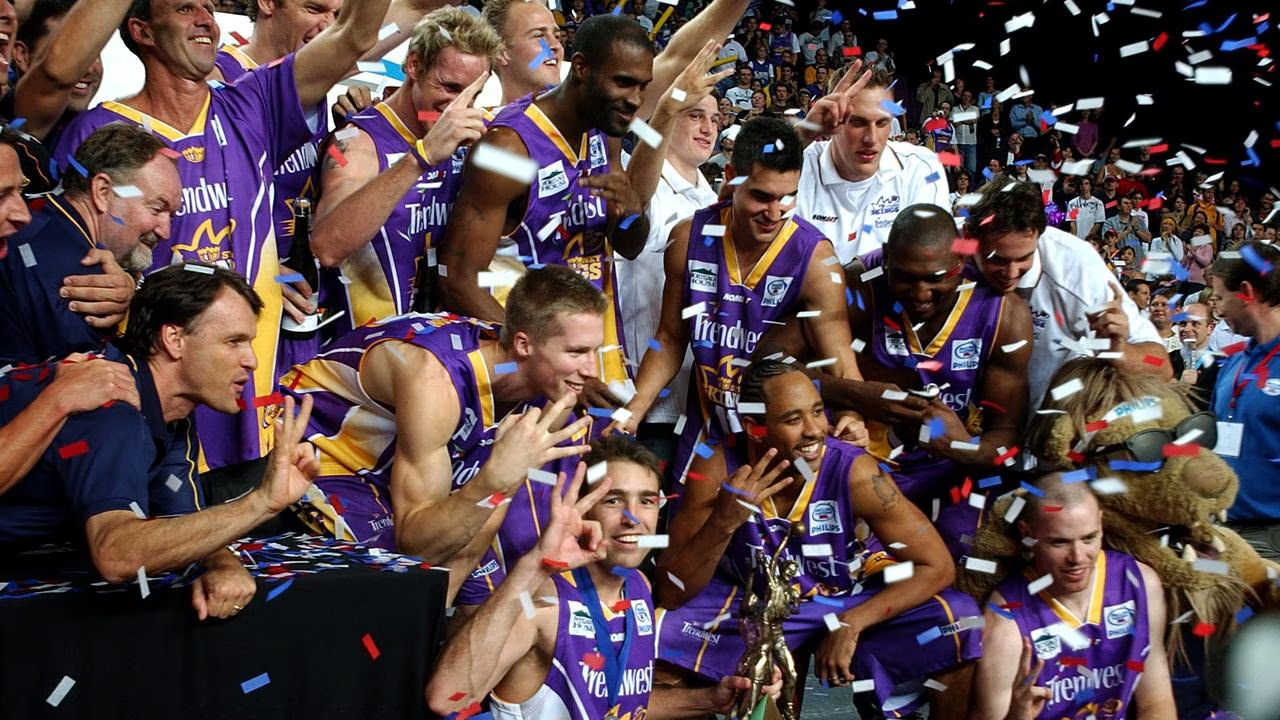
Darnell Mee on Adelaide’s 2001 Heartbreak, Defending NBL legends and more
August 5, 2026



NICKNAME/S: Hammer
BIO: Shane Heal was born in Melbourne (VIC), He attended Upper Yarra Secondary College and began playing basketball as a junior with the Nunawading basketball association. Heal received a scholarship to attend the Australian Institute of Sport (Canberra) in 1987. He spent one year there and played for the program’s state league team.
Shane Heal made his NBL debut with the Brisbane Bullets at 17 years of age. He scored 14 points in his first game.
After winning their second NBL championship in 1987, Brisbane entered the 1988 season hoping to defend their title and claim a third championship in four years. Head coach Brian Kerle retained almost his entire championship-winning squad, with Leroy Loggins, Emery Atkinson, Larry Sengstock, Ron Radliff, Darren Perry, Robert Sibley, John Dorge and Danny Morseu all returning. James Carr and Paul Webb departed, while promising young guards Shane Heal (via AIS) and Simon Kerle were added to provide further backcourt depth.
Brisbane opened the season against Geelong on February 13, where the 17-year-old Heal (14 points) made his NBL debut as the Bullets overwhelmed the Supercats 149-85 at the Brisbane Entertainment Centre. The 64-point victory gave the defending champions an impressive start to their pursuit of another title.
Heal (15 points across 25 games) quickly became one of the league’s most exciting young guards, providing Brisbane with instant offence off the bench behind starting point guard Darren Perry (10.4 points and 3.7 assists across 24 games). Despite being a rookie, he averaged almost 27 minutes per game and developed into one of Brisbane’s most dangerous outside shooters, connecting on 57 three-pointers at 39 percent for the season.
On May 28, Heal (21 points, 3 rebounds, 1 assist, and 1 steal) connected on three three-pointers as Brisbane defeated Melbourne 112-108 at the Brisbane Entertainment Centre. Loggins (36 points, 7 rebounds, and 4 steals) led the Bullets, while Perry (19 points and 2 assists) provided additional support. Alvis Rogers (32 points, 14 rebounds, and 4 assists) and Andrew Gaze (32 points, 3 assists, and 3 steals) led Melbourne, but Brisbane held on for a four-point victory.
Heal’s highest-scoring game came against Westside on June 25, where he produced 35 points, 1 rebound, 1 assist, and 1 steal, making 11-of-19 field goals, including seven three-pointers, and all six of his free throws. Loggins (20 points and 11 rebounds) and Morseu (16 points and 6 rebounds) provided support, while Bruce Bolden (32 points, 10 rebounds, and 2 blocks) led the Saints. Brisbane defeated Westside 106-100 at the Brisbane Entertainment Centre, with Heal’s seven three-pointers and season-high scoring performance highlighting his remarkable development during his rookie season.
Brisbane remained in second place with two rounds remaining, but a crucial home game against Canberra on July 2 proved costly. Heal (20 points, 1 rebound, and 1 assist) made six of his eight three-point attempts, while Sengstock (22 points and 15 rebounds) and Loggins (15 points and 8 rebounds) provided support. Phil Smyth (29 points, 6 rebounds, and 7 assists) led Canberra to a 105-97 victory at the Brisbane Entertainment Centre. Despite winning their final regular-season game, the defeat ultimately left Brisbane tied with North Melbourne at 18-6, with the Giants claiming second place by nine points on head-to-head differential after the teams split their two meetings. Brisbane finished third, missing the automatic semifinal berth and being forced into a knockout quarterfinal.
Loggins (24.7 points, 7.8 rebounds, 3.9 assists, and 2.4 steals across 25 games) remained Brisbane’s leading scorer and earned his seventh consecutive All-NBL First Team selection while leading the league in free-throw percentage at 85.6 percent. Atkinson (16.8 points, 8.4 rebounds, and 1.2 blocks across 25 games) provided an athletic presence around the basket, while Radliff (12.4 points, 3.5 assists, and 1.2 steals across 25 games) continued to supply experienced backcourt play. Sengstock (11.1 points and 10.2 rebounds across 25 games) remained the team’s captain and leading rebounder, with Sibley (8.6 points and 4.7 rebounds across 21 games) and Dorge (7.1 points, 4.6 rebounds, and 1.4 blocks across 25 games) providing additional frontcourt depth. Heal’s impressive debut season saw him awarded the NBL Rookie of the Year award, becoming one of the youngest players to establish themselves as a regular contributor on a championship-contending team.
Brisbane faced sixth-placed Perth at the Brisbane Entertainment Centre on July 16, where Heal (6 points, 2 rebounds, and 1 assist) struggled in his first NBL playoff appearance, making only 2-of-11 field goals and missing all three of his three-point attempts. Loggins (31 points, 11 rebounds, 8 assists, and 5 steals) produced one of his finest all-around playoff performances, while Sengstock (17 points and 10 rebounds) provided support, but Brisbane made only 2-of-16 attempts from beyond the arc. Former Brisbane star Calvin Bruton (31 points, 3 assists, and 3 steals) and James Crawford (26 points, 13 rebounds, and 8 blocks) led Perth, which shot 52 percent from the field and defeated the Bullets 113-98, eliminating the defending champions in the quarterfinals and ending their run of four consecutive Grand Final appearances.
GEELONG SUPERCATS
1989
After finishing winless in 1988, Geelong moved on from imports Sam Foggin and Leonard Mitchell, with David Leslie, Ricky Skinderis and Sandy Caldwell also gone from the rotation, while Ray Shirley, Bruce Hope and Craig Fitzsimmons returned from the previous season’s group. Backed by a group of local businessmen who saved the club from folding, Geelong rebranded from the Cats to the Supercats and named Barry Barnes head coach after he had been replaced by Brian Goorjian at Eastside Melbourne.
Barnes added Shane Heal (via Brisbane), Jim Bateman (via Illawarra), Daren Rowe and Aubrey Sherrod, with Heal joining Geelong after winning NBL Rookie of the Year with Brisbane in 1988. Once the season got underway, Heal (14.2 points, 5.5 assists, and 1.4 steals) was handed the keys to the offence, starting at point guard and leading Geelong in assists during his second NBL season.
Heal recorded a number of elite performances this season. On May 6, Heal (22 points, 2 rebounds, 4 assists, and 1 steal) produced one of his strongest games of the season, but Geelong fell 116–125 to Adelaide at Apollo Entertainment Centre. On July 22, Heal (21 points, 2 rebounds, and 4 assists) helped Geelong defeat Westside 125–111 at The Arena, giving the Supercats one of their five wins during the rebuild season. On August 19, Heal (14 points, 5 rebounds, 6 assists, and 3 steals) helped Geelong defeat his former club Brisbane 91–87, with Sherrod (22 points and 5 steals) leading the scoring and Rowe (10 rebounds) giving the Supercats presence on the glass. On September 6, Heal (22 points, 1 rebound, and 4 assists) matched his season high in a 104–112 home loss to Eastside Melbourne, with Kent Lockhart (39 points), Arne Duncan (28 points) and Dean Uthoff (22 points) leading the Spectres.
Rowe (23.1 points, 11.7 rebounds, 3.0 assists, 2.4 steals, and 1.5 blocks) and Sherrod (22.6 points, 4.7 rebounds, 3.4 assists, and 2.0 steals) carried Geelong offensively, while Bateman (17.2 points, 8.2 rebounds, and 2.0 assists), Shirley (10.3 points, 5.1 rebounds, and 1.4 steals), Bruce Hultgren (7.4 points and 4.0 rebounds), Hope (6.1 points) and Andrew Parkinson (4.4 points) rounded out the main rotation.
Geelong finished 13th with a 5–19 record and missed the playoffs, but the season was a clear step forward from the winless year before. Geelong closed its season on September 9 with a 103–132 home loss to North Melbourne, with Heal (30 points and 5 assists) hitting 6-of-12 from three, while Bateman (14 rebounds) and Rowe (9 rebounds) led Geelong on the glass.
1991
Following three consecutive seasons with only 16 combined wins, the 1991 Geelong Supercats entered the NBL season as underdogs after athletic import forward Daren Rowe departed and rising swingman Andrew Parkinson exited (to Southern Melbourne), while Bobby Locke, Vince Hinchen, Shane Heal, John Dorge and Jim Bateman returned to head coach Barry Barnes’ main group.
A refreshed team culture, savvy offseason recruiting, and a financial boost from a dedicated local ownership group, including four major stakeholders and around 30 shareholders, set the foundation for one of the most memorable seasons in club history, with Barnes adding defensive ace Terry Dozier and rookie Leigh Cleary to the bench unit.
Geelong’s campaign started slowly with three losses to North Melbourne (109–112), Eastside Spectres (100–119), and Perth (105–110), before a morale-boosting 126–106 road win over Brisbane sparked a major form reversal that saw the Supercats win 16 of their final 22 games.
Heal (23.4 points, 3.0 rebounds, 7.8 assists, and 1.4 steals) became the engine behind Geelong’s up-tempo offence in his third NBL season, playing more than 33 minutes per game and using his fearless shot selection, long-range accuracy, and growing leadership to cement himself as one of the league’s elite guards.
On May 3, Heal (13 assists) directed the offence as Geelong overwhelmed Wollongong 145–104 at The Arena, an early sign that the new starting unit had enough scoring around him to punish teams when the ball moved.
His best scoring game of the regular season came on July 19 at the Derwent Entertainment Centre, where Heal (33 points) kept Geelong close against Hobart before the Supercats fell 107–111, with Locke (28 points) and Dozier (22 points) in support while Wayne McDaniel (34 points) led the Devils.
Two days later, Geelong bounced back with a 133–111 road win over Melbourne, with Dorge (29 points), Heal (24 points and 7 assists), and Dozier (18 points and 13 rebounds) answering Andrew Gaze (37 points) and David Colbert (29 points).
On August 11, Heal (23 points) helped Geelong beat North Melbourne 121–113 at The Arena, with Locke (41 points), Hinchen (20 points), and Dozier (19 points and 11 rebounds) giving the Supercats the kind of statement win that reinforced their playoff credentials.
Geelong stormed to a 17–9 record and tied Eastside for second place, but the two clubs split their head-to-head games and Eastside claimed the higher seed on point differential by a single point (+1), pushing the Supercats into third place and into the playoffs for the first time since 1984.
Heal formed a potent perimeter trio with veteran Locke (25.7 points, 2.7 rebounds, 6.4 assists, and 3.0 steals) and Hinchen (24.1 points, 5.1 rebounds, 5.2 assists, and 1.4 steals), creating matchup problems for opposing defences while Dozier (22.0 points, 9.7 rebounds, 2.3 assists, and 1.7 steals) brought toughness on both ends.
Dorge (14.3 points, 13.7 rebounds, 1.3 assists, 1.4 steals, and 4.3 blocks) anchored the interior and led the NBL in blocked shots, while Dozier claimed NBL Best Defensive Player honours and Locke led the NBL in steals.
All five starters averaged over 33 minutes per game, with Bateman (7.5 points and 5.1 rebounds) providing consistent minutes off the bench while Bruce Hultgren, Cleary, Mark Griffin, and Shane Crothers gave the team enough depth to stay competitive against the league’s elite.
Geelong opened the Elimination Finals at The Arena with a 139–119 statement win over North Melbourne, as Heal (36 points, 11 assists, and 3 steals) drilled nine three-pointers in one of the best playoff performances of his career, while Hinchen (31 points and 7 assists), Dorge (23 points, 12 rebounds, and 6 blocks), Locke (24 points and 7 assists), and Dozier (17 points, 13 rebounds, and 5 assists) overwhelmed the Giants, who were led by Scott Fisher (44 points) and Paul Maley (27 points and 9 rebounds).
Game two moved to North Melbourne, where the Giants responded at home and evened the series with a 136–116 win behind Fisher (42 points) and Darren Reidy (26 points), despite Hinchen (37 points) and Heal (27 points) leading Geelong.
Back at The Arena for Game 3, Geelong gave it everything but fell short 113–125 despite Locke (31 points and 6 assists), Heal (27 points, 3 rebounds, and 7 assists), Hinchen (23 points, 7 rebounds, and 6 assists), Dozier (19 points and 11 rebounds), and Dorge (12 points, 11 rebounds, and 2 blocks), while Reidy (32 points and 8 rebounds), Fisher (30 points and 14 rebounds), Maley (24 points and 12 rebounds), and Mark Leader (21 points, 6 rebounds, and 6 assists) led the Giants.
1991
Following three consecutive seasons with only 16 combined wins, the 1991 Geelong Supercats entered the NBL season as underdogs. But a refreshed team culture, savvy offseason recruiting, and a financial boost from a dedicated local ownership group—including four major stakeholders and around 30 shareholders—set the foundation for one of the most memorable seasons in club history. The Supercats stormed to a 17–9 record, finishing third on the ladder and reaching the playoffs for the first time since 1984.
The team underwent significant roster changes before the season tipped off. Athletic import forward Daren Rowe departed and was replaced by defensive ace Terry Dozier, who would go on to claim NBL Best Defensive Player honours. Rising swingman Andrew Parkinson also left for Southern Melbourne, giving rookie Leigh Cleary an opportunity to join the bench unit.
Led by head coach Barry Barnes, Geelong’s campaign started slowly with three losses to North Melbourne (109–112), Eastside Spectres (100–119), and Perth (105–110). But things shifted quickly after a morale-boosting 126–106 win over Brisbane, which sparked a major form reversal. The Supercats went on to win 16 of their final 22 games—more than their previous three seasons combined—and surged into the finals picture.
Much of that success can be credited to the outstanding play of Geelong’s starting unit, particularly young point guard Shane Heal. In just his third NBL season, Heal averaged 23.4 points, 3.0 rebounds, and 7.8 assists while playing 33+ minutes per game. With his fearless shot selection, long-range accuracy, and growing leadership, Heal cemented himself as one of the league’s elite guards and the engine behind Geelong’s up-tempo offense.
Heal formed a potent perimeter trio with veteran Bobby Locke (25.7 points, 6.4 assists, 3.0 steals) and Vince Hinchen (24.1 points, 5.1 rebounds, 5.2 assists), creating matchup nightmares for opposing defenses. Meanwhile, Dozier (22.0 points, 9.7 rebounds, 2.3 assists, 1.7 steals) brought toughness on both ends, and center John Dorge anchored the interior with 14.3 points, 13.7 rebounds, and an NBL-best 4.3 blocks per game.
Supporting the starting five was veteran Jim Bateman (7.5 points, 5.1 rebounds), who provided consistent minutes off the bench. The rotation also included Bruce Hultgren, Leigh Cleary, Mark Griffin, and Shane Crothers, giving the team enough depth to stay competitive against the league’s elite.
Geelong’s 17–9 record tied them with Eastside for second place, but the Supercats were pushed to third due to the league’s tiebreaker rule. The two clubs split their head-to-head games, but Eastside claimed the higher seed on point differential by a single point (+1).
In the Elimination Finals, the Supercats hosted North Melbourne in Game 1 and lit up The Arena in a 139–119 statement win. Shane Heal was unstoppable, finishing with 36 points, 11 assists, and nine three-pointers in one of the best playoff performances of his career. Hinchen chipped in 31 points, while Dozier added 17 points and 13 rebounds.
Game 2 saw North Melbourne respond at home, evening the series with a 136–116 win. Back in Geelong for the deciding Game 3, the Supercats gave it everything but fell short, 125–113. Heal scored 27 points, Locke added 31, and Hinchen poured in 23, but the Giants were simply too strong behind Paul Maley (24 points, 12 rebounds) and Scott Fisher (30 points on 14-of-20 shooting).
BRISBANE BULLETS
1992
After missing the playoffs in 1991, Brisbane entered the season without Derek Rucker, Robert Sibley (to Melbourne), Cameron Dickinson and Brendan Joyce (to South East Melbourne), while Gordie McLeod moved into an assistant coaching role. Head coach Brian Kerle retained captain Leroy Loggins, Andre Moore, Paul Rees and Greg Fox, brought Shane Heal back (via Geelong) after three seasons with the Supercats and added import Adrian Branch following Rucker’s departure, along with Simon Kerle, Luke Gribble and rookie Blair Smith.
Brisbane opened the season at the Brisbane Entertainment Centre on April 4 with a 138-116 win over Hobart, where Heal (19 points, 6 rebounds, and 5 assists) returned to the Bullets alongside Loggins (33 points, 14 rebounds, 2 assists, and 5 steals) and Simon Kerle (23 points, 8 rebounds, 5 assists, and 2 steals), while Ken McFadden (37 points, 5 rebounds, 2 assists, and 2 steals) led the Devils.
Heal (20.9 points, 7.1 assists, and 1.5 steals across 25 games) immediately became Brisbane’s main playmaker and finished fourth in the NBL in assists, giving the Bullets another high-volume perimeter scorer alongside Branch and Loggins. Brisbane won its opening two games and reached 6-4 through its first ten before a three-game losing streak became its poorest stretch of the season.
His best and highest-scoring game came against Newcastle on May 16, when Heal (34 points, 3 rebounds, 9 assists, and 2 steals) made five three-pointers as Branch (27 points, 12 rebounds, 3 assists, and 1 steal) and Moore (22 points, 16 rebounds, 2 assists, and 1 steal) helped Brisbane win 121-113, while Al Green (30 points, 2 rebounds, 5 assists, and 2 steals) led the Falcons.
During the season Heal also made his Olympic debut with the Australian Boomers at the 1992 Barcelona Olympics, where Australia finished sixth.
On September 5, Heal (18 points, 3 rebounds, 8 assists, and 4 steals) helped Brisbane remain in the finals race with a 113-110 win over Sydney. Loggins (32 points and 8 rebounds) and Branch (27 points and 9 rebounds) led the scoring, while Dwayne McClain (31 points, 6 rebounds, 3 assists, and 3 steals) was best for the Kings.
Branch (28.4 points, 10.8 rebounds, and 1.6 steals across 25 games) became Brisbane’s leading scorer, while Loggins (23.3 points, 7.3 rebounds, 3.6 assists, and 2.9 steals across 23 games) remained one of the league’s premier two-way players, earning All-NBL Second Team honours and winning Brisbane’s club MVP award. Moore (20.3 points, 12.5 rebounds, and 1.6 blocks across 26 games) anchored the frontcourt, while Simon Kerle (11.2 points, 3.0 rebounds, and 5.0 assists across 24 games) provided another playmaker in the backcourt.
Brisbane closed the regular season in Perth on September 26, where Heal (26 points, 2 rebounds, 7 assists, and 1 steal), Loggins (27 points, 10 rebounds, 3 assists, 3 steals, and 1 block) and Moore (26 points, 12 rebounds, 7 assists, and 1 block) led the Bullets to a 115-108 win, while Andrew Vlahov (23 points, 8 rebounds, 4 assists, 3 steals, and 1 block) was Perth’s best. Brisbane and Perth both finished 12-12, but the Wildcats held the head-to-head points differential by four points, leaving the Bullets seventh after going 6-6 both at home and on the road.
The quarterfinal series opened at the Sydney Entertainment Centre on September 28, where Heal (7 points, 4 rebounds, and 7 assists), Loggins (29 points, 7 rebounds, 5 assists, and 3 steals) and Moore (25 points, 15 rebounds, 3 assists, and 1 block) led Brisbane, while McClain (27 points, 6 rebounds, and 2 assists) paced Sydney to a 100-91 win.
Heal did not play game two at the Brisbane Entertainment Centre, where Branch (36 points, 10 rebounds, 8 assists, and 1 steal) and Simon Kerle (28 points, 1 rebound, and 5 assists) led the Bullets, while McClain (32 points, 4 rebounds, and 5 assists) and Damian Keogh (29 points, 5 rebounds, 10 assists, and 5 steals) carried Sydney to a 130-123 win, completing the 2-0 sweep and ending Brisbane’s season.
1993
After Brisbane’s 1992 quarterfinal exit, Adrian Branch (to Geelong), Simon Kerle (to South East Melbourne), Paul Rees (to North Melbourne) and Greg Fox (to Gold Coast) exited the main group, while Leroy Loggins, Andre Moore, Shane Heal, Luke Gribble, Blair Smith and Lyndon Brieffies returned.
In 1993, Brisbane replaced long-time coach Brian Kerle with former Coach of the Year (1988) and 1989 championship-winning coach Bruce Palmer, who added David Colbert (via Melbourne), Shane Froling (via Hobart), Rodger Smith (via Gold Coast), Nigel Purchase (via Melbourne) and Nigel Bergham.
Brisbane opened the season at Boondall with a 96–97 loss to Wollongong, where the returning guard contributed 6 assists and hit 4 three-pointers before the Hawks stole the road win.
Heal (17.8 points, 2.3 rebounds, 6.5 assists, and 1.9 steals) settled into Brisbane’s starting backcourt after his first full season back from Geelong, finishing fourth in the NBL in assists and giving Palmer another perimeter scorer alongside Loggins and Colbert.
On April 30, Heal (33 points) delivered one of his best games of the season as Brisbane defeated Hobart 122–109 at the Derwent Entertainment Centre, with Moore (26 points) adding interior punch while Wayne McDaniel (34 points) led the Devils.
On September 4, Heal (33 points) backed Colbert (37 points) as Brisbane edged Canberra 109–106 at the AIS Arena, with Rodney Monroe (28 points) and Lachlan Armfield (25 points) keeping the Cannons close.
Brisbane closed the regular season with a tough road double, first falling 115–118 to Geelong at The Arena despite Colbert (39 points), Heal (23 points and 9 assists) and Moore (19 points), while Adrian Branch (35 points) and Michael Morrison (34 points) led the Supercats.
The next night, Brisbane fell 102–105 to Perth at the Perth Entertainment Centre despite Colbert (23 points and 13 rebounds), Moore (21 points and 14 rebounds) and Heal (21 points), leaving the Bullets at 16–10 for fourth place after Melbourne won the head-to-head tiebreaker for third.
Loggins (23.2 points, 6.7 rebounds, 3.1 assists, and 2.7 steals) again led Brisbane in scoring, earned All-NBL First Team honours and the club MVP award, while Colbert (22.5 points, 9.4 rebounds, 1.7 steals, and 1.3 blocks) led the league in free-throw percentage at 93.3%.
Moore (21.2 points, 11.8 rebounds, 1.2 steals, and 1.9 blocks) anchored the middle, led the NBL in blocks and earned All-NBL Third Team honours, while Froling (7.8 points and 3.8 rebounds) and Smith (7.6 points, 4.0 rebounds, 4.0 assists, and 1.9 steals) rounded out Palmer’s main rotation.
Brisbane opened the quarterfinals at the Newcastle Entertainment Centre with a 125–99 win over the Falcons, as Heal (29 points and 7 three-pointers), Colbert (28 points), Loggins (19 points) and Smith (7 assists) drove the Bullets, while Terry Dozier (33 points) and Al Green (17 points) led Newcastle.
Game two moved to the Brisbane Entertainment Centre, where Brisbane completed the sweep with a 122–118 win over Newcastle and moved into the semifinals against first-placed Perth.
The semifinal series opened in Brisbane, where the Bullets beat Perth 101–97 to take a 1–0 lead, but the Wildcats responded at the Perth Entertainment Centre with a 120–107 win in game two.
Perth then ended Brisbane’s season in the deciding game, defeating the Bullets 119–80 at the Perth Entertainment Centre.
1994
In 1994, Heal averaged 25.2 points, 3.2 rebounds, and 6.4 assists as the Bullets finished with a record of 18-8 and in Fourth place during the regular season.
Throwback to the last time an NBL player scored over 59 points in a game 🤩
In 1994, Shane Heal dropped 61 points for the Brisbane Bullets against the Townsville Suns at just 24-years-old 😮
Heritage Round starts this Thursday night 🍿 pic.twitter.com/9UFKs0rayI
— NBL (@NBL) December 4, 2024
1995
Having lost to Adelaide in the quarterfinals the previous season, the Bullets re-tooled their roster prior to 1995. The early exit saw Brisbane revamp their frontcourt, releasing veteran forward Shane Froling and imports Dave Colbert and Andre Moore. Although Leroy Loggins, Rodger Smith, Robert Sibley and Wayne Larkins were retained from last season, coach Bruce Palmer set out to recruit a younger roster he could develop over the next 2-3 seasons. He signed Andrew Goodwin and Mike Mitchell (both from rival team Gold Coast), and added import Chris Munk as their replacements.
John Rillie, who had just graduated from Gonzaga University, was a late addition to the team signed to back-up Heal.
Heal (22.9 points, 2.5 rebounds, and 7.4 assists), Loggins (21.7 points and 7.5 rebounds), and Mitchell (20.9 points and 6.8 rebounds) would carry the team offensively, notching up 60+ points a game between them with Heal also adding 22.9 points, 2.5 rebounds, and 7.4 assists per game. Additionally, promising young talent John Rillie finished the season with 13.0 points, 3.4 rebounds, and 3.9 assists per game and was awarded the NBL Rookie of the Year award but the ‘new look’ Bullets didn’t fare much better than the old ones. Brisbane finished in fifth place with a record of 16-10 and would suffer elimination during the Quarterfinalsstage yet again, this time losing to North Melbourne (0–2).
SYDNEY KINGS
1996
Sydney went through a period of major change prior to the 1996 season. From 1989 to 1995, the Kings had been coached by Bob Turner and had established themselves as a powerhouse franchise, particularly off the court. Corporate sponsorship through global juggernauts like Coca-Cola and Reebok had assisted in the enormous growth of the brand, resulting in numerous sell-outs at the Sydney Entertainment Centre.
But in 1995, the Kings struggled on the floor and failed to make the playoffs. And for a club that every year expected to not only make the playoffs but contend for a championship, that wasn’t good enough.
Bob Turner was replaced as coach by Alan Black, who had taken the Illawarra Hawks to the playoffs in 1993, 1994 and 1995 and was named NBL Coach of the Year in 1993 and 1995. Two foundation members of the Sydney Kings – Mark Dalton and Damian Keogh – were released from the club, as were a number of other players from the unsuccessful 1995 squad.
Black brought Hawks MVP Melvin Thomas along with him to the Kings and signed former Charlotte Hornets guard Tony Bennett as the team’s two imports. 25-year-old Stephen Whitehead (via Melbourne) joined the team, looking for more playing opportunities after serving a ‘apprenticeship’ behind stars Andrew Gaze and Lanard Copeland. But the key addition this year was owner Mike Wrublewski convincing Australia’s Boomers guard Shane Heal to move to Sydney and become the face of the franchise and captain of the team. Wrublewski even had the Kings swap their traditional purple and gold uniforms in favour of a black pin-striped design as a way to signify a new direction for Sydney in the hopes of re-energising a fan base.
Some addition by subtraction saw the Kings release Bennett during the pre-season and replace him with the high-flying excitement machine, Isaac ‘Ice’ Burton, out of Arizona State University. Burton (24.4 points, 6.6 rebounds, 3.4 assists and 3.1 steals) and Heal (23.3 points, 3.1 rebounds and 5.5 assists) formed a deadly combination in the backcourt. Up front, Melvin Thomas (20.9 points, 9.3 rebounds, 4.4 assists, 1.1 steals and 1.9 blocks) and Bruce Bolden (16.8 points, 10.4 rebounds, 2.7 assists, 1.8 steals and 1.1 blocks) were a unstoppable tandem, with both men adding toughness, rebounding and a deadly ability to knock down the midrange jumper.
Right from the start, they got the old Kingdome rocking, with Heal dropping 20 points in the fourth quarter of a unforgettable comeback win in the season opener at home against the North Melbourne Giants.
That set the scene for an incredible first two months, with Sydney jumping to an 11–3 record, winning their first eight games at home and leading the NBL standings. In one amazing stretch, the Kings won nine straight games, averaging 120.4 points per game over that span.
Those wins included a blowout win over the Gold Coast (131-112), which saw Shane Heal (35 points and 7 assists) and Melvin Thomas (26 points, 11 rebounds and 4 blocked shots) putting up big numbers. A nail biter over Perthat home (122-121), where three players scored at least 20 points, and Thomas finished just two assists shy of a triple-double, and win over NSW rival Illawarra (128-106), where Isaac Burton (32 points, 12 rebounds and 7 assists) dominated both ends of the court.
Unfortunately, a mid-season injury to Heal slowed the team down, but when Shane returned, he led the Kings to wins in four of their last five games, taking them to a fifth-place 16-10 record and a playoff appearance.
Sydney (16-10) faced off against Canberra (16-10) in the Quarter-finals, behind import duo Robert Rose and Darnell Mee. On the back of a season-high scoring night, Stephen Whitehead (24 points and 5 rebounds) surprised everyone in game one, winning by 24 points in the opening game (113-89). The Cannons would get a huge boost from their supporting cast in game two, with Jamie Pearlman (29 points, 4 rebounds and 3 assists), David Close (25 points, 5 rebounds, and 3 assists) and Ray Borner (21 points, 8 rebounds and 2 steals) as well as Mee (29 points, 7 assists, 2 steals and 3 blocks) all scoring over 20 points. Rose (11 points, 9 rebounds, and 9 assists) finished just shy of a triple-double with Canberra defeating Sydney by 47 points (146-99). The deciding game saw the stars of the series come out firing, with Canberra’s Rose (23 points, 10 rebounds, and 5 assists) and Mee (20 points, 3 rebounds, and 8 assists) going head-to-head with Sydney’s Heal (21 points, 3 rebounds, and 5 assists) and Burton (25 points, 13 rebounds, and 5 steals) but it was the team’s supporting casts the made the difference. Outside of Heal and Bruton, the Kings managed to score a mere 43 points, while the Cannons remaining roster tallied 58 points, with Borner (18 points and 7 rebounds), Blakemore (17 points and 6 rebounds), and Pearlman (17 points and 3 assists) all having big games. Canberra closed out the series with the win (101-89) and headed into a semi final against Melbourne.
While the Kings were unable to progress past the first round of the playoffs, it was still a season to remember.. Sydney averaged 108.8 points per game in the regular season – the most points scored per game in a regular season in franchise history – and also set team records that have never been broken for regular season field goal percentage (51.6%) and three-point percentage (41.2%).
Burton led the entire league in three-point percentage, was third in the NBL in steals and would go on to become the first Sydney King to win NBL Defensive Player of the Year. Heal would finish among the league’s best when he earned selection in the All-NBL Second Team.
After their 1996 elimination, the Kings would not make the NBL playoffs again until 2001, when they made it to the first round before being eliminated by the Townsville Crocodiles.
1998
After finishing tenth with a 12-18 record in 1997, Sydney made another series of changes, with Bill Tomlinson replacing Alan Black as head coach. Melvin Thomas (to Canberra), Isaac Burton (to Newcastle) and Cameron Dickinson (to Wollongong) departed, while Bruce Bolden, Aaron Trahair, Matthew Nielsen, Stephen Whitehead and Brad Rosen remained. Shane Heal (via Minnesota) returned after spending the previous season in the NBA, with Scott McGregor (via Newcastle), Matt Nover and Stephen Jackson among the other additions.
Heal returned despite having two years remaining on his Minnesota deal. After appearing in 43 games for the Timberwolves, he cited limited opportunities behind Stephon Marbury, the cold Minnesota weather and a calf injury shortly before the season as factors in choosing to return to Australia. Nover was a former NCAA Final Four centre who had also played ‘Ricky Roe’ in the movie Blue Chips, while the 19-year-old Jackson became the youngest import signing in NBL history. Jackson had led the 1996 McDonald’s All-American Game in scoring on a team containing Kobe Bryant, Jermaine O’Neal and Richard Hamilton, but was ruled academically ineligible at Arizona before entering the 1997 NBA Draft. Phoenix selected him in the second round, but after failing to make the Suns roster he began his professional career in Sydney alongside the Kings’ young Australian core of Trahair, Nielsen, Whitehead and McGregor.
Sydney opened the season against Canberra at the AIS Arena on February 1, where Heal (22 points, 7 rebounds, and 16 assists) controlled the offence as the Kings defeated the Cannons 123-96. Trahair (35 points, 4 rebounds, and 3 assists) and McGregor (24 points) provided the scoring around him, while Mike McKay (25 points) led Canberra.
Heal (20.9 points, 3.7 rebounds, and 6.7 assists across 29 games) immediately returned to his role as Sydney’s leading scorer. Nover (7.7 points and 5.6 rebounds across 7 games) and Jackson (6 points across 4 games) struggled to establish themselves, combining for only 36 points across Sydney’s first three games, while Jackson became the first import in NBL history to go scoreless on debut. Despite the uncertainty surrounding its imports, Sydney won its opening three games.
The third victory came against Melbourne at the Sydney Entertainment Centre on February 14, where Heal (9 points, 4 rebounds, 7 assists, and 1 steal) struggled with his shot but Sydney edged the Tigers 93-92. Bolden (23 points and 12 rebounds) and Nielsen (22 points and 6 rebounds) carried the scoring load, while Marcus Timmons (36 points and 10 rebounds) led Melbourne.
Sydney’s unbeaten start ended in Adelaide on February 20, where Heal (16 points, 1 rebound, and 2 assists), Trahair (19 points and 9 rebounds) and Whitehead (18 points) were unable to keep pace with Kevin Brooks (28 points and 16 rebounds) as the 36ers won 119-100. The bigger setback came late in the third quarter when Jackson (6 points) attempted to block Brooks, landed awkwardly and broke his foot, ending his NBL season.
By Round 6 the Kings were searching for answers. Heal (21 points, 9 rebounds, and 1 assist) and Trahair (40 points) combined for 61 points against Wollongong on March 7, with Trahair making 13-of-16 shots, but Sydney still lost 108-99 at the Sydney Entertainment Centre. Nover was released shortly afterwards.
Former King Dave Simmons (via Newcastle) and Evers Burns were brought in to rebuild the frontcourt. Burns (16.5 points and 9.4 rebounds across 22 games) remained for the rest of the season, while Simmons (6.5 points and 6.3 rebounds across 6 games) lasted only six appearances before Sydney released him and added former North Carolina State guard Kelsey Weems. Weems (20 points, 4.9 rebounds, 5.1 assists, and 1.5 steals across 12 games) gave Tomlinson another ball-handler and allowed Heal and Trahair (13.1 points, 3.5 rebounds, and 3 assists across 27 games) to spend more time at shooting guard. The Kings’ import carousel also included Kenny Payne, who never appeared in a game, and Bryan Caver, who played twice before leaving the rotation.
Heal produced his best and highest-scoring game against Townsville at the Sydney Entertainment Centre on March 21, making nine three-pointers and finishing with 33 points, 9 rebounds, 11 assists, and 1 steal as the Kings defeated the Crocodiles 94-89. Burns (18 points and 12 rebounds) gave Sydney an inside presence, while Simon Kerle (25 points) led Townsville.
The repeated roster changes prevented Sydney from building on its early start, with the Kings losing 10 of 12 games after beginning the season 3-0. Nielsen (16.4 points, 8.3 rebounds, and 1.3 steals across 28 games) continued his rapid development, improving from 9.9 points and 4.9 rebounds in 27 minutes per game the previous season while increasing his playing time to 34 minutes. Bolden (10.6 points and 5.3 rebounds across 30 games) and McGregor (9.4 points and 5.3 rebounds across 30 games) provided further support through the constant changes. Jackson’s Australian stay ended after only four games, but he later played 858 NBA games and won the 2003 NBA championship with San Antonio.
Heal did not play in Sydney’s final game against Townsville on June 9, with Nielsen (38 points, 15 rebounds, and 5 assists) and Bolden (29 points and 8 rebounds) leading the Kings to a 140-131 road victory despite Kerle scoring 29 points for the Crocodiles. The win gave Sydney consecutive victories to finish the season, but the Kings ended eighth with a 13-17 record and missed the playoffs.
2000/01
After missing the playoffs in 1999/00, Sydney moved on from Kendrick Johnson, Kevin Brooks, Aaron Trahair, Scott McGregor, Darren Smith, Andrew Kram, Acie Earl, Steve Woodberry, Drew Barry and Ben Castle, while Matthew Nielsen, Ben Melmeth, Derek Moore and Michael Kingma returned to Brett Brown’s main group.
Brown brought Shane Heal back after two seasons with Near East in Greece and after his Sydney 2000 Olympic campaign, with Frank Drmic (via Victoria), import James Smith, Terry Johnson, Luke Carnegie, David Loboja and Brendan Grugan joining the roster.
Sydney opened the season on October 23 with a 104–98 road win over Canberra at the AIS Arena, giving the reworked group a first-up result after two years outside the playoffs.
Heal (24.6 points, 4.0 rebounds, and 6.0 assists) led the Kings’ offence again, carrying the backcourt during a lacklustre season where Sydney limped home to a fifth place finish with a 17–11 record.
Nielsen (20.2 points, 9.5 rebounds, 3.0 assists, and 1.2 blocks) emerged as one of the league’s top big men, while Melmeth (16.0 points and 7.1 rebounds), Drmic (14.6 points, 6.8 rebounds, and 1.3 steals), Smith (11.6 points, 5.0 rebounds, and 1.3 steals), Moore (10.9 points, 6.9 rebounds, and 2.0 blocks), and Johnson (8.5 points, 4.1 rebounds, and 1.8 steals) rounded out Brown’s main contributors.
The Kings’ import spot changed throughout the season, with Ernest Nzigamasabo seeing limited court time before being released, Lamont Strothers being signed but injured before playing a game, Dedric Willoughby (9 points and 5 assists across 1 game) lasting one game before a knee injury, and Randolph Childress (14.5 points and 3.3 assists) arriving late to provide extra scoring and playmaking depth.
On November 11, Heal (23 points and 7 assists) helped Sydney defeat West Sydney 113–101 at the Sydney Super Dome, with Melmeth (23 points) and Drmic (22 points) giving the Kings balance while Rashad Tucker (29 points) and Jason Singleton (28 points) led the Razorbacks.
On November 18, Heal (31 points and 6 rebounds) matched Lanard Copeland (31 points) as Sydney defeated Melbourne 129–119 on the road, giving Brown’s group one of its strongest early-season wins.
His best game came on February 10, where Heal (51 points, 4 rebounds, and 8 assists) shot the lights out as Sydney defeated eventual champion Wollongong 132–104 at the Sydney Super Dome.
On February 17, Heal (25 points and 4 rebounds) helped Sydney beat Brisbane 112–106, with Nielsen (18 points and 13 rebounds), Smith (17 points and 7 rebounds), and Moore (16 points and 12 rebounds) giving the Kings enough support to hold off the Bullets.
Sydney closed the regular season with a heavy 107–138 loss to Townsville on March 30 before responding the next night with a 146–97 home win over Canberra, leaving the Kings fifth with a 17–11 record and back in the playoffs for the first time since 1996.
Heal and Nielsen were both named to the All-NBL Second Team, giving Sydney two league-level stars as they entered a qualifying finals series against Townsville.
The qualifying finals opened at the Sydney Super Dome, where Sydney played a near-perfect series opener and defeated Townsville 127–109 to take a 1–0 lead.
Game two moved to the Townsville Entertainment Centre, where the Crocodiles levelled the series with a 121–113 win as Robert Rose (16 rebounds and 5 assists), Bradley Davidson (6 assists), Mike Kelly (6 assists), and Pat Reidy (5 assists) helped Townsville survive, while Heal (6 assists) and Melmeth (8 rebounds) were among Sydney’s leaders.
Back in Townsville for game three, Rose (32 points and 8 assists) delivered the decisive performance, with Andrew Goodwin (19 points and 11 rebounds), Reidy (19 points and 5 rebounds), Kelly (18 points and 4 rebounds), Damon Hinton (16 points), and Davidson (13 points and 8 rebounds) giving the Crocodiles enough support, while Nielsen (28 points) and Heal (25 points and 8 assists) led Sydney before Townsville eliminated the Kings 122–114.
2001/02
After being eliminated by Townsville in the 2000/01 qualifying finals, Sydney moved on from Randolph Childress, Dedric Willoughby, Ernest Nzigamasabo, David Loboja and Brendan Grugan, while Shane Heal, Matthew Nielsen, Ben Melmeth, Frank Drmic, James Smith, Derek Moore, Michael Kingma, Terry Johnson and Luke Carnegie returned to Brett Brown’s main group.
Brown added rookie Travis Lane, Stephen Whitehead and B.J. Carter, while Isaac Burton returned mid-season to recreate part of Sydney’s 1996 playoff backcourt and add another scorer to a group that again relied heavily on its perimeter shot-making.
Sydney opened the season on October 25 at the AIS Arena with a 98–108 loss to Canberra, despite 33 points from their returning captain as the Kings started the year with the same inconsistency that would follow them through the season.
Heal (24.2 points, 3.3 rebounds, and 7.5 assists) carried Sydney’s offence through a lacklustre season, leading the NBL in assists and finishing among the league’s top scorers as the Kings struggled to stay above .500.
His best all-round game came on November 1, where Heal (40 points, 3 rebounds, 12 assists, and 2 steals) hit 15-of-27 from the field and 9-of-12 from three as Sydney defeated Cairns 138–88, setting what remained the Kings’ largest winning margin until 2026.
Nielsen (19.5 points, 8.9 rebounds, 3.8 assists, 1.3 steals, and 1.5 blocks) remained one of Sydney’s strongest frontcourt pieces, while Burton (20.0 points, 5.4 rebounds, 3.6 assists, and 2.5 steals) gave the Kings a mid-season spark after his return.
Drmic (17.9 points, 8.1 rebounds, 3.4 assists, and 1.3 steals) and Melmeth (15.6 points and 11.0 rebounds) gave Brown more scoring and rebounding, with Melmeth finishing second in the NBL in rebounds.
Smith (10.4 points and 3.5 rebounds), Moore (7.0 points and 4.0 rebounds), Lane (6.3 points, 3.2 rebounds, and 1.7 steals), and Whitehead (5.2 points) rounded out the main rotation, while Lane was named NBL Rookie of the Year and Heal earned All-NBL Third Team honours.
Sydney’s final stretch showed how close the Kings were to the playoff line without ever finding enough consistency to break through. On March 7 at the Sydney SuperDome, Heal (44 points) produced his best scoring game of the season, but Brisbane edged Sydney 113–110 behind Randy Rutherford (38 points), Damien Ryan (22 points), and Wade Helliwell (21 points), despite Melmeth (24 points) giving the Kings support.
Sydney finished the regular season on March 15 with a 124–122 overtime win over Perth at the Sydney SuperDome, with Nielsen (36 points), Heal (10 assists and 2 steals), and Burton (4 assists) helping the Kings close the year, while Rob Feaster (31 points) led Perth, leaving the Kings eighth with a 14–16 record and outside the playoffs.
2002/03
In 2002/03, Heal averaged 20 points, 2.9 rebounds, and 7.5 assists, playing a key role in the King’s rotation, helping the team finish reach a first place finish in the regular season with a 22-8 record.
SOUTH DRAGONS
2006/07
In 2006/07 Heal averaged 19.8 points and 2.7 rebounds, and 4.6 assists, and helped guide the Dragons to a seventh-place finish during the regular season with a 15-18 record.
2007/08
After stepping into the dual role of player-coach midway through the previous season, Shane Heal entered the 2007/08 campaign looking to establish a new identity for the South Dragons and build on their promising debut year. Keen to put his stamp on the roster, Heal oversaw several key personnel changes during the offseason—parting ways with imports Rosell Ellis and Kavossy Franklin, as well as veteran Frank Drmic. In their place came experienced scorers Cortez Groves (via Wollongong), big man Nick Horvath (via Adelaide), and point guard Luke Martin (via Cairns).
With momentum from a playoff berth in their inaugural season, expectations were high. But the optimism quickly faded as the Dragons stumbled out of the gate, dropping their first six games. That stretch included agonising near-misses—a one-point heartbreaker against Brisbane and a three-point loss to cross-town rivals Melbourne—that hinted at the team’s lack of cohesion despite flashes of potential.
Through the early rounds, Nick Horvath (12.8 points, 6.0 rebounds) delivered steady production, but with no clear timeline on when his New Zealand citizenship would be granted—and the team sitting at the bottom of the standings—Shane Heal made the difficult decision to deactivate Horvath. In his place, the Dragons signed American forward Bakari Hendrix as their new import.
Hendrix’s arrival ignited the team’s best stretch of the season. In his debut, the Dragons finally secured their first win of the year—a 102–90 victory over the New Zealand Breakers. He followed that performance with 19 points and 7 rebounds in a shootout win against Wollongong, poured in 34 points in a narrow loss to Townsville, and then added 24 points and 7 boards in a return win over the Crocodiles. The Dragons posted a 4–3 record during Hendrix’s first seven games, providing a much-needed boost.
During this same stretch, Matthew Burston (11.9 points and 7.0 rebounds) also found his stride, bouncing back from a string of injury-interrupted seasons to nearly triple his production from the previous year.
However, the momentum didn’t last. The Dragons collapsed down the stretch, losing their final 14 games as poor form, mounting pressure, and internal instability took hold. In January, assistant coach Michelle Timms departed the club, and by early February—with the team at 4-22—Heal was relieved of his duties as player-coach. Assistant Guy Molloy stepped in to lead the team through the final weeks of the season.
Hendrix (18.9 points and 6.8 rebounds) finished as the team’s leading scorer, while Cortez Groves (18.3 points, 2.4 rebounds, 3.7 assists, and 1.2 steals) anchored the backcourt. Heal contributed 15.8 points, 2.3 rebounds, and 3.9 assists across 19 games before his exit. Second-year standout Joe Ingles (15.4 points, 6.3 rebounds, 4.9 assists, and 1.2 steals) continued to shine with a strong all-around campaign.
Ultimately, the Dragons’ season unraveled under the weight of inconsistency and instability. They finished last in the NBL with a 5–25 record, including a league-worst 1–14 mark on the road. While Heal’s coaching stint ended prematurely, his on-court performance and leadership remained one of the few constants in a year filled with upheaval.
GOLD COAST BLAZE
2008/09
Heal averaged 15.9 points and 3 rebounds, and 5.7 assists during a lacklustre season where the Blaze limped home to a tenth place finish with a 8-22 record.
Shane Heal played sixteen seasons across five NBL teams. This included the Brisbane Bullets, Geelong Supercats, South Dragons, Sydney Kings and Gold Coast Blaze. He averaged 20.6 points, 2.9 rebounds, and 6.1 assists in 440 NBL games.
– 36th in total games played.
– 10th in total points
– 5th in total assists
– 38th in total steals
– 26th in assists per game.
| SEASON | AGE | TEAM | TEAM RECORD | GP | MINS | PTS | REB | AST | OR | DR | STL | BLK | TO | PF | FGM | FGA | FG% | 3PM | 3PA | 3P% | FTM | FTA | FT% | TS% | EFG% | HS |
|---|---|---|---|---|---|---|---|---|---|---|---|---|---|---|---|---|---|---|---|---|---|---|---|---|---|---|
| 2008-09 | 38 | Gold Coast | 8-22 (10) | 27 | 1,037 | 430 | 82 | 154 | 13 | 69 | 20 | 0 | 84 | 46 | 136 | 368 | 37% | 90 | 236 | 38% | 68 | 84 | 81% | 53% | 49% | 31 |
| 2007-08 | 37 | South | 5-25 (13) | 19 | 610 | 300 | 43 | 75 | 7 | 36 | 6 | 2 | 58 | 48 | 93 | 226 | 41% | 59 | 145 | 41% | 55 | 64 | 86% | 59% | 54% | 37 |
| 2006-07 | 36 | South | 15-18 (7) | 31 | 1,173 | 613 | 83 | 143 | 9 | 74 | 15 | 2 | 95 | 75 | 200 | 485 | 41% | 9 | 26 | 35% | 104 | 127 | 82% | 56% | 42% | 38 |
| 2002-03 | 32 | Sydney | 22-8 (1) | 37 | 1,556 | 741 | 106 | 222 | 20 | 86 | 23 | 2 | 133 | 81 | 253 | 608 | 42% | 144 | 377 | 38% | 91 | 113 | 81% | 56% | 53% | 46 |
| 2001-02 | 31 | Sydney | 14-16 (8) | 29 | 1,292 | 703 | 96 | 218 | 18 | 78 | 12 | 1 | 112 | 52 | 230 | 593 | 39% | 116 | 327 | 35% | 127 | 167 | 76% | 52% | 49% | 44 |
| 2000-01 | 30 | Sydney | 17-11 (5) | 31 | 1,350 | 762 | 123 | 186 | 10 | 113 | 16 | 0 | 133 | 57 | 244 | 578 | 42% | 129 | 338 | 38% | 145 | 176 | 82% | 58% | 53% | 51 |
| 1998 | 27 | Sydney | 13-17 (8) | 29 | 1,281 | 607 | 108 | 195 | 20 | 88 | 17 | 0 | 116 | 62 | 201 | 506 | 40% | 109 | 306 | 36% | 96 | 112 | 86% | 54% | 50% | 33 |
| 1996 | 26 | Sydney | 16-10 (5) | 26 | 1,162 | 607 | 80 | 143 | 8 | 72 | 18 | 0 | 84 | 42 | 204 | 441 | 46% | 110 | 260 | 42% | 89 | 108 | 82% | 62% | 59% | 35 |
| 1995 | 25 | Brisbane | 16-10 (6) | 27 | 1,169 | 617 | 68 | 201 | 11 | 57 | 28 | 0 | 94 | 48 | 192 | 454 | 42% | 104 | 280 | 37% | 129 | 156 | 83% | 58% | 54% | 42 |
| 1994 | 24 | Brisbane | 18-8 (5) | 28 | 1,205 | 705 | 90 | 179 | 16 | 74 | 49 | 0 | 87 | 47 | 235 | 514 | 46% | 141 | 326 | 43% | 94 | 109 | 86% | 62% | 59% | 61 |
| 1993 | 23 | Brisbane | 16-10 (4) | 31 | 1,334 | 552 | 72 | 203 | 12 | 60 | 32 | 0 | 84 | 60 | 197 | 483 | 41% | 92 | 263 | 35% | 66 | 81 | 81% | 53% | 50% | 33 |
| 1992 | 22 | Brisbane | 12-12 (7) | 25 | 1,121 | 523 | 70 | 178 | 15 | 55 | 37 | 1 | 89 | 56 | 189 | 410 | 46% | 83 | 214 | 39% | 62 | 73 | 85% | 59% | 56% | 34 |
| 1991 | 21 | Geelong | 17-9 (3) | 29 | 1,298 | 680 | 88 | 225 | 17 | 71 | 42 | 1 | 80 | 62 | 243 | 526 | 46% | 122 | 279 | 44% | 72 | 89 | 81% | 60% | 58% | 36 |
| 1990 | 20 | Geelong | 11-15 (10) | 24 | 1,070 | 538 | 77 | 200 | 12 | 65 | 65 | 2 | 75 | 61 | 199 | 465 | 43% | 91 | 246 | 37% | 49 | 59 | 83% | 55% | 53% | 37 |
| 1989 | 19 | Geelong | 5-19 (13) | 22 | 946 | 313 | 56 | 122 | 16 | 40 | 31 | 1 | 54 | 51 | 117 | 321 | 36% | 46 | 161 | 29% | 33 | 42 | 79% | 46% | 44% | 22 |
| 1988 | 17 | Brisbane | 18-6 (3) | 25 | 672 | 374 | 36 | 55 | 8 | 28 | 18 | 0 | 33 | 39 | 138 | 308 | 45% | 57 | 145 | 39% | 41 | 47 | 87% | 57% | 54% | 35 | Totals | 440 | 18276 | 9065 | 1278 | 2699 | 212 | 1066 | 429 | 12 | 1411 | 887 | 3071 | 7286 | 42.1% | 1502 | 3929 | 38.2% | 1321 | 1607 | 82.2% | 57% | 52% | 61 |
| SEASON | AGE | TEAM | TEAM RECORD | GP | MINS | PTS | REB | AST | OR | DR | STL | BLK | TO | PF | FGM | FGA | FG% | 3PM | 3PA | 3P% | FTM | FTA | FT% | TS% | EFG% | HS |
|---|---|---|---|---|---|---|---|---|---|---|---|---|---|---|---|---|---|---|---|---|---|---|---|---|---|---|
| 2008-09 | 38 | Gold Coast | 8-22 (10) | 27 | 38.4 | 15.9 | 3.0 | 5.7 | 0.5 | 2.6 | 0.7 | 0.0 | 3.1 | 1.7 | 5.0 | 13.6 | 37% | 3.3 | 8.7 | 38% | 2.5 | 3.1 | 81% | 53% | 49% | 31 |
| 2007-08 | 37 | South | 5-25 (13) | 19 | 32.1 | 15.8 | 2.3 | 3.9 | 0.4 | 1.9 | 0.3 | 0.1 | 3.1 | 2.5 | 4.9 | 11.9 | 41% | 3.1 | 7.6 | 41% | 2.9 | 3.4 | 86% | 59% | 54% | 37 |
| 2006-07 | 36 | South | 15-18 (7) | 31 | 37.8 | 19.8 | 2.7 | 4.6 | 0.3 | 2.4 | 0.5 | 0.1 | 3.1 | 2.4 | 6.5 | 15.6 | 41% | 0.3 | 0.8 | 35% | 3.4 | 4.1 | 82% | 56% | 42% | 38 |
| 2002-03 | 32 | Sydney | 22-8 (1) | 37 | 42.1 | 20.0 | 2.9 | 6.0 | 0.5 | 2.3 | 0.6 | 0.1 | 3.6 | 2.2 | 6.8 | 16.4 | 42% | 3.9 | 10.2 | 38% | 2.5 | 3.1 | 81% | 56% | 53% | 46 |
| 2001-02 | 31 | Sydney | 14-16 (8) | 29 | 44.6 | 24.2 | 3.3 | 7.5 | 0.6 | 2.7 | 0.4 | 0.0 | 3.9 | 1.8 | 7.9 | 20.4 | 39% | 4.0 | 11.3 | 35% | 4.4 | 5.8 | 76% | 52% | 49% | 44 |
| 2000-01 | 30 | Sydney | 17-11 (5) | 31 | 43.5 | 24.6 | 4.0 | 6.0 | 0.3 | 3.6 | 0.5 | 0.0 | 4.3 | 1.8 | 7.9 | 18.6 | 42% | 4.2 | 10.9 | 38% | 4.7 | 5.7 | 82% | 58% | 53% | 51 |
| 1998 | 27 | Sydney | 13-17 (8) | 29 | 44.2 | 20.9 | 3.7 | 6.7 | 0.7 | 3.0 | 0.6 | 0.0 | 4.0 | 2.1 | 6.9 | 17.4 | 40% | 3.8 | 10.6 | 36% | 3.3 | 3.9 | 86% | 54% | 50% | 33 |
| 1996 | 26 | Sydney | 16-10 (5) | 26 | 44.7 | 23.3 | 3.1 | 5.5 | 0.3 | 2.8 | 0.7 | 0.0 | 3.2 | 1.6 | 7.8 | 17.0 | 46% | 4.2 | 10.0 | 42% | 3.4 | 4.2 | 82% | 62% | 59% | 35 |
| 1995 | 25 | Brisbane | 16-10 (6) | 27 | 43.3 | 22.9 | 2.5 | 7.4 | 0.4 | 2.1 | 1.0 | 0.0 | 3.5 | 1.8 | 7.1 | 16.8 | 42% | 3.9 | 10.4 | 37% | 4.8 | 5.8 | 83% | 58% | 54% | 42 |
| 1994 | 24 | Brisbane | 18-8 (5) | 28 | 43.0 | 25.2 | 3.2 | 6.4 | 0.6 | 2.6 | 1.8 | 0.0 | 3.1 | 1.7 | 8.4 | 18.4 | 46% | 5.0 | 11.6 | 43% | 3.4 | 3.9 | 86% | 62% | 59% | 61 |
| 1993 | 23 | Brisbane | 16-10 (4) | 31 | 43.0 | 17.8 | 2.3 | 6.5 | 0.4 | 1.9 | 1.0 | 0.0 | 2.7 | 1.9 | 6.4 | 15.6 | 41% | 3.0 | 8.5 | 35% | 2.1 | 2.6 | 81% | 53% | 50% | 33 |
| 1992 | 22 | Brisbane | 12-12 (7) | 25 | 44.8 | 20.9 | 2.8 | 7.1 | 0.6 | 2.2 | 1.5 | 0.0 | 3.6 | 2.2 | 7.6 | 16.4 | 46% | 3.3 | 8.6 | 39% | 2.5 | 2.9 | 85% | 59% | 56% | 34 |
| 1991 | 21 | Geelong | 17-9 (3) | 29 | 44.8 | 23.4 | 3.0 | 7.8 | 0.6 | 2.4 | 1.4 | 0.0 | 2.8 | 2.1 | 8.4 | 18.1 | 46% | 4.2 | 9.6 | 44% | 2.5 | 3.1 | 81% | 60% | 58% | 36 |
| 1990 | 20 | Geelong | 11-15 (10) | 24 | 44.6 | 22.4 | 3.2 | 8.3 | 0.5 | 2.7 | 2.7 | 0.1 | 3.1 | 2.5 | 8.3 | 19.4 | 43% | 3.8 | 10.3 | 37% | 2.0 | 2.5 | 83% | 55% | 53% | 37 |
| 1989 | 19 | Geelong | 5-19 (13) | 22 | 43.0 | 14.2 | 2.5 | 5.5 | 0.7 | 1.8 | 1.4 | 0.0 | 2.5 | 2.3 | 5.3 | 14.6 | 36% | 2.1 | 7.3 | 29% | 1.5 | 1.9 | 79% | 46% | 44% | 22 |
| 1988 | 17 | Brisbane | 18-6 (3) | 25 | 26.9 | 15.0 | 1.4 | 2.2 | 0.3 | 1.1 | 0.7 | 0.0 | 1.3 | 1.6 | 5.5 | 12.3 | 45% | 2.3 | 5.8 | 39% | 1.6 | 1.9 | 87% | 57% | 54% | 35 | Total | 440 | 41.5 | 20.6 | 2.9 | 6.1 | 0.5 | 2.4 | 1.0 | 0.0 | 3.2 | 2.0 | 7.0 | 16.6 | 42.1% | 0.0 | 0.0 | 38.2% | 3.4 | 8.9 | 82.2% | 57% | 52% | 61 |
| POINTS | REBOUNDS | ASSISTS | STEALS | BLOCKS | TURNOVERS | TRIPLE DOUBLES | 61 | 11 | 20 | 6 | 2 | 10 | 0 |
|---|
Heal joined the Australian Institute of Sport for the 1987 state league season. His AIS basketball stint ran as a one-year entry in the men’s program, giving him his first state-league stop before his senior professional career began.
Heal later coached Sutherland Sharks Championship Women in the Waratah League from 2018 to 2020. He was appointed to lead the women’s program for the 2018 season, with Sutherland reaching the Championship Women Grand Final after beating Hornsby Spiders 99–81 in the semi-final before losing 90–70 to Norths Bears in the title game.
The next major tournament for Heal was the 1994 FIBA World Championships where alongside Andrew Gaze, who led the tournament in scoring (23.9 ppg), he helped Australia finish second in their pool to advance to the quarterfinals. There they lost to Russia (76–103) in a game which eliminated them from the medal rounds. The Boomers would finish fifth overall, equalling their best ever result at a World Championship.
Heal would suit up for the Boomers again at the 1996 Olympics where after defeating Croatia (73-71) the Boomers reached the semi finals for the just second time in team history. Australia would suffer a 101-73 defeat to eventual gold medalists USA, who featured Charles Barkley, David Robinson and Shaquille ONeal on the roster. In the bronze medal game Australia feel short to Lithuania (74-80) due to a lack of size and the inability to stop Arvydas Sabonis. The Boomers fourth place finish equalled Australias best result at a Olympic games at that time.
Heal also earned the 1997 Gaze Medal, keeping his Boomers standing high while away from the NBL.
In 1997, Heal earned the 1997 Gaze Medal, keeping his Boomers standing high playing in the NBA.
Heals next major tournament with the mens national team came at the 2000 Summer Olympic Games in Sydney. There, in front of 14,833 fans at the Sydney Super Dome, Australia equalled their highest finish ever (fourth) after losing the bronze medal playoff to Lithuania (71-89). The Sydney 2000 Olympics was the end of a era for the Boomers program, with stalwarts Andrew Gaze, Luc Longley, Mark Bradtke, Andrew Vlahov and Shane Heal all deciding to retire from FIBA competition at the conclusion of the games.
| YEAR | AGE | GP | MINS | PTS | REB | AST | OR | DR | STL | BLK | TO | PF | FGM | FGA | FG% | 3PM | 3PA | 3P% | FTM | FTA | FT% |
|---|---|---|---|---|---|---|---|---|---|---|---|---|---|---|---|---|---|---|---|---|---|
| 2004 | 34 | 6 | 180 | 100 | 10 | 21 | 2 | 8 | 0 | 0 | 18 | 16 | 32 | 80 | 40.0% | 19 | 48 | 39.6% | 17 | 20 | 85.0% |
| 2000 | 30 | 8 | 278 | 119 | 14 | 30 | 1 | 13 | 0 | 1 | 16 | 14 | 42 | 97 | 43.3% | 17 | 48 | 35.4% | 18 | 23 | 78.3% |
| 1998 | 28 | 8 | 305 | 136 | 14 | 36 | 1 | 13 | 2 | 0 | 29 | 5 | 46 | 103 | 44.7% | 29 | 64 | 45.3% | 15 | 21 | 71.4% |
| 1996 | 26 | 8 | 295 | 142 | 19 | 41 | 3 | 16 | 4 | 0 | 19 | 16 | 44 | 101 | 43.6% | 31 | 77 | 40.3% | 23 | 28 | 82.1% |
| 1994 | 24 | 8 | 207 | 106 | 20 | 16 | 5 | 15 | 6 | 0 | 15 | 18 | 35 | 73 | 47.9% | 29 | 60 | 48.3% | 7 | 8 | 87.5% |
| 1992 | 22 | 3 | 20 | 16 | 0 | 3 | 0 | 0 | 1 | 0 | 1 | 1 | 6 | 11 | 54.5% | 4 | 7 | 57.1% | 0 | 1 | 0.0% | Total | 41 | 1285 | 619 | 77 | 147 | 12 | 65 | 13 | 1 | 98 | 70 | 205 | 465 | 44% | 129 | 304 | 42% | 80 | 101 | 79% |
| YEAR | AGE | GP | MINS | PTS | REB | AST | OR | DR | STL | BLK | TO | PF | FGM | FGA | FG% | 3PM | 3PA | 3P% | FTM | FTA | FT% |
|---|---|---|---|---|---|---|---|---|---|---|---|---|---|---|---|---|---|---|---|---|---|
| 2004 | 34 | 6 | 30.0 | 16.7 | 1.7 | 3.5 | 0.3 | 1.3 | 0.0 | 0.0 | 3.0 | 2.7 | 5.3 | 13.3 | 40.0% | 3.2 | 8.0 | 39.6% | 2.8 | 3.3 | 85.0% |
| 2000 | 30 | 8 | 34.8 | 14.9 | 1.8 | 3.8 | 0.1 | 1.6 | 0.0 | 0.1 | 2.0 | 1.8 | 5.3 | 12.1 | 43.3% | 2.1 | 6.0 | 35.4% | 2.3 | 2.9 | 78.3% |
| 1998 | 28 | 8 | 38.1 | 17.0 | 1.8 | 4.5 | 0.1 | 1.6 | 0.3 | 0.0 | 3.6 | 0.6 | 5.8 | 12.9 | 44.7% | 3.6 | 8.0 | 45.3% | 1.9 | 2.6 | 71.4% |
| 1996 | 26 | 8 | 36.9 | 17.8 | 2.4 | 5.1 | 0.4 | 2.0 | 0.5 | 0.0 | 2.4 | 2.0 | 5.5 | 12.6 | 43.6% | 3.9 | 9.6 | 40.3% | 2.9 | 3.5 | 82.1% |
| 1994 | 24 | 8 | 25.9 | 13.3 | 2.5 | 2.0 | 0.6 | 1.9 | 0.8 | 0.0 | 1.9 | 2.3 | 4.4 | 9.1 | 47.9% | 3.6 | 7.5 | 48.3% | 0.9 | 1.0 | 87.5% |
| 1992 | 22 | 3 | 6.7 | 5.3 | 0.0 | 1.0 | 0.0 | 0.0 | 0.3 | 0.0 | 0.3 | 0.3 | 2.0 | 3.7 | 54.5% | 1.3 | 2.3 | 57.1% | 0.0 | 0.3 | 0.0% | Total | 41 | 31.3 | 15.1 | 1.9 | 3.6 | 0.3 | 1.6 | 0.3 | 0.0 | 2.4 | 1.7 | 5.0 | 11.3 | 44% | 3.1 | 7.4 | 42% | 2.0 | 2.5 | 79% |
Heal had two stints in the NBA, first spending the 1996/97 season with Minnesota, when he did not appear in the NBL and instead played limited minutes behind Stephon Marbury as the Timberwolves reached the playoffs for the first time.
Heal (1.7 points, 0.4 rebounds, and 0.8 assists across 43 NBA games) produced his strongest NBA game on November 27, scoring all of his NBA career-high 15 points in the fourth quarter as Minnesota fell 98–106 to Seattle, hitting five threes while Tom Gugliotta (22 points), Kevin Garnett (21 points, 17 rebounds, and 7 assists) and Marbury (14 points and 5 assists) led the Timberwolves, while Detlef Schrempf (27 points), Hersey Hawkins (24 points), Gary Payton (22 points and 12 assists) and Shawn Kemp (19 points and 14 rebounds) led the SuperSonics.
Heal also earned the 1997 Gaze Medal, keeping his Boomers standing high while away from the NBL, before later returning to the NBA during the 2003/04 season with San Antonio, where he averaged 3.7 points across six games.
Heal played 49 games in the NBA. He averaged 1.6 points, 0.4 rebounds, and 0.8 assists per game over his NBA career.
NBA TRANSACTIONS:
- September 18, 1996: Signed as a free agent with the Minnesota Timberwolves.
-
- October 30, 1997: Waived by the Minnesota Timberwolves.
- October 17, 2003: Signed as a free agent with the San Antonio Spurs.
-
November 17, 2003: Waived by the San Antonio Spurs.
| Season | Team | PTS | AST | STL | BLK | FGM | FGA | FG% | 3PM | 3PA | 3P% |
|---|---|---|---|---|---|---|---|---|---|---|---|
| 1 | 3 | 94% | 99% | 81% | 35% | ||||||
| 2 | 1 | 61 | 20 | 6 | 2 | ||||||
| Total | 3071 | 7286 | 42.1% | 1502 | 3929 | 38.2% |
| YEAR | AGE | TEAM | POS | GP | GS | MINS | PTS | TRB | AST | ORB | DRB | STL | BLK | TOV | PF | FG | FGA | FG% | 3P | 3PA | 3P% | FT | FTA | FT% | TS% | EFG% |
|---|---|---|---|---|---|---|---|---|---|---|---|---|---|---|---|---|---|---|---|---|---|---|---|---|---|---|
| 2003-04 | 33 | San Antonio | PG | 6 | 0 | 72 | 2 | 4 | 5 | 1 | 3 | 1 | 0 | 5 | 2 | 7 | 24 | 4 | 18 | 4 | 5 | 4% | 38% | |||
| 1996-97 | 26 | Minnesota | PG | 43 | 0 | 236 | 75 | 18 | 33 | 2 | 16 | 3 | 3 | 17 | 20 | 26 | 97 | 20 | 65 | 3 | 5 | 38% | 37% | Total | 49 | 0 | 308 | 77 | 22 | 38 | 3 | 19 | 4 | 3 | 22 | 22 | 33 | 121 | 27% | 24 | 83 | 29% | 7 | 10 | 70% |
| YEAR | AGE | TEAM | POS | GP | GS | MINS | PTS | TRB | AST | ORB | DRB | STL | BLK | TOV | PF | FG | FGA | FG% | 3P | 3PA | 3P% | FT | FTA | FT% | TS% | EFG% |
|---|---|---|---|---|---|---|---|---|---|---|---|---|---|---|---|---|---|---|---|---|---|---|---|---|---|---|
| 2003-04 | 33 | San Antonio | PG | 6 | 0 | 12.0 | 0.3 | 0.7 | 0.8 | 0.2 | 0.5 | 0.2 | 0.0 | 0.8 | 0.3 | 1.2 | 4.0 | 29% | 0.7 | 3.0 | 0.7 | 0.8 | 4% | 38% | ||
| 1996-97 | 26 | Minnesota | PG | 43 | 0 | 5.5 | 1.7 | 0.4 | 0.8 | 0.0 | 0.4 | 0.1 | 0.1 | 0.4 | 0.5 | 0.6 | 2.3 | 27% | 0.5 | 1.5 | 0.1 | 0.1 | 38% | 37% | Total | 49 | 0 | 6.3 | 1.6 | 0.4 | 0.8 | 0.1 | 0.4 | 0.1 | 0.1 | 0.4 | 0.4 | 0.7 | 2.5 | 27% | 0.5 | 1.7 | 29% | 0.1 | 0.2 | 70% |
Shane Heal moved into European basketball in 1998, signing with Greek Basket League club Near East and remaining there from 1998–2000, a stint that included Greek League All-Star selections in both 1998 and 1999.
During the 1998–99 Greek league season, Heal ranked fourth in the league in total points scored with 509 for Near East, and he followed that in 1999–00 by placing third with 531 total points.
In the 1999–00 season, Heal also appeared with Near East in the FIBA Korać Cup, where he averaged 15.2 points and 2.3 assists per game, and Near East finished 2–2 in Group M of the competition’s group phase.
Heal later played in Italy in 2002 with Fillattice Imola in Lega Basket Serie A, appearing in eight games and averaging 29.8 minutes and 16.3 points per game while shooting 33.8% from three-point range and 81.0% at the foul line, with web sources available for this stint not consistently listing his Imola teammates in a way that could be verified across reliable references.
- NBL Most Improved Player (1990)
- NBL Rookie Of The Year (1988)
- 1x All-NBL First Team
- 3x All-NBL Second Team
- 1x All-NBL Third Team
- 3x NBL Assists Leader
- Member of the Sydney Kings 25th Anniversary Team
- 2× Greek League All-Star (1998, 1999)
- As coach: NZNBL champion (2014)
Heal moved into coaching while still playing with the South Dragons. After inaugural head coach Mark Price resigned following an 0–5 start to the 2006/07 NBL season, Heal was appointed player-coach for the remainder of the season.
The Dragons recovered to finish 15–18 and seventh, reaching the playoffs in their inaugural season before losing the elimination final 118–97 to Cairns.
Heal returned as player-coach in 2007/08, but the Dragons struggled and he was dismissed on 1 February 2008 with the club sitting at the bottom of the ladder. Guy Molloy coached the final four games and South finished 5–25.
On 24 February 2012, Heal was appointed head coach of the Sydney Kings for the final six games of the 2011/12 NBL season. In his first game two days later, Sydney defeated Townsville 71–69.
Heal returned as Kings head coach in 2012/13 and led Sydney to a 12–16 record and the playoffs, where the Kings were eliminated by the New Zealand Breakers in the semi-finals.
Sydney again finished 12–16 in 2013/14 and missed the playoffs. Heal was named NBL Coach of the Month for January 2014 before he and the Kings parted ways following the season.
In 2014, Heal became head coach of the Wellington Saints in the New Zealand NBL and led the club to the championship in his only season in charge.
In March 2015, Heal was appointed inaugural head coach of the South East Queensland Stars in the WNBL on a three-year deal. His tenure ended in February 2016 as the club entered liquidation.
Heal coached the Sutherland Sharks women in the Waratah League from 2018 to 2020 and guided the Sharks to the Grand Final in his first season.
In March 2021, Heal was appointed head coach of the Sydney Uni Flames on a three-year contract. He coached the Flames through the 2021/22 season and into 2022/23 before leaving the club in January 2023.
Heal returned to senior coaching in 2026 as head coach of the NSW Racers in the inaugural All Australian Basketball League, continuing a coaching career spanning the NBL, WNBL, New Zealand NBL and state-league basketball.
Whilst we try to source as much information as we can for every player who has ever played in the NBL some information on a player profile may be missing. If you have additional information on a player you'd like us to add to a profile, please send it to us using the enquiry form below.
Submissions are then sent to info@aussiehoopla.com