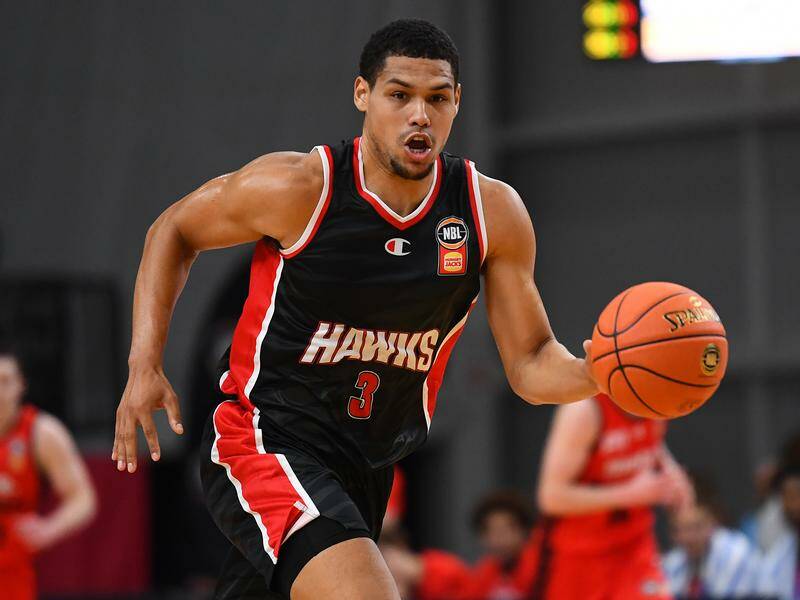
Quentin Peterson
December 16, 2025


NICKNAME/S: Soup
BIO: Born in Bendigo, Victoria, Mat Campbell joined the Illawarra Hawks in 1996, and remained with the club for 17 seasons.
Mat Campbell made his NBL debut with the Illawarra Hawks at 19 years of age. He scored five points in his first game.
After losing both coach Alan Black and their leading scorer and rebounder from the past four seasons in Melvin Thomas the Hawks looked to rebuild in 1996. Although many felt the void left by Thomas and Black heading to NSW rivals Sydney would be difficult to replace, incoming coach Brendan Joyce had just the player in mind. New arrival Marcus Timmons surprised everyone by being one of the premier forwards in the competition, proving to be a more than adequate replacement for Thomas and led the team in points (21.9 ppg), rebounds, (12.3 rpg), steals (2.3 spg) and blocks (1.0 bpg). Alongside Timmons, Terry Johnson (16.2 points, 3.7 rebounds, and 4.2 assists) would produced the best numbers of his career, this included a career high 41 points in a win over rival club Sydney (145 def. 121).
The big numbers delivered by Timmons and Johnson were offset however by the decline of import point guard Andre LaFleur (18.8 points, 2.5 rebounds, and 6.9 assists) who had shown clear signs of slowing down in his sixth season, averaging career lows in points, rebounds and assists. Hawks legend Greg Hubbard also struggled to overcome a back injury which saw him average 6.0 points in 16 minutes per game (lowest minutes of career) and retire at the end of the season. As a result, the Hawks struggled to find wins during the year and finished in tenth place (9-17).
Campbell would finish the year averaging 6.5 points, 1.9 rebounds, and 0.8 assists per game which included being selected to play in the NBL’s Future Forces Game.
1997
After another season missing out on the NBL playoffs in 1996, the Hawks were unable to retain their scoring and rebounding leader Marcus Timmons (who would end up leading the Melbourne Tigers to the championship that season) and were forced to move into a rebuilding phase for this season. The Hawks rebuilding would focus on the continued development of Hawks big man Matt Zauner, who was named team captain at the start of the season, and young star Glen Saville. The Hawks chose not to re-sign 31-year-old Andre LaFleur and signed two young imports in guard Bryan Edwards and big man Clayton Ritter to replace the scoring and rebounding of Timmons. The team also added SEABL stawart Eric Cooks who had played under head coach Brendan Joyce during his time with the Ballarat Miners in state league competition, a team which had also included both Saville and Campbell.
Campbell contributed 8.7 points, 2.2 rebounds, and 1.2 assists in his second year in the league but with Edwards not being the fit needed at point guard and off-court issues between Zauner and Joyce stemming from a contract dispute the Hawks struggled. Edwards was replaced by Dylan Rigdon mid-season and the Hawks (7-23) failed to make the playoffs yet again.
1998
In 1998, the Hawks re-signed star Clayton Ritter and paired him with defensive minded guard Elliot Hatcher. Alongside the talented import duo Campbell had a breakout season, averaging 12.6 points, 2.9 rebounds, and 1.7 assists and playing a key role in the Hawks doubling their wins from the previous year. The Hawks improving from seven wins to 14 wins and finised in sixth place.
In the elimination finals the Hawks would go on to face the Perth Wildcats, losing back to back games before being eliminated from the playoffs in the first round.
1998/99
Coinciding with the NBL’s move to summer, the Hawks shifted base to the Wollongong Entertainment Centre and swapped their Illawarra prefix to Wollongong. Coming off a 14 win season that saw the Hawks reach the postseason, the Hawks were able to retain almost their entire and add CJ Bruton (via Brisbane) who immediately became Wollongong’s starting point guard and primary offensive weapon. With the addition of Bruton, there was no need for import guard Elliot Hatcher and they replaced him with Theron Wilson. Also, talented big man David Andersen was recruited from the AIS to replace the outgoing Matt Zauner.
Bruton (20.8 points, 4.3 rebounds, and 3.5 assists) would be given the ‘green light’ as he boosted his scoring from 15.4 points to 20.8 points per game in 46 minutes per game. Clayton Ritter (17.6 points, 6.3 rebounds, and 1.4 assists 1.1 steals) and Mat Campbell (15.0 points, 3.6 rebounds, and 2.5 assists) also finished among the team’s high scorers.
The Hawks finished the season winning two more games than the year prior, improving upon their previous record for the third year in a row and finishing in third place (16-10).
A disappointing postseason first saw the Hawks lose to the Victoria Titans in two straight games during the Qualifying Finals, but thanks to the league’s of the ‘lucky loser’ rule, which allowed the highest placed loser from the Qualifying Finals to proceed to the next round. There, a matchup with Adelaide saw Illawarra eliminated in two straight games, ending their season for good this time.
The effort Campbell delivered at the defensive end had become noticed by all of those around the league by this point and at season’s end Campbell had finished third in voting for the NBL Best Defensive Player Award.
1999/00
After a playoff campaign where the Hawks lost four playoff games in a row, Wollongong came into the season with a point to prove. Although promising big man David Andersen was lost to a deal in Europe, Wollongong was able to veteran players to the team in Mike McKay (via Canberra) and Darren Perry. Perry had spent the last five years playing in the state league, before being offered a lifeline by coach Brendan Joyce who encouraged Perry to return to the NBL and provide some leadership to his young, up and coming squad. The team chose not to re-sign imports Theron Wilson (to Europe) and Clayton Ritter (to Canberra) and instead looked for new imports to better complement the style of Bruton and signed former NBA lottery pick Todd Mundt (via Newcastle) as well as former Hawks MVP, Melvin Thomas, who had spent the past four seasons playing with Sydney and Canberra. Another change saw Mat Campbell (14.2 points, 3.0 rebounds, and 2.9 assists) take on the role of team captain, a role he maintained for more than a decade.
With high-scoring guard CJ Bruton (22.1 points, 3.5 rebounds, and 3.3 assists) settling into his second season with the team, many felt the Hawks would have one of the stronger rosters clubs, but the Hawks just couldn’t seem to get victories over any of the league’s top team’s. A key factor was the lack of production the team were able to get from Mundt (8.8 points, 4.9 rebounds, and 0.8 assists), who struggled to play big minutes and with nine games left in the season, he was released. Matt Garrison (17.2 points, 7.0 rebounds, 2.4 assists, and 1.7 steals) entered the team as his replacement, and although his presence delivered a immediate improvement, the move was too little too late. Wollongong limped home to a eighth-place finish (11-17) with the Hawk’s dismal season viewed to be a result of Bruton being tasked with too much.
Melvin Thomas (19.6 points, 8.6 rebounds, 2.4 assists, and 1.2 steals) and Glen Saville (14.0 points, 7.8 rebounds, 4.0 assists, and 1.9 steals) both delivered great seasons and were voted as the Hawks co-MVP’s as a result.
2000/01
Prior to the start of the 2000/01 season, coach Brendan Joyce revamped nearly half the Wollongong Hawks’ roster, bringing in key additions such as Axel Dench, Charles Thomas, Damon Lowery, Grant Kruger, Matt Shanahan, and veteran Ray Borner. The changes paid immediate dividends as the Hawks enjoyed their most successful regular season in franchise history.
With five players averaging double figures, Wollongong boasted one of the most balanced offensive attacks in the league. This well-rounded approach allowed them to compete against powerhouse teams that leaned heavily on star duos. Their ability to spread the scoring load made them an unpredictable and difficult team to defend, laying the foundation for their championship push.
Melvin Thomas (19.6 points, 8.6 rebounds, 2.4 assists, and 1.2 steals) and Charles Thomas (16.5 points, 4.8 rebounds, 4.1 assists, and 1.6 steals) provided versatility, while Glen Saville (15.5 points, 9.7 rebounds, 4.4 assists, 2.0 steals, and 1.1 blocks) continued to be the team’s engine, filling the stat sheet across all categories. Mat Campbell (12.8 points, 3.0 rebounds, and 1.1 steals) also played a pivotal role, providing perimeter shooting and strong two-way play.
Wollongong finished the regular season tied for third place with Perth at 21-7 but lost the tiebreaker due to head-to-head results, settling for fourth. The Hawks were particularly clutch in close contests, going a perfect 12-0 in games decided by three points or fewer. Their road dominance also stood out, as they posted a league-best 12-2 record away from home.
Despite their strong season, no Wollongong player was selected for the All-NBL First or Second Team, highlighting the team’s reliance on depth rather than individual stardom. In a league featuring elite duos such as Andrew Gaze & Mark Bradtke (Melbourne), Ricky Grace & Paul Rogers (Perth), and Darnell Mee & Brett Maher (Adelaide), the Hawks’ collective effort allowed them to compete at the highest level.
The playoffs began with Wollongong facing Perth in the qualifying finals. The Hawks secured a crucial Game 1 victory at home, 97–90, behind standout performances from Melvin Thomas (22 points and 13 rebounds), Damon Lowery (19 points), and Mat Campbell (10 points and 5 rebounds).
In Game 2, the series shifted to Perth, where the Wildcats bounced back with a 106–95 win. Dench struggled offensively, finishing with just 8 points, 6 rebounds, and 2 blocks, while Campbell was limited in his scoring output.
Game 3 saw Wollongong pull off a stunning upset on the road, defeating Perth 98–88 to advance to the semifinals. Glen Saville led the way with a dominant 26-point, 16-rebound performance, while Lowery contributed 20 points. Campbell also played a crucial role, adding 6 points and 3 rebounds in the decisive win.
The Hawks then faced the Adelaide 36ers in the semifinals. In Game 1, played in Adelaide, the Hawks secured a dramatic 84-83 victory, with Campbell contributing 10 points in a game that saw Melvin Thomas (18 points and 13 rebounds) and Charles Thomas (17 points and 6 rebounds) lead the scoring.
Game 2 returned to Wollongong, but Adelaide responded with a high-powered offensive display, defeating the Hawks 111–100. Campbell had one of his best games of the postseason, scoring 14 points, but it wasn’t enough to prevent the 36ers from forcing a deciding Game 3.
The third and final game of the series produced one of the most iconic moments in NBL history. With Wollongong trailing 108-106 in the closing seconds, Damon Lowery was fouled on a three-point attempt as time expired. Under immense pressure, Lowery sank all three free throws to complete a 109-108 victory, sending the Hawks to their first-ever Grand Final. Campbell also played a vital role in the win, contributing 10 points and 3 rebounds in the tense encounter.
In the 2001 NBL Grand Final, the Hawks faced the Townsville Crocodiles. Game 1 took place at a packed WIN Entertainment Centre, where Wollongong edged out a 104-101 victory behind Melvin Thomas (24 points, 14 rebounds) and a strong showing from Campbell, who added 19 points.
The series then shifted to Townsville, where the Crocodiles took advantage of their home court, dominating Game 2 with a 114–97 win. The Hawks struggled offensively, with Campbell managing just 4 points as Townsville forced a decisive Game 3.
With the championship on the line, Game 3 turned into a physical, grind-it-out battle. The Hawks overcame the adversity and secured a 97-94 victory, earning their first NBL championship. Charles Thomas (23 points, 10 rebounds, and 5 assists) and Melvin Thomas (18 points and 12 rebounds) led the way, while Glen Saville (18 points and 12 rebounds) was named NBL Finals MVP. Campbell played a key supporting role in the championship-clinching win, finishing with 10 points and 3 rebounds.
Wollongong’s triumph made them the first New South Wales club to win an NBL championship, cementing their place in history. Coach Brendan Joyce was recognized as NBL Coach of the Year for orchestrating the team’s remarkable run, while Axel Dench was named the league’s Rookie of the Year. Campbell’s contributions were critical throughout the postseason, with his perimeter shooting and clutch performances proving vital in Wollongong’s journey to the title.
2001/02
After ending the previous season as NBL champions, Wollongong lost starting centre Matt Garrison (to Cairns), while head coach Brendan Joyce retained co-captains Mat Campbell and Glen Saville alongside Melvin Thomas, Charles Thomas, Damon Lowery, Axel Dench and almost the entire championship roster.
Joyce replaced Garrison with Ben Pepper (via Victoria), adding another seven-footer to Wollongong’s frontcourt as the Hawks began their title defence.
Wollongong opened the season at the WIN Entertainment Centre on October 12 with a 108-97 win over Canberra.
Campbell (12.7 points across 31 games) remained an important perimeter scorer and defender, finishing fifth on the team in scoring while continuing to share the captaincy during Wollongong’s championship defence.
Saville (15.3 points, 9.6 rebounds, 3.8 assists, 1.5 steals, and 1.7 blocks) led Wollongong in scoring, finished second in the NBL in blocks and was named the Hawks’ club MVP, while also contributing 10 points and 3 blocks in the opening win over Canberra.
Charles Thomas (14.9 points, 4.1 rebounds, 4.5 assists, and 1.9 steals) and Melvin Thomas (14.7 points and 9.7 rebounds) were Wollongong’s next two leading scorers, while Pepper (12.3 points, 7.2 rebounds, and 1.2 blocks), Lowery (10.5 points) and Dench (9.5 points and 4.5 rebounds across 17 games) rounded out the main rotation.
Injuries forced Dench to miss almost half the season, while Joyce added Mike Chappell (via Michigan State) midway through the campaign, with the former NCAA champion scoring 17 points on debut against Perth.
Chappell (14.3 points and 6.3 rebounds across 15 games) gave the Hawks another perimeter scoring option during the second half of the season.
Campbell (23 points) delivered one of his best games of the campaign on December 8, joining Charles Thomas (25 points), Lowery (21 points) and Saville (22 points, 14 rebounds, 5 assists, 6 steals, and 1 block) as Wollongong defeated Townsville 120-105, while Andrew Goodwin (21 points and 6 rebounds) led the Crocodiles.
His best game of the season came in Wollongong’s final regular-season appearance on March 23, where Campbell (29 points, 5 rebounds, and 4 assists) led the Hawks to a 111-93 road win over Melbourne, with Saville (17 points, 5 rebounds, and 1 block) and Chappell (17 points and 9 rebounds) providing support while Mark Bradtke (32 points and 8 rebounds) was best for the Tigers.
The result left Wollongong tied with West Sydney and Melbourne at 16-14, with the Hawks claiming fourth place through the three-way head-to-head tiebreaker after posting a 4-2 record against the other two teams.
Adelaide had defeated Wollongong in all three regular-season meetings before the teams met again in the Quarterfinals.
Wollongong opened the Quarterfinals at the WIN Entertainment Centre, where Pepper (22 points, 7 rebounds, and 2 blocks), Chappell (16 points and 10 rebounds), Campbell (14 points) and Saville (11 points and 5 rebounds) led the Hawks, while Willie Farley (26 points, 5 rebounds, and 3 steals), Rupert Sapwell (19 points and 11 rebounds), Brett Maher (16 points, 6 assists, and 3 steals) and David Stiff (16 points, 13 rebounds, and 5 assists) carried Adelaide to a 107-90 win.
Game two moved to Adelaide, where Melvin Thomas (25 points, 16 rebounds, and 2 blocks), Saville (19 points, 9 rebounds, and 3 assists), Chappell (17 points and 7 rebounds) and Charles Thomas (16 points, 5 rebounds, and 5 assists) kept Wollongong close, while Farley (33 points, 6 rebounds, 5 assists, and 3 steals) and Maher (26 points, 4 rebounds, and 5 assists) completed the sweep in a 101-95 Adelaide win.
2002/03
Wollongong reshaped its roster following its quarterfinal exit, with Charles Thomas (to Adelaide), Grant Kruger (to Townsville), Michael Chappell (to Canberra), Josh Woods and Kane Riley-Henderson departing, while co-captains Glen Saville and Mat Campbell returned alongside Melvin Thomas, Damon Lowery, Axel Dench and Ben Pepper.
Head coach Brendan Joyce filled the vacant import position with Cortez Groves, brought former championship forward Matt Garrison (via Adelaide) back to Wollongong, and added Geordie Cullen (via Canberra) and Tim Labka (via West Sydney).
The Hawks opened the season at the WIN Entertainment Centre on October 5 with a 116-104 win over Townsville, as Cortez (36 points), Mat (24 points, 3 rebounds, and 2 assists) and Glen (20 points, 10 rebounds, and 5 assists) led Wollongong, while Pat Reidy (22 points) was among the Crocodiles’ best.
Campbell (11.8 points and 3.1 rebounds across 34 games) remained a key part of Wollongong’s rotation, finishing fourth on the team in scoring while playing every game and making 72 three-pointers at 39%.
His best scoring game of the season saw him finish with a season-high 29 points.
A week after the opener, Campbell (19 points, 5 rebounds, and 4 assists) helped Wollongong improve to 2-0 with a 108-100 win over Perth, with Damon (23 points, 4 rebounds, 5 assists, and 2 steals) and Melvin (17 points and 13 rebounds) providing support.
Groves (19.9 points and 1.9 steals) led Wollongong in scoring, while Saville (15.9 points, 9.7 rebounds, 4 assists, and 1.6 steals) remained the team’s all-round leader.
Melvin Thomas (14.5 points and 7.7 rebounds across 31 games), Lowery (11.4 points, 3.4 rebounds, 4.9 assists, and 1.5 steals), Garrison (11.1 points and 6.2 rebounds across 24 games), Dench (8.4 points and 5.1 rebounds) and Pepper (7.7 points, 5.6 rebounds, and 1.3 blocks) filled out the main rotation.
Saville was named the Hawks MVP, won the NBL Best Defensive Player award, earned All-NBL Second Team honours and finished third in MVP voting with 102 votes, while Groves was named to the All-NBL Third Team.
Wollongong entered its final regular-season game without Melvin, who had returned to the United States following a family tragedy.
Campbell (17 points, 5 rebounds, and 4 assists) helped the Hawks secure fourth place on February 27 as Garrison (28 points and 5 rebounds), Saville (27 points, 9 rebounds, and 5 assists) and Pepper (19 points and 5 rebounds) led Wollongong past Canberra 124-94, while Michael Hill (25 points and 6 rebounds) was best for the Cannons.
The victory left Wollongong fourth with an 18-12 record.
Wollongong opened the Quarterfinals at the WIN Entertainment Centre with a 97-87 win over Townsville, snapping the Crocodiles’ 16-game winning streak as Garrison (24 points, 11 rebounds, 6 assists, and 4 steals), Groves (18 points, 4 assists, and 4 steals), Saville (13 points, 13 rebounds, and 4 assists) and Campbell (14 points) led the Hawks, while Mike Kelly (20 points and 8 rebounds) and Peter Crawford (20 points) led Townsville.
Game two moved to Townsville, where Wollongong erased a 16-point deficit entering the fourth quarter to win 102-101, with Campbell (17 points) hitting five three-pointers during the final term as Groves (27 points, 5 assists, and 3 blocks), Saville (20 points, 14 rebounds, 4 assists, and 3 steals) and Lowery (17 points and 5 rebounds) led the comeback, while Wayne Turner (32 points, 4 rebounds, 3 assists, and 5 steals) was best for the Crocodiles.
The Semifinals opened in Wollongong, where Garrison (16 points) and Lowery (14 points) led the Hawks, while Ricky Grace (24 points) and Stephen Black (23 points) carried Perth to a 121-90 win.
Game two moved to Challenge Stadium, where Campbell (13 points), Saville (17 points and 6 assists), Groves (12 points), Lowery (12 points and 6 assists) and Garrison (12 points and 8 rebounds) led Wollongong, while Brett Wheeler (27 points and 14 rebounds) and Grace (26 points, 6 rebounds, and 6 assists) completed the sweep in a 113-84 Perth win.
2003/04
Wollongong entered 2003/04 after losing Cortez Groves, Melvin Thomas (to Cairns), Matt Garrison (to Beirut), Ben Pepper (to Victoria), Geordie Cullen (to Hunter), Matthew Shanahan (to Hunter), and Luke Doherty, while Brendan Joyce retained Glen Saville, Mat Campbell, Damon Lowery, and Axel Dench and rebuilt the roster around a deeper backcourt and frontcourt group.
The new-look Hawks opened the season on October 6 with a 131-108 win over Hunter at WIN Entertainment Centre, with Darnell Mee (35 points) and John Mueller (21 points) leading the scoring.
Joyce had added Mee (14.8 points, 4.9 rebounds, 5.2 assists, and 1.9 steals) (via Cairns) and Mueller (9.2 points and 5.9 rebounds), while Ben Knight (via Cairns), Troy Pilon (via Brisbane), and Adam Caporn (via Saint Mary’s) added depth throughout the rotation.
Campbell (14.5 points and 3.1 rebounds) provided perimeter shooting and made 97 three-pointers at 43 percent, while Saville (16.4 points, 9.6 rebounds, 4.4 assists, and 1.7 steals) led Wollongong in scoring and rebounding and was named Hawks MVP after finishing fourth in NBL MVP voting.
Knight (14.3 points and 7.9 rebounds), Lowery (11.9 points), Dench (10.7 points and 5.6 rebounds), and Pilon (6.5 points and 5.1 rebounds) gave the Hawks eight players averaging more than six points as Wollongong built one of the deepest rotations in the league.
Campbell (32 points, 3 rebounds, and 3 assists) delivered his best game of the season in Wollongong’s second match on October 11, making 8-of-11 three-pointers as the Hawks defeated the New Zealand Breakers 108-78, with Mueller (17 points) providing support while Aaron Olson (19 points) led New Zealand.
On December 27, Campbell (19 points, 3 rebounds, and 3 assists) helped Wollongong defeat Melbourne 110-101 alongside Mee (28 points, 6 rebounds, and 6 assists) and Knight (18 points and 8 rebounds), while Andrew Gaze (27 points) and Mark Bradtke (25 points and 11 rebounds) led the Tigers.
Campbell (28 points and 6 rebounds) delivered another of his best games on February 1, making 6-of-8 three-pointers as Wollongong defeated Hunter 130-108, with Saville (22 points, 10 rebounds, and 4 assists) and Mee (20 points, 4 rebounds, and 4 assists) in support, while Kevin Brooks (31 points and 5 rebounds) led the Pirates.
Wollongong closed the regular season with a 99-88 home win over Perth, finishing second with a 25-8 record and a 14-3 road mark to earn a direct place in the semifinals.
The semifinals opened at WIN Entertainment Centre, where Campbell (20 points) led Wollongong and Mee (15 points) added support, but John Rillie (25 points, 8 rebounds, and 6 assists), Simon Dwight (22 points, 10 rebounds, 2 steals, and 2 blocks), and Sam Mackinnon (12 points, 14 rebounds, and 6 assists) powered West Sydney to a 107-91 win.
Game two moved to West Sydney, where Rillie (45 points and 9 rebounds) produced the best performance of his career, while Dwight (15 points, 12 rebounds, 3 assists, 2 steals, and 4 blocks) and Mackinnon (13 points, 10 rebounds, and 10 assists) completed the sweep despite Mee (18 points and 4 assists), Dench (17 points, 8 rebounds, and 2 blocks), Saville (17 points, 7 rebounds, 4 steals, and 2 blocks), and Campbell (11 points) leading Wollongong in a 110-95 loss.
2004/05
After Ben Knight (to Sydney), Axel Dench and John Mueller exited Wollongong, Damon Lowery was replaced by Adam Ballinger (via Victoria), while head coach Brendan Joyce retained Glen Saville, Darnell Mee, Troy Pilon and Adam Caporn around the returning captain and added Andrew Rice, Mike Kelly (via Townsville) and Cameron Rigby (via Hunter).
Wollongong opened the season at WIN Entertainment Centre on October 1, where Mat Campbell (24 points) led the Hawks to a 96-88 win over Melbourne, while Mark Bradtke (24 points), Andrew Gaze (15 points) and Stephen Hoare (13 points) were best for the Tigers.
Campbell (14.4 points and 4.3 rebounds) continued to provide Wollongong’s perimeter shooting, making 92 three-pointers at 37 percent and appearing in all 37 games.
His best game came in Auckland on October 15, where Campbell (27 points) produced his season-high as Wollongong defeated New Zealand 111-92.
Campbell (23 points) again led the scoring when New Zealand visited Wollongong on November 10, helping the Hawks defeat the Breakers 109-83 in another of his strongest games of the season.
Wollongong finished the regular season in second place with a 20-12 record, earning a direct place in the semifinals behind defending champion Sydney.
Saville (17.8 points, 9.1 rebounds, 3.7 assists, 1.8 steals, and 1.2 blocks) delivered a career-best season, finished fifth in NBL MVP voting, earned All-NBL Second Team honours and won the Hawks’ MVP award, while Ballinger (17.0 points, 7.1 rebounds, and 1.2 blocks) provided a second scoring threat for Wollongong.
Mee (14.6 points, 6.2 rebounds, 7.7 assists, and 2.1 steals) led the NBL in assists, was named December’s Player of the Month, won Best Defensive Player and earned All-NBL First Team honours, while Rice (8.6 points and 4.8 rebounds), Kelly (8.1 points), Pilon (6.3 points and 4.4 rebounds), Rigby (5.5 points and 3.4 rebounds), and Caporn (4.9 points) supplied depth throughout the rotation.
Wollongong opened the semifinals at WIN Entertainment Centre with a 100-84 win over Townsville, taking control behind Campbell (21 points), Saville (19 points and 10 rebounds) and Mee (17 points, 7 rebounds, and 12 assists), while Brad Newley (17 points), John Rillie (15 points and 6 rebounds) and Robert Brown (14 points and 8 rebounds) led the Crocodiles.
Game two moved to Townsville, where Saville (24 points), Kelly (20 points) and Pilon (19 points and 12 rebounds) led Wollongong, while Newley (22 points and 6 rebounds), Casey Calvary (20 points and 12 rebounds), Brown (16 points) and Kelvin Robertson (16 points) kept Townsville close before the Hawks won 109-105 and completed the sweep.
The Grand Final series opened in Sydney, where Jason Smith (28 points and 9 rebounds), Rolan Roberts (16 points and 8 rebounds) and CJ Bruton (13 points, 5 rebounds, and 9 assists) led the Kings, while Saville (15 points), Rigby (13 points) and Campbell (12 points) were Wollongong’s best in a 96-73 loss.
Game two moved to Wollongong, where Bruton (26 points, 6 rebounds, 3 assists, and 6 steals), Mark Sanford (23 points) and Roberts (21 points and 13 rebounds) powered Sydney, while Saville (15 points), Pilon (13 points) and Mee (13 points) led the Hawks in a 105-80 loss.
Game three saw Sydney complete the sweep and become the first team in NBL history to win three consecutive championships, with Grand Final MVP Smith (38 points and 12 rebounds), Sanford (15 points and 7 rebounds) and Brad Sheridan (14 points) leading the Kings, while Mee (18 points), Rigby (12 points) and Caporn (12 points) led Wollongong in a 112-85 loss.
2005/06
After reaching the Grand Final the previous season, Wollongong lost Darnell Mee (to Cairns) and Cameron Rigby (to West Sydney), while head coach Brendan Joyce retained captain Mat Campbell, Glen Saville, Adam Ballinger, Adam Caporn, Troy Pilon, Andrew Rice and Mike Kelly.
Joyce brought Cortez Groves back for a second stint and added Tony Rampton (via Cairns), Ben Castle and John Philip as the Hawks looked to remain among the league’s leading teams.
Wollongong opened the season on September 3 with a 102-61 road loss to Melbourne but quickly recovered and remained among the top teams throughout the regular season.
Campbell (14.4 points, 4.0 rebounds, and 2.8 assists) remained one of the NBL’s most dangerous perimeter shooters, making 95 three-pointers at 45 percent while appearing in all 33 games.
On September 23, Campbell (29 points, 4 rebounds, 2 assists, and 2 steals) made 7-of-9 three-pointers as Wollongong defeated Brisbane 100-93 at WIN Entertainment Centre.
He produced another strong shooting performance against Adelaide on November 9, with Campbell (24 points, 2 rebounds, 2 assists, and 2 steals) making 6-of-8 three-pointers in a 112-95 win.
His best game came in Townsville on December 10, where Campbell (36 points, 4 rebounds, and 3 assists) delivered a career-high and made 9-of-14 three-pointers as Wollongong defeated the Crocodiles 128-118.
Groves (24.0 points, 3.5 rebounds, 5.7 assists, and 1.5 steals) led the NBL in scoring, earned All-NBL First Team honours and was named Hawks MVP, while Ballinger (17.3 points, 8.1 rebounds, and 1.4 blocks) and Saville (15.1 points, 8.6 rebounds, 4.5 assists, and 1.8 steals) remained major contributors.
Rampton (12.6 points and 8.6 rebounds) gave Wollongong another interior presence, while Caporn (8.3 points, 4.3 assists, and 1.3 steals) helped organise the backcourt.
Wollongong secured third place and a home quarterfinal in its final regular-season game, defeating West Sydney 90-89 behind Groves (25 points, 7 assists, and 6 blocks), Rampton (21 points and 16 rebounds) and Campbell (14 points, 7 rebounds, 5 assists, and 3 blocks) to finish with a 19-13 record.
The quarterfinal remained at WIN Entertainment Centre, where Shawn Redhage (32 points and 13 rebounds), Peter Crawford (18 points and 5 rebounds), David Bailey (17 points, 7 rebounds, and 5 assists) and Matthew Burston (16 points and 8 rebounds) led Perth, while Ballinger (23 points, 6 rebounds, and 2 blocks), Groves (23 points, 3 assists, and 2 steals) and Campbell (11 points, 2 rebounds, 7 assists, and 2 steals) were Wollongong’s best in a 121-101 loss.
2006/07
Wollongong entered the season after Adam Caporn (to Perth), Andrew Rice, Mike Kelly and Daniel George exited the team, while head coach Brendan Joyce retained Mat Campbell, Cortez Groves, Adam Ballinger, Glen Saville, Tony Rampton and Ben Castle and added Casey Frank (via New Zealand) and Daniel Joyce (via AIS).
The returning import was named in the NBL Blitz All-Star Five during the preseason before Cortez (20 points, 3 rebounds, 5 assists, and 4 steals against Singapore; 30 points, 5 rebounds, 5 assists, 1 steal, and 1 block against the South Dragons) earned NBL Player of the Week honours in round four.
The second game of that weekend saw Mat (15 points, 3 assists, 1 steal, and 1 block) make four three-pointers as Wollongong defeated the South Dragons 102-93 on October 14, with Cortez (30 points, 5 rebounds, 5 assists, 1 steal, and 1 block), Adam (21 points and 11 rebounds) and Glen (13 points, 8 rebounds, and 5 assists) leading the Hawks, while Kavossy Franklin (19 points) and Todd Fuller (19 points and 9 rebounds) were best for the Dragons.
Campbell (10.5 points) remained one of Wollongong’s main perimeter threats, making 68 three-pointers at 38 percent and appearing in all 33 games.
His best scoring game saw Campbell (22 points) deliver his season-high, while another strong performance came on November 8 when Campbell (17 points) helped Wollongong defeat Cairns 104-85 alongside Groves (21 points) and Saville (21 points), while Martin Cattalini (25 points) and Aaron Grabau (17 points) led the Taipans.
On December 17, Campbell (20 points, 3 rebounds, and 4 assists) led Wollongong’s scoring at Challenge Stadium, but Shawn Redhage (23 points, 6 rebounds, and 5 assists), Darren Brooks (22 points, 5 rebounds, 5 assists, and 3 steals) and Paul Rogers (13 points, 9 rebounds, 7 assists, 5 steals, and 3 blocks) powered Perth to a 113-85 win.
Groves (22.2 points, 3.5 rebounds, 5.3 assists, and 1.3 steals) led the Hawks in scoring and earned All-NBL Second Team honours, while Ballinger (21.0 points, 9.1 rebounds, and 1.2 blocks) was named to the All-NBL Third Team and Saville (16.3 points, 8.8 rebounds, 4.9 assists, and 1.2 steals) remained one of Wollongong’s main contributors.
Frank (11.8 points and 7.2 rebounds), Rampton (8.5 points and 5.0 rebounds) and Castle (4.3 points and 3.4 rebounds) added depth throughout the rotation.
After averaging 24.1 points from September through December, Groves managed 18.8 points per game across January and February as his production dropped and Wollongong fell out of the playoff race.
Brendan Joyce was sacked on December 27 and replaced by assistant Eric Cooks, with Wollongong reaching the middle of the season at 8-14.
On January 22, Campbell (16 points, 3 assists, and 1 block) helped Wollongong push Sydney before Ed Scott (21 points), Luke Kendall (17 points) and Mark Worthington (17 points) carried the Kings to an 88-84 win.
Wollongong closed the season with a 101-91 loss to West Sydney on February 10, finishing ninth with an 11-22 record and missing the playoffs.
2007/08
Wollongong entered the 2007/08 season after losing Adam Ballinger (to Adelaide), Cortez Groves (to South Dragons), Glen Saville (to Sydney), Casey Frank (to Gold Coast), Tony Rampton (to West Sydney) and Daniel Joyce (to Gold Coast), leaving head coach Eric Cooks to rebuild around captain Mat Campbell and Ben Castle.
Cooks added Kavossy Franklin (via South Dragons), Cameron Tragardh (via Brisbane), Lindsay Tait, Larry Davidson (via Singapore), Cameron Rigby (via West Sydney), Jeremy Kench (via Singapore), Daniel Jackson (via AIS) and import James Peters.
The biggest loss was the 12-season Hawk who had shared the captaincy, won five club MVP awards and led Wollongong to its first championship as the 2001 Grand Final MVP, while the offseason departures cost the Hawks their four leading scorers from the previous season.
Wollongong opened the season in Adelaide on September 21, where the captain (16 points and 3 assists) helped the new-look Hawks remain within reach before Brett Maher (21 points, 6 rebounds, and 4 assists) and Lanard Copeland (15 points) carried the 36ers to a 108-101 win.
Campbell (14.2 points across 23 games) responded to the increased responsibility by lifting his scoring by almost four points per game and finishing third on the team in scoring, averaging 33.5 minutes and making 51 three-pointers at 42% while shooting 46% from the field.
Franklin (21.7 points, 5.3 rebounds, 4.9 assists, and 1.2 steals) led Wollongong in scoring, assists and steals, earning All-NBL Third Team honours and the club MVP award, while Tragardh (17.6 points and 7.8 rebounds) won the NBL Most Improved Player award after emerging as the Hawks’ main inside scoring threat.
Tait (12.3 points, 3.3 rebounds, and 4.5 assists across 8 games) was productive when available, with Davidson (10.5 points and 7.2 rebounds), Rigby (8.5 points and 4.1 rebounds), Castle (6.3 points and 4.9 rebounds) and Kench (6.1 points) filling out the main rotation, while Davidson was also voted Wollongong’s Most Improved Player.
After losing their first four games, Campbell (28 points, 8 rebounds, and 2 steals) produced his best game of the season on October 12, making 7-of-10 three-pointers as Wollongong defeated West Sydney 132-109 for its first win, with Tragardh (25 points and 7 rebounds) and Franklin (25 points and 8 assists) providing support while Darnell Hinson (24 points) and Liam Rush (18 points and 7 rebounds) led the Razorbacks.
Peters (14.0 points, 7.0 rebounds, and 1.3 blocks across 3 games) was released after three appearances and replaced by Angelo Reyes (via Titanes de Morovis).
Reyes (14.0 points and 7.9 rebounds across 7 games) lasted seven games, while veteran Aaron Trahair (via Perth) was later added for the final 12 games.
Campbell (17 points and 4 assists) scored eight points and added a steal during a 12-0 run to open the third quarter on December 5, helping the Hawks snap a six-game losing streak as Franklin (23 points), Reyes (15 points and 8 rebounds) and Tragardh (14 points) carried Wollongong past Singapore 93-72, with Mike Helms (20 points) and Ben Knight (16 points and 11 rebounds) best for the Slingers.
Campbell (19 points) joined Franklin (26 points), Tragardh (19 points) and Davidson (14 points) as Wollongong defeated Adelaide 115-108 on January 18 for its seventh win of the season.
Off the court, the club’s survival became the biggest issue late in the season when a reported $250,000 rescue pledge proved to be a hoax, leaving Wollongong needing another $190,000 from shareholders by its deadline to secure another season.
The Hawks finished eleventh with a 9-21 record and missed the eight-team playoffs.
Wollongong closed the season in Brisbane on February 16 with a 129-98 loss to the Bullets.
Season statistics, awards, results and the club’s financial situation were cross-checked against player records, the Hawks’ historical archive and contemporary reporting.
2008/09
After Cam Rigby (to Brisbane), Aaron Trahair and Ben Castle exited Wollongong, head coach Eric Cooks retained captain Mat Campbell, Lindsay Tait, Larry Davidson, Kavossy Franklin and Cameron Tragardh and added Dusty Rychart (via Brisbane), Anthony Petrie (via West Sydney) and Rhys Martin (via Brisbane).
The collapse of the Sydney Kings also allowed the Hawks to bring Glen Saville (via Sydney) home after his only season away from Wollongong.
The returning forward had spent 12 seasons with the Hawks, won five club MVP awards, shared the captaincy with the club’s current captain and led Wollongong to its first championship as the 2001 Grand Final MVP, making his return far more significant than a standard offseason signing.
His lone season in Sydney saw him help the Kings produce a franchise-record 27-3 regular-season record and reach the Grand Final, but their financial collapse and withdrawal from the league opened the door for him to return after representing Australia at the Beijing Olympics.
Wollongong opened the season in New Zealand on September 18, where the captain (8 points, 3 rebounds, 3 assists, and 1 steal) and returning forward (22 points, 6 rebounds, 3 assists, 1 steal, and 2 blocks) were unable to overcome Kirk Penney (41 points, 6 rebounds, and 3 assists) as the Breakers defeated the Hawks 114-93.
Campbell (9.8 points, 2.7 rebounds, and 2.4 assists) remained team captain and played all 30 games, but his scoring fell by more than four points from the previous season as Wollongong struggled to compete offensively against the league’s top teams.
Saville (15.1 points, 7.7 rebounds, 3.7 assists, 1.7 steals, and 1.0 blocks) immediately reclaimed his place as Wollongong’s all-round leader, finishing fourth in the NBL in defensive rebounds, tenth in total rebounds and fifth in steals before earning All-NBL Second Team honours.
Rychart (15.1 points, 8.5 rebounds, and 1.6 assists) joined him at the top of Wollongong’s scoring, while Franklin (15.0 points, 3.5 rebounds, and 4.3 assists), Tragardh (14.7 points and 4.7 rebounds) and Petrie (12.7 points and 6.6 rebounds) carried much of the remaining offence.
Tait (8.4 points, 1.9 rebounds, and 2.8 assists) and Davidson (6.5 points, 4.4 rebounds, and 1.1 blocks) also saw their scoring production fall by three to four points from the previous season.
On October 29, Wollongong trailed Cairns by 13 points during the third quarter before Saville (19 points) hit three consecutive three-pointers and Franklin (23 points) made a clutch shot from outside in the final minute as the Hawks recovered for a 101-93 win, while Gary Boodnikoff (23 points) and Larry Abney (22 points) led the Taipans.
The Hawks suffered a damaging 111-110 home loss to Gold Coast on November 14 after surrendering an 11-point fourth-quarter lead, with former Hawk Daniel Joyce hitting the winning three-pointer with fewer than six seconds remaining before Cooks and former Wollongong coach Brendan Joyce exchanged heated words after the game.
Wollongong edged the financially troubled Sydney Spirit 121-117 on December 27, with Campbell (14 points), Tragardh (25 points), Saville (22 points, 6 rebounds, and 7 assists) and Tait (20 points, 2 rebounds, and 5 assists) leading the Hawks, while Matthew Knight (23 points and 12 rebounds) and Blagoj Janev (21 points) were best for Sydney.
The Hawks kept their finals hopes alive on New Year’s Eve with a 112-105 win in Cairns behind Tragardh (28 points) and Saville (20 points).
On January 2, Campbell (18 points, 3 rebounds, 3 assists, 1 steal, and 1 block) made 6-of-8 from the field and 3-of-4 from outside as Wollongong defeated New Zealand 111-94, with Franklin (26 points, 7 rebounds, and 4 assists) and Rychart (16 points, 13 rebounds, and 2 blocks) also starring while Penney (30 points and 5 rebounds) led the Breakers.
Campbell (16 points, 2 rebounds, and 4 assists) again helped defeat New Zealand 103-98 on February 6, with Rychart (18 points, 10 rebounds, and 3 assists) and Saville (16 points, 4 steals, and 2 blocks) leading Wollongong while Phill Jones (25 points and 7 rebounds) was best for the Breakers.
With ownership declaring the club could not afford to enter the following season’s restructured competition, Wollongong’s final home game against Adelaide on February 13 was feared to be the last played by the NBL’s remaining foundation club at the WIN Entertainment Centre.
In an unusual move, Wollongong retired Campbell’s No. 32 and Saville’s No. 12 before the game despite neither player having completed their NBL career, with both men watching as their singlets were raised to the rafters.
Campbell (23 points, 5 rebounds, and 3 assists) responded by making six three-pointers in his best game of the season, while Rychart (18 points and 11 rebounds), Petrie (15 points and 9 rebounds) and Saville (15 points, 4 rebounds, 5 assists, and 3 steals) helped Wollongong defeat Adelaide 102-95 despite Luke Schenscher (37 points and 15 rebounds) dominating for the 36ers.
The emotional victory drew Wollongong’s largest home crowd of the season, but the Hawks finished seventh with an 11-19 record and missed the playoffs as administrators continued searching for a way to keep the club alive.
The announcement also set the stage for Campbell to become the public face of the “Save the Hawks” campaign, rallying local businesses, sponsors and supporters in an attempt to secure Wollongong’s future in the NBL.
Wollongong closed the season on the Gold Coast on February 14 in what was feared to be the final game in the club’s 31-year history, with Campbell (13 points and 4 assists), Petrie (20 points), Franklin (19 points, 6 rebounds, and 7 assists), Rychart (14 points and 12 rebounds) and Saville (6 points and 5 rebounds) falling 114-104 to James Harvey (26 points), Justin Bowen (19 points and 10 rebounds) and Shane Heal (14 points and 8 assists), who made a three-pointer near the final buzzer in the last game of his career.
2009/10
In February 2009, the Hawks ownership group declared the team would not be able to join the revamped league in 2009/10 on financial grounds. Mat Campbell, who was the team captain and still a active player, started the “Save the Hawks” fundraising campaign, which generated the total amount required by the club to continue. Campbell and his small team raised funds via donations from the Illawarra community, acquiring naming rights sponsor ahm Health Insurance and a bank guarantee provided by Indian mining magnate Mr Arun Jagatramka from Gujarat NRE. A not-for-profit community-based company formed as Wollongong Hawks Basketball Limited was established to operate the Hawks into the future.
A number of changes occurred as a result of the ownership change. Coach Brendan Joyce was replaced with former Hawks star Gordie McLeod, and the team moved on from imports Kavossy Franklin and Dusty Rychart, replacing them with Tywain McKee and David Gruber.
Mckee (17.9 points, 4.8 rebounds, 4.5 assists, and 1.2 steals) would lead the team in scoring, but after suffering two stress fractures in his lower back, Mckee (17.9 points, 4.8 rebounds, 4.5 assists and 1.2 steals) was shut down for the season with Wollongong hovering around the middle of the ladder (11-10). Journeyman guard Luke Martin for the remaining 13 games of the season and the Hawks were forced to rely on their local talent for their playoff run.
Losing McKee gave Illawarra a balanced attack, with nine players all averaging 18 minutes or more per game. Cam Tragardh (14.7 points, 5.4 rebounds) would step up and lead the team in scoring after losing McKee, while Glen Saville (10.4 points, 5.7 rebounds, 2.7 assists, and 1.3 steals), team captain Campbell (10.3 points and 3.0) and Larry Davidson (9.7 points, 6.8 rebounds, 2.0 assists, and 1.3 steals), who would be voted the Hawks club MVP, led a late-season charge that saw Illawarra finish with five wins in their last seven games.
In one of the closest seasons in NBL history, the Hawks finished in a three-way tie for second place, with Townsville and Gold Coast all finishing the regular season with the same record (16-12). Head-to-head victories saw the Hawks (5-3) claim the second seed, Crocodiles (4-4) finish third, and Gold Coast Blaze (3-5) take the final playoff spot.
Facing off against third-placed Townsville, Campbell (6 points) helped Illawarra come away with a home victory in game one (87-68). Townsville would then even the series win a 29-point demolition of Illawarra in game two (82-53), with Campbell only able to contribute a single basket (2 points).
With the series heading back to Wollongong, the Hawks led game three from start to finish, with Campbell (14 points, 2 rebounds and 4 assists) having his best game of the series, and the Hawks game three win (88-76) sending the Hawks into the Grand Final for the first time since 2001.
Illawarra faced off against first-placed Perth (17-11), and while Campbell (13 points) had a nice game, thanks to a all-round performance from guard Kevin Lisch (15 points, 3 rebounds, 2 assists, 3 steals and 1 block), the Wildcat’s came away with the win (75-64). In game two, the Hawks evened the series (1-1), locking Lisch down (11 points) and riding a huge offensive effort from Cam Tragardh (28 points), who barely missed, hitting 12 of his 20 shots. In surprising fashion, Campbell failed to score at all in the game, missing all eight of the shot attempts in 30 minutes of court time.
The deciding game three would return to Perth, where the Wildcats found themselves down by as many as 11 points in the second quarter. Another huge game from Lisch (29 points, including 5 of 9 from three) allowed the Wildcat’s to defeat the Hawks comfortably (96-72), delivering the Wildcats’ their fifth NBL Championship. Campbell contributed 8 points and 4 rebounds in the final game while Kevin Lisch was named Finals MVP after averaging 18 points and 4 rebounds over the three games.
2010/11
Following their Grand Final appearance, Wollongong lost Cameron Tragardh (to Melbourne) and Tywain McKee (released), while captain Mat Campbell, Glen Saville, Larry Davidson, Rhys Martin, Tim Coenraad and David Gruber returned from the previous season’s main rotation.
Coach Gordie McLeod rebuilt the roster with Gary Ervin (via Halifax), Oscar Forman (via New Zealand) and Tyson Demos (via Gold Coast), adding a new starting point guard and further perimeter shooting around the returning core.
Wollongong opened the season at home on October 15 with an 83-77 win over Gold Coast, where Mat (2 points, 3 rebounds, and 2 assists) contributed alongside Gary (27 points, 5 rebounds, and 3 assists), David (16 points and 7 rebounds) and Glen (15 points, 8 rebounds, 3 assists, 3 steals, and 2 blocks), while James Harvey (20 points), Anthony Petrie (14 points and 6 rebounds) and Adam Gibson (12 points, 6 rebounds, 6 assists, and 4 steals) led the Blaze.
Campbell (7.7 points, 2.1 rebounds, and 1.6 assists across 28 games) remained a regular part of Wollongong’s rotation during his 16th NBL season, appearing in every game while continuing to provide leadership and outside shooting as team captain.
His best scoring performance came in Sydney on December 12, where Campbell (18 points) helped Wollongong defeat the Kings 95-80, with Tim (24 points and 6 rebounds) and Gary (19 points) leading the Hawks, while Patrick Sanders (27 points), Julian Khazzouh (12 points) and Trey Gilder (11 points) were Sydney’s best as Wollongong improved to 9-2.
The Hawks then lost nine consecutive games, with Campbell (13 points and 4 assists) leading Wollongong in a 93-72 loss to Melbourne on February 6, while Corey Williams (19 points and 11 assists), Lucas Walker (17 points) and Matthew Burston (16 points and 10 rebounds) led the Tigers. Six days later Wollongong ended the losing streak with a 105-73 home win over Perth, as Oscar (21 points), Campbell (14 points) and Gary (14 points) led the Hawks, while Kevin Lisch (20 points) was the Wildcats’ leading scorer.
Ervin (20.1 points, 3.4 rebounds, 4.5 assists, and 1.3 steals across 27 games) led Wollongong in scoring and was named NBL MVP, becoming the first Hawk to win the award since Mike Jones in 1981. He was also selected to the All-NBL First Team.
Forman (13.2 points, 6.3 rebounds, and 1.2 assists across 28 games) rejuvenated his career after seeing his playing time decline with New Zealand, doubling his scoring average and earning the NBL Most Improved Player award.
Davidson (9.9 points and 8.0 rebounds), Saville (9.9 points, 5.9 rebounds, 4.1 assists, and 1.4 steals) and Coenraad (8.2 points and 3.1 rebounds) were the other leading contributors, with Saville selected to the All-NBL Second Team.
Wollongong recovered to win four of its final five games but finished fifth with a 15-13 record and failed to qualify for the playoffs.
2011/12
Wollongong entered the season without reigning NBL MVP Gary Ervin (to Ukraine), while captain Mat Campbell, Glen Saville, Oscar Forman, Larry Davidson, Rhys Martin, Tim Coenraad, David Gruber, Tyson Demos and Daniel Jackson remained with the Hawks.
Coach Gordie McLeod added rookie import Joevan Catron (via Oregon), with Showron Glover joining the team during October before Ayinde Ubaka was signed later in the season to strengthen the backcourt.
Campbell (7.7 points, 1.5 rebounds, and 1.5 assists) continued to provide outside shooting and leadership in his 17th NBL season, remaining part of the starting lineup alongside Saville and Martin.
The Hawks opened their campaign at home against defending champion New Zealand, where Campbell (14 points, 2 assists, and 1 steal) and Larry Davidson (19 points) led Wollongong, but Thomas Abercrombie (25 points), Cedric Jackson (17 points, 8 rebounds, and 7 assists) and Gary Wilkinson (17 points) carried the Breakers to a 98-82 win.
Wollongong responded in round two, with Campbell (16 points) joining Forman (16 points and 11 rebounds) and Martin (16 points and 9 assists) in leading the Hawks to a 97-89 win over Adelaide, while Adam Ballinger (28 points and 12 rebounds) led the 36ers.
The Hawks produced one of their strongest performances of the season in Auckland, defeating New Zealand 81-63 as Campbell (9 points) connected on three three-pointers, Martin (19 points) led the scoring and Catron (10 points) provided support.
After Wollongong lost seven consecutive home games, Campbell delivered his best performance of the season against Melbourne in round 17, scoring 17 points as the Hawks broke the streak with a 90-68 win. His performance earned him the NBL Player of the Week award.
Forman (10.7 points and 4.1 rebounds) led Wollongong’s regular rotation in scoring, while Catron (10.3 points and 4.4 rebounds), Martin (9.8 points and 3.6 assists), Davidson (8.3 points and 4.8 rebounds), Coenraad (8.1 points and 3.9 rebounds) and Saville (6.3 points, 5.8 rebounds, and 2.6 assists) formed the remainder of McLeod’s main group.
Ubaka averaged 13.6 points after joining the Hawks during the second half of the season, giving Wollongong another scoring option as they attempted to recover from a difficult start.
On March 15, Campbell announced he would retire at the end of the season, bringing an end to a 17-year career spent entirely with Illawarra and Wollongong. He entered his final game as the Hawks’ all-time leader in appearances and three-pointers made, having captained the club to its first NBL championship in 2001 and helped lead the campaign that saved the team from collapse in 2009.
Wollongong closed the season with three consecutive victories, with Campbell (4 points) receiving a winning farewell as the Hawks defeated Adelaide 92-78 at the WIN Entertainment Centre.
Campbell retired after 524 NBL games with career averages of 11.7 points, 2.9 rebounds, and 2.0 assists, while Wollongong finished eighth with a 9-19 record and failed to qualify for the playoffs.
Mat Campbell played seventeen seasons the Illawarra Hawks. This included the Illawarra Hawks. He averaged 11.7 points, 2.9 rebounds, and 2 assists in 524 NBL games.
CAREER RANKINGS:
– 9th in total games played.
– 30th in total points
– 47th in total assists
| SEASON | AGE | TEAM | TEAM RECORD | GP | MINS | PTS | REB | AST | OR | DR | STL | BLK | TO | PF | FGM | FGA | FG% | 3PM | 3PA | 3P% | FTM | FTA | FT% | TS% | EFG% | HS |
|---|---|---|---|---|---|---|---|---|---|---|---|---|---|---|---|---|---|---|---|---|---|---|---|---|---|---|
| 2011-12 | 35 | Wollongong | 9-19 (8) | 26 | 613.0 | 201 | 38 | 40 | 10 | 28 | 9 | 2 | 23 | 44 | 67 | 163 | 41% | 41 | 103 | 40% | 26 | 31 | 84% | 57% | 54% | 17 |
| 2010-11 | 34 | Wollongong | 15-13 (5) | 28 | 696.0 | 216 | 59 | 44 | 13 | 46 | 9 | 5 | 23 | 54 | 72 | 195 | 37% | 39 | 108 | 36% | 33 | 45 | 73% | 50% | 47% | 18 |
| 2009-10 | 33 | Wollongong | 16-12 (4) | 34 | 993.0 | 351 | 101 | 55 | 17 | 84 | 12 | 4 | 40 | 62 | 114 | 254 | 45% | 65 | 151 | 43% | 58 | 80 | 73% | 60% | 58% | 23 |
| 2008-09 | 32 | Wollongong | 11-19 (7) | 30 | 881.0 | 293 | 80 | 71 | 20 | 60 | 14 | 5 | 23 | 66 | 90 | 217 | 41% | 54 | 129 | 42% | 59 | 77 | 77% | 58% | 54% | 23 |
| 2007-08 | 31 | Wollongong | 9-21 (11) | 23 | 771.0 | 326 | 64 | 42 | 14 | 50 | 20 | 8 | 36 | 69 | 108 | 236 | 46% | 51 | 121 | 42% | 59 | 82 | 72% | 59% | 57% | 28 |
| 2006-07 | 30 | Wollongong | 11-22 (9) | 33 | 1,145.0 | 347 | 100 | 85 | 26 | 74 | 18 | 11 | 36 | 92 | 111 | 307 | 36% | 68 | 179 | 38% | 57 | 77 | 74% | 50% | 47% | 22 |
| 2005-06 | 29 | Wollongong | 19-13 (3) | 33 | 1,278.0 | 474 | 133 | 94 | 40 | 93 | 22 | 18 | 49 | 94 | 155 | 360 | 43% | 95 | 212 | 45% | 69 | 81 | 85% | 59% | 56% | 36 |
| 2004-05 | 28 | Wollongong | 20-12 (2) | 37 | 1,325.0 | 533 | 158 | 99 | 47 | 111 | 30 | 21 | 61 | 112 | 179 | 467 | 38% | 92 | 249 | 37% | 83 | 108 | 77% | 51% | 48% | 27 |
| 2003-04 | 27 | Wollongong | 25-8 (2) | 34 | 1,160.0 | 492 | 104 | 86 | 28 | 76 | 20 | 15 | 36 | 79 | 177 | 423 | 42% | 97 | 224 | 43% | 41 | 54 | 76% | 55% | 53% | 32 |
| 2002-03 | 26 | Wollongong | 18-12 (4) | 34 | 1,112.0 | 402 | 105 | 68 | 25 | 80 | 20 | 8 | 51 | 79 | 132 | 322 | 41% | 72 | 184 | 39% | 66 | 88 | 75% | 55% | 52% | 29 |
| 2001-02 | 25 | Wollongong | 16-14 (4) | 31 | 1,050.0 | 394 | 81 | 55 | 29 | 52 | 24 | 5 | 57 | 84 | 141 | 336 | 42% | 59 | 163 | 36% | 53 | 67 | 79% | 54% | 51% | 29 |
| 2000-01 | 24 | Wollongong | 21-7 (4) | 36 | 1,191.0 | 459 | 107 | 50 | 46 | 61 | 38 | 13 | 47 | 90 | 159 | 382 | 42% | 79 | 191 | 41% | 62 | 85 | 73% | 54% | 52% | 25 |
| 1999-00 | 23 | Wollongong | 11-17 (8) | 27 | 999.0 | 384 | 80 | 79 | 38 | 42 | 24 | 6 | 56 | 81 | 134 | 306 | 44% | 54 | 143 | 38% | 62 | 76 | 82% | 56% | 53% | 25 |
| 1998-99 | 22 | Wollongong | 16-10 (4) | 30 | 1,190.0 | 451 | 107 | 76 | 34 | 73 | 25 | 6 | 69 | 98 | 158 | 380 | 42% | 63 | 161 | 39% | 72 | 91 | 79% | 53% | 50% | 23 |
| 1998 | 22 | Wollongong | 14-16 (6) | 32 | 1,151.0 | 403 | 93 | 53 | 29 | 64 | 17 | 8 | 66 | 102 | 140 | 296 | 47% | 47 | 117 | 40% | 76 | 98 | 78% | 59% | 55% | 28 |
| 1997 | 21 | Illawarra | 7-23 (11) | 30 | 689.0 | 261 | 67 | 37 | 26 | 41 | 9 | 4 | 27 | 83 | 83 | 184 | 45% | 49 | 106 | 46% | 46 | 62 | 74% | 61% | 58% | 21 |
| 1996 | 20 | Illawarra | 9-17 (10) | 26 | 407.0 | 168 | 49 | 22 | 22 | 27 | 7 | 1 | 14 | 49 | 55 | 141 | 39% | 24 | 68 | 35% | 34 | 40 | 85% | 53% | 48% | 22 | Totals | 524 | 16651 | 6155 | 1526 | 1056 | 464 | 1062 | 318 | 140 | 714 | 1338 | 2075 | 4969 | 41.8% | 1049 | 2609 | 40.2% | 956 | 1242 | 77.0% | 56% | 52% | 36 |
| SEASON | AGE | TEAM | TEAM RECORD | GP | MINS | PTS | REB | AST | OR | DR | STL | BLK | TO | PF | FGM | FGA | FG% | 3PM | 3PA | 3P% | FTM | FTA | FT% | TS% | EFG% | HS |
|---|---|---|---|---|---|---|---|---|---|---|---|---|---|---|---|---|---|---|---|---|---|---|---|---|---|---|
| 2011-12 | 35 | Wollongong | 9-19 (8) | 26 | 23.6 | 7.7 | 1.5 | 1.5 | 0.4 | 1.1 | 0.3 | 0.1 | 0.9 | 1.7 | 2.6 | 6.3 | 41% | 1.6 | 4.0 | 40% | 1.0 | 1.2 | 84% | 57% | 54% | 17 |
| 2010-11 | 34 | Wollongong | 15-13 (5) | 28 | 24.9 | 7.7 | 2.1 | 1.6 | 0.5 | 1.6 | 0.3 | 0.2 | 0.8 | 1.9 | 2.6 | 7.0 | 37% | 1.4 | 3.9 | 36% | 1.2 | 1.6 | 73% | 50% | 47% | 18 |
| 2009-10 | 33 | Wollongong | 16-12 (4) | 34 | 29.2 | 10.3 | 3.0 | 1.6 | 0.5 | 2.5 | 0.4 | 0.1 | 1.2 | 1.8 | 3.4 | 7.5 | 45% | 1.9 | 4.4 | 43% | 1.7 | 2.4 | 73% | 60% | 58% | 23 |
| 2008-09 | 32 | Wollongong | 11-19 (7) | 30 | 29.4 | 9.8 | 2.7 | 2.4 | 0.7 | 2.0 | 0.5 | 0.2 | 0.8 | 2.2 | 3.0 | 7.2 | 41% | 1.8 | 4.3 | 42% | 2.0 | 2.6 | 77% | 58% | 54% | 23 |
| 2007-08 | 31 | Wollongong | 9-21 (11) | 23 | 33.5 | 14.2 | 2.8 | 1.8 | 0.6 | 2.2 | 0.9 | 0.3 | 1.6 | 3.0 | 4.7 | 10.3 | 46% | 2.2 | 5.3 | 42% | 2.6 | 3.6 | 72% | 59% | 57% | 28 |
| 2006-07 | 30 | Wollongong | 11-22 (9) | 33 | 34.7 | 10.5 | 3.0 | 2.6 | 0.8 | 2.2 | 0.5 | 0.3 | 1.1 | 2.8 | 3.4 | 9.3 | 36% | 2.1 | 5.4 | 38% | 1.7 | 2.3 | 74% | 50% | 47% | 22 |
| 2005-06 | 29 | Wollongong | 19-13 (3) | 33 | 38.7 | 14.4 | 4.0 | 2.8 | 1.2 | 2.8 | 0.7 | 0.5 | 1.5 | 2.8 | 4.7 | 10.9 | 43% | 2.9 | 6.4 | 45% | 2.1 | 2.5 | 85% | 59% | 56% | 36 |
| 2004-05 | 28 | Wollongong | 20-12 (2) | 37 | 35.8 | 14.4 | 4.3 | 2.7 | 1.3 | 3.0 | 0.8 | 0.6 | 1.6 | 3.0 | 4.8 | 12.6 | 38% | 2.5 | 6.7 | 37% | 2.2 | 2.9 | 77% | 51% | 48% | 27 |
| 2003-04 | 27 | Wollongong | 25-8 (2) | 34 | 34.1 | 14.5 | 3.1 | 2.5 | 0.8 | 2.2 | 0.6 | 0.4 | 1.1 | 2.3 | 5.2 | 12.4 | 42% | 2.9 | 6.6 | 43% | 1.2 | 1.6 | 76% | 55% | 53% | 32 |
| 2002-03 | 26 | Wollongong | 18-12 (4) | 34 | 32.7 | 11.8 | 3.1 | 2.0 | 0.7 | 2.4 | 0.6 | 0.2 | 1.5 | 2.3 | 3.9 | 9.5 | 41% | 2.1 | 5.4 | 39% | 1.9 | 2.6 | 75% | 55% | 52% | 29 |
| 2001-02 | 25 | Wollongong | 16-14 (4) | 31 | 33.9 | 12.7 | 2.6 | 1.8 | 0.9 | 1.7 | 0.8 | 0.2 | 1.8 | 2.7 | 4.5 | 10.8 | 42% | 1.9 | 5.3 | 36% | 1.7 | 2.2 | 79% | 54% | 51% | 29 |
| 2000-01 | 24 | Wollongong | 21-7 (4) | 36 | 33.1 | 12.8 | 3.0 | 1.4 | 1.3 | 1.7 | 1.1 | 0.4 | 1.3 | 2.5 | 4.4 | 10.6 | 42% | 2.2 | 5.3 | 41% | 1.7 | 2.4 | 73% | 54% | 52% | 25 |
| 1999-00 | 23 | Wollongong | 11-17 (8) | 27 | 37.0 | 14.2 | 3.0 | 2.9 | 1.4 | 1.6 | 0.9 | 0.2 | 2.1 | 3.0 | 5.0 | 11.3 | 44% | 2.0 | 5.3 | 38% | 2.3 | 2.8 | 82% | 56% | 53% | 25 |
| 1998-99 | 22 | Wollongong | 16-10 (4) | 30 | 39.7 | 15.0 | 3.6 | 2.5 | 1.1 | 2.4 | 0.8 | 0.2 | 2.3 | 3.3 | 5.3 | 12.7 | 42% | 2.1 | 5.4 | 39% | 2.4 | 3.0 | 79% | 53% | 50% | 23 |
| 1998 | 22 | Wollongong | 14-16 (6) | 32 | 36.0 | 12.6 | 2.9 | 1.7 | 0.9 | 2.0 | 0.5 | 0.3 | 2.1 | 3.2 | 4.4 | 9.3 | 47% | 1.5 | 3.7 | 40% | 2.4 | 3.1 | 78% | 59% | 55% | 28 |
| 1997 | 21 | Illawarra | 7-23 (11) | 30 | 23.0 | 8.7 | 2.2 | 1.2 | 0.9 | 1.4 | 0.3 | 0.1 | 0.9 | 2.8 | 2.8 | 6.1 | 45% | 1.6 | 3.5 | 46% | 1.5 | 2.1 | 74% | 61% | 58% | 21 |
| 1996 | 20 | Illawarra | 9-17 (10) | 26 | 15.7 | 6.5 | 1.9 | 0.8 | 0.8 | 1.0 | 0.3 | 0.0 | 0.5 | 1.9 | 2.1 | 5.4 | 39% | 0.9 | 2.6 | 35% | 1.3 | 1.5 | 85% | 53% | 48% | 22 | Total | 524 | 31.8 | 11.7 | 2.9 | 2.0 | 0.9 | 2.0 | 0.6 | 0.3 | 1.4 | 2.6 | 4.0 | 9.5 | 41.8% | 0.0 | 0.0 | 40.2% | 2.0 | 5.0 | 77.0% | 56% | 52% | 36 |
| POINTS | REBOUNDS | ASSISTS | STEALS | BLOCKS | TURNOVERS | TRIPLE DOUBLES | 36 | 10 | 9 | 6 | 4 | 5 | 0 |
|---|
Campbell joined Bendigo for the 1993 SEABL season, continuing from the Bendigo junior representative pathway in his home city and playing in the Braves system before his later move across regional Victoria.
Campbell remained with Bendigo for the 1994 SEABL season, with the Braves forming the state league base of his early senior career while he was still a teenager from Bendigo.
Campbell played for Bendigo again in the 1995 SEABL season, completing the Bendigo portion of his state league career before leaving for Ballarat.
Campbell joined Ballarat for the 1996 SEABL season, making the move from Bendigo to the Miners after an offer from coach Brendan Joyce and joining a Ballarat team that had won ABA national championships in 1994 and 1995.
At Ballarat, Campbell was part of a Miners group that also connected him with Eric Cooks and Glen Saville in state league competition, with that Ballarat stint preceding his move into the national league later in 1996.
Whilst we try to source as much information as we can for every player who has ever played in the NBL some information on a player profile may be missing. If you have additional information on a player you'd like us to add to a profile, please send it to us using the enquiry form below.
Submissions are then sent to info@aussiehoopla.com