Darnell Mee on Adelaide’s 2001 Heartbreak, Defending NBL legends and more
August 5, 2026



NICKNAME/S: Sav
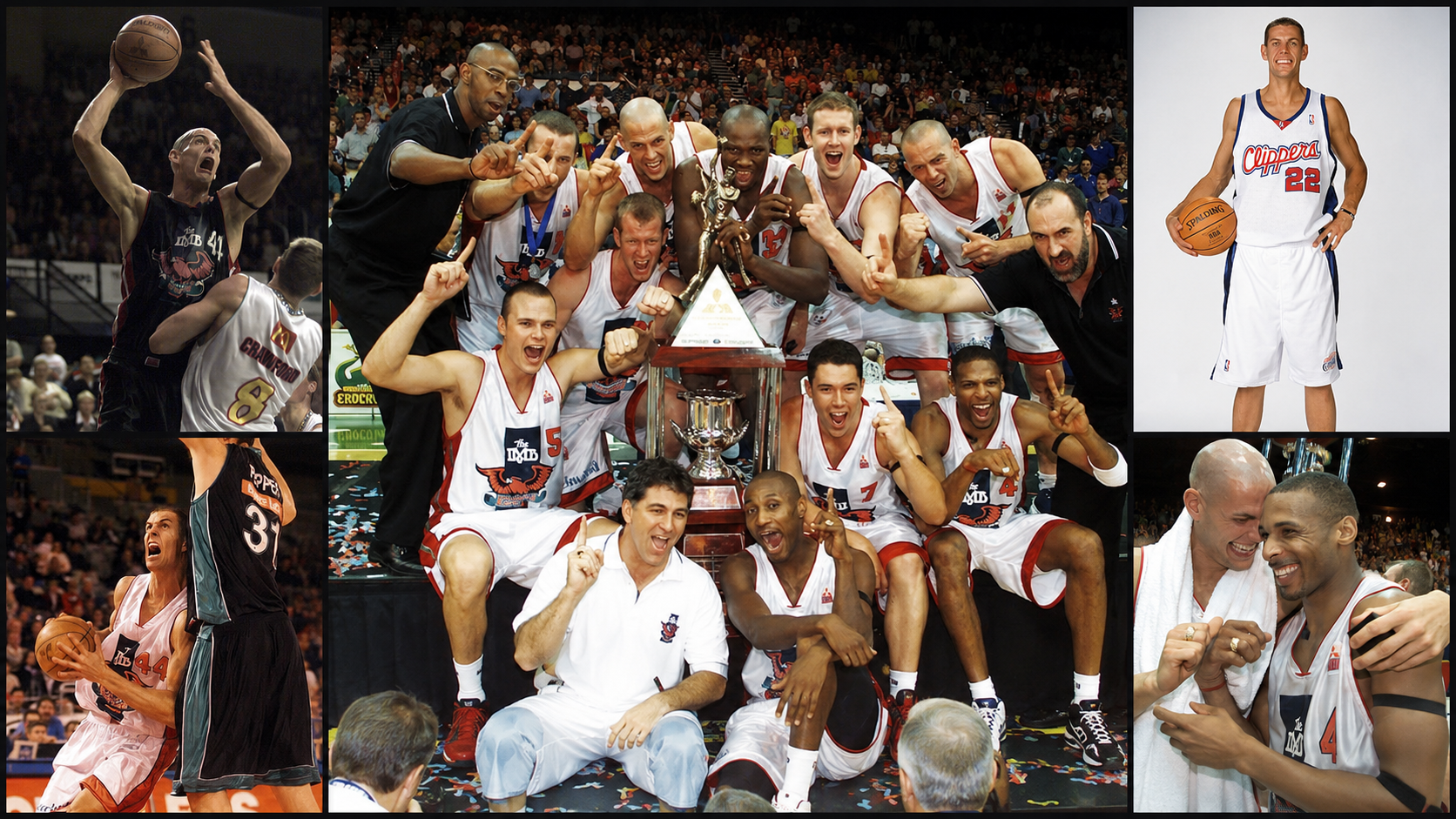
BIO: Glen Saville was born in Bendigo (VIC) and began playing basketball with the Bendigo Braves as a junior. Saville received a scholarship to attend the Australian Institute of Sport (Canberra) in 1993. He spent two years year there and played for the program’s state league team (1993, 1994).
Glen Saville made his NBL debut with the Illawarra Hawks at 19 years of age. He scored 11 points in his first game.
After three consecutive years of being eliminated in the first round of the NBL playoffs, head coach Alan Black knew his job was on the line if the team was unable to advance past the Quarterfinals. Black was able to re-sign star import Melvin Thomas and have veterans Chuck Harmison, Mick Corkeron and Dene MacDonald return but lost Butch Hays and Craig Adams, who both signed with Newcastle. Black bolstered his roster by replacing Hays with pass-first point guard Andre LaFleur, who had connected on more assists than any other player in the league over the prior three seasons, former Perth Wildcats star Kendal Pinder, young talent Glen Saville and Illawarra junior Terry Johnson.
Five games into the season, offcourt issues arose surrounding Pinder (9.4 points, 6.2 rebounds, and 1.2 assists), who was released from the team after facing criminal charges. However, with his absence and injuries to Mick Corkeron (9.7 points, 1.5 rebounds, and 0.7 assists), the Hawks witnessed the explosion of young point guard Terry Johnson. Johnson, who had failed to make his with the Giants two years earlier. Off court issues saw the Giants question Johnson’s commitment to the sport which resulted in him spending a year playing with Cairns in the state league. Johnson (11.4 points, 3.9 rebounds, and 2.8 assists) respnded by tripling his numbers from 1993 to finish as the competition’s leading three point shooter at 48 percent (34 of 71) and runner-up to Tonny Jensen (Newcastle) for the Most Improved Player award.
Melvin Thomas led the team in almost every category, posting 27 points, 10 rebounds, 4.6 rebounds, 1.8 steals and 1.8 blocks and formed quite the duo with LaFleur, who finished with averages of 21.7 points, 3.6 rebounds, 7.4 assists and 1.9 steals. Saville finished his rookie season with averages of 5.8 points, 2.5 rebounds, and 0.5 assists.
Illawarra (14-12) finished seventh and faced off against second-placed South East Melbourne in the Quarterfinals. In game one, the Hawks delivered a upset, defeating the Magic behind a 29 point outburst from 37 year old veteran Chuck Harmison (12.2 points, 6.3 rebounds, and 1.9 assists). The Hawk’s flying start was stemmed once the series moved to Melbourne. There, the Magic claimed victory in both games two (92-89) and three (93-75) to deliver a fourth straight Quarterfinals exit for Illawarra in as many years.
At season’s end, Black was not re-signed by Illawarra and promptly took up a role with rival club Sydney for the 1996 season, taking Hawks star Melvin Thomas along with him.
1996
After coach Alan Black (to Sydney) and the Hawks’ leading scorer and rebounder from the previous four seasons Melvin Thomas (to Sydney) left Illawarra, Mick Corkeron, Kendal Pinder, Steve Vos and Jason Brettell were also not retained as the club looked to rebuild.
Andre LaFleur, Terry Johnson, Matt Zauner, Chuck Harmison, Dene MacDonald and Glen Saville all returned, while incoming coach Brendan Joyce added Marcus Timmons (via Yakima), Greg Hubbard (via Sydney) and rookie Mat Campbell.
The Hawks opened the season at Beaton Park with a 106-99 loss to Brisbane, with the second-year forward held scoreless while collecting one rebound in a quiet start to the campaign.
Saville (6.7 points and 4.1 rebounds) continued to improve upon his rookie season and was selected for the NBL Future Forces Game alongside Campbell (6.5 points).
Timmons (21.9 points, 12.3 rebounds, 3.3 assists, and 2.3 steals) surprised many by emerging as one of the premier forwards in the competition and led Illawarra in scoring, rebounding, steals and blocks, while LaFleur (18.8 points, 6.9 assists, and 1.2 steals) showed clear signs of slowing down during his sixth season and recorded career lows in points, rebounds and assists.
Johnson (16.2 points, 3.7 rebounds, 4.2 assists, and 2.2 steals) produced the strongest numbers of his career, with Zauner (15.7 points and 7.7 rebounds) providing another reliable option in the frontcourt.
Hubbard (6.4 points) struggled to overcome a back injury, played only 16 minutes per game and retired at the end of the season.
Saville’s strongest stretch came late in the year, beginning on August 30 when he produced 14 points, 9 rebounds, and 3 assists in a 121-111 loss to Canberra as his role within the rotation continued to grow.
One week later, Saville (20 points, 11 rebounds, and 3 assists) helped Illawarra defeat Adelaide 120-101, showing how far he had progressed from his quiet opening-night performance.
His best game came on September 13, when Saville (22 points, 16 rebounds, and 2 steals) joined LaFleur (31 points) and Johnson (22 points) in a 130-122 road loss to Townsville, while Clarence Tyson (38 points) led the Crocodiles.
The Hawks finished tenth with a 9-17 record after closing the season the following night with a 110-94 win over Gold Coast.
1997
After missing the playoffs with a 9-17 record in 1996, Illawarra entered a rebuilding phase after losing leading scorer and rebounder Marcus Timmons (to Melbourne), who would help the Tigers win the championship, while Andre LaFleur (not re-signed), Greg Hubbard (retired) and Chuck Harmison (retired) also left the playing roster, with Harmison moving into the Hawks’ general manager role. New captain Matt Zauner, Terry Johnson, Mat Campbell, Dene MacDonald and Marc Brandon returned alongside the club’s emerging swingman under head coach Brendan Joyce, while Eric Cooks (via Ballarat) was added for veteran leadership, Lachlan Armfield (via Newcastle) joined the roster, imports Bryan Edwards and Clayton Ritter were signed and Jason Brettell returned after a season out of the NBL.
Illawarra opened the season at Beaton Park on April 12, where Glen Saville (16 points and 5 rebounds), Ritter (25 points, 7 rebounds, 3 assists, 1 steal, and 2 blocks) and Johnson (23 points and 2 steals) led the Hawks, but David Simmons (22 points, 10 rebounds, 3 assists, and 2 steals) helped Newcastle win 112-96.
Saville (13.6 points, 7.2 rebounds, and 1.6 steals across 30 games) appeared in every game and took a major step forward during his third season, more than doubling his scoring from the previous year while becoming one of Illawarra’s leading rebounders and earning selection for the 1997 NBL All-Star Game. Long-time Hawks chairman Peter Brettell later described Saville as “one of the most athletic players ever to play the game – his all-round skills were amazing and a joy to watch.”
His best game came on May 2, when Saville (25 points, 10 rebounds, 3 assists, and 4 steals) reached his season-high as Illawarra snapped a three-game losing streak with a 121-103 win over eventual champions Melbourne. Ritter (28 points, 7 rebounds, 2 assists, 1 steal, and 2 blocks) and Edwards (16 points, 9 rebounds, and 12 assists) provided support, while Lanard Copeland (29 points, 6 rebounds, 4 assists, and 2 blocks) led Melbourne.
Edwards (18.4 points, 5.1 rebounds, 5.0 assists, and 1.5 steals across 13 games) provided plenty of individual production but was not the fit Joyce needed at point guard and was replaced by Dylan Rigdon midway through the season.
Rigdon (23 points, 6 rebounds, and 8 assists) made an immediate impact in his NBL debut against North Melbourne on June 14, while Ritter (25 points, 2 rebounds, 2 assists, and 1 steal) led Illawarra in scoring and Saville (16 points, 7 rebounds, 2 assists, 1 steal, and 2 blocks) continued his improved form, but Pat Reidy (33 points and 8 rebounds) led the Giants to a 111-104 win at Beaton Park.
Ritter (23.1 points, 6.8 rebounds, and 1.3 steals across 28 games) led Illawarra in scoring, produced two 40-point games and won the Hawks’ team MVP award, while Rigdon (19.8 points, 4.1 rebounds, and 5.7 assists across 15 games) gave the Hawks stronger point guard play following his arrival. Zauner (12.9 points and 7.5 rebounds across 30 games), Johnson (9.4 points and 3.4 rebounds across 30 games), Cooks (8.9 points and 6.5 rebounds across 29 games) and Campbell (8.7 points across 30 games) provided the remaining support, although a contract dispute between Zauner and Joyce created further problems away from the court.
Illawarra missed the playoffs for a second consecutive season and finished 11th with a 7-23 record, closing the year at Beaton Park on September 27 with a 115-90 win over Brisbane.
1998
Illawarra entered 1998 looking to recover from a 7-23 season which had left the club 11th and outside the playoffs for a third straight year. Brendan Joyce remained head coach, with Dylan Rigdon and Terry Johnson (to Newcastle) departing and Clayton Ritter, Eric Cooks, Mat Campbell, Matt Zauner and Glen Saville retained. Defensive-minded import Elliot Hatcher joined the backcourt, while Cameron Dickinson (via Sydney), Mark Dalton (via Brisbane), Justin Withers (via Sydney) and Matthew Oyston were also added. The year would become the NBL’s final winter campaign and Illawarra’s last at Beaton Park’s Snakepit.
Saville opened the season with his best and highest-scoring performance of the year, finishing with 28 points, 7 rebounds, 4 assists, 3 steals, and 3 blocks against North Melbourne at Beaton Park on January 30. Ritter (25 points and 9 rebounds) and Hatcher (24 points, 5 rebounds, 3 assists, and 3 steals) provided further support as Illawarra won 109-96, while Pat Reidy (21 points, 8 rebounds, and 5 assists) was North Melbourne’s best.
Saville (10.8 points, 7.4 rebounds, and 1.5 steals across 32 games) continued his development into one of the Hawks’ strongest all-round players and finished second on the team in rebounding. He appeared in all 30 regular-season games and both elimination finals, contributing as a rebounder, defender and secondary playmaker from the wing.
Against Newcastle on April 3, Saville (8 points, 9 rebounds, 2 assists, 3 steals, and 1 block) again contributed across several areas as Illawarra won 102-94 at the Newcastle Entertainment Centre. Ritter (31 points, 10 rebounds, and 4 assists) and Hatcher (25 points, 3 rebounds, 3 assists, 1 steal, and 1 block) led the Hawks, while Ben Melmeth (22 points and 18 rebounds) was Newcastle’s best.
Saville (4 points, 8 rebounds, 4 assists, 1 steal, and 1 block) helped Illawarra defeat Townsville 109-97 on May 31 in the club’s final regular-season game at the Snakepit. Hatcher (27 points, 8 rebounds, 1 assist, and 4 steals) and Campbell (19 points, 3 rebounds, 2 assists, and 2 steals) led the scoring, while Derek Rucker (37 points, 2 rebounds, and 2 assists) was Townsville’s best.
Ritter (24.6 points and 8.1 rebounds across 32 games) captained the Hawks, led the team in scoring and rebounding, won the club MVP award and earned All-NBL Second Team honours. Hatcher (19.6 points, 4.3 rebounds, 3.6 assists, and 2.7 steals across 32 games) was Illawarra’s second-leading scorer and led the team in steals, while Campbell (12.6 points across 32 games) and Cooks (11.9 points and 7.2 rebounds across 32 games) were also double-figure scorers. Dickinson (6.4 points across 31 games) and Dalton (5 points and 3.2 rebounds across 24 games) supplied additional depth. The Hawks improved from seven wins to 14, finished sixth at 14-16 and returned to the playoffs for the first time since 1995.
Illawarra began its elimination series against Perth at Beaton Park on June 12, where Saville delivered 11 points, 9 rebounds, 6 assists, 3 steals, and 4 blocks. Campbell (27 points and 5 rebounds) and Cooks (16 points and 8 rebounds) were the other major contributors, while Scott Fisher (37 points) and Todd Lichti (18 points, 8 rebounds, 4 assists, and 2 steals) led Perth to a 95-85 victory in the final NBL game ever played at the Snakepit.
Game two shifted to Challenge Stadium, where Saville (11 points, 7 rebounds, 3 assists, 2 steals, and 1 block) again filled the stat sheet alongside Hatcher (34 points, 6 rebounds, 7 assists, and 4 steals) and Ritter (17 points, 7 rebounds, 2 assists, and 3 steals). Fisher (21 points, 6 rebounds, and 6 assists), Lichti (21 points, 3 rebounds, 4 assists, and 2 steals) and Ricky Grace (17 points, 4 rebounds, 11 assists, and 3 steals) carried Perth to a 120-97 win, completing the 2-0 sweep and ending Illawarra’s season.
Immediately following the 1998 campaign, the Illawarra Hawks were renamed the Wollongong Hawks for 1998/99 and moved from the Snakepit into the new Wollongong Entertainment Centre.
1998/99
After Elliot Hatcher and Matt Zauner exited the team, the Hawks retained Clayton Ritter, Mat Campbell, Glen Saville, Eric Cooks, Cameron Dickinson and Mark Dalton from the group which had won 14 games and returned to the postseason the previous year.
Coinciding with the NBL’s move to summer, the club shifted from Beaton Park to the Wollongong Entertainment Centre and changed its Illawarra prefix to Wollongong, while head coach Brendan Joyce added CJ Bruton (via Brisbane), Theron Wilson and David Andersen (via AIS).
Wollongong opened the season at its new home on October 9, where the young swingman (12 points, 3 rebounds, 1 assist, and 1 steal) contributed in a 100-76 loss to Newcastle.
Saville (12.1 points, 8.5 rebounds, 4.7 assists, and 2.0 steals) appeared in all 30 games and developed into one of Wollongong’s strongest all-round players, leading the team in rebounds, assists and steals.
Bruton (20.8 points, 4.3 rebounds, 3.5 assists, and 1.9 steals) was given the ‘green light’ as Wollongong’s starting point guard and primary offensive weapon, increasing his scoring from 15.4 points the previous season to 20.8 points per game and winning the NBL Most Improved Player award.
Ritter (17.6 points and 6.3 rebounds) and Campbell (15.0 points and 3.6 rebounds) also finished among the Hawks’ leading scorers, while Wilson (7.6 points and 4.9 rebounds), Andersen (6.2 points and 4.0 rebounds) and Cooks (4.2 points and 3.3 rebounds) provided the remaining support.
Joyce shared the NBL Coach of the Year award with Lindsay Gaze, while Campbell finished third in voting for the NBL Best Defensive Player award.
His best game came on January 15 when Saville (24 points, 9 rebounds, 5 assists, and 4 steals) helped Wollongong defeat Newcastle 110-94, reaching his season-high in scoring as Bruton (26 points, 4 assists, and 3 steals) and Campbell (23 points, 6 rebounds, and 5 assists) also starred, while Pat Reidy (26 points and 8 rebounds) was best for Newcastle.
On February 21, Saville (17 points, 14 rebounds, 4 assists, 1 steal, and 1 block) controlled the glass as Wollongong defeated Sydney 95-68, with Bruton (24 points and 5 assists), Campbell (20 points and 4 assists) and Wilson (13 points and 10 rebounds) providing support, while Acie Earl (24 points, 9 rebounds, 3 steals, and 5 blocks) led the Kings.
In the final regular-season game on March 12, Saville (16 points, 9 rebounds, 4 assists, and 5 steals) helped Wollongong defeat Canberra 96-79, with Bruton (22 points), Campbell (18 points and 4 assists) and Ritter (13 points) also leading the Hawks, while Melvin Thomas (19 points and 7 rebounds) was Canberra’s best.
The Hawks won two more games than the year prior, improved their record for a third consecutive season and finished third with a 16-10 record after winning the head-to-head tiebreaker over Victoria.
Victoria opened the Qualifying Finals at Melbourne Park with a 96-65 win over Wollongong, with Ben Pepper (16 points) leading the Titans, while Saville (10 points) and Andersen (7 points) were best for the Hawks.
Game two moved to the Wollongong Entertainment Centre, where Victoria defeated Wollongong 91-82 to complete the sweep.
Despite the two losses, the Hawks advanced under the league’s ‘lucky loser’ rule as the highest-placed losing team from the Qualifying Finals.
Wollongong opened the semifinals at home, where Ritter (23 points, 12 rebounds, and 3 steals), Campbell (15 points and 4 assists), Bruton (13 points and 5 rebounds) and Saville (10 points, 6 rebounds, 7 assists, and 3 steals) led the Hawks, while Brett Maher (25 points, 7 rebounds, and 3 assists), Kevin Brooks (22 points, 8 rebounds, and 4 assists) and Martin Cattalini (14 points and 5 rebounds) carried Adelaide to a 93-81 win.
Game two moved to Adelaide Arena, where Bruton (27 points, 7 rebounds, and 7 assists), Campbell (20 points, 4 rebounds, and 4 assists), Cooks (9 points and 10 rebounds) and Saville (8 points, 8 rebounds, and 7 assists) kept Wollongong close, while David Stiff (22 points, 7 rebounds, and 6 blocks), Maher (19 points), Brooks (16 points and 7 rebounds) and Darnell Mee (9 points, 12 rebounds, 6 assists, 3 steals, and 3 blocks) led Adelaide.
With the 36ers trailing by three in the final seconds, the Adelaide big man collected Rupert Sapwell’s missed three and returned the ball to Sapwell (11 points and 4 rebounds), who made his second attempt to force overtime before Adelaide completed the sweep with a 99-98 win.
1999/00
Following a playoff campaign where Wollongong lost four games in a row, the Hawks reshaped the roster after David Andersen (to Europe), Theron Wilson (to Europe) and Clayton Ritter (to Canberra) departed.
Brendan Joyce retained a young core led by CJ Bruton, new captain Mat Campbell, who would hold the role for more than a decade, Eric Cooks and Mark Dalton, while adding Mike McKay (via Canberra), Todd Mundt (via Newcastle), former Hawks MVP Melvin Thomas (via Canberra), and Darren Perry, who returned to the NBL after five years in the state league to provide leadership to the young, up and coming roster.
The season opened at the WIN Entertainment Centre with a 99-77 win over Sydney, as Glen Saville (17 points, 16 rebounds, and 9 assists) fell one assist short of a triple-double and played a major role in Wollongong starting the year with a victory.
Saville (14.0 points, 7.8 rebounds, 4.0 assists, and 1.9 steals) played 26 games and delivered in every area, providing rebounding, playmaking and defensive production from the wing.
Bruton (22.1 points, 3.5 rebounds, 3.3 assists, and 2.2 steals) remained the team’s primary offensive weapon, while Thomas (19.6 points, 8.6 rebounds, and 1.2 steals) provided scoring and rebounding inside and Campbell (14.2 points) added perimeter scoring.
On November 19, Wollongong defeated West Sydney 111-99 at the Whitlam Centre, with Bruton (34 points), Saville (22 points and 13 rebounds) and Campbell (20 points) leading the Hawks, while Derek Rucker (34 points) and John Rillie (21 points) were best for the Razorbacks.
The double-double was one of his best games of the season and helped Wollongong secure one of its strongest road victories.
On December 9, Saville (25 points and 6 assists) produced his season-high scoring game against Adelaide, with Bruton (27 points and 6 assists) and Thomas (21 points) also keeping Wollongong competitive, but Martin Cattalini (35 points) led the 36ers to a 111-103 win.
Despite the individual performances, the Hawks could not consistently defeat the league’s top teams, with the offence often relying too heavily on Bruton.
Mundt (8.8 points and 4.9 rebounds) struggled to play big minutes and failed to provide the expected production, leading Wollongong to release him with nine games left and sign Matt Garrison as his replacement.
Garrison (17.2 points, 7.0 rebounds, and 1.7 steals) delivered an immediate improvement across the final nine games and gave the Hawks a stronger inside presence, but the change came too late to save their season.
His play was enough for Wollongong to re-sign him for 2000/01.
Thomas and Saville were voted as the Hawks co-MVPs.
In their final game, Wollongong hosted Perth at the WIN Entertainment Centre, where Saville (15 points, 9 rebounds, 2 assists, and 1 block) and Thomas (13 points, 11 rebounds, and 2 assists) led the Hawks, while Ricky Grace (25 points, 7 rebounds, and 8 assists) carried the Wildcats to a 93-88 win that left Wollongong in eighth place with an 11-17 record.
2000/01
After missing the playoffs the previous season, Wollongong entered 2000/01 with a reshaped roster after CJ Bruton (to Sioux Falls), Todd Mundt, Mike McKay, Mark Dalton and Darren Perry exited the team.
Head coach Brendan Joyce retained co-captains Glen Saville and Mat Campbell alongside Melvin Thomas and Matt Garrison, while adding Charles Thomas, Damon Lowery, Axel Dench, Grant Kruger and Matt Shanahan to build one of the deepest rosters in club history.
Wollongong opened the season at the WIN Entertainment Centre with a 115-97 loss to West Sydney, with Saville (11 points, 3 rebounds, and 3 assists) contributing in the defeat, while Melvin Thomas (25 points and 16 rebounds) and Charles Thomas (18 points, 7 rebounds, and 5 assists) led the Hawks.
Saville (15.5 points, 9.7 rebounds, 4.4 assists, 2.0 steals, and 1.1 blocks) became the team’s all-round force, giving Wollongong scoring, rebounding, playmaking and defence from the wing while sharing the captaincy with Campbell.
One of his best all-round games came against Adelaide on November 13, where Saville (11 points, 11 rebounds, 10 assists, and 4 steals) recorded a triple-double as Wollongong handed the 36ers their first loss of the season with a 120-117 win, with Campbell (23 points) and Garrison (23 points and 7 rebounds) also producing big games.
Saville’s best regular-season game came against Sydney on December 30, where he finished with 26 points, 19 rebounds, 5 assists, and 3 blocks as Wollongong defeated the Kings 116-103, with Melvin Thomas (19 points and 6 rebounds) and Lowery (15 points) providing support.
On February 16, Saville (20 points, 8 rebounds, 10 assists, and 5 steals) delivered another major all-round performance as Wollongong defeated West Sydney 112-84, with Charles Thomas (24 points, 5 rebounds, 8 assists, and 4 steals) and Campbell (19 points and 6 rebounds) helping the Hawks record a comfortable road win.
Melvin Thomas (18.7 points, 9.5 rebounds, and 1.3 steals) and Charles Thomas (16.5 points, 4.8 rebounds, 4.1 assists, and 1.6 steals) gave Wollongong two reliable offensive leaders, while Lowery (13.6 points, 3.2 assists, and 1.4 steals), Dench (13.4 points, 6.4 rebounds, and 1.1 blocks), Campbell (12.8 points, 3.0 rebounds, and 1.1 steals) and Garrison (9.7 points and 4.9 rebounds) completed a balanced rotation.
Saville and Melvin Thomas were named to the All-NBL Third Team, Dench won NBL Rookie of the Year and Joyce was named Coach of the Year as Wollongong finished fourth with a 21-7 record, tied with Perth but placed behind the Wildcats on the head-to-head tiebreaker.
Wollongong opened the qualifying finals at the WIN Entertainment Centre with a 97-90 overtime win over Perth, with Saville (11 points, 10 rebounds, and 4 assists), Melvin Thomas (22 points and 13 rebounds), Lowery (19 points, 3 rebounds, and 5 assists) and Dench (17 points and 7 rebounds) helping the Hawks take game one.
Game two moved to Perth, where Saville (23 points, 10 rebounds, and 4 assists) and Charles Thomas (25 points, 7 rebounds, and 5 assists) led Wollongong, but the Wildcats responded with a 106-95 win to force a deciding game.
Game three remained in Perth, where Saville (26 points, 16 rebounds, and 4 assists) delivered one of the biggest games of his career, with Lowery (20 points, 4 rebounds, 6 assists, and 4 steals), Dench (19 points and 5 rebounds) and Charles Thomas (16 points, 5 rebounds, and 5 assists) helping Wollongong win 98-88 and claim the first playoff series victory in club history.
The semifinals opened in Adelaide, where Saville (14 points, 18 rebounds, and 4 assists) played all 48 minutes as Wollongong defeated the 36ers 84-83, with Melvin Thomas (18 points, 13 rebounds, and 4 assists) and Charles Thomas (17 points and 6 rebounds) helping the Hawks win in Adelaide for the first time since 1990.
Game two returned to Wollongong, where Adelaide forced a deciding game with a 111-100 win despite Saville (17 points and 15 rebounds), Dench (26 points and 9 rebounds), Melvin Thomas (22 points and 11 rebounds) and Campbell (14 points), with the 36ers breaking the game open by making seven consecutive three-pointers during their fourth-quarter comeback.
Game three at the WIN Entertainment Centre became one of the most controversial finishes in NBL history, with Saville (13 points, 6 rebounds, and 6 assists) helping Wollongong stay close before Lowery (20 points, 5 rebounds, and 3 assists) was fouled on a last-second three-point attempt and made all three free throws to win 109-108, with Melvin Thomas (28 points, 11 rebounds, 4 steals, and 2 blocks) shooting 13-of-18, Campbell (19 points) making 5-of-6 threes and Garrison (14 points, 4 rebounds, and 4 assists) helping the Hawks reach their first Grand Final series, while Kevin Brooks (26 points), Paul Maley (21 points) and Mark Nash (20 points) led Adelaide.
The Grand Final opened at the WIN Entertainment Centre against Townsville, where Saville (14 points, 10 rebounds, and 3 assists) helped Wollongong take game one 104-101, with Melvin Thomas (24 points and 14 rebounds), Campbell (19 points), Charles Thomas (17 points, 4 rebounds, and 7 assists) and Garrison (12 points, 6 rebounds, 3 assists, and 2 blocks) also playing key roles.
Game two moved to Townsville, where the Crocodiles responded with a 114-97 win despite Saville (8 points and 8 rebounds), Lowery (25 points, 7 assists, and 3 steals), Charles Thomas (20 points and 5 assists) and Melvin Thomas (16 points, 13 rebounds, and 3 blocks), forcing the championship to a deciding game on back-to-back nights.
Game three saw Wollongong complete its championship run with Charles Thomas (23 points, 10 rebounds, and 5 assists), Melvin Thomas (18 points and 12 rebounds), Dench (15 points and 11 rebounds) and Campbell (10 points and 3 rebounds) supporting Saville (18 points, 12 rebounds, 5 assists, 2 steals, and 1 block), who played all 48 minutes in the 97-94 championship win and was named Grand Final MVP.
2001/02
After ending the previous season as NBL champions, Wollongong lost starting centre Matt Garrison (to Cairns), while head coach Brendan Joyce retained co-captain Mat Campbell, Melvin Thomas, Charles Thomas, Damon Lowery, Axel Dench and almost the entire championship roster.
Joyce replaced Garrison with Ben Pepper (via Victoria), adding another seven-footer to the Hawks’ frontcourt as the team began its title defence.
Wollongong opened the season at the WIN Entertainment Centre with a 108-97 win over Canberra, with co-captain Glen Saville (10 points and 3 blocks) helping the Hawks begin their championship defence with a victory.
Saville (15.3 points, 9.6 rebounds, 3.8 assists, 1.5 steals, and 1.7 blocks) led Wollongong in scoring and finished second in the NBL in blocks, continuing to impact games as a scorer, rebounder, playmaker and defender.
Charles Thomas (14.9 points, 4.1 rebounds, 4.5 assists, and 1.9 steals) and Melvin Thomas (14.7 points and 9.7 rebounds) were the Hawks’ next two leading scorers, while Campbell (12.7 points), Pepper (12.3 points, 7.2 rebounds, and 1.2 blocks), Lowery (10.5 points), and Dench (9.5 points and 4.5 rebounds) rounded out the rotation.
Injuries limited Dench to 17 games, while Joyce added Mike Chappell (via Michigan State) midway through the season, with the former NCAA champion scoring 17 points on debut against Perth.
Chappell (14.3 points and 6.3 rebounds) appeared in 15 games and gave the Hawks another perimeter scoring option over the second half of the season.
On November 18, Saville (25 points, 9 rebounds, 2 assists, 4 steals, and 2 blocks) delivered his season-high scoring game as Wollongong defeated Cairns 91-84, making 8-of-11 from the field and 7-of-13 at the free-throw line.
Wollongong defeated West Sydney 98-90 at the WIN Entertainment Centre on November 30, with Charles Thomas (25 points, 5 rebounds, 6 assists, and 3 steals), Saville (18 points, 15 rebounds, 6 assists, 2 steals, and 2 blocks) and Melvin Thomas (16 points, 10 rebounds, and 4 assists) leading the Hawks, while John Rillie (21 points and 7 rebounds), Derek Rucker (15 points and 8 assists) and Simon Dwight (15 points, 10 rebounds, and 3 blocks) were best for the Razorbacks.
Saville produced another huge all-round performance against Townsville on December 8, finishing with 22 points, 14 rebounds, 5 assists, 6 steals, and 1 block as Wollongong won 120-105.
Charles Thomas (25 points), Campbell (23 points) and Lowery (21 points) also delivered offensively for the Hawks, while Andrew Goodwin (21 points and 6 rebounds) led Townsville.
Wollongong closed the regular season with a 111-93 win over Melbourne, with Campbell (29 points, 5 rebounds, and 4 assists), Saville (17 points, 5 rebounds, and 1 block) and Chappell (17 points and 9 rebounds) leading the Hawks, while Mark Bradtke (32 points and 8 rebounds) was best for the Tigers.
The result left Wollongong tied with West Sydney and Melbourne at 16-14, with the Hawks claiming fourth place through the three-way head-to-head tiebreaker.
Wollongong opened the Quarterfinals at the WIN Entertainment Centre, where Pepper (22 points, 7 rebounds, and 2 blocks), Chappell (16 points and 10 rebounds), Campbell (14 points) and Saville (11 points and 5 rebounds) led the Hawks, while Willie Farley (26 points, 5 rebounds, and 3 steals), Rupert Sapwell (19 points and 11 rebounds), Brett Maher (16 points, 6 assists, and 3 steals) and David Stiff (16 points, 13 rebounds, and 5 assists) carried Adelaide to a 107-90 win.
Game two moved to Adelaide, where Melvin Thomas (25 points, 16 rebounds, and 2 blocks), Saville (19 points, 9 rebounds, and 3 assists), Chappell (17 points and 7 rebounds) and Charles Thomas (16 points, 5 rebounds, and 5 assists) kept Wollongong close, while Farley (33 points, 6 rebounds, 5 assists, and 3 steals) and Maher (26 points, 4 rebounds, and 5 assists) completed the sweep in a 101-95 Adelaide win.
2002/03
Following their quarterfinal exit, Wollongong lost Charles Thomas (to Adelaide), Grant Kruger (to Townsville), Michael Chappell (to Canberra), Josh Woods and Kane Riley-Henderson, while co-captains Glen Saville and Mat Campbell returned alongside Melvin Thomas, Damon Lowery, Axel Dench and Ben Pepper.
Head coach Brendan Joyce filled the vacant import spot with Cortez Groves, brought former championship forward Matt Garrison (via Adelaide) back to Wollongong, and added Geordie Cullen (via Canberra) and Tim Labka (via West Sydney).
The Hawks opened the season at the WIN Entertainment Centre with a 116-104 win over Townsville, as Cortez (36 points), Mat (24 points) and Glen (20 points, 9 rebounds, and 5 assists) led Wollongong, while Pat Reidy (22 points) was best for the Crocodiles.
Saville (15.9 points, 9.7 rebounds, 4.0 assists, and 1.6 steals) played all 34 games and continued to impact games as a scorer, rebounder, playmaker and defender.
His best scoring game of the season saw him finish with a season-high 28 points.
On December 28, Saville (22 points, 11 rebounds, and 6 assists) led Wollongong to a 94-89 win over Melbourne, while Mark Bradtke (23 points and 11 rebounds) was best for the Tigers.
On February 14, Saville (27 points) delivered one of his best scoring games of the season in a 116-100 loss to Adelaide, while Dusty Rychart (38 points) led the 36ers.
Wollongong entered its final game without Melvin, who had returned to the United States following a family tragedy.
On February 27, Saville (27 points) scored 14 points during the third quarter as the Hawks defeated Canberra 124-94, while Michael Hill (25 points) was best for the Cannons.
The victory secured fourth place for Wollongong with an 18-12 record.
Groves (19.9 points and 1.9 steals) led Wollongong in scoring, while Saville remained the team’s all-round leader.
Melvin Thomas (14.5 points and 7.7 rebounds), Campbell (11.8 points and 3.1 rebounds), Lowery (11.4 points, 3.4 rebounds, 4.9 assists, and 1.5 steals) and Garrison (11.1 points and 6.2 rebounds) were the team’s other primary contributors.
Saville was named the Hawks MVP, won the NBL Best Defensive Player award, earned All-NBL Second Team honours and finished third in MVP voting with 102 votes, while Groves was named to the All-NBL Third Team.
Wollongong opened the Quarterfinals at the WIN Entertainment Centre with a 97-87 win over Townsville, snapping the Crocodiles’ 16-game winning streak behind Garrison (24 points and 11 rebounds), Groves (18 points) and Saville (13 rebounds), while Mike Kelly (20 points) and Peter Crawford (20 points) led Townsville.
Game two moved to Townsville, where Wollongong erased a 16-point deficit entering the fourth quarter to win 102-101, with Groves (27 points), Saville (20 points and 4 assists) and Lowery (17 points) leading the Hawks, while Wayne Turner (32 points) was best for the Crocodiles.
The Semifinals opened in Wollongong, where Garrison (16 points) and Lowery (14 points) led the Hawks, while Stephen Black (23 points) was among Perth’s best in a 121-90 win.
Game two moved to Challenge Stadium, where Saville (17 points and 6 assists) led Wollongong, while Brett Wheeler (27 points and 14 rebounds) and Ricky Grace (26 points, 6 rebounds, and 6 assists) completed the sweep in a 113-84 Perth win.
2003/04
After being swept by Perth in the semifinals, Wollongong farewelled Cortez Groves, Melvin Thomas, Matt Garrison, Ben Pepper, Geordie Cullen (to Hunter), Luke Doherty and Matthew Shanahan.
Head coach Brendan Joyce retained Glen Saville, captain Mat Campbell, Damon Lowery and Axel Dench, while recruiting Darnell Mee (via Cairns), Ben Knight (via Cairns), John Mueller, Troy Pilon, Adam Caporn and John Philip.
Wollongong opened the season at the WIN Entertainment Centre with a 131-108 win over Hunter, with Mee (14.8 points, 4.9 rebounds, 5.2 assists, and 1.9 steals) scoring 35 points and Mueller (9.2 points and 5.9 rebounds) adding 21 points, before Saville (16.4 points, 9.6 rebounds, 4.4 assists, and 1.7 steals) finished with 14 points, 10 rebounds, 4 assists, and 3 steals five days later in a 108-78 win over New Zealand that gave the Hawks a 2-0 start.
Saville led Wollongong in scoring and remained the team’s main all-round contributor, while Mee provided another proven scorer, playmaker and defender alongside him.
Campbell (14.5 points and 3.1 rebounds) provided perimeter scoring, while Knight (14.3 points and 7.9 rebounds), Lowery (11.9 points), Dench (10.7 points and 5.6 rebounds) and Pilon (6.5 points and 5.1 rebounds) gave Joyce a deep rotation.
On December 6, Saville (11 points, 16 rebounds, 10 assists, and 3 blocks) recorded a triple-double as Wollongong defeated defending champion Sydney 117-99.
Knight (37 points, 12 rebounds, and 3 assists), Dench (24 points, 12 rebounds, and 5 assists), Campbell (16 points) and Mee (14 points, 4 rebounds, and 5 assists) also starred for the Hawks, while Matthew Nielsen (30 points, 3 rebounds, and 4 assists) and CJ Bruton (21 points, 6 rebounds, and 4 steals) were best for Sydney.
Saville (30 points and 13 rebounds) delivered his season-high scoring game on January 2, leading Wollongong to a 121-75 win over Adelaide and helping the Hawks record a 46-point victory.
On February 14, Saville (29 points, 10 rebounds, and 3 assists) produced another dominant performance as Wollongong defeated Townsville 95-90 at the Townsville Entertainment Centre.
Knight (12 points and 8 rebounds), Lowery (11 points) and Mee (11 points, 4 rebounds, 4 assists, 2 steals, and 2 blocks) supported him, while Andrew Goodwin (18 points and 8 rebounds), Robert Rose (17 points and 9 rebounds) and Ruben Nembhard (15 points, 7 rebounds, 7 assists, and 2 steals) led Townsville.
Wollongong won 10 of its final 12 games and closed the regular season with a 99-88 victory over Perth at the WIN Entertainment Centre, finishing in second place with a 25-8 record.
Saville was named the Hawks MVP for the fifth time, finished fourth in voting for the NBL MVP award and earned All-NBL Second Team honours, while Mee was selected to the All-NBL Third Team and Joyce was named NBL Coach of the Month in November and February.
Wollongong opened the semifinals at the WIN Entertainment Centre, where Campbell (20 points), Mee (15 points) and Saville (14 points, 14 rebounds, and 6 assists) led the Hawks, while John Rillie (25 points), Simon Dwight (22 points) and Sam Mackinnon (12 points, 14 rebounds, and 6 assists) carried West Sydney to a 107-91 win.
Game two moved to the State Sports Centre, where Rillie (45 points, 9 rebounds, and 3 steals), Russell Hinder (16 points, 6 rebounds, and 3 assists) and Aaron Trahair (11 points, 4 rebounds, 3 assists, and 3 blocks) led West Sydney, while Mee (18 points and 4 assists), Dench (17 points, 8 rebounds, and 2 blocks), Saville (17 points, 7 rebounds, 2 assists, 4 steals, and 2 blocks), Knight (12 points and 10 rebounds) and Pilon (10 points and 12 rebounds) were Wollongong’s best in a 110-95 loss.
2004/05
Wollongong would return with the core of their roster intact from the previous season, the only major move being the exits of Ben Knight (to Sydney), Damon Lowery (to Hunter), Axel Dench and John Mueller exiting the team, while Glen Saville, Darnell Mee, Mat Campbell and Troy Pilon returned from the previous season’s core.
Head coach Brendan Joyce added Adam Ballinger (via Victoria), Mike Kelly (via Townsville), Andrew Rice (via Perth) and Cameron Rigby (via Hunter), giving the Hawks another import scorer and more depth around their returning group.
Wollongong opened the season at home with a 96-88 win over Melbourne, as Mat (24 points), Glen (19 points), playing his 300th NBL game, and Darnell (19 points) led the Hawks, while Mark Bradtke (24 points and 10 rebounds) and Andrew Gaze (15 points) were Melbourne’s best.
Saville (17.5 points, 9.1 rebounds, 3.7 assists, 1.8 steals, and 1.2 blocks) delivered a career-best season and led Wollongong in scoring as the Hawks pushed towards the Grand Final.
His first major performance came against Brisbane on October 9, where Saville (24 points, 15 rebounds, and 4 blocks) led Wollongong to a 108-100 win that moved the Hawks into top spot.
A road trip to Brisbane on December 12 saw Saville (29 points) carry Wollongong’s scoring, although the Hawks fell 111-93 as Simon Kerle (29 points) and Bobby Brannen (20 points and 12 rebounds) led the Bullets.
Wollongong closed 2004 with a 118-96 road win over Melbourne, with Saville (24 points, 14 rebounds, 4 assists, 1 steal, and 2 blocks) producing one of his strongest all-round games of the season.
Saville (35 points) also reached his season high during the year.
The Hawks closed the regular season before a club-record home crowd of 5,839 with an 85-77 win over Sydney, with Saville (5 assists) helping Wollongong secure second place with a 20-12 record.
Ballinger (17.0 points, 7.1 rebounds, and 1.2 blocks) gave Wollongong a second scoring threat, while Mee (14.6 points, 6.2 rebounds, 7.7 assists, and 2.1 steals) filled the stat sheet and Campbell (14.4 points and 4.3 rebounds) supplied perimeter shooting.
Rice (8.6 points and 4.8 rebounds), Kelly (8.1 points), Pilon (6.3 points and 4.4 rebounds) and Rigby (5.5 points and 3.4 rebounds) rounded out the rotation.
Saville was named the Hawks’ club MVP, selected to the All-NBL Second Team and finished fifth in league MVP voting, while Mee led the league in assists, earned All-NBL First Team honours and won the NBL Best Defensive Player award.
Wollongong opened the semifinals at home with a 100-84 win over Townsville, taking control of the series behind Campbell (21 points), Saville (19 points, 10 rebounds, 2 steals, and 2 blocks) and Mee (17 points, 7 rebounds, and 12 assists), while Brad Newley (17 points), John Rillie (15 points and 6 rebounds) and Robert Brown (14 points and 8 rebounds) led the Crocodiles.
Game two moved to Townsville, where Wollongong completed the sweep with a 109-105 win behind Saville (24 points), Kelly (20 points) and Pilon (19 points and 12 rebounds), while Newley (22 points) and Casey Calvary (20 points) led Townsville.
The Grand Final series opened in Sydney, where the Kings defeated Wollongong 96-73 behind Jason Smith (28 points and 9 rebounds), Rolan Roberts (16 points and 8 rebounds) and CJ Bruton (13 points and 9 assists), while Saville (15 points), Rigby (13 points and 7 rebounds), Mee (12 points), Ballinger (12 points) and Campbell (12 points) led the Hawks.
Game two moved to Wollongong, where Sydney won 105-80 as Bruton (26 points, 6 rebounds, 3 assists, and 6 steals), Mark Sanford (23 points), Roberts (21 points and 13 rebounds) and Smith (12 points and 7 rebounds) led the Kings, while Saville (15 points), Pilon (13 points) and Mee (13 points) were Wollongong’s best.
Game three returned to Sydney, where Smith (38 points and 12 rebounds), Sanford (15 points), Brad Sheridan (14 points) and Bruton (11 points and 7 assists) led the Kings to their third consecutive championship, with Smith named Grand Final MVP, while Mee (18 points) led Wollongong in the 112-85 loss.
2005/06
After reaching the Grand Final the previous season, Wollongong lost Darnell Mee (to Cairns) and Cameron Rigby (to West Sydney), while Glen Saville, Adam Ballinger, Mat Campbell, Andrew Rice, Troy Pilon and Adam Caporn returned from the Hawks’ core.
Head coach Brendan Joyce brought Cortez Groves (via Argentina) back for a second stint and added Tony Rampton (via Cairns) and Ben Castle, while Mike Kelly remained with the club as an assistant coach and appeared in four games.
The Hawks opened the season in Melbourne with a 102-61 loss to the Tigers, where Glen (8 points and 3 rebounds) was Wollongong’s leading scorer, while Chris Anstey (23 points and 9 rebounds), Darryl Corletto (21 points) and Dave Thomas (16 points and 7 rebounds) led Melbourne.
Saville (15.1 points, 8.6 rebounds, 4.5 assists, and 1.8 steals) continued to fill the stat sheet and was selected to the All-NBL Third Team, while Groves (24.0 points, 3.5 rebounds, 5.7 assists, and 1.5 steals) won the NBL scoring title, earned All-NBL First Team honours and was named the Hawks’ club MVP.
Ballinger (17.3 points, 8.1 rebounds, and 1.4 blocks) provided another scoring threat inside, Campbell (14.4 points and 4.0 rebounds) supplied perimeter shooting, Rampton (12.6 points and 8.6 rebounds) anchored the middle and Caporn (8.3 points, 4.3 assists, and 1.3 steals) provided depth in the backcourt.
Saville also scored 20 points for the Aussie All-Stars, while Groves finished with 19 points for the World All-Stars.
Saville (26 points, 10 rebounds, and 6 assists) produced his first major all-round performance against West Sydney on September 17, while Groves (32 points) kept Wollongong close, but James Harvey (26 points and 10 rebounds) and Scott McGregor (18 points) led the Razorbacks to a 105-101 win after a 35-17 third quarter and an 18-0 run.
Wollongong responded against Perth on October 1, where Saville (27 points and 6 rebounds) and Groves (31 points) led the Hawks to a 105-91 win, with Groves connecting on 8-of-13 three-pointers as Wollongong recorded its first quarter-time lead and third victory of the season.
His season-high came in New Zealand on December 18, where Saville (30 points, 5 rebounds, 3 assists, 1 steal, and 1 block) shot 11-of-14 from the field and 5-of-8 from three, but Brian Green (27 points) and Rich Melzer (23 points) led the Breakers to a 109-98 win.
A deep bone bruise to Saville’s knee kept him out of the closing games, including the regular-season finale against West Sydney, where Groves (25 points, 7 assists, and 6 blocks) and Rampton (21 points and 16 rebounds) led Wollongong to a 90-89 win that secured third place with a 19-13 record.
Saville remained sidelined for the single-game quarterfinal against Perth, where Shawn Redhage (32 points and 13 rebounds), Peter Crawford (18 points), David Bailey (17 points), Matt Burston (16 points and 8 rebounds) and Matt Shanahan (10 points and 8 assists) led the Wildcats, while Groves (23 points) and Ballinger (23 points) paced Wollongong as Perth outrebounded the Hawks 63-33 and held a 65-36 advantage inside during the 121-101 loss.
2006/07
In 2006/07 Saville averaged 16.3 points and 8.8 rebounds, and helped guide the Hawks to a ninth-place finish during the regular season with a 11-22 record.
SYDNEY KINGS
2007/08
The Kings had been drifting further and further away from the championship since completing a three-peat in 2005. A grand final loss in 2006, a semi-final exit in 2005 and losing veteran Brad Sheridan to retirement and their second-leading scorer David Barlow prompted Sydney to re-tool their roster. The Kings would start by making a huge offer to Illawarra Hawks star Glen Saville, one which he couldn’t refuse. Imports Jerome Beasley and Ed Scott were replaced with Dontaye Draper and Isiah Victor and the Kings started the season off on fire.
Sydney won their first five games until they suffered a upset loss to rival club West Sydney, but backed this up by winning the next seven games in a row.
Mark Worthington (17.4 points, 6.4 rebounds, 2.9 assists and 1.4 steals) delivered his best season to date, leading the Kings in both scoring and rebounds. Draper (13.6 points, 3.2 rebounds, 4.4 assists and 1.8 steals), who led the team in assists and steals, provided the leadership needed at the point as the Kings delivered a balanced attack with six players averaging double figures, including Jason Smith (12.9 ppg), Luke Kendall (11.3 ppg), Victor (10.8 ppg) and Saville averaging 10.6 points, 6 rebounds, and 2.7 assists per game.
The Kings would finish the regular season with a 27-3 record, losing only one home game all season and ending the season on a eight game winning streak. Sydney clinched top spot on the ladder (five games ahead of Melbourne) after winning their last eight games of the season. With the league’s top eight team’s advancing to the playoffs, Sydney and Melbourne (22-8), would automatically advance to the semi finals. There they would face Perth and Brisbane respectively. Sydney would defeat Perth in three games, while Melbourne eliminated Brisbane to face each other in the best-of-five Grand Final series.
Worthington would erupt for 35 points, 7 rebounds and 3 assists in game one in front of the home crowd, with the Kings convincingly winning Game one, 95-74. The key to the victory being the defensive efforts from Ian Crosswhite (11 points, 9 rebounds), Russell Hinder (4 points, 3 rebounds and Worthington, who held NBL MVP Chris Anstey to a mere 12 points
game two shifted to Melbourne and behind former King David Barlow (24 points), Sean Lampley (21 points) and a resurgent Anstey (21 points and 9 rebounds) the Tigers defeated Sydney 104-93.
game three saw Melbourne survive a fierce final quarter comeback behind a 89-87 victory, witnessed by 6,009 Kings fans at the Sydney Entertainment Centre. Melbourne had allowed a 78-66 three-quarter-time lead to disappear by the fourth quarter, where they trailed by four points with just under four minutes to play. However, they outscored Sydney 7-1 in the game’s remaining moments, which saw import forward Sean Lampley clinching the game with a three-pointer to make it 89-87 victory with just 12 seconds remaining. With Sydney unable to respond, Anstey finished with 27 points and 15 rebounds for the Tigers, while Kings star Mark Worthington top-scored again for Sydney with 22 points.
The Kings made sure the same result wouldn’t happen in game four, thanks to inspired performances by injured guard Dontaye Draper (8 points, 4 assists and 2 steals) and forward Isiah Victor (23 points, 9 rebounds), the Sydney Kings came back from the dead to extend the series to a fifth game. To win, the Kings staged the biggest last-quarter comeback ever in a NBL Grand Final, trailing by as much as 18 points (72-54) late in the third quarter. Draper, who was not expected to play because of a hamstring injury, sat on the bench for almost all of the first three quarters. But, after coming on late in the third term, he scored eight points in the final quarter, including two crucial three-pointers, to help lift his side to a 90-87 victory, culminating with Kings coach Brian Goorjian running laps around our court with a clenched fist. Isiah Victor led the Kings with 23 points and 9 rebounds, while Chris Anstey led the Tigers, recording his second-highest score of the season, adding 33 points and eight rebounds in the losing effort.
Many expected the Tigers to roll over after the emotional game four loss, especially with game five being played a mere 48 hours later. The game was played in front of a sellout crowd of 10,244 (the King’s first sellout since 2003), and although Sydney finished the first quarter in front, the Tigers outscored them (28-19) in the second and at the end of the third, the Tigers held a 61-63 lead. In the series thus far, Sydney had outscored Melbourne 97-59 in the four previous fourth quarters, but with Tigers duo Chris Anstey and Dave Thomas both delivering 21 point games, Melbourne rebounded to defeat Sydney 85-73. Anstey, who had averaged 22.8 points and 10.4 rebounds over the five games, was fittingly named Finals MVP and in doing so, became only the second player ever (Sam MacKinnon had achieved the feat in 2007) to win a NBL championship, the season MVP, Grand Final MVP and Best Defensive Player all in the same season.
Mark Worthington led the Kings with 17 points while Jason Smith and Luke Kendall both finished with 7 points each, unable to get the types of shots they generally made.
On 24 March 2008, coach Brian Goorjian quit the club after a mutual agreement, and on 12 June 2008, the NBL terminated the Sydney team’s licence as Firepower collapsed and the Kings were unable to pay player salaries.
WOLLONGONG HAWKS
2008/09
After the Kings folded following the 2007/08 season, Saville returned the following season as a result of the Kings financial collapse and withdrawal from the league. Other key player movements saw Cam Rigby (to Brisbane), Aaron Trahair and Ben Castle exit Wollongong during the offseason, while head coach Eric Cooks retained Mat Campbell, Lindsay Tait, Larry Davidson, Kavossy Franklin and Cameron Tragardh and added Dusty Rychart (via Brisbane), Anthony Petrie (via West Sydney) and Rhys Martin (via Brisbane).
Wollongong opened the season in New Zealand on September 18, where Glen Saville (22 points, 6 rebounds, 3 assists, 1 steal, and 2 blocks) led the Hawks but Kirk Penney (41 points, 6 rebounds, and 3 assists) powered the Breakers to a 114-93 win.
Saville (15.1 points, 7.7 rebounds, 3.7 assists, and 1.7 steals) immediately returned as Wollongong’s do-everything leader, finishing fourth in the NBL in defensive rebounds, tenth in total rebounds and fifth in steals before earning All-NBL Second Team honours.
Rychart (15.1 points and 8.5 rebounds) joined him at the top of Wollongong’s scoring, while Franklin (15.0 points, 3.5 rebounds, and 4.3 assists), Tragardh (14.7 points and 4.7 rebounds) and Petrie (12.7 points and 6.6 rebounds) carried much of the remaining offence.
Campbell (9.8 points), Tait (8.4 points) and Davidson (6.5 points and 4.4 rebounds) each saw their scoring fall by three to four points from the previous season, leaving the Hawks struggling to keep pace offensively with the league’s top teams.
On October 10, Saville (19 points, 14 rebounds, 4 assists, 4 steals, and 1 block) delivered one of his strongest all-round games of the year, while Rychart (18 points, 14 rebounds, and 2 steals) and Petrie (18 points) helped Wollongong edge Perth 85-82, despite Shawn Redhage (31 points and 6 rebounds) leading the Wildcats.
Saville (28 points, 6 rebounds, and 4 assists) produced a season-high scoring game in Townsville on November 22, but Corey Williams (25 points) and Daniel Egan (21 points) helped the Crocodiles defeat Wollongong 121-113.
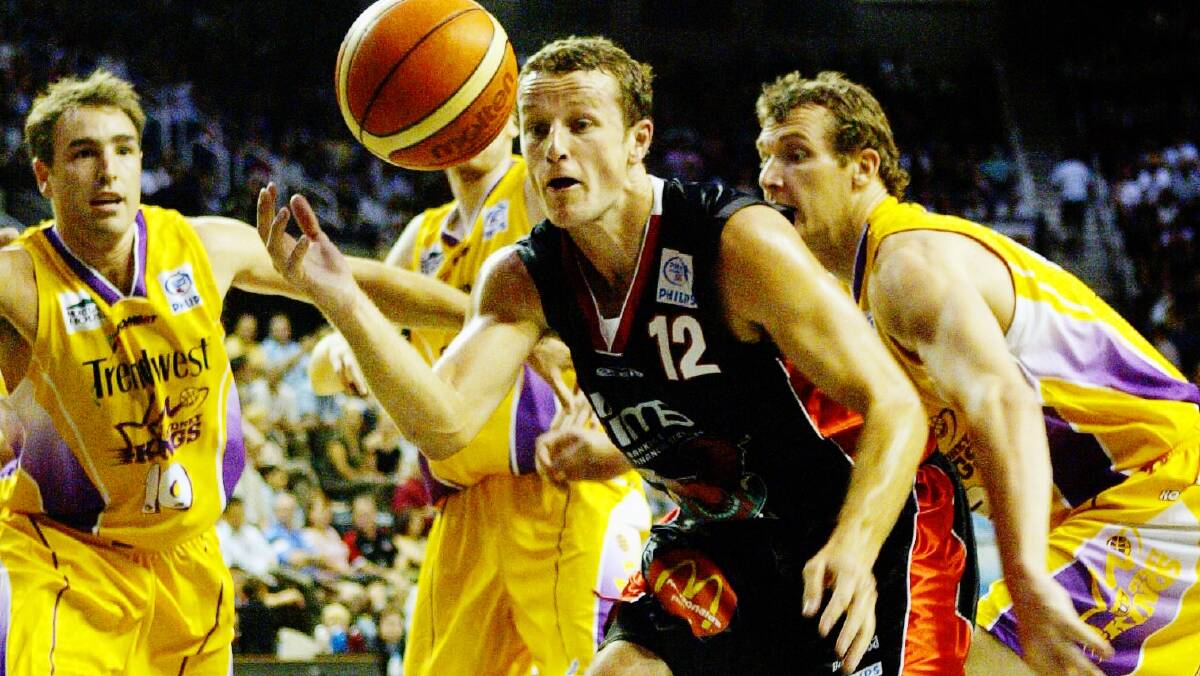
The Hawks were unable to turn those flashes into a finals run and finished seventh with an 11-19 record, while the club retired Saville’s iconic No. 12 singlet despite him continuing to play until 2013. He became one of only five Hawks players to have their jersey retired.
Wollongong closed the season on the Gold Coast, where Saville (6 points, 5 rebounds, 2 assists, and 1 block), Petrie (20 points), Franklin (19 points, 6 rebounds, and 7 assists) and Rychart (14 points and 12 rebounds) were beaten 114-104 by the Blaze.
2009/10
In his first season as Hawks head coach Gordie McLeod led the team through one of the closest season’s in NBL history, a three-way tie for second place occurred with Wollongong, Townsville and Gold Coast all finishing the regular season with the same record (16-12). Head to head victories saw the Hawks (5-3) claim the second seed, Crocodiles (4-4) finish third, and Gold Coast Blaze (3-5) take the final playoff spot.
Wollongong suffered a huge blow mid-season when star import Tywain Mckee (17.9 points, 4.8 rebounds, 4.5 assists and 1.2 steals) was shut down after suffering two stress fractures in his lower back. Illawarra (11-10) then signed journeyman guard Luke Martin for the remaining 13 games of the season. In McKee’s absence, McLeod was forced to rely on the Hawk’s local talent for their playoff run. The team was led by Cam Tragadh (14.7 points, 5.4 rebounds), Glen Saville (10.4 points, 5.7 rebounds, 2.7 assists, and 1.3 steals), team captain Mat Campbell (10.3 points and 3.0) and the blue-collar Larry Davidson (9.7 points, 6.8 rebounds, 2.0 assists, and 1.3 steals) who would also win the Hawks club MVP.
Facing off against third-placed Townsville, Saville (11 points) helped Illawarra come away with a home victory in game one (87-68), but Townsville would even the series win a 29-point demolition of Illawarra in game two (82-53), with Saville struggling to find the basket (4 points and 6 rebounds).<,p>With the series heading back to Wollongong, the Hawks led game three from start to finish, with Saville (12 points and 8 rebounds) having his best game of the series, and the Hawks game three win (88-76) sending the Hawks into the Grand Final for the first time since 2001.
With the series heading back to Wollongong, the Hawks led game three from start to finish and behind a 12-point win (88-76), they were heading back to the Grand Final for the first time since 2001.
Illawarra faced off against first-placed Perth (17-11), and thanks to Saville (5 points) being a non-factor and a brilliants all-round performance from guard Kevin Lisch (15 points, 3 rebounds, 2 assists, 3 steals and 1 block), the Wildcat’s came away with the win (75-64). In game two, the Hawks evened the series (1-1), locking Lisch down (11 points) and riding a huge offensive effort from Cam Tragardh (28 points), who barely missed, hitting 12 of his 20 shots, while Saville added 5 points and collected 10 rebounds.
The deciding game three would return to Perth, where the Wildcats found themselves down by as many as 11 points in the second quarter. Another huge game from Lisch (29 points, including 5 of 9 from three) allowed the Wildcat’s to defeat the Hawks comfortably (96-72), delivering the Wildcats’ their fifth NBL Championship. Saville (13 points, 5 rebounds, and 5 assists) did what he could in the final game, while Kevin Lisch was named Finals MVP after averaging 18 points and 4 rebounds over the three games.
2010/11
After reaching the Grand Final the previous season, Wollongong lost Cameron Tragardh (to Melbourne) and released Tywain McKee, while Glen Saville, captain Mat Campbell, Larry Davidson, Rhys Martin, Tim Coenraad, Daniel Jackson, Tim Behrendorff and David Gruber returned from the Hawks’ core.
Coach Gordie McLeod strengthened the roster with Gary Ervin (via Halifax), Oscar Forman (via New Zealand) and Tyson Demos (via Gold Coast), with Ervin replacing McKee as Wollongong’s starting point guard.
The Hawks opened the season at home against Gold Coast, where Gary Ervin (27 points, 5 rebounds, and 3 assists), David Gruber (16 points and 7 rebounds) and Glen Saville (15 points, 8 rebounds, 3 assists, 3 steals, and 2 blocks) led Wollongong to an 83-77 win, while James Harvey (20 points), Anthony Petrie (14 points and 6 rebounds) and Mark Worthington (11 points and 7 rebounds) were best for the Blaze.
Saville (9.9 points, 5.9 rebounds, and 4.1 assists) continued to provide Wollongong with rebounding, playmaking and defence from the forward position, helping the Hawks win seven of their first eight games.
Wollongong defeated Townsville 71-70 the following week, with Saville (4 assists) setting up the offence as Ervin (25 points) led the scoring and converted the match-winning free throw.
Saville celebrated his 500th NBL game against Melbourne on November 7, scoring nine points during a decisive third quarter as the Hawks erased a 12-point halftime deficit and defeated the Tigers 86-82.
His best all-round performance came in Auckland on November 19, where Saville (7 points, 11 rebounds, 9 assists, and 2 steals) narrowly missed a triple-double and combined with Forman (21 points and 11 rebounds) to lead Wollongong to a 73-57 win over New Zealand.
The victory improved the Hawks to 6-1 before they defeated Sydney 89-72 the following week, moving to 7-1 and taking control of top spot early in the season.
Wollongong’s form dropped during the middle of the campaign, with the Hawks losing seven of nine games after opening the year 9-2 and falling back towards the playoff cut-off.
Saville produced another double-double against Cairns on March 19, finishing with 13 points and 10 rebounds as Wollongong built a 10-point halftime lead, but Phill Jones (19 points) led the Taipans’ comeback and Cairns escaped with a 68-67 win that moved them ahead of the Hawks into fourth place.
Ervin (20.1 points, 3.4 rebounds, and 4.5 assists) led Wollongong in scoring and won the NBL MVP award, becoming the first Hawk to receive the honour since Mike Jones in 1981. He was also named to the All-NBL First Team and won the club MVP award.
Forman (12.9 points and 5.7 rebounds) provided perimeter shooting and frontcourt scoring, while Davidson (9.0 points and 6.7 rebounds), Gruber (8.8 points and 4.8 rebounds), Campbell (7.8 points), Coenraad (7.6 points) and Martin (5.8 points and 3.1 assists) formed the remainder of McLeod’s rotation.
Forman was named the NBL’s Most Improved Player, while Saville earned All-NBL Second Team honours for the fifth time in his career.
Wollongong recovered to win four of its final five games but finished fifth with a 15-13 record, one victory behind Cairns and Perth, and failed to qualify for the playoffs.
2011/12
After missing the playoffs the previous season, Wollongong lost reigning NBL MVP Gary Ervin (to Ukraine), while Glen Saville, captain Mat Campbell, Oscar Forman, Larry Davidson, Rhys Martin, Tim Coenraad, David Gruber, Tyson Demos and Daniel Jackson returned from the Hawks’ roster.
Coach Gordie McLeod recruited rookie import Joevan Catron (via Oregon) to strengthen the frontcourt, while point guard Showron Glover joined the team during October.
Wollongong opened the season at home against defending champion New Zealand, where Saville grabbed a team-high seven rebounds, but Tom Abercrombie (25 points), Cedric Jackson (17 points, 8 rebounds, and 7 assists) and Gary Wilkinson (17 points) led the Breakers to a 98-82 win.
The Hawks earned their first victory the following week, defeating Adelaide 97-89 behind Oscar Forman (16 points and 11 rebounds), Rhys Martin (16 points and 9 assists) and Campbell (16 points), while Adam Ballinger (28 points and 12 rebounds) led the 36ers.
Saville (6.3 points, 5.8 rebounds, and 2.6 assists) remained a key part of Wollongong’s starting lineup, leading the Hawks in rebounding while continuing to provide defence and playmaking from the wing.
Wollongong produced one of the biggest upsets of the season in Auckland on November 11, defeating New Zealand 81-63 as Martin (19 points) led the scoring and Catron (10 points) provided support, with Saville hitting a three-pointer and turnaround jumper during the second quarter to put the Hawks in front.
The Hawks struggled to build momentum and lost seven consecutive home games before former Melbourne import Ayinde Ubaka joined the roster during January, giving Wollongong another scoring option in the backcourt.
Wollongong ended the home losing streak with a 90-68 win over Melbourne on January 27, as Campbell (17 points), Ubaka (15 points, 3 assists, and 3 steals) and Saville (13 points and 9 rebounds) led the Hawks, while Liam Rush (18 points) and Myron Allen (17 points, 9 rebounds, and 6 assists) were best for the Tigers.
Saville delivered his season-high scoring performance against Sydney on December 31, finishing with 14 points, 6 rebounds, 3 assists, and 1 steal, while Coenraad (18 points) and Catron (13 points and 5 rebounds) also contributed, but Anatoly Bose (19 points) and Jerai Grant (16 points and 10 rebounds) helped the Kings escape Wollongong with an 86-83 win.
Forman (10.7 points and 4.1 rebounds) led Wollongong’s regular rotation in scoring, while Catron (10.3 points and 4.4 rebounds), Martin (9.8 points and 3.6 assists), Davidson (8.3 points and 4.8 rebounds), Coenraad (8.1 points and 3.9 rebounds), Campbell (7.7 points) and Demos (5.2 points) provided support.
Ubaka averaged 13.6 points after joining Wollongong during the second half of the season, while Glover averaged 5.9 points before leaving the rotation.
The Hawks closed the season with three consecutive victories but finished eighth with a 9-19 record and failed to qualify for the playoffs after defeating Adelaide in their final game.
2012/13
Wollongong entered the season without Ayinde Ubaka, Joevan Catron and retired captain Mat Campbell, while Glen Saville, Oscar Forman, Rhys Martin, Larry Davidson, Tim Coenraad, David Gruber, Tyson Demos and Daniel Jackson returned from the previous season.
Coach Gordie McLeod added Adris De León (via Gold Coast), Lance Hurdle, Malcolm Grant and Auryn MacMillan, with rookie Mirko Djeric also joining the roster.
The Hawks opened the season at home against Sydney, where Glen (21 points, 3 rebounds, and 3 assists) led Wollongong to a 79-76 win and began his final campaign with his season-high scoring performance.
Saville (8.9 points, 5.1 rebounds, and 2.2 assists across 18 games) remained an important part of Wollongong’s rotation, providing experience, rebounding and versatility during the Hawks’ strong opening to the season.
Wollongong defeated Townsville 84-66 on October 21 before producing its biggest win of the season against Perth on November 4, where Glen (10 points, 5 rebounds, and 3 assists) contributed as the Hawks defeated the Wildcats 100-67 and moved to the top of the ladder at the end of Round 5.
Glen (15 points, 7 rebounds, 1 assist, 1 steal, and 1 block) delivered one of his best all-round performances in Melbourne on November 25, although the Tigers defeated Wollongong 74-66.
He followed with 15 points and 2 rebounds in a 76-66 road win over Cairns on December 2, helping Wollongong end a three-game losing streak.
The Hawks later defeated Perth 78-75 at the WIN Entertainment Centre, with Glen (8 points, 4 rebounds, 2 assists, and 2 steals) contributing to Wollongong’s second win over the Wildcats for the season.
Glen (14 points and 8 rebounds) produced another strong performance against Cairns on January 11, but the Taipans pulled away for a 94-81 win.
Wollongong then recorded consecutive road victories over New Zealand and Townsville, but Glen injured his knee during a 91-74 loss to the Breakers on January 26 after playing only five minutes.
The injury required surgery and ruled him out for the remainder of the season. On January 31, Glen announced his retirement from professional basketball, ending his NBL career after nineteen seasons.
De León (16.4 points, 3.6 rebounds, 3.1 assists, and 1.3 steals) led Wollongong in scoring, won the Hawks’ club MVP award and was named the NBL’s Best Sixth Man.
Martin (11.8 points and 3.3 assists), Forman (11.7 points and 6.1 rebounds), Hurdle (11.3 points), Grant (9.6 points), Coenraad (8.8 points and 4.2 rebounds), Davidson (8.7 points and 6.6 rebounds) and Gruber (6.6 points and 4.4 rebounds) provided the Hawks’ other main contributions.
Despite losing Saville and several other players to injury, Wollongong won its final four regular-season games and finished third with a 13-15 record, earning a semifinal matchup against Perth.
Perth opened the semifinals at Perth Arena with a 93-65 win, taking control of the series behind Kevin Lisch (15 points and 4 assists), Matthew Knight (15 points, 7 rebounds, and 2 steals), Cameron Tovey (11 points), Greg Hire (10 points, 10 rebounds, and 7 assists) and Damian Martin (10 points), while De León (16 points) and Coenraad (16 points) led Wollongong.
Game two moved to the WIN Entertainment Centre, where Shawn Redhage (27 points), Lisch (20 points) and Everard Bartlett (9 points) led Perth, while Coenraad, De León and Forman kept Wollongong close before the Wildcats completed the sweep with an 85-81 overtime win.
Saville finished his career with 563 NBL games, averaging 12.8 points, 7.5 rebounds, and 3.4 assists, winning the 2001 championship and Grand Final MVP award with Wollongong while retiring as the Hawks’ all-time leader with 527 games.
Glen Saville played nineteen seasons across three NBL teams. This included the Illawarra Hawks, Sydney Kings and Wollongong Hawks. He averaged 12.8 points, 7.5 rebounds, and 3.4 assists in 563 NBL games.
CAREER RANKINGS:
– 4th in total games played.
– 23rd in total points
– 5th in total rebounds
– 9th in total assists
– 5th in total steals
– 11th in total blocks
HIGHLIGHTS:
| SEASON | AGE | TEAM | TEAM RECORD | GP | MINS | PTS | REB | AST | OR | DR | STL | BLK | TO | PF | FGM | FGA | FG% | 3PM | 3PA | 3P% | FTM | FTA | FT% | TS% | EFG% | HS |
|---|---|---|---|---|---|---|---|---|---|---|---|---|---|---|---|---|---|---|---|---|---|---|---|---|---|---|
| 2012-13 | 37 | Wollongong | 13-15 (3) | 18 | 478 | 160 | 91 | 39 | 15 | 76 | 8 | 6 | 35 | 45 | 56 | 124 | 45% | 18 | 42 | 43% | 30 | 46 | 65% | 55% | 52% | 21 |
| 2011-12 | 36 | Wollongong | 9-19 (8) | 28 | 730 | 175 | 161 | 73 | 38 | 123 | 22 | 14 | 58 | 62 | 66 | 159 | 42% | 18 | 59 | 31% | 25 | 31 | 81% | 50% | 47% | 14 |
| 2010-11 | 35 | Wollongong | 15-13 (5) | 22 | 649 | 217 | 130 | 90 | 27 | 103 | 30 | 8 | 51 | 59 | 78 | 170 | 46% | 17 | 47 | 36% | 44 | 56 | 79% | 55% | 51% | 21 |
| 2009-10 | 34 | Wollongong | 16-12 (4) | 34 | 949 | 353 | 193 | 93 | 44 | 149 | 45 | 12 | 68 | 103 | 124 | 284 | 44% | 48 | 104 | 46% | 57 | 74 | 77% | 55% | 52% | 23 |
| 2008-09 | 33 | Wollongong | 11-19 (7) | 30 | 1,102 | 454 | 232 | 111 | 42 | 190 | 52 | 30 | 94 | 117 | 157 | 380 | 41% | 69 | 183 | 38% | 71 | 91 | 78% | 54% | 50% | 28 |
| 2007-08 | 32 | Sydney | 27-3 (1) | 36 | 1,070 | 382 | 216 | 98 | 66 | 150 | 45 | 24 | 79 | 99 | 136 | 334 | 41% | 48 | 137 | 35% | 62 | 90 | 69% | 51% | 48% | 24 |
| 2006-07 | 31 | Wollongong | 11-22 (9) | 33 | 1,341 | 538 | 292 | 161 | 68 | 224 | 38 | 19 | 115 | 138 | 181 | 430 | 42% | 70 | 165 | 42% | 106 | 145 | 73% | 54% | 50% | 35 |
| 2005-06 | 30 | Wollongong | 19-13 (3) | 26 | 962 | 393 | 223 | 118 | 68 | 155 | 46 | 25 | 98 | 105 | 136 | 358 | 38% | 42 | 123 | 34% | 79 | 106 | 75% | 48% | 44% | 30 |
| 2004-05 | 29 | Wollongong | 20-12 (2) | 37 | 1,430 | 649 | 336 | 137 | 85 | 251 | 68 | 44 | 106 | 121 | 234 | 575 | 41% | 68 | 187 | 36% | 113 | 158 | 72% | 50% | 47% | 35 |
| 2003-04 | 28 | Wollongong | 25-8 (2) | 35 | 1,281 | 573 | 336 | 154 | 101 | 235 | 61 | 33 | 83 | 126 | 208 | 503 | 41% | 60 | 172 | 35% | 97 | 125 | 78% | 51% | 47% | 30 |
| 2002-03 | 27 | Wollongong | 18-12 (4) | 34 | 1,301 | 541 | 329 | 136 | 86 | 243 | 54 | 28 | 112 | 131 | 201 | 458 | 44% | 67 | 177 | 38% | 72 | 109 | 66% | 53% | 51% | 28 |
| 2001-02 | 26 | Wollongong | 16-14 (4) | 32 | 1,259 | 489 | 308 | 120 | 90 | 218 | 49 | 55 | 121 | 136 | 178 | 437 | 41% | 46 | 131 | 35% | 87 | 120 | 73% | 49% | 46% | 25 |
| 2000-01 | 25 | Wollongong | 21-7 (4) | 37 | 1,483 | 574 | 360 | 163 | 106 | 254 | 75 | 41 | 127 | 138 | 220 | 482 | 46% | 48 | 137 | 35% | 86 | 139 | 62% | 52% | 51% | 26 |
| 1999-00 | 24 | Wollongong | 11-17 (8) | 26 | 1,012 | 363 | 203 | 103 | 73 | 130 | 50 | 18 | 78 | 103 | 145 | 309 | 47% | 23 | 68 | 34% | 50 | 79 | 63% | 52% | 51% | 25 |
| 1998-99 | 23 | Wollongong | 16-10 (4) | 30 | 1,197 | 362 | 254 | 140 | 78 | 176 | 59 | 20 | 92 | 106 | 146 | 349 | 42% | 18 | 57 | 32% | 52 | 83 | 63% | 47% | 44% | 24 |
| 1998 | 22 | Wollongong | 14-16 (6) | 32 | 1,163 | 347 | 236 | 94 | 83 | 153 | 48 | 29 | 94 | 105 | 135 | 338 | 40% | 12 | 55 | 22% | 65 | 95 | 68% | 45% | 42% | 28 |
| 1997 | 21 | Illawarra | 7-23 (11) | 30 | 1,071 | 409 | 215 | 74 | 75 | 140 | 47 | 25 | 81 | 112 | 148 | 317 | 47% | 31 | 89 | 35% | 82 | 111 | 74% | 55% | 52% | 25 |
| 1996 | 20 | Illawarra | 9-17 (10) | 23 | 414 | 153 | 94 | 32 | 29 | 65 | 16 | 12 | 39 | 53 | 55 | 121 | 45% | 11 | 34 | 32% | 32 | 46 | 70% | 54% | 50% | 22 |
| 1995 | 19 | Illawarra | 14-12 (7) | 20 | 247 | 115 | 49 | 9 | 18 | 31 | 8 | 4 | 26 | 35 | 43 | 85 | 51% | 14 | 30 | 47% | 15 | 19 | 79% | 61% | 59% | 17 | Totals | 563 | 19139 | 7247 | 4258 | 1945 | 1192 | 3066 | 821 | 447 | 1557 | 1894 | 2647 | 6213 | 42.6% | 728 | 1997 | 36.5% | 1225 | 1723 | 71.1% | 52% | 48% | 35 |
| SEASON | AGE | TEAM | TEAM RECORD | GP | MINS | PTS | REB | AST | OR | DR | STL | BLK | TO | PF | FGM | FGA | FG% | 3PM | 3PA | 3P% | FTM | FTA | FT% | TS% | EFG% | HS |
|---|---|---|---|---|---|---|---|---|---|---|---|---|---|---|---|---|---|---|---|---|---|---|---|---|---|---|
| 2012-13 | 37 | Wollongong | 13-15 (3) | 18 | 26.6 | 8.9 | 5.1 | 2.2 | 0.8 | 4.2 | 0.4 | 0.3 | 1.9 | 2.5 | 3.1 | 6.9 | 45% | 1.0 | 2.3 | 43% | 1.7 | 2.6 | 65% | 55% | 52% | 21 |
| 2011-12 | 36 | Wollongong | 9-19 (8) | 28 | 26.1 | 6.3 | 5.8 | 2.6 | 1.4 | 4.4 | 0.8 | 0.5 | 2.1 | 2.2 | 2.4 | 5.7 | 42% | 0.6 | 2.1 | 31% | 0.9 | 1.1 | 81% | 50% | 47% | 14 |
| 2010-11 | 35 | Wollongong | 15-13 (5) | 22 | 29.5 | 9.9 | 5.9 | 4.1 | 1.2 | 4.7 | 1.4 | 0.4 | 2.3 | 2.7 | 3.5 | 7.7 | 46% | 0.8 | 2.1 | 36% | 2.0 | 2.5 | 79% | 55% | 51% | 21 |
| 2009-10 | 34 | Wollongong | 16-12 (4) | 34 | 27.9 | 10.4 | 5.7 | 2.7 | 1.3 | 4.4 | 1.3 | 0.4 | 2.0 | 3.0 | 3.6 | 8.4 | 44% | 1.4 | 3.1 | 46% | 1.7 | 2.2 | 77% | 55% | 52% | 23 |
| 2008-09 | 33 | Wollongong | 11-19 (7) | 30 | 36.7 | 15.1 | 7.7 | 3.7 | 1.4 | 6.3 | 1.7 | 1.0 | 3.1 | 3.9 | 5.2 | 12.7 | 41% | 2.3 | 6.1 | 38% | 2.4 | 3.0 | 78% | 54% | 50% | 28 |
| 2007-08 | 32 | Sydney | 27-3 (1) | 36 | 29.7 | 10.6 | 6.0 | 2.7 | 1.8 | 4.2 | 1.3 | 0.7 | 2.2 | 2.8 | 3.8 | 9.3 | 41% | 1.3 | 3.8 | 35% | 1.7 | 2.5 | 69% | 51% | 48% | 24 |
| 2006-07 | 31 | Wollongong | 11-22 (9) | 33 | 40.6 | 16.3 | 8.8 | 4.9 | 2.1 | 6.8 | 1.2 | 0.6 | 3.5 | 4.2 | 5.5 | 13.0 | 42% | 2.1 | 5.0 | 42% | 3.2 | 4.4 | 73% | 54% | 50% | 35 |
| 2005-06 | 30 | Wollongong | 19-13 (3) | 26 | 37.0 | 15.1 | 8.6 | 4.5 | 2.6 | 6.0 | 1.8 | 1.0 | 3.8 | 4.0 | 5.2 | 13.8 | 38% | 1.6 | 4.7 | 34% | 3.0 | 4.1 | 75% | 48% | 44% | 30 |
| 2004-05 | 29 | Wollongong | 20-12 (2) | 37 | 38.6 | 17.5 | 9.1 | 3.7 | 2.3 | 6.8 | 1.8 | 1.2 | 2.9 | 3.3 | 6.3 | 15.5 | 41% | 1.8 | 5.1 | 36% | 3.1 | 4.3 | 72% | 50% | 47% | 35 |
| 2003-04 | 28 | Wollongong | 25-8 (2) | 35 | 36.6 | 16.4 | 9.6 | 4.4 | 2.9 | 6.7 | 1.7 | 0.9 | 2.4 | 3.6 | 5.9 | 14.4 | 41% | 1.7 | 4.9 | 35% | 2.8 | 3.6 | 78% | 51% | 47% | 30 |
| 2002-03 | 27 | Wollongong | 18-12 (4) | 34 | 38.3 | 15.9 | 9.7 | 4.0 | 2.5 | 7.1 | 1.6 | 0.8 | 3.3 | 3.9 | 5.9 | 13.5 | 44% | 2.0 | 5.2 | 38% | 2.1 | 3.2 | 66% | 53% | 51% | 28 |
| 2001-02 | 26 | Wollongong | 16-14 (4) | 32 | 39.3 | 15.3 | 9.6 | 3.8 | 2.8 | 6.8 | 1.5 | 1.7 | 3.8 | 4.3 | 5.6 | 13.7 | 41% | 1.4 | 4.1 | 35% | 2.7 | 3.8 | 73% | 49% | 46% | 25 |
| 2000-01 | 25 | Wollongong | 21-7 (4) | 37 | 40.1 | 15.5 | 9.7 | 4.4 | 2.9 | 6.9 | 2.0 | 1.1 | 3.4 | 3.7 | 5.9 | 13.0 | 46% | 1.3 | 3.7 | 35% | 2.3 | 3.8 | 62% | 52% | 51% | 26 |
| 1999-00 | 24 | Wollongong | 11-17 (8) | 26 | 38.9 | 14.0 | 7.8 | 4.0 | 2.8 | 5.0 | 1.9 | 0.7 | 3.0 | 4.0 | 5.6 | 11.9 | 47% | 0.9 | 2.6 | 34% | 1.9 | 3.0 | 63% | 52% | 51% | 25 |
| 1998-99 | 23 | Wollongong | 16-10 (4) | 30 | 39.9 | 12.1 | 8.5 | 4.7 | 2.6 | 5.9 | 2.0 | 0.7 | 3.1 | 3.5 | 4.9 | 11.6 | 42% | 0.6 | 1.9 | 32% | 1.7 | 2.8 | 63% | 47% | 44% | 24 |
| 1998 | 22 | Wollongong | 14-16 (6) | 32 | 36.3 | 10.8 | 7.4 | 2.9 | 2.6 | 4.8 | 1.5 | 0.9 | 2.9 | 3.3 | 4.2 | 10.6 | 40% | 0.4 | 1.7 | 22% | 2.0 | 3.0 | 68% | 45% | 42% | 28 |
| 1997 | 21 | Illawarra | 7-23 (11) | 30 | 35.7 | 13.6 | 7.2 | 2.5 | 2.5 | 4.7 | 1.6 | 0.8 | 2.7 | 3.7 | 4.9 | 10.6 | 47% | 1.0 | 3.0 | 35% | 2.7 | 3.7 | 74% | 55% | 52% | 25 |
| 1996 | 20 | Illawarra | 9-17 (10) | 23 | 18.0 | 6.7 | 4.1 | 1.4 | 1.3 | 2.8 | 0.7 | 0.5 | 1.7 | 2.3 | 2.4 | 5.3 | 45% | 0.5 | 1.5 | 32% | 1.4 | 2.0 | 70% | 54% | 50% | 22 |
| 1995 | 19 | Illawarra | 14-12 (7) | 20 | 12.4 | 5.8 | 2.5 | 0.5 | 0.9 | 1.6 | 0.4 | 0.2 | 1.3 | 1.8 | 2.2 | 4.3 | 51% | 0.7 | 1.5 | 47% | 0.8 | 1.0 | 79% | 61% | 59% | 17 | Total | 563 | 34.0 | 12.9 | 7.6 | 3.5 | 2.1 | 5.4 | 1.5 | 0.8 | 2.8 | 3.4 | 4.7 | 11.0 | 42.6% | 0.0 | 0.0 | 36.5% | 1.3 | 3.5 | 71.1% | 52% | 48% | 35 |
| POINTS | REBOUNDS | ASSISTS | STEALS | BLOCKS | TURNOVERS | TRIPLE DOUBLES | 35 | 20 | 11 | 6 | 5 | 9 | 0 |
|---|
Saville joined Ballarat for the 1992 SEABL season, playing for the Miners before his Australian Institute of Sport scholarship years and appearing in a club season where Ballarat reached the ABA National Championship game before falling 117–90 to Sydney City Comets.
Saville joined the Australian Institute of Sport for the 1993 SEABL season, moving into the AIS men’s basketball team in Canberra during a two-year scholarship period after coming through Bendigo juniors, with Gordon McLeod as men’s head coach and Mark Watkins also on the men’s coaching staff.
The AIS retained Saville for the 1994 SEABL season, where he remained part of the men’s basketball intake alongside players including Simon Dwight, Craig McAndrew, Nikola Mirich and Zoran Pejcinovic, with Gordon McLeod again serving as men’s head coach and Mark Watkins continuing on the coaching staff.
Saville was a member of 2002 Boomers Squad, led by coach Phil Smyth, which failed to qualify for the FIBA World Championships.
Saville remained a part of the national team as Australia looked to rebound from the New Zealand loss. Smyth was replaced as head coach by Brian Goorjian who immediately convinced Shane Heal to return to the national program (he had retired after the 2000 Olympics) and build the team around teenage big man Andrew Bogut. In his first Olympics Bogut (13.7 points, 9 rebounds, and 1.2 blocks) was the teams starting centre and leading rebounder while Heal (16.7 points and 3.5 assists) would lead the team in scoring and assists. selected a part of the national program as the team. Due to the teams inexperience, the Boomers (1-5) lost to every team in their pool bar Angola, missing the quarterfinals. Australia would then defeat New Zealand, 98-80, to determine who finished the tournament in ninth place.
In 2005, with Heal having retired from international basketball, Bruton was thrust into the starting point guard role as the team played 15 matches in 2005, winning 13 of them. Saville co-captained the Boomers squad alongside CJ Bruton, competing in the Kirin Cup (Japan), the Boris Stankovic Cup (Beijing, China) and the 4-Nations Tournament.
Australia then faced New Zealand for the FIBA Oceania Qualifying Series a week after. Bruton led the team in scoring (32 points) in the opening game and led the team to a 3-0 sweep of the Kiwis.
He was selected for the 2006 Commonwealth Games but missed through a injury which also saw him unable to take part in the 2006 FIBA World Championships.
Saville returned to play for Australia at the 2008 Beijing Olympics where the Boomers defeated Iran, Russia and Lithuania to narrowly advance through to the second round. Due to their poor record (3-2) they would draw #1 ranked USA (5-0), who had earned the moniker of "The Redeem Team" and featured Kobe Bryant, Lebron James, Dwayne Wade. Despite a 20 point effort from Boomers debutant Patty Mills, Australia would lose to USA with Kobe Bryant (25 points) finishing as the game high scorer. The loss would see the Boomers finish in seventh place, their highest finish since 2000.
| YEAR | AGE | GP | MINS | PTS | REB | AST | OR | DR | STL | BLK | TO | PF | FGM | FGA | FG% | 3PM | 3PA | 3P% | FTM | FTA | FT% |
|---|---|---|---|---|---|---|---|---|---|---|---|---|---|---|---|---|---|---|---|---|---|
| 2008 | 32 | 5 | 51 | 28 | 6 | 4 | 3 | 3 | 3 | 0 | 0 | 7 | 9 | 13 | 69.2% | 5 | 7 | 71.4% | 5 | 5 | 100.0% |
| 2004 | 28 | 6 | 134 | 45 | 25 | 6 | 7 | 18 | 4 | 1 | 9 | 14 | 17 | 30 | 56.7% | 5 | 11 | 45.5% | 6 | 11 | 54.5% | Total | 11 | 185 | 73 | 31 | 10 | 10 | 21 | 7 | 1 | 9 | 21 | 26 | 43 | 60% | 10 | 18 | 56% | 11 | 16 | 69% |
| YEAR | AGE | GP | MINS | PTS | REB | AST | OR | DR | STL | BLK | TO | PF | FGM | FGA | FG% | 3PM | 3PA | 3P% | FTM | FTA | FT% |
|---|---|---|---|---|---|---|---|---|---|---|---|---|---|---|---|---|---|---|---|---|---|
| 2008 | 32 | 5 | 10.2 | 5.6 | 1.2 | 0.8 | 0.6 | 0.6 | 0.6 | 0.0 | 0.0 | 1.4 | 1.8 | 2.6 | 69.2% | 1.0 | 1.4 | 71.4% | 1.0 | 1.0 | 100.0% |
| 2004 | 28 | 6 | 22.3 | 7.5 | 4.2 | 1.0 | 1.2 | 3.0 | 0.7 | 0.2 | 1.5 | 2.3 | 2.8 | 5.0 | 56.7% | 0.8 | 1.8 | 45.5% | 1.0 | 1.8 | 54.5% | Total | 11 | 16.8 | 6.6 | 2.8 | 0.9 | 0.9 | 1.9 | 0.6 | 0.1 | 0.8 | 1.9 | 2.4 | 3.9 | 60% | 0.9 | 1.6 | 56% | 1.0 | 1.5 | 69% |
- 1x time NBL Finals MVP (2001)
- 1x time NBL Best Defensive Player (2003)
- 5x All-NBL Second Team
- 3x All-NBL Third Team
Saville returned to basketball through junior development after finishing his professional playing career. By 2020 he was part of the Illawarra Academy of Sport basketball coaching staff, working with scholarship athletes in a program focused on individual skills, confidence, communication and preparing players for state and national pathways.
He remained with the Illawarra Academy of Sport in 2021, coaching alongside Tori Forrester, Maddison Delaney and Georgia Ohrdorf. At the 2021 Academy Games, three of Illawarra’s four basketball teams progressed to their respective Grand Finals.
Saville continued with the IAS program in 2022, when the academy had 41 basketball scholarship athletes divided across Under-14 boys, Under-14 girls, Under-16 boys and Under-16 girls teams. The program combined weekly training with competition and individual and team skill development.
In 2023, Saville became head coach of the Illawarra Hawks Under-14 boys representative team. The Hawks qualified for the Australian Under-14 Club Championships in Melbourne, with Saville assisted by Eric Hackett and Luke Musgrave. Illawarra finished 22nd at the national tournament.
Saville also continued coaching within the Illawarra Academy of Sport and was later identified as one of the program’s head basketball coaches. His IAS work included inter-academy camps where Illawarra athletes trained and competed against players from other regional academy programs.
His junior coaching partnership with Musgrave also led to the creation of the Hooked On Hoops podcast in 2024. The idea developed after the pair coached the Illawarra Under-14 boys at the 2023 nationals, with the podcast focusing on the development pathways and experiences of basketball players and coaches.
Whilst we try to source as much information as we can for every player who has ever played in the NBL some information on a player profile may be missing. If you have additional information on a player you'd like us to add to a profile, please send it to us using the enquiry form below.
Submissions are then sent to info@aussiehoopla.com