Matt Garrison on Winning Back-to-Back Titles with Multiple NBL Teams, NBA Opportunities and Aussie Hoops Impact Overseas
July 27, 2026


NICKNAME/S: Melly Mel
BIO: Melvin Thomas was born in Demopolis, Alabama (USA).
Melvin Thomas made his NBL debut with the Illawarra Hawks at 24 years of age. He scored 17 points in his first game.
In 1996, Thomas averaged 20.9 points and 9.3 rebounds, and helped guide the Kings to a fifth place finish in the regular season with a 16-10 record.
1997
In 1997 Thomas averaged 18.9 points and 10.7 rebounds, and helped guide the Kings to a ninth-place finish during the regular season with a 12-18 record.
1997
Coming off a fifth-place finish with a 16-10 record before being eliminated by Canberra in the 1996 quarterfinals, Sydney entered 1997 needing to replace captain Shane Heal (to Minnesota), while Neil Turner and Dean Uthoff (retired) also departed. Alan Black returned for his second season as coach, with Isaac Burton, Melvin Thomas, Bruce Bolden, Stephen Whitehead, Brad Rosen, Brad Williams, Justin Withers and Danny Williams returning from the previous season’s group and Bolden taking over as captain. Aaron Trahair (via Perth), Cameron Dickinson (via Townsville), Matthew Nielsen (via AIS) and rookie Ben Knight were added. With Hobart, Geelong and Gold Coast exiting the NBL following the 1996 season, Sydney entered a reduced 11-team competition without the scoring and playmaking Heal had provided.
Sydney opened the season against North Melbourne at the Melbourne Sports & Entertainment Centre on April 11, where Thomas (11 points, 18 rebounds, 2 assists, and 4 steals) controlled the glass, but the Giants defeated the Kings 85-81. Burton (19 points, 6 rebounds, 3 assists, 3 steals, and 1 block) and Bolden (14 points, 11 rebounds, 2 assists, 1 steal, and 2 blocks) provided support, while Reidy (24 points, 5 rebounds, 2 assists, and 4 steals) led North Melbourne. Sydney lost three of its first four games as the new-look backcourt adjusted to Heal’s departure.
Thomas (18.9 points, 10.7 rebounds, and 1.6 steals across 30 games) appeared in every game and led Sydney in rebounding while finishing second on the team in scoring. His production remained consistent throughout his second season with the Kings and he was named Sydney’s club MVP.
Thomas’ best game and highest-scoring performance came in the return meeting with North Melbourne at the Sydney Entertainment Centre on April 19, where Thomas (30 points, 16 rebounds, 5 assists, 8 steals, and 4 blocks) made 10-of-18 shots and all 10 of his free throws while playing 47 minutes. Burton (19 points, 4 rebounds, 2 assists, and 1 steal) and Bolden (10 points, 12 rebounds, 4 assists, 1 steal, and 2 blocks) provided support, but Stiff (17 points, 10 rebounds, 4 assists, and 1 steal) helped the Giants escape with a 94-92 victory.
Thomas delivered another of his strongest all-around performances against eventual champion Melbourne on June 7, finishing with 28 points, 17 rebounds, 7 assists, 2 steals, and 2 blocks as Sydney defeated the Tigers 124-117 at the Sydney Entertainment Centre. Burton (29 points, 11 rebounds, 5 assists, and 4 steals) and Whitehead (27 points, 7 rebounds, and 2 assists) provided the other major scoring, while Gaze (37 points, 5 rebounds, and 10 assists) led Melbourne.
Burton (20.8 points, 5.7 rebounds, 5.1 assists, and 3 steals across 30 games) led Sydney in scoring and steals while assuming more responsibility running the offence. Trahair (11.4 points, 3.7 rebounds, 3.2 assists, and 1.5 steals across 22 games) had been recruited after spending much of his Perth career playing alongside Ricky Grace, but struggled with the transition to becoming Sydney’s starting point guard. Black eventually shifted Trahair back to the off-guard role and increased Burton’s playmaking responsibilities before a foot injury following the All-Star break ended Trahair’s season and kept him out of the final six games. Rosen (5.1 points across 26 games) moved into the starting lineup during August, while Whitehead (12.5 points and 4.8 rebounds across 30 games) developed into Sydney’s third-leading scorer. Captain Bolden (11.6 points and 7.2 rebounds across 25 games) remained a key interior contributor, Dickinson (10.8 points across 30 games) supplied perimeter scoring and Nielsen (9.9 points and 4.9 rebounds across 29 games) established himself in the rotation after returning from the AIS and was named NBL Rookie of the Year.
Sydney closed the season against Canberra at the AIS Arena on September 27, where Thomas (25 points, 10 rebounds, 2 assists, and 2 blocks) recorded another double-double and Burton (31 points, 4 rebounds, 4 assists, and 4 steals) led the Kings in scoring. Whitehead (14 points, 6 rebounds, and 5 assists) also contributed, but Rose (37 points, 12 rebounds, and 2 assists) carried the Cannons to a 98-95 victory. The loss completed a three-game losing streak and left Sydney tenth with a 12-18 record, outside the playoffs.
CANBERRA CANNONS
1998
After finishing fifth with a 15-15 record and returning to the playoffs in 1997 before being eliminated by North Melbourne in the first round, Canberra entered 1998 under head coach Brett Flanigan. Mario Donaldson did not return and Chris Blakemore (to Brisbane) departed, while captain Robert Rose, Simon Dwight, Ray Borner, Troy Pilon, Brendan Mann and Jamie Pearlman returned. Flanigan added Melvin Thomas (via Sydney), Mike McKay (via Brisbane) and Rod Johnson (via North Melbourne). Thomas arrived after averaging 18.9 points and 10.7 rebounds for Sydney in 1997, where the Kings finished ninth with a 12-18 record.
Canberra opened the season against Sydney at the AIS Arena on February 1, where Thomas (19 points, 7 rebounds, and 1 assist) made his Cannons debut as Sydney won 123-96. McKay (25 points and 3 rebounds) and Rose (17 points, 3 rebounds, and 10 assists) led Canberra, while Aaron Trahair (35 points and 4 rebounds) led the Kings.
Thomas (18.2 points and 8.9 rebounds across 30 games) became Canberra’s second-leading scorer and a major presence inside, appearing in all 30 Cannons games and shooting 50 percent from the field. Canberra struggled early, opening the season 1-6 before recovering to remain in the playoff race during the second half of the year.
Thomas produced his best game of the season against his former team Sydney at the AIS Arena on April 25, finishing with 29 points, 15 rebounds, 1 assist, 2 steals, and 3 blocks as Canberra won 109-96. Dwight (25 points, 10 rebounds, 4 assists, 3 steals, and 4 blocks) and Rose (19 points, 8 rebounds, 9 assists, and 4 steals) provided the main support, while Kelsey Weems (20 points, 5 rebounds, and 4 assists) led Sydney.
Thomas matched his season-high scoring mark against Brisbane on May 30, making 12-of-18 field goals and finishing with 29 points, 13 rebounds, 2 assists, and 1 steal as Canberra defeated the Bullets 114-102 at the Brisbane Convention Centre. Rose (28 points, 3 rebounds, and 5 assists) and Dwight (18 points, 8 rebounds, 4 assists, and 2 blocks) helped the Cannons to the win, while Steve Woodberry (31 points, 9 rebounds, 2 assists, and 3 blocks) led Brisbane.
Rose (19.7 points, 6.5 rebounds, 6.4 assists, and 1.6 steals across 29 games) remained Canberra’s leading scorer and playmaker, while Dwight (15.9 points, 9 rebounds, and 2.6 blocks across 29 games) led the NBL in blocked shots. McKay (15 points and 3.7 rebounds across 30 games) provided another major scoring option, with Rod Johnson (8.4 points across 30 games), Borner (6.9 points and 5.2 rebounds across 30 games), Mann (5.7 points across 23 games), Pilon (4.8 points across 26 games) and Pearlman (4.7 points across 27 games) completing the main rotation. Canberra went 8-7 away from home but only 6-9 at the AIS Arena as the Cannons recovered from their poor start to enter the final round with a chance to reach the playoffs.
Canberra closed the regular season against Newcastle at the Newcastle Entertainment Centre on June 5, where Thomas finished with 20 points, 5 rebounds, 2 steals, and 2 blocks as the Cannons won 104-93. McKay (32 points, 3 rebounds, and 2 assists) and Dwight (22 points, 14 rebounds, 4 assists, 2 steals, and 3 blocks) led Canberra, while Ben Melmeth (22 points and 17 rebounds) was Newcastle’s best. The victory left Canberra with a 14-16 record, tied with Wollongong, but the Hawks claimed sixth place after winning the season series 2-1, leaving the Cannons seventh and outside the playoffs.
1998/99
During the 1998/99 season Thomas averaged 21.1 points and 9.5 rebounds but the Cannons struggled to be competitive and finished the year with a record of 8-18.
WOLLONGONG HAWKS
1999/00
At 33, Thomas had played in just 12 playoff games in his nine-year NBL career for only two wins and so he returned to the team where it all started for the 1999/00 season, somewhere his career 22.2 points and 10.1 rebounds per game would be better appreciated.
Following a disappointing playoff campaign where they lost four straight games, Wollongong entered the 1999/00 NBL season determined to improve. The club made a key move in the offseason, parting ways with Clayton Ritter (to Canberra) and bringing back former team MVP Melvin Thomas after a four-year absence. With head coach Brendan Joyce leading the team and star guard CJ Bruton (22.1 points, 3.5 rebounds, and 3.3 assists) orchestrating the offense, the Hawks were expected to be a much-improved squad.
Thomas, returning after stints with Sydney and Canberra, immediately re-established himself as a dominant force in the frontcourt. He provided inside scoring, rebounding, and leadership for a Hawks team that had struggled to match up with the league’s top big men in previous seasons. He averaged 19.6 points, 8.6 rebounds, 2.4 assists, and 1.2 steals across 28 games, proving to be one of the most consistent players in the league. His ability to complement Bruton’s perimeter play was key to the team’s offensive strategy, as Wollongong relied heavily on their inside-out attack.
Despite the individual brilliance of Thomas and Bruton, the Hawks found it difficult to secure wins against the NBL’s elite teams. A major factor in their struggles was the lack of production from import center Todd Mundt (8.8 points, 4.9 rebounds, and 0.8 assists), who struggled to play extended minutes. With nine games remaining in the season, the team made a significant change, releasing Mundt and bringing in mid-season acquisition Matt Garrison (17.2 points, 7.0 rebounds, and 2.4 assists in nine games). While Garrison provided an immediate boost with his work ethic and all-around contributions, it was too little too late for Wollongong to salvage their season.
Alongside Thomas, Glen Saville (14.0 points, 7.8 rebounds, 4.0 assists, and 1.9 steals) continued to grow into one of the league’s most versatile forwards, contributing on both ends of the floor. Mat Campbell (14.2 points, 3.0 rebounds, and 2.9 assists) provided perimeter scoring, while veteran Mike McKay (5.5 points, 1.9 rebounds, and 1.5 assists) added experience to the rotation. The lack of interior depth, however, left the Hawks vulnerable against more physical opponents, and their inability to consistently beat playoff-caliber teams saw them limp to an 11-17 record, finishing eighth on the ladder.
Thomas’ production and leadership were among the few bright spots in an otherwise frustrating season. He finished as the team’s second-leading scorer and top rebounder, earning Hawks co-MVP honors alongside Saville.
2000/01
After missing the playoffs the previous season, Wollongong entered 2000/01 with CJ Bruton (to Sioux Falls), Todd Mundt, Mike McKay, Mark Dalton and Darren Perry gone from the previous season’s rotation, while head coach Brendan Joyce reshaped the roster around the club’s veteran frontcourt leader and co-captains Glen Saville and Mat Campbell.
Joyce retained Saville, Campbell, Matt Garrison and the Hawks’ returning interior anchor, while adding Charles Thomas, Damon Lowery, Axel Dench, Grant Kruger, Matt Shanahan and veteran Ray Borner to give Wollongong one of the deepest rosters in the league.
Wollongong opened the season at the WIN Entertainment Centre with a 115-97 loss to West Sydney, where Melvin Thomas (25 points and 16 rebounds) led the Hawks, with Charles Thomas (18 points, 7 rebounds, and 5 assists) and Campbell (17 points) also contributing.
Thomas (18.7 points, 9.5 rebounds, and 1.3 steals) was Wollongong’s leading scorer and strongest interior presence, giving the Hawks reliable low-post scoring, rebounding and veteran composure as the team built a balanced offence around six double-figure scorers.
One of his best early games came in Melbourne on October 27, where Thomas (31 points, 13 rebounds, 5 assists, and 3 steals) helped Wollongong defeat the Victoria Giants 88-81, with Saville (10 points, 8 rebounds, 5 assists, and 3 steals) and Lowery (11 points and 5 rebounds) supporting him.
His best regular-season game came in Cairns on March 31, where Thomas (32 points, 12 rebounds, 4 assists, 3 steals, and 2 blocks) led Wollongong to a 104-101 win over the Taipans, with Charles Thomas (16 points) and Campbell (17 points) helping the Hawks close the regular season with a road victory.
Charles Thomas (16.5 points, 4.8 rebounds, 4.1 assists, and 1.6 steals) gave Wollongong another creator, while Saville (15.5 points, 9.7 rebounds, 4.4 assists, 2.0 steals, and 1.1 blocks) filled every part of the box score. Lowery (13.6 points, 3.2 assists, and 1.4 steals), Dench (13.4 points, 6.4 rebounds, and 1.1 blocks), Campbell (12.8 points, 3.0 rebounds, and 1.1 steals) and Garrison (9.7 points and 4.9 rebounds) completed the main rotation.
Thomas and Saville were named to the All-NBL Third Team, Dench won NBL Rookie of the Year and Joyce was named Coach of the Year as Wollongong finished fourth with a 21-7 record, tied with Perth but placed behind the Wildcats on the head-to-head tiebreaker.
Wollongong opened the qualifying finals at the WIN Entertainment Centre with a 97-90 overtime win over Perth, with Thomas (22 points and 13 rebounds), Lowery (19 points, 3 rebounds, and 5 assists), Dench (17 points and 7 rebounds), Charles Thomas (10 points, 5 rebounds, and 4 assists) and Campbell (10 points and 5 rebounds) helping the Hawks take game one.
Game two moved to Perth, where the Wildcats responded with a 106-95 win, holding Thomas (6 points and 7 rebounds) to one of his quietest games of the season despite Charles Thomas (25 points, 7 rebounds, and 5 assists) and Saville (23 points, 10 rebounds, and 4 assists) leading Wollongong.
Game three remained in Perth, where Saville (26 points, 16 rebounds, and 4 assists), Lowery (20 points, 4 rebounds, 6 assists, and 4 steals), Dench (19 points and 5 rebounds) and Charles Thomas (16 points, 5 rebounds, and 5 assists) led Wollongong to a 98-88 upset and the first playoff series victory in club history, while Thomas (9 points and 9 rebounds) battled through Perth’s defensive attention.
The semifinals opened in Adelaide, where Thomas (18 points, 13 rebounds, 4 assists, and 2 blocks) returned to form as Wollongong defeated the 36ers 84-83, with Charles Thomas (17 points and 6 rebounds) and Saville (14 points, 18 rebounds, and 4 assists) helping the Hawks win in Adelaide for the first time since 1990.
Game two returned to Wollongong, where Adelaide forced a deciding game with a 111-100 win despite Thomas (22 points and 11 rebounds), Dench (26 points and 9 rebounds), Saville (17 points and 15 rebounds) and Campbell (14 points), with Brooks (30 points) and Mee (24 points and 7 assists) leading the 36ers.
Game three at the WIN Entertainment Centre became one of the most controversial finishes in NBL history, but Thomas (28 points, 11 rebounds, 4 steals, and 2 blocks) was the rock Wollongong built its Grand Final push around, shooting 13-of-18 from the field before Lowery (20 points, 5 rebounds, and 3 assists) was fouled on a final-second three-point attempt and made all three free throws to win 109-108. Campbell (19 points) made 5-of-6 threes, while Kevin Brooks (26 points), Paul Maley (21 points) and Mark Nash (20 points) led Adelaide.
The Grand Final opened at the WIN Entertainment Centre against Townsville, where Thomas (24 points, 14 rebounds, and 2 assists) led Wollongong to a 104-101 win, with Campbell (19 points), Charles Thomas (17 points, 4 rebounds, and 7 assists), Saville (14 points and 10 rebounds) and Garrison (12 points, 6 rebounds, 3 assists, and 2 blocks) helping the Hawks take game one.
Game two moved to Townsville, where the Crocodiles responded with a 114-97 win despite Thomas (16 points, 13 rebounds, and 3 blocks), Lowery (25 points, 7 assists, and 3 steals), Charles Thomas (20 points and 5 assists) and Shanahan (11 points), forcing the championship to a deciding game on back-to-back nights.
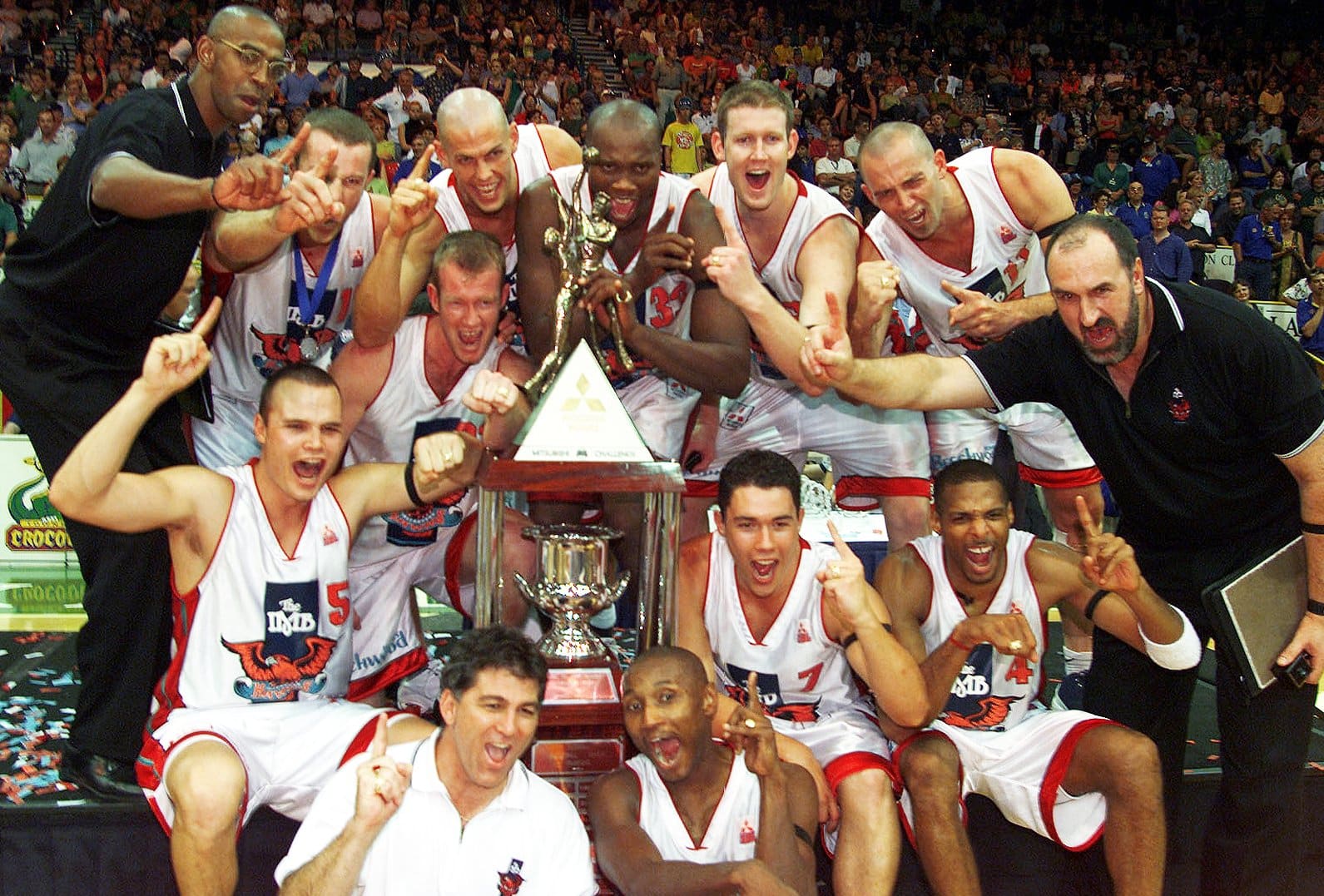
Game three saw Wollongong complete its championship run with Charles Thomas (23 points, 10 rebounds, and 5 assists), Saville (18 points, 12 rebounds, and 5 assists), Dench (15 points and 11 rebounds) and Campbell (10 points and 3 rebounds) supporting Thomas (18 points, 12 rebounds, and 2 steals), who played 38:19 minutes in the 97-94 championship win.
Melvin Thomas played fifteen seasons across five NBL teams. This included the Illawarra Hawks, Canberra Cannons, Wollongong Hawks, Sydney Kings and Cairns Taipans. He averaged 18.4 points, 9 rebounds, and 2.8 assists in 433 NBL games.
– 37th in total games played.
– 15th in total points
– 9th in total rebounds
– 37th in total assists
– 22nd in total steals
– 8th in total blocks
| SEASON | AGE | TEAM | TEAM RECORD | GP | MINS | PTS | REB | AST | OR | DR | STL | BLK | TO | PF | FGM | FGA | FG% | 3PM | 3PA | 3P% | FTM | FTA | FT% | TS% | EFG% | HS |
|---|---|---|---|---|---|---|---|---|---|---|---|---|---|---|---|---|---|---|---|---|---|---|---|---|---|---|
| 2005-06 | 38 | Cairns | 18-14 (5) | 36 | 678 | 229 | 138 | 31 | 35 | 103 | 26 | 12 | 49 | 96 | 77 | 204 | 38% | 0 | 8 | 0% | 75 | 114 | 66% | 44% | 38% | 20 |
| 2004-05 | 37 | Cairns | 11-21 (10) | 27 | 679 | 275 | 167 | 33 | 60 | 107 | 22 | 11 | 52 | 86 | 109 | 243 | 45% | 1 | 7 | 14% | 56 | 76 | 74% | 49% | 45% | 19 |
| 2003-04 | 36 | Cairns | 16-17 (6) | 20 | 600 | 281 | 155 | 52 | 57 | 98 | 19 | 20 | 61 | 59 | 108 | 235 | 46% | 6 | 23 | 26% | 59 | 77 | 77% | 52% | 47% | 30 |
| 2002-03 | 35 | Wollongong | 18-12 (4) | 31 | 1,000 | 450 | 238 | 59 | 80 | 158 | 32 | 17 | 74 | 110 | 167 | 354 | 47% | 9 | 32 | 28% | 107 | 149 | 72% | 53% | 48% | 27 |
| 2001-02 | 34 | Wollongong | 16-14 (4) | 32 | 1,178 | 470 | 309 | 75 | 119 | 190 | 27 | 34 | 96 | 124 | 193 | 424 | 46% | 6 | 13 | 46% | 78 | 112 | 70% | 49% | 46% | 27 |
| 2000-01 | 33 | Wollongong | 21-7 (4) | 35 | 1,270 | 653 | 332 | 81 | 116 | 216 | 45 | 29 | 110 | 126 | 260 | 491 | 53% | 1 | 5 | 20% | 132 | 187 | 71% | 56% | 53% | 32 |
| 1999-00 | 32 | Wollongong | 11-17 (7) | 28 | 1,045 | 550 | 242 | 67 | 88 | 154 | 34 | 20 | 85 | 106 | 206 | 409 | 50% | 2 | 12 | 17% | 136 | 186 | 73% | 55% | 51% | 32 |
| 1998-99 | 31 | Canberra | 8-18 (11) | 26 | 1,049 | 549 | 246 | 82 | 75 | 171 | 34 | 30 | 84 | 86 | 205 | 400 | 51% | 7 | 22 | 32% | 132 | 172 | 77% | 57% | 52% | 28 |
| 1998 | 30 | Canberra | 14-16 (7) | 30 | 1,056 | 546 | 266 | 53 | 110 | 156 | 31 | 33 | 90 | 113 | 218 | 435 | 50% | 1 | 11 | 9% | 109 | 142 | 77% | 54% | 50% | 29 |
| 1997 | 29 | Sydney | 12-18 (10) | 30 | 1,279 | 568 | 320 | 88 | 99 | 221 | 48 | 25 | 93 | 98 | 229 | 445 | 51% | 7 | 18 | 39% | 103 | 130 | 79% | 56% | 52% | 30 |
| 1996 | 28 | Sydney | 16-10 (5) | 29 | 1,230 | 605 | 269 | 127 | 75 | 194 | 32 | 54 | 110 | 107 | 224 | 453 | 49% | 4 | 16 | 25% | 153 | 196 | 78% | 55% | 50% | 31 |
| 1995 | 27 | Illawarra | 14-12 (7) | 29 | 1,281 | 784 | 294 | 132 | 73 | 221 | 51 | 52 | 151 | 106 | 306 | 587 | 52% | 16 | 61 | 26% | 156 | 217 | 72% | 57% | 53% | 39 |
| 1994 | 26 | Illawarra | 13-13 (8) | 26 | 1,087 | 696 | 291 | 100 | 91 | 200 | 47 | 54 | 113 | 91 | 272 | 527 | 52% | 11 | 33 | 33% | 141 | 189 | 75% | 56% | 53% | 40 |
| 1993 | 25 | Illawarra | 15-11 (6) | 28 | 1,202 | 719 | 306 | 106 | 90 | 216 | 54 | 41 | 114 | 99 | 284 | 593 | 48% | 5 | 26 | 19% | 146 | 200 | 73% | 52% | 48% | 36 |
| 1992 | 24 | Illawarra | 13-11 (5) | 26 | 1,099 | 583 | 305 | 109 | 115 | 190 | 42 | 70 | 105 | 108 | 237 | 425 | 56% | 0 | 7 | 0% | 109 | 148 | 74% | 59% | 56% | 32 | Totals | 433 | 15733 | 7958 | 3878 | 1195 | 1283 | 2595 | 544 | 502 | 1387 | 1515 | 3095 | 6225 | 49.7% | 76 | 294 | 25.9% | 1692 | 2295 | 73.7% | 55% | 50% | 40 |
| SEASON | AGE | TEAM | TEAM RECORD | GP | MINS | PTS | REB | AST | OR | DR | STL | BLK | TO | PF | FGM | FGA | FG% | 3PM | 3PA | 3P% | FTM | FTA | FT% | TS% | EFG% | HS |
|---|---|---|---|---|---|---|---|---|---|---|---|---|---|---|---|---|---|---|---|---|---|---|---|---|---|---|
| 2005-06 | 38 | Cairns | 18-14 (5) | 36 | 18.8 | 6.4 | 3.8 | 0.9 | 1.0 | 2.9 | 0.7 | 0.3 | 1.4 | 2.7 | 2.1 | 5.7 | 38% | 0.0 | 0.2 | 0% | 2.1 | 3.2 | 66% | 44% | 38% | 20 |
| 2004-05 | 37 | Cairns | 11-21 (10) | 27 | 25.1 | 10.2 | 6.2 | 1.2 | 2.2 | 4.0 | 0.8 | 0.4 | 1.9 | 3.2 | 4.0 | 9.0 | 45% | 0.0 | 0.3 | 14% | 2.1 | 2.8 | 74% | 49% | 45% | 19 |
| 2003-04 | 36 | Cairns | 16-17 (6) | 20 | 30.0 | 14.1 | 7.8 | 2.6 | 2.9 | 4.9 | 1.0 | 1.0 | 3.1 | 3.0 | 5.4 | 11.8 | 46% | 0.3 | 1.2 | 26% | 3.0 | 3.9 | 77% | 52% | 47% | 30 |
| 2002-03 | 35 | Wollongong | 18-12 (4) | 31 | 32.3 | 14.5 | 7.7 | 1.9 | 2.6 | 5.1 | 1.0 | 0.5 | 2.4 | 3.5 | 5.4 | 11.4 | 47% | 0.3 | 1.0 | 28% | 3.5 | 4.8 | 72% | 53% | 48% | 27 |
| 2001-02 | 34 | Wollongong | 16-14 (4) | 32 | 36.8 | 14.7 | 9.7 | 2.3 | 3.7 | 5.9 | 0.8 | 1.1 | 3.0 | 3.9 | 6.0 | 13.3 | 46% | 0.2 | 0.4 | 46% | 2.4 | 3.5 | 70% | 49% | 46% | 27 |
| 2000-01 | 33 | Wollongong | 21-7 (4) | 35 | 36.3 | 18.7 | 9.5 | 2.3 | 3.3 | 6.2 | 1.3 | 0.8 | 3.1 | 3.6 | 7.4 | 14.0 | 53% | 0.0 | 0.1 | 20% | 3.8 | 5.3 | 71% | 56% | 53% | 32 |
| 1999-00 | 32 | Wollongong | 11-17 (7) | 28 | 37.3 | 19.6 | 8.6 | 2.4 | 3.1 | 5.5 | 1.2 | 0.7 | 3.0 | 3.8 | 7.4 | 14.6 | 50% | 0.1 | 0.4 | 17% | 4.9 | 6.6 | 73% | 55% | 51% | 32 |
| 1998-99 | 31 | Canberra | 8-18 (11) | 26 | 40.3 | 21.1 | 9.5 | 3.2 | 2.9 | 6.6 | 1.3 | 1.2 | 3.2 | 3.3 | 7.9 | 15.4 | 51% | 0.3 | 0.8 | 32% | 5.1 | 6.6 | 77% | 57% | 52% | 28 |
| 1998 | 30 | Canberra | 14-16 (7) | 30 | 35.2 | 18.2 | 8.9 | 1.8 | 3.7 | 5.2 | 1.0 | 1.1 | 3.0 | 3.8 | 7.3 | 14.5 | 50% | 0.0 | 0.4 | 9% | 3.6 | 4.7 | 77% | 54% | 50% | 29 |
| 1997 | 29 | Sydney | 12-18 (10) | 30 | 42.6 | 18.9 | 10.7 | 2.9 | 3.3 | 7.4 | 1.6 | 0.8 | 3.1 | 3.3 | 7.6 | 14.8 | 51% | 0.2 | 0.6 | 39% | 3.4 | 4.3 | 79% | 56% | 52% | 30 |
| 1996 | 28 | Sydney | 16-10 (5) | 29 | 42.4 | 20.9 | 9.3 | 4.4 | 2.6 | 6.7 | 1.1 | 1.9 | 3.8 | 3.7 | 7.7 | 15.6 | 49% | 0.1 | 0.6 | 25% | 5.3 | 6.8 | 78% | 55% | 50% | 31 |
| 1995 | 27 | Illawarra | 14-12 (7) | 29 | 44.2 | 27.0 | 10.1 | 4.6 | 2.5 | 7.6 | 1.8 | 1.8 | 5.2 | 3.7 | 10.6 | 20.2 | 52% | 0.6 | 2.1 | 26% | 5.4 | 7.5 | 72% | 57% | 53% | 39 |
| 1994 | 26 | Illawarra | 13-13 (8) | 26 | 41.8 | 26.8 | 11.2 | 3.8 | 3.5 | 7.7 | 1.8 | 2.1 | 4.3 | 3.5 | 10.5 | 20.3 | 52% | 0.4 | 1.3 | 33% | 5.4 | 7.3 | 75% | 56% | 53% | 40 |
| 1993 | 25 | Illawarra | 15-11 (6) | 28 | 42.9 | 25.7 | 10.9 | 3.8 | 3.2 | 7.7 | 1.9 | 1.5 | 4.1 | 3.5 | 10.1 | 21.2 | 48% | 0.2 | 0.9 | 19% | 5.2 | 7.1 | 73% | 52% | 48% | 36 |
| 1992 | 24 | Illawarra | 13-11 (5) | 26 | 42.3 | 22.4 | 11.7 | 4.2 | 4.4 | 7.3 | 1.6 | 2.7 | 4.0 | 4.2 | 9.1 | 16.3 | 56% | 0.0 | 0.3 | 0% | 4.2 | 5.7 | 74% | 59% | 56% | 32 | Total | 433 | 36.3 | 18.4 | 9.0 | 2.8 | 3.0 | 6.0 | 1.3 | 1.2 | 3.2 | 3.5 | 7.1 | 14.4 | 49.7% | 0.0 | 0.0 | 25.9% | 0.2 | 0.7 | 73.7% | 55% | 50% | 40 |
| POINTS | REBOUNDS | ASSISTS | STEALS | BLOCKS | TURNOVERS | TRIPLE DOUBLES | 40 | 21 | 16 | 8 | 7 | 13 | 0 |
|---|
Thomas played college basketball at Texas–Pan American from 1987–88 through 1989–90, finishing his Broncs career with 1,306 points, which has been listed as ninth all-time in school history.
In the 1987–88 season, Thomas averaged 11.4 points, 6.5 rebounds, and 1.3 assists per game for Texas–Pan American.
As a junior in 1988–89, Thomas appeared in 28 games and averaged 32.0 minutes, scoring 14.9 points per game while shooting .489 from the field, .400 on three-pointers, and .653 at the free-throw line.
In that 1988–89 season, he averaged 7.3 rebounds per game and added 1.1 assists, 1.1 steals, and 1.3 blocks per game, with a documented 36 total blocks for the season.
During the 1988–89 season, Texas–Pan American played at Houston on January 7, 1989, and Thomas was part of a push that helped pull the Broncs within four points (50–46) with 9:04 remaining in the game.
Thomas earned third-team All-American South Conference honours for the 1988–89 season.
In his senior season (1989–90), Thomas played 30 games and started all 30, averaging 32.0 minutes per game and scoring 19.0 points per game while shooting .547 from the field and .761 from the free-throw line.
That 1989–90 season line also included 8.4 rebounds per game, plus 1.6 assists, 1.3 steals, and 1.4 blocks per game, with 42 total blocks credited for the season and his 1.4 blocks per game listed among the top single-season marks in the program’s tracked leaders.
Thomas was named the Jowers Jamboree tournament MVP in December 1989, was recognised as the UTPA Male Student-Athlete of the Year for 1989–90, and earned second-team All-American South Conference honours for the 1989–90 season.
Across his Texas–Pan American career (1987–90), Thomas is credited with 1,306 points, 107 career blocks and 637 rebounds.
- 1x All-NBL First Team
- 2x All-NBL Second Team
- 4x All-NBL Third Team
Whilst we try to source as much information as we can for every player who has ever played in the NBL some information on a player profile may be missing. If you have additional information on a player you'd like us to add to a profile, please send it to us using the enquiry form below.
Submissions are then sent to info@aussiehoopla.com