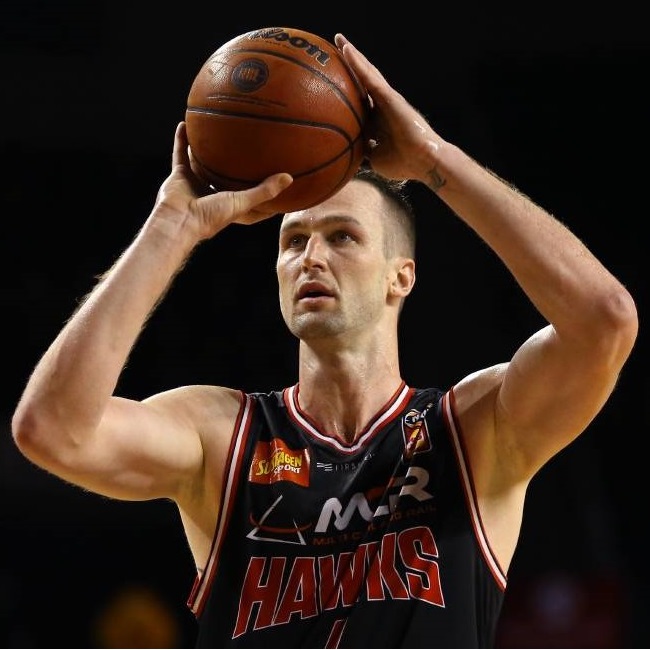
Beyond the Arc: The Greatest Shooters in NBL History
June 22, 2026



BIO: Oscar Forman was born in Adelaide (SA) and began playing basketball as a junior with the Sturt basketball program.
Forman spent 17 seasons in the Australian NBL. While playing primarily as a power forward, Forman was often used in a small forward role as specialist three-point shooter. Forman received a scholarship to attend the Australian Institute of Sport (Canberra) in 2000. He spent one year there and played for the program’s state league team.
Oscar Forman made his NBL debut with the Adelaide 36ers at 19 years of age. He scored five points in his first game.
In his debut NBL season with the Adelaide 36ers, Forman contributed 2.4 points, 2.5 rebounds, and 0.3 assists, providing valuable minutes off the bench. Adelaide finished in third place with a 17-13 record, and the season ended on a high note as the 36ers clinched the NBL Championship. Forman’s early experience with a championship-winning squad helped establish his foundation as a reliable forward.
2002/03
In his second season, Forman’s role grew slightly, and he averaged 3.3 points, 2.8 rebounds, and 0.8 assists per game. His increased contribution helped Adelaide to a fifth-place finish (16-14), although they were unable to replicate their championship success from the previous season.
2003/04
The 2003/04 season saw further improvement from Forman, who posted 5.9 points, 4 rebounds, and 0.7 assists per game. His expanded role solidified his spot in the 36ers rotation, though Adelaide faced challenges, ultimately finishing in eighth place with a 14-19 record.
2004/05
Forman experienced a breakout season, averaging 10.0 points, 6.3 rebounds, and 0.7 assists. He led the league in three-point shooting percentage, becoming a potent offensive weapon for Adelaide. The 36ers enjoyed a strong season, finishing fourth (19-13) and making a notable playoff run. Forman’s long-range shooting and versatility were key assets for the team.
2005/06
Building on his success, Forman delivered another solid season, averaging 10.5 points, 4.5 rebounds, and 1.2 assists. Adelaide finished fourth again with a 19-13 record, and Forman’s consistent play solidified his reputation as a dependable forward with a reliable shooting touch from beyond the arc.
NEW ZEALAND BREAKERS
2006/07
Under second-year head coach Andrej Lemanis, New Zealand began the season with most of its 2005/06 core intact, retaining captain Paul Henare, Aaron Olson, Ben Pepper, Mika Vukona, Tim Behrendorff, and Adam Darragh.
The offseason saw Dillon Boucher depart to Brisbane, while Rich Melzer, who had re-signed, was released after landing an NBA contract with San Antonio. To replace that frontcourt production, Lemanis signed Australian forward Oscar Forman (via Adelaide), adding a versatile big man whose perimeter shooting could stretch opposing defences. The club also recruited 2004 NBL MVP Brian Wethers (via Hunter) and high-scoring import Carlos Powell (via NBA D-League) to bolster the wings.
The Breakers started strongly with a 118–97 upset of defending champions Melbourne on 2 November. Wethers top-scored with 31 points, Powell had 28 points and 8 rebounds, Pepper contributed 18 points and 7 rebounds, and Forman chipped in 9 points and 5 rebounds while hitting from outside to keep the floor spaced. On 13 December, New Zealand faced Singapore in the first NBL game between two non-Australian clubs, going down 111–94 despite Powell’s 43 points; Forman added 12 points and 6 rebounds, complementing Pepper’s 17 and 9. Later in the season, Powell produced a league-best 50-point performance against Melbourne, with Forman scoring 11 points and collecting 7 rebounds in the same game.
A major turning point came on 1 January when Wethers suffered a fractured tibial plateau early in a 100–89 loss to Sydney. At the time, he was averaging (19.4 points, 4.2 rebounds, 2.3 assists, and 1.2 steals) over 22 games. His absence left a large hole in the offence, forcing greater reliance on Powell and Pepper inside, with Forman taking on increased scoring duties from the perimeter. Import guard Pierre Wooten (8.8 points, 2.3 rebounds, and 1.8 assists across 9 games) was signed as cover, but the Breakers slid into a ten-game losing streak that ended their playoff hopes.
Oscar Forman (10.6 points and 5.2 rebounds) stepped into the Breakers starting line-up, providing valuable spacing and rebounding. Carlos Powell (28.2 points, 8.2 rebounds, and 4.0 assists) led the league in scoring, earning two NBL Player of the Month awards and winning the All-Star Slam Dunk Contest. Ben Pepper (15.9 points, 7.8 rebounds, and 1.2 assists) was the interior anchor, while Aaron Olson (12.1 points, 3.0 rebounds, and 2.5 assists) remained steady in his final NBL season. Captain Paul Henare (8.8 points, 3.4 rebounds, and 4.7 assists) orchestrated the offence, and Mika Vukona (5.2 points and 6.2 rebounds) brought energy and defence from the bench.
The Breakers closed the season 10th on the ladder with an 11–22 record, improving on the previous year’s 9–23 finish. While Powell’s scoring feats drew headlines, Forman’s shooting and ability to open up the court for his teammates played a key role in the team’s best wins and helped keep them competitive through a challenging campaign.
2007/08
Following a promising debut season with the Breakers, Forman re-signed on a three-year deal. He averaged 9.2 points, 4.8 rebounds, and 1.4 assists over 32 games, contributing consistently as New Zealand showed improvement, finishing seventh with a 16-14 record. Forman’s scoring and rebounding helped anchor the team as they continued building toward success.
2008/09
Following the financial collapse of the Brisbane Bullets, head coach Andrej Lemanis strengthened the Breakers by bringing in free agents CJ Bruton and Dillon Boucher. Bruton, a two-time NBL champion, expressed his desire to help New Zealand secure their first championship, joining a core of Paul Henare, Kirk Penney, Phill Jones, Oscar Forman, Tony Ronaldson, and Tim Behrendorff. Import Rick Rickert was later signed, completing a well-rounded lineup.
With Bruton running the point (16.2 points, 3.4 rebounds, 5.4 assists, and 1.7 steals) and Penney lighting up the scoreboard (24.1 points, 4.3 rebounds, and 2.8 assists), the Breakers played an impressive season. Penney was named NBL MVP—the first New Zealand-born player to earn this honour—and Bruton provided the team with the stability and direction it had been missing. Jones was also recognized as the league’s Sixth Man of the Year.
However, when Bruton suffered a high-ankle sprain in December with the team leading the league at 15–4, New Zealand stumbled, losing eight of their next nine games. Despite the setback, they closed the regular season with an 18–12 record, earning their first home playoff game, where they defeated Adelaide (131–101). However, they fell in the semifinals to defending champions Melbourne, ending their historic season.
Forman showcased his sharpshooting by leading the league in three-point percentage for the second time and finishing with averages of 12.6 points, 6.0 rebounds, and 1.2 assists.
2009/10
Fresh off their playoff debut, the Breakers aimed to build on their success, though roster adjustments were necessary as Phill Jones left for Cairns and Tim Behrendorff joined Wollongong. To strengthen the roster, New Zealand initially signed Dave Thomas, but his retirement due to injury led to the addition of former NBA player Awvee Storey. With development player Thomas Abercrombie joining the full squad, the Breakers retained a mix of emerging talent and veteran experience.
The team faced adversity when Kirk Penney missed nine games due to a back injury, significantly impacting their scoring capability. Meanwhile, Storey (7.8 points, 5.1 rebounds) struggled to fit with the team and was released after nine games, with veteran John Rillie temporarily joining the roster. Mid-season, the addition of import Kevin Braswell (9.7 points, 2.1 rebounds, 5.4 assists, and 2.3 steals) brought new energy as the Breakers finished the season with six consecutive wins, though they ultimately missed the playoffs by a narrow margin, ending in fifth place (15-13).
Forman saw a notable decrease in his role and production this season, averaging 7.7 points, 2.7 rebounds, and 0.7 assists across 27 games.
WOLLONGONG HAWKS
2010/11
This season, the Hawks were led by dynamic import Gary Ervin (20.1 points, 3.4 rebounds, and 4.5 assists), who won the NBL MVP, becoming the first Hawk to receive the honour since Mike Jones in 1981. Oscar Forman, rejuvenated after his reduced role with the Breakers, emerged as a key contributor, averaging 13.2 points, 6.3 rebounds, and 1.2 assists. His efforts helped Wollongong secure a 15-13 record, finishing in fifth place.
2011/12
The 2011/12 season proved challenging for the Hawks as they missed the playoffs, finishing in eighth place with a 9-19 record. Despite the team’s struggles, Oscar Forman remained a consistent presence, averaging 10.7 points, 4.1 rebounds, and 1.0 assists. Forman’s contributions were crucial, particularly in standout performances that kept the Hawks competitive.
One of Forman’s most remarkable games of the season—and arguably of his career—came against his former team, the New Zealand Breakers, on February 11. Facing the eventual NBL champions, Forman delivered an electrifying 29-point, 7-rebound performance in just 33 minutes, leading the Hawks to a surprise victory. Forman’s shooting was nothing short of phenomenal; he hit 11 of his 12 field-goal attempts, including a flawless 7/7 from beyond the arc, ending with a field goal percentage of 91.7%. His precision and efficiency on this night stunned the Breakers, marking one of the season’s most impressive individual performances. Notably, Forman played turnover-free basketball, single-handedly securing the Hawks a prized victory over the league’s top team.
2012/13
Forman continued his strong form in the 2012/13 season, delivering averages of 11.7 points, 6.1 rebounds, and 0.6 assists. His consistency played a significant role in helping the Hawks secure a third-place finish with a 13-15 record at the end of the regular season.
2013/14
In the 2013/14 season, Forman maintained his steady contributions, averaging 10.7 points, 4.7 rebounds, and 0.8 assists. His veteran presence was valuable for the Hawks, who finished the season in fourth place with a 13-15 record, once again securing a playoff position.
2014/15
After finishing fourth with a 13-15 record and losing to Perth in the semifinals the previous season, the Wollongong Hawks retained coach Gordie McLeod and captain Oscar Forman alongside Tim Coenraad, Larry Davidson, Tyson Demos and David Gruber. Reigning NBL MVP Rotnei Clarke (to Okapi Aalstar) and Kevin Tiggs departed, while Gary Ervin (via Adelaide), Jahii Carson (via Arizona State), Luke Nevill, Brad Hill (via Sydney) and Adam Ballinger (via Melbourne) were added. During the offseason, Wollongong members also voted to return the club from community ownership to private ownership under James Spenceley.
Wollongong opened the season against Townsville at the WIN Entertainment Centre on October 10, where Forman (6 points, 5 rebounds, 1 assist, and 1 block) started as Ervin (22 points and 7 assists) and Carson (20 points, 4 rebounds, and 5 assists) led the Wollongong Hawks to a 92-83 victory. Todd Blanchfield (17 points, 5 rebounds, 1 assist, and 2 steals) was Townsville’s leading scorer.
Forman (9.2 points and 5.2 rebounds across 28 games) remained a permanent part of Wollongong’s starting five, starting all 28 games and appearing in every game the club played. The opening-night victory was followed by 11 consecutive losses as Wollongong quickly fell to the bottom of the ladder.
Forman’s best game and highest-scoring performance came against Cairns on October 19, when he made 8-of-11 field goals and 7-of-10 three-pointers to finish with 23 points, 8 rebounds, and 1 block. Carson (24 points, 5 rebounds, and 2 assists) and Ervin (21 points, 8 rebounds, and 4 assists) also scored more than 20 points, while Stephen Weigh (14 points) led a balanced Cairns offence as the Taipans escaped the WIN Entertainment Centre with a 91-89 victory and improved to 4-0.
After Wollongong slipped to 1-5, the club released David Gruber on October 29 following a review of its struggling start and brought former Wollongong guard Rhys Martin (9.7 points, 3.1 assists, and 1.5 steals across 22 games) back onto the roster. Martin had been part of the Wollongong Hawks for the previous six seasons before being left off the opening roster and returned as the club attempted to turn around its season.
On November 2, Forman (5 points and 2 rebounds) played his 400th NBL game, becoming the 43rd player in league history to reach the milestone. Carson (26 points) led Wollongong, while Jordan McRae (32 points, 3 rebounds, and 4 assists) powered Melbourne to an 88-75 victory at Hisense Arena.
Carson (14.5 points across 27 games) and Ervin (14.1 points, 3 rebounds, and 3.6 assists across 27 games) finished as Wollongong’s leading scorers. Coenraad (10.1 points and 5.7 rebounds across 26 games) was named the Wollongong Hawks’ Most Valuable Player, while Nevill (7.1 points and 5.6 rebounds across 28 games) provided additional size inside. Ballinger (4.2 points across 28 games) announced on February 13 that he would retire at the end of the season.
Wollongong completed its season against Adelaide at the WIN Entertainment Centre on February 22, where Forman (4 points, 8 rebounds, 1 assist, and 1 block) played just under 20 minutes. Martin (14 points) and Carson (13 points and 3 assists) led the Wollongong Hawks, while Jamar Wilson (23 points, 4 rebounds, and 3 assists) led Adelaide to a 105-85 victory. The loss left Wollongong eighth with a 6-22 record and delivered the club only its second wooden spoon in 36 seasons.
On March 2, the Wollongong Hawks entered voluntary administration following the loss of major sponsor Wollongong Coal, leaving the foundation club fighting for its future and its players, including captain Forman, free to consider opportunities elsewhere.
2015/16
After finishing last with a 6-22 record in 2014/15 and entering Voluntary Administration, the Hawks returned under the Illawarra name and moved on from long-time coach Gordie McLeod. Jahii Carson (free agent), Gary Ervin (free agent), Luke Nevill (free agent) and Brad Hill (free agent) departed, while Adam Ballinger (retired) ended his career. Rob Beveridge was appointed head coach and added Kevin Lisch (via Spain), AJ Ogilvy (via Spain), Kirk Penney (via Europe), Kevin White (via Sydney) and Cody Ellis (via Sydney).
Illawarra opened the season in Cairns on October 8, where captain Oscar Forman (8 points, 5 rebounds, and 2 blocks) started as Penney (12 points) and Jarrad Weeks (12 points) led the Hawks, while Cameron Gliddon (19 points and 4 assists) led Cairns to a 79-74 victory. Lisch (7 points) injured his right knee during the third quarter and missed the following three games.
Forman (8 points and 3.5 rebounds across 31 games) started 29 games and appeared in every game this season, playing all 28 regular-season games and all three semifinals. The returning captain remained a consistent face in the rebuilt Hawks lineup, making 51 three-pointers at 38 percent.
His best game came in Sydney on October 17, where Forman (24 points and 10 rebounds) made 9-of-13 shots and six of seven three-pointers as Illawarra defeated Sydney 100-86. Tim Coenraad (18 points and 5 rebounds) and Penney (16 points) provided support, while Julian Khazzouh (21 points and 10 rebounds) led Sydney.
Another of his best games came in Perth on January 21, where Forman (17 points and 6 rebounds) made five three-pointers and led Illawarra in scoring. Coenraad (16 points and 4 rebounds) and Lisch (14 points, 6 rebounds, 3 assists, and 2 steals) provided support, while Jermaine Beal (22 points) led Perth to a 95-72 victory.
There was no confirmed mid-season signing or release after the season began. Weeks (6.1 points across 31 games), who had originally joined at the beginning of the season as an injury replacement for Rhys Martin (9.1 points, 3.3 rebounds, and 4.2 assists across 18 games), remained with the Hawks after Martin returned from his knee injury. Penney (20.4 points and 3.1 assists across 27 games) led Illawarra in scoring, while Lisch (19.4 points, 3.5 rebounds, 3.3 assists, and 1.8 steals across 27 games) and Ogilvy (16.4 points, 8.5 rebounds, 1.5 steals, and 1.7 blocks across 31 games) completed Beveridge’s ‘three-headed monster’. Coenraad (9.5 points and 3.6 rebounds across 30 games) and Ellis (6 points across 29 games) were the other Hawks to average at least six points. Penney was named to the All-NBL Second Team, Ogilvy and Lisch were selected to the All-NBL First Team, while Lisch won both the NBL Most Valuable Player and Best Defensive Player awards.
Illawarra completed the regular season against Adelaide at the WIN Entertainment Centre on February 12, where Forman (5 points and 5 rebounds) started as Ogilvy (17 points and 11 rebounds) and Lisch (16 points) led the Hawks, while Daniel Johnson (20 points and 8 rebounds) was Adelaide’s best. Illawarra won 106-95 to finish third with a 17-11 record.
Illawarra opened its semifinal series against second-seeded Perth at Perth Arena, where Forman (2 points and 2 rebounds), Coenraad (23 points), Penney (17 points) and Ogilvy (14 points, 11 rebounds, and 2 blocks) led the Hawks, while Casey Prather (19 points), Beal (18 points) and Tom Jervis (14 points, 8 rebounds, and 3 steals) led Perth to an 80-68 victory. Lisch (2 points and 4 rebounds) suffered a left ankle injury late in the opening quarter after stepping on Jesse Wagstaff’s foot and later returned to the bench in a moon boot and on crutches.
Game two moved to the WIN Entertainment Centre with Lisch sidelined, where Forman (21 points, 5 rebounds, and 2 blocks) came off the bench and led Illawarra in scoring. Ogilvy (20 points, 7 rebounds, 3 assists, and 3 blocks), Penney (18 points, 5 rebounds, and 7 assists) and Coenraad (17 points, 7 rebounds, and 4 steals) also led the Hawks, while Prather (21 points and 4 rebounds) and Beal (20 points, 4 rebounds, and 4 assists) led Perth. Illawarra won 104-87 and levelled the series at 1-1.
Game three returned to Perth Arena, where Forman (3 points and 4 rebounds), Penney (18 points and 5 assists), Lisch (11 points) after returning from his ankle injury and Ogilvy (9 points, 11 rebounds, 5 assists, 2 steals, and 2 blocks) led Illawarra, while Beal (17 points), Wagstaff (17 points and 7 rebounds) and Matthew Knight (15 points and 9 rebounds) led Perth as the Wildcats defeated Illawarra 89-74 and won the series 2-1.
2016/17
After finishing third with a 17-11 record and losing its semifinal series 2-1 to Perth, Illawarra entered Rob Beveridge’s second season without reigning NBL MVP and Best Defensive Player Kevin Lisch (to Sydney), Kirk Penney (to New Zealand), Jarrad Weeks (to Cairns), Tyson Demos (year off) and Larry Davidson (mining). Beveridge signed Mitch Norton (via Townsville) and Nick Kay (via Townsville) to two-year deals after the Crocodiles folded, with both choosing Illawarra despite receiving larger offers elsewhere following former Townsville coach Shawn Dennis’ recommendation to play under Beveridge. Former NBL MVP Rotnei Clarke (via Bonn) returned for a second stint, while Marvelle Harris (via Fresno State) and Michael Holyfield (via Los Angeles D-Fenders) completed the new additions. AJ Ogilvy, Tim Coenraad, Rhys Martin, Kevin White and Cody Ellis also returned alongside the veteran forward.
Illawarra opened the season at WIN Entertainment Centre on October 7, where Forman (11 points, 3 rebounds, 2 assists, and 2 steals) made three three-pointers as Clarke (23 points, 6 assists, and 1 steal), Harris (21 points, 3 rebounds, 7 assists, 3 steals, and 1 block) and Holyfield (14 points and 6 rebounds) led the Hawks to a 122-88 win over Adelaide, while Mitch Creek (24 points) was the 36ers’ leading scorer.
Forman (6.4 points across 34 games) served as co-captain and came off the bench for most of the season, starting three games and providing perimeter shooting in Beveridge’s frontcourt rotation. He appeared in all 28 regular-season games and all six Finals games, with no injury, illness, suspension or selection absence keeping him out. The new-look Hawks struggled early, starting 1-5 and falling to the bottom of the ladder before recovering during the second half of the season.
Against Sydney at WIN Entertainment Centre on December 5, Forman (18 points and 1 rebound) made six of nine three-pointers, including five in the fourth quarter, as Illawarra cut a 19-point deficit to five before the Kings held on 99-93. Clarke (29 points and 1 steal) led the Hawks, while former Hawk Lisch (23 points, 3 rebounds, 4 assists, and 3 steals), Jason Cadee (22 points) and Greg Whittington (20 points, 6 rebounds, and 2 blocks) led Sydney, ending Illawarra’s three-game winning streak after five wins from six.
Forman’s best game came against Sydney at Qudos Bank Arena on December 23, where Forman (24 points, 4 rebounds, and 1 steal) made six three-pointers as Illawarra recovered from a 67-60 fourth-quarter deficit to win 87-75. Ogilvy (16 points, 7 rebounds, 5 assists, and 5 steals) and Harris (13 points and 1 steal) provided support, while Josh Powell (21 points, 7 rebounds, and 2 blocks) and Cadee (15 points and 3 steals) led Sydney, with the victory giving Illawarra its first win over the Kings in four meetings and its 10th victory of the season.
Eight days later, Forman (20 points, 2 rebounds, and 1 assist) made six of nine three-pointers against Perth at WIN Entertainment Centre, with his sixth triple putting Illawarra ahead 81-74 midway through the fourth quarter. Clarke (17 points, 3 rebounds, and 2 steals) provided support, but Jesse Wagstaff (20 points, 4 assists, and 3 steals), Casey Prather (19 points and 4 steals) and Jameel McKay (16 points and 6 rebounds) led Perth on a 21-6 closing run to win 95-87.
Forman’s season-high scoring game came in the regular-season finale against Brisbane at WIN Entertainment Centre on February 11, where Forman (26 points and 1 block) made eight of 16 three-pointers as Illawarra won 106-79 and secured its Finals place. Clarke (24 points, 5 rebounds, and 6 assists) and Ogilvy (22 points, 6 rebounds, 1 steal, and 1 block) provided support, while Torrey Craig (30 points and 18 rebounds) led Brisbane as the Hawks finished fourth with a 15-13 record.
Clarke (17.4 points across 34 games) led Illawarra in scoring and won the NBL Best Sixth Man award, while Ogilvy (11.1 points, 7.6 rebounds, and 1.5 blocks across 34 games) earned All-NBL First Team honours. Harris (10.8 points across 32 games), Kay (9.4 points and 4.5 rebounds across 34 games), Norton (8.2 points across 31 games), Coenraad (7.7 points across 34 games) and Rhys Martin (5.1 points and 1.2 steals across 34 games) provided the other major contributions.
Illawarra opened the semifinals against minor premier Adelaide at Titanium Security Arena, where Forman (4 points and 3 rebounds) came off the bench as the 36ers won 93-78. Coenraad (26 points, 4 rebounds, and 2 steals) led Illawarra, while Jerome Randle (26 points, 6 rebounds, 4 assists, and 2 steals) and Nathan Sobey (16 points, 8 rebounds, and 4 assists) led Adelaide.
Game two moved to WIN Entertainment Centre, where Forman (2 points, 1 rebound, and 1 assist) contributed as Norton (17 points and 3 assists) and Coenraad (17 points, 10 rebounds, and 2 assists) led Illawarra to a 100-94 win, while Randle (20 points, 5 rebounds, and 7 assists) and Daniel Johnson (17 points, 5 rebounds, 3 assists, and 2 steals) led Adelaide as the Hawks levelled the series.
The deciding game returned to Adelaide, where Forman (2 points, 6 rebounds, and 1 block), Clarke (20 points), Harris (17 points) and Rhys Martin (13 points, 4 assists, and 3 steals) helped Illawarra defeat the 36ers 106-98, while Randle (26 points, 4 rebounds, and 6 assists) and Sobey (22 points, 7 rebounds, 6 assists, and 3 steals) led Adelaide. Ogilvy (4 points and 5 rebounds) rolled his left ankle twice during the victory but Illawarra survived Adelaide’s late comeback to eliminate the top-seeded 36ers 2-1 and advance to its first Grand Final since 2010, with Forman saying afterwards, “We settled down after the first game loss and we had that out of us, and the pressure was back on them.”
Perth opened the Grand Final at Perth Arena with an 89-77 win, where Forman (0 points) played 7:41 as Ellis (12 points and 4 rebounds), Clarke (11 points and 6 assists), Rhys Martin (11 points and 2 steals) and Coenraad (11 points, 4 rebounds, and 3 assists) led Illawarra. Prather (22 points, 6 rebounds, 5 assists, and 2 steals), Bryce Cotton (18 points, 6 rebounds, and 4 assists) and Matthew Knight (18 points, 11 rebounds, 3 assists, and 2 steals) led Perth, while Ogilvy (7 points and 6 rebounds) played through his injured ankle and Harris was unavailable after flying to the United States to be with his critically ill father.
Game two moved to WIN Entertainment Centre, where Forman (6 points, 1 rebound, and 1 assist) made both of his three-point attempts as Ogilvy (21 points, 10 rebounds, 3 assists, 2 steals, and 4 blocks) and Clarke (21 points, 3 rebounds, and 4 assists) led Illawarra, while Harris (0 points, 2 rebounds, and 1 assist) returned from the United States and played 12 minutes. Cotton (20 points and 3 steals), Prather (18 points, 4 rebounds, 6 assists, and 2 steals), Angus Brandt (15 points, 11 rebounds, and 3 assists) and Damian Martin (12 points, 6 rebounds, 6 assists, and 3 steals) led Perth to another 89-77 victory and a 2-0 series lead.
Game three returned to Perth Arena on March 5, where Forman (6 points, 3 rebounds, and 1 assist) again made both of his three-point attempts as Clarke (30 points, 3 rebounds, 3 assists, and 1 steal) set a Hawks Grand Final scoring record and Ogilvy (11 points and 7 rebounds) continued to play through his injured ankle. Harris (8 points, 4 rebounds, and 3 assists) started despite learning the previous day that his father had died, while Cotton (45 points, 3 rebounds, 3 assists, and 3 steals) made 12-of-17 shots, seven three-pointers and 14-of-15 free throws to set an NBL Grand Final scoring record, with Prather (17 points, 4 rebounds, and 4 assists) providing support as Perth won 95-86, completed the 3-0 sweep and Cotton was named Grand Final MVP.
2017/18
Following a 15-13 season and a trip to the 2017 NBL Grand Final, where they were swept by Perth, Illawarra entered 2017/18 with Marvelle Harris (to Team Challenge ALS) and Michael Holyfield (to Beijing Dongfang) departing. Former NBL MVP Rotnei Clarke returned, while coach Rob Beveridge added Demitrius Conger (via Antwerp Giants) and Delvon Johnson (via Södertälje Kings). Beveridge said of Conger, “I always said we needed a stud three-man, and I feel very confident that we’ve found him.”
The veteran forward was the final player from the previous season’s Grand Final roster to re-sign after drawn-out negotiations. Despite an NBL announcement suggesting he had shelved retirement plans, he said, “I never thought I was finishing. If it had finished, I would deal with that and would’ve been OK with where I was; but I never indicated I was finishing.”
Illawarra opened the season in Cairns on October 6, where Forman (0 points, 1 rebound, and a steal) came off the bench as Ogilvy (22 points, 11 rebounds, 3 assists, a steal, and a block) and Clarke (22 points, 2 rebounds, an assist, and a steal) led the Hawks, but Alex Loughton (19 points and 3 rebounds) helped Cairns hold on for an 88-87 win.
Forman (3.7 points across 26 games) played a reduced role in his 17th NBL season, averaging 9.4 minutes while making 25 three-pointers at 37 per cent. He played exclusively off the bench and missed games against Perth on December 23 and Cairns on January 28, with no injury or illness publicly specified for either absence.
Forman’s best game of the season came in Brisbane on November 3, where he made five of six three-pointers and finished with 18 points, 5 rebounds, and a block in just over 14 minutes as Illawarra defeated the Bullets 112-81. Kay (19 points, 3 rebounds, 5 assists, and 2 steals) and Conger (18 points, 4 rebounds, 6 assists, and a steal) also contributed as the Hawks recorded their biggest ever win in Brisbane, while Perrin Buford (18 points, 6 rebounds, 2 assists, 3 steals, and 2 blocks) led the Bullets.
On December 28, Forman (11 points, 1 rebound, and 1 assist) became the 13th player to reach 500 NBL games as Illawarra defeated Cairns 106-102 at WIN Entertainment Centre. Coming off the bench late in the first quarter, he immediately made three three-pointers, including a long shot at the buzzer, while Conger (24 points, 5 rebounds, 5 assists, and a block) and Clarke (16 points, 9 rebounds, 5 assists, and a steal) led the Hawks and Loughton (22 points) was Cairns’ leading scorer. Ahead of reaching the milestone, Forman said, “I feel very lucky I’ve reached it and I feel very humbled by the company I’ll be in.”
Illawarra lost starting point guard Mitchell Norton to a fractured thumb against Melbourne on December 4, with surgery keeping him out for nine consecutive games. Indiana Faithfull (via Sydney Comets) was added on December 9 as injury cover and appeared in nine games before Norton returned in late January. Despite calls for his replacement during the season, Johnson (4.4 points and 4.6 rebounds across 28 games) remained with the Hawks for the entire campaign and Illawarra made no mid-season import change.
Conger (19.7 points and 5.7 rebounds across 27 games) led Illawarra in scoring, finished second in NBL MVP voting and earned All-NBL First Team honours, while Clarke (18 points across 25 games), Kay (11.7 points, 5.4 rebounds, and 1.4 steals across 28 games), Ogilvy (9.5 points, 5.5 rebounds, and 1.4 blocks across 22 games), Norton (7.8 points across 19 games), Coenraad (6.9 points across 28 games) and Martin (5.9 points and 1.3 steals across 28 games) were the other major contributors. Kevin White served as captain.
The season proved to be Forman’s final NBL campaign, with his retirement announced in March after 17 seasons.
His final NBL appearance came against minor premier Melbourne at Hisense Arena on February 18, where Forman (8 points and 3 rebounds) made two three-pointers as Kay (27 points, 7 rebounds, and a block) and Coenraad (24 points, 6 rebounds, 2 assists, and a steal) helped Illawarra defeat United 94-84, while Josh Boone (14 points and 3 rebounds) and Tai Wesley (14 points and 4 rebounds) led Melbourne. The Hawks finished fifth with a 12-16 record and missed the playoffs, with the game marking Forman’s 511th and final NBL appearance.
Oscar Forman played seventeen seasons across four NBL teams. This included the Adelaide 36ers, Wollongong Hawks, New Zealand Breakers and Illawarra Hawks. He averaged 8.7 points, 4.3 rebounds, and 0.9 assists in 511 NBL games.
– 12th in total games played.
– 47th in total rebounds
– 39th in total blocks
| SEASON | AGE | TEAM | TEAM RECORD | GP | MINS | PTS | REB | AST | OR | DR | STL | BLK | TO | PF | FGM | FGA | FG% | 3PM | 3PA | 3P% | FTM | FTA | FT% | TS% | EFG% | HS |
|---|---|---|---|---|---|---|---|---|---|---|---|---|---|---|---|---|---|---|---|---|---|---|---|---|---|---|
| 2017-18 | 36 | Illawarra | 12-16 (5) | 26 | 244 | 97 | 35 | 6 | 7 | 28 | 4 | 5 | 6 | 26 | 33 | 83.00 | 40% | 25 | 68 | 37% | 6 | 9 | 67% | 55% | 18 | |
| 2016-17 | 35 | Illawarra | 15-13 (4) | 34 | 420 | 218 | 61 | 14 | 15 | 46 | 6 | 4 | 12 | 44 | 72 | 166 | 43% | 57 | 133 | 43% | 17 | 23 | 74% | 62% | 61% | 26 |
| 2015-16 | 34 | Illawarra | 17-11 (3) | 31 | 641 | 249 | 109 | 26 | 37 | 72 | 9 | 9 | 16 | 92 | 92 | 215 | 43% | 51 | 133 | 38% | 14 | 17 | 82% | 56% | 55% | 24 |
| 2014-15 | 33 | Wollongong | 6-22 (8) | 28 | 794 | 258 | 147 | 22 | 22 | 125 | 3 | 19 | 25 | 66 | 92 | 203 | 45% | 58 | 149 | 39% | 16 | 22 | 73% | 60% | 60% | |
| 2013-14 | 32 | Wollongong | 13-15 (4) | 30 | 893 | 321 | 142 | 25 | 34 | 108 | 15 | 20 | 23 | 73 | 113 | 239 | 47% | 79 | 170 | 46% | 16 | 23 | 70% | 64% | 64% | |
| 2012-13 | 31 | Wollongong | 13-15 (3) | 30 | 943 | 350 | 183 | 19 | 34 | 149 | 15 | 21 | 29 | 59 | 120 | 258 | 47% | 78 | 164 | 48% | 32 | 44 | 73% | 63% | 62% | 22 |
| 2011-12 | 30 | Wollongong | 9-19 (8) | 28 | 689 | 299 | 114 | 28 | 17 | 97 | 7 | 23 | 18 | 67 | 108 | 227 | 48% | 64 | 125 | 51% | 19 | 26 | 73% | 62% | 62% | 29 |
| 2010-11 | 29 | Wollongong | 15-13 (5) | 28 | 795 | 369 | 175 | 34 | 51 | 124 | 13 | 18 | 31 | 64 | 140 | 296 | 47% | 52 | 125 | 42% | 37 | 45 | 82% | 58% | 56% | 23 |
| 2009-10 | 28 | New Zealand | 15-13 (5) | 27 | 508 | 207 | 72 | 20 | 17 | 55 | 9 | 8 | 17 | 83 | 77 | 168 | 46% | 39 | 112 | 35% | 14 | 22 | 64% | 58% | 57% | 23 |
| 2008-09 | 27 | New Zealand | 18-12 (3) | 33 | 1,009 | 415 | 197 | 41 | 31 | 166 | 17 | 13 | 21 | 112 | 151 | 321 | 47% | 100 | 222 | 45% | 13 | 19 | 68% | 63% | 63% | 26 |
| 2007-08 | 26 | New Zealand | 16-14 (7) | 32 | 898 | 293 | 154 | 44 | 31 | 123 | 3 | 15 | 20 | 115 | 108 | 265 | 41% | 54 | 158 | 34% | 23 | 29 | 79% | 53% | 51% | 20 |
| 2006-07 | 25 | New Zealand | 11-22 (10) | 33 | 1,073 | 350 | 171 | 49 | 39 | 132 | 18 | 20 | 32 | 121 | 124 | 293 | 42% | 81 | 190 | 43% | 21 | 30 | 70% | 57% | 56% | 20 |
| 2005-06 | 24 | Adelaide | 19-13 (4) | 33 | 820 | 348 | 147 | 38 | 41 | 106 | 10 | 21 | 36 | 90 | 114 | 254 | 45% | 77 | 168 | 46% | 43 | 58 | 74% | 62% | 60% | 21 |
| 2004-05 | 23 | Adelaide | 19-13 (4) | 33 | 871 | 329 | 209 | 24 | 54 | 155 | 20 | 21 | 23 | 86 | 124 | 260 | 48% | 55 | 117 | 47% | 26 | 30 | 87% | 60% | 58% | 23 |
| 2003-04 | 22 | Adelaide | 14-19 (8) | 34 | 701 | 201 | 135 | 23 | 46 | 89 | 11 | 20 | 30 | 65 | 81 | 177 | 46% | 22 | 64 | 34% | 17 | 31 | 55% | 52% | 52% | 20 |
| 2002-03 | 21 | Adelaide | 16-14 (5) | 23 | 296 | 75 | 64 | 18 | 20 | 44 | 5 | 5 | 16 | 46 | 31 | 81 | 38% | 6 | 28 | 21% | 7 | 13 | 54% | 43% | 42% | 12 |
| 2001-02 | 20 | Adelaide | 17-13 (3) | 28 | 280 | 66 | 70 | 9 | 25 | 45 | 6 | 10 | 14 | 46 | 29 | 84 | 35% | 6 | 32 | 19% | 2 | 6 | 33% | 38% | 38% | 8 | Totals | 511 | 11874 | 4445 | 2185 | 440 | 521 | 1664 | 171 | 252 | 369 | 1255 | 1609 | 3590 | 44.8% | 904 | 2158 | 41.9% | 323 | 447 | 72.3% | 59% | 57% | 29 |
| SEASON | AGE | TEAM | TEAM RECORD | GP | MINS | PTS | REB | AST | OR | DR | STL | BLK | TO | PF | FGM | FGA | FG% | 3PM | 3PA | 3P% | FTM | FTA | FT% | TS% | EFG% | HS |
|---|---|---|---|---|---|---|---|---|---|---|---|---|---|---|---|---|---|---|---|---|---|---|---|---|---|---|
| 2017-18 | 36 | Illawarra | 12-16 (5) | 26 | 9.4 | 3.7 | 1.3 | 0.2 | 0.3 | 1.1 | 0.2 | 0.2 | 0.2 | 1.0 | 1.3 | 3.2 | 40% | 1.0 | 2.6 | 37% | 0.2 | 0.3 | 67% | 55% | 18 | |
| 2016-17 | 35 | Illawarra | 15-13 (4) | 34 | 12.4 | 6.4 | 1.8 | 0.4 | 0.4 | 1.4 | 0.2 | 0.1 | 0.4 | 1.3 | 2.1 | 4.9 | 43% | 1.7 | 3.9 | 43% | 0.5 | 0.7 | 74% | 62% | 61% | 26 |
| 2015-16 | 34 | Illawarra | 17-11 (3) | 31 | 20.7 | 8.0 | 3.5 | 0.8 | 1.2 | 2.3 | 0.3 | 0.3 | 0.5 | 3.0 | 3.0 | 6.9 | 43% | 1.6 | 4.3 | 38% | 0.5 | 0.5 | 82% | 56% | 55% | 24 |
| 2014-15 | 33 | Wollongong | 6-22 (8) | 28 | 28.4 | 9.2 | 5.3 | 0.8 | 0.8 | 4.5 | 0.1 | 0.7 | 0.9 | 2.4 | 3.3 | 7.3 | 45% | 2.1 | 5.3 | 39% | 0.6 | 0.8 | 73% | 60% | 60% | |
| 2013-14 | 32 | Wollongong | 13-15 (4) | 30 | 29.8 | 10.7 | 4.7 | 0.8 | 1.1 | 3.6 | 0.5 | 0.7 | 0.8 | 2.4 | 3.8 | 8.0 | 47% | 2.6 | 5.7 | 46% | 0.5 | 0.8 | 70% | 64% | 64% | |
| 2012-13 | 31 | Wollongong | 13-15 (3) | 30 | 31.4 | 11.7 | 6.1 | 0.6 | 1.1 | 5.0 | 0.5 | 0.7 | 1.0 | 2.0 | 4.0 | 8.6 | 47% | 2.6 | 5.5 | 48% | 1.1 | 1.5 | 73% | 63% | 62% | 22 |
| 2011-12 | 30 | Wollongong | 9-19 (8) | 28 | 24.6 | 10.7 | 4.1 | 1.0 | 0.6 | 3.5 | 0.3 | 0.8 | 0.6 | 2.4 | 3.9 | 8.1 | 48% | 2.3 | 4.5 | 51% | 0.7 | 0.9 | 73% | 62% | 62% | 29 |
| 2010-11 | 29 | Wollongong | 15-13 (5) | 28 | 28.4 | 13.2 | 6.3 | 1.2 | 1.8 | 4.4 | 0.5 | 0.6 | 1.1 | 2.3 | 5.0 | 10.6 | 47% | 1.9 | 4.5 | 42% | 1.3 | 1.6 | 82% | 58% | 56% | 23 |
| 2009-10 | 28 | New Zealand | 15-13 (5) | 27 | 18.8 | 7.7 | 2.7 | 0.7 | 0.6 | 2.0 | 0.3 | 0.3 | 0.6 | 3.1 | 2.9 | 6.2 | 46% | 1.4 | 4.1 | 35% | 0.5 | 0.8 | 64% | 58% | 57% | 23 |
| 2008-09 | 27 | New Zealand | 18-12 (3) | 33 | 30.6 | 12.6 | 6.0 | 1.2 | 0.9 | 5.0 | 0.5 | 0.4 | 0.6 | 3.4 | 4.6 | 9.7 | 47% | 3.0 | 6.7 | 45% | 0.4 | 0.6 | 68% | 63% | 63% | 26 |
| 2007-08 | 26 | New Zealand | 16-14 (7) | 32 | 28.1 | 9.2 | 4.8 | 1.4 | 1.0 | 3.8 | 0.1 | 0.5 | 0.6 | 3.6 | 3.4 | 8.3 | 41% | 1.7 | 4.9 | 34% | 0.7 | 0.9 | 79% | 53% | 51% | 20 |
| 2006-07 | 25 | New Zealand | 11-22 (10) | 33 | 32.5 | 10.6 | 5.2 | 1.5 | 1.2 | 4.0 | 0.5 | 0.6 | 1.0 | 3.7 | 3.8 | 8.9 | 42% | 2.5 | 5.8 | 43% | 0.6 | 0.9 | 70% | 57% | 56% | 20 |
| 2005-06 | 24 | Adelaide | 19-13 (4) | 33 | 24.8 | 10.5 | 4.5 | 1.2 | 1.2 | 3.2 | 0.3 | 0.6 | 1.1 | 2.7 | 3.5 | 7.7 | 45% | 2.3 | 5.1 | 46% | 1.3 | 1.8 | 74% | 62% | 60% | 21 |
| 2004-05 | 23 | Adelaide | 19-13 (4) | 33 | 26.4 | 10.0 | 6.3 | 0.7 | 1.6 | 4.7 | 0.6 | 0.6 | 0.7 | 2.6 | 3.8 | 7.9 | 48% | 1.7 | 3.5 | 47% | 0.8 | 0.9 | 87% | 60% | 58% | 23 |
| 2003-04 | 22 | Adelaide | 14-19 (8) | 34 | 20.6 | 5.9 | 4.0 | 0.7 | 1.4 | 2.6 | 0.3 | 0.6 | 0.9 | 1.9 | 2.4 | 5.2 | 46% | 0.6 | 1.9 | 34% | 0.5 | 0.9 | 55% | 52% | 52% | 20 |
| 2002-03 | 21 | Adelaide | 16-14 (5) | 23 | 12.9 | 3.3 | 2.8 | 0.8 | 0.9 | 1.9 | 0.2 | 0.2 | 0.7 | 2.0 | 1.3 | 3.5 | 38% | 0.3 | 1.2 | 21% | 0.3 | 0.6 | 54% | 43% | 42% | 12 |
| 2001-02 | 20 | Adelaide | 17-13 (3) | 28 | 10.0 | 2.4 | 2.5 | 0.3 | 0.9 | 1.6 | 0.2 | 0.4 | 0.5 | 1.6 | 1.0 | 3.0 | 35% | 0.2 | 1.1 | 19% | 0.1 | 0.2 | 33% | 38% | 38% | 8 | Total | 511 | 23.2 | 8.7 | 4.3 | 0.9 | 1.0 | 3.3 | 0.3 | 0.5 | 0.7 | 2.5 | 3.1 | 7.0 | 44.8% | 0.0 | 0.0 | 41.9% | 1.8 | 4.2 | 72.3% | 59% | 57% | 29 |
| POINTS | REBOUNDS | ASSISTS | STEALS | BLOCKS | TURNOVERS | TRIPLE DOUBLES | 29 | 15 | 5 | 4 | 4 | 5 | 0 |
|---|
Forman joined the AIS for the 2000 SEABL season, when he moved to Canberra to attend the Australian Institute of Sport and played in the national development program alongside a strong AIS intake that year.
Oscar Forman joined Sturt for the 2001 Central ABL season, and he then spent the 2001 to 2005 state league years with the Sabres while also establishing himself as one of South Australia’s leading forwards.
Oscar Forman joined Sturt again for the 2002 Central ABL season, and he helped the Sabres win the Central ABL championship that year.
Oscar Forman joined Sturt again for the 2005 Central ABL season, and he capped that run by winning the Woollacott Medal as the league’s most outstanding player.
Oscar Forman joined Illawarra for the 2022 NBL1 East season, and in his return to state league competition he had a brief stint with the Hawks while ranking among the league’s leading rebounders early in the season at 11.0 rebounds per game through the opening rounds.
Oscar Forman joined Illawarra for the 2022 NBL1 East season and produced one of his best games with 16 points and 11 rebounds in a win over Inner West.
Oscar Forman did not play in a major FIBA tournament, but did represent Australia at the 2005 Boris Stankovic Cup .
Forman joined the Harbour Heat for the 2007 New Zealand NBL season, playing his first season in New Zealand, and during his time in New Zealand he played for the Harbour Heat in 2007 and 2008, earning New Zealand NBL All-Star Five honours in his first year.
With Harbour in 2007, Forman helped the Heat finish as regular-season winners with a 14–4 record, and club records later listed his six-block game against Canterbury as the team’s individual single-game blocks mark.
Forman returned to the Harbour Heat for the 2008 New Zealand NBL season and played a second straight year with the club in New Zealand.
In 2018 Oscar Forman played in New Zealand for the Hawkes Bay Hawks and averaged 1.8 points, 3.6 rebounds, and 0.4 assists across 5 games.
Forman knocked back a scholarship from Loyola Marymount in 2001 to play in the NBL.
- NBL Most Improved Player (2011)
Whilst we try to source as much information as we can for every player who has ever played in the NBL some information on a player profile may be missing. If you have additional information on a player you'd like us to add to a profile, please send it to us using the enquiry form below.
Submissions are then sent to info@aussiehoopla.com