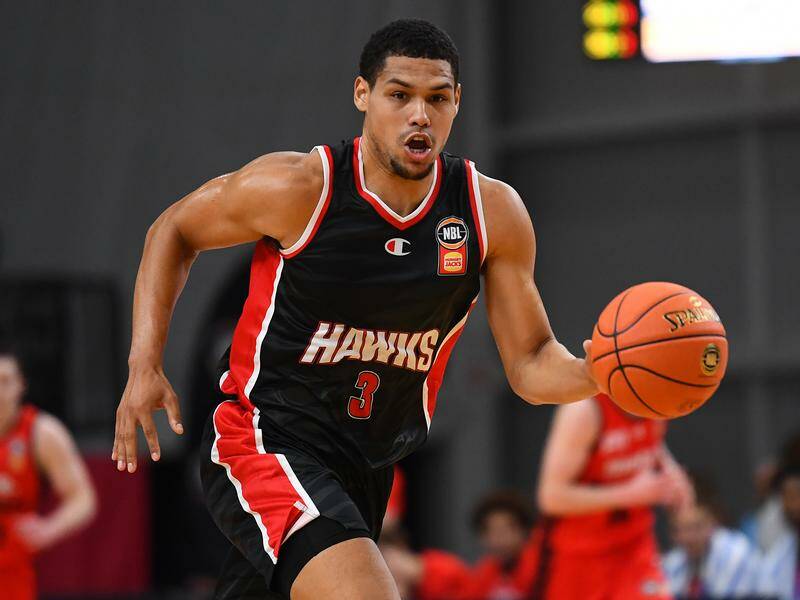
Yan Peng
October 16, 2026


NICKNAME/S: Gibbo
BIO: Adam Gibson was born in Launceston (TAS) and began playing basketball as a junior with the Launceston basketball program. Gibson received a scholarship to attend the Australian Institute of Sport (Canberra) in 2004. He spent two years year there and played for the program’s state league team (2004, 2005).
Adam Gibson made his NBL debut with the Brisbane Bullets at 18 years of age. He scored two points in his first game.
The 2005/06 season saw the Brisbane Bullets enter the year with heightened expectations after adding two NBL legends, Mark Bradtke and Lanard Copeland, who had both left the Melbourne Tigers following the retirements of Andrew and Lindsey Gaze. Bradtke, the league’s all-time leading rebounder, and Copeland, a proven scorer, joined a talented roster that already featured captain Sam Mackinnon and star guards Stephen Black and Derek Rucker. With head coach Joey Wright at the helm, the Bullets aimed to build on their previous campaign and re-establish themselves as championship contenders.
Brisbane also made several roster changes in the offseason, moving on from last season’s high-scoring import Kevin Freeman, as well as veterans Simon Kerle and Ben Castle. These moves paved the way for younger players like Adam Gibson to earn a role in the team’s rotation. Gibson, a rookie guard, provided depth off the bench and gained valuable experience throughout the season.
Despite some inconsistent stretches, Brisbane put together a strong campaign, finishing with a 17-15 record and securing sixth place on the ladder. The team’s balanced offense was led by Stephen Black (18.5 points and 6.0 assists), Derek Rucker (16.8 points and 6.7 assists), and Bobby Brannen (16.3 points and 8.9 rebounds). Mackinnon was instrumental on both ends of the floor, averaging 13.9 points, 9.7 rebounds, 4.5 assists, and a team-high 1.5 steals per game. Meanwhile, Bradtke made an immediate impact, averaging 15.2 points and 8.9 rebounds while anchoring the Bullets in the paint.
For Gibson, his rookie season saw him appear in 29 games, averaging 3.0 points, 1.0 rebound, and 1.1 assists per game. While his role was limited, he provided steady minutes off the bench and showed glimpses of the defensive tenacity that would later define his career. He played behind experienced guards like Black and Rucker but gained crucial experience competing in a playoff-bound team.
Brisbane’s season came to an abrupt end in the Elimination Finals, where they hosted the seventh-seeded Perth Wildcats in a sudden-death matchup. In front of 3,996 home fans, the Bullets fought hard but ultimately fell short, losing 91-86. Bradtke led the way with 22 points, 11 rebounds, 2 steals, and 2 blocks, while Black and Mackinnon also contributed. However, Perth’s Matt Shanahan (22 points) and Tony Ronaldson (20 points and 8 rebounds) proved too much to overcome, ending Brisbane’s season.
Although the Bullets’ playoff run was brief, the season served as an important stepping stone for Gibson, who gained valuable minutes under coach Joey Wright. With Brisbane looking to continue its rise, Gibson’s development as a young guard set the foundation for what would become a long and successful NBL career.
2006/07
The 2006/07 season saw Adam Gibson and the Brisbane Bullets cement their place in NBL history, delivering one of the most dominant campaigns the league has ever seen. After a strong season in 2005/06, Brisbane reloaded in the offseason, adding star guard CJ Bruton from Sydney while parting ways with longtime import duo Derek Rucker and Bobby Brannen. The team also signed Ebi Ere, Bruton’s backcourt partner from Sydney’s 2004 championship squad, and versatile forward Dusty Rychart from Adelaide. Additionally, defensive specialist Dillon Boucher was brought in after the Bullets’ front office identified him as a key factor in their elimination by Perth in the previous season.
Brisbane’s dominance was evident from the outset, as they won the NBL Preseason Blitz in Coffs Harbour, with Bruton earning tournament MVP honors. Despite a slow start to the regular season (3-3), the Bullets steadily built momentum, reaching the midway point at 10-5. At that stage, reigning champions Melbourne (11-4) sat atop the ladder, though Brisbane had already claimed a convincing 98-85 win over them. From that point, Brisbane reached a level few teams in league history have matched, going on an 18-game winning streak to close the regular season. Seven of those victories came by 30 points or more, including a dominant stretch against Adelaide, New Zealand, and Singapore, where they won by 32, 34, and 32 points, respectively.
Sam MacKinnon delivered a historic season, averaging 18.9 points, 9.1 rebounds, 4.2 assists, 1.8 steals, and 1.4 blocks per game, becoming the first player in NBL history to win both the MVP and Best Defensive Player awards in the same season. Alongside MacKinnon, Brisbane had multiple players capable of taking over games, including Ebi Ere (17.3 points, 4.9 rebounds, 2.3 assists), Dusty Rychart (15.1 points, 8.1 rebounds), CJ Bruton (14 points, 4.5 assists), Stephen Black (13.9 points, 3.8 assists), and Mark Bradtke (10.2 points, 6.5 rebounds).
For Gibson, his second NBL season saw him establish himself as a valuable contributor in Brisbane’s deep rotation. Appearing in all 39 games, he averaged 6.8 points, 1.9 rebounds, and 2.0 assists per game. His defensive effort and ability to play multiple backcourt roles made him an asset off the bench as the Bullets continued their dominance.
Brisbane entered the playoffs as overwhelming favorites after finishing with a 28-5 record and an NBL-record 21-game winning streak. In the semifinals, they took on the Sydney Kings, winning Game 1 at home (91-84), with Ere leading the scoring with 22 points. In Game 2, Ere once again top-scored with 23 points, but it was CJ Bruton who stole the show, scoring 16 of his 21 points in the fourth quarter to eliminate his former team (93-86) and send Brisbane to their first Grand Final since 1990.
The Grand Final series saw Brisbane face Melbourne, who had finished second with a 25-8 record and swept Cairns in the semifinals. Playing at home, Brisbane extended their winning streak to 21 games with a thrilling 98-95 victory in Game 1. Stephen Black (24 points, 5 rebounds, and 5 assists) led the way, while MacKinnon (18 points, 12 rebounds, 8 assists, and 2 blocks) came close to a triple-double. Melbourne responded in Game 2, ending Brisbane’s streak with a 105-91 win behind Chris Anstey’s dominant 31-point, 8-rebound performance.
Returning to Brisbane for Game 3, the Bullets were determined to regain control of the series. Their defensive focus was clear, holding Anstey to just 9 points on 4-of-15 shooting, with MacKinnon, Bradtke, and Rychart shutting him down inside. Black (22 points) again led all scorers, while MacKinnon (19 points, 7 rebounds, 9 assists, and 3 steals) filled every column of the stat sheet, guiding Brisbane to a commanding 113-93 victory.
Brisbane closed out the series in Game 4 with a 103-94 win, defying the odds despite Melbourne shooting better percentages from the field, beyond the arc, and winning the rebound battle. The real difference was turnovers, with Brisbane forcing 26 while committing just 14. Bruton (22 points, 7 assists, and 2 steals) and Rychart (21 points) were instrumental at both ends, while MacKinnon (13 points, 8 rebounds, and 3 steals) was awarded Finals MVP despite a quieter offensive performance.
MacKinnon made history by becoming the first player to win MVP, Finals MVP, Best Defensive Player, and a championship in the same season—a feat only matched by Chris Anstey the following year.
2007/08
The 2007/08 season saw Brisbane enter the year as defending champions, but off-court financial struggles and key roster changes made it a turbulent campaign. The biggest change was the retirement of veteran big man Mark Bradtke, who had been a crucial piece of Brisbane’s championship-winning squad. To replace him, the team signed promising New Zealand born forward Craig Bradshaw. Outside of that move, the Bullets retained the core of their championship team, including Sam Mackinnon, CJ Bruton, Ebi Ere, Dusty Rychart, and Adam Gibson.
However, Mackinnon, who had delivered an MVP season the year prior, struggled with injuries and missed more than half the season, managing just 14.0 points, 7.5 rebounds, and 4.1 assists in 15 games. With his production dipping, Ere stepped up in a major way, seeing his scoring jump from 17.3 points per game in 2006/07 to a league-leading 26.0 points per game while also contributing 6.0 rebounds and 1.7 steals per contest.
Bruton (19.1 points, 4.7 assists, and 1.2 steals) also took on a larger offensive role, his play earning him a spot on the All-NBL Second Team. Dusty Rychart (16.2 points and 9.3 rebounds) and new addition Craig Bradshaw (13.5 points and 5.7 rebounds) among the other major contributors for the season.
For Gibson, the 2007/08 season marked a significant leap in his development. With increased responsibilities in the backcourt, he became a key contributor, averaging 11.5 points, 3.4 rebounds, and 4.0 assists across 33 games. His ability to run the offense, play strong perimeter defense, and provide a scoring punch off the dribble cemented his role as one of the league’s rising young guards.
Brisbane put together another strong regular season, finishing third on the ladder with a 20-10 record. Their postseason began with a dominant 106-89 victory over the New Zealand Breakers in the Elimination Finals, with Ere and Bruton leading the charge. This set up a semifinal showdown with the Melbourne Tigers, the same team Brisbane had defeated in the previous year’s Grand Final.
Game 1 of the semifinals saw Melbourne deliver a commanding 116-98 victory, led by Chris Anstey’s 26 points. The Bullets returned home for Game 2 and put up a much stronger fight, but despite big performances from Ere (19 points) and Bradshaw (19 points), they fell just short in a 115-112 loss, bringing their championship defense to an end.
What should have been an opportunity to regroup and rebuild for another run in 2008/09 instead became the end of an era. Financial struggles began to catch up with the club, as owner Eddy Groves, who had made his fortune through ABC Learning Centres, ran into major financial trouble. He announced his intent to sell the team, and while Logan businessman David Kemp was initially named as the new owner in April 2008, the sale ultimately fell through. With no new buyer stepping in, the Bullets’ license was officially returned to the NBL on June 30, 2008, marking the end of the franchise.
SOUTH DRAGONS
2008/09
The 2008/09 season saw Adam Gibson join the South Dragons following the collapse of the Brisbane Bullets. Under the leadership of newly appointed head coach Brian Goorjian, the Dragons revamped their roster with a mix of established stars and emerging talent, positioning themselves as championship contenders. Alongside Gibson, the team added import Tremmell Darden, physical forward Mika Vukona, and former West Sydney Razorback Rhys Carter. The departure of the Sydney Kings also saw Goorjian leave Sydney and take over the Dragons, replacing Shane Heal. With his defensive reputation and championship pedigree, Goorjian was the perfect fit to lead a squad hungry for success.
The season began with mixed results, as the Dragons opened with a 2-2 record before finding their rhythm with an eight-game winning streak. However, adversity struck when key import Cortez Groves suffered a season-ending injury, forcing the team to release him. Looking for an impact replacement, the Dragons signed former NBA and CBA player Donta Smith, who had been waived by his Chinese club Shanxi Zhongyu. Though Smith started quietly, he gradually found his role within the team, contributing across multiple facets of the game. The Dragons finished the regular season atop the ladder with a 22-8 record, securing the club’s first-ever minor premiership.
Gibson played a crucial role in the team’s success, establishing himself as one of the league’s elite perimeter defenders. He averaged 10.2 points, 3.2 rebounds, and 2.8 assists while providing lockdown defense against some of the NBL’s top guards. His efforts earned him the NBL’s Best Defensive Player award, highlighting his rise as one of the league’s premier backcourt talents. Meanwhile, the Dragons’ core contributors delivered impressive performances throughout the season. Mark Worthington led the team in scoring and rebounding (16.9 points, 7.1 rebounds, 2.6 assists, and 1.3 steals), while Smith became the team’s second-leading scorer and primary playmaker (15 points, 5.2 rebounds, 3.6 assists, and 1.1 steals). The defensive-minded Vukona provided toughness inside, while Nick Horvath contributed as a key frontcourt piece.
The Dragons received a first-round bye in the playoffs before facing the Townsville Crocodiles in the semifinals. In Game 1, they dominated at home, securing a 94-81 victory, followed by a tough road loss in Game 2. Returning to their home court for Game 3, the Dragons overwhelmed Townsville 101-78, advancing to their first-ever NBL Grand Final. On the other side of the bracket, the Melbourne Tigers defeated the New Zealand Breakers in two straight games, setting up an all-Melbourne Grand Final.
In Game 1, the Dragons made a statement by holding Melbourne to just 36 points in the second half, winning 93-81. Mark Worthington led the way with 23 points, while Chris Anstey paced the Tigers with 21 points and 9 rebounds.
Game 2 saw the Tigers respond, overcoming a 14-point deficit in the final quarter to win 88-83 on their home floor. David Barlow (26 points) and Anstey (21 points and 9 rebounds) led Melbourne, while Smith top-scored for the Dragons with 18 points.
Game 3 became front-page news after a fiery clash between Anstey and Dragons backup point guard Rhys Carter. Anstey was charged with ‘striking – with elbow’ after the altercation and was subsequently ejected, along with Mika Vukona, who was involved in the ensuing melee.
Without Anstey, the Tigers collapsed, allowing the Dragons to secure an emphatic 84-67 victory. Smith led the way with 18 points, including 10 in the final quarter.
Despite calls for suspensions, the NBL tribunal ruled that all players were eligible for Game 4. Carter responded with a 17-point performance, but Anstey countered with 31 points, 14 rebounds, and 4 assists, propelling the Tigers to a 108-95 victory and forcing a deciding Game 5.
In front of a packed crowd of 9,000 at Hisense Arena, the Dragons delivered a dominant performance, winning 102-81 to claim their first-ever NBL championship. Tremmell Darden exploded for 31 points, including 21 in the final quarter, while Smith nearly recorded a triple-double with 21 points, 10 rebounds, and 7 assists. Worthington and Vukona effectively neutralized Anstey, holding him to just 12 points and 3 rebounds, while Gibson and the Dragons’ defense stifled Melbourne’s offensive flow. Donta Smith was named Finals MVP after averaging 18.2 points, 7.4 rebounds, and 5.4 assists over the five-game series.
Although the Dragons had assembled a championship-caliber squad, their time at the top was short-lived. Just two months after winning the title, the club shocked the basketball world by withdrawing from the NBL. Co-owner Mark Cowan cited the league’s instability and financial struggles as key reasons for shutting down the team.
“The Dragons’ board of directors believe that more time is required to develop the league as a commercially viable entity,” said Cowan at the time. “The Dragons aspire to play at the highest level, to the highest standards, in a fully professional league. This is a sad day for our club, but in many ways, it’s the only way forward for a sport which needs some time to reinvent itself.”
Despite the sudden collapse of the club, Gibson had solidified his place among the league’s best guards, with his defensive prowess and ability to contribute across the board marking him as a key player heading into the next chapter of his career.
GOLD COAST BLAZE
2009/10
After winning the 2009 NBL championship, the South Dragons unexpectedly exited the league, leaving Adam Gibson without a club. Seeking stability and an opportunity to continue his development, he joined the Gold Coast Blaze for the 2009/10 season. Under head coach Joey Wright, the Blaze built a competitive roster, blending experienced veterans with rising stars.
The Blaze entered the season with high expectations but made early adjustments to their lineup. Initially, they signed American forward Michael Joiner (10.5 points and 5.5 rebounds) to provide versatility in the frontcourt. However, after just two games, the team opted to make a change. Joiner was released, and the Blaze quickly brought in Ayinde Ubaka as his replacement. The addition of Ubaka proved to be a turning point, as he became the team’s leading scorer and playmaker, averaging 16.3 points and 4.2 assists per game.
Other key contributors included James Harvey (14.8 points, 3.2 rebounds, and 1 assist), Erron Maxey (13.8 points, 6.4 rebounds, and 0.7 assists), and Anthony Petrie (11.3 points, 6.6 rebounds, and 1.9 assists). Petrie’s impressive play throughout the season earned him the NBL’s Most Improved Player award, while Maxey was named the league’s Best Sixth Man. Gibson, alongside teammates Petrie and Ubaka, was also selected to the All-NBL Second Team, recognising his strong all-around contributions.
By January 2010, Gold Coast had briefly climbed to second place on the ladder, but fierce competition from Perth and Townsville kept the standings tight. A crucial loss to the Crocs (100-89) temporarily set them back, but the Blaze bounced back with a commanding 79-66 win over Cairns the following night. Despite fluctuations in form, the team maintained a strong position and finished the regular season with a 16-12 record. Due to a three-way tie between the Blaze, Townsville, and Wollongong, Gold Coast was ultimately seeded fourth after the NBL’s tiebreaker system.
Gibson quickly established himself as a key contributor, averaging 10.3 points, 3.7 rebounds, and 4.6 assists across 27 games. His ability to impact both ends of the floor solidified his reputation as one of the league’s premier perimeter defenders, making him an integral part of the Blaze’s playoff push.
2010/11
In 2010, following the dual retirements of Chris Anstey and Sam MacKinnon, the Melbourne Tigers undertook a significant roster overhaul, creating an opportunity for Mark Worthington to sign with the Gold Coast Blaze.
Worthington (16.8 points, 7 rebounds, and 1.7 assists) delivered another strong individual campaign despite missing eight games due to injury. His absence prompted the Blaze to sign Ater Majok (2.8 points, 2.3 rebounds) on a short-term injury replacement deal, just one month after Majok had been released from a similar role with the Perth Wildcats. Majok later departed before the end of the season, seeking opportunities in the United States ahead of the 2011 NBA Draft.
Injuries significantly impacted the Blaze throughout the season. Anthony Petrie (15 points, 8.3 rebounds, and 1.3 assists) was sidelined for the remainder of the year after only three games, while team captain James Harvey (14.8 points, 3.7 rebounds, and 1.8 assists) missed almost half the season, appearing in just 18 games. These setbacks severely disrupted team chemistry and continuity.
Around this time, the team also added Worthington’s former Tigers, Kings, and college teammate Luke Kendall. Kendall initially began the season with the resurrected Sydney Kings, playing just one game in November before parting ways with the team. After an extended period without a club, Kendall joined the Blaze in February 2011, though he struggled to find consistent playing time, averaging modest numbers (1.9 points, 1.1 rebounds, and 1.1 assists) across eight appearances.
Gold Coast had initially hoped for a boost from their import duo of Ira Clark and James Maye. Clark (17.1 points, 6.8 rebounds, and 1.2 assists) quickly became a fan favourite with his electrifying, above-the-rim play, while Maye battled injuries and was released after appearing in only two games.
Despite these disruptions, the Blaze remained competitive, anchored by the consistent play of Clark and team captain Adam Gibson (13 points, 4.3 rebounds, and 5.4 assists), who both earned All-NBL First Team honours. Additionally, Chris Goulding (11.8 points, 2.9 rebounds, and 1.5 assists) emerged as a promising young talent for the team.
Gold Coast maintained sixth position for much of the season, staying within reach of playoff contention until late in the campaign. However, their postseason hopes faded down the stretch, as they managed only two victories from their final five games. They finished the season with a 13-15 record, narrowly missing the playoffs.
In 2011, Gold Coast head coach Joey Wright and team captain Adam Gibson led a squad determined to contend for a championship. Despite high aspirations, the Blaze struggled early, sitting at the bottom of the ladder with a 1-3 record by Round 5. However, the team steadily improved as the season progressed, finding their rhythm and climbing the standings. With five rounds remaining in the regular season, the Blaze surged into third place, where they ultimately finished with a 17-11 record.
Key contributors throughout the season included import guard Adris De León (16.6 points, 4.3 rebounds, and 3.2 assists), who led the team in scoring. Mark Worthington (14.3 points, 6.3 rebounds, and 1.7 assists) provided strong all-around play, while Anthony Petrie (10.4 points, 5.7 rebounds) and Will Hudson (9.5 points, 6.0 rebounds) anchored the Blaze’s frontcourt. Gibson (11.4 points, 4.2 rebounds, and 4.7 assists) remained a steady presence at both ends of the floor. His leadership and defensive tenacity helped set the tone for the Blaze’s midseason turnaround.
The Blaze entered the NBL playoffs as the third seed and faced the Perth Wildcats in the semifinals. Game 1 in Perth saw the Wildcats take control, securing an 85-70 victory despite a strong defensive effort from the Blaze. In Game 2, Gold Coast fought back in front of their home crowd, grinding out a 72-70 win to force a decisive Game 3. However, the Blaze’s championship hopes came to an end in Perth, as the Wildcats dominated the series decider with an 88-67 victory, eliminating Gold Coast from the playoffs.
Following the season, Adris De León was named the Blaze’s Club MVP in recognition of his stellar performances throughout the year. Meanwhile, Gibson’s leadership and two-way impact continued to solidify his reputation as one of the league’s premier guards.
Despite their on-court success, the Blaze faced significant financial troubles. In May 2012, the club entered voluntary administration and later joined forces with the Gold Coast Basketball Association in an attempt to transition to a community-based model. The team reportedly received a $500,000 cash injection from a mystery supporter, briefly providing hope for a potential recovery.
However, on July 17, 2012, the Blaze were officially withdrawn from the NBL by owners Owen and Ben Tomlinson. Basketball Australia required the team to post a $1 million bank guarantee to maintain their license for the 2012/13 season. Despite earlier assurances that they had secured the necessary finances, the Tomlinsons were informed that their submission would not be approved. Given a deadline to provide “irrefutable evidence” of their financial stability, the owners instead chose to withdraw from the league, dissolving the franchise and bringing an end to the Gold Coast Blaze.
With the team’s collapse, Gibson was once again left without a club, setting the stage for the next chapter of his NBL career.
ADELAIDE 36ERS
2012/13
Heading into the 2012/13 campaign, the Adelaide 36ers focused on building around a younger Australian core. After the Gold Coast Blaze folded, Adelaide acted quickly to secure key free agents Adam Gibson, Anthony Petrie, and Jason Cadee on multi-year contracts. The team also brought in centre Luke Schenscher (via Townsville), who returned for a second stint with the club. Retaining core players Daniel Johnson, Mitch Creek, Nathan Crosswell, and Stephen Weigh, Adelaide took a bold approach by signing just one import, promoting local standout CJ Massingale from state league competition. Departing the roster were Adam Ballinger (to Melbourne), Everard Bartlett (to Perth), imports Chris Warren and Diamon Simpson, while veterans Darren Ng, Nathan Herbert, and Wade Helliwell retired.
The season began with promise as the 36ers dominated Melbourne 84–61 in the opener. By Round 7, they had climbed to third on the ladder with a 4–3 record following a gritty 69–65 away win over Perth. However, the early momentum soon faded.
Daniel Johnson (16.2 points and 8.1 rebounds) cemented his status as the team’s leader, finishing as Adelaide’s top scorer and leading the NBL in rebounds. His reliability across all 28 games underscored his growing status as one of the competition’s best frontcourt players. Despite Johnson’s efforts, the team faltered dramatically in the back half of the season, finishing with a 4–17 run and enduring an eight-game losing streak for the second straight year.
Injuries added to the team’s woes, most notably with the loss of Mitch Creek (5.8 points and 2.6 rebounds), who ruptured his Achilles tendon against Townsville on December 15. Creek’s high-flying athleticism and long-term potential made his absence a significant setback.
Massingale (4.1 points) was unable to find his footing at the professional level and was cut mid-season. He was replaced by American guard Scott Christopherson (2.9 points and 2.0 rebounds), who had most recently played in Belarus with Tsmoki-Minsk. Christopherson played sparingly and faded out of the rotation as the season progressed. Long-time Adelaide basketball writer Boti Nagy went on to label him the worst import in club history.
The 36ers dropped their last four games to close the season at 8–20, repeating the previous year’s bottom-place finish. Head coach Marty Clarke was not offered a new contract, and the club quickly appointed championship-winning coach Joey Wright to steer the next chapter.
While the results were disappointing, individual standouts remained. Johnson earned All-NBL Second Team honours, while Gibson (11.6 points, 4.9 assists, and 3.6 rebounds) made the All-NBL Third Team and was a calming presence throughout the season. Petrie (11.4 points and 5.8 rebounds), Weigh (10.6 points and 5.9 rebounds), and Schenscher (9 points and 6.1 rebounds) all played key roles in the frontcourt, and Cadee (7.5 points and 2.5 assists) and Crosswell (3.1 points and 1.7 assists) contributed from the guard spots.
Despite missing the playoffs for a third straight year, the emergence of Daniel Johnson and the arrival of Joey Wright gave Adelaide fans reason to believe that a turnaround was within reach.
2013/14
With the arrival of coach Joey Wright in 2013, Adelaide turned things around, finishing second in 2013/14 and making it to the Grand Final. Gibson played a key role, averaging 12.2 points, 4.2 rebounds, and 4.8 assists that season.
2014/15
Adelaide came into 2014/15 after an 18-10 season that ended with a three-game Grand Final loss to Perth. Joey Wright returned for his second season as coach, but Gary Ervin (to Wollongong), Daniel Johnson (to Zielona Góra), Jason Cadee (to Sydney) and Rhys Carter (to New Zealand) departed. Captain Adam Gibson, Anthony Petrie, Luke Schenscher, Mitch Creek, Brendan Teys and BJ Anthony remained, while Jamar Wilson (via Cairns), Peter Crawford (via Townsville), import Daequon Montreal, Tom Daly and development player Sam Johns were added.
Before returning to Adelaide, Gibson was the only NBL player selected in Australia’s final 12-man squad for the 2014 FIBA World Cup, shortening his preseason preparation with the 36ers.
Adelaide opened its season at home against Cairns on October 10, where Gibson (9 points, 2 rebounds, 6 assists, and 3 steals) filled the stat sheet in a 97-87 loss. Wilson (22 points, 5 rebounds, and 4 assists) and Creek (16 points, 6 rebounds, and 3 assists) led the 36ers offensively, while Torrey Craig (19 points, 7 rebounds, 3 assists, 2 steals, and 1 block) produced Cairns’ strongest all-round performance.
Gibson (10.9 points, 4.4 rebounds, 5.4 assists, and 1.6 steals across 30 games) remained Adelaide’s captain and appeared in all 28 regular-season games and both semifinals.
His biggest performance came against New Zealand on November 2. With Wilson sidelined by a hamstring injury, Creek unavailable with an ankle injury and Montreal restricted by a hip flexor problem, Gibson (34 points, 6 rebounds, 9 assists, and 6 steals) made 9-of-13 shots from the field and scored Adelaide’s final nine points to secure a 93-86 victory. Teys (23 points, 4 rebounds, 3 assists, and 2 blocks) and Petrie (13 points, 9 rebounds, 1 assist, and 3 blocks) stepped up alongside him, while Thomas Abercrombie (25 points, 3 rebounds, and 3 blocks) led New Zealand. Gibson’s 34 points established a new career-high and the performance earned him NBL Player of the Week honours for Round 4.
Adelaide released Montreal after five games the following day, creating Player Points System room to sign Brock Motum, who had been waived by the Utah Jazz in late October. Motum (17.5 points and 7.1 rebounds across 24 games) immediately became one of the 36ers’ main offensive options and eventually earned All-NBL First Team honours.
Gibson reached another milestone against New Zealand on January 4, playing his 300th NBL game. Gibson (7 points, 5 rebounds, and 4 assists), Motum (19 points and 5 rebounds) and BJ Anthony (11 points and 9 rebounds) were unable to prevent an 81-74 loss, with Cedric Jackson (16 points, 6 rebounds, 5 assists, and 2 steals) leading the Breakers. The defeat left Adelaide at 7-11, but the 36ers responded by winning each of their final 10 regular-season games to surge into third place at 17-11.
Jamar Wilson (20 points, 5 rebounds, and 3.1 assists across 26 games) finished as Adelaide’s leading scorer, won the Mark Davis Trophy as club MVP and was selected to the All-NBL Second Team. Creek (11.2 points and 4.4 rebounds across 26 games) lifted his scoring from 7.7 points the previous season to become the team’s third-leading scorer, while Petrie (10.3 points and 6.3 rebounds across 30 games) remained a consistent frontcourt contributor. Daniel Johnson (10.4 points, 5.8 rebounds, and 1.3 blocks across 9 games) also returned from Zielona Góra in January, strengthening Adelaide’s frontcourt for the final stretch of the season.
Adelaide’s 10-game winning streak carried it into a best-of-three semifinal against second-placed New Zealand, but the opening game at Vector Arena was one-sided. Gibson (9 points, 7 rebounds, 7 assists, and 2 steals) was one of the few 36ers to generate consistent offence as Wilson (21 points) and Johnson (14 points and 8 rebounds) provided support. Corey Webster (24 points, 5 rebounds, and 3 assists) led New Zealand, while Jackson (13 points, 3 rebounds, 10 assists, and 3 steals) controlled the game as the Breakers won 111-82.
Game two returned to Adelaide, where Gibson (14 points, 3 rebounds, 3 assists, and 1 block), Wilson (23 points, 4 assists, and 4 steals) and Johnson (16 points, 7 rebounds, 1 assist, and 1 steal) kept the 36ers within reach. Jackson (18 points, 10 rebounds, 6 assists, and 4 steals) and Ekene Ibekwe (18 points, 4 rebounds, and 2 blocks) led the Breakers as eventual champion New Zealand won 94-83, completed the semifinal sweep and ended Adelaide’s season.
2015/16
After finishing third with a 17-11 record before being eliminated by eventual champion New Zealand in the 2014/15 semifinals, Adelaide entered Joey Wright’s third season after club MVP Jamar Wilson (to Europe), Brock Motum (to Žalgiris Kaunas) and Luke Schenscher (to Townsville) departed. Wright added import guards Kenyon McNeail (via Oliveirense) and two-time NBL champion Ebi Ere (via Bayamón), Lucas Walker (via Melbourne), Matthew Hodgson (via Frankston) and Nathan Sobey (via Cairns), who had spent the previous season with the Taipans before Wright noticed him working out after a Cairns practice and offered him a full roster spot.
Adelaide opened the season at Titanium Security Arena on October 7, where Gibson (11 points, 6 rebounds, and 8 assists) helped the 36ers defeat defending champion New Zealand 90-71, with Hodgson (18 points, 9 rebounds, and 3 blocks) and Johnson (15 points and 8 rebounds) leading Adelaide, while Cedric Jackson (14 points and 6 assists) was New Zealand’s leading scorer.
Gibson (9.1 points, 3.5 rebounds, and 4.1 assists across 27 games) remained Adelaide’s captain and steady lead guard during his fourth and final season with the club. A hip pointer kept him out of Adelaide’s November 14 home game against Townsville, his only missed game of the season, before he returned four days later.
McNeail (4 points across 3 games) was released on October 19 after the shoulder injury he suffered in the pre-season dunk contest failed to respond to treatment. Jerome Randle (via Europe) joined as his replacement after spending the previous five seasons overseas. Randle (23 points and 5.2 assists across 23 games) later said he had begun to “fall out of love” with basketball in Europe, and recalled Wright telling him soon after his arrival, “If you don’t play your game, then you’re gonna f***in’ sit on the bench!”, leaving him thinking, “Damn, I’m at home now”.
His best all-round game came in Sydney on October 23, where Gibson (14 points, 7 rebounds, 11 assists, and 1 block) helped Adelaide defeat the Kings 91-80, with Johnson (19 points and 9 rebounds) and Walker (17 points and 6 rebounds) providing support, while Josh Childress (23 points, 6 rebounds, 5 assists, and 4 blocks) led Sydney.
With Randle sidelined by a knee injury, Gibson (21 points, 5 rebounds, and 5 assists) delivered his season-high scoring game at Cairns on February 5 as Adelaide fell 95-89, with Creek (18 points, 8 rebounds, 3 assists, and 2 steals) and Petrie (17 points and 3 rebounds) providing support, while Mark Worthington (24 points, 5 rebounds, 4 assists, and 2 steals) led Cairns.
Randle led the NBL in scoring, becoming the first Adelaide player to do so, and scored 30 points or more three times, including 41 against Sydney on January 20, before winning the inaugural NBL Australia Post Fan’s MVP and earning All-NBL First Team honours. Johnson (15.5 points and 9.3 rebounds across 28 games) remained Adelaide’s leading rebounder and was selected to the All-NBL Second Team, while Ere (10.8 points across 28 games), Petrie (9.9 points and 6.3 rebounds across 28 games), Creek (9.9 points and 4.1 rebounds across 26 games) and Walker (5.3 points and 4.9 rebounds across 28 games) were the other major contributors.
Adelaide closed the season at Perth Arena on February 14, where Gibson (16 points) came off the bench as the 36ers fell 100-84, with Creek (17 points and 4 rebounds) and Randle (14 points and 3 assists) leading Adelaide, while Casey Prather (15 points and 6 rebounds) was Perth’s leading scorer. The loss completed a four-game losing streak and left Adelaide fifth with a 14-14 record.
BRISBANE BULLETS
2016/17
After eight seasons out of the NBL, Brisbane returned for the 2016/17 season with Australian Boomers coach Andrej Lemanis as head coach. With no returning playing group, the Bullets built a new roster that included Daniel Kickert (via Melbourne), Tom Jervis (via Perth), Anthony Petrie (via Adelaide), Torrey Craig (via Cairns), Shaun Bruce (via Cairns), Mitchell Young (via Townsville), Reuben Te Rangi (via New Zealand), Cameron Bairstow (via Chicago) and import Jermaine Beal (via Perth).
Gibson (via Adelaide) was unveiled alongside Kickert on April 8 as one of the reborn club’s first two signings, returning to the team where he began his NBL career in 2005/06 and won the 2007 championship. Gibson was named captain ahead of Brisbane’s return to the league. “This is where I started my basketball career 10 or 11 years ago. I always wanted to come back,” Gibson said.
Brisbane opened the season against defending champion Perth at the Brisbane Entertainment Centre on October 6, where Gibson (11 points and 2 steals) started at point guard as Craig (16 points, 7 rebounds, and 2 steals) and Beal (14 points and 4 rebounds) helped the Bullets overcome a 12-point second-half deficit to win 72-65, while Jameel McKay (18 points, 7 rebounds, and 3 blocks) led Perth.
Gibson (9.8 points and 3.8 assists across 21 games) started all 21 games he played and led Brisbane in assists during his first season back with the club. He also reached his 350th NBL game during November.
Gibson’s best game came against Perth at Perth Arena on December 1, where Gibson (17 points, 4 rebounds, and 3 assists) made 5-of-8 shots and three three-pointers as Beal (17 points and 4 assists) and Bairstow (17 points and 5 rebounds) helped Brisbane defeat the Wildcats 90-75 and improve to 7-5, while Casey Prather (22 points, 4 rebounds, and 2 steals) led Perth.
Brisbane’s rotation was hit heavily by injuries during the middle of the season. Bairstow (12.8 points and 6.5 rebounds across 13 games) had already missed the opening two games with the shoulder injury he suffered playing for Australia at the Rio Olympics before tearing the ACL in his left knee in December and being ruled out for the remainder of the season. Petrie (7.1 points and 3.1 rebounds across 18 games) was then shut down on New Year’s Eve after cartilage damage in his left knee required surgery. Isaih Tueta (via New Zealand) was brought in as injury cover, with Tueta (3.3 points across 8 games) joining the rotation following Petrie’s injury. Jeremy Kendle (via Bendigo) joined Brisbane’s training group in late December as additional guard coverage, but a low-grade calf strain initially delayed his addition before he officially signed on January 11, with Kendle (11 points across 7 games) providing scoring during the final month of the season.
Gibson’s final appearance came against Illawarra at WIN Entertainment Centre on January 13, where Gibson (17 points, 4 rebounds, and 5 assists) helped Brisbane establish a 49-37 halftime lead before the Hawks rallied to win 85-80. Kickert (20 points and 5 rebounds) and Beal (10 points) were Brisbane’s other leading scorers, while Rotnei Clarke (20 points) led Illawarra. Gibson suffered a calf injury late in the game and told the club he had heard a pop, with the injury ruling him out for Brisbane’s final seven games. “It’s likely to be season-ending. He’ll have scans tomorrow but he said he heard a pop,” Lemanis said.
Beal (11.2 points across 23 games) was released on January 21 after his form declined during the second half of the season, including finishing scoreless with no assists against Adelaide two days earlier. His departure allowed Kendle to become part of Brisbane’s permanent roster and move into the starting lineup. “We have not been able to get the best out of Jermaine, and he has not been contributing to the level that he wants to,” Lemanis said.
Craig (15.2 points and 8 rebounds across 28 games) led Brisbane in scoring and rebounding, won the NBL Best Defensive Player award, was selected to the All-NBL Second Team and was named the Bullets’ club MVP. Kickert (12.8 points and 4 rebounds across 28 games) became the first player in NBL history to record a 50-40-90 season, shooting 54.4 percent from the field, 45.9 percent from three and 95.0 percent from the free-throw line. Jervis (7.4 points and 4.9 rebounds across 28 games), Bruce (5.9 points across 28 games) and Young (5.5 points across 28 games) were Brisbane’s other main contributors.
With Gibson still sidelined by the calf injury, Brisbane’s season ended against Illawarra at WIN Entertainment Centre on February 11, where Craig (30 points and 18 rebounds) and Jervis (14 points, 6 rebounds, 3 assists, and 2 blocks) led the Bullets, while Oscar Forman (26 points) led the Hawks to a 106-79 victory, leaving Brisbane eighth with a 10-18 record.
2017/18
After finishing eighth with a 10-18 record in their first season back in the NBL, Brisbane entered the season under head coach Andrej Lemanis. Torrey Craig (to Denver), Jermaine Beal (to Israel) and Jeremy Kendle (to South West Metro) departed, while Travis Trice (via Cairns), Stephen Holt (via Czech Republic) and Perrin Buford (via Italy) were added. Cameron Bairstow remained sidelined while recovering from the ACL injury suffered the previous season, while Anthony Petrie returned from knee surgery and development player Will Magnay (via Tulsa) joined Brisbane in October on a three-year deal.
Brisbane was also selected to take part in the first NBLxNBA series, travelling to Phoenix to face the Suns at Talking Stick Resort Arena on October 13. Trice (20 points, 8 rebounds, 5 assists, and 1 steal) led Brisbane, while Jervis (13 points and 6 rebounds), Buford (11 points, 9 rebounds, and 2 steals) and Kickert (10 points, 10 rebounds, 3 assists, 1 steal, and 1 block) also contributed, but Devin Booker (31 points, 5 rebounds, and 6 assists) led Phoenix to a 114-93 win.
Watch Brisbane Bullets vs Phoenix Suns replay
Brisbane opened the season against defending champions Perth at Perth Arena on October 7, where Gibson (5 points and 7 assists) came off the bench as the Bullets fell 86-96. Trice (27 points, 5 rebounds, 4 assists, and 1 steal), Daniel Kickert (18 points) and Buford (13 points and 5 rebounds) led Brisbane, while Bryce Cotton (24 points, 4 rebounds, and 3 assists) led Perth.
Gibson (7.3 points and 3.5 assists across 24 games) remained Brisbane’s captain in his second season back with the club, starting 19 of his 24 appearances.
On October 22, Gibson (7 points) was involved in a fiery game against Illawarra, with his hard foul on Nick Kay sparking a third-quarter melee before Brisbane fell 96-105 after leading by 15 points at quarter time. Buford (26 points and 9 rebounds) and Kickert (21 points) led Brisbane, while Rotnei Clarke (26 points) and Demitrius Conger (21 points and 6 rebounds) led Illawarra. Gibson was charged with engaging in a melee/brawl and challenged the charge, but the NBL Tribunal upheld it and fined him $500.
A calf injury ruled Gibson out before Brisbane’s November 3 game against Illawarra, with Lemanis saying, “We missed Adam Gibson’s presence on the floor.” Gibson missed four consecutive games against Illawarra, Cairns, Perth and New Zealand before returning to the lineup on December 1.
Gibson’s best game of the season came against Melbourne on Boxing Day, where he made eight of 10 shots from the field and three of five three-pointers to finish with 19 points, 3 rebounds, and 3 assists. Brisbane led by 10 points at half-time before Melbourne came from behind, with Casper Ware’s three free throws giving United the lead inside the final three minutes before neither team scored again and Trice missed a long three-pointer in the closing seconds as Brisbane fell 68-69. Tom Jervis (17 points and 5 rebounds) and Trice (12 points and 6 rebounds) provided support, while David Andersen (15 points) and Tai Wesley (14 points, 9 rebounds, 3 assists, 2 steals, and 2 blocks) led Melbourne.
Against Adelaide on January 7, Gibson (12 points, 4 rebounds, and 2 assists) made five of nine shots from the field, but Brisbane fell 84-95 for its fifth consecutive loss. Buford (19 points, 7 rebounds, and 6 assists), Holt (14 points) and Jervis (12 points, 6 rebounds, and 2 blocks) led Brisbane, while Daniel Johnson (24 points, 11 rebounds, and 3 assists) and Nathan Sobey (18 points, 5 rebounds, 6 assists, and 2 steals) led Adelaide.
Gibson (13 points, 2 rebounds, 7 assists, and 1 steal) produced another strong game against Melbourne on January 20, shooting four of six from the field and making two three-pointers, but Brisbane fell 95-103 for its seventh consecutive loss. Buford (21 points, 6 rebounds, 3 assists, and 2 blocks) and Trice (14 points, 5 rebounds, and 6 assists) provided support, while Casper Ware (22 points, 5 rebounds, and 3 steals), Chris Goulding (21 points and 6 assists) and Wesley (16 points, 5 rebounds, 8 assists, and 2 blocks) led Melbourne.
In Brisbane’s first game following Buford’s release, Gibson (11 points, 4 rebounds, and 4 assists) helped the Bullets defeat Illawarra 99-91 on February 8, their first victory over the Hawks since returning to the NBL. Kickert (21 points, 5 rebounds, and 3 steals), Holt (14 points) and Trice (12 points, 5 rebounds, 8 assists, and 1 steal) helped Brisbane hold off a late Illawarra comeback, while Conger (21 points, 4 rebounds, 2 steals, and 1 block) and Clarke (20 points) led the Hawks.
Buford (15.9 points, 8.2 rebounds, 1.2 steals, and 1.3 blocks across 22 games) led Brisbane in scoring and rebounding before requesting his release in February to pursue an opportunity in Europe. Trice (15.4 points, 3.6 rebounds, 5.1 assists, and 1.3 steals across 27 games) was named Brisbane’s club MVP, while Kickert (13.8 points and 4.7 rebounds across 26 games) completed a 50-40-90 season for the second consecutive year. Jervis (10.2 points and 4.6 rebounds across 24 games), Holt (9.7 points and 3.1 rebounds across 28 games), Reuben Te Rangi (7.3 points across 26 games) and Petrie (5.9 points across 16 games) were the other main contributors.
Brisbane closed the season in Adelaide on February 17, where Gibson (3 points) started as the Bullets fell 82-105. Trice (20 points) and Holt (12 points and 3 rebounds) led Brisbane, while Majok Deng (20 points and 3 steals), Mitchell Creek (16 points and 6 rebounds) and Josh Childress (12 points, 8 rebounds, and 3 assists) led Adelaide, leaving Brisbane in eighth place with a 9-19 record and outside the playoffs.
SOUTH EAST MELBOURNE PHOENIX
2019/20
On April 2, 2019, Adam Gibson (via Brisbane) signed a two-year deal with the newly formed South East Melbourne Phoenix, becoming one of the experienced veterans recruited by inaugural coach Simon Mitchell alongside Mitch Creek, Ben Madgen (via Europe), Kyle Adnam (via Sydney) and imports John Roberson (via Russia), Tai Wesley (via New Zealand) and Keith Benson (via Germany). A two-time NBL champion and Olympian who had previously been part of the foundation seasons of both the South Dragons and Brisbane Bullets, he was named co-captain alongside Creek. “I’ve been fortunate to be part of franchises in their foundation years, and so I know first-hand what it takes to be part of building something from scratch. I’m looking forward to bringing that experience and continuing my career with the league’s newest franchise in the heartland of basketball,” he said. Mitchell added, “Gibbo embodies how we want this Phoenix roster to present. Hard work, uncompromising toughness and no nonsense.”
Persistent calf problems throughout the pre-season prevented him from playing in South East Melbourne’s first-ever regular-season game against Melbourne United on October 3. Creek (28 points, 11 rebounds, 4 assists, and 1 block) and Roberson (20 points and 3 assists) led the Phoenix to a 91-88 victory in the inaugural Throwdown, while Shawn Long (26 points, 13 rebounds, 1 steal, and 2 blocks) was Melbourne’s best. South East Melbourne made 12 of 23 three-pointers, but the victory came at a cost when Wesley (8 points) suffered a hamstring injury after playing only five minutes.
Wesley’s hamstring injury sidelined him for ten weeks, with Jaye Crockett (via Lebanon) signed as a temporary injury replacement.
Gibson (6.7 points across 22 games) made his delayed Phoenix debut against Brisbane on October 13, contributing 3 points off the bench as Roberson (30 points and 6 assists) and Creek (25 points, 7 rebounds, 7 assists, and 3 steals) led South East Melbourne to a 113-93 victory, while Lamar Patterson (30 points, 4 rebounds, and 3 assists) was Brisbane’s best. The Phoenix followed by defeating Illawarra to become the first new NBL franchise to win its opening three games before suffering its first loss against Perth.
One of Gibson’s strongest early performances came against Adelaide on October 27, where he made four three-pointers and finished with 14 points, 4 rebounds, 2 assists, and 2 steals off the bench. Roberson (24 points, 5 rebounds, 7 assists, and 1 steal) and Creek (18 points, 5 rebounds, and 2 steals) led South East Melbourne to a 101-91 victory, while Daniel Johnson (20 points, 13 rebounds, and 3 assists) was Adelaide’s best as the Phoenix improved to 4-1.
Gibson moved into the starting lineup against his former club Brisbane on November 30, finishing with 8 points and 7 rebounds as South East Melbourne recovered from a 16-point deficit to win 110-95. Madgen (23 points) and Creek (19 points, 7 rebounds, 5 assists, 1 steal, and 1 block) led the Phoenix, while Patterson (14 points, 8 assists, and 5 steals) was Brisbane’s best. The victory ended a three-game losing streak and was South East Melbourne’s first win outside Melbourne.
Gibson’s best game of the season came against Cairns on December 15, where he made five three-pointers and finished with a season-high 25 points, 4 rebounds, 5 assists, and 1 steal. Roberson (32 points and 4 assists) and Creek (25 points, 8 rebounds, 3 assists, and 3 steals) joined him in scoring 25 or more points, while D.J. Newbill (30 points and 3 assists) led Cairns. South East Melbourne trailed by six points with 11 seconds remaining before Roberson made consecutive three-pointers to force overtime, with Gibson moving the ball to Roberson for the tying three on the final possession. Roberson then scored 15 points in overtime as the Phoenix completed a remarkable 112-105 victory.
Injuries continued to interrupt Gibson’s season following the Cairns win. He missed South East Melbourne’s next three games against New Zealand, Sydney and Illawarra from December 20-28 and was also unavailable against Perth and Sydney on January 17 and 19, although a specific injury was not announced for each of those later absences. He returned to the rotation for the final month of the season and played every remaining game.
Benson (5.8 points and 3.9 rebounds across 16 games) departed (to Shabab Al Ahli) during January, with Devondrick Walker (via France) joining South East Melbourne for the remainder of the season and averaging 7.4 points across 8 games.
South East Melbourne were led by Creek (20.2 points, 7.3 rebounds, 3.2 assists, and 1.2 steals across 26 games) and Roberson (20.2 points and 5.6 assists across 28 games), while Madgen (12.1 points and 4.8 rebounds across 28 games), Wesley (10.7 points and 4.3 rebounds across 18 games), Adnam (9.1 points across 28 games) and Dane Pineau (8.1 points and 8.7 rebounds across 28 games) provided the other major contributions. The Phoenix led the NBL in scoring at 95.4 points per game, but after reaching the midpoint of the season at 6-6 they managed only three victories from their final 16 games and missed the playoffs.
Gibson finished the season as captain against Melbourne United on February 16, recording 3 assists and 1 steal without scoring as Madgen (23 points and 4 rebounds) and Wesley (20 points, 6 rebounds, 1 steal, and 2 blocks) led South East Melbourne, while Chris Goulding (28 points, 3 rebounds, 3 assists, and 3 steals) led Melbourne to a 109-90 victory, completing the Phoenix’s eight-game losing streak and leaving them second-last with a 9-19 record.
2020/21
After finishing second last with a 9-19 record during their inaugural season, South East Melbourne looked to provide franchise player Mitch Creek with additional support. John Roberson (to Spain), Keith Benson (to Lithuania), Daniel Trist (to New Zealand) and Deng Acuoth (to Ballarat) departed, while Tai Wesley and Ben Madgen retired. Head coach Simon Mitchell added Cam Gliddon and Reuben Te Rangi (both via Brisbane), imports Ben Moore and Keifer Sykes, Yanni Wetzell and development players Izayah Mauriohooho-Le’Afa and Tristan Forsyth. Wetzell initially exercised his European out clause (to Riesen Ludwigsburg) before passport complications caused by COVID-19 resulted in him returning to South East Melbourne, while Mike Karena (via Nelson) was signed as an injury replacement for Dane Pineau, who entered the season battling a back injury.
COVID-19 delayed the start of the season until January, with South East Melbourne opening against Adelaide at the Adelaide Entertainment Centre on January 17. Gibson (3 points, 1 rebound, and 2 steals) came off the bench as the Phoenix pushed Adelaide to double overtime before losing 116-108, with Creek (30 points, 8 rebounds, 6 assists, 1 steal, and 1 block) and Wetzell (24 points, 11 rebounds, 2 assists, 3 steals, and 1 block) leading South East Melbourne, while Daniel Johnson (33 points, 4 rebounds, 2 assists, and 1 block) led Adelaide.
Gibson (3.3 points across 24 games) entered the second season of the two-year deal he signed with South East Melbourne when the franchise entered the NBL and remained one of the team’s three co-captains. Injuries had restricted him to 22 appearances during the Phoenix’s inaugural season and his role reduced further during NBL21, averaging 13.1 minutes while providing veteran leadership and backcourt depth.
Gibson’s best game of the season came against Perth at RAC Arena on January 24, where he made three three-pointers and finished with 13 points and 5 rebounds. Creek (17 points, 5 rebounds, and 1 block) and Gliddon (15 points) provided support, but Bryce Cotton (27 points, 7 assists, and 5 steals) led Perth to an 88-76 victory.
The performance came immediately before a calf complaint forced Gibson out of South East Melbourne’s next three games. He returned against Perth on February 11 but the calf continued to trouble him and he was again listed out through the following weeks, missing the next nine games before returning against Adelaide on March 20. The calf injury accounted for 12 of the 15 Phoenix games in which Gibson did not take the court during NBL21, while no additional injury was listed for his later zero-minute games against Melbourne on May 16 and Cairns on May 28. “His IQ is through the roof, his shot-making ability is still at a really high level…he’s one of the league’s better shooters and he probably doesn’t get recognised for that,” Mitchell said.
During Gibson’s absence, Creek (18.2 points, 6.4 rebounds, and 3.5 assists) was stood down after being charged by Victoria Police and missed two games before returning on April 1 after his court hearing was adjourned. Creek relinquished his co-captaincy and stopped participating in club community activities while the matter remained before the courts, leaving Gibson and Kyle Adnam as the team’s captains. All charges against Creek were withdrawn on April 21.
Mid-season, Australian Boomers forward Ryan Broekhoff (7 points and 3.8 rebounds) signed with South East Melbourne as a nominated replacement player after spending much of the previous year recovering from a fractured leg while hoping to return to the NBA. Broekhoff’s arrival took the active-roster position previously occupied by Karena, while Pineau’s injury-riddled season ultimately limited him to one appearance.
Gibson reached another major career milestone against Cairns on April 25, becoming the 29th player in NBL history and the only active player at the time to reach 450 games. Gibson (4 points, 2 rebounds, 2 assists, and 1 steal) contributed off the bench as South East Melbourne snapped a three-game losing streak with an 86-66 win, with Gliddon (22 points, 8 rebounds, 2 assists, 2 steals, and 1 block) and Te Rangi (13 points, 2 rebounds, and 1 block) leading the Phoenix, while Venky Jois (12 points and 8 rebounds) was Cairns’ best. The milestone added to a career which already included championships with Brisbane and the South Dragons, a Best Defensive Player award and representing Australia at the 2012 London Olympics. “I might try to get closer to 500 or that record. We’ll see what happens,” Gibson said.
South East Melbourne developed into the highest-scoring team in the NBL, with Sykes (14.4 points, 3.1 rebounds, and 5.1 assists), Adnam (12 points and 3.6 assists), Wetzell (11.2 points and 6 rebounds), Gliddon (10.5 points, 3.6 rebounds, and 1.5 steals), Moore (10.4 points and 6.5 rebounds), Te Rangi (6.9 points and 3.4 rebounds) and Le’Afa (6.1 points) providing support alongside Creek and Broekhoff. Creek earned All-NBL Second Team honours, while Adnam was nominated for the NBL’s Sixth Man of the Year award and won the Gametime by Kmart Community Award. Despite finishing second last in the league for rebounding, South East Melbourne finished fourth with a 19-17 record and reached the playoffs for the first time in franchise history.
South East Melbourne faced minor premiers Melbourne (28-8) in the semifinals, with all three games played without crowds at Sydney’s Qudos Bank Arena because of COVID-19 restrictions in Victoria. Melbourne opened the series with a 96-78 victory, with Gibson (2 points, 1 rebound, 1 assist, and 1 steal) playing 11 minutes off the bench. Moore (17 points, 3 rebounds, and 1 steal) and Creek (15 points, 4 rebounds, 6 assists, and 2 steals) led the Phoenix, while Jock Landale (26 points, 1 rebound, 1 assist, and 1 block) and Scotty Hopson (22 points, 3 assists, and 1 steal) led Melbourne.
Facing elimination in game two, Gibson (0 points in 11 seconds) saw only late action as South East Melbourne defeated Melbourne 90-79. Sykes (26 points, 2 rebounds, 4 assists, and 3 steals), Creek (26 points, 4 rebounds, and 2 assists) and Wetzell (20 points, 8 rebounds, and 1 steal) led the Phoenix, while Hopson (19 points, 4 rebounds, 1 steal, and 2 blocks) and Chris Goulding (14 points, 3 rebounds, and 1 steal) led United.
Gibson did not take the court in the deciding game three, with no further injury listed, as South East Melbourne jumped out to a 32-15 lead during the second quarter before Melbourne took control. Te Rangi (22 points, 6 rebounds, and 2 steals), Creek (19 points and 9 rebounds) and Sykes (15 points, 3 rebounds, 4 assists, and 1 block) led the Phoenix, while Landale (27 points, 8 rebounds, 3 assists, and 2 blocks), Goulding (14 points and 2 steals) and Mitch McCarron (11 points, 8 rebounds, 6 assists, 1 steal, and 1 block) led Melbourne to an 84-74 win.
Adam Gibson played sixteen seasons across five NBL teams. This included the Brisbane Bullets, South Dragons, Gold Coast Blaze, Adelaide 36ers and South East Melbourne Phoenix. He averaged 9 points, 3.1 rebounds, and 3.6 assists in 460 NBL games.
– 28th in total games played.
– 16th in total assists
– 49th in total steals
HIGHLIGHTS:
Adam Gibson – 28 points against Bendigo Braves, NBL1 South (20 August 2022)
Adam Gibson – NBL’s The Huddle: Biggest Storylines Ahead of Round 1 (27 September 2022)
| SEASON | AGE | TEAM | TEAM RECORD | GP | MINS | PTS | REB | AST | OR | DR | STL | BLK | TO | PF | FGM | FGA | FG% | 3PM | 3PA | 3P% | FTM | FTA | FT% | TS% | EFG% | HS |
|---|---|---|---|---|---|---|---|---|---|---|---|---|---|---|---|---|---|---|---|---|---|---|---|---|---|---|
| 2020-21 | 34 | South East Melbourne | 19-17 (4) | 24 | 315 | 79 | 34 | 27 | 10 | 24 | 8 | 0 | 14 | 31 | 29 | 78 | 37% | 15 | 49 | 31% | 6 | 8 | 75% | 48% | 47% | 13 |
| 2019-20 | 33 | South East Melbourne | 9-19 (8) | 22 | 440 | 147 | 51 | 47 | 9 | 42 | 13 | 1 | 25 | 52 | 54 | 118 | 46% | 32 | 70 | 46% | 7 | 9 | 78% | 60% | 59% | 25 |
| 2018-19 | 32 | Brisbane | 14-14 (4) | 30 | 586 | 186 | 66 | 81 | 12 | 54 | 20 | 1 | 29 | 54 | 61 | 150 | 41% | 35 | 91 | 38% | 29 | 34 | 85% | 56% | 52% | 19 |
| 2017-18 | 31 | Brisbane | 9-19 (8) | 24 | 635 | 174 | 77 | 83 | 17 | 60 | 18 | 2 | 37 | 61 | 66 | 140.00 | 47% | 25 | 73 | 34% | 17 | 18 | 94% | 56% | 19 | |
| 2016-17 | 30 | Brisbane | 10-18 (8) | 21 | 614 | 206 | 54 | 79 | 11 | 43 | 21 | 4 | 33 | 60 | 70 | 153 | 46% | 33 | 80 | 41% | 33 | 35 | 94% | 61% | 57% | 17 |
| 2015-16 | 29 | Adelaide | 14-14 (5) | 27 | 751 | 245 | 94 | 111 | 21 | 73 | 19 | 3 | 41 | 65 | 84 | 191 | 44% | 27 | 72 | 38% | 50 | 56 | 89% | 56% | 51% | 21 |
| 2014-15 | 28 | Adelaide | 17-11 (3) | 30 | 968 | 327 | 131 | 162 | 15 | 116 | 48 | 4 | 71 | 83 | 119 | 308 | 39% | 31 | 124 | 25% | 58 | 71 | 82% | 48% | 44% | |
| 2013-14 | 27 | Adelaide | 18-10 (2) | 31 | 993 | 378 | 129 | 149 | 24 | 105 | 26 | 10 | 58 | 93 | 150 | 314 | 48% | 46 | 120 | 38% | 32 | 45 | 71% | 56% | 55% | |
| 2012-13 | 26 | Adelaide | 8-20 (8) | 28 | 904 | 324 | 102 | 136 | 14 | 88 | 20 | 3 | 58 | 85 | 124 | 303 | 41% | 41 | 119 | 34% | 35 | 45 | 78% | 50% | 48% | 22 |
| 2011-12 | 25 | Gold Coast | 17-11 (3) | 30 | 945 | 342 | 125 | 140 | 26 | 99 | 33 | 0 | 62 | 85 | 130 | 311 | 42% | 42 | 128 | 33% | 40 | 53 | 75% | 51% | 49% | 28 |
| 2010-11 | 24 | Gold Coast | 13-15 (6) | 27 | 895 | 351 | 117 | 147 | 23 | 94 | 26 | 3 | 63 | 78 | 129 | 302 | 43% | 43 | 126 | 34% | 50 | 67 | 75% | 53% | 50% | 22 |
| 2009-10 | 23 | Gold Coast | 16-12 (4) | 27 | 840 | 279 | 99 | 123 | 17 | 82 | 28 | 2 | 55 | 86 | 108 | 250 | 43% | 33 | 106 | 31% | 30 | 38 | 79% | 52% | 50% | 26 |
| 2008-09 | 22 | South | 22-8 (1) | 38 | 1,226 | 387 | 123 | 108 | 34 | 89 | 37 | 5 | 59 | 120 | 130 | 290 | 45% | 54 | 133 | 41% | 73 | 86 | 85% | 58% | 54% | 18 |
| 2007-08 | 21 | Brisbane | 20-10 (3) | 33 | 1,032 | 379 | 113 | 133 | 32 | 81 | 33 | 4 | 53 | 126 | 137 | 294 | 47% | 40 | 102 | 39% | 65 | 77 | 84% | 57% | 53% | 22 |
| 2006-07 | 20 | Brisbane | 28-5 (1) | 39 | 748 | 267 | 76 | 79 | 34 | 42 | 37 | 1 | 40 | 104 | 102 | 184 | 55% | 25 | 59 | 42% | 38 | 52 | 73% | 64% | 62% | 25 |
| 2005-06 | 19 | Brisbane | 17-15 (6) | 29 | 318 | 88 | 28 | 33 | 13 | 15 | 10 | 3 | 21 | 59 | 37 | 83 | 45% | 6 | 29 | 21% | 8 | 20 | 40% | 48% | 48% | 12 | Totals | 460 | 12210 | 4159 | 1419 | 1638 | 312 | 1107 | 397 | 46 | 719 | 1242 | 1530 | 3469 | 44.1% | 528 | 1481 | 35.7% | 571 | 714 | 80.0% | 55% | 52% | 34 |
| SEASON | AGE | TEAM | TEAM RECORD | GP | MINS | PTS | REB | AST | OR | DR | STL | BLK | TO | PF | FGM | FGA | FG% | 3PM | 3PA | 3P% | FTM | FTA | FT% | TS% | EFG% | HS |
|---|---|---|---|---|---|---|---|---|---|---|---|---|---|---|---|---|---|---|---|---|---|---|---|---|---|---|
| 2020-21 | 34 | South East Melbourne | 19-17 (4) | 24 | 13.1 | 3.3 | 1.4 | 1.1 | 0.4 | 1.0 | 0.3 | 0.0 | 0.6 | 1.3 | 1.2 | 3.3 | 37% | 0.6 | 2.0 | 31% | 0.3 | 0.3 | 75% | 48% | 47% | 13 |
| 2019-20 | 33 | South East Melbourne | 9-19 (8) | 22 | 20.0 | 6.7 | 2.3 | 2.1 | 0.4 | 1.9 | 0.6 | 0.0 | 1.1 | 2.4 | 2.5 | 5.4 | 46% | 1.5 | 3.2 | 46% | 0.3 | 0.4 | 78% | 60% | 59% | 25 |
| 2018-19 | 32 | Brisbane | 14-14 (4) | 30 | 19.5 | 6.2 | 2.2 | 2.7 | 0.4 | 1.8 | 0.7 | 0.0 | 1.0 | 1.8 | 2.0 | 5.0 | 41% | 1.2 | 3.0 | 38% | 1.0 | 1.1 | 85% | 56% | 52% | 19 |
| 2017-18 | 31 | Brisbane | 9-19 (8) | 24 | 26.4 | 7.3 | 3.2 | 3.5 | 0.7 | 2.5 | 0.8 | 0.1 | 1.5 | 2.5 | 2.8 | 5.8 | 47% | 1.0 | 3.0 | 34% | 0.7 | 0.8 | 94% | 56% | 19 | |
| 2016-17 | 30 | Brisbane | 10-18 (8) | 21 | 29.2 | 9.8 | 2.6 | 3.8 | 0.5 | 2.0 | 1.0 | 0.2 | 1.6 | 2.9 | 3.3 | 7.3 | 46% | 1.6 | 3.8 | 41% | 1.6 | 1.7 | 94% | 61% | 57% | 17 |
| 2015-16 | 29 | Adelaide | 14-14 (5) | 27 | 27.8 | 9.1 | 3.5 | 4.1 | 0.8 | 2.7 | 0.7 | 0.1 | 1.5 | 2.4 | 3.1 | 7.1 | 44% | 1.0 | 2.7 | 38% | 1.9 | 2.1 | 89% | 56% | 51% | 21 |
| 2014-15 | 28 | Adelaide | 17-11 (3) | 30 | 32.3 | 10.9 | 4.4 | 5.4 | 0.5 | 3.9 | 1.6 | 0.1 | 2.4 | 2.8 | 4.0 | 10.3 | 39% | 1.0 | 4.1 | 25% | 1.9 | 2.4 | 82% | 48% | 44% | |
| 2013-14 | 27 | Adelaide | 18-10 (2) | 31 | 32.0 | 12.2 | 4.2 | 4.8 | 0.8 | 3.4 | 0.8 | 0.3 | 1.9 | 3.0 | 4.8 | 10.1 | 48% | 1.5 | 3.9 | 38% | 1.0 | 1.5 | 71% | 56% | 55% | |
| 2012-13 | 26 | Adelaide | 8-20 (8) | 28 | 32.3 | 11.6 | 3.6 | 4.9 | 0.5 | 3.1 | 0.7 | 0.1 | 2.1 | 3.0 | 4.4 | 10.8 | 41% | 1.5 | 4.3 | 34% | 1.3 | 1.6 | 78% | 50% | 48% | 22 |
| 2011-12 | 25 | Gold Coast | 17-11 (3) | 30 | 31.5 | 11.4 | 4.2 | 4.7 | 0.9 | 3.3 | 1.1 | 0.0 | 2.1 | 2.8 | 4.3 | 10.4 | 42% | 1.4 | 4.3 | 33% | 1.3 | 1.8 | 75% | 51% | 49% | 28 |
| 2010-11 | 24 | Gold Coast | 13-15 (6) | 27 | 33.1 | 13.0 | 4.3 | 5.4 | 0.9 | 3.5 | 1.0 | 0.1 | 2.3 | 2.9 | 4.8 | 11.2 | 43% | 1.6 | 4.7 | 34% | 1.9 | 2.5 | 75% | 53% | 50% | 22 |
| 2009-10 | 23 | Gold Coast | 16-12 (4) | 27 | 31.1 | 10.3 | 3.7 | 4.6 | 0.6 | 3.0 | 1.0 | 0.1 | 2.0 | 3.2 | 4.0 | 9.3 | 43% | 1.2 | 3.9 | 31% | 1.1 | 1.4 | 79% | 52% | 50% | 26 |
| 2008-09 | 22 | South | 22-8 (1) | 38 | 32.3 | 10.2 | 3.2 | 2.8 | 0.9 | 2.3 | 1.0 | 0.1 | 1.6 | 3.2 | 3.4 | 7.6 | 45% | 1.4 | 3.5 | 41% | 1.9 | 2.3 | 85% | 58% | 54% | 18 |
| 2007-08 | 21 | Brisbane | 20-10 (3) | 33 | 31.3 | 11.5 | 3.4 | 4.0 | 1.0 | 2.5 | 1.0 | 0.1 | 1.6 | 3.8 | 4.2 | 8.9 | 47% | 1.2 | 3.1 | 39% | 2.0 | 2.3 | 84% | 57% | 53% | 22 |
| 2006-07 | 20 | Brisbane | 28-5 (1) | 39 | 19.2 | 6.8 | 1.9 | 2.0 | 0.9 | 1.1 | 0.9 | 0.0 | 1.0 | 2.7 | 2.6 | 4.7 | 55% | 0.6 | 1.5 | 42% | 1.0 | 1.3 | 73% | 64% | 62% | 25 |
| 2005-06 | 19 | Brisbane | 17-15 (6) | 29 | 11.0 | 3.0 | 1.0 | 1.1 | 0.4 | 0.5 | 0.3 | 0.1 | 0.7 | 2.0 | 1.3 | 2.9 | 45% | 0.2 | 1.0 | 21% | 0.3 | 0.7 | 40% | 48% | 48% | 12 | Total | 460 | 26.5 | 9.0 | 3.1 | 3.6 | 0.7 | 2.4 | 0.9 | 0.1 | 1.6 | 2.7 | 3.3 | 7.5 | 44.1% | 0.0 | 0.0 | 35.7% | 1.1 | 3.2 | 80.0% | 55% | 52% | 34 |
| POINTS | REBOUNDS | ASSISTS | STEALS | BLOCKS | TURNOVERS | TRIPLE DOUBLES | 34 | 11 | 14 | 6 | 3 | 10 | 0 |
|---|
Gibson joined the AIS for the 2004 SEABL season after moving to Canberra, and he remained with the Australian Institute of Sport for the 2004 and 2005 seasons as part of the national development pathway.
Adam Gibson joined Hobart for the 2006 SEABL season, and with the Chargers he won the SEABL South Men’s Australian Under-21 Youth Player of the Year award.
Adam Gibson joined Southern Districts for the 2007 SEABL season, and he remained with the Spartans through the 2008 season before later returning for further stints with the club in 2017 and 2018.
Adam Gibson joined Northside for the 2009 QBL season, adding another Queensland state league stop before returning to SEABL the following year.
Adam Gibson joined Brisbane for the 2010 SEABL season when the Spartans played under the Brisbane name, extending his run with the same club across another off-season.
Adam Gibson joined Gold Coast for the 2011 QBL season, and that Rollers campaign ended after a heart-breaking 87-86 loss to Brisbane in their knockout quarter-final. Gibson missed the playoffs due to a training camp with the Australian Boomers, while captain Jason Aucoin was out with a knee injury, Christian Salecich was away at the World University Games and Thalo Green did not qualify.
Adam Gibson joined Forestville for the 2013 Central ABL season, and he helped the Eagles win the championship while earning Grand Final MVP honours. He returned to Forestville again in 2014 for a second Central ABL stint.
Adam Gibson joined Gold Coast again for the 2016 QBL season, returning to the Rollers for a second stint in Queensland state league competition.
Adam Gibson joined Southern Districts again for the 2017 QBL season, and he remained with the Spartans in 2018 as part of back-to-back returns to the club.
Adam Gibson joined Rockhampton for the 2019 QBL season, and in his short stint with the Rockets he played two games and averaged 25.5 points, 8.0 rebounds and 4.5 assists.
Adam Gibson joined Knox for the 2021 NBL1 South season after signing with the Raiders in July 2021, and he stayed with Knox in 2022 where he averaged 9.1 points, 3.4 rebounds and 3.1 assists across the season while producing a 28-point, seven-rebound finals performance against Bendigo and a 23-point, seven-rebound, four-steal game against Ballarat.
2007–08 – Beijing Olympic selection near-miss
Gibson was included in Australian Boomers squads in both 2007 and 2008. He made the wider selection group for the Beijing Olympic Games but was not among the final 12 players selected for the 2008 tournament. His first Olympic appearance instead came four years later at London 2012.
2009 – FIBA Oceania Championship (Australia)
Gibson represented the Boomers against New Zealand in the two-game 2009 Oceania Championship series. Australia won the opening game 84–77 at home on 23 August before losing 100–78 in Wellington on 25 August, with New Zealand taking the regional championship on aggregate. Gibson started both matches and averaged 9.5 points, 2.5 rebounds, 4.5 assists and 1.0 steal in 30 minutes per game. He had seven points, three rebounds and six assists in the first game, then recorded 12 points, two rebounds and three assists in the second.
2010 – FIBA World Championship (Turkey)
In 2010, Gibson was part of the Boomers squad that competed at the 2010 FIBA World Championships in Turkey, where the team placed 10th. The young roster saw Patty Mills lead the team in scoring (13.8 ppg) and assists (3.4 apg) and David Andersen finish second on the team in scoring (10.4 ppg) while leading the team in rebounds (7.4 rpg).
2011 – FIBA Oceania Championship (Australia)
Gibson returned for the three-game Oceania Championship series against New Zealand in September 2011, which also decided qualification for the London Olympics. The Boomers won all three games, 91–78, 81–64 and 92–68, to secure the regional title. Gibson played in all three games, averaging 0 points, 0.3 rebounds and 1.0 assist. Earlier in the year he played four games at the London Invitational Tournament, averaging 7.0 points, 1.8 rebounds and 3.3 assists.
2012 – London Olympic Games (Great Britain)
Gibson made Australias 12-player squad for the London Olympic basketball tournament. According to FIBAs official records, he appeared in four games, averaging 1.5 points, 0.3 rebounds and 0.0 assists. He scored six points in total, converting both of his three-point attempts, and played eight minutes across the competition. The Boomers advanced to the quarter-finals before losing to the United States and finished seventh overall.
2013 – FIBA Oceania Championship (Australia)
Gibson helped Australia regain the Oceania title in the two-game series against New Zealand in August 2013. The Boomers won the opening game 70–59 in Auckland on 14 August and the return game 76–63 in Canberra on 18 August. Gibson appeared in both contests and averaged 6.5 points, 2.5 rebounds and 2.5 assists in 22.5 minutes, shooting 66.7 percent from the field. He finished with 13 points, five rebounds and five assists for the series as Australia secured qualification for the 2014 World Cup.
2014 – FIBA Basketball World Cup (Spain)
Gibson would earn selection to the Boomers squad that competed at the 2014 FIBA World Cup, which saw NBA stars Patty Mills and Andrew Bogut both unavailable due to injuries. Australia lost its opening game against Slovenia (80-90). They went on to defeat South Korea (55-89), Lithuania (82-75) and Mexico (62-70) before controversially losing to Angola. After Australia had led the game by ten at the half, they would lose the game (83-91) and fall to third place in their pool, and allowing them to avoid USA until the semi finals. This set them up to face Turkey in the crossover games, which they lost, 64-65, finishing in twelfth place (3-3). an investigation into Australias alleged tanking was undertaken, with Boomers coach Andrej Lemanis rejecting the accusation, saying he rested his players for the next stage due to the heavy tournament schedule. On 26 November 2014, Australia was cleared of tanking by FIBA.
2015 – FIBA Oceania Championship (Australia and New Zealand)
Gibson was selected for the Boomers squad contesting the last standalone Oceania Championship against New Zealand. Australia won the opening game 71–59 in Melbourne on 15 August before securing the series with an 89–79 victory in Wellington on 18 August. Gibson played in both games, averaging 3.0 points, 1.0 rebound and 1.5 assists, and was part of the Australian side that qualified for the 2016 Rio Olympic Games. Australia retained the regional championship, adding to Gibsons title-winning appearances in 2011 and 2013.
| YEAR | AGE | GP | MINS | PTS | REB | AST | OR | DR | STL | BLK | TO | PF | FGM | FGA | FG% | 3PM | 3PA | 3P% | FTM | FTA | FT% |
|---|---|---|---|---|---|---|---|---|---|---|---|---|---|---|---|---|---|---|---|---|---|
| 2014 | 28 | 6 | 78 | 15 | 5 | 9 | 2 | 3 | 2 | 0 | 3 | 8 | 6 | 7 | 85.7% | 3 | 4 | 75.0% | 0 | 0 | 0.0% |
| 2012 | 26 | 4 | 8 | 6 | 1 | 0 | 1 | 0 | 0 | 0 | 0 | 2 | 2 | 3 | 66.7% | 2 | 2 | 100.0% | 0 | 0 | 0.0% |
| 2010 | 24 | 6 | 115 | 26 | 6 | 4 | 1 | 5 | 2 | 0 | 7 | 11 | 10 | 27 | 37.0% | 6 | 20 | 30.0% | 0 | 1 | 0.0% | Total | 16 | 201 | 47 | 12 | 13 | 4 | 8 | 4 | 0 | 10 | 21 | 18 | 37 | 49% | 11 | 26 | 42% | 0 | 1 | 0% |
| YEAR | AGE | GP | MINS | PTS | REB | AST | OR | DR | STL | BLK | TO | PF | FGM | FGA | FG% | 3PM | 3PA | 3P% | FTM | FTA | FT% |
|---|---|---|---|---|---|---|---|---|---|---|---|---|---|---|---|---|---|---|---|---|---|
| 2014 | 28 | 6 | 13.0 | 2.5 | 0.8 | 1.5 | 0.3 | 0.5 | 0.3 | 0.0 | 0.5 | 1.3 | 1.0 | 1.2 | 85.7% | 0.5 | 0.7 | 75.0% | 0.0 | 0.0 | 0.0% |
| 2012 | 26 | 4 | 2.0 | 1.5 | 0.3 | 0.0 | 0.3 | 0.0 | 0.0 | 0.0 | 0.0 | 0.5 | 0.5 | 0.8 | 66.7% | 0.5 | 0.5 | 100.0% | 0.0 | 0.0 | 0.0% |
| 2010 | 24 | 6 | 19.2 | 4.3 | 1.0 | 0.7 | 0.2 | 0.8 | 0.3 | 0.0 | 1.2 | 1.8 | 1.7 | 4.5 | 37.0% | 1.0 | 3.3 | 30.0% | 0.0 | 0.2 | 0.0% | Total | 16 | 12.6 | 2.9 | 0.8 | 0.8 | 0.3 | 0.5 | 0.3 | 0.0 | 0.6 | 1.3 | 1.1 | 2.3 | 49% | 0.7 | 1.6 | 42% | 0.0 | 0.1 | 0% |
Gibson joined the Canterbury Rams for the 2019 Sal’s NBL season in New Zealand, playing his first season in New Zealand, and the Rams announced his signing on 4 April 2019 as a replacement import for Cameron Gliddon for the preseason and round one.
In his single game for Canterbury, he recorded 21 points (5-of-6 from long range), 1 rebounds, and 5 assists against Southland on 14 April 2019.
- 1x time NBL Best Defensive Player (2009)
- 3x All-NBL Second Team
- 2x All-NBL Third Team- SEABL South Men's Australian Under-21 Youth Player of the Year (Hobart Chargers, 2006)
- 2009 FIBA Oceania Championship silver medal (Australia)
- 2011 FIBA Oceania Championship gold medal (Australia)
- 2012 London Olympic Games representative (Australia)
- 2013 Central ABL champion (Forestville Eagles)
- 2013 Central ABL Grand Final MVP (Forestville Eagles)
- 2013 FIBA Oceania Championship gold medal (Australia)
- 2015 FIBA Oceania Championship gold medal (Australia)
After finishing his playing career in 2022, Gibson moved into player development and school coaching in Melbourne.
In 2023, Gibson joined the South East Melbourne Phoenix coaching staff as a development coach, remaining in that role through the 2024/25 season. The Phoenix later credited Gibson with playing a key role in the development of emerging players including Next Star Malique Lewis.
Gibson also joined the Rowville Sports Academy coaching program in 2023. As head coach of Rowville Secondary College’s Championship Women, he led the team through an undefeated 2023 Australian Schools Championships campaign, defeating Westfields Sports High School by 17 points in the gold medal game to win the national championship.
Gibson again coached Rowville’s Championship Women at the 2024 Australian Schools Championships as the defending champions. Rowville reached the medal games before losing 81–73 to Barker College in the bronze medal game to finish fourth.
Alongside his school and NBL work, Gibson established Adam Gibson Coaching and works as its Principal Coach, providing individual and small-group player development. He has also continued coaching within the Rowville Sports Academy program.
On 17 July 2025, Gibson was elevated by South East Melbourne from development coach to a full-time NBL assistant coach under Josh King for the 2025/26 season, joining Luke Brennan and Dan Ryan on the Phoenix coaching staff.
In Gibson’s first season as a full-time NBL assistant, South East Melbourne produced the best regular-season record in club history, finishing third at 22–11. The Phoenix defeated Perth 111–94 in the play-in before facing Adelaide in the semi-finals. South East Melbourne lost Game 1 104–97, won Game 2 101–92 and was eliminated after a 108–96 loss in the deciding Game 3.
Gibson remained an assistant coach with the South East Melbourne Phoenix for the 2026/27 season.
He has also continued his development work away from the NBL as a coach with Rowville Sports Academy and Principal Coach of Adam Gibson Coaching.
Following his retirement, Gibson continued working in basketball media, joining the National Basketball League's broadcast and analysis coverage. In September 2022 he appeared on the NBL's official 'The Huddle' programme with Liam Santamaria to discuss the main storylines ahead of NBL23.
He later expanded into junior and academy coaching at Rowville Sports Academy and rejoined the South East Melbourne Phoenix organisation in a development-coaching role for 2023/24 and 2024/25. In July 2025 the Phoenix appointed him a full-time assistant coach for NBL26 under head coach Josh King, alongside Luke Brennan and Dan Ryan, citing his work developing young players including Malique Lewis.
Gibson also established Adam Gibson Coaching in Melbourne, offering individual and small-group basketball training, team development sessions and holiday or birthday basketball activities. His own business lists his current roles as South East Melbourne Phoenix assistant coach, Rowville Sports Academy coach and principal of Adam Gibson Coaching. As of October 2026, the Phoenix still list him as an assistant coach.
Whilst we try to source as much information as we can for every player who has ever played in the NBL some information on a player profile may be missing. If you have additional information on a player you'd like us to add to a profile, please send it to us using the enquiry form below.
Submissions are then sent to info@aussiehoopla.com