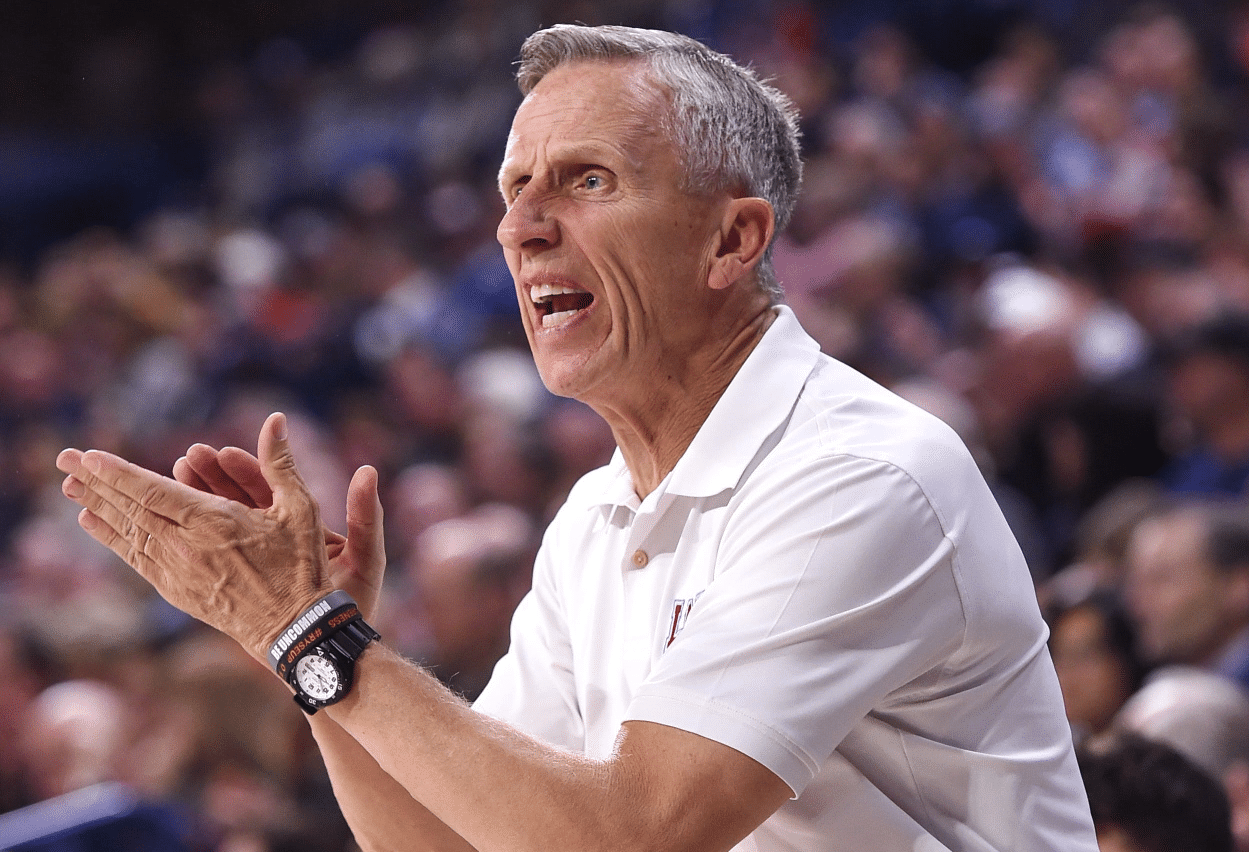
Mike Dunlap reflects on his time coaching the Adelaide 36ers, winning an NBA championship with Milwaukee and learnings from his coaching journey
November 13, 2023


BIO: Rupert Sapwell was born in Melbourne (VIC) and began playing basketball as a junior with the Nunawading basketball program.
FAMILY: Rupert’s son Koen Sapwell also played 5 games in the NBL.
Rupert Sapwell made his NBL debut with the Eastside Melbourne Spectres at 17 years of age. He went scoreless in his first NBL game.
After a import merry-go-round and lacklustre season in coach Brian Goorjian’s first year, he looked to create some stability within the franchise. He re-signed import Arne Duncan, last year’s leading scorer and paired him with import Ben Tower, a Michigan native who had been drafted by the Detroit Pistons five years earlier.
The Spectres retained the core group of last season’s roster, team captain Warren Pink, Dean Uthoff, the league’s leading rebounder and the league’s most improved player Darren Lucas. The rest of the roster was built around a bunch of young talent, with Shane Froling, Paul Hotchin and Steve Lunardon all returning with one more season of experienced, 17-year-old Spectres junior player Rupert Sapwell and 24-year-old Wayne Larkins from Westside Melbourne.
During the pre-season, Duncan suffered a injury that saw him miss the first half of the regular season.
The Spectres then signed Kent Lockhart, who had been playing in the state league for Sandringham, as an injury replacement for Duncan. Goorjian, who had been playing pickup basketball games against state league players during the offseason, was impressed by his ability to play both sides of the ball.
Lockhart (28.8 points, 6.6 rebounds, and 2.4 assists) led the team in scoring, and made such a impact on the team that when Duncan returned from injury, the team released Ben Tower and signed Lockhart to the full-time roster. With Duncan putting up big numbers again (28.6 points, 6.2 rebounds, and 5.6 assists), Dean Uthoff (18.6 points, 17.0 rebounds, and 4.0 assists) leading the league in rebounding for a second consecutive year and Sapwell averaging 1.4 points, 0.8 rebounds, and 0.6 assists per game, the Specres finished the year on a four-game winning streak. Lockhart, who posted a incredible 47 points against the Newcastle Falcons in Round 18, was named to the All-NBL First Team, and with Eastside Melbourne improved from a 11-13 to 14-12 record, leaving Spectres’ fans very optimistic for next season.
1990
Eastside had been slowly improving each season since Brian Goorjian was appointed head coach in 1988, and by 1990 many of the core group that had been a part of the roster when Goorjian took over had developed from junior talent to highly productive NBL players.
The only changes to the local roster were the exits of veterans Paul Hotchins and Warren Pink, who were then replaced with Darren Perry (Brisbane) and Nunawading junior Tony Ronaldson, who had just completed a year at the Australian Institute of Sport. The departure of import Arne Duncan then made room for the return of former Spectre Bruce Bolden.
To kick off the season, Eastside was tipped to be the big improvers of 1990 after finishing ‘best of the rest’ the year prior. The team started off by winning its first three games on the schedule, but over the course of the season, the team never seemed to be able to beat the league’s best. While they knocked off the majority of the league, losses they couldn’t see to deliver wins against elite team’s like Perth, Brisbane and North Melbourne. In Round 21, Eastside turned things around with a win over crosstown rivals North Melbourne (118-111), but then followed that up with a 3-2 run home.
Despite this, Eastside still managed to finish second on the ladder thanks to a impressive 10-3 home record. Lockhart (27.0 points, 7.6 rebounds, 4.5 assists, and 1.3 steals) returned a better player in his second year in the league, leading the team in scoring and being selected to the All-NBL Second Team. Bolden (26.4 points, 11.5 rebounds, 4.5 assists, 2.0 steals and 1.2 blocks) filled the stat sheet most games and Uthoff (17.9 points and 13.6 rebounds) led the team in rebounding once again. Perry (10.7 points, 2.4 rebounds and 5.6 assists) running the point guard spot was a big part of the Spectres improvement from 14-10 last season, to 16-8 in 1990. Sapwell also contributed 2.2 points, 0.5 rebounds, and 0.1 assists per game.
Due to finishing in second place, Eastside received a first-round bye then met Brisbane, who eliminated Sydney in the elimination finals, in the semi final. This was the first time a Goorjian coached team had reached the semi finals but they were eliminated by the Bullets amidst little fanfare in two straight games.
SOUTH EAST MELBOURNE MAGIC
1994
After losing to heated rivals, the Melbourne Tigers head coach Brian Goorjian decided the Magic needed to go younger and chose not to re-sign veteran guards, Darren Perry and Robert Rose, replacing them with younger talent. 18-year-old Sam MacKinnon and Rupert Sapwell, who had just returned from playing college basketball, were added to the roster, and Adonis Jordan, who had led the Kansas Jayhawks to the 1993 NCAA Final Four only six months prior, became the Magic’s sole import.
Jordan (19.9 points, 3.0 rebounds, 8.2 assists, and 2.6 steals) would lead the team in scoring and assists, alongside frontcourt duo Tony Ronaldson (19.4 points, 7.4 rebounds, 2.7 assists, and 1.1 steals) and Bruce Bolden (16.5 points, 8.9 rebounds, 2.2 assists, and 1.5 steals) doing the damage inside. Sapwell would also add 4.5 points, 3.1 rebounds, and 1.2 assists during the season and Sam MacKinnon (5.7 points, 3.3 rebounds and 2.8) would also make a immediate impact, earning his way into the team’s regular rotation (19.2 minutes per game) and delivering one of the greatest seasons ever by a 18-year-old which made him a easy choice for the league’s Rookie Of The Year Award.
In a interesting nod to the future, due to injury the Magic replaced him with state league star Mike Kelly who would become a major part of the Magic roster in 1997.
South East Melbourne was unbeatable at home all season (11-2) butcould never replicate that on the road, losing half their away games and finishing third on the ladder (18-18).
In the postseason, South East swept Perth in two games to set up a semi-finals matchup against crosstown rival North Melbourne. The Giants delivered a major upset in game one, convincingly defeating the Magic (108-87). In game two, it was much closer. In fact, the game was only decided in the final minute (76-79), and if Adonis Jordan hadn’t missed a three-point heave at the buzzer (many thought he could have made a extra pass to a open David Graham for a better shot), the Magic might have been able to force a third game. Instead, the South East Melbourne’s season came to a end.
1995
Brian Goorjian’s youth movement continued in 1995. After moving on from star import Robert Rose the season prior, veteran big man Bruce Bolden would not be offered a chance to return (he would move on to sign with the Sydney Kings), with his replacement coming in the form of young 7-footer Chris Anstey from the Melbourne Tigers.
Anstey’s move to the Magic was one of huge controversy when Melbourne coach Lindsey Gaze appealed the signing via the NBL tribunal. The NBL decided that Anstey could not leave the Tigers and would have to play for Melbourne as long as the Tigers could match the contract, which they did.
After some extremely creative salary tweaking where Magic CEO Graham McNaney and Goorjian convinced all of the Magic players to sign for less so they could offer Anstey a larger contract (which also fit within the NBL salary cap) that the Tigers couldn’t match. Once Anstey had signed with the Magic, all of the team’s players were reinstated to their previous contracts.
After the Anstey deal was done, the Magic rounded out the roster by adding Nunawading junior Jason Smith, re-signing import Adonis Jordan and pairing him with Richard ‘Scooter’ Barry, son of NBA Hall of Famer Rick Barry. Unfortunately, Barry (14.3 points, 2.8 rebounds, 5.3 assists, and 2.3 steals) didn’t quite make the impact in the NBL that his father had in the NBA and was shown the door after four games. Goorjian chose to elevate 23-year-old development player Shane Bright (0.3 points, 0.4 rebounds, and 0.6 assists) for the remaining games instead of bringing in another import, aiming to give his young local core of MacKinnon, Anstey and Smith as much playing time as possible.
The Magic went on to finish second on the ladder (18-8), with Tony Ronaldson (21.5 points, 6.7 rebounds, 3.9 assists, and 1.0 steals) leading the team in scoring and Jordan (20.0 points, 2.9 rebounds, 5.9 assists, and 1.8 steals) leading the Magic in assists.
Additionally, 33-year-old big man John Dorge (16.1 points, 12.3 rebounds, 1.1 steals, and 3.0 blocks) turned the clock back and delivered a breakout season, leading the league in blocked shots. Dorge’s improved play saw him selected to the All-NBL first team at the end of the season while backup guard Darren Lucas (9.4 points, 4.6 rebounds, 3.7 assists, and 1.8 steals) took home the league’s Best Defensive Player award.
In the postseason, the Magic lost game one of their quarterfinal matchup with the Illawarra (108-113), then returned to Melbourne to win both games two (92-89) and three (93-75). Moving onto the semi-finals, South East Melbourne would face North Melbourne and saw their season end early thanks to losses in both games one (77-98) and game three (92-107).
GEELONG SUPERCATS
1996
1996 would see coach Jim Calvin replaced by up-and-coming coach Ian Stacker, with the team overhauling its roster. Major moves included securing Rupert Sapwell (via South East Melbourne) and Matt Scalzi (via Adelaide) to fill the departures of David Graham and Justin Cass, and bringing in powerhouse import Ray Owes to replace Jeff Arnold. Owes was joined by returning guard Joey Wright, who was injured after just two games and replaced by high-scoring Orlando Williams.
Rupert Sapwell proved to be a steady and versatile contributor across all 26 games, averaging (11.7 points, 6.3 rebounds, 1.1 assists, 1.7 steals, and 0.3 blocks). He began the year with a pair of 10-point outings against Newcastle and Hobart, and his 16-point, 7-rebound effort against North Melbourne on May 10 (5-of-9 FG, 2-of-2 3PT) was a breakout performance. On May 24, Sapwell exploded for a then-season-best 15 points against Canberra, draining five triples and grabbing 11 rebounds, followed by 13 points and 6 boards the next night against South East Melbourne.
His defensive acumen and perimeter hustle were highlighted in the June 7 game against the Magic, where he tallied 5 steals along with 12 points and 8 rebounds. Later that month, he delivered an ultra-efficient 17-point night against North Melbourne on June 22, hitting 7-of-8 from the floor and adding 5 rebounds. On August 3, he scored 16 points and helped Geelong defeat Townsville 109–94 at home. Sapwell was a strong presence during Geelong’s standout performance on August 24, where in a thrilling 119–116 loss to Townsville, he chipped in 15 points (4-of-6 FG), 9 offensive rebounds, 6 defensive boards, and 2 steals over 37 minutes. That same night, Ray Owes erupted for 40 points, 22 rebounds (11 offensive), 4 blocks, 3 assists, and 2 steals, while Orlando Williams poured in 32 points and Simon Kerle added 24 points and 4 triples.
In Geelong’s final home win on September 21—a 131–93 blowout over the Gold Coast Rollers—Sapwell added 14 points, 8 rebounds, 2 assists, and 2 steals (6-of-14 FG). Owes recorded 33 points, 26 rebounds, and 3 blocks (13-of-19 FG, 7-of-7 FT), while Williams finished with 32 points and 7 assists. The Rollers were led by Trevor Torrance and Chad McClendon, who scored 20 points apiece. That game would prove to be both clubs’ final NBL victory before their respective exits from the league.
In the final game of the Supercats’ NBL tenure, Sapwell delivered his best performance of the year, posting 23 points and 12 rebounds (9-of-17 FG, 1-of-2 3PT, 4-of-6 FT) in a 100–94 road loss to the Sydney Kings. Teammate Simon Kerle added 20 points, 8 rebounds, and 5 assists, but Geelong couldn’t hold off a Kings side powered by Shane Heal (25 points, 7 rebounds, 4 assists, 3 steals) and Isaac Burton (25 points, 9 rebounds, 4 assists, 2 steals).
Ray Owes stood out as one of the league’s most dominant frontcourt players, averaging (22.2 points, 14.0 rebounds, and 1.7 assists) across 25 games and earning All-NBL First Team honours.
Despite the influx of talent, the Supercats endured a difficult campaign, finishing 13th with a 6–20 record and ultimately handing back their NBL licence at season’s end due to financial strain and league restructuring.
Despite the Supercats’ struggles, Sapwell formed a critical part of Geelong’s core alongside Ray Owes, Orlando Williams (23.5 points), and Simon Kerle (17.0 points, 5.2 assists). A reliable two-way player, Sapwell’s blend of rebounding, floor spacing, and perimeter defense made him a valuable component in the franchise’s final NBL chapter. His 23-point, 12-rebound showing in the final game was a fitting personal high to conclude a consistent and impactful season.
ADELAIDE 36ERS
1997
After Adelaide’s 1996 campaign ended in the semifinals, club MVP Rick Brunson (to the United States) and Simon O’Donnell did not return, while Mike Dunlap’s three-year stint as coach also came to an end after the sudden death of his father led him back to the United States. Adelaide promoted Dunlap’s assistant and former Gold Coast Rollers coach Dave Claxton as his replacement.
Rupert Sapwell (via Geelong) joined Adelaide after the Supercats’ owners sold their NBL licence back to the league following a 6-20 season. Scott Ninnis (via Newcastle) and import big man Jeff Brown were also added, while Brett Maher took over as captain from club legend Mark Davis. Leon Trimmingham, John Rillie, Brett Wheeler, Martin Cattalini, Davis, Brad McKinnon and Nathan Hawkes returned from the previous season.
Sapwell (3.2 points across 28 games) saw his role reduced considerably from his final season with Geelong and averaged 7.8 minutes per game as a reserve. Adelaide lost its opening two games, with Sapwell playing fewer than six minutes in each as he settled into the rotation. He appeared in 28 of Adelaide’s 30 games, with his only two non-appearances coming against Sydney on August 23 and Melbourne on September 13, with neither absence linked to a confirmed injury.
Claxton had planned for Brown (7.7 points and 3.8 rebounds across 6 games) to play beside Trimmingham and Davis in a dominant frontcourt similar to those which had delivered Perth its recent championships, but the import was released after six games when it became clear he was not the player Adelaide needed. Former 36ers big man Willie Simmons (via the state leagues) returned as Brown’s replacement after not playing in the NBL since 1994 and was now 35 years old. Simmons (5.6 points and 4 rebounds across 23 games) added what he could to Adelaide’s frontcourt for the remainder of the season.
Sapwell’s best game came at Beaton Park on May 23, where Sapwell (12 points, 4 rebounds, 1 assist, and 1 steal) made four of eight field goals and all four free throws as Adelaide defeated Wollongong 119-107, with Trimmingham (24 points, 8 rebounds, and 1 block) and Rillie (18 points, 3 rebounds, 6 assists, 2 steals, and 2 blocks) providing support.
Trimmingham (19.4 points, 8.3 rebounds, and 1.2 steals across 29 games) led Adelaide in scoring and rebounding and was voted into the NBL All-Star Game, while Maher (18.8 points, 4.2 rebounds, 5 assists, and 1.9 steals across 30 games) won the club MVP award, earned All-NBL Second Team honours and was also selected to the All-Star Game during his first year as captain. Rillie (13.4 points, 4.6 rebounds, 4.7 assists, and 1.2 steals across 30 games), Wheeler (12.6 points and 6.9 rebounds across 30 games), Davis (9.4 points and 6 rebounds across 30 games), Cattalini (8.5 points and 3.6 rebounds across 30 games) and McKinnon (5.8 points across 26 games) completed Adelaide’s other main contributors.
Adelaide closed the season at the Clipsal Powerhouse against Melbourne on September 27, where Sapwell (2 points and 2 rebounds) played 6:42 as Cattalini (33 points, 8 rebounds, and 2 steals) and Wheeler (19 points and 15 rebounds) led the 36ers, while Andrew Gaze (36 points, 5 rebounds, and 4 assists) carried the Tigers to a 110-104 win, completing Adelaide’s fourth consecutive loss and leaving the 36ers seventh with a 14-16 record after going 7-8 at home and 7-8 away, missing the playoffs for the first time since 1992.
1998
After joining Adelaide (via Geelong) and averaging 3.2 points during a 1997 season where the 36ers finished 14-16 and missed the playoffs for the first time since 1992, Rupert Sapwell returned for his second year with the club. Dave Claxton was replaced by former Adelaide guard Phil Smyth, who entered the position without any previous head coaching experience outside of working as a specialist coach at the Australian Institute of Sport during his playing career.
Leon Trimmingham, Brett Wheeler (to South East Melbourne), Brad McKinnon, Willie Simmons and Nathan Hawkes were no longer with the club. Captain Brett Maher held serious talks with Sydney before re-signing, while Mark Davis, Martin Cattalini, John Rillie and Scott Ninnis also returned. Smyth added Paul Rees (via North Melbourne), Darnell Mee (via France/Canberra), Kevin Brooks, Dean Brogan (via AIS), Paul Bauer and Jason Williams.
Mee had spent the previous season in France while rehabilitating the knee injury which limited his first NBL campaign before recommending former Denver Nuggets teammate Brooks to Adelaide. Brooks signed a two-year deal, and although his unusual shooting release initially concerned his new teammates, he quickly established himself as Adelaide’s leading scorer.
Adelaide opened the season against Townsville at Adelaide Arena on January 31, where Sapwell (9 points, 2 rebounds, 1 assist, and 2 steals) provided an immediate contribution from the bench as the 36ers defeated the Crocodiles 125-86. Cattalini (26 points and 9 rebounds) and Brooks (20 points and 7 rebounds) led the scoring as Smyth began his coaching career with a 39-point victory.
Sapwell (6.1 points across 34 games) appeared in all 30 regular-season games and each of Adelaide’s four playoff contests, with no injury absence. He established himself as a physical and dependable reserve who provided outside shooting, rebounding and defensive pressure within Smyth’s rotation as the 36ers won seven of their opening eight games.
Sapwell produced one of his best performances against Wollongong at Adelaide Arena on May 29, finishing with 17 points, 5 rebounds, and 2 assists as the 36ers defeated the Hawks 112-89. Mee (20 points, 8 rebounds, 8 assists, and 4 steals) and Rillie (18 points, 7 rebounds, and 5 assists) also contributed as Adelaide recorded its nineteenth win of the season.
Two days later, Sapwell recorded his only double-double of the season with 13 points and 10 rebounds against Newcastle at the Newcastle Entertainment Centre, but the Falcons defeated Adelaide 91-85. Davis (18 points and 6 rebounds) and Cattalini (17 points and 6 rebounds) provided the remaining support as the 36ers began a three-game losing streak to complete the regular season.
Sapwell’s best scoring game came at the Brisbane Convention Centre on June 7, where he made eight of his 14 field-goal attempts and finished with 20 points, 2 rebounds, and 1 steal, but the Bullets defeated Adelaide 101-89. Rillie (19 points, 17 rebounds, and 3 assists) and Maher (18 points and 4 rebounds) provided support as the 36ers completed the regular season in second place with a 19-11 record, recording their most victories since 1988.
Brooks (19.4 points and 6.7 rebounds) led Adelaide in scoring, while Maher (17.8 points, 4.8 rebounds, 3.7 assists, and 1.3 steals), Cattalini (15.8 points and 6.7 rebounds) and Mee (14.8 points, 6.5 rebounds, 4 assists, 2.2 steals, and 1.3 blocks) provided the team’s other major offensive options. Rillie (9.8 points and 4.3 rebounds), Davis (9.8 points and 4.8 rebounds), Rees (7.4 points and 5.1 rebounds) and Ninnis (5.4 points) completed Smyth’s main rotation, while Maher earned All-NBL Second Team honours.
The semifinals matched Adelaide against a Perth team which had lost only four regular-season games. The 36ers had won two of the three meetings between the clubs, defeating the Wildcats 103-87 and 106-97 at Adelaide Arena before losing 106-103 at the Perth Entertainment Centre.
Game one was played at Challenge Stadium, where Sapwell (7 points, 1 assist, and 2 steals) made all three of his field-goal attempts as Adelaide defeated Perth 114-97. Maher (36 points, 6 rebounds, and 6 assists) made seven three-pointers, while Cattalini (20 points and 5 rebounds), Mee (16 points, 14 rebounds, and 4 assists) and Rillie (15 points) provided support. James Crawford (22 points and 6 rebounds), Ricky Grace (20 points) and Scott Fisher (19 points and 10 rebounds) led Perth.
Game two moved to Adelaide Arena, where Sapwell (6 points, 3 rebounds, and 3 assists) made two three-pointers as the 36ers defeated Perth 117-110 and completed the sweep. Maher (26 points, 7 rebounds, and 7 assists), Brooks (22 points and 4 rebounds), Cattalini (20 points and 5 rebounds), Rillie (19 points, 3 rebounds, and 5 assists) and Mee (12 points, 15 rebounds, 6 assists, 2 steals, and 1 block) led Adelaide, while Andrew Vlahov (32 points, 11 rebounds, 3 assists, and 2 steals), Grace (26 points, 5 assists, and 2 steals) and Fisher (18 points and 11 rebounds) led Perth.
The Grand Final matched Adelaide against defending champion South East Melbourne, which had finished first with a 26-4 record and swept Brisbane during the semifinals. The Magic had defeated the 36ers in all three regular-season meetings, winning 96-94 in Adelaide, 77-74 at Melbourne Park and 99-98 at the Melbourne Sports and Entertainment Centre, with the three games decided by a combined six points. Brooks and Mee suggested the Adelaide players shave their heads before the series, helping bring the group closer together before facing the heavily favoured Magic.
Reflecting on the championship team, Sapwell said, “But it was our defence which was really overlooked and the defence we played when it counted was critical.”
The Grand Final opened at Adelaide Arena, where Sapwell played 1:05 as the 36ers defeated South East Melbourne 100-93 and recorded only their second victory over the Magic since the club was formed in 1992. Brooks (24 points and 8 rebounds), Davis (16 points and 4 rebounds), Cattalini (16 points and 8 rebounds), Rillie (15 points and 6 rebounds) and Mee (14 points, 7 rebounds, 5 assists, 3 steals, and 3 blocks) led Adelaide, while Wheeler (29 points and 9 rebounds), Clinton McDaniel (20 points, 4 assists, and 2 steals) and Tony Ronaldson (18 points and 8 rebounds) led South East Melbourne.
Game two moved to Melbourne Park, where Adelaide forced 26 turnovers, held South East Melbourne below 15 points in three quarters and converted 25-of-33 free throws compared to the Magic’s 6-of-8. Brooks (21 points, 6 rebounds, 2 assists, and 2 blocks), Cattalini (20 points and 6 rebounds), Maher (11 points, 7 rebounds, 4 assists, and 3 steals), Mee (11 points, 8 rebounds, 2 steals, and 4 blocks) and Rillie (10 points, 3 rebounds, 4 assists, and 2 steals) led the 36ers, while Wheeler (12 points and 5 rebounds), Ronaldson (11 points and 6 rebounds) and Sam Mackinnon (9 points and 4 rebounds) led South East Melbourne as Adelaide won 90-62, completed the sweep, collected its first championship since 1986 and Brooks was named Grand Final MVP, with Sapwell finishing with 4 points and 3 rebounds.
1998/99
The NBL moved into its first summer campaign with Adelaide defending the championship it had won in 1998. John Rillie (to West Sydney) and Dean Brogan (to Newcastle) departed, while Scott Ninnis retired from playing and joined Phil Smyth’s coaching staff.
Captain Brett Maher, Kevin Brooks, Darnell Mee, Martin Cattalini, Mark Davis, Paul Rees, Rupert Sapwell, Paul Bauer and Jason Williams returned from the championship roster. Smyth added David Stiff (via North Melbourne) to the frontcourt, Mee signed a three-year deal and Brooks returned on a one-year contract after considering larger offers from Europe and South America.
Adelaide opened its championship defence against Perth at the Perth Entertainment Centre on October 10, where Sapwell finished with 6 points and 3 rebounds, but the Wildcats defeated the 36ers 106-96. Brooks (22 points) and Cattalini (20 points, 7 rebounds, and 3 blocks) led Adelaide, while Scott Fisher (26 points, 5 rebounds, and 4 assists) was Perth’s best.
Sapwell (7.3 points and 3.6 rebounds across 32 games) remained an important part of Adelaide’s bench rotation, providing outside shooting and rebounding while appearing in every game except the final regular-season contest. The defending champions struggled early, losing four of their opening six games before winning five of their next six.
“It was a big change, and it really changes your mindset, you have to be on your game every single game because everyone is trying to knock you off more than normal,” Maher said of entering the season as defending champion.
Sapwell produced his strongest all-round performance against Sydney at the Clipsal Powerhouse on December 4, finishing with 11 points, 12 rebounds, 3 assists, and 3 steals as Adelaide defeated the Kings 101-90. Maher (24 points, 5 rebounds, and 4 assists) and Stiff (16 points, 11 rebounds, 3 assists, and 2 blocks) provided support, while Acie Earl (20 points, 25 rebounds, and 4 blocks) was Sydney’s best as the 36ers improved to 4-4.
Another major contribution came against Newcastle on December 12, where Sapwell finished with 16 points, 4 rebounds, and 1 steal as Adelaide defeated the Falcons 111-98. Maher (26 points, 6 rebounds, and 4 assists) and Cattalini (17 points, 10 rebounds, 3 assists, and 2 steals) led the 36ers, while Pat Reidy (22 points and 6 assists) was Newcastle’s best.
Sapwell’s best scoring game came at the Brisbane Convention Centre on March 12, where he finished with 17 points and 6 rebounds as Adelaide defeated the Bullets 98-83. Cattalini (17 points, 13 rebounds, and 2 assists) and Mee (17 points and 8 rebounds) also contributed, while Steve Woodberry (29 points, 4 rebounds, and 6 assists) led Brisbane as Adelaide kept its minor-premiership hopes alive.
Maher (19.2 points, 4.3 rebounds, and 1.7 steals) led Adelaide in scoring, while Brooks (17.3 points and 6.1 rebounds), Cattalini (14.9 points and 7 rebounds) and Mee (14.8 points, 7 rebounds, 4 assists, 2 steals, and 1.2 blocks) provided the team’s other major offensive options. Stiff (9.3 points, 5.9 rebounds, and 1.3 blocks), Davis (8.9 points and 4.2 rebounds) and Rees (6.2 points and 4.2 rebounds) completed Smyth’s main rotation. Brooks earned All-NBL First Team honours, Mee was selected to the All-NBL Second Team and won the NBL Best Defensive Player award, while Maher was named to the All-NBL Third Team.
Sapwell missed Adelaide’s final regular-season game in Townsville, his only absence of the campaign. The 36ers defeated the Crocodiles 107-92 and Perth defeated Melbourne, allowing Adelaide to complete a 9-1 finish, secure its first minor premiership since 1988 and finish first with an 18-8 record.
Adelaide opened the qualifying finals against a Perth team which had defeated the 36ers in both regular-season games at the Perth Entertainment Centre, while Adelaide had won their only meeting at home.
Game one was played at Challenge Stadium, where Sapwell (5 points, 4 rebounds, and 2 assists) contributed as Adelaide defeated Perth 99-87. Brooks (24 points, 10 rebounds, and 2 steals), Davis (18 points and 5 rebounds) and Mee (13 points, 9 assists, 3 steals, and 2 blocks) led the 36ers, while Andrew Vlahov (26 points, 8 rebounds, and 6 assists) and Fisher (20 points, 14 rebounds, and 5 assists) were Perth’s best.
Game two moved to the Clipsal Powerhouse, where Sapwell (10 points and 2 steals), Mee (25 points, 10 rebounds, 6 assists, and 3 steals), Maher (22 points) and Cattalini (16 points and 8 rebounds) led Adelaide to a 97-80 victory and completed the sweep. Fisher (17 points, 14 rebounds, and 4 assists) and Ricky Grace (16 points and 5 assists) led Perth.
The semifinals matched Adelaide against Wollongong, which had lost two of its three regular-season meetings with the 36ers.
The series opened at the WIN Entertainment Centre, where Sapwell (7 points and 3 rebounds) helped Adelaide defeat Wollongong 93-81. Maher (25 points, 7 rebounds, 3 assists, and 2 steals) and Brooks (22 points, 8 rebounds, and 4 assists) led the 36ers, while Clayton Ritter (23 points, 12 rebounds, 5 assists, and 3 steals) and Mat Campbell (15 points and 6 assists) were Wollongong’s best.
Game two moved to the Clipsal Powerhouse, where Wollongong built a 16-point lead late in the third quarter and remained ahead 88-85 with 9.9 seconds remaining. Sapwell missed a three-pointer, but Stiff saved the ball before it went out of bounds and returned it to Sapwell, who made his second attempt to force overtime. Sapwell (11 points, 4 rebounds, and 1 steal), Stiff (22 points, 7 rebounds, and 6 blocks), Maher (19 points) and Mee (9 points, 12 rebounds, 6 assists, 3 steals, and 3 blocks) helped Adelaide complete a 99-98 overtime victory, while CJ Bruton (27 points and 7 rebounds) and Campbell (20 points) led Wollongong. “I was rapt (coach) Phil (Smyth) gave me the opportunity to be on the court at that time,” Sapwell said, adding, “Everything seemed calm and in slow motion.”
Adelaide entered the Grand Final undefeated during the postseason against the Victoria Titans, a new club formed through the merger of the South East Melbourne Magic and North Melbourne Giants. The 36ers had defeated Victoria in both regular-season meetings and held home-court advantage after finishing first.
The Grand Final opened at Melbourne Park, where Sapwell (11 points, 3 rebounds, and 1 steal) made three three-pointers as Adelaide defeated Victoria 104-94. Maher (31 points, 5 rebounds, 3 assists, and 2 steals) and Mee (25 points, 6 rebounds, 6 assists, 2 steals, and 2 blocks) led the 36ers, while Darryl McDonald (23 points, 6 rebounds, 9 assists, and 2 steals) and Tony Ronaldson (19 points) led the Titans.
Game two moved to the Clipsal Powerhouse, where Sapwell finished with 1 point and 4 rebounds as Victoria defeated Adelaide 88-82 and levelled the series. Maher (25 points) and Brooks (12 points and 4 rebounds) led the 36ers, while Ronaldson (22 points) and Brett Wheeler (18 points and 9 rebounds) were Victoria’s best.
The deciding game remained at the Clipsal Powerhouse, where Adelaide held Victoria to 32 first-half points and defeated the Titans 80-69 in front of more than 7,000 supporters. Cattalini (19 points, 9 rebounds, and 2 blocks), Maher (15 points and 7 rebounds) and Sapwell (13 points, 2 rebounds, and 1 assist) led the 36ers, while Ben Pepper (15 points) and Ronaldson (15 points) led Victoria as Adelaide became the first team to win consecutive NBL championships since Perth in 1990 and 1991 and Maher was named Grand Final MVP.
Adelaide became three-time NBL champions and the first team to win back-to-back titles since Perth in 1990 and 1991. Captain Brett Maher was voted the Grand Final MVP, and coach Phil Smyth claimed his second championship win in just two years of coaching in the NBL.
1999/00
Economic factors impacted the 36ers prior to the 1999/00 season. Coming off winning back-to-back championships, Adelaide seemed primed for a NBL dynasty. The NBL, however, wasn’t in as good a shape as the 36ers and in a cost-cutting move aimed at assisting struggling NBL clubs, the league reduced the league salary cup from $70,000 to $625,000. This reduction in cap resulted in the team being unable to re-sign star Kevin Brooks for the same money without breaching the cap. Although the league applied for consideration on this, it was denied, and Brooks was forced to make a move to Sydney to play with the Kings.
Days later, high-scoring forward Martin Cattalini agreed to play in France for ASVEL Villeranne, which would have been ‘double whammy’, but prior to the season tipping off, he backflipped and re-signed with Adelaide in the hopes that a big year would result in being selected for the 2000 Olympics to be held in Sydney.
Adelaide signed Paul Maley, who had contemplated retiring after his experience with the Victoria Titans, to replace Brooks and saw the remaining squad return for a chance at a three-peat.
The season kicked off the season with a 109–89 win over Perth at home, with the 36ers fielding a starting lineup of team captain Brett Maher (20.2 points, 4.3 rebounds and 2.9 assists), team leading scorer Martin Cattalini (20.3 points, 7.5 rebounds and 2.6 assists), Darnell Mee (13.6 points, 7.0 rebounds, 4.7 assists, 2.2 steals and 1.2 blocks) who filled almost every category on the stat sheet and veterans Paul Rees and Paul Maley.
As a result of winning the 1999 NBL championship, the 36ers were again invited to participate in the McDonald’s Cup, held at the 12,000 seat Fila Forum in Milan, Italy which was scheduled during the first month of the regular season. After losing their first game 90–79 to Brazilian side CR Vasco da Gama (who went all the way to meet the San Antonio Spurs in the final), the team won the 5–6 place playoff 91–84 over Lebanese team Hekmeh BC.
After returning to Australia, Adelaide never skipped a beat. They won three straight games before heading to Townsville, a game where Maher nailed five from five threes, scored 15 points in the first quarter, and finished with a career-high 40 points as Adelaide lost its first game of the season in overtime.
Maley missed a number of games due to a recurring back injury which saw David Stiff enter the starting lineup, where he responded with a career-high 35-point game (70% from the field) in a 111-103 win over Wollongong.
On 6 February 2000, the 36ers participated in the league’s first ‘open air’ game where 10318 fans gathered to see the Titans deliver a rare loss (83-75) at Melbourne Park. Sapwell finished the season averaging 7.1 points, 3.5 rebounds, and 1.1 assists per game as they again finished minor premiers with a 22–6 record.
Both Adelaide and Townsville (who finished second) were given first round byes as Victoria beat Melbourne and Perth defeated West Sydney in the Elimination Finals. Perth then upset Townsville, knocking them out in three games and the 36ers faced off against a Brian Goorjian led team for the third year in a row.
The Titans, who had discarded Paul Maley (12.3 points and 6.1 rebounds per game) to see him become a valuable bench contributor for Adelaide, entered the series as favourites. The Titans would win game one 101-86 in Melbourne, with Ronaldson leading the team with 26 points and 5 rebounds and MacDonald filling the box score with 24 points, 6 rebounds, 8 assists, 2 steals and 3 blocks, before the series moved to Adelaide for game two and three.
Game two saw the 36ers return to their high-scoring offence, which had proven unstoppable over the past two seasons. Martin Cattalini’s 24 points and 7 rebounds, combined with Darnell Mee all-around brilliance, collecting 22 points,7 rebounds, 6 assists and 4 steals, the 36ers evened the series with a 95-72 win.
With many pencilling in another Titans elimination from the 36ers, the team rallied behind MacDonald, who again impacted the game from every angle, finishing with 24 points, 7 rebounds, 6 assists and 3 steals. His counterpart Darnell Mee seemed equally up to the task and finished with 22 points, 6 rebounds, 5 assists, and 2 steals, but the remaining 36ers squad struggled to score through the impenetrable Titans defence, and with Victoria winning the decider 89-93 the Titans celebrated as though they’d shaken King Kong off their back.
Not surprisingly, Victoria had nothing left for Perth in the Grand Final and lost in two straight games.
2000/01
During the 2000/01 season, Sapwell averaged 6 points, 2.7 rebounds, and 1.3 assists and was a part of the 36ers squad which finished in sixth place with a record of 16-12.
2001/02
In 2001/02, Sapwell averaged 8.6 points and 3.8 rebounds, and helped guide the 36ers to a third place finish in the regular season with a 17-13 record.
CAIRNS TAIPANS
2002/03
In 2002/03, Sapwell averaged 6.7 points, 4.4 rebounds, and 2.5 assists as the Taipans finished with a record of 13-17 and in eighth place during the regular season.
2003/04
In 2003/04, Sapwell averaged 6.3 points, 3 rebounds, and 2.5 assists, playing a key role in the Taipans rotation, helping the team finish reach a sixth place finish in the regular season with a 16-17 record.
Rupert Sapwell played thirteen seasons across five NBL teams. This included the Eastside Melbourne Spectres, Geelong Supercats, South East Melbourne Magic, Adelaide 36ers and Cairns Taipans. He averaged 6.4 points, 3.2 rebounds, and 1.1 assists in 359 NBL games.
| SEASON | AGE | TEAM | TEAM RECORD | GP | MINS | PTS | REB | AST | OR | DR | STL | BLK | TO | PF | FGM | FGA | FG% | 3PM | 3PA | 3P% | FTM | FTA | FT% | TS% | EFG% | HS |
|---|---|---|---|---|---|---|---|---|---|---|---|---|---|---|---|---|---|---|---|---|---|---|---|---|---|---|
| 2003-04 | 32 | Cairns | 16-17 (6) | 35 | 600 | 219 | 106 | 41 | 39 | 67 | 34 | 16 | 43 | 58 | 86 | 182 | 47% | 10 | 29 | 34% | 37 | 69 | 54% | 51% | 50% | 17 |
| 2002-03 | 31 | Cairns | 13-17 (8) | 29 | 683 | 194 | 129 | 73 | 46 | 83 | 20 | 13 | 55 | 91 | 75 | 215 | 35% | 20 | 71 | 28% | 24 | 55 | 44% | 40% | 40% | 19 |
| 2001-02 | 30 | Adelaide | 17-13 (3) | 38 | 766 | 326 | 146 | 65 | 61 | 85 | 34 | 12 | 48 | 115 | 123 | 283 | 43% | 24 | 73 | 33% | 56 | 83 | 67% | 51% | 48% | 21 |
| 2000-01 | 29 | Adelaide | 16-12 (6) | 33 | 578 | 199 | 90 | 42 | 39 | 51 | 22 | 10 | 26 | 80 | 72 | 221 | 33% | 19 | 83 | 23% | 36 | 67 | 54% | 39% | 37% | 14 |
| 1999-00 | 28 | Adelaide | 22-6 (1) | 31 | 580 | 219 | 108 | 33 | 55 | 53 | 20 | 13 | 36 | 75 | 84 | 214 | 39% | 22 | 77 | 29% | 29 | 57 | 51% | 45% | 44% | 18 |
| 1998-99 | 27 | Adelaide | 18-9 (1) | 32 | 533 | 232 | 114 | 27 | 62 | 52 | 23 | 4 | 38 | 68 | 81 | 189 | 43% | 26 | 67 | 39% | 44 | 65 | 68% | 53% | 50% | 17 |
| 1998 | 26 | Adelaide | 19-11 (2) | 34 | 454 | 208 | 88 | 15 | 39 | 49 | 16 | 6 | 27 | 74 | 82 | 172 | 48% | 17 | 36 | 47% | 27 | 43 | 63% | 54% | 53% | 20 |
| 1997 | 25 | Adelaide | 14-16 (8) | 28 | 218 | 89 | 46 | 15 | 15 | 31 | 10 | 1 | 16 | 35 | 38 | 83 | 46% | 1 | 5 | 20% | 12 | 17 | 71% | 49% | 46% | 12 |
| 1996 | 24 | Geelong | 6-20 (13) | 26 | 889 | 305 | 165 | 29 | 76 | 89 | 44 | 8 | 51 | 101 | 126 | 264 | 48% | 22 | 61 | 36% | 31 | 49 | 63% | 53% | 52% | 23 |
| 1995 | 23 | South East Melbourne | 18-8 (1) | 31 | 433 | 164 | 84 | 32 | 36 | 48 | 13 | 11 | 31 | 50 | 68 | 129 | 53% | 3 | 16 | 19% | 25 | 45 | 56% | 55% | 54% | 17 |
| 1994 | 22 | South East Melbourne | 18-8 (1) | 24 | 295 | 108 | 75 | 29 | 31 | 44 | 27 | 4 | 31 | 41 | 44 | 84 | 52% | 1 | 3 | 33% | 19 | 31 | 61% | 55% | 53% | 19 |
| 1990 | 18 | Eastside Melbourne | 18-8 (2) | 13 | 64 | 28 | 6 | 1 | 5 | 1 | 0 | 2 | 4 | 7 | 12 | 36 | 33% | 1 | 11 | 9% | 3 | 10 | 30% | 34% | 35% | 6 |
| 1989 | 17 | Eastside Melbourne | 14-10 (7) | 5 | 25 | 7 | 4 | 3 | 2 | 2 | 1 | 0 | 2 | 5 | 2 | 15 | 13% | 0 | 3 | 0% | 3 | 4 | 75% | 21% | 13% | 3 | Totals | 359 | 6118 | 2298 | 1161 | 405 | 506 | 655 | 264 | 100 | 408 | 800 | 893 | 2087 | 42.8% | 166 | 535 | 31.0% | 346 | 595 | 58.2% | 49% | 47% | 23 |
| SEASON | AGE | TEAM | TEAM RECORD | GP | MINS | PTS | REB | AST | OR | DR | STL | BLK | TO | PF | FGM | FGA | FG% | 3PM | 3PA | 3P% | FTM | FTA | FT% | TS% | EFG% | HS |
|---|---|---|---|---|---|---|---|---|---|---|---|---|---|---|---|---|---|---|---|---|---|---|---|---|---|---|
| 2003-04 | 32 | Cairns | 16-17 (6) | 35 | 17.1 | 6.3 | 3.0 | 1.2 | 1.1 | 1.9 | 1.0 | 0.5 | 1.2 | 1.7 | 2.5 | 5.2 | 47% | 0.3 | 0.8 | 34% | 1.1 | 2.0 | 54% | 51% | 50% | 17 |
| 2002-03 | 31 | Cairns | 13-17 (8) | 29 | 23.6 | 6.7 | 4.4 | 2.5 | 1.6 | 2.9 | 0.7 | 0.4 | 1.9 | 3.1 | 2.6 | 7.4 | 35% | 0.7 | 2.4 | 28% | 0.8 | 1.9 | 44% | 40% | 40% | 19 |
| 2001-02 | 30 | Adelaide | 17-13 (3) | 38 | 20.2 | 8.6 | 3.8 | 1.7 | 1.6 | 2.2 | 0.9 | 0.3 | 1.3 | 3.0 | 3.2 | 7.4 | 43% | 0.6 | 1.9 | 33% | 1.5 | 2.2 | 67% | 51% | 48% | 21 |
| 2000-01 | 29 | Adelaide | 16-12 (6) | 33 | 17.5 | 6.0 | 2.7 | 1.3 | 1.2 | 1.5 | 0.7 | 0.3 | 0.8 | 2.4 | 2.2 | 6.7 | 33% | 0.6 | 2.5 | 23% | 1.1 | 2.0 | 54% | 39% | 37% | 14 |
| 1999-00 | 28 | Adelaide | 22-6 (1) | 31 | 18.7 | 7.1 | 3.5 | 1.1 | 1.8 | 1.7 | 0.6 | 0.4 | 1.2 | 2.4 | 2.7 | 6.9 | 39% | 0.7 | 2.5 | 29% | 0.9 | 1.8 | 51% | 45% | 44% | 18 |
| 1998-99 | 27 | Adelaide | 18-9 (1) | 32 | 16.7 | 7.3 | 3.6 | 0.8 | 1.9 | 1.6 | 0.7 | 0.1 | 1.2 | 2.1 | 2.5 | 5.9 | 43% | 0.8 | 2.1 | 39% | 1.4 | 2.0 | 68% | 53% | 50% | 17 |
| 1998 | 26 | Adelaide | 19-11 (2) | 34 | 13.4 | 6.1 | 2.6 | 0.4 | 1.1 | 1.4 | 0.5 | 0.2 | 0.8 | 2.2 | 2.4 | 5.1 | 48% | 0.5 | 1.1 | 47% | 0.8 | 1.3 | 63% | 54% | 53% | 20 |
| 1997 | 25 | Adelaide | 14-16 (8) | 28 | 7.8 | 3.2 | 1.6 | 0.5 | 0.5 | 1.1 | 0.4 | 0.0 | 0.6 | 1.3 | 1.4 | 3.0 | 46% | 0.0 | 0.2 | 20% | 0.4 | 0.6 | 71% | 49% | 46% | 12 |
| 1996 | 24 | Geelong | 6-20 (13) | 26 | 34.2 | 11.7 | 6.3 | 1.1 | 2.9 | 3.4 | 1.7 | 0.3 | 2.0 | 3.9 | 4.8 | 10.2 | 48% | 0.8 | 2.3 | 36% | 1.2 | 1.9 | 63% | 53% | 52% | 23 |
| 1995 | 23 | South East Melbourne | 18-8 (1) | 31 | 14.0 | 5.3 | 2.7 | 1.0 | 1.2 | 1.5 | 0.4 | 0.4 | 1.0 | 1.6 | 2.2 | 4.2 | 53% | 0.1 | 0.5 | 19% | 0.8 | 1.5 | 56% | 55% | 54% | 17 |
| 1994 | 22 | South East Melbourne | 18-8 (1) | 24 | 12.3 | 4.5 | 3.1 | 1.2 | 1.3 | 1.8 | 1.1 | 0.2 | 1.3 | 1.7 | 1.8 | 3.5 | 52% | 0.0 | 0.1 | 33% | 0.8 | 1.3 | 61% | 55% | 53% | 19 |
| 1990 | 18 | Eastside Melbourne | 18-8 (2) | 13 | 4.9 | 2.2 | 0.5 | 0.1 | 0.4 | 0.1 | 0.0 | 0.2 | 0.3 | 0.5 | 0.9 | 2.8 | 33% | 0.1 | 0.8 | 9% | 0.2 | 0.8 | 30% | 34% | 35% | 6 |
| 1989 | 17 | Eastside Melbourne | 14-10 (7) | 5 | 5.0 | 1.4 | 0.8 | 0.6 | 0.4 | 0.4 | 0.2 | 0.0 | 0.4 | 1.0 | 0.4 | 3.0 | 13% | 0.0 | 0.6 | 0% | 0.6 | 0.8 | 75% | 21% | 13% | 3 | Total | 359 | 17.0 | 6.4 | 3.2 | 1.1 | 1.4 | 1.8 | 0.7 | 0.3 | 1.1 | 2.2 | 2.5 | 5.8 | 42.8% | 0.0 | 0.0 | 31.0% | 0.5 | 1.5 | 58.2% | 49% | 47% | 23 |
| POINTS | REBOUNDS | ASSISTS | STEALS | BLOCKS | TURNOVERS | TRIPLE DOUBLES | 23 | 15 | 9 | 5 | 3 | 5 | 0 |
|---|
Sapwell joined the Nunawading Spectres for the 1994 CBA season. During that season he scored 50 points in a CBA game for the Spectres.
Sapwell played for Sandringham during the 1995 CBA season.
He joined Norwood for the 1998 Central ABL season and returned in 1999. Norwood won its first mens premiership in 1999, defeating North Adelaide 96–69 in the grand final, while Sapwell was named the competitions Mens Best Defensive Player. The Flames then advanced to the ABA National Final, where they lost 79–69 to Southern Districts.
Sapwell returned to Norwood in 2008 as the mens head coach while also appearing on the Flames playing roster. Norwood won the Central ABL championship with an 89–88 grand final victory over Forestville, decided by an Andrew Webber buzzer-beater.
He remained Norwoods head coach in 2009 and guided the Flames to consecutive Central ABL championships. Norwood defeated Sturt 94–84 in the grand final, with Todd Matthews named Grand Final MVP.
In 2015, Sapwell was inducted into the Nunawading Basketball Hall of Fame.
Sapwell returned to the competition as head coach of the Central Districts Lions in 2023. The Lions developed into a finals team and reached the postseason in 2024.
In 2025, he was named NBL1 Central Mens Coach of the Year as Central Districts reached its first mens grand final in 41 years. The Lions defeated minor premiers Forestville 107–74 to reach the decider before losing 83–73 to West Adelaide in the grand final.
Sapwell continued as Central Districts head coach in 2026, with the Lions finishing fifth at 10–8. Central Districts defeated Woodville 90–79 in the elimination final and Sturt 78–77 in the first semi-final, winning the latter on a last-second alley-oop after a Sapwell timeout, before a 95–84 preliminary-final loss to Forestville ended the season.
Sapwell suited up for Cal Lutheran beginning in the 1991-92 season after being recruited from Doncaster, Australia, and he went on to play three seasons for head coach Mike Dunlap.
Cal Lutheran’s year-by-year records list the Kingsmen as 16-12 overall (11-3 SCIAC) in 1991-92, 20-7 overall (12-2 SCIAC) in 1992-93, and 25-3 overall (12-2 SCIAC) in 1993-94, with those seasons forming part of the program’s run to three straight SCIAC titles from 1992-94 and multiple NCAA Division III postseason trips, including Sweet 16 runs in 1992 and 1994.
As a freshman in 1991-92, Sapwell averaged 2.5 points and 2.1 rebounds per game before making a major jump in production over the next two seasons.
During the 1992-93 campaign, he produced 68 steals, which sits on Cal Lutheran’s single-season top-10 list, and he was also cited among the SCIAC leaders in steals as the Kingsmen’s pressure defense fueled the team’s conference success.
He posted two of the best shot-blocking games in program record listings during that 1992-93 season with five blocks against Dominican (CA) on Dec. 4, 1992, and five blocks against Occidental on Feb. 3, 1993.
In a rugged 89-80 win over Occidental on Feb. 3, 1993, Sapwell was cut above the eye as Cal Lutheran held on in a physical matchup between the conference’s top teams.
By late January 1993, Sapwell was tied for third nationally in NCAA Division III steals at 4.0 per game at the time of the report, reflecting how disruptive Cal Lutheran’s perimeter pressure was during that stretch of the season.
In 1993-94, Sapwell was a key frontcourt piece on Cal Lutheran’s 25-3 team, and he was named All-SCIAC First Team alongside teammate Derrick Clark, with Damon Ridley earning SCIAC Player of the Year honours.
A March 5, 1994 profile noted Sapwell had improved to 12.2 points and 6.8 rebounds per game that season after averaging 2.5 points and 2.1 rebounds per game as a freshman, and a later recap of that season credited him with 13.1 points and 7.0 rebounds per game as the Kingsmen finished another title run.
In a Dec. 29, 1993 game against Gustavus Adolphus, he logged 17 minutes off the bench and scored 10 points on 4-for-5 shooting with 3 rebounds, 2 blocks, 2 steals, 1 assist, and 1 turnover.
Across his time at Cal Lutheran, Sapwell totaled 61 blocks, which appears on the program’s career top-10 list.
As a coach Sapwell led the Norwood Flames to back-to-back championships in the South Australian Premier League – now NBL1 Central in 2008 and 2009. He also acted as the Adelaide 36ers second assistant coach to Phil Smyth and Steve Breheny during the 2007/08 season.
In 2011, Sapwell became Director of Sport, Head Basketball Coach at Trinity College, Gawler (SA) – a role he has thrived in and continues to do so today, whilst remaining actively involved in Basketball SA’s NITP and State Development Programs.
In 2023 Sapwell was named head coach Central Districts Basketball Club. In 2025, Sapwell would win the NBL1 Central Coach of the Year Award.
After four seasons as head coach of Central Districts, Sapwell stepped away from NBL1 coaching following the 2026 season. His tenure included two top-three finishes, one Grand Final appearance and the 2025 NBL1 Central Coach of the Year award.
Whilst we try to source as much information as we can for every player who has ever played in the NBL some information on a player profile may be missing. If you have additional information on a player you'd like us to add to a profile, please send it to us using the enquiry form below.
Submissions are then sent to info@aussiehoopla.com

