Nick Horvath on the 2009 Dragons vs Tigers Championship and Becoming the Author of an Action Hero
April 11, 2025



BIO: Nick Horvath was born in Shoreview, Minnesota, and attended Mounds View High School in Arden Hills, Minnesota. He led the Mustangs to state tournament appearances in 1998 and 1999, capturing the 1999 AA State Championship. That same year, he was named Minnesota Mr. Basketball. Horvath went on to play college basketball at Duke University from 1999 to 2004, where he was a part of the 2000–01 NCAA championship team.
FAMILY: Horvath’s wife, Sheree Phillips, is a former Black Sticks hockey player. The couple have two children.
Nick Horvath made his NBL debut with the West Sydney Razorbacks at 23 years of age. He scored 19 points in his first game.
After reaching the 2004 NBL Grand Final, the West Sydney Razorbacks underwent a major transformation. Longtime head coach Gordie McLeod was let go after six seasons, with assistant Mark Watkins promoted to the top role following player support. The club’s financial situation also worsened, as owners Canterbury-Bankstown Bulldogs were penalized with a $500,000 fine and stripped of all 37 NRL premiership points due to salary cap violations, impacting the Razorbacks’ ability to retain key players.
West Sydney lost several key contributors in the offseason. Leading scorer John Rillie (to Townsville), Russell Hinder (to Hunter), and David Pennisi (to Europe) all departed, while Brad Williams retired. These losses forced the Razorbacks to rebuild around their returning core.
A key addition to the roster was Nick Horvath (via Duke University), who was signed to replace Rillie’s offensive production. Horvath (20.4 points, 11.1 rebounds, and 1.3 blocks) quickly became the team’s primary scoring threat, providing a strong inside presence. The team also welcomed back Scott McGregor, who had missed the previous season due to injury, while Steven Markovic, the reigning NBL Rookie of the Year, took on a bigger role in the backcourt. Returning veterans Simon Dwight (15.9 points, 10.6 rebounds, 2.9 assists, and 3.2 blocks) and team captain Sam MacKinnon (14.5 points, 8.2 rebounds, 5.9 assists, 1.7 steals, and 1.2 blocks) remained key contributors on both ends of the floor.
The Razorbacks opened the season with a 97–120 loss to Perth on October 2, 2004, as the team struggled to integrate its new lineup. However, they rebounded in Round 2 with a dominant 106–75 home victory over Brisbane, before securing a hard-fought 113–111 win over the Bullets on the road, led by Horvath (23 points, 17 rebounds) and McGregor (26 points).
Despite the early success, West Sydney soon fell into a four-game losing streak, dropping contests to Melbourne (97–105), Adelaide (85–102), and Perth (90–101). The absence of a reliable perimeter shooter like Rillie was evident, as Horvath carried the scoring load without much outside support.
The team bounced back in Round 8, defeating Wollongong 96–82, behind a dominant Horvath performance (29 points, 14 rebounds), while MacKinnon (22 points, 9 rebounds, and 5 assists) provided valuable all-around contributions. A closely contested 87–84 victory over Cairns followed, where Markovic (18 points, 6 assists) showcased his growing impact in the backcourt. However, inconsistency remained an issue, as West Sydney struggled to build sustained momentum.
The Razorbacks’ season took a downward turn during a seven-game losing streak between January 2 and January 29, 2005, effectively crushing their playoff aspirations. This stretch included a 123–89 defeat to Sydney and another 112–85 loss to the Kings on February 19. Defensive breakdowns and an overreliance on Horvath’s scoring left the team exposed against stronger opponents.
Despite their struggles, West Sydney found some success late in the season. They ended their losing streak with a 103–76 home victory over Hunter on February 2, where McGregor (21 points, 7 rebounds) provided a much-needed spark. Another highlight came on February 11, when they defeated the Hawks 117–95, delivering one of their most well-rounded offensive performances of the season. However, these victories were not enough to salvage the season.
West Sydney finished the year in ninth place with an 11–21 record, missing the playoffs just one year after competing in the Grand Final.
2005/06
After two disappointing seasons in a row, the West Sydney Razorbacks were forced into a major rebuild. The team suffered significant setbacks before the season even began, with promising young guard Steve Markovic unexpectedly leaving to play in Europe, NBL legend Simon Dwight forced into retirement due to a chronic knee injury, and Sam MacKinnon departing for Brisbane. This left Scott McGregor, who was named team captain, as the sole remaining player from the Razorbacks’ 2004 Grand Final loss to Sydney.
Head coach Mark Watkins attempted to compensate for these losses by signing James Harvey (via Perth) to add scoring power, but financial issues forced the team to rely on low-budget role players. Pero Vasiljevic and Rhys Carter, both of whom were out of the NBL the previous season, were added to the roster alongside Graham Dann, Cameron Rigby, and Miles Pearce, who had struggled for playing time with other NBL teams. Horvath re-signed with the Razorbacks and was brought back as an import, while Jermaine Blackburn was later added as the team’s second import.
West Sydney’s season was severely hampered by financial issues and injuries. Horvath suffered a dislocated kneecap in the season opener, which sidelined him for three months. Upon his return, he played just one game before sustaining a season-ending toe injury, appearing in only three games and averaging 7.0 points, 2.7 rebounds, and 0.0 assists. Harvey (21.7 points, 3.3 rebounds, and 3.0 assists) led the team in scoring but was limited to just 11 games due to injuries, while Blackburn (18.0 points, 5.0 rebounds, 2.6 assists, and 1.5 steals) never found his rhythm and was cut midway through the season.
The Razorbacks cycled through multiple low-impact imports to finish the season, including Casey Frank (6.3 points, 5.0 rebounds, and 1.0 assist) and Joel Cornette (10.1 points, 7.5 rebounds, and 1.3 steals), but the team was never competitive. West Sydney finished dead last with a 5-27 record, marking one of the worst seasons in franchise history.
ADELAIDE 36ERS
2006/07
After recovering from injury, Horvath signed with the Adelaide 36ers for the 2006/07 NBL season. He had a strong individual campaign, averaging 19.4 points, 8.1 rebounds, and 1.5 assists per game. Despite Horvath’s production, the 36ers struggled throughout the season, finishing with an 11-22 record.
SOUTH DRAGONS
2007/08
With Shane Heal now in place as player-coach, the South Dragons entered their second season having made several roster changes. Frank Drmic, Kavossy Franklin, and Rosell Ellis departed, replaced by Cortez Groves (via Wollongong), Nick Horvath (via Adelaide), and Luke Martin (via Cairns).
On April 11, 2007, Nick Horvath signed a two-year deal with the South Dragons. With Horvath applying for New Zealand citizenship, the Dragons planned to have him become a naturalised player mid-season—allowing them to add an additional import once his status changed.
Horvath (12.8 points, 6.0 rebounds, and 1.2 assists) performed well across the first six games, but despite his solid play, the Dragons stumbled out of the gate, dropping their first six contests—including a one-point loss to Brisbane and a three-point heartbreaker against Melbourne.
Horvath continued to train with the team daily and remained under contract, with the expectation he would become naturalised and re-join the squad—but delays in the citizenship process meant he never returned to the active lineup.
With no clear timeframe on when Horvath would be naturalised, he was eventually deactivated from the roster to make way for new import Bakari Hendrix. Though sidelined, his two-year contract with the Dragons meant he remained effectively “on hold” until New Zealand authorities could grant him citizenship.
“It could be two months, it could be two years,” Dragons player-coach Shane Heal admitted. “We’re doing everything we can to push it through, and so is New Zealand Basketball because they need him for the Olympic qualification.
Nick’s still part of the Dragons’ organisation. He’ll train with us every day and he’ll be looked after.”
Hendrix arrived and, although relatively quiet in his debut, helped spark the team’s best stretch of the season. His first game was also the team’s first win—a 102-90 victory over New Zealand. He followed that up with 19 points and 7 rebounds in a 115-108 win over Wollongong, a 34-point outing in a narrow 103-97 loss to Townsville, and 24 points and 7 rebounds in a 106-95 win over Townsville. After starting the season 0-6, the Dragons produced a 4-3 record during Hendrix’s first seven games.
That brief resurgence proved to be the team’s peak. The Dragons soon crashed back to earth, closing the season with 14 consecutive losses.
The team’s poor form and internal instability quickly took a toll. In January, assistant coach Michelle Timms left the club, and by early February, player-coach Shane Heal was sacked after a 4-22 start to the season. Assistant Guy Molloy took over coaching duties for the remainder of the year
Hendrix (18.9 points and 6.8 rebounds) led the team in scoring. Cortez Groves (18.3 points, 2.4 rebounds, 3.7 assists, and 1.2 steals) anchored the backcourt attack, alongside player-coach Shane Heal (15.8 points, 2.3 rebounds, and 3.9 assists). Second-year star Joe Ingles (15.4 points, 6.3 rebounds, 4.9 assists, and 1.2 steals) continued his development with a strong all-around campaign. The only other bright spot came from Matthew Burston, who enjoyed a breakout year—boosting his numbers from 4.3 points and 3.1 rebounds to 11.9 points and 7.0 rebounds per game.
The Dragons finished dead last in the league with a 5-25 record, including a dismal 1–14 mark on the road.
2008/09
After being granted New Zealand citizenship in April 2008, Nick Horvath re-joined the South Dragons for the 2008/09 season, now eligible to play as a local. The Dragons retained five key players, including Joe Ingles, Matt Burston, Nathan Herbert, Horvath, and Cortez Groves. With the collapse of the Sydney Kings, legendary coach Brian Goorjian was available, and the Dragons quickly secured him as their new head coach, replacing Shane Heal. The team also signed point guard Adam Gibson from the defunct Brisbane Bullets, added Tremmell Darden as a second import, brought in physical forward Mika Vukona from New Zealand, and acquired Rhys Carter, who had no offers from other NBL teams but impressed Goorjian enough in training to earn a roster spot.
The season began with mixed results, as the Dragons opened with a 2-2 record before finding their rhythm with an eight-game winning streak. However, adversity struck when Cortez Groves suffered a season-ending injury, leading to his release. Midway through the season, Donta Smith was signed as his replacement after being waived by his Chinese club, Shanxi Zhongyu. Though Smith started quietly, he soon found his role, helping the Dragons finish the regular season atop the ladder with a 22-8 record.
Mark Worthington led the team in scoring and rebounding (16.9 points, 7.1 rebounds, 2.6 assists, and 1.3 steals), while Smith became the team’s second-leading scorer and top playmaker (15 points, 5.2 rebounds, 3.6 assists, and 1.1 steals). Horvath provided frontcourt depth, averaging 7.8 points, 4.6 rebounds, and 0.5 assists. Adam Gibson was named the NBL’s Best Defensive Player, while Joe Ingles won Rookie of the Year honours.
The Dragons earned a first-round bye in the playoffs and faced Townsville in the semifinals, winning the series 2-1. They secured victories at home in Game 1 (94-81) and the decisive Game 3 (101-78), advancing to their first NBL Grand Final. On the other side of the bracket, the Melbourne Tigers defeated the New Zealand Breakers in two straight games, setting up an all-Melbourne Grand Final matchup.
In Game 1, the Dragons defeated the Tigers 93-81, holding Melbourne to just 36 points in the second half. Mark Worthington led the team with 23 points, while Chris Anstey (21 points, 9 rebounds) was Melbourne’s top performer.
Game 2 saw the Tigers fight back, erasing a 14-point deficit midway through the final quarter to win 88-83 on their home court. David Barlow (26 points) and Anstey (21 points, 9 rebounds) carried Melbourne to victory, while Donta Smith (18 points, 6 rebounds) top-scored for the Dragons.
Game 3 became front-page news after a fiery clash between Anstey and Dragons backup point guard Rhys Carter. Anstey was charged with ‘striking – with elbow’ after the altercation with Carter in the third quarter and was subsequently ejected, along with Mika Vukona, who was involved in the ensuing melee. With Anstey gone, the Dragons dominated, hammering the defending champions 84-67 at Hisense Arena behind 18 points from Smith, including 10 in the final period.
Despite calls for suspensions, the NBL tribunal allowed all players to compete in Game 4. Carter responded with 17 points, but Anstey erupted for 31 points, 14 rebounds, and 4 assists, leading Melbourne to a 108-95 victory and forcing a decisive Game 5.
With 9,000 fans packed into Hisense Arena, the Dragons delivered a dominant performance in Game 5, clinching the championship with a 102-81 victory. Tremmell Darden played a starring role, scoring 31 points, including 21 in the final quarter, while Smith flirted with a triple-double (21 points, 10 rebounds, and 7 assists). Worthington and Vukona limited Anstey to just 12 points and 3 rebounds, while Barlow and Ebi Ere (16 points each) provided the only offensive spark for Melbourne.
Smith was named Finals MVP after averaging 18.2 points, 7.4 rebounds, and 5.4 assists over the five-game series.
With the championship win, Nick Horvath became the first player to win an NCAA championship (2001), an NBL championship (2009), and an NZNBL championship (2010). However, despite their success, the Dragons shocked the basketball world by withdrawing from the NBL just two months after winning the title.
Co-owner Mark Cowan cited league instability as the primary reason for shutting down the club:
“The Dragons’ board of directors believe that more time is required to develop the league as a commercially viable entity,” said co-owner Mark Cowan at the time. “The Dragons aspire to play at the highest level, to the highest standards, in a fully professional league. This is a sad day for our club, but in many ways, it’s the only way forward for a sport which needs some time to reinvent itself.”
Cowan further addressed the club’s decision in a letter to Dragons members, outlining the testing time that it was for everyone involved across the league.
“The NBL is a mess,” stated Cowan. “In the last two years, teams in Brisbane and Sydney have collapsed. Singapore pulled out of the league. Cairns and the Sydney Spirit had major financial crises. Fox Sports severely cut its telecasts, and mainstream media interest has waned. Crowds fall every year. Basketball Australia and the NBL owners decided something had to be done, so we handed in our licences on the condition that a reform process would be undertaken.”
”
After winning the championship with the Dragons, Horvath took a break from basketball in 2009, citing mental and physical exhaustion. He and his wife, Sheree, spent a year traveling the United States before he eventually returned to the court in New Zealand.
SYDNEY KINGS
2014/15
On January 14, 2015, Horvath signed a short-term deal with the Sydney Kings to replace the injured Angus Brandt. He played three games with the Kings before returning to New Zealand. Horvath averaged 2.7 points, 3 rebounds, and 0.3 assists as the Kings finished in seventh place with a 9-19 record.
Nick Horvath played six seasons across four NBL teams. This included the West Sydney Razorbacks, South Dragons, Adelaide 36ers and Sydney Kings. He averaged 14.8 points, 7.3 rebounds, and 1 assists in 103 NBL games.
| SEASON | AGE | TEAM | TEAM RECORD | GP | MINS | PTS | REB | AST | OR | DR | STL | BLK | TO | PF | FGM | FGA | FG% | 3PM | 3PA | 3P% | FTM | FTA | FT% | TS% | EFG% | HS |
|---|---|---|---|---|---|---|---|---|---|---|---|---|---|---|---|---|---|---|---|---|---|---|---|---|---|---|
| 2014-15 | 34 | Sydney | 9-19 (7) | 3 | 32 | 8 | 9 | 1 | 2 | 7 | 0 | 1 | 1 | 10 | 4 | 5 | 80% | 0 | 0 | 0% | 0 | 1 | 0% | 73% | 0% | |
| 2008-09 | 28 | South | 22-8 (1) | 32 | 591 | 249 | 146 | 17 | 58 | 88 | 4 | 36 | 45 | 70 | 92 | 182 | 51% | 2 | 17 | 12% | 63 | 88 | 72% | 56% | 51% | 17 |
| 2007-08 | 27 | South | 5-25 (13) | 6 | 144 | 77 | 36 | 7 | 12 | 24 | 0 | 5 | 11 | 20 | 26 | 48 | 54% | 1 | 1 | 100% | 24 | 30 | 80% | 62% | 55% | 22 |
| 2006-07 | 26 | Adelaide | 11-22 (11) | 33 | 1,134 | 640 | 268 | 48 | 114 | 154 | 9 | 39 | 70 | 130 | 243 | 469 | 52% | 3 | 6 | 50% | 151 | 206 | 73% | 56% | 52% | 34 |
| 2005-06 | 25 | West Sydney | 5-27 (11) | 3 | 42 | 21 | 8 | 0 | 6 | 2 | 3 | 1 | 5 | 5 | 7 | 15 | 47% | 0 | 0 | 0% | 7 | 8 | 88% | 56% | 47% | 12 |
| 2004-05 | 24 | West Sydney | 11-21 (9) | 26 | 925 | 530 | 288 | 27 | 118 | 170 | 16 | 33 | 72 | 78 | 220 | 405 | 54% | 3 | 13 | 23% | 87 | 151 | 58% | 56% | 55% | 36 | Totals | 103 | 2868 | 1525 | 755 | 100 | 310 | 445 | 32 | 115 | 204 | 313 | 592 | 1124 | 52.7% | 9 | 37 | 24.3% | 332 | 484 | 68.6% | 57% | 53% | 36 |
| SEASON | AGE | TEAM | TEAM RECORD | GP | MINS | PTS | REB | AST | OR | DR | STL | BLK | TO | PF | FGM | FGA | FG% | 3PM | 3PA | 3P% | FTM | FTA | FT% | TS% | EFG% | HS |
|---|---|---|---|---|---|---|---|---|---|---|---|---|---|---|---|---|---|---|---|---|---|---|---|---|---|---|
| 2014-15 | 34 | Sydney | 9-19 (7) | 3 | 10.7 | 2.7 | 3.0 | 0.3 | 0.7 | 2.3 | 0.0 | 0.3 | 0.3 | 3.3 | 1.3 | 1.7 | 80% | 0.0 | 0.0 | 0% | 0.0 | 0.3 | 0% | 73% | 0% | |
| 2008-09 | 28 | South | 22-8 (1) | 32 | 18.5 | 7.8 | 4.6 | 0.5 | 1.8 | 2.8 | 0.1 | 1.1 | 1.4 | 2.2 | 2.9 | 5.7 | 51% | 0.1 | 0.5 | 12% | 2.0 | 2.8 | 72% | 56% | 51% | 17 |
| 2007-08 | 27 | South | 5-25 (13) | 6 | 24.0 | 12.8 | 6.0 | 1.2 | 2.0 | 4.0 | 0.0 | 0.8 | 1.8 | 3.3 | 4.3 | 8.0 | 54% | 0.2 | 0.2 | 100% | 4.0 | 5.0 | 80% | 62% | 55% | 22 |
| 2006-07 | 26 | Adelaide | 11-22 (11) | 33 | 34.4 | 19.4 | 8.1 | 1.5 | 3.5 | 4.7 | 0.3 | 1.2 | 2.1 | 3.9 | 7.4 | 14.2 | 52% | 0.1 | 0.2 | 50% | 4.6 | 6.2 | 73% | 56% | 52% | 34 |
| 2005-06 | 25 | West Sydney | 5-27 (11) | 3 | 14.0 | 7.0 | 2.7 | 0.0 | 2.0 | 0.7 | 1.0 | 0.3 | 1.7 | 1.7 | 2.3 | 5.0 | 47% | 0.0 | 0.0 | 0% | 2.3 | 2.7 | 88% | 56% | 47% | 12 |
| 2004-05 | 24 | West Sydney | 11-21 (9) | 26 | 35.6 | 20.4 | 11.1 | 1.0 | 4.5 | 6.5 | 0.6 | 1.3 | 2.8 | 3.0 | 8.5 | 15.6 | 54% | 0.1 | 0.5 | 23% | 3.3 | 5.8 | 58% | 56% | 55% | 36 | Total | 103 | 27.8 | 14.8 | 7.3 | 1.0 | 3.0 | 4.3 | 0.3 | 1.1 | 2.0 | 3.0 | 5.7 | 10.9 | 52.7% | 0.0 | 0.0 | 24.3% | 0.1 | 0.4 | 68.6% | 57% | 53% | 36 |
| POINTS | REBOUNDS | ASSISTS | STEALS | BLOCKS | TURNOVERS | TRIPLE DOUBLES | 36 | 21 | 5 | 3 | 5 | 7 | 0 |
|---|
In 2008, Horvath earned the naturalized player spot on the New Zealand Tall Blacks roster for the Olympic Qualifying Tournament. Competing in his only international tournament for New Zealand, he played in three games, averaging 3.7 points and 5.7 rebounds per game.
Despite not being selected in the 2004 NBA Draft, Nick Horvath remained on the radar of NBA teams due to his size, rebounding ability, and experience playing under Mike Krzyzewski at Duke. Following his first professional season with the West Sydney Razorbacks in the NBL (2004–05), Horvath received an opportunity to showcase his skills in the NBA Summer League.
In July 2005, Horvath joined the Minnesota Timberwolves for the NBA Summer League, looking to earn a roster spot alongside stars like Kevin Garnett and Wally Szczerbiak. Competing against other NBA hopefuls, Horvath sought to prove himself as a reliable frontcourt presence, though he ultimately did not secure a contract with the team.
A year later, in July 2006, Horvath earned another Summer League opportunity, this time with the Los Angeles Lakers. The Lakers were in the early stages of restructuring their roster around Kobe Bryant, and Horvath aimed to impress the coaching staff with his rebounding and shooting touch. Despite his efforts, he was not offered a contract and returned to NBL.
Horvath played games in the NBA. He averaged 0 points, 0 rebounds, and 0 assists per game over his NBA career.
After recovering from injury, Nick Horvath moved to New Zealand and joined the Wellington Saints for the 2006 New Zealand NBL season. He made an immediate impact, earning a spot on the NZNBL All-Star Five in his debut season. Horvath returned for the 2007 and 2008 seasons with the Saints, continuing to establish himself as a dominant force in the league. On April 16, 2008, he was granted New Zealand citizenship, allowing him to play as a local in both the New Zealand NBL and Australian NBL, as well as making him eligible for the Tall Blacks.
In 2010, Horvath rejoined the Wellington Saints and played a key role in helping the team win its sixth league title, their first since 2003. The following year, he signed with the Manawatu Jets for the 2011 season and led the NZNBL in rebounding, averaging 11.7 rebounds per game.
Horvath had his best professional season in 2012, dominating the league with averages of 19.5 points and a league-leading 15.8 rebounds per game for the Jets. His outstanding performances earned him the NZNBL MVP, Kiwi MVP, Outstanding Forward, Outstanding NZ Forward/Centre, and the Leading Rebounder award, while also securing a spot in the All-Star Five.
He continued his strong form in 2013, averaging 17.6 points, 13.8 rebounds, and 1.1 assists per game, once again earning All-Star Five honours. The following year, Horvath returned to the Jets and put up 14.6 points, 15.5 rebounds, and 1.7 assists per game, despite missing the first eight games of the season due to a groin injury.
In 2015, Horvath started the season with Manawatu, averaging 6.6 points and 5.3 rebounds in six games before switching to the Wellington Saints, where he played seven games, averaging 1.6 points and 1.6 rebounds. Earlier that year, on January 14, Horvath had signed a short-term contract with the Sydney Kings as an injury replacement for Angus Brandt, appearing in three games for the Australian NBL club.
Following his stint with the Kings, he returned to Manawatu, signing with the Jets on January 27, 2015. However, due to a lingering knee injury, his performances declined, and on May 16, after a game against the Taranaki Mountainairs, he was controversially released by Jets management, despite Horvath insisting he was medically fit. A week later, he was signed by the Wellington Saints on May 22 for the remainder of the season.
In April 2016, Horvath announced his retirement from professional basketball, citing a combination of injuries, family commitments, and the Manawatu Jets withdrawing from the league.
Nick Horvath played college basketball at Duke University from 1999 to 2004 under legendary coach Mike Krzyzewski. As a freshman in the 1999–2000 season, he was part of a dominant Blue Devils squad that finished 29-5, won the ACC regular-season and tournament titles, and earned a No. 1 seed in the NCAA Tournament. During his time at Duke, Horvath played alongside future NBA players such as Shane Battier, Carlos Boozer, Mike Dunleavy Jr., and Jay Williams, as well as Sydney Kings import Chris Carrawell.
Horvath made an immediate impact as a freshman (1999–00), appearing in 32 games and averaging 3.3 points and 1.8 rebounds in 8.4 minutes per game. He shot 47.4% from the field, including 36% from three-point range, and contributed 10 blocks and 13 steals. His best performance came against Clemson, where he recorded 11 points and 6 rebounds in a dominant 115-74 victory.
His sophomore season in 2000–01 was cut short due to a major knee injury, limiting him to just six games. In those appearances, he averaged 2.8 points and 2.3 rebounds, shooting 30.4% from the field. As a result, he was granted a medical redshirt, allowing him to retain an extra year of eligibility and reclassify as a sophomore for the 2001–02 season.
Returning from injury in 2001–02, Horvath played in 31 games, averaging 1.5 points and 2.1 rebounds in 8.0 minutes per game. His shooting percentages dipped, hitting 31.1% from the field and just 4.8% from three-point range. However, he remained a solid rebounder and interior presence, grabbing a season-high 7 rebounds in a win over Wake Forest.
Horvath’s best season came in 2002–03, when he played a larger role in the rotation. He appeared in 30 games, making 8 starts, and averaged 3.9 points and 2.9 rebounds in 13.5 minutes per game. He shot an impressive 50% from the field and 66.1% from the free-throw line, providing Duke with frontcourt depth. His top performance of the season came against NC State, where he posted 13 points, 6 rebounds, and 2 assists.
As a senior (2003–04), Horvath was named tri-captain and played in 34 games, averaging 1.9 points and 1.5 rebounds in 6.4 minutes per game. He shot 51.2% from the field and 57.6% from the free-throw line while continuing to provide Duke with veteran leadership and rebounding off the bench.
Over his five-year college career, Horvath played in 133 games, starting 11, and averaged 2.6 points and 2.1 rebounds in 9.0 minutes per game. He shot 44.8% from the field, 24.2% from three-point range, and 62.2% from the free-throw line. Defensively, he contributed 45 career blocks and 42 steals, while helping Duke maintain its dominance in the ACC and NCAA Tournament.
Although he was not a primary contributor, Horvath was a member of Duke’s 2000–01 NCAA championship team. The Blue Devils, led by Battier and Williams, won the ACC tournament and dominated the NCAA Tournament, culminating in an 82-72 victory over Arizona in the national championship game. That team finished 35-4, was ranked No. 1 in the country, and cemented itself as one of Duke’s greatest squads of all time.
Horvath completed his college career in 2003–04, overcoming injuries to remain part of one of the most successful programs in NCAA history. His five-year tenure with Duke saw the Blue Devils go a combined 162-23, winning four ACC Tournament titles and making multiple deep NCAA Tournament runs, including a national championship in 2001.
- NZNBL champion (2010)
- NZNBL MVP (2012)
- 4× NZNBL All-Star Five (2006, 2008, 2012, 2013)
- NCAA champion (2001)
Nick Horvath moved into school basketball coaching in New Zealand and has coached at Palmerston North Boys' High School.
In September 2026, Horvath coached Palmerston North to the AIMS Games 3x3 championship.
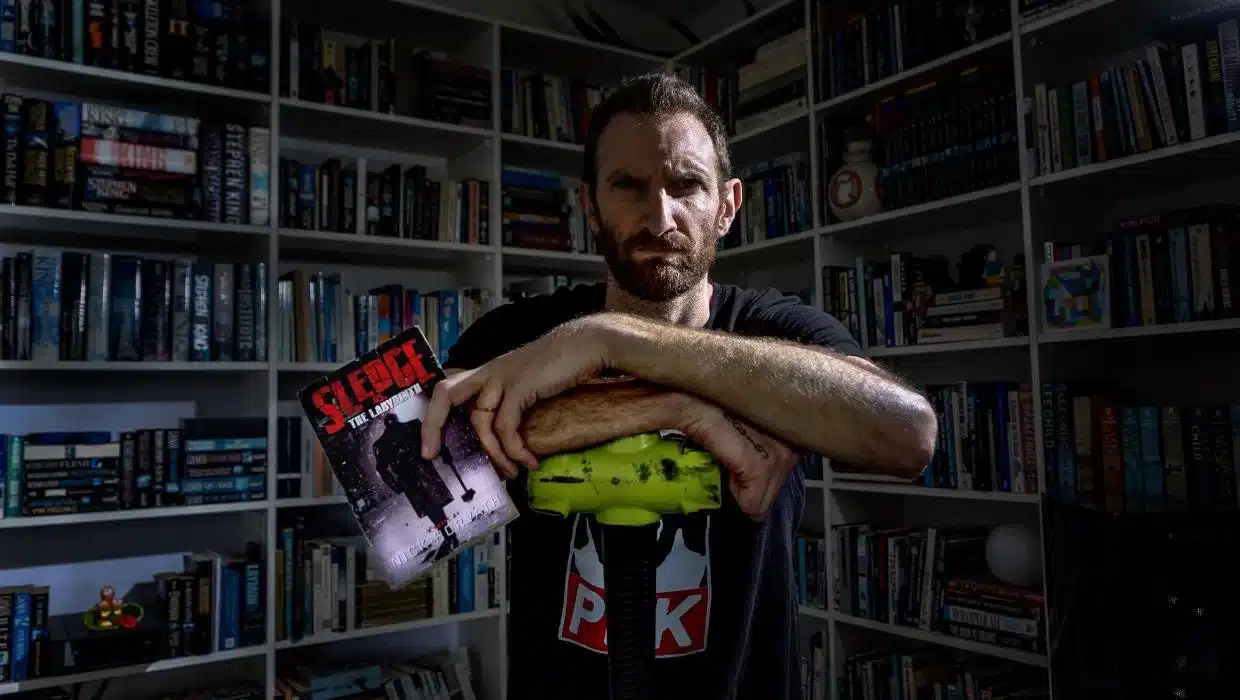
In addition to teaching and coaching, Horvath pursued a new creative path as the author of the Sledge vs. book series, blending his passion for storytelling with gritty, action-packed adventure.
Whilst we try to source as much information as we can for every player who has ever played in the NBL some information on a player profile may be missing. If you have additional information on a player you'd like us to add to a profile, please send it to us using the enquiry form below.
Submissions are then sent to info@aussiehoopla.com

