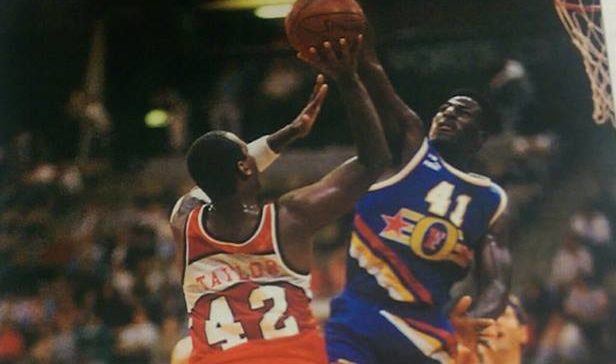
Andre Moore (Brisbane Bullets Legend) talks Ben Simmons Boomers Saga, Scottie Pippens New Book, Josh Giddey and 90s era NBL
July 2, 2021



BIO: Andre Moore was born in Chicago, Illinois (USA) and played for Carver High School in Chicago. He represented the school at the 1982 Tribune-McDonald’s Prep Cage Classic, where his City All-Star team lost to a Suburban All-Star team led by Kevin Duckworth. Moore led the city team with 17 points.
Later that year, he was named to the Illinois All-Star team, which defeated Indiana’s All-Stars in a game held in Gary, Indiana.
Andre Moore made his NBL debut with the Brisbane Bullets at 25 years of age. He scored 23 points in his first game.
After finishing eighth with an 11–13 record in 1989 and missing the playoffs for the first time under coach Brian Kerle, Brisbane entered 1990 with an almost completely rebuilt roster. Only Leroy Loggins, Robert Sibley and Greg Fox returned from the previous season, while captain Larry Sengstock and Ron Radliff (both to Gold Coast) joined Rodger Smith (to Gold Coast) in leaving for the expansion Cougars. John Dorge (to Geelong), Darren Perry (to Eastside) and Dan Clausen (to Adelaide) moved on, Greg Giddings, Shane Edwards and import Winston Crite were not re-signed, and Danny Morseu retired.
Kerle added new imports Andre Moore and Derek Rucker, comeback big Chris McGraw, young Melbourne pair Paul Rees and Craig Adams, along with Duncan Johnston, Darren Breeding, Steve McLeod and Chris Clarkson. Loggins moved from the off-guard role he had occupied with mixed success in 1989 back to his preferred small forward position, while Moore and Sibley headed the rebuilt front line. The overhaul reduced Brisbane’s average age from 26.5 years to 23.1.
Moore had been playing in the CBA when Brisbane’s coaching staff spotted him while scouting another player. “Unbeknownst to me, there were two scouts from the Brisbane Bullets in the crowd. They had come to recruit a player on the opposing team. I outplayed him and we won easily. My coach came to me after the game and said that there were two guys from a place called Briz-bane that want to talk to you. It’s in Australia,” Moore said.
Moore made his NBL debut against Adelaide at the Brisbane Entertainment Centre on March 30, finishing with 23 points, 10 rebounds, 3 assists, 2 steals, and 3 blocks as the Bullets won 122–119. Rucker (48 points, 10 assists, and 4 steals) and Loggins (19 points, 5 rebounds, and 4 assists) provided the other major contributions, while Mark Davis (44 points, 10 rebounds, 4 assists, and 2 steals) led Adelaide.
Moore (26.9 points, 12.6 rebounds, 1.3 steals, and 2 blocks across 34 games) immediately became one of Brisbane’s primary interior weapons and appeared in all 34 of the Bullets’ games. Brisbane opened the season 4–0, followed its first loss with five consecutive victories and later put together another four-game winning streak in June as the rebuilt group quickly returned to contention.
One of Moore’s strongest all-around performances came against Westside on May 18, when he made 15-of-22 field goals and all five of his free throws to finish with 35 points, 21 rebounds, 2 assists, and 1 block. Loggins (29 points, 7 rebounds, 3 assists, and 4 steals) and Rucker (23 points, 7 assists, and 4 steals) provided support as Brisbane won 129–112 at the Brisbane Entertainment Centre.
His highest-scoring game of the season came against Newcastle on September 15, where Moore (40 points, 8 rebounds, 2 steals, and 1 block) made 18-of-22 field goals as Brisbane overwhelmed the Falcons 153–116. Rucker (39 points, 13 assists, and 4 steals) and Loggins (28 points, 18 rebounds, 6 assists, and 2 blocks) also produced big performances.
Rucker (33 points, 3.6 rebounds, 6.7 assists, and 2.6 steals across 33 games) won the NBL Most Valuable Player award, while Loggins (22 points, 7.7 rebounds, 4.2 assists, 2.8 steals, and 1.2 blocks across 34 games) remained one of the league’s premier two-way players and was named Best Defensive Player. Sibley (15.3 points, 7.2 rebounds, and 1.2 steals across 33 games) and Fox (8.6 points, 4.7 assists, and 1.2 steals across 34 games) provided the other major support as Brisbane finished third with an 18–8 record. Moore joined Rucker and Loggins on the All-NBL First Team, making Brisbane the first club to place three players on the First Team in the same season, while Kerle collected his second Coach of the Year award.
Brisbane opened its best-of-three elimination final series against Sydney at the State Sports Centre, where Moore (28 points, 11 rebounds, 1 assist, and 2 blocks) led the Bullets. Rucker (21 points, 5 rebounds, 6 assists, and 3 steals) and Loggins (20 points, 12 rebounds, and 2 steals) provided support, but Damian Keogh (26 points and 5 assists) led the Kings to a 98–87 victory and a 1–0 series advantage.
Back at the Brisbane Entertainment Centre for Game 2, Moore (20 points and 10 rebounds) helped Brisbane respond with a 124–96 victory. Rucker (37 points, 6 rebounds, 5 assists, and 2 steals) led the scoring and Loggins (25 points, 10 rebounds, 4 assists, and 4 steals) filled the stat sheet, while Steve Carfino (30 points and 5 assists) led Sydney as the Bullets levelled the series.
Moore (25 points, 9 rebounds, 2 assists, 5 steals, and 1 block) then helped Brisbane survive the deciding Game 3, with Rucker (46 points, 5 rebounds, and 6 assists) producing the major offensive performance and Loggins (18 points, 8 rebounds, and 5 assists) providing support. Mark Ridlen (35 points) led Sydney, but Brisbane held on 107–104 to take the series 2–1 and advance to the semifinals.
Eastside awaited in the semifinals, where Moore (36 points, 13 rebounds, 2 assists, 2 steals, and 1 block) led Brisbane in scoring during a 121–111 Game 1 victory at the Brisbane Entertainment Centre. Loggins (29 points, 10 rebounds, 8 assists, 2 steals, and 1 block) and Rucker (23 points, 4 rebounds, 7 assists, and 3 steals) provided support, while former Bullet Darren Perry (22 points and 12 assists) led the Spectres.
Game 2 moved to the Glass House, where Moore (35 points, 10 rebounds, 2 assists, 2 steals, and 2 blocks) delivered another dominant performance. Loggins (29 points, 4 rebounds, 4 assists, and 2 steals) and Sibley (23 points, 6 rebounds, 2 assists, and 2 steals) helped Brisbane withstand Bruce Bolden’s 35 points and 8 assists to win 120–119 and sweep the series 2–0, sending the Bullets into a Grand Final rematch of their 1987 series against Perth.
Perth took Game 1 of the Grand Final 112–106 at the Perth Entertainment Centre despite Moore finishing with 25 points, 14 rebounds, and 2 blocks. Rucker (27 points, 5 rebounds, and 10 assists) and Fox (20 points, 4 rebounds, 7 assists, and 2 steals) provided the other major contributions, while Ricky Grace (32 points, 7 rebounds, 8 assists, 3 steals, and 3 blocks) led the Wildcats to a 1–0 series advantage.
Brisbane responded in Game 2, with Moore (26 points, 13 rebounds, 2 assists, 2 steals, and 5 blocks) dominating at both ends alongside Rucker (27 points, 6 rebounds, and 7 assists) and Loggins (23 points, 7 rebounds, and 6 assists). James Crawford (22 points and 14 rebounds) led Perth, but the Bullets won 106–90 to level the series in front of 13,221 fans at the Brisbane Entertainment Centre, a then-record Australian indoor sporting attendance and NBL crowd.
The deciding Game 3 drew another 13,159 fans to the Brisbane Entertainment Centre, but Moore (18 points, 9 rebounds, 2 assists, 1 steal, and 2 blocks), Rucker (21 points, 7 rebounds, 5 assists, and 2 steals) and Loggins (17 points, 4 rebounds, and 3 steals) were unable to repeat their Game 2 success. Grace (25 points and 7 assists) led Perth to a 109–86 victory, giving the Wildcats their first NBL championship with a 2–1 series win, while Grace was named Grand Final MVP.
1991
After falling to Perth in the 1990 Grand Final, Brisbane entered 1991 without Duncan Johnston, Craig Adams (to South Melbourne) and Darren Breeding, while captain Leroy Loggins, Derek Rucker, Andre Moore, Robert Sibley, Paul Rees and Greg Fox returned under head coach Brian Kerle. Veteran guards Gordie McLeod (via Hobart) and Brendan Joyce (via Westside Melbourne) were added alongside Cameron Dickinson, Lyndon Brieffies and development player Jason Cameron.
Brisbane opened the season at the Brisbane Entertainment Centre on April 6, where Moore (29 points, 6 rebounds, 2 assists, 3 steals, and 5 blocks) made 13-of-18 shots as the Bullets defeated North Melbourne 126-119. Rucker (36 points, 6 rebounds, and 5 assists) and Loggins (23 points, 11 rebounds, and 7 assists) provided the other major contributions, while Scott Fisher (35 points and 11 rebounds) led the Giants.
Moore (23.5 points, 12.2 rebounds, 1.6 steals, and 1.9 blocks across 26 games) appeared in all 26 games, leading Brisbane in rebounding and blocked shots while remaining one of the Bullets’ three primary scoring options.
His best game and highest-scoring performance came against South East Melbourne on May 4, when Moore produced a career-high 44 points, 17 rebounds, 8 assists, 2 steals, and 1 block while making 21-of-32 field goals. Rucker (28 points, 3 assists, and 2 steals) and Loggins (27 points, 9 rebounds, and 6 assists) provided support as Brisbane defeated the Magic 134-117 at the Melbourne Sports and Entertainment Centre, while Bruce Bolden (24 points and 7 rebounds) led South East Melbourne. The win completed back-to-back victories in Melbourne and improved the Bullets to 4-2.
With Brisbane still fighting for a postseason position late in the year, Moore (30 points, 12 rebounds, 5 steals, and 3 blocks) produced another dominant two-way performance against Newcastle on September 7. Sibley (24 points and 14 rebounds) and Rucker (20 points, 4 rebounds, and 6 assists) helped Brisbane escape with a 110-109 victory, while Troy Truvillion (34 points) led the Falcons. A three-game losing streak followed and ended Brisbane’s playoff hopes.
Rucker (26.6 points, 3 rebounds, 5.8 assists, and 2.3 steals across 25 games) led Brisbane in scoring, while Loggins (25.5 points, 8.2 rebounds, 3 assists, 2.5 steals, and 1.4 blocks across 26 games) remained one of the league’s premier two-way players, led the NBL in free-throw percentage at 91.1 percent, earned All-NBL Second Team honours and won Brisbane’s club MVP award. Sibley (14.1 points and 6.6 rebounds across 25 games), Rees (7.2 points and 3.9 rebounds across 25 games), Dickinson (5.5 points across 26 games) and Fox (5.5 points across 20 games) provided the remainder of the Bullets’ main rotation.
Brisbane completed the season at the AIS Arena on September 21, where Moore (22 points, 6 rebounds, 1 assist, 3 steals, and 2 blocks) made 9-of-11 shots as the Bullets defeated Canberra 131-118. Loggins (24 points, 8 rebounds, and 2 steals) and Rucker (21 points, 3 rebounds, and 5 assists) provided the main support, while Jamie Kennedy (36 points) led the Cannons. The victory left Brisbane tenth with a 13-13 record and out of the playoffs one season after reaching the Grand Final.
1992
After losing Derek Rucker, Robert Sibley (to Melbourne), Gordie McLeod, Brendan Joyce (to South East Melbourne) and Cameron Dickinson, Brisbane retained captain Leroy Loggins, Andre Moore, Paul Rees and Greg Fox. With Rucker gone, head coach Brian Kerle added Adrian Branch, Shane Heal (via Geelong), Simon Kerle, Blair Smith, Luke Gribble and Matthew Moore.
Brisbane opened the season at the Brisbane Entertainment Centre on 4 April with a 138-116 win over Hobart, where Moore (22 points, 12 rebounds, and 5 assists) controlled the interior alongside Loggins (33 points, 14 rebounds, 3 assists, and 5 steals) and Heal (19 points, 6 rebounds, and 18 assists), while Ken McFadden (37 points, 5 rebounds, 2 assists, and 2 steals) led the Devils.
Moore (20.3 points, 12.5 rebounds, and 1.6 blocks across 26 games) led Brisbane in rebounding and blocks while producing his third consecutive season with the Bullets averaging more than 20 points and 12 rebounds.
His best game came against Canberra on 18 July, when Moore (24 points, 16 rebounds, 5 assists, and 6 blocks) combined with Loggins (39 points, 13 rebounds, 2 assists, 2 steals, and 2 blocks) and Heal (17 points and 10 assists) to lead Brisbane to a 97-95 win, while Steve Hood (31 points, 7 rebounds, 3 assists, and 2 blocks) was best for the Cannons.
Moore set his season-high at Geelong on 15 August, scoring 29 points as Heal (32 points, 5 rebounds, 4 assists, and 3 steals) and Branch (31 points, 12 rebounds, 2 assists, and 2 steals) helped Brisbane defeat the Supercats 128-113.
Branch (28.4 points, 10.8 rebounds, and 1.6 steals across 25 games) became Brisbane’s leading scorer, while Loggins (23.3 points, 7.3 rebounds, 3.6 assists, and 2.9 steals across 23 games) remained one of the league’s premier two-way players and earned All-NBL Second Team honours. Heal (20.9 points, 7.1 assists, and 1.5 steals across 25 games) directed the offence, while Simon Kerle (11.2 points, 3 rebounds, and 5 assists across 24 games) provided another playmaker in the backcourt. Brisbane opened the season with two wins and reached 6-4 through its first ten games before suffering three consecutive losses in June, eventually finishing seventh with a 12-12 record after going 6-6 both at home and on the road.
The quarterfinal series opened at the Sydney Entertainment Centre, where Moore (25 points, 15 rebounds, 3 assists, and 1 block), Loggins (29 points, 7 rebounds, 4 assists, and 3 steals) and Branch (20 points, 13 rebounds, 2 assists, 3 steals, and 2 blocks) led Brisbane, while Dwayne McClain (27 points, 6 rebounds, and 2 assists) paced Sydney to a 100-91 win.
Game two moved to the Brisbane Entertainment Centre, where Moore (18 points, 2 rebounds, 6 assists, and 2 blocks), Branch (36 points, 10 rebounds, 8 assists, and 1 steal) and Simon Kerle (28 points and 5 assists) led the Bullets, while McClain (32 points, 4 rebounds, and 5 assists) and Damian Keogh (29 points, 5 rebounds, 10 assists, and 5 steals) carried Sydney to a 130-123 win, completing the 2-0 sweep and ending Brisbane’s season.
1993
In 1993, Brisbane replaced long-time coach Brian Kerle with Bruce Palmer, who had previously led the North Melbourne Giants to the 1989 championship. Under Palmer’s tutelage, the Bullets finished the season winning 50% of their games (same as the previous year under Kerle) and made it to the semi finals before being eliminated in two straight games by Dwayne McClain, and the Sydney Kings.
Moore averaged 21.2 points, 11.8 rebounds, and 1.9 assists alongside Leroy Loggins (23.2 points, 6.7 rebounds, and 3.1 assists) who led the team in scoring.
1994
Moore (17.1 points, 9 rebounds, and 1.8 assists) helped guide the Bullets to a fourth-place finish in the regular season with a 18-8 record.
After upsetting Adelaide in the quarterfinals opener in overtime, they would lose back-to-back games, ending their season early. NBL coaches recognised the efforts of the 36-year-old Loggins (25.7 points and 7.1 rebounds, and 3.6 assists), with him being named to his ninth and final All-NBL First team.
HOBART DEVILS
1995
By 1995 Hobart was struggling financially, and coach Bill Tomlinson would continually struggle to maintain a roster with his younger talent being snapped up by richer team’s while his veteran players were retiring. Anthony Stewart (Perth) and imports Lamont Middleton and Calvin Talford (both Europe) were not retained from the previous season as all three received more lucrative offers elsewhere. Wayne McDaniel retired, as did Keith Nelson, after a severe knee injury. Veteran point guard Darren Perry, who himself was still recovering from a ACL injury, was the only player from the team’s fully contracted roster to return in 1995.
Tomlinson would add Jerome Scott and veteran big man Andre Moore from Brisbane as the team’s import players.
The team would be led by Scott (23.7 points, 4.8 rebounds, and 4.4 assists) and Moore (17.8 points and 10.6 rebounds) while Moore added 17.8 points, 10.6 rebounds, and 2.2 assists over the course of a difficult season where the team managed only four wins for the entire year. The only bright spots that season was the emergence of rookies Darren Smith (12.0 points, 4.9 rebounds, 3.2 assists, and 1.3 steals), and David Stiff (15.3 points, 7.5 rebounds, 3.2 assists, 1.1 steals and 1.7 blocks), who would win the league’s Rookie of the Year award at season’s end.
CAIRNS TAIPANS
1999/00
In 1999, Moore became a Australian citizen and after spending a number of seasons in the state leagues, he was able to recieve a second chance in the NBL at 35 years of age as a local player. Moore averaged 7.9 points, 5.4 rebounds, and 0.5 assists as the Taipans finished a record of 2-26.
2000/01
In 2000/01, Moore averaged 5.4 points, 4.6 rebounds, and 0.4 assists, adding veteran leadership from the bench and helping the team finish in ninth place (6-22).
Andre Moore played eight seasons across three NBL teams. This included the Brisbane Bullets, Hobart Devils and Cairns Taipans. He averaged 17.8 points, 9.9 rebounds, and 1.5 assists in 226 NBL games.
CAREER RANKINGS:
– 44th in total rebounds
– 26th in total blocks
| SEASON | AGE | TEAM | TEAM RECORD | GP | MINS | PTS | REB | AST | OR | DR | STL | BLK | TO | PF | FGM | FGA | FG% | 3PM | 3PA | 3P% | FTM | FTA | FT% | TS% | EFG% | HS |
|---|---|---|---|---|---|---|---|---|---|---|---|---|---|---|---|---|---|---|---|---|---|---|---|---|---|---|
| 2000-01 | 36 | Cairns | 6-22 (9) | 27 | 438 | 146 | 125 | 12 | 49 | 76 | 9 | 6 | 21 | 43 | 65 | 144 | 45% | 0 | 0 | 0% | 16 | 25 | 64% | 47% | 45% | 18 |
| 1999-00 | 35 | Cairns | 2-26 (11) | 27 | 578 | 213 | 147 | 14 | 49 | 98 | 11 | 15 | 33 | 36 | 94 | 219 | 43% | 1 | 4 | 25% | 24 | 38 | 63% | 45% | 43% | 21 |
| 1995 | 31 | Hobart | 4-22 (14) | 26 | 1,082 | 462 | 276 | 57 | 103 | 173 | 18 | 22 | 71 | 65 | 202 | 407 | 50% | 0 | 4 | 0% | 58 | 71 | 82% | 52% | 50% | 28 |
| 1994 | 30 | Brisbane | 18-8 (4) | 29 | 944 | 496 | 262 | 51 | 96 | 166 | 18 | 29 | 77 | 68 | 205 | 398 | 52% | 2 | 4 | 50% | 84 | 111 | 76% | 55% | 52% | 30 |
| 1993 | 29 | Brisbane | 16-10 (4) | 31 | 1,189 | 658 | 366 | 59 | 149 | 217 | 36 | 60 | 71 | 95 | 284 | 530 | 54% | 0 | 2 | 0% | 90 | 130 | 69% | 56% | 54% | 35 |
| 1992 | 28 | Brisbane | 12-12 (7) | 26 | 966 | 527 | 325 | 46 | 112 | 213 | 17 | 42 | 77 | 97 | 212 | 396 | 54% | 1 | 4 | 25% | 102 | 138 | 74% | 57% | 54% | 29 |
| 1991 | 27 | Brisbane | 13-13 (10) | 26 | 1,090 | 612 | 317 | 48 | 134 | 183 | 42 | 50 | 63 | 86 | 259 | 486 | 53% | 1 | 6 | 17% | 93 | 121 | 77% | 56% | 53% | 44 |
| 1990 | 26 | Brisbane | 17-9 (3) | 34 | 1,517 | 916 | 430 | 55 | 164 | 266 | 44 | 68 | 96 | 92 | 392 | 642 | 61% | 0 | 4 | 0% | 132 | 166 | 80% | 64% | 61% | 40 | Totals | 226 | 7804 | 4030 | 2248 | 342 | 856 | 1392 | 195 | 292 | 509 | 582 | 1713 | 3222 | 53.2% | 5 | 28 | 17.9% | 599 | 800 | 74.9% | 56% | 53% | 44 |
| SEASON | AGE | TEAM | TEAM RECORD | GP | MINS | PTS | REB | AST | OR | DR | STL | BLK | TO | PF | FGM | FGA | FG% | 3PM | 3PA | 3P% | FTM | FTA | FT% | TS% | EFG% | HS |
|---|---|---|---|---|---|---|---|---|---|---|---|---|---|---|---|---|---|---|---|---|---|---|---|---|---|---|
| 2000-01 | 36 | Cairns | 6-22 (9) | 27 | 16.2 | 5.4 | 4.6 | 0.4 | 1.8 | 2.8 | 0.3 | 0.2 | 0.8 | 1.6 | 2.4 | 5.3 | 45% | 0.0 | 0.0 | 0% | 0.6 | 0.9 | 64% | 47% | 45% | 18 |
| 1999-00 | 35 | Cairns | 2-26 (11) | 27 | 21.4 | 7.9 | 5.4 | 0.5 | 1.8 | 3.6 | 0.4 | 0.6 | 1.2 | 1.3 | 3.5 | 8.1 | 43% | 0.0 | 0.1 | 25% | 0.9 | 1.4 | 63% | 45% | 43% | 21 |
| 1995 | 31 | Hobart | 4-22 (14) | 26 | 41.6 | 17.8 | 10.6 | 2.2 | 4.0 | 6.7 | 0.7 | 0.8 | 2.7 | 2.5 | 7.8 | 15.7 | 50% | 0.0 | 0.2 | 0% | 2.2 | 2.7 | 82% | 52% | 50% | 28 |
| 1994 | 30 | Brisbane | 18-8 (4) | 29 | 32.6 | 17.1 | 9.0 | 1.8 | 3.3 | 5.7 | 0.6 | 1.0 | 2.7 | 2.3 | 7.1 | 13.7 | 52% | 0.1 | 0.1 | 50% | 2.9 | 3.8 | 76% | 55% | 52% | 30 |
| 1993 | 29 | Brisbane | 16-10 (4) | 31 | 38.4 | 21.2 | 11.8 | 1.9 | 4.8 | 7.0 | 1.2 | 1.9 | 2.3 | 3.1 | 9.2 | 17.1 | 54% | 0.0 | 0.1 | 0% | 2.9 | 4.2 | 69% | 56% | 54% | 35 |
| 1992 | 28 | Brisbane | 12-12 (7) | 26 | 37.2 | 20.3 | 12.5 | 1.8 | 4.3 | 8.2 | 0.7 | 1.6 | 3.0 | 3.7 | 8.2 | 15.2 | 54% | 0.0 | 0.2 | 25% | 3.9 | 5.3 | 74% | 57% | 54% | 29 |
| 1991 | 27 | Brisbane | 13-13 (10) | 26 | 41.9 | 23.5 | 12.2 | 1.8 | 5.2 | 7.0 | 1.6 | 1.9 | 2.4 | 3.3 | 10.0 | 18.7 | 53% | 0.0 | 0.2 | 17% | 3.6 | 4.7 | 77% | 56% | 53% | 44 |
| 1990 | 26 | Brisbane | 17-9 (3) | 34 | 44.6 | 26.9 | 12.6 | 1.6 | 4.8 | 7.8 | 1.3 | 2.0 | 2.8 | 2.7 | 11.5 | 18.9 | 61% | 0.0 | 0.1 | 0% | 3.9 | 4.9 | 80% | 64% | 61% | 40 | Total | 226 | 34.5 | 17.8 | 9.9 | 1.5 | 3.8 | 6.2 | 0.9 | 1.3 | 2.3 | 2.6 | 7.6 | 14.3 | 53.2% | 0.0 | 0.0 | 17.9% | 0.0 | 0.1 | 74.9% | 56% | 53% | 44 |
| POINTS | REBOUNDS | ASSISTS | STEALS | BLOCKS | TURNOVERS | TRIPLE DOUBLES | 44 | 24 | 8 | 7 | 6 | 7 | 0 |
|---|
Andre Moore was drafted by the Denver Nuggets with pick #31 in the 1987 NBA Draft.
Moore played 10 games in the NBA. He averaged 2.4 points, 1.4 rebounds, and 0.6 assists per game over his NBA career.
NBA TRANSACTIONS:
- June 22, 1987: Drafted by the Denver Nuggets in the 2nd round (31st pick) of the 1987 NBA Draft.
-
December 3, 1987: Waived by the Denver Nuggets.
-
December 11, 1987: Signed as a free agent with the Milwaukee Bucks.
-
December 28, 1987: Waived by the Milwaukee Bucks.
| Season | Team | PTS | AST | STL | BLK | FGM | FGA | FG% | 3PM | 3PA | 3P% |
|---|---|---|---|---|---|---|---|---|---|---|---|
| 1 | 0 | 89% | 68% | 77% | 96% | ||||||
| 2 | 1 | 44 | 8 | 7 | 6 | ||||||
| Total | 1713 | 3222 | 53.2% | 5 | 28 | 17.9% |
| YEAR | AGE | TEAM | POS | GP | GS | MINS | PTS | TRB | AST | ORB | DRB | STL | BLK | TOV | PF | FG | FGA | FG% | 3P | 3PA | 3P% | FT | FTA | FT% | TS% | EFG% |
|---|---|---|---|---|---|---|---|---|---|---|---|---|---|---|---|---|---|---|---|---|---|---|---|---|---|---|
| 1987-88 | 23 | Denver | PF | 7 | 0 | 34 | 20 | 12 | 5 | 5 | 7 | 2 | 1 | 3 | 4 | 7 | 24 | 0 | 0 | 6 | 6 | 38% | 29% | |||
| 1987-88 | 23 | Milwaukee | SF | 3 | 0 | 16 | 4 | 2 | 1 | 1 | 1 | 0 | 0 | 1 | 2 | 2 | 3 | 0 | 0 | 0 | 2 | 52% | 67% | Total | 10 | 0 | 50 | 24 | 14 | 6 | 6 | 8 | 2 | 1 | 4 | 6 | 9 | 27 | 33% | 0 | 0 | 6 | 8 | 75% |
| YEAR | AGE | TEAM | POS | GP | GS | MINS | PTS | TRB | AST | ORB | DRB | STL | BLK | TOV | PF | FG | FGA | FG% | 3P | 3PA | 3P% | FT | FTA | FT% | TS% | EFG% |
|---|---|---|---|---|---|---|---|---|---|---|---|---|---|---|---|---|---|---|---|---|---|---|---|---|---|---|
| 1987-88 | 23 | Denver | PF | 7 | 0 | 4.9 | 2.9 | 1.7 | 0.7 | 0.7 | 1.0 | 0.3 | 0.1 | 0.4 | 0.6 | 1.0 | 3.4 | 29% | 0.0 | 0.0 | 0.9 | 0.9 | 38% | 29% | ||
| 1987-88 | 23 | Milwaukee | SF | 3 | 0 | 5.3 | 1.3 | 0.7 | 0.3 | 0.3 | 0.3 | 0.0 | 0.0 | 0.3 | 0.7 | 0.7 | 1.0 | 67% | 0.0 | 0.0 | 0.0 | 0.7 | 52% | 67% | Total | 10 | 0 | 5.0 | 2.4 | 1.4 | 0.6 | 0.6 | 0.8 | 0.2 | 0.1 | 0.4 | 0.6 | 0.9 | 2.7 | 33% | 0.6 | 0.8 | 75% |
Andre Moore joined Tours Metropole Basket for the 1988–89 French Nationale 1A season, marking his first documented professional stint outside the United States and Australia in France.
In the 1988–89 Nationale 1A season, Moore was listed on Tours’ roster and was credited with 9.7 points per game in available season statistical listings for that competition, but publicly accessible records do not consistently provide complete game totals, rebounding figures, or confirmed teammate and opponent box-score detail for that stint.
Moore is also referenced in public biographies as having played professionally in Spain, but the specific Spanish team, season dates, and statistical record could not be verified from accessible primary listings for this summary, so those details are left unspecified here.
Andre Moore enrolled at the University of Illinois–Chicago in 1982–83 but did not play for the Flames due to ineligibility, then transferred to Loyola University Chicago and had to sit out the 1983–84 season under transfer rules before beginning his on-court Loyola career in 1984–85.
Moore played three seasons for Loyola from 1984–85 to 1986–87, appearing in 85 games (83 starts) and averaging 16.5 points, 10.9 rebounds, and 2.1 blocks per game while shooting 51.9 percent from the field, with career totals that included 1,400 points, 928 rebounds, and 176 blocks.
As a first-year Loyola contributor in 1984–85, Moore started 29 games and averaged 11.0 points, 10.3 rebounds, and 2.3 blocks, finishing that season with 300 rebounds and 66 blocks, as Loyola went 27–6, won the Midwestern City Conference regular-season title and conference tournament, and finished ranked No. 14 in the final AP poll.
Loyola’s 1985 NCAA tournament run reached the Sweet 16 before a 65–53 loss to Georgetown, with Moore scoring 19 points in the game while logging 39 minutes and going 8-of-13 from the field.
Moore’s junior season in 1985–86 saw his production jump to 17.9 points and 9.9 rebounds per game across 27 games, and his senior season in 1986–87 became his peak year at 20.6 points, 12.4 rebounds, and 2.3 blocks per game, with Loyola records crediting him with 360 rebounds that season.
Across his Loyola career, Moore collected major conference recognition, including Second-team All-MCC in 1985, First-team All-MCC in 1986 and 1987, and Midwestern Collegiate Conference Player of the Year in 1987, with conference listings also naming him the 1986–87 Player of the Year.
“Everybody thought Ewing would dominate me, but I did such a good job at both ends of the court that the New York Knicks showed great interest in picking me up as a freshman.” said Moore while recounting his college career in 2023.
"The Chicago Tribune was dominated by the Bulls and the arrival of Jordan but in the Spring of ’85, we were Chicago’s story. a underdog college that made a run to the sweet sixteen and led Georgetown at half-time”.
- 1x All-NBL First Team
- 1x All-NBL Third Team
Whilst we try to source as much information as we can for every player who has ever played in the NBL some information on a player profile may be missing. If you have additional information on a player you'd like us to add to a profile, please send it to us using the enquiry form below.
Submissions are then sent to info@aussiehoopla.com

