Beyond the Arc: The Greatest Shooters in NBL History
June 22, 2026



NICKNAME/S: JR
BIO: John Peter Rillie was born in Toowoomba (QLD) and began playing basketball as a junior with the Toowoomba Mountaineers basketball program. Following the completion of his collegiate career, Rillie spent 16 years playing professional basketball internationally. From 1995-2009 he enjoyed stints with the Brisbane Bullets (1995), Adelaide 36ers (1996-98), West Sydney Razorbacks (1998-02 and 2003/04) and Townsville Crocodiles (2004-09), and spent 2009/10 with the New Zealand Breakers. Rillie also played one season (2002) with AEK Athens of the Euroleague.
FAMILY: John’s son Jaron Rillie also played 14 games in the NBL.
John Rillie made his NBL debut with the Brisbane Bullets at 23 years of age. He scored 10 points in his first game.
Rillie joined a Bullets team on the rebound in 1995, having list to Adelaide in the Quarterfinals the previous season. The early exit saw Brisbane revamp their frontcourt, releasing import forwards Dave Colbert and Andre Moore as well as veteran forward Shane Froling. Head coach Bruce Palmer retained Shane Heal, Leroy Loggins, Rodger Smith, Robert Sibley and Wayne Larkins, while adding Andrew Goodwin (via Gold Coast), Mike Mitchell (via Gold Coast), Chris Munk and late signing John Rillie to the roster.
Rillie (13 points, 3.4 rebounds, 3.9 assists, and 1.1 steals) arrived as a backup guard behind Heal but quickly became a key part of Brisbane’s rotation, adding shooting and playmaking to the backcourt.
His best game came against Adelaide, where he finished with 20 points, 8 rebounds and 4 assists, shooting 6-of-16 from the field, 4-of-10 from three-point range and 4-of-4 from the free-throw line.
Heal (22.9 points and 7.4 assists), Loggins (21.7 points, 7.5 rebounds, 3.1 assists, 2.1 steals, and 1.1 blocks) and Mitchell (20.9 points, 6.8 rebounds, and 2.3 steals) carried Brisbane offensively, with Munk (10.4 points and 7.9 rebounds), Goodwin (8.6 points and 4.2 rebounds), Sibley (6.5 points and 6.3 rebounds) and Smith (5.2 points) also contributing.
Brisbane finished fifth with a 16-10 record, while Rillie’s debut season ended with him winning the NBL Rookie of the Year award.
Brisbane opened the Quarterfinals at home against North Melbourne, losing 115-105 as Pat Reidy (25 points) and Rod Johnson (20 points) led the Giants, while Rillie added 12 points, 3 rebounds, 4 assists and 2 steals for the Bullets.
Game two moved to North Melbourne, where the Giants completed the sweep, with Rillie handing out 9 assists as Brisbane’s season ended in the Quarterfinals.
ADELAIDE 36ERS
1996
After losing to Perth in the 1995 semifinals, Adelaide underwent significant roster changes with Robert Rose (to Canberra), Chris Blakemore (to Canberra) and Mike McKay (to Brisbane) all departing the club. Head coach Mike Dunlap responded by recruiting Leon Trimmingham (via Sydney), Martin Cattalini (via Perth), John Rillie (via Brisbane) and import guard Rick Brunson to join returning stars Brett Maher and Mark Davis.
Fresh off winning the NBL Rookie of the Year award with Brisbane, Rillie immediately became an important member of Adelaide’s guard rotation alongside Maher and Brunson. One of his best performances of the season came in a win over Brisbane where he produced 20 points, 8 rebounds and 4 assists, shooting 6-of-16 from the field, 4-of-10 from three-point range and 4-of-4 from the foul line. Another highlight came when Rillie delivered a perfect alley-oop pass to Trimmingham for a spectacular finish that became one of the season’s memorable Adelaide plays.
Trimmingham (22 points and 5.9 rebounds) emerged as Adelaide’s leading scorer, while Brunson (19 points and 7 assists) provided an outstanding all-round contribution in his lone season with the club. Maher (16 points and 4 rebounds) continued his rise and earned selection for the Australian Boomers squad at the Atlanta Olympic Games, while Davis (13 points and 8 rebounds) remained a key frontcourt contributor. Rillie (13.7 points, 3.5 rebounds, and 3 assists) rounded out one of the NBL’s deepest line-ups as Adelaide finished sixth with a 16-10 record.
Adelaide opened the Quarterfinals against arch-rivals Perth Wildcats and gained revenge for their 1995 playoff defeat by eliminating the Wildcats to advance to the semifinals.
The 36ers then faced eventual champions South East Melbourne Magic in the semifinals. Adelaide dropped the opening game before the Magic completed a two-game sweep to end the 36ers’ championship challenge.
The season also proved to be Mike Dunlap’s last in charge of the club. Following the sudden passing of his father after the season, Dunlap returned to the United States and chose to remain closer to his family. His departure came amid disagreement with the Adelaide board after he proposed moving on from veteran Mark Davis and focusing on younger players. The board instead retained Davis, who would go on to play another four seasons, bringing Dunlap’s Adelaide tenure to an end.
John Rillie finds Leon Trimmingham for the Stuff!!! Anyone remember how this game ended?? I will post the video of the ending later. @johnrillie @Adelaide36ers pic.twitter.com/VYifbyhOxf— RANDOM HOOPS (@HoopsRandom) March 13, 2023
1997
After being eliminated by South East Melbourne in the 1996 semifinals, Adelaide farewelled import guard Rick Brunson who returned to the United States. Following Mike Dunlap’s departure, the 36ers promoted assistant coach Dave Claxton to the head coaching role. Adelaide retained the core of Brett Maher, Mark Davis, Leon Trimmingham, Martin Cattalini and John Rillie, while adding Rupert Sapwell (via Geelong) and import centre Jeff Brown. The club also ushered in a new era when Maher replaced Davis as team captain, a role he would hold until his retirement in 2009.
Rillie continued to establish himself as one of Adelaide’s most important perimeter players, averaging 13.4 points, 4.6 rebounds and 4.7 assists. His second season with the 36ers saw him take on a larger playmaking role while providing consistent scoring support alongside Maher and Trimmingham.
The 36ers expected Brown to provide frontcourt support for Trimmingham and Davis, however six games into the season it became clear he was not the answer. Adelaide released Brown (7.7 points and 3.8 rebounds) and replaced him with former 36ers big man Willie Simmons (5.6 points and 4.0 rebounds), who returned to the NBL at age 35 after last playing in the league during 1994.
Trimmingham (19.4 points and 8.3 rebounds) again led Adelaide offensively, while Maher (15.4 points, 4.6 rebounds and 3.9 assists) and Rillie (13.4 points, 4.6 rebounds and 4.7 assists) formed a productive backcourt. Davis (9.4 points and 6.0 rebounds), Cattalini (8.9 points and 5.1 rebounds) and Simmons also contributed, but Adelaide struggled to find consistency throughout the season.
The 36ers finished seventh with a 14-16 record and missed the playoffs for the first time since 1992, bringing an end to an underwhelming campaign despite the continued development of Rillie and Maher.
1998
After missing the playoffs in 1997, Adelaide replaced Dave Claxton with rookie head coach Phil Smyth, who arrived with no previous head coaching experience. The 36ers retained captain Brett Maher, John Rillie, Martin Cattalini, Mark Davis and Leon Trimmingham, while adding Paul Rees (via North Melbourne), Darnell Mee (via France/Canberra) and Kevin Brooks. During the off-season Maher came close to signing with the Sydney Kings before ultimately re-committing to Adelaide.
Rillie (9.8 points, 4.3 rebounds, and 2.7 assists) accepted a reduced offensive role as Adelaide’s roster became one of the deepest in the league. Brooks quickly emerged as Adelaide’s leading scorer and silenced any doubts about his unusual shooting style, while Mee and Maher provided additional scoring and leadership.
Brooks (19.1 points, 6.7 rebounds and 1.3 assists) led the team in scoring, with Maher (17.8 points, 4.8 rebounds and 3.7 assists) and Mee (14.8 points, 6.5 rebounds and 4 assists) providing outstanding support. Cattalini (11.3 points and 5.5 rebounds), Davis (8.5 points and 5.6 rebounds), Rees (8.2 points and 5.8 rebounds) and Rillie (9.8 points, 4.3 rebounds and 2.7 assists) all played important roles as Adelaide surged to second place with a 19-11 record, the club’s highest win total since 1988.
Adelaide opened the semifinals against Perth and immediately seized control of the series. Maher exploded for a career-high 36 points and six assists while shooting 7-of-11 from three-point range, while Mee added 16 points and a game-high 14 rebounds as the 36ers claimed game one.
The 36ers completed the sweep in Perth with a 117-110 victory to advance to the Grand Final series against the defending champion South East Melbourne Magic.
Game one of the Grand Final saw Adelaide stun the defending champions on their home floor, winning 100-93 behind Brooks (24 points and 8 rebounds). The victory was only Adelaide’s second win over the Magic since the formation of South East Melbourne in 1992.
Game two moved to Adelaide where the 36ers dominated from the outset, crushing the Magic 90-62 to complete the sweep and secure the championship. Brooks (21 points, 6 rebounds, 2 assists and 2 blocks) again starred, while Cattalini (20 points and 6 rebounds) provided strong support as Adelaide forced 26 Magic turnovers and controlled the game from start to finish.
The 36ers captured their first NBL championship since 1986, with Brooks named Grand Final MVP as Phil Smyth completed one of the greatest debut coaching seasons in league history.
WEST SYDNEY RAZORBACKS
1998/99
The 1998/99 season marked the debut of the West Sydney Razorbacks, a newly established franchise led by General Manager Robbie Cadee and head coach Gordie McLeod. The team assembled a competitive roster featuring former league MVP Derek Rucker (via Townsville), veteran forward Bruce Bolden (via Sydney), elite shot-blocker Simon Dwight (via Canberra), and sharpshooter John Rillie, who joined after winning a championship with Adelaide.
West Sydney wasted no time making an impression in their inaugural game, defeating the Sydney Kings (103-97) on the road. They backed up their strong start with another victory over Canberra (104-89) before falling in a closely contested matchup against Newcastle (87-89).
The Razorbacks continued to show promise in the early rounds, securing back-to-back road wins over Adelaide (112-95) and Perth (98-95) to become the first team in NBL history to complete the “Doomsday Double.” However, consistency became an issue as the season progressed. A road loss to Wollongong (91-100) and a home defeat to Victoria (81-92) exposed the team’s struggles in closing out games.
John Rillie (17.3 points, 6.7 rebounds, and 4.0 assists) quickly established himself as one of the league’s premier perimeter threats, leading the NBL in three-point shooting at 47.5%. His ability to space the floor complemented team captain Derek Rucker (20.3 points, 4.6 rebounds, and 7.3 assists), who controlled the offense, while Simon Dwight (14.7 points, 8.0 rebounds, and 3.0 blocks) dominated defensively, finishing as the league leader in blocked shots. Bruce Bolden (15.8 points, 5.7 rebounds, and 1.6 assists) played a crucial role coming off the bench, earning the NBL Best Sixth Man award.
Despite Rillie’s efficient shooting and all-around contributions, West Sydney struggled with inconsistency in the latter half of the season. A heavy defeat to Victoria (73-101) and a tough 19-point loss to Melbourne (90-109) made it increasingly difficult to stay in the playoff race. However, one of the highlights of the campaign came in a home victory over Sydney (78-72), where the Razorbacks’ defense limited their rivals to just 72 points.
West Sydney finished their inaugural season in eighth place on the NBL ladder (12-14), with road struggles proving to be a decisive factor in missing the playoffs.
1999/00
The 1998/99 season marked the debut of the West Sydney Razorbacks, a new franchise led by general manager Robbie Cadee and head coach Gordie McLeod. The club assembled an experienced roster featuring Derek Rucker (via Townsville), Bruce Bolden (via Sydney), Simon Dwight (via Canberra), Ernest Nzigamasabo and John Rillie, who arrived after winning the 1998 NBL championship with Adelaide.
West Sydney made an immediate impact in its inaugural season, opening with a 103-97 road win over the Sydney Kings before defeating Canberra 104-89. The Razorbacks then became the first team in NBL history to complete the “Doomsday Double”, winning in Adelaide 112-95 and Perth 98-95 on the same road trip.
Rillie emerged as one of the league’s premier perimeter players, averaging 17.3 points, 6.7 rebounds and 4.0 assists while leading the NBL in three-point shooting at 47.5%. His outside shooting perfectly complemented captain Derek Rucker (20.3 points, 4.6 rebounds and 7.3 assists), while Simon Dwight (14.7 points, 8.0 rebounds and 3.0 blocks) anchored the defence and led the league in blocked shots. Bruce Bolden (15.8 points, 5.7 rebounds and 1.6 assists) provided major impact off the bench and was rewarded with the NBL Best Sixth Man award.
One of the highlights of the season came in a 78-72 victory over the Sydney Kings, where the Razorbacks’ defence held their rivals to just 72 points. Rillie’s shooting and all-round play were central to West Sydney’s success throughout the campaign as the expansion club proved competitive from its first season.
Despite several impressive wins, inconsistency plagued the Razorbacks throughout the second half of the season. West Sydney finished eighth with a 12-14 record, narrowly missing the playoffs in its inaugural campaign.
2000/01
After securing their first-ever playoff appearance the previous season, the Razorbacks entered the 2000/01 campaign with high expectations. The team moved from Liverpool’s Whitlam Centre to the larger State Sports Centre in Homebush Bay, signaling their intent to establish themselves as a long-term force in the NBL. Head coach Gordie McLeod retained the core group, led by captain Derek Rucker, with key contributors John Rillie, Simon Dwight, Cheikh Ya Ya Dia, and Bruce Bolden returning. Scott McGregor (via Sydney) was the team’s major offseason addition, while the naturalisation of Bolden allowed the club to sign an additional import in Jason Singleton.
West Sydney opened the season in dominant fashion, defeating Wollongong 115-97, with Rillie playing a key role in their efficient offensive display. However, the early momentum was quickly derailed as the Razorbacks dropped three consecutive games, falling to Victoria (93-110), Adelaide (94-114), and Townsville (96-112). A hard-fought road win over Cairns (103-99) temporarily steadied the ship, but inconsistency plagued the team for much of the season.
John Rillie (19.5 points, 8.1 rebounds, and 3.4 assists) remained one of the NBL’s most complete offensive players, providing outside shooting, rebounding, and playmaking. His ability to stretch the floor complemented the inside presence of Simon Dwight (16.3 points, 8.4 rebounds, and 3.1 blocks), who continued to anchor the defense while leading the league in blocked shots for the third straight year. Rucker (19.2 points, 4.2 rebounds, and 6.6 assists) controlled the tempo, while Ya Ya Dia (15.9 points, 9.0 rebounds, and 1.9 blocks) brought physicality to the frontcourt, and Bolden (12.3 points, 4.9 rebounds, and 1.1 assists) provided veteran experience.
The team’s struggles became evident in round four when they fell to Sydney (101-113), unable to match their crosstown rivals in key moments. Consecutive losses to Victoria (101-112) and Perth (91-92) saw the Razorbacks slip further down the standings. A strong 114-92 victory over Brisbane in round 10 gave the team a boost, while a commanding 121-93 win over Melbourne in round 15 showcased the potential of their offensive firepower.
Midseason changes disrupted the roster, as Jason Singleton (12.5 points, 2.7 rebounds, and 2.5 assists) was released after 12 games. In February, former NBA player James Cotton was signed as a late-season addition, but he made little impact, playing just three games and averaging 4.3 points, 1.0 rebound, and 0.7 assists before also being released.
Despite Rillie’s consistent production, the Razorbacks were unable to generate sustained success, dropping key games late in the season, including losses to Perth (75-110), Melbourne (101-125), and Sydney (101-122).
West Sydney finished the season in eighth place with a 9-19 record, missing the playoffs after back-to-back postseason appearances.
2001/02
After missing the playoffs in 2000/01, West Sydney entered the 2001/02 season looking to return to the postseason under head coach Gordie McLeod. The Razorbacks retained Derek Rucker, John Rillie, Simon Dwight, Bruce Bolden, Cheikh Ya Ya Dia and Scott McGregor, while adding Sam Mackinnon (via Townsville), Phil Handy and David Hinton. Mackinnon was expected to be the major off-season addition, but a knee injury ruled him out for the entire season before he could play a game.
West Sydney opened the season with a 99-117 road loss to Sydney, before responding with wins over Wollongong (107-81), Melbourne (110-89) and Perth (119-98). Rillie (22.2 points, 7.6 rebounds, 3.7 assists, and 1.2 steals) became the Razorbacks’ leading scorer and most reliable perimeter option, while also leading the NBL in three-point shooting at 47.4%.
One of Rillie’s best early games came in West Sydney’s 130-80 win over Cairns, where he finished with 23 points, 6 rebounds and 7 assists as the Razorbacks delivered their biggest win of the season. He later added 24 points, 7 rebounds, 3 assists and 2 steals in a 106-99 win over Perth, then produced 33 points in a 124-95 road win over Sydney at the SuperDome as West Sydney avenged its opening night loss to the Kings.
Rillie also delivered 27 points and 8 rebounds in a 112-106 win over Townsville, while another key late-season game came in a 113-88 win over Adelaide where he scored 21 points as West Sydney pushed toward the postseason. Dwight (17.1 points, 9.8 rebounds, and 3.7 blocks) anchored the defence and won the NBL Best Defensive Player award, while Rucker (16.5 points, 4.0 rebounds, and 6.9 assists), Bolden (13.1 points, 6.5 rebounds, and 1.3 assists) and Handy (11.1 points, 2.9 rebounds, and 2.3 assists) rounded out the Razorbacks’ core.
West Sydney finished the regular season with a 16-14 record, tied with Wollongong and Melbourne. Due to a three-way head-to-head tiebreaker, the Razorbacks secured fifth place and returned to the playoffs, while Rillie was named to the All-NBL Second Team.
West Sydney opened the elimination finals at the State Sports Centre with a 106-85 win over Perth, with Rillie (25 points) leading the Razorbacks while Paul Rogers (18 points) and Ricky Grace (16 points) were best for the Wildcats.
Game two moved to Perth, where West Sydney completed the sweep with a 109-98 victory behind Rillie (34 points) and Dwight (23 points), while Rob Feaster (26 points) and Grace (23 points) led the Wildcats.
The semifinals opened in Melbourne, where the Tigers defeated West Sydney 114-93 behind Marcus Timmons (36 points, 5 rebounds, and 4 steals) and Mark Bradtke (21 points, 14 rebounds, 6 assists, and 2 steals), while Handy (19 points) and Rucker (15 points and 7 assists) led the Razorbacks.
Game two moved to the State Sports Centre, where West Sydney kept the series alive with a 125-109 win as Rillie added 11 rebounds and 6 assists, while Rucker (8 assists) helped direct the Razorbacks and Bradtke (16 rebounds) battled inside for Melbourne.
West Sydney completed the comeback in game three, defeating Melbourne 115-103 to become the first Sydney-based team to reach the NBL Grand Final.
The Grand Final series opened in Adelaide, where the 36ers defeated West Sydney 106-97 behind Brett Maher (25 points and 8 assists), while Dwight (34 points), Rillie (24 points and 8 assists) and Bolden (15 points) led the Razorbacks.
Game two moved to the State Sports Centre, where West Sydney kept its championship hopes alive with a 103-100 win behind Rillie (28 points), Dwight (20 points) and Rucker (16 points and 10 assists), while Maher (25 points) and Willie Farley (24 points) led Adelaide.
Game three returned to Adelaide, where the 36ers delivered a record shooting performance, hitting 19-of-31 from three-point range at 61.2 percent on their way to a 125-107 win and the championship, while West Sydney’s scoring was led by McGregor (28 points), Dwight (25 points) and Rillie (22 points).
2002/03
After helping West Sydney reach their first NBL Grand Final, John Rillie chose to play for AEK Athens in Greece. the following season To fill the void, the Razorbacks signed Willie Farley (via Adelaide) and added former Sydney Kings guard Aaron Trahair (via Sydney) to bolster the backcourt. Sam MacKinnon, who had missed the entire previous season due to injury, was also set to make his long-awaited club debut.
West Sydney opened the season with a dominant home victory over Adelaide (104-92), followed by an emphatic 122-106 win over Brisbane. However, the team soon struggled with inconsistency, suffering back-to-back defeats to Victoria (95-105) and Sydney (94-122). A heavy 91-117 loss to Canberra further highlighted their early-season challenges.
Team captain Derek Rucker (17.0 points, 3.5 rebounds, and 5.9 assists) continued to lead from the point guard position, providing stability and experience. MacKinnon (15.8 points, 9.8 rebounds, and 3.9 assists) made an immediate impact, contributing on both ends of the floor, while Farley (16.6 points, 4.0 rebounds, and 2.9 assists) quickly established himself as a key perimeter scorer. Meanwhile, Simon Dwight (15.7 points, 7.6 rebounds, and 3.5 blocks) remained the NBL’s premier shot-blocker, anchoring the team’s interior defense.
A midseason turnaround saw the Razorbacks pick up several key wins, including a convincing 111-85 victory over Brisbane. However, their momentum was short-lived as they fell to Wollongong (93-119). They responded with three straight victories, defeating Canberra (92-78), Townsville (104-87), and Cairns (116-105), with Dwight playing a crucial role in protecting the paint.
Injuries soon became a major issue for West Sydney. During a win over Townsville, Dwight suffered a knee injury, later diagnosed as deep bone bruising. His absence left a significant gap in the Razorbacks’ defensive structure. With Dwight sidelined, the team sought reinforcements, creating an opportunity for former Razorback John Rillie, who had just been cut by AEK Athens. Rillie considered his options, with Melbourne also pursuing him as a potential replacement for Andrew Gaze. Ultimately, he chose to return to West Sydney.
Upon his return, Rillie (23.6 points, 6.9 rebounds, and 3.7 assists) provided an immediate offensive boost. His elite perimeter shooting and ability to create his own shot helped reinvigorate the Razorbacks’ attack. However, the team continued to battle inconsistency. Their struggles were compounded when Rucker fractured his elbow, forcing him to miss a month of action. Without their captain and playmaker, the Razorbacks suffered crucial defeats, including a 107-111 loss to Adelaide and a 108-122 loss to Sydney.
While the team faced challenges on the court, off-court turmoil also hit the organization. Late in 2002, it was revealed that “The Oasis” development, a project tied to the Razorbacks’ ownership group, had been plagued by misappropriation of funds. Additionally, the Canterbury-Bankstown Bulldogs, who owned the team, were found guilty of systematic breaches of the NRL salary cap, resulting in a record $500,000 fine and the forfeiture of all 37 premiership points they had earned that season.
Despite the distractions, the Razorbacks delivered some strong performances in the latter part of the season, including a dominant 112-77 victory over Victoria in round 16 and a hard-fought 93-90 win over Melbourne in round 21. However, crucial losses to Perth (101-124) and Victoria (101-104) in the final stretch of the season saw them fall out of playoff contention.
West Sydney ultimately finished outside the postseason picture, failing to replicate their deep finals run from the previous year. Despite the disappointing team outcome, Rillie’s individual excellence was recognized, as he was named to the All-NBL Second Team.
2003/04
After reaching the playoffs but falling short of another Grand Final appearance in 2002/03, West Sydney took a bold new direction by not re-signing import Willie Farley, captain Derek Rucker or foundation player Bruce Bolden. Head coach Gordie McLeod instead committed to an all-Australian roster, retaining John Rillie, Sam Mackinnon, Simon Dwight, Aaron Trahair, Scott McGregor and Cheikh Ya Ya Dia. The move made the Razorbacks the first team in the modern NBL era to field a completely Australian lineup.
West Sydney opened the season with a 119-103 victory over Hunter, with Dwight (26 points, 9 rebounds, and 7 assists) and Mackinnon (24 points, 9 rebounds, and 8 assists) both producing near triple-doubles. The Razorbacks started 3-1 before suffering consecutive losses to Sydney (83-97), Wollongong (81-90) and Victoria (101-106), leaving the club with a 3-4 record and facing an early-season crossroads.
The response was emphatic. West Sydney reeled off a 10-game winning streak that included revenge victories over Sydney (97-87), Wollongong (109-105) and Victoria (107-95), establishing themselves as genuine championship contenders. Rillie became the focal point of the offence during this run and continued to develop into one of the league’s elite guards.
Rillie (20.0 points, 7.5 rebounds, and 5.1 assists) enjoyed the finest regular season of his career, leading the Razorbacks in scoring while earning All-NBL First Team honours. Mackinnon (17.3 points, 9.5 rebounds, 5.2 assists, 1.6 steals, and 1.4 blocks) was also named to the All-NBL First Team, while Dwight (15.0 points, 9.1 rebounds, 4.0 assists, and 3.7 blocks) anchored the defence. Trahair (13.6 points, 3.8 rebounds, and 2.6 assists) and McGregor (13.0 points, 6.3 rebounds, and 3.1 assists) rounded out a balanced starting group, while Russell Hinder (9.7 points and 5.9 rebounds) and rookie Steven Markovic (8.8 points, 2.2 rebounds, and 2.3 assists) provided valuable depth. Markovic’s season was recognised with the NBL Rookie of the Year award.
In February the Razorbacks suffered a setback when McGregor sustained a season-ending injury in a loss to Wollongong (99-110). Hinder moved into the starting lineup and Markovic’s role expanded, but West Sydney continued its strong form and finished third with a 22-11 record, setting club records for most wins, most home victories and most road wins in a season.
West Sydney opened the playoffs with a 110-88 elimination final victory over Cairns. Trahair (31 points and 4 assists), Mackinnon (28 points, 4 rebounds, 5 assists, 3 steals, and 2 blocks) and Dwight (11 points, 12 rebounds, 9 assists, and 6 blocks) led the Razorbacks into the semifinals.
Game one of the semifinals saw West Sydney defeat Wollongong 107-91 behind Rillie (25 points, 8 rebounds, and 6 assists), Dwight (22 points, 10 rebounds, 2 steals, and 2 blocks) and Mackinnon (12 points, 14 rebounds, and 6 assists), while Mat Campbell (20 points) led the Hawks.
The Razorbacks completed the sweep in game two, winning 110-95 as Rillie delivered the best performance of his career with 45 points, 9 rebounds and 4 steals while shooting 17-of-26 from the field to send West Sydney into the Grand Final series.
The Grand Final opened with Sydney defeating West Sydney 96-76 behind CJ Bruton (35 points, 5 rebounds, and 6 assists), while Dwight (23 points, 12 rebounds, 6 assists, and 2 blocks) led the Razorbacks.
West Sydney responded in game two with an 87-72 victory as Rillie (18 points) and Trahair (17 points) levelled the series at 1-1.
Game three went to overtime, where the Razorbacks claimed a dramatic 82-80 victory behind Rillie (18 points), Dwight (17 points, 6 rebounds, 4 assists, and 3 blocks) and Mackinnon (14 points, 17 rebounds, and 6 assists) to move within one win of the championship.
Sydney forced a deciding game five with an 82-77 victory in game four despite Rillie’s outstanding 31-point performance.
The deciding fifth game attracted 9,609 fans to the Sydney Entertainment Centre, where the Kings secured the championship with a 90-79 victory. Sydney held Rillie (12 points and 10 rebounds) below his usual scoring output, while Trahair (20 points) and Dwight (18 points) fought hard for the Razorbacks. Ebi Ere (25 points), Brett Wheeler (18 points and 11 rebounds) and league MVP Matt Nielsen (14 points and 12 rebounds) led the Kings as West Sydney’s championship run ended in game five of the Grand Final.
TOWNSVILLE CROCODILES
2004/05
After a disappointing 2003/04 season, Townsville underwent significant roster changes under head coach Ian Stacker. The Crocodiles farewelled Andrew Goodwin (retired), Peter Crawford (to Perth) and Mike Kelly (to Wollongong), while rebuilding around imports Robert Brown and Casey Calvary. The club also recruited John Rillie (via West Sydney), Derek Moore (via Adelaide) and highly-touted rookie Brad Newley (via AIS).
Rillie (18.2 points, 7.5 rebounds, 5.2 assists, and 1.2 steals) quickly became the focal point of Townsville’s offence and one of the competition’s premier guards, leading the Crocodiles in scoring, rebounding and assists. His arrival helped reshape the team’s backcourt, while Brown and Calvary gave Townsville the athletic frontcourt presence it had lacked the year before.
Townsville opened the season with a 114-111 win over Adelaide before an uneven early stretch left the Crocodiles at 2-5. The season turned with a 125-102 victory over Melbourne, where Rillie finished with 27 points, 9 rebounds and 9 assists, narrowly missing a triple-double while leading Townsville’s dominant offensive display.
He followed that with 29 points, 9 rebounds and 7 assists in a 125-104 win over Hunter, once again controlling the game with his scoring, rebounding and playmaking. His highest scoring game came in a thrilling 122-120 victory over Brisbane, where he poured in 31 points while adding 5 rebounds and 3 assists as Townsville continued its climb up the ladder.
Calvary (17.8 points, 7.9 rebounds, 1.5 assists, 1.9 steals, and 1.8 blocks), Brown (16.9 points, 6.5 rebounds, and 1.7 assists), Newley (16.0 points, 3.3 rebounds, and 1.9 assists), Rose (12.8 points, 4.8 rebounds, and 3.6 assists) and Robertson (10.9 points, 2.7 rebounds, and 3.1 assists) gave Townsville one of the league’s most balanced rotations. Moore (8.9 points, 5.3 rebounds, and 2.5 blocks), Reidy (8.6 points and 4.2 rebounds) and Adam Quick (5.6 points and 3.4 assists) also provided depth.
Newley became the first player in NBL history to win Rookie of the Year and Best Sixth Man in the same season, while Rillie earned All-NBL Second Team honours as Townsville finished third with a 19-13 record.
During the season, Townsville also hosted the 2004/05 NBL All-Star Game at the Townsville Entertainment Centre. Newley won MVP after scoring 35 points for the Aussie All-Stars, Rillie added 23 points, and Brown scored 31 points for the World All-Stars before also winning the Dunk Competition.
Townsville opened the playoffs with a 112-100 elimination final victory over Melbourne in front of 5,257 fans, with Brown (22 points and 6 rebounds), Rillie (17 points, 10 rebounds, 6 assists, and 4 steals), Robertson (17 points) and Calvary (17 points and 10 rebounds) leading the Crocodiles, while Mark Bradtke (19 points and 12 rebounds), Dave Thomas (15 points and 11 rebounds), Andrew Gaze (13 points) and Lanard Copeland (13 points) led Melbourne.
Game one of the semifinals saw Illawarra defeat Townsville 100-84, with Mat Campbell (21 points), Glen Saville (19 points and 10 rebounds) and Darnell Mee (17 points, 7 rebounds, and 12 assists) leading the Hawks, while Newley (17 points), Rillie (15 points and 6 rebounds) and Brown (14 points and 8 rebounds) led the Crocodiles.
The series shifted to Townsville for game two, where the Crocodiles fought hard but fell 109-105. Newley (22 points and 6 rebounds), Calvary (20 points and 12 rebounds), Brown (16 points and 7 rebounds), Robertson (16 points) and Rillie (11 points and 9 rebounds) led Townsville, while Saville (24 points), Mike Kelly (20 points), Troy Pilon (19 points and 12 rebounds) and Adam Ballinger (13 points) helped Illawarra end the Crocodiles’ season.
2005/06
After finishing third and reaching the semifinals in 2004/05, Townsville underwent significant roster changes. Pat Reidy retired, while Derek Moore and import Robert Brown departed the club. Head coach Ian Stacker responded by signing Larry Abney to replace Brown, adding veteran guard Damon Lowery (via Wollongong), and elevating development player Michael Cedar to the full roster. Returning players included John Rillie, Brad Newley, Casey Calvary, Robert Rose, Kelvin Robertson and Greg Vanderjagt.
Rillie (15.0 points, 5.7 rebounds, 4.2 assists, and 1.3 steals) entered the season as one of Townsville’s most important veterans and opened the campaign with 14 points, 12 rebounds and 7 assists in a 111-97 victory over West Sydney. Newley (24 points and 5 rebounds), Calvary (20 points and 9 rebounds), Abney (24 points and 9 rebounds) and Rose (13 points, 7 rebounds, and 6 assists) also contributed as the Crocodiles began the season with a road win.
Townsville won four of its first five games, adding victories over Adelaide (108-100), Perth (124-108) and New Zealand (122-113) after a road loss to Cairns (90-105). The Crocodiles then dropped four straight against Brisbane (107-116), Sydney (94-128), Hunter (99-104) and Melbourne (72-97), falling from a 4-1 start to 4-5 as the season began to unravel.
One of Rillie’s best performances came in a 99-105 road loss to Wollongong, where he finished with 22 points, 5 rebounds and 5 assists while shooting 8-of-13 from the field and 3-of-4 from three-point range. Abney (36 points and 21 rebounds) dominated inside, but Cortez Groves (34 points) and Adam Ballinger (23 points and 9 rebounds) led the Hawks.
Rillie also played a key role in Townsville’s 119-115 victory over Brisbane, contributing 14 points as the Crocodiles snapped a losing streak. Later in the season he added 13 points and 5 assists in a 128-131 loss to Sydney as Townsville struggled to close high-scoring games.
Abney (20.1 points, 11.3 rebounds, 1.5 assists, 1.0 steals, and 1.0 blocks) led Townsville in scoring and rebounding, while Newley (19.3 points, 5.1 rebounds, 4.3 assists, and 1.0 steals) earned All-NBL Second Team honours. Calvary (17.3 points, 7.1 rebounds, 1.0 steals, and 1.4 blocks) remained a key frontcourt contributor, while Rose (8.3 points, 3.3 rebounds, and 3.3 assists), Robertson (7.8 points and 2.0 assists), Vanderjagt (6.3 points and 3.4 rebounds) and Lowery (5.5 points and 1.9 rebounds) rounded out the rotation.
A 101-93 victory over Adelaide in Round 22 proved to be one of the final highlights of the season, with Abney (22 points and 14 rebounds), Newley (20 points, 8 rebounds and 5 assists) and Vanderjagt (20 points, 8 rebounds and 3 blocks) leading the way.
Townsville closed the season with losses to Perth (84-117), Hunter (104-109) and Cairns (90-107), finishing ninth with a 9-23 record and missing the playoffs before the club elected not to renew Stacker’s contract after the final loss to Cairns.
2006/07
After missing the playoffs in 2005/06, Townsville replaced head coach Ian Stacker with Trevor Gleeson and farewelled Robert Rose (to Cairns) and import Casey Calvary. The Crocodiles rebuilt around John Rillie, Brad Newley and Larry Abney, adding Daniel Egan (via Brisbane) and import Jelani Gardner, who completed the roster after spending the previous season in France.
Townsville again relied heavily on Rillie, Newley and Abney, who formed one of the NBL’s highest-scoring trios as the Crocodiles returned to the playoff race. Rillie (19.1 points, 6.5 rebounds, and 4.8 assists) delivered another strong all-round season, providing scoring, rebounding and secondary playmaking alongside Newley and Abney.
Newley (22.1 points, 5.2 rebounds, 3.2 assists, and 1.3 steals) led the team in scoring, while Abney (21.3 points, 9.2 rebounds, 1.7 assists, and 1.2 steals) was the team’s main interior presence. Rillie gave Townsville a third high-volume scorer and shared the club MVP award with Abney, while also winning NBL Player of the Week three times during the season.
After 14 games, Gardner (15.1 points, 3.9 rebounds, and 4.7 assists) was released and replaced by EJ Rowland, who averaged 12.9 points, 5.2 rebounds, 4.8 assists and 2.0 steals across 21 games. Kelvin Robertson (10.2 points, 2.3 rebounds, and 2.5 assists), Daniel Egan (10.0 points and 4.8 rebounds), Greg Vanderjagt (6.0 points and 5.5 rebounds), Michael Cedar (4.3 points), Andrew Rice (4.2 points) and Drew Williamson (2.8 points) rounded out the rotation.
Townsville finished fifth with a 19-14 record and opened the playoffs at the Townsville Entertainment Centre against Singapore, winning 106-93 behind Abney (30 points, 12 rebounds, and 3 steals), Rillie (26 points, 9 rebounds, and 5 assists), Rowland (13 points, 12 rebounds, 10 assists, and 5 steals), Newley (19 points, 3 rebounds, and 5 assists) and Egan (14 points). Ben Knight (21 points and 17 rebounds), Mike Helms (20 points and 8 rebounds), Brad Davidson (17 points) and Aaron Trahair (14 points) led the Slingers.
The Crocodiles’ season ended two nights later at the Sydney Entertainment Centre, where Sydney defeated Townsville 122-89 as a result of big games from Mark Worthington (28 points and 6 rebounds), BJ Carter (20 points), and Russell Hinder (17 points and 6 rebounds). Best for the Crocodiles were Robertson (21 points), Rowland (17 points), and Abney (14 points and 7 rebounds), while Rillie (7 points, 6 rebounds, and 5 assists) struggled in the decider.
2007/08
After returning to the playoffs in 2007, Townsville entered its first season under head coach Trevor Gleeson without Brad Newley (to Greece), Larry Abney (to Cairns), EJ Rowland and Daniel Egan. The Crocodiles retained captain John Rillie, Kelvin Robertson, Michael Cedar, Greg Vanderjagt, Drew Williamson and Russell Hinder, while adding Rosell Ellis, Ben Pepper, Bradley Sheridan and development player Chris Cedar.
Townsville struggled through the opening part of the season, winning only three of its first ten games while injuries hit the roster. Pepper missed time with a back injury, Vanderjagt dealt with a knee injury, Sheridan was limited by a back injury, and Ellis suffered a torn pectoral muscle after only two games despite averaging 27 points and 11 rebounds.
The Crocodiles replaced Ellis with Corey Williams, who scored 26 points in his NBL debut and quickly became the club’s main offensive weapon. Rillie (15.6 points, 5 rebounds, and 2.3 assists) shifted into a veteran leadership role alongside Williams, helping steady the Crocodiles after their poor start.
Rillie remained a key perimeter scorer for Townsville and delivered several important games during the club’s mid-season recovery. He had 18 points, 4 rebounds and 3 assists in a 97-89 win over Adelaide, then added 23 points, 6 rebounds and 2 steals in a 94-89 win over West Sydney as the Crocodiles began to build momentum with Williams in the lineup.
Williams (21.6 points, 4.8 rebounds, 4.7 assists, and 1.8 steals) led the Crocodiles in scoring and earned All-NBL Second Team honours, while Rillie (15.6 points, 5 rebounds, and 2.3 assists), Robertson (9.9 points, 2.5 rebounds, and 2.3 assists), Cedar (8.1 points, 2.5 rebounds, and 2.3 assists), Hinder (7.9 points and 4.8 rebounds), Vanderjagt (6.6 points and 4.7 rebounds), Pepper (6.4 points and 3.9 rebounds) and Williamson (5.5 points and 2.0 rebounds) rounded out the main rotation.
Townsville finished fifth with a 17-13 record, with Rillie also winning the club MVP award for the second time with the Crocodiles.
Townsville opened the playoffs against Gold Coast and won the elimination final 97-89, with Williams leading the Crocodiles while Rillie provided veteran scoring and backcourt control as the club advanced to face Perth.
The quarterfinal moved to Perth, where the Wildcats defeated Townsville 96-78 behind a strong home performance, while Rillie finished with 9 points and 3 rebounds as the Crocodiles’ season ended at Challenge Stadium.
2008/09
After returning to the playoffs in 2007/08, Townsville retained head coach Trevor Gleeson along with captain John Rillie, Corey Williams, Rosell Ellis, Kelvin Robertson, Michael Cedar, Russell Hinder and Drew Williamson. The Crocodiles also added Cameron Tovey (via Sydney) and looked to build on their recent postseason success. Greg Vanderjagt (to Gold Coast), Ben Pepper and Bradley Sheridan (both retired) would departed the club, while Steven Broom joined the roster before a shoulder injury ended his season before it began.
Townsville opened the season with a 91-89 road victory over the South Dragons and remained in playoff contention throughout the campaign despite battling injuries and inconsistency. Consecutive wins over Adelaide (128-105), Cairns (123-92) and Gold Coast (115-92) highlighted the club’s offensive firepower as the Crocodiles pushed toward another postseason appearance.
Rillie continued to be one of the team’s most important veterans and perimeter threats. One of his best regular season performances came in a 101-98 victory over the South Dragons, where he scored 28 points to help Townsville defeat the eventual minor premiers. He also provided valuable leadership and experience alongside imports Williams and Ellis throughout the season.
Rillie (12.3 points, 4.5 rebounds, and 1.8 assists) played a key role in helping the Crocodiles secure sixth place with a 17-13 record. Williams (18.6 points, 4.4 rebounds, 4.1 assists, and 1.8 steals) led the backcourt, while Ellis (17.4 points, 8.6 rebounds, and 1.5 steals) gave Townsville a strong inside presence. Hinder (10.4 points and 5.3 rebounds), Robertson (9.7 points and 2.5 assists), Cedar (8.0 points and 2.1 assists) and Tovey (6.3 points and 3.1 rebounds) provided important support as the Crocodiles returned to the playoffs.
Townsville opened the postseason in Perth and produced one of the biggest upsets of the finals, defeating the Wildcats 103-96 at Challenge Stadium. Rillie delivered one of the finest playoff performances of his career, finishing with 34 points and ten three-pointers, while Williams added 28 points, 8 rebounds, 3 assists and 4 steals. Redhage (22 points, 8 rebounds and 5 assists), Loughton (19 points) and Knight (10 points and 11 rebounds) led Perth.
The semifinals opened against the South Dragons, where Townsville fell 94-81 despite Rillie (20 points) doing his best on the offensive end. Worthington (27 points), Jason Smith (25 points) and Adam Gibson (18 points) led the Dragons.
Townsville responded in game two with a 94-88 victory at the Townsville Entertainment Centre to force a deciding third game and keep its championship hopes alive.
Game three returned to Melbourne, where the South Dragons ended the Crocodiles’ season with a 103-94 victory, despite another strong effort from Townsville as the club’s campaign concluded in the semifinals.
NEW ZEALAND BREAKERS
2009/10
After making the playoffs for the first time in 2008/09, New Zealand returned under coach Andrej Lemanis with most of the roster intact, losing only Phill Jones (to Cairns) and Tim Behrendorff (to Wollongong). The Breakers initially added Dave Thomas (via Cairns) for veteran leadership, but Thomas was forced to retire before the season due to injury and former NBA forward Awvee Storey was signed as his replacement, while development player Thomas Abercrombie was elevated to the full roster.
New Zealand struggled through the first half of the season, with leading scorer Kirk Penney missing nine games due to a back injury. Storey (7.8 points, 5.1 rebounds, and 0.8 assists) failed to settle into the role expected of him and was released after nine games, with the club stating that things were not working out.
Rillie (4.3 points and 1.6 rebounds) joined the Breakers as an interim replacement after being released by Townsville the previous season and appeared in 12 games. In a reduced role, he provided veteran shooting and experience behind the Breakers’ main backcourt group during what became the final season of his NBL playing career.
Penney (23.2 points, 5.2 rebounds, and 2.7 assists) remained New Zealand’s leading scorer when available, while C.J. Bruton (16.8 points, 3.3 rebounds, 3.3 assists, and 1.4 steals), Rick Rickert (14.2 points and 7.9 rebounds), Tony Ronaldson (8.5 points and 3.9 rebounds), Dillon Boucher (5.3 points, 5.8 rebounds, and 2.6 assists), and Abercrombie (5.4 points and 2.2 rebounds) helped carry the rotation through an uneven season.
New Zealand was boosted late by the mid-season signing of Kevin Braswell (9.7 points, 2.1 rebounds, 5.4 assists and 2.3 steals) who would play the final seven games. Braswell helped spark the Breakers’ best run of the season as they won their final six games and pushed back into the playoff race. The late surge proved just short in one of the closest NBL seasons of all-time. Despite finishing only two games behind first-placed Perth, New Zealand missed the playoffs and finished fifth with a 15-13 record.
John Rillie played sixteen seasons across five NBL teams. This included the Brisbane Bullets, West Sydney Razorbacks, Townsville Crocodiles, Adelaide 36ers and New Zealand Breakers. He averaged 16.3 points, 5.8 rebounds, and 3.6 assists in 481 NBL games.
CAREER RANKINGS:
– 20th in total games played.
– 17th in total points
– 25th in total rebounds
– 14th in total assists
– 23rd in total steals
HIGHLIGHTS:
| SEASON | AGE | TEAM | TEAM RECORD | GP | MINS | PTS | REB | AST | OR | DR | STL | BLK | TO | PF | FGM | FGA | FG% | 3PM | 3PA | 3P% | FTM | FTA | FT% | TS% | EFG% | HS |
|---|---|---|---|---|---|---|---|---|---|---|---|---|---|---|---|---|---|---|---|---|---|---|---|---|---|---|
| 2009-10 | 38 | New Zealand | 15-13 (5) | 12 | 162.0 | 51 | 19 | 9 | 1 | 18 | 2 | 0 | 3 | 16 | 16 | 40 | 40% | 15 | 36 | 42% | 4 | 4 | 100% | 61% | 59% | 11 |
| 2008-09 | 37 | Townsville | 17-13 (6) | 34 | 1,058.0 | 418 | 152 | 62 | 39 | 113 | 17 | 2 | 50 | 56 | 142 | 346 | 41% | 91 | 262 | 35% | 43 | 50 | 86% | 57% | 54% | 34 |
| 2007-08 | 36 | Townsville | 17-13 (5) | 32 | 1,172.0 | 500 | 159 | 73 | 50 | 109 | 27 | 2 | 48 | 70 | 166 | 387 | 43% | 99 | 246 | 40% | 69 | 76 | 91% | 59% | 56% | 30 |
| 2006-07 | 35 | Townsville | 19-14 (5) | 35 | 1,358.0 | 668 | 227 | 168 | 69 | 158 | 27 | 8 | 41 | 70 | 222 | 422 | 53% | 121 | 257 | 47% | 103 | 119 | 87% | 70% | 67% | 37 |
| 2005-06 | 34 | Townsville | 9-23 (9) | 32 | 1,165.0 | 479 | 181 | 134 | 67 | 114 | 42 | 6 | 79 | 74 | 176 | 393 | 45% | 90 | 224 | 40% | 37 | 50 | 74% | 57% | 56% | 32 |
| 2004-05 | 33 | Townsville | 19-13 (3) | 35 | 1,418.0 | 637 | 263 | 182 | 95 | 168 | 43 | 12 | 91 | 66 | 227 | 546 | 42% | 93 | 283 | 33% | 90 | 100 | 90% | 54% | 50% | 31 |
| 2003-04 | 32 | West Sydney | 22-11 (3) | 41 | 1,830.0 | 820 | 309 | 209 | 108 | 201 | 51 | 3 | 88 | 52 | 299 | 643 | 47% | 139 | 344 | 40% | 83 | 93 | 89% | 60% | 57% | 45 |
| 2002-03 | 31 | West Sydney | 14-16 (7) | 16 | 631.0 | 378 | 111 | 59 | 34 | 77 | 28 | 2 | 35 | 34 | 145 | 263 | 55% | 50 | 126 | 40% | 38 | 43 | 88% | 67% | 65% | 45 |
| 2001-02 | 30 | West Sydney | 16-14 (5) | 38 | 1,617.0 | 845 | 290 | 140 | 90 | 200 | 53 | 10 | 74 | 87 | 321 | 598 | 54% | 127 | 268 | 47% | 76 | 90 | 84% | 66% | 64% | 35 |
| 2000-01 | 29 | West Sydney | 9-19 (8) | 28 | 1,231.0 | 546 | 228 | 95 | 78 | 150 | 30 | 3 | 54 | 42 | 201 | 434 | 46% | 88 | 224 | 39% | 56 | 78 | 72% | 58% | 56% | 30 |
| 1999-00 | 28 | West Sydney | 12-16 (6) | 31 | 1,376.0 | 567 | 214 | 105 | 69 | 145 | 40 | 5 | 52 | 55 | 210 | 430 | 49% | 85 | 229 | 37% | 62 | 72 | 86% | 61% | 59% | 41 |
| 1998-99 | 27 | West Sydney | 12-14 (8) | 26 | 1,164.0 | 451 | 175 | 104 | 71 | 104 | 31 | 2 | 43 | 30 | 163 | 322 | 51% | 94 | 198 | 47% | 31 | 35 | 89% | 67% | 65% | 32 |
| 1998 | 26 | Adelaide | 19-11 (2) | 33 | 868.0 | 325 | 142 | 88 | 69 | 73 | 25 | 4 | 47 | 33 | 121 | 259 | 47% | 35 | 111 | 32% | 48 | 56 | 86% | 57% | 53% | 22 |
| 1997 | 25 | Adelaide | 14-16 (8) | 30 | 1,150.0 | 401 | 139 | 141 | 41 | 98 | 36 | 15 | 69 | 51 | 144 | 334 | 43% | 57 | 182 | 31% | 56 | 66 | 85% | 55% | 52% | 22 |
| 1996 | 24 | Adelaide | 16-10 (6) | 31 | 1,138.0 | 424 | 107 | 94 | 35 | 72 | 36 | 1 | 34 | 67 | 153 | 328 | 47% | 84 | 205 | 41% | 34 | 39 | 87% | 61% | 59% | 34 |
| 1995 | 23 | Brisbane | 16-10 (5) | 27 | 884.0 | 351 | 93 | 104 | 26 | 67 | 31 | 4 | 42 | 50 | 129 | 251 | 51% | 55 | 126 | 44% | 38 | 44 | 86% | 65% | 62% | 20 | Totals | 481 | 18222 | 7861 | 2809 | 1767 | 942 | 1867 | 519 | 79 | 850 | 853 | 2835 | 5996 | 47.3% | 1323 | 3321 | 39.8% | 868 | 1015 | 85.5% | 61% | 58% | 45 |
| SEASON | AGE | TEAM | TEAM RECORD | GP | MINS | PTS | REB | AST | OR | DR | STL | BLK | TO | PF | FGM | FGA | FG% | 3PM | 3PA | 3P% | FTM | FTA | FT% | TS% | EFG% | HS |
|---|---|---|---|---|---|---|---|---|---|---|---|---|---|---|---|---|---|---|---|---|---|---|---|---|---|---|
| 2009-10 | 38 | New Zealand | 15-13 (5) | 12 | 13.5 | 4.3 | 1.6 | 0.8 | 0.1 | 1.5 | 0.2 | 0.0 | 0.3 | 1.3 | 1.3 | 3.3 | 40% | 1.3 | 3.0 | 42% | 0.3 | 0.3 | 100% | 61% | 59% | 11 |
| 2008-09 | 37 | Townsville | 17-13 (6) | 34 | 31.1 | 12.3 | 4.5 | 1.8 | 1.1 | 3.3 | 0.5 | 0.1 | 1.5 | 1.6 | 4.2 | 10.2 | 41% | 2.7 | 7.7 | 35% | 1.3 | 1.5 | 86% | 57% | 54% | 34 |
| 2007-08 | 36 | Townsville | 17-13 (5) | 32 | 36.6 | 15.6 | 5.0 | 2.3 | 1.6 | 3.4 | 0.8 | 0.1 | 1.5 | 2.2 | 5.2 | 12.1 | 43% | 3.1 | 7.7 | 40% | 2.2 | 2.4 | 91% | 59% | 56% | 30 |
| 2006-07 | 35 | Townsville | 19-14 (5) | 35 | 38.8 | 19.1 | 6.5 | 4.8 | 2.0 | 4.5 | 0.8 | 0.2 | 1.2 | 2.0 | 6.3 | 12.1 | 53% | 3.5 | 7.3 | 47% | 2.9 | 3.4 | 87% | 70% | 67% | 37 |
| 2005-06 | 34 | Townsville | 9-23 (9) | 32 | 36.4 | 15.0 | 5.7 | 4.2 | 2.1 | 3.6 | 1.3 | 0.2 | 2.5 | 2.3 | 5.5 | 12.3 | 45% | 2.8 | 7.0 | 40% | 1.2 | 1.6 | 74% | 57% | 56% | 32 |
| 2004-05 | 33 | Townsville | 19-13 (3) | 35 | 40.5 | 18.2 | 7.5 | 5.2 | 2.7 | 4.8 | 1.2 | 0.3 | 2.6 | 1.9 | 6.5 | 15.6 | 42% | 2.7 | 8.1 | 33% | 2.6 | 2.9 | 90% | 54% | 50% | 31 |
| 2003-04 | 32 | West Sydney | 22-11 (3) | 41 | 44.6 | 20.0 | 7.5 | 5.1 | 2.6 | 4.9 | 1.2 | 0.1 | 2.1 | 1.3 | 7.3 | 15.7 | 47% | 3.4 | 8.4 | 40% | 2.0 | 2.3 | 89% | 60% | 57% | 45 |
| 2002-03 | 31 | West Sydney | 14-16 (7) | 16 | 39.4 | 23.6 | 6.9 | 3.7 | 2.1 | 4.8 | 1.8 | 0.1 | 2.2 | 2.1 | 9.1 | 16.4 | 55% | 3.1 | 7.9 | 40% | 2.4 | 2.7 | 88% | 67% | 65% | 45 |
| 2001-02 | 30 | West Sydney | 16-14 (5) | 38 | 42.6 | 22.2 | 7.6 | 3.7 | 2.4 | 5.3 | 1.4 | 0.3 | 1.9 | 2.3 | 8.4 | 15.7 | 54% | 3.3 | 7.1 | 47% | 2.0 | 2.4 | 84% | 66% | 64% | 35 |
| 2000-01 | 29 | West Sydney | 9-19 (8) | 28 | 44.0 | 19.5 | 8.1 | 3.4 | 2.8 | 5.4 | 1.1 | 0.1 | 1.9 | 1.5 | 7.2 | 15.5 | 46% | 3.1 | 8.0 | 39% | 2.0 | 2.8 | 72% | 58% | 56% | 30 |
| 1999-00 | 28 | West Sydney | 12-16 (6) | 31 | 44.4 | 18.3 | 6.9 | 3.4 | 2.2 | 4.7 | 1.3 | 0.2 | 1.7 | 1.8 | 6.8 | 13.9 | 49% | 2.7 | 7.4 | 37% | 2.0 | 2.3 | 86% | 61% | 59% | 41 |
| 1998-99 | 27 | West Sydney | 12-14 (8) | 26 | 44.8 | 17.3 | 6.7 | 4.0 | 2.7 | 4.0 | 1.2 | 0.1 | 1.7 | 1.2 | 6.3 | 12.4 | 51% | 3.6 | 7.6 | 47% | 1.2 | 1.3 | 89% | 67% | 65% | 32 |
| 1998 | 26 | Adelaide | 19-11 (2) | 33 | 26.3 | 9.8 | 4.3 | 2.7 | 2.1 | 2.2 | 0.8 | 0.1 | 1.4 | 1.0 | 3.7 | 7.8 | 47% | 1.1 | 3.4 | 32% | 1.5 | 1.7 | 86% | 57% | 53% | 22 |
| 1997 | 25 | Adelaide | 14-16 (8) | 30 | 38.3 | 13.4 | 4.6 | 4.7 | 1.4 | 3.3 | 1.2 | 0.5 | 2.3 | 1.7 | 4.8 | 11.1 | 43% | 1.9 | 6.1 | 31% | 1.9 | 2.2 | 85% | 55% | 52% | 22 |
| 1996 | 24 | Adelaide | 16-10 (6) | 31 | 36.7 | 13.7 | 3.5 | 3.0 | 1.1 | 2.3 | 1.2 | 0.0 | 1.1 | 2.2 | 4.9 | 10.6 | 47% | 2.7 | 6.6 | 41% | 1.1 | 1.3 | 87% | 61% | 59% | 34 |
| 1995 | 23 | Brisbane | 16-10 (5) | 27 | 32.7 | 13.0 | 3.4 | 3.9 | 1.0 | 2.5 | 1.1 | 0.1 | 1.6 | 1.9 | 4.8 | 9.3 | 51% | 2.0 | 4.7 | 44% | 1.4 | 1.6 | 86% | 65% | 62% | 20 | Total | 481 | 37.9 | 16.3 | 5.8 | 3.7 | 2.0 | 3.9 | 1.1 | 0.2 | 1.8 | 1.8 | 5.9 | 12.5 | 47.3% | 0.0 | 0.0 | 39.8% | 2.8 | 6.9 | 85.5% | 61% | 58% | 45 |
| POINTS | REBOUNDS | ASSISTS | STEALS | BLOCKS | TURNOVERS | TRIPLE DOUBLES | 45 | 18 | 14 | 5 | 2 | 8 | 0 |
|---|
Rillie graduated from Toowoomba’s Eagles junior program to the Toowoomba Mountaineers in the Queensland State League, where he was part of the club’s back-to-back championship teams in 1990 and 1991.
Rillie played for Penrith in the 1999 SEABL season, adding a NSW-based state-league stint during the off-season competition.
Rillie returned to Penrith for the 2000 SEABL season, giving the Panthers consecutive state-league seasons with him in the program.
| YEAR | AGE | GP | MINS | PTS | REB | AST | OR | DR | STL | BLK | TO | PF | FGM | FGA | FG% | 3PM | 3PA | 3P% | FTM | FTA | FT% |
|---|---|---|---|---|---|---|---|---|---|---|---|---|---|---|---|---|---|---|---|---|---|
| 2004 | 33 | 3 | 22 | 2 | 5 | 0 | 3 | 2 | 0 | 0 | 0 | 0 | 1 | 6 | 16.7% | 0 | 5 | 0.0% | 0 | 0 | 0.0% | Total | 3 | 22 | 2 | 5 | 0 | 3 | 2 | 0 | 0 | 0 | 0 | 1 | 6 | 17% | 0 | 5 | 0% | 0 | 0 | 0% |
| YEAR | AGE | GP | MINS | PTS | REB | AST | OR | DR | STL | BLK | TO | PF | FGM | FGA | FG% | 3PM | 3PA | 3P% | FTM | FTA | FT% |
|---|---|---|---|---|---|---|---|---|---|---|---|---|---|---|---|---|---|---|---|---|---|
| 2004 | 33 | 3 | 7.3 | 0.7 | 1.7 | 0.0 | 1.0 | 0.7 | 0.0 | 0.0 | 0.0 | 0.0 | 0.3 | 2.0 | 16.7% | 0.0 | 1.7 | 0.0% | 0.0 | 0.0 | 0.0% | Total | 3 | 7.3 | 0.7 | 1.7 | 0.0 | 1.0 | 0.7 | 0.0 | 0.0 | 0.0 | 0.0 | 0.3 | 2.0 | 17% | 0.0 | 1.7 | 0% | 0.0 | 0.0 | 0% |
John Rillie’s overseas career included a stint in Greece with AEK Athens during the 2002–03 season, where he played under head coach Dragan Sakota and shared the roster with players that season including Nikos Chatzis, Steve Woodberry, Roderick Blakney, Andrew Betts, Dimos Dikoudis, Mihalis Kakiouzis, Nikos Zisis, Pero Antić and Giannis Bourousis.
Rillie appeared for AEK in the EuroLeague, playing six games and making four starts, and he averaged 4.5 points, 1.3 rebounds and 0.3 steals in 15.3 minutes per game while shooting 32.3% from the field, 26.7% from three-point range and 100% at the free-throw line.
His best EuroLeague outing came on 30 October 2002 against Alba Berlin, when he set career highs with 17 points and five rebounds, including three made three-pointers, in a game that also represented his single-game bests for index rating and two-point and free-throw makes at that level.
He also played in Greece’s top domestic league with AEK during 2002–03, appearing in four games and averaging 2.5 points, 3.5 rebounds, 1.8 assists and 0.8 steals in 21.3 minutes per game while shooting 38.5% from the field, 16.7% from three and 57.1% at the foul line.
Rillie took up a scholarship at Tacoma Community College in Tacoma, Washington, where he played one season (1991-92) before transferring to Gonzaga.
After transferring to Gonzaga for the 1992-93 season, Rillie appeared in 28 games and made 14 starts for head coach Dan Fitzgerald as the Bulldogs finished 19-9 overall and 10-4 in the West Coast Conference, with the team averaging 74.7 points per game while allowing 65.5.
In that 1992-93 season at Gonzaga, Rillie averaged 7.4 points, 3.1 rebounds, and 1.8 assists in 24.7 minutes per game, shooting 64-for-148 from the field (44.2%), 42-for-105 on three-pointers (40.2%), and 33-for-39 at the free throw line (84.6%), while adding 10 total steals, 5 total blocks, and 27 total turnovers across 28 appearances.
Rillie’s role grew in 1993-94, when Gonzaga went 22-8 overall and 12-2 in conference to finish first in the WCC regular season, and he played all 30 games while producing 12.3 points, 3.4 rebounds, 2.0 assists, and 1.1 steals per game on 48.4% shooting, including 91 made three-pointers on 200 attempts (45.5%) and 35-for-42 at the line (83.3%), with his season totals also including 370 points, 102 rebounds, 59 assists, 32 steals, and 7 blocks.
During Rillie’s three seasons (1992-95) with the Bulldogs, he helped lead the team to a NIT appearance in 1994 and the school's first berth in the NCAA Tournament in 1995.
As a senior in 1994-95, Rillie started all 30 games and led Gonzaga in scoring at 15.4 points per game while averaging 3.6 rebounds and 3.1 assists, and his full-season totals included 461 points, 109 rebounds, 93 assists, 28 steals, and 96 made three-pointers on 217 attempts (44.2%), with shooting splits of 139-for-305 from the field (45.6%) and 87-for-99 at the free throw line (87.9%) as Gonzaga finished 21-9 overall, won the WCC Tournament, and earned the program’s first NCAA Tournament appearance.
In the run-up to that 1995 NCAA bid, a Seattle Times feature noted Rillie went 20-for-28 from three and 22-for-24 at the line across three games while averaging 32 points over that stretch, and Gonzaga’s season ended in the Round of 64 on March 16, 1995, when the Bulldogs fell 87-63 to Maryland in the West Region as a No. 14 seed.
Across his three Gonzaga seasons combined, Rillie’s college totals were 88 games with averages of 11.8 points, 3.4 rebounds, and 2.3 assists per game, alongside shooting marks of 46.3% from the field, 43.9% from three, and 86.2% at the free throw line.
- NBL Rookie Of The Year (1995)
- 1x All-NBL First Team
- 3x All-NBL Second Team
- 1x NBL Leading Scorer
After concluding his playing career in 2010, John Rillie began his coaching journey in 2009 working in the Townsville Junior Basketball Association before moving into formal assistant roles with youth teams including the Townsville Heat/Lightning U16 and North Queensland U16 squads in 2010, gaining early coaching experience at grassroots levels. Rillie then transitioned into the United States collegiate coaching ranks, joining Boise State University’s men’s basketball program in 2011 as part of head coach Leon Rice’s staff; over six seasons with the Broncos (2011–2017), he served as an assistant coach and helped lead the team to multiple 20-win seasons and NCAA Tournament appearances (including 2012 and 2014) while also contributing to recruiting efforts that brought talent like Anthony Drmic and Nick Duncan to Boise State. In May 2017, Rillie departed Boise State to accept an assistant coaching position at the University of California, Santa Barbara (UC Santa Barbara) with the Gauchos, and after his first season he was promoted to associate head coach; during his tenure from 2017 through 2022, UCSB won the Big West Conference regular-season and tournament titles and earned an NCAA Tournament appearance while Rillie was a key member of the coaching staff. Alongside his college coaching, Rillie also served as an assistant coach with the Australian Boomers’ national team, helping guide Australia to its first ever Olympic medal (bronze) at the 2020 Tokyo Olympic Games with the Boomers defeating Slovenia in the bronze medal game.
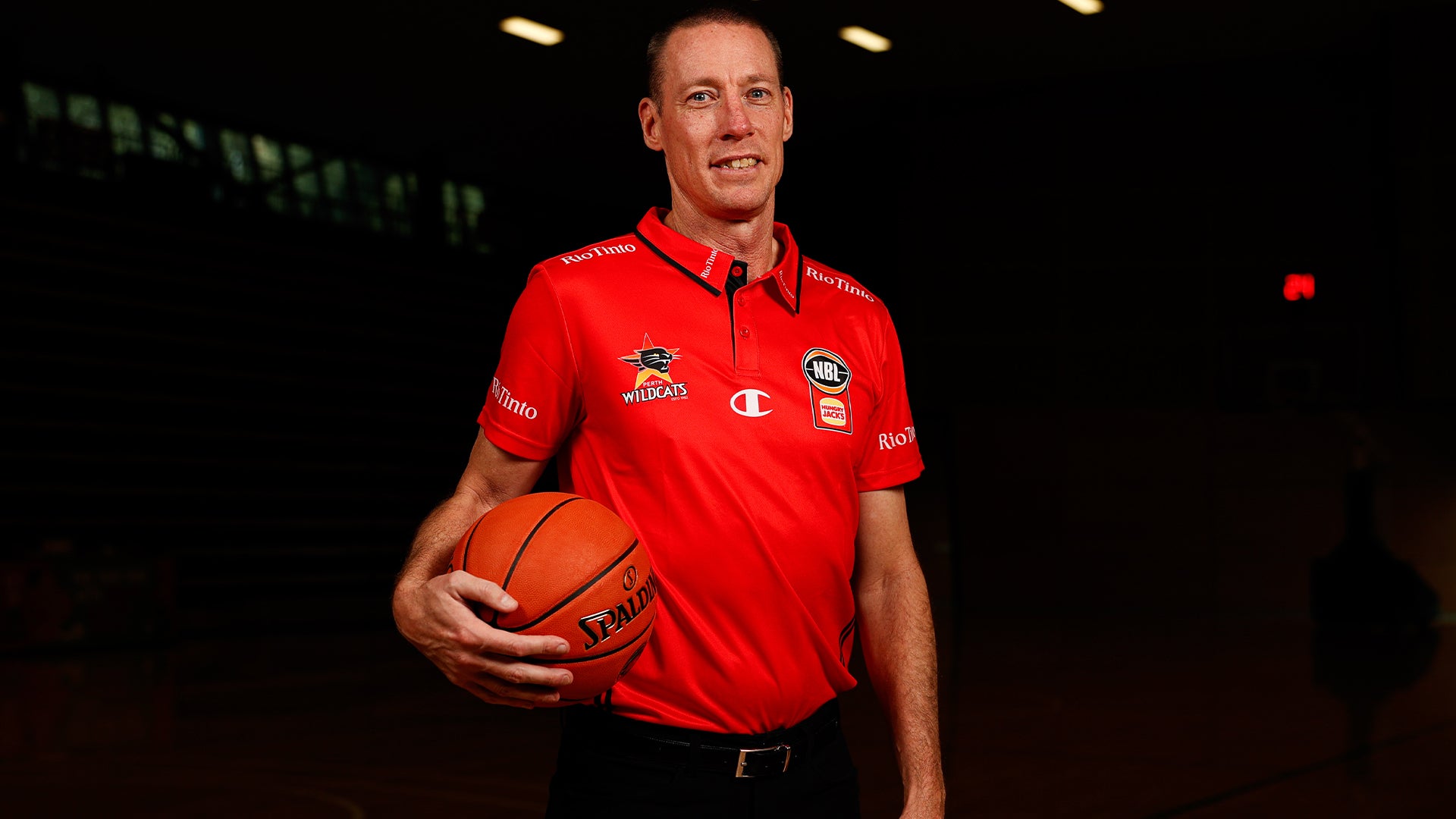
Rillie interviewed for head coaching role with Perth in 2021 and again in 2022, earning the job the second time around. On 11 July 2022, Rillie was appointed head coach of the Perth Wildcats, becoming the franchise’s 15th head coach in its history;
Whilst we try to source as much information as we can for every player who has ever played in the NBL some information on a player profile may be missing. If you have additional information on a player you'd like us to add to a profile, please send it to us using the enquiry form below.
Submissions are then sent to info@aussiehoopla.com