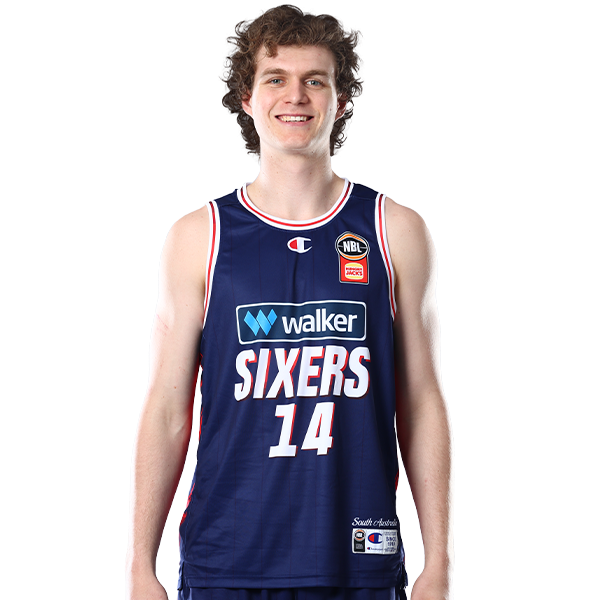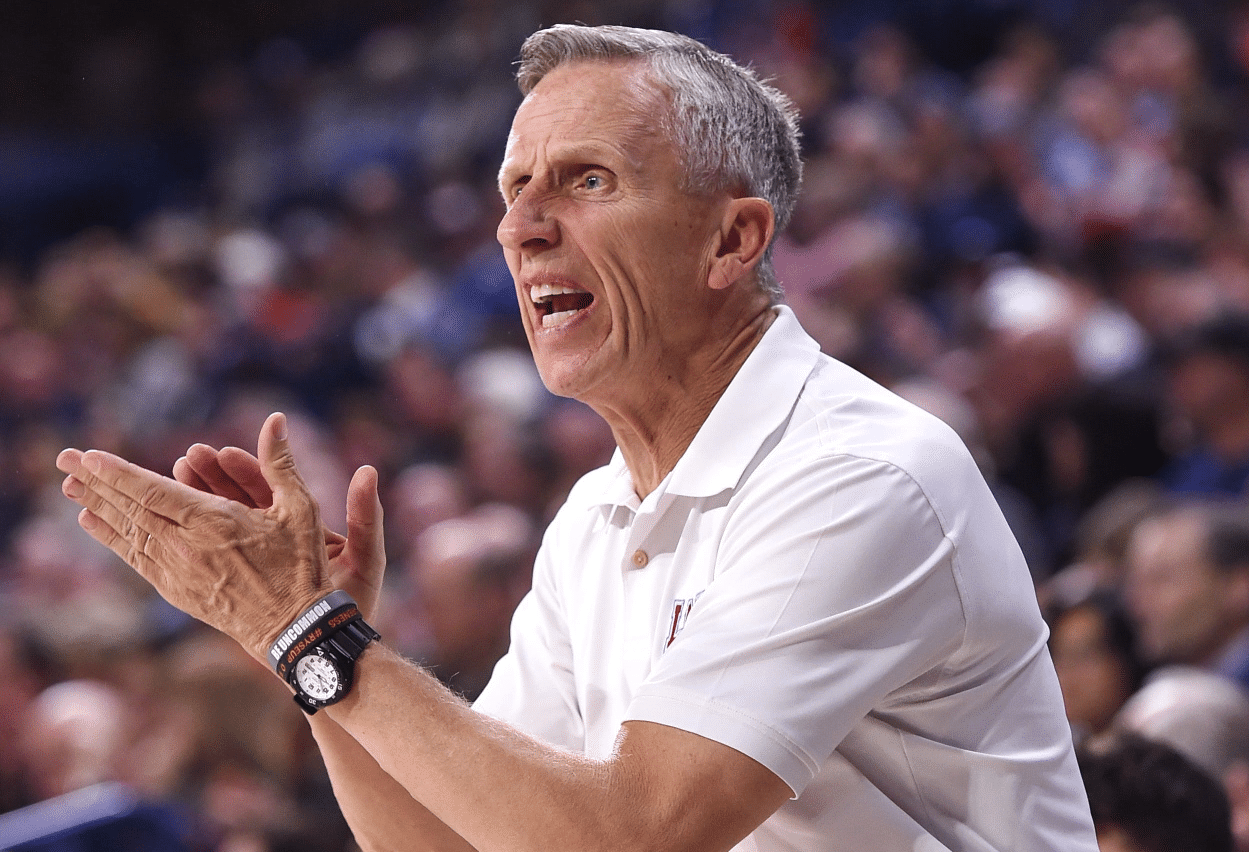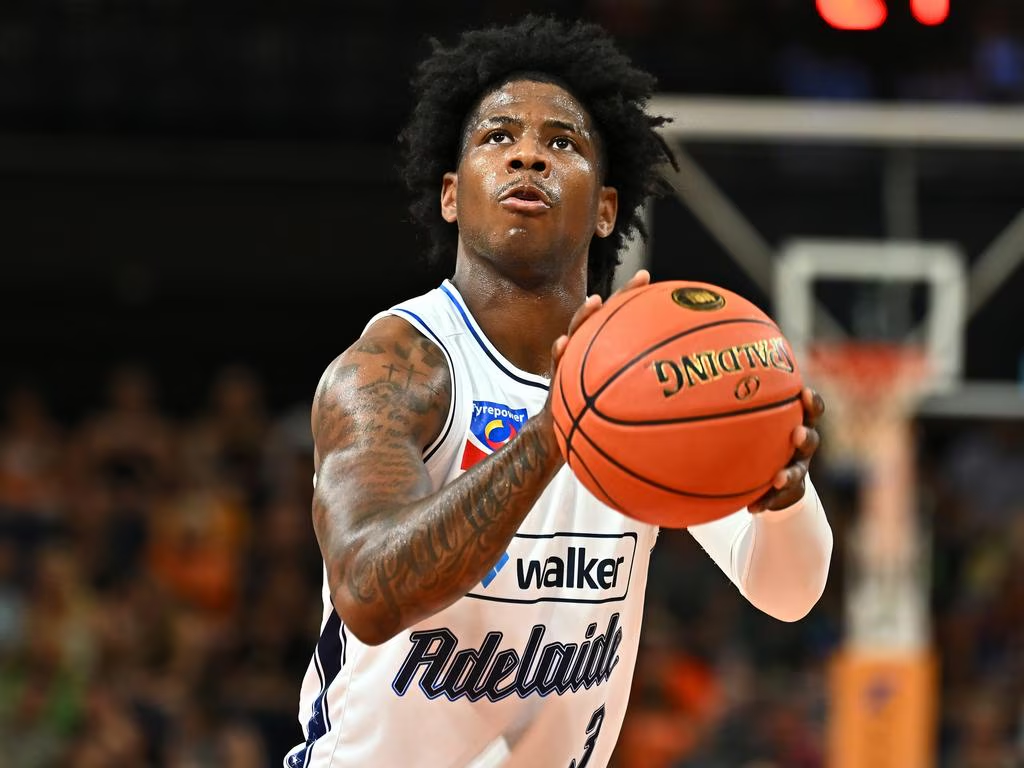
Kendric Davis
August 23, 2024


NICKNAME/S: Chairman Of The Boards
BIO: Mark Davis was born in Philadelphia, Pennsylvania (USA).
Mark Davis made his NBL debut with the Adelaide 36ers at 24 years of age. He scored 32 points in his first game.
In 1985, West Adelaide and Adelaide joined to form one NBL club for the South Australian fans to get behind. The team was built from a combination of both rosters, with the Bearcats head coach Ken Cole being selected over 36ers Mike Osborne to run the merged club. Darryl ‘Ice Man’ Pearce and ‘Mean’ Al Green, who had just gained Australian citizenship and qualified as a local player, would become the team’s starting guards, Moscow Olympian Peter Ali started as small forward and American centre Bill Jones was recruited to anchor the middle.
The season began with the backcourt duo of Green (31.0 points, 6.0 rebounds, 5.1 assists, and 1.3 steals) and Pearce (22.8 points, 2.9 rebounds, 4.6 assists, and 1.2 steals) leading the way in scoring but it wasn’t until the mid-season addition of import Mark Davis that the team started to look unbeatable. Davis had spent a year playing in New Zealand. The following year Peter Logan, who played with Davis in New Zealand, encouraged the South Adelaide Panthers to sign Davis to play in the state league. During that time Davis came to the attention of 36ers’ coach Ken Cole after dominating performances for the Panthers.
After Davis (27.9 points, 17.6 rebounds, 1.2 assists, and 1.3 steals) was added to a side already bursting with depth after the sixth round, the 36ers stormed into the Grand Final. This included Davis scored a season-high 42 points (which would remain the 36ers single game record until beaten by Darryl Pearce with a 48-point game in 1988) in a win over St Kilda in Melbourne (144–112), while his season-high rebound game was again against the Canberra Cannons when he pulled down 29 boards, just two shy of the 36ers record of 31 held by Dan Clausen.
Adelaide would eventually fall once meeting Leroy Loggins and the Brisbane Bullets who would win the championship in a single game format (121-95).
Davis was named the 36ers MVP, Green was selected to the All-NBL First Team and first-year guard Mike Mckay (12.9 points, 3.4 rebounds, and 1.3 assists) was named Rookie Of The Year.
1986
Coming off a Grand Final loss to Brisbane, Adelaide rebounded with what is considered the greatest season in NBL history. Although the team made only one major change, adding naturalised import Dwayne Nelson to replace the outgoing Karl Luke, the 36ers dominated the season to finish in first place (24-2). Mark Davis would lead the league in rebounding and be selected to the All-NBL First Team. Alongside Davis, Al Green (19.4 points, 4.5 rebounds, 3.5 assists, and 1.1 steals), Darryl Pearce (19.3 points, 3.1 rebounds, 3.9 assists, and 1.0 steals), Sixers skipper Bill Jones (19.1 points, 13.4 rebounds, 1.2 steals, and 2.2 blocks), and Mike Mckay (13.6 points, 2.3 rebounds, and 1.2 assists) would round out the starting lineup.
This 36ers team was coined ‘The Invincibles’ in the South Australian media due to finishing with the best regular season record of all time. The team’s 24-2 win-loss record — a 92.3 percent success rate — has never been matched since. The two losses both also were on last-gasp buzzer beaters, keeping Cole’s team just a few seconds short of the perfect 26-0 season. Of their 27 total victories that year, 17 were by at least 20 points, and the 36ers’ only two losses to West Sydney (87-89) and Coburg (114-116) were the results of last second buzzer-beaters, effectively meaning they were about six seconds short of the perfect 26-0 regular season. They averaged 117.3 points a game in their winning spree, conceding 96.0, a winning buffer of 21.3 points. And in claiming the regular season championship, they were five wins clear of the 19-7 second-placed Canberra Cannons.
On top of all that, Adelaide was unbeatable at home, winning all 13 games at a sold-out Apollo Stadium. This was extended to 14-0 after Darryl Pearce (28 points, 5 rebounds and 7 assists) and Al Green (27 points, 8 rebounds and 2 assists) led the 36ers over the Illawarra Hawks (116-92) in the semi-final. If you include the 36ers home games from 1985, this extended their home streak to 20-0. Adelaide would then meet Brisbane in a grand final re-match, with the NBL deciding to extend the championship series from single elimination to a three-game series from here onwards.
Adelaide won the opening match (119-122), with their big man doing most of the work, Davis (38 points, 23 rebounds, 5 assists, 2 steals, and 1 block) recording his second-highest scoring game of the season. Bill Jones (30 points, 17 rebounds, 2 assists, and 3 blocks) and Darryl Pearce (13 points, 4 rebounds, 4 assists, and 1 steal) were also key factors in the win.
As the series moved to Brisbane, The 36ers seemingly got ahead of themselves and when they travelled to Brisbane, Cal Bruton (38 points on 15 of 24 shooting) and Larry Sengstock (19 points, 8 rebounds and 2 assists) dished out a 21-point thrashing (84-104). Davis was limited to one of his worst games of the season, finishing with 13 points and 10 rebounds in Adelaide’s largest loss of the season.
The 36ers would return to Apollo Stadium to correct their game two shortcomings and defeat Brisbane (113-91) to bring the second NBL Championship in five years to South Australia. Bullet’s guard Cal Bruton (31 points and 4 rebounds) would finish as the game’s high scorer, with Pearce (27 points, 4 rebounds, 2 assists, and 1 steal) top scoring for the 36ers. Al Green (22 points, 3 rebounds, 1 assist, 1 steal, and 1 block) managed to fill most columns of the box score, and Davis returned to form, adding 22 points and 25 rebounds in the championship win.
1987
Following the 36ers’ championship win over Brisbane in 1986, Mark Davis returned to America to play in the United States Basketball League (USBL) during the offseason. He came back to Adelaide for the start of the 1987 NBL season, where he continued his outstanding form. The Adelaide 36ers made few roster changes, retaining key players such as Davis, Al Green, Darryl Pearce, Bill Jones, and Mike McKay. The team, now led by new head coach Gary Fox, who replaced Ken Cole, was poised to build on their championship success.
The 36ers opened the 1987 season with a dominant 131-105 victory over the Westside Saints at the Apollo Entertainment Centre. However, they soon hit a rough patch, enduring a three-game losing streak which started after a narrow loss to North Melbourne (103-106) and finished with a close defeat to Perth (104-106). Despite this setback, the team quickly turned their season around.
Adelaide then embarked on a five-game winning streak, starting with a 127-111 victory over the Brisbane Bullets and culminating in a 98-87 win over the Eastside Spectres. The team’s second significant streak lasted eight games, beginning with a hard-fought 118-115 win over the Canberra Cannons and ending with a victory over the Sydney Supersonics (108-103), before being broken by a loss to Hobart (108-112).
Adelaide’s biggest win of the season occurred on July 17, when they defeated the West Sydney Westars by 48 points (147-99). Their most disappointing loss came on June 25, when they were beaten by 18 points by the Illawarra Hawks (108-90). The regular season ended on a high note with a commanding 128-97 victory over the Geelong Cats, securing a league-best 21-5 record.
The main contributors for the 36ers during the regular season were Mark Davis (26.1 points, 17.1 rebounds, and 1.4 steals), Al Green (23.1 points, 5 rebounds, and 3.2 assists), Darryl Pearce (20.6 points, 2.4 rebounds, and 3.7 assists), and Bill Jones (14.3 points, 10.4 rebounds, and 2.2 blocks). These players formed the backbone of Adelaide’s successful regular season campaign.
In the playoffs, Adelaide earned a first-round bye and faced the Perth Wildcats in the semi-finals. In Game 1, Davis led the team with 24 points and 14 rebounds in a thrilling 99-98 win. In Game 2, despite Davis contributing 17 points and 21 rebounds, the 36ers fell short, losing 99-101. Davis had another standout performance in Game 3, posting 36 points, 16 rebounds, and 3 assists, but the 36ers were defeated 103-93, losing the series 2-1.
Despite the disappointment of falling short in the semi-finals, Mark Davis’ individual brilliance was widely recognized. He led the league in total rebounding, earning him the nickname “Chairman of the Boards.” His stellar season was rewarded when he was named joint NBL Most Valuable Player alongside Brisbane’s Leroy Loggins. Davis also earned All-NBL First Team honours, further establishing his position as one of the league’s elite players.
1988
Darryl Pearce and Peter Ali would be named co-captains of the squad in 1988, the same year Adelaide born centre and Australian Institute of Sport (AIS) attendee Mark Bradtke would make his NBL debut. Bradtke was signed by Ken Cole in 1986 when he was 16 years old and 203 cm tall but due to living in Brisbane at the time, he committed to the AIS for two years before joining Adelaide.
The Sixers had a great start to the season, kicking it off with a 4-1 start that included a 31-point win over Illawarra and had them picked as favourites to win the title in the early stages of the year. During the first month of the season, the 36ers were led by Darryl Peace, who exploded for 48 points, including 11 of 14 three-point attempts, against the Ken Cole coached Falcons in Newcastle in round two, a stat line that remains the highest scoring game in 36ers history.
Bradtke (7.4 points and 5.4 rebounds, and 1.4 blocks) came off the bench as a backup to Bill Jones (15.7 points, 10.2 rebounds, 1.3 assists, 1.1 steals, and 1.6 blocks) and Mark Davis (25.3 points, 13.9 rebounds, 2.2 assists, and 1.4 steals). Darryl Pearce (20.6 points, 2.5 rebounds, 4.9 assists, and 1.1 steals) and Al Green (20 points, 3.9 rebounds, 3.9 assists, 1.4 steals) would provide the offence from the perimeter, and Adelaide (19-5) finished the regular season in first place during for the third year in a row (second under coach Gary Fox). Adelaide would then lose to Canberra (0-2), falling short in the semifinals for the second year in a row.
Davis would appear in 24 games, and 25.3 points, 13.9 rebounds, and 2.2 assists.
1989
Adelaide reshaped its frontline after Bill Jones (to Newcastle) left to rejoin former coach Ken Cole, with Gary Fox entering what would be his final season as coach and replacing Jones with former Los Angeles Lakers draft pick Orlando Phillips.
The returning core included Al Green, Mike McKay, Mark Bradtke, Scott Ninnis and Dwayne Nelson, while Peter Ali stepped down as co-captain and Darryl Pearce took over the role outright.
Adelaide began the season at Apollo Stadium with a 132-93 rout of Perth, where Mark Davis (24 points and 16 rebounds) dominated inside, while James Crawford (32 points and 11 rebounds) led the Wildcats.
Davis (25.6 points, 14.4 rebounds, and 1.3 steals) remained Adelaide’s leading scorer and rebounder, won the club MVP award for a fifth straight year, earned an NBL All-Star selection and was selected to the All-NBL First Team for the fourth consecutive season.
Phillips (20.5 points, 11.0 rebounds, and 1.2 steals) provided the second scoring option, while Pearce (15.2 points, 4.2 assists, and 1.2 steals) led the backcourt and Bradtke (15.0 points, 7.6 rebounds, and 1.3 blocks) made the most of his promotion to starting centre, winning the NBL Most Improved Player award.
Green (14.7 points, 3.5 rebounds, 3.8 assists, and 1.2 steals) and McKay (13.5 points and 1.2 steals) gave Adelaide another two double-figure scorers.
His best game of the season came on June 3, when Davis (39 points and 14 rebounds) carried Adelaide to a 117-104 road win over Illawarra one night after a 15-point loss in Canberra, outscoring Norman Taylor (37 points and 12 rebounds).
On August 18, Davis (34 points and 22 rebounds) controlled the glass as Adelaide defeated Hobart 120-105, overcoming Wayne McDaniel’s 57-point performance and securing a second straight victory.
Eight days later in Hobart, Davis (33 points and 13 rebounds) again led Adelaide, but Joe Hurst (27 points and 12 rebounds) helped the Devils win 107-100.
Adelaide closed the regular season by defeating Illawarra 113-105 at Apollo Stadium, with Davis (25 points, 16 rebounds, and 3 blocks) helping the 36ers finish sixth with a 15-9 record. That finish matched Adelaide with third-seeded Perth, whose main threats were Cal Bruton and Kendal Pinder.
Bruton (22.2 points, 4.0 rebounds, 4.9 assists, and 1.3 steals) directed the backcourt, while Pinder (21.1 points and 14.0 rebounds) anchored the Wildcats’ frontline.
Game one at Apollo Stadium saw Adelaide survive 124-122, with Davis (25 points, 13 rebounds, and 4 steals), Pearce (25 points, 3 rebounds, and 4 assists), Phillips (23 points, 9 rebounds, 3 assists, and 3 steals), McKay (20 points, 2 rebounds, and 3 assists) and Bradtke (18 points, 11 rebounds, 5 assists, and 4 blocks) answering Bruton (35 points, 3 rebounds, and 5 assists).
Game two moved to Challenge Stadium, where Pinder (25 points and 14 rebounds) and Bruton (22 points and 5 assists) led Perth to a 114-94 win, despite Davis (22 points and 20 rebounds) producing a 20-20 game for Adelaide.
Game three remained tight at Challenge Stadium, where Davis (34 points and 10 rebounds) led Adelaide and Phillips (13 rebounds) controlled the glass, while Bruton (29 points and 7 rebounds) and Pinder (14 rebounds) carried Perth to a 112-108 win and a 2-1 series victory.
1990
Adelaide entered 1990 without Orlando Phillips (to Pau-Orthez), Dwayne Nelson (to North Melbourne) and David Spear, while Gary Fox was removed as coach after the club’s third consecutive playoff failure.
Long-time assistant Don Shipway was appointed as his replacement, retaining the reigning club MVP alongside Darryl Pearce, Mark Bradtke, Mike McKay, Scott Ninnis and Al Green, while adding import Tom Schafer (via Columbus), Simon Cottrell, Matthew Reece, Dan Clausen and Jason Wheeler.
The 36ers opened the season in Brisbane on March 30, where Mark Davis (44 points, 10 rebounds, 4 assists, and 2 steals) produced his highest-scoring game of the year, but Adelaide fell 122-119.
Davis (27.2 points, 12.0 rebounds, and 1.2 steals) replaced Pearce (16.9 points, 5.4 assists, and 1.2 steals) as team captain, taking over a role he would hold until the end of 1996 while leading Adelaide in scoring and rebounding and winning the club MVP award for a sixth consecutive season.
He was also selected as an NBL All-Star.
Bradtke (17.4 points, 9.3 rebounds, and 1.3 blocks) made the centre position his own and became Adelaide’s second-leading scorer, while Schafer (15.7 points and 10.3 rebounds), McKay (13.7 points, 3.2 assists, and 1.2 steals), Ninnis (10.2 points and 3.8 assists), Green (9.8 points) and Cottrell (8.4 points and 4.5 rebounds) formed the main support.
The year also marked the final season for local favourite Peter Ali, who had moved into an assistant coaching role before injuries forced him back onto the floor for two games, retiring after 279 NBL appearances, including 141 for Adelaide.
On May 11, Davis (40 points, 11 rebounds, 3 assists, and 1 steal) delivered his second 40-point game of the season at North Melbourne, but the Giants defeated Adelaide 126-116.
Davis (38 points, 16 rebounds, and 2 assists) then powered Adelaide to a 123-106 win over Melbourne at Apollo Stadium on July 27, producing another of his strongest performances of the season.
The 36ers were unable to recover enough ground to reach the postseason, finishing ninth with an 11-15 record, missing the playoffs for the first time since 1983 and recording the club’s first losing season.
Adelaide closed the season at Apollo Stadium on September 22, where Davis (31 points, 8 rebounds, 2 assists, and 4 steals) led the 36ers in a 121-112 loss to Brisbane.
1991
Adelaide reshaped its roster after the club’s first losing season, with Al Green (to Newcastle), Scott Ninnis (to Melbourne), Tom Schafer and Simon Cottrell leaving, while Peter Ali retired.
Despite the result in 1990, Don Shipway was retained as coach and kept a returning group built around the captain alongside Mark Bradtke, Darryl Pearce and Mike McKay, while recruiting 29-year-old former NBA guard Butch Hays on a two-year deal and adding 19-year-old, 208 cm Adelaide product Brett Wheeler (via Noarlunga).
Mark Davis (36 points) delivered his first major scoring performance of the season in Brisbane on April 20, but Adelaide fell 149-143 in one of the highest-scoring games of the year.
Davis (23.0 points, 14.7 rebounds, 1.3 steals, and 1.3 blocks) remained Adelaide’s captain and leading rebounder, winning the club MVP award for a seventh consecutive season, earning All-NBL First Team honours for the fifth time and being named MVP of the NBL All-Star Game.
His best scoring game of the season was a 41-point performance, while Davis (28 points and 15 rebounds) controlled the paint as Adelaide defeated Canberra 120-85 on August 10 and Davis (29 points) helped the 36ers strengthen their playoff position with a 123-107 road win over Newcastle six days later.
Hays (24.6 points, 4.5 rebounds, 9.0 assists, and 2.0 steals) led Adelaide in scoring and the NBL in assists, while McKay (19.6 points, 3.4 assists, and 1.3 steals), Bradtke (17.8 points, 12.1 rebounds, and 2.2 blocks) and Pearce (16.0 points) gave the 36ers four more double-figure scorers.
Adelaide returned to the playoffs in fourth place with a 16-10 record, with 1991 also marking the club’s final season at the 3,000-seat Apollo Stadium.
Game one of the elimination finals moved to Melbourne, where Pearce (29 points), Davis (14 rebounds) and Hays (11 assists) led Adelaide to a 129-115 win, while Andrew Gaze (39 points, 8 rebounds, and 8 assists) was Melbourne’s best.
Game two returned to Apollo Stadium, where Davis (31 points and 15 rebounds) and Hays (17 assists) drove Adelaide to a 132-96 win, while Melbourne’s leading scorer finished with 40 points and Dave Simmons (13 rebounds) controlled the glass.
The semifinals opened at Apollo Stadium, where McKay (23 points), Bradtke (11 rebounds) and Hays (9 assists) led Adelaide, while Ricky Grace (24 points and 8 assists), Kendal Pinder (10 rebounds) and James Crawford (10 rebounds) carried Perth to a 102-99 win in the final NBL game played at the venue.
Game two moved to Perth, where Hays (23 points and 8 assists), Bradtke (9 rebounds) and Davis (9 rebounds) led Adelaide, while Perth’s point guard (27 points and 9 assists) and leading rebounder (10 rebounds) carried the Wildcats to a 105-104 win and a 2-0 series victory.
1992
Local favourite and former captain Darryl Pearce left Adelaide (to North Melbourne) after the 1991 semifinal run, while the 36ers retained captain Mark Davis and key returnees Butch Hays, Mark Bradtke, Mike McKay, Graham Kubank and Mick Corkeron.
Head coach Don Shipway added Brett Maher, Jerry Dennard and 18-year-old Paul Rogers to the roster, while the club left Apollo Stadium and moved into the new 8,000-seat Clipsal Powerhouse, where every home game was played before a sell-out crowd.
The 36ers opened the Powerhouse on April 4 with a 106-84 victory over North Melbourne, where the captain (25 points) helped Adelaide christen its new home with a win before a capacity crowd.
Davis (23.5 points, 14.2 rebounds, and 1.2 steals) again led Adelaide in scoring and rebounding, but the opening victory was followed by seven consecutive losses, including defeats against Hobart and Newcastle.
The difficult run included a 112-106 loss at Hobart on May 9, where Davis (29 points, 12 rebounds, 2 assists, 1 steal, and 1 block) kept Adelaide close, while Shipway was later suspended for four games, reduced to two on appeal, after slapping a spectator during a timeout.
His best all-around game of the season came on May 16, when Davis (33 points, 19 rebounds, and 2 assists) carried Adelaide against the South East Melbourne Magic, although the 36ers were beaten 116-102 at home.
The league then stopped for the Barcelona Olympics, where Bradtke (20.1 points, 14.8 rebounds, 1.3 steals, and 1.8 blocks) and McKay (18.5 points, 4.3 rebounds, and 1.3 steals) represented the Boomers as Australia finished fourth.
After returning, Bradtke (to Juver Murcia) announced he would finish the season in Spain after accepting a deal reportedly worth $200,000.
In his final Adelaide game on July 17, Bradtke (43 points and 25 rebounds) delivered a career-high performance against Geelong before leaving the 36ers with a major hole in the middle.
Davis continued to carry the depleted frontcourt and produced another standout performance on September 4, recording 34 points and 16 rebounds as Canberra escaped the Powerhouse with an 82-81 victory.
Hays (21.6 points, 4.6 rebounds, 6.6 assists, and 2.2 steals) was Adelaide’s second-leading scorer and directed the backcourt, while Kubank (8.6 points and 1.2 steals), Maher (6.3 points, 3.7 rebounds, and 3.1 assists) and Dennard (5.3 points and 3.9 rebounds) provided the main support.
The captain won the 36ers club MVP award and claimed a record fifth Woollacott Medal, while also gaining Australian citizenship and completing his final NBL season as an import.
Without Bradtke, Adelaide was unable to recover enough ground and missed the playoffs, finishing ninth with an 11-13 record.
The 36ers closed the season on September 12 with a 115-99 win at Geelong, where Davis (25 points, 22 rebounds, and 3 assists), McKay (33 points), Hays (27 points, 5 rebounds, 4 assists, 1 steal, and 2 blocks) and Maher (18 points, 5 rebounds, 7 assists, and 1 steal) led Adelaide, while Bobby Locke (32 points) top scored for the Supercats.
1993
After two losing seasons under coach Don Shipway, Adelaide hired American coach Don Monson to replace him and steer the team back to its winning ways. With the 36ers still regrouping from the loss of Australian Boomers big man Mark Bradtke (to Melbourne), they built up the team’s frontcourt by adding Chris Blakemore, a talented young big man from the Australian Institute of Sport, import Paris McCurdy and welcomed back former 36er Willie Simmons (via Canberra). Key additions to the back court included Australian Boomers guard Phil Smyth (via Canberra) and the return of local prodigy Scott Ninnis (via South East Melbourne) who had spent two seasons playing under Brian Goorjian in Melbourne. Captain Mark Davis, Mike McKay, Brett Maher and Paul Rogers would return as the remaining roster.
Adelaide opened Monson’s first season on April 18 with a 118-105 road win over North Melbourne, where the captain grabbed 18 rebounds and blocked one shot as the 36ers began the year with a victory.
Playing his first season as a local, Davis (22.8 points and 12.9 rebounds) again led Adelaide in scoring and rebounding and finished as the NBL’s rebounding leader for the fourth time.
On April 29, Davis (29 points, 16 rebounds, and 2 blocks) delivered one of his strongest games of the season as Adelaide defeated Newcastle 86-76 and earned its first home win of the year.
Against Perth on June 20, Davis (24 points and 16 rebounds) kept Adelaide in the contest and helped the 36ers close within one point with 20 seconds remaining before the Wildcats held on for a 95-91 victory.
His best all-around game came on July 4, when Davis (26 points, 15 rebounds, and 9 assists) fell one assist short of a triple-double as Adelaide defeated Melbourne 109-94 after breaking open the game with a 28-14 final quarter.
After nine games, McCurdy (12.7 points, 7.7 rebounds, and 2.0 steals) was released and replaced by import David Robinson, a serviceable replacement for sure, but not quite the same player as his NBA namesake.
Ninnis (19.4 points, 3.1 rebounds, 4.7 assists, and 1.3 steals) delivered the best season of his career and was named the NBL’s Most Improved Player, while Robinson (18.3 points and 8.9 rebounds) provided Adelaide with another reliable scorer and rebounder for the remainder of the year.
McKay (13.8 points, 6.0 rebounds, 3.5 assists, and 1.3 steals), Smyth (10.8 points, 4.8 assists, and 1.6 steals), Maher (8.3 points) and Blakemore (5.7 points and 4.9 rebounds) were the other main contributors, with Blakemore earning NBL Rookie of the Year honours.
Davis also claimed Adelaide’s club MVP award for a ninth consecutive season, while the 36ers improved to seventh place with a 14-12 record and returned to the playoffs.
Adelaide opened the quarterfinals at the Clipsal Powerhouse, where Davis (23 points, 9 rebounds, and 3 assists) and McKay (18 points and 8 rebounds) led the 36ers, while Tony Ronaldson (30 points and 6 rebounds), Robert Rose (21 points, 10 rebounds, and 7 assists) and Darren Lucas (14 points and 6 rebounds) carried defending champions South East Melbourne to a 99-93 win.
Game two moved to Melbourne Park, where Davis (28 points and 17 rebounds) and Robinson (20 points and 9 rebounds) led Adelaide, while Bruce Bolden (21 points and 14 rebounds) and John Dorge (6 points, 8 rebounds, and 1 block) helped South East Melbourne complete the sweep 102-87.
1994
David Robinson was not retained after Adelaide’s quarterfinal exit, while Don Monson left the coaching role after one season, leaving captain Mark Davis, Scott Ninnis, Mike McKay, Phil Smyth, Brett Maher, Chris Blakemore and Willie Simmons as the main returning players.
New coach Mike Dunlap strengthened the roster with reigning NBL MVP Robert Rose (via South East Melbourne) and Andrew Svaldenis (via Hobart) as Adelaide chased its first Grand Final appearance since 1986.
Adelaide opened the season at Carrara on April 8, where the captain controlled the glass with 11 points, 14 rebounds, and 4 blocks, but Gold Coast held on for a 95-92 win.
Davis (20.8 points, 12.6 rebounds, and 1.6 steals) again anchored Adelaide’s frontcourt, finishing second in the league in rebounding and leading the NBL in offensive rebounds as the 36ers returned to contention.
Rose (22.8 points, 7.5 rebounds, 4.6 assists, and 2.6 steals) became Adelaide’s leading scorer, while Blakemore (13.3 points and 6.6 rebounds), Maher (13.3 points, 4.4 rebounds, 3.1 assists, and 1.7 steals), Ninnis (12.6 points and 1.4 steals), McKay (8.2 points and 3.5 rebounds) and Smyth (6.6 points and 1.2 steals) formed the main support.
Rose won Adelaide’s club MVP award, ending Davis’ run of winning every award from 1985 through 1993, while Blakemore earned NBL Most Improved Player honours and Davis and Rose were selected to the All-NBL Second Team.
His best game came in Brisbane on May 14, when Davis (43 points, 15 rebounds, 2 assists, 3 steals, and 1 block) powered Adelaide to a 124-105 win over the Bullets, with Rose (20 points, 9 rebounds, 4 assists, and 3 steals) and McKay (17 points, 3 rebounds, 3 assists, and 3 steals) adding support.
Davis (30 points and 11 rebounds) and Rose (26 points and 5 rebounds) led Adelaide to a 110-74 home win over Wollongong on June 24, with Maher (13 points and 7 rebounds) and Ninnis (13 points) adding support while former 36er Butch Hays (21 points) was the Hawks’ best.
On September 16, Davis (40 points, 9 rebounds, 4 assists, and 2 steals) delivered another dominant performance as Adelaide defeated Gold Coast 102-90, with Blakemore (15 points and 9 rebounds) and Maher (13 points and 3 steals) in support while Matthew Reece (22 points) and Tony De Ambrosis (22 points) led the Rollers.
Adelaide closed the regular season on September 24 with a 107-76 win over Canberra, where Davis (19 points, 21 rebounds, and 5 steals), Rose (26 points, 11 rebounds, 10 assists, and 6 steals) and Blakemore (22 points and 12 rebounds) led the 36ers, while Jason Reese (16 points and 19 rebounds) and Justin Withers (14 points and 16 rebounds) were the Cannons’ best, leaving Adelaide fourth with an 18-8 record.
The quarterfinals opened in Brisbane, where Rose (34 points) helped Adelaide build a 99-92 lead inside the final two minutes, but Shane Heal (42 points) hit the three-pointer that forced overtime and Leroy Loggins (30 points) helped the Bullets recover for a 116-105 win.
Game two moved to the Powerhouse, where Davis (37 points, 13 rebounds, and 5 assists) dominated alongside Rose (21 points, 8 rebounds, and 5 assists), while Loggins (29 points and 9 rebounds) and Andre Moore (17 points and 13 rebounds) led Brisbane before Adelaide levelled the series with a 99-91 win.
Davis (26 points and 18 rebounds), Rose (18 points, 5 rebounds, and 7 assists) and Maher (17 points) led Adelaide in the decider, while Heal (20 points and 6 rebounds) and David Colbert (18 points) were Brisbane’s best as the 36ers won 101-84 and advanced to the semifinals.
Adelaide opened the semifinals at the Powerhouse with a 101-88 win over defending champions Melbourne, where Davis (13 points and 10 rebounds) had helped the 36ers take control before Dave Simmons (4 assists) collected his right arm as he attempted a long outlet pass during the third period, dislocating his shoulder, but Rose (18 points, 9 rebounds, 6 assists, and 6 steals) and McKay (17 points) carried Adelaide home while Andrew Gaze (30 points) and Mark Bradtke (19 points) led the Tigers.
Game two moved to Melbourne, where Davis missed the game while receiving treatment, but Rose (21 points) and Blakemore (19 points) led Adelaide, while Lanard Copeland (25 points) and Simmons (18 points) were strongest for Melbourne as the 36ers won 110-101 and completed the sweep.
The injury reduced Davis from 21.7 points and 12.9 rebounds during the regular season to 16.5 points and 11.3 rebounds in the playoffs, but intense physiotherapy allowed him to return for the Grand Final.
The Grand Final opened at the Powerhouse, where Davis (13 points and 6 rebounds) returned despite the shoulder injury and Rose (33 points) led Adelaide back from 14 points down in the final period, while Paul Rees (17 points and 5 rebounds) and Darryl McDonald (18 points and 10 assists) led North Melbourne before McDonald hit the game-winning shot in a 95-93 overtime victory.
Game two moved to Melbourne, where Davis (0 points, 4 rebounds, and 1 steal) was limited to 16 minutes as Rose (31 points and 7 rebounds) led Adelaide, while Paul Maley (21 points and 10 rebounds) and Rees (20 points and 7 rebounds) powered North Melbourne to a 117-97 win, with Rees named Grand Final MVP after shooting 7-of-7 from the field.
1995
After choosing not to re-sign veteran Phil Smyth (to Sydney), Adelaide returned for Mike Dunlap’s second season with Mark Davis, Robert Rose, Brett Maher, Chris Blakemore, Brett Wheeler, Mike McKay and Scott Ninnis, looking to build on the previous year’s Grand Final appearance.
On May 12, the captain (16 points, 15 rebounds, and 6 assists) controlled the paint as Adelaide defeated Geelong 91-81, providing an early example of the rebounding and interior play he continued to deliver throughout the year.
With Davis (17.2 points, 12.2 rebounds, and 1.5 steals) classified as a local player, Dunlap was able to fill Adelaide’s second import position during the season with former Chicago Bulls guard Jo Jo English (via Chicago), adding another scorer to the backcourt.
Davis (23 points, 9 rebounds, and 5 assists) made four three-pointers on September 2 as Adelaide defeated Illawarra 110-89 on the road.
One week later, Davis (27 points, 9 rebounds, 4 assists, 5 steals, and 2 blocks) delivered his best all-around performance of the season, shooting 8-of-12 from the field and 9-of-11 from the free-throw line as Adelaide defeated Townsville 118-105.
Adelaide closed the regular season at home against Illawarra, where Davis (17 points, 20 rebounds, and 2 assists) dominated the glass in an 84-74 win that extended the 36ers’ winning streak to nine games and secured fourth place with a 17-9 record.
Rose (26.8 points, 8.1 rebounds, 4.3 assists, and 2.5 steals) led Adelaide in scoring and earned All-NBL Team honours, while Davis remained the team’s leading rebounder and was selected to the NBL All-Star Game for the eighth straight season.
English (14.8 points, 3.3 rebounds, and 1.4 steals), Maher (14.1 points, 4.9 rebounds, 3.7 assists, and 2.2 steals), Blakemore (10.1 points and 5.9 rebounds), Wheeler (8.0 points and 6.2 rebounds), McKay (7.1 points) and Ninnis (5.6 points) completed Dunlap’s main rotation.
Before the NBL season, Davis, Maher, Wheeler and Blakemore also made their Boomers debuts against the touring Magic Johnson All-Stars in March.
Adelaide opened the quarterfinals in Newcastle, where Tonny Jensen (35 points, 6 rebounds, 4 assists, 2 steals, and 3 blocks), Butch Hays (23 points, 4 rebounds, and 4 assists) and Reggie Smith (14 points, 16 rebounds, and 6 blocks) led the Falcons, while Rose (23 points), English (17 points, 6 rebounds, and 5 steals), Blakemore (16 points, 13 rebounds, and 2 blocks) and Davis (11 points, 12 rebounds, and 4 assists) were best for Adelaide in a 101-93 loss.
Game two moved to Adelaide, where Rose (46 points and 5 rebounds) carried the 36ers to a 94-84 win, with Maher (16 points, 8 rebounds, and 4 assists) and Davis (13 points, 13 rebounds, and 2 steals) supporting him, while Jensen (21 points, 5 rebounds, and 8 assists) and Hays (18 points, 4 rebounds, and 7 assists) led Newcastle.
Adelaide completed the series comeback two nights later, defeating Newcastle 99-92 at the Clipsal Powerhouse to advance to the semifinals.
Adelaide opened the semifinals at home, where Rose (27 points and 7 rebounds), Davis (13 points and 12 rebounds) and Ninnis (12 points) were best in a 94-78 loss, while Scott Fisher (27 points and 7 rebounds), Martin Cattalini (16 points and 9 rebounds) and Ricky Grace (16 points, 7 rebounds, and 8 assists) led Perth.
The game became national news when Blakemore (4 points) elbowed the Perth forward, leaving him with a cut to his mouth that required 15 stitches, almost starting a brawl and earning Blakemore a suspension for game two.
The incident would later contribute to an end-of-season altercation between Blakemore and Dunlap, after which Blakemore (to Canberra) followed Rose (to Canberra), while McKay (to Brisbane) also departed as Dunlap continued to build around a younger roster.
Rose had requested a pay rise, but Adelaide rejected it amid a belief that the 31-year-old had already played his best basketball and was not worth the additional money.
Game two moved to Perth, where Fisher (26 points and 9 rebounds) again led the Wildcats, while Rose (22 points) was Adelaide’s best in an 85-76 loss that ended the 36ers’ season for the fourth time in eight years against Perth (1987, 1989, 1991 and 1995).
1996
After losing to Perth in the semifinals in 1995, a series which included a vicious elbow from Chris Blakemore to the head of Wildcats forward Martin Cattalini, head coach Mike Dunlap had lost favour with Blakemore and 36ers MVP Robert Rose, who both left the team and signed with the Canberra Cannons. Long range specialist Mike McKay also found Dunlap hard to play for, and he left to play with the Brisbane Bullets.
Despite this, the 36ers recruited well going into the 1996 NBL season, signing slam-dunking forward Leon Trimmingham from the Sydney Kings and, funnily enough, Martin Cattalini from the championship winning Perth Wildcats. John Rillie, who was coming off a Rookie of the Year winning season with Brisbane, was added as a backup guard to Brett Maher, and new import Rick Brunson, who had just narrowly missed out on being drafted to the NBA. This was also the season Davis was replaced as captain of the 36ers by Brett Maher, who at mid-season would be selected to play for Australia at the 1996 Olympic Games.
The 36ers got great production from starters Brunson (21.6 points, 4.1 rebounds, 6.5 assists, and 2.5 steals), Trimmingham (19 points, 8.9 rebounds, and 1.5 steals), Maher (15.5 points, 4.1 rebounds, 3 assists, and 1.9 steals), Rillie (13.7 points, 3.5 rebounds, 3 assists, and 1.2 steals) and Davis (12.7 points, 8.2 rebounds, and 2 assists) but continued to struggle against the league’s top team’s.
Following the sudden death of his father after the 1996 season, coach Dunlap returned home to the United States and decided to stay there to be closer to his family. The team finished in sixth place with a record of 16-10. The 36ers defeated arch-rivals Perth Wildcats in the quarterfinals before being eliminated in the semifinals by eventual champs the South East Melbourne Magic in two straight games.
This season would also be Dunlap’s last with the team after he requested the team release 36ers legend Mark Davis and focus on the team’s younger players. Since joining the 36ers, Dunlap had been systematically removing the older players from the squad, but the club board instead retained Davis (who went on to play another four seasons) and agreed that Dunlap would not return as coach.
1997
Having just shown head coach Mike Dunlap the door, the 36ers hired his assistant and former Gold Coast Rollers coach Dave Claxton as his replacement. Despite finishing sixth the season prior, Adelaide chose to retain the majority of the roster this season, the only major changes being the addition of Rupert Sapwell (Geelong) and replacing import guard Rick Brunson with big man Jeff Brown. Perhaps the biggest change to the roster wasn’t during free agency but when Brett Maher (18.8 points, 4.2 rebounds, 5.0 assists, and 1.9 steals) was handed the team captaincy from club legend Mark Davis (something he would hold until his retirement in 2009).
The plan had been for Brown to play alongside Leon Trimmingham (19.4 points, 8.3 rebounds, 1.2 steals, and 1.1 blocks) and Mark Davis (9.4 points, 6.0 rebounds, and 1.3 assists) to form a dominant frontcourt, similar to what had been delivered recent championships for the Perth Wildcats. Six games in, it was clear Brown (7.7 points, 3.8 rebounds, and 1.0 steals) wasn’t the player the 36ers needed, and he was swiftly released. Hoping to find a quick replacement, Adelaide brought back former big man Willie Simmons, who hadn’t played in the NBL since 1994 and was now 35 years old. Simmons (5.6 points and 4.0 rebounds) added what he could, but needless to say, Adelaide struggled through the remaining games and finished in seventh place (14-16), missing the playoffs for the first time since 1992.
1998
At the end of 1997, the 36ers replaced head coach Dave Claxton, who was only signed by the club at the last moment due to unexpectedly losing Mike Dunlap. He was only signed for one season and was subsequently replaced by rookie coach and former player Phil Smyth. Smyth had been hired without any head coaching experience. In fact, his only previous coaching experience being a specialist coach at the Australian Institute of Sport during his playing days in Canberra.
During the off-season, local product Brett Maher engaged in serious talks with the Sydney Kings and almost moved to the nation’s capital to form a all-Australian backcourt with Aaron Trahair. Ultimately, he decided to re-sign with the Adelaide 36ers, who then recruited 205 cm centre Paul Rees (via North Melbourne).
Shortly after, Smyth signed Canberra Cannons guard Darnell Mee who had just spent a season in France after rehabilitating the knee that limited his productivity in his first NBL season.
Once signed, Mee recommended his former teammate Kevin Brooks to the 36ers, and they signed the former NBA forward to a two-year deal. After his first training session with the team, Brooks’ teammates thought he wouldn’t last a week in the NBL with a shooting style that saw him release the ball almost from behind his head. However, they soon found Brooks (19.1 points, 6.7 rebounds and 1.3 assists) was for real as he went on to lead the team in points per game with Brett Maher (17.8 points, 4.8 rebounds, and 3.7 assists) and Mee (14.8 points, 6.5 rebounds, and 4 assists) providing the additional scoring punch.
The 36ers’ gamble on Smyth’s playing experience translating into coaching success also paid off, with Adelaide recording the most wins since 1988 and finished in second place (19–11). Davis, who moved into the role of sixth man this season, added 9.8 points, 4.8 rebounds, and 0.8 assists.
Brett Maher’s led the 36ers into the playoffs for the first time as captain and delivered a emphatic punch to Perth’s playoff chin. The 36ers seized a 1-0 lead in their best-of-three semi-final series behind a sensational 36-point career-high game by Maher, who also led the Sixers with six assists (shooting 74 percent, including 7-of-11 three-pointers). Darnell Mee was his usual effective self, adding a game-high 14 rebounds to his 16 points as he terrorised Perth’s backcourt and set a aggressive defensive tone from the outset. Adelaide would defeat Perth just as easily as it had in game one, winning 117–110 to set up a Grand Final matchup against the South East Melbourne Magic.
Adelaide was not expected to defeat the Brian Goorjian led Magic, who had compiled a 26-4 record during the regular season and then swept the Brisbane Bullets in the semifinals. In game one, Brooks finished game-high scorer with 24 points (10/18 shooting), and 8 rebounds as the 36ers stunned all, delivering a 100-93 defeat to the defending champs on their home court. Amazingly, game one of the Grand Final was only the second time the 36ers had defeated the Magic since the Eastside Melbourne Spectres and Southern Melbourne Saints had merged to form the Magic in 1992.
The 36ers, who had started the season off slowly, had really found their form by the time of the Grand Final series and, come game two, obliterated the Magic at home (90-62). Adelaide held the Magic to less than 15 points in three of the game’s quarters. Kevin Brooks (21 points, 6 rebounds, 2 assists and 2 blocks) was again the star, with Martin Cattalini (20 points and 6 rebounds) also a key contributor in a game decided by turnovers (the Magic finished with 26 turnovers compared to the 36ers’ 14) and free throws (The 36ers shot 25 from 33 from the free throw line compared to the Magics 6 from 8).
Adelaide collected their first NBL championship since 1986, and Kevin Brooks was named Grand Final MVP in what was the last winter season for the National Basketball League.
1999/00
Coming off back-to-back championships, Adelaide suffered a major blow when the league reduced the salary cap and the 36ers were unable to retain Kevin Brooks (to Sydney), although head coach Phil Smyth kept captain Brett Maher, Darnell Mee, Martin Cattalini, Mark Davis, David Stiff, Paul Rees and Rupert Sapwell together and added Paul Maley (via Victoria), who had been squeezed out by the Giants and Magic merger.
Cattalini briefly agreed to join ASVEL Villeurbanne in France before backflipping and re-signing with Adelaide prior to the season.
The season kicked off with a 109-89 win over Perth at home, with Mark (12 points, 6 rebounds, and 1 block) providing valuable minutes from the bench as Adelaide began the season with a victory.
Davis (8.2 points and 5.3 rebounds across 31 games) remained an important member of Adelaide’s frontcourt rotation at 39 years of age, playing 22 minutes each game as the veteran continued to provide scoring and rebounding from the bench.
As defending NBL champions, Adelaide travelled to Milan for the McDonald’s Championship, losing 90-79 to Brazilian side CR Vasco da Gama before defeating Lebanese club Hekmeh BC 91-84 in the fifth-place playoff.
On 3 December, Davis (15 points and 5 rebounds) made five field goals and two three-pointers as Adelaide defeated Canberra 111-86.
During Adelaide’s December win over Brisbane, the veteran grabbed his 5,000th NBL rebound to become the first player in league history to reach the mark, while his eventual record of 5,200 was later broken by former teammate Mark Bradtke in Adelaide on 21 November 2003, with the Chairman of the Boards on hand to present him with the match ball.
On 11 February, Davis (13 points, 8 rebounds, and 1 block) made three of four shots from the field and six of eight free throws as the 36ers edged Wollongong 95-92.
His best game came on 3 March, when Davis (22 points, 10 rebounds, and 1 steal) delivered a season-high scoring performance as Adelaide defeated Cairns 129-75.
Cattalini (20.3 points and 7.5 rebounds) and Maher (20.2 points and 4.3 rebounds) led Adelaide’s offence, while Mee (13.6 points, 7 rebounds, 4.7 assists, 2.2 steals, and 1.2 blocks) again filled almost every category on the stat sheet.
Stiff (13.5 points, 9.1 rebounds, 1.3 steals, and 1.4 blocks) moved into the starting lineup when Maley battled a recurring back injury, while Maley (12.3 points and 6.1 rebounds across 18 games), Rees (7.8 points and 5.2 rebounds) and Sapwell (7.1 points and 3.5 rebounds) rounded out the main rotation.
Maher earned All-NBL First Team honours, Cattalini and Mee were selected to the All-NBL Second Team, Mee won the NBL Best Defensive Player award for the second straight season, and Maher and Cattalini were later selected for the Australian Boomers squad at the 2000 Olympics.
Adelaide finished first on the ladder with a 22-6 record and received a first-round bye before meeting Victoria in the semifinals.
Victoria opened the series at Melbourne Park with a 101-86 win, with Tony Ronaldson (26 points and 5 rebounds) and Darryl McDonald (24 points, 6 rebounds, 8 assists, 2 steals, and 3 blocks) leading the Titans.
Game two moved to Adelaide, where Cattalini (24 points and 7 rebounds) and Mee (22 points, 7 rebounds, 6 assists, and 4 steals) carried the 36ers to a 95-72 win and forced a deciding game.
McDonald (24 points, 7 rebounds, 6 assists, and 3 steals) again led Victoria in game three, while Mee (22 points, 6 rebounds, 5 assists, and 2 steals) was Adelaide’s best as the Titans won the decider 93-89.
2000/01
Coming off winning back-to-back championships, Adelaide seemed primed for a NBL dynasty and bolstered their roster by signing Paul Maley. Maley, who had contemplated retiring after his experience with the Victoria Titans, was thought to be everything the team needed to achieve a three-peat, but then, economic factors impacted the 36ers’ season in a way no one could have predicted.
The NBL wasn’t in as good a financial shape as the 36ers, and in a cost-cutting move aimed at assisting struggling NBL clubs, the league reduced the league salary cup from $70,000 to $625,000. This reduction in cap resulted in the team being unable to re-sign star Kevin Brooks for the same money without breaching the cap, considering it also had added Maley only a few weeks earlier. Although the league applied for consideration on this, it was denied, and Brooks was forced to make a move to Sydney to play with the Kings.
Days later, high-scoring forward Martin Cattalini agreed to play in France for ASVEL Villeranne, which would have been ‘double whammy’, but prior to the season tipping off, he backflipped and re-signed with Adelaide in the hopes that a big year would result in being selected for the 2000 Olympics to be held in Sydney.
The season kicked off the season with a 109–89 win over Perth at home, with the 36ers fielding a starting lineup of leading scorer Martin Cattalini (20.3 points, 7.5 rebounds and 2.6 assists), team captain Brett Maher (20.2 points, 4.3 rebounds and 2.9 assists), Darnell Mee (13.6 points, 7.0 rebounds, 4.7 assists, 2.2 steals and 1.2 blocks) who filled almost every category on the stat sheet and veterans Paul Rees (7.8 points, 5.2 rebounds and 1.5 assists) and Paul Maley (12.3 points, 6.1 rebounds and 1.2 assists).
As a result of winning the 1999 NBL championship, the 36ers were again invited to participate in the McDonald’s Cup, held at the 12,000 seat Fila Forum in Milan, Italy which was scheduled during the first month of the regular season. After losing their first game 90–79 to Brazilian side CR Vasco da Gama (who went all the way to meet the San Antonio Spurs in the final), the team won the 5–6 place playoff 91–84 over Lebanese team Hekmeh BC.
After returning to Australia, Adelaide never skipped a beat. They won three straight games before heading to Townsville, a game where Maher nailed five from five threes, scored 15 points in the first quarter, and finished with a career-high 40 points as Adelaide lost its first game of the season in overtime.
Maley missed a number of games due to a recurring back injury which saw David Stiff enter the starting lineup, where he responded with a career-high 35-point game (70% from the field) in a 111-103 win over Wollongong.
On 6 February 2000, the 36ers participated in the league’s first ‘open air’ game where 10,318 fans gathered to see the Titans deliver a rare loss (83-75) at Melbourne Park.
Davis finished the season averaging 8.2 points, 5.3 rebounds, and 1.3 assists per game as Adelaide again finished in first place during the regular season (22–6). Due to finishing in the top two, both Adelaide and Townsville were given first-round byes. The elimination finals saw Perth defeat West Sydney on one side of the bracket, and Victoria knock out Melbourne on the other, resulting in the 36ers facing off against a Brian Goorjian led team for the third year in a row.
The Titans, who had discarded Paul Maley (12.3 points and 6.1 rebounds per game) to see him become a valuable bench contributor for Adelaide, entered the series as favourites. The Titans would win game one 101-86 in Melbourne, with Ronaldson leading the team with 26 points and 5 rebounds and MacDonald filling the box score with 24 points, 6 rebounds, 8 assists, 2 steals and 3 blocks before the series moved to Adelaide for game two and three.
Game two saw the 36ers return to their high-scoring offence, which had proven unstoppable over the past two seasons. Martin Cattalini’s 24 points and 7 rebounds, combined with Darnell Mee’s all-around brilliance, collecting 22 points,7 rebounds, 6 assists and 4 steals, the 36ers evened the series with a 95-72 win.
With many pencilling in another Titans elimination from the 36ers, the team rallied behind MacDonald, who again impacted the game from every angle, finishing with 24 points, 7 rebounds, 6 assists and 3 steals. His counterpart Darnell Mee seemed equally up to the task and finished with 22 points, 6 rebounds, 5 assists, and 2 steals, but the remaining 36ers squad struggled to score through the impenetrable Titans defence, and with Victoria winning the decider 89-93 the Titans celebrated as though they’d shaken King Kong off their back.
It was a year of upsets with Townsville being eliminated by Perth in the other semi final bracket in three games. Not surprisingly, Victoria had nothing left for Perth in the Grand Final and lost in two straight games.
Davis would retire at the end of the season as the 36ers’ all-time leader in free throws made (2,037), free throws attempted (2,888), rebounds (5,200), and blocked shots (301).Mark Davis played seventeen seasons the Adelaide 36ers. He averaged 18.1 points, 10.8 rebounds, and 1.7 assists in 481 NBL games.
CAREER RANKINGS:
– 22nd in total games played.
– 12th in total points
– 2nd in total rebounds
– 27th in total steals
– 21st in total blocks
– 43rd in rebounds per game.
| SEASON | AGE | TEAM | TEAM RECORD | GP | MINS | PTS | REB | AST | OR | DR | STL | BLK | TO | PF | FGM | FGA | FG% | 3PM | 3PA | 3P% | FTM | FTA | FT% | TS% | EFG% | HS |
|---|---|---|---|---|---|---|---|---|---|---|---|---|---|---|---|---|---|---|---|---|---|---|---|---|---|---|
| 2000-01 | 40 | Adelaide | 16-12 (6) | 33 | 554.0 | 204 | 106 | 30 | 42 | 64 | 6 | 5 | 46 | 69 | 71 | 186 | 38% | 10 | 42 | 24% | 52 | 88 | 59% | 45% | 41% | 13 |
| 1999-00 | 39 | Adelaide | 22-6 (1) | 31 | 691.0 | 255 | 164 | 41 | 55 | 109 | 12 | 4 | 52 | 61 | 84 | 202 | 42% | 20 | 53 | 38% | 67 | 100 | 67% | 51% | 47% | 22 |
| 1998-99 | 38 | Adelaide | 18-9 (1) | 33 | 675.0 | 295 | 140 | 32 | 48 | 92 | 11 | 7 | 57 | 61 | 104 | 239 | 44% | 14 | 55 | 25% | 73 | 120 | 61% | 50% | 46% | 24 |
| 1998 | 37 | Adelaide | 19-11 (2) | 32 | 685.0 | 312 | 154 | 25 | 57 | 97 | 21 | 8 | 35 | 64 | 98 | 267 | 37% | 4 | 40 | 10% | 112 | 152 | 74% | 46% | 37% | 18 |
| 1997 | 36 | Adelaide | 14-16 (8) | 30 | 866.0 | 281 | 180 | 39 | 63 | 117 | 19 | 9 | 80 | 79 | 110 | 267 | 41% | 3 | 23 | 13% | 58 | 93 | 62% | 45% | 42% | 18 |
| 1996 | 35 | Adelaide | 16-10 (6) | 25 | 912.0 | 317 | 205 | 49 | 76 | 129 | 26 | 10 | 60 | 82 | 111 | 277 | 40% | 10 | 23 | 43% | 85 | 134 | 63% | 47% | 42% | 23 |
| 1995 | 34 | Adelaide | 17-9 (6) | 30 | 1,288.0 | 516 | 365 | 67 | 136 | 229 | 46 | 8 | 100 | 119 | 181 | 467 | 39% | 30 | 106 | 28% | 124 | 178 | 70% | 47% | 42% | 30 |
| 1994 | 33 | Adelaide | 18-8 (2) | 32 | 1,324.0 | 664 | 404 | 64 | 142 | 262 | 51 | 31 | 107 | 110 | 241 | 525 | 46% | 31 | 108 | 29% | 151 | 235 | 64% | 52% | 49% | 43 |
| 1993 | 32 | Adelaide | 14-12 (7) | 25 | 1,101.0 | 571 | 322 | 55 | 121 | 201 | 23 | 25 | 66 | 83 | 216 | 443 | 49% | 31 | 78 | 40% | 108 | 143 | 76% | 56% | 52% | 33 |
| 1992 | 31 | Adelaide | 11-13 (9) | 24 | 1,064.0 | 565 | 341 | 56 | 139 | 202 | 28 | 27 | 49 | 86 | 209 | 455 | 46% | 32 | 88 | 36% | 115 | 166 | 69% | 53% | 49% | 37 |
| 1991 | 30 | Adelaide | 16-10 (4) | 30 | 1,354.0 | 691 | 442 | 65 | 160 | 282 | 40 | 39 | 85 | 121 | 245 | 484 | 51% | 10 | 23 | 43% | 191 | 250 | 76% | 57% | 52% | 41 |
| 1990 | 29 | Adelaide | 11-15 (9) | 24 | 994.0 | 652 | 288 | 68 | 119 | 169 | 29 | 15 | 70 | 81 | 237 | 462 | 51% | 19 | 52 | 37% | 159 | 215 | 74% | 58% | 53% | 44 |
| 1989 | 28 | Adelaide | 15-9 (6) | 27 | 1,115.0 | 691 | 388 | 43 | 163 | 225 | 34 | 26 | 77 | 90 | 258 | 492 | 52% | 18 | 45 | 40% | 157 | 209 | 75% | 58% | 54% | 39 |
| 1988 | 27 | Adelaide | 19-5 (1) | 24 | 958.0 | 607 | 334 | 52 | 137 | 197 | 33 | 22 | 75 | 73 | 232 | 455 | 51% | 7 | 22 | 32% | 136 | 180 | 76% | 56% | 52% | 41 |
| 1987 | 26 | Adelaide | 21-5 (1) | 29 | 1,215.0 | 758 | 497 | 42 | 216 | 281 | 41 | 24 | 98 | 86 | 303 | 524 | 58% | 3 | 14 | 21% | 149 | 210 | 71% | 61% | 58% | 46 |
| 1986 | 25 | Adelaide | 24-2 (1) | 30 | 0.0 | 759 | 482 | 64 | 172 | 310 | 33 | 21 | 93 | 96 | 288 | 513 | 56% | 2 | 17 | 12% | 181 | 246 | 74% | 60% | 56% | 42 |
| 1985 | 24 | Adelaide | 20-6 (2) | 22 | 0.0 | 614 | 388 | 26 | 133 | 255 | 28 | 20 | 84 | 68 | 247 | 406 | 61% | 1 | 2 | 50% | 119 | 169 | 70% | 63% | 61% | 42 | Totals | 481 | 14796 | 8752 | 5200 | 818 | 1979 | 3221 | 481 | 301 | 1234 | 1429 | 3235 | 6664 | 48.5% | 245 | 791 | 31.0% | 2037 | 2888 | 70.5% | 55% | 50% | 46 |
| SEASON | AGE | TEAM | TEAM RECORD | GP | MINS | PTS | REB | AST | OR | DR | STL | BLK | TO | PF | FGM | FGA | FG% | 3PM | 3PA | 3P% | FTM | FTA | FT% | TS% | EFG% | HS |
|---|---|---|---|---|---|---|---|---|---|---|---|---|---|---|---|---|---|---|---|---|---|---|---|---|---|---|
| 2000-01 | 40 | Adelaide | 16-12 (6) | 33 | 16.8 | 6.2 | 3.2 | 0.9 | 1.3 | 1.9 | 0.2 | 0.2 | 1.4 | 2.1 | 2.2 | 5.6 | 38% | 0.3 | 1.3 | 24% | 1.6 | 2.7 | 59% | 45% | 41% | 13 |
| 1999-00 | 39 | Adelaide | 22-6 (1) | 31 | 22.3 | 8.2 | 5.3 | 1.3 | 1.8 | 3.5 | 0.4 | 0.1 | 1.7 | 2.0 | 2.7 | 6.5 | 42% | 0.6 | 1.7 | 38% | 2.2 | 3.2 | 67% | 51% | 47% | 22 |
| 1998-99 | 38 | Adelaide | 18-9 (1) | 33 | 20.5 | 8.9 | 4.2 | 1.0 | 1.5 | 2.8 | 0.3 | 0.2 | 1.7 | 1.8 | 3.2 | 7.2 | 44% | 0.4 | 1.7 | 25% | 2.2 | 3.6 | 61% | 50% | 46% | 24 |
| 1998 | 37 | Adelaide | 19-11 (2) | 32 | 21.4 | 9.8 | 4.8 | 0.8 | 1.8 | 3.0 | 0.7 | 0.3 | 1.1 | 2.0 | 3.1 | 8.3 | 37% | 0.1 | 1.3 | 10% | 3.5 | 4.8 | 74% | 46% | 37% | 18 |
| 1997 | 36 | Adelaide | 14-16 (8) | 30 | 28.9 | 9.4 | 6.0 | 1.3 | 2.1 | 3.9 | 0.6 | 0.3 | 2.7 | 2.6 | 3.7 | 8.9 | 41% | 0.1 | 0.8 | 13% | 1.9 | 3.1 | 62% | 45% | 42% | 18 |
| 1996 | 35 | Adelaide | 16-10 (6) | 25 | 36.5 | 12.7 | 8.2 | 2.0 | 3.0 | 5.2 | 1.0 | 0.4 | 2.4 | 3.3 | 4.4 | 11.1 | 40% | 0.4 | 0.9 | 43% | 3.4 | 5.4 | 63% | 47% | 42% | 23 |
| 1995 | 34 | Adelaide | 17-9 (6) | 30 | 42.9 | 17.2 | 12.2 | 2.2 | 4.5 | 7.6 | 1.5 | 0.3 | 3.3 | 4.0 | 6.0 | 15.6 | 39% | 1.0 | 3.5 | 28% | 4.1 | 5.9 | 70% | 47% | 42% | 30 |
| 1994 | 33 | Adelaide | 18-8 (2) | 32 | 41.4 | 20.8 | 12.6 | 2.0 | 4.4 | 8.2 | 1.6 | 1.0 | 3.3 | 3.4 | 7.5 | 16.4 | 46% | 1.0 | 3.4 | 29% | 4.7 | 7.3 | 64% | 52% | 49% | 43 |
| 1993 | 32 | Adelaide | 14-12 (7) | 25 | 44.0 | 22.8 | 12.9 | 2.2 | 4.8 | 8.0 | 0.9 | 1.0 | 2.6 | 3.3 | 8.6 | 17.7 | 49% | 1.2 | 3.1 | 40% | 4.3 | 5.7 | 76% | 56% | 52% | 33 |
| 1992 | 31 | Adelaide | 11-13 (9) | 24 | 44.3 | 23.5 | 14.2 | 2.3 | 5.8 | 8.4 | 1.2 | 1.1 | 2.0 | 3.6 | 8.7 | 19.0 | 46% | 1.3 | 3.7 | 36% | 4.8 | 6.9 | 69% | 53% | 49% | 37 |
| 1991 | 30 | Adelaide | 16-10 (4) | 30 | 45.1 | 23.0 | 14.7 | 2.2 | 5.3 | 9.4 | 1.3 | 1.3 | 2.8 | 4.0 | 8.2 | 16.1 | 51% | 0.3 | 0.8 | 43% | 6.4 | 8.3 | 76% | 57% | 52% | 41 |
| 1990 | 29 | Adelaide | 11-15 (9) | 24 | 41.4 | 27.2 | 12.0 | 2.8 | 5.0 | 7.0 | 1.2 | 0.6 | 2.9 | 3.4 | 9.9 | 19.3 | 51% | 0.8 | 2.2 | 37% | 6.6 | 9.0 | 74% | 58% | 53% | 44 |
| 1989 | 28 | Adelaide | 15-9 (6) | 27 | 41.3 | 25.6 | 14.4 | 1.6 | 6.0 | 8.3 | 1.3 | 1.0 | 2.9 | 3.3 | 9.6 | 18.2 | 52% | 0.7 | 1.7 | 40% | 5.8 | 7.7 | 75% | 58% | 54% | 39 |
| 1988 | 27 | Adelaide | 19-5 (1) | 24 | 39.9 | 25.3 | 13.9 | 2.2 | 5.7 | 8.2 | 1.4 | 0.9 | 3.1 | 3.0 | 9.7 | 19.0 | 51% | 0.3 | 0.9 | 32% | 5.7 | 7.5 | 76% | 56% | 52% | 41 |
| 1987 | 26 | Adelaide | 21-5 (1) | 29 | 41.9 | 26.1 | 17.1 | 1.4 | 7.4 | 9.7 | 1.4 | 0.8 | 3.4 | 3.0 | 10.4 | 18.1 | 58% | 0.1 | 0.5 | 21% | 5.1 | 7.2 | 71% | 61% | 58% | 46 |
| 1986 | 25 | Adelaide | 24-2 (1) | 30 | 0.0 | 25.3 | 16.1 | 2.1 | 5.7 | 10.3 | 1.1 | 0.7 | 3.1 | 3.2 | 9.6 | 17.1 | 56% | 0.1 | 0.6 | 12% | 6.0 | 8.2 | 74% | 60% | 56% | 42 |
| 1985 | 24 | Adelaide | 20-6 (2) | 22 | 0.0 | 27.9 | 17.6 | 1.2 | 6.0 | 11.6 | 1.3 | 0.9 | 3.8 | 3.1 | 11.2 | 18.5 | 61% | 0.0 | 0.1 | 50% | 5.4 | 7.7 | 70% | 63% | 61% | 42 | Total | 481 | 30.8 | 18.2 | 10.8 | 1.7 | 4.1 | 6.7 | 1.0 | 0.6 | 2.6 | 3.0 | 6.7 | 13.9 | 48.5% | 0.0 | 0.0 | 31.0% | 0.5 | 1.6 | 70.5% | 55% | 50% | 46 |
| POINTS | REBOUNDS | ASSISTS | STEALS | BLOCKS | TURNOVERS | TRIPLE DOUBLES | 46 | 29 | 9 | 5 | 5 | 9 | 0 |
|---|
Davis joined the South Adelaide Panthers for the 1985 South Australian season after former teammate Peter Logan recommended him as an import. Davis was the club’s second choice after American centre Bill Coon left Adelaide just four days after arriving, opening the roster spot that brought Davis to the Panthers.
He won his first Woollacott Medal in 1986 before combining the award with South Adelaide’s 1987 championship. Davis added further Woollacott Medals in 1988 and 1989, with the Panthers also securing another championship in 1989.
South Adelaide captured its third championship of his tenure in 1991, with Davis playing alongside Matthew Reece, Darren Breeding, Mark Sykes, Eriks Drizners and Jason Wheeler.
Davis claimed a record-breaking fifth Woollacott Medal in 1992, having won the award in 1986, 1987, 1988, 1989 and 1992. He later helped the Panthers win further championships in 1995 and 1997, giving him five titles with the club across 1987, 1989, 1991, 1995 and 1997.
He continued playing for South Adelaide through the 2002 season. The Panthers retired his number 33 in March 2015 in recognition of his five championships and five Woollacott Medals with the club.
Following the 36ers championship win over Brisbane, Davis spent the off-seasonplaying for the Long Island Knights in the United States Basketball League (USBL).
Davis’ first professional season came in 1984 with Hamilton in the New Zealand NBL, where Hamilton entered the league that year after winning the previous season’s CBL championship, and Davis was named the league’s rebounding champion, receiving the Garry Pettis Memorial Trophy.
He then played the 1984–85 season in México with Dorados de Chihuahua and helped the club win the 1985 championship in the Circuito Mexicano de Básquetbol (CIMEBA).
Mark Davis began his college basketball career at Temple University, where he played for the Temple Owls from the 1979–80 season through the 1980–81 season, competing at the NCAA Division I level during a period when the program was a regular presence in Eastern independent and conference competition.
During his time at Temple, Davis developed as a scoring guard within the Owls’ rotation, gaining Division I experience before transferring later in his collegiate career.
After leaving Temple, Davis continued his college career at St. Augustine’s College, where he played for the Falcons from the 1981–82 through the 1982–83 seasons, competing in the CIAA at the NCAA Division II level.
In his senior season at St. Augustine’s during the 1982–83 campaign, Davis emerged as a primary offensive option for the Falcons and averaged 20.5 points per game, establishing himself as one of the team’s leading scorers and a high-volume contributor at the conference level.
Davis’s collegiate path spanned both Division I and Division II competition, with his move from Temple to St. Augustine’s allowing him to take on an expanded scoring role and conclude his college career as a featured offensive player during his final two seasons with the Falcons.
- 1x time NBL Most Valuable Player (1987)
- 1x time NBL Finals MVP (1986)
- 5x All-NBL First Team
- 1x All-NBL Second Team
- 1x All-NBL Third Team
- 2x NBL Leading Rebounder
- Member of NBL 25th Anniversary Team (named 2003).
After retiring Ali remained in Adelaide, where he ran regular basketball clinics.
Whilst we try to source as much information as we can for every player who has ever played in the NBL some information on a player profile may be missing. If you have additional information on a player you'd like us to add to a profile, please send it to us using the enquiry form below.
Submissions are then sent to info@aussiehoopla.com