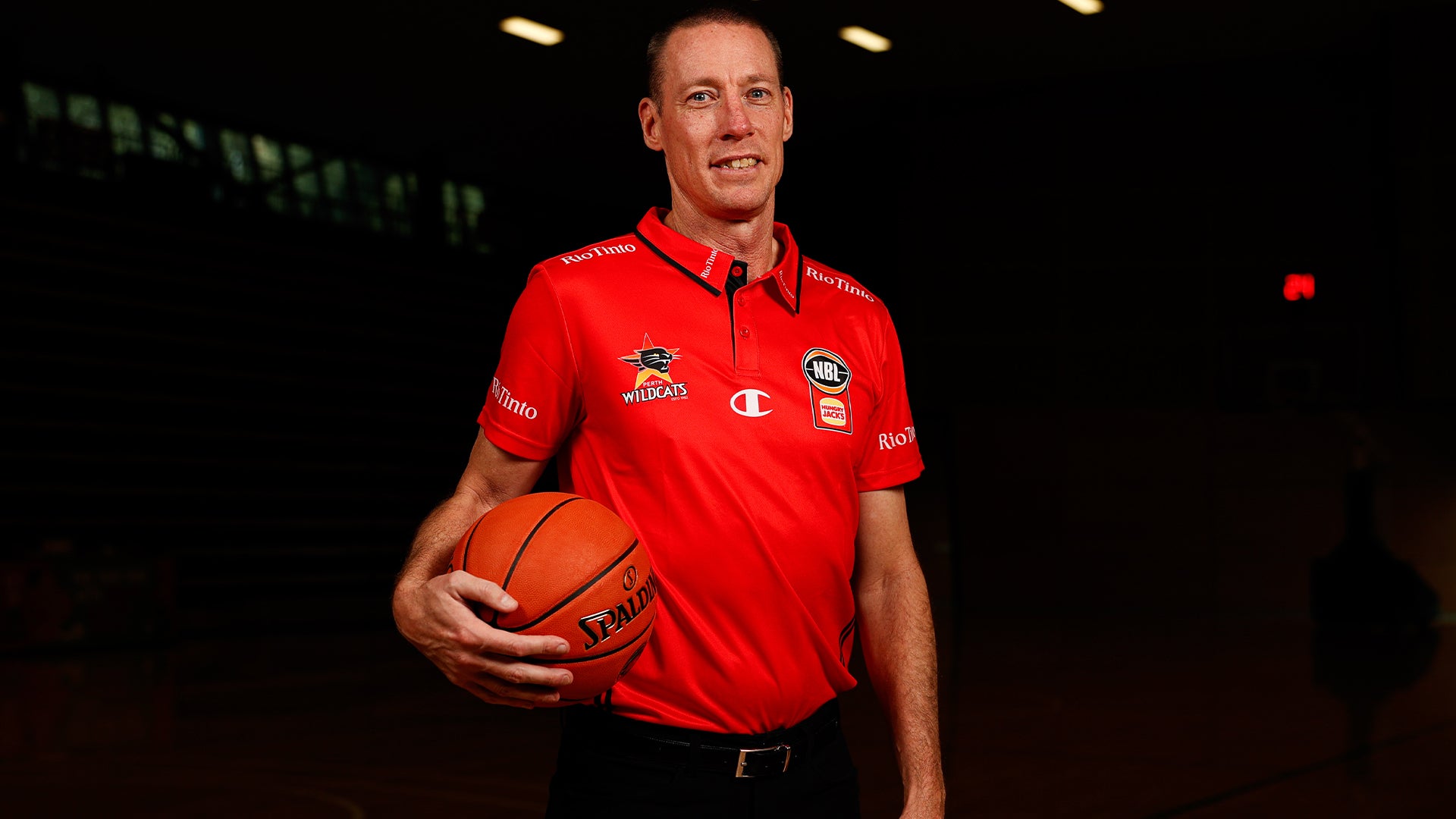
John Rillie on roster changes for NBL27, pressures from fans and media and Bryce Cotton/Trevor Gleeson narratives
June 6, 2026


NICKNAME/S: Nerd
BIO: Born and raised in Canberra (ACT), Jesse Kendall James Wagstaff attended Radford College before accepting a scholarship to attend the ACT Academy of Sport.
Wagstaff is one of only 7 players who played 15 seasons with one NBL team. Tom Abercrombie, Mat Campbell, Brett Maher, Andrew Gaze, Ricky Grace and Mark Davis being the only other players to achieve the feat.
Jesse Wagstaff made his NBL debut with the Perth Wildcats at 23 years of age. He scored 10 points in his first game.
Coming out of college, Wagstaff was set to sign with the South Dragons, the reigning NBL champions. After the team folded in May 2009, he had a one-game stint in the SEABL with the Canberra Gunners before signing a two-year deal with the Perth Wildcats in June 2009.
Following the departures of Peter Crawford, Ben Knight, Alex Loughton, Chris Goulding, Darnell Hinson and Isiah Victor, Perth entered the off-season with its future uncertain, coming within weeks of folding unless the club could raise one million dollars in sponsorship. The NBL was facing similar financial problems, and the Wildcats worked alongside the remaining clubs to help reform the competition before the 2009/10 season was given the green light.
Coming out of Metro State, Jesse Wagstaff (via Canberra) had been preparing to join reigning champions South Dragons before the club folded in May 2009. After playing one game with the Canberra Gunners, the 23-year-old forward signed a two-year deal with Perth in June.
The Wildcats appointed Rob Beveridge as head coach and retained Shawn Redhage, Stephen Weigh, Brad Robbins and Paul Rogers, while Damian Martin (via Sydney), Drew Williamson (via Townsville), Luke Schenscher (via Adelaide), Martin Cattalini (via Cairns) and import Kevin Lisch were added to the roster. Rogers handed the captaincy to Redhage before an elbow and triceps injury suffered in Perth’s second game ended his season and ultimately his playing career, with import Galen Young signed as his replacement.
Perth opened the season in Wollongong, where the rookie (10 points in 14 minutes) made an immediate impact off the bench, but Tywain McKee (22 points and 7 assists) led the Hawks to a 94-92 win.
Wagstaff (9 points and 3.6 rebounds across 33 games) benefitted from the increased opportunities created by Rogers’ absence, earning regular minutes in the frontcourt and becoming an important scorer off Beveridge’s bench.
Redhage (15.1 points and 5.4 rebounds across 33 games) and Lisch (12.1 points across 33 games) led Perth offensively, while Weigh (10.3 points and 3.2 rebounds across 33 games), Schenscher (10 points and 6.2 rebounds across 33 games), Martin (8.3enscher (10 points and 6.2 rebounds across 33 games), Martin points, 4.6 rebounds, and 1.6 steals across 32 games) and Cattalini (7.3 points across 32 games) were the other key contributors. Young (6 points and 4.5 rebounds across 16 games) provided additional frontcourt depth following his mid-season arrival.
After averaging only 11.4 points across his first five NBL games, Lisch (21 points in 27 minutes) broke through against Melbourne on October 25, while Wagstaff (14 points and 6 rebounds) delivered his season-high scoring performance and Redhage (15 points and 10 rebounds) helped Perth hold on for a 93-90 win.
On November 8, Wagstaff (13 points, 4 rebounds, and 1 steal) produced another strong performance as Redhage (22 points and 9 rebounds), Weigh (14 points) and Schenscher (11 points and 7 rebounds) led Perth past New Zealand 94-74, while Tony Ronaldson (13 points) and Dillon Boucher (10 points) were best for the Breakers.
By January, Perth had emerged as the clear frontrunner at 13-8 before securing the minor premiership with a 17-11 record, with Wagstaff named NBL Rookie of the Year, Redhage earning All-NBL First Team honours and Martin receiving an Australian Boomers call-up after delivering his best season to date.
Perth opened the semifinals at Challenge Stadium with an 81-68 win over Gold Coast, with Wagstaff (3 points) contributing off the bench alongside Lisch (19 points, 3 rebounds, and 3 assists), Martin (11 points, 6 rebounds, and 2 steals) and Redhage (11 points, 4 rebounds, and 3 assists), while James Harvey (18 points) and Anthony Petrie (12 points) led the Blaze.
Game two moved to the Gold Coast, where Wagstaff (7 points and 4 rebounds), Lisch (18 points, 3 rebounds, and 3 assists), Redhage (14 points and 2 rebounds), Schenscher (11 points and 4 rebounds) and Cattalini (10 points and 7 rebounds) helped Perth overturn a 15-point fourth-quarter deficit and win 82-78, while Harvey (28 points), Craig Bradshaw (18 points and 4 assists) and Chris Goulding (16 points) led the Blaze.
The Grand Final opened in Perth, where Wagstaff (8 points) added scoring off the bench as Redhage (15 points and 8 rebounds), Lisch (15 points, 3 rebounds, 2 assists, 3 steals, and 1 block) and Young (11 points and 7 rebounds) led the Wildcats to a 75-64 win, while Tim Coenraad (16 points and 3 rebounds) and Mat Campbell (13 points) were Wollongong’s best.
Game two moved to Wollongong, where Wagstaff (6 points and 5 rebounds), Lisch (11 points), Weigh (10 points) and Redhage (9 points) struggled to match Cameron Tragardh (28 points), Luke Martin (11 points) and Rhys Martin (10 points) as the Hawks won 75-63 and forced a deciding game.
The series returned to Perth for game three, where the Wildcats recovered from an 11-point second-quarter deficit behind Lisch (29 points and 5 rebounds), Martin (17 points and 2 rebounds), Weigh (13 points and 7 rebounds) and Wagstaff (10 points and 7 rebounds), who delivered his best performance of the postseason, while Glen Saville (13 points and 5 rebounds), Rhys Martin (12 points), Cameron Tragardh (12 points) and Dave Gruber (11 points and 4 rebounds) led Wollongong.
Lisch was named Finals MVP after averaging 18 points and 4 rebounds across the series as Perth defeated Wollongong 96-72 to claim a record fifth NBL championship.
2010/11
During the 2010 off-season, the Perth Wildcats focused on retaining key players and strengthening their roster. They successfully re-signed star import Kevin Lisch despite lucrative offers from European clubs and secured Shawn Redhage on a three-year deal. Additionally, they added Matthew Knight, who had previously played with Damian Martin and coach Rob Beveridge at the Sydney Spirit before the team folded, leading him to pursue a career overseas.
Knight’s debut season with the Wildcats began positively, but a left calf injury suffered on December 12, 2010, against the Melbourne Tigers sidelined him for two months. Further injuries to both Jesse Wagstaff (who was averaging 11.4 points per game) and Shawn Redhage (18 points and 5.8 rebounds per game) threw the Wildcats’ season into further disarray. Redhage’s injury was particularly severe and initially feared to be career-ending. He dislocated his left hip during the Wildcats’ 77–76 loss to the Adelaide 36ers in Adelaide, potentially requiring a hip replacement. The injury occurred when Redhage lunged for a contested ball, causing the head of his femur to punch through his pelvis, breaking the bone and dislocating the joint.
Following Redhage’s injury, the Wildcats lost four consecutive games and won only two of their remaining eight matches. Kevin Lisch (13.5 points per game) delivered another impressive season, scoring in double figures in all but nine games, helping the Wildcats finish in fourth place with a 16–12 record.
Perth faced the first-placed New Zealand Breakers in the semifinals. Behind a 29-point effort from Lisch, the Wildcats won Game One of the series in Auckland with a commanding 101–78 victory. However, the Breakers rebounded to win Games Two (93–89) and Three (99–83), eventually going on to defeat Cairns to win the 2011 NBL Championship. Jesse Wagstaff averaged 8.4 points, 4.3 rebounds, and 1.1 assists per game during the season. Kevin Lisch and Shawn Redhage were named co-MVPs for the Wildcats, and Damian Martin claimed the league’s Best Defensive Player award for the first time.
2011/12
In May 2011, Jesse Wagstaff re-signed with the Wildcats on a three-year deal, solidifying his role in the team’s future. Perth aimed to return to the top by adding 7’2″ center Luke Nevill, with the goal of re-creating the “Perth Wall” alongside Matthew Knight, Shawn Redhage, and Wagstaff, who was returning to action after a career-threatening injury suffered the prior season.
Shawn Redhage made a remarkable return in the Wildcats’ season opener against the Adelaide 36ers on October 8, 2011. In the same arena where his horrific injury had occurred nine months earlier, Redhage scored a game-high 26 points (including 6-of-9 from three-point range). Kevin Lisch added 23 points on 73% shooting, and Jesse Wagstaff contributed 22 points on 50% shooting. The trio led the Wildcats to a dominant 102–69 victory, handing Adelaide their biggest opening-night loss in team history.
After narrowly missing out on the opening round’s Player of the Week award, Redhage earned the honor in Round 2 by recording 21 points, seven rebounds, and four assists in a 92–76 win over Melbourne on October 14, 2011. He concluded the season by earning Player of the Week honours for Round 25 after scoring 19 points, along with seven rebounds, two steals, one assist, and one blocked shot, helping the Wildcats finish the regular season with a road win over Melbourne (72–71).
Kevin Lisch, who had re-signed with the Wildcats on a two-year deal, was labeled the “best import in the league” by coach Rob Beveridge at the start of the year. He lived up to that billing during the early rounds of the season. With Damian Martin injured, Lisch ran the point for the first few weeks, averaging 22.0 points, 3.5 rebounds, 2.8 assists, and 1.3 steals per game in October, guiding the Wildcats to a 3–1 record. Lisch finished the season averaging 17.3 points, 3.7 rebounds, and 3.2 assists, becoming the league’s leading scorer—the first Wildcats player to do so—and was awarded the NBL Most Valuable Player.
Shawn Redhage (13.8 points, 4.4 rebounds, and 2.6 assists), Jesse Wagstaff (11.4 points, 3.6 rebounds, and 1.3 assists), and Matthew Knight (10.8 points, 5.4 rebounds, and 1.3 assists) were instrumental to the Wildcats’ success. Damian Martin (7.4 points, 5.6 rebounds, and 3.5 assists) claimed his second consecutive Best Defensive Player award.
Perth finished the regular season with a 19–9 record, entering the playoffs as the second seed. After defeating the Gold Coast Blaze in the semifinals (2–1), they faced the New Zealand Breakers in the Grand Final. After losing Game One in Auckland, the Wildcats appeared to be in trouble in Game Two at home. Trailing for much of the game, Perth managed to snatch a thrilling one-point lead with less than a minute to play and held on to defeat the Breakers 87–86. Redhage secured the victory with a memorable last-second block on Breakers guard CJ Bruton.
The series returned to Auckland for the deciding Game Three, where the Wildcats suffered a six-point loss (79–73) in front of 9,258 fans—the largest NBL crowd of the season. Despite the defeat, the Wildcats’ performance throughout the season solidified their status as one of the league’s premier teams.
2012/13
Before the 2012/13 season, the Perth Wildcats moved into their new home, the state-of-the-art Perth Arena, a 13,500-seat stadium that would set the stage for an eventful year. After undergoing off-season shoulder surgery, Matthew Knight was expected to be the team’s primary force in the paint. He embraced this role effectively, earning the NBL’s Player of the Week honours for his 20-point, nine-rebound performance in the Wildcats’ season-opening win over the New Zealand Breakers.
On October 14, against the Townsville Crocodiles, Kevin Lisch played his 100th consecutive NBL game, coinciding with coach Rob Beveridge’s 100th game for the Wildcats. Shortly after, import Michael Dunigan was brought in as a short-term replacement for Knight, who missed four games due to injury. Dunigan quickly became a fan favorite with his thunderous dunks and athletic blocks.
The team faced another hurdle when co-captain Brad Robbins abruptly retired just eight games into the season, citing a loss of motivation and passion for the game. Not long after, Cameron Tovey also announced he would retire at the end of the season.
Amidst these challenges, Jesse Wagstaff stepped up significantly, averaging 10.3 points, 3.7 rebounds, and 1.2 assists per game. His contributions were pivotal in helping the Wildcats finish second on the ladder with a 22–6 record. Both Lisch and Knight were named to the All-NBL First Team.
Perth swept the Wollongong Hawks in the semifinals to advance to the 2013 NBL Grand Final series, marking their third consecutive playoff series against the New Zealand Breakers. Another setback struck when Damian Martin, who had joined Shawn Redhage as co-captain after Robbins’ retirement, won his third consecutive Best Defensive Player award but was ruled out of the Grand Final with an Achilles injury. To fill the void, Brad Robbins was rushed back into the team. However, without Martin, the Wildcats were defeated by the Breakers in two straight games, with New Zealand securing their third consecutive championship in 2013.
In late May 2013, both Kevin Lisch and coach Rob Beveridge parted ways with the Wildcats after four seasons. Lisch ended his tenure in Perth to pursue opportunities in Europe, finishing with career averages of 14.6 points, 3.1 rebounds, and 2.7 assists per game.
2013/14
Two consecutive Grand Final losses to the New Zealand Breakers brought the Rob Beveridge era to an end, with Beveridge, Kevin Lisch (to France), Cameron Tovey (retired) and Brad Robbins (retired) all leaving Perth during the off-season.
Trevor Gleeson was appointed head coach and inherited a returning core of Damian Martin, Shawn Redhage, Jesse Wagstaff, Matthew Knight and Greg Hire, while new imports James Ennis and Jermaine Beal were joined by Tom Jervis (via East Perth), Drake U’u and Erik Burdon (via Mount Gambier).
Managing director Nick Marvin and Gleeson watched Ennis at the NBA Summer League after he was selected with the 50th pick in the 2013 NBA Draft and believed they had found the player capable of replacing Lisch, while Damian Martin was named sole captain after sharing the role with Redhage the previous season.
Mathiang Muo was also signed during the off-season, but a torn left Achilles tendon suffered during Perth’s second official preseason training session ruled him out for the entire season.
Perth opened the season against Adelaide, where the returning forward (15 points and 7 rebounds) provided an immediate lift off the bench and Ennis (25 points and 4 rebounds) set the record at the time for the most points scored by a Wildcat on NBL debut, while Daniel Johnson (28 points and 6 rebounds), Gary Ervin (14 points, 5 rebounds, and 7 assists) and Luke Schenscher (13 points) led the 36ers in an 83-80 Perth win.
Wagstaff (10.5 points and 3.7 rebounds across 33 games) appeared in every game, shot 42.7 per cent from beyond the three-point line and provided Gleeson with a reliable scoring option at either forward position.
Ennis was named Player of the Month for October as Perth won its first eight games, while repeated injuries to Knight led to Jarrad Prue being signed as a short-term replacement in October and Jeremiah Trueman returning to the club on an injury-replacement deal in January.
The Wildcats held a 12-1 record at the All-Star break and remained on top of the ladder despite Knight missing half the season.
On January 4, Wagstaff (20 points and 5 rebounds) made all three of his three-point attempts and produced his first 20-point game of the season, with Ennis (25 points and 8 rebounds), Beal (16 points) and Redhage (11 points, 9 rebounds, and 5 assists) also contributing before Wollongong defeated Perth 96-91 in overtime.
A road game against Melbourne on February 2 saw Wagstaff (18 points and 4 rebounds) hit three three-pointers as Beal (21 points and 6 assists), Ennis (16 points, 12 rebounds, 3 assists, and 5 steals) and Jervis (12 points, 5 rebounds, and 3 blocks) led Perth to an 81-57 victory, while Mark Worthington (14 points and 8 rebounds) and Mustapha Farrakhan (12 points) were Melbourne’s best.
Five days later, Wagstaff (24 points) delivered his best game of the season, shooting 8-of-16 from the field and 5-of-5 from the free-throw line, but Steven Markovic (22 points and 6 assists), Brian Conklin (16 points and 5 rebounds) and Todd Blanchfield (14 points and 9 rebounds) led Townsville to an 88-75 win.
Perth completed the regular season with an 86-65 win over Wollongong as Wagstaff (13 points, 2 rebounds, and 2 assists), Ennis (17 points), Beal (15 points and 6 rebounds) and Jervis (8 points, 7 rebounds, and 3 blocks) led the Wildcats, while Tim Coenraad (13 points) and Rotnei Clarke (10 points and 4 assists) were best for the Hawks.
The victory secured Perth first place with a 21-7 record and extended the club’s postseason streak to 28 consecutive seasons.
Ennis (21.2 points, 7.1 rebounds, and 1.4 steals across 33 games) and Beal (15.6 points and 3.4 assists across 33 games) formed the league’s best import combination, while Redhage (13.6 points and 4.5 rebounds across 33 games), Knight (10.1 points, 5.5 rebounds, and 1.2 blocks across 18 games), Martin (7.6 points, 4.7 rebounds, 4.1 assists, and 2.2 steals across 33 games) and Jervis (5.1 points, 4.8 rebounds, and 1.2 blocks across 33 games) completed Perth’s main rotation.
Ennis was selected to the All-NBL First Team, while Beal and Martin were named to the All-NBL Second Team, Martin won the NBL Best Defensive Player Award for the fourth consecutive season and Jervis was named NBL Rookie of the Year.
Perth opened the semifinals at Perth Arena with a 91-79 win over Wollongong behind Ennis (25 points and 9 rebounds), Jervis (14 points and 5 rebounds), Redhage (12 points and 5 rebounds) and Wagstaff (11 points and 7 rebounds), while Clarke (23 points and 4 assists), Oscar Forman (18 points and 5 rebounds) and Rhys Martin (11 points) led the Hawks.
Game two moved to Wollongong, where Wagstaff (2 points, 3 rebounds, and 1 block), Redhage (26 points and 6 rebounds), Ennis (20 points and 8 rebounds) and Beal (15 points and 4 assists) led Perth to an 80-61 win, while Coenraad (15 points and 4 rebounds), Clarke (11 points), Rhys Martin (10 points and 3 assists) and Dave Gruber (9 points and 10 rebounds) were Wollongong’s best.
Perth’s straight-sets victory sent the Wildcats into the Grand Final against Adelaide, who defeated Melbourne in three games on the other side of the bracket.
The Grand Final series opened in Perth, where Wagstaff (5 points and 2 rebounds) contributed off the bench as Ennis (30 points, 10 rebounds, and 4 assists), Beal (19 points), Redhage (13 points, 5 rebounds, and 4 assists) and Hire (10 points and 7 rebounds) led the Wildcats to a 92-85 win, while Johnson (18 points and 8 rebounds), Anthony Petrie (14 points and 6 rebounds), Adam Gibson (13 points and 9 assists) and Schenscher (12 points and 7 rebounds) led Adelaide.
Game two moved to Adelaide in front of 8,127 fans, where Wagstaff (12 points, 4 rebounds, 2 assists, and 2 steals), Beal (19 points, 6 rebounds, and 3 assists), Ennis (14 points and 9 rebounds), Knight (14 points) and Martin (11 points, 4 rebounds, 4 assists, and 3 steals) kept Perth close, but Ervin (23 points, 5 rebounds, and 6 assists), Gibson (18 points, 9 rebounds, and 7 assists) and Johnson (18 points) carried the 36ers to an 89-84 win.
The deciding game attracted 13,498 members of Perth’s Red Army, with Ennis (9 points and 4 steals) limited by foul trouble before Redhage (16 points, 4 rebounds, 3 assists, and 2 steals) scored 10 points in the opening quarter to establish control.
Martin (14 points and 6 rebounds) restricted Ervin (4 points) at the other end, while Beal (15 points and 4 assists), Hire (9 points, 9 rebounds, and 5 assists), Knight (10 points) and Wagstaff (3 points and 3 rebounds) provided support, with Petrie (20 points and 4 rebounds), Johnson (9 points) and Gibson (8 points) leading Adelaide.
Beal was named Grand Final MVP after averaging 17.6 points and shooting 48 per cent from beyond the three-point line during the series.
Perth defeated Adelaide 93-59 to win the series 2-1 and claim its sixth NBL championship.
2014/15
Perth’s championship roster lost James Ennis (to Miami) and Erik Burdon (to Mount Gambier), but Trevor Gleeson retained almost the entire group that had defeated Adelaide in the Grand Final.
Shawn Redhage signed a three-year contract, Damian Martin agreed to a two-year deal with an additional season option and Jesse Wagstaff, Jermaine Beal, Matthew Knight, Greg Hire, Tom Jervis and Drake U’u all returned, while DeAndre Daniels (via Connecticut) and Earnest Ross (via Missouri) were recruited as the team’s new additions.
Daniels arrived after being selected with the 37th pick in the 2014 NBA Draft, taking the second import position vacated by Ennis, while Martin continued as Perth’s captain.
The Wildcats opened their championship defence at home against New Zealand, where the championship forward (3 points and 2 assists) contributed off the bench and Redhage (20 points), Daniels (19 points, 6 rebounds, 3 steals, and 2 blocks) and Beal (12 points and 5 assists) led Perth before the Breakers won 80-70.
Wagstaff (8.5 points and 4 rebounds across 30 games) appeared in every regular-season and postseason game, again providing frontcourt depth and outside shooting from Perth’s bench.
Days after the season opener, Hire tore his left calf at training and was sidelined for three months, leading to Mathiang Muo being activated as an injury replacement after spending the previous season recovering from a torn Achilles.
Muo played 15 games before being deactivated on January 15 following Hire’s return to the roster.
Against Sydney on October 24, Wagstaff (15 points and 2 rebounds) combined with Beal (16 points), Redhage (12 points, 4 rebounds, and 3 assists), Knight (10 points, 8 rebounds, and 5 assists) and Martin (2 points, 9 rebounds, 8 assists, and 9 steals) as Perth defeated the Kings 84-63, with Martin recording the second-most steals in a game by a Wildcat behind Ricky Grace’s 10.
Ben Madgen (15 points and 5 rebounds), Jason Cadee (12 points, 3 rebounds, and 2 assists) and Josh Childress (11 points, 3 rebounds, 4 assists, and 3 blocks) led Sydney, but the game became remembered for Childress being knocked to the floor by an off-ball screen before running at Wagstaff and delivering a raised forearm across his upper body.
An NBL tribunal cleared Childress of striking with his elbow but suspended him for one game and fined him $3,750 for unduly rough play, with another $3,750 fine imposed for bringing the game into disrepute.
On December 5, Wagstaff (16 points and 5 rebounds) connected on four of his five three-point attempts as Daniels (20 points and 8 rebounds), Beal (12 points) and Knight (10 points and 9 rebounds) led Perth to a 79-55 victory over Wollongong, while Oscar Forman (16 points and 5 rebounds), Rhys Martin (12 points and 4 rebounds) and Gary Ervin (10 points and 5 assists) were the Hawks’ best.
Wagstaff (23 points and 7 rebounds) delivered his best game of the season against Adelaide on January 16, shooting 8-of-17 from the field and 6-of-6 from the free-throw line, while Daniels (24 points and 6 rebounds), Redhage (19 points, 8 rebounds, and 5 assists) and Jervis (14 points, 9 rebounds, and 5 assists) helped Perth score 102 points.
Brock Motum (31 points and 13 rebounds), Jamar Wilson (19 points, 5 rebounds, and 4 assists) and Petrie (15 points and 4 rebounds) carried Adelaide to a 106-102 win.
One week later, Wagstaff (19 points and 7 rebounds) hit three three-pointers as Beal (21 points and 3 assists), Jervis (12 points and 11 rebounds) and Martin (8 points, 11 rebounds, and 3 assists) helped Perth defeat Townsville 93-85 in overtime, overcoming Conklin (28 points and 9 rebounds), Blanchfield (18 points, 7 rebounds, and 3 assists) and Markovic (15 points, 6 rebounds, and 5 assists).
Injuries continued to impact Perth’s frontcourt, with Knight missing six games due to a broken toe and appearing in 24, while Hire was restricted to a career-low 11 games because of his calf problems. Redhage later suffered a stress fracture in his right foot which ruled him out of the entire postseason.
Perth finished its regular season with an 81-71 win over Townsville as Wagstaff (3 points, 1 rebound, and 1 assist), Daniels (24 points, 11 rebounds, 4 steals, and 2 blocks), Redhage (16 points) and Jervis (14 points and 8 rebounds) led the Wildcats, while Conklin (17 points, 6 rebounds, and 4 assists), Blanchfield (14 points, 12 rebounds, and 3 assists) and Markovic (14 points and 5 assists) were best for the Crocodiles. The Wildcats finished fourth with a 16-12 record and qualified for the postseason for the 29th consecutive year.
Beal (16.4 points across 30 games) became Perth’s primary offensive option, led the league with 69 three-pointers and won the Gordon Ellis Medal as the Wildcats’ club MVP, while Daniels (14.8 points and 7.7 rebounds across 30 games) finished second in the club’s MVP voting.
Redhage (11.4 points and 3.9 rebounds across 28 games), Knight (10.5 points and 7 rebounds across 24 games), Jervis (7.1 points and 4.9 rebounds across 30 games) and Martin (6.2 points, 5.8 rebounds, 4.1 assists, and 2.7 steals across 30 games) were the other main contributors.
Knight was selected to the All-NBL Second Team and received Perth’s Coaches Award, Jervis was named the club’s Most Improved Player and Martin won the NBL Best Defensive Player Award for the fifth consecutive year, drawing level with Darnell Mee for the most wins in league history at the time.
Perth opened the semifinals in Cairns without Redhage, where Wagstaff (12 points and 1 block), Beal (20 points and 4 rebounds), Daniels (14 points, 4 rebounds, and 2 blocks), Martin (7 points, 8 rebounds, 5 assists, and 6 steals) and Knight (8 points and 9 rebounds) kept the Wildcats close, but Scottie Wilbekin (23 points, 10 rebounds, and 4 assists), Cameron Tragardh (16 points, 7 rebounds, and 3 assists) and Stephen Weigh (11 points) led the Taipans to a 71-64 win. Hire suffered another calf injury during game one and was ruled out of the second game.
Game two moved to Perth, where Wagstaff (0 points, 10 rebounds, and 2 assists), Beal (21 points and 4 assists), Knight (18 points and 10 rebounds), Martin (9 points, 3 rebounds, and 2 assists) and Daniels (9 points and 5 rebounds) were unable to extend the series, while Wilbekin (16 points, 11 rebounds, and 6 assists), Weigh (16 points), Cameron Gliddon (11 points and 5 rebounds), Alex Loughton (11 points, 6 rebounds, and 3 assists) and Matt Burston (10 points and 5 rebounds) led Cairns.
Cairns defeated Perth 80-68 to complete the semifinal sweep.
2014/15
In 2014, the reigning NBL champions, the Perth Wildcats, returned with nearly their entire roster intact to pursue back-to-back titles. They successfully re-signed Shawn Redhage and Damian Martin, both on three-year deals, and retained key players Jermaine Beal, Matthew Knight, Greg Hire, and Tom Jervis. Although they lost star import James Ennis to the NBA, they secured another talented player in DeAndre Daniels (14.8 points and 7.7 rebounds) as their second import.
This season, Redhage handed over the captaincy to Damian Martin. The Wildcats faced significant injury challenges throughout the year, especially in their frontcourt. Matthew Knight was limited to just six games, Greg Hire appeared in 19, and Redhage suffered a stress fracture in his right foot, causing him to miss the entire finals campaign.
Jesse Wagstaff played in 30 games, averaging 8.5 points, 4 rebounds, and 1 assist per game. He gained international attention when he was on the receiving end of a vicious clothesline from Sydney Kings import Josh Childress.
An NBL tribunal cleared Childress of striking with his elbow but banned him for one game and fined him $3,750 for unduly rough play. He was fined an additional $3,750 for bringing the game into disrepute.
With the departure of Ennis, Jermaine Beal (16.4 points, 2.5 rebounds, and 2.6 assists) became Perth’s primary offensive weapon and was awarded the club’s MVP at the end of the season. Despite their injury-plagued roster, the Wildcats managed to finish in fourth place with a 16–12 record. Matthew Knight earned a spot on the All-NBL Second Team, and Damian Martin was named the NBL’s Best Defensive Player for the fifth consecutive year.
Perth was swiftly eliminated by the Cairns Taipans in the semifinals. The Wildcats struggled to contain Taipans’ guard Scottie Wilbekin, who amassed 28 points, 10 rebounds, and 4 assists in Game One (71-64), followed by 16 points, 11 rebounds, and 6 assists in Game Two (80-68).
2015/16
Following an injury-riddled season that ended in a semi-final defeat—much like the 2010/11 season—coach Trevor Gleeson entered the 2015/16 campaign confident that he had assembled a team capable of securing Perth’s seventh championship. Acknowledging chemistry issues from the previous year, the Wildcats added high-profile recruits Casey Prather and Nathan Jawai, as well as backup guard Jarrod Kenny, to improve team balance.
With Nathan Jawai’s arrival, an injury-free Matthew Knight was able to shift to his natural position of power forward for the first time, while Shawn Redhage transitioned to a bench role. Jesse Wagstaff continued to be a key contributor, providing valuable minutes and experience in the frontcourt rotation.
The season’s first month was marred by a significant setback when Damian Martin suffered a broken jaw and lost teeth due to an errant elbow from Townsville Crocodiles forward Brian Conklin. Despite initially being ruled out for three weeks, Martin made a remarkable return by the end of the month. In February, he celebrated his 200th game for the Wildcats.
Perth battled Melbourne United for the top spot on the ladder all season. A highlight came in December when Jermaine Beal notched a career-high 40 points, sinking 10 three-pointers, as the Wildcats dismantled Melbourne 113–83.
In January, Shawn Redhage played his 350th NBL game but averaged under 10 points per game (6.6 points) for the first time in his career. Jesse Wagstaff stepped up, averaging 9.3 points, 4 rebounds, and 1.6 assists per game, bolstering the team’s performance during crucial stretches.
The Wildcats concluded the regular season with an 18–10 record, finishing in second place and reaching the playoffs for the 30th consecutive year—a streak unmatched in any other Australian or American professional sports league.
In the semi-finals, Perth faced the Rob Beveridge-led Illawarra Hawks. The Wildcats dominated Game One, with Casey Prather leading the scoring with 19 points in an 80–68 victory. However, the Hawks evened the series in Game Two, thanks to an outstanding performance from Oscar Forman, who scored 21 points to defeat Perth 104–87.
Back on home soil for the decisive Game Three, the Wildcats secured the series with a convincing 89–74 win. Jermaine Beal led the team with 17 points, and Prather added 15 points, including a thunderous one-handed slam over A.J. Ogilvy early in the fourth quarter. Jesse Wagstaff continued to provide steady play off the bench, helping set up an NBL Finals showdown against the reigning champions, the New Zealand Breakers.
In Game One of the Grand Final series, the Wildcats relied on Jawai’s inside presence, Prather’s athleticism and tough defense, and Kenny’s support of captain Damian Martin—addressing critical areas they had lacked the previous season. They secured an 82–76 victory to take a 1–0 series lead. In Game Two back in New Zealand, the Breakers leveled the series with a 72–68 win, propelled by import Cedric Jackson’s near triple-double of 13 points, 9 rebounds, and 8 assists.
With the deciding Game Three in Perth and 13,090 members of the “Red Army” in attendance, the Wildcats’ core—including Jesse Wagstaff, Redhage, Knight, Greg Hire, Beal, and Tom Jervis—ensured history did not repeat itself. Casey Prather (19 points) and Jermaine Beal (14 points) led the scoring, but it was Damian Martin’s inspirational defensive display that stood out. Martin was named Grand Final MVP after holding star Breakers guard Cedric Jackson scoreless in the deciding game. The Wildcats claimed their seventh championship with a commanding 75–52 victory.
2016/17
In April 2016, the Perth Wildcats re-signed both Damian Martin (on a three-year deal) and Matthew Knight (two-year deal), even as Knight was recovering from shoulder stabilisation surgery on his left arm. Just before the Wildcats’ opening game, Knight was ruled out for two months after suffering a subluxation of his right shoulder during training. To fill the void, the team added free agent Lucas Walker, who had been training with Melbourne after not being re-signed by Adelaide, as an injury replacement player.
After incorporating Walker, the Wildcats started the season strong with a 4–1 record. Once Knight was cleared to return, Walker was removed from the active roster but remained with the team as a training player. Knight made his season debut in a win over Illawarra (80–73), contributing 12 points and 8 rebounds. However, further injuries to Damian Martin and Jarrod Kenny depleted the team’s backcourt.
During a victory over Melbourne (72–69), Martin collected a career-high 13 rebounds but received a heavy knock to the head. X-rays revealed a fracture to the left side of his jaw, ruling him out for two weeks. Remarkably, he returned after missing just one game but then suffered a grade three MCL tear in his left knee against Adelaide on November 5, sidelining him for 10 to 12 weeks.
By December, the Wildcats had slumped to last place with a 7–9 record. An import shuffle saw Jaron Johnson (13.1 points, 4.6 rebounds, and 1.8 assists) replaced by three-point specialist Andre Ingram. In a bizarre twist, Ingram (8.5 points, 2 rebounds, 1.5 assists, and 1.0 steals) left the team after just two games, citing mental health issues. Johnson was temporarily reinstated before being released again in December when the Wildcats seized the opportunity to sign former NBA guard Bryce Cotton. Around this time, veteran Shawn Redhage (2.7 points, 1.2 rebounds, and 0.5 assists) announced he would retire at the end of the season.
Amidst the roster turbulence, Casey Prather (19.5 points, 4.6 rebounds, 3.5 assists, and 1.6 steals) continued to shoulder the offensive load. This included a career-high 39 points in a 92–89 win over Melbourne United on December 9. In February, Prather scored 29 points in a win over the Sydney Kings (101–74) and followed up with 26 points and a career-high 11 assists in a 96–94 victory over United two days later. Damian Martin (4.8 points, 4.8 rebounds, 3.3 assists, and 1.7 steals) returned to form after his injuries, and in his 250th NBL game on January 28, he scored a season-high 11 points along with six rebounds and four assists in a win over Melbourne (73–71).
The addition of Bryce Cotton transformed the Wildcats, who won eight of their remaining twelve regular-season games, including two must-win games to reach the playoffs. Cotton (23.1 points, 3.2 rebounds, 3.1 assists, and 1.3 steals) finished as the league’s leading scorer. Prather finished second in NBL MVP voting with 107 votes, behind Jerome Randle (147) of the Adelaide 36ers, and was selected to the All-NBL First Team. Jesse Wagstaff continued his crucial role off the bench, playing all 33 games and averaging 9.0 points, 2.8 rebounds, and 1.2 assists.
In the semifinals, Perth (15–13) faced Cairns (15–13) at home. Cotton (34 points, 5 rebounds, and 5 assists) and Prather (22 points, 4 rebounds, 3 assists, and 3 steals) led the way offensively for an easy Game One win (91–69). In Game Two, the Wildcats closed out the series with a 74–66 victory. Prather led the team with 24 points, 10 rebounds, and 4 assists, while Jesse Wagstaff had a significant impact off the bench with 20 points, 5 rebounds, and 3 steals.
In the NBL Grand Final series against the Illawarra Hawks, Prather (22 points, 6 rebounds, and 5 assists), Cotton (18 points, 6 rebounds, and 4 assists), and Knight (18 points, 11 rebounds, and 2 steals) delivered a balanced offensive attack to win the opening game by twelve points (89–77). Game Two moved to Wollongong, but the Wildcats continued their playoff winning streak with another 89–77 victory. Cotton (20 points, 3 rebounds, and 3 steals) and Prather (18 points, 4 rebounds, and 6 assists) were the primary scorers, and five Wildcats scored in double figures.
Perth won Game Three comfortably (95–86), finishing undefeated in the postseason and claiming their eighth championship—winning back-to-back titles for the first time since 1991. Several records were set during the Game Three win. Most notably, Bryce Cotton was named Grand Final MVP after scoring 45 points, the most ever in an NBL Grand Final game. His average of 27.7 points per game over the series was the highest by any player in 20 years.
Coach Trevor Gleeson became the first in Perth’s history to win back-to-back championships. Casey Prather had a historic season, being voted Wildcats MVP for the second consecutive year—the only player to be a club MVP in more than one championship season—and becoming the first Perth player to win two championships in his first two seasons.
Jesse Wagstaff continued to play a pivotal role within the Wildcats’ bench unit, contributing consistent performances throughout the season and playoffs. His experience and leadership were invaluable assets as the team navigated a challenging season to emerge as champions once again.
2017/18
Following consecutive championship seasons, Perth lost two-time club MVP Casey Prather (to Melbourne), Jameel McKay (to Spain) and Shawn Redhage (retired), forcing Trevor Gleeson to reshape the roster around returning Bryce Cotton, Matthew Knight, Angus Brandt, Damian Martin, Jarrod Kenny and Greg Hire.
Devondrick Walker (via Delaware) initially signed as Prather’s replacement, but a fractured left foot suffered during the preseason ruled him out before playing a regular-season game. The Wildcats replaced him with JP Tokoto (via Rio Grande Valley), while Derek Cooke Jr. (via Northern Arizona) replaced McKay and Lucas Walker was elevated from training player to the full-time roster.
Perth opened the season at home against Brisbane, where Jesse Wagstaff (18 points) hit consecutive three-pointers during the fourth quarter, while Cotton (24 points, 4 rebounds, and 3 assists), Tokoto (16 points and 4 rebounds) and Lucas Walker (14 points, 4 rebounds, and 3 assists) led the Wildcats to a 96-86 win. Travis Trice (27 points, 5 rebounds, and 4 assists), Daniel Kickert (18 points) and Perrin Buford (13 points and 5 rebounds) were Brisbane’s best.
Wagstaff (9 points and 3.1 rebounds across 29 games) remained one of Gleeson’s most dependable options at either forward position, providing scoring and outside shooting while appearing in all but one of Perth’s regular-season and postseason games.
Knight had announced that he would retire at the end of the season, but three head knocks across the opening weeks forced him to bring his retirement forward in early November. Clint Steindl (via Greece) was signed as his replacement, leaving Brandt, Cooke Jr., Lucas Walker and Wagstaff to cover the minutes vacated by Knight and Redhage in Perth’s frontcourt.
The Wildcats won 10 of their first 13 games and sat on top of the ladder after Round 9, with Wagstaff producing one of his best performances on December 1 against New Zealand. Wagstaff (19 points) hit four three-pointers during a fourth-quarter burst, with Tokoto (25 points, 5 rebounds, and 9 assists) and Lucas Walker (12 points and 11 rebounds) leading Perth to an 89-73 victory that ended the Breakers’ nine-game winning streak and delivered the Wildcats their first win in New Zealand since 2013. Alex Pledger (15 points, 4 rebounds, and 3 blocks), Shea Ili (14 points and 7 rebounds), Edgar Sosa (10 points and 7 assists) and DJ Newbill (10 points, 4 assists, and 3 steals) led New Zealand.
Perth’s momentum stalled after Martin suffered an ankle injury in December, with the Wildcats slipping from 10-3 to 13-9 by the middle of January as injuries and inconsistent form began to impact the rotation.
On February 2, Wagstaff (25 points) delivered his best game of the season, shooting 9-of-13 from the field and 3-of-6 from beyond the three-point line as Perth defeated Adelaide 111-90. Cotton (25 points and 4 assists), Brandt (11 points), Martin (10 points and 4 assists), Kenny (10 points and 3 assists) and Tokoto (10 points, 10 rebounds, and 5 assists) gave the Wildcats six players in double figures, while Nathan Sobey (18 points), Mitch Creek (16 points), Ramone Moore (14 points) and Josh Childress (12 points) led the 36ers.
Wagstaff was selected in the Australian Boomers squad for the February World Cup qualifiers, but an Achilles injury forced him to miss Perth’s second-last regular-season game against Melbourne. He returned two days later against Cairns, where Wagstaff (16 points and 3 rebounds) and Cotton (24 points and 6 assists) led the Wildcats to an 89-61 win, while Cameron Gliddon (12 points) and Jerry Evans Jr. (12 points and 4 rebounds) were Cairns’ leading scorers.
The victory saw Perth finish the regular season in third place with a 16-12 record and qualify for the postseason for a 32nd consecutive season.
Cotton (19.5 points and 1.2 steals across 30 games) and Tokoto (15.2 points, 5.8 rebounds, and 1.6 steals across 30 games) led the Wildcats offensively, while Brandt (9.6 points and 4.3 rebounds across 30 games), Lucas Walker (8.7 points and 5.8 rebounds across 29 games), Cooke Jr. (5.8 points and 5.4 rebounds across 29 games) and Martin (4.6 points, 3.8 rebounds, 3.3 assists, and 1.5 steals across 28 games) were the other main contributors.
Cotton was named NBL MVP, becoming the third Wildcat to win the award after Paul Rogers in 2000 and Kevin Lisch in 2012, and was selected to the All-NBL First Team. Tokoto earned All-NBL Second Team honours, while Martin won the NBL Best Defensive Player Award for a record sixth time.
Perth opened the semifinals in Adelaide, where Wagstaff (8 points) and Cotton (22 points, 4 rebounds, and 3 steals) were unable to match the 36ers’ depth, with Cotton the only Wildcat to reach double figures. Childress (22 points and 9 rebounds), Creek (20 points and 11 rebounds), Shannon Shorter (18 points and 7 assists), Daniel Johnson (16 points and 10 rebounds) and Sobey (15 points and 4 assists) led Adelaide to a 109-74 win, becoming the first team to score 100 points against Perth during the season and handing the Wildcats their second-biggest finals loss behind their 55-point defeat to North Melbourne in 1989.
Game two moved to Perth, where Cotton (31 points and 3 assists) scored a Wildcats finals record 19 points during the opening quarter despite battling cramp, helping the home side build an 18-point lead. Tokoto (14 points, 6 rebounds, and 5 assists), Brandt (14 points, 9 rebounds, and 3 assists), Kenny (12 points) and Wagstaff (1 point, 3 rebounds, and 1 assist) provided support, but Childress (25 points and 11 rebounds) scored the go-ahead basket with 24 seconds remaining, while Creek (22 points, 6 rebounds, and 3 assists) and Sobey (13 points, 8 rebounds, and 5 assists) helped Adelaide recover from a five-point deficit during the final minute. Adelaide defeated Perth 89-88 to complete the semifinal sweep.
2018/19
During the off-season, Perth successfully re-signed star guard Bryce Cotton to a three-year deal. They bolstered their roster by adding Nick Kay and Mitch Norton (both from Illawarra), two-time champion Tom Jervis (from Brisbane), and new import Terrico White (from South Korea). These additions led to the departures of Lucas Walker, Jarrod Kenny, and Dexter Kernich-Drew, who all signed with the Cairns Taipans. The Wildcats also elevated four-year development player Rhys Vague to the full-time roster.
The team traveled to the United States for preseason games against the NBA’s Utah Jazz and Denver Nuggets. Despite a heavy loss to the Jazz (130–72), which coach Trevor Gleeson cited as a catalyst for their season’s success, the Wildcats narrowly lost to the Nuggets (96–88), gaining valuable experience that set a positive tone.
Perth began the NBL season strongly with a 10–1 record. However, their momentum was disrupted when captain Damian Martin (5.4 points, 3.6 rebounds, 3.9 assists, and 1.6 steals per game) suffered a right calf tear, sidelining him for six games. Angus Brandt (8.0 points, 5.5 rebounds, and 1.2 assists per game) also missed three games in November due to an ankle injury sustained while playing for the Australian Boomers. Consequently, the Wildcats’ form dipped, and by mid-January, they had lost eight of their next ten games, bringing their record to 12–9.
Despite external pressure to adjust the roster or add a third import, the organisation and coaching staff trusted the existing group. As players returned to health, the team rebounded with three straight wins over Melbourne, Adelaide, and Sydney, regaining the top spot on the ladder with two rounds remaining and ultimately finishing first with an 18–10 record.
Perth was led by Bryce Cotton (21.8 points, 4.0 rebounds, 3.8 assists, and 1.4 steals per game), who was both the league’s MVP and leading scorer. Nick Kay (14.7 points, 8.5 rebounds, 3.0 assists, and 1.2 steals per game) delivered the best season of his career, with both earning selections to the All-NBL First Team. Despite early injuries, Terrico White (17.0 points, 4.2 rebounds, and 2.4 assists per game) emerged as a key contributor by season’s end.
Jesse Wagstaff played a vital role as a veteran leader off the bench, averaging 5.6 points, 2.2 rebounds, and 0.8 assists per game. His experience and versatility were crucial to Perth’s depth and success throughout the season. Notable performances included 15 points, 3 rebounds, and 3 assists in a win against Illawarra on November 11; 13 points and 2 rebounds in a victory over New Zealand on November 25; and 12 points and 1 rebound in a win against Brisbane on October 25.
In the semifinals against Brisbane, the Wildcats secured a dominant Game One victory (89–59), with Bryce Cotton contributing 19 points and 10 assists, and Terrico White adding 24 points. Wagstaff provided steady defense off the bench, recording 4 points, 4 rebounds, and 1 steal. In Game Two (84–79), White led with 24 points, and Cotton recorded his first career double-double with 19 points and 10 assists. Wagstaff added 4 points and 2 rebounds. Perth advanced to the Grand Final to face Melbourne United.
In Game One of the Grand Final series (81–71), despite Cotton being limited to 10 points due to Melbourne’s defense, the Wildcats prevailed thanks to Terrico White’s 19 points and Angus Brandt’s 14 points. Wagstaff contributed 4 points and 2 rebounds off the bench. Melbourne’s offense was led by Casper Ware and Chris Goulding.
Game Two saw Melbourne even the series with a 92–74 win. Despite efforts from Cotton (19 points), White (17 points), and Wagstaff (5 points and 3 rebounds), Perth couldn’t keep pace. Coach Trevor Gleeson made strategic adjustments for Game Three, resulting in a dominant 95–67 victory. White exploded for 31 points, and Cotton added 27 points and 10 assists. Wagstaff chipped in with 3 points and 1 rebound.
In the decisive Game Four (97–84), Perth clinched the championship. Cotton delivered 28 points, and White added 20 points and 8 rebounds. Jesse Wagstaff contributed 6 points and 2 rebounds off the bench. Terrico White was named Grand Final MVP after averaging 21.8 points, 4.5 rebounds, and 2.5 assists over the series.
The championship win marked a historic achievement for Jesse Wagstaff and Damian Martin, who became the first players in NBL history to win six championships with the same club, solidifying their legacy in the league.
2019/20
In the 2019 off-season, the Perth Wildcats focused on retaining their championship core by re-signing four-time championship-winning coach Trevor Gleeson to a three-year deal, as well as five-time championship-winning duo Damian Martin and Jesse Wagstaff, and import Terrico White. In total, six members of the championship-winning squad returned, with Wani Swaka Lo Buluk elevated from a development player to the full roster to replace the retiring Greg Hire. The team also added Dario Hunt and Majok Majok to fill the void left by departing big men Tom Jervis and Angus Brandt, who moved to Europe.
Perth began the season strongly with a 5–1 record but faced challenges by Round 10, dropping to 8–5 after consecutive losses. The Wildcats regrouped with four straight wins, closing out December with a 13–6 record. In December, Damian Martin played his 300th game for the Wildcats but then suffered a left heel injury, sidelining him for the entire month of January. After starting 2020 with back-to-back losses, Gleeson and the Wildcats decided to release Dario Hunt (8.6 points, 5.9 rebounds, and 1.8 assists) and signed seven-year NBA veteran Miles Plumlee (9.0 points, 6.7 rebounds, 1.0 steals, and 1.0 blocks) as his replacement.
Plumlee’s addition provided the inside presence Perth needed, exemplified in a win over New Zealand (80–79) where he recorded 23 points and 18 rebounds, becoming the first Wildcat to achieve over 20 points and 15 rebounds in a game since 2007. With seven games remaining and Plumlee required to play all seven to qualify for the postseason, the Wildcats won six of seven games to secure their 34th consecutive finals appearance, finishing second with a 19–9 record.
Fresh off his World Cup experience with the Australian Boomers, Nick Kay (15 points, 7.6 rebounds, 3.0 assists, and 1.1 steals) had a breakout season alongside Bryce Cotton (22.6 points, 3.9 rebounds, and 3.7 assists), who made history by becoming the first import to lead the league in scoring for three consecutive years. Jesse Wagstaff contributed significantly off the bench, finishing the season with averages of 5.6 points, 2.4 rebounds, and 1.3 assists per game.
In the semifinals, Perth defeated Cairns 2–1 to advance to their 15th NBL Grand Final. Thanks to stellar performances from Cotton (32 points) and Kay (14 points and 6 rebounds), they claimed Game One (88–86) in front of 11,647 passionate Kings fans. As the teams prepared for Game Two in Perth, it was decided that the remaining games would be played behind closed doors due to the emerging COVID-19 pandemic.
In unusual circumstances, the Sydney Kings evened the series at 1–1, with Jae’Sean Tate scoring 21 points on 7-of-9 shooting and Andrew Bogut adding 24 points and 14 rebounds. In Game Three, Kay delivered a career-high 30 points, along with 12 rebounds and 4 assists, including seven three-pointers, while Cotton added 31 points, 7 rebounds, and 7 assists to propel Perth to a 111–96 victory.
Before Game Four, the Sydney Kings chose to withdraw from the series due to uncertainties surrounding the coronavirus and travel restrictions, particularly affecting their overseas-based players. After deliberation, it was decided that Perth would be awarded the championship, holding a 2–1 lead at the time, securing their tenth title. Cotton was named Grand Final MVP for the second time in four years after averaging 30.0 points, 6.0 rebounds, and 4.7 assists over the three games. He became the first player in Wildcats history to be named league MVP, Grand Final MVP, and win a championship in the same season.
Jesse Wagstaff played a vital role throughout the season, providing leadership and experience off the bench. His consistent contributions were instrumental in the team’s success, culminating in another championship to add to his impressive career.
2020/21
The 2020/21 season was challenging due to the COVID-19 pandemic, which caused league delays and forced teams to play eight games in Melbourne to navigate travel restrictions. Jesse Wagstaff averaged 6.7 points, 3.8 rebounds, and 1.4 assists per game during this tumultuous year.
The Wildcats struggled early, sitting in seventh position after the first five rounds. However, a strong showing in the mid-season NBL Cup allowed Perth to regain momentum. With league MVP Bryce Cotton performing at his best alongside new recruit John Mooney, the Wildcats returned to the top of the ladder and appeared poised for a third consecutive championship.
Fate intervened when star import Bryce Cotton suffered a season-ending injury in the last round of the regular season. Despite this setback, the team managed to finish in second place and navigated a wild semi-finals series against the Illawarra Hawks. Jesse Wagstaff’s experience was crucial during this period, providing stability and leadership on the court.
The Wildcats faced off against a formidable Melbourne United in the Grand Final, who had finished the regular season in first place. Although Games One and Two were played in Perth due to COVID-19 travel restrictions, United survived a late scare to win Game One by three points and then dominated Game Two, thanks to a 21-point performance from Chris Goulding.
With the Wildcats already missing Cotton, injuries to Mitch Norton increased the pressure on the backcourt. Kevin White stepped up admirably, averaging 7.5 points per game in the postseason—significantly above his career average. His three-point shooting kept the Wildcats competitive, going 12-for-28 over six games.
With restrictions lifted, Game Three was held on Melbourne’s home court. In front of a sold-out crowd of 5,000 at John Cain Arena (the maximum allowed under COVID restrictions), United defeated Perth 81–76. Melbourne’s Jock Landale delivered a dominating performance with 15 points, 9 rebounds, 2 steals, 2 assists, and 2 blocks, earning Finals MVP honours as Melbourne claimed their sixth NBL championship.
Jesse Wagstaff continued to be a key contributor throughout the season and the finals, using his veteran experience to guide younger players and maintain the team’s competitive edge despite the challenges faced.
2021/22
The 2021/22 season marked significant changes for the Wildcats, starting with the departure of coach Trevor Gleeson, who left to join the NBA’s Toronto Raptors after leading Perth to five championships in seven seasons. The team also lost mid-season signing Will Magnay and key bench players Clint Steindl, Jarrad Weeks, and Jarred Bairstow, all of whom signed multi-year deals with the Tasmania JackJumpers under former Wildcats assistant Scott Roth.
Perth rebuilt its squad by appointing U.S. coach Scott Morrison to replace Gleeson and adding imports Vic Law (via Brisbane) and Michael Frazier III. They also signed Matthew Hodgson (via Brisbane) to fill their last free roster spot. Jesse Wagstaff, the 35-year-old team captain, stepped up significantly during the early stages of the season, especially with key players Mitch Norton, Matt Hodgson, and Michael Frazier sidelined. He notched a season-high 19 points against the Bullets, his highest tally since February 2018.
Despite the roster changes, the Wildcats made a strong start under Morrison and spent the entire regular season among the league’s top four teams. As their four-month road trip concluded, Perth was second on the ladder with a 13–6 record and aimed to finish the season strong with their remaining nine games at home.
During this time, the team decided to replace Frazier with big man John Brown III. However, Brown’s former team refused to provide a clearance in time for the playoffs, leading to an awkward situation where Frazier, who had been training alongside Brown, was asked to return to the lineup while Brown headed back to the U.S.
Injuries struck again as Vic Law suffered a season-ending knee injury, and Bryce Cotton missed several games during the run home. As a result, Perth won only three of their nine home games. Heading into the last game of the season against the South East Melbourne Phoenix, the Wildcats needed a win to secure a playoff spot. Despite building an eight-point lead in the second half, the Phoenix fought back to secure a thrilling two-point overtime win, ending the Wildcats’ extraordinary run of 35 consecutive playoff appearances—a streak that began in 1986.
Jesse Wagstaff played a crucial role throughout the season, providing leadership and experience during a period of significant transition for the team. His contributions were invaluable as the Wildcats navigated a challenging season filled with unexpected hurdles.
2022/23
After missing the playoffs for the first time in 35 years, coach Scott Morrison announced his departure after just one season to return home for family reasons. The Wildcats appointed former Townsville Crocodiles star John Rillie as the new head coach on a three-year deal. Perth retained the majority of its roster, with only Kevin White (to Illawarra) and Matt Hodgson (to Taiwan) not returning.
The Wildcats re-signed Bryce Cotton (three-year deal), Todd Blanchfield (three-year deal), and Jesse Wagstaff (one-year deal), and elevated backup guard Kyle Zunic from development player to the full roster. Corey Webster, who had previously signed with the Wildcats in 2017 before leaving prior to the season, rejoined the team as a free agent. To complete the roster, imports TaShawn Thomas (from France) and Brady Manek (from North Carolina) were added to provide additional scoring punch.
Rillie’s squad started the season strong, winning three consecutive games and sitting atop the NBL ladder. However, a five-game losing streak followed, dropping them to seventh place, where they hovered until the final month of the season. With six games remaining, Perth added Tai Webster to the roster after his release from a team in Turkey, reuniting him with his brother Corey. Following Webster’s signing, Corey Shervill was released from the 11-man roster.
In their final three games, the Wildcats lost to Tasmania (102–94) after being outscored 27–15 in the final quarter and suffered a crucial loss to the Cairns Taipans (84–71). This set up a nail-biting last round where another loss could have eliminated them from playoff contention. Facing the league-leading Sydney Kings, Perth secured an upset 96–84 victory, with significant contributions from Corey Webster (26 points, 6 rebounds, and 5 assists), Luke Travers (22 points, 11 rebounds, and 6 assists), and Brady Manek (21 points, 9 rebounds, and 2 steals), while Bryce Cotton was held to 7 points.
The win allowed Perth (15–13) to claim sixth place and advance into the league’s inaugural play-in tournament. They faced the South East Melbourne Phoenix in a game where they trailed until the fourth quarter. In the final term, the Wildcats outscored the Phoenix 41–23, securing a 106–99 victory. Perth then met Cairns in a decisive game for a semifinal spot. Despite Cairns missing their leading scorer and rebounder Keanu Pinder, DJ Hogg delivered a historic performance with 32 points, 9 rebounds, and 4 assists, leading to a 91–78 defeat of the Wildcats.
Jesse Wagstaff appeared in 30 games, averaging 5 points, 2.4 rebounds, and 1.2 assists. His veteran presence continued to be a steadying force for the team during a season of ups and downs.
2023/24
In 2023, Jesse Wagstaff signed a one-year deal, setting up his 15th season as a Wildcat—the second-longest tenure in the club’s history, behind only legend Ricky Grace. He sits equal first for most individual championships in NBL history (six), alongside CJ Bruton, Damian Martin, and David Stiff, all won while playing with the Perth Wildcats.
Here are some of our favourite moments from Wagstaff’s illustrious 15-year career 😊 pic.twitter.com/xuQ10q68Le
— NBL (@NBL) October 21, 2023
After missing the NBL playoffs in 2023, Perth decided to retool the roster, particularly after losing NBA talent Luke Travers to Melbourne. They acquired highly coveted free agent Keanu Pinder (via Cairns) and promising rookie Ben Henshall. The signing of Henshall led to the Wildcats buying out contracts of Todd Blanchfield (to Illawarra) and Mitchell Norton (to Brisbane), allowing Perth to inject younger talent into the squad after two consecutive years without playoff appearances.
Eighteen-year-old French prospect Alexandre Sarr was acquired via the Next Stars Program, while import players Jordan Usher and Kristian Doolittle were added to the roster. Perth junior talent David Okwera (via Melbourne) signed a multi-year deal, further strengthening the team’s depth.
Perth’s season began with a victory over Tasmania, where Jordan Usher scored 35 points, setting a record for the most points ever in a Wildcats debut at RAC Arena. However, the new-look roster struggled afterward, losing five of their next six games, culminating in a loss to Brisbane that led fans and media to call for a new head coach.
Perennial league MVP Bryce Cotton was also a factor in the slow start, as a new offense run through guards Tai and Corey Webster often left him relegated to the corners. Cotton’s reduced involvement even prompted his wife to voice her concerns on social media, making national headlines.
Following the loss to the Bullets, new addition Keanu Pinder (13.6 points, 6.6 rebounds, 1.9 assists, and 1.7 steals) publicly declared that the team would win their next five games—a prediction that preceded the Wildcats turning their season around. After a sluggish start, Bryce Cotton (22.9 points, 3.9 rebounds, 4.1 assists, and 1.5 steals) broke out of his offensive slump, scoring 29 points in a dominant win over Adelaide on November 4. From that game onward, Cotton returned to his MVP form.
In December, Cotton dropped a season-high 41 points in a victory over Sydney on December 1. Over an eight-game span from December 15 to January 21, he averaged 30.4 points, including four 30-point games, solidifying his case for MVP honours.
The Wildcats’ resurgence was also attributed to strategic moves by coach John Rillie, who shifted Jordan Usher (12.3 points, 3.4 rebounds, and 1.4 assists) to a sixth-man role and introduced Hyrum Harris (5.8 points, 3.8 rebounds, and 1.4 assists) into the starting lineup. Harris brought competitiveness and defensive intensity, often diving for loose balls or grabbing key offensive rebounds.
Despite being only 18, Alexandre Sarr (9.4 points, 4.3 rebounds, and 1.5 blocks) showed remarkable poise, showcasing his potential as a future NBA star. In just his third NBL game, Sarr nailed two crucial triples against the Adelaide 36ers after Keanu Pinder fouled out. By the end of the season, he was projected to be the number two pick in the NBA Draft.
Perth’s strong form saw them finish in second place with a 17–11 record, returning to the postseason. Bryce Cotton claimed his fourth MVP award, surpassing Brisbane Bullets legend Leroy Loggins (three) and moving into outright second behind only Andrew Gaze (seven).
The Wildcats’ playoff run ended abruptly with a semifinal series loss to eventual champions Tasmania. Jesse Wagstaff finished the season averaging 6.5 points, 3 rebounds, and 1.1 assists, appearing in 28 games. His leadership and experience continued to be invaluable assets to the team as he extended his legacy in Perth.
2024/25
Following their semifinal loss to Tasmania, Perth farewelled Alexandre Sarr (to Washington), Jordan Usher (to France), Corey Webster (to Auckland) and Kyle Zunic (to Keilor), while John Rillie returned for his third season as head coach and later signed a three-year contract extension.
Captain Jesse Wagstaff re-signed on a one-year deal for his 16th season with the Wildcats, returning alongside Bryce Cotton, Keanu Pinder, Kristian Doolittle, Tai Webster, Hyrum Harris, Ben Henshall and David Okwera.
Perth added Elijah Pepper (via UC Davis), Next Star Izan Almansa (via G League Ignite) and Dylan Windler (via Atlanta), elevated Michael Harris from development player to the main roster and signed Todd Withers (via Warwick) as a nominated replacement player, while Dontae Russo-Nance and Thomas Gerovich filled the development positions.
Before the season, the captain modelled Perth’s new red home uniform at Bendat Basketball Centre, with the club’s three designs featuring the numbers of its eight retired players and a “10x Championships” inscription, before joining owner Mark Arena and HIF chief executive Justin James to mark the partnership between the Wildcats and HIF reaching a record 15 years.
Perth opened the season during the inaugural HoopsFest at RAC Arena, where the captain (5 points, 1 assist, and 1 steal) contributed in 10 minutes as the Wildcats defeated South East Melbourne 106-98.
Wagstaff (4.2 points across 31 games) made his most appearances since 2020/21, continuing to provide outside shooting, screens, drawn charges and leadership during short periods off the bench.
Cotton (27.7 points, 3.4 rebounds, and 4.7 assists across 28 games) and Pinder (15.8 points and 6.6 rebounds across 29 games) led Perth offensively, while Doolittle (15.4 points, 7.8 rebounds, and 3.6 assists across 28 games) and Windler (12.1 points, 6.5 rebounds, 1.4 steals, and 1.1 blocks across 28 games) filled the stat sheet throughout the season.
Henshall (9.4 points and 3.4 rebounds across 32 games), Webster (7.7 points across 20 games), Pepper (7 points across 31 games), Almansa (6.8 points and 3.8 rebounds across 33 games), Withers (5.8 points across 14 games) and Harris (2.8 points across 28 games) completed Rillie’s main rotation.
Injuries tested Perth’s depth, with Windler missing games due to Achilles, ankle and eye problems, Cotton sidelined for five games after dislodging a rib against New Zealand, Webster restricted by several leg injuries and Doolittle missing time with a groin complaint, allowing Withers to remain with the team throughout the season as a nominated replacement for the injured imports.
On November 1, Wagstaff (2 points, 1 rebound, and 1 assist) played his 482nd game for Perth to draw level with Ricky Grace’s club record, with Henshall (26 points and 6 assists), Windler (17 points and 5 rebounds), Webster (15 points, 4 rebounds, and 3 assists), Pinder (13 points and 6 rebounds) and Doolittle (13 points and 7 assists) leading the Wildcats to a 113-105 win over Illawarra, while Tyler Harvey (25 points) and Will Hickey (20 points, 4 rebounds, 4 assists, and 3 steals) led the Hawks.
Two days later, Wagstaff (3 points and 1 rebound) became Perth’s outright games record holder with his 483rd appearance, passing Grace, but Pepper (17 points, 6 rebounds, and 3 steals), Doolittle (11 points and 8 rebounds) and Pinder (11 points and 4 rebounds) were unable to prevent a 100-76 loss to South East Melbourne, who were led by Nathan Sobey (20 points, 5 rebounds, 5 assists, and 3 blocks), Matt Hurt (17 points and 4 rebounds) and Angus Glover (17 points).
Against Illawarra on December 6, Wagstaff (7 points, 4 rebounds, 4 assists, and 2 steals) played a season-high 26 minutes and provided one of his best all-around performances, while Cotton (40 points, 4 rebounds, and 4 assists), Almansa (15 points and 9 rebounds) and Pepper (14 points) led Perth before Trey Kell III (26 points, 4 rebounds, and 5 assists), Wani Swaka Lo Buluk (17 points and 3 steals), Sam Froling (17 points and 6 rebounds) and Darius Days (15 points and 11 rebounds) carried the Hawks to a 121-111 win.
Cotton’s 40-point performance formed part of four consecutive games where he scored at least 40, becoming the first NBL player to accomplish the feat since Andrew Gaze in 1991 as Perth averaged 118.8 points across a five-game stretch.
Wagstaff (9 points, 7 rebounds, 1 assist, and 1 steal) delivered his best game of the regular season against Adelaide on December 28, with Windler (24 points, 8 rebounds, 6 assists, and 4 blocks), Pinder (23 points, 9 rebounds, 2 steals, and 3 blocks) and Cotton (21 points and 12 assists) leading Perth to a 116-92 win, while Dejan Vasiljevic (23 points and 5 rebounds), Kendric Davis (19 points, 3 rebounds, 10 assists, and 3 steals) and Montrezl Harrell (13 points and 7 rebounds) were best for the 36ers.
On January 5, Wagstaff (7 points, 3 rebounds, and 3 assists) provided another important performance off the bench as Cotton (30 points and 4 assists) and Henshall (11 points and 3 rebounds) helped Perth edge New Zealand 82-81, overcoming Tacko Fall (28 points, 7 rebounds, and 4 blocks) and Matt Mooney (28 points and 6 assists).
Away from the court, Wagstaff joined Perth Scorchers bowler Andrew Tye to promote inclusion and diversity ahead of the NBL Pride Round, describing the growing momentum behind the movement and reinforcing that sport should allow people to feel comfortable being themselves.
Perth’s Pride game against South East Melbourne on January 31 formed part of the club’s partnership with HIF and included rainbow jerseys, themed seating, a pride flag on the court and several other activations at RAC Arena.
With Perth sitting fifth and three games remaining, Wagstaff prepared to become the first player to make 500 appearances for the Wildcats when the team travelled to Sydney on February 2.
Wagstaff (3 points, 2 rebounds, and 1 assist) became the 14th player in NBL history to reach 500 games and only the fourth to play every one with the same club, drawing a charge late in the third quarter before hitting a three-pointer at the other end to restore Perth’s lead to 10 points.
Cotton (30 points, 4 rebounds, 4 assists, and 4 steals), Doolittle (16 points and 8 rebounds), Windler (14 points and 6 steals), Pinder (12 points, 10 rebounds, and 3 assists), Webster (12 points) and Henshall (11 points and 4 rebounds) led Perth to a 104-97 win in front of more than 14,000 fans at Qudos Bank Arena, while Kouat Noi (24 points), Alex Toohey (23 points, 5 rebounds, and 3 blocks) and Cameron Oliver (22 points, 10 rebounds, and 3 assists) led Sydney.
The Wildcats collected 24 offensive rebounds, scored 23 second-chance points and added another 24 points from Sydney turnovers, with Wagstaff praising the intent and intensity shown throughout the victory as Perth improved to 17-11 and climbed into third place.
Perth closed the regular season against Adelaide, where Wagstaff (0 points in 5 minutes) appeared off the bench as Cotton (49 points and 7 assists), Pinder (18 points and 11 rebounds), Windler (15 points and 12 rebounds) and Doolittle (14 points, 7 rebounds, and 9 assists) led the Wildcats to a 112-104 win, while Davis (34 points and 8 assists), Harrell (24 points and 6 rebounds) and Vasiljevic (16 points) led the 36ers.
The victory saw Perth finish third with an 18-11 record and secure a home Seeding Qualifier against South East Melbourne.
Cotton averaged a career-high 28.6 points during the regular season and scored at least 40 points six times, becoming the first player to do so since Gaze in 1993, before winning his fifth Andrew Gaze Trophy as NBL MVP, his fourth Fans’ MVP award and a place on the All-NBL First Team.
Cotton also won the Gordon Ellis Medal as Perth’s club MVP, Doolittle received the Eric Watterson Players’ Player and Andrew Vlahov Best Defensive Player awards, Henshall was named the club’s Most Improved Player and Harris received the Coaches’ Award, while Dr Jack Bendat and Greg Hire were inducted into the Wildcats Hall of Fame.
Wagstaff increased his production to 6.3 points per game during the postseason and finished his 16th campaign with 505 career appearances.
Perth opened the postseason at the Perth High Performance Centre, where Wagstaff (6 points and 2 rebounds) contributed off the bench as Pinder (35 points, 11 rebounds, 3 assists, and 2 blocks), Cotton (27 points, 5 rebounds, and 4 assists), Doolittle (20 points, 11 rebounds, and 5 assists), Windler (13 points, 9 rebounds, and 3 blocks) and Henshall (11 points, 6 rebounds, and 4 assists) led the Wildcats to a 122-105 win over South East Melbourne.
Glover (25 points), Hurt (24 points and 3 steals) and Sobey (22 points, 5 rebounds, and 8 assists) led the Phoenix, but Perth finished the third quarter on a 13-4 run before opening the fourth with 13 unanswered points to advance into a semifinal series against Melbourne.
Game one moved to John Cain Arena, where Wagstaff (6 points and 4 rebounds) gave Perth valuable production in seven minutes, while Pinder (24 points, 11 rebounds, and 3 assists), Cotton (22 points and 6 assists) and Doolittle (22 points, 9 rebounds, and 3 assists) led the Wildcats.
Chris Goulding (41 points), Ian Clark (22 points), Jack White (13 points and 10 rebounds), Marcus Lee (10 points, 7 rebounds, and 2 blocks) and Matthew Dellavedova (6 points, 5 rebounds, and 9 assists) led Melbourne to a 105-93 win and a 1-0 series advantage.
Facing elimination at RAC Arena, Perth fell behind by 20 points during the first half before Wagstaff (10 points and 1 rebound) made all four of his field-goal attempts and led the Wildcats in scoring at half-time to keep them within reach.
Windler (27 points, 11 rebounds, 4 assists, 2 steals, and 4 blocks), Cotton (18 points, 7 rebounds, and 5 assists), Doolittle (17 points, 11 rebounds, and 6 assists) and Webster (13 points) then led the comeback, while Goulding (15 points), Dellavedova (13 points, 8 rebounds, and 12 assists), White (13 points and 6 rebounds) and Clark (13 points) were best for Melbourne as Perth won 96-89 to force a deciding game.
Game three returned to Melbourne, where Wagstaff (3 points, 4 rebounds, and 1 steal) played 21 minutes as Doolittle (37 points, 10 rebounds, 5 assists, and 2 steals), Cotton (33 points, 5 rebounds, 6 assists, and 3 steals), Pinder (15 points and 5 rebounds) and Windler (13 points and 7 rebounds) combined to keep Perth alive in a high-scoring contest.
Clark (38 points) and Goulding (30 points) led Melbourne alongside White (15 points and 9 rebounds) and Dellavedova (10 points, 4 rebounds, and 11 assists), before United moved five points clear during the final minute.
Cotton cut the margin before Perth collected three offensive rebounds, allowing Wagstaff to hit a game-tying three-pointer with 2.9 seconds remaining.
Rob Loe found Dellavedova from the inbound pass, Dellavedova delivered the ball to Goulding under the basket and Ben Henshall was called for a foul with 0.8 seconds remaining.
Goulding made the first free throw and deliberately missed the second as Melbourne defeated Perth 113-112 and won the series 2-1.
Jesse Wagstaff currently plays for the Perth Wildcats and has played 533 games in his NBL career. He has averaged 7.5 points, 3.1 rebounds, and 1.1 assists since entering the league in 2009.
CURRENT CONTRACT:
Perth Wildcats – 1 Year Deal (2026-27)
CAREER RANKINGS:
– 6th in total games played.
HIGHLIGHTS:
| SEASON | AGE | TEAM | TEAM RECORD | GP | MINS | PTS | REB | AST | OR | DR | STL | BLK | TO | PF | FGM | FGA | FG% | 3PM | 3PA | 3P% | FTM | FTA | FT% | TS% | EFG% | HS |
|---|---|---|---|---|---|---|---|---|---|---|---|---|---|---|---|---|---|---|---|---|---|---|---|---|---|---|
| 2025-26 | 39 | Perth | 21-12 (4) | 35 | 323.9 | 113 | 69 | 26 | 42 | 27 | 16 | 3 | 6 | 54 | 32 | 76 | 42% | 10 | 29 | 34% | 39 | 42 | 93% | 59% | 49% | 18 |
| 2024-25 | 38 | Perth | 18-11 (3) | 27 | 300.5 | 106 | 47 | 37 | 26 | 21 | 9 | 2 | 7 | 37 | 34 | 88 | 39% | 20 | 52 | 38% | 18 | 21 | 86% | 54% | 50% | 9 |
| 2023-24 | 37 | Perth | 17-11 (2) | 28 | 462.7 | 182 | 85 | 30 | 30 | 55 | 9 | 3 | 19 | 70 | 61 | 138 | 44% | 25 | 64 | 39% | 35 | 47 | 74% | 57% | 53% | 14 |
| 2022-23 | 36 | Perth | 15-13 (6) | 30 | 397.1 | 151 | 71 | 35 | 25 | 46 | 12 | 2 | 18 | 59 | 46 | 112 | 41% | 24 | 62 | 39% | 35 | 43 | 81% | 57% | 52% | 14 |
| 2021-22 | 36 | Perth | 16-12 (5) | 28 | 514.0 | 174 | 73 | 23 | 19 | 54 | 17 | 5 | 24 | 63 | 61 | 154 | 40% | 23 | 70 | 33% | 29 | 32 | 91% | 51% | 47% | 19 |
| 2020-21 | 35 | Perth | 25-11 (2) | 41 | 833.5 | 275 | 154 | 59 | 38 | 116 | 26 | 8 | 32 | 98 | 82 | 238 | 34% | 46 | 139 | 33% | 65 | 73 | 89% | 50% | 44% | 14 |
| 2019-20 | 33 | Perth | 19-9 (2) | 33 | 484.6 | 190 | 88 | 38 | 21 | 67 | 9 | 2 | 19 | 65 | 61 | 141 | 43% | 26 | 70 | 37% | 42 | 48 | 88% | 58% | 52% | 14 |
| 2018-19 | 32 | Perth | 18-10 (1) | 34 | 491.7 | 192 | 75 | 26 | 19 | 56 | 13 | 4 | 32 | 63 | 62 | 161 | 39% | 24 | 78 | 31% | 44 | 54 | 81% | 51% | 46% | 15 |
| 2017-18 | 31 | Perth | 16-12 (3) | 29 | 578.3 | 262 | 91 | 40 | 22 | 69 | 15 | 7 | 18 | 59 | 79 | 192 | 41% | 36 | 93 | 39% | 68 | 80 | 85% | 57% | 51% | 25 |
| 2016-17 | 30 | Perth | 15-13 (3) | 32 | 655.2 | 279 | 91 | 37 | 23 | 68 | 22 | 4 | 22 | 84 | 87 | 230 | 38% | 39 | 128 | 30% | 66 | 82 | 80% | 52% | 46% | 20 |
| 2015-16 | 29 | Perth | 18-10 (2) | 33 | 634.1 | 304 | 133 | 51 | 35 | 98 | 16 | 4 | 29 | 66 | 89 | 230 | 39% | 44 | 127 | 35% | 82 | 97 | 85% | 55% | 48% | 26 |
| 2014-15 | 28 | Perth | 16-12 (4) | 30 | 626.0 | 256 | 119 | 30 | 41 | 78 | 17 | 2 | 28 | 61 | 86 | 208 | 41% | 30 | 93 | 32% | 54 | 67 | 81% | 53% | 49% | |
| 2013-14 | 27 | Perth | 21-7 (1) | 33 | 723.0 | 345 | 123 | 32 | 46 | 77 | 19 | 8 | 26 | 75 | 117 | 252 | 46% | 47 | 110 | 43% | 64 | 77 | 83% | 60% | 56% | |
| 2012-13 | 26 | Perth | 22-6 (2) | 31 | 590.0 | 318 | 116 | 38 | 37 | 79 | 21 | 12 | 33 | 76 | 100 | 235 | 43% | 39 | 114 | 34% | 79 | 99 | 80% | 56% | 51% | 20 |
| 2011-12 | 25 | Perth | 19-9 (2) | 34 | 646.0 | 388 | 123 | 45 | 42 | 81 | 19 | 9 | 56 | 96 | 129 | 288 | 45% | 46 | 119 | 39% | 84 | 99 | 85% | 58% | 53% | 25 |
| 2010-11 | 24 | Perth | 16-12 (3) | 22 | 409.0 | 185 | 95 | 25 | 39 | 56 | 16 | 1 | 23 | 56 | 63 | 167 | 38% | 12 | 57 | 21% | 47 | 59 | 80% | 47% | 41% | 16 |
| 2009-10 | 23 | Perth | 17-11 (1) | 33 | 604.0 | 296 | 120 | 21 | 58 | 62 | 6 | 8 | 34 | 62 | 94 | 220 | 43% | 26 | 77 | 34% | 82 | 105 | 78% | 55% | 49% | 21 | Totals | 533 | 9273 | 4016 | 1673 | 593 | 563 | 1110 | 262 | 84 | 426 | 1144 | 1283 | 3130 | 41.0% | 517 | 1482 | 34.9% | 933 | 1125 | 82.9% | 55% | 49% | 26 |
| SEASON | AGE | TEAM | TEAM RECORD | GP | MINS | PTS | REB | AST | OR | DR | STL | BLK | TO | PF | FGM | FGA | FG% | 3PM | 3PA | 3P% | FTM | FTA | FT% | TS% | EFG% | HS |
|---|---|---|---|---|---|---|---|---|---|---|---|---|---|---|---|---|---|---|---|---|---|---|---|---|---|---|
| 2025-26 | 39 | Perth | 21-12 (4) | 35 | 9.3 | 3.2 | 2.0 | 0.7 | 0.8 | 1.2 | 0.5 | 0.1 | 0.2 | 1.5 | 0.9 | 2.2 | 42% | 0.3 | 0.8 | 34% | 1.1 | 1.2 | 93% | 59% | 49% | 18 |
| 2024-25 | 38 | Perth | 18-11 (3) | 27 | 11.1 | 3.9 | 1.7 | 1.4 | 0.8 | 1.0 | 0.3 | 0.1 | 0.3 | 1.4 | 1.3 | 3.3 | 39% | 0.7 | 1.9 | 38% | 0.7 | 0.8 | 86% | 54% | 50% | 9 |
| 2023-24 | 37 | Perth | 17-11 (2) | 28 | 16.5 | 6.5 | 3.0 | 1.1 | 1.1 | 2.0 | 0.3 | 0.1 | 0.7 | 2.5 | 2.2 | 4.9 | 44% | 0.9 | 2.3 | 39% | 1.3 | 1.7 | 74% | 57% | 53% | 14 |
| 2022-23 | 36 | Perth | 15-13 (6) | 30 | 13.2 | 5.0 | 2.4 | 1.2 | 0.8 | 1.5 | 0.4 | 0.1 | 0.6 | 2.0 | 1.5 | 3.7 | 41% | 0.8 | 2.1 | 39% | 1.2 | 1.4 | 81% | 57% | 52% | 14 |
| 2021-22 | 36 | Perth | 16-12 (5) | 28 | 18.4 | 6.2 | 2.6 | 0.8 | 0.7 | 1.9 | 0.6 | 0.2 | 0.9 | 2.3 | 2.2 | 5.5 | 40% | 0.8 | 2.5 | 33% | 1.0 | 1.1 | 91% | 51% | 47% | 19 |
| 2020-21 | 35 | Perth | 25-11 (2) | 41 | 20.3 | 6.7 | 3.8 | 1.4 | 0.9 | 2.8 | 0.6 | 0.2 | 0.8 | 2.4 | 2.0 | 5.8 | 34% | 1.1 | 3.4 | 33% | 1.6 | 1.8 | 89% | 50% | 44% | 14 |
| 2019-20 | 33 | Perth | 19-9 (2) | 33 | 14.7 | 5.8 | 2.7 | 1.2 | 0.6 | 2.0 | 0.3 | 0.1 | 0.6 | 2.0 | 1.8 | 4.3 | 43% | 0.8 | 2.1 | 37% | 1.3 | 1.5 | 88% | 58% | 52% | 14 |
| 2018-19 | 32 | Perth | 18-10 (1) | 34 | 14.5 | 5.6 | 2.2 | 0.8 | 0.6 | 1.6 | 0.4 | 0.1 | 0.9 | 1.9 | 1.8 | 4.7 | 39% | 0.7 | 2.3 | 31% | 1.3 | 1.6 | 81% | 51% | 46% | 15 |
| 2017-18 | 31 | Perth | 16-12 (3) | 29 | 19.9 | 9.0 | 3.1 | 1.4 | 0.8 | 2.4 | 0.5 | 0.2 | 0.6 | 2.0 | 2.7 | 6.6 | 41% | 1.2 | 3.2 | 39% | 2.3 | 2.8 | 85% | 57% | 51% | 25 |
| 2016-17 | 30 | Perth | 15-13 (3) | 32 | 20.5 | 8.7 | 2.8 | 1.2 | 0.7 | 2.1 | 0.7 | 0.1 | 0.7 | 2.6 | 2.7 | 7.2 | 38% | 1.2 | 4.0 | 30% | 2.1 | 2.6 | 80% | 52% | 46% | 20 |
| 2015-16 | 29 | Perth | 18-10 (2) | 33 | 19.2 | 9.2 | 4.0 | 1.5 | 1.1 | 3.0 | 0.5 | 0.1 | 0.9 | 2.0 | 2.7 | 7.0 | 39% | 1.3 | 3.8 | 35% | 2.5 | 2.9 | 85% | 55% | 48% | 26 |
| 2014-15 | 28 | Perth | 16-12 (4) | 30 | 20.9 | 8.5 | 4.0 | 1.0 | 1.4 | 2.6 | 0.6 | 0.1 | 0.9 | 2.0 | 2.9 | 6.9 | 41% | 1.0 | 3.1 | 32% | 1.8 | 2.2 | 81% | 53% | 49% | |
| 2013-14 | 27 | Perth | 21-7 (1) | 33 | 21.9 | 10.5 | 3.7 | 1.0 | 1.4 | 2.3 | 0.6 | 0.2 | 0.8 | 2.3 | 3.5 | 7.6 | 46% | 1.4 | 3.3 | 43% | 1.9 | 2.3 | 83% | 60% | 56% | |
| 2012-13 | 26 | Perth | 22-6 (2) | 31 | 19.0 | 10.3 | 3.7 | 1.2 | 1.2 | 2.5 | 0.7 | 0.4 | 1.1 | 2.5 | 3.2 | 7.6 | 43% | 1.3 | 3.7 | 34% | 2.5 | 3.2 | 80% | 56% | 51% | 20 |
| 2011-12 | 25 | Perth | 19-9 (2) | 34 | 19.0 | 11.4 | 3.6 | 1.3 | 1.2 | 2.4 | 0.6 | 0.3 | 1.6 | 2.8 | 3.8 | 8.5 | 45% | 1.4 | 3.5 | 39% | 2.5 | 2.9 | 85% | 58% | 53% | 25 |
| 2010-11 | 24 | Perth | 16-12 (3) | 22 | 18.6 | 8.4 | 4.3 | 1.1 | 1.8 | 2.5 | 0.7 | 0.0 | 1.0 | 2.5 | 2.9 | 7.6 | 38% | 0.5 | 2.6 | 21% | 2.1 | 2.7 | 80% | 47% | 41% | 16 |
| 2009-10 | 23 | Perth | 17-11 (1) | 33 | 18.3 | 9.0 | 3.6 | 0.6 | 1.8 | 1.9 | 0.2 | 0.2 | 1.0 | 1.9 | 2.8 | 6.7 | 43% | 0.8 | 2.3 | 34% | 2.5 | 3.2 | 78% | 55% | 49% | 21 | Total | 533 | 17.4 | 7.5 | 3.1 | 1.1 | 1.1 | 2.1 | 0.5 | 0.2 | 0.8 | 2.1 | 2.4 | 5.9 | 41.0% | 0.0 | 0.0 | 34.9% | 1.0 | 2.8 | 82.9% | 55% | 49% | 26 |
| POINTS | REBOUNDS | ASSISTS | STEALS | BLOCKS | TURNOVERS | TRIPLE DOUBLES | 26 | 10 | 5 | 4 | 3 | 4 | 0 |
|---|
Wagstaff joined the ACT Academy of Sport for the 2004 Waratah League season.
Jesse Wagstaff joined the Canberra Nationals for the 2005 Waratah League season.
Jesse Wagstaff joined the Canberra Gunners for the 2009 SEABL season and had a one-game stint with the club before moving on later that year.
Jesse Wagstaff joined the Perth Redbacks for the 2010 SBL season and in 26 games averaged 21.1 points and 9.7 rebounds per game, with his opening game for the club producing 31 points and 15 rebounds in an 87–82 win over Rockingham.
Jesse Wagstaff joined the Perth Redbacks for the 2011 SBL season and in eight games averaged 22.4 points and 10.8 rebounds, with one of his key late-season performances coming in a 103–99 win over Wanneroo when he had 29 points and 16 rebounds to help Perth secure a playoff place.
In 2017, Wagstaff played for Australia during the FIBA World Cup Qualifying window. He also played on the Boomers squad that won a gold medal at the 2018 Commonwealth Games.
Four years later, Wagstaff won a silver medal as part of Australias 3x3 team at the 2022 Commonwealth Games, held in Birmingham, England.
Jesse Wagstaff attended Metro State University from 2005–06 through 2008–09, developing under coach Mike Dunlap during his time in Denver before launching his professional career.
As a freshman in 2005–06, Wagstaff played in all 31 games with seven starts and averaged 5.2 points and 3.3 rebounds, shooting .508 from the field while ranking third on the team with 102 rebounds.
He made an immediate impact in postseason play as a freshman, earning RMAC All-Tournament team honours after scoring 35 points and pulling down 15 rebounds across three tournament games, with a season-high 14 points coming against Nebraska–Kearney in the RMAC Shootout championship game.
In 2006–07, Wagstaff broke into a major starting role with 31 starts in 32 games and earned honourable mention All-RMAC East Division recognition after averaging 11.7 points and a team-leading 6.7 rebounds per game while logging 27.1 minutes a night, before being named RMAC Tournament MVP to cap the season.
Wagstaff continued his rise as a junior in 2007–08, starting all 31 games while leading Metro State in both scoring and rebounding, and his 14.7 points, 6.4 rebounds, 2.0 assists and 1.3 steals per game earned him First Team All-RMAC East Division honours.
He reached his peak collegiate production as a senior in 2008–09, when he averaged 17.8 points, 7.5 rebounds, 1.6 assists and 1.7 steals in 31 games (30 starts) while sweeping major conference recognition as RMAC East Division Player of the Year, First Team All-RMAC East Division and RMAC Tournament MVP.
That senior season included a career-high 29 points and 17 rebounds at Nebraska–Kearney on February 17, and he finished the year at .514 from three-point range (36-of-70) while producing double-figure scoring in 18 games and 15+ points in nine of those contests.
Across his Metro State career, Wagstaff also earned First Team RMAC All-Academic honours in three straight seasons as a sophomore, junior and senior, rounding out a four-year run that included multiple RMAC Tournament honours and back-to-back All-RMAC East first team selections in 2008 and 2009.
- 1x time NBL 6th Man (2012)
- NBL Rookie Of The Year (2010)
- 1x All-NBL Third Team- Commonwealth Games Gold Medal (Basketball, 2018)
-
Commonwealth Games Silver Medal (3x3, 2022)
- RMAC East Division Player of the Year (2009)
- 2× First-team All-RMAC East Division (2008, 2009)
- 2× RMAC Tournament MVP (2007, 2009)
Whilst we try to source as much information as we can for every player who has ever played in the NBL some information on a player profile may be missing. If you have additional information on a player you'd like us to add to a profile, please send it to us using the enquiry form below.
Submissions are then sent to info@aussiehoopla.com

