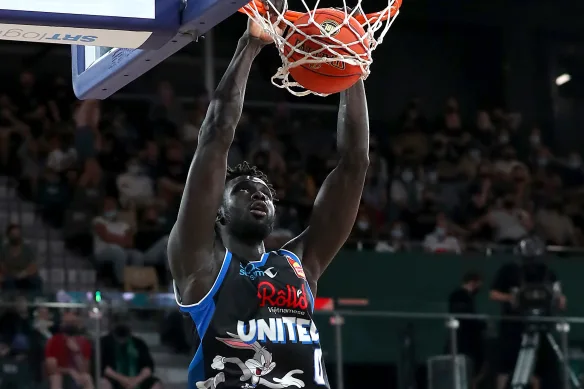
Jo Lual-Acuil Jr
October 27, 2025


BIO: Casper Ware was born in Cerritos, California (USA), and attended Gahr High School, where he quickly emerged as one of the top guards in Southern California. He was a three-time First-Team All-San Gabriel Valley League selection, earning Co-Player of the Year honors in 2007. As a sophomore, Ware helped Gahr advance to the CIF quarterfinals, earning Second-Team All-CIF III-AA honors. He followed this up with a standout junior season where he was named First-Team All-CIF I-AA after leading the Gladiators to a 24–5 record and a dominant 9–1 league mark.
As a senior, Ware capped his high school career with another strong campaign, guiding Gahr to a 20–10 record and a second-round appearance in the CIF Playoffs before falling to Compton. He was selected to the Long Beach Press-Telegram’s Best in the West Third Team and was twice named to the newspaper’s Dream Team First Team. Ware also shined on the all-star circuit, being named MVP of the 10th Annual Collision All-Star Jam after leading his team to a 108–104 win over the LA City All-Stars.
By the end of his high school career, Ware had established himself as one of the most decorated players in Gahr’s history, recognized for his quickness, defensive intensity, and ability to lead from the point guard position. His consistent success at the prep level set the stage for his college career at Long Beach State, where he would go on to become one of the program’s all-time greats.
Casper Ware made his NBL debut with the Melbourne United at 26 years of age. He scored 12 points in his first game.
After finishing first with an 18-10 record in 2015/16 before being swept by New Zealand in the semifinals, Melbourne United entered Dean Demopoulos’ second season with another major roster change. Stephen Holt (to Zaragoza), Hakim Warrick (to Olympiacos) and Daniel Kickert (to Brisbane) departed, while Demopoulos added Cedric Jackson (via New Zealand), Ramone Moore (via Europe), Devin Williams (via West Virginia), Tai Wesley (via New Zealand) and David Andersen (via Europe), with Wesley able to be registered as a local under the NBL’s Asian player rule and David Barlow returning after missing the previous season with an Achilles injury.
United struggled early and Jackson (8.7 points, 4.6 rebounds, 5.1 assists, and 1.3 steals across 9 games) was released on November 9 with Melbourne sitting 3-6 and on a four-game losing streak. The club described his release as a strategic decision, with chief executive Vince Crivelli saying it was “based on giving us the best chance of winning as many games as we possibly can this season.” After another loss left United at 3-7, Casper Ware was signed on November 14 for the remainder of the season as Jackson’s replacement and Melbourne’s third and final import. Ware had spent the preseason with the Washington Wizards before being waived and had earlier helped ASVEL win the 2016 French championship alongside Andersen, earning Finals MVP honours during the title run.
Ware made his NBL debut against Cairns at Hisense Arena on November 18, where Ware (12 points and 6 assists) made only 3-of-14 field goals but helped Melbourne defeat the Taipans 84-79 and end a five-game losing streak. Goulding (30 points and 5 rebounds) made eight three-pointers and Wesley (16 points, 7 rebounds, and 3 assists) provided support, while Fuquan Edwin (12 points) was Cairns’ leading scorer.
Ware (22.1 points, 4.5 assists, and 1.3 steals across 18 games) started and played every one of Melbourne’s remaining 18 games after joining the team, with his reduced game total entirely the result of arriving midseason rather than missing games through injury. United went 10-8 after his arrival.
In only his second NBL game on November 26, Ware (28 points, 4 rebounds, 4 assists, and 2 steals) delivered his first game-winner, making a three-pointer with two seconds remaining as Melbourne defeated ladder-leading Sydney 95-92 at Hisense Arena. Goulding (15 points and 4 assists) and Wesley (11 points) provided support, while Brad Newley (29 points, 9 rebounds, and 5 assists) led Sydney. Kevin Lisch had tied the game with three free throws with six seconds remaining before Ware answered at the other end.
We could watch this again, and again, and again…
Re-live those final moments. It doesn’t get much better than this one! #WeAreMelbourne pic.twitter.com/lFly5gLqRC— Melbourne United (@MelbUnited) November 27, 2016
Ware’s highest-scoring game came against Perth at Perth Arena on December 9, where he made eight three-pointers and finished with 38 points, 1 rebound, 5 assists, and 1 steal. Moore (20 points and 5 rebounds) and Goulding (13 points and 3 assists) provided support as Melbourne recovered from 15 points behind during the final four minutes, but Casey Prather (39 points, 11 rebounds, and 5 assists) led Perth to a 92-89 victory. Ware’s eighth three-pointer reduced the margin to one late before Melbourne missed its final chances from outside, while Andersen left the game with a knee injury.
Ware produced another game-winner in Cairns on December 29, finishing with 24 points, 4 rebounds, 3 assists, and 2 steals before making a jumper with 3.8 seconds remaining as Melbourne defeated the Taipans 79-78. Goulding (16 points and 3 rebounds) and Wesley (12 points, 6 rebounds, 3 assists, and 3 steals) helped United recover after Cairns led by as many as 14 points, while Travis Trice (15 points) led the Taipans. The lead changed 11 times during the fourth quarter before Mitch McCarron missed Cairns’ potential game-winning three-pointer at the buzzer.
Ware’s only injury scare came in Adelaide on January 12, where Ware (12 points, 6 rebounds, 2 assists, and 2 steals) tweaked his left ankle and spent the final five minutes with the ankle on ice as an undermanned Melbourne lost 100-73. The injury was treated as precautionary and Ware did not miss a game, returning two days later against Cairns.
Melbourne’s roster continued to change around him. Andersen (9.8 points and 4.4 rebounds across 19 games) missed an extended stretch with the knee injury suffered in Perth, while Williams (3.2 points and 3.9 rebounds across 16 games) was also sidelined for five weeks with a knee injury. Josh Boone (10.1 points and 9.3 rebounds across 12 games) (via İzmir) initially joined on December 23 as a temporary injury replacement while both big men were unavailable, before Melbourne retained him for the remainder of the season on January 31 after Williams returned to full fitness, with Williams released to pursue opportunities in the United States. Moore (10 points across 20 games) then suffered a season-ending calf injury and Lasan Kromah (1 point across 3 games) (via Patras) was signed as his injury replacement.
Goulding (16.4 points across 22 games) remained Melbourne’s major scoring option alongside Ware despite missing six games with ankle problems, while Wesley (8.5 points and 3.3 rebounds across 28 games), Blanchfield (7.9 points and 3.6 rebounds across 22 games), Majok (5.5 points and 5.5 rebounds across 28 games) and Barlow (5.1 points across 19 games) were the other main contributors. Barlow missed the opening nine games with a calf injury before returning, while Blanchfield also spent time sidelined with a groin injury and later a delayed concussion. Wesley and Majok were the only Melbourne players to appear in all 28 games.
Melbourne finished with the second-worst true shooting percentage in the league and went 3-5 in games decided by five points or fewer, with repeated injuries and three midseason import changes preventing United from establishing the continuity of the previous season. Ware earned All-NBL First Team honours despite playing only 18 games, finished fifth in MVP voting with 74 votes and received Melbourne’s AHG MVP award, while Blanchfield was named the club’s Best Defensive Player, Adnam (3.6 points across 20 games) received the Coach’s Award and Goulding was named Best Club Person. Demopoulos’ relationship with several veterans had also deteriorated during the season and Melbourne parted ways with him following the campaign.
Melbourne closed the season against Perth at Hisense Arena on February 12 in front of 9,545 fans, where Ware (27 points, 2 rebounds, 6 assists, and 2 steals), Boone (27 points and 11 rebounds) and Goulding (21 points, 3 rebounds, and 3 assists) led United, while Prather (26 points and 11 assists) carried the Wildcats. Melbourne recovered from 11 points behind late before Ware missed a potential tying three-pointer as Perth won 96-94 and secured its 31st consecutive postseason appearance, leaving United sixth with a 13-15 record.
2017/18
After finishing sixth with a 13–15 record and missing the playoffs the previous season, Melbourne replaced Dean Demopoulos with former Sydney assistant Dean Vickerman on a two-year deal. Todd Blanchfield (to Sydney), Ramone Moore (to Adelaide) and Nate Tomlinson (retired) departed, while David Barlow and Josh Boone re-signed and Vickerman added Craig Moller (via Sydney) and two-time defending champion Casey Prather (via Perth). Daniel Dillon (via Hiroshima) had also signed but ruptured his Achilles while playing for Kilsyth and was ruled out for six-to-eight months, leading Melbourne to add Peter Hooley (via Ballarat) as his injury replacement.
On August 22, Ware re-signed with Melbourne for the 2017/18 season after joining United in Round 7 the previous year, winning the club MVP and earning All-NBL First Team honours. The signing completed Melbourne’s roster and gave Ware his first full preseason with United.
Melbourne opened the season in Adelaide on October 5, where Ware (23 points, 8 rebounds, 6 assists, and 1 block) made six three-pointers as United defeated the 36ers 99–97, with Prather (20 points, 6 rebounds, and 3 assists) and Boone (10 points and 10 rebounds) providing support while Nathan Sobey (21 points, 9 rebounds, and 4 assists) led Adelaide.
Three days later, Melbourne nearly produced an NBLxNBA upset in Oklahoma City, where Ware (20 points, 6 rebounds, 3 assists, and 1 steal) made six three-pointers in an 86–85 loss to the Thunder, with Tai Wesley (13 points, 4 rebounds, 4 assists, and 2 steals) and Boone (13 points and 9 rebounds) supporting him while Paul George (22 points) led Oklahoma City.
Ware (16.6 points, 2.8 rebounds, and 4.3 assists across 35 games) started all 35 games and did not miss a game during the season. Melbourne was 5–5 after its first ten games before winning 15 of its final 18 regular-season games and finishing first with a 20–8 record.
One of Ware’s three equal-best regular-season scoring games came against Cairns on November 2, where Ware (26 points, 5 rebounds, 3 assists, 2 steals, and 1 block) led Melbourne to an 87–65 win, with Chris Goulding (20 points, 3 rebounds, and 2 steals) and Prather (16 points, 4 rebounds, 3 assists, 6 steals, and 1 block) helping United pull away while Michael Carrera (19 points and 3 rebounds) was Cairns’ leading scorer.
On December 16, Prather suffered a dislocated left elbow and was ruled out for at least eight weeks. Development player Felix Von Hofe (0.5 points across 4 games) was elevated while Melbourne searched for an injury replacement before ex-NBA guard Carrick Felix (8.5 points and 5.5 rebounds across 10 games) joined the roster.
Ware’s second 26-point game came in Sydney on December 30, where Ware (26 points, 3 rebounds, and 5 assists) made five three-pointers as Melbourne defeated the Kings 103–79 for its fifth consecutive win and moved into second place, with Boone (18 points, 7 rebounds, and 2 steals) and Goulding (18 points and 5 assists) leading the support while Jerome Randle (26 points and 5 assists) was Sydney’s best. Felix (7 points, 7 rebounds, and 2 assists) made his United debut in the win.
Ware’s third 26-point regular-season game came against New Zealand on February 9, where Ware (26 points, 2 rebounds, and 5 assists) helped Melbourne erase an eight-point deficit with six minutes remaining and score the final 14 points in an 89–83 win, with Wesley (19 points, 6 rebounds, 4 assists, 2 steals, and 2 blocks) and Boone (15 points, 12 rebounds, and 2 blocks) leading the support while Edgar Sosa (22 points and 3 rebounds) led the Breakers. The victory moved United closer to home-court advantage and was Melbourne’s second win over New Zealand in 13 meetings.
Prather (15.9 points, 5.9 rebounds, and 1.3 steals) returned on February 16, forcing Felix from the active roster after Melbourne had gone 9–1 with him in the side. Goulding (14.7 points), Boone (12.9 points and 8.9 rebounds) and Wesley (11.5 points, 5.4 rebounds, and 1.2 blocks) formed the rest of United’s main rotation, with Ware earning All-NBL First Team honours for the second consecutive season, finishing fourth in MVP voting with 77 votes and winning Melbourne’s club MVP for the second straight year. Boone joined Ware on the All-NBL First Team, Wesley was named to the All-NBL Second Team and Vickerman won Coach of the Year.
Ware’s best game for the season came in Game One of the semifinals at Hisense Arena, where Ware (33 points, 6 rebounds, 3 assists, and 1 steal) led Melbourne past New Zealand 88–77, with Prather (15 points and 5 rebounds) and Wesley (13 points, 5 rebounds, and 4 assists) helping United take a 1–0 series lead while DJ Newbill (19 points, 3 rebounds, 3 assists, and 3 steals) and Shea Ili (16 points and 5 assists) led the Breakers.
Game Two moved to Spark Arena, where Melbourne completed the sweep with an 88–86 overtime win behind Boone (33 points, 15 rebounds, 2 steals, and 2 blocks), who scored the winning putback at the buzzer, while Ware (15 points and 6 assists) and Goulding (14 points, 3 rebounds, 5 assists, and 2 steals) also contributed. Newbill (21 points, 8 rebounds, and 4 assists) and Kirk Penney (17 points and 3 rebounds) led New Zealand as United advanced to the Grand Final.
Adelaide swept reigning champion Perth in the other semifinal to set up the Grand Final.
In Game One of the Grand Final at Hisense Arena, Ware (20 points, 3 rebounds, 3 assists, and 1 steal) was forced from the floor in the first quarter with a left-hip injury after colliding with Matthew Hodgson (10 points and 3 rebounds), sitting out the rest of the half before returning after halftime as Melbourne defeated Adelaide 107–96. Goulding (26 points and 4 rebounds) and Boone (17 points and 7 rebounds) led United while Daniel Johnson (18 points and 5 rebounds) and Shannon Shorter (16 points, 8 rebounds, and 4 steals) were among Adelaide’s best.
Adelaide levelled the series in Game Two with a 110–95 win, where Ware (6 points, 2 rebounds, and 2 assists) was limited to 19 minutes while managing the hip injury and fouled out. Prather (20 points and 7 rebounds) and Goulding (19 points, 3 rebounds, 3 assists, and 2 steals) led Melbourne, while Majok Deng (18 points and 6 rebounds), Mitch Creek (17 points, 9 rebounds, and 3 assists) and Moore (17 points, 4 rebounds, and 5 assists) led Adelaide. Josh Childress (13 points, 8 rebounds, and 1 block) suffered a shoulder injury in the fourth quarter and did not play again in the series.
Game Three returned to Melbourne and became the most heated game of the series, with Sobey (9 points and 4 assists) ejected at halftime following a melee involving Prather. Melbourne held on for a 101–98 win behind Ware (25 points and 3 assists), Prather (23 points, 6 rebounds, and 2 steals) and Goulding (15 points, 3 rebounds, and 2 steals), while Johnson (20 points and 3 assists), Moore (18 points and 2 steals) and Deng (16 points, 7 rebounds, and 2 steals) led Adelaide. Deng missed a game-tying three-pointer in the final seconds, while Ware was later handed a $500 charge, reducible to $375 with an early plea, for engaging in the halftime melee.
Game Four moved back to Adelaide, where the 36ers built a 55–31 halftime lead and won 90–81 to force a decider. Ware (13 points and 1 steal), Prather (23 points, 7 rebounds, and 2 steals) and Goulding (15 points, 4 rebounds, and 4 assists) led Melbourne, while Johnson (21 points and 9 rebounds), Sobey (16 points and 4 rebounds) and Shorter (14 points, 8 rebounds, 3 assists, and 3 steals) led Adelaide as the series moved to 2–2.
The decisive Game Five returned to Hisense Arena, where Ware (23 points, 1 rebound, 2 assists, and 1 steal), Goulding (23 points, 4 rebounds, and 1 steal) and Prather (19 points, 11 rebounds, 4 steals, and 1 block) led Melbourne to a 100–82 win in front of a sold-out crowd of 10,300, while Shorter (20 points, 4 rebounds, 3 assists, 2 steals, and 1 block), Johnson (17 points, 8 rebounds, and 1 block) and Creek (15 points and 10 rebounds) led Adelaide. The victory secured the series 3–2 and delivered Melbourne its first championship under the United name. Goulding was named Grand Final MVP after averaging 19.6 points and 3.6 rebounds across the series, while Prather became the first player in NBL history to win championships in each of his first three seasons.
2018/19
After finishing first with a 20-8 record and defeating Adelaide 3-2 in the 2018 Grand Final series, Melbourne entered the 2018/19 season looking to defend their championship. United retained captain Chris Goulding (two-year deal), David Barlow (one-year deal), Josh Boone (one-year deal) and Casper on a one-year deal, despite strong overseas interest in their imports. Casey Prather (to BC Khimki), Tai Wesley (to New Zealand), David Andersen (to Illawarra), Majok Majok (to New Zealand) and Kyle Adnam (to Sydney) departed, while coach Dean Vickerman added DJ Kennedy (via Turkey), Mitch McCarron (via Cairns), Alex Pledger (via New Zealand) and Daniel Trist (via Spain).
On August 14, Casper was confirmed to return for his third season with Melbourne after the club had been forced to wait through free agency to secure him. Vickerman said, “It was a waiting process to get him back … and we feel exactly the same this year.”
During the preseason, Melbourne travelled to the United States for two NBLxNBA games. Philadelphia defeated United 104-84 on September 28, with Pledger (19 points and 13 rebounds) leading Melbourne, before Toronto won 120-82 on October 5, with Goulding (17 points) among United’s leading scorers.
Melbourne opened the NBL season against Illawarra on October 12 in one of the most remarkable games in league history, surviving four overtimes to win 123-122. Ware (15 points, 5 rebounds, 9 assists, and 3 steals) played almost 56 minutes and made the decisive defensive play, contesting Kevin White’s attempt at the rim on the Hawks’ final possession, while Boone (24 points, 12 rebounds, and 5 blocks) and Goulding (23 points and 3 assists) led United offensively and Todd Blanchfield (26 points, 7 rebounds, and 4 assists) led Illawarra. “I had to use every last bit of my energy to contest that shot,” he said.
Ware (18.8 points, 3 rebounds, and 4.5 assists across 34 games) remained Melbourne’s leading scorer and starting point guard, appearing in all 34 games and not missing a game through injury. United began the season 3-2 before going 6-1 through November as the defending champions established themselves among the league leaders.
One of his biggest performances came in Cairns on November 3, where Ware (32 points) made a career-high eight three-pointers as Melbourne defeated the Taipans 98-85, with Barlow (18 points, 7 rebounds, and 4 assists) and Kennedy (17 points, 5 rebounds, and 4 assists) providing support, while Melo Trimble (34 points, 5 rebounds, and 8 assists) led Cairns.
Ware’s best scoring game came against Cairns at Melbourne Arena on November 11, where he finished with 34 points, 2 rebounds, 6 assists, 1 steal, and 1 block and scored 13 points in the fourth quarter as United recovered from a 12-point deficit to win 87-80. McCarron (16 points and 9 rebounds) and Kennedy (10 points, 5 rebounds, 2 steals, and 1 block) helped Melbourne complete the comeback, while Trimble (19 points and 4 assists) was Cairns’ leading scorer.
After Melbourne had lost four of its previous six games, Ware produced another clutch performance in Cairns on January 13. United trailed by as many as 18 points before Ware (27 points, 6 rebounds, and 6 assists) scored 11 points in overtime, helping Melbourne finish a run of 21 unanswered points and complete the biggest comeback of the NBL season with a 99-89 win. Barlow (24 points and 5 rebounds) and Boone (15 points, 15 rebounds, and 3 blocks) were also crucial, while Trimble (42 points) produced a season-high scoring performance for Cairns.
To help cover injuries, Melbourne added Venky Jois (via Japan) (1.7 points across 11 games) mid-season to provide additional depth for the playoff run.
Goulding (14.4 points) remained United’s other major perimeter scorer, while Kennedy (12.6 points, 7.2 rebounds, 3.2 assists, and 1.2 steals) provided an all-around presence. McCarron (11.6 points and 5.1 rebounds), Barlow (11.1 points and 4.6 rebounds), Boone (10.5 points, 8.3 rebounds, and 1.4 blocks) and Pledger (6.4 points and 4.4 rebounds) gave Melbourne one of the league’s deepest rotations. Ware finished second in MVP voting with 77 votes, six behind Sydney’s Andrew Bogut, and was named to the All-NBL First Team for the third consecutive season. Vickerman became just the third coach in league history to win consecutive Coach of the Year awards as Melbourne finished second with an 18-10 record.
Melbourne opened the semifinals against Sydney with a 95-73 win at Melbourne Arena, with Ware (22 points, 4 rebounds, and 7 assists) leading the way alongside Kennedy (20 points, 6 rebounds, 2 steals, and 1 block) and Goulding (17 points, 4 rebounds, 3 assists, 1 steal, and 1 block). Brad Newley (17 points, 3 rebounds, 3 assists, and 1 steal), Kevin Lisch (13 points, 3 assists, and 2 steals) and Jerome Randle (13 points) led Sydney, while league MVP Bogut (7 points, 7 rebounds, and 3 blocks) was held quiet offensively.
Game two moved to Sydney, where Ware (30 points and 5 rebounds) scored 17 points in the opening quarter and Goulding (23 points and 3 assists) helped Melbourne defeat the Kings 90-76 in front of 14,769 fans and complete the semifinal sweep. Lisch (13 points, 4 rebounds, and 4 assists) and Kyle Adnam (13 points) led Sydney, while Bogut (10 points, 12 rebounds, 5 assists, and 2 blocks) produced a stronger game and Randle (2 points and 5 assists) was held to two points as United advanced to a second consecutive Grand Final.
Perth opened the Grand Final series with an 81-71 win at RAC Arena, Melbourne’s lowest score of the season. Ware (19 points, 5 rebounds, 4 assists, and 1 steal) led United alongside Goulding (15 points), while Kennedy suffered an injury scare during the second quarter before returning after halftime. Terrico White (19 points, 8 rebounds, 3 assists, and 2 steals) and Angus Brandt (14 points and 7 rebounds) led Perth, with Bryce Cotton (10 points, 8 rebounds, 8 assists, and 2 steals) contributing despite being held to 10 points.
Melbourne responded in Game two with a 92-74 victory at Melbourne Arena to level the series. Ware (14 points), Goulding (14 points), McCarron (13 points, 5 rebounds, and 4 assists) and Kennedy (12 points, 14 rebounds, 4 assists, and 2 steals) produced a balanced scoring effort, while Cotton (19 points, 6 rebounds, and 4 assists) and White (17 points, 4 rebounds, and 4 assists) led Perth.
The series returned to Perth for Game three, where the Wildcats dominated Melbourne 96-67. Ware (10 points) was held to 3-of-15 shooting, while Barlow (13 points and 5 rebounds) and Kennedy (13 points, 10 rebounds, 6 assists, and 1 steal) were United’s leading scorers. White (31 points, 7 rebounds, and 3 assists) made seven three-pointers and Cotton (16 points, 4 rebounds, 10 assists, 3 steals, and 1 block) controlled the game as Perth moved ahead 2-1.
In Game four, Ware (18 points, 5 rebounds, 4 assists, and 1 block) led Melbourne, with Barlow (15 points, 4 rebounds, and 3 steals) and Goulding (15 points, 4 rebounds, 4 assists, and 2 steals) providing support, but Perth won 97-84 to claim the championship. Cotton (28 points, 3 rebounds, 4 assists, and 4 steals), White (20 points, 8 rebounds, and 3 assists) and Nick Kay (12 points, 10 rebounds, and 4 assists) led the Wildcats, with White named Grand Final MVP after averaging 21.8 points, 6.8 rebounds, and 3.3 assists across the four games.
Five days after Melbourne’s season ended, Casper signed with Stal Ostrów Wielkopolski (to Poland) for the remainder of the Polish season. On April 11, Ware (to Sydney) agreed to join the Kings on a two-year arrangement which included a player option for the second season, despite receiving significant offers from both Melbourne and South East Melbourne. United CEO Vince Crivelli said the club had made its biggest possible offer but “we simply couldn’t match the offer the Sydney Kings have made.” The move reunited Ware with new Kings coach Will Weaver, who had previously worked with him at Philadelphia in 2014, and saw him replace Jerome Randle as Sydney’s starting point guard. “It was a big decision I had to make, but this is a new challenge for me and I’m excited to get stuck into it,” he said, ending his three-season run with Melbourne.
SYDNEY KINGS
2019/20
After returning to the playoffs for the first time since 2013 but being swept by Melbourne in the semifinals, Sydney moved on from Andrew Gaze and appointed Australian Boomers assistant Will Weaver as head coach. Melbourne declined to take up the optional third year of Craig Moller’s contract, allowing Moller (via Melbourne) to return to Sydney, while Kevin Lisch was re-signed to a multi-year deal. Jerome Randle (to Adelaide) and David Wear (not re-signed) departed and were replaced by Casper Ware (via Melbourne) and Jae’Sean Tate (via Antwerp), with Weaver also adding Shaun Bruce (via Adelaide), Lucas Walker (via Cairns), rookie Jordan Hunter (via Saint Mary’s) and Next Star Didi Louzada.
Sydney signed its new import point guard on April 11 to a two-year deal which included a player option on the second season, winning his signature despite interest from Melbourne and South East Melbourne. The move reunited him with Weaver after the pair had previously been together with the Philadelphia 76ers and came after three consecutive All-NBL First Team selections with United. “It was a big decision I had to make, but this is a new challenge for me and I’m excited to get stuck into it,” the new signing said.
Sydney opened the season in Cairns on October 4, where its new point guard finished with 23 points, 2 rebounds, 5 assists, and 1 steal as the Kings defeated the Taipans 79-71. Lisch (18 points) and Tate (14 points and 9 rebounds) provided support, while Kouat Noi (14 points and 12 rebounds) was Cairns’ best.
Ware (17.9 points and 3.7 assists across 34 games) started every game during the regular season and playoffs and did not miss any time through injury, immediately becoming Sydney’s primary scorer and ball-handler. The Kings’ backcourt depth was tested elsewhere when Lisch (8.7 points across 13 games) fractured his left ankle in Round 2 and was initially ruled out for two months, leading to Deshon Taylor (via Adelaide) being signed as an injury replacement. Lisch returned for two games in December before recurring ankle soreness forced him back out until February, while Moller (6.1 points and 3.5 rebounds across 17 games) played Sydney’s opening 11 games before a right ankle injury requiring surgery forced him to miss the next 16.
Sydney remained unbeaten through six games after defeating Adelaide 98-96 in overtime at the Adelaide Entertainment Centre on November 2, where Ware (14 points, 2 rebounds, 3 assists, and 1 steal) made three three-pointers and helped the Kings take control during overtime. Bogut (18 points and 12 rebounds), Louzada (17 points), Tate (16 points) and Newley (15 points) all reached double figures, while Jerome Randle (23 points) led Adelaide.
Halloween has been and gone, but we just saw a 👻 CLUTCH @CWARE22 #NBL20 #SYDatADE
— NBL (@NBL) November 2, 2019
Ware’s best game of the season came in his first regular-season return to Melbourne on November 4, where Ware (34 points, 5 rebounds, 4 assists, 1 steal, and 1 block) shot 10-of-21 from the field, made four three-pointers and went 10-of-13 from the free throw line. Bruce (14 points and 8 assists) and Kickert (13 points and 2 blocks) provided support, but Melo Trimble (27 points and 5 assists) led Melbourne to a 107-104 victory and ended Sydney’s six-game winning streak, with Ware missing a contested three-pointer late that would have tied the game.
On November 27, with Sydney sitting at 10-1, the Kings strengthened the roster further by signing Xavier Cooks (via Strasbourg) to a two-year deal, with Kuany Kuany (released) waived to create the roster spot.
Ware again hurt his former club at Qudos Bank Arena on December 1, finishing with 27 points and 5 assists as Sydney defeated Melbourne 111-101. Tate (25 points and 6 rebounds) and Newley (14 points) provided support, while Trimble (32 points and 5 assists) led United. Sydney had lost 13 of its previous 14 games against Melbourne, while the victory improved the Kings to 11-1, made them the first team that season to defeat every other NBL club and produced Sydney’s highest score in a non-overtime game since the league moved to 40-minute games.
Two weeks later, Ware (28 points, 3 rebounds, and 3 assists) made five three-pointers as Sydney defeated Melbourne 104-81 at Melbourne Arena. Louzada (14 points and 4 rebounds), Tate (13 points, 12 rebounds, 3 assists, and 2 steals) and Kickert (11 points, 7 rebounds, and 3 blocks) provided support, while Trimble (19 points and 5 assists) led Melbourne. The 23-point margin was Sydney’s biggest win of the season and its biggest victory in Melbourne for more than 17 years, while United was held to its lowest score of the season.
Ware’s second-highest scoring game came against Perth on December 28, where Ware (33 points) made six three-pointers and all seven of his free throws, including four triples during the fourth quarter, but Bryce Cotton (39 points, 4 rebounds, 3 assists, and 2 steals) answered as the Wildcats defeated Sydney 98-85 at Qudos Bank Arena. Bogut (15 points and 12 rebounds) was Sydney’s other major contributor.
Despite leading Sydney’s offence, Ware’s shooting remained inconsistent and he finished the regular season shooting 38.5 percent from the field and 30.2 percent from three-point range. NBL commentator Corey Williams remained confident the Kings guard would regain his touch, saying, “Regardless of Casper’s field goal percentage, he is a stud and a premier guard.”
Ware responded with another major performance against Melbourne on January 26, equalling his career high with eight three-pointers and finishing with 26 points, 3 rebounds, and 5 assists as Sydney defeated United 106-88. Tate (22 points, 5 rebounds, 3 assists, 4 steals, and 2 blocks) delivered at both ends and Louzada (11 points) was perfect from the field before being rested during the second half with a slight knee strain, while Trimble (26 points and 5 rebounds) led Melbourne. Ware averaged 28.8 points across Sydney’s four regular-season games against his former club, with the Kings winning the final three meetings after losing the first. The victory improved Sydney to 18-7 and came in front of 10,078 fans, marking the fifth time the Kings had drawn more than 10,000 to a home game during the season, the first time they had achieved that since 1992.
Sydney closed the regular season against Illawarra on February 14, where Ware (19 points, 3 assists, and 1 steal) and Tate (19 points and 5 rebounds) led the Kings to a 98-82 victory. Newley (13 points, 4 rebounds, and 3 assists) also contributed, while Sunday Dech (26 points, 5 rebounds, 2 assists, and 2 steals) led the Hawks. Sydney finished first with a 20-8 record and became the first team in NBL history to lead the competition from the opening round through to the end of the regular season, while the 11,047 crowd lifted the Kings’ season attendance to a club-record 140,168 and an average of 10,012 per home game, also a franchise record.
Tate (16.8 points and 5.7 rebounds across 34 games) was named to the All-NBL First Team and won the Kings’ club MVP, while Newley (11.5 points and 4.4 rebounds across 34 games), Louzada (9.8 points and 3.5 rebounds across 26 games), Bogut (8.5 points and 8.8 rebounds across 31 games), Kickert (7.9 points across 34 games), Bruce (7.1 points and 3 assists across 34 games) and Cooks (6.7 points, 9.2 rebounds, and 1.3 blocks across 20 games) gave Weaver one of the league’s deepest rotations. Ware and Bogut were both selected to the All-NBL Second Team, while the Kings led the NBL in defensive efficiency, defensive rebounding percentage, defensive field-goal percentage and blocked shots.
Casper Ware is a walking bucket 🪣
The explosive guard averaged 18 points per game across five seasons in the NBL.
Check out some of his best plays 👀 pic.twitter.com/F2hgEx1Lkj— NBL (@NBL) May 20, 2024
Sydney opened its semifinal series against Melbourne at Qudos Bank Arena on February 29, where Ware (7 points, 3 rebounds, 5 assists, and 1 steal) missed all nine of his three-point attempts but helped the Kings recover from a 16-point deficit inside the final seven minutes to win 86-80. Tate (23 points and 5 rebounds), Newley (17 points and 5 rebounds) and Cooks (13 points, 9 rebounds, and 4 assists) led Sydney during a game-ending 24-2 run, while Trimble (34 points, 3 rebounds, 5 assists, and 3 steals) and Shawn Long (23 points and 10 rebounds) led Melbourne.
Game two moved to Melbourne Arena, where Ware (10 points and 2 assists) was again held below his regular-season production as United responded with a 125-80 victory. Tate (18 points and 6 rebounds), Louzada (10 points and 3 steals) and Walker (10 points) led Sydney, while Long (26 points and 11 rebounds), Trimble (21 points) and Stanton Kidd (18 points and 4 rebounds) powered Melbourne to a 45-point victory, the biggest by any team during the NBL’s 40-minute era, and forced a deciding game three.
Game three returned to Qudos Bank Arena on March 5, where Ware (15 points and 4 rebounds) broke out of his shooting slump by making four three-pointers, including three in less than three minutes during the third quarter, as Sydney defeated Melbourne 89-87 and advanced to its first Grand Final since 2008. Tate (20 points, 6 rebounds, 3 assists, and 1 block) and Cooks (14 points, 9 rebounds, 1 steal, and 1 block) provided support, while Lisch (6 points and 4 assists) hit a crucial three-pointer late. Chris Goulding (19 points and 3 assists) and Mitch McCarron (18 points, 5 rebounds, and 2 blocks) led Melbourne.
The Grand Final opened against defending champion Perth at Qudos Bank Arena on March 8, where Ware (5 points, 4 rebounds, and 4 assists) endured his worst shooting game of the season, making one of 14 field-goal attempts and missing all 10 of his three-pointers before missing a potential game-winning three in the final seconds. Bogut (18 points and 11 rebounds), Lisch (17 points) and Bruce (11 points) led Sydney, while Cotton (32 points, 6 rebounds, and 4 assists) and Nick Kay (14 points, 6 rebounds, 3 assists, 2 steals, and 3 blocks) carried Perth to an 88-86 victory.
With the remainder of the series closed to the general public because of the growing COVID-19 outbreak, game two moved to RAC Arena on March 13, where Ware (8 points, 2 assists, and 1 steal) remained quiet offensively but Sydney responded with a 97-83 victory. Tate (20 points), Bogut (19 points and 14 rebounds) and Lisch (19 points) led the Kings, while Cotton (27 points, 5 rebounds, and 3 assists) and Kay (17 points and 7 rebounds) were Perth’s best as Sydney levelled the series 1-1.
Game three returned to Qudos Bank Arena on March 15, where Ware (11 points and 2 assists) made five of 20 field-goal attempts as Perth won 111-96 and moved ahead 2-1 in the series. Tate (20 points and 6 rebounds), Newley (19 points and 5 rebounds) and Lisch (16 points) led Sydney, while Cotton (31 points, 7 rebounds, and 7 assists) and Kay (30 points, 12 rebounds, and 4 assists) combined for 61 points. Ware finished the three Grand Final games averaging 8 points and shooting 9-of-44 from the field and 1-of-23 from three-point range.
Prior to game four, Sydney withdrew from the series amid the rapidly changing COVID-19 situation and concerns surrounding player welfare, travel restrictions and international players being able to return to their families overseas. The remaining games were cancelled and Perth was subsequently awarded the championship with its 2-1 series lead, while Cotton was named Grand Final MVP after averaging 30 points, 6 rebounds, and 4.7 assists across the three games.
2020/21
Sydney faced major roster turnover after finishing runners-up to Perth in the COVID-induced conclusion to the 2020 Grand Final. All-NBL First Team forward Jae’Sean Tate (to Houston) and head coach Will Weaver (to Houston) both departed for the NBA, while Kevin Lisch, Andrew Bogut and Lucas Walker retired. Kings assistant Adam Forde was promoted to head coach and replaced the outgoing talent with import Jarell Martin, Angus Glover (via Illawarra), rookie Dejan Vasiljevic (via Miami University), and development players Jaylin Galloway and Archie Woodhill. During the preseason, Xavier Cooks suffered a foot injury expected to keep him out for three to four months, leading Sydney to sign Tom Vodanovich (via New Zealand) as an injury replacement just before the opening game.
Sydney opened the season against Cairns at the Cairns Pop-Up Arena on January 16, where Ware (18 points, 2 rebounds, and 3 assists) had a chance to win the game at the buzzer but missed a three-pointer as the Taipans escaped with an 87-86 victory. Vasiljevic (15 points, 4 rebounds, and 2 assists) and Newley (14 points, 6 rebounds, 2 assists, and 1 steal) provided support, while Scott Machado (17 points, 7 rebounds, 8 assists, and 1 steal) led Cairns.
Ware (17.7 points, 3.2 rebounds, and 4.4 assists across 36 games) had initially opted out of his existing Kings contract in May after the league’s cost-cutting agreement would have reduced his 2020/21 salary by 50 percent, but returned to Sydney on a one-year deal in August after testing the overseas market. Grand Final redemption was a major reason for his return after struggling during the previous season’s championship series. “I felt like I owed a little something to Sydney and I wasn’t done yet,” Ware said. Ware appeared in every game for the Kings and did not miss a game through injury, scoring fewer than 10 points on only five occasions.
Sydney struggled early as its younger roster adjusted to the changes, losing three of its first four games and falling to seventh place. Glover (3.5 points and 3 rebounds across 2 games) suffered a partial ACL sprain in his right knee during Round 2 and would not play again during the season. COVID-related travel issues eventually saw the entire league relocate to Melbourne for the NBL Cup, where Sydney went 4-4 before consecutive home victories pushed the Kings into the top four by Round 12.
Ware delivered one of his biggest scoring games during the NBL Cup on February 23, finishing with 34 points, 5 rebounds, 4 assists, and 1 steal as Sydney fell to Perth 113-106 at John Cain Arena. Louzada (19 points, 2 rebounds, 3 assists, and 1 steal) and Vasiljevic (13 points, 4 rebounds, and 2 assists) supported him, while John Mooney (30 points, 18 rebounds, 3 assists, and 2 blocks) led the Wildcats.
On March 4, Ware (28 points, 4 rebounds, and 4 assists) delivered another big offensive performance against Cairns during the NBL Cup, but the Taipans defeated Sydney 96-92. Vasiljevic (32 points, 3 rebounds, 3 assists, and 1 steal) and Hunter (11 points and 6 rebounds) were the other leading Kings, while Machado (24 points, 2 rebounds, 5 assists, and 1 block) led Cairns.
Ware’s best scoring game came against Cairns at Qudos Bank Arena on April 17, where he made seven three-pointers and 15-of-26 shots to finish with a career-high 40 points, 2 rebounds, 3 assists, and 1 block as Sydney defeated the Taipans 89-84. After opening the game with four three-pointers in the first quarter, Ware banged knees with Fabijan Krslovic during the fourth and was clearly restricted moving around the court, but still made three critical three-pointers and scored 10 points during the final six minutes to carry the Kings home. Louzada (11 points, 8 rebounds, and 2 assists) and Vodanovich (9 points and 5 rebounds) provided support, while Cameron Oliver (27 points, 19 rebounds, 2 assists, 2 steals, and 1 block) led Cairns. The performance broke Sydney’s scoring record for a 40-minute NBL game and made Ware the first King to score at least 40 points since Matthew Nielsen in 2003/04, while the victory returned Sydney to fourth place with a 12-12 record.
Martin (17.9 points and 7 rebounds) narrowly led Sydney in scoring, while Vasiljevic (15.4 points and 3.6 rebounds) emerged as one of the league’s leading rookies before rupturing his Achilles in April and missing the remainder of the season. He eventually finished runner-up to Josh Giddey in Rookie of the Year voting. Cooks (10.3 points and 5.1 rebounds) returned in May after missing most of the season with his foot injury, while Hunter (9 points and 6.3 rebounds) developed into Sydney’s starting centre and finished runner-up to Sam Froling for the NBL’s Most Improved Player award. Ware was named to the All-NBL Second Team and won both the Kings’ Most Valuable Player and Defensive Player of the Year awards.
Other key contributors included Louzada (8.8 points and 3.4 rebounds), Bruce (6.6 points, 3.1 rebounds, and 3.6 assists), Newley (6.4 points and 3.7 rebounds), Moller (6.4 points and 5.7 rebounds), and Kickert (6 points). Louzada (to New Orleans) was granted permission to leave the Kings in April to travel to the United States and join the Pelicans, while Vodanovich (5 points) remained with Sydney as Vasiljevic’s nominated injury replacement once Cooks returned. Jarrad Weeks (via New Zealand) was signed as an injury replacement in May to provide additional guard depth following Louzada’s departure and Glover’s injury. Moller received the Kings’ Coaches’ Award, Bruce and Hunter shared Players’ Player honours and Martin was named Members’ Player of the Year.
Sydney’s perimeter shooting remained one of its biggest problems, with the Kings making only 33.4 percent of their three-pointers, one of the poorest marks in the league, while they went 8-10 away from home. After moving firmly inside the top four, five losses across seven games, including defeats to Melbourne and Brisbane by more than 20 points, pushed Sydney back out of the playoff positions. During that stretch, the Kings and Forde mutually agreed that his one-year contract would not be extended beyond the season, with family circumstances and professional aspirations influencing his decision, although he remained coach as Sydney continued its finals push.
Sydney responded by winning its final three games and closed the regular season against Brisbane at Qudos Bank Arena on June 5, where Ware (14 points, 3 rebounds, and 3 assists) helped the Kings edge the Bullets 83-82. Martin (28 points, 6 rebounds, 1 assist, and 2 steals) and Kickert (10 points, 3 rebounds, and 1 steal) provided the main support, while Nathan Sobey (22 points, 8 rebounds, and 8 assists) led Brisbane. Sydney finished fifth with a 19-17 record.
Casper Ware played five seasons in the NBL, playing for both the Melbourne United and the Sydney Kings. He averaged 18.3 points, 2.8 rebounds, and 4.2 assists in 156 NBL games.
HIGHLIGHTS:
| SEASON | AGE | TEAM | TEAM RECORD | GP | MINS | PTS | REB | AST | OR | DR | STL | BLK | TO | PF | FGM | FGA | FG% | 3PM | 3PA | 3P% | FTM | FTA | FT% | TS% | EFG% | HS |
|---|---|---|---|---|---|---|---|---|---|---|---|---|---|---|---|---|---|---|---|---|---|---|---|---|---|---|
| 2020-21 | 31 | Sydney | 19-17 (5) | 36 | 1,203 | 636 | 116 | 160 | 17 | 99 | 26 | 2 | 93 | 73 | 215 | 536 | 40% | 76 | 250 | 30% | 130 | 158 | 82% | 52% | 47% | 40 |
| 2019-20 | 30 | Sydney | 20-8 (1) | 33 | 993 | 602 | 80 | 122 | 14 | 66 | 18 | 2 | 68 | 69 | 196 | 526 | 37% | 88 | 305 | 29% | 122 | 158 | 77% | 50% | 46% | 34 |
| 2018-19 | 29 | Melbourne | 18-10 (2) | 34 | 1,162 | 640 | 103 | 152 | 20 | 83 | 27 | 5 | 88 | 76 | 217 | 545 | 40% | 99 | 282 | 35% | 107 | 125 | 86% | 53% | 49% | 34 |
| 2017-18 | 28 | Melbourne | 20-8 (1) | 35 | 1,128 | 581 | 97 | 149 | 19 | 78 | 32 | 5 | 82 | 75 | 185 | 487 | 38% | 79 | 237 | 33% | 132 | 154 | 86% | 52% | 46% | 33 |
| 2016-17 | 27 | Melbourne | 13-15 (6) | 18 | 581 | 397 | 46 | 81 | 5 | 41 | 23 | 1 | 44 | 38 | 134 | 315 | 43% | 51 | 156 | 33% | 78 | 94 | 83% | 55% | 51% | 38 | Totals | 156 | 5066 | 2856 | 442 | 664 | 75 | 367 | 126 | 15 | 375 | 331 | 947 | 2409 | 39.3% | 393 | 1230 | 32.0% | 569 | 689 | 82.6% | 53% | 47% | 40 |
| SEASON | AGE | TEAM | TEAM RECORD | GP | MINS | PTS | REB | AST | OR | DR | STL | BLK | TO | PF | FGM | FGA | FG% | 3PM | 3PA | 3P% | FTM | FTA | FT% | TS% | EFG% | HS |
|---|---|---|---|---|---|---|---|---|---|---|---|---|---|---|---|---|---|---|---|---|---|---|---|---|---|---|
| 2020-21 | 31 | Sydney | 19-17 (5) | 36 | 33.4 | 17.7 | 3.2 | 4.4 | 0.5 | 2.8 | 0.7 | 0.1 | 2.6 | 2.0 | 6.0 | 14.9 | 40% | 2.1 | 6.9 | 30% | 3.6 | 4.4 | 82% | 52% | 47% | 40 |
| 2019-20 | 30 | Sydney | 20-8 (1) | 33 | 30.1 | 18.2 | 2.4 | 3.7 | 0.4 | 2.0 | 0.5 | 0.1 | 2.1 | 2.1 | 5.9 | 15.9 | 37% | 2.7 | 9.2 | 29% | 3.7 | 4.8 | 77% | 50% | 46% | 34 |
| 2018-19 | 29 | Melbourne | 18-10 (2) | 34 | 34.2 | 18.8 | 3.0 | 4.5 | 0.6 | 2.4 | 0.8 | 0.1 | 2.6 | 2.2 | 6.4 | 16.0 | 40% | 2.9 | 8.3 | 35% | 3.1 | 3.7 | 86% | 53% | 49% | 34 |
| 2017-18 | 28 | Melbourne | 20-8 (1) | 35 | 32.2 | 16.6 | 2.8 | 4.3 | 0.5 | 2.2 | 0.9 | 0.1 | 2.3 | 2.1 | 5.3 | 13.9 | 38% | 2.3 | 6.8 | 33% | 3.8 | 4.4 | 86% | 52% | 46% | 33 |
| 2016-17 | 27 | Melbourne | 13-15 (6) | 18 | 32.3 | 22.1 | 2.6 | 4.5 | 0.3 | 2.3 | 1.3 | 0.1 | 2.4 | 2.1 | 7.4 | 17.5 | 43% | 2.8 | 8.7 | 33% | 4.3 | 5.2 | 83% | 55% | 51% | 38 | Total | 156 | 32.5 | 18.3 | 2.8 | 4.3 | 0.5 | 2.4 | 0.8 | 0.1 | 2.4 | 2.1 | 6.1 | 15.4 | 39.3% | 0.0 | 0.0 | 32.0% | 2.5 | 7.9 | 82.6% | 53% | 47% | 40 |
| POINTS | REBOUNDS | ASSISTS | STEALS | BLOCKS | TURNOVERS | TRIPLE DOUBLES | 40 | 10 | 12 | 4 | 1 | 7 | 0 |
|---|
After going undrafted in the 2012 NBA Draft, Casper Ware joined the Detroit Pistons for the 2012 NBA Summer League. The following year, he returned to the U.S. for the 2013 NBA Summer League with the Houston Rockets, continuing to pursue his NBA opportunity.
Ware finally broke through in March 2014, when he signed a 10-day contract with the Philadelphia 76ers. In just his second game, against the Houston Rockets on March 27, he delivered his first NBA points, finishing with 7 points, 2 assists, 2 steals, and 1 rebound in 22 minutes. He later earned a second 10-day deal on April 4 and was signed for the remainder of the season on April 15.
Across nine games with Philadelphia, Ware averaged 5.3 points, 1.1 rebounds, 1.1 assists, and 0.9 steals in 12.9 minutes per game. His best stretch came in mid-April, scoring 9 points against Boston on April 14 before finishing with 10 points in the season finale against Miami on April 16.
Ware joined the 76ers’ 2014 Summer League roster, but before the start of the 2014–15 season, he was traded to the Brooklyn Nets in exchange for Marquis Teague and a future second-round pick. The Nets waived him the following day, effectively ending his brief NBA career.
Ware gave the NBA a final crack in 2016, spending the preseason with the Washington Wizards, before signing with Melbourne in the NBL.
Ware played 9 games in the NBA. He averaged 5.3 points, 1 rebounds, and 1.1 assists per game over his NBA career.
NBA TRANSACTIONS:
- March 24, 2014: Signed a 10-day contract with the Philadelphia 76ers.
-
April 4, 2014: Signed a 2nd 10-day contract with the Philadelphia 76ers.
-
October 24, 2014: Traded by the Philadelphia 76ers to the Brooklyn Nets for Marquis Teague and a 2019 2nd round draft pick (Admiral Schofield was later selected).
-
October 25, 2014: Waived by the Brooklyn Nets.
-
September 20, 2016: Signed a contract with the Washington Wizards
October 21, 2016: Waived by the Washington Wizards.
| Season | Team | PTS | AST | STL | BLK | FGM | FGA | FG% | 3PM | 3PA | 3P% |
|---|---|---|---|---|---|---|---|---|---|---|---|
| 1 | 2 | 90% | 95% | 74% | 48% | ||||||
| 2 | 0 | 40 | 12 | 4 | 1 | ||||||
| Total | 947 | 2409 | 39.3% | 393 | 1230 | 32.0% |
| YEAR | AGE | TEAM | POS | GP | GS | MINS | PTS | TRB | AST | ORB | DRB | STL | BLK | TOV | PF | FG | FGA | FG% | 3P | 3PA | 3P% | FT | FTA | FT% | TS% | EFG% |
|---|---|---|---|---|---|---|---|---|---|---|---|---|---|---|---|---|---|---|---|---|---|---|---|---|---|---|
| 2013-14 | 24 | Philadelphia | PG | 9 | 0 | 116 | 48 | 9 | 10 | 0 | 9 | 8 | 0 | 5 | 11 | 18 | 42 | 43% | 7 | 21 | 33% | 5 | 6 | 83% | 54% | 51% |
| 2013-14 | 24 | Philadelphia | PG | 9 | 0 | 116 | 48 | 9 | 10 | 0 | 9 | 8 | 0 | 5 | 11 | 18 | 42 | 43% | 7 | 21 | 33% | 5 | 6 | 83% | 54% | 51% | Total | 9 | 0 | 116 | 48 | 9 | 10 | 0 | 9 | 8 | 0 | 5 | 11 | 18 | 42 | 43% | 7 | 21 | 33% | 5 | 6 | 83% |
| YEAR | AGE | TEAM | POS | GP | GS | MINS | PTS | TRB | AST | ORB | DRB | STL | BLK | TOV | PF | FG | FGA | FG% | 3P | 3PA | 3P% | FT | FTA | FT% | TS% | EFG% |
|---|---|---|---|---|---|---|---|---|---|---|---|---|---|---|---|---|---|---|---|---|---|---|---|---|---|---|
| 2013-14 | 24 | Philadelphia | PG | 9 | 0 | 12.9 | 5.3 | 1.0 | 1.1 | 0.0 | 1.0 | 0.9 | 0.0 | 0.6 | 1.2 | 2.0 | 4.7 | 43% | 0.8 | 2.3 | 33% | 0.6 | 0.7 | 83% | 54% | 51% | Total | 9 | 0 | 12.9 | 5.3 | 1.0 | 1.1 | 1.0 | 0.9 | 0.6 | 1.2 | 2.0 | 4.7 | 43% | 0.8 | 2.3 | 33% | 0.6 | 0.7 | 83% |
In August 2012, Ware signed a one-year deal with A.S. Junior Casale of the Italian 2nd Division.
He went on to win the league’s MVP award after averaging 20.6 points, 3.8 rebounds and 4.8 assists per game.
In August 2013, Ware moved up to the Italian top flight with Virtus Bologna. He played 22 games before parting ways with the club in March 2014, averaging 11.7 points, 2.7 rebounds, 2.2 assists and 1.0 steals per game.
On November 1, 2014, he joined EWE Baskets Oldenburg in Germany for the rest of the 2014–15 season, where in 27 games he averaged 13.2 points, 3.1 rebounds and 2.5 assists.
In September 2015, Ware signed with Tianjin Ronggang of the Chinese Basketball Association. He was highly productive in 12 appearances, averaging 20.9 points, 4.6 rebounds, 4.0 assists and 1.3 steals per game.
On March 27, 2016, he shifted to France, signing with ASVEL Basket of the LNB Pro A. He played eight games that season, averaging 11.5 points, 2.6 rebounds and 3.4 assists. Following his first season in the NBL with Melbourne, he rejoined ASVEL in March 2017 for the remainder of the 2016–17 Pro A season.
In March 2019, Ware signed with Stal Ostrów Wielkopolski of the Polish Basketball League. He averaged 18.7 points, 2.8 rebounds, 5.3 assists and 1.3 steals in nine games.
After two seasons in the NBL with Sydney, Ware returned to Europe in August 2021 by signing with BC Enisey of the VTB United League. He averaged 16.3 points, 2.3 rebounds and 3.8 assists per game across the season.
On March 12, 2022, Ware joined CSKA Moscow, teaming up with fellow ex-NBL import Antonius Cleveland for the 2025–26 campaign. With CSKA, he added to his resume by winning back-to-back VTB United League championships in 2024 and 2025, along with the 2024 VTB United League Supercup.
Ware won a third consecutive VTB United League championship with CSKA Moscow in 2026 as the club swept UNICS Kazan 4-0 in the Finals. He finished with 22 points and 5 assists in the championship-clinching 102-76 victory and also helped CSKA win the inaugural WINLINE Basket Cup.
Prior to the start of his senior year, Ware received national recognition as one of 50 players on the Wooden Award preseason watch list.
In the 2012 Big West Men's Basketball Tournament championship game, he scored 33 points against UC Santa Barbara to lead his team to the 2012 NCAA Tournament.
As a senior at Long Beach State, he averaged 17.2 points, 2.6 rebounds, 4.4 assists and 1.7 steals per game.
He was named Big West Conference Men's Basketball Player of the Year and a AP Honorable Mention All-American in 2011 and 2012.
- 3x All-NBL First Team
- 2x All-NBL Second Team- VTB United League champion (2024, 2025)
-
VTB United League Supercup winner (2024)
-
LNB Pro A champion (2016)
-
LNB Pro A Finals MVP (2016)
-
German Cup winner (2015)
-
Serie A 2 MVP (2013)
-
2× Big West Player of the Year (2011, 2012)
-
3× First-team All-Big West (2010–2012)
-
2× AP Honorable mention All-American (2011, 2012)
Whilst we try to source as much information as we can for every player who has ever played in the NBL some information on a player profile may be missing. If you have additional information on a player you'd like us to add to a profile, please send it to us using the enquiry form below.
Submissions are then sent to info@aussiehoopla.com

