Jacob Richards
August 2, 2023


NICKNAME/S: Agent 97, Weeksy
BIO: Jarrad Weeks was born in Melbourne (VIC) before moving with his family to Sydney (NSW). He graduated from Barker College in Sydney, and did not play basketball at a collegiate level.
FAMILY: Has a wife Michelle and young son Freddie.
Jarrad Weeks made his NBL debut with the Sydney Kings at 21 years of age. He scored two points in his first game.
After the Sydney Kings licence was revoked in 2008 after club sponsor Firepower collapsed and the Kings were unable to pay player salaries, new ownership relaunched the Sydney Kings for the 2010/11 NBL season, returning to the league after a two-year absence.
The ‘Resurrection Squad’, the name given to the Sydney Kings roster which had returned to the league for the first time in two years with the team’s first moves being the hiring former Kings player Ian Robilliard as head coach and convincing a number of European based aussies to return to play for the team’s latest reincarnation.
Julian Khazzouh (Israel), Luke Cooper (Latvia) and Damien Ryan (Italy) all signed deals for the 2010/11 season, as was college graduate Ben Madgen (Augusta State University). The Kings then filled the remaining roster with offcast NBL talent, Graeme Dann (via State League), Luke Martin (via Wollongong) and Ben Knight (via Melbourne), who had played for the previous iteration of the Kings, was added and named co-captain along with Khazzouh. Robilliard added imports Taj McCullough and Rod Grizzard for excitement and scoring punch to the roster and Weeks was later added as a development player.
Grizzard, who had previously put up 19 points per game with Singapore and 13 points per game with Melbourne struggled to produce as a King. He produced a megre 8 points per game on a 36% field goal percentage, resulting in the import axe swinging quickly, as he was released five games into the season.
The axe then fell for fellow import McCullough who after being told his contract was on the line prior to a game against New Zealand he managed only ten points on a lowly 5 from 17 from the field in a 80-94 home loss. After eight games Taj McCullough (11.6 points and 4.9 rebounds per game) would become the second import to be released by the Sydney Kings during the 2010/11 season.
Former NBA talent Trey Gilder (13.2 points, 5.5 rebounds, 2.2 assists, and 1.1 steals) replaced Taj McCullough then Patrick Sanders (13.3 points, 4 rebounds, and 1.7 assists) filled the shoes of Rod Grizzard as Robilliard looked to deliver a team capable of entertaining the valuable Sydney market while it was clear they would struggle to compete against other NBL teams. The Kings limped home to a last place finish and a record of 8–20 with Weeks only appearing in two games during the Kings comeback season.
Weeks would fail to earn a contract with the Kings for the following season and spend the next season playing in the state basketball league.
2012/13
Having taken over the head coaching reigns mid-season the year before, Shane Heal set to work on helping the Kings return to the NBL playoffs for the first time since returning to the league in 2010. Heal began the season with some big roster holes to fill after losing both the leagues leading rebounder, Julian Khazzouh, Rookie of the Year Anatoly Bose and talented import Jerai Grant to European opportunities.
Heal would convince Former King Ian Crosswhite to return (via Cairns) and fill the shoes of Khazzouh, high-scoring shooting guard James Harvey (via Gold Coast) to cover the loss of Bose and recruit diminutive point guard Corin Henry and Darnell Lazare as the team’s import duo. Sydney was also bolstered by the return of Aaron Bruce, who had missed the second half of last season due to a tibia injury.
After losing to Illawarra in the opening game of the season (76–79), the team delivered a strong start to the season, and by the time of the league’s All-Star break, Sydney (9-5) was sitting in third place on the ladder.
The Kings’ second half of the season wasn’t as successful, managing just three wins from their remaining 14 games. Due to the dominance of the New Zealand Breakers (24-4) and Perth Wildcats (22-6), every other team in the NBL finished the season with a losing record. Thus, in unusual fashion, despite having a losing record, the Kings finished in fourth place and returned to the playoffs for the first time since returning to the league in 2010.
Once into the semi finals, the Kings were outclassed by the Breakers, who claimed game one in New Zealand (81-64) before closing out the series with a win on Sydney’s home floor (99-88). New Zealand would then defeat Perth in two games to become NBL Champions.
Sydney owed much of its success to a breakout season from Ben Madgen (18.2 points, 3.4 rebounds, and 2.4 assists), who led the league in scoring, was awarded the league’s Most Improved Player award and named in the All-NBL first team. Ian Crosswhite (10.2 points, 7.6 rebounds and 1.2 assists) was named in the All-NBL third team and announced his retirement shortly after. Weeks would continue to see limited playing opportunities with the Kings, appearing in only 10 games, averaging 1.7 points, 0.1 rebounds, and 0.3 assists per game.
2013/14
In 2013/14, Weeks averaged 0.9 points, 0.4 rebounds, and 0.4 assists as the Kings finished in sixth place with a record of 12-16.
Weeks would again find himself without a NBL contract at the end of the season and play in the state basketball league.
ILLAWARRA HAWKS
2015/16
After collecting the wooden spoon with a 6-22 record in 2014/15 and entering Voluntary Administration, the Hawks returned under the Illawarra name for the 2015/16 season. Long-time coach Gordie McLeod departed and was replaced by Rob Beveridge, while Jahii Carson (to Metalac Valjevo), Gary Ervin (to Roanne), Luke Nevill (to Bank of Taiwan) and Brad Hill (to Melbourne) departed and Adam Ballinger (retired) ended his career. Oscar Forman, Tim Coenraad, Rhys Martin, Larry Davidson and Tyson Demos returned, while Beveridge added Kevin Lisch (via Zaragoza), AJ Ogilvy (via Manresa), Kirk Penney (via Sevilla), Kevin White (via Sydney) and Cody Ellis (via Sydney).
Illawarra opened the season in Cairns on October 8, where Weeks (12 points and 2 assists) came off the bench and made all three of his field-goal attempts as Penney (12 points and 2 assists) and Demos (10 points and 2 steals) provided support, while Cameron Gliddon (19 points, 3 rebounds, and 4 assists) led Cairns to a 79-74 victory. Lisch (7 points, 1 rebound, and 1 assist) suffered a right knee injury during the third quarter and watched the remainder of the game with his knee in a brace before missing the following three games.
Weeks (6.1 points across 31 games) had returned to Australia (via Ehingen Urspring) after spending the previous season in Germany and initially joined Illawarra as an injury replacement for Martin (9.1 points, 3.3 rebounds, and 4.2 assists across 18 games), whose knee injury kept him out of the Hawks’ first 12 games. Weeks appeared in every game, playing all 28 regular-season games and all three semifinals without making a start or missing a game through injury. After Martin returned, Weeks moved off his injury-replacement deal and onto a full-time roster spot despite some difficulties surrounding his contract, with Beveridge backing him to remain with the team. Sporting the number 97 ‘Blood Jersey’ also led to the ‘Agent 97’ nickname that remained with him for the rest of his career. Weeks later said, “Bevo had my back as did those guys through that whole time. They put a lot of confidence in me.”
Weeks’ best game of the season came against Perth at the WIN Entertainment Centre on October 25, where he finished with 15 points, 1 rebound, 2 assists, and 2 steals in 15 minutes, making three of five shots, two of three three-pointers and seven of eight free throws. Ogilvy (21 points, 4 rebounds, 1 assist, 2 steals, and 1 block) and Forman (16 points, 6 rebounds, 1 assist, and 1 steal) provided support, while Jermaine Beal (25 points, 1 rebound, and 7 assists) led Perth to a 106-99 victory.
#Agent97 pic.twitter.com/LyEn0guBTc
— Illawarra Hawks Basketball (@illawarrahawks) October 25, 2015
Another of his best games came in Cairns on December 11, where Weeks (14 points and 3 rebounds) made five of nine shots and three three-pointers during a season-high 26 minutes as the Taipans defeated Illawarra 103-101 in overtime. Lisch (30 points, 3 rebounds, and 5 assists) and Martin (16 points, 8 rebounds, and 2 assists) led the Hawks, while Markel Starks (33 points, 6 rebounds, and 2 assists) was Cairns’ best.
Weeks produced another strong performance against New Zealand in Auckland on December 20, finishing with 13 points, 2 rebounds, and 4 assists as Illawarra defeated the Breakers 107-83. Penney (27 points, 3 rebounds, 3 assists, and 2 steals) and Lisch (24 points, 6 rebounds, 7 assists, 4 steals, and 1 block) led the Hawks, while Corey Webster (25 points, 3 rebounds, 3 assists, and 2 steals) was New Zealand’s leading scorer.
Weeks finished the regular season with another of his best offensive games against Adelaide at the WIN Entertainment Centre on February 12, making five of six shots and both of his three-pointers to finish with 14 points, 1 rebound, 1 assist, and 1 steal in 10 minutes. Ogilvy (17 points, 11 rebounds, and 1 steal) and Lisch (16 points) provided support, while Daniel Johnson (20 points, 8 rebounds, and 1 block) led Adelaide as Illawarra won 106-95 and completed the regular season third with a 17-11 record.
Illawarra made no other mid-season player addition or release after Weeks moved from injury-replacement status onto the full-time roster. Penney (20.4 points and 3.1 assists across 27 games) led the Hawks in scoring, while Lisch (19.4 points, 3.5 rebounds, 3.3 assists, and 1.8 steals across 27 games) and Ogilvy (16.4 points, 8.5 rebounds, 1.5 steals, and 1.7 blocks across 31 games) completed Beveridge’s ‘three-headed monster’. Coenraad (9.5 points and 3.6 rebounds across 30 games), Forman (8 points and 3.5 rebounds across 31 games) and Ellis (6 points across 29 games) were the other Hawks to average more than five points. Penney was named to the All-NBL Second Team, Ogilvy and Lisch were selected to the All-NBL First Team, while Lisch won both the NBL Most Valuable Player and Best Defensive Player awards.
Illawarra opened its semifinal series against second-seeded Perth at Perth Arena, where Weeks (0 points, 2 rebounds, 1 assist, and 1 steal) played 12 minutes as Coenraad (23 points and 3 rebounds), Penney (17 points, 2 rebounds, 2 assists, and 1 steal) and Ogilvy (14 points, 11 rebounds, 1 assist, 1 steal, and 2 blocks) led the Hawks, while Casey Prather (19 points, 2 rebounds, and 2 assists), Beal (18 points, 1 rebound, and 2 assists) and Tom Jervis (14 points, 8 rebounds, 3 steals, and 1 block) helped Perth win 80-68. Lisch (2 points, 4 rebounds, and 1 steal) landed heavily on his left ankle late in the opening quarter while attempting to stop Jesse Wagstaff and was helped from the court before returning to the bench on crutches and in a moon boot, with the injury ruling him out of game two.
Game two moved to the WIN Entertainment Centre, where Weeks (8 points, 1 rebound, and 2 assists) made all three of his field-goal attempts and both three-pointers as Forman (21 points, 5 rebounds, 1 steal, and 2 blocks), Ogilvy (20 points, 7 rebounds, 3 assists, 1 steal, and 3 blocks) and Penney (18 points, 5 rebounds, 7 assists, and 1 steal) led Illawarra, while Prather (21 points, 4 rebounds, 1 assist, and 2 steals) and Beal (20 points, 4 rebounds, and 4 assists) led Perth. Playing without Lisch, the Hawks won 104-87 and levelled the series at 1-1.
Game three returned to Perth Arena, where Weeks (3 points, 1 rebound, and 2 assists) played 10 minutes as Penney (18 points, 2 rebounds, 5 assists, and 1 steal), Lisch (11 points, 2 rebounds, and 1 steal) after returning from his ankle injury and Ogilvy (9 points, 11 rebounds, 5 assists, 2 steals, and 2 blocks) led Illawarra, while Beal (17 points, 3 rebounds, 3 assists, and 1 steal), Wagstaff (17 points, 7 rebounds, 1 assist, and 1 steal) and Matthew Knight (15 points, 9 rebounds, 1 assist, and 1 steal) led Perth as the Wildcats defeated Illawarra 89-74 and won the series 2-1.
CAIRNS TAIPANS
2016/17
Cairns entered 2016/17 looking to return to the postseason after finishing sixth with a 12-16 record the previous season. Aaron Fearne remained head coach and Cameron Gliddon continued as captain, while Markel Starks (to Cremona), Torrey Craig (to Brisbane), Shaun Bruce (to Brisbane), Cameron Tragardh (released), Matt Burston (not re-signed) and Jack White (to Duke) departed. Mark Worthington, Alex Loughton, Stephen Weigh and Damon Heuir returned, with Fearne adding Nathan Jawai (via Perth), Jarrad Weeks (via Illawarra), Mitchell McCarron (via Palencia), Travis Trice (via Westchester), Fuquan Edwin (via Ironi Nes Ziona) and Nnanna Egwu (via Erie).
Cairns opened the season at Perth Arena on October 8, where Weeks (11 points, 1 rebound, and 3 assists) started and made three three-pointers as the Taipans were defeated 84-74 in overtime. Gliddon (20 points, 4 rebounds, and 4 assists) and Egwu (14 points, 4 rebounds, 1 assist, and 1 block) led Cairns, while Jaron Johnson (26 points and 5 rebounds) and Casey Prather (23 points, 5 rebounds, and 6 assists) led Perth.
Weeks (6.3 points across 30 games) provided backcourt scoring and speed throughout his first season with Cairns, appearing in every one of the Taipans’ 28 regular-season games and both semifinals while starting six times. He did not miss a game through injury or illness. His first two starts came while Trice (14.6 points, 3.5 assists, and 1.2 steals across 26 games) was still working back from the knee injury which had limited his preseason, before Weeks started another four consecutive games from November 5-13 when Trice was sidelined after suffering a hip injury against Illawarra.
With Trice unavailable against Sydney at the Cairns Convention Centre on November 5, Weeks (4 points, 2 rebounds, and 3 assists) started and closed the game with a driving dunk in traffic as Cairns ended the Kings’ five-game winning streak with a 64-57 victory. Worthington (12 points, 9 rebounds, and 4 assists) and Edwin (11 points and 4 rebounds) led the Taipans, while Kevin Lisch (15 points, 3 rebounds, 2 assists, and 2 steals) was Sydney’s leading scorer.
Weeks returned to the bench when Trice came back and his opportunities tightened, with Weeks going scoreless in three consecutive games from November 27 through December 9. He responded against Adelaide at the Cairns Convention Centre on December 12, where Weeks (13 points, 2 rebounds, 2 assists, and 2 steals) made three three-pointers, but the 36ers defeated Cairns 96-83. Jawai (17 points and 7 rebounds) and Edwin (12 points) provided the other scoring for the Taipans, while Daniel Johnson (27 points and 9 rebounds) led Adelaide.
One of Weeks’ best games came against Perth at the Cairns Convention Centre on January 16, where Weeks (16 points, 2 rebounds, and 1 assist) made 6-of-9 shots and four of seven three-pointers as Cairns defeated the Wildcats 80-78. Weigh (19 points) led the Taipans in scoring and Trice (9 points, 4 rebounds, and 5 assists) controlled the offence, while Bryce Cotton (20 points and 2 steals) led Perth. Weeks caught fire during the third quarter as Cairns collected a crucial victory and kept its season alive.
With Cairns sitting 9-11, Edwin (8.1 points and 3.5 rebounds across 20 games) (to Prishtina) was released on January 19 for personal reasons and returned to the United States. Tony Mitchell (8.6 points across 10 games) (via Hapoel Eilat) was signed the following day as his replacement, arriving with eight regular-season games remaining and in time to satisfy the NBL’s playoff eligibility requirement. “We obviously need some scoring punch, and that’s what we’re hoping he’ll give us,” Fearne said.
Weeks produced another strong performance against New Zealand at Vector Arena on January 26, finishing with 13 points, a season-high 6 assists, and 2 steals as Cairns defeated the Breakers 94-81. Gliddon (26 points and 1 steal) and Loughton (21 points, 4 rebounds, and 1 steal) led the scoring, while Kirk Penney (18 points) was New Zealand’s leading scorer. The victory completed Cairns’ four-game season sweep of the Breakers and moved the Taipans to 11-12.
His best game came in Adelaide on February 11, where Weeks (16 points, 2 rebounds, 4 assists, and 1 steal) made 5-of-8 shots and five of six free throws as Cairns defeated the league-leading 36ers 98-89 at Titanium Security Arena. Trice (18 points and 1 steal) and Gliddon (16 points and 5 assists) joined Weeks in leading the backcourt, while Jerome Randle (24 points, 5 rebounds, and 3 assists) was Adelaide’s best. The victory was Cairns’ sixth from its final seven regular-season games, completing a 15-13 season and securing second place and home-court advantage for the semifinals.
Gliddon (10.6 points, 3.1 assists, and 1.2 steals across 30 games) remained one of Cairns’ main two-way guards as captain, while Jawai (10.1 points and 4.3 rebounds across 29 games) provided the interior scoring. Worthington (9.6 points, 4.6 rebounds, and 3.3 assists across 28 games) announced on January 22 that he would retire at the end of the season, while McCarron (7.2 points and 3.8 rebounds across 29 games), Loughton (6.6 points across 26 games), Weigh (5.4 points across 29 games) and Egwu (5.1 points and 3.7 rebounds across 30 games) provided the other major contributions. Trice won Cairns’ Most Valuable Player award, Worthington received the Members’ Choice MVP, Egwu received the Coaches Award, Heuir (3 points across 18 games) was named Players’ Player and McCarron received both Best Defensive Player and Commitment to Community.
Cairns opened its semifinal series against defending champion Perth at the Cairns Convention Centre on February 17, where Weeks (7 points, 2 rebounds, and 1 assist) provided 17 minutes off the bench as the Wildcats won 91-69. Trice (15 points, 4 rebounds, 3 assists, and 3 steals), Worthington (11 points, 4 rebounds, 1 steal, and 1 block) and Egwu (9 points) led Cairns, while Cotton (34 points, 5 rebounds, 5 assists, and 3 steals), Prather (22 points, 4 rebounds, and 3 steals) and Matthew Knight (14 points, 6 rebounds, 3 assists, and 1 block) powered Perth to a 1-0 series lead.
Game two moved to Perth Arena on February 20, where Weeks (0 points, 2 rebounds, and 1 assist) played 10:25 as the Taipans attempted to keep their season alive. Trice (22 points and 5 assists), Tony Mitchell (17 points, 5 rebounds, and 1 steal) and Egwu (9 points, 5 rebounds, 1 assist, and 2 steals) led Cairns, while Prather (24 points, 10 rebounds, and 4 assists), Jesse Wagstaff (20 points, 5 rebounds, and 3 steals) and Knight (12 points) led Perth to a 74-66 victory and completed the 2-0 semifinal sweep, with Worthington (3 points, 3 rebounds, 2 assists, 2 steals, and 1 block) playing his 335th and final NBL game.
2017/18
After finishing second with a 15-13 record before losing its semifinal series 2-0 to Perth the previous season, Cairns returned under head coach Aaron Fearne with Cameron Gliddon remaining captain. Travis Trice (to Brisbane), Mark Worthington (retired) and Fuquan Edwin (to Kauhajoki) departed, while Fearne added Dayshon “Scoochie” Smith (via Dayton), Michael Carrera (via Marinos de Anzoátegui) and Kuany Kuany (via Chaminade). Carrera suffered a medial meniscus tear in his right knee during a preseason game against Perth on September 23 and underwent surgery, ruling him out for up to six weeks, with Jerry Evans Jr (via Sandringham) signed to a short-term contract as his injury replacement.
Cairns opened the season at home against Illawarra on October 6, where Weeks (7 points, 1 rebound, 2 assists, and 1 steal) provided 12 minutes off the bench as the Taipans escaped with an 88-87 win. Loughton (19 points and 3 rebounds) made the game-winning free throw with 0.8 seconds remaining and McCarron (14 points, 4 rebounds, 4 assists, and 1 steal) also contributed, while AJ Ogilvy (22 points, 11 rebounds, 3 assists, 1 steal, and 1 block) led Illawarra. Jawai (12 points and 4 rebounds) injured his left foot during the game, with scans later revealing a partial ligament tear which required surgery and ruled him out for 12 weeks.
Weeks (8.3 points across 28 games) appeared in every game during his second season with Cairns and started 11 games, including the final 11 games of the season. He increased his scoring from 6.3 points per game the previous season and produced his best NBL scoring average to that point, with no injury absence reported during the season.
Weeks’ best game of the season came against Brisbane on January 5, where he made five of eight shots from the field, including three three-pointers, and finished with 15 points, 4 rebounds, 4 assists, and 1 steal as Cairns defeated the Bullets 83-80 and kept its finals hopes alive. Loughton (22 points) and McCarron (16 points, 9 rebounds, 3 assists, and 1 steal) helped the Taipans recover after losing four of their previous five games, while Daniel Kickert (27 points and 8 rebounds) led Brisbane.
Weeks produced his season-high scoring game in Cairns’ final home game against Sydney on February 3, making four three-pointers and finishing with 18 points, 1 rebound, 1 assist, and 1 steal in 19 minutes as the Kings defeated the Taipans 93-86. Loughton (19 points, 6 rebounds, 5 assists, and 1 steal) and McCarron (14 points, 5 rebounds, and 5 assists) provided support, while Jerome Randle (24 points, 4 rebounds, 6 assists, and 1 steal) led Sydney. With both teams already out of finals contention, Weeks said afterwards, “The way we played, we go through patches were we just play terribly and it’s not enough in this league.”
Six days later Weeks (17 points, 2 rebounds, 2 assists, and 1 steal) made four three-pointers as Cairns defeated Perth 85-83 at Perth Arena and ended a three-game losing streak. Gliddon (19 points, 4 assists, and 2 steals) and Egwu (12 points, 4 rebounds, and 4 assists) provided support, while JP Tokoto (23 points, 2 rebounds, 2 assists, 2 steals, and 1 block) led Perth in what proved to be Cairns’ final win of the season.
Carrera (14.2 points and 3.6 rebounds across 5 games) returned after missing the opening four games following knee surgery, with Evans dropping out of the active rotation for six games when Carrera reclaimed Cairns’ import spot. Carrera then suffered an ankle injury against Melbourne on November 9, where Weeks (7 points, 3 rebounds, 2 assists, and 1 block) helped Cairns defeat United 92-69, with Gliddon (20 points) and Smith (17 points, 6 rebounds, and 3 steals) leading the scoring while Casper Ware (12 points and 4 assists) was among Melbourne’s best. Evans Jr (7.5 points and 4.6 rebounds across 22 games) was brought back into the squad before Carrera’s ankle failed to recover and his contract was ended on December 14, leaving Evans in the full-time import role for the remainder of the season. Jawai (5.4 points across 7 games) missed the next 19 games following surgery on his injured foot, with Chris Patton (via Kilsyth) (1.7 points across 13 games) signed as his injury replacement before being released (to Melbourne) following Jawai’s return in January.
Gliddon (12.5 points, 3.4 rebounds, and 1.4 steals across 28 games) and Loughton (12.6 points and 3.6 rebounds across 28 games) led Cairns offensively, while McCarron (11.2 points, 6.8 rebounds, and 1.2 steals across 28 games), Smith (10 points and 3 rebounds across 28 games), Weigh (5.7 points across 18 games) and Egwu (5.3 points and 4.7 rebounds across 28 games) were the other main contributors. Gliddon set a new NBL record for consecutive free throws made to start a season and finished 48-of-49 from the line, while he and McCarron shared the Taipans’ club MVP award. Loughton collected the Members’ Choice MVP, Coaches Award and Players’ Player awards, McCarron was named Best Defensive Player and Jawai received the Commitment to Community award.
The season was also Fearne’s last with Cairns, with the club choosing not to renew his contract after 19 seasons with the Taipans, including nine as head coach. Fearne said the club had decided “that it is time for a new voice to carry the club forward into a new era.”
Cairns closed the season against Perth at Perth Arena on February 18, where Weeks (3 points, 2 assists, and 1 steal) played 20 minutes, with Gliddon (12 points, 3 assists, and 1 steal) and Evans Jr (12 points, 4 rebounds, 2 assists, 2 steals, and 1 block) leading the Taipans while Bryce Cotton (24 points and 6 assists) powered Perth to an 89-61 win. Cairns finished sixth with an 11-17 record and missed the playoffs.
NEW ZEALAND BREAKERS
2018/19
After finishing fourth with a 15-13 record and being swept by Melbourne in the semifinals the previous season, a new era began at the Breakers when a consortium headed by former NBA player Matt Walsh became majority shareholders through Breakers Basketball Ltd, ending the 13-year ownership of Liz and Paul Blackwell.
The off-season saw four of the franchise’s longest-serving figures depart. Paul Henare’s 15-year association with the club as a player and coach came to an end, New Zealand’s all-time leading scorer Kirk Penney retired, while Alex Pledger (to Melbourne), Mika Vukona (to Brisbane), and Robert Loe (to Cairns) also moved on.
Thomas Abercrombie was appointed captain following Vukona’s exit and former Breakers guard Kevin Braswell took over as head coach. Braswell rebuilt the roster by bringing back Tai Wesley (via Melbourne) and Corey Webster (via Europe), while Majok Majok (via Melbourne), Patrick Richard, Armani Moore, and Shawn Long were also added.
Jarrad Weeks (via Cairns) joined New Zealand on April 23, signing a two-year deal after spending the previous two seasons with the Taipans. Weeks became the Breakers’ first Australian player since 2016 and was brought in to complement Shea Ili in the backcourt, with Braswell particularly attracted to the speed and tempo he could provide off the bench. Weeks had already passed 100 NBL games and said, “I am coming over to learn how to win a championship.”
The Breakers headed to the United States during the preseason to face the Phoenix Suns in their first NBLxNBA game. Despite being heavy underdogs and facing an NBA side without Devin Booker, New Zealand made a late run before falling 91-86, with Webster (27 points, 4 rebounds, and 7 assists) and Wesley (15 points, 7 rebounds, and 2 assists) leading the Breakers, while Deandre Ayton (21 points, 15 rebounds, and 3 blocks) and Trevor Ariza (16 points and 6 assists) led Phoenix.
New Zealand opened the regular season against Brisbane at Spark Arena on October 11, where Weeks (4 points, 2 rebounds, and 1 assist) came off the bench in an 86-73 loss. Webster (23 points) and Wesley (12 points, 4 rebounds, and 3 steals) led the Breakers, while Cameron Gliddon (29 points, 6 rebounds, and 2 steals) was Brisbane’s best.
Weeks (10.1 points across 28 games) delivered the best season of his NBL career, playing every regular-season game and missing none through injury. Coming primarily from the bench, he shot 40 per cent from three-point range and gave New Zealand scoring and pace in the backcourt, although the Breakers struggled for consistency as a team, winning only four of their first 12 games and losing five consecutive games through late November and December.
Weeks (17 points, 4 rebounds, 4 assists, and 2 blocks) helped end that five-game losing streak against Cairns on December 16, making four three-pointers as New Zealand defeated the Taipans 89-78. Long (16 points, 13 rebounds, and 4 blocks) and Abercrombie (14 points, 7 rebounds, and 3 assists) provided support, while Melo Trimble (23 points, 6 assists, and 3 steals) led Cairns.
Weeks’ highest-scoring game came against Illawarra on January 18, where Weeks (22 points, 2 rebounds, 3 assists, 1 steal, and 1 block) made 9-of-12 from the field and four three-pointers, scoring 18 points in the first half as New Zealand built a 12-point lead entering the fourth quarter. Abercrombie (20 points, 7 rebounds, and 3 assists) and Long (17 points and 5 rebounds) helped the Breakers remain in control for three quarters, but Todd Blanchfield (27 points, 7 rebounds, and 3 steals) led an Illawarra comeback as the Hawks outscored New Zealand 34-11 in the final period to win 107-96.
Three days later, Weeks (17 points, 3 rebounds, and 9 assists) produced his best overall game of the season against Cairns, recording a season-high nine assists while making three three-pointers. Long (20 points, 10 rebounds, and 2 blocks) and Wesley (20 points, 6 rebounds, 3 assists, and 4 blocks) were also strong, but Trimble (32 points, 5 rebounds, and 5 assists) led Cairns to a 106-98 victory, New Zealand’s third consecutive loss, dropping the Breakers to 8-12 and the bottom of the ladder.
At the end of the season, Weeks finished runner-up to Reuben Te Rangi for both Best Sixth Man, receiving 34 votes to Te Rangi’s 41, and Most Improved Player, receiving 31 votes to Te Rangi’s 40. Long (18.3 points, 9.1 rebounds, and 1.5 blocks) emerged as New Zealand’s leading scorer and finished second in the NBL in both rebounding and blocked shots, earning All-NBL Second Team honours and the Breakers Club MVP award, while Wesley (14.5 points, 5.4 rebounds, and 3.5 assists) provided consistent production throughout the season. Richard (11 points and 3.6 rebounds) and Moore (7.1 points and 4.3 rebounds) were unable to provide the impact expected from the import positions, Webster (10.4 points) recorded his lowest scoring average in five seasons, while Abercrombie (8.5 points and 5.1 rebounds), Delany (8 points), and Ili (7.9 points) rounded out the main rotation.
Unlike several members of the roster who departed following the season, Weeks did not exit New Zealand after 2018/19. The second year of the two-year contract he signed when arriving from Cairns kept him with the Breakers for the 2019/20 season.
Weeks (5 points, 1 rebound, and 1 assist) came off the bench in New Zealand’s final game against Brisbane on February 16, with Long (23 points, 10 rebounds, and 3 blocks) and Wesley (17 points, 8 rebounds, and 3 assists) leading the Breakers, while Lamar Patterson (23 points, 7 rebounds, and 4 assists) led the Bullets to an 84-78 victory as New Zealand finished sixth with a 12-16 record.
2019/20
New Zealand entered the 2019/20 season after finishing sixth with a 12-16 record, replacing Kevin Braswell with Dan Shamir as coach and Director of Basketball. Shea Ili (to Melbourne), Shawn Long (to Melbourne) and Tai Wesley (to South East Melbourne) departed, while general manager Dillon Boucher and assistant coach Michael Fitchett also left the club. Jarrad Weeks returned for the second season of the two-year deal he had signed in 2018, while Shamir added Next Star RJ Hampton (via Little Elm High School), Rob Loe (via Cairns), Scotty Hopson (via Hapoel Holon), Sek Henry (via Pınar Karşıyaka), Brandon Ashley (via APOEL Nicosia) and Ater Majok (via Shaanxi Xinda).
Following an impressive FIBA World Cup campaign, Corey Webster sought a release to join Darüşşafaka in Turkey, offering $100,000 towards his own buyout while the Turkish club offered another $25,000, but New Zealand rejected the deal. Reports that co-owner Matt Walsh had described Webster as the “worst statistical starting shooting guard in the NBL” added to the dispute, although Walsh later clarified the comment related to statistical comparisons from the previous season.
New Zealand opened its season against Sydney at Qudos Bank Arena on October 18, where Weeks (5 points, 1 assist, and 1 steal) came off the bench in a 96-91 loss. Hopson (27 points, 7 rebounds, 3 assists, and 2 steals) and Webster (21 points, 2 rebounds, 3 assists, 1 steal, and 1 block) led the Breakers, while Casper Ware (27 points, 4 rebounds, and 5 assists) led Sydney.
Weeks (5.6 points across 25 games) remained part of New Zealand’s backcourt rotation and later moved into the starting lineup for four games during January. He missed only three games during the season, with an unspecified injury keeping him out against South East Melbourne on November 9. No injury or other reason was reported for his January 5 absence against the Phoenix, while his February 2 absence against Illawarra was listed as a coach’s decision.
Against Illawarra on October 24, Weeks (7 points, 3 rebounds, and 5 assists) helped New Zealand record its first win of the season with a 103-72 victory at Spark Arena, with Henry (21 points, 5 rebounds, 5 assists, and 3 steals) and Hopson (17 points and 10 rebounds) leading the Breakers while Aaron Brooks (19 points) led Illawarra. The first meeting between Next Stars Hampton (8 points, 6 rebounds, 3 assists, 1 steal, and 2 blocks) and LaMelo Ball (10 points, 7 rebounds, 4 assists, and 2 steals) attracted nearly two million views globally on Facebook, with highlights generating approximately five million more views across social media.
Weeks produced his season-high scoring performance against Cairns on December 6, finishing with 15 points and 2 rebounds in his 150th NBL game, although the Taipans defeated New Zealand 108-90 at the Cairns Convention Centre. Glen Rice Jr (30 points, 11 rebounds, 8 assists, and 1 steal) and Henry (19 points and 4 assists) provided support, while Scott Machado (22 points and 7 assists) led Cairns as the Breakers fell to 3-9.
Against Adelaide on December 15, Weeks (12 points, 4 rebounds, and 1 steal) hit a three-pointer during New Zealand’s fourth-quarter comeback and helped the Breakers briefly take the lead before the 36ers won 99-96 at Spark Arena. Thomas Abercrombie (22 points, 9 rebounds, and 3 steals) and Henry (20 points and 3 assists) led New Zealand, while Jerome Randle (29 points, 4 assists, and 2 steals) hit the game-winner with 2.3 seconds remaining for Adelaide.
Weeks moved into the starting lineup during New Zealand’s late-season playoff push and against league-leading Sydney in New Plymouth on January 17, Weeks (14 points and 6 rebounds) played almost 37 minutes as the Breakers defeated the Kings 88-81. Hopson (30 points, 6 rebounds, 5 assists, and 1 block) and Loe (18 points, 4 rebounds, 5 assists, and 2 blocks) led New Zealand, while Jae’Sean Tate (22 points) led Sydney as the Breakers improved to 10-12 and remained in the playoff race.
Weeks’ best all-around game of the season came against Perth at RAC Arena on January 25, where Weeks (11 points, 3 rebounds, 5 assists, and 3 steals) made three three-pointers without committing a turnover as New Zealand suffered an 80-79 loss. Ashley (21 points and 12 rebounds) and Finn Delany (16 points) provided support, while Miles Plumlee (23 points, 18 rebounds, and 2 blocks) led Perth as the defeat left the Breakers at 11-13.
New Zealand’s first half of the season had been disrupted by injuries to Hopson (18.3 points, 5.7 rebounds, and 4.5 assists across 21 games), Webster (19.5 points, 3.8 rebounds, and 4.3 assists across 11 games), Delany and Loe. Rice Jr (25 points, 6.7 rebounds, 3.7 assists, and 1.3 steals across 3 games) was signed as an injury replacement for Hopson before being suspended and later released following off-court incidents, while Webster was bought out of his contract in December (to China). Hampton (8.8 points and 3.8 rebounds across 15 games) also missed time with a hip injury before returning home (to United States) to continue his rehabilitation and prepare for the NBA Draft.
Henry (13.2 points and 3.4 assists across 26 games), Abercrombie (11.8 points and 4.3 rebounds across 28 games), Delany (11.8 points and 5.7 rebounds across 20 games), Ashley (10.5 points and 6.3 rebounds across 28 games) and Loe (9.3 points and 4 rebounds across 20 games) were New Zealand’s other major contributors. Abercrombie became the first New Zealander and only the second NBL player after Daniel Kickert to complete a 50-40-90 season and was named the Breakers’ MVP and Defensive Player of the Year, while Hopson earned All-NBL Second Team honours and was named the Members Choice MVP. After falling to 4-10, New Zealand won 11 of its final 14 games, with the late-season surge seeing the Breakers described as “the team no one wants to play in the playoffs.”
New Zealand entered its final game still alive in the playoff race and defeated South East Melbourne 92-83 in Christchurch on February 14, where Weeks (0 points, 1 rebound, and 1 steal) played 7:30 off the bench. Hopson (23 points, 5 rebounds, 10 assists, and 2 steals) and Abercrombie (18 points and 5 rebounds) led the Breakers, while John Roberson (15 points and 8 assists) led the Phoenix. New Zealand finished sixth with a 15-13 record and missed the playoffs on points percentage.
2020/21
After finishing sixth with a 15-13 record and missing the playoffs in 2019/20, New Zealand entered Dan Shamir’s second season without Scotty Hopson (to Melbourne), RJ Hampton (to Denver), Sek Henry (to Turkey), Jordan Ngatai (to Cairns), Brandon Ashley and Ater Majok. Tai Webster (via Galatasaray), Lamar Patterson (via Brisbane), Colton Iverson (via Zenit Saint Petersburg), Dan Trist (via South East Melbourne) and Rasmus Bach (via Randers) were added, while Kyrin Galloway, Taine Murray and Isaac Davidson joined as development players. COVID-19 delayed the season until January and forced New Zealand to relocate to Australia, where the Breakers played their first 29 games outside New Zealand.
New Zealand opened its season against Adelaide at the Adelaide Entertainment Centre on January 22, where Weeks (0 points, 2 rebounds, and 2 assists) played 21 minutes off the bench, while Tai Webster (34 points, 5 rebounds, and 8 assists) and Delany (16 points, 8 rebounds, 1 steal, and 2 blocks) led the Breakers. Isaac Humphries (24 points, 11 rebounds, 1 steal, and 7 blocks) led Adelaide to a 94-91 overtime win.
Weeks (3.7 points across 18 games) had re-signed with New Zealand on a one-year deal before the season and began the year as Tai Webster’s backup at point guard. His role fluctuated throughout the season as New Zealand dealt with injuries and continued to alter its roster. Weeks appeared in 18 of the Breakers’ first 24 games, with no injury reported during his NBL21 stint and his other non-appearances coming in games where he did not get on court.
His best game came against Adelaide at John Cain Arena on February 27, where Weeks (7 points, 1 rebound, 2 assists, and 2 steals) helped New Zealand end a four-game losing streak with a 106-62 win, the biggest winning margin in Breakers history. Tai Webster (29 points and 12 assists) and Corey Webster (29 points, 5 rebounds, 2 assists, and 2 steals) combined for 58 points, while Jack McVeigh (20 points and 5 rebounds) led Adelaide.
Weeks’ highest-scoring game came against Perth at John Cain Arena on March 12, where Weeks (11 points and 1 rebound) made three of six shots from the field and two three-pointers. Delany (30 points and 7 rebounds) and Tai Webster (11 points, 3 rebounds, 7 assists, and 2 steals) led New Zealand, but Bryce Cotton (24 points, 3 rebounds, 7 assists, and 3 steals) helped Perth defeat the Breakers 85-75.
New Zealand sat at 4-9 after 13 games as injuries and personal issues continued to disrupt the roster. Patterson (10.8 points and 3.7 rebounds across 6 Breakers games) suffered a knee injury against Illawarra before being released (to Brisbane), with Jeremy Kendle added as a short-term replacement and Levi Randolph (14.8 points and 3.4 rebounds across 15 games) later signed (via Canton Charge). William McDowell-White (7.9 points, 4.2 rebounds, and 5.1 assists across 20 games) joined (via Rio Grande Valley) as a nominated replacement for the injured Corey Webster. Robert Loe (6.2 points and 3.9 rebounds across 17 games) returned to New Zealand for family reasons, Corey Webster (13.4 points, 3.2 rebounds, and 3 assists across 28 games) missed time with hand and knee injuries, Tai Webster missed seven games with an Achilles injury and Abercrombie later suffered a hamstring injury which ended his season.
With his playing opportunities reduced following the midseason roster changes, New Zealand and Weeks mutually agreed to his release on May 1 so he could return to Sydney with his family, with his wife Michelle expecting their second child. “My family and I have had a very tough season off the court and it’s become time for me to focus on my family,” Weeks said.
SYDNEY KINGS
2020/21
Four days exiting New Zealand, Weeks signed with Sydney as an injury replacement for Angus Glover and appeared in eight games for the Kings, returning to the club where he had started his NBL career.
TASMANIA JACKJUMPERS
2021/22
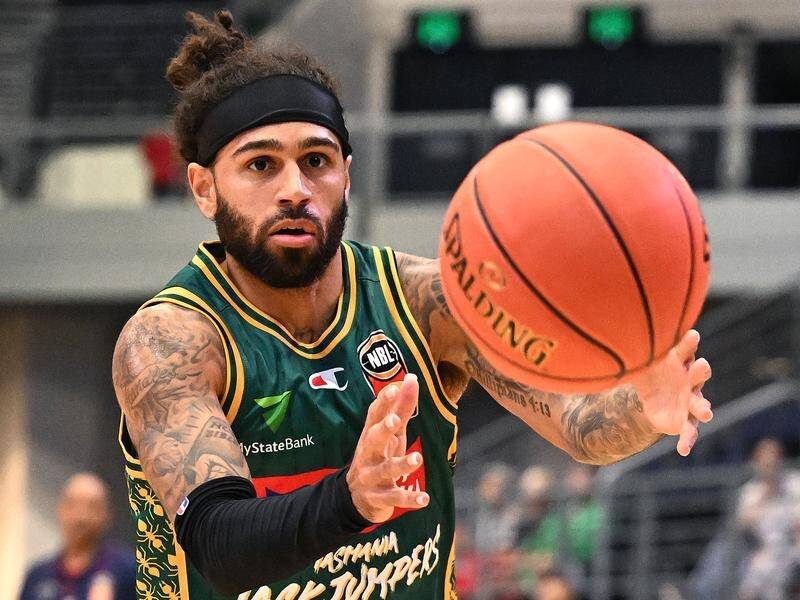
The Tasmania JackJumpers entered the NBL as the league’s newest franchise under former Perth Wildcats assistant Scott Roth, who assembled the inaugural roster around imports Josh Adams, Josh Magette and MiKyle McIntosh alongside Will Magnay (via Perth), Jack McVeigh (via Adelaide), Clint Steindl (via Perth), Sam McDaniel (via Melbourne), Fabijan Krslovic (via Cairns) and Jarrad Weeks (via Sydney). After finishing the previous season with the Kings, Weeks signed a two-year deal with Tasmania on July 14, returning to a state where he had previously played for the Hobart Chargers in 2016. His experience saw him named the JackJumpers’ inaugural vice-captain alongside captain Steindl. “We’ve got a big focus on culture and building the right culture,” he said.
The JackJumpers entered their debut season with low expectations, with multiple betting agencies offering 400:1 odds of them winning the championship. Tasmania opened its first NBL season against Brisbane at MyState Bank Arena on December 3, where Weeks (2 points and 1 steal) played 8:04 off the bench as the JackJumpers defeated the Bullets 83-74 in overtime. Adams (20 points) and Magette (19 points, 5 rebounds, and 6 assists) led Tasmania, while Sobey (24 points, 6 rebounds, and 3 assists) was Brisbane’s best.
Weeks (3.4 points across 33 games) provided veteran leadership and backcourt depth off the bench throughout Tasmania’s inaugural season. After the opening victory, the newly formed side struggled to find its feet and sat ninth with a 2-6 record heading into round eight before Magnay (7.5 points, 5.5 rebounds, and 2.1 blocks across 11 games) was lost for the season with a knee injury. Roth moved the JackJumpers away from their reliance on perimeter shooting towards a more balanced approach and Tasmania responded by winning 10 of its final 12 regular-season games.
Against Melbourne at MyState Bank Arena on January 1, Weeks (0 points and 2 assists) played 7:53 before leaving the game with a right knee injury as Tasmania lost 76-72. Adams (23 points and 4 rebounds) and Magette (15 points, 2 assists, and 3 steals) led the JackJumpers, while Lual-Acuil (19 points, 8 rebounds, and 2 blocks) was Melbourne’s best. Tasmania’s schedule then paused for three weeks and Weeks was available when the team next played, meaning the knee injury did not cost him an NBL game.
Weeks’ best regular-season game came against New Zealand at the Silverdome on March 5, where he shot 4-of-5 from the field and finished with 9 points, 5 rebounds, and 1 assist. McIntosh (21 points and 4 rebounds) and Steindl (9 points and 4 rebounds) also contributed, while Randle (18 points and 4 rebounds) led New Zealand as Tasmania won 66-62 in front of a record Launceston crowd of 3,532. Weeks made his only three-point attempt as the JackJumpers finished just 3-of-27 from beyond the arc.
On March 26 at Nissan Arena, Weeks did not take the floor in Tasmania’s 84-82 victory over Brisbane, his only non-appearance of the season, with the box score listing him as DNP – coach’s decision rather than injury. Magette (15 points, 5 rebounds, and 8 assists) and McVeigh (15 points and 4 rebounds) led Tasmania, while Franks (21 points and 12 rebounds) was Brisbane’s best.
Adams (17.5 points and 3.3 rebounds across 34 games) led Tasmania in scoring and was named to the All-NBL Second Team and later the JackJumpers’ inaugural club MVP, while McVeigh (12.2 points and 4.8 rebounds across 33 games), Magette (11.7 points, 4.1 rebounds, 5.9 assists, and 1.4 steals across 34 games), Steindl (9 points across 34 games) and McIntosh (8.7 points and 3.8 rebounds across 34 games) were the other major contributors. Roth was named NBL Coach of the Year, while Kenyon (3.6 points and 3.5 rebounds across 32 games) received the club’s Defensive Player of the Year award, Krslovic (4 points and 3.9 rebounds across 33 games) received the Coaches Award, McVeigh was voted Fan Favourite and Weeks was voted by his teammates to receive the Players Award.
Tasmania closed its scheduled regular season against first-placed Melbourne at MyState Bank Arena on April 23, where Weeks (0 points and 1 assist) played 9:05 off the bench as the JackJumpers defeated United 83-61. McIntosh (20 points and 3 rebounds) and Adams (19 points) led Tasmania, while Agada (22 points and 8 rebounds) was Melbourne’s best as the JackJumpers finished their schedule with a 17-11 record.
Tasmania still needed Perth to lose its final game to reach the postseason and South East Melbourne defeated the Wildcats 102-100 in overtime the following day, ending Perth’s 35-year playoff streak and allowing the JackJumpers to overtake them for fourth place on points percentage.
Game one of the semifinals moved to John Cain Arena, where Weeks (0 points, 3 rebounds, and 1 assist) played 11:32 off the bench as defending champion Melbourne defeated Tasmania 74-63. Adams (16 points and 5 rebounds) and McVeigh (15 points and 4 rebounds) led the JackJumpers, while Agada (16 points and 7 rebounds) and Lual-Acuil Jr (15 points, 7 rebounds, and 6 blocks) led United.
Game two returned to MyState Bank Arena, where Weeks (0 points and 1 rebound) played 7:32 as Tasmania evened the series with a 79-72 victory. McVeigh (15 points), McIntosh (13 points) and Magette (12 points, 5 rebounds, and 4 steals) led the JackJumpers, while Goulding (18 points), Agada (14 points and 5 rebounds) and Lual-Acuil Jr (13 points, 6 rebounds, and 3 blocks) were Melbourne’s best.
Game three returned to John Cain Arena, where Melbourne captain Chris Goulding suffered a calf injury during warmups and was ruled out of the deciding game. Weeks (6 points, 3 rebounds, and 1 steal) made two three-pointers off the bench, while Adams (30 points), McVeigh (16 points) and Magette (9 points, 4 rebounds, 7 assists, and 2 steals) led Tasmania. Ili (18 points, 5 rebounds, and 4 assists), Lual-Acuil Jr (16 points, 7 rebounds, and 2 blocks) and White (14 points and 15 rebounds) led Melbourne before Tasmania won 76-73 and advanced to the Grand Final in its first NBL season.
Sydney swept Illawarra 2-0 on the opposite side of the bracket before the Grand Final series opened at Qudos Bank Arena, where Weeks (3 points, 1 rebound, and 1 assist) played 12:59 off the bench. McVeigh (14 points, 5 rebounds, and 2 steals), McIntosh (14 points and 4 rebounds) and Adams (13 points and 8 rebounds) led Tasmania, while Jaylen Adams (18 points), Clark (17 points and 2 steals) and Cooks (14 points, 11 rebounds, and 7 assists) led Sydney to a 95-78 victory. Jaylen Adams suffered a hamstring injury during the fourth quarter that ruled him out for the remainder of the series.
Game two moved to MyState Bank Arena, where Weeks (11 points) made three three-pointers during 22:55 off the bench as Adams (36 points), McVeigh (10 points and 8 rebounds) and Magette (10 points, 4 rebounds, and 5 assists) led Tasmania. Cooks (20 points and 11 rebounds), Martin (20 points and 10 rebounds) and Vasiljevic (20 points and 5 rebounds) led Sydney, with Martin shooting 8-of-10 from the field before Vasiljevic hit a long-range three-pointer with less than 10 seconds remaining to secure a 90-86 victory. It was Sydney’s 12th consecutive road victory, the most away wins during a single NBL season.
Dejan Vasiljevic with the 𝘿𝘼𝙂𝙂𝙀𝙍 🗡️
–
– 📺 Watch the #NBLFinals Live on ESPN pic.twitter.com/XDIgoHVKo9— ESPN Australia & NZ (@ESPNAusNZ) May 8, 2022
The flu swept through Tasmania ahead of game three at Qudos Bank Arena, with McVeigh and Krslovic ruled out and Weeks (11 points) again taking on an increased role off the bench. Adams (27 points, 3 assists, and 2 steals), McIntosh (14 points and 8 rebounds) and Magette (12 points, 9 rebounds, 7 assists, and 6 steals) led Tasmania, while Cooks (23 points, 13 rebounds, 7 assists, 1 steal, and 2 blocks), Martin (22 points, 17 rebounds, and 1 block) and Clark (22 points, 3 assists, and 1 block) led Sydney to a 97-88 victory in front of a Grand Final record crowd of 16,149. The Kings completed the 3-0 sweep for their first championship in 17 years and their 19th win from their final 21 games, with Cooks named Grand Final MVP and Cooks and Martin combining for 45 points and 30 rebounds.
2022/23
After reaching the Championship Series during their inaugural season, Tasmania entered Scott Roth’s second campaign with most of the roster secured on multi-year deals. Leading scorer Josh Adams (to Cedevita Olimpija) and MiKyle McIntosh (to Saga) were the major departures, while Sejr Deans (to Jacksonville) and Jock Perry also moved on. Roth signed Milton Doyle (via Gaziantep) and Rashard Kelly (via Dijon) as the new import duo, with Isaac White (via Illawarra), Tristan Forsyth (via South East Melbourne), Josh Tomasi (via St Cloud State) and Walter Brown (via Canterbury) also added. Will Magnay remained sidelined by persistent knee problems, while captain Clint Steindl was recovering from an ankle injury suffered while representing Australia at the FIBA Asia Cup.
Tasmania opened the season against South East Melbourne at John Cain Arena on October 1, where Weeks (0 points and 3 rebounds) played 10 minutes from the bench, but the Phoenix won 84-79 despite McVeigh (20 points and 5 rebounds) and Kelly (18 points and 6 rebounds) leading the JackJumpers, while Kyle Adnam (30 points, 4 rebounds, and 4 assists) produced a career-high for South East Melbourne.
Weeks (3.7 points across 31 games) returned for the second year of the multi-year agreement he signed as Tasmania’s fourth player and continued as vice-captain under Steindl. He missed only the November 18 loss to New Zealand after suffering a minor leg injury, appearing in every other regular-season and postseason game.
Further losses followed against Cairns, where Weeks (6 points) provided scoring from the bench in a 106-84 defeat, and New Zealand, where Weeks (8 points and 2 rebounds) was Tasmania’s third-leading scorer in a 71-65 loss which left the JackJumpers equal last with Brisbane at 0-3.
Weeks (9 points and 4 rebounds) then made all three of his field-goal attempts against Brisbane on October 9 as Tasmania recovered from 16 points behind to collect its first victory, winning 90-86 in overtime. Doyle (32 points, 6 rebounds, and 4 assists) and McVeigh (17 points, 9 rebounds, and 3 assists) led the JackJumpers, while Tyler Johnson (24 points) made six three-pointers for Brisbane. The victory began a four-game winning streak which moved Tasmania back into the top six and playoff contention.
Weeks’ best scoring game came at the WIN Entertainment Centre on January 10, where he made four of five three-pointers and finished with 14 points, 3 rebounds, 1 assist, and 1 steal as Tasmania defeated Illawarra 92-89. Kelly (18 points, 5 rebounds, 2 assists, 1 steal, and 1 block) and McVeigh (15 points and 6 rebounds) led the JackJumpers, while Sam Froling (21 points, 8 rebounds, and 8 assists) was Illawarra’s best.
Weeks celebrated his 250th NBL game against Illawarra at the same venue on February 4, contributing 5 points and 1 steal as Tasmania secured fourth place and a second chance in the new play-in tournament with an 87-63 victory. Doyle (20 points, 8 rebounds, and 10 assists) and McVeigh (14 points, 3 rebounds, 3 assists, and 2 steals) led the JackJumpers, while Tyler Harvey (13 points) was Illawarra’s leading scorer. The result completed a 16-12 regular season but came at a significant cost when Magette (5 points, 6 rebounds, 4 assists, and 2 steals) suffered a broken cheekbone and fractured eye socket after being caught by an accidental elbow, requiring surgery and ruling him out of the playoffs.
Doyle (17.2 points, 5 rebounds, 3.7 assists, and 1.7 steals across 31 games) led Tasmania in scoring and became the first JackJumpers player selected to the All-NBL First Team, while McVeigh (14.8 points and 4.6 rebounds across 32 games) increased his scoring for a fifth consecutive season and emerged as the team’s leading local player. Kelly (12.1 points and 6.2 rebounds across 31 games) and Magette (10.2 points, 3.2 rebounds, 4.4 assists, and 2 steals across 28 games) were the other double-figure scorers, with MacDonald (6.3 points across 32 games), Magnay (5.9 points and 4.1 rebounds across 22 games), White (5.3 points across 28 games) and Krslovic (5.2 points and 3.2 rebounds across 32 games) providing further support. Tasmania conceded only 81.7 points per game, the second-lowest mark in the league, despite finishing 7-7 at home. Doyle was named club MVP, MacDonald received the Coaches’ Award, White won the Players’ Award, Magnay received the Defensive Player of the Year award and McVeigh was voted Fan Favourite.
With Magette unavailable, Weeks, MacDonald and White assumed more responsibility in the backcourt as Tasmania travelled to Cairns for the Seeding Qualifier. Weeks (1 point and 2 rebounds) started as the JackJumpers defeated the Taipans 87-79, with Doyle (25 points, 4 rebounds, 4 assists, and 3 steals), White (18 points, 4 rebounds, and 2 steals) and Kelly (11 points, 12 rebounds, and 4 assists) leading Tasmania, while Tahjere McCall (24 points, 6 rebounds, 3 assists, and 2 steals) and Shannon Scott (17 points, 6 rebounds, 3 assists, and 3 steals) were Cairns’ best.
Game one of the Playoffs series moved to Spark Arena, where Weeks (6 points and 1 steal), Kelly (12 points and 4 rebounds) and Doyle (10 points, 4 assists, and 2 steals) were unable to generate enough offence as Tasmania managed only 68 points, its third-lowest total of the season. Dererk Pardon (15 points, 9 rebounds, and 2 blocks), Will McDowell-White (13 points, 6 rebounds, and 7 assists) and Barry Brown Jr (11 points) led second-seeded New Zealand to an 88-68 victory.
Game two returned to MyState Bank Arena, where Weeks (5 points and 2 rebounds) made a long three-pointer on the halftime buzzer to lock the scores at 42-42. Doyle (23 points, 3 rebounds, 5 assists, and 3 steals), McVeigh (16 points and 3 rebounds) and Kenyon (11 points and 6 rebounds) then led Tasmania to an 89-78 win, while Brown Jr (19 points and 3 steals), Jarrell Brantley (17 points, 9 rebounds, 3 steals, and 2 blocks) and Pardon (15 points, 11 rebounds, and 4 steals) were New Zealand’s best as the JackJumpers forced a deciding third game.
The series returned to Spark Arena, where Weeks (3 points and 1 rebound), McVeigh (22 points, 7 rebounds, and 1 block), Kelly (16 points, 4 rebounds, and 1 block) and MacDonald (14 points and 3 rebounds) led Tasmania, while Brown Jr (32 points and 3 steals), Pardon (15 points, 14 rebounds, 2 steals, and 1 block) and Brantley (14 points and 7 rebounds) powered New Zealand. The Breakers outscored Tasmania 25-13 in the fourth quarter to win 92-77 and end the JackJumpers’ season.
After 11 NBL seasons across 12 years and 254 games with five clubs, Weeks retired and was immediately appointed to Roth’s coaching staff as an assistant coach. He finished as one of only three players to appear in every playoff game during Tasmania’s first two seasons.
“It is with great pride I am hanging up my boots from my second home, the NBL. I have cherished my 250+ games I have played for what seems like half the league. I have had many highlights to show but looking back it is the friendships I will take with me in to my next chapter in life,” he said.
“I am so grateful to have been the 4th ever signing for the Tasmania JackJumpers and helping build the JackJumpers franchise to what it is today. I am excited to see how it continues to grow. Finishing my playing career with this club has been my dream since I entered it. I cannot wait to see this club win its first championship.”
Jarrad Weeks played twelve seasons across five NBL teams. This included the Sydney Kings, Illawarra Hawks, Cairns Taipans, New Zealand Breakers and Tasmania JackJumpers. He averaged 5.1 points, 1.2 rebounds, and 1.2 assists in 282 NBL games.
HIGHLIGHTS:
| SEASON | AGE | TEAM | TEAM RECORD | GP | MINS | PTS | REB | AST | OR | DR | STL | BLK | TO | PF | FGM | FGA | FG% | 3PM | 3PA | 3P% | FTM | FTA | FT% | TS% | EFG% | HS |
|---|---|---|---|---|---|---|---|---|---|---|---|---|---|---|---|---|---|---|---|---|---|---|---|---|---|---|
| 2022-23 | 33 | Tasmania | 16-12 (4) | 31 | 387 | 116 | 36 | 15 | 9 | 27 | 8 | 0 | 21 | 48 | 38 | 84 | 45% | 29 | 62 | 47% | 11 | 23 | 48% | 61% | 63% | 14 |
| 2021-22 | 32 | Tasmania | 17-11 (4) | 33 | 363 | 113 | 51 | 31 | 6 | 45 | 4 | 1 | 19 | 25 | 39 | 107 | 36% | 25 | 76 | 33% | 14 | 31 | 45% | 46% | 48% | 11 |
| 2020-21 | 32 | New Zealand | 12-24 (8) | 26 | 289 | 82 | 25 | 23 | 2 | 23 | 3 | 0 | 21 | 28 | 28 | 74 | 38% | 13 | 54 | 24% | 13 | 17 | 76% | 50% | 47% | 11 |
| 2020-21 | 32 | Sydney | 19-17 (5) | 26 | 289 | 82 | 25 | 23 | 2 | 23 | 3 | 0 | 21 | 28 | 28 | 74 | 38% | 13 | 54 | 24% | 13 | 17 | 76% | 50% | 47% | 11 |
| 2019-20 | 30 | New Zealand | 15-13 (6) | 25 | 408 | 141 | 41 | 33 | 5 | 36 | 9 | 0 | 22 | 43 | 48 | 127 | 38% | 28 | 72 | 39% | 17 | 23 | 74% | 51% | 49% | 15 |
| 2018-19 | 29 | New Zealand | 12-16 (6) | 28 | 570 | 283 | 50 | 68 | 9 | 41 | 11 | 9 | 37 | 62 | 96 | 216 | 44% | 49 | 122 | 40% | 42 | 51 | 82% | 59% | 56% | 22 |
| 2017-18 | 28 | Cairns | 11-17 (6) | 28 | 540 | 232 | 47 | 56 | 17 | 30 | 18 | 2 | 35 | 52 | 78 | 208 | 38% | 41 | 119 | 34% | 37 | 89 | 42% | 46% | 47% | 18 |
| 2016-17 | 27 | Cairns | 15-13 (2) | 30 | 476 | 188 | 41 | 55 | 10 | 31 | 20 | 3 | 39 | 55 | 60 | 162 | 37% | 31 | 84 | 37% | 29 | 78 | 37% | 47% | 47% | 16 |
| 2015-16 | 26 | Illawarra | 17-11 (3) | 31 | 439 | 189 | 38 | 44 | 12 | 26 | 18 | 1 | 31 | 61 | 58 | 123 | 47% | 26 | 61 | 43% | 47 | 60 | 78% | 62% | 58% | 15 |
| 2013-14 | 24 | Sydney | 12-16 (6) | 12 | 54 | 11 | 5 | 5 | 0 | 5 | 3 | 3 | 6 | 10 | 5 | 14 | 36% | 1 | 5 | 20% | 3 | 0% | 36% | 39% | ||
| 2012-13 | 23 | Sydney | 12-16 (4) | 10 | 62 | 17 | 1 | 3 | 0 | 1 | 6 | 1 | 4 | 5 | 5 | 15 | 33% | 2 | 11 | 18% | 5 | 8 | 63% | 45% | 40% | 7 |
| 2010-11 | 21 | Sydney | 8-20 (9) | 2 | 2 | 2 | 1 | 0 | 0 | 1 | 0 | 0 | 0 | 0 | 0 | 0 | 0% | 0 | 0 | 0% | 2 | 4 | 50% | 53% | 0% | 2 | Totals | 282 | 3878 | 1456 | 361 | 356 | 72 | 289 | 103 | 20 | 256 | 417 | 483 | 1204 | 40.1% | 258 | 720 | 35.8% | 230 | 404 | 56.9% | 53% | 51% | 22 |
| SEASON | AGE | TEAM | TEAM RECORD | GP | MINS | PTS | REB | AST | OR | DR | STL | BLK | TO | PF | FGM | FGA | FG% | 3PM | 3PA | 3P% | FTM | FTA | FT% | TS% | EFG% | HS |
|---|---|---|---|---|---|---|---|---|---|---|---|---|---|---|---|---|---|---|---|---|---|---|---|---|---|---|
| 2022-23 | 33 | Tasmania | 16-12 (4) | 31 | 12.5 | 3.7 | 1.2 | 0.5 | 0.3 | 0.9 | 0.3 | 0.0 | 0.7 | 1.5 | 1.2 | 2.7 | 45% | 0.9 | 2.0 | 47% | 0.4 | 0.7 | 48% | 61% | 63% | 14 |
| 2021-22 | 32 | Tasmania | 17-11 (4) | 33 | 11.0 | 3.4 | 1.5 | 0.9 | 0.2 | 1.4 | 0.1 | 0.0 | 0.6 | 0.8 | 1.2 | 3.2 | 36% | 0.8 | 2.3 | 33% | 0.4 | 0.9 | 45% | 46% | 48% | 11 |
| 2020-21 | 32 | New Zealand | 12-24 (8) | 26 | 11.1 | 3.2 | 1.0 | 0.9 | 0.1 | 0.9 | 0.1 | 0.0 | 0.8 | 1.1 | 1.1 | 2.8 | 38% | 0.5 | 2.1 | 24% | 0.5 | 0.7 | 76% | 50% | 47% | 11 |
| 2020-21 | 32 | Sydney | 19-17 (5) | 26 | 11.1 | 3.2 | 1.0 | 0.9 | 0.1 | 0.9 | 0.1 | 0.0 | 0.8 | 1.1 | 1.1 | 2.8 | 38% | 0.5 | 2.1 | 24% | 0.5 | 0.7 | 76% | 50% | 47% | 11 |
| 2019-20 | 30 | New Zealand | 15-13 (6) | 25 | 16.3 | 5.6 | 1.6 | 1.3 | 0.2 | 1.4 | 0.4 | 0.0 | 0.9 | 1.7 | 1.9 | 5.1 | 38% | 1.1 | 2.9 | 39% | 0.7 | 0.9 | 74% | 51% | 49% | 15 |
| 2018-19 | 29 | New Zealand | 12-16 (6) | 28 | 20.4 | 10.1 | 1.8 | 2.4 | 0.3 | 1.5 | 0.4 | 0.3 | 1.3 | 2.2 | 3.4 | 7.7 | 44% | 1.8 | 4.4 | 40% | 1.5 | 1.8 | 82% | 59% | 56% | 22 |
| 2017-18 | 28 | Cairns | 11-17 (6) | 28 | 19.3 | 8.3 | 1.7 | 2.0 | 0.6 | 1.1 | 0.6 | 0.1 | 1.3 | 1.9 | 2.8 | 7.4 | 38% | 1.5 | 4.3 | 34% | 1.3 | 3.2 | 42% | 46% | 47% | 18 |
| 2016-17 | 27 | Cairns | 15-13 (2) | 30 | 15.9 | 6.3 | 1.4 | 1.8 | 0.3 | 1.0 | 0.7 | 0.1 | 1.3 | 1.8 | 2.0 | 5.4 | 37% | 1.0 | 2.8 | 37% | 1.0 | 2.6 | 37% | 47% | 47% | 16 |
| 2015-16 | 26 | Illawarra | 17-11 (3) | 31 | 14.2 | 6.1 | 1.2 | 1.4 | 0.4 | 0.8 | 0.6 | 0.0 | 1.0 | 2.0 | 1.9 | 4.0 | 47% | 0.8 | 2.0 | 43% | 1.5 | 1.9 | 78% | 62% | 58% | 15 |
| 2013-14 | 24 | Sydney | 12-16 (6) | 12 | 4.5 | 0.9 | 0.4 | 0.4 | 0.0 | 0.4 | 0.3 | 0.3 | 0.5 | 0.8 | 0.4 | 1.2 | 36% | 0.1 | 0.4 | 20% | 0.0 | 0.3 | 0% | 36% | 39% | |
| 2012-13 | 23 | Sydney | 12-16 (4) | 10 | 6.2 | 1.7 | 0.1 | 0.3 | 0.0 | 0.1 | 0.6 | 0.1 | 0.4 | 0.5 | 0.5 | 1.5 | 33% | 0.2 | 1.1 | 18% | 0.5 | 0.8 | 63% | 45% | 40% | 7 |
| 2010-11 | 21 | Sydney | 8-20 (9) | 2 | 1.0 | 1.0 | 0.5 | 0.0 | 0.0 | 0.5 | 0.0 | 0.0 | 0.0 | 0.0 | 0.0 | 0.0 | 0% | 0.0 | 0.0 | 0% | 1.0 | 2.0 | 50% | 53% | 0% | 2 | Total | 282 | 13.8 | 5.2 | 1.3 | 1.3 | 0.3 | 1.0 | 0.4 | 0.1 | 0.9 | 1.5 | 1.7 | 4.3 | 40.1% | 0.0 | 0.0 | 35.8% | 0.9 | 2.6 | 56.9% | 53% | 51% | 22 |
| POINTS | REBOUNDS | ASSISTS | STEALS | BLOCKS | TURNOVERS | TRIPLE DOUBLES | 22 | 7 | 9 | 4 | 2 | 5 | 0 |
|---|
Weeks joined Hornsby for the 2010 Waratah League season and remained with the Hornsby Spiders through 2011 as part of his early senior state league years.
Jarrad Weeks joined Norths for the 2012 Waratah League season and helped the Norths Bears win the Waratah League championship that year before continuing with the club through the 2014 season.
Jarrad Weeks returned to Norths for the 2013 Waratah League season and was named an All Star Five guard before completing a third straight season with the Bears in 2014.
Jarrad Weeks joined Hobart for the 2016 SEABL season, previously playing in Hobart with the Chargers in the SEABL in 2016, and he produced strong backcourt form that included a 32-point, six-assist performance against Canberra during the year.
Jarrad Weeks joined Cairns for the 2017 QBL season and played for the Cairns Marlins, with his season including an 18-point, seven-rebound game against Brisbane and form that was noted at 14 points and just over three assists a game late in the year.
Weeks joined the Southland Sharks for the 2018 New Zealand NBL season, and he averaged 16.4 points, 2.5 rebounds, and 5.5 assists across 19 games.
Weeks returned to the Southland Sharks for the 2019 New Zealand NBL season, and he averaged 19.8 points, 3.3 rebounds, and 4.3 assists across 17 games while being named to the NZNBL All-Star Five.
Weeks joined the Auckland Tuatara for the 2023 New Zealand NBL season, and he played 18 games averaging 13.3 points, 3.8 assists, and 2.2 rebounds while helping the team reach the Grand Final.
Fresh from announcing his retirement from a decorated NBL career, Jarrad Weeks took up a role as the Tasmania JackJumpers assistant coach.
In 2024, as a member of the JackJumpers coaching staff, Weeks won his first NBL championship.
In 2025, Weeks re-signed as an assistant on a two year deal.
In 2025, Jarrad Weeks began his NBL1 coaching tenure as Head Coach of the Hobart Chargers in NBL1 South. In his debut, he guided the Chargers to an 85–84 lead over the North West Thunder before a late-game power outage led to the match being declared a ‘No Result’. The teams are set to face off again in Round 9 on May 30 in Hobart.
Whilst we try to source as much information as we can for every player who has ever played in the NBL some information on a player profile may be missing. If you have additional information on a player you'd like us to add to a profile, please send it to us using the enquiry form below.
Submissions are then sent to info@aussiehoopla.com