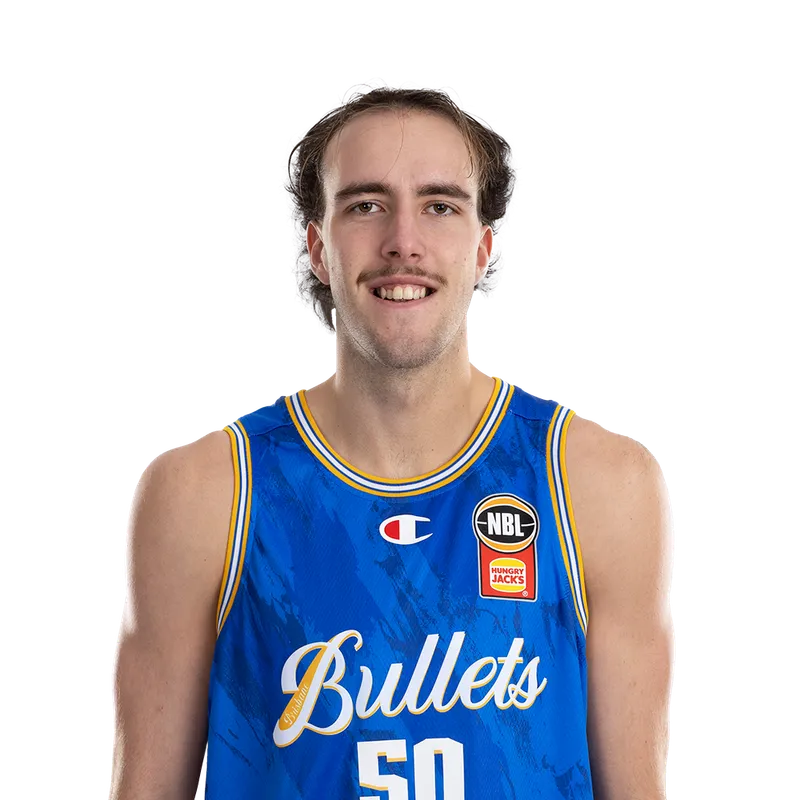
Jensen Bradtke
July 2, 2025



NICKNAME/S: Hoagie
BIO: Mark Bradtke was born in Noarlunga (SA) and began playing basketball as a junior with the Noarlunga basketball program. Bradtke received a scholarship to attend the Australian Institute of Sport (Canberra) in 1986. He spent two years year there and played for the program’s state league team (1986, 1987).
FAMILY: Mark’s son Jensen Bradtke also played 11 games in the NBL. Bradtke has been married to the Australian former professional tennis player Nicole Provis since 1994. Together they have two boys, Austin (born 2000) and Jensen (born 2004). Austin was selected by the Melbourne Football Club as a category B rookie and will join the club from 2019.
Mark Bradtke made his NBL debut with the Adelaide 36ers at 18 years of age. He went scoreless in his first NBL game.
Darryl Pearce and Peter Ali would be named co-captains of the squad in 1988, the same year Adelaide born centre and Australian Institute of Sport (AIS) attendee Mark Bradtke would make his NBL debut. Bradtke was signed by Ken Cole in 1986 when he was 16 years old and 203 cm tall but due to living in Brisbane at the time, he committed to the AIS for two years before joining Adelaide.
The Sixers had a great start to the season, kicking it off with a 4-1 start that included a 31-point win over Illawarra and had them picked as favourites to win the title in the early stages of the year. During the first month of the season, the 36ers were led by Darryl Peace, who exploded for 48 points, including 11 of 14 three-point attempts, against the Ken Cole coached Falcons in Newcastle in round two, a stat line that remains the highest scoring game in 36ers history.
Bradtke (7.4 points and 5.4 rebounds, and 1.4 blocks) appeared in 23 games and came off the bench as a back-up to Bill Jones and Mark Davis. Adelaide (19-5) finished with in first place during the regular season for the third year in a row (second under coach Gary Fox). Adelaide would then lose to Canberra (0-2), falling short in the semifinals for the second year in a row.
1989
1989 would be the last year with Gary Fox as coach after the team dropped to sixth on the regular season ladder with a 15–9 record. Due to the emergence of Mark Bradtke, import centre Bill Jones left the team to join former coach Ken Cole in Newcastle. Adelaide replaced him with import forward Orlando Phillips, the 1983 NCAA West Coast Conference Men’s Basketball Player of the Year and a former Los Angeles Lakers draft pick.
Also, the team captaincy would be handed over fully to Darryl Pearce as co-captain Peter Ali chose to step down from the role. As the season began, Mark Davis (25.6 points, 14.4 rebounds, 1.6 assists, 1.3 steals, and 1.0 blocks) would lead the team in scoring and rebounding while also being selected in the All-NBL First Team for a fourth time. Phillips (20.5 points, 11.0 rebounds, and 1.2 steals) came as advertised, providing the additional scoring needed, and Bradtke (15.0 points, 7.6 rebounds, and 1.3 blocks) made the most of his new role as starting center, winning the league’s Most Improved Player award.
McKay would contribute 13.5 points, 2.9 rebounds, and 2.9 assists as the 36ers snuck into the playoffs as the sixth seed. Adelaide (15-9) would face Perth (16-8) in the Elimination Finals, where Cal Bruton (35 points, 3 rebounds and 5 assists) finished as the game’s high scorer, but it wouldn’t be enough to get past the 36ers who had five players score over 18 points or more. Mark Davis (25 points, 13 rebounds, and 4 steals), Darryl Pearce (25 points, 3 rebounds and 4 assists), Orlando Phillips (23 points, 9 rebounds, 3 assists, and 3 steals), Mike McKay (20 points, 2 rebounds, and 3 assists) and second year big man Mark Bradtke (18 points, 11 rebounds, 5 assists, and 4 blocks) combining for 91 points in the game one win (122-124).
With the series returning to Perth for game two, Perth returned to its regular season form, shooting 51% from the field (42/82), and defeating Adelaide by 20 points (114-94). Pinder (25 points and 14 rebounds) and Bruton (22 points and 5 assists) top scoring for the Wildcats, while Mark Davis (22 points and 20 rebounds) racked up a 20/20 game in the 36ers losing effort.
With Bruton (29 points and 7 rebounds) again leading the team in scoring, Perth came away with the win in game three (112-108) and ended 36ers playoff hopes.
ADELAIDE 36ERS
1990
Adelaide entered the 1990 season with Gary Fox exiting as head coach, while long-time assistant Don Shipway was appointed to lead a 36ers squad that would miss the playoffs for the first time since 1983.
Mark Davis replaced Darryl Pearce as captain, while Davis, Pearce, Mark Bradtke, Mike McKay, Scott Ninnis, Al Green, Tom Schafer, Simon Cottrell, Matthew Reece and Peter Ali formed the core of Adelaide’s rotation.
The season was also the last for hometown guard Peter Ali, who retired after a long career with Adelaide.
Bradtke (17.4 points, 9.3 rebounds, 1.1 assists, and 1.3 blocks) made the centre position his own in 1990, continuing the rise that had started the previous season when he won the NBL Most Improved Player award.
Davis (27.2 points, 12 rebounds, 2.8 assists, and 1.2 steals) remained Adelaide’s leading scorer and rebounder, while Pearce (16.9 points, 2.5 rebounds, 5.4 assists, and 1.2 steals) gave the 36ers another proven scoring option in the backcourt.
Schafer (15.7 points and 10.3 rebounds), McKay (13.7 points, 2.5 rebounds, 3.2 assists, and 1.2 steals), Ninnis (10.2 points and 3.8 assists), Green (9.8 points and 2.2 assists) and Cottrell (8.4 points, 4.5 rebounds, and 1.1 steals) gave Shipway a deep group, but Adelaide never found enough consistency to stay in the playoff race.
Adelaide’s two leading offensive players were Davis and Bradtke, with Bradtke giving the 36ers a young interior scorer and shot-blocker next to the club’s new captain.
The 36ers finished the regular season with an 11-15 record, ending outside the postseason for the first time since 1983.
Bradtke’s third NBL season confirmed his move from promising Olympic teenager into Adelaide’s starting centre, but the 36ers’ season ended outside the playoffs at 11-15.
1991
Adelaide entered the 1991 season with Al Green exiting the team, while Don Shipway was retained as head coach after the 36ers missed the playoffs the previous year.
Mark Davis, Darryl Pearce, Mark Bradtke, Mike McKay, Scott Ninnis, Tom Schafer, Simon Cottrell, Matthew Reece and Peter Ali returned from the previous season’s group, with Davis continuing as captain after taking over the role in 1990.
Shipway replaced Green with former NBA guard Butch Hays, signing him to a two-year deal, while 19-year-old Adelaide product Brett Wheeler was added to give the 36ers another developing big man behind Bradtke.
Bradtke (17.8 points, 12.1 rebounds, 2.1 assists, and 1.6 blocks) continued his rise as one of the league’s leading young centres, giving Adelaide a second dominant interior presence next to Davis.
Hays (24.6 points, 4.5 rebounds, 9 assists, and 2 steals) immediately became Adelaide’s main playmaker and led the NBL in assists, while Davis (23 points, 14.7 rebounds, 2.2 assists, and 1.2 steals) was selected to the All-NBL First Team.
Adelaide’s two leading offensive players were Hays and Davis, with Bradtke next in the scoring order and giving the 36ers a rebounding-heavy frontline that helped return the club to the postseason.
Pearce (15.5 points, 2.6 rebounds, 3.9 assists, and 1.1 steals), McKay (12.7 points, 3.1 rebounds, and 3.4 assists), Ninnis (9.8 points, 2.1 rebounds, and 2.1 assists), Cottrell (7.4 points and 4.4 rebounds), Schafer, Reece, Ali and Wheeler filled out Shipway’s rotation.
The 1991 season was also Adelaide’s final year at the 3,000-seat Apollo Stadium before the club moved into the Clipsal Powerhouse the following season.
Adelaide finished fourth with a 16-10 record, earning a home elimination finals series against fifth-placed Melbourne.
The elimination finals opened at Apollo Stadium, where Adelaide defeated Melbourne 129-115 behind Darryl Pearce (29 points), Mark Davis (14 rebounds) and Butch Hays (11 assists), while Andrew Gaze (39 points, 8 rebounds, and 8 assists) led the Tigers.
Game two moved to Melbourne, where Adelaide completed the sweep with a 132-96 win as Davis (31 points and 15 rebounds) and Hays (17 assists) led the 36ers, while Gaze (40 points), Dave Simmons (13 rebounds), David Colbert (3 assists) and Warrick Giddey (3 assists) were Melbourne’s main contributors.
The semifinals opened in Perth, where the Wildcats defeated Adelaide 125-113 to put the 36ers under pressure against the defending champions.
Game two returned to Apollo Stadium, where Perth completed the sweep with a 113-106 win, ending Adelaide’s last season at the venue and sending the Wildcats through to the Grand Final.
Perth went on to win the 1991 NBL championship, while Bradtke’s first playoff season as a major 36ers contributor ended with Adelaide’s 113-106 semifinal loss to the Wildcats.
1992
Adelaide had played at the Apollo Stadium since the team’s inception in 1982, but by the early 1990s, ticket demand was far too great to remain there, and the team moved into the 8,000 seat Clipsal Powerhouse prior to the 1992 season. During the off-season, the team was able to retain import point guard Butch Hays and captain Mark Davis but saw local favourite and former captain Darryl Pearce sign with the North Melbourne Giants.
The venue quickly became a fortress for the 36ers, with every game played in front of a sell-out crowd. The increased fan support saw Adelaide open the year with a 106-84 victory over the North Melbourne Giants. After this initial success, however, the team failed to win again across their next seven games, including losses to perennial easy beats like Hobart and Newcastle.
The 36ers would then face a major hurdle after the league’s mid-season break to accommodate the Barcelona Olympics. After the Boomers finished the tournament in fourth place, Bradtke returned with the announcement that he had accepted a lucrative deal (reportedly worth $200,000) to finish the season playing for Spanish team Juver Murcia. In his 17 games prior to the break, Bradtke had clearly become the best local big man in the competition. In his last game wearing a 36ers jersey, he scored a career-high 43 points, grabbed 25 boards against Geelong at home and averaged 20.1 points, 14.8 rebounds, and 1.9 assists for the season.
The 36ers, although never looking like a playoff team, were never able to fill the gap left by Bradtke and limped home to a 11-13 record, finishing in the ninth spot.
Despite the disappointing season, two positives came from this season. The first was the rookie debuts of local teenagers Brett Maher (2.2 points in 8 minutes per game), who went on to play a record 525 games for the 36ers, and 18-year-old Paul Rogers, who appeared in five games but later became a big part of the 36ers and the Australian national team. Mark Davis also played his last season as a import, obtaining his Australian citizenship this year and qualifying as a local player until his retirement.
Bradtke, who had signed with the Spanish club for only one season, had a agreement to play with Adelaide if he returned in 1993. Upon his return to Australia, Bradtke made it known he did not want to play the final year of his contract in Adelaide, amongst rumours the Melbourne Tigers were actively recruiting him. After negotiations between the two parties broke down, the 36ers gave permission for Bradtke to leave if a team would buy out his remaining contract, however, the NBL stepped in and vetoed the buyout, effectively letting Bradtke leave for Melbourne without the 36ers receiving any compensation. After the fact it became clear Bradtke had decided to move to Melbourne to be closer to then girlfriend (and future wife), pro-tennis player Nicole Provis.
In all, Bradtke played 118 games for the Adelaide 36ers, including nine playoff games, averaging 15.4 points, 9.6 rebounds, and 1.6 blocks per game.
Despite his less than harmonious split from the 36ers in 1992 (which resulted in the Adelaide crowd regularly booing Bradtke for the rest of his career), in 2015, Adelaide fans finally recognised his contribution not only to the 36ers but also to the NBL. Fans voted him in as the best centre to ever play for the 36ers via a online poll conducted by Adelaide’s daily newspaper ‘The Advertiser’. Bradtke received 35.71% of the votes to beat out former teammate Bill Jones (25.17%) and 36ers triple championship winning centre Paul Rees (23.81%).
1993 – THE TIGERS FIRST CHAMPIONSHIP
The Tigers’ season began with the huge signing of Mark Bradtke during the pre-season. His arrival made national news, with Bradtke having spent the off-seasonplaying in Spain and giving former team Adelaide a verbal agreement he would play for them if he returned in 1993. However, upon his return to Australia, Bradtke made it known he did not want to play the final year of his contract in Adelaide, amongst rumours the Melbourne Tigers were actively recruiting him. After negotiations between the two parties broke down, the 36ers gave permission for Bradtke to leave if a team would buy out his remaining contract. However, the NBL stepped in and vetoed the buyout, effectively letting Bradtke leave for Melbourne without the 36ers receiving any compensation. After the fact it became clear Bradtke had decided to move to Melbourne to be closer to then girlfriend (and future wife), pro-tennis player Nicole Provis.
Although the Tigers were coming off a grand final appearance, they began the season poorly and no one was pencilling them in for the championship at midseason. After shaking off their slow start (2-7) but finishing the remainder of the season strong (14-3), the Tigers finished the year in third place. Bradtke (17 points, 12.2 rebounds, and 2.1 assists) became the missing puzzle piece to Melbourne’s historically weak frontline as Andrew Gaze (32.0 points, 5.4 rebounds, 6.1 assists and 2.7 steals), Lanard Copeland (22.2 points, 3.1 rebounds, 2.8 assists and 1.9 steals) led the team in scoring.
During the quarterfinals, the Tigers would easily eliminate Illawarra (2-0), setting up a rematch of last year’s grand final, a semi finals showdown against South East Melbourne. Copeland (32 points, 4 rebounds, 4 assists, and 2 steals), Gaze (23 points 3 rebounds, and 8 assists) and Bradtke (21 points, 15 rebounds, 3 assists, 2 steals, and 2 blocks) combined for 76 points and in nail-biting two point win to open the series (108-106). In game two, Bradtke (28 points, 15 rebounds, and 2 steals) was the difference maker, proven unstoppable for the Magic as the Tigers closed out the series behind a 17 point win (89-72).
On the opposite side of the bracket, the Perth Wildcats (21-5) had finished on top of the ladder and made their way through to the Grand Final.
The series began with the Tigers playing at home and, by the second quarter, were controlling things with a 19 point lead. From there, Melbourne saw four key players fall into foul trouble, which included Robert Sibley (13 points and 4 rebounds) and Bradtke (4 points, 11 rebounds) fouling out. Bradtke struggled against Perth’s interior defenders and finished the game shooting one from nine from the field. Ricky Grace (23 points, 3 rebounds, 8 assists and 2 steals) then fueled a late-game surge from Perth which closed the game by four points. In the closing minutes, Perth attempted to close the gap by repeatedly sending Melbourne to the line but with Gaze (41 points, 6 rebounds, and 9 assists) nailing ten from ten free throws in the final quarter, Melbourne see out the game as victors (117-113).
In a similar fashion to game one, Melbourne took out a early lead in game two (32-22), thanks to the dominance of Bradtke (24 points, 13 rebounds, and 4 assists). By halftime, however, the ‘Perth Wall’ of James Crawford (32 points, 4 rebounds, 3 assists, and 3 blocks), Andrew Vlahov (23 points, 7 rebounds, and 2 blocks), and Scott Fisher (16 points and 6 rebounds) had reined Bradtke things in and returned fire to lead by six at halftime (60-54).
Perth remained in control of the foul-prone Tigers, who struggled to score after losing both Gaze (22 points, 3 rebounds, and 6 assists) and Dave Simmons (12 points, 11 rebounds, and 4 assists) to six fouls. Grace (23 points, 8 rebounds, and 13 assists) came close to recording a triple-double, many of those assists coming from feeding Crawford inside, who made 11 of his 15 shots.
A full house at the Perth Entertainment Centre (8,000 fans) witnessed the Wildcats’ victory (112-105), one that extended their consecutive home winning streak to 17. With game three to be played in Perth and the Tigers have never won on the Wildcats’ home floor, Perth entered the game as clear favourites.
The underdog Tigers, however, survived a strong Perth comeback that cut a 15-point lead to three before Gaze (22 points, 3 rebounds, and 5 assists) sunk a free throw to give Melbourne a two-point edge with four seconds left on the clock. A last-second shot from Vlahov (31 points, 15 rebounds, 4 assists, and 2 steals) which rattled in and out of the ring, saw the Tigers become NBL champions for the very first time (104-102). Copeland (35 points, 8 rebounds, and 2 assists) led the team in scoring, while Bradtke (23 points, 19 rebounds, 3 assists, 2 steals, and 2 blocks) dominated Perth inside after struggling with fouls in the first two games. In a surprising decision, however, Wildcats’ guard Ricky Grace was awarded the Grand Final MVP despite playing for the losing team.
The win saw Lindsay Gaze and his son Andrew complete a ten year journey to win Australia’s oldest basketball club its first national championship.
Surprisingly, the season Andrew Gaze led the Tigers to their first championship was the only season between 1991 and 1998 where he missed out on claiming the league’s MVP award. Instead, voters went with South East Melbourne Magic’s Robert Rose, but Gaze’s championship victory far outweighed any MVP result.
1994
1994
Coming off a title in 1993, the Tigers were able to return with almost the entire roster, losing only backup big man Robert Sibley (to Brisbane), who they would replace with a young Chris Anstey. The defending champions would go on to record their best regular season result in the club’s history (19-7), finishing in second place. Andrew Gaze (33.4 points, 4.8 rebounds, 7.2 assists, and 2.4 steals) was awarded the league’s Most Valuable Player award and led the league in scoring, while Mark Bradtke (20.2 points, 14.5 rebounds, 2.5 assists, 1.2 steals, and 1.3 blocks) led the league in rebounding and both were also selected to the All-NBL First Team. Once into the postseason, Melbourne would defeat Illawarra convincingly in both game one (107-85) and game two (119-83) before facing a incredibly talented (and deep) Adelaide team in the semifinals, which featured Rob Rose, Mark Davis, Willie Simmons, Phil Smyth, Brett Maher and Chris Blakemore. The 36ers defeated the Tigers first in Adelaide (101-88) and then repeated the result on Melbourne’s home floor (110-101) to end the Tiger’s season and move on to the Grand Final to face North Melbourne.
1995
In 1995, Mark Bradtke requested some time off to allow him to support his wife Nicole’s tennis career as she travelled abroad and miss the first two-thirds of the season. Around that same time, Chris Anstey, a part of the Tigers junior program, also informed the club that he would return, having signed a deal to play with rival club South East Melbourne. Melbourne coach Lindsey Gaze appealed via the NBL tribunal, which ruled that Anstey could not leave the Tigers as long as they could match the contract, which they did.
After some extremely creative salary tweaking, the Magic then signed Anstey to a one year deal worth $180,000 which the Tigers had no interest in matching, allowing Anstey to shift clubs. Once Anstey had signed with the Magic, he renegotiated his contract to a 3-year, $181,000 contract, remaining higher than the Tigers contract not to break any NBL salary cap rules of the time.
The Tigers added forward Matt Reece (via Gold Coast) and centre Blair Smith (via Brisbane) to cover the loss of Bradtke and Anstey.
Andrew Gaze (33.9 points, 4.2 rebounds, 8.0 assists, and 2.3 steals), Lanard Copeland (25.5 points, 4.6 rebounds, 3.2 assists, and 1.7 steals) and Dave Simmons (14.7 points, 9.1 rebounds, 2.7 assists, 1.5 steals, and 1.0 blocks) led the team offensively, during a season which saw a merry-go-round of league leaders, during the regular season, Brisbane, Sydney, North Melbourne, South East Melbourne and Melbourne all sat in the number one spot on the ladder some point. With Melbourne narrowly sitting among the top eight team’s (10-7), Bradtke (11.2 points, 7.9 rebounds, 1.7 assists, and 1.2 blocks) would return to playout the Tigers’ last nine games for the season.
The Tigers would scrape into the playoffs, claiming the eighth seed (14-12), their worst result since 1988. With Bradtke out of form and the team still adjusting to him being back in the lineup, Melbourne was eliminated by the Perth Wildcats in the first round (1-2).
1996
With the Tigers core group all returning and Bradtke back full-time, the Tigers were able to return to their winning ways after their worst season in eight seasons. Gaze (31.1 points, 5.3 rebounds, 8.1 assists, and 1.7 steals), Copeland (21.4 points, 4.5 rebounds, 2.5 assists, and 1.4 steals) and a rejuvenated Bradtke (22.6 points, 11.5 rebounds, 2.5 assists, and 1.6 blocks) churned through the competition like a well-oiled machine. Melbourne would finish in first place (21-5), recording their best regular season record in franchise history.
Melbourne would ride the coattails of their ‘Big Three’ through the playoffs, first facing off against the eight seed Brisbane (14-12). Despite losing game one by 21 points (97-118), the Tigers would return to Melbourne and win game two (96-87) thanks to big games from Gaze (30 points, 4 rebounds and 7 assists) and Bradtke (24 points, 9 rebounds, and 4 assists) and game three (111-93) with Gaze (29 points, 3 rebounds and 6 assists) and Bradtke (29 points, 13 rebounds, and 4 blocks) again leading the team in scoring.
The Tigers would then meet Canberra in the semifinals, again losing the first game (98-87) with Robert Rose (22 points, 6 rebounds and 6 assists), Darnell Mee (21 points, 3 rebounds, 3 assists, 2 steals, and 2 blocks), and Simon Dwight (20 points, 11 rebounds, and 5 blocks) proving too good. Melbourne rebounded with Gaze (30 points, 8 rebounds, 9 assists, 4 steals), narrowly missing out on a triple-double in their game two win (100-82), and then in game three (91-87), Gaze (29 points, 7 rebounds, 5 assists and 3 blocks) and Bradtke (26 points, 12 rebounds, and 4 blocks) combined to score half of the Tigers points, eliminating the Cannons in a tightly fought four-point win.
Moving on to the grand final series, Melbourne would face South East Melbourne (19-7) who finished in second place during the regular season. Melbourne was too good in game one (100-89), with Gaze (35 points, 8 rebounds, and 7 assists) delivering his best game of the series in front of a packed Melbourne crowd. Mark Bradtke (24 points and 15 rebounds) and Lanard Copeland (23 points, 4 rebounds and 3 assists) were also brilliant, scoring whenever Gaze didn’t, and the Tigers ‘Big Three’ combining for 82 points.
The Magic would then bounce back and win game two (88-84) in front of a Grand Final record crowd of 15,064 at the National Tennis Centre at Flinders Park, which still stands as Melbourne’s highest-attended NBL game ever. Gaze (21 points, 5 rebounds, and 9 assists) led the Tigers in scoring in the loss, while the Magic were led by Tony Ronaldson (28 points) and Mike Kelly (19 points, 9 rebounds, 4 assists and 2 steals).
The third and deciding game was held less than 48 hours later, a scenario that benefited the younger legs of the Magic and allowed them to deliver the final blow (107-70). Billy McCaffrey (24 points and 5 assists) and the incredibly efficient performances from Sam MacKinnon (18 points and 9 rebounds), who shot 9/10 from the field, and John Dorge (16 points and 8 rebounds) who made 8 of his 11 shots saw South East Melbourne’s field goal percentage be the game’s deciding factor. The Tigers made only 23 of 60 shots (38%) compared to the Magic, hitting 46 of their 85 shots (54%) in the 30-point blowout.
The 1996 NBL Grand Final series drew a aggregate attendance record of 43,605 (average 14,535), the largest crowd ever for a three-game NBL series. Magic guard Mike Kelly was awarded the Finals MVP award after averaging 16 points, 6 rebounds, 4 assists and 2.3 steals across the three-game series.
1997
After the blowout loss the Tigers suffered at the hands of the South East Melbourne Magic in game three of the 1996 NBL Finals, the team chose not to re-sign long-time import Dave Simmons and replaced him with athletic wing Jarvis Lang.
The season began poorly with the team for multiple reasons. It became rapidly clear that Lang (19.1 points, 9.1 rebounds, and 2.0 assists) was battling serious knee problems, which limited his playing time, not to mention the Tigers being stripped of a win against Adelaide due to Bradtke not getting proper clearance before returning from the NBA’s Philadelphia 76ers.
With a record of three wins, nine losses, fans and media began to lay the blame on Lindsay Gaze and called for him to step down as coach. The Tigers players, however, knew the slow start was due to their efforts, and so with a renewed focus, as well as the mid-season decision to sack Lang and replace him with Marcus Timmons, they looked to turn things around. After one trial practice session, the Tigers signed Timmons, and everything began to click, and he became the missing piece to their early-season puzzle. Timmons had spent the previous season playing in Illawarra, where he was among the league leaders in steals (10th), scoring (3rd) and rebounding (3rd), collecting more boards than new teammate Bradtke.
Over the remaining 22 games, Melbourne was able to finish in second place (19-11), behind South East Melbourne (22-8), going on a 14-game consecutive winning streak to finish the regular season. Gaze (30.9 points, 4.6 rebounds, 6.7 assists, and 1.4 steals) would lead the league in scoring for the 12th time and win his seventh MVP award. Copeland (23.0 points, 4.9 rebounds, 3.1 assists, and 1.0 steals) and Bradtke (20.4 points, 12.4 rebounds, 2.5 assists, and 1.6 blocks) delivered as always, and Timmons (17.5 points, 9.6 rebounds, 3.5 assists, 1.6 steals, and 1.5 blocks) complimented them perfectly.
The Tigers received a first-round bye in the playoffs before meeting North Melbourne in the semifinals. Melbourne defeated North Melbourne easily, with the Giants having no answer for Bradtke. He would play all 48 minutes of both games and record 25 points, 15 rebounds and 2 blocks in game one (107-99) and 26 points, 16 rebounds and 3 assists in game two (112-105).
Tony Ronaldson (26 points) led the Magic in scoring, but with Copeland (26 points and 6 rebounds), Gaze (22 points, 5 rebounds and 9 assists), Bradtke ( 21 points, 11 rebounds and 4 assists) and Timmons (20 points, 13 rebounds, 3 assists and 2 steals) combining for 89 points to outscore the Magic by themselves, it was over. Copeland was named Finals MVP after averaging 27.6 points and 3.3 rebounds (56% shooting) over the three game series, yet it was blue-collar Tigers forward Warrick Giddey who the Melbourne Tigers deemed the deciding factor in the game three victory. Giddey recorded zero points, four rebounds, three assists and one block, and if you hadn’t seen the game, you’d probably question why he even bothered showing up. But Giddey delivered three crucial plays in the series’ closing moments that turned the tide. Firstly a hard foul on Sam MacKinnon, which broke the Magic star’s nose. The second was a huge block on Frank Drmic, and finally, a mid-court screen on Mike Kelly that came close to knocking him out of his shoes.
1998
Melbourne was able to return with its entire Grand Final roster intact. While the Tigers had surprised the league in 1997, both with their 17-game consecutive win streak and their championship win, in 1998, the team fell far short of expectations. In hindsight, the Tigers’ core group had reached the downside of their careers with Gaze and Copeland (both 33 y/o), veterans Ray Gordon (32 y/o), and Warrick Giddey (30 y/o) all over thirty, while the average of a NBL player in 1998 being 26 years of age. This left Mark Bradtke (28 y/o) and Timmons (26 y/o) as the players on the team scoring over six points per game and under 30 years of age. Melbourne would start the season slowly, winning four of their first ten games, but head into the playoffs on a four-game winning streak, finishing in fifth place (16-14). Once into the finals, Melbourne was swiftly eliminated in the first round in two straight games by Brisbane, who featured a versatile four-person rotation just as potent as the Tigers. The four-man combo of Steve Woodberry (26.4 points, 7.7 rebounds, 4.3 assists, and 1.4 steals), Leroy Loggins (17.8 points, 4.7 rebounds, 2.5 assists, and 1.5 steals), Chuck Kornegay (16.7 points, 11.7 rebounds, and 1.8 blocks) and CJ Bruton (15.4 points, 2.7 rebounds, 4.0 assists, and 1.8 steals) proving too strong in their game one win at home (93-80) and their 33 point demolition of the Tigers in game two (114-81).
Gaze (31.5 points, 4.6 rebounds, 6.5 assists, and 1.4 steals) would lead the league in scoring, be included in the All-NBL first team and earn his eighth and final league MVP in a year where the Tigers slowly began to fade away from championship contenders from this season onwards.
The core group of Copeland (22.7 points, 3.5 rebounds, 2.9 assists, 1.2 steals), Bradtke (15.1 points, 9.9 rebounds, 2.7 assists, and 1.5 blocks), Gordon (4.1 points, 1.2 rebounds, and 1.2 assists) and Giddey (3.7 points, 5.3 rebounds, and 4.0 assists) all saw their numbers decline from the previous season with Timmons (19.8 points, 8.8 rebounds, and 3.4 assists, and 1.4 steals) the only player on the roster to have a better season than the one prior.
1998/99
With the NBL changing its schedule to become a summer sport in 1998, the Tigers were able to pull together one last run from its aging roster. Gaze (33.5 points, 4.6 rebounds, and 5.5 assists), Lanard Copeland (25.8 points, 4.0 rebounds, and 3.4 assists), Marcus Timmons (20.9 points, 9.2 rebounds, 3.7 assists, 1.6 steals, and 1.3 blocks) and Bradtke (17.1 points, 13.3 rebounds, 2.7 assists, and 1.9 blocks) combined to average a ridiculous 97 points per game. Egan also contributed 7.1 points, 4.7 rebounds, and 1.3 assists per game.
Melbourne won 17 games for the season and earned a playoff rematch with Brisbane, who had eliminated Melbourne during last year’s playoffs. The Tigers would avenge that result and defeat the Bullets in two straight games. in the semifinals, the Tigers would then face long-time rivals Brian Goorjian and the Victoria Titans, and even with star import Marcus Timmnons (31 points and 9 rebounds) delivering a unstoppable performance, the Titans held on to win (80-77) with Tony Ronaldson (17 points, 6 rebounds and 5 assists) top scoring for the victors and Paul Maley (16 points) having a efficient game off the bench, making seven of his nine shots in 22 minutes of court time.
In game two, the Titans led the Tigers in all four quarters and again came away victorious (94-87). Mike Kelly (19 points and 7 rebounds) would step up, making 7 of his 12 shots, and Ben Pepper (15 points, 13 rebounds, 2 steals and 2 blocks) delivered his best game of the series, shooting a efficient 7 of 12 from the field.
1999/00
This season, Melbourne would lose Blair Smith (to West Sydney) and import Marcus Timmons (to Perth), replacing them with athletic young big man Pero Vasiljevic (from Canberra) and Bennett Davison, who would arrive injured and be unable to join the team until six games in. The retirement of Tigers legend Ray Gordon also opened up another roster spot, which Lindsey Gaze would use to sign rookie Luke McMillan. Although Davison (19.7 points, 9.3 rebounds, 3.0 assists, 1.6 steals, and 2.4 blocks) would fill the hole left by Timmons quite capably, the aging core of the Tigers, including the 30-year-old Mark Bradtke (17.9 points, 14.8 rebounds, 3.3 assists, and 1.6 blocks) and Lanard Copeland (21.8 points, 3.7 rebounds, 3.5 assists, and 1.5 steals) and Andrew Gaze (29.2 points, 5.7 rebounds, and 5.8 assists), who both celebrated their 34th birthdays this season struggled against the league’s best team’s. Melbourne finished in fifth place this season and scraped into the playoffs despite not having a winning record (14-14), the team’s worst record since they last failed to make the playoffs in 1988. Melbourne then lost to the Victoria Titans in the Quarterfinals (1-2). Gaze would be selected to the All-NBL first team for a record fifteenth time, the last time he was recognised for the award. This season cemented the decline of the Gaze led Tigers, with the team never finishing higher than fifth again until after the retirement of both Andrew and Lindsey Gaze.
At the end of the season, Gaze and Bradtke also guided the Australian Boomers to a equal best fourth-place finish in Sydney before both retiring from international play.
2000/01
The Tigers would see several new faces join the squad this season after losing both Bennett Davison (to Europe) and Warrick Giddey to injury. David Smith (via North Melbourne), Stephen Hoare (via West Sydney) and Nathan Taylor (via Victoria). Guard Phil Handy was signed as a import replacement for Bennett Davison, and Melbourne began the season winning five of their first eight matches.
Around this time, Phil Handy (10.1 points, 2.4 rebounds, and 2.3 assists) joined Giddey on the injury list (missing eight games), so Jason Sedlock (3.7 points, 2.8 rebounds, and 1.7 assists) was signed as an injury replacement during Handy’s absence. At the mid-way point of the season, Melbourne received the bonus of long-serving guard Lanard Copeland gaining his Australian citizenship and qualifying as a local player. To take advantage of that, Melbourne used the additional import spot to sign former Townsville star Clarence Tyson (3.4 points, 4.3 rebounds, and 1.6 assists) for the remaining 14 games.
This season saw Daniel Egan (11.5 points, 6.4 rebounds, 1.8 assists, and 1.0 blocks) develop into a key part of the Tiger’s rotation, Copeland (20.9 points, 4.0 rebounds, 4.1 assists, and 1.0 steals) continue to score buckets as Gaze (29.1 points, 6.3 rebounds, and 5.8 assists) finished as the league’s highest scorer and Mark Bradtke (21.3 points, 14.1 rebounds, 2.3 assists, and 1.1 blocks) led the league in rebounds while also being selected to the All-NBL First team.
With Melbourne entering their final ten games, they sat just outside the top six and with Lindsey Gaze trying to balance the incoming talent with the Tigers’ existing core, they went on a five-game losing streak to drop out of the playoff race. A three-game winning streak to end the season came too late, and Melbourne finished in seventh spot (13-15), missing out on the playoffs by three wins. This would be the first time Melbourne would finish with a losing record and miss the playoffs since 1988.
2001/02
This season, Marcus Timmons would return to play for the Tigers, replacing the outgoing Phil Handy (to West Sydney). Timmons (16.8 points, 6.2 rebounds, 2.8 assists, 1.5 steals, 1.0 blocks) would slot right back into the team, his presence catapulting the Tigers back to the top of the ladder. Lanard Copeland (25.3 points, 4.2 rebounds, 3.4 assists, and 1.1 steals) was also in amazing form this season, hoping to earn selection to the Boomers squad after being recently naturalised.
With Melburne sitting on 9 wins and 5 losses, they would lose Gaze after he succumbed to a ankle injury three minutes into a game against Townsville. The Tigers would then lose this game by two points (98-100) and Gaze (19.1 points, 4 rebounds, and 5 assists) would miss twelve games with an ankle injury. This saw Melbourne drop from top of the ladder to fifth spot, recording 7 wins and 9 losses in Gaze’s absence. Mark Bradtke (22.6 points, 13.1 rebounds, 3.1 assists, and 1.3 blocks) would step up during this time, leading the league in rebounding for a sixth time and being selected as the NBL MVP at the end of the season.
Although not fully healed, Gaze would return to the court to help the Tigers (16-14) in their Qualifying Final matchup against crosstown rivals, the Victoria Titans (21-9).
Victoria had finished the season in first place and entered the series as clear favourites. However, after the Titans secured game one (107-113), the Tigers would bounce back with Copeland (41 points, 5 assists and 2 steals), who shot a impressive 14 from 27 shots (52%), and Timmons (19 points, 6 rebounds, and 3 assists) having big games to deliver a Tigers win in game two (107-105). Copeland (37 points, 6 rebounds, and 6 assists) and Timmons (21 points, 9 rebounds, and 4 blocks) backed that performance in game three (103-97) to move onto the semi finals and face West Sydney. Gaze struggled through the series, playing in all three games but scoring total of 11 points.
Melbourne would face the fifth placed West Sydney Razorbacks (16-14) at home and behind Timmons (36 points, 5 rebounds, and 4 steals) and Bradtke (21 points, 14 rebounds, 6 assists and 2 steals), come away victorious (114-93). Once the series moved to Sydney the Tigers lost games two (109-125) and three (103-115) with Gaze still not back to full health.
This season marked the first time Gaze failed to lead the Tigers in scoring since they entered the league in 1984, yet he still managed to lead the league in free throw shooting (88.4%).
2002/03
After coming close to a NBL Grand Final berth the prior season, which many feel they would have if not for a ankle injury that derailed Andrew Gaze for the playoffs, the Tigers underwent some small roster changes in 2002. Moving on were Daniel Egan (to Brisbane) and Warrick Giddey (retired), while Neil Mottram (via Perth), Greg Blake and import Matt Rueter, who had both been playing in the state league, were also added to the roster.
Tigers started off slowly (2-4) before findng their groove and recording a four winning streak to improve to return to the top six by round 10 (6-4). Melbourne would lose Gaze (22.1 points, 4 rebounds, 4.7 assists, and 1.1 steals) to a knee infection that saw him miss four games (one win, three losses) with David Smith (5.3 points, 3.0 rebounds, and 2.4 assists) inserted into the starting lineup. When Gaze returned to the lineup he was visibly unfit and several kilograms lighter. The Tigers had also dropped out of the playoffs picture again (9-11) after losing the NBL’s leading rebounder, Mark Bradtke (17.4 points, 12.9 rebounds, 2.8 assists, and 1.2 blocks) for six games with back and hamstring issues.
In addition to Gaze and Bradtke, the Tigers would rely on Lanard Copeland (18.0 points, 4.4 rebounds, 4.1 assists, and 1.4 steals) and Marcus Timmons (13.3 points, 5.4 rebounds, and 3 assists 1.4 steals) to provide the offensive punch, with Neil Mottram (10.5 points, 5.5 rebounds, and 1.0 assists) and Stephen Hoare (9.8 points, 7.7 rebounds, and 2.1 assists) also stepping up in Bradtke’s absence.
Heading into the last round, the Tigers (14-14) needed to a extra win to avoid losing the sixth spot on the ladder to West Sydney (12-16), who had the head to head advantage against Melbourne. They would defeat Illawarra (108-99) locking in a playoff spot, but then lose to Townsville (104-106) to end the regular season (15-15).
Melbourne faced the first seed Sydney (22-8) in the Qualifying Finals and lost the opening game (89-101) thanks to big games from Kings stars Shane Heal (25 points), Kavossy Franklin (19 points, 7 rebounds and 6 assists) and David Stiff (18 points, 11 rebounds and 2 blocks).
In game two, Bradtke (21 points, 20 rebounds, 7 assists and 2 steals) and Kings star import Chris Williams (32 points, 8 rebounds, 5 assists, 4 steals and 4 blocks) would battle inside in one of the greatest head to head battles of all-time. Although Williams would do it all that night, the Tigers locked down the Kings backcourt of Heal (14 points) and Franklin (16 points) and thanks to big games from Gaze (25 points, 6 rebounds and 4 assists) and Copeland (22 points and 5 assists), came away victors in game two (108-104).
With the series returning to Sydney, the Kings simply outclassed the Tigers in game three (114-89), with Williams (25 points, 13 rebounds, 9 assists,and 5 steals) continuing his unstoppable form and the Kings winning by 25 points. Stephen Hoare (15 points and 12 rebounds) would finish as the Tigers’ best.
On 21 November 2003, Bradtke broke the previous NBL rebounds record of 5,200 held by his former Adelaide 36ers teammate Mark Davis at the Distinctive Homes Dome in Adelaide (now known as the Titanium Security Arena). Davis, who still makes Adelaide his home, was on hand to present Bradtke with the game ball in recognition of his achievement.
2003/04
After Sydney ended Melbourne’s 2002/03 season in the qualifying finals, Marcus Timmons (to Cairns), Greg Blake (to Victoria), Matt Rueter and Nathan Taylor exited the team. Lindsay Gaze retained Andrew Gaze, Lanard Copeland, Mark Bradtke, Stephen Hoare, David Smith, Neil Mottram, Daryl Corletto and Luke McMillan, while adding Darryl McDonald (via Victoria), Dave Thomas (via Canberra), David Donaldson and import Thalo Green.
Melbourne opened the season at the Newcastle Entertainment Centre on October 1, where Bradtke (12 points, 18 rebounds, and 3 blocks) controlled the middle as the Tigers defeated Hunter 105-77, with Gaze (30 points, 6 rebounds, and 3 steals) and Copeland (19 points and 5 assists) leading the scoring.
Bradtke (15.9 points, 10.9 rebounds, and 3.1 assists across 32 games) remained Melbourne’s centrepiece inside, leading the NBL in rebounding for the eighth time and earning All-NBL First Team honours. He was also selected to the NBL’s 25th Anniversary Team during the season.
One of Bradtke’s best games came against Hunter on November 1, where he finished with 25 points, 11 rebounds, 5 assists, 1 steal, and 1 block as Melbourne won 117-96, with Copeland (35 points and 6 assists) and Gaze (23 points and 4 assists) helping the Tigers collect their sixth victory.
On November 21 in Adelaide, Bradtke (15 points, 10 rebounds, and 1 block) moved past former Adelaide teammate Mark Davis’ record of 5,200 rebounds to become the NBL’s all-time rebounding leader. Davis presented him with the game ball after the milestone, although Thomas (17 points, 22 rebounds, and 5 assists) and Copeland (16 points and 4 rebounds) could not prevent Adelaide winning 118-89.
Bradtke produced another major performance at the Sydney Entertainment Centre on January 3, finishing with 26 points, 12 rebounds, and 6 assists as Melbourne upset the ladder-leading Kings 113-111, with Gaze (26 points, 4 rebounds, 5 assists, and 3 steals) and Thomas (16 points, 4 rebounds, and 3 assists) providing support.
One week later, Bradtke delivered his season-high against Sydney with 28 points, 12 rebounds, 4 assists, and 2 blocks as Melbourne defeated the defending champions 93-89 at the State Netball and Hockey Centre. Thomas (18 points, 12 rebounds, 3 assists, and 2 steals) and Gaze (16 points) helped the Tigers move into fifth place, while Matthew Nielsen (21 points) led the Kings.
Gaze (21.3 points, 3.3 rebounds, and 3.5 assists across 35 games) and Copeland (18.5 points and 3.2 assists across 35 games) led Melbourne’s offence, while Thomas (15.8 points, 9 rebounds, and 1.9 steals across 30 games) and Hoare (9.6 points, 8.2 rebounds, and 4.4 assists across 30 games) gave the Tigers scoring, rebounding and playmaking in the frontcourt. McDonald (7.7 points, 3.2 rebounds, 5 assists, and 1.6 steals across 34 games) won the NBL Best Sixth Man award, while Green (7.6 points across 34 games) rounded out the main rotation.
Melbourne completed the regular season in Newcastle on February 29, where Bradtke (16 points, 9 rebounds, 3 assists, 3 steals, and 1 block) helped the Tigers defeat Hunter 107-91, with Gaze (18 points and 6 assists) and Smith (16 points) securing fifth place with a 20-13 record.
The elimination final opened at the State Netball and Hockey Centre, where Bradtke (25 points, 10 rebounds, and 2 blocks), Gaze (31 points) and Thomas (23 points and 3 steals) helped Melbourne overcome a ten-point halftime deficit to defeat Adelaide 111-107, while Martin Cattalini (31 points) and Dusty Rychart (27 points) led the 36ers.
The quarterfinals moved to the Brisbane Entertainment Centre, where Stephen Black (24 points) led the Bullets to a 112-101 win despite Copeland (23 points), Gaze (20 points, 6 rebounds, and 3 assists) and Bradtke (8 points, 10 rebounds, 5 assists, and 1 block) keeping Melbourne within reach. Bradtke played 44:44 minutes in the loss.
2004/05
With Melbourne’s roster aging rapidly, Matt Rueter, David Donaldson and Thalo Green exited the team, while Andrew Gaze, Mark Bradtke, Lanard Copeland, Darryl McDonald, Dave Thomas, Stephen Hoare, David Smith, Daryl Corletto and Luke McMillan returned from the previous season’s group.
Lindsay Gaze added Rashad Tucker after he had begun the season with Perth before being released, giving Melbourne another import option off the bench as the Tigers entered what would become the final season of the Gaze era. Tucker, who had begun the season with Perth, was released due to poor attitude, but upon arriving in Melbourne didn’t show any signs of this. In a reduced role, Tucker (5.8 points, 2.4 rebounds, and 1.3 assists across 22 games) would play with the team’s second unit.
Melbourne opened the season with a 96-88 road loss to Wollongong before rebounding with a 99-96 home win over Cairns. The Tigers continued their uneven start by defeating Townsville 112-95 but dropping two close games to Sydney, losing 89-90 and 109-112 as they struggled to build early momentum.
Bradtke (17.8 points, 11.5 rebounds, 2.8 assists, and 1.2 blocks across 33 games) remained Melbourne’s anchor in the middle, leading the Tigers on the glass and earning All-NBL First Team honours for the final time in his career. Gaze (22.1 points, 3.1 rebounds, and 3.1 assists across 34 games) played his last NBL season at 39 years of age, remaining one of the league’s most potent scorers even in his final season.
Thomas (18.6 points, 6.1 rebounds, 3 assists, and 1.2 steals across 34 games) gave Melbourne an athletic scoring option on the wing, while Copeland (13.1 points, 2.9 rebounds, and 2.9 assists across 34 games) moved into a reduced scoring role during his final season with the Tigers McDonald (7.6 points, 3.7 rebounds, 5.2 assists, and 1.7 steals across 34 games), Hoare (6.3 points and 5.2 rebounds across 34 games) filled out Lindsay’s rotation.
Melbourne secured important mid-season wins against Perth 119-100, Adelaide 111-94 and New Zealand 103-88, but losses to Hunter 94-112 and Wollongong 96-118 stopped the Tigers from moving into the league’s top group.
The Tigers remained strong at home, finishing 12-4, but their 5-11 road record limited their ceiling and left them fighting for one of the final playoff spots. Melbourne finished in a three-way tie with Brisbane and Perth at 17-15, securing sixth place through head-to-head results and setting up an elimination final against the Wildcats.
The elimination finals opened at the State Netball and Hockey Centre, where Melbourne defeated Perth 108-88 in front of 2,352 fans to keep the season alive.
Melbourne’s playoff run ended in the next elimination game against Townsville, where the Crocodiles defeated the Tigers 112-100 and ended the championship hopes of Gaze, Lindsay, Bradtke and Copeland.
Following the loss, Gaze and Lindsay announced their retirement from the NBL, while Bradtke and Copeland also moved on at season’s end and both signed with Brisbane.
Bradtke’s final Melbourne season closed a 377-game Tigers run that included championships in 1993 and 1997, the 2001/02 NBL Most Valuable Player award, repeated All-NBL First Team selections and his place as the league’s all-time leading rebounder, ending with Melbourne’s 112-100 elimination finals loss to Townsville.
BRISBANE BULLETS
2005/06
Brisbane entered the 2005/06 season with Kevin Freeman, Bryant Matthews, Simon Kerle, Ben Castle, Jason Eversteyn, Adam Darragh and Miles Pearce exiting the team, while Stephen Black, Derek Rucker, Bobby Brannen, Michael Hill, Daniel Egan, Brad Williamson and Peni Nasalo returned from the previous season’s group.
After 377 games with Melbourne, Mark Bradtke joined Brisbane alongside former Tigers teammate Lanard Copeland, while the Bullets also added Sam Mackinnon (via West Sydney), Adam Gibson, Callum Baynes, Michael Shaw, Daniel George and Brad Kelleher.
Bradtke (15.2 points, 8.9 rebounds, and 2.1 assists) gave Brisbane a veteran interior presence in his first season away from Melbourne, helping the Bullets improve into the playoff mix under head coach Joey Wright.
Black (18.5 points, 3.5 rebounds, and 6 assists) and Rucker (16.8 points, 3.6 rebounds, and 6.7 assists) were Brisbane’s two leading offensive guards, while Brannen (16.3 points, 8.9 rebounds, and 1.7 assists) gave the Bullets another strong frontcourt scorer.
Mackinnon (13.9 points, 9.7 rebounds, 4.5 assists, 1.5 steals, and 1.4 blocks) added all-round production after arriving from West Sydney, while Hill (12.7 points, 3.3 rebounds, and 3.4 assists), Copeland (9.3 points, 2.4 rebounds, and 1.5 assists) and Egan (5.6 points and 3.2 rebounds) filled out Brisbane’s main rotation.
Brisbane finished the regular season in sixth place with a 17-15 record, setting up a home elimination final against seventh-placed Perth.
The elimination final was played in front of 3,996 Bullets fans, where Brisbane fell short in a sudden-death 86-91 loss to the Wildcats.
Bradtke (22 points, 11 rebounds, 2 steals, and 2 blocks) led the way for Brisbane in the loss, while Shanahan (22 points) and Tony Ronaldson (20 points and 8 rebounds) were best for Perth.
Bradtke’s first season in Brisbane added size, rebounding and playoff experience to a reshaped Bullets roster, but Brisbane’s season ended with a 86-91 elimination final loss to Perth.
2006/07 – THE GREATEST NBL TEAM OF ALL-TIME?
Brisbane continued to develop its roster in 2007, adding the country’s best backcourt player in CJ Bruton (via Sydney) to the existing combo of two of Australia’s greatest frontcourt talents, Sam MacKinnon and Mark Bradtke. Signing Bruton also led to the Bullets moving on from long-term import duo Derek Rucker and Bobby Brannen. Ebi Ere, Bruton’s backcourt partner for the Kings championship in 2004, and do-it-all forward Dusty Rychart (via Adelaide) were signed as import replacements and, with the roster having a number of scoring options, chose not to re-sign Lanard Copeland (to Adelaide) and Daniel Egan (to Townsville) and brought in defensive stopper Dillon Boucher (via Perth) who Bullets front office felt was responsible for the Wildcats eliminating the team from the playoffs the previous season, after shutting down leading scorer Stephen Black.
The Bullets began the season by winning the NBL Preseason Blitz (Coffs Harbour), with Bruton being named MVP of the tournament. In contrast, Brisbane began the regular season with a largely indifferent record (3-3), which by the season’s mid-way point was a respectable, but not at all earth-shattering 10 wins and 5 losses. Reigning champions Melbourne (11-4) sat on top of the ladder, although Brisbane had managed to defeat them in their first matchup of the season (98-85). From here, the Bullets reached a level that has many considering this team to be the greatest of all time. Brisbane wouldn’t lose for the remainder of the regular season, heading into the playoffs on a 18 game winning streak. During this time, seven of the team’s victories come in wins by 30 points or more, including a run of three games against Adelaide, New Zealand and Singapore, where they won by 32, 34, and 32, respectively.
Mackinnon (18.9 points, 9.1 rebounds, 4.2 assists, 1.8 steals, and 1.4 blocks) would deliver perhaps the greatest season of all time, becoming the first player in NBL history to win both the Best Defensive Player and Most Valuable Player award in the same season. Making Brisbane even tougher to stop is the fact that besides MacKinnon, they had five guys who could take over a game at any time in Ere (17.3 points, 4.9 rebounds, and 2.3 assists), Rychart (15.1 points, 8.1 rebounds, 1.0 steals), Bruton (14 points, 2.6 rebounds, and 4.5 assists), Black (13.9 points, 2.6 rebounds, and 3.8 assists) and Bradtke (10.2 points, 6.5 rebounds, and 1.2 assists).
Joey Wright would be named coach of the year before leading Brisbane to a seven-point win over Sydney (91-84) in the first game of the semi-finals. Ere (22 points) led the Bullets in scoring. Game two moved to Sydney, where Ere (23 points) would again finish as the game-high scorer, but it was Bruton (21 points) that sealed the series, scoring 16 points in the fourth quarter to eliminate his former club from the playoffs (93-86).
Melbourne (25-8) had finished second on the ladder and defeated Cairns (2-0) to meet Brisbane in the Grand Final. Playing at home, Brisbane extended their winning streak to 21, narrowly defeating Melbourne by three points (98-95). Stephen Black (24 points, 5 rebounds, and 5 assists) top scoring, alongside Sam Mackinnon (18 points, 12 rebounds, 8 assists, and 2 blocks), who came close to racking up a triple-double. Chris Anstey (21 points and 9 rebounds) would lead the Tigers in the loss.
Melbourne would end the streak in game two, defeating Brisbane (105-91) thanks to a huge game from Anstey (31 points, 8 rebounds, and 3 blocks) and the Tigers dominating the Bullets on the glass (59 to 44 rebounds).
Brisbane returned home for game three where they had only lost one game for the entire season and made sure Anstey (9 points and 13 rebounds) wouldn’t have a repeat performance. MacKinnon, Bradtke and Rychart were instrumental in keeping him off the scoreboard, limiting him to 4 of 15 shooting. Black (22 points) again finished as the game’s high scorer, with MacKinnon (19 points, 7 rebounds, 9 assists, and 3 steals) filling every other column of the stat sheet to give the Bullets a 20 point victory (113-93).
In game four, Brisbane defied the odds and defeated Melbourne by nine points (103-94), despite the Tigers shooting a better percentage from the field, beyond the arc and winning the rebound battle. However, Melbourne finishing with 26 turnovers, compared to Brisbane’s 14 was the true indicator of the championship. Rashad Tucker (17 points and 12 rebounds) would lead the Tigers in scoring, while the Bullets held Anstey (16 points, 11 rebounds, 5 assists, and 3 blocks) well below his usual scoring averages again, making him shoot 6 from 15 from the field. Bruton (22 points, 7 assists, and 2 steals) and Dusty Rychart (21 points, 2 rebounds, and 2 steals) were instrumental at both ends of the floor, while MacKinnon (13 points, 8 rebounds, and 3 steals), who may have had his quietest game of the series, was awarded the Finals MVP.
MacKinnon would become the first player to ever be selected to the All-NBL First team, win the regular season and finals MVP awards, be the defensive player of the year and win a championship in the same season (Until Chris Anstey would repeat the effort in the following season).
After the grand final, and 59 games in two seasons with the Bullets, the 38-year-old Bradtke retired from playing professional basketball having played in four NBL Grand Finals (winning three).
Bradtke retired as the NBL’s all-time leading rebounder pulling down 6,283 rebounds (4,279 defensive and 2,004 offensive) at 11.3 per game. This record still stands as of the 2016/17 NBL season.Mark Bradtke played twenty seasons across three NBL teams. This included the Adelaide 36ers, Melbourne Tigers and Brisbane Bullets. He averaged 17.3 points, 11.3 rebounds, and 2.3 assists in 554 NBL games.
CAREER RANKINGS:
– 5th in total games played.
– 6th in total points
– 1st in total rebounds
– 29th in total assists
– 3rd in total blocks
– 36th in rebounds per game.
HIGHLIGHTS:
How many sugars did Andrew Goodwin want in his coffee Mark? And looks Pat Reidy wanted a tea?? @markbradtke https://t.co/gVUG4HBKXC pic.twitter.com/s4wdMev0PR
— RANDOM HOOPS (@HoopsRandom) March 29, 2023
On the other side of the semi final bracket, the reigning champions South East Melbourne, defeated Perth to set up a grand final rematch. Bradtke (16 points and 9 rebounds) would struggle against the Magic’s frontline in game one, but thanks to big games from Lanard Copeland (29 points and 4 rebounds), Marcus Timmons (24 points and 9 rebounds), and Andrew Gaze (23 points, 9 assists), the Tigers blew the Magic off the court to the tune of 37 points in the opening game (111-74), while shutting down Anstey (6 points) on the offensive end.
Goorjian knew the game plan had to change, and he decided to start veteran John Dorge over young centre Chris Anstey in game two. The move resulted in a huge game from Anstey (21 points, 8 rebounds, and 3 blocks) as the Magic defeated the Tigers in a much more physical contest (84-78). Bradtke (15 points, 5 rebounds and 5 assists) was again limited by the duo of Dorge and Anstey and held to well below his average points and rebounds.
The opening quarter of game three ended with scores tied, but thanks to the Tigers frontcourt limiting Anstey (8 points) this time around and an offensive run in the second quarter, the game was all but over by half-time. The Tigers never looked back from there, going on to win their second NBL championship (93-83).
A great Australian sporting rivalry!! pic.twitter.com/qVrlKwROkN
— RANDOM HOOPS (@HoopsRandom) March 21, 2023
| SEASON | AGE | TEAM | TEAM RECORD | GP | MINS | PTS | REB | AST | OR | DR | STL | BLK | TO | PF | FGM | FGA | FG% | 3PM | 3PA | 3P% | FTM | FTA | FT% | TS% | EFG% | HS |
|---|---|---|---|---|---|---|---|---|---|---|---|---|---|---|---|---|---|---|---|---|---|---|---|---|---|---|
| 2006-07 | 37 | Brisbane | 28-5 (1) | 28 | 647.0 | 285 | 183 | 34 | 60 | 123 | 9 | 22 | 40 | 66 | 107 | 198 | 54% | 0 | 2 | 0% | 71 | 112 | 63% | 57% | 54% | 21 |
| 2005-06 | 36 | Brisbane | 17-15 (6) | 33 | 1,086.0 | 503 | 294 | 68 | 100 | 194 | 17 | 31 | 59 | 99 | 211 | 372 | 57% | 3 | 6 | 50% | 78 | 124 | 63% | 58% | 57% | 33 |
| 2004-05 | 35 | Melbourne | 17-15 (6) | 33 | 1,265.0 | 586 | 381 | 91 | 139 | 242 | 18 | 41 | 98 | 93 | 246 | 486 | 51% | 6 | 26 | 23% | 88 | 137 | 64% | 53% | 51% | 29 |
| 2003-04 | 34 | Melbourne | 20-13 (5) | 32 | 1,283.0 | 509 | 349 | 98 | 100 | 249 | 16 | 31 | 83 | 85 | 205 | 407 | 50% | 3 | 15 | 20% | 96 | 150 | 64% | 53% | 51% | 28 |
| 2002-03 | 33 | Melbourne | 15-15 (6) | 27 | 1,139.0 | 470 | 348 | 75 | 108 | 240 | 16 | 33 | 67 | 81 | 183 | 378 | 48% | 3 | 13 | 23% | 101 | 159 | 64% | 52% | 49% | 40 |
| 2001-02 | 32 | Melbourne | 16-14 (6) | 36 | 1,651.0 | 815 | 471 | 112 | 132 | 339 | 25 | 46 | 99 | 120 | 327 | 668 | 49% | 12 | 39 | 31% | 149 | 217 | 69% | 53% | 50% | 36 |
| 2000-01 | 31 | Melbourne | 13-15 (7) | 27 | 1,220.0 | 574 | 382 | 61 | 109 | 273 | 20 | 30 | 63 | 67 | 246 | 437 | 56% | 2 | 9 | 22% | 80 | 119 | 67% | 58% | 57% | 30 |
| 1999-00 | 30 | Melbourne | 14-14 (5) | 31 | 1,435.0 | 555 | 459 | 101 | 131 | 328 | 26 | 49 | 88 | 62 | 227 | 449 | 51% | 1 | 5 | 20% | 100 | 144 | 69% | 54% | 51% | 31 |
| 1998-99 | 29 | Melbourne | 17-9 (2) | 22 | 922.0 | 376 | 292 | 60 | 87 | 205 | 11 | 41 | 58 | 46 | 147 | 301 | 49% | 2 | 6 | 33% | 80 | 108 | 74% | 53% | 49% | 31 |
| 1998 | 28 | Melbourne | 16-14 (5) | 30 | 1,192.0 | 453 | 297 | 80 | 86 | 211 | 17 | 44 | 84 | 96 | 181 | 362 | 50% | 1 | 7 | 14% | 90 | 117 | 77% | 54% | 50% | 31 |
| 1997 | 28 | Melbourne | 19-11 (2) | 30 | 1,344.0 | 611 | 373 | 75 | 111 | 262 | 16 | 47 | 91 | 69 | 238 | 470 | 51% | 1 | 6 | 17% | 134 | 205 | 65% | 54% | 51% | 28 |
| 1996 | 27 | Melbourne | 21-5 (1) | 35 | 1,520.0 | 791 | 403 | 88 | 119 | 284 | 32 | 56 | 93 | 86 | 330 | 587 | 56% | 4 | 9 | 44% | 127 | 206 | 62% | 58% | 57% | 35 |
| 1995 | 26 | Melbourne | 14-12 (3) | 9 | 273.0 | 101 | 71 | 15 | 25 | 46 | 4 | 11 | 19 | 20 | 45 | 78 | 58% | 0 | 0 | 0% | 11 | 20 | 55% | 58% | 58% | 21 |
| 1994 | 25 | Melbourne | 19-7 (5) | 30 | 1,341.0 | 607 | 435 | 74 | 122 | 313 | 35 | 38 | 88 | 90 | 258 | 437 | 59% | 0 | 3 | 0% | 91 | 135 | 67% | 61% | 59% | 31 |
| 1993 | 24 | Melbourne | 16-10 (3) | 33 | 1,277.0 | 561 | 402 | 69 | 140 | 262 | 48 | 52 | 81 | 123 | 229 | 412 | 56% | 0 | 0 | 0% | 103 | 162 | 64% | 57% | 56% | 34 |
| 1992 | 23 | Adelaide | 11-13 (9) | 17 | 743.0 | 342 | 252 | 33 | 93 | 159 | 22 | 30 | 46 | 56 | 142 | 280 | 51% | 0 | 0 | 0% | 58 | 84 | 69% | 53% | 51% | 43 |
| 1991 | 22 | Adelaide | 16-10 (4) | 30 | 1,278.0 | 533 | 364 | 62 | 132 | 232 | 18 | 65 | 62 | 106 | 222 | 395 | 56% | 0 | 0 | 0% | 89 | 123 | 72% | 59% | 56% | 30 |
| 1990 | 20 | Adelaide | 11-15 (9) | 24 | 890.0 | 417 | 223 | 27 | 96 | 127 | 17 | 30 | 64 | 77 | 179 | 304 | 59% | 0 | 2 | 0% | 59 | 84 | 70% | 61% | 59% | 30 |
| 1989 | 20 | Adelaide | 15-9 (6) | 24 | 711.0 | 360 | 183 | 30 | 65 | 118 | 16 | 30 | 58 | 70 | 158 | 264 | 60% | 0 | 0 | 0% | 44 | 74 | 59% | 60% | 60% | 28 |
| 1988 | 18 | Adelaide | 19-5 (1) | 23 | 428.0 | 172 | 121 | 29 | 49 | 72 | 14 | 36 | 28 | 46 | 78 | 134 | 58% | 0 | 0 | 0% | 16 | 28 | 57% | 58% | 58% | 19 | Totals | 554 | 21645 | 9621 | 6283 | 1282 | 2004 | 4279 | 397 | 763 | 1369 | 1558 | 3959 | 7419 | 53.4% | 38 | 148 | 25.7% | 1665 | 2508 | 66.4% | 56% | 54% | 43 |
| SEASON | AGE | TEAM | TEAM RECORD | GP | MINS | PTS | REB | AST | OR | DR | STL | BLK | TO | PF | FGM | FGA | FG% | 3PM | 3PA | 3P% | FTM | FTA | FT% | TS% | EFG% | HS |
|---|---|---|---|---|---|---|---|---|---|---|---|---|---|---|---|---|---|---|---|---|---|---|---|---|---|---|
| 2006-07 | 37 | Brisbane | 28-5 (1) | 28 | 23.1 | 10.2 | 6.5 | 1.2 | 2.1 | 4.4 | 0.3 | 0.8 | 1.4 | 2.4 | 3.8 | 7.1 | 54% | 0.0 | 0.1 | 0% | 2.5 | 4.0 | 63% | 57% | 54% | 21 |
| 2005-06 | 36 | Brisbane | 17-15 (6) | 33 | 32.9 | 15.2 | 8.9 | 2.1 | 3.0 | 5.9 | 0.5 | 0.9 | 1.8 | 3.0 | 6.4 | 11.3 | 57% | 0.1 | 0.2 | 50% | 2.4 | 3.8 | 63% | 58% | 57% | 33 |
| 2004-05 | 35 | Melbourne | 17-15 (6) | 33 | 38.3 | 17.8 | 11.5 | 2.8 | 4.2 | 7.3 | 0.5 | 1.2 | 3.0 | 2.8 | 7.5 | 14.7 | 51% | 0.2 | 0.8 | 23% | 2.7 | 4.2 | 64% | 53% | 51% | 29 |
| 2003-04 | 34 | Melbourne | 20-13 (5) | 32 | 40.1 | 15.9 | 10.9 | 3.1 | 3.1 | 7.8 | 0.5 | 1.0 | 2.6 | 2.7 | 6.4 | 12.7 | 50% | 0.1 | 0.5 | 20% | 3.0 | 4.7 | 64% | 53% | 51% | 28 |
| 2002-03 | 33 | Melbourne | 15-15 (6) | 27 | 42.2 | 17.4 | 12.9 | 2.8 | 4.0 | 8.9 | 0.6 | 1.2 | 2.5 | 3.0 | 6.8 | 14.0 | 48% | 0.1 | 0.5 | 23% | 3.7 | 5.9 | 64% | 52% | 49% | 40 |
| 2001-02 | 32 | Melbourne | 16-14 (6) | 36 | 45.9 | 22.6 | 13.1 | 3.1 | 3.7 | 9.4 | 0.7 | 1.3 | 2.8 | 3.3 | 9.1 | 18.6 | 49% | 0.3 | 1.1 | 31% | 4.1 | 6.0 | 69% | 53% | 50% | 36 |
| 2000-01 | 31 | Melbourne | 13-15 (7) | 27 | 45.2 | 21.3 | 14.1 | 2.3 | 4.0 | 10.1 | 0.7 | 1.1 | 2.3 | 2.5 | 9.1 | 16.2 | 56% | 0.1 | 0.3 | 22% | 3.0 | 4.4 | 67% | 58% | 57% | 30 |
| 1999-00 | 30 | Melbourne | 14-14 (5) | 31 | 46.3 | 17.9 | 14.8 | 3.3 | 4.2 | 10.6 | 0.8 | 1.6 | 2.8 | 2.0 | 7.3 | 14.5 | 51% | 0.0 | 0.2 | 20% | 3.2 | 4.6 | 69% | 54% | 51% | 31 |
| 1998-99 | 29 | Melbourne | 17-9 (2) | 22 | 41.9 | 17.1 | 13.3 | 2.7 | 4.0 | 9.3 | 0.5 | 1.9 | 2.6 | 2.1 | 6.7 | 13.7 | 49% | 0.1 | 0.3 | 33% | 3.6 | 4.9 | 74% | 53% | 49% | 31 |
| 1998 | 28 | Melbourne | 16-14 (5) | 30 | 39.7 | 15.1 | 9.9 | 2.7 | 2.9 | 7.0 | 0.6 | 1.5 | 2.8 | 3.2 | 6.0 | 12.1 | 50% | 0.0 | 0.2 | 14% | 3.0 | 3.9 | 77% | 54% | 50% | 31 |
| 1997 | 28 | Melbourne | 19-11 (2) | 30 | 44.8 | 20.4 | 12.4 | 2.5 | 3.7 | 8.7 | 0.5 | 1.6 | 3.0 | 2.3 | 7.9 | 15.7 | 51% | 0.0 | 0.2 | 17% | 4.5 | 6.8 | 65% | 54% | 51% | 28 |
| 1996 | 27 | Melbourne | 21-5 (1) | 35 | 43.4 | 22.6 | 11.5 | 2.5 | 3.4 | 8.1 | 0.9 | 1.6 | 2.7 | 2.5 | 9.4 | 16.8 | 56% | 0.1 | 0.3 | 44% | 3.6 | 5.9 | 62% | 58% | 57% | 35 |
| 1995 | 26 | Melbourne | 14-12 (3) | 9 | 30.3 | 11.2 | 7.9 | 1.7 | 2.8 | 5.1 | 0.4 | 1.2 | 2.1 | 2.2 | 5.0 | 8.7 | 58% | 0.0 | 0.0 | 0% | 1.2 | 2.2 | 55% | 58% | 58% | 21 |
| 1994 | 25 | Melbourne | 19-7 (5) | 30 | 44.7 | 20.2 | 14.5 | 2.5 | 4.1 | 10.4 | 1.2 | 1.3 | 2.9 | 3.0 | 8.6 | 14.6 | 59% | 0.0 | 0.1 | 0% | 3.0 | 4.5 | 67% | 61% | 59% | 31 |
| 1993 | 24 | Melbourne | 16-10 (3) | 33 | 38.7 | 17.0 | 12.2 | 2.1 | 4.2 | 7.9 | 1.5 | 1.6 | 2.5 | 3.7 | 6.9 | 12.5 | 56% | 0.0 | 0.0 | 0% | 3.1 | 4.9 | 64% | 57% | 56% | 34 |
| 1992 | 23 | Adelaide | 11-13 (9) | 17 | 43.7 | 20.1 | 14.8 | 1.9 | 5.5 | 9.4 | 1.3 | 1.8 | 2.7 | 3.3 | 8.4 | 16.5 | 51% | 0.0 | 0.0 | 0% | 3.4 | 4.9 | 69% | 53% | 51% | 43 |
| 1991 | 22 | Adelaide | 16-10 (4) | 30 | 42.6 | 17.8 | 12.1 | 2.1 | 4.4 | 7.7 | 0.6 | 2.2 | 2.1 | 3.5 | 7.4 | 13.2 | 56% | 0.0 | 0.0 | 0% | 3.0 | 4.1 | 72% | 59% | 56% | 30 |
| 1990 | 20 | Adelaide | 11-15 (9) | 24 | 37.1 | 17.4 | 9.3 | 1.1 | 4.0 | 5.3 | 0.7 | 1.3 | 2.7 | 3.2 | 7.5 | 12.7 | 59% | 0.0 | 0.1 | 0% | 2.5 | 3.5 | 70% | 61% | 59% | 30 |
| 1989 | 20 | Adelaide | 15-9 (6) | 24 | 29.6 | 15.0 | 7.6 | 1.3 | 2.7 | 4.9 | 0.7 | 1.3 | 2.4 | 2.9 | 6.6 | 11.0 | 60% | 0.0 | 0.0 | 0% | 1.8 | 3.1 | 59% | 60% | 60% | 28 |
| 1988 | 18 | Adelaide | 19-5 (1) | 23 | 18.6 | 7.5 | 5.3 | 1.3 | 2.1 | 3.1 | 0.6 | 1.6 | 1.2 | 2.0 | 3.4 | 5.8 | 58% | 0.0 | 0.0 | 0% | 0.7 | 1.2 | 57% | 58% | 58% | 19 | Total | 554 | 39.1 | 17.4 | 11.3 | 2.3 | 3.6 | 7.7 | 0.7 | 1.4 | 2.5 | 2.8 | 7.1 | 13.4 | 53.4% | 0.0 | 0.0 | 25.7% | 0.1 | 0.3 | 66.4% | 56% | 54% | 43 |
| POINTS | REBOUNDS | ASSISTS | STEALS | BLOCKS | TURNOVERS | TRIPLE DOUBLES | 43 | 25 | 9 | 5 | 8 | 10 | 0 |
|---|
Bradtke joined the AIS for the 1986 state league season after receiving an Australian Institute of Sport scholarship, and he remained with the program through 1987.
At the AIS, Bradtke played for the program’s state league team across the 1986 and 1987 seasons, with his 1987 intake including future senior Australian players Shane Heal, Luc Longley and Andrew Vlahov.
Bradtke joined North Adelaide for the 1992 SA State League season and added that stint to his off-season basketball while still in Adelaide during the final year of his first 36ers run.
Bradtke was a member of the Australian Boomers team at the 1988 Olympics in Seoul, South Korea, helping the team to a Olympic best ever finish of fourth place with a 4–4 record, losing the bronze medal game 49–78 to a United States team which included future NBA players David Robinson and Mitch Richmond as well as NBA players Dan Majerle, Danny Manning and Hersey Hawkins.
At the time, 18-year-old Bradtke was the youngest player ever having represented Australia in Basketball at the Olympics (he would turn 19 during the tournament).
Bradtkes next tournament with the national team was the 1990 FIBA World Championships were Australia delivered another poor showing. With Andrew Gaze (24.3 ppg) leading the team in scoring, finishing the fourth highest scorer at the tournament, the Boomers defeated Brazil in the first stage to advance to the quarterfinals. There they lost to both Puerto Rico (89-79) and USA, which featured Alonzo Mourning, Christian Laettner and Kenny Anderson, by a single point (78-79). The loss saw Australia fail to reach the medal rounds and finish in seventh place overall.
Bradtke was then selected for the Australia team that played at the 1992 Olympic Games in Barcelona. Alongside Luc Longley, Andrew Gaze, Phil Smyth, Andrew Vlahov and Larry Sengstock the team finished in 6th-place finish with a 4–4 record.
The next major tournament for Bradtke was the 1994 FIBA World Championships where alongside Andrew Gaze, who led the tournament in scoring (23.9 ppg), he helped Australia finish second in their pool to advance to the quarterfinals. There they lost to Russia (76–103) in a game which eliminated them from the medal rounds. The Boomers would finish fifth overall, equalling their best ever result at a World Championship.
Bradtke would suit up for the Boomers again at the 1996 Olympics where after defeating Croatia (73-71) the Boomers reached the semi finals for the just second time in team history. Australia would suffer a 101-73 defeat to eventual gold medalists USA, who featured Charles Barkley, David Robinson and Shaquille ONeal on the roster. In the bronze medal game Australia feel short to Lithuania (74-80) due to a lack of size and the inability to stop Arvydas Sabonis. The Boomers fourth place finish equalled Australias best result at a Olympic games at that time.
Bradtkes final appearance for the mens national team came at the 2000 Summer Olympic Games in Sydney. There, in front of 14,833 fans at the Sydney Super Dome, Australia equalled their highest place finish ever after losing the bronze medal playoff to Lithuania (71-89) and finishing in fourth place.
Overall, Bradtke played in 179 games for the Boomers and was a two-time winner of the "Gaze Medal" as the Australian Boomers International Player of the Year (1992, 1999).
| YEAR | AGE | GP | MINS | PTS | REB | AST | OR | DR | STL | BLK | TO | PF | FGM | FGA | FG% | 3PM | 3PA | 3P% | FTM | FTA | FT% |
|---|---|---|---|---|---|---|---|---|---|---|---|---|---|---|---|---|---|---|---|---|---|
| 2000 | 31 | 8 | 233 | 62 | 47 | 13 | 18 | 29 | 4 | 4 | 15 | 21 | 26 | 49 | 53.1% | 0 | 1 | 0.0% | 10 | 15 | 66.7% |
| 1996 | 27 | 8 | 220 | 94 | 62 | 15 | 18 | 44 | 7 | 0 | 19 | 25 | 39 | 76 | 51.3% | 0 | 0 | 0.0% | 16 | 24 | 66.7% |
| 1994 | 25 | 8 | 229 | 97 | 66 | 16 | 22 | 44 | 2 | 0 | 14 | 16 | 39 | 85 | 45.9% | 0 | 1 | 0.0% | 19 | 24 | 79.2% |
| 1992 | 23 | 8 | 232 | 97 | 60 | 8 | 20 | 40 | 21 | 3 | 9 | 17 | 41 | 80 | 51.3% | 0 | 0 | 0.0% | 15 | 22 | 68.2% |
| 1990 | 21 | 8 | 0 | 76 | 0 | 0 | 0 | 0 | 0 | 0 | 0 | 18 | 0 | 0 | 0.0% | 0 | 0 | 0.0% | 8 | 14 | 57.1% |
| 1988 | 19 | 8 | 116 | 39 | 20 | 0 | 9 | 11 | 4 | 7 | 9 | 14 | 18 | 29 | 62.1% | 0 | 0 | 0.0% | 3 | 6 | 50.0% | Total | 48 | 1030 | 465 | 255 | 52 | 87 | 168 | 38 | 14 | 66 | 111 | 163 | 319 | 51% | 0 | 2 | 0% | 71 | 105 | 68% |
| YEAR | AGE | GP | MINS | PTS | REB | AST | OR | DR | STL | BLK | TO | PF | FGM | FGA | FG% | 3PM | 3PA | 3P% | FTM | FTA | FT% |
|---|---|---|---|---|---|---|---|---|---|---|---|---|---|---|---|---|---|---|---|---|---|
| 2000 | 31 | 8 | 29.1 | 7.8 | 5.9 | 1.6 | 2.3 | 3.6 | 0.5 | 0.5 | 1.9 | 2.6 | 3.3 | 6.1 | 53.1% | 0.0 | 0.1 | 0.0% | 1.3 | 1.9 | 66.7% |
| 1996 | 27 | 8 | 27.5 | 11.8 | 7.8 | 1.9 | 2.3 | 5.5 | 0.9 | 0.0 | 2.4 | 3.1 | 4.9 | 9.5 | 51.3% | 0.0 | 0.0 | 0.0% | 2.0 | 3.0 | 66.7% |
| 1994 | 25 | 8 | 28.6 | 12.1 | 8.3 | 2.0 | 2.8 | 5.5 | 0.3 | 0.0 | 1.8 | 2.0 | 4.9 | 10.6 | 45.9% | 0.0 | 0.1 | 0.0% | 2.4 | 3.0 | 79.2% |
| 1992 | 23 | 8 | 29.0 | 12.1 | 7.5 | 1.0 | 2.5 | 5.0 | 2.6 | 0.4 | 1.1 | 2.1 | 5.1 | 10.0 | 51.3% | 0.0 | 0.0 | 0.0% | 1.9 | 2.8 | 68.2% |
| 1990 | 21 | 8 | 0.0 | 9.5 | 0.0 | 0.0 | 0.0 | 0.0 | 0.0 | 0.0 | 0.0 | 2.3 | 0.0 | 0.0 | 0.0% | 0.0 | 0.0 | 0.0% | 1.0 | 1.8 | 57.1% |
| 1988 | 19 | 8 | 14.5 | 4.9 | 2.5 | 0.0 | 1.1 | 1.4 | 0.5 | 0.9 | 1.1 | 1.8 | 2.3 | 3.6 | 62.1% | 0.0 | 0.0 | 0.0% | 0.4 | 0.8 | 50.0% | Total | 48 | 21.5 | 9.7 | 5.3 | 1.1 | 1.8 | 3.5 | 0.8 | 0.3 | 1.4 | 2.3 | 3.4 | 6.6 | 51% | 0.0 | 0.0 | 0% | 1.5 | 2.2 | 68% |
Bradtke played 36 games in the NBA. He averaged 1.6 points, 1.9 rebounds, and 0.2 assists per game over his NBA career.
NBA TRANSACTIONS:
- October 17, 1996: Signed as a free agent with the Philadelphia 76ers.
| Season | Team | PTS | AST | STL | BLK | FGM | FGA | FG% | 3PM | 3PA | 3P% |
|---|---|---|---|---|---|---|---|---|---|---|---|
| 1 | 0 | 89% | 81% | 69% | 97% | ||||||
| 2 | 2 | 43 | 9 | 5 | 8 | ||||||
| Total | 3959 | 7419 | 53.4% | 38 | 148 | 25.7% |
| YEAR | AGE | TEAM | POS | GP | GS | MINS | PTS | TRB | AST | ORB | DRB | STL | BLK | TOV | PF | FG | FGA | FG% | 3P | 3PA | 3P% | FT | FTA | FT% | TS% | EFG% |
|---|---|---|---|---|---|---|---|---|---|---|---|---|---|---|---|---|---|---|---|---|---|---|---|---|---|---|
| 1996-97 | 28 | Philadelphia | C | 36 | 0 | 251 | 59 | 68 | 7 | 26 | 42 | 5 | 5 | 9 | 34 | 25 | 58 | 0 | 0 | 9 | 13 | 46% | 43% | Total | 36 | 0 | 251 | 59 | 68 | 7 | 26 | 42 | 5 | 5 | 9 | 34 | 25 | 58 | 43% | 0 | 0 | 9 | 13 | 69% |
| YEAR | AGE | TEAM | POS | GP | GS | MINS | PTS | TRB | AST | ORB | DRB | STL | BLK | TOV | PF | FG | FGA | FG% | 3P | 3PA | 3P% | FT | FTA | FT% | TS% | EFG% |
|---|---|---|---|---|---|---|---|---|---|---|---|---|---|---|---|---|---|---|---|---|---|---|---|---|---|---|
| 1996-97 | 28 | Philadelphia | C | 36 | 0 | 7.0 | 1.6 | 1.9 | 0.2 | 0.7 | 1.2 | 0.1 | 0.1 | 0.3 | 0.9 | 0.7 | 1.6 | 43% | 0.0 | 0.0 | 0.3 | 0.4 | 46% | 43% | Total | 36 | 0 | 7.0 | 1.6 | 1.9 | 0.2 | 0.7 | 1.2 | 0.1 | 0.1 | 0.3 | 0.9 | 0.7 | 1.6 | 43% | 0.3 | 0.4 | 69% |
Spent the NBL off-season with Spanish League team Juver Murcia in 1992. The team unfortunately finished 22nd and were relegated the next season. He also spent part of 2002 playing with Greek League club Olympiacos.
- 1x time NBL Most Valuable Player (2002)
- NBL Most Improved Player (1989)
- 10x All-NBL First Team
- 2x All-NBL Third Team
- 8x NBL Leading Rebounder
2× Gaze Medal winner (1992, 1999)
-
6× NBL All-Star (1992-1994, 1996, 1997, 2005)
-
NBL All-Time Leading Rebounder (6,283 @ 11.3pg)
-
NBL 20th Anniversary Team (1998)
-
NBL 25th Anniversary Team (2003)
-
No. 50 retired by Melbourne Tigers
-
Australian Basketball Hall of Fame (2013)
-
Whilst we try to source as much information as we can for every player who has ever played in the NBL some information on a player profile may be missing. If you have additional information on a player you'd like us to add to a profile, please send it to us using the enquiry form below.
Submissions are then sent to info@aussiehoopla.com

