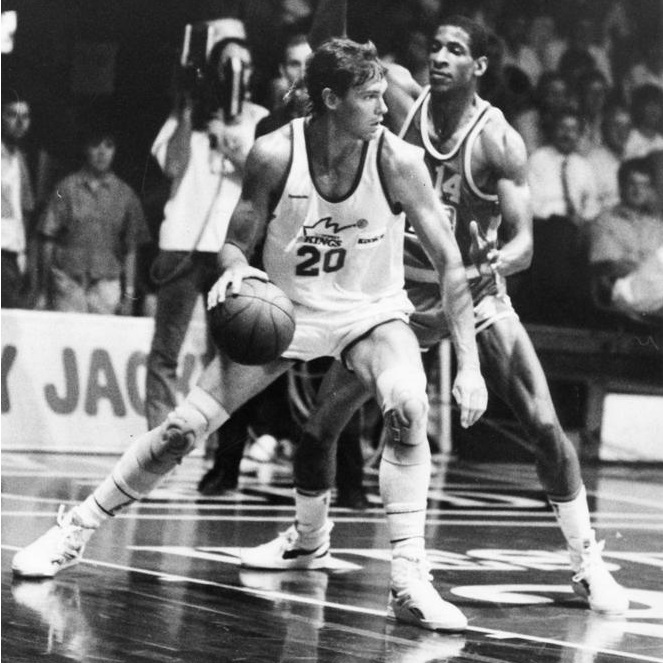
MELBOURNE UNITED NEEDS TO DECIDE: Are they the Tigers or not?
September 18, 2026


BIO: Ray Gordon was born in England on 11 August 1965 and later developed as a junior basketballer with the Melbourne Tigers in Victoria. The Tigers’ junior program was closely associated with the Albert Park basketball community and had been shaped by influential club figures Ken Watson and Lindsay Gaze.
By 1981, Gordon was representing Melbourne in junior basketball. A history of the Sandringham Sabres recalls Gordon playing alongside Andrew Gaze, Mike Dimattina, Nigel Purchase and Ian Rouse when the Tigers defeated Sandringham’s Under-17A representative side 80–60.
Gordon later identified Watson and Lindsay Gaze as important basketball mentors, reflecting the influence of the people who helped build the Tigers program. He progressed from Melbourne’s junior ranks into the club’s inaugural NBL squad when the Tigers entered the national competition in 1984.
Ray Gordon made his NBL debut with the Melbourne Tigers at 18 years of age. He scored two points in his first game.
The Melbourne Tigers entered the NBL in 1984 under head coach Lindsay Gaze, with Gordon part of the club’s inaugural NBL squad.
Gordon averaged 4.2 points and 0.8 rebounds during his rookie season and helped guide the Tigers to a ninth-place finish in the regular season with an 11–13 record.
1985
1985 saw Gordon average 8.7 points and 2.9 rebounds as the Tigers finished with a 5-21 record in the regular season.
1986
In 1986 Gordon averaged 3 points and 1 rebound per game as the Tigers finished with a 6-20 record in the regular season.
NORTH MELBOURNE GIANTS
1987
In 1987, Gordon left the Tigers after being recruited to play for the Giants by newly appointed head coach Bruce Palmer. The Giants had missed the playoffs the season prior and, as a result, moved home venues from Coburg to the inner city, where they would play at the Melbourne Sports and Entertainment Centre, more commonly known as “The Glasshouse”. Thanks to a influx of finances, the team re-branded to the North Melbourne Giants, appointed a new head coach in Bruce Palmer, and recruited star import Scott Fisher. Gordon added 6 points, 1.3 rebounds, and 1 assist alongside Fisher (25.1 points and 11.0 rebounds), and together they helped guide the Giants back into the playoffs. North Melbourne finished in sixth place at the end of the regular season (15-11) and then went on to lose to Illawarra (97–105) in the Elimination Finals.
1988
It was (almost) a Cinderella season for Gordon and the Giants in 1988. This year the team added bruising import Tim Dillon to play alongside Scott Fisher, a duo who quickly became known as the ‘Twin Boulders’ by media and fans. The duo caused skyrocketed the Giants up the NBL ladder and caused regular sellouts at the Glasshouse, the team’s 7,000 seat home court. Gordon would contribute 4.4 points, 1.5 rebounds, and 1.3 assists for the season, alongside stars Fisher (27.5 points and 11.3 rebounds) and Dillon (33.2 points and 10.9 rebounds) who had statistically, two of the greatest individual seasons of all time. Together, they led the Giants to a second place regular season finish and an 18–6 record.
In the semifinals, the Giants made easy work of the Wildcat’s and reached the Grand Final for the first time in the club’s history. 5,200 Cannons fans turned up to the AIS arena to see Phil Smyth (25 points) and Jamie Kennedy (21 points) lead the Cannons to victory in game one (120-95). Gordon would add 5 points and 4 rebounds in the opening game.
In game two, Dillon (43 points, 11 rebounds, and 3 assist) was unstoppable, helping the Giants even the series behind a home win (117-101). Despite being held scoreless, Gordon also added 5 rebounds. 7,200 Giants fans turned up for Game 3, keen to see the team win their first championship, North Melbourne’s Cinderella season wouldn’t come to pass, with Canberra winning the series clinching game (108-101). Willie Simmons (23 points and 10 rebounds) led the way for the Cannons with alongside Simon Cottrell and Phil Smyth (both 21 points). Smyth would be awarded the Grand Final MVP after averaging 21.3 points, 3.6 rebounds, 5.6 assists, and 2.6 steals across the three-game series.
MELBOURNE TIGERS
1989
In 1989, Melbourne moved on from imports James Bullock and Alvis Rogers and signed talented forwards Dave Simmons and David Colbert. The Tigers also added local players Gordon, Warrick Giddey (via Illawarra) and rookie Stephen Whitehead, who would become the Tigers’ core group for the next five years. Naturalised players Eric Bailey and Brad Pineau were also signed, giving the Tigers their deepest roster since entering the league in 1984.
Andrew Gaze (34.5 points, 5.3 rebounds, and 7.2 assists) led the league in both scoring and assists, but it was the addition of new faces Simmons (26.3 points, 9.9 rebounds, and 2.4 assists, 1.5 steals, and 1.4 blocks), David Colbert (25.8 points, 11.8 rebounds, 3.8 assists, 1.7 steals, and 1.5 blocks) and Gordon (11.7 points, 2.7 rebounds, 3.4 assists, and 1.1 steals) that made the difference. Behind the Tigers’ revamped roster, they were able to jump from twelfth position (8-16) the season to prior to finish fourth (17-10) and reached the playoffs for the first time in the team’s history.
Melbourne’s inexperience became evident in the postseason, however, being eliminated in the first round by the Sydney Kings.
1990
Off the back of the Tiger’s revamped roster, which led to their first playoff appearance ever, Melbourne re-signed its core group and looked to become a even stronger team in 1990. Although they lost naturalised swingman Eric Bailey (to Gold Coast), they were able to replace him with a even better option in Cecil Exum (via North Melbourne), who had been a big part of the Giant’s championship in 1989 and imports Dave Colbert and Dave Simmons were re-signed.
Andrew Gaze, who had spent the off-seasonplaying with Seton Hall University and narrowly missing out on a contract with the Seattle Supersonics, looked to light up the league.
Gaze (37.6 points, 4.8 rebounds, 6.9 assists, and 2.6 steals), Colbert (31.1 points, 10.7 rebounds, 2.9 assists, 1.3 steals, and 1.6 blocks) and Simmons (27.4 points, 8.7 rebounds, and 3.2 assists, 1.7 steals, and 1.3) filled every column in the stats sheet every night, as well as combing for 96 points per game.
Melbourne hit a major speed bump when Gaze was diagnosed as having a blood clot in his right shoulder, a issue that almost ended his playing career. As a result, Gaze would miss the Tigers’ last two games of the regular season and all playoff games, but Melbourne still managed to finish in fourth place (17-9). They faced off against fifth-seed Perth in the elimination finals, where Colbert (52 points, 9 rebounds and 4 steals) erupted for a career-high in Gaze’s absence, but it wasn’t enough to get past the well-balanced attack of Perth. Ricky Grace (30 points, 8 rebounds, and 7 assists) made 10 of his 13 shots and seemed to set up teammate David Close (25 points and 6 rebounds) for a open look whenever he didn’t score, allowing Perth to walk away victors (122-100).
In game two, Colbert (42 points, 9 rebounds, and 2 blocks) was unstoppable again, and teammate Dave Simmons (29 points, 9 rebounds, and 6 assists) also delivered a big game also but Perth managed to shut down every other Tigers’ player and ended Melbourne’s season behind a ten point win (123-113). Gordon would play in 28 games, averaging 6.6 points, 2.1 rebounds, and 2.4 assists for the season.
1991
Melbourne had become a formidable team by 1991, and had it not been for a blood clot that derailed Andrew Gaze’s season, could have seen a deep playoff run from the Tigers. This year would see the trio of Gaze (38.8 points, 4.4 rebounds, 6.0 assists, and 2.7 steals), David Cobert (24.6 points, 9.8 rebounds, 3.1 assists, 1.7 steals, and 1.5 blocks) and Dave Simmons (24.1 points, 8.4 rebounds, 2.4 assists, 1.7 steals, and 1.1 blocks) get the chance to see how far they could go with a full season together. Melbourne was also boosted by the emergence of Stephen Whitehead (9.9 points, 3.6 rebounds, 2.0 assists, and 1.4 steals), who would double his production with a shift to the team’s starting lineup.
The Tigers made history this season when they faced off against Illawarra and recorded the highest scoring game in NBL history (Jul 27). The game saw 344 points scored, and the Tigers come out as victors (186-158). Gaze (59 points, 11 assists, and 4 steals), Colbert (42 points, 20 rebounds and 5 assists) and Simmons (36 points, 7 rebounds and 3 assists) doing the bulk of the scoring for Melbourne and Patric Fairs (41 points and 10 rebounds) and Greg Hubbard (36 points, 4 rebounds and 6 assists) top scoring for Illawarra, who shot 76% from the field, which remains the highest shooting percentage ever recorded by a team in a losing effort. Gordon also added 7 points and 12 assists.
Once into the playoffs, Melbourne would lose game one (115-129) and game two (96-132) to Adelaide in the elimination finals. The scoring brilliance of Gaze, combined with the Tigers’ regular season success, was enough to earn him the NBL Most Valuable Player award for the first time. Gaze would then take home the NBL MVP award in seven of his next eight seasons. Gordon would play in 23 games, averaging 7.8 points, 2 rebounds, and 2.2 assists for the season.
1992
1992 began with the Tigers replacing forward David Colbert with former NBA guard Lanard Copeland, who paired with Andrew Gaze in the backcourt to become one of the most exciting backcourt duos in NBL history. Gaze (33.8 points, 4.6 rebounds and 6.3 assists) would again lead the league in scoring, with Copeland (28.1 points, 4.5 rebounds, and 3.0 assists) NBA pedigree showing he was one of the best imports in the league.
Melbourne replaced the interior presence of Colbert with Robert Sibley (via Brisbane), which then resulted in Brisbane signing free agent Colbert in a talent swap for both team’s.
Sibley (11.1 points, 7.8 rebounds, and 2.7 assists) fitted into the frontcourt nicely, and talented young swingman Stephen Whitehead (13.8 points, 4.5 rebounds, 2.0 assists, 1.2 steals, and 1.1 blocks) saw a boost in his numbers for the third straight season.
With the revamped roster, the Tigers became a much faster lineup, finishing the regular season in the third spot, their highest place finish ever (15-9).
Once into the postseason Melbourne would eliminate Perth (2-1) in the quarterfinals, and then the Sydney Kings (2-1) in the semifinals to reach the Grand Final series for the first time in franchise history. Facing off against crosstown rivals the South East Melbourne Magic, Gaze (26 points, 5 rebounds, and 3 assists) and the Tigers came out firing and comfortably defeated the Magic (116-98) in the first game of the series. That would be the last of the heroics, however, as the Magic would win the series’ next two games and claim the 1992 NBL championship (2-1).
Gordon appeared in 27 games for the Tigers, averaging 2.4 points, 0.8 rebounds, and 1.3 assists for the season.
1993
The Tigers’ season began with the huge signing of Mark Bradtke during the pre-season. His arrival made national news, with Bradtke having spent the off-seasonplaying in Spain and giving former team Adelaide a verbal agreement he would play for them if he returned in 1993. However, upon his return to Australia, Bradtke made it known he did not want to play the final year of his contract in Adelaide, amongst rumours the Melbourne Tigers were actively recruiting him. After negotiations between the two parties broke down, the 36ers gave permission for Bradtke to leave if a team would buy out his remaining contract. However, the NBL stepped in and vetoed the buyout, effectively letting Bradtke leave for Melbourne without the 36ers receiving any compensation. After the fact it became clear Bradtke had decided to move to Melbourne to be closer to then girlfriend (and future wife), pro-tennis player Nicole Provis.
Although the Tigers were coming off a grand final appearance, they began the season poorly and no one was pencilling them in for the championship at midseason. After shaking off their slow start (2-7) but finishing the remainder of the season strong (14-3), the Tigers finished the year in third place. Bradtke (17 points, 12.2 rebounds, and 2.1 assists) became the missing puzzle piece to Melbourne’s historically weak frontline as Andrew Gaze (32.0 points, 5.4 rebounds, 6.1 assists and 2.7 steals), Lanard Copeland (22.2 points, 3.1 rebounds, 2.8 assists and 1.9 steals) led the team in scoring.
During the quarterfinals, the Tigers would easily eliminate Illawarra (2-0), setting up a rematch of last year’s grand final, a semi finals showdown against South East Melbourne. Bradtke, who had shifted to Melbourne from Adelaide during the pre-season, dominated the series. He delivered 21 points and 9 rebounds in the Tiger’s 108-106 win in game one and then backed it up with 28 points and 15 rebounds in their 89-72 win in game two.
On the opposite side of the bracket, the Perth Wildcats (21-5) had finished on top of the ladder and made their way through to the Grand Final.
The series began with the Tigers playing at home and, by the second quarter, were controlling things with a 19 point lead. From there, Melbourne saw four key players fall into foul trouble, which included Robert Sibley (13 points and 4 rebounds) and Bradtke (4 points, 11 rebounds) fouling out. Bradtke struggled against Perth’s interior defenders and finished the game shooting one from nine from the field. Ricky Grace (23 points, 3 rebounds, 8 assists and 2 steals) then fueled a late-game surge from Perth which closed the game by four points. In the closing minutes, Perth attempted to close the gap by repeatedly sending Melbourne to the line but with Gaze (41 points, 6 rebounds, and 9 assists) nailing ten from ten free throws in the final quarter, Melbourne see out the game as victors (117-113).
In a similar fashion to game one, Melbourne took out a early lead in game two (32-22), thanks to the dominance of Bradtke (24 points, 13 rebounds, and 4 assists). By halftime, however, the ‘Perth Wall’ of James Crawford (32 points, 4 rebounds, 3 assists, and 3 blocks), Andrew Vlahov (23 points, 7 rebounds, and 2 blocks), and Scott Fisher (16 points and 6 rebounds) had reined Bradtke things in and returned fire to lead by six at halftime (60-54).
Perth remained in control of the foul-prone Tigers, who struggled to score after losing both Gaze (22 points, 3 rebounds, and 6 assists) and Dave Simmons (12 points, 11 rebounds, and 4 assists) to six fouls. Grace (23 points, 8 rebounds, and 13 assists) came close to recording a triple-double, many of those assists coming from feeding Crawford inside, who made 11 of his 15 shots.
A full house at the Perth Entertainment Centre (8,000 fans) witnessed the Wildcats’ victory (112-105), one that extended their consecutive home winning streak to 17. With game three to be played in Perth and the Tigers have never won on the Wildcats’ home floor, Perth entered the game as clear favourites.
The underdog Tigers, however, survived a strong Perth comeback that cut a 15-point lead to three before Gaze (22 points, 3 rebounds, and 5 assists) sunk a free throw to give Melbourne a two-point edge with four seconds left on the clock. A last-second shot from Vlahov (31 points, 15 rebounds, 4 assists, and 2 steals) which rattled in and out of the ring, saw the Tigers become NBL champions for the very first time (104-102). Copeland (35 points, 8 rebounds, and 2 assists) led the team in scoring, while Bradtke (23 points, 19 rebounds, 3 assists, 2 steals, and 2 blocks) dominated Perth inside after struggling with fouls in the first two games. In a surprising decision, however, Wildcats’ guard Ricky Grace was awarded the Grand Final MVP despite playing for the losing team.
Gordon missed 11 games through injury, but finished the year with averages of 2.9 points, 0.5 rebounds, and 0.5 assists, playing in 22 games.
1994
Coming off a title in 1993, the Tigers were able to return with almost the entire roster, losing only backup big man Robert Sibley (to Brisbane), who they would replace with a young Chris Anstey. The defending champions would go on to record their best regular season result in the club’s history (19-7), finishing in second place. Andrew Gaze (33.4 points, 4.8 rebounds, 7.2 assists, and 2.4 steals) was awarded the league’s Most Valuable Player award and led the league in scoring, while Mark Bradtke (20.2 points, 14.5 rebounds, 2.5 assists, 1.2 steals, and 1.3 blocks) led the league in rebounding and both were also selected to the All-NBL First Team. Once into the postseason, Melbourne would defeat Illawarra convincingly in both game one (107-85) and game two (119-83) before facing a incredibly talented (and deep) Adelaide team in the semifinals, which featured Rob Rose, Mark Davis, Willie Simmons, Phil Smyth, Brett Maher and Chris Blakemore. The 36ers defeated the Tigers first in Adelaide (101-88) and then repeated the result on Melbourne’s home floor (110-101) to end the Tiger’s season and move on to the Grand Final to face North Melbourne.
Gordon would play in 29 of the Tigers games that season, averaging 2.8 points, 0.8 rebounds, and 0.7 assists.
1995
In 1995, Mark Bradtke requested some time off to allow him to support his wife Nicole’s tennis career as she travelled abroad and miss the first two-thirds of the season. Around that same time, Chris Anstey, a part of the Tigers junior program, also informed the club that he would return, having signed a deal to play with rival club South East Melbourne. Melbourne coach Lindsey Gaze appealed via the NBL tribunal, which ruled that Anstey could not leave the Tigers as long as they could match the contract, which they did.
After some extremely creative salary tweaking, the Magic then signed Anstey to a one year deal worth $180,000 which the Tigers had no interest in matching, allowing Anstey to shift clubs. Once Anstey had signed with the Magic, he renegotiated his contract to a 3-year, $181,000 contract, remaining higher than the Tigers contract not to break any NBL salary cap rules of the time.
The Tigers added forward Matt Reece (via Gold Coast) and centre Blair Smith (via Brisbane) to cover the loss of Bradtke and Anstey.
Andrew Gaze (33.9 points, 4.2 rebounds, 8.0 assists, and 2.3 steals), Lanard Copeland (25.5 points, 4.6 rebounds, 3.2 assists, and 1.7 steals) and Dave Simmons (14.7 points, 9.1 rebounds, 2.7 assists, 1.5 steals, and 1.0 blocks) led the team offensively, during a season which saw a merry-go-round of league leaders, during the regular season, Brisbane, Sydney, North Melbourne, South East Melbourne and Melbourne all sat in the number one spot on the ladder some point. With Melbourne narrowly sitting among the top eight team’s (10-7), Bradtke (11.2 points, 7.9 rebounds, 1.7 assists, and 1.2 blocks) would return to playout the Tigers’ last nine games for the season.
The Tigers would scrape into the playoffs, claiming the eighth seed (14-12), their worst result since 1988. With Bradtke out of form and the team still adjusting to him being back in the lineup, Melbourne was eliminated by the Perth Wildcats in the first round (1-2).
Gordon would appear in 20 games for the Tigers, averaging 2.9 points, 0.7 rebounds, and 0.4 assists.
1996
With the Tigers having Mark Bradtke back full-time and able to retain all of their core group except for Stephen Whitehead (to Sydney), Melbourne were able to return to their winning ways after their posting their worst season in eight years. Gaze (31.1 points, 5.3 rebounds, 8.1 assists, and 1.7 steals) delivered another MVP season, winning the award for the sixth time, alongside Copeland (21.4 points, 4.5 rebounds, 2.5 assists, and 1.4 steals) and a rejuvenated Bradtke (22.6 points, 11.5 rebounds, 2.5 assists, and 1.6 blocks) as they churned through the competition like a well-oiled machine. Melbourne would finish in first place (21-5), recording their best regular season record in franchise history.
Melbourne would ride the coattails of their ‘Big Three’ through the playoffs, first facing off against the eight seed Brisbane (14-12). Despite losing game one by 21 points (97-118), the Tigers would return to Melbourne and win game two (96-87) thanks to big games from Gaze (30 points, 4 rebounds and 7 assists) and Bradtke (24 points, 9 rebounds, and 4 assists) and game three (111-93) with Gaze (29 points, 3 rebounds and 6 assists) and Bradtke (29 points, 13 rebounds, and 4 blocks) again leading the team in scoring.
The Tigers would then meet Canberra in the semifinals, again losing the first game (98-87) with Robert Rose (22 points, 6 rebounds and 6 assists), Darnell Mee (21 points, 3 rebounds, 3 assists, 2 steals, and 2 blocks), and Simon Dwight (20 points, 11 rebounds, and 5 blocks) proving too good. Melbourne rebounded with Gaze (30 points, 8 rebounds, 9 assists, 4 steals), narrowly missing out on a triple-double in their game two win (100-82), and then in game three (91-87), Gaze (29 points, 7 rebounds, 5 assists and 3 blocks) and Bradtke (26 points, 12 rebounds, and 4 blocks) combined to score half of the Tigers points, eliminating the Cannons in a tightly fought four-point win.
Gordon also delivered his best game of the series, contributing 9 points and 3 assists.
Moving on to the grand final series, Melbourne would face South East Melbourne (19-7) who finished in second place during the regular season. Melbourne was too good in game one (100-89), with Gaze (35 points, 8 rebounds, and 7 assists) delivering his best game of the series in front of a packed Melbourne crowd. Mark Bradtke (24 points and 15 rebounds) and Lanard Copeland (23 points, 4 rebounds and 3 assists) were also brilliant, scoring whenever Gaze didn’t, and the Tigers ‘Big Three’ combining for 82 points.
Gordon would add 8 points and 3 rebounds.
The Magic would then bounce back and win game two (88-84) in front of a Grand Final record crowd of 15,064 at the National Tennis Centre at Flinders Park, which still stands as Melbourne’s highest-attended NBL game ever. Gaze (21 points, 5 rebounds, and 9 assists) led the Tigers in scoring in the loss, while the Magic were led by Tony Ronaldson (28 points) and Mike Kelly (19 points, 9 rebounds, 4 assists and 2 steals).
The third and deciding game was held less than 48 hours later, a scenario that benefited the younger legs of the Magic and allowed them to deliver the final blow (107-70). Billy McCaffrey (24 points and 5 assists) and the incredibly efficient performances from Sam MacKinnon (18 points and 9 rebounds), who shot 9/10 from the field, and John Dorge (16 points and 8 rebounds) who made 8 of his 11 shots saw South East Melbourne’s field goal percentage be the game’s deciding factor. The Tigers made only 23 of 60 shots (38%) compared to the Magic, hitting 46 of their 85 shots (54%) in the 30-point blowout.
The 1996 NBL Grand Final series drew a aggregate attendance record of 43,605 (average 14,535), the largest crowd ever for a three-game NBL series. Magic guard Mike Kelly was awarded the Finals MVP award after averaging 16.0 points, 6.0 rebounds, 4.0 assists and 2.3 steals across the three-game series.
This season Gordon played in all 35 games for the Tigers games, averaging 8.9 points, 1.3 rebounds, and 1.2 assists.
1997
After losing game three of the 1996 Grand Final to South East Melbourne 107-70, Melbourne entered 1997 without long-time import Dave Simmons (not re-signed) and Vince Hinchen. Andrew Gaze, Lanard Copeland, Mark Bradtke, Blair Smith, Warrick Giddey, Daniel Egan, Damien Chapman and Erik Wickstrom returned, while Jarvis Lang was signed as Simmons’ replacement, Brett Jefferies was added and Brett Rainbow returned after not being offered a contract for 1996 and earning another opportunity through his play in the state league.
Ray Gordon’s best game came in Melbourne’s season opener at the Brisbane Convention Centre on April 11, where Gordon (14 points, 2 rebounds, 2 assists, and 1 steal) made four of seven three-pointers in 27 minutes as Brisbane defeated the Tigers 111-105. Gaze (33 points, 2 rebounds, 6 assists, 3 steals, and 1 block) and Lang (24 points, 5 rebounds, 4 assists, 1 steal, and 1 block) led Melbourne, while Steve Woodberry (28 points, 4 rebounds, 5 assists, and 2 steals) was Brisbane’s best.
Gordon (4.4 points across 35 games) moved into a smaller reserve role behind Melbourne’s established backcourt but appeared in every game this season, playing all 30 regular-season games and all five playoff games. He averaged 16.2 minutes per game and made 27 three-pointers for the season.
During the early part of Melbourne’s campaign, the Tigers also faced the recently crowned NCAA champion Arizona Wildcats at Albert Park Stadium on May 24. The exhibition became the final international game played at the historic venue, with a capacity crowd watching Melbourne defeat Arizona by four points in overtime.
The NBL season itself had begun poorly. Bradtke (20.4 points, 12.4 rebounds, and 1.6 blocks across 30 games) missed Melbourne’s opening three games while spending time with the NBA’s Philadelphia 76ers, and a victory over Adelaide following his return was later stripped from the Tigers because the proper clearance paperwork had not been lodged. Lang (19.1 points and 9.1 rebounds across 8 games) was also battling serious knee problems, and with Melbourne sitting at 3-9, fans and media began calling for Lindsay Gaze to step down. Gaze (30.9 points, 4.6 rebounds, 6.7 assists, and 1.4 steals across 35 games) later recalled, “You could have written your own ticket on us winning the championship at 3-9. In fact, you would have got pretty good odds on us just making the playoffs.”
With Lang’s knee problems causing too many difficulties, Melbourne released him and signed Marcus Timmons (via Illawarra) after North Melbourne coach Brett Brown spotted him in a Wollongong hotel and alerted Gaze that the former Hawks import was still in Australia. After one trial practice session, the Tigers signed him, with Timmons (17.5 points, 9.6 rebounds, 3.5 assists, 1.6 steals, and 1.5 blocks across 22 games) becoming the missing piece Melbourne needed. The Tigers recovered from 3-9 to finish second at 19-11 behind South East Melbourne, winning their final 14 regular-season games.
Gaze led the NBL in scoring for the 12th time and won his seventh Most Valuable Player award, while Copeland (23 points, 4.9 rebounds, and 3.1 assists across 35 games) remained Melbourne’s other major perimeter scorer. Smith (5.8 points and 4.2 rebounds across 33 games) provided frontcourt depth, while Giddey (3.1 points, 4.8 rebounds, and 3.5 assists across 35 games) continued to fill a defensive and playmaking role around Melbourne’s four leading scorers.
Melbourne received a first-round bye before opening the semifinals against North Melbourne at the Melbourne Sports and Entertainment Centre, where Gordon (2 points, 1 rebound, and 1 steal) played 14 minutes as the Tigers defeated the Giants 107-99. Gaze (39 points, 3 rebounds, and 10 assists), Bradtke (25 points, 15 rebounds, and 2 blocks) and Timmons (16 points, 11 rebounds, 4 assists, 4 steals, and 2 blocks) led Melbourne, while David Stiff (24 points, 13 rebounds, 6 assists, 3 steals, and 2 blocks) was North Melbourne’s best.
Game two moved to Melbourne Park, where Gordon (4 points, 1 rebound, and 2 assists) played almost 10 minutes as Melbourne completed the sweep with a 112-105 win. Gaze (34 points, 6 rebounds, and 8 assists), Timmons (28 points, 7 rebounds, 7 assists, and 1 block) and Bradtke (26 points, 16 rebounds, and 3 assists) led the Tigers, while Pat Reidy (20 points and 5 assists) led North Melbourne.
The Grand Final opened against defending champion South East Melbourne at Melbourne Park, where Gordon (7 points) played 11 minutes as the Tigers extended their winning streak to 17 games with a 111-74 victory. Copeland (29 points, 6 rebounds, 2 assists, and 1 block), Timmons (24 points, 9 rebounds, 2 assists, and 2 blocks) and Gaze (23 points, 3 rebounds, and 9 assists) led Melbourne, while Frank Drmic (12 points and 11 rebounds) was South East Melbourne’s best.
South East Melbourne responded in game two, where Gordon (2 points) played four minutes as the Magic changed its rotation by starting John Dorge and bringing Chris Anstey from the bench. Anstey (21 points, 8 rebounds, and 3 blocks) produced a major response as South East Melbourne won 84-78 and levelled the series, while Copeland (28 points, 4 rebounds, and 1 assist), Gaze (18 points, 5 rebounds, and 5 assists), Bradtke (15 points, 5 rebounds, and 5 assists) and Timmons (11 points, 12 rebounds, 2 assists, and 1 steal) led Melbourne.
Game three returned to Melbourne Park, where Tony Ronaldson (26 points) led South East Melbourne, but Copeland (26 points and 6 rebounds), Gaze (22 points, 5 rebounds, 9 assists, 1 steal, and 1 block), Bradtke (21 points, 11 rebounds, 3 assists, 1 steal, and 1 block) and Timmons (20 points, 13 rebounds, 3 assists, 1 steal, and 2 blocks) combined for 89 points. Giddey (0 points, 2 rebounds, 4 assists, 3 steals, and 1 block) made several crucial late plays, including the hard foul which broke Sam MacKinnon’s nose, a block on Drmic and a mid-court screen on Mike Kelly. Copeland was named Grand Final MVP after averaging 27.7 points and 5.3 rebounds while shooting 56 percent across the series, while Melbourne defeated South East Melbourne 93-83 and won its second NBL championship with Gordon (2 points) playing 6:11.
1998
Melbourne kept its championship group intact for 1998 after recovering from a 3-9 start the previous year to win 17 consecutive games and the NBL title. Lindsay Gaze returned with Andrew Gaze, Lanard Copeland, Mark Bradtke, Marcus Timmons, Warrick Giddey, Ray Gordon, Blair Smith and Brett Jefferies among the same Grand Final roster. The Tigers were increasingly reliant on an experienced core, with Gaze and Copeland both 33, Gordon 32 and Giddey 30 in a league where the average player was 26, leaving Bradtke and Timmons as Melbourne’s only key scorers under 30 averaging more than six points per game.
Gordon (4.1 points across 31 games) continued in a reserve guard role behind Melbourne’s established stars. His scoring dipped slightly from the championship season, although his rebounding and assist averages both increased. Melbourne struggled to reproduce its 1997 form early, winning only four of its first ten games.
Gordon’s best game came against Wollongong at the Melbourne Sports & Entertainment Centre on February 17, where Gordon (10 points, 1 rebound, 4 assists, and 1 block, shooting 4-of-9 from the field) played more than 36 minutes. Gaze (54 points, 2 rebounds, 8 assists, and 2 steals) produced his highest-scoring game of the season and Timmons (34 points, 15 rebounds, 2 assists, and 1 steal) dominated the frontcourt, while Clayton Ritter (20 points, 4 rebounds, 6 assists, and 1 block) led Wollongong as Melbourne won 121-96.
His highest-scoring game came against Sydney at Melbourne Park on March 28, where Gordon (12 points and 2 assists, shooting 5-of-8 from the field and 2-of-3 from three) delivered his season-high in only 12 minutes. Gaze (27 points, 6 rebounds, 10 assists, and 1 steal) and Timmons (24 points, 7 rebounds, 3 assists, and 3 steals) led the Tigers as Melbourne defeated the Kings 115-86.
Gaze (31.5 points, 4.6 rebounds, 6.5 assists, and 1.4 steals across 32 games) led the NBL in scoring, earned All-NBL First Team honours and won his seventh and final NBL Most Valuable Player award. Copeland (22.7 points, 3.5 rebounds, and 1.2 steals across 26 games) remained the Tigers’ second-leading scorer, with Timmons (19.8 points, 8.8 rebounds, 3.4 assists, and 1.4 steals across 32 games) and Bradtke (15.1 points, 9.9 rebounds, and 1.5 blocks across 30 games) forming the main frontcourt combination. Giddey (3.7 points, 5.3 rebounds, and 4 assists across 32 games) continued to contribute as a rebounder and playmaker. Copeland and Bradtke both saw their production fall from the championship season, while Gordon’s scoring slipped slightly despite improvements elsewhere in his game, Giddey increased his points, rebounds and assists and Timmons made the clearest overall improvement among the established rotation.
The Tigers found momentum late and won their final four regular-season games to finish fifth with a 16-14 record. Brisbane also finished 16-14 but won the season series 2-1 to claim fourth place and home-court advantage for the elimination finals. The 1998 campaign was also the NBL’s final winter season before the league moved to a summer schedule later that year. Brisbane entered the matchup behind Steve Woodberry (26.4 points, 7.7 rebounds, 4.3 assists, and 1.4 steals across 34 games), Leroy Loggins (17.8 points, 4.7 rebounds, and 1.5 steals across 26 games), Chuck Kornegay (16.7 points, 11.7 rebounds, and 1.8 blocks across 32 games) and CJ Bruton (15.4 points, 4 assists, and 1.8 steals across 34 games).
The elimination finals opened at the Brisbane Convention & Exhibition Centre on June 12, where Gordon (3 points) played five minutes off the bench. Gaze (34 points, 6 rebounds, 4 assists, and 1 steal) and Timmons (16 points, 7 rebounds, and 1 steal) led Melbourne, while Woodberry (24 points, 10 rebounds, 1 assist, and 1 block) and Loggins (14 points, 5 rebounds, 2 assists, 1 steal, and 2 blocks) helped Brisbane win 93-80 and take control of the series.
Game two moved to Melbourne Park on June 14, where Gordon (5 points, 2 rebounds, and 1 assist) played more than 26 minutes. Copeland (22 points, 5 rebounds, 3 assists, 1 steal, and 1 block) and Bradtke (20 points, 6 rebounds, and 1 assist) led the Tigers, while Loggins (27 points, 5 rebounds, 6 assists, 2 steals, and 1 block) and Kornegay (18 points, 5 rebounds, and 5 assists) carried Brisbane to a 114-81 victory, completing the two-game sweep and ending Melbourne’s title defence.
1998/99
With the NBL changing its schedule to become a summer sport in 1998, the Tigers were able to pull together one last run from its aging roster. Gaze (33.5 points, 4.6 rebounds, and 5.5 assists), Lanard Copeland (25.8 points, 4.0 rebounds, and 3.4 assists), Marcus Timmons (20.9 points, 9.2 rebounds, 3.7 assists, 1.6 steals, and 1.3 blocks) and Bradtke (17.1 points, 13.3 rebounds, 2.7 assists, and 1.9 blocks) combined to average a ridiculous 97 points per game. Gordon also contributed 2.3 points, 0.5 rebounds, and 0.4 assists in what would be his last NBL season.
Melbourne won 17 games for the season and earned a playoff rematch with Brisbane, who had eliminated Melbourne during last year’s playoffs. The Tigers would avenge that result and defeat the Bullets in two straight games. in the semifinals, the Tigers would then face long-time rivals Brian Goorjian and the Victoria Titans, and even with star import Marcus Timmnons (31 points and 9 rebounds) delivering a unstoppable performance, the Titans held on to win (80-77) with Tony Ronaldson (17 points, 6 rebounds and 5 assists) top scoring for the victors and Paul Maley (16 points) having a efficient game off the bench, making seven of his nine shots in 22 minutes of court time.
In game two, the Titans led the Tigers in all four quarters and again came away victorious (94-87). Mike Kelly (19 points and 7 rebounds) would step up, making 7 of his 12 shots, and Ben Pepper (15 points, 13 rebounds, 2 steals and 2 blocks) delivered his best game of the series, shooting a efficient 7 of 12 from the field.
Ray Gordon played sixteen seasons in the NBL, playing for both the Melbourne Tigers and the North Melbourne Giants. He averaged 5.3 points, 1.3 rebounds, and 1.4 assists in 424 NBL games.
– 42nd in total games played.
HIGHLIGHTS:
Ray Gordon Reflects – NBL Heritage Round (2023)
Gaze: The First Family of Australian Basketball – NBL documentary feature (2026)
| SEASON | AGE | TEAM | TEAM RECORD | GP | MINS | PTS | REB | AST | OR | DR | STL | BLK | TO | PF | FGM | FGA | FG% | 3PM | 3PA | 3P% | FTM | FTA | FT% | TS% | EFG% | HS |
|---|---|---|---|---|---|---|---|---|---|---|---|---|---|---|---|---|---|---|---|---|---|---|---|---|---|---|
| 1998-99 | 33 | Melbourne | 17-9 (2) | 20 | 181 | 45 | 10 | 8 | 4 | 6 | 2 | 2 | 7 | 29 | 16 | 50 | 32% | 9 | 32 | 28% | 4 | 6 | 67% | 43% | 41% | 9 |
| 1998 | 32 | Melbourne | 16-14 (5) | 31 | 494 | 128 | 37 | 37 | 16 | 21 | 10 | 2 | 12 | 60 | 48 | 135 | 36% | 17 | 74 | 23% | 15 | 27 | 56% | 43% | 42% | 12 |
| 1997 | 32 | Melbourne | 19-11 (2) | 35 | 568 | 153 | 36 | 27 | 10 | 26 | 8 | 3 | 22 | 76 | 51 | 153 | 33% | 27 | 97 | 28% | 24 | 32 | 75% | 45% | 42% | 14 |
| 1996 | 31 | Melbourne | 21-5 (1) | 35 | 748 | 313 | 45 | 41 | 12 | 33 | 22 | 3 | 31 | 96 | 108 | 253 | 43% | 49 | 151 | 32% | 48 | 62 | 77% | 55% | 52% | 20 |
| 1995 | 30 | Melbourne | 14-12 (8) | 20 | 146 | 58 | 13 | 8 | 6 | 7 | 9 | 3 | 15 | 21 | 21 | 49 | 43% | 6 | 15 | 40% | 10 | 14 | 71% | 52% | 49% | 12 |
| 1994 | 29 | Melbourne | 19-7 (1) | 29 | 248 | 80 | 24 | 19 | 10 | 14 | 10 | 1 | 17 | 46 | 27 | 64 | 42% | 15 | 29 | 52% | 11 | 18 | 61% | 55% | 54% | 9 |
| 1993 | 28 | Melbourne | 16-10 (3) | 22 | 125 | 63 | 11 | 12 | 5 | 6 | 6 | 1 | 10 | 19 | 19 | 43 | 44% | 6 | 18 | 33% | 19 | 27 | 70% | 56% | 51% | 11 |
| 1992 | 27 | Melbourne | 15-9 (3) | 27 | 229 | 65 | 21 | 35 | 8 | 13 | 8 | 3 | 9 | 31 | 19 | 55 | 35% | 7 | 19 | 37% | 20 | 25 | 80% | 49% | 41% | 11 |
| 1991 | 26 | Melbourne | 16-10 (5) | 23 | 634 | 180 | 45 | 51 | 13 | 32 | 24 | 5 | 36 | 78 | 69 | 144 | 48% | 13 | 41 | 32% | 29 | 50 | 58% | 54% | 52% | 19 |
| 1990 | 25 | Melbourne | 17-9 (4) | 28 | 725 | 185 | 60 | 66 | 14 | 46 | 23 | 8 | 34 | 85 | 71 | 174 | 41% | 20 | 63 | 32% | 23 | 32 | 72% | 49% | 47% | 18 |
| 1989 | 24 | Melbourne | 16-8 (4) | 27 | 955 | 317 | 72 | 91 | 19 | 53 | 29 | 8 | 54 | 81 | 119 | 240 | 50% | 34 | 73 | 47% | 45 | 62 | 73% | 59% | 57% | 21 |
| 1988 | 23 | North Melbourne | 18-6 (2) | 27 | 369 | 118 | 40 | 36 | 19 | 21 | 13 | 2 | 23 | 52 | 42 | 96 | 44% | 14 | 35 | 40% | 20 | 29 | 69% | 54% | 51% | 14 |
| 1986 | 21 | Melbourne | 6-20 (13) | 25 | 0 | 74 | 25 | 53 | 11 | 14 | 19 | 2 | 31 | 56 | 29 | 67 | 43% | 2 | 7 | 29% | 14 | 22 | 64% | 48% | 45% | 10 |
| 1987 | 22 | North Melbourne | 15-11 (6) | 27 | 521 | 163 | 34 | 27 | 8 | 26 | 23 | 7 | 17 | 55 | 65 | 147 | 44% | 17 | 55 | 31% | 16 | 24 | 67% | 51% | 50% | 16 |
| 1985 | 20 | Melbourne | 5-21 (13) | 26 | 0 | 227 | 75 | 65 | 24 | 51 | 27 | 7 | 59 | 88 | 86 | 223 | 39% | 14 | 51 | 27% | 41 | 59 | 69% | 45% | 42% | 31 |
| 1984 | 18 | Melbourne | 11-13 (9) | 22 | 0 | 93 | 18 | 26 | 6 | 12 | 10 | 1 | 16 | 40 | 37 | 62 | 60% | 3 | 5 | 60% | 16 | 22 | 73% | 64% | 62% | 19 | Totals | 424 | 5943 | 2262 | 566 | 602 | 185 | 381 | 243 | 58 | 393 | 913 | 827 | 1955 | 42.3% | 253 | 765 | 33.1% | 355 | 511 | 69.5% | 52% | 49% | 31 |
| SEASON | AGE | TEAM | TEAM RECORD | GP | MINS | PTS | REB | AST | OR | DR | STL | BLK | TO | PF | FGM | FGA | FG% | 3PM | 3PA | 3P% | FTM | FTA | FT% | TS% | EFG% | HS |
|---|---|---|---|---|---|---|---|---|---|---|---|---|---|---|---|---|---|---|---|---|---|---|---|---|---|---|
| 1998-99 | 33 | Melbourne | 17-9 (2) | 20 | 9.1 | 2.3 | 0.5 | 0.4 | 0.2 | 0.3 | 0.1 | 0.1 | 0.4 | 1.5 | 0.8 | 2.5 | 32% | 0.5 | 1.6 | 28% | 0.2 | 0.3 | 67% | 43% | 41% | 9 |
| 1998 | 32 | Melbourne | 16-14 (5) | 31 | 15.9 | 4.1 | 1.2 | 1.2 | 0.5 | 0.7 | 0.3 | 0.1 | 0.4 | 1.9 | 1.5 | 4.4 | 36% | 0.5 | 2.4 | 23% | 0.5 | 0.9 | 56% | 43% | 42% | 12 |
| 1997 | 32 | Melbourne | 19-11 (2) | 35 | 16.2 | 4.4 | 1.0 | 0.8 | 0.3 | 0.7 | 0.2 | 0.1 | 0.6 | 2.2 | 1.5 | 4.4 | 33% | 0.8 | 2.8 | 28% | 0.7 | 0.9 | 75% | 45% | 42% | 14 |
| 1996 | 31 | Melbourne | 21-5 (1) | 35 | 21.4 | 8.9 | 1.3 | 1.2 | 0.3 | 0.9 | 0.6 | 0.1 | 0.9 | 2.7 | 3.1 | 7.2 | 43% | 1.4 | 4.3 | 32% | 1.4 | 1.8 | 77% | 55% | 52% | 20 |
| 1995 | 30 | Melbourne | 14-12 (8) | 20 | 7.3 | 2.9 | 0.7 | 0.4 | 0.3 | 0.4 | 0.5 | 0.2 | 0.8 | 1.1 | 1.1 | 2.5 | 43% | 0.3 | 0.8 | 40% | 0.5 | 0.7 | 71% | 52% | 49% | 12 |
| 1994 | 29 | Melbourne | 19-7 (1) | 29 | 8.6 | 2.8 | 0.8 | 0.7 | 0.3 | 0.5 | 0.3 | 0.0 | 0.6 | 1.6 | 0.9 | 2.2 | 42% | 0.5 | 1.0 | 52% | 0.4 | 0.6 | 61% | 55% | 54% | 9 |
| 1993 | 28 | Melbourne | 16-10 (3) | 22 | 5.7 | 2.9 | 0.5 | 0.5 | 0.2 | 0.3 | 0.3 | 0.0 | 0.5 | 0.9 | 0.9 | 2.0 | 44% | 0.3 | 0.8 | 33% | 0.9 | 1.2 | 70% | 56% | 51% | 11 |
| 1992 | 27 | Melbourne | 15-9 (3) | 27 | 8.5 | 2.4 | 0.8 | 1.3 | 0.3 | 0.5 | 0.3 | 0.1 | 0.3 | 1.1 | 0.7 | 2.0 | 35% | 0.3 | 0.7 | 37% | 0.7 | 0.9 | 80% | 49% | 41% | 11 |
| 1991 | 26 | Melbourne | 16-10 (5) | 23 | 27.6 | 7.8 | 2.0 | 2.2 | 0.6 | 1.4 | 1.0 | 0.2 | 1.6 | 3.4 | 3.0 | 6.3 | 48% | 0.6 | 1.8 | 32% | 1.3 | 2.2 | 58% | 54% | 52% | 19 |
| 1990 | 25 | Melbourne | 17-9 (4) | 28 | 25.9 | 6.6 | 2.1 | 2.4 | 0.5 | 1.6 | 0.8 | 0.3 | 1.2 | 3.0 | 2.5 | 6.2 | 41% | 0.7 | 2.3 | 32% | 0.8 | 1.1 | 72% | 49% | 47% | 18 |
| 1989 | 24 | Melbourne | 16-8 (4) | 27 | 35.4 | 11.7 | 2.7 | 3.4 | 0.7 | 2.0 | 1.1 | 0.3 | 2.0 | 3.0 | 4.4 | 8.9 | 50% | 1.3 | 2.7 | 47% | 1.7 | 2.3 | 73% | 59% | 57% | 21 |
| 1988 | 23 | North Melbourne | 18-6 (2) | 27 | 13.7 | 4.4 | 1.5 | 1.3 | 0.7 | 0.8 | 0.5 | 0.1 | 0.9 | 1.9 | 1.6 | 3.6 | 44% | 0.5 | 1.3 | 40% | 0.7 | 1.1 | 69% | 54% | 51% | 14 |
| 1986 | 21 | Melbourne | 6-20 (13) | 25 | 0.0 | 3.0 | 1.0 | 2.1 | 0.4 | 0.6 | 0.8 | 0.1 | 1.2 | 2.2 | 1.2 | 2.7 | 43% | 0.1 | 0.3 | 29% | 0.6 | 0.9 | 64% | 48% | 45% | 10 |
| 1987 | 22 | North Melbourne | 15-11 (6) | 27 | 19.3 | 6.0 | 1.3 | 1.0 | 0.3 | 1.0 | 0.9 | 0.3 | 0.6 | 2.0 | 2.4 | 5.4 | 44% | 0.6 | 2.0 | 31% | 0.6 | 0.9 | 67% | 51% | 50% | 16 |
| 1985 | 20 | Melbourne | 5-21 (13) | 26 | 0.0 | 8.7 | 2.9 | 2.5 | 0.9 | 2.0 | 1.0 | 0.3 | 2.3 | 3.4 | 3.3 | 8.6 | 39% | 0.5 | 2.0 | 27% | 1.6 | 2.3 | 69% | 45% | 42% | 31 |
| 1984 | 18 | Melbourne | 11-13 (9) | 22 | 0.0 | 4.2 | 0.8 | 1.2 | 0.3 | 0.5 | 0.5 | 0.0 | 0.7 | 1.8 | 1.7 | 2.8 | 60% | 0.1 | 0.2 | 60% | 0.7 | 1.0 | 73% | 64.2% | 62% | 19 | Total | 424 | 14.0 | 5.3 | 1.3 | 1.4 | 0.4 | 0.9 | 0.6 | 0.1 | 0.9 | 2.2 | 2.0 | 4.6 | 42.3% | 0.0 | 0.0 | 33.1% | 0.6 | 1.8 | 69.5% | 52% | 49% | 31 |
| POINTS | REBOUNDS | ASSISTS | STEALS | BLOCKS | TURNOVERS | TRIPLE DOUBLES | 31 | 9 | 12 | 4 | 2 | 7 | 0 |
|---|
Melbourne Tigers – No. 8 playing jersey retired by the club in recognition of his contribution to its history.
By 2023, Gordon was coaching his daughter's Under-16 basketball team. In a profile published by Freemasons Victoria, he also discussed the value of allowing his children to learn from other coaches as they developed in the sport.
His number 8 Melbourne Tigers jersey was retired by the club in recognition of his playing career. The jersey was subsequently displayed at Melbourne's NBL home venue and remains recognised as a Tigers retired number, rather than a number retired across the Melbourne United brand.
In December 2021, Gordon and former South East Melbourne Magic rival Andrew Parkinson were selected as the first guests for Melbourne United's new Legends Box initiative, aimed at welcoming former Victorian NBL players back to games. Despite their intense on-court rivalry, the pair had reconnected, and Gordon and other former players helped raise funds to support Parkinson while he was undergoing cancer treatment.
On 22 February 2023, the NBL released a Heritage Round interview titled 'Ray Gordon Reflects', in which he discussed the Melbourne Tigers, his teammates and the club's rivalry with the South East Melbourne Magic.
By 2023, Gordon was working as a lawyer and licensed builder and, together with his wife Marie, owned and operated the Governor's Hall Hotel in Hawthorn East. He helped construct the hotel during the COVID-19 pandemic and also worked there as a chef. A contemporary Freemasons Victoria profile described his professional work across hospitality, information technology, law and building, and his role as a community ambassador.
In 2026, Gordon was featured in the NBL documentary 'Gaze: The First Family of Australian Basketball', reflecting on his connection with the Melbourne Tigers and their longtime coach Lindsay Gaze.
Whilst we try to source as much information as we can for every player who has ever played in the NBL some information on a player profile may be missing. If you have additional information on a player you'd like us to add to a profile, please send it to us using the enquiry form below.
Submissions are then sent to info@aussiehoopla.com