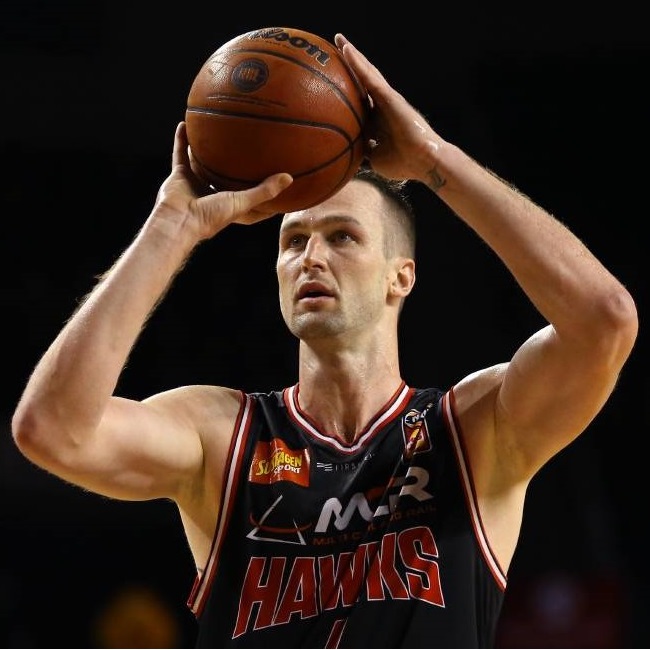
Kyrin Galloway
February 9, 2021


BIO: Kirk Samuel Penney was born in Auckland (New Zealand).
Kirk Penney made his NBL debut with the New Zealand Breakers at 26 years of age. He scored 23 points in his first game.
In 2007, the New Zealand Breakers secured a major signing with the addition of Tall Blacks star Kirk Penney, who returned home after nearly a decade playing in the United States and Europe. The Breakers had pursued Penney for over a year, and after prolonged negotiations, the club finally landed the highly sought-after guard for the 2007-08 NBL season. His arrival was a significant moment for the franchise, particularly as he was in his prime and eager to help turn the team’s fortunes around. His signing helped offset the loss of Carlos Powell and the sudden retirement of Aaron Olson, a former Tall Blacks teammate and foundation Breaker.
Breakers coach Andrej Lemanis emphasized the significance of the acquisition, noting that Penney was one of only two New Zealand-born players to ever play in the NBA and had proven his ability to compete at the highest level, both in the NBA and the highly competitive European leagues. “He’s determined to help the Breakers make a major impact in the NBL, and the fact that he’s coming now, when he’s in his prime, is exciting,” Lemanis said. Having played with clubs in Spain, Israel, Lithuania, and Germany, most recently with Alba Berlin, Penney had developed into a top-tier international talent. His return to New Zealand was unexpected, but he expressed his excitement about the opportunity to help shape the Breakers’ future. “A year ago I never thought I’d take this path, but I have a gut feeling about things. It’s the right time to re-connect with home,” Penney said upon signing.
Penney officially joined the Breakers following the conclusion of the Tall Blacks’ international commitments and made his debut in the team’s NBL opener against the Cairns Taipans on September 20. Alongside fellow Tall Blacks Phill Jones (14.1 points, 3.1 rebounds, and 1.9 assists) and Paora Winitana (3.0 points, 1.0 rebounds, and 0.5 assists), Penney (24.2 points, 4.8 rebounds, 2.6 assists, and 1.3 steals) became a focal point of the Breakers’ attack. Oscar Forman (9.2 points, 4.8 rebounds, and 1.4 assists), after an impressive debut season with the club, was re-signed on a three-year deal, solidifying his role as one of their key scorers. Imports Rick Rickert and Wayne Turner were also added to provide depth in the frontcourt.
New Zealand’s season opened with a narrow 90–95 loss to Cairns, despite a standout performance from Forman (20 points) and a strong debut from Rickert (19 points and 12 rebounds). The following game marked the highly anticipated first appearance of Penney, who immediately led the team in scoring with 23 points and seven rebounds, though the Breakers fell short against West Sydney (96–104).
As the season progressed, the Breakers faced setbacks with season-ending injuries to both Rickert and Turner. However, mid-season replacements Derrick Alston and Orien Greene provided the necessary reinforcement to keep the team competitive. Behind Penney’s elite scoring ability, New Zealand secured its first-ever NBL playoff berth with a 16–14 record. Penney’s impact was undeniable, and his performances earned him a spot on the All-NBL First Team.
In their first playoff appearance, the Breakers dominated Cairns at home with a commanding 100–78 victory. However, they were unable to advance further, suffering a tough loss against the defending champion Brisbane Bullets in the qualifying finals. Penney delivered his best performance of the season in a dominant 126–93 win over the Gold Coast Blaze, where he exploded for 32 points, six rebounds, and three assists, showcasing the offensive firepower that made him one of the NBL’s premier players.
2008/09
After the Brisbane Bullets withdrew from the league due to financial difficulties, New Zealand Breakers head coach Andrej Lemanis seized the opportunity to strengthen his squad. He secured free agent duo CJ Bruton (two-year deal) and former Breaker Dillon Boucher (three-year deal), with the clear objective of pushing the team toward a championship.
“The Breakers have proved they’re a playoff team, and I’d like to help take them up to that next level,” Bruton said upon signing with New Zealand.
“I’ve seen the Breakers change their team and their culture to become more competitive. They’re serious about becoming number one, and I want to be a part of New Zealand’s first championship. You don’t play this sport just to be in it.”
The new additions joined an already talented core featuring Paul Henare, Kirk Penney, Phill Jones, Oscar Forman, Tony Ronaldson, and Tim Behrendorff. The roster was later completed with the signing of import big man Rick Rickert.
Bruton’s arrival provided the Breakers with much-needed stability and leadership at the point guard position, an area where they had previously lacked consistency. However, it was Kirk Penney who emerged as the team’s offensive powerhouse. Penney (24.1 points, 4.3 rebounds, and 2.8 assists) led the league in scoring and was named to the All-NBL First Team. His stellar season was capped by becoming the first New Zealand-born player to win the NBL MVP award, solidifying his place as one of the league’s most dominant offensive threats. Meanwhile, Phill Jones was recognized for his contributions off the bench, earning the league’s Sixth Man of the Year honor.
New Zealand looked like genuine championship contenders for most of the season, holding a league-best 15-4 record with 14 games remaining. However, in late December, Bruton suffered a high-ankle sprain, which significantly disrupted the team’s momentum. The Breakers struggled in January, losing eight of their next nine games, forcing Penney to carry an even greater load offensively.
Despite their midseason slump, the Breakers rebounded with a crucial victory in their final regular-season game to finish with an 18–12 record. This secured the franchise’s first-ever home playoff game, where they dismantled Adelaide (131–101) in an elimination final. Their postseason run continued with a best-of-three semi-final series against defending champions Melbourne, but despite Penney’s efforts, the Breakers were swept 2–0, ending their season just short of the grand final.
2010/11
New Zealand’s championship-winning season was fueled by the return of both Kevin Braswell and Mika Vukona. Braswell initially committed to playing in Turkey with Aliağa Belediyesi SK but departed before the season began to rejoin the Breakers for a second campaign. Vukona, who had previously won an NBL title with the South Dragons in 2009, also returned and was named team captain, replacing Paul Henare. In another key move, the Breakers parted ways with import Rick Rickert, opting instead for former Utah State standout Gary Wilkinson.
The season began without star player Kirk Penney, who was attempting to secure an NBA contract. After failing to land a roster spot, he rejoined the Breakers a month into the season. Despite his absence, the team made a strong start, winning their first five games before suffering a heavy 114–74 defeat to Perth.
Penney (20.0 points, 4.0 rebounds, and 2.3 assists) returned to lead the team in scoring, proving instrumental in the Breakers securing the NBL’s best regular-season record at 22–6. Wilkinson (15.8 points, 5.7 rebounds, and 1.3 assists) added offensive firepower in the frontcourt, while CJ Bruton (11.0 points, 1.7 rebounds, and 1.8 assists) and Thomas Abercrombie (10.5 points, 5.4 rebounds, and 1.6 assists) provided additional scoring options. Vukona (8.3 points, 7.6 rebounds, and 1.9 assists) anchored the team with his defensive intensity, and Braswell (10.2 points, 2.6 rebounds, and 4.2 assists) played a key role off the bench, earning NBL Best Sixth Man honors.
Corey Webster (4.0 points, 0.7 rebounds, and 0.9 assists) emerged as a rising talent this season, earning more playing time and beginning to challenge veteran Bruton for minutes. Bruton’s reduced role, playing seven minutes less per game than the previous season, reflected the Breakers’ deeper and more balanced roster.
New Zealand faced fourth-seeded Perth in the semifinals and suffered a setback in Game 1, losing at home. However, the Breakers responded by winning Games 2 and 3 in New Zealand, securing their first-ever trip to the NBL Grand Final.
In the championship series, the Breakers dominated Cairns in Game 1 with an 85–67 victory, at one point leading by as many as 31 points. Game 2 in Cairns was a dramatic battle, tied at the end of regulation (60–60) and again after the first overtime period (73–73). Cairns ultimately prevailed 85–81, forcing a decisive Game 3.
With the series returning to New Zealand, the Breakers delivered a dominant performance in front of their home crowd, winning 71–53 to become the first non-Australian team to claim an NBL championship. Abercrombie was named Grand Final MVP, while Bruton cemented his legacy with two crucial three-pointers in the fourth quarter to seal the title against Cairns, securing his fourth NBL championship.
2015/16
After finishing last with a 6-22 record in 2014/15 and entering voluntary administration, the Hawks returned under the Illawarra name and replaced long-time coach Gordie McLeod with Rob Beveridge. Jahii Carson (free agent), Gary Ervin (free agent), Luke Nevill (free agent) and Brad Hill (free agent) departed, while Adam Ballinger (retired) ended his career. Beveridge added Kevin Lisch (via Zaragoza), AJ Ogilvy (via Manresa), Kevin White (via Sydney), Cody Ellis (via Sydney) and Kirk Penney (via Sevilla), with Lisch, Ogilvy and Penney quickly dubbed the ‘three-headed monster’. Penney signed on July 27 after four years away from the NBL. “I’m excited to be joining the Illawarra Hawks family,” he said.
Illawarra opened the season in Cairns on October 8, where Penney (12 points and 2 assists) started as Jarrad Weeks (12 points and 2 assists) and Tyson Demos (10 points and 2 steals) were the Hawks’ other leading scorers, while Cameron Gliddon (19 points, 3 rebounds, and 4 assists) led Cairns to a 79-74 win. Lisch (7 points, 1 rebound, and 1 assist) injured his right knee during the third quarter and missed the next three games, limiting the time Illawarra’s three major off-season additions spent together during the first month.
Penney (20.4 points, 3 rebounds, and 3.1 assists across 27 games) led Illawarra in scoring and started every game he played. He appeared in the Hawks’ first 22 games before a hamstring injury forced him to miss four consecutive games. They were the only games he missed all season, leaving him with 24 appearances across the 28-game regular season and all three semifinals. “We’re missing Kirk massively. It’s not only his 20 points a game but it’s his leadership,” Beveridge said while Penney was sidelined.
Penney’s best game came against his former team New Zealand on October 14, where Penney (36 points, 3 rebounds, 3 assists, 1 steal, and 1 block) made seven three-pointers and all nine of his free throws as Illawarra collected its first win of the season, defeating the Breakers 96-75. Ogilvy (23 points, 10 rebounds, 4 steals, and 2 blocks) and White (10 points, 3 rebounds, and 4 assists) provided support, while Charles Jackson (20 points, 9 rebounds, and 1 steal) led New Zealand.
After missing four games with the hamstring injury, Penney (28 points, 2 rebounds, 1 assist, and 1 steal) returned against Townsville on February 6 and made five three-pointers as Illawarra defeated the Crocodiles 104-97 in overtime to secure a playoff berth. Lisch (29 points, 2 rebounds, 2 assists, and 1 steal) and Ogilvy (17 points, 5 rebounds, 4 assists, 1 steal, and 1 block) provided support, while Nick Kay (24 points, 15 rebounds, and 3 assists) led Townsville. “He’s got this aura about him that gives so much confidence to the rest of the group,” Beveridge said after Penney’s return.
Illawarra closed the regular season against Adelaide on February 12, where Penney (13 points, 3 rebounds, 3 assists, 1 steal, and 1 block), Ogilvy (17 points, 11 rebounds, and 1 steal) and Lisch (16 points) helped the Hawks defeat the 36ers 106-95, while Daniel Johnson (20 points, 8 rebounds, and 1 block) led Adelaide. The victory completed a 17-11 regular season and secured third place.
Illawarra made no mid-season roster addition or release. Lisch (19.4 points, 3.5 rebounds, 3.3 assists, and 1.8 steals across 27 games) provided the Hawks with a second elite scoring option, while Ogilvy (16.4 points, 8.5 rebounds, 1.5 steals, and 1.7 blocks across 31 games) played every game and anchored the frontcourt. Coenraad (9.5 points and 3.6 rebounds across 30 games), Martin (9.1 points, 3.3 rebounds, and 4.2 assists across 18 games), Forman (8 points and 3.5 rebounds across 31 games), Weeks (6.1 points across 31 games), Ellis (6 points across 29 games) and White (3.2 points across 31 games) provided the other major contributions, with Martin missing the first 12 games through a knee injury. Penney was named to the All-NBL Second Team, while Lisch and Ogilvy were selected to the All-NBL First Team. Lisch also won the NBL Most Valuable Player and Best Defensive Player awards.
Illawarra opened its semifinal series against second-seeded Perth at Perth Arena, where Penney (17 points, 2 rebounds, 2 assists, and 1 steal), Coenraad (23 points and 3 rebounds) and Ogilvy (14 points, 11 rebounds, 1 assist, 1 steal, and 2 blocks) led the Hawks, while Casey Prather (19 points, 2 rebounds, and 2 assists), Jermaine Beal (18 points, 1 rebound, and 2 assists) and Tom Jervis (14 points, 8 rebounds, 3 steals, and 1 block) helped Perth win 80-68. Lisch (2 points, 4 rebounds, and 1 steal) suffered a significant lateral ligament tear to his left ankle during the opening quarter and later returned to the bench in a moon boot and on crutches.
Game two moved to the WIN Entertainment Centre with Lisch sidelined, where Penney (18 points, 5 rebounds, 7 assists, and 1 steal), Forman (21 points, 5 rebounds, 1 steal, and 2 blocks) and Ogilvy (20 points, 7 rebounds, 3 assists, 1 steal, and 3 blocks) led Illawarra, while Prather (21 points, 4 rebounds, 1 assist, and 2 steals) and Beal (20 points, 4 rebounds, and 4 assists) led Perth. The Hawks won 104-87 and levelled the series at 1-1.
Game three returned to Perth Arena, where Penney (18 points, 2 rebounds, 5 assists, and 1 steal) led Illawarra, while Lisch (11 points, 2 rebounds, and 1 steal) returned despite his ankle injury and Ogilvy (9 points, 11 rebounds, 5 assists, 2 steals, and 2 blocks) contributed inside. Beal (17 points, 3 rebounds, 3 assists, and 1 steal), Jesse Wagstaff (17 points, 7 rebounds, 1 assist, and 1 steal) and Matthew Knight (15 points, 9 rebounds, and 1 steal) led Perth as the Wildcats defeated Illawarra 89-74 and won the series 2-1.
2016/17
After finishing fourth with a 16-12 record and losing the 2016 Grand Final series to Perth 2-1, New Zealand entered Paul Henare’s first season as head coach following the departures of chief executive Richard Clarke and coach Dean Vickerman, with Dillon Boucher taking over as general manager. Cedric Jackson (to Melbourne) and Tai Wesley (to Melbourne) also departed, while Thomas Abercrombie, Corey Webster, Alex Pledger and captain Mika Vukona returned. The Breakers brought their former NBL MVP back to Auckland (via Illawarra) alongside Robert Loe (via Limburg United), Ben Woodside (via Türk Telekom) and Akil Mitchell (via Antibes), while Finn Delany, Shea Ili and Jordan Ngatai were elevated from development roles. Ili’s back injury also led to Isaih Tueta being signed as a short-term injury replacement before the season.
The returning guard signed a three-year deal on April 12 after turning down offers from multiple NBL clubs. A calf injury disrupted his preseason and kept him out during the Breakers’ winless warm-up campaign, but he recovered before Round 1 and did not miss a regular-season game.
New Zealand opened the season against Melbourne at Vector Arena on October 7, where Kirk Penney (9 points, 5 rebounds, 3 assists, and 1 steal) played his first game for the Breakers since 2011 as New Zealand recovered from a four-point three-quarter-time deficit to win 76-71. Abercrombie (14 points, 5 rebounds, and 2 assists) and Vukona (12 points, 4 rebounds, 1 assist, and 1 steal) provided support, while former Breaker Cedric Jackson (14 points, 13 rebounds, and 6 assists) was Melbourne’s best.
Penney (17.4 points and 3.4 rebounds across 28 games) started all 28 games and led New Zealand in scoring, making 89 three-pointers at 41.6 per cent while becoming one of only two Breakers to appear in every game.
His best game came against Brisbane at Vector Arena on November 6, where Penney (30 points, 7 rebounds, and 4 assists) made six three-pointers and 8-of-14 shots, including three triples in as many minutes to open the fourth quarter, as New Zealand defeated the Bullets 86-70 for its third consecutive win. Tueta (13 points) produced a career-high and Pledger (12 points, 12 rebounds, and 3 blocks) controlled the glass, while Jermaine Beal (16 points) led Brisbane.
New Zealand’s momentum disappeared during the following month, with four consecutive losses dropping the Breakers to 6-8. “These last four games have really, really slid, and we’ve got down in games by much bigger margins than we would expect,” Penney said.
Injuries repeatedly reshaped the rotation. Woodside (8.8 points, 3.5 rebounds, 5.8 assists, and 1.3 steals across 6 games) suffered a serious right-foot injury during the overtime win over Melbourne and was ruled out for six to eight weeks, leading New Zealand to sign David Stockton (8.3 points and 4.2 assists across 10 games) (via Cedevita Zagreb) as his injury replacement. Stockton later struggled with an ongoing back problem and, with Woodside still recovering, both guards were released on January 7 as Kevin Dillard (18.1 points, 4 rebounds, 4.8 assists, and 1.6 steals across 9 games) (via Pınar Karşıyaka) joined for the remainder of the season. Webster (11.7 points across 15 games) could not overcome the hip problem which had troubled him during the season and opted for season-ending surgery in January, while Abercrombie (11.7 points and 5.2 rebounds across 21 games) fractured his right hand at training in December and missed seven consecutive games. Paul Carter (9.1 points and 4.5 rebounds across 11 games) (via Alba Berlin) arrived as Webster’s injury replacement and provided additional cover while Abercrombie was sidelined.
Dillard’s arrival helped New Zealand recover after falling to 8-12 through 20 games, with the combination of Dillard and Penney driving four consecutive victories to get the Breakers back to 12-12. Mitchell (9.5 points and 7.2 rebounds across 25 games) then suffered a poke to his left eye while contesting a rebound against Cairns in January, dislocating the eyeball from its socket. His vision was restored at hospital before he returned to the United States for further specialist treatment and missed the final three games, while consecutive losses dropped New Zealand to 12-14.
Dillard and Penney gave New Zealand its strongest late-season scoring combination, while Pledger (8.8 points, 6.8 rebounds, and 1.3 blocks across 28 games) anchored the interior and Loe (7.1 points and 3.4 rebounds across 26 games) and Vukona (6.5 points and 5.1 rebounds across 27 games) provided frontcourt support. Penney was named the Breakers’ team MVP and won the fan-voted MVP’s MVP award, while Abercrombie received the club’s Defensive Player award.
New Zealand closed the season against Melbourne on February 10 without Vukona, who had been hospitalised with a knee infection, and Mitchell, who had returned to the United States. Penney (15 points, 7 rebounds, 2 assists, and 1 block) became the first Breaker in NBL history to reach 3,000 club points as New Zealand defeated United 88-70 and kept its finals hopes alive, with Dillard (16 points, 5 rebounds, 8 assists, 1 steal, and 1 block) and Delany (13 points, 9 rebounds, and 1 block) providing support, while Casper Ware (23 points, 3 rebounds, 1 assist, and 1 steal) led Melbourne. Perth later defeated Melbourne 96-94, leaving New Zealand fifth with a 14-14 record and outside the playoffs.
Kirk Penney just doing Kirk Penney things right now for the @NZBreakers. We've seen how this plays out before. He has 27 points in the game pic.twitter.com/sLaPFEQJUK
— NBL (@NBL) November 6, 2016
2017/18
After an injury-riddled 2016/17 season saw New Zealand miss the playoffs with a 14-14 record, the Breakers entered Paul Henare’s second season without Kevin Dillard (to PAOK Thessaloniki), Akil Mitchell (to Long Island Nets), Paul Carter (to Châlons-Reims), David Stockton (to Reno Bighorns) and Ben Woodside (retired). Corey Webster (to Perth) also departed after New Zealand moved on from him following an injury-plagued season, although he was released by the Wildcats before playing a game to pursue an opportunity overseas. With the NBL allowing teams to carry three imports, New Zealand added Édgar Sosa (via Al Riyadi Beirut), DJ Newbill (via Oostende) and James Hunter (via Southland), while keeping its third import position open.
New Zealand opened the season against Cairns at Spark Arena on October 8, where Penney (7 points and 3 rebounds) played 26 minutes off the bench after a stomach virus had disrupted his preparation as the Breakers lost 82-71. Thomas Abercrombie (23 points, 7 rebounds, and 4 blocks) and Sosa (15 points, 2 rebounds, and 3 assists) led New Zealand, while Dayshon Smith (18 points, 5 rebounds, and 2 assists) led Cairns.
Penney (10.1 points across 22 games) entered the second season of the three-year deal he had signed with the Breakers in 2016 and was used exclusively off the bench, appearing in 20 of New Zealand’s 28 regular-season games before playing both semifinals. Following the death of his father in October, Penney missed New Zealand’s next two road games before returning in November, and later missed another game during the Breakers’ nine-game winning streak for personal reasons. New Zealand recovered from its opening loss to win nine consecutive games and reach 9-1 entering the FIBA World Cup qualifying break.
Penney’s best game of the season came against Sydney at Spark Arena on October 13, where Penney (25 points, 4 rebounds, and 1 steal) made 7-of-10 from the field and six three-pointers as New Zealand defeated the Kings 87-85 for its first win of the season. Newbill (22 points and 7 rebounds) scored the winning basket with barely a second remaining and Ili (15 points and 4 assists) provided support, while Perry Ellis (19 points, 3 rebounds, 3 assists, and 2 blocks) led Sydney.
One of Penney’s low points came in Brisbane on December 3, where Penney (0 points, 3 rebounds, and 1 steal) missed all six shots from the field and was held scoreless for the first time in his 174-game NBL career as Brisbane defeated New Zealand 81-76. Newbill (21 points, 3 rebounds, 3 assists, and 4 steals) and Sosa (18 points and 3 assists) led the Breakers, while Perrin Buford (18 points, 10 rebounds, 3 assists, and 3 steals) led Brisbane.
Penney played his 150th game for the Breakers against Adelaide at Spark Arena on December 15, where Penney (11 points and 4 rebounds) came off the bench as New Zealand lost 90-75. Alex Pledger (12 points and 7 rebounds) and Delany (11 points, 4 rebounds, 2 assists, and 2 steals) provided support, while Ramone Moore (27 points, 4 rebounds, and 6 assists) led Adelaide.
The Breakers struggled following the international break and on January 8 used their vacant third import position to sign Rakeem Christmas (via Galatasaray) for the remainder of the season. Hunter (2.5 points across 2 games, released) was waived to open the roster spot despite Henare stressing the decision was not performance related. Christmas (7.6 points and 5.7 rebounds across 12 games) was brought in to provide another interior presence, with Henare saying, “We feel we need an injection to our group, someone who can provide a presence for us at both ends of the floor.”
Penney then missed New Zealand’s final five regular-season games. A calf injury was confirmed entering the final round and kept him out of the final two games, with Henare unwilling to risk him ahead of the playoffs. New Zealand lost its final four games and finished fourth with a 15-13 record. On February 22, Penney announced he would retire at the end of the season, saying, “Playing basketball has been a big part of my life and retiring in New Zealand with the Breakers means a lot to me.”
Sosa (15.8 points and 3.8 assists across 28 games) led New Zealand in scoring and earned All-NBL Second Team honours, while Newbill (13.9 points, 4.3 rebounds, 3.2 assists, and 1.4 steals across 30 games) provided another major backcourt option. Abercrombie (9.9 points, 4.8 rebounds, and 1.4 blocks across 30 games), Ili (9.3 points and 3.1 assists across 30 games), Loe (7.3 points and 4.3 rebounds across 30 games), Pledger (6.4 points and 4.9 rebounds across 28 games), Mika Vukona (6.2 points and 6.1 rebounds across 30 games) and Delany (5.1 points and 3.4 rebounds across 28 games) rounded out the main rotation, with Ili named the NBL Most Improved Player.
Penney returned for game one of the semifinals at Hisense Arena on March 3, where Penney (9 points, 3 rebounds, and 1 steal) came off the bench as Melbourne opened the series with an 88-77 win. Casper Ware (33 points, 6 rebounds, and 3 assists), Casey Prather (15 points and 5 rebounds) and Tai Wesley (13 points, 5 rebounds, and 4 assists) led United, while Newbill (19 points, 3 rebounds, 3 assists, and 3 steals) and Ili (16 points and 5 assists) led New Zealand.
Game two moved to Spark Arena, where Penney (17 points, 3 rebounds, 2 assists, 1 steal, and 1 block) produced his final NBL performance as Newbill (21 points, 8 rebounds, and 4 assists) and Loe (16 points, 4 rebounds, and 2 steals) helped New Zealand push Melbourne to overtime. Josh Boone (33 points, 15 rebounds, 2 assists, 2 steals, and 2 blocks), Ware (15 points and 6 assists), Chris Goulding (14 points, 3 rebounds, 5 assists, and 2 steals) and Prather (12 points and 11 rebounds) led United, with Boone scoring the winning basket with less than a second remaining as Melbourne won 88-86 and completed the 2-0 sweep, before Penney’s teammates performed a haka in his honour after his final NBL game.
Kirk Penney played seven seasons in the NBL. He averaged 20.1 points, 3.9 rebounds, and 2.4 assists in 187 NBL games.
| SEASON | AGE | TEAM | TEAM RECORD | GP | MINS | PTS | REB | AST | OR | DR | STL | BLK | TO | PF | FGM | FGA | FG% | 3PM | 3PA | 3P% | FTM | FTA | FT% | TS% | EFG% | HS |
|---|---|---|---|---|---|---|---|---|---|---|---|---|---|---|---|---|---|---|---|---|---|---|---|---|---|---|
| 2017-18 | 37 | New Zealand | 15-13 (4) | 22 | 466 | 223 | 61 | 23 | 12 | 49 | 11 | 2 | 15 | 41 | 73 | 167 | 44% | 40 | 103 | 39% | 33 | 64 | 52% | 56% | 56% | 25 |
| 2016-17 | 36 | New Zealand | 14-14 (5) | 28 | 858 | 486 | 95 | 65 | 23 | 72 | 17 | 3 | 69 | 58 | 152 | 362 | 42% | 89 | 214 | 42% | 93 | 117 | 79% | 58% | 54% | 30 |
| 2015-16 | 35 | Illawarra | 17-11 (3) | 27 | 789 | 550 | 80 | 83 | 15 | 65 | 18 | 6 | 77 | 51 | 187 | 412 | 45% | 89 | 199 | 45% | 87 | 106 | 82% | 59% | 56% | 36 |
| 2010-11 | 30 | New Zealand | 22-6 (1) | 29 | 892 | 581 | 115 | 66 | 19 | 96 | 30 | 9 | 77 | 54 | 190 | 427 | 44% | 95 | 226 | 42% | 106 | 146 | 73% | 59% | 56% | 38 |
| 2009-10 | 29 | New Zealand | 15-13 (5) | 19 | 618 | 440 | 98 | 52 | 14 | 84 | 17 | 2 | 48 | 45 | 139 | 313 | 44% | 59 | 144 | 41% | 103 | 128 | 80% | 59% | 54% | 49 |
| 2008-09 | 28 | New Zealand | 18-12 (3) | 31 | 1,136 | 747 | 134 | 86 | 25 | 109 | 16 | 6 | 92 | 86 | 251 | 552 | 45% | 95 | 250 | 38% | 150 | 184 | 82% | 58% | 54% | 41 |
| 2007-08 | 27 | New Zealand | 16-14 (7) | 31 | 1,186 | 749 | 148 | 81 | 27 | 121 | 39 | 4 | 76 | 83 | 256 | 545 | 47% | 111 | 256 | 43% | 126 | 164 | 77% | 60% | 57% | 32 | Totals | 187 | 5945 | 3776 | 731 | 456 | 135 | 596 | 148 | 32 | 454 | 418 | 1248 | 2778 | 44.9% | 578 | 1392 | 41.5% | 698 | 909 | 76.8% | 59% | 55% | 49 |
| SEASON | AGE | TEAM | TEAM RECORD | GP | MINS | PTS | REB | AST | OR | DR | STL | BLK | TO | PF | FGM | FGA | FG% | 3PM | 3PA | 3P% | FTM | FTA | FT% | TS% | EFG% | HS |
|---|---|---|---|---|---|---|---|---|---|---|---|---|---|---|---|---|---|---|---|---|---|---|---|---|---|---|
| 2017-18 | 37 | New Zealand | 15-13 (4) | 22 | 21.2 | 10.1 | 2.8 | 1.0 | 0.5 | 2.2 | 0.5 | 0.1 | 0.7 | 1.9 | 3.3 | 7.6 | 44% | 1.8 | 4.7 | 39% | 1.5 | 2.9 | 52% | 56% | 56% | 25 |
| 2016-17 | 36 | New Zealand | 14-14 (5) | 28 | 30.6 | 17.4 | 3.4 | 2.3 | 0.8 | 2.6 | 0.6 | 0.1 | 2.5 | 2.1 | 5.4 | 12.9 | 42% | 3.2 | 7.6 | 42% | 3.3 | 4.2 | 79% | 58% | 54% | 30 |
| 2015-16 | 35 | Illawarra | 17-11 (3) | 27 | 29.2 | 20.4 | 3.0 | 3.1 | 0.6 | 2.4 | 0.7 | 0.2 | 2.9 | 1.9 | 6.9 | 15.3 | 45% | 3.3 | 7.4 | 45% | 3.2 | 3.9 | 82% | 59% | 56% | 36 |
| 2010-11 | 30 | New Zealand | 22-6 (1) | 29 | 30.8 | 20.0 | 4.0 | 2.3 | 0.7 | 3.3 | 1.0 | 0.3 | 2.7 | 1.9 | 6.6 | 14.7 | 44% | 3.3 | 7.8 | 42% | 3.7 | 5.0 | 73% | 59% | 56% | 38 |
| 2009-10 | 29 | New Zealand | 15-13 (5) | 19 | 32.5 | 23.2 | 5.2 | 2.7 | 0.7 | 4.4 | 0.9 | 0.1 | 2.5 | 2.4 | 7.3 | 16.5 | 44% | 3.1 | 7.6 | 41% | 5.4 | 6.7 | 80% | 59% | 54% | 49 |
| 2008-09 | 28 | New Zealand | 18-12 (3) | 31 | 36.6 | 24.1 | 4.3 | 2.8 | 0.8 | 3.5 | 0.5 | 0.2 | 3.0 | 2.8 | 8.1 | 17.8 | 45% | 3.1 | 8.1 | 38% | 4.8 | 5.9 | 82% | 58% | 54% | 41 |
| 2007-08 | 27 | New Zealand | 16-14 (7) | 31 | 38.3 | 24.2 | 4.8 | 2.6 | 0.9 | 3.9 | 1.3 | 0.1 | 2.5 | 2.7 | 8.3 | 17.6 | 47% | 3.6 | 8.3 | 43% | 4.1 | 5.3 | 77% | 60% | 57% | 32 | Total | 187 | 31.8 | 20.2 | 3.9 | 2.4 | 0.7 | 3.2 | 0.8 | 0.2 | 2.4 | 2.2 | 6.7 | 14.9 | 44.9% | 0.0 | 0.0 | 41.5% | 3.1 | 7.4 | 76.8% | 59% | 55% | 49 |
| POINTS | REBOUNDS | ASSISTS | STEALS | BLOCKS | TURNOVERS | TRIPLE DOUBLES | 49 | 10 | 8 | 5 | 2 | 8 | 0 |
|---|
Penney again made history, averaging 16.9 points for a Tall Blacks team that not only defeated Australia to earn a spot at the 2002 FIBA World Championships, but went on to reach the bronze medal game. There, New Zealand would fall to Dirk Nowitzki led German team (94-117) to finish fourth, the countries highest finish ever at a major FIBA tournament. During that tournament, Penney averaged 16.9 points ph
He remained a part of the national program for the 2004 Olympic games. There, Tall Blacks failed to win a game in their opening pool, resulting in them facing Australia in a crossover game to determine FIBA rankings. New Zealand then lost to Australia, 98-80, in the classification matches to finish in tenth place.
Penney was a part of the Tall Blacks squad that competed at the 2006 FIBA World Championships (Japan). There, New Zealand (2–4) made it to the second round before being eliminated by Argentina (62-79). They finished the tournament tied for ninth place.
In 2010, Penney was a part of the Tall Blacks squad that competed at the FIBA World Championships. With Penney leading the team in scoring (24.7 ppg), New Zealand finished in 12th place.
Penney was selected to play for the Tall Blacks at the 2014 FIBA Basketball World Cup in Spain. There, New Zealand (3-2) advanced to the second round of the tournament where they were eliminated by Lithuania (71-76). Corey Webster (13.7 ppg) and Penney (10.8 ppg) would lead the team in scoring as New Zealand finished 15th overall. He represented New Zealand at the Sydney and Athens Olympics and averaged 160.9 points at the World Championships at Indianapolis in 2002 and 24.7 points at the World Championships at Turkey in 2010
| YEAR | AGE | GP | MINS | PTS | REB | AST | OR | DR | STL | BLK | TO | PF | FGM | FGA | FG% | 3PM | 3PA | 3P% | FTM | FTA | FT% |
|---|---|---|---|---|---|---|---|---|---|---|---|---|---|---|---|---|---|---|---|---|---|
| 2014 | 34 | 6 | 170 | 65 | 27 | 12 | 5 | 22 | 2 | 1 | 14 | 8 | 22 | 73 | 30.1% | 9 | 37 | 24.3% | 12 | 15 | 80.0% |
| 2010 | 30 | 6 | 185 | 148 | 12 | 12 | 2 | 10 | 5 | 0 | 18 | 16 | 44 | 96 | 45.8% | 18 | 49 | 36.7% | 42 | 55 | 76.4% |
| 2006 | 26 | 6 | 154 | 82 | 14 | 4 | 1 | 13 | 2 | 0 | 6 | 12 | 28 | 65 | 43.1% | 13 | 36 | 36.1% | 13 | 17 | 76.5% |
| 2004 | 24 | 6 | 157 | 68 | 17 | 2 | 4 | 13 | 6 | 0 | 9 | 12 | 25 | 61 | 41.0% | 14 | 43 | 32.6% | 4 | 7 | 57.1% |
| 2002 | 22 | 9 | 280 | 152 | 32 | 18 | 13 | 19 | 8 | 0 | 7 | 12 | 51 | 125 | 40.8% | 20 | 44 | 45.5% | 30 | 38 | 78.9% |
| 2000 | 20 | 6 | 92 | 39 | 7 | 3 | 1 | 6 | 1 | 0 | 7 | 1 | 14 | 39 | 35.9% | 4 | 14 | 28.6% | 7 | 8 | 87.5% | Total | 39 | 1038 | 554 | 109 | 51 | 26 | 83 | 24 | 1 | 61 | 61 | 184 | 459 | 40% | 78 | 223 | 35% | 108 | 140 | 77% |
| YEAR | AGE | GP | MINS | PTS | REB | AST | OR | DR | STL | BLK | TO | PF | FGM | FGA | FG% | 3PM | 3PA | 3P% | FTM | FTA | FT% |
|---|---|---|---|---|---|---|---|---|---|---|---|---|---|---|---|---|---|---|---|---|---|
| 2014 | 34 | 6 | 28.3 | 10.8 | 4.5 | 2.0 | 0.8 | 3.7 | 0.3 | 0.2 | 2.3 | 1.3 | 3.7 | 12.2 | 30.1% | 1.5 | 6.2 | 24.3% | 2.0 | 2.5 | 80.0% |
| 2010 | 30 | 6 | 30.8 | 24.7 | 2.0 | 2.0 | 0.3 | 1.7 | 0.8 | 0.0 | 3.0 | 2.7 | 7.3 | 16.0 | 45.8% | 3.0 | 8.2 | 36.7% | 7.0 | 9.2 | 76.4% |
| 2006 | 26 | 6 | 25.7 | 13.7 | 2.3 | 0.7 | 0.2 | 2.2 | 0.3 | 0.0 | 1.0 | 2.0 | 4.7 | 10.8 | 43.1% | 2.2 | 6.0 | 36.1% | 2.2 | 2.8 | 76.5% |
| 2004 | 24 | 6 | 26.2 | 11.3 | 2.8 | 0.3 | 0.7 | 2.2 | 1.0 | 0.0 | 1.5 | 2.0 | 4.2 | 10.2 | 41.0% | 2.3 | 7.2 | 32.6% | 0.7 | 1.2 | 57.1% |
| 2002 | 22 | 9 | 31.1 | 16.9 | 3.6 | 2.0 | 1.4 | 2.1 | 0.9 | 0.0 | 0.8 | 1.3 | 5.7 | 13.9 | 40.8% | 2.2 | 4.9 | 45.5% | 3.3 | 4.2 | 78.9% |
| 2000 | 20 | 6 | 15.3 | 6.5 | 1.2 | 0.5 | 0.2 | 1.0 | 0.2 | 0.0 | 1.2 | 0.2 | 2.3 | 6.5 | 35.9% | 0.7 | 2.3 | 28.6% | 1.2 | 1.3 | 87.5% | Total | 39 | 26.6 | 14.2 | 2.8 | 1.3 | 0.7 | 2.1 | 0.6 | 0.0 | 1.6 | 1.6 | 4.7 | 11.8 | 40% | 2.0 | 5.7 | 35% | 2.8 | 3.6 | 77% |
He became the second Kiwi to ever play in the NBA when he appeared briefly for the Miami Heat. Penney spent the majority of that season playing in the NBDL with the Ashville Attitude.
In 2005, Penney also appeared in a few games with the Los Angeles Clippers.
Penney played 6 games in the NBA. He averaged 0.8 points, 0.3 rebounds, and 0.3 assists per game over his NBA career.
NBA TRANSACTIONS:
- November 3, 2003: Signed as a free agent with the Miami Heat.
-
November 7, 2003: Waived by the Miami Heat.
-
December 26, 2004: Signed as a free agent with the Los Angeles Clippers.
-
January 3, 2005: Waived by the Los Angeles Clippers.
| Season | Team | PTS | AST | STL | BLK | FGM | FGA | FG% | 3PM | 3PA | 3P% |
|---|---|---|---|---|---|---|---|---|---|---|---|
| 1 | 1 | 93% | 83% | 73% | 60% | ||||||
| 2 | 0 | 49 | 8 | 5 | 2 | ||||||
| Total | 1248 | 2778 | 44.9% | 578 | 1392 | 41.5% |
| YEAR | AGE | TEAM | POS | GP | GS | MINS | PTS | TRB | AST | ORB | DRB | STL | BLK | TOV | PF | FG | FGA | FG% | 3P | 3PA | 3P% | FT | FTA | FT% | TS% | EFG% |
|---|---|---|---|---|---|---|---|---|---|---|---|---|---|---|---|---|---|---|---|---|---|---|---|---|---|---|
| 2004-05 | 24 | LA Clippers | SG | 4 | 0 | 12 | 2 | 1 | 1 | 0 | 1 | 0 | 0 | 2 | 0 | 1 | 3 | 33% | 0 | 1 | 0% | 0 | 0 | 0% | 33% | 33% |
| 2003-04 | 23 | Miami | SG | 2 | 0 | 18 | 3 | 1 | 1 | 0 | 1 | 1 | 0 | 3 | 1 | 1 | 6 | 1 | 3 | 0 | 0 | 25% | 25% | |||
| 2004-05 | 24 | LA Clippers | SG | 4 | 0 | 12 | 2 | 1 | 1 | 0 | 1 | 0 | 0 | 2 | 0 | 1 | 3 | 0 | 1 | 0 | 0 | 33% | 33% | |||
| 2003-04 | 23 | Miami | SG | 2 | 0 | 18 | 3 | 1 | 1 | 0 | 1 | 1 | 0 | 3 | 1 | 1 | 6 | 1 | 3 | 0 | 0 | 25% | 25% | Total | 6 | 0 | 30 | 5 | 2 | 2 | 0 | 2 | 1 | 0 | 5 | 1 | 2 | 9 | 22% | 1 | 4 | 25% | 0 | 0 |
| YEAR | AGE | TEAM | POS | GP | GS | MINS | PTS | TRB | AST | ORB | DRB | STL | BLK | TOV | PF | FG | FGA | FG% | 3P | 3PA | 3P% | FT | FTA | FT% | TS% | EFG% |
|---|---|---|---|---|---|---|---|---|---|---|---|---|---|---|---|---|---|---|---|---|---|---|---|---|---|---|
| 2004-05 | 24 | LA Clippers | SG | 4 | 0 | 3.0 | 0.5 | 0.3 | 0.3 | 0.0 | 0.3 | 0.0 | 0.0 | 0.5 | 0.0 | 0.3 | 0.8 | 33% | 0.0 | 0.3 | 0% | 0.0 | 0.0 | 0% | 33% | 33% |
| 2003-04 | 23 | Miami | SG | 2 | 0 | 9.0 | 1.5 | 0.5 | 0.5 | 0.0 | 0.5 | 0.5 | 0.0 | 1.5 | 0.5 | 0.5 | 3.0 | 17% | 0.5 | 1.5 | 0.0 | 0.0 | 25% | 25% | Total | 6 | 0 | 5.0 | 0.8 | 0.3 | 0.3 | 0.3 | 0.2 | 0.8 | 0.2 | 0.3 | 1.5 | 22% | 0.2 | 0.7 | 25% |
Kirk Penney spent the 2003–2004 season in Spain with Gran Canaria in Liga ACB, where he played 24 games and averaged 10.6 points and 2.1 rebounds per game while competing in Spain’s top domestic league.
Penney spent the 2005–2006 season in Israel with Maccabi Tel Aviv after signing a two-year deal on 5 August 2005, playing in the Israeli Basketball Premier League and EuroLeague, where he appeared in 19 EuroLeague games and averaged 3.3 points per game, including a 6-point outing in 12 minutes against Olympiacos on 11 November 2005, while sharing the roster with teammates such as Anthony Parker, Nikola Vujčić, Derrick Sharp, Maceo Baston, Tal Burstein, and Will Solomon, and he was part of the squad that reached the EuroLeague Final Four before losing the final to CSKA Moscow and later won the 2006 Israeli league championship and the 2006 Israeli Cup.
Penney spent the 2006–2007 season in Lithuania with Žalgiris Kaunas after joining in October 2006 as an injury replacement for Marcelinho Machado, and he departed after the club won the Lithuanian Basketball League Cup, playing alongside teammates including Tanoka Beard and Vidas Ginevičius during his time in Kaunas.
Penney spent part of the 2006–2007 season in Germany with ALBA Berlin after signing on 16 February 2007 for the remainder of the campaign, joining a roster that included teammates such as Julius Jenkins, Sharrod Ford, Chris Owens, William Avery, Koko Archibong, and Jovo Stanojević in Bundesliga competition.
Penney spent the 2011–2012 season in Spain with Baloncesto Fuenlabrada after signing on 29 July 2011, and in Liga ACB he averaged 14.4 points per game while playing alongside teammates including Quim Colom, Mike Hall, Leonardo Mainoldi, and Ferran Laviña.
Penney spent the 2012–2013 season in Turkey with TED Ankara Kolejliler, where he led the Turkish Basketball League in scoring at 18.3 points per game while hitting over 46 percent of his three-point attempts, and in a 19 December 2012 game against Erdemirspor he recorded 18 points with 5 rebounds, 3 assists, and 3 steals while playing alongside teammates including Ben Woodside, Nedim Yücel, and Jovo Stanojević.
Penney spent the 2013–2014 season in Turkey with Trabzonspor, where he averaged 17.4 points, 4.9 rebounds, and 2.5 assists across 28 games while sharing the roster with teammates including Paul Stoll, Jerome Randle, Andrija Stipanović, and Mindaugas Katelynas, and during the season he won the Turkish league All-Star Weekend three-point shoot-out contest.
Penney spent part of the 2014–2015 season in Spain with Baloncesto Sevilla, where he made two appearances across competitions in limited action.
In 2022, Kirk Penney played in New Zealand for the Auckland Tuatara and averaged 12 points, 4 rebounds, and 2 assists across 1 games, appearing alongside teammates including Chris Johnson, Izayah Le’afa, and Robert Loe.
Kirk Penney suited up for Wisconsin from 1999 through 2003, developing from a limited-role freshman into the Badgers’ top scorer while playing under head coaches Dick Bennett and Bo Ryan (with Brad Soderberg serving as interim head coach three games into the 2000–01 season).
As a freshman in 1999–2000, Penney appeared in 34 games and helped Wisconsin reach the NCAA Final Four, averaging 3.7 points and 1.4 rebounds per game as the Badgers made a deep March run in his first season on campus.
In 2000–01, Penney’s role expanded and he averaged 11.2 points per game while finishing as Wisconsin’s second-leading scorer, setting the stage for an upperclass surge that would make him one of the program’s most productive perimeter threats.
Penney broke through as Wisconsin’s leading scorer in 2001–02, averaging 15.1 points and 4.9 rebounds per game while shooting 45.4% from the field, and he helped guide the Badgers to a share of the Big Ten title; that season he earned first-team All-Big Ten honours and was also a NABC District 11 second-team selection, and he delivered notable scoring games during the year including a 33-point performance in a December 2001 win over Marquette.
As a senior in 2002–03, Penney again led Wisconsin in scoring at 16.2 points per game while ranking second on the team in rebounding at 6.0 per game, and he helped the Badgers win the Big Ten regular-season title outright to complete back-to-back conference championships (2002 and 2003).
During that senior campaign, Penney was again named first-team All-Big Ten, becoming the first Wisconsin player to earn back-to-back first-team All-Big Ten honours since 1951–52, and his year also included honorable mention AP All-American recognition, 2003 NABC District 11 first-team selection, and 2003 Academic All-Big Ten honours while serving as a team captain; Wisconsin also reached the NCAA Tournament Sweet Sixteen, where Penney scored 20 points against Kentucky and had 17 points in the first half of the 63–57 loss.
Across his Wisconsin career, Penney totaled 1,454 points in 127 games, recorded five Big Ten Player of the Week awards (a school record at the time), and made 217 career three-pointers, which has been listed among the top totals in program history; his overall college résumé also includes the NCAA Final Four as a freshman, the Sweet Sixteen as a senior, two Big Ten conference titles, two first-team all-conference selections, and All-American recognition, and his Wisconsin career was later honoured with induction into the University of Wisconsin Athletic Hall of Fame.
- 1x time NBL Most Valuable Player (2009)
- 4x All-NBL First Team
- 1x All-NBL Second Team
- 2x NBL Leading Scorer
Whilst we try to source as much information as we can for every player who has ever played in the NBL some information on a player profile may be missing. If you have additional information on a player you'd like us to add to a profile, please send it to us using the enquiry form below.
Submissions are then sent to info@aussiehoopla.com