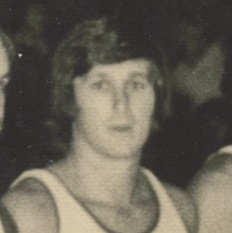
Phil Hamer
October 16, 2026


BIO: Gordie Mcleod was born in Wollongong (NSW) and began playing basketball as a junior with the Illawarra basketball program.
Gordie Mcleod made his NBL debut with the Illawarra Hawks at 22 years of age. He scored 14 points in his first game.
Illawarra’s debut NBL journey hinged on a Wollongong core under rookie head coach Joe Farrugia and captain Bob Kubbinga, with floor leader Gordie McLeod (10.1 points) directing traffic at Beaton Park’s “Snakepit” alongside headline scorers Jim Slacke (23.8 points) and Ted Holcomb
The Hawks announced themselves on March 3, 1979, shocking St Kilda 91–88 at the Snakepit as Jim Slacke (22 points) led a balanced line supported by Ted Holcomb (18 points), Steve Tonkin (16 points), Jim Williams (15 points), and Gordie McLeod (14 points), while the Saints rode Larry Sengstock (25 points) and Tony Barnett (25 points) in a contest where both teams shot 50% from the floor and Illawarra converted 17-of-21 free throws to St Kilda’s 16-of-29.
A 74–78 home setback to Canberra arrived the very next day, before McLeod’s group edged Bankstown 74–71 to sit 2–1 and momentarily bank early-season momentum.
The schedule then bit hard as Illawarra slid into nine straight defeats through late April, highlighted by the year’s heaviest reverse at Nunawading on April 7 when the Spectres prevailed 77–47, with Bruce Andrews (17 points) and Jim Slacke (16 points) the only Hawks in double figures and Gordie McLeod (4 points) limited as Illawarra attempted just 36 field goals and went 11-of-15 at the stripe while Nunawading finished 37-of-74 from the floor behind Alan Black (14 points).
Illawarra found a spark on May 12 with their most emphatic display of the season, overwhelming Glenelg 110–83 at Beaton Park as Ted Holcomb (32 points) and Jim Slacke (26 points) dominated the scoring lanes, while the Tigers leaned on David Smyth (21 points), and Lutz Heim (18 points).
Seven days later the Hawks finished the sweep 74–68 in Adelaide, then closed on June 2 with a derby decided by a single point at the Snakepit, edging Newcastle 81–80 behind a season-best Jim Slacke (34 points) with support from Ted Holcomb (14 points), Jim Williams (10 points), and Gordie McLeod (6 points) as the Falcons countered through Dave Ankeney (26 points) and Dan Riley (24 points).
Across the rotation Gordie McLeod (10.1 points across 17 games) steered pace and shot selection for a youthful backcourt while still contributing scoring, with the frontcourt tandem of Jim Slacke (23.8 points across 18 games) and Ted Holcomb (16.1 points across 10 games) leading the team in scoring.
Reliable support arrived from Steve Tonkin (13.4 points across 15 games) on the wing and captain Bob Kubbinga (8.1 points across 18 games), while Jim Williams (7.3 points across 18 games) provided additional scoring off the bench,
Illawarra completed their inaugural campaign at 5–13 and eighth in a ten-team field, finishing outside the four-team postseason at 5–13, while the league crowned its first champion in a single-game Grand Final as St Kilda edged Canberra 94–93, a result that underscored the significance of the Hawks’ opening-night upset over the eventual title winners and put an exclamation point on Gordie McLeod’s steady-handed role in the franchise’s foundational year.
1980
Illawarra’s second NBL campaign opened with fresh leadership as national-team assistant Adrian Hurley took the reins, while hometown guard Gordie McLeod inherited the captaincy to steer a largely Wollongong-built core around reliable scorer Jim Slacke.
Illawarra suited up almost the exact same team as last season, import Kevin Becker replacing Steve Tonkin and Ray Hannett covering the exit of Bruce Andrews.
Illawarra’s first outing was a narrow 76–73 road defeat at Coburg on February 2, where the Giants were led by Wayne Carroll (20 points) and Les Riddle (18 points), while Jim Slacke (25 points), Ted Holcomb (18 points) were best for the Hawks. Gordie McLeod (9 points) had a limited impact on the scoreboard but was a major part of driving the offence.
The next afternoon produced an early-season statement as Illawarra upset reigning champions St Kilda at Albert Park (74–68), while the Saints rode NBL MVP Rocky Smith (36 points), the Hawks leaned on Jim Slacke (29 points), Gordie McLeod (15 points), and Kevin Becker (13 points).
That result launched a surge in which Illawarra won six straight to reach 6–1, highlighted by a huge home win over West Torrens (101–77) and a victory on the home court of NSW rival Canberra (78–56). Other wins included Newcastle (73–71), Canberra (72–65) again, and Bankstown (83–82) to complete the early run.
Illawarra produced a “hit-and-miss” effort from that point onward, finishing the season with a 7–8 record in contrast to their strong start. Woeful losses such as the one to St Kilda (83–101) were followed by dominant wins like their victory over West Torrens (83–66).
The Hawks entered the final stretch of the season with two of their last three games against playoff-bound teams and needing just one more win to secure a postseason berth.
However, consecutive losses to West Adelaide (95–85) and Brisbane (87–80), followed by an upset 80–79 home defeat to Launceston—with the Hawks missing floor general McLeod—ultimately put the nail in the coffin. Jim Slacke (24 points), Kevin Becker (16 points), Jim Williams (13 points) leading the Hawks in their final game of the season and import duo Curtis Coleman (31 points) and Cliff Martin (20 points) top scoring for the Tigers.
Jim Slacke (22.6 points, 87.2% FT across 22 games) led the team in scoring and captured the league’s free-throw percentage title for the second consecutive season. Kevin Becker (16.3 points across 22 games) was solid in his first year with the Hawks and Gordie McLeod (13 points across 19 games) blended captaincy, pace setting, and timely scoring as the on-court conduit for Hurley’s structure.
Illawarra finished 13–9 and sixth on the 12-team ladder, one win outside the semi-final cutoff in a season that represented a substantial leap from 5–13 a year earlier.
1981
Illawarra’s third NBL campaign saw former head coach Joe Farrugia return to lead the squad after the exit of Adrian Hurley. With Kevin Becker, Ted Holcomb, and retiring stalwart Bob Kubbinga all leaving the team, high-scoring imports Michael Jones and Benny Lewis were brought in, alongside teenage local Tim Morrissey.
After a memorable preseason, which included the Hawks stunning European powerhouse Partizan in an exhibition game, Illawarra’s season opened with a loss to Newcastle (73-93) where team captain Gordie McLeod (6 points) struggled offensively, while Jones (25 points) and Lewis (24 points) finished as the Hawks top scorers. Falcons import Carl Whitfield (26 points) topped all scorers as both teams shot 50% from the floor and Newcastle’s 9-of-10 at the stripe shaded Illawarra’s 5-of-6.
Less than 24 hours later Illawarra bounced back with a win at City of Sydney (92–80) as McLeod (15 points) controlled the offence, with Jones (30 points) delivering another high scoring night. Curt Forrester (30 points) headlined the Astronauts on a whistle-heavy night that saw Illawarra go 20-of-27 at the line to the hosts’ 18-of-19.
Returning to the Snakepit the Hawks dismantled Canberra (91–71) in a game where Jones (36 points) and Lewis (31 points) both delivered season high scoring nights. McLeod (6 points) also chipped in a couple of key buckets, while Cannon’s import Dave Nelson (34 points) led the visitors on a night where Illawarra was a perfect 11-of-11 at the stripe and shot 51% from the field.
A Melbourne double then split momentum as Illawarra suffered a loss to Rocky Smith (32 points) and the St Kilda Saints (100-114) at Albert Park despite McLeod (20 points) delivering his best game of the season, Jones (37 points) setting another season high and Lewis (22 points) all combining for 79 points. The loss leaving Illawarra 2–2 after four outings.
The Hawks playoff hopes took a dive from here on, suffering a number of key defeats that included a loss to Launceston (91-104) and then back-to-back losses in South Australia, including the Hawks largest loss of the season at West Adelaide (104–66) and then another defeat, this time from Forestville (88-94) in a game where McLeod was unable to play. Despite the loss, Jones (43 points) delivered his highest scoring game of the season, going basket for basket with Eagles star Reg Biddings (29 points).
The Hawks run home including four of the last five being held at the Snakepit saw them win three of their last five. This included defeating Brisbane (90-80), nearly upsetting first-placed St Kilda (102–100), then knocking off Coburg (87–85) and Bankstown (98–86), before dropping their last game of the season to Brisbane (82–69), who were led by import duo Leroy Loggins (24 points) and Brian Banks (20 points). McLeod (8 points), Lewis (16 points) and Jones (21 points) all had solid games as both teams hit 50% from the field, but the Hawks came away with a solid win to end the season.
While few could beat the Hawks at home (8–3), Illawarra were woeful on the road (1–10), resulting in the team finishing ninth (9–13) in the 12 team league.
End of season accolades included Jones (30.5 points across 22 games) leading the NBL in free-throw percentage (87.6%), winning NBL MVP, but remarkably being omitted from the All-NBL First Team. Lewis (20.5 points) and Slacke (12.7 points) were the team’s primary scorers, with Ray Hannett (8.4 points), McLeod (7.5 points), and Jim Williams (5.4 points) rounding out the teams starting five.
1982
Illawarra entered the 1982 NBL season with most of its core intact following a 9–13 campaign the year before. The only major departures were the exits of coach Joe Farrugia, import Benny Lewis (to Coburg), and forward Alan Yates. NBL MVP Michael Jones returned and was paried with American forward Alonzo Weatherly, while captain Gordie McLeod, Jim Slacke, Ray Hannett, and several key locals returned to form one of the league’s most stable rosters.
The Hawks opened brightly, defeating Launceston 98–91 at Beaton Park behind a dominant showing from Jones (28 points) and McLeod’s steady direction. However, they suffered an agonising one-point loss to Adelaide City (87–88) the following round, foreshadowing a year marked by inconsistency. Illawarra’s first six weeks were up and down — strong wins such as a 94–83 result over Sydney were offset by four consecutive defeats through March, leaving the team near the bottom of the ladder.
Momentum finally shifted in April when Illawarra strung together four straight wins. A 125–103 victory over the Westate Wildcats on April 24 ignited their season, and a week later the Hawks recorded their biggest triumph of the year, dismantling Nunawading 106–83 in front of a raucous Snakepit crowd. During this stretch, Farrugia’s squad showcased balanced scoring and renewed confidence at home, climbing back into the fringes of playoff contention.
Though capable of matching the league’s best at Beaton Park, the Hawks’ road struggles continued to haunt them. They edged Coburg 98–93 in mid-May and Bankstown 85–81 in June but also dropped several close contests, including a heartbreaking 89–91 loss at Canberra. Illawarra’s final home game on July 3 produced one last highlight, a 92–90 thriller over the Cannons, before the team ended its campaign with heavy road defeats to St Kilda (87–119) and Nunawading (73–103) across a brutal closing weekend.
The Hawks finished 11–15 and ninth in the 14-team league, reflecting a group that proved formidable at home (8–5) but managed only three wins from thirteen road games. Despite missing the finals, several individual efforts stood out. Michael Jones (23.9 points, 8.1 rebounds, and 1.9 assists) again ranked among the league’s top scorers and remained the offensive cornerstone. Alonzo Weatherly (23.7 points and 9.2 rebounds) proved an inspired addition, complementing Jones perfectly inside. Jim Slacke (16.8 points and 5.0 rebounds) supplied consistent mid-range scoring, while McLeod (10.3 points, 2.9 rebounds, and 4.5 assists) continued to steady the offence with veteran leadership.
SYDNEY SUPERSONICS
1983
1983 saw the City of Sydney Astronauts became the Sydney SuperSonics, and the legendary American import Owen Wells signed on as player-coach. The team added Gordie McLeod (9.6 points, 2.2 rebounds, and 3.9 assists) from the Illawarra Hawks and import Ronnie Cavenall (15 points, 8 rebounds, and 2 blocks) to pair with Wells (24.3 points, 6.8 rebounds, and 4.1 assists), who would finish the 1983 season by winning the Most Valuable Player award. Together they led Sydney to a record-breaking 16-game winning streak and finished in first-place during the regular season with a 19-3 record.
In 1983, the NBL Finals were played in unusual circumstances. As a cost-cutting measure, the NBL decided to play two divisional finals, a three-game round-robin tournament for the top eight team’s which strangely saw the league’s two best team’s excluded from the NBL playoffs.
The three-game round robin tournament resulted in the first placed team in the Western Divison (Sydney) and the first place team in the Eastern Division (Geelong) being eliminated from a playoff spot due to finishing the three game round robin tournament with 2 wins and 1 loss, a equal record to two other team’s who progressed through based on points percentage.
The semi finals then saw reigning champions West Adelaide defeat Nunawading 84-77 and Canberra eliminated Coburg 80-75 in the semifinals. Canberra go on to become champions, defeating Loggins and West Adelaide 75-73 in the grand final game.
The Supersonics didn’t decide to bring Cavenall which saw him return to the US and later become the first player to go from the NBL to the NBA.
ILLAWARRA HAWKS
1984
After a one-season stint with the Sydney Supersonics, Gordie McLeod returned to Illawarra and reclaimed the captaincy under Charlie Ammit—the first Hawks coach ever retained for consecutive seasons.
With former MVP Michael Jones heading overseas, the club reshaped its frontline by bringing in American seven-footer David McGuire to join returning import Jerry Steurer (23.6 points, 8.2 rebounds, 3.4 assists, 1.9 steals, 0.3 blocks across 25 games). The wing and depth rotation was also retooled, with Rick Fowle (9.6 points, 4.5 rebounds, 1.4 assists, 0.9 steals, 0.3 blocks across 25 games) and Michael Roodenrys (2.3 points, 1.3 rebounds, 0.2 assists, 0.2 steals, 0.1 blocks across 24 games) arriving to cover the departures of Simon Cottrell (to Hobart) and Brett Flanigan (to Sydney).
Illawarra launched the season in style, routing McLeod’s former club Sydney 119–93 at the Snakepit. McLeod (24 points, 8 assists, 4 rebounds, 3 steals on 11-of-21 shooting) set the tone, while Steurer (22 points, 15 rebounds, 8 assists), Tim Morrissey (18 points, 8 rebounds) and McGuire (14 points, 8 rebounds, 3 blocks) provided the additional firepower.
A three-game losing streak followed before Illawarra reset at home against St Kilda, winning 97–84. McLeod (21 points, 11 assists, 6 rebounds, 5 steals) again drove the Hawks, Morrissey (22 points, 8 rebounds) etched himself into the team’s second best local and Steurer (19 points, 12 rebounds) delivered another double-double.
Ten games into the season, with the Hawks sitting 5–5 and determined to finally reach the playoffs, management decided McGuire (16.0 points, 9.0 rebounds, 0.7 assists, 0.2 steals, 3.1 blocks across 10 games) was not the right long-term fit and made the club’s first in-season import change—releasing the seven-footer and signing former NBA forward Marlon Redmond (29.1 points, 12.5 rebounds, 2.2 assists, 1.6 steals) for the last 15 games of the year. Redmond (45 points, 17 rebounds, 4-of-7 3PT) exploded in his debut against Perth, setting a then club-record for points in a single game. McLeod (10 points, 12 assists, 1 steal) and Steurer (23 points, 9 rebounds, 5 assists, 3 steals) also produced solid efforts in this game.
From there, Illawarra’s attack became one of the most dangerous in the league. Redmond put up big number after big number—26 points and 16 rebounds against Newcastle, 34 points and 16 rebounds against Bankstown, 36 points and 15 rebounds versus Melbourne, 28 points and 10 rebounds against Brisbane, 32 points against Nunawading, 27 points and 15 boards in the return clash with Bankstown, 36 points and 12 rebounds versus Frankston, 35 points against Geelong, 22 points and 14 rebounds against Canberra, and 31 points and 11 rebounds in the playoff loss at Newcastle. Steurer consistently matched that high level with his own all-round lines, including standout efforts such as 31 points against West Adelaide, 33 points against Melbourne, 32 points against Frankston and a string of high-20s scoring nights while routinely grabbing 7–11 rebounds and dishing 3–9 assists.
Through that stretch, McLeod’s playmaking remained the Hawks’ organising principle. He steered the offense with a series of elite distribution performances—11 assists versus West Adelaide, 14 assists against Coburg, 13 assists against Newcastle, 12 assists against Devonport and Perth, and 11-assist nights against both St Kilda and Bankstown. McLeod also had major scoring outbursts, including 28 points (13-of-15 FG, 8 assists) versus Melbourne, 25 points and 8 rebounds at Newcastle, and 34 points (15-of-24 FG, 7 assists, 5 rebounds) in the one-point win over Coburg on 27 May. Across the season McLeod averaged 15.9 points, 3.8 rebounds, 8.7 assists and 2.4 steals, firmly establishing himself as one of the NBL’s premier floor generals.
Morrissey (18.7 points, 6.6 rebounds, 1.3 assists, 1.1 steals across 22 games) delivered the best season of his career, repeatedly delivered 18–22 point nights while contributing on the glass and Fowle (9.6 points, 4.5 rebounds, 1.4 assists) carved out a key role as a defensive-minded forward.
The Hawks finished the regular season 13–12, clinching the club’s first-ever winning record and a maiden playoff berth. Their Elimination Final clash came on the road against Newcastle, where Illawarra ultimately fell 101–108 despite another strong showing from their core group. Redmond (31 points, 11 rebounds, 2 steals), Steurer (21 points, 9 rebounds, 5 assists, 2 steals), Morrissey (20 points, 5 rebounds, 4 assists, 2 steals) and McLeod (14 points, 14 assists, 7 rebounds, 2 blocks, 2 steals) all produced big lines, but were outlasted by the Falcons’ balanced attack led by Ian Davies (26 points, 6 rebounds), Michael Johnson (23 points, 8 rebounds), Jim Bateman (21 points, 12 rebounds, 1 block) and Jerry Dennard (15 points, 11 rebounds).
The 1984 season ultimately marked a watershed moment for Illawarra. With McLeod back from Sydney and back in charge, supported by Steurer’s consistent two-way production, Morrissey’s leap, and the mid-season arrival of Redmond, the Hawks transformed from battlers to a legitimate playoff team.
1985
Illawarra entered 1985 in transition after Tim Morrissey departed to Canberra and the club moved on from imports Jerry Steurer and Marlon Redmond. Long-serving coach Charlie Ammit was replaced by Ted Weston, who reshaped the roster around new Americans Greg May and Learando “Leonard” Drake and elevated rookie forward Graham Kubank. Brett Flanigan returned following two years in Sydney, while captain Gordie McLeod again directed the backcourt, supported by naturalised veteran Jim Slacke and rotation pieces including Michael Roodenrys and Ian Bartholomew.
The Hawks opened their season at Beaton Park in a 112–116 defeat to the Sydney Supersonics, a contest that immediately showcased how central McLeod was to Weston’s system. McLeod (19 points, 15 assists, 3 steals) ran the offence from the outset, repeatedly finding May (39 points, 17-of-21 shooting, 7 rebounds, 4 blocks) in scoring positions while Drake (19 points, 7 rebounds, 3 steals) made a strong debut. Illawarra matched Sydney for most of the afternoon before fading in the final minutes.
Five days later Illawarra responded with a 111–110 home win over defending champions Brisbane, secured through McLeod’s organisation and late-game composure. McLeod (2 points, 9 assists, 3 steals) ensured the frontcourt pairing again set the tone as May (36 points, 9 rebounds) and Drake (27 points, 16 rebounds, 3 blocks) combined for 63 points. Kubank (19 points, 5 rebounds) produced a breakout performance as the Hawks edged the Bullets by a single point.
Illawarra’s inconsistency surfaced quickly. The Hawks were overrun 73–119 by Canberra on the road in Round 3, with McLeod (3 points, 7 assists) trying to stabilise the offence while Drake (21 points, 11 rebounds) and May (19 points) provided the bulk of scoring in a heavy defeat. In the return meeting on 10 May, the Hawks displayed a stronger collective effort. McLeod (12 points, 10 assists) recorded a double-double, May (29 points, 12 rebounds) and Drake (20 points, 12 rebounds, 4 steals) both attacked the Cannons more effectively, yet Illawarra again struggled to contain Canberra’s balance.
One of the clearest illustrations of McLeod’s importance came in the narrow 96–100 home loss to Perth on 26 April. McLeod (22 points, 14 assists) produced his season-high scoring return, constantly exploiting gaps to feed Drake (40 points, 17-of-26 shooting, 16 rebounds, 2 steals, 1 block) in the interior. May (13 points, 9 rebounds) added support, but the Hawks were unable to close out a winnable contest.
Illawarra’s mid-season featured regular swings between standout performances and difficult nights. Their 109–86 defeat of Melbourne on 14 June showed how McLeod’s orchestration could unlock their offence. McLeod (8 points, 11 assists) again linked effectively with Drake (35 points, 16-of-20 shooting, 14 rebounds), supported by May (22 points) and Slacke (19 points, 7 rebounds). The Hawks followed that effort with an impressive 24-hour window in July. On 13 July they defeated Sydney 125–106 on the road behind major scoring nights from Drake (45 points, 19 rebounds) and May (31 points, 8 rebounds), with McLeod (9 points, 6 assists, 5 steals) helping push tempo throughout. Less than a day later they beat St Kilda 108–96 at home, McLeod (4 points, 8 assists) again ensuring the ball flowed through May (34 points, 10 rebounds) and Drake (22 points, 13 rebounds, 3 assists).
Illawarra’s strongest offensive outburst arrived on 2 August in a 130–104 home win over Hobart, a game where McLeod’s distribution powered a near-faultless scoring display. With Drake sidelined, McLeod (11 points, 17 assists) set up a barrage of inside and perimeter scoring as Slacke (42 points, 6 rebounds), May (32 points, 6 rebounds) and Kubank (18 points, 5 rebounds) combined to overwhelm the Devils. The Hawks finished with 57 field goals at 61 percent.
The season’s lowest points highlighted how often McLeod was left trying to hold structure in games that slipped away early. On 22 June Illawarra were beaten 79–141 in Brisbane, with McLeod (6 points, 7 assists) continuing to distribute even as Drake (26 points) and May (15 points, 8 rebounds) were contained relative to their usual output. The following month they suffered an 81–156 defeat to Adelaide on 20 July. May (30 points, 5 rebounds) again produced, but Drake (12 points, 6 rebounds) and McLeod (2 points, 3 assists) could not influence momentum as the 36ers dominated all phases. That loss fell within a punishing three-games-in-three-days stretch that also included a defeat in Perth and a remarkable bounce-back 93–92 win over St Kilda in Melbourne, where McLeod’s leadership proved crucial in surviving fatigue and travel.
Illawarra’s finals pursuit briefly reignited on 17 August in a 119–117 road victory over Hobart. McLeod (17 points, 15 assists) produced one of his most complete performances of the year, consistently locating Drake (34 points, 15 rebounds, 5 steals) and May (29 points, 7 rebounds) in transition and half-court sets. But the Hawks were overrun the next day in a 127–97 loss to Nunawading, despite McLeod (4 points, 14 assists) again generating regular scoring opportunities for Drake (49 points, 12 rebounds, 6 blocks) and May (24 points, 9 rebounds).
Across the season McLeod (10.3 points, 3.3 rebounds, a league-leading 10.2 assists and 2.8 steals across 26 games) remained the structural centre of Illawarra’s offence, setting the table for imports May (27.1 points, 8.2 rebounds, 1.8 steals, 1.1 blocks across 26 games) and Drake (26.0 points, 11.3 rebounds, 1.4 steals, 1.8 blocks across 24 games), while enabling Slacke (19.7 points, 6.7 rebounds, 1.2 assists, 1.1 blocks across 26 games) and Kubank (10.6 points, 2.6 rebounds, 2.0 assists across 24 games) to complement the frontline.
Illawarra finished the season 10–16 and ninth on the ladder, unable to replicate their 1984 playoff appearance. Their 6–7 home record and 4–9 road output reflected the inconsistency that shaped the year.
1986
McLeod averaged 9.1 points, 2 rebounds, and 5.8 assists as Illawarra bounced back from missing the playoffs in 1985, finishing in fifth place with a record of 15-11. They would go on to lose to eventual champions Adelaide in just their second playoff appearance as a club.
1987
In 1987, the Hawks had their best season to date, finishing in third place (20–6). In the postseason, Illawarra lost a three-game series, again to the eventual league champions, the Brisbane Bullets. McLeod added 12.4 points, 3.2 rebounds, and 8.2 assists.
1988
The 1988 season saw McLeod average 7.3 points, 2.5 rebounds, and 5.8 assists and help the Hawks finish the regular season with a 11-13 record.
HOBART DEVILS
1989
Following the 1988 season, McLeod again left the Illawarra Hawks, this time joining the Hobart Devils. There, McLeod averaged 3.5 points, 2.4 rebounds, and 4.6 assists and helped the team finish the regular season in tenth place (8-16).
BRISBANE BULLETS
1991
In 1991 McLeod averaged 4.5 points and 3.5 rebounds, and 2 assists, and helped guide the Bullets to a tenth place finish in the regular season with a 13-13 record. After the Bullets failed to repeat their 1990 form and failed to make the NBL finals, McLeod was released and soon after retired from playing professional basketball at the age of 34.
Gordie Mcleod played twelve seasons across four NBL teams. This included the Illawarra Hawks, Sydney Supersonics, Hobart Devils and Brisbane Bullets. He averaged 9.9 points, 2.1 rebounds, and 5.1 assists in 259 NBL games.
CAREER RANKINGS:
– 26th in total assists
| SEASON | AGE | TEAM | TEAM RECORD | GP | MINS | PTS | REB | AST | OR | DR | STL | BLK | TO | PF | FGM | FGA | FG% | 3PM | 3PA | 3P% | FTM | FTA | FT% | TS% | EFG% | HS |
|---|---|---|---|---|---|---|---|---|---|---|---|---|---|---|---|---|---|---|---|---|---|---|---|---|---|---|
| 1991 | 34 | Brisbane | 13-13 (9) | 2 | 37 | 9 | 7 | 4 | 1 | 6 | 0 | 0 | 2 | 1 | 2 | 4 | 50% | 1 | 2 | 50% | 4 | 4 | 100% | 76% | 0% | 5 |
| 1989 | 32 | Hobart | 8-16 (10) | 22 | 623 | 77 | 52 | 102 | 8 | 44 | 26 | 0 | 36 | 44 | 23 | 95 | 24% | 13 | 59 | 22% | 18 | 20 | 90% | 37% | 31% | 10 |
| 1988 | 31 | Illawarra | 11-13 (7) | 24 | 821 | 176 | 60 | 140 | 12 | 48 | 41 | 0 | 56 | 39 | 69 | 172 | 40% | 22 | 66 | 33% | 16 | 27 | 59% | 48% | 47% | 17 |
| 1987 | 30 | Illawarra | 20-6 (3) | 30 | 1,233 | 372 | 97 | 246 | 16 | 81 | 55 | 0 | 69 | 49 | 143 | 307 | 47% | 35 | 91 | 38% | 51 | 60 | 85% | 55% | 52% | 25 |
| 1986 | 29 | Illawarra | 15-11 (5) | 28 | 0 | 255 | 55 | 163 | 4 | 51 | 53 | 0 | 67 | 43 | 105 | 253 | 42% | 13 | 51 | 25% | 32 | 45 | 71% | 46% | 44% | 26 |
| 1985 | 28 | Illawarra | 10-16 (9) | 26 | 0 | 267 | 85 | 264 | 12 | 73 | 74 | 0 | 94 | 66 | 99 | 227 | 44% | 8 | 28 | 29% | 61 | 79 | 77% | 50% | 45% | 22 |
| 1984 | 27 | Illawarra | 13-11 (8) | 25 | 0 | 397 | 94 | 218 | 10 | 84 | 61 | 2 | 75 | 40 | 173 | 332 | 52% | 3 | 10 | 30% | 48 | 55 | 87% | 55% | 53% | 34 |
| 1983 | 26 | Sydney | 19-3 (1) | 20 | 0 | 192 | 43 | 78 | 4 | 39 | 40 | 0 | 51 | 37 | 79 | 160 | 49% | 0 | 0 | 0% | 34 | 40 | 85% | 54% | 49% | 24 |
| 1982 | 25 | Illawarra | 11-15 (9) | 26 | 0 | 267 | 75 | 118 | 7 | 68 | 0 | 0 | 91 | 46 | 104 | 207 | 50% | 0 | 0 | 0% | 59 | 75 | 79% | 55% | 50% | 26 |
| 1981 | 24 | Illawarra | 9-13 (8) | 20 | 0 | 150 | 0 | 0 | 0 | 0 | 0 | 0 | 0 | 22 | 65 | 132 | 49% | 0 | 0 | 0% | 20 | 33 | 61% | 51% | 49% | 20 |
| 1980 | 23 | Illawarra | 13-9 (5) | 19 | 0 | 247 | 0 | 0 | 0 | 0 | 0 | 0 | 0 | 47 | 98 | 196 | 50% | 0 | 0 | 0% | 51 | 66 | 77% | 54% | 50% | 22 |
| 1979 | 22 | Illawarra | 5-13 (8) | 17 | 0 | 172 | 0 | 0 | 0 | 0 | 0 | 0 | 0 | 48 | 79 | 158 | 50% | 0 | 0 | 0% | 14 | 18 | 78% | 52% | 50% | 18 | Totals | 259 | 2714 | 2581 | 568 | 1333 | 74 | 494 | 350 | 2 | 541 | 482 | 1039 | 2243 | 46.3% | 95 | 307 | 30.9% | 408 | 522 | 78.2% | 52% | 48% | 34 |
| SEASON | AGE | TEAM | TEAM RECORD | GP | MINS | PTS | REB | AST | OR | DR | STL | BLK | TO | PF | FGM | FGA | FG% | 3PM | 3PA | 3P% | FTM | FTA | FT% | TS% | EFG% | HS |
|---|---|---|---|---|---|---|---|---|---|---|---|---|---|---|---|---|---|---|---|---|---|---|---|---|---|---|
| 1991 | 34 | Brisbane | 13-13 (9) | 2 | 18.5 | 4.5 | 3.5 | 2.0 | 0.5 | 3.0 | 0.0 | 0.0 | 1.0 | 0.5 | 1.0 | 2.0 | 50% | 0.5 | 1.0 | 50% | 2.0 | 2.0 | 100% | 76% | 0% | 5 |
| 1989 | 32 | Hobart | 8-16 (10) | 22 | 28.3 | 3.5 | 2.4 | 4.6 | 0.4 | 2.0 | 1.2 | 0.0 | 1.6 | 2.0 | 1.0 | 4.3 | 24% | 0.6 | 2.7 | 22% | 0.8 | 0.9 | 90% | 37% | 31% | 10 |
| 1988 | 31 | Illawarra | 11-13 (7) | 24 | 34.2 | 7.3 | 2.5 | 5.8 | 0.5 | 2.0 | 1.7 | 0.0 | 2.3 | 1.6 | 2.9 | 7.2 | 40% | 0.9 | 2.8 | 33% | 0.7 | 1.1 | 59% | 48% | 47% | 17 |
| 1987 | 30 | Illawarra | 20-6 (3) | 30 | 41.1 | 12.4 | 3.2 | 8.2 | 0.5 | 2.7 | 1.8 | 0.0 | 2.3 | 1.6 | 4.8 | 10.2 | 47% | 1.2 | 3.0 | 38% | 1.7 | 2.0 | 85% | 55% | 52% | 25 |
| 1986 | 29 | Illawarra | 15-11 (5) | 28 | 0.0 | 9.1 | 2.0 | 5.8 | 0.1 | 1.8 | 1.9 | 0.0 | 2.4 | 1.5 | 3.8 | 9.0 | 42% | 0.5 | 1.8 | 25% | 1.1 | 1.6 | 71% | 46% | 44% | 26 |
| 1985 | 28 | Illawarra | 10-16 (9) | 26 | 0.0 | 10.3 | 3.3 | 10.2 | 0.5 | 2.8 | 2.8 | 0.0 | 3.6 | 2.5 | 3.8 | 8.7 | 44% | 0.3 | 1.1 | 29% | 2.3 | 3.0 | 77% | 50% | 45% | 22 |
| 1984 | 27 | Illawarra | 13-11 (8) | 25 | 0.0 | 15.9 | 3.8 | 8.7 | 0.4 | 3.4 | 2.4 | 0.1 | 3.0 | 1.6 | 6.9 | 13.3 | 52% | 0.1 | 0.4 | 30% | 1.9 | 2.2 | 87% | 55.4% | 53% | 34 |
| 1983 | 26 | Sydney | 19-3 (1) | 20 | 0.0 | 9.6 | 2.2 | 3.9 | 0.2 | 2.0 | 2.0 | 0.0 | 2.6 | 1.9 | 4.0 | 8.0 | 49% | 0.0 | 0.0 | 0% | 1.7 | 2.0 | 85% | 53.6% | 49% | 24 |
| 1982 | 25 | Illawarra | 11-15 (9) | 26 | 0.0 | 10.3 | 2.9 | 4.5 | 0.3 | 2.6 | 0.0 | 0.0 | 3.5 | 1.8 | 4.0 | 8.0 | 50% | 0.0 | 0.0 | 0% | 2.3 | 2.9 | 79% | 55.0% | 50% | 26 |
| 1981 | 24 | Illawarra | 9-13 (8) | 20 | 0.0 | 7.5 | 0.0 | 0.0 | 0.0 | 0.0 | 0.0 | 0.0 | 0.0 | 1.1 | 3.3 | 6.6 | 49% | 0.0 | 0.0 | 0% | 1.0 | 1.7 | 61% | 50.8% | 49% | 20 |
| 1980 | 23 | Illawarra | 13-9 (5) | 19 | 0.0 | 13.0 | 0.0 | 0.0 | 0.0 | 0.0 | 0.0 | 0.0 | 0.0 | 2.5 | 5.2 | 10.3 | 50% | 0.0 | 0.0 | 0% | 2.7 | 3.5 | 77% | 54.3% | 50% | 22 |
| 1979 | 22 | Illawarra | 5-13 (8) | 17 | 0.0 | 10.1 | 0.0 | 0.0 | 0.0 | 0.0 | 0.0 | 0.0 | 0.0 | 2.8 | 4.6 | 9.3 | 50% | 0.0 | 0.0 | 0% | 0.8 | 1.1 | 78% | 51.6% | 50% | 18 | Total | 259 | 10.5 | 10.0 | 2.2 | 5.1 | 0.3 | 1.9 | 1.4 | 0.0 | 2.1 | 1.9 | 4.0 | 8.7 | 46.3% | 0.0 | 0.0 | 30.9% | 0.4 | 1.2 | 78.2% | 52% | 48% | 34 |
| POINTS | REBOUNDS | ASSISTS | STEALS | BLOCKS | TURNOVERS | TRIPLE DOUBLES | 34 | 8 | 18 | 8 | 2 | 9 | 0 |
|---|
He also represented the Boomers at the 1980 Olympics in Moscow where the team finished in 8th position despite the boycott of the games by the gold medal favourite United States.
| YEAR | AGE | GP | MINS | PTS | REB | AST | OR | DR | STL | BLK | TO | PF | FGM | FGA | FG% | 3PM | 3PA | 3P% | FTM | FTA | FT% |
|---|---|---|---|---|---|---|---|---|---|---|---|---|---|---|---|---|---|---|---|---|---|
| 1980 | 24 | 4 | 0 | 2 | 0 | 5 | 0 | 0 | 0 | 0 | 2 | 1 | 1 | 5 | 20.0% | 0 | 0 | 0.0% | 0 | 0.0% | |
| 1978 | 22 | 7 | 0 | 0 | 0 | 0 | 0 | 0 | 0 | 0 | 0 | 9 | 0 | 0 | 0.0% | 0 | 0 | 0.0% | 6 | 9 | 66.7% | Total | 11 | 0 | 2 | 0 | 5 | 0 | 0 | 0 | 0 | 2 | 10 | 1 | 5 | 20% | 0 | 0 | 0% | 6 | 9 | 67% |
| YEAR | AGE | GP | MINS | PTS | REB | AST | OR | DR | STL | BLK | TO | PF | FGM | FGA | FG% | 3PM | 3PA | 3P% | FTM | FTA | FT% |
|---|---|---|---|---|---|---|---|---|---|---|---|---|---|---|---|---|---|---|---|---|---|
| 1980 | 24 | 4 | 0.0 | 0.5 | 0.0 | 1.3 | 0.0 | 0.0 | 0.0 | 0.0 | 0.5 | 0.3 | 0.3 | 1.3 | 20.0% | 0.0 | 0.0 | 0.0% | 0.0 | 0.0 | 0.0% |
| 1978 | 22 | 7 | 0.0 | 0.0 | 0.0 | 0.0 | 0.0 | 0.0 | 0.0 | 0.0 | 0.0 | 1.3 | 0.0 | 0.0 | 0.0% | 0.0 | 0.0 | 0.0% | 0.9 | 1.3 | 66.7% | Total | 11 | 0.0 | 0.2 | 0.0 | 0.5 | 0.0 | 0.0 | 0.0 | 0.0 | 0.2 | 0.9 | 0.1 | 0.5 | 20% | 0.0 | 0.0 | 0% | 0.5 | 0.8 | 67% |
- 3x NBL Assists Leader
McLeod began his NBL coaching career in 1989, taking on a brief two-game stint as a player-coach for the Cascade Tassie Devils. He later transitioned into coaching full-time, joining the Brisbane Bullets as an assistant coach in 1992.
In 1998, McLeod was appointed as the inaugural head coach of the West Sydney Razorbacks, where he quickly built the franchise into a championship contender. He led the team to the 2002 NBL Grand Final, where they fell to the Adelaide 36ers (1-2) in a tightly contested series.
McLeod's Razorbacks returned to the 2003-04 NBL Grand Final, marking the first-ever five-game championship series in league history. The Razorbacks pushed cross-town rivals, the Sydney Kings, to the brink before suffering a heartbreaking 2-3 series loss. In the deciding Game 5, West Sydney held a commanding 17-point lead in the third quarter and a 79–72 advantage with just over three minutes remaining. However, Sydney mounted a furious comeback, closing the game with an 18-0 run to win 90-79 and secure the title.
Despite leading the Razorbacks to back-to-back grand final appearances, McLeod was not retained for the 2004-05 season.
McLeod was named the inaugural head coach of the Singapore Slingers for the 2006-07 season, leading the expansion franchise to the playoffs in their debut year. He remained with the team for two seasons before the Slingers withdrew from the NBL following the 2007-08 season.
McLeod was appointed as an assistant coach of the Australian Boomers for the 2008 Beijing Olympics, where the team finished in 7th place with a 3-3 record. His experience and tactical knowledge made him a valuable asset to the national team, and he was later invited to rejoin the Boomers' coaching staff in 2013 under head coach Andrej Lemanis for the FIBA Oceania Championship against New Zealand. In 2009, McLeod returned to his hometown and was named head coach of the Wollongong Hawks, the team where he made his name as a player. In his first season at the helm, he guided the Hawks to a 16-12 regular-season record, finishing in second place. The team advanced to the 2010 NBL Grand Final, where they fell to the Perth Wildcats (1-2). McLeod’s impressive efforts were recognized as he was named NBL Coach of the Year.
Despite dealing with injuries during the 2010-11 season, McLeod kept the Hawks competitive, finishing with a 15-13 record. He continued to lead the team for several more seasons, cementing his place among the most respected coaches in NBL history.
In 2014, McLeod re-signed with the Hawks on a three-year contract extension, but uncertainty surrounding the club’s financial future led to a mutual departure in 2015. Reflecting on his exit, McLeod stated: "I no longer feel that my values and those of the club are in alignment. In those circumstances, it's appropriate that I move on."
At the time of his departure, McLeod had compiled a career NBL coaching record of 149–173, placing him 14th all-time in coaching wins.
Shortly after leaving the Hawks, McLeod was hired by the Cairns Taipans as an assistant coach where he spent the 2015-16 season under head coach Aaron Fearne. Fearne actively sought McLeod for the position, stating: "It was always a major chess game coaching against him. Our program learned a lot just by coaching against his teams, so I jumped at the chance to work together."
Whilst we try to source as much information as we can for every player who has ever played in the NBL some information on a player profile may be missing. If you have additional information on a player you'd like us to add to a profile, please send it to us using the enquiry form below.
Submissions are then sent to info@aussiehoopla.com