Owen Wells
July 23, 2020


BIO: Ronnie Cavenall was born in Beaumont, Texas (USA).
Ronnie Cavenall made his NBL debut with the Sydney Supersonics at 23 years of age. He scored 12 points in his first game.
Cavenall was a left-handed shot-blocker, who dunked everything around the rim. After graduating from Texas Southern University, Cavenall went undrafted by the NBA and shortly after found his way to Australia where he signed his first professional basketball contract with the Sydney Supersonics.
Cavenall averaged 15 points, 8 rebounds, and 2 blocks teaming with fellow import Owen Wells who was named NBL Most Valuable Player that same season. Together they led Sydney to a 19-3 record and a first-place finish in the regular season.
In 1983, the NBL Finals were played in a unusual circumstances. As a cost-cutting measure the NBL decided to play two divisional finals, a three-game round-robin tournament for the top eight team’s.
Sydney finished with a record of 2 wins, 1 loss in the tournament, but with four other team’s finished with the same Sydney were squeaked out through a points percentage decision despite their first place finish.
Canberra would become the 1983 champions after getting through the semi finals with a unbeaten divisional tournament record. The Supersonics didn’t decide to bring Cavenall back, deciding to go with a more experienced big man in Brian Devincenzi the following year.
Cavenall returned to America to play in the Continental Basketball Association with the Washington Generals and a touring basketball show team called the Harlem Wizards, a offshoot of the Harlem Globetrotters. It was there he caught the attention of Rick Pitino, who was a assistant for the New York Knicks in 1984, which lead to him being signed by the New york Knicks, making Cavenal the first player to go from the NBL to the NBA.
Ronnie Cavenall played one season in the NBL. He averaged 14.9 points, 7.8 rebounds, and 0.3 assists in 25 NBL games.
CAREER RANKINGS:
– 15th in blocks per game.
| SEASON | AGE | TEAM | TEAM RECORD | GP | MINS | PTS | REB | AST | OR | DR | STL | BLK | TO | PF | FGM | FGA | FG% | 3PM | 3PA | 3P% | FTM | FTA | FT% | TS% | EFG% | HS |
|---|---|---|---|---|---|---|---|---|---|---|---|---|---|---|---|---|---|---|---|---|---|---|---|---|---|---|
| 1983 | 24 | Sydney | 19-3 (1) | 25 | 0 | 374 | 197 | 9 | 58 | 139 | 11 | 56 | 52 | 70 | 161 | 310 | 52% | 0 | 0 | 0% | 52 | 84 | 62% | 54% | 52% | 32 | Totals | 25 | 0 | 374 | 197 | 9 | 58 | 139 | 11 | 56 | 52 | 70 | 161 | 310 | 51.9% | 0 | 0 | 0.0% | 52 | 84 | 61.9% | 54% | 52% | 32 |
| SEASON | AGE | TEAM | TEAM RECORD | GP | MINS | PTS | REB | AST | OR | DR | STL | BLK | TO | PF | FGM | FGA | FG% | 3PM | 3PA | 3P% | FTM | FTA | FT% | TS% | EFG% | HS |
|---|---|---|---|---|---|---|---|---|---|---|---|---|---|---|---|---|---|---|---|---|---|---|---|---|---|---|
| 1983 | 24 | Sydney | 19-3 (1) | 25 | 0.0 | 15.0 | 7.9 | 0.4 | 2.3 | 5.6 | 0.4 | 2.2 | 2.1 | 2.8 | 6.4 | 12.4 | 52% | 0.0 | 0.0 | 0% | 2.1 | 3.4 | 62% | 53.9% | 52% | 32 | Total | 25 | 0.0 | 15.0 | 7.9 | 0.4 | 2.3 | 5.6 | 0.4 | 2.2 | 2.1 | 2.8 | 6.4 | 12.4 | 51.9% | 0.0 | 0.0 | 0.0% | 61.9% | 54% | 52% | 32 |
| POINTS | REBOUNDS | ASSISTS | STEALS | BLOCKS | TURNOVERS | TRIPLE DOUBLES | 32 | 16 | 3 | 3 | 6 | 6 | 0 |
|---|
After playing for the Sydney Supersonics in 1983, Cavenall returned to America to play in the Continental Basketball Association with the Washington Generals and a touring basketball show team called the Harlem Wizards, an offshoot of the Harlem Globetrotters.
It was there he caught the attention of Rick Pitino, who was an assistant for the New York Knicks in 1984, who invited Cavenall to join the Knicks training camp. Cavenall failed to make the cut, but two months later reached out to him mid-season and signed him as a free agent after the team’s star big man Bill Cartwright suffered a broken foot.
Cavenall’s best game coming against the talented Boston Celtics who would reach the NBA Finals that year but fall to the LA Lakers. Cavenall played 22 minutes going up against the all-star frontline of Robert Parish and Kevin McHale and finished with 7 points and 6 rebounds.
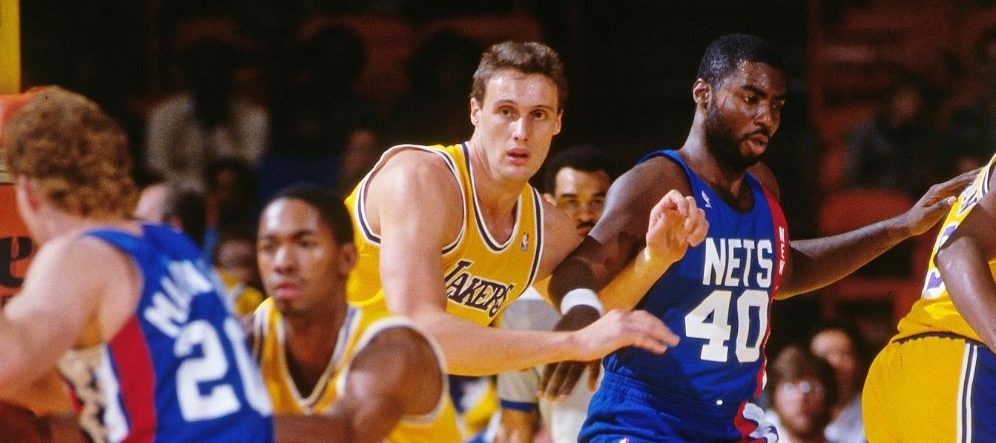
Cavenall wasnt able to earn himself a second year with the team and spent the next few years playing in the CBA for minor league teams such as the Grand Cedar Rapids, Westchester Golden Apples, Springfield Fame and Wyoming Wildcatters before having a second chance at NBA success with the New Jersey Nets in 1988.
Cavenall signed as a free agent in November with the Nets. He was only able to play in five games before he was waived by the team one month later. He spent the rest of his career playing for various teams in the CBA, with his final season being in 1992–1993 with Columbus Horizon.
Cavenall played 58 games in the NBA. He averaged 1.4 points, 2.9 rebounds, and 0.3 assists per game over his NBA career.
NBA TRANSACTIONS:
- August, 1984: Signed as a free agent with the New York Knicks.
-
July 1, 1988: Waived by the New York Knicks.
-
November 23, 1988: Signed as a free agent with the New Jersey Nets.
-
December 27, 1988: Waived by the New Jersey Nets.
| Season | Team | PTS | AST | STL | BLK | FGM | FGA | FG% | 3PM | 3PA | 3P% |
|---|---|---|---|---|---|---|---|---|---|---|---|
| 1 | 0 | 83% | 34% | 53% | 99% | ||||||
| 2 | 0 | 32 | 3 | 3 | 6 | ||||||
| Total | 161 | 310 | 51.9% | 0 | 0 | 0.0% |
| YEAR | AGE | TEAM | POS | GP | GS | MINS | PTS | TRB | AST | ORB | DRB | STL | BLK | TOV | PF | FG | FGA | FG% | 3P | 3PA | 3P% | FT | FTA | FT% | TS% | EFG% |
|---|---|---|---|---|---|---|---|---|---|---|---|---|---|---|---|---|---|---|---|---|---|---|---|---|---|---|
| 1988-89 | 29 | New Jersey | C | 5 | 0 | 16 | 6 | 2 | 0 | 0 | 2 | 0 | 2 | 2 | 2 | 2 | 3 | 0 | 0 | 2 | 5 | 58% | 67% | |||
| 1984-85 | 25 | New York | C | 53 | 2 | 653 | 78 | 166 | 19 | 53 | 113 | 12 | 42 | 45 | 123 | 28 | 86 | 0 | 0 | 22 | 39 | 38% | 33% | Total | 58 | 2 | 669 | 84 | 168 | 19 | 53 | 115 | 12 | 44 | 47 | 125 | 30 | 89 | 34% | 0 | 0 | 24 | 44 | 55% |
| YEAR | AGE | TEAM | POS | GP | GS | MINS | PTS | TRB | AST | ORB | DRB | STL | BLK | TOV | PF | FG | FGA | FG% | 3P | 3PA | 3P% | FT | FTA | FT% | TS% | EFG% |
|---|---|---|---|---|---|---|---|---|---|---|---|---|---|---|---|---|---|---|---|---|---|---|---|---|---|---|
| 1988-89 | 29 | New Jersey | C | 5 | 0 | 3.2 | 1.2 | 0.4 | 0.0 | 0.0 | 0.4 | 0.0 | 0.4 | 0.4 | 0.4 | 0.4 | 0.6 | 67% | 0.0 | 0.0 | 0.4 | 1.0 | 58% | 67% | ||
| 1984-85 | 25 | New York | C | 53 | 2 | 12.3 | 1.5 | 3.1 | 0.4 | 1.0 | 2.1 | 0.2 | 0.8 | 0.8 | 2.3 | 0.5 | 1.6 | 33% | 0.0 | 0.0 | 0.4 | 0.7 | 38% | 33% | Total | 58 | 2 | 11.5 | 1.4 | 2.9 | 0.3 | 0.9 | 2.0 | 0.2 | 0.8 | 0.8 | 2.2 | 0.5 | 1.5 | 34% | 0.4 | 0.8 | 55% |
Cavenall played college basketball at Texas Southern University, As a freshman he played in 18 games for Robert Moreland’s Tigers in the SWAC and averaged 2.3 points and 2.6 rebounds while shooting 48.7 percent from the field and 33.3 percent at the foul line for a team that finished 16-10 overall and 7-5 in conference play.
As a sophomore in 1978-79, Cavenall played 27 games and moved into a much larger role, averaging 6.4 points, 6.3 rebounds and 1.1 assists per game while shooting 49.4 percent from the field and 51.5 percent from the free throw line as Texas Southern went 13-14 overall and 6-6 in SWAC play under Moreland.
During his junior season in 1979-80, he appeared in 24 games and averaged 4.9 points, 4.3 rebounds and 0.5 assists per game with a 47.8 field-goal percentage and a 64.0 free-throw percentage while Texas Southern finished 9-17 overall and 5-7 in the SWAC under Moreland.
As a senior in 1980-81, Cavenall played 26 games and posted his best scoring and rebounding averages at Texas Southern with 7.3 points, 7.0 rebounds and 1.3 assists per game while shooting 48.3 percent from the field and 53.8 percent from the line for a Tigers team that finished 13-13 overall and 7-5 in conference play, placing third in the SWAC under Moreland.
Across his four-year college career at Texas Southern, Cavenall played 95 games and averaged 5.5 points and 5.3 rebounds per game while shooting 48.6 percent from the field and 55.7 percent from the free throw line.
His year-by-year progression took him from 2.3 points and 2.6 rebounds as a freshman to 7.3 points and 7.0 rebounds as a senior, and he finished his Texas Southern career as a senior center from the 1980-81 team before moving on from college basketball.
Whilst we try to source as much information as we can for every player who has ever played in the NBL some information on a player profile may be missing. If you have additional information on a player you'd like us to add to a profile, please send it to us using the enquiry form below.
Submissions are then sent to info@aussiehoopla.com