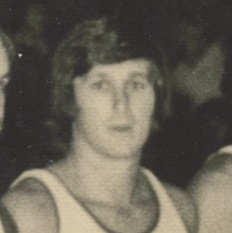
Phil Hamer
October 16, 2026


Jim Williams made his NBL debut with the Illawarra Hawks at 21 years of age. He scored 15 points in his first game.
Illawarra’s first NBL campaign was built around a local Wollongong core, including captain Bob Kubbinga, and coached by Joe Farrugia. American’s Jim Slacke and Ted Holcomb supplying the headline scoring while local guards like Gordie McLeod steadied the backcourt at Beaton Park’s “Snakepit.”
Illawarra opened the season with a landmark upset of St Kilda on March 3, prevailing 91–88 as Jim Slacke (22 points) led a balanced line featuring Ted Holcomb (18 points), Steve Tonkin (16 points), and Jim Williams (15 points), while the Saints leaned on Larry Sengstock (25 points) and Tony Barnett (25 points) in a game where both teams shot 50% from the field and the Hawks converted 17-of-21 free throws to St Kilda’s 16-of-29.
A 74–78 home loss to Canberra followed the next day before Illawarra edged Bankstown 74–71 to see their record sit at 2–1, before momentum flipped and the Hawks slid into a nine-game losing streak through late April.
This included the worst loss of the season for the Hawks, when Nunawading demolished them (47-77) on April 7. Bruce Andrews (17 points) and Jim Slacke (16 points) were the only Hawks in double figures. The lock down defence from the Specres saw Williams held scoreless, Illawarra attempting only 36 field goals and going 11-of-15 at the stripe while Nunawading finished 37-of-74 from the floor with Alan Black (14 points) pacing the hosts.
A mid-season lift arrived on May 12 with the biggest win of the year, a 110–83 home result over Glenelg powered by Ted Holcomb (32 points) and Jim Slacke (26 points) as Steve Tonkin (18 points) and Jim Williams (11 points) added additional scoring as the Hawks poured in a season-high 110 on 48-of-96 shooting, while the Tigers were led by David Smyth (21 points).
Seven days later Illawarra completed the sweep in Adelaide 74–68, then closed on June 2 with a one-point derby classic at the Snakepit, edging Newcastle 81–80 behind one of the best efforts of the season from Jim Slacke (34 points) supported by Ted Holcomb (14 points) and Jim Williams (10 points), while the Falcons best included Dave Ankeney (26 points) and Dan Riley (24 points).
Illawarra finished the regular season 5–13 for 8th in a ten-team league, missing the four-team postseason in a year ultimately decided by a single-game Grand Final where St Kilda defeated Canberra 94–93 to claim the inaugural championship.
The primary scorers for the Hawks this season were Jim Slacke (23.8 points) and Ted Holcomb (16.1 points), with Steve Tonkin (13.4 points) and Gordie McLeod (10.1 points) offering additional support. Additionally, captain Bob Kubbinga (8.1 points) and Jim Williams (7.3 points) provided valuable contributions that showed up in key wins like the St Kilda opener and the Glenelg blowout.
1980
Illawarra’s second NBL season began with change on the bench and continuity on the floor as national-team assistant Adrian Hurley replaced Joe Farrugia, while hometown guard Gordie McLeod took over the captaincy to steer a largely Wollongong-built core around primary scorers Jim Slacke and Jim Williams.
The Hawks returned with almost the exact same roster as last season, the only changes changes being import Steve Tonkin and Bruce Andrews being replaced with Kevin Becker and Ray Hannett.
Illawarra opened the year with a narrow road loss at Coburg on February 2, falling 76–73 in a game where the Giants leaned on Wayne Carroll (20 points), while Jim Williams (6 points) struggled to make an impact in the first game, the Hawks offence was led by Jim Slacke (25 points) and Ted Holcomb (18 points).
The very next afternoon produced an early statement as Illawarra upset the reigning champions St Kilda 74–68 at Albert Park, with the Saints driven by Rocky Smith (36 points) and the Hawks countering through Jim Slacke (29 points), Gordie McLeod (15 points), and Kevin Becker (13 points). Again, Williams (4 points) made some solid contributions, but struggled to make much of an impact on the scoreboard, on a day both teams shot 50% from the field and Illawarra added 12-of-20 at the stripe.
That result launched a six-game surge to 6–1 as Hurley’s group stacked wins behind steadier defense and improved execution, highlighted by a 101–77 home result over West Torrens, a 78–56 road win at Canberra, a 73–71 steal in Newcastle, a 72–65 follow-up against Canberra, an 83–82 escape at Bankstown and a 101–98 home thriller over Newcastle that kept the Snakepit rocking into March.
The middle block featured a mix of highs and reality checks, including a heavy 104–68 road loss to eventual runners-up West Adelaide and a one-point heartbreaker at Beaton Park when Nunawading edged Illawarra 89–88, tightening a finals race that would remain congested into May.
Across this stretch, Jim Williams (5.4 points across 21 games) continued to provide complementary offense alongside Kevin Becker (16.3 points across 22 games) and Jim Slacke (22.6 points and 87.2% FT across 22 games), who once again led the Hawks in scoring and the league in free-throw percentage for the second consecutive season.
The run home turned against the Hawks as they dropped their last three, first bowing to West Adelaide 95–85 at Beaton Park and then falling 87–80 to Brisbane before a final-round stinger at home to Launceston 80–79 that ultimately denied a semi-final berth by a single win.
That final game saw the Tigers ride Curtis Coleman (31 points), Cliff Martin (20 points), while Illawarra, without point guard Gordie McLeod (13 points across 19 games), generated most of its offence from Jim Slacke (24 points), Kevin Becker (16 points), Jim Williams (13 points), Ray Hannett (9 points) and Ted Holcomb (8 points) as the Snakepit saw a one-point season-ender slip away.
Illawarra finished 13–9 and sixth on a 12-team table, one win outside the four-team semi-finals in a campaign defined by a 6–1 launch, a tight mid-table grind and a three-game slide to the line that included losses to playoff teams West Adelaide and Brisbane and the upset by Launceston that sealed their fate.
1981
After narrowly missing out on the team’s first playoff spot, coach Adrian Hurley exited the club, and inaugural season coach Joe Farrugia returning to the fold. Other exits included Kevin Becker and Ted Holcomb, and club stalwart Bob Kubbinga (retired), which saw new imports Michael Jones and Benny Lewis brought in and local teen Tim Morrissey added to the roster.
Before the season started, two big things happened for the Hawks, first was the permanent move into Beaton Park Stadium (The Snakepit) and claiming a preseason victory over touring European powerhouse Partizan.
The regular season then started with a opening loss to rivals Newcastle (73–93) where Jones (25 points) and Lewis (24 points) carried the scoring, Williams (12 points) also chipping in, while Carl Whitfield (26 points) headlined the Falcons as both sides shot 50% from the floor.
Less than 24 hours later, Illawarra hit back at City of Sydney (92–80). Jones (30 points) dominated, McLeod (15 points) was solid and Williams (14 points) continued to add buckets where needed. Curt Forrester (30 points) paced the Astronauts in a foul-heavy contest that saw the Hawks earn 27 free throws.
The Hawks also started the season off with a dismantling of Canberra (91–71) in a game where Jones (36 points) and Lewis (31 points) overcome Cannons import Dave Nelson (34 points) as Illawarra went a perfect 11-of-11 at the stripe as a team.
A tough Melbourne trip saw Rocky Smith (32 points) lead St Kilda to an easy win over the Hawks (100-114), despite Jones (37 points) torching the Saints and McLeod producing his season best (20); Williams added 6 in support. The following day at Kilsyth, Nunawading closed out a 95–74 result, leaving the Hawks 2–2 after four outings.
The remainder of the Hawks schedule exposed Illawarra’s road frailties. A home stumble to Launceston (91–104) preceded a bruising South Australian back-to-back—West Adelaide by 38 (66–104) and a narrow loss to Forestville (88–94) the next day. Jones (43 points, 9-of-9 FT) erupting for his season high against the Eagles, going head to head with Forestville’s Reg Biddings (29 points).
Illawarra’s season ended with four of their final five games being played at home. This saw them close out the season with a win over Brisbane (90–80), an almost upset over ladder-leaders St Kilda (100–102), then clutch wins over Coburg (87–85) and Bankstown (98–86), before suffering a road loss to Brisbane (69–82) in their final game. Jones (21 points), Lewis (16 points) and McLeod (8 points) all having solid games, but the might of Bullets stars Leroy Loggins (24 points), Brian Banks (20 points) and Colin Varian (14 points) proved too difficult to overcome.
Michael Jones (30.5 ppg across 22 games) led the league in FT% (87.6%) and claimed NBL MVP—astonishingly without an All-NBL First Team nod, while Lewis (20.5 ppg) was the constant second punch for the Hawks. Slacke (12.7 ppg), Ray Hannett (8.4 ppg), McLeod (7.5 ppg) and Williams (5.4 ppg) rounded out the core of the Hawks rotation, a squad that was close to unbeatable at home (8–3) but woeful on the road (1–10).
1982
Illawarra’s 1982 season brought new leadership under head coach Tom Pottinger and the return of most of the previous year’s roster, with only Benny Lewis and Alan Yates departing. The Hawks recruited import Alonzo Weatherly to join reigning MVP Michael Jones in a powerful frontcourt pairing, while captain Gordie McLeod again led from the backcourt alongside veterans Jim Slacke and Ray Hannett. Reserve guard Jim Williams returned for his fourth NBL campaign, offering experience and stability in limited minutes off the bench.
The Hawks opened with a strong 98–91 win over Launceston Casino City before a heartbreaking 87–88 loss to Adelaide City the following round. Consistency proved elusive — Illawarra were impressive at home (8–5) but managed only three road wins from thirteen attempts. Despite several narrow defeats, the team remained competitive throughout, anchored by McLeod’s leadership and the scoring of Jones and Weatherly.
April delivered the team’s best basketball of the year. The Hawks strung together four consecutive victories, including an explosive 125–103 shootout over Westate and a statement 106–83 triumph against Nunawading — their largest win margin of the season. Jones (23.9 points, 8.1 rebounds, and 1.9 assists) and Weatherly (23.7 points and 9.2 rebounds) led the way, with McLeod (10.3 points and 4.5 assists) controlling tempo and Slacke (16.8 points and 5 rebounds) adding perimeter scoring. During this stretch, Williams contributed as a steady reserve, providing composure, passing support, and defensive coverage in short stints as Pottinger rotated through his backcourt options.
Illawarra finished ninth overall with an 11–15 record, a season marked by resilience at home and struggle away. Williams (1.4 points, 0.8 rebounds, and 0.3 assists across 8 games) made the most of limited opportunities, adding valuable depth and veteran presence to a lineup led by Jones, Weatherly, and McLeod.
1983
The Hawks’ season began on a challenging note, with the departure of team captain Gordie McLeod to the Sydney Supersonics and import Alonzo Weatherly returning to the USA.
McLeod’s exit marked the loss of a long-serving and pivotal figure whose leadership had been a cornerstone for the team.
To fill the gap, the Hawks brought in import Jerry Steurer (23.7 points, 5.4 rebounds, 1.9 assists, and 1.7 steals) to pair with veteran forward Jim Slacke (11.0 points, 3.5 rebounds, and 0.7 assists).
They also had the services of Michael Jones (32.7 points, 8.5 rebounds, and 1.5 assists), the former NBL MVP, who returned to the club after a season’s absence and went on to lead both the team and the league in scoring.
Despite the impressive contributions of Jones and the addition of Steurer, McLeod’s absence was sorely felt.
The Illawarra Hawks opened their season with a loss to the Newcastle Falcons (95-113), marking the beginning of an eight-game losing streak.
They finally broke the streak with a narrow victory against Devonport (102-100) in Round 8, which stood as their only road win of the season.
Local talent such as Tim Morrissey (7.9 points, 2.9 rebounds, and 1.1 assists per game), Simon Cottrell (7.6 points, 3.9 rebounds), and Brett Flanigan (3.5 points, 1.2 rebounds, and 2.9 assists) stepped up their production, but despite these efforts, the Hawks struggled to find cohesion and consistency.
Throughout the season, the team faced several more losing streaks, including a significant stretch where they dropped six consecutive games from March 5 to April 23.
Even with Jones’ league-leading scoring performance, the Hawks could not overcome the challenges on and off the court.
The absence of McLeod’s leadership and playmaking left a void that the team could not fill, resulting in the worst finish in club history.
The Hawks managed only four wins from 22 games, concluding the season with a disappointing 4-18 record.
Jim Williams (2.2 points, 1.0 rebound, 1.0 assists) saw limited playing time this season but managed to appear in all 22 games.
While his numbers were modest, his consistent effort and defensive presence added depth for the Hawks during a challenging season.
Jim Williams played five seasons the Illawarra Hawks. He averaged 4.6 points, 0.3 rebounds, and 0.2 assists in 90 NBL games.
| SEASON | AGE | TEAM | TEAM RECORD | GP | MINS | PTS | REB | AST | OR | DR | STL | BLK | TO | PF | FGM | FGA | FG% | 3PM | 3PA | 3P% | FTM | FTA | FT% | TS% | EFG% | HS |
|---|---|---|---|---|---|---|---|---|---|---|---|---|---|---|---|---|---|---|---|---|---|---|---|---|---|---|
| 1983 | 26 | Illawarra | 4-18 (14) | 22 | 0 | 49 | 22 | 22 | 8 | 14 | 16 | 2 | 33 | 39 | 22 | 50 | 44% | 0 | 0 | 0% | 5 | 6 | 83% | 46% | 44% | 8 |
| 1982 | 25 | Illawarra | 11-15 (9) | 8 | 0 | 11 | 6 | 2 | 1 | 5 | 0 | 0 | 4 | 13 | 5 | 21 | 24% | 0 | 0 | 0% | 1 | 1 | 100% | 26% | 24% | 3 |
| 1981 | 24 | Illawarra | 9-13 (8) | 21 | 0 | 114 | 0 | 0 | 0 | 0 | 0 | 0 | 0 | 39 | 53 | 106 | 50% | 0 | 0 | 0% | 8 | 11 | 73% | 51% | 50% | 14 |
| 1980 | 23 | Illawarra | 13-9 (5) | 21 | 0 | 113 | 0 | 0 | 0 | 0 | 0 | 0 | 0 | 42 | 50 | 100 | 50% | 0 | 0 | 0% | 13 | 17 | 76% | 52% | 50% | 13 |
| 1979 | 22 | Illawarra | 5-13 (8) | 18 | 0 | 131 | 0 | 0 | 0 | 0 | 0 | 0 | 0 | 45 | 52 | 104 | 50% | 0 | 0 | 0% | 27 | 35 | 77% | 54% | 50% | 18 | Totals | 90 | 0 | 418 | 28 | 24 | 9 | 19 | 16 | 2 | 37 | 178 | 182 | 381 | 47.8% | 0 | 0 | 0.0% | 54 | 70 | 77.1% | 51% | 48% | 18 |
| SEASON | AGE | TEAM | TEAM RECORD | GP | MINS | PTS | REB | AST | OR | DR | STL | BLK | TO | PF | FGM | FGA | FG% | 3PM | 3PA | 3P% | FTM | FTA | FT% | TS% | EFG% | HS |
|---|---|---|---|---|---|---|---|---|---|---|---|---|---|---|---|---|---|---|---|---|---|---|---|---|---|---|
| 1983 | 26 | Illawarra | 4-18 (14) | 22 | 0.0 | 2.2 | 1.0 | 1.0 | 0.4 | 0.6 | 0.7 | 0.1 | 1.5 | 1.8 | 1.0 | 2.3 | 44% | 0.0 | 0.0 | 0% | 0.2 | 0.3 | 83% | 46.4% | 44% | 8 |
| 1982 | 25 | Illawarra | 11-15 (9) | 8 | 0.0 | 1.4 | 0.8 | 0.3 | 0.1 | 0.6 | 0.0 | 0.0 | 0.5 | 1.6 | 0.6 | 2.6 | 24% | 0.0 | 0.0 | 0% | 0.1 | 0.1 | 100% | 25.6% | 24% | 3 |
| 1981 | 24 | Illawarra | 9-13 (8) | 21 | 0.0 | 5.4 | 0.0 | 0.0 | 0.0 | 0.0 | 0.0 | 0.0 | 0.0 | 1.9 | 2.5 | 5.0 | 50% | 0.0 | 0.0 | 0% | 0.4 | 0.5 | 73% | 51.2% | 50% | 14 |
| 1980 | 23 | Illawarra | 13-9 (5) | 21 | 0.0 | 5.4 | 0.0 | 0.0 | 0.0 | 0.0 | 0.0 | 0.0 | 0.0 | 2.0 | 2.4 | 4.8 | 50% | 0.0 | 0.0 | 0% | 0.6 | 0.8 | 76% | 52.3% | 50% | 13 |
| 1979 | 22 | Illawarra | 5-13 (8) | 18 | 0.0 | 7.3 | 0.0 | 0.0 | 0.0 | 0.0 | 0.0 | 0.0 | 0.0 | 2.5 | 2.9 | 5.8 | 50% | 0.0 | 0.0 | 0% | 1.5 | 1.9 | 77% | 54.3% | 50% | 18 | Total | 90 | 0.0 | 4.6 | 0.3 | 0.3 | 0.1 | 0.2 | 0.2 | 0.0 | 0.4 | 2.0 | 2.0 | 4.2 | 47.8% | 0.0 | 0.0 | 0.0% | 77.1% | 51% | 48% | 18 |
| POINTS | REBOUNDS | ASSISTS | STEALS | BLOCKS | TURNOVERS | TRIPLE DOUBLES | 18 | 3 | 5 | 4 | 1 | 3 | 0 |
|---|
Whilst we try to source as much information as we can for every player who has ever played in the NBL some information on a player profile may be missing. If you have additional information on a player you'd like us to add to a profile, please send it to us using the enquiry form below.
Submissions are then sent to info@aussiehoopla.com

