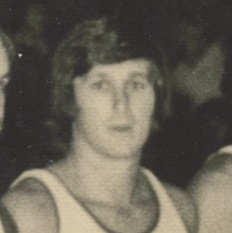
Phil Hamer
October 16, 2026


Cliff Martin made his NBL debut with the Launceston Casino City Tigers at 22 years of age. He scored 13 points in his first game.
The Launceston Casino City entered the NBL competition with a grant from the Tasmanian Government and the support of the developers of the state’s second casino, becoming the state’s first NBL team. Rex Johnstone would be named as the Tigers inaugural coach and the team would be built around 24-year-old Ian Davies, who had played for the Australian team at the 1980 Summer Olympics.
Davies (21.5 points) would lead the team in scoring, alongside a strong starting five that included Cliff Martin (19.6 points), Jim Ericksen (17.5 points) and Curtis Coleman (15.0 points).
The team travelled to Canberra for their first game, where a sell-out crowd filled the Showground Stadium. The Cannons, who were looking to repeat their surprise run to the Grand Final the previous year, proved to be a formiddable first match-up with the lead swapping numerous times during the game, before Cannons star Herb McEachin (26 points) hit two crucial free-throws giving Canberra the momentum they needed for the win (69-77). Jim Ericksen, who had just stepped off the plane the day prior to the game, scored 23 points.
The Tigers finished ninth (9-22) in the then twelve team NBL competition, with Davies named in the All NBL First Team.
1981
In 1981, coach Rex Johnstone would be replaced by Max Pike, who looked to increase the size and strength of the team by replacing import guard Curtis Coleman with 218cm American Richard Smith. The move making Launceston the tallest team in the competition at a time where there was no three-point line.
A starting five that consisted of national team guard Ian Davies (22.8 points), imports Martin (20.5 points), Jim Ericksen (17.0 points), Richard Smith (13.7 points) and local guard Trevor Mathew (7.9 points)
Launceston had delivered their best result during the regular season, sitting in fifth place with one game to play. Some late heroics from Ian Davies got the team up for a win in the dying seconds of the last game and the team snuck into fourth position (14-8) and secured a place in the semifinals.
In what was an unusual way to start the postseason St Kilda, who finished on top of the regular season ladder (17-5), chose to forgo their chance at a three-peat to compete in the 1981 Club World Cup, elevating fifth placed Brisbane into the playoffs as their replacement. This also saw Launceston became the top seed in finals series which consisted of single-game semi-finals and a single-game Grand Final.
Launceston went on to defeat Brisbane (71-69) in a nail-biter with Tigers captain Jim Ericksen (23 points) and Ian Davies (18 points) and Bullets star import Leroy Loggins (31 points) going bucket for bucket at the offensive end.
On the other side of the semifinal bracket the underdogs came away victorious, with Nunawading Spectres eliminating the West Adelaide Bearcats (74-71). Al Green top scored for Adelaide with 20 points and Rob Mayberry scored 27 for Nunawading.
The Grand Final was played the next day at the Apollo Entertainment Centre in Adelaide with both teams contesting their first ever Grand Final. Launceston went on to thrash Nunawading (75-54) with Cliff Martin (25 points) and Ian Davies (18 points) leading the team in scoring. The win saw the Tigers become the first Tasmanian side to ever win a championship in an Australian national sporting league. Mayberry (16 points) finishing as the Spectres top scorer.
SYDNEY SUPERSONICS
1982
In 1982, Martin averaged 17.0 points, 7 rebounds, and 3.6 assists, playing a key role in the Supersonics rotation, helping the team finish with a record of 7-19.
BANKSTOWN BRUINS
1983
As part of a major offseason overhaul, the Bankstown Bruins secured the services of import guard Cliff Martin (via Sydney) ahead of the 1983 NBL season. Joining fellow American recruits Eric Claus and Wayne Ricarte, Martin was tasked with helping rejuvenate a team coming off a 2–24 record the year prior. Under the guidance of player-coach Robbie Cadee, Martin quickly established himself as one of the NBL’s most reliable two-way perimeter players.
The 1983 season also saw significant change across the league. With the NBL expanding to 16 teams, a new two-conference system was introduced. Teams were divided into Eastern and Western Divisions, playing 22 games—each divisional rival twice, and each team from the opposite division once.
Martin wasted little time making an impact. With his ability to score in transition and guard multiple positions, he became a key contributor on both ends of the floor. He finished the season averaging 20.0 points, 4.5 rebounds, 1.8 assists, 1.7 steals, and 0.6 blocks across 22 games. His consistency and energy were central to the Bruins’ newfound competitiveness.
With strong support from Claus (18.9 points, 8.0 rebounds) and Ricarte (17.9 points, 7.3 rebounds), Martin helped lift Bankstown out of the NBL cellar. Cadee (6.4 points, 2.8 assists) ran the point, while role players like Ray Dawson (6.4 points, 2.9 rebounds), Mark Ryan (3.7 points, 2.0 rebounds), and Peter Sheehan (3.5 points, 2.6 rebounds) rounded out the rotation.
The Bruins surged to a 12–10 record—good enough for fifth place in the Eastern Division—before being eliminated in the playoffs by the St. Kilda Saints. It marked a dramatic turnaround from the previous year, with Martin playing a central role in Bankstown’s transformation.
1984
Following their dramatic rise in 1983—where head coach Robbie Cadee guided the Bankstown Bruins from a dismal 2–24 record to a competitive 12–10 finish—there was genuine optimism surrounding the club heading into the 1984 season. Now in its sixth year, the NBL expanded to 17 teams and introduced a two-division structure. The Bruins were placed in the Eastern Division and retained the majority of their core lineup with hopes of pushing further into playoff territory.
Cadee, who had served as a player-coach the previous year, officially hung up his playing boots to focus exclusively on coaching. The roster saw a few notable changes: veterans Wayne Ricarte and Peter Sheehan moved on, making way for returning young guard Scott Fenton, first-year player Andrew Svaldenis, and the arrival of Tony Barnett (via Geelong).
The start of the season was a rocky one. Bankstown dropped their opener at home to Newcastle (91–81), despite solid performances from Eric Claus (22 points, 8 rebounds), Cliff Martin (19 points), and Barnett (19 points). Newcastle’s big men, Jim Bateman (20 points, 10 rebounds) and Jerry Dennard (18 points, 6 rebounds), controlled the interior and secured the win.
Two more defeats followed—a 117–89 blowout against Brisbane and a narrow 80–78 loss on the road to Frankston—leaving the Bruins winless after three rounds. Their first victory came in emphatic fashion against Hobart (118–95), led by a monster game from Claus (27 points, 10 rebounds, 12-of-15 FG) and strong support from Martin (25 points, 7 rebounds).
That performance ignited a short winning streak. Bankstown followed up with a road win over Devonport (104–96), then outgunned crosstown rivals Sydney (114–102) in a high-scoring affair. Claus (25 points, 10 rebounds) and Barnett (19 points, 5 rebounds) again stood out, with Claude Williams (17 points) leading Sydney.
While that mid-season run briefly revived hopes, the Bruins were unable to maintain momentum. Despite home wins over Coburg (100–94), Melbourne (102–97), Frankston (99–84), and St Kilda (76–74), their form fluctuated heavily. They were hammered by Coburg (147–112), and also suffered big road losses to Brisbane (113–74), Canberra (97–76), and Geelong (103–96). Their 3–9 record away from home proved to be their undoing.
The season closed with three strong wins—crushing Sydney once more (130–85), upsetting West Adelaide (108–89), and finishing with a 104–95 victory over Perth. Claus (26 points) top scoring and Barnett (19) and Martin (18) rounding out a balanced scoring effort. Perth’s Mike Ellis (21) and Roland Brooks (18) were the main threats for the Wildcats.
Ultimately, Bankstown concluded the 1984 NBL season in seventh place within the Eastern Division, finishing with a 10–14 record and missing the postseason. Once again, Eric Claus (25.7 points, 10.2 rebounds, 2.2 assists, 1.5 blocks) and Cliff Martin (20.4 points, 5.5 rebounds, 2.6 assists, 1.3 steals) were the offensive cornerstones, with new addition Tony Barnett (17.0 points and 6.1 rebounds) becoming a key part of the team’s rotation.
The supporting cast included Scott Fenton (8.6 points, 2.6 rebounds, 2.6 assists), Ray Dawson (6.1 points, 5.0 rebounds, 1.7 assists, 1.5 blocks), and Mark Cumberbatch (6.5 points, 3.8 rebounds, 1.1 blocks). While the Bruins could still fill up the scoreboard, defensive lapses and lack of depth meant they couldn’t replicate the surprise success of the previous season.
Cliff Martin played five seasons across three NBL teams. This included the Launceston Casino City Tigers, Sydney Supersonics and Bankstown Bruins. He averaged 19.4 points, 3.5 rebounds, and 1.6 assists in 117 NBL games.
| SEASON | AGE | TEAM | TEAM RECORD | GP | MINS | PTS | REB | AST | OR | DR | STL | BLK | TO | PF | FGM | FGA | FG% | 3PM | 3PA | 3P% | FTM | FTA | FT% | TS% | EFG% | HS |
|---|---|---|---|---|---|---|---|---|---|---|---|---|---|---|---|---|---|---|---|---|---|---|---|---|---|---|
| 1984 | 27 | Bankstown | 10-14 (11) | 24 | 0 | 489 | 133 | 62 | 20 | 113 | 30 | 17 | 39 | 57 | 203 | 436 | 47% | 17 | 51 | 33% | 66 | 85 | 78% | 51% | 49% | 33 |
| 1983 | 26 | Bankstown | 12-10 (9) | 22 | 0 | 440 | 100 | 39 | 13 | 87 | 37 | 14 | 42 | 41 | 201 | 412 | 49% | 0 | 0 | 0% | 38 | 48 | 79% | 51% | 49% | 32 |
| 1982 | 25 | Sydney | 7-19 (12) | 26 | 0 | 443 | 182 | 94 | 32 | 150 | 0 | 0 | 41 | 66 | 191 | 465 | 41% | 0 | 0 | 0% | 61 | 83 | 73% | 44% | 41% | |
| 1981 | 24 | Launceston | 14-8 (2) | 24 | 0 | 492 | 0 | 0 | 0 | 0 | 0 | 0 | 0 | 55 | 225 | 450 | 50% | 0 | 0 | 0% | 42 | 59 | 71% | 51% | 50% | 29 |
| 1980 | 23 | Launceston | 9-13 (8) | 21 | 0 | 412 | 0 | 0 | 0 | 0 | 0 | 0 | 0 | 58 | 189 | 378 | 50% | 0 | 0 | 0% | 34 | 50 | 68% | 51% | 50% | 36 | Totals | 117 | 0 | 2276 | 415 | 195 | 65 | 350 | 67 | 31 | 122 | 277 | 1009 | 2141 | 47.1% | 17 | 51 | 33.3% | 241 | 325 | 74.2% | 50% | 48% | 36 |
| SEASON | AGE | TEAM | TEAM RECORD | GP | MINS | PTS | REB | AST | OR | DR | STL | BLK | TO | PF | FGM | FGA | FG% | 3PM | 3PA | 3P% | FTM | FTA | FT% | TS% | EFG% | HS |
|---|---|---|---|---|---|---|---|---|---|---|---|---|---|---|---|---|---|---|---|---|---|---|---|---|---|---|
| 1984 | 27 | Bankstown | 10-14 (11) | 24 | 0.0 | 20.4 | 5.5 | 2.6 | 0.8 | 4.7 | 1.3 | 0.7 | 1.6 | 2.4 | 8.5 | 18.2 | 47% | 0.7 | 2.1 | 33% | 2.8 | 3.5 | 78% | 51% | 49% | 33 |
| 1983 | 26 | Bankstown | 12-10 (9) | 22 | 0.0 | 20.0 | 4.5 | 1.8 | 0.6 | 4.0 | 1.7 | 0.6 | 1.9 | 1.9 | 9.1 | 18.7 | 49% | 0.0 | 0.0 | 0% | 1.7 | 2.2 | 79% | 50.6% | 49% | 32 |
| 1982 | 25 | Sydney | 7-19 (12) | 26 | 0.0 | 17.0 | 7.0 | 3.6 | 1.2 | 5.8 | 0.0 | 0.0 | 1.6 | 2.5 | 7.3 | 17.9 | 41% | 0.0 | 0.0 | 0% | 2.3 | 3.2 | 73% | 43.9% | 41% | |
| 1981 | 24 | Launceston | 14-8 (2) | 24 | 0.0 | 20.5 | 0.0 | 0.0 | 0.0 | 0.0 | 0.0 | 0.0 | 0.0 | 2.3 | 9.4 | 18.8 | 50% | 0.0 | 0.0 | 0% | 1.8 | 2.5 | 71% | 51.5% | 50% | 29 |
| 1980 | 23 | Launceston | 9-13 (8) | 21 | 0.0 | 19.6 | 0.0 | 0.0 | 0.0 | 0.0 | 0.0 | 0.0 | 0.0 | 2.8 | 9.0 | 18.0 | 50% | 0.0 | 0.0 | 0% | 1.6 | 2.4 | 68% | 51.3% | 50% | 36 | Total | 117 | 0.0 | 19.5 | 3.5 | 1.7 | 0.6 | 3.0 | 0.6 | 0.3 | 1.0 | 2.4 | 8.6 | 18.3 | 47.1% | 0.0 | 0.0 | 33.3% | 0.1 | 0.4 | 74.2% | 50% | 48% | 36 |
| POINTS | REBOUNDS | ASSISTS | STEALS | BLOCKS | TURNOVERS | TRIPLE DOUBLES | 36 | 13 | 9 | 4 | 3 | 5 | 0 |
|---|
Martin played college basketball at Pacific University, As a freshman he was part of the Boxers program in Forest Grove during the 1977-78 season in the Northwest Conference under head coach Sam Willard.
By January 1978 he was already in Pacific’s regular rotation against conference opposition, and Linfield beat the Boxers 88-82 in Forest Grove on January 27 before winning the return game 119-94 on February 4.
Martin returned for the 1978-79 season and developed into one of Pacific’s main scorers, averaging 16.4 points per game while playing from the guard line and giving the Boxers one of their leading offensive options.
He produced at least one 26-point game during the season, topping Boxer scoring in a 74-point outing in which Walt Reason added 19 points, and he also had a 16-point performance in another game that season alongside Murphy Mayberry and Heater in the scoring column.
Pacific’s 1978-79 team became one of the more productive passing teams in school history, finishing with a program-record 535 assists for the season, while teammate Scott Nehring set single-game school marks with 18 free throws made and 24 free throws attempted against Alaska-Fairbanks on December 12, 1978 and also attempted 27 field goals against Linfield that season.
The 1978-79 Boxers also played in several high-scoring games, including a meeting with Linfield that ended in a 141-108 defeat, which stood as the program’s most points allowed in a game for many years.
Martin was an Oakland native during his Pacific career and finished his college run as a proven NAIA-level scorer before moving into professional basketball soon after his time with the Boxers.
Whilst we try to source as much information as we can for every player who has ever played in the NBL some information on a player profile may be missing. If you have additional information on a player you'd like us to add to a profile, please send it to us using the enquiry form below.
Submissions are then sent to info@aussiehoopla.com

