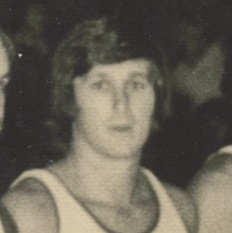
Phil Hamer
October 16, 2026


NICKNAME/S: The Rock
BIO: Born in Oroville, California, Smith graduated from Oroville High School, where he played basketball, in 1973. He was a All-Star, all four years that he played for the Tigers.
Rocky Smith made his NBL debut with the St. Kilda Saints on 3/2/1980. He scored 36 points in his first game.
After winning the inaugural NBL title in 1979 with an All-Australian line-up, St Kilda added import Rocky Smith to the Saints roster, to complement Tony Barnett, Danny Morseu and Larry Sengstock, who led the team to their first title.
St Kilda opened the season on 3 February with a 74–68 loss to Illawarra at Albert Park, but responded quickly with wins over Canberra (109–70), Newcastle (88–86) and City of Sydney (84-71) to return to their winning ways from last season.
On 2 March at Beaton Park, St Kilda’s offence erupted in a 101–83 win over Wollongong as Smith (46 points on 21-of-42 shooting, 4-of-4 free throws) produced his season-high scoring night, with Ken Burbridge (21 points) and Tony Barnett (16 points) in support.
With St Kilda (10-3) in a close battle with West Adelaide (9-4) for top position coach Brian Kerle made the call to add a second import, Mike Slusher who would play the team’s last nine games of the season. Adding Slusher (12.3 ppg) to the potent offence supplied from first-year import Rocky Smith (33 ppg),who would lead the league in scoring and finish second in free throw percentage (86.7%), veteran Danny Morseu (18.5 ppg) and Tony Barnett (14.9 points) ensured the Saints would finish the regular season right alongside West Adelaide, with the teams facing each other in the final game of the season to decide who would finish in top spot.
In the last game of the season, Rocky Smith (39 points) would erupt against West Adelaide, but the Bearcats were able to overcome the Saints behind the offensive talents of Ken Richardson (31 points) and Rick Hodges (21 points) to defeat St Kilda (90–88). This loss to the Saints resulted in both teams ending the regular season on 17 wins and 5 losses. Although the Bearcats’ win evened the head-to-head record (1–1), St Kilda had won their first encounter by ten points, so they retained first place on the ladder as they headed into the playoffs.
Prior to the playoffs, the end of season awards saw Rocky Smith win the league’s Most Valuable Player award but surprisingly, wasn’t named to the All-NBL First Team. Teammate Danny Morseu did earn selection as a guard however.
Into the semi-finals, St Kilda drew Nunawading and Rocky Smith (32 points), perhaps motivation by the awards snub, led the way offensively, out classing Spectres Gary Fox (21 points) to win (101–77).
In the other semi-final bracket, Rick Hodges (31 points) powered West Adelaide past Brisbane 101–94, setting up a re-match with West Adelaide to decide the championship.
The Grand Final resulted in a blowout, with the Saints fuelled by their end-of-season loss to the Bearcats, controlling the scoreboard 53–39 by half-time. Hodges (27 points) and Richardson (20 points) did everything they could for West Adelaide, but a well-balanced offensive attack saw Rocky Smith (26 points), Danny Morseu (19 points), Mike Slusher (18 points), Larry Sengstock (16 points) and Tony Barnett (14 points) all finish in double figures, making it impossible for the Bearcats to stop the Saints offensive attack.
St Kilda went on to become the league’s first back-to-back champions, winning the Grand Final 113–88. Rocky Smith earned the Finals MVP.
1981
After winning the NBL’s first two championships in 1979 and 1980, St Kilda entered 1981 chasing a third straight title but lost two key pieces of the roster in Tony Barnett (to Geelong) and Gary Voss (retired), while rumours circulated that Olympians Danny Morseu and Larry Sengstock could also leave. Coach Brian Kerle managed to retain the core group however, returning with Morseu, Sengstock, Rocky Smith, Mike Slusher and Steve Breheny still in place, while adding rookie Andy Blicavs to fill the gaps in the roster.
St Kilda started the season as clear favourites, topping a pre-season poll of coaches and administrators, and Kerle’s preferred starting group was built around Morseu, Sengstock, Breheny, Smith and Slusher, with Blicavs and Burbridge joining the mix as new options in support roles.
The Saints were upset however in the opening game of the season, losing to Launceston Casino City (88–90) despite Smith (26 points) and Morseu (26 points) producing solid efforts.
St Kilda then started generating wins at the rate expected of a reigning champion, Smith (28.8 points) led the team offensively for the second season in a row, the Saints’ offensive reference point throughout the campaign, with his best game cominglate in the season on 14 June at Albert Park when St Kilda beat Forrestville 115–98 behind Smith (44 points), Slusher (16 points) and Morseu (14 points).
St Kilda’s final game of the regular season was a win over Nunawading (85-83), where Smith (23 points), Blicavs (19 points) and Morseu (18 points) combined for 60 points.
Other key contributors included Danny Morseu (20 points), Larry Sengstock (14 points), Mike Slusher (11.9 points), and rookie Andy Blicavs (8.2 points), who guided St Kilda to another first place finishAt season’s end, Smith and Morseu were both named to the All-NBL First Team after St Kilda finished first on the ladder (17-5), three games clear of second-place Launceston Casino City.
In a surprise move, on the eve of the 1981 NBL Finals, St Kilda informed league officials they would instead compete in the 1981 FIBA Club World Cup in Brazil, choosing to forfeit their playoff spot, elevating Brisbane into the playoffs in their place.
At the Club World Cup, St Kilda finished sixth behind Real Madrid (Spain), Sirio (Brazil), Clemson (USA), Atletica Francana (Brazil) and Ferro Carril Oeste (Argentina), closing the year with an international campaign rather than an NBL title defence.
In the reshaped NBL Finals series, Launceston Casino City eliminated Brisbane 71–69 in the semi-finals and then defeated Nunawading 75–54 in the Grand Final as St Kilda’s season ended without a playoff appearance despite their 17–5 minor premiership.
Rocky Smith played two seasons the St. Kilda Saints. He averaged 31 points, 0 rebounds, and 0 assists in 46 NBL games.
| SEASON | AGE | TEAM | TEAM RECORD | GP | MINS | PTS | REB | AST | OR | DR | STL | BLK | TO | PF | FGM | FGA | FG% | 3PM | 3PA | 3P% | FTM | FTA | FT% | TS% | EFG% | HS |
|---|---|---|---|---|---|---|---|---|---|---|---|---|---|---|---|---|---|---|---|---|---|---|---|---|---|---|
| 1981 | 0 | St. Kilda | 17-5 (1) | 22 | 0 | 634 | 0 | 0 | 0 | 0 | 0 | 0 | 0 | 47 | 279 | 553 | 50% | 0 | 0 | 0% | 76 | 92 | 83% | 53% | 50% | 44 |
| 1980 | 0 | St. Kilda | 17-5 (1) | 24 | 0 | 792 | 0 | 0 | 0 | 0 | 0 | 0 | 0 | 56 | 344 | 688 | 50% | 0 | 0 | 0% | 104 | 120 | 87% | 53% | 50% | 46 | Totals | 46 | 0 | 1426 | 0 | 0 | 0 | 0 | 0 | 0 | 0 | 103 | 623 | 1241 | 50.2% | 0 | 0 | 0.0% | 180 | 212 | 84.9% | 53% | 50% | 46 |
| SEASON | AGE | TEAM | TEAM RECORD | GP | MINS | PTS | REB | AST | OR | DR | STL | BLK | TO | PF | FGM | FGA | FG% | 3PM | 3PA | 3P% | FTM | FTA | FT% | TS% | EFG% | HS |
|---|---|---|---|---|---|---|---|---|---|---|---|---|---|---|---|---|---|---|---|---|---|---|---|---|---|---|
| 1981 | 0 | St. Kilda | 17-5 (1) | 22 | 0.0 | 28.8 | 0.0 | 0.0 | 0.0 | 0.0 | 0.0 | 0.0 | 0.0 | 2.1 | 12.7 | 25.1 | 50% | 0.0 | 0.0 | 0% | 3.5 | 4.2 | 83% | 53.1% | 50% | 44 |
| 1980 | 0 | St. Kilda | 17-5 (1) | 24 | 0.0 | 33.0 | 0.0 | 0.0 | 0.0 | 0.0 | 0.0 | 0.0 | 0.0 | 2.3 | 14.3 | 28.7 | 50% | 0.0 | 0.0 | 0% | 4.3 | 5.0 | 87% | 53.2% | 50% | 46 | Total | 46 | 0.0 | 31.0 | 0.0 | 0.0 | 0.0 | 0.0 | 0.0 | 0.0 | 0.0 | 2.2 | 13.5 | 27.0 | 50.2% | 0.0 | 0.0 | 0.0% | 84.9% | 53% | 50% | 46 |
| POINTS | REBOUNDS | ASSISTS | STEALS | BLOCKS | TURNOVERS | TRIPLE DOUBLES | 46 | 0 | 0 | 0 | 0 | 0 | 0 |
|---|
Rocky Smith was drafted by the Houston Rockets with pick #84 in the 1977 NBA Draft.
Smith joined C.A. Monte Líbano for the 1981–1982 Brazilian season, playing in Brazil, and Monte Líbano won the 1982 São Paulo State Championship and the 1982 Brazilian Championship.
Rocky Smith joined S.C. Corinthians Paulista for the 1983 Brazilian season in Brazil, and he was part of the Corinthians teams that won the São Paulo State Championship in 1983 and 1985.
Rocky Smith remained with Corinthians through 1986 in Brazil, and in the five decisive games of the 1985 state-title run he scored exactly 100 points.
Rocky Smith joined Limeira for the 1987–1988 season in Brazil.
Rocky Smith joined Flamengo for the 1988–1990 period in Brazil, and Flamengo won the 1990 Campeonato Carioca during his time with the club.
Rocky Smith joined Franca for the 1990–1991 Brazilian season, and Franca won the Brazilian Championship in both 1990 and 1991.
Smith played college basketball at Butte College, As a freshman in 1973–74 he averaged 29.2 points per game across 29 games, led an unbeaten Roadrunners team, helped Butte win the California community college state title, and poured in 49 points against Central Oregon on December 7, 1973.
As a sophomore at Butte in 1974–75, he lifted his scoring to 30.0 points per game, scored 47 points against Cosumnes River in the Butte Classic championship game on November 30, 1974, and remained the featured scorer on a program that won another state championship during that era.
Smith started his college basketball career at Butte Community College, where he played from 1973 to 1975.
He then transferred to Oregon State for the 1975–76 season and joined Ralph Miller’s Beavers in the Pac-8, where the team finished 18–9 overall and 10–4 in conference play for second place.
In 1975–76, Smith played 27 games and averaged 17.0 points, 2.1 rebounds, and 2.1 assists per game while shooting 55.7 percent from the field and 82.4 percent at the foul line, which translated to 459 points, 57 rebounds, 54 assists, 199 field goals, and 61 free throws.
One of his biggest games that season came against UNLV on November 29, 1975, when he scored 36 points and hit 17 of 23 shots, a performance that remains one of the best single-game shooting displays in Oregon State history.
Smith returned in 1976–77 for his senior season and again played under Miller, with Oregon State finishing 16–13 overall and 8–6 in the Pac-8 for third place.
In 1976–77, he played all 29 games and averaged 19.8 points, 3.9 rebounds, and 2.7 assists per game while shooting 51.1 percent from the field and 83.9 percent at the free-throw line, giving him 575 points, 113 rebounds, 75 assists, 238 field goals, and 99 free throws for the season.
He then played college basketball at Oregon State University, with the Beavers, where he was named first-team All-Pac-8 Conference in 1977. Smith led the Beavers in scoring in his final two seasons.
Across his two Oregon State seasons, Smith scored 1,034 points in 56 games for an 18.5 career average, adding 170 rebounds and 129 assists while shooting 53.1 percent from the field and 83.3 percent from the line, and the three-point line was not part of NCAA men’s basketball during his Beaver career.
His senior-year 575 points remain one of the top single-season scoring totals in Oregon State history, and his two-year 18.5 scoring average stands among the best career marks ever produced by a Beaver guard.
- 1x time NBL Most Valuable Player (1980)
- 1x time NBL Finals MVP (1980)
- 1x All-NBL First Team
- 1x NBL Leading Scorer
Whilst we try to source as much information as we can for every player who has ever played in the NBL some information on a player profile may be missing. If you have additional information on a player you'd like us to add to a profile, please send it to us using the enquiry form below.
Submissions are then sent to info@aussiehoopla.com

