JaVale McGee
August 17, 2025



NICKNAME/S: Balls
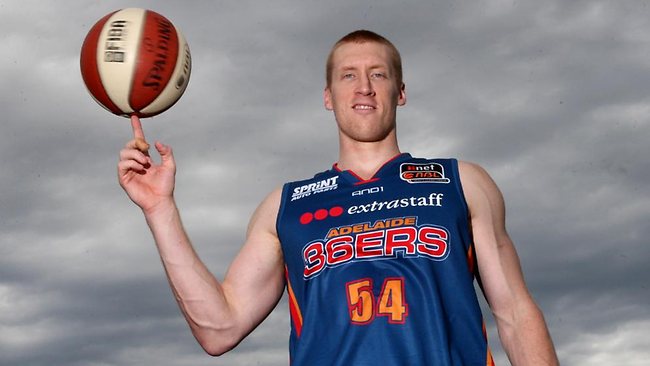
BIO: Adam Ballinger was born in Bluffton, Indiana, and starred at Bluffton High School, where he earned Honorable Mention All-American honors as a senior. After a standout prep career, he committed to Tom Izzo’s Michigan State Spartans.
FAMILY: Adam’s son Brad Ballinger also played 1 games in the NBL. Ballinger and his Australian wife, Bianca, have three children together; Kia, Leon and Fletcher.
Adam Ballinger made his NBL debut with the Victoria Giants at 24 years of age. He scored 24 points in his first game.
During his senior year at Michigan State, Ballinger played in a game against touring Australian NBL team the Canberra Cannons. Starting at power forward, during the game Ballinger’s direct opponent was often Michigan State’s greatest ever player, NBA legend with the Los Angeles Lakers and 2002 inductee into the NBA Hall of Fame (and a native of Lansing where the school is located), Earvin ‘Magic’ Johnson who joined the Cannons for their game at the Breslin Center. The Cannons also featured Ballinger’s former Spartan teammate Mike Chappell who was recruited by Canberra in 2002.
After going undrafted in the 2003 NBA draft. Ballinger signed with the Victoria Giants in August 2003. He made a impact straight away in his first NBL season averaging 15.7 points per game.
The Giants folded in 2004 and Ballinger was offered a contract from the Wollongong Hawks.
ILLAWARRA HAWKS
2004/05
The Hawks returned to the NBL Grand Final in 2004/05, where they lost to the crosstown rival and defending league champion Sydney Kings without winning a game. Ballinger averaged 17 points, 7.1 rebounds, and 1.1 assists per game and was a key factor in the Hawks’ push to the Grand Final.
2005/06
The 2005/06 season saw Ballinger average 17.3 points, 8.1 rebounds, and 0.9 assists and play a key role in helping the Hawks to a third place finish in the regular season with a 19-13 record.
2006/07
During the 2006/07 season Ballinger averaged 21 points, 9.1 rebounds, and 1.3 assists and helped the Hawks finish with a record of 11-22 and end the regular season in ninth place.
ADELAIDE 36ERS
2007/08
Adelaide restructured their roster ahead of the 2007/08 NBL campaign, electing not to re-sign Adrian Majstrovich, Brett Wheeler, and Marcus Timmons. Veteran scorer Willie Farley and big man Nick Horvath (to South Dragons) also departed. In response, the club secured the services of Brad Davidson (via Singapore) and bolstered their frontline by adding Adam Ballinger (via Wollongong) and Mike Chappell (via New Zealand).
Head coach Joey Wright had previously identified Adam Ballinger as a priority signing following a recommendation from NBL icon Cal Bruton, who had intended to bring Ballinger to the Hunter Pirates before the franchise folded. Wright remarked early in pre-season, “I think he’s somewhere between [Scott] Fisher and [Tim] Dillon – he’s got Fisher’s strength and Dillon’s touch. He’s got that three-point range,” setting the tone for what would become a career-best campaign for the American forward.
Ballinger (22.5 points, 8.1 rebounds, and 1.5 assists) led the 36ers in scoring and rebounding, earning All-NBL Second Team honours and finishing fourth in the league both scoring and MVP voting. He was also awarded the club’s MVP—his first of four consecutive seasons claiming the honour. His consistent production became the backbone of a team that struggled for continuity and results but showed flashes of competitiveness throughout the season.
Ballinger’s best performances included a 46-point outburst against Singapore on December 15, where he shot 20-of-34 from the field, including 4-of-6 from long range, and added 10 rebounds in a dominant 104–77 home win. He followed that with 36 points on 15-of-20 shooting (3-of-3 from three) and 12 rebounds in a 133–97 rout of Brisbane on February 2, also contributing 2 blocks and 2 assists. In the December 19 loss to Melbourne, Ballinger added 26 points and provided consistent inside presence despite Adelaide falling short (92–110).
Midway through the campaign, the 36ers were forced to release import Mike Chappell (11.1 points, 4.2 rebounds, and 1.6 assists) due to injury. On December 21, they signed Julius Hodge (via Italy), who arrived in Adelaide on December 23 after completing his Serie A season with Legea Scafati. Hodge made an immediate impression, debuting against the South Dragons on Boxing Day and helping the team secure a 119–114 win.
Hodge (24.6 points, 9.1 rebounds, and 5.9 assists) electrified the league with a series of high-impact performances. On January 29, he was named NBL Player of the Week for Round 19 after delivering 39 points, 10 rebounds, and 5 assists against Cairns. He followed this with a triple-double (24 points, 12 rebounds, and 13 assists) on February 2 against the Breakers, becoming the first 36er to achieve the feat since Robert Rose in 1994. Hodge proceeded to win Player of the Week honours in Rounds 20 and 21, becoming the first player in NBL history to earn the award three weeks in succession. He was ultimately selected to the All-NBL Third Team despite playing just 12 games.
Team captain Brett Maher (16.6 points, 4.3 rebounds, and 4.2 assists) remained a crucial leader for Adelaide despite missing 12 games due to injury. Other key contributors included Brad Davidson (13.3 points, 3.3 rebounds, and 4.5 assists), Darren Ng (13.3 points, 4.5 rebounds, and 1.8 assists), and veteran Lanard Copeland (9.7 points, and 2.5 rebounds).
Despite several strong individual performances and the late addition of Hodge, Adelaide struggled for consistency and dropped out of playoff contention. They ended the season with two victories, defeating Cairns (113–104) on February 9 and Singapore (126–97) on February 13. Hodge (29 points, 10 rebounds, 4 assists, and 4 steals) and Maher (16 points and 7 rebounds) led the team in the final game. However, their final record of 14–16 left them in ninth place, one game behind the eighth-seeded Gold Coast Blaze (15–15).
At season’s end, the 36ers moved to replace long-time head coach Phil Smyth, appointing assistant and former player Scott Ninnis as his successor. While the campaign fell short of postseason success, Ballinger’s individual dominance set the tone for his tenure in Adelaide and underscored his status as one of the premier big men in the league.
2008/09
Adelaide entered the 2008/09 season with significant changes to the roster. Veterans Lanard Copeland, Axel Dench, and Neil Mottram all retired, while Darren Ng departed to join the Singapore Slingers. To fill the gaps, former Adelaide junior Jacob Holmes returned after a stint with the South Dragons. The 36ers also added Brad Hill (via South Dragons), point guard Ryan Kersten, and Paora Winitana (both via New Zealand).
The team began the season with Adam Ballinger and Mark Tyndale as their import pairing. Tyndale (13 points, 6.6 rebounds, and 3.9 assists) was released mid-season following inconsistent performances, most notably a 3-point, 7-turnover game against the South Dragons. In his place, the club re-signed their leading scorer from last season Julius Hodge (26.3 points, 8 rebounds, and 6 assists), who returned to Adelaide after an attempt to return to the NBA. Though contract negotiations were tense, Hodge ultimately replaced Tyndale on November 15. He made an immediate impact, earning Player of the Week honours in Round 10 with averages of 26.5 points, 10.5 rebounds, and 6 assists across two games. His 27-point, 8-rebound, 8-assist effort against the South Dragons earned the praise of Boomers coach Brian Goorjian, who labelled him “possibly the best player in the league.”
Hodge claimed a second Player of the Week award in Round 15 after scoring 31 points (13–19 FG) and pulling down 8 rebounds in a crucial road win over Melbourne. However, his second stint with the club ended abruptly in early January. Despite the team winning four of six games, Hodge failed to appear for a scheduled home game against Wollongong, citing unresolved pay disputes. Though the club claimed his payments were up to date, the fallout was immediate and public. Teammates and club officials recounted confusion, miscommunication, and tension in the locker room. Hodge never returned to the team and was later replaced by import Rod Grizzard (10 points, 5.5 rebounds, and 2.4 assists) who played out the last 8 games of the season.
Captain Brett Maher (12.5 points, 3 rebounds, and 3.4 assists) led the team in his final NBL campaign. After an injury-plagued season the year prior, Maher confirmed he would retire at season’s end, concluding a storied career. Despite the off-court turmoil, Adelaide rallied behind a balanced core. Ballinger (20.4 points, 7.9 rebounds, and 1.3 assists) once again dominated the frontcourt, earning All-NBL Second Team honours alongside new addition Luke Schenscher (16.9 points, 10.8 rebounds, and 1.5 assists), who returned from the NBA. Their interior combination proved vital in Adelaide’s climb back into playoff contention.
Aaron Bruce (9.7 points, 2.5 rebounds, and 5.1 assists) emerged as a key contributor in the backcourt and was named NBL Rookie of the Year. Holmes (9.5 points and 6.7 rebounds), Hill (8.5 points and 3.7 rebounds), and Davidson (5.7 points and 2.5 assists) provided essential support, while Maher remained a stabilising influence through injuries and change. Ballinger delivered several standout games, including a 35-point performance against Cairns and a dominant 34-point, 12-rebound display in a win over Perth. Schenscher also posted multiple double-doubles, including a 25-point, 17-rebound outing against Wollongong.
The 36ers closed the regular season with a 15–15 record, securing sixth place and their first playoff berth since 2005/06. However, their return to the postseason was short-lived, as they were eliminated by the New Zealand Breakers (131–101) in a one-game Elimination Final in Auckland. The result also marked the final appearance for Brett Maher, who retired after 526 NBL games and three championships with Adelaide.
2009/10
The 2009/10 season started with Adelaide failing to re-sign Luke Schenscher (to Perth) and Aaron Bruce (to USA), but luckily, Adelaide was able to replace them with Matthew Burston, Nathan Herbert and Cortez Groves as a result of the South Dragons demise which left all three players without a team to play for. John Gilchrist was signed as a replacement for outgoing import Julius Hodge with the team heading into a new era following the retirement of long-serving club captain Brett Maher (525 games), who captained the club to 3 NBL championships (1998, 1999, 2002).
Adam Ballinger (17.6 points, 5.3 rebounds), in his third season with the club, became a Australian citizen (Jul 2009) and shortly after was appointed club captain of the Adelaide 36ers. He would lead the team in scoring alongside Gilchrist (16.9 points, 5.5 rebounds and 4.2 assists), who, after his explosive debut with 20 points, 10 rebounds, and 6 assists, suffered a serious knee injury against Melbourne that forced him to miss the last three games of the season. Burston, a welcome addition, also made his mark on the squad, leading the team in rebounding (9.9 points and, 6.5 rebounds).
Groves struggled to give the 36ers much at all after injury, which seemed to have impacted his abilities quite significantly, resulting in him scoring his fewest points in a season across his NBL career (9.8 points) and his time with Adelaide being his last in the NBL. As a coach, Scott Ninnis seemed out of his depth, and the year concluded with the 36ers finishing on the bottom of the NBL ladder for the first time in their history with a 10–18 record. Following the club’s worst ever season, Ninnis was sacked as coach and replaced by former AIS coach Marty Clarke for the 2010/11 NBL season.
Ballinger himself had a very good season, leading the 36ers in scoring, blocked shots, finished second in team rebounding and won his third consecutive club MVP award.
2010/11
Following the club’s worst ever season, Scott Ninnis was sacked as coach and replaced by Johnson’s former AIS coach Marty Clarke for the 2010/11 NBL season. Clarke, who had won a NBL Grand Final with North Melbourne in 1989 as a player, was a unusual choice as coach due to his lack of experience coaching at a NBL level.
Before the season began he recruited two of his former AIS graduates, Daniel Johnson (Melbourne) and Rhys Carter (Sweden) to bolster the bench as well as oversaw the re-signing of team captain Adam Ballinger, the team’s leading scorer from last season.
Clarke then replaced imports John Gilchrist and Cortez Groves with sharpshooter Troy De Vries and Craig Winder.
The 2010/11 season saw a litany of injuries befall the 36ers. The first casualty being Nathan Herbert who would miss the entire season after a anterior cruciate ligament injury. After defeating long-time rivals Perth in the opening game of the season 74-69, the 36ers recorded two wins in seven games. December then saw Rhys Carter suffer a major injury that would see him miss a third of the season. During Carter’s absence, Adelaide signed former 36ers guard Aaron Bruce, who had taken time off basketball to finish his studies in the US. When healthy, Carter returned to the lineup, but Adelaide also chose to keep Bruce on the roster for the remainder of the season. Import guards Troy DeVries and Craig Winder, who had battled with fitness issues, were released and replaced after the first nine games of the season. The underperforming Winder (10.1 ppg from 35% shooting) was replaced by Ron Howard and De Vries (10 ppg) with veteran Euroleague guard, Eddie Shannon.
Shannon, who was recommended to Adelaide by Chris Anstey, who played alongside him in Russia, had played in Europe for ten years as a pro despite only being able to see out of one eye.
The 36ers never quite nailed their imports and for the first time in their history, the Adelaide 36ers failed to win at least ten games in a season, finishing with a 9–19 record. Ballinger finished the season averaging 15.3 points, 6 rebounds, and 0.9 assists.
Adelaide was able to avoid their second straight last-place finish only because of the returning Sydney Kings, who, with a limited budget for players and finished one game behind (8–20).
Ballinger (15.3 points, 6.0 rebounds, 1.9 blocks) led the team in scoring, shooting a impressive 54.1% from the field and was the league’s leading shot blocker before injuring his ankle in Adelaide’s last home game of the season. Due to the relatively small size of the 2010/11 36ers squad, the 205 cm tall Ballinger was used as the team’s’ starting centre until sustaining a season ending ankle injury on March 18, 2011. He did, however, revert to his more natural position of power forward when 212cm teammate Daniel Johnson was on the court. Ballinger won his fourth straight club MVP award, finished third in the NBL’s MVP voting and was selected to the All-NBL Third Team.
2011/12
Adelaide and head coach Marty Clarke finished in last place for the second year in a row with a identical 8–20 record to last season. The 36ers suffered through another eight-game losing streak, equalling the losing streak from last season. After a streak of import woes due to injury or poor performance, the team decided to focus on building a Australian talent. Adelaide signed a trio of former Gold Coast Blaze players after they folded, inking Adam Gibson (who had been close to signing with Melbourne), Anthony Petrie and Jason Cadee to multi-year deals and added up and coming young forward Stephen Weigh from Perth. In order to give their young Aussie core the opportunity to develop further, the decision was made to go with only one import, local state player CJ Massingale.
Daniel Johnson (16.2 points and 8.1 rebounds) solidified his place as Adelaide’s franchise player, leading 36ers in scoring and the league in rebounds. Over the first 12 games the emergence of exciting crowd favourite Mitchell Creek (5.8 points, 2.6 rebounds, and 0.5 assists) gave fans hope for the future before he suffered a season ending Achilles tendon injury against Townsville (Dec 15).
Coach Marty Clarke was not re-signed for the coming season, the 36ers securing NBL championship winning coach Joey Wright as his replacement.
MELBOURNE TIGERS
2012/13
At the end of 2012 Ballinger became a free agent and signed with the Melbourne Tigers who after failing to reach the playoffs, replaced head coach Trevor Gleeson with former Tigers star Chris Anstey, who had only retired from playing a mere 18 months earlier. Anstey brought with him another Tigers Legend, Darryl McDonald, who was announced as his assistant.
Anstey’s first signing came in the form of Seth Scott, a 6’10 forward and shortly after signed Nate Tomlinson (Via University of Colorado) and Ballinger to replace the outgoing Cam Tragardh and Daniel Dillon who asked to part ways with the Tigers at seasons end.
In the weeks prior to the NBL season, Melbourne was able to sign up-and-coming talent Chris Goulding who unexpectedly became available after demise of the Gold Coast Blaze. Goulding was a highly sought after free agent in 2012, pursued by multiple team’s before deciding to sign with the Tigers. Goulding’s signature resulted in the Tigers having little need for shooting guard Ron Dorsey, who was then released despite having another year on his contract.
Anstey and the Tigers then finalised their playing roster by signing Kevin Braswell, who led New Zealand to their first championship on the basis he would be obtaining New Zealand citizenship.
The Tigers retained the previous year’s group of Bennie Lewis, Matt Burston, Liam Rush, Lucas Walker and team captain Tommy Greer and looked to rebound from three straight years of missing the playoffs.
As soon as the season began, it became clear Braswell (10.0 points, 2.6 rebounds, 5.2 assists and 2.4 steals) was battling persistent knee problems, which saw him released after five games. Having struggled through the start of the season (1-4) Melbourne signed former sixth overall pick in the NBA draft, Jonny Flynn, who had been waived by the Pistons the month prior. Upon his signing, head coach Anstey called Flynn ‘possibly the highest credentialed player in the prime of his career to ever play in the NBL.’
Flynn instantly turned things around for the struggling Tigers, leading the team to a 96-66 route of the Adelaide 36ers and a 23-point turnaround from the loss they suffered to the Sixers in the season opener.
Flynn (17.4 points, 3.9 rebounds and 5.9 assists) formed a potent scoring duo with Goulding (15.4 points, 3.1 rebounds and 2.1 assists), and Melbourne clawed themselves back from the bottom of the ladder to finish equal with Sydney (12 wins, 16 losses) but missed out on the top four due to the Kings having a two-point lead against the Tigers in head to head matchups.
Seth Scott (11.6 points, 6.2 rebounds and 0.9 assists) impressed enough to be named to the All-NBL First Team, and Flynn was a part of the All-NBL Second Team.
Ballinger averaged 10.1 points, 4.4 rebounds, and 0.4 assists for the season.
2013/14
Over in the west, former Melbourne coach Trevor Gleeson had replaced Rob Beveridge, who at that time had a verbal agreement with Mark Worthington to play for the Wildcats. With Beveridge gone and Anstey knowing Worthington wasn’t keen to play for Gleeson he quickly signed him to return to play with the Tigers.
Anstey then added Canadian Scott Morrison and Stephen Dennis as imports to the core group of Lucas Walker, Nate Tomlinson and team captain Tommy Greer.
Days before the Tigers season opener Dennis injured his Achilles tendon in pre-season training, resulting in Melbourne signing former import Ayinde Ubaka, who played with Anstey during the 2011/12 season, as a last minute replacement.
The Tigers season also began with club MVP Chris Goulding and captain Tommy Greer both on the injured list and after a sluggish start (3-4) the Tigers released the underperforming Ubaka (5.3 points, 1.4 rebounds and 1.7 assists) mid-season for the second time in three years. He was replaced by former LA Clippers guard Mustapha Farrakhan (10.4 points, 2.0 rebounds, 2.2 assists) while the Tigers floundered through the first half of the season (6-6).
Once healthy, Goulding offensive talents were on full display, none moreso than on 9 March 2014, when he scored a career-high 50 points in the Tigers’ 92–82 win over the Sydney Kings. It was the NBL’s first individual 50-point game in the 40-minute era. He was subsequently crowned the NBL scoring champion for the 2013/14 season. With Goulding (22.8 points, 3.2 rebunds, 2.8 assists) and Worthington (14.0 points, 6.6 rebounds, 2.0 assists) leading the team offensively, Melbourne finished the season strongly, finishing in third place and reaching the semi finals for the first time in five seasons. Ballinger also added 6.7 points, 2.4 rebounds, and 0.3 assists over the course of the season.
Facing Adelaide in the semifinals, Melbourne would lose the opening game of the series (101-85) thanks to an explosive performance from Gary Ervin (27 points and 7 assists).
Game two would then shift to Melbourne where Tigers guard Chris Goulding exploded for 37 points, allowing the Tigers to even the series behind a 98-87 victory.
In game three, Adelaide finished the job, demolishing Melbourne with a 102-63 victory which included holding them to a 27-point half-time score and winning every quarter by 7 points or more.
ILLAWARRA HAWKS
2014/15
Ballinger re-signed with the Tigers in 2013 on a two-year deal. During the 2014 preseason however, he was released by the club on the eve of the NBL season in unfavorable circumstances and was left to negotiate with team’s at a time almost every team had filled their rosters.
During returning to the club for a second stint.
On February 13, 2015, he announced his decision to retire at the end of the 2014/15 NBL season. In his final NBL game he started in place of Larry Davidson to record 9 points and 5 rebounds in 33 minutes of action, as the Hawks lost to Ballinger’s former club, the Adelaide 36ers.
Adam Ballinger played twelve seasons across four NBL teams. This included the Victoria Giants, Melbourne Tigers, Adelaide 36ers and Wollongong Hawks. He averaged 15.2 points, 6.2 rebounds, and 0.9 assists in 340 NBL games.
CAREER RANKINGS:
– 46th in total points
– 49th in total rebounds
– 18th in total blocks
HIGHLIGHTS:
| SEASON | AGE | TEAM | TEAM RECORD | GP | MINS | PTS | REB | AST | OR | DR | STL | BLK | TO | PF | FGM | FGA | FG% | 3PM | 3PA | 3P% | FTM | FTA | FT% | TS% | EFG% | HS |
|---|---|---|---|---|---|---|---|---|---|---|---|---|---|---|---|---|---|---|---|---|---|---|---|---|---|---|
| 2014-15 | 35 | Wollongong | 6-22 (8) | 28 | 400.0 | 118 | 67 | 9 | 22 | 45 | 5 | 15 | 14 | 48 | 48 | 123 | 39% | 10 | 50 | 20% | 12 | 14 | 86% | 46% | 43% | |
| 2013-14 | 34 | Melbourne | 15-13 (3) | 31 | 468.0 | 208 | 74 | 8 | 27 | 47 | 0 | 7 | 13 | 60 | 84 | 165 | 51% | 25 | 56 | 45% | 15 | 20 | 75% | 60% | 58% | |
| 2012-13 | 33 | Melbourne | 12-16 (5) | 25 | 570.0 | 253 | 111 | 11 | 30 | 81 | 10 | 6 | 19 | 46 | 109 | 221 | 49% | 19 | 56 | 34% | 16 | 25 | 64% | 54% | 54% | 23 |
| 2011-12 | 32 | Adelaide | 8-20 (9) | 8 | 145.0 | 44 | 33 | 7 | 12 | 21 | 3 | 5 | 5 | 19 | 19 | 57 | 33% | 3 | 20 | 15% | 3 | 4 | 75% | 37% | 36% | 9 |
| 2010-11 | 31 | Adelaide | 9-19 (8) | 26 | 719.0 | 398 | 157 | 23 | 48 | 109 | 9 | 50 | 43 | 70 | 174 | 321 | 54% | 16 | 53 | 30% | 34 | 46 | 74% | 58% | 57% | 27 |
| 2009-10 | 30 | Adelaide | 10-18 (8) | 28 | 918.0 | 494 | 149 | 32 | 46 | 103 | 11 | 35 | 48 | 61 | 200 | 385 | 52% | 35 | 100 | 35% | 59 | 68 | 87% | 59% | 56% | 36 |
| 2008-09 | 29 | Adelaide | 15-15 (5) | 29 | 1,078.0 | 593 | 229 | 38 | 80 | 149 | 14 | 30 | 53 | 73 | 233 | 459 | 51% | 49 | 101 | 49% | 78 | 97 | 80% | 59% | 56% | 31 |
| 2007-08 | 28 | Adelaide | 14-16 (9) | 30 | 1,134.0 | 676 | 243 | 45 | 71 | 172 | 10 | 28 | 47 | 72 | 279 | 516 | 54% | 36 | 81 | 44% | 82 | 107 | 77% | 60% | 58% | 46 |
| 2006-07 | 27 | Wollongong | 11-22 (9) | 33 | 1,291.0 | 693 | 301 | 43 | 98 | 203 | 15 | 41 | 46 | 74 | 287 | 499 | 58% | 46 | 96 | 48% | 73 | 85 | 86% | 64% | 62% | 38 |
| 2005-06 | 26 | Wollongong | 19-13 (3) | 32 | 1,120.0 | 553 | 260 | 30 | 89 | 171 | 12 | 46 | 42 | 76 | 213 | 413 | 52% | 34 | 93 | 37% | 93 | 117 | 79% | 59% | 56% | 39 |
| 2004-05 | 25 | Wollongong | 20-12 (2) | 37 | 1,298.0 | 630 | 261 | 40 | 123 | 138 | 18 | 45 | 73 | 105 | 265 | 531 | 50% | 43 | 129 | 33% | 57 | 75 | 76% | 56% | 54% | 39 |
| 2003-04 | 24 | Victoria | 11-22 (11) | 33 | 1,118.0 | 518 | 242 | 36 | 88 | 154 | 10 | 32 | 62 | 94 | 207 | 450 | 46% | 48 | 137 | 35% | 56 | 73 | 77% | 53% | 51% | 40 | Totals | 340 | 10259 | 5178 | 2127 | 322 | 734 | 1393 | 117 | 340 | 465 | 798 | 2118 | 4140 | 51.2% | 364 | 972 | 37.4% | 578 | 731 | 79.1% | 58% | 56% | 46 |
| SEASON | AGE | TEAM | TEAM RECORD | GP | MINS | PTS | REB | AST | OR | DR | STL | BLK | TO | PF | FGM | FGA | FG% | 3PM | 3PA | 3P% | FTM | FTA | FT% | TS% | EFG% | HS |
|---|---|---|---|---|---|---|---|---|---|---|---|---|---|---|---|---|---|---|---|---|---|---|---|---|---|---|
| 2014-15 | 35 | Wollongong | 6-22 (8) | 28 | 14.3 | 4.2 | 2.4 | 0.3 | 0.8 | 1.6 | 0.2 | 0.5 | 0.5 | 1.7 | 1.7 | 4.4 | 39% | 0.4 | 1.8 | 20% | 0.4 | 0.5 | 86% | 46% | 43% | |
| 2013-14 | 34 | Melbourne | 15-13 (3) | 31 | 15.1 | 6.7 | 2.4 | 0.3 | 0.9 | 1.5 | 0.0 | 0.2 | 0.4 | 1.9 | 2.7 | 5.3 | 51% | 0.8 | 1.8 | 45% | 0.5 | 0.6 | 75% | 60% | 58% | |
| 2012-13 | 33 | Melbourne | 12-16 (5) | 25 | 22.8 | 10.1 | 4.4 | 0.4 | 1.2 | 3.2 | 0.4 | 0.2 | 0.8 | 1.8 | 4.4 | 8.8 | 49% | 0.8 | 2.2 | 34% | 0.6 | 1.0 | 64% | 54% | 54% | 23 |
| 2011-12 | 32 | Adelaide | 8-20 (9) | 8 | 18.1 | 5.5 | 4.1 | 0.9 | 1.5 | 2.6 | 0.4 | 0.6 | 0.6 | 2.4 | 2.4 | 7.1 | 33% | 0.4 | 2.5 | 15% | 0.4 | 0.5 | 75% | 37% | 36% | 9 |
| 2010-11 | 31 | Adelaide | 9-19 (8) | 26 | 27.7 | 15.3 | 6.0 | 0.9 | 1.8 | 4.2 | 0.3 | 1.9 | 1.7 | 2.7 | 6.7 | 12.3 | 54% | 0.6 | 2.0 | 30% | 1.3 | 1.8 | 74% | 58% | 57% | 27 |
| 2009-10 | 30 | Adelaide | 10-18 (8) | 28 | 32.8 | 17.6 | 5.3 | 1.1 | 1.6 | 3.7 | 0.4 | 1.3 | 1.7 | 2.2 | 7.1 | 13.8 | 52% | 1.3 | 3.6 | 35% | 2.1 | 2.4 | 87% | 59% | 56% | 36 |
| 2008-09 | 29 | Adelaide | 15-15 (5) | 29 | 37.2 | 20.4 | 7.9 | 1.3 | 2.8 | 5.1 | 0.5 | 1.0 | 1.8 | 2.5 | 8.0 | 15.8 | 51% | 1.7 | 3.5 | 49% | 2.7 | 3.3 | 80% | 59% | 56% | 31 |
| 2007-08 | 28 | Adelaide | 14-16 (9) | 30 | 37.8 | 22.5 | 8.1 | 1.5 | 2.4 | 5.7 | 0.3 | 0.9 | 1.6 | 2.4 | 9.3 | 17.2 | 54% | 1.2 | 2.7 | 44% | 2.7 | 3.6 | 77% | 60% | 58% | 46 |
| 2006-07 | 27 | Wollongong | 11-22 (9) | 33 | 39.1 | 21.0 | 9.1 | 1.3 | 3.0 | 6.2 | 0.5 | 1.2 | 1.4 | 2.2 | 8.7 | 15.1 | 58% | 1.4 | 2.9 | 48% | 2.2 | 2.6 | 86% | 64% | 62% | 38 |
| 2005-06 | 26 | Wollongong | 19-13 (3) | 32 | 35.0 | 17.3 | 8.1 | 0.9 | 2.8 | 5.3 | 0.4 | 1.4 | 1.3 | 2.4 | 6.7 | 12.9 | 52% | 1.1 | 2.9 | 37% | 2.9 | 3.7 | 79% | 59% | 56% | 39 |
| 2004-05 | 25 | Wollongong | 20-12 (2) | 37 | 35.1 | 17.0 | 7.1 | 1.1 | 3.3 | 3.7 | 0.5 | 1.2 | 2.0 | 2.8 | 7.2 | 14.4 | 50% | 1.2 | 3.5 | 33% | 1.5 | 2.0 | 76% | 56% | 54% | 39 |
| 2003-04 | 24 | Victoria | 11-22 (11) | 33 | 33.9 | 15.7 | 7.3 | 1.1 | 2.7 | 4.7 | 0.3 | 1.0 | 1.9 | 2.8 | 6.3 | 13.6 | 46% | 1.5 | 4.2 | 35% | 1.7 | 2.2 | 77% | 53% | 51% | 40 | Total | 340 | 30.2 | 15.2 | 6.3 | 0.9 | 2.2 | 4.1 | 0.3 | 1.0 | 1.4 | 2.3 | 6.2 | 12.2 | 51.2% | 0.0 | 0.0 | 37.4% | 1.1 | 2.9 | 79.1% | 58% | 56% | 46 |
| POINTS | REBOUNDS | ASSISTS | STEALS | BLOCKS | TURNOVERS | TRIPLE DOUBLES | 46 | 17 | 6 | 5 | 6 | 6 | 0 |
|---|
On 19 June 2015, Ballinger signed with the Nunawading Spectres for the rest of the 2015 SEABL season as an injury replacement for Simon Conn.
Adam Ballinger committed to Tom Izzo’s Spartans, then redshirted the 1998–99 season after fracturing his fibula, then returned to play 37 games for the 1999–2000 NCAA champions, even knocking down his lone field-goal attempt in the title game win over Florida. The following season (2000–01) he appeared in 25 games as MSU marched back to the Final Four.
Ballinger’s breakout came as a junior (2001–02): 11.2 points, 6.8 rebounds (3rd in the Big Ten), .545 FG, plus third-team All-Big Ten (media) and MSU’s Most Improved Player. As a senior (2002–03) he averaged 5.5 points in 16.7 minutes, but delivered a signature clutch three to seal a late-season win over Indiana and rebuild his confidence. He also featured in a memorable exhibition vs the touring Canberra Cannons, sharing the floor with Lansing legend Magic Johnson.
Across 128 career games (39 starts), Ballinger averaged 4.9 points and 3.1 rebounds, shot .503 from the field and .370 from three, and finished 10th on MSU’s career blocks list (53). During his Spartan years he played alongside future NBA talent—including Mateen Cleaves, Morris Peterson, Charlie Bell, Jason Richardson, Zach Randolph and Alan Anderson—as well as future NBL players Mike Chappell and Dave Thomas.
- 3x All-NBL Second Team
- 2x All-NBL Third Team
- 1x NBL Blocks Leader
- NZNBL champion (2009)
-
NZNBL All-Star Five (2009)
-
NCAA champion (2000)
Whilst we try to source as much information as we can for every player who has ever played in the NBL some information on a player profile may be missing. If you have additional information on a player you'd like us to add to a profile, please send it to us using the enquiry form below.
Submissions are then sent to info@aussiehoopla.com