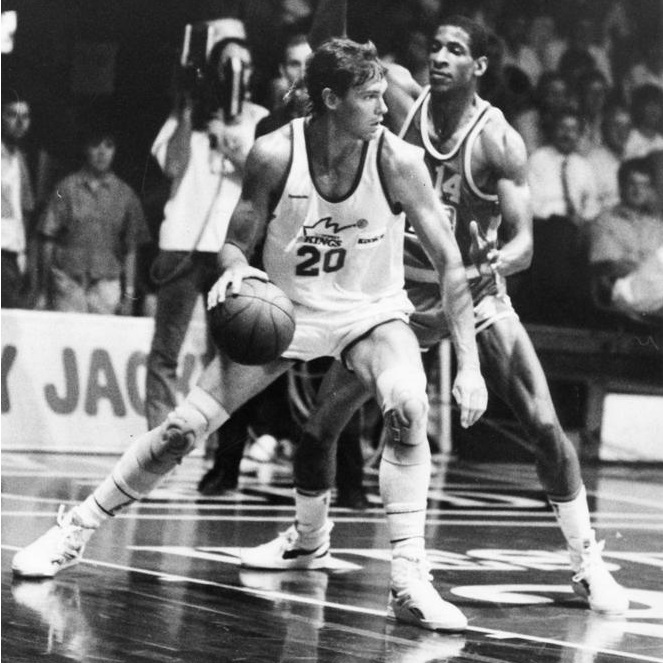
Marc Ridlen
March 19, 2021


NICKNAME/S: The Snake
BIO: Herb McEachin was born in Bronx, New York (USA).
Herb McEachin made his NBL debut with the Canberra Cannons at 24 years of age. He scored 18 points in his first game.
During the league’s first season, the Cannons would be led in scoring by Cal Stamp (23.8 ppg), who was one of three imports on the Cannons roster, the other two being McEachin (23.8 ppg) and Jerry Lee (8.9 ppg). Canberra finished the season with a equal record to Nunawading (13 wins and 5 losses) but would finish +2 points in their head-to-head matchups (1-1), propelling them into the Grand Final.
To crown the first champions of the national league, the first and second team’s would play off in a single game Grand Final clash. This saw St Kilda (1st) defeating Canberra (2nd), 94–93, to become the league’s first champions. Cal Stamp led Canberra in scoring with 32 points while his St Kilda counterpart Larry Sengstock finished the game with a career-high 33 points.
1982
McEachin was named the Cannons Most Valuable Player in 1982. He later re-signed with Canberra on a one year deal prior to the 1983 NBL season.
1983
The 1983 season ushered in a new era for the Canberra Cannons, with Bob Turner (via Newcastle) signing a three-year deal to become the team’s head coach. Turner overhauled the roster, building around three American imports—Wade Kirchmeyer, Dave Nelson, and Herb McEachin—while also securing Australian Boomers point guard Phil Smyth, who relocated to Canberra after a season of commuting from Adelaide to play for St Kilda. Together, they formed the core of a revamped Cannons outfit that would deliver the club its first NBL championship.
Among the imports, Herb McEachin stood out as a dynamic two-way contributor. He averaged 15.9 points, 4.2 rebounds, 2.5 assists, 1.6 steals, and 1.1 blocks across 27 games, establishing himself as a consistent scoring option on the wing and a tenacious defender. McEachin’s ability to guard multiple positions and contribute on both ends gave Canberra a vital edge, especially against high-powered offensive teams.
The Cannons posted a 16–6 regular season record, finishing fourth overall and second in the NBL’s Western Division behind only Geelong (18–4). With Kirchmeyer (20.9 points, 9.4 rebounds) leading the team in scoring and Nelson (19.4 points, 5.2 rebounds) adding punch in the frontcourt, McEachin’s balance of scoring and defence helped round out a formidable lineup. Smyth (14.6 points, 5.1 assists, and a league-leading 2.6 steals) also earned All-NBL First Team honours, bringing leadership and toughness to the backcourt.
In the 1983 NBL Finals, Canberra navigated the unusual divisional round-robin format with poise. The Cannons swept their group with wins over Nunawading (89–81), Geelong (86–81), and St Kilda (104–85), progressing to the semifinals unbeaten.
Facing the Coburg Giants in a high-stakes semi at Kilsyth Stadium, McEachin delivered when it mattered most—scoring 18 points on 8-of-16 shooting and converting both of his free throw attempts. He was instrumental on both ends of the floor, complementing strong efforts from Nelson (18 points), Kirchmeyer (17), and Smyth (20). Canberra’s efficiency at the line (20-of-22) proved decisive in a narrow 80–75 win.
In the Grand Final against reigning champions West Adelaide, McEachin once again stepped up. He led all Cannons scorers with 18 points on 50% shooting and was a critical factor in the team’s gritty 75–73 championship victory. His ability to match the Bearcats’ physicality and contribute under pressure helped neutralise offensive weapons like Leroy Loggins (23 points) and Al Green (18).
McEachin’s 1983 season was a testament to consistency and versatility. A reliable scorer and elite defender, he played a crucial role in Canberra’s rise from contenders to champions. His finals performances, particularly back-to-back 18-point outings in both the semi and Grand Final, underscored his value as a playoff performer and earned him a lasting place in Cannons history.
Herb McEachin played fourteen seasons the Canberra Cannons. He averaged 17.2 points, 4.4 rebounds, and 2 assists in 341 NBL games.
CAREER RANKINGS:
– 33rd in total points
– 31st in total steals
| SEASON | AGE | TEAM | TEAM RECORD | GP | MINS | PTS | REB | AST | OR | DR | STL | BLK | TO | PF | FGM | FGA | FG% | 3PM | 3PA | 3P% | FTM | FTA | FT% | TS% | EFG% | HS |
|---|---|---|---|---|---|---|---|---|---|---|---|---|---|---|---|---|---|---|---|---|---|---|---|---|---|---|
| 1992 | 37 | Canberra | 11-13 (8) | 22 | 238 | 45 | 29 | 30 | 9 | 20 | 13 | 4 | 18 | 27 | 21 | 54 | 39% | 0 | 5 | 0% | 3 | 4 | 75% | 40% | 39% | 8 |
| 1991 | 36 | Canberra | 9-17 (9) | 13 | 357 | 170 | 40 | 36 | 19 | 21 | 15 | 11 | 29 | 28 | 73 | 144 | 51% | 1 | 3 | 33% | 23 | 36 | 64% | 53% | 51% | 23 |
| 1990 | 35 | Canberra | 16-10 (7) | 26 | 876 | 488 | 117 | 57 | 41 | 76 | 39 | 24 | 68 | 72 | 206 | 361 | 57% | 1 | 12 | 8% | 75 | 101 | 74% | 60% | 57% | 29 |
| 1989 | 34 | Canberra | 17-7 (2) | 29 | 819 | 391 | 123 | 65 | 54 | 69 | 50 | 25 | 50 | 75 | 175 | 351 | 50% | 1 | 6 | 17% | 40 | 60 | 67% | 52% | 50% | 25 |
| 1988 | 33 | Canberra | 16-8 (4) | 30 | 1,098 | 524 | 163 | 102 | 77 | 86 | 60 | 19 | 74 | 86 | 237 | 436 | 54% | 1 | 1 | 100% | 49 | 76 | 64% | 55% | 54% | 30 |
| 1987 | 32 | Canberra | 17-9 (5) | 27 | 977 | 547 | 160 | 92 | 74 | 86 | 68 | 19 | 73 | 67 | 243 | 430 | 57% | 4 | 10 | 40% | 57 | 98 | 58% | 57% | 57% | 30 |
| 1986 | 31 | Canberra | 19-7 (2) | 27 | 0 | 419 | 132 | 65 | 61 | 71 | 50 | 14 | 74 | 65 | 196 | 378 | 52% | 5 | 15 | 33% | 22 | 39 | 56% | 53% | 53% | 26 |
| 1985 | 30 | Canberra | 19-7 (4) | 27 | 0 | 445 | 161 | 71 | 72 | 89 | 59 | 21 | 83 | 79 | 196 | 373 | 53% | 1 | 5 | 20% | 52 | 82 | 63% | 54% | 53% | 29 |
| 1984 | 29 | Canberra | 16-7 (5) | 26 | 0 | 570 | 190 | 67 | 96 | 94 | 60 | 23 | 77 | 67 | 252 | 453 | 56% | 0 | 10 | 0% | 66 | 91 | 73% | 57% | 56% | 36 |
| 1983 | 28 | Canberra | 16-6 (4) | 27 | 0 | 429 | 113 | 68 | 49 | 64 | 44 | 29 | 46 | 69 | 189 | 321 | 59% | 0 | 0 | 0% | 51 | 71 | 72% | 60% | 59% | 24 |
| 1982 | 27 | Canberra | 8-18 (11) | 26 | 0 | 506 | 281 | 42 | 117 | 164 | 0 | 0 | 50 | 82 | 219 | 421 | 52% | 0 | 0 | 0% | 68 | 94 | 72% | 54% | 52% | 31 |
| 1981 | 26 | Canberra | 12-10 (7) | 20 | 0 | 438 | 0 | 0 | 0 | 0 | 0 | 0 | 0 | 54 | 193 | 386 | 50% | 0 | 0 | 0% | 52 | 70 | 74% | 52% | 50% | 34 |
| 1980 | 25 | Canberra | 11-11 (7) | 22 | 0 | 567 | 0 | 0 | 0 | 0 | 0 | 0 | 0 | 64 | 242 | 484 | 50% | 0 | 0 | 0% | 83 | 125 | 66% | 52% | 50% | 38 |
| 1979 | 24 | Canberra | 13-5 (2) | 19 | 0 | 360 | 0 | 0 | 0 | 0 | 0 | 0 | 0 | 57 | 151 | 302 | 50% | 0 | 0 | 0% | 58 | 94 | 62% | 52% | 50% | 27 | Totals | 341 | 4365 | 5899 | 1509 | 695 | 669 | 840 | 458 | 189 | 642 | 892 | 2593 | 4894 | 53.0% | 14 | 67 | 20.9% | 699 | 1041 | 67.1% | 55% | 53% | 38 |
| SEASON | AGE | TEAM | TEAM RECORD | GP | MINS | PTS | REB | AST | OR | DR | STL | BLK | TO | PF | FGM | FGA | FG% | 3PM | 3PA | 3P% | FTM | FTA | FT% | TS% | EFG% | HS |
|---|---|---|---|---|---|---|---|---|---|---|---|---|---|---|---|---|---|---|---|---|---|---|---|---|---|---|
| 1992 | 37 | Canberra | 11-13 (8) | 22 | 10.8 | 2.0 | 1.3 | 1.4 | 0.4 | 0.9 | 0.6 | 0.2 | 0.8 | 1.2 | 1.0 | 2.5 | 39% | 0.0 | 0.2 | 0% | 0.1 | 0.2 | 75% | 40% | 39% | 8 |
| 1991 | 36 | Canberra | 9-17 (9) | 13 | 27.5 | 13.1 | 3.1 | 2.8 | 1.5 | 1.6 | 1.2 | 0.8 | 2.2 | 2.2 | 5.6 | 11.1 | 51% | 0.1 | 0.2 | 33% | 1.8 | 2.8 | 64% | 53% | 51% | 23 |
| 1990 | 35 | Canberra | 16-10 (7) | 26 | 33.7 | 18.8 | 4.5 | 2.2 | 1.6 | 2.9 | 1.5 | 0.9 | 2.6 | 2.8 | 7.9 | 13.9 | 57% | 0.0 | 0.5 | 8% | 2.9 | 3.9 | 74% | 60% | 57% | 29 |
| 1989 | 34 | Canberra | 17-7 (2) | 29 | 28.2 | 13.5 | 4.2 | 2.2 | 1.9 | 2.4 | 1.7 | 0.9 | 1.7 | 2.6 | 6.0 | 12.1 | 50% | 0.0 | 0.2 | 17% | 1.4 | 2.1 | 67% | 52% | 50% | 25 |
| 1988 | 33 | Canberra | 16-8 (4) | 30 | 36.6 | 17.5 | 5.4 | 3.4 | 2.6 | 2.9 | 2.0 | 0.6 | 2.5 | 2.9 | 7.9 | 14.5 | 54% | 0.0 | 0.0 | 100% | 1.6 | 2.5 | 64% | 55% | 54% | 30 |
| 1987 | 32 | Canberra | 17-9 (5) | 27 | 36.2 | 20.3 | 5.9 | 3.4 | 2.7 | 3.2 | 2.5 | 0.7 | 2.7 | 2.5 | 9.0 | 15.9 | 57% | 0.1 | 0.4 | 40% | 2.1 | 3.6 | 58% | 57% | 57% | 30 |
| 1986 | 31 | Canberra | 19-7 (2) | 27 | 0.0 | 15.5 | 4.9 | 2.4 | 2.3 | 2.6 | 1.9 | 0.5 | 2.7 | 2.4 | 7.3 | 14.0 | 52% | 0.2 | 0.6 | 33% | 0.8 | 1.4 | 56% | 53% | 53% | 26 |
| 1985 | 30 | Canberra | 19-7 (4) | 27 | 0.0 | 16.5 | 6.0 | 2.6 | 2.7 | 3.3 | 2.2 | 0.8 | 3.1 | 2.9 | 7.3 | 13.8 | 53% | 0.0 | 0.2 | 20% | 1.9 | 3.0 | 63% | 54% | 53% | 29 |
| 1984 | 29 | Canberra | 16-7 (5) | 26 | 0.0 | 21.9 | 7.3 | 2.6 | 3.7 | 3.6 | 2.3 | 0.9 | 3.0 | 2.6 | 9.7 | 17.4 | 56% | 0.0 | 0.4 | 0% | 2.5 | 3.5 | 73% | 57% | 56% | 36 |
| 1983 | 28 | Canberra | 16-6 (4) | 27 | 0.0 | 15.9 | 4.2 | 2.5 | 1.8 | 2.4 | 1.6 | 1.1 | 1.7 | 2.6 | 7.0 | 11.9 | 59% | 0.0 | 0.0 | 0% | 1.9 | 2.6 | 72% | 60.5% | 59% | 24 |
| 1982 | 27 | Canberra | 8-18 (11) | 26 | 0.0 | 19.5 | 10.8 | 1.6 | 4.5 | 6.3 | 0.0 | 0.0 | 1.9 | 3.2 | 8.4 | 16.2 | 52% | 0.0 | 0.0 | 0% | 2.6 | 3.6 | 72% | 54.3% | 52% | 31 |
| 1981 | 26 | Canberra | 12-10 (7) | 20 | 0.0 | 21.9 | 0.0 | 0.0 | 0.0 | 0.0 | 0.0 | 0.0 | 0.0 | 2.7 | 9.7 | 19.3 | 50% | 0.0 | 0.0 | 0% | 2.6 | 3.5 | 74% | 52.2% | 50% | 34 |
| 1980 | 25 | Canberra | 11-11 (7) | 22 | 0.0 | 25.8 | 0.0 | 0.0 | 0.0 | 0.0 | 0.0 | 0.0 | 0.0 | 2.9 | 11.0 | 22.0 | 50% | 0.0 | 0.0 | 0% | 3.8 | 5.7 | 66% | 52.2% | 50% | 38 |
| 1979 | 24 | Canberra | 13-5 (2) | 19 | 0.0 | 18.9 | 0.0 | 0.0 | 0.0 | 0.0 | 0.0 | 0.0 | 0.0 | 3.0 | 7.9 | 15.9 | 50% | 0.0 | 0.0 | 0% | 3.1 | 4.9 | 62% | 51.9% | 50% | 27 | Total | 341 | 12.8 | 17.3 | 4.4 | 2.0 | 2.0 | 2.5 | 1.3 | 0.6 | 1.9 | 2.6 | 7.6 | 14.4 | 53.0% | 0.0 | 0.0 | 20.9% | 0.0 | 0.2 | 67.1% | 55% | 53% | 38 |
| POINTS | REBOUNDS | ASSISTS | STEALS | BLOCKS | TURNOVERS | TRIPLE DOUBLES | 38 | 17 | 11 | 6 | 4 | 9 | 0 |
|---|
McEachin played college basketball at Oregon Tech from 1973 to 1977. As a freshman in 1973-74, he appeared in 28 games, scored 442 points (15.8 points per game), and produced 302 total rebounds (10.8 per game) while shooting 190-for-375 from the field (50.7%) and 62-for-123 on free throws (50.4%).
In 1973-74 he added 43 assists and 48 turnovers, and Oregon Tech finished 25-5 overall, went 10-0 in Evergreen Conference play, and went 4-0 in the postseason listings that season.
In 1974-75, McEachin again played 28 games, totaled 364 points (13.0 per game), and grabbed 270 rebounds (9.6 per game), with shooting lines of 153-for-333 from the field (45.9%) and 58-for-90 at the stripe (64.4%), plus 86 assists and 62 turnovers.
Oregon Tech finished 25-4 in 1974-75, went 9-1 in the Evergreen Conference, and went 2-1 in the postseason listings, and the program’s historical notes also place him on the 1974 District 2 champion group that won the title game 55-54 over George Fox and later went to the national tournament in Kansas City, Missouri.
In 1975-76, he played 28 games and posted 452 points (16.1 per game) and 283 rebounds (10.1 per game) while shooting 206-for-380 (54.2%) from the floor and 40-for-66 (60.6%) on free throws, and he recorded 113 assists with 87 turnovers.
Oregon Tech went 18-10 in 1975-76, finished 8-2 in the Evergreen Conference, and logged a 1-1 postseason line in the season results listing.
As a senior in 1976-77, McEachin played 27 games, scored 418 points (15.5 per game), and collected 232 rebounds (8.6 per game), with 179-for-325 shooting (55.1%) and 60-for-94 free throws (63.8%), and he matched his prior season with 113 assists while cutting his turnovers to 56.
Oregon Tech finished 22-6 in 1976-77, went 9-1 in Evergreen Conference play, and posted a 1-1 postseason line in the season results listing.
Across his four seasons, he played 111 games and finished with 1,676 points (15.1 per game) and 1,087 rebounds (9.8 per game), shooting 728-for-1,413 from the field (51.5%) and 220-for-373 on free throws (59.0%), with 355 assists, 253 turnovers, and 286 personal fouls recorded in the career-by-year statistical ledger.
McEachin was the only player in Oregon Tech program history noted as earning All-Evergreen Conference, All-NAIA District 2, and All-Little Northwest honors in each of his four seasons, and his senior-year recognition list included UPI All-West Coast and NAIA Honorable Mention All-American.
Whilst we try to source as much information as we can for every player who has ever played in the NBL some information on a player profile may be missing. If you have additional information on a player you'd like us to add to a profile, please send it to us using the enquiry form below.
Submissions are then sent to info@aussiehoopla.com

