Emmanuel Malou
August 21, 2026



BIO: Bairstow was born and raised in Brisbane, Australia. He attended Runcorn State High School before graduating from Anglican Church Grammar School in 2008. His parents are Ian and Penny Bairstow, a veterinarian and a school teacher, who both also coach youth basketball in Australia.
Bairstow is the third of seven children, with four brothers (Kieran, Jarred, Daniel, and Sean) and two sisters (Melissa and Stephanie).
Bairstow played for the South West Metro Pirates and Brisbane Capitals youth teams.
He was also a member of the Queensland team that won the 2009 Under-20 Australian National Championship, and he played on the Australian Under-19 team that won the 2009 FIBA Oceania Championship in Saipan. Bairstow received a scholarship to attend the Australian Institute of Sport (Canberra) in 2009. He spent two years year there and played for the program’s state league team (2009, 2010).
FAMILY: Cam’s brother, Jarred Bairstow also played 117 games in the NBL. Also, his sister Steph attended Utah State before forging a playing career in the NBL.
Cam Bairstow made his NBL debut with the Brisbane Bullets at 25 years of age. He scored 15 points in his first game.
Returning to the NBL after an eight-season absence, Brisbane entered 2016/17 with Australian Boomers coach Andrej Lemanis as head coach and Adam Gibson (via Adelaide) named captain. With no returning playing group, Daniel Kickert (via Melbourne), Tom Jervis (via Perth), Anthony Petrie (via Adelaide), Torrey Craig (via Cairns), Shaun Bruce (via Cairns), Mitchell Young (via Townsville), Reuben Te Rangi (via New Zealand), Jermaine Beal (via Perth), Cameron Bairstow (via Chicago) and development player Matt Kenyon were added. The hometown signing joined Brisbane on July 18 on a one-year deal with an option for a second season after two years with Chicago. “I’m very excited to be coming back to play for my hometown team. The Bullets were a club that I looked up to growing up, so it’s fantastic to be given this opportunity,” he said.
Bairstow (12.8 points and 6.5 rebounds across 13 games) entered the regular season recovering from the shoulder he dislocated while playing for Australia against Venezuela at the Rio Olympics. The injury kept him out of Brisbane’s entire preseason and first two regular-season games before he was cleared to return.
Bairstow (15 points, 7 rebounds, 3 assists, and 1 steal) made his NBL debut against Adelaide at the Brisbane Convention and Exhibition Centre on October 16, making 6-of-10 shots off the bench as Brisbane took the 36ers to overtime before losing 96-93. Craig (22 points, 7 rebounds, 2 assists, 3 steals, and 2 blocks) and Beal (21 points and 2 assists) led the Bullets, while Jerome Randle (34 points, 3 rebounds, 4 assists, and 2 steals) led Adelaide.
General soreness then forced him out of the lineup for two weeks during November, with the club reporting the niggles were unrelated to the shoulder injury suffered at the Olympics.
Bairstow (17 points, 5 rebounds, and 2 assists) returned against Perth at Perth Arena on December 1, making 5-of-9 shots and seven of eight free throws as Brisbane defeated the Wildcats 90-75 and moved to the top of the NBL ladder. Beal (17 points and 4 assists) and Gibson (17 points, 4 rebounds, and 3 assists) provided support, while Casey Prather (22 points, 4 rebounds, and 2 steals) led Perth.
His season-high scoring game came against New Zealand at Vector Arena on December 8, where Bairstow (20 points and 6 rebounds) made five of nine shots, his only three-point attempt and nine of 11 free throws, but the Breakers defeated Brisbane 82-75. Kickert (17 points, 4 rebounds, and 3 assists) and Craig (9 points, 9 rebounds, and 2 steals) provided support, while Kirk Penney (16 points) led New Zealand.
Bairstow’s best game came against Illawarra at the Brisbane Convention and Exhibition Centre on December 19, where Bairstow (16 points, 6 rebounds, 1 assist, and 6 steals) made 5-of-11 shots as Brisbane took the Hawks to overtime. Craig (21 points, 7 rebounds, 1 steal, and 1 block) and Gibson (13 points, 3 rebounds, and 4 assists) led the Bullets, while Nick Kay (14 points, 6 rebounds, and 3 assists) led Illawarra to a 91-85 victory. With just over a minute remaining in overtime, his left knee buckled while running the floor on a fast break and he left the arena on crutches, with Lemanis saying the initial diagnosis was “not good.” Scans the following day revealed an anterior cruciate ligament injury in his left knee and he was ruled out for the remainder of the season, costing him Brisbane’s final 11 games.
Brisbane’s frontcourt suffered another season-ending blow when Petrie (7.1 points and 3.1 rebounds across 18 games) required surgery for cartilage damage in his left knee. Isaih Tueta (via New Zealand) was rushed into the side as injury cover, with Tueta (3.3 points across 8 games) providing reserve depth during the final weeks. Jeremy Kendle (via Bendigo) joined Brisbane’s training group in late December, but a low-grade calf strain delayed his addition before he signed as an injury replacement on January 11. Gibson (9.8 points and 3.8 assists across 21 games) then suffered a calf injury against Illawarra on January 13 and missed Brisbane’s final seven games. Beal (11.2 points across 23 games) was released on January 21 after his form declined during the second half of the season, allowing Kendle (11 points across 7 games) to become part of Brisbane’s permanent roster and move into the starting lineup. “We have not been able to get the best out of Jermaine, and he has not been contributing to the level that he wants to,” Lemanis said. Wang Tong (via Shanghai) and Yan Pengfei (via Shanghai) were also added as development players during the season as part of Brisbane’s relationship with the Shanghai Sharks.
Craig (15.2 points and 8 rebounds across 28 games) led Brisbane in scoring and rebounding, won the NBL Best Defensive Player award, earned All-NBL Second Team honours and was named the Bullets’ club MVP. Kickert (12.8 points and 4 rebounds across 28 games) joined Craig on the All-NBL Second Team and became the first player in NBL history to qualify for a 50-40-90 season, shooting 54.4 percent from the field, 45.9 percent from three and 95.0 percent from the free-throw line. Jervis (7.4 points and 4.9 rebounds across 28 games), Bruce (5.9 points across 28 games) and Young (5.5 points across 28 games) provided the other main contributions.
With Bairstow still sidelined, Brisbane’s season ended against Illawarra at WIN Entertainment Centre on February 11, where Craig (30 points, 18 rebounds, 2 assists, and 1 steal) and Jervis (14 points, 6 rebounds, 3 assists, and 2 blocks) led the Bullets, while Oscar Forman (26 points and 1 block) led the Hawks to a 106-79 victory, leaving Brisbane eighth with a 10-18 record.
2017/18
Bairstow had torn the ACL in his left knee and also suffered additional medial ligament damage when his knee buckled while finishing a fast break during overtime against Illawarra on December 19, 2016. The injury followed the shoulder problem suffered while playing for Australia at the Rio Olympics which had already delayed his Brisbane debut. Bairstow underwent knee reconstruction and entered 2017/18 continuing a lengthy rehabilitation program. Although early rehabilitation reports had hoped for a return to training during 2017, by June Brisbane was projecting late January 2018 as the earliest possible return and planned the season as if he would not play. “Our first care and concern is for Cam. We all really feel for him having to go through this long rehabilitation process,” Lemanis said.
With Bairstow having effectively filled Brisbane’s third-import role in salary-cap terms the previous season, the Bullets planned to carry three US imports to cover for his absence. Development player Will Magnay (via Tulsa) joined Brisbane in October on a three-year deal, while the club also discussed keeping Bairstow involved in an off-court mentoring and community role while he continued his rehabilitation and worked towards returning at full capacity in 2018/19.
Bairstow remained sidelined through Brisbane’s final game against Adelaide on February 17 as the Bullets completed the season in eighth place with a 9-19 record.
2018/19
Brisbane entered 2018/19 looking to climb from consecutive last-place finishes after going 9-19 the previous season. Under coach Andrej Lemanis, Daniel Kickert (to Sydney), Tom Jervis (to Perth), Mitch Young (to Cairns), Anthony Petrie (retired), Shaun Bruce, Perrin Buford and Travis Trice departed, while captain Adam Gibson, Stephen Holt, Reuben Te Rangi and Will Magnay returned. Cameron Gliddon (via Cairns), Jason Cadee (via Sydney), Matt Hodgson (via Adelaide), Mika Vukona (via New Zealand), Makoto Hiejima (via Japan) and Alonzo Gee (via Puerto Rico) were added, while Cam Bairstow returned after a knee reconstruction and lengthy rehabilitation had kept him out for the entire 2017/18 season. Hiejima joined under the NBL’s Asian Player rule, becoming the first Japanese player to sign with an NBL team, while Brisbane faced a difficult early draw with 12 of its first 15 games coming against teams which had reached the previous season’s playoffs.
Bairstow had damaged the medial and posterior cruciate ligaments in his knee during the 2016/17 season and spent around 18 months working his way back, with Brisbane having planned the previous season around his rehabilitation so he could return to full playing capacity in 2018/19. His availability was considered one of the keys to Brisbane’s improvement, with Bairstow viewed as the centrepiece of the team’s rebuilt frontcourt.
Brisbane opened the season in Auckland on October 11, where Bairstow (14 points and 5 rebounds) made a successful return as the Bullets defeated New Zealand 86-73 for their first win in Auckland since 2005. Gliddon (29 points, 6 rebounds, 2 assists, and 2 steals) and Gee (13 points, 6 rebounds, and 3 assists) led Brisbane’s scoring, while Corey Webster (23 points, 1 steal, and 1 block) was New Zealand’s leading scorer.
Bairstow (11.6 points and 5.8 rebounds across 29 games) started every game he played and gave Brisbane a physical presence inside while also stretching the floor, making 45 percent of his three-point attempts during his comeback season. His defence remained particularly important to Lemanis, who said, “Our defensive rating’s always better when Bear’s on the floor.”
Four games into the season, Gee (7.8 points, 5.5 rebounds, and 1.5 steals across 4 games) requested to return to the US for personal reasons and was released, with Lamar Patterson (via China) signed as his replacement. Stephen Holt (7.1 points across 11 games) was later granted a mutual release to pursue an opportunity in Europe, with Jeremy Kendle (6 points across 18 games), who had been training with Brisbane, added to the roster. Nnanna Egwu (0 points across 3 games) was used briefly as an injury replacement, while the rarely used Hiejima (0 points across 3 games) was replaced by A.J. Davis (via Prishtina), who had impressed Brisbane during the preseason.
Bairstow’s only missed game came against Cairns on January 3, when Brisbane played without him in a 109-80 loss which left the Bullets at 9-9. The absence came during a period in which he was managing a minor shoulder injury, with the NBL later describing his performance against Adelaide on January 12 as his return from the shoulder problem.
Bairstow (20 points, 7 rebounds, and 2 assists) made 9 of 12 field goals against Adelaide on January 12 as Brisbane overturned a nine-point three-quarter deficit with a 35-14 final quarter to defeat the 36ers 102-90 and move back into fourth place. Gliddon (22 points, 6 rebounds, 2 assists, 3 steals, and 1 block) and Patterson (16 points, 10 rebounds, 8 assists, and 1 steal) provided support, while Demitrius Conger (25 points, 6 rebounds, and 3 assists) led Adelaide.
Bairstow’s best game came against Sydney on January 25, where he made 10 of 18 field goals and finished with 23 points, 10 rebounds, 2 assists, 1 steal, and 1 block. Patterson (21 points, 8 rebounds, 4 assists, and 1 steal) and Te Rangi (15 points) provided support, but Andrew Bogut (20 points, 6 rebounds, 4 assists, and 4 blocks) led the Kings to an 87-81 victory.
A week later, Bairstow (22 points, 4 rebounds, 1 steal, and 1 block) again led Brisbane against Sydney, with Gliddon (17 points, 5 rebounds, and 2 assists) and Patterson (12 points, 10 rebounds, and 6 assists) providing support, but Kevin Lisch (15 points) led the Kings to a 95-93 win. The loss left Brisbane at 12-12 and fighting Adelaide for the final playoff position.
Patterson (17.8 points, 6.2 rebounds, 3.8 assists, and 1.3 steals across 24 games) developed into Brisbane’s leading scorer and was named to the All-NBL First Team, while Gliddon (13.7 points, 3.3 rebounds, and 1.2 steals across 29 games), Te Rangi (9.9 points and 3.1 rebounds across 30 games), Hodgson (9.6 points and 6.1 rebounds across 29 games), Cadee (8.3 points and 4.1 assists across 30 games), Vukona (6.7 points and 4.4 rebounds across 28 games) and Gibson (6.2 points across 30 games) provided the other major contributions. Te Rangi was named both the NBL’s Most Improved Player and Sixth Man of the Year.
Brisbane’s playoff hopes came down to its final regular-season game against New Zealand on February 16, where Bairstow (13 points, 10 rebounds, 3 assists, and 1 block) produced a double-double as Patterson (23 points, 7 rebounds, and 4 assists) and Cadee (18 points, 3 rebounds, and 6 assists) helped the Bullets defeat the Breakers 84-78, while Shawn Long (23 points, 10 rebounds, and 3 blocks) led New Zealand. The victory left Brisbane tied with Adelaide at 14-14, but the Bullets claimed fourth place on points percentage and qualified for the playoffs for the first time since 2008.
Perth opened the semifinals with an 89-59 win over Brisbane behind Bryce Cotton (22 points, 5 rebounds, 6 assists, 1 steal, and 1 block), Terrico White (19 points, 5 rebounds, 3 assists, and 2 steals) and Nick Kay (18 points, 10 rebounds, 2 assists, 1 steal, and 2 blocks). Gliddon (18 points and 4 rebounds), Hodgson (10 points, 7 rebounds, 1 steal, and 1 block) and Patterson (9 points, 4 rebounds, and 6 assists) led Brisbane, while Bairstow (5 points, 4 rebounds, and 1 block) struggled offensively.
Game two moved to Brisbane, where Bairstow (12 points and 7 rebounds), Patterson (19 points, 5 rebounds, 4 assists, and 3 steals) and Hodgson (15 points and 2 blocks) kept the Bullets close, but White (24 points), Cotton (19 points and 10 assists) and Kay (16 points, 15 rebounds, and 1 steal) led Perth to an 84-79 victory to complete the 2-0 sweep.
BRISBANE BULLETS
2019/20
After helping Brisbane return to the playoffs in 2018/19, Cameron Bairstow became a free agent and left the Bullets during the off-season, ending his second stint with his hometown team. He had returned from the knee reconstruction which had wiped out most of his 2016/17 season and averaged 11.6 points, 5.8 rebounds, and 1.3 assists across 29 games in 2018/19.
Bairstow (to Rytas Vilnius) joined the Lithuanian club on a one-year deal on July 25, 2019. Brisbane also lost Adam Gibson (to South East Melbourne), Makoto Hiejima (to Link Tochigi Brex), Nnanna Egwu (to Earth Friends Tokyo Z) and Stephen Holt (to Sixt Primorska), while head coach Andrej Lemanis added Nathan Sobey (via Adelaide), Taylor Braun (via Hapoel Be’er Sheva) and EJ Singler (via Panionios), before Lamar Patterson re-signed with the club.
Bairstow did not play an NBL game during 2019/20, with no season statistics or best game for Brisbane to include. His absence from the Bullets was not injury-related, having left the club as a free agent before the season began.
His season in Lithuania was disrupted by recurring injury problems, with Rytas coach Dainius Adomaitis later explaining that Bairstow would work himself towards his best condition before another health issue interrupted his progress. Despite the setbacks, Adomaitis praised his professionalism, screening and interior defence, describing him as one of the team’s strongest defenders around the basket. Rytas finished second in Lithuania after the LKL season was ended early due to COVID-19, with Bairstow spending the entire 2019/20 season outside the NBL before returning to Australia with Illawarra in 2020/21.
ILLAWARRA HAWKS
2020/21
In April 2020, the Illawarra Hawks entered voluntary administration before creditors voted to liquidate the club the following month. The NBL ensured the franchise survived and awarded the licence to Dorry Kordahi, Bryan Colangelo and Michael Proctor on June 17. Under the new ownership the team was rebranded as “The Hawks”, while six-time NBL championship-winning coach Brian Goorjian was appointed head coach.
Sam Froling and Emmett Naar were the only full-time players from the previous season to return, with Goorjian adding Cam Bairstow (via Rytas Vilnius), Deng Adel (via Long Island), Next Star Justinian Jessup and imports Tyler Harvey (via Ulm) and Justin Simon. Bairstow signed a one-year deal after his season in Lithuania was cut short by COVID-19, while AJ Ogilvy later returned as an injury replacement for Daniel Grida, who entered the season recovering from the ACL injury suffered in March 2020. “The Hawks have a new ownership, new direction, new coach, so it is an exciting thing to be back for the start of something new,” he said. .
The Hawks opened the season at Nissan Arena on January 16, where Bairstow (9 points, 9 rebounds, and 1 block) started as Illawarra defeated Brisbane 90-84, with Froling (19 points and 4 rebounds) and Naar (17 points, 5 rebounds, and 4 assists) leading the Hawks while Nathan Sobey (19 points) was Brisbane’s leading scorer.
Bairstow (11.4 points and 6.2 rebounds across 14 games) made only one start and provided scoring and experience from the bench, shooting 45.2 percent from the field, 37.8 percent from three and 72.7 percent from the free-throw line. The Hawks began the season 4-0 despite public backlash over removing “Illawarra” from the club’s name, with a membership and corporate campaign eventually leading to the NBL restoring the Illawarra name before the club’s first home game.
Bairstow rolled an ankle during warm-ups before Illawarra’s second game against Cairns and missed three consecutive games. He returned against South East Melbourne on February 7, where Bairstow (15 points, 6 rebounds, and 1 block) played 14 minutes off the bench, with Adel (17 points and 3 assists) and Harvey (13 points) leading the Hawks while Ben Moore (15 points, 14 rebounds, and 3 blocks) helped the Phoenix win 98-82.
Bairstow’s best all-round game came against Cairns on February 20, where Bairstow (13 points, 10 rebounds, 1 steal, and 2 blocks) recorded his second double-double in three games. Harvey (24 points, 5 rebounds, 6 assists, and 3 steals) and Deng (17 points, 5 rebounds, and 2 blocks) led Illawarra, while Scott Machado (31 points, 8 rebounds, and 7 assists) led Cairns to a 101-95 win.
Bairstow’s best scoring game came two days later against New Zealand, where Bairstow (17 points, 2 rebounds, 1 steal, and 1 block) shot 6-of-9 from the field and made all three three-point attempts as Illawarra defeated the Breakers 102-88. Harvey (22 points, 4 assists, and 3 steals) and Jessup (20 points and 3 steals) led the Hawks, while Tai Webster (20 points, 9 rebounds, and 7 assists) was New Zealand’s best.
A hip complaint later forced Bairstow to miss a game in March before he returned for two appearances, but he was then sidelined again with what the club initially described as a lower-leg issue. After missing nine consecutive games, the Hawks confirmed on May 11 that Bairstow had a minor hip issue and ruled him out for the remainder of the season. Tim Coenraad (5.5 points across 11 games) came out of retirement as his injury replacement. “It’s obviously disappointing that I can’t continue to be out there and help the boys in the playoff push,” he said.
Harvey (20 points, 3.6 rebounds, 3.1 assists, and 1.5 steals across 37 games) led Illawarra in scoring, was named the club MVP and to the All-NBL First Team and finished runner-up to Bryce Cotton for league MVP. Jessup (13.2 points and 3.6 rebounds across 38 games) was the Hawks’ second-leading scorer, while Froling (11.3 points, 7 rebounds, and 1.5 blocks across 39 games) won the NBL Most Improved Player award and Simon (8.7 points, 5.6 rebounds, and 1.8 steals across 39 games) won the Damian Martin Trophy as Defensive Player of the Year. Deng (6.4 points and 3.8 rebounds across 39 games) provided further depth, while Adel (5.9 points and 3.6 rebounds across 23 games) was released by mutual consent in May after ongoing injuries prevented him from establishing himself. Illawarra’s scoring fell from 90.5 points across its opening ten games to finish with a league-low 81.5 points per game, while the Hawks also finished last in field-goal percentage at 42.5 percent, shot 33.2 percent from three and 69.4 percent from the free-throw line.
Despite Bairstow remaining sidelined, Illawarra won eight of its final ten regular-season games from Round 16 and qualified for the postseason for the first time since 2017, finishing third with a 20-16 record after never falling below fifth place during the season.
Bairstow remained unavailable when the semifinal series opened at RAC Arena, where Jessup (17 points and 4 rebounds) and Simon (16 points, 9 rebounds, 3 assists, and 2 steals) led Illawarra, while Harvey (10 points, 3 rebounds, and 2 steals) struggled from the field. Todd Blanchfield (24 points), John Mooney (13 points and 15 rebounds) and Luke Travers (12 points and 6 rebounds) led Perth before Simon’s putback dunk with 15 seconds remaining gave the Hawks a 74-72 win and only their second victory in 24 games at RAC Arena.
Game two moved to the WIN Entertainment Centre, where Harvey (24 points and 4 steals), Jessup (11 points and 1 block) and Deng (9 points and 4 rebounds) led Illawarra, while Mooney (18 points and 10 rebounds), Travers (13 points, 10 rebounds, and 3 assists) and Clint Steindl (12 points) led Perth. Steindl scored all 12 of his points during the third quarter as the Wildcats won 79-71 and levelled the series.
Game three returned to RAC Arena, where Froling (14 points, 8 rebounds, and 4 blocks), Harvey (10 points) and Simon (9 points, 11 rebounds, and 4 assists) led Illawarra, while Blanchfield (24 points, 5 rebounds, and 3 steals), Mooney (16 points and 15 rebounds) and Mitch Norton (15 points, 4 rebounds, 2 assists, and 2 steals) led Perth to a 79-71 win.
ADELAIDE 36ERS
2021/22
After finishing seventh with a 13-23 record the previous season, Adelaide lost Josh Giddey (to Oklahoma City), Jack McVeigh (to Tasmania) and Keanu Pinder (to Cairns), before adding Mitch McCarron (via Melbourne), Kai Sotto (via the NBA G League Ignite), Tad Dufelmeier Jr (via Cairns), Mojave King (via Cairns), Dusty Hannahs (via Santa Cruz) and Todd Withers (via Italy). King had sought a larger role after believing his limited playing time in Cairns was hurting his NBA chances. Adelaide then surprisingly released coach Conner Henry despite a year remaining on his contract, with the club saying their directions were no longer aligned, and appointed CJ Bruton only weeks before the opening game. Bruton, who had narrowly missed out on Brisbane’s head coaching position to James Duncan, added Bairstow and Hyrum Harris (via Hawke’s Bay), while McCarron was named captain and positioned as Adelaide’s franchise player moving forward.
Cam Bairstow (via Illawarra) joined Adelaide on a one-year deal on November 8 after other NBL clubs overlooked him because of concerns surrounding his injury history. Bruton had previously worked with Bairstow in Brisbane and convinced him to join the 36ers in an attempt to revitalise his career. “I’m excited to be a 36er and contribute to the team’s success this season… I want to be part of this team’s journey,” Bairstow said.
Adelaide opened at RAC Arena on December 3, where Bairstow (15 points and 7 rebounds) provided an immediate impact from the bench, but Perth defeated the 36ers 85-73 behind Victor Law (37 points and 4 rebounds). Daniel Johnson (22 points and 6 rebounds) and Hannahs (10 points and 4 rebounds) were Adelaide’s other leading scorers.
Bairstow (11.4 points and 8 rebounds across 18 games) led Adelaide in rebounding, moved into the starting lineup after five games and started each of his final 13 appearances. He produced four double-doubles and six games with at least 10 rebounds, delivering his most complete NBL season after injuries had limited him throughout the previous campaigns. Adelaide lost its opening two games before defeating Tasmania and New Zealand to reach 2-2 and sixth place, the team’s highest position of the season and the only point it did not have a losing record.
Bairstow’s season-high scoring game came at the Adelaide Entertainment Centre on January 18, where he made his first start for the 36ers and finished with 19 points, 10 rebounds, 2 steals, and 2 blocks on eight-of-12 shooting. Johnson (21 points and 8 rebounds) and McCarron (10 points, 12 rebounds, and 8 assists) helped Adelaide establish a 28-point lead in its first game for 31 days, while Law (16 points and 14 rebounds) led Perth before the 36ers won 87-74.
His best rebounding game came at MyState Bank Arena on January 28, where Bairstow (11 points, 18 rebounds, and 3 blocks) collected eight offensive rebounds, but Tasmania recovered from a 12-point deficit to defeat Adelaide 76-71. Hannahs (22 points) and Sotto (12 points and 2 blocks) provided support, while Josh Adams (24 points, 5 assists, and 4 steals) led the JackJumpers.
Bairstow’s best all-round game followed two days later against league-leading Melbourne at the Adelaide Entertainment Centre, where he finished with 16 points, 13 rebounds, and 5 assists as Adelaide ended United’s eight-game winning streak with an 88-83 overtime victory. Hannahs (19 points) made the game-tying three-pointer with 13.5 seconds remaining and Withers (17 points and 5 rebounds) provided further support, while Jo Lual-Acuil (23 points, 12 rebounds, and 2 blocks) led Melbourne.
An illness forced Bairstow from Adelaide’s March 4 game against South East Melbourne after seven minutes and kept him out of the March 6 loss to Perth. He returned against New Zealand on March 12 and played three more games before suffering an ankle injury that initially ruled him out for two weeks, with Isaac Gattorna elevated as his injury replacement. Bairstow remained unavailable for Adelaide’s final nine games and did not return during the season.
Johnson (16.1 points and 7 rebounds across 28 games) led Adelaide in scoring and won his second consecutive Mark Davis Award as the club’s Most Valuable Player. Hannahs (13.6 points across 23 games) and Sunday Dech (12.3 points and 4.2 rebounds across 23 games) were the team’s other double-figure scorers, although Hannahs and Withers (8.3 points and 3.9 rebounds across 26 games) did not provide the consistent import production Adelaide expected. Isaac Humphries (7.7 points and 5 rebounds across 6 games) suffered a knee injury that ended his season, while McCarron (7.6 points, 6.7 rebounds, 4.9 assists, and 2 steals across 27 games) and Sotto (7.5 points and 4.5 rebounds across 23 games) completed the main rotation. Harris (4.2 points across 22 games) was named Adelaide’s Most Improved Player, while Bairstow received the Coaches Award.
With Bairstow sidelined, Adelaide was 7-17 and outside playoff contention with a month remaining. Three consecutive road victories later gave the 36ers an opportunity to collect a fourth, but South East Melbourne recovered from a 17-point deficit to defeat Adelaide 94-91 at John Cain Arena on April 22.
Bairstow announced his retirement on August 23 after his accumulated injuries, further surgeries and the repeated rehabilitation required to continue playing took their toll. “The mental toll its had has taken away a lot of the joy that I get from playing,” Bairstow said.
Adelaide ended the season at MyState Bank Arena on April 24 without Bairstow, turning a seven-point half-time lead into a 93-60 win over New Zealand, the team’s largest victory of the season and its third win from the final four games. Dech (19 points, 7 rebounds, 4 assists, and 4 steals) and King (15 points and 2 steals) led Adelaide, while Chasson Randle (14 points) was New Zealand’s equal-leading scorer as the 36ers missed the playoffs and finished seventh for the third consecutive season with a 10-18 record.
Cam Bairstow played four seasons across three NBL teams. This included the Brisbane Bullets, Illawarra Hawks and Adelaide 36ers. He averaged 11.7 points, 6.5 rebounds, and 1.3 assists in 74 NBL games.
| SEASON | AGE | TEAM | TEAM RECORD | GP | MINS | PTS | REB | AST | OR | DR | STL | BLK | TO | PF | FGM | FGA | FG% | 3PM | 3PA | 3P% | FTM | FTA | FT% | TS% | EFG% | HS |
|---|---|---|---|---|---|---|---|---|---|---|---|---|---|---|---|---|---|---|---|---|---|---|---|---|---|---|
| 2021-22 | 31 | Adelaide | 10-18 (7) | 18 | 387 | 205 | 144 | 30 | 55 | 89 | 15 | 12 | 30 | 35 | 83 | 181 | 46% | 10 | 37 | 27% | 73 | 144 | 51% | 41% | 49% | 19 |
| 2020-21 | 30 | Illawarra | 20-16 (3) | 14 | 300 | 160 | 87 | 18 | 32 | 55 | 6 | 13 | 22 | 37 | 61 | 135 | 45% | 14 | 37 | 38% | 24 | 33 | 73% | 53% | 50% | 17 |
| 2018-19 | 28 | Brisbane | 14-14 (4) | 29 | 616 | 336 | 167 | 39 | 58 | 109 | 8 | 16 | 42 | 76 | 141 | 288 | 49% | 17 | 38 | 45% | 37 | 71 | 52% | 52% | 52% | 23 |
| 2016-17 | 26 | Brisbane | 10-18 (8) | 13 | 270 | 167 | 84 | 13 | 27 | 57 | 11 | 4 | 23 | 35 | 58 | 127 | 46% | 2 | 7 | 29% | 49 | 63 | 78% | 53% | 46% | 20 | Totals | 74 | 1572 | 868 | 482 | 100 | 172 | 310 | 40 | 45 | 117 | 183 | 343 | 731 | 46.9% | 43 | 119 | 36.1% | 183 | 311 | 58.8% | 50% | 50% | 23 |
| SEASON | AGE | TEAM | TEAM RECORD | GP | MINS | PTS | REB | AST | OR | DR | STL | BLK | TO | PF | FGM | FGA | FG% | 3PM | 3PA | 3P% | FTM | FTA | FT% | TS% | EFG% | HS |
|---|---|---|---|---|---|---|---|---|---|---|---|---|---|---|---|---|---|---|---|---|---|---|---|---|---|---|
| 2021-22 | 31 | Adelaide | 10-18 (7) | 18 | 21.5 | 11.4 | 8.0 | 1.7 | 3.1 | 4.9 | 0.8 | 0.7 | 1.7 | 1.9 | 4.6 | 10.1 | 46% | 0.6 | 2.1 | 27% | 4.1 | 8.0 | 51% | 41% | 49% | 19 |
| 2020-21 | 30 | Illawarra | 20-16 (3) | 14 | 21.4 | 11.4 | 6.2 | 1.3 | 2.3 | 3.9 | 0.4 | 0.9 | 1.6 | 2.6 | 4.4 | 9.6 | 45% | 1.0 | 2.6 | 38% | 1.7 | 2.4 | 73% | 53% | 50% | 17 |
| 2018-19 | 28 | Brisbane | 14-14 (4) | 29 | 21.2 | 11.6 | 5.8 | 1.3 | 2.0 | 3.8 | 0.3 | 0.6 | 1.4 | 2.6 | 4.9 | 9.9 | 49% | 0.6 | 1.3 | 45% | 1.3 | 2.4 | 52% | 52% | 52% | 23 |
| 2016-17 | 26 | Brisbane | 10-18 (8) | 13 | 20.7 | 12.8 | 6.5 | 1.0 | 2.1 | 4.4 | 0.8 | 0.3 | 1.8 | 2.7 | 4.5 | 9.8 | 46% | 0.2 | 0.5 | 29% | 3.8 | 4.8 | 78% | 53% | 46% | 20 | Total | 74 | 21.2 | 11.7 | 6.5 | 1.4 | 2.3 | 4.2 | 0.5 | 0.6 | 1.6 | 2.5 | 4.6 | 9.9 | 46.9% | 0.0 | 0.0 | 36.1% | 0.6 | 1.6 | 58.8% | 50% | 50% | 23 |
| POINTS | REBOUNDS | ASSISTS | STEALS | BLOCKS | TURNOVERS | TRIPLE DOUBLES | 23 | 18 | 5 | 6 | 3 | 4 | 0 |
|---|
Bairstow arrived at the Australian Institute of Sport (AIS) in Canberra in 2009. There, he played for the Australian Institute of Sport during the 2009 SEABL season. He remained with the AIS in 2010, with the Canberra-based program coached by Marty Clarke during that period, and his time there also included AIS trips to Italy and the Basketball Without Borders Camp Asia in 2009.
In 2010, Bairstow completed his second SEABL season with the AIS and was also selected in the SEABL Select Team that toured Qatar, which came before his move to New Mexico later that year.
In July 2012, Bairstow was named to the Australian national team, the Boomers, for the 2012 Australian Stanković Cup, and the team went on to a second-place finish.
After his 2012/13 college season, he was named to the Boomers for the Sino-Australia Challenge against China in June 2013.
He excelled during his debut with the Boomers and carried that form into the 2013 Stanković Cup and World University Games, winning gold and silver respectively.
In August 2013, he was named to the Boomers 2013 FIBA Oceania Championship squad to take on New Zealand in a two-game series.
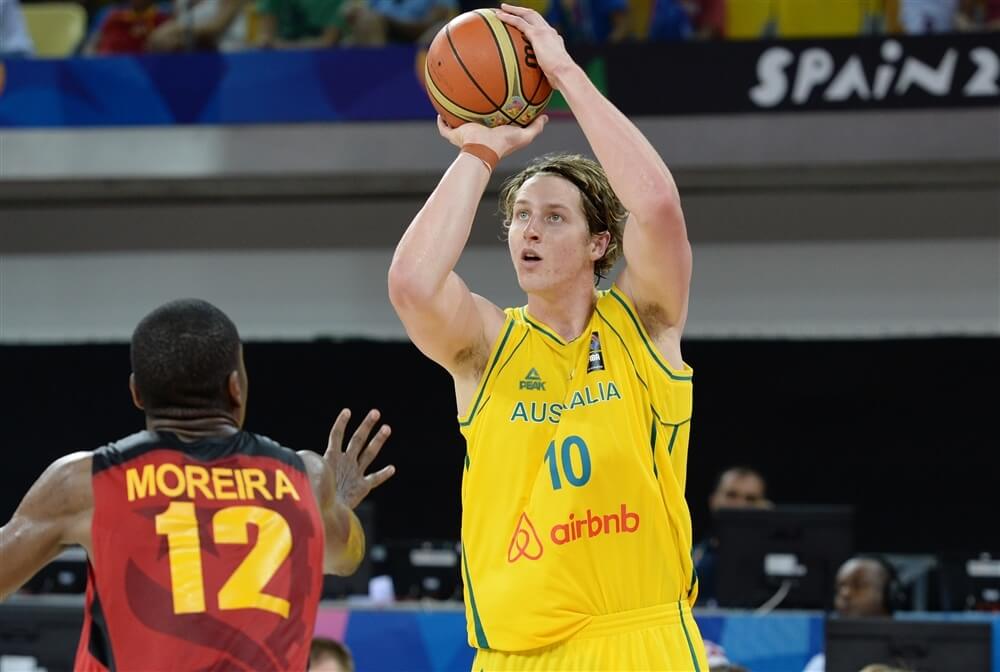
In July 2014, Bairstow was named to the Boomers squad for the 2014 FIBA Basketball World Cup in Spain which saw NBA stars Patty Mills and Andrew Bogut both unavailable due to injuries. Australia would lose their their opening game against Slovenia (80-90). The went on to defeat South Korea (55-89), Lithuania (82-75) and Mexico (62-70) before controversially losing to Angola. After Australia had led the game by ten at the half, they would lose the game (83-91) and fall to third place in their pool, and allowing them to avoid USA until the semi finals. This set them up to face Turkey in the crossover games, which they lost, 64-65, finishing in twelfth place (3-3). a investigation into Australias alleged tanking was undertaken, with Boomers coach Andrej Lemanis rejecting the accusation, saying he rested his players for the next stage due to the heavy tournament schedule. On 26 November 2014, Australia was cleared of tanking by FIBA. As a member of the Boomers 2014 FIBA World Cup squad, Bairstow averaged 7 points and 3 rebounds in six games.
In July 2016, was named to the Boomers squad for the 2016 Olympics in Rio de Janeiro, Brazil. In 2016, Bairstow was a key reserve for the Boomers squad who competed at the Olympic Games in Rio de Janeiro. Alongside Patty Mills (21.3 ppg and 1.7 apg) and Aron Baynes (9.6 ppg and 5.8 rpg), who would lead the team in scoring, Bairstow (5.4 ppg) helped Australia reach the semi finals for the first time since 2000. After dislocating his shoulder in the pool game against Venezuela. The injury left him unable to play in the second round of the tournament. Australia went on to lose to Serbia (61-87) setting up a bronze medal game against Spain, which they narrowly lost in overtime (88-89). The game featured a controversial ending after a referee no call resulted in a tie at the end of regulation, before Spain overcome the Boomers in the final moments. Australias fourth-place finish matched their best-ever finish in the Olympics.
| YEAR | AGE | GP | MINS | PTS | REB | AST | OR | DR | STL | BLK | TO | PF | FGM | FGA | FG% | 3PM | 3PA | 3P% | FTM | FTA | FT% |
|---|---|---|---|---|---|---|---|---|---|---|---|---|---|---|---|---|---|---|---|---|---|
| 2016 | 26 | 5 | 67 | 27 | 22 | 1 | 6 | 16 | 2 | 2 | 6 | 10 | 11 | 22 | 50.0% | 1 | 2 | 50.0% | 4 | 10 | 40.0% |
| 2014 | 24 | 6 | 77 | 42 | 18 | 6 | 12 | 6 | 2 | 1 | 8 | 9 | 18 | 32 | 56.3% | 0 | 0 | 0.0% | 6 | 8 | 75.0% | Total | 11 | 144 | 69 | 40 | 7 | 18 | 22 | 4 | 3 | 14 | 19 | 29 | 54 | 54% | 1 | 2 | 50% | 10 | 18 | 56% |
| YEAR | AGE | GP | MINS | PTS | REB | AST | OR | DR | STL | BLK | TO | PF | FGM | FGA | FG% | 3PM | 3PA | 3P% | FTM | FTA | FT% |
|---|---|---|---|---|---|---|---|---|---|---|---|---|---|---|---|---|---|---|---|---|---|
| 2016 | 26 | 5 | 13.4 | 5.4 | 4.4 | 0.2 | 1.2 | 3.2 | 0.4 | 0.4 | 1.2 | 2.0 | 2.2 | 4.4 | 50.0% | 0.2 | 0.4 | 50.0% | 0.8 | 2.0 | 40.0% |
| 2014 | 24 | 6 | 12.8 | 7.0 | 3.0 | 1.0 | 2.0 | 1.0 | 0.3 | 0.2 | 1.3 | 1.5 | 3.0 | 5.3 | 56.3% | 0.0 | 0.0 | 0.0% | 1.0 | 1.3 | 75.0% | Total | 11 | 13.1 | 6.3 | 3.6 | 0.6 | 1.6 | 2.0 | 0.4 | 0.3 | 1.3 | 1.7 | 2.6 | 4.9 | 54% | 0.1 | 0.2 | 50% | 0.9 | 1.6 | 56% |
Cam Bairstow was drafted by the Chicago Bulls with pick #49 in the 2014 NBA Draft.
Made his NBA debut for the Bulls on opening night against the New York Knicks where he played in the games last 3.5 minutes. Bairstow signed a three-year contract with the Bulls, with one and a half years guaranteed. He made his NBA debut on 29 October 2014 in the Bulls season opener against the New York Knicks, recording one turnover and missing his only field goal attempt in three and half minutes.
He appeared in 18 of the Bulls 82 regular-season games, making one start. In his one start on 25 November against the Denver Nuggets, he played a season-high 18 minutes and 46 seconds and had two points, two rebounds, one assist and one block, but also accumulated four fouls and two turnovers and made just one of four field goal attempts. He failed to appear in any of the Bulls 12 playoff games.
The 2015–16 season saw Bairstow once again appear in just 18 regular-season games, while making two starts. He played in five games on assignment with the Austin Spurs in the NBA Development League between 22 November and 7 December. On 2 March 2016, he scored a career-high eight points in 10 minutes as a starter in a 102–89 loss to the Orlando Magic.
On 17 June 2016, Bairstow was traded to the Detroit Pistons in exchange for Spencer Dinwiddie. He was waived by the Pistons on 10 July 2016.
Bairstow played 36 games in the NBA. He averaged 1.2 points, 1 rebounds, and 0.2 assists per game over his NBA career.
NBA TRANSACTIONS:
- June 26, 2014: Drafted by the Chicago Bulls in the 2nd round (49th pick) of the 2014 NBA Draft.
- July 18, 2014: Signed a multi-year contract with the Chicago Bulls
- November 22, 2015: Assigned to the Austin Spurs of the G-League.
- December 7, 2015: Recalled from the Austin Spurs of the G-League.
- June 17, 2016: Traded by the Chicago Bulls to the Detroit Pistons for Spencer Dinwiddie.
- July 7, 2016: Waived by the Detroit Pistons.
- July 9, 2016: Became a free agent after being waived by the Detroit Pistons.
| Season | Team | PTS | AST | STL | BLK | FGM | FGA | FG% | 3PM | 3PA | 3P% |
|---|---|---|---|---|---|---|---|---|---|---|---|
| 1 | 0 | 73% | 66% | 60% | 85% | ||||||
| 2 | 0 | 23 | 5 | 6 | 3 | ||||||
| Total | 343 | 731 | 46.9% | 43 | 119 | 36.1% |
| YEAR | AGE | TEAM | POS | GP | GS | MINS | PTS | TRB | AST | ORB | DRB | STL | BLK | TOV | PF | FG | FGA | FG% | 3P | 3PA | 3P% | FT | FTA | FT% | TS% | EFG% |
|---|---|---|---|---|---|---|---|---|---|---|---|---|---|---|---|---|---|---|---|---|---|---|---|---|---|---|
| 2015-16 | 25 | Chicago | C | 18 | 2 | 103 | 34 | 28 | 6 | 4 | 24 | 2 | 3 | 4 | 19 | 13 | 40 | 33% | 1 | 5 | 20% | 7 | 8 | 88% | 39% | 34% |
| 2014-15 | 24 | Chicago | PF | 18 | 1 | 64 | 10 | 8 | 1 | 6 | 2 | 2 | 1 | 3 | 8 | 3 | 14 | 21% | 0 | 0 | 0% | 4 | 5 | 80% | 31% | 21% | Total | 36 | 3 | 167 | 44 | 36 | 7 | 10 | 26 | 4 | 4 | 7 | 27 | 16 | 54 | 30% | 1 | 5 | 20% | 11 | 13 | 85% |
| YEAR | AGE | TEAM | POS | GP | GS | MINS | PTS | TRB | AST | ORB | DRB | STL | BLK | TOV | PF | FG | FGA | FG% | 3P | 3PA | 3P% | FT | FTA | FT% | TS% | EFG% |
|---|---|---|---|---|---|---|---|---|---|---|---|---|---|---|---|---|---|---|---|---|---|---|---|---|---|---|
| 2015-16 | 25 | Chicago | C | 18 | 2 | 5.7 | 1.9 | 1.6 | 0.3 | 0.2 | 1.3 | 0.1 | 0.2 | 0.2 | 1.1 | 0.7 | 2.2 | 33% | 0.1 | 0.3 | 20% | 0.4 | 0.4 | 88% | 39% | 34% |
| 2014-15 | 24 | Chicago | PF | 18 | 1 | 3.6 | 0.6 | 0.4 | 0.1 | 0.3 | 0.1 | 0.1 | 0.1 | 0.2 | 0.4 | 0.2 | 0.8 | 21% | 0.0 | 0.0 | 0% | 0.2 | 0.3 | 80% | 31% | 21% | Total | 36 | 3 | 4.6 | 1.2 | 1.0 | 0.2 | 0.3 | 0.7 | 0.1 | 0.1 | 0.2 | 0.8 | 0.4 | 1.5 | 30% | 0.0 | 0.1 | 20% | 0.3 | 0.4 | 85% |
Bairstow joined Rytas Vilnius for the 2019–20 Lithuanian LKL season, signing a one-year contract on 25 July 2019 for his only non-USA, non-Australia professional club stint.
In Lithuanian league play, Bairstow appeared in 21 LKL games with 18 starts and averaged 6.9 points, 3.6 rebounds, 0.9 assists and 0.5 steals in 15.1 minutes per game, shooting 47.6 per cent from the field, 33.3 per cent from three-point range and 66.7 per cent from the free-throw line.
One of his strongest LKL performances came against Prienai on 16 November 2019, when he recorded 14 points, six rebounds, one assist and two steals while shooting 6-of-10 from the field and making his only three-pointer as Rytas won.
Bairstow later produced 14 points and seven rebounds in 19 minutes against Neptūnas on 18 January 2020, making five of eight field-goal attempts and four free throws as Rytas won 92–69.
Rytas finished the shortened 2019–20 LKL season with a 17–7 record and was placed second when the competition was ended prematurely because of the COVID-19 pandemic.
Bairstow also played in the 2019–20 EuroCup, starting 13 of his 14 appearances and averaging 6.6 points, 3.2 rebounds and 0.4 assists in 15.0 minutes while shooting 49.1 per cent on two-point attempts, 28.6 per cent from three-point range and 61.4 per cent at the free-throw line.
His first double-figure EuroCup scoring performance came against Tofaş on 23 October 2019, when he scored 11 points with four rebounds and an assist in 16 minutes, making all three of his field-goal attempts including two three-pointers, although Rytas lost 91–81.
On 13 November, he scored 10 points on 4-of-6 shooting in 15 minutes as Rytas defeated Limoges 92–78 during a late regular-season push that helped the club reach the EuroCup Top 16.
Rytas finished its EuroCup regular-season group at 4–6, with victories over Lokomotiv Kuban, Limoges and Tofaş helping the club advance to the Top 16 ahead of Lokomotiv.
Bairstows highest-scoring EuroCup game came against UNICS Kazan on 5 February 2020, when he scored 14 points in 15 minutes while making six of seven field-goal attempts, although Rytas was beaten 82–69.
Rytas went 3–3 in the EuroCup Top 16, including victories over Galatasaray and AS Monaco, but finished third in its group and missed the quarter-finals, completing its European season with an overall 7–9 record.
Bairstow also appeared in four games during the 2019–20 King Mindaugas Cup, averaging 5.5 points, 3.8 rebounds, 0.5 assists and 1.0 steal in 14.6 minutes per game as defending champion Rytas returned to the final.
Rytas overturned an 85–81 first-leg quarter-final loss to Juventus by winning the return game 103–94 and advancing by five points on aggregate, then defeated Neptūnas 96–71 in the semi-final to earn a championship-game rematch with Žalgiris.
In the King Mindaugas Cup final on 16 February 2020, Bairstow started and recorded one point, one rebound and one steal in 10 minutes as Žalgiris defeated Rytas 80–60, leaving Rytas as cup runner-up.
Across the LKL and EuroCup portions of his season, Bairstow played 35 games with 31 starts and averaged 6.8 points, 3.4 rebounds and 0.7 assists in 15.1 minutes, while his additional four King Mindaugas Cup appearances took his season to 39 games across Lithuanias domestic league, domestic cup and EuroCup competitions.
Cam Bairstow moved to the United States following the 2010 SEABL season to attend the University of New Mexico, joining the Lobos for the 2010–11 NCAA season as part of one of the most highly regarded freshman recruiting classes in program history alongside Kendall Williams, Tony Snell, and Alex Kirk. The Lobos finished 22–13 that season and earned a berth in the NIT, with Bairstow appearing in 31 games and averaging 2.6 points and 1.8 rebounds in 9.7 minutes per game as he adjusted to Division I basketball.
In his sophomore season in 2011–12, Bairstow became a regular member of the rotation, appearing in all 34 games and increasing his production to 3.7 points and 3.6 rebounds in 15.4 minutes per contest. That season saw New Mexico finish 28–7, earn a share of the Mountain West Conference regular-season title, win the conference tournament championship, and return to the NCAA tournament. Fellow Australian Hugh Greenwood joined the program that year, reuniting the pair after their time together at the Australian Institute of Sport.
Bairstow’s junior season in 2012–13 marked a turning point in his college career. New Mexico opened the year 12–0 and climbed into the national rankings, peaking at No. 10, before offensive inconsistency led to lineup changes. Inserted into the starting lineup in late January, Bairstow helped spark a surge in form as the Lobos won nine of their final ten regular-season games to secure the MWC regular-season title. He played all 35 games and averaged 9.7 points and 5.9 rebounds in 24.1 minutes per game, with his production rising to approximately 12 points and seven rebounds per game as a starter.
During the 2013 Mountain West Conference tournament, Bairstow elevated his play further, averaging 13.0 points and 8.7 rebounds per game to earn All-Tournament Team honours as New Mexico claimed the conference tournament championship. The Lobos finished the season 29–6 but suffered a notable NCAA tournament upset to Harvard, despite Bairstow recording 15 points and nine rebounds, one of the strongest performances by a Lobo in that game.
Bairstow delivered a breakout senior season in 2013–14, producing one of the most dramatic single-season improvements in program history. Across 34 games, he averaged 20.4 points, 7.4 rebounds, 1.6 assists, and 1.5 blocks per game, scoring 20 or more points in 21 contests. His scoring increase of 10.7 points per game from the previous season ranked as the third-largest improvement ever by a New Mexico player, and he became the first Lobo to average fewer than 10 points one season and more than 20 the next.
That senior year saw New Mexico finish second in the MWC regular season before winning the conference tournament championship for a third consecutive year, with Bairstow named Tournament MVP. In the NCAA tournament, the Lobos were again eliminated in an upset, this time by Stanford, despite Bairstow posting 24 points and eight rebounds. New Mexico finished the season 27–7, giving Bairstow a combined four-year team record of 106–33, the second-most wins by any graduating class in school history at the time.
Bairstow was named to the All-Mountain West First Team in 2013–14 after leading the conference in total points scored, points per game, field goals made, field goals attempted, free throws made, free throws attempted, and Player Efficiency Rating. Over his four-year career, he appeared in 134 games and finished with approximately 1,240 points and more than 600 rebounds, completing one of the most productive and well-rounded careers by a Lobo forward in the modern era.
Beyond the box score, Bairstow gained national attention during his senior season for his postgame routine of lifting weights immediately after games while still in uniform, earning praise from opposing coaches and media for his work ethic. Physically, he underwent a dramatic transformation during his college career, arriving at New Mexico listed at 6-foot-8 and 210 pounds and finishing his senior season at approximately 6-foot-9 and 250 pounds, before measuring just under 6-foot-10 at the 2014 NBA Draft Combine, indicating continued physical growth throughout his college years.
Whilst we try to source as much information as we can for every player who has ever played in the NBL some information on a player profile may be missing. If you have additional information on a player you'd like us to add to a profile, please send it to us using the enquiry form below.
Submissions are then sent to info@aussiehoopla.com