FIBA World Cup 2023 Roster Tracker
August 22, 2023


BIO: A Fukuoka Prefecture native and Rakunan High School alum, Hiejima attended Aoyama Gakuin University, where he helped his high school team to three consecutive Winter Cup championships, indicating his impact at the national high school level prior to university competition before making his pro debut with the Aisin SeaHorses Mikawa in 2013.
FAMILY: Josh is the son of Cahla and Delmas Green. He has three siblings: Jay, Ky, and Maya. His father played at Oregon Tech, while both of his parents played professionally in Australia. Josh’s brother Jay currently plays for the Northern Arizona Lumberjacks.
Makoto Hiejima made his NBL debut with the Brisbane Bullets at 28 years of age. He went scoreless in his first NBL game.
After consecutive wooden spoons, Brisbane coach Andrej Lemanis rebuilt the Bullets around a number of experienced additions. Daniel Kickert (to Sydney), Tom Jervis (to Perth), Mitch Young (to Cairns), Anthony Petrie (retired), Shaun Bruce and imports Travis Trice and Perrin Buford departed, with Cameron Gliddon (via Cairns), Jason Cadee (via Sydney), Matt Hodgson (via Adelaide), Mika Vukona (via New Zealand), Makoto Hiejima (via SeaHorses Mikawa) and Alonzo Gee (via Puerto Rico) among the new arrivals, while Cam Bairstow returned after missing the previous season following a knee reconstruction.
Hiejima had been named the Japanese B.League MVP in 2017/18 before signing a five-year deal with Link Tochigi Brex in July 2018 which allowed him to pursue opportunities outside Japan. The following month he signed with Brisbane under the NBL’s Asian Player rule, allowing him to be registered as a local player rather than an import. The move made him the first Japanese representative to play in the NBL. Hiejima sought the opportunity to play under Lemanis through former NBL coach Shawn Dennis, accepted a significant pay cut to test himself in Australia and arrived with limited English and a translator. Lemanis said, “What he is doing is courageous”, praising Hiejima’s willingness to move countries, adjust to a different culture and challenge himself in a new league.
Hiejima made his NBL debut against Cairns on October 13, entering for 56 seconds and finishing with 0 points, 0 rebounds, and 0 assists as the Taipans defeated Brisbane 88-70. Te Rangi (18 points) and Gliddon (11 points) led the Bullets, while Trimble (32 points, 7 rebounds, and 3 assists) starred for Cairns.
Hiejima (0 points across 3 games) never established a regular place in Lemanis’ guard rotation, playing a total of only 1 minute and 49 seconds. No injury was identified as the reason for his absences, with his missed games coming through selection rather than being unavailable.
His second appearance came in Perth on October 20, where Hiejima (0 points) played 42 seconds as the Wildcats defeated Brisbane 88-73. Gliddon (13 points, 7 rebounds, and 4 assists) and Te Rangi (11 points and 4 rebounds) led Brisbane, while Cotton (28 points and 4 assists) and Kay (16 points and 11 rebounds) led Perth.
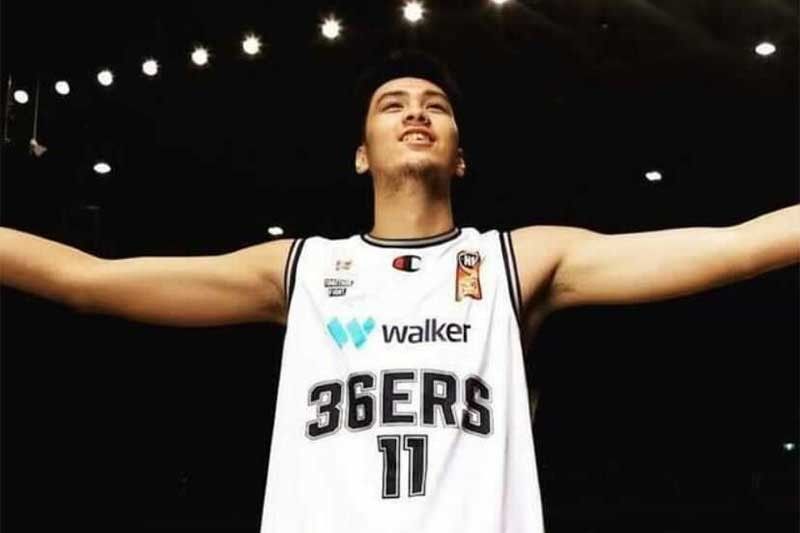
Hiejima’s third and final NBL appearance came against Adelaide on December 15, where Hiejima (0 points) played 11 seconds as the 36ers defeated Brisbane 101-91. Patterson (24 points, 7 rebounds, and 6 assists) and Bairstow (20 points and 7 rebounds) led the Bullets, while Nathan Sobey (24 points, 6 rebounds, 3 assists, and 3 steals) and Daniel Johnson (20 points, 8 rebounds, and 4 assists) led Adelaide.
Brisbane continued reshaping its roster during the season, with Gee released after requesting to return to the US for personal reasons and Patterson joining as his replacement, while Holt later departed for an overseas opportunity and Jeremy Kendle was added. With Hiejima unable to break into the rotation, Brisbane added A.J. Davis before releasing Hiejima (to Link Tochigi Brex) on January 5. Four days later he returned to Link Tochigi for the remainder of the Japanese season, ending his NBL career after three appearances.
Patterson (17.8 points, 6.2 rebounds, 3.8 assists, and 1.3 steals) went on to lead Brisbane in scoring and earn All-NBL First Team honours. Gliddon (13.7 points, 3.3 rebounds, and 1.2 steals), Bairstow (11.6 points and 5.8 rebounds) and Te Rangi (9.9 points and 3.1 rebounds) were also major contributors, with Te Rangi winning both the NBL’s Most Improved Player and Sixth Man of the Year awards as Brisbane finished 14-14 and qualified for the playoffs for the first time since 2008.
Hiejima was back in Japan when Perth defeated Brisbane 89-59 in game one of the semifinals behind Cotton (22 points, 5 rebounds, and 6 assists), White (19 points, 5 rebounds, and 3 assists) and Kay (18 points and 10 rebounds), while Gliddon (18 points and 4 rebounds), Hodgson (10 points and 7 rebounds) and Patterson (9 points, 4 rebounds, and 6 assists) led Brisbane.
Game two moved to Brisbane, where Patterson (19 points, 5 rebounds, 4 assists, and 3 steals), Hodgson (15 points and 2 blocks) and Bairstow (12 points and 7 rebounds) kept the Bullets close, but White (24 points), Cotton (19 points and 10 assists) and Kay (16 points and 15 rebounds) led Perth to an 84-79 victory to complete the 2-0 sweep.
Makoto Hiejima played one season in the NBL.
| SEASON | AGE | TEAM | TEAM RECORD | GP | MINS | PTS | REB | AST | OR | DR | STL | BLK | TO | PF | FGM | FGA | FG% | 3PM | 3PA | 3P% | FTM | FTA | FT% | TS% | EFG% | HS |
|---|---|---|---|---|---|---|---|---|---|---|---|---|---|---|---|---|---|---|---|---|---|---|---|---|---|---|
| 2018-19 | 28 | Brisbane | 14-14 (4) | 3 | 2 | 0 | 0 | 0 | 0 | 0 | 0 | 0 | 0 | 0 | 0 | 1 | 0% | 0 | 0 | 0% | 0 | 0 | 0% | 0% | 0% | 0 | Totals | 3 | 2 | 0 | 0 | 0 | 0 | 0 | 0 | 0 | 0 | 0 | 0 | 1 | 0.0% | 0 | 0 | 0.0% | 0 | 0 | 0.0% | 0% | 0% | 0 |
| SEASON | AGE | TEAM | TEAM RECORD | GP | MINS | PTS | REB | AST | OR | DR | STL | BLK | TO | PF | FGM | FGA | FG% | 3PM | 3PA | 3P% | FTM | FTA | FT% | TS% | EFG% | HS |
|---|---|---|---|---|---|---|---|---|---|---|---|---|---|---|---|---|---|---|---|---|---|---|---|---|---|---|
| 2018-19 | 28 | Brisbane | 14-14 (4) | 3 | 0.6 | 0.0 | 0.0 | 0.0 | 0.0 | 0.0 | 0.0 | 0.0 | 0.0 | 0.0 | 0.0 | 0.3 | 0% | 0.0 | 0.0 | 0% | 0.0 | 0.0 | 0% | 0% | 0% | 0 | Total | 3 | 0.6 | 0.0 | 0.0 | 0.0 | 0.0 | 0.0 | 0.0 | 0.0 | 0.0 | 0.0 | 0.3 | 0.0% | 0.0% | 0.0% | 0% | 0% | 0 |
| POINTS | REBOUNDS | ASSISTS | STEALS | BLOCKS | TURNOVERS | TRIPLE DOUBLES | 0 | 0 | 0 | 0 | 0 | 0 | 0 |
|---|
Makoto would again represent Japan at the 2020 Olympic Games (Japan) where the team would again fail to win a game (0-3) and finish the tournament in eleventh place.
Makoto was a part of the Japanese national team that competed at the 2023 FIBA World Cup and finished in 19th place (3-2 record).
| YEAR | AGE | GP | MINS | PTS | REB | AST | OR | DR | STL | BLK | TO | PF | FGM | FGA | FG% | 3PM | 3PA | 3P% | FTM | FTA | FT% |
|---|---|---|---|---|---|---|---|---|---|---|---|---|---|---|---|---|---|---|---|---|---|
| 2023 | 33 | 5 | 73 | 47 | 10 | 8 | 3 | 7 | 3 | 0 | 4 | 10 | 15 | 28 | 53.6% | 8 | 14 | 57.1% | 9 | 11 | 81.8% |
| 2020 | 30 | 3 | 54 | 23 | 6 | 6 | 2 | 4 | 0 | 4 | 1 | 4 | 10 | 21 | 47.6% | 3 | 9 | 33.3% | 0 | 0 | 0.0% |
| 2019 | 29 | 5 | 90 | 22 | 6 | 6 | 1 | 5 | 11 | 11 | 0 | 3 | 9 | 28 | 32.1% | 2 | 10 | 20.0% | 2 | 4 | 50.0% | Total | 13 | 217 | 92 | 22 | 20 | 6 | 16 | 14 | 15 | 5 | 17 | 34 | 77 | 44% | 13 | 33 | 39% | 11 | 15 | 73% |
| YEAR | AGE | GP | MINS | PTS | REB | AST | OR | DR | STL | BLK | TO | PF | FGM | FGA | FG% | 3PM | 3PA | 3P% | FTM | FTA | FT% |
|---|---|---|---|---|---|---|---|---|---|---|---|---|---|---|---|---|---|---|---|---|---|
| 2023 | 33 | 5 | 14.6 | 9.4 | 2.0 | 1.6 | 0.6 | 1.4 | 0.6 | 0.0 | 0.8 | 2.0 | 3.0 | 5.6 | 53.6% | 1.6 | 2.8 | 57.1% | 1.8 | 2.2 | 81.8% |
| 2020 | 30 | 3 | 18.0 | 7.7 | 2.0 | 2.0 | 0.7 | 1.3 | 0.0 | 1.3 | 0.3 | 1.3 | 3.3 | 7.0 | 47.6% | 1.0 | 3.0 | 33.3% | 0.0 | 0.0 | 0.0% |
| 2019 | 29 | 5 | 18.0 | 4.4 | 1.2 | 1.2 | 0.2 | 1.0 | 2.2 | 2.2 | 0.0 | 0.6 | 1.8 | 5.6 | 32.1% | 0.4 | 2.0 | 20.0% | 0.4 | 0.8 | 50.0% | Total | 13 | 16.7 | 7.1 | 1.7 | 1.5 | 0.5 | 1.2 | 1.1 | 1.2 | 0.4 | 1.3 | 2.6 | 5.9 | 44% | 1.0 | 2.5 | 39% | 0.8 | 1.2 | 73% |
Makoto Hiejima played with the Aisin SeaHorses Mikawa in 2013 after graduating from Aoyama Gakuin University, earning Japanese NBL Rookie of the Year honours in 2013/14 and helping the club win the 2014/15 NBL championship.
He transitioned with the club into the newly formed B.League and played a central role in SeaHorses Mikawa winning the West Division (46–14) in 2016/17 during the league’s inaugural campaign, before finishing first in the Central Division (48–12) in 2017/18, when he was named B.League MVP after averaging 12.9 points, 4.1 assists and 2.9 rebounds across 55 games.
In July 2018, Hiejima signed a five-year deal with Link Tochigi Brex.
As part of his deal with the Brex, he was free to pursue higher-level opportunities elsewhere and return to Tochigi at any time. The following month, he signed with the Brisbane Bullets under the League Asian Player rule.
On January 5, 2019, he was released by the Bullets. Four days later, he joined Link Tochigi Brex for the rest of the season.
Following the club’s rebrand to Utsunomiya Brex in 2019, Hiejima remained with the organisation and was instrumental in securing the 2021/22 B.League championship, earning Finals MVP honours after leading the team in scoring in the decisive game of the Finals series against Ryukyu. He later added another B.League title in 2024/25 as Utsunomiya defeated Ryukyu 2–1 in the championship series, and during that season he averaged 13.2 points per game while shooting 44.3 percent from three-point range, with the roster also featuring Isaac Fotu and Grant Jerrett.
Makoto Hiejima attended Aoyama Gakuin University in Tokyo, Japan, where he played university-level basketball before embarking on his professional career. During his time with Aoyama Gakuin, he won the Japan university national title back to back.
Whilst we try to source as much information as we can for every player who has ever played in the NBL some information on a player profile may be missing. If you have additional information on a player you'd like us to add to a profile, please send it to us using the enquiry form below.
Submissions are then sent to info@aussiehoopla.com