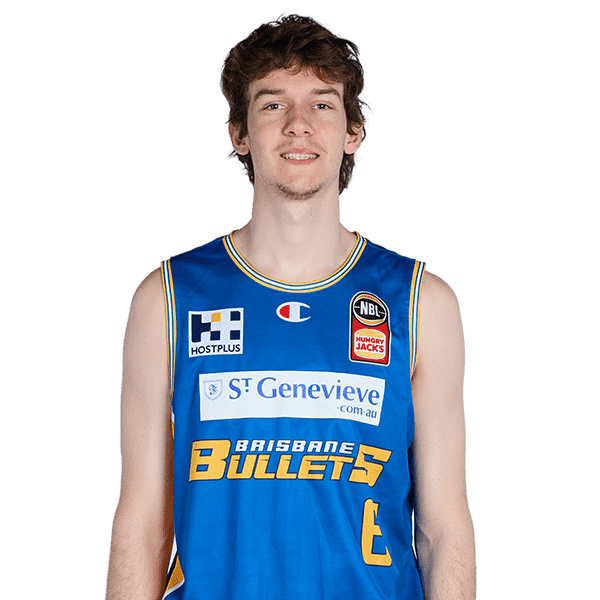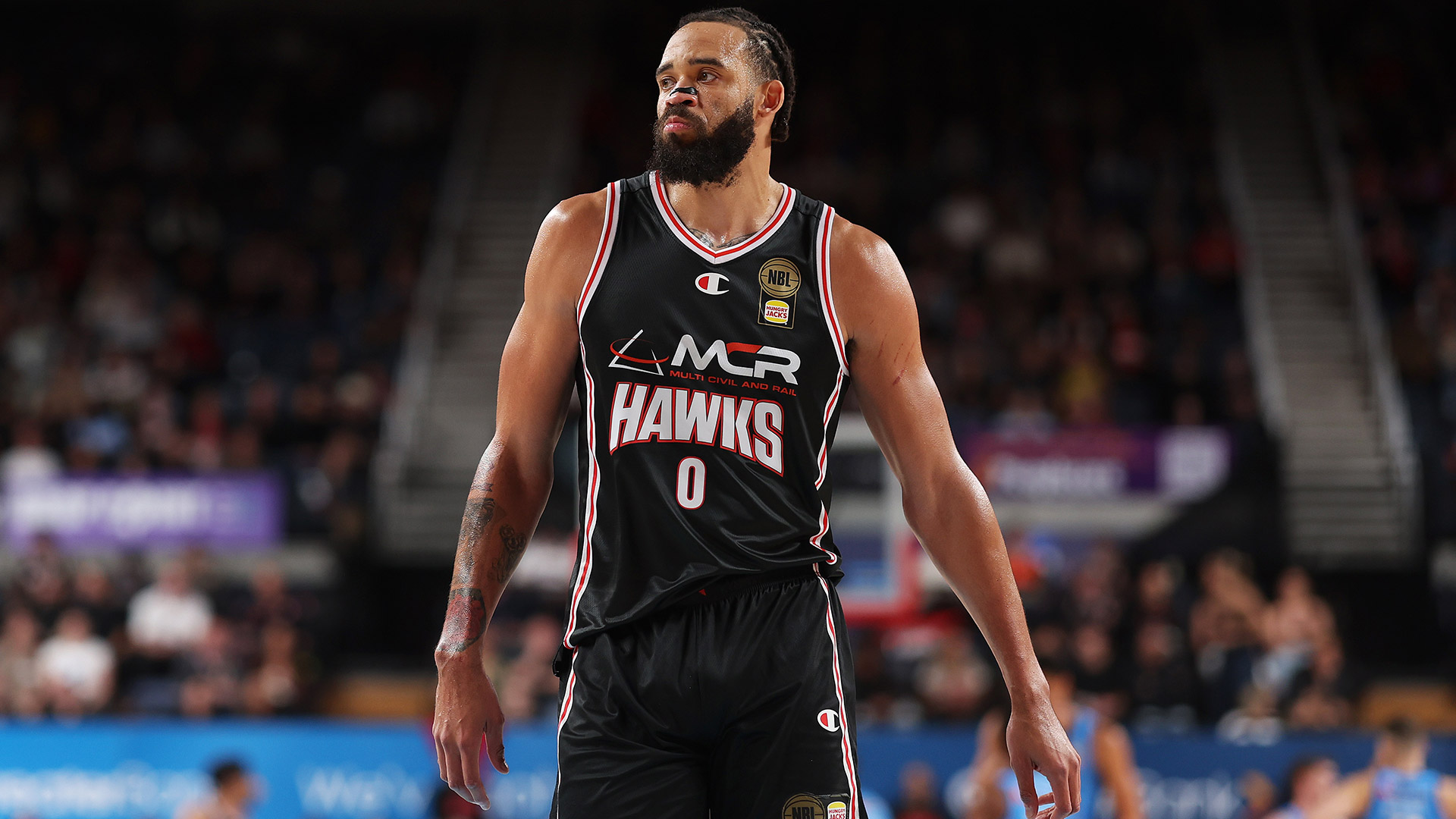
JaVale McGee
August 17, 2025



BIO: Luke Dean Schenscher was born in Hope Forest (SA) and began playing basketball as a junior with the Noarlunga basketball program. Schenscher was born in the small South Australian town of Hope Forest. He grew up on a five-acre farm. As a junior, he played basketball for the Noarlunga City Tigers. In 1999, he moved to Canberra and attended Lake Ginninderra College. Schenscher received a scholarship to attend the Australian Institute of Sport (Canberra) in 1999. He spent three years year there and played for the program’s state league team (1999, 2000, 2001).
Luke Schenscher made his NBL debut with the Adelaide 36ers at 26 years of age. He scored nine points in his first game.
In 2008, unable to secure a long-term NBA deal, Schenscher returned to Australia to play with the Adelaide 36ers. There, he averaged 16.9 points, 10.8 rebounds, and 1.3 blocks and was selected to the All-NBL second team. Adelaide finished in fifth place (15-15).
PERTH WILDCATS
2009/10
Following the 2008/09 season, the Wildcats came within weeks of folding unless they raised a million dollars in sponsorship. The NBL itself was also in strife; with the competition falling on tough times, there was a real possibility at the time that there would be no league in 2009-10. Collaborating with other clubs, the Wildcats helped reform the league.
Once the season was given the green light, the Wildcats hired a new coach in Rob Beveridge, who was tasked with recruiting a new-look team where Shawn Redhage, Stephen Weigh and Brad Robbins would be complimented by newly acquired proven talent Damian Martin (via Sydney), Drew Williamson (via Townsville), Luke Schenscher (via Adelaide), Martin Cattalini (via Cairns) and rookie Jesse Wagstaff to round out the bench. Import Kevin Lisch was then recruited to lead the Wildcats on the offensive end and lead the team into a new era. Just prior to the season kicking off, Paul Rogers relinquished the captaincy heading into the 2009/10 season, handing over the reins to Redhage. In what would be his final NBL season, Rogers would play two games before a injury to his elbow and triceps in the team’s second game would see him sidelined for the rest of the season. The injuries would ultimately end Rogers’ playing career, and the Wildcats signed import Galen Young as his replacement.
Lisch started out slowly over his initial weeks in the league, averaging only 11.4 points across his first five NBL games. A victory over the Melbourne Tigers (94-90) where he dropped a season-high 21 points in 27 minutes, proved to all that he would be a force in this league. By January, the Wildcats had emerged as clear frontrunners (13 wins, 8 losses) as new point guard Damian Martin (8.3 points, 4.6 rebounds, and 2.9 assists) delivered his best season to date, numbers which would earn him a Australian Boomers call-up at the end of the season. Alongside them, Schenscher would finish the season with averages of 10.0 points, 6.2 rebounds, and 1 assists.
The team rolled through the regular season to finish in first place (17-11) before going on to the semi finals to face Gold Coast (fourth seed). Schenscher (6 points) made minimal impact as Lisch (19 points, 3 rebounds, and 3 assists) led the Wildcats in scoring in game one (81-68). In game two, Schenscher (11 points) had a much bigger impact, while Lisch (18 points, 3 rebounds, and 3 assists) backed up his opening game performance, by leading the team to victory once again (82-78), sending Perth through to a Grand Final matchup with Wollongong (making their first Grand Final series since 2003).
Perth started the series with a very comfortable win at home (75–64), with Lisch (15 points, 3 rebounds, 2 assists, 3 steals and 1 block) filling the box score and Schenscher (5 points) playing his role. The series then moved to Wollongong for game two, where the Hawks rebounded to defeat Perth (75-63), with both Lisch and Redhage struggling to make a impact in the game as they were held to 11 and 9 points respectively in the loss. Schenscher (4 points and 4 rebounds) was also kept relatively quiet.
After Games 1 and 2 proved to be comfortable victories for each home team, the series returned to Perth for the third and deciding game, where the Wildcats found themselves down by as many as 11 points in the second quarter. While Schenscher (3 points) had a horrible shooting night, making one from seven field goals, Lisch (29 points and 5 rebounds) would prove to be the difference-maker in the second half, carrying the team offensively, defeating Wollongong (96–72) and guiding the team to a record fifth NBL Championship. Lisch was subsequently named Finals MVP after averaging 18 points and 4 rebounds over the three-game series.
TOWNSVILLE CROCODILES
2010/11
The 2010/11 season saw Schenscher average 13.7 points, 6.8 rebounds, and 1.4 assists and earn selection to the All-NBL second team for a second time. He also played a key role in helping the Crocodiles finish in second place (17-11).
2011/12
After losing in the semifinals for three straight years under coach Trevor Gleeson, the Crocodiles chose to move in a different direction, replacing him with US coach Paul Woolpert. Townsville also chose to move on from imports Will Blalock and Rosell Ellis, replacing them with former NBA guard Eddie Gill and Elvin Mims. The team retained the majority of their local roster from the previous season, the only major change being Jacob Holmes (via Adelaide) and Townsville junior Mitchell Norton replacing Nathan Crosswell (to Adelaide) and the retiring Brad Williamson.
Just prior to the season kicking off, Russell Hinder would suffer a broken leg that would see his sidelined for the entire NBL season. Greg Vanderjagt, who was unable to make a NBL roster the season before, signed on as a late replacement.
Peter Crawford (14.8 points, 3.2 rebounds, and 1.6 assists) and import Eddie Gill (13.3 points, 3.2 rebounds, 3.9 assists) led the way statistically, but a breakout season from Todd Blanchfield (7.2 points and 3.3 rebounds), which took him from the end of the bench to being a member of the starting unit, gave the Crocodiles a completely different look. Blanchfield saw his minutes double from 9.7 to 21.3 per game and his ability to space the floor (shooting 47% from the field) made it far easier for frontcourt players Jacob Holmes (10.4 points, 9 rebounds, and 2.1 assists), Luke Schenscher (10.4 points, 5.3 rebounds, and 2.2 assists) and Mims (9.7 points, 5.8 rebounds, and 1.3 steals) to score in the paint.
Townsville floated between third and fifth spot all season but a late season slump, where they lost the final two games of the season, dropped them to equal fourth place, equal to record to the Cairns Taipans (15-13). With Townsville and Cairns also having a 2-2 record in their head to head matchups, Townsville’s higher points percentage gave them the final playoff spot and dropped Cairns into fifth place.
Under the guidance of head coach Shawn Dennis, Townsville faced off against first seed New Zealand in the semifinals, comfortably winning game one (99-82) on the Breakers home court. Despite the Crocodiles strong form in game one, the Breakers evened the series in game two (83–94) at Townsville, before closing out the series in 17-point win in game three (97–80). New Zealand would go on to defeat Perth in the Grand Final series.
Schenscher would appear in 24 games, averaging 10.4 points, 5.3 rebounds, and 2.2 assists.
ADELAIDE 36ERS
2012/13
The 36ers approached the 2012/13 season with a renewed focus on building around a foundation of local Australian talent. Capitalising on the Gold Coast Blaze’s exit from the league, the club acquired Adam Gibson, Anthony Petrie, and Jason Cadee on multi-year deals, while also bringing back centre Luke Schenscher from Townsville for his second stint with Adelaide. The off-season saw the departure of Adam Ballinger (to Melbourne), Everard Bartlett (to Perth), and imports Chris Warren and Diamon Simpson, while Darren Ng, Nathan Herbert, and Wade Helliwell all retiring.
Returning to the squad were key players Daniel Johnson, Mitch Creek, Stephen Weigh, and Nathan Crosswell, creating a roster that blended youth with veteran experience. Choosing to back their domestic core, Adelaide signed only one import—state league scorer CJ Massingale.
The season began with promise, as Adelaide dismantled Melbourne 84–61 in their opener. By Round 7, the team held a 4–3 record and climbed to third place on the ladder after a determined 69–65 victory over Perth on the road. However, the bright start quickly gave way to inconsistency, with the team dropping 17 of their final 21 games to crash out of playoff contention.
Daniel Johnson (16.2 points and 8.1 rebounds) delivered another standout campaign, finishing as Adelaide’s leading scorer and the NBL’s leading rebounder. His performance across all 28 games earned him a spot on the All-NBL Second Team and confirmed his place as one of the league’s premier frontcourt players. Despite his output, Adelaide spiraled to an identical 8–20 record as the year prior, finishing in last place for the second consecutive season.
The team’s campaign was further impacted by the loss of Mitch Creek (5.8 points and 2.6 rebounds), who suffered a torn Achilles tendon against Townsville on December 15. His dynamic play and fan-favourite status made his absence a major setback for the 36ers.
Massingale (4.1 points) was released midway through the season after struggling to adjust to the NBL level. In his place, the club signed import guard Scott Christopherson (2.9 points and 1.9 rebounds), who has been playing in Belarus. Visa delays and FIBA clearance issues kept Christopherson from debuting immediately, and when cleared, he struggled to crack the rotation. His stint was widely panned, with journalist Boti Nagy branding him the worst import in 36ers history.
Adelaide ended the season on a four-game skid, finishing 8–20 and at the bottom of the ladder. With the club stuck in a downward spiral, head coach Marty Clarke was not offered a new contract. The 36ers responded by appointing championship-winning coach Joey Wright in a bid to steer the franchise back to contention.
In addition to Johnson’s standout year, Gibson (11.6 points, 4.9 assists, and 3.6 rebounds) was rewarded with All-NBL Third Team honours for his steady two-way play. Petrie (11.4 points and 5.8 rebounds), Weigh (10.6 points and 5.9 rebounds), and Schenscher (9 points and 6.1 rebounds) contributed consistently in the frontcourt. Cadee (7.5 points and 2.5 assists) and Crosswell (3.1 points and 1.7 assists) shared responsibilities in the backcourt. Despite missing the playoffs for a third straight year, Adelaide’s core provided enough talent for optimism heading into the Joey Wright era.
2013/14
In 2013, the 36ers secured NBL championship-winning coach Joey Wright, who took the team from two consecutive wooden spoons to the Grand Final against the Perth Wildcats. The team retained its core group of Aussie talent, including Daniel Johnson (19.2 points and 6.8 rebounds), who once again led the team in scoring, and rebounding, Adam Gibson, Anthony Petrie and Jason Cadee.
The 36ers also received a boost with Mitchell Creek and Luke Schenscher back on the court after both having their previous campaigns ended prematurely due to injury. Creek overcoming a near career-ending Achilles injury, and Schenscher undergoing elbow surgery. The club also added BJ Anthony (via New Zealand) and 2011 NBL MVP Gary Ervin (via Townsville) to pair with new import Jarrid Frye in the backcourt.
After Round 7 of the season the 36ers, led by Ervin and Johnson, were sitting in second place on the NBL ladder with a 7–2 record, which also included a 5–0 run. This included the 36ers winning both of their games against the Breakers in Auckland, their first wins over the triple defending champions since 2009. Adelaide also took down the undefeated Perth Wildcats (91–86) in front of 6,585 fans at the Adelaide Arena. Perth had been sitting on a 7-0 record prior to that loss in front of the largest Adelaide home crowd since Brett Maher’s last home game in 2009.
By December, Adelaide (9-4) had already eclipsed last season’s eight-win total.
By December, Adelaide (9-4) had already eclipsed last season’s eight-win total.
In February, the 36ers released Jarrid Frye (8.2 points, 4.4 rebounds, and 1.5 assists) due to underwhelming play and a ankle injury keeping him off the court. With second-placed Adelaide eyeing a Grand Final berth local guard Rhys Carter, who had been playing as a import in Sweden, was signed as his replacement.
The 36ers finished the regular season in second place (18-10), with Schenscher averaging 6.8 points, 5.4 rebounds, and 0.8 assists.
The 36ers would face Melbourne in the semifinals, and with Gary Ervin (27 points and 7 assists) finishing the game high scorer, Adelaide claimed victory in game one (101-85). Game two would be played in Melbourne, where Tigers guard Chris Goulding (37 points) exploded in a game two win for the Tigers (98-87), evening the series (1-1). In game three, Adelaide responded by demolishing Melbourne (102-63), holding them to a 27-point half-time score and winning every quarter by 7 points or more.
The grand final would see second-ranked Adelaide face first-placed Perth with game one held in Perth. Wildcats star import James Ennis (30 points, 10 rebounds, and 4 assists) would lead Perth in points, rebounds, and assists, resulting in Perth claiming the win (92-85) and taking a 1-0 series lead.
Game two would see 8,127 36ers fans (their largest crowd of the season) rally their team to a 89-84 win behind big games from Gary Ervin (23 points) and Adam Gibson (18 points, 9 rebounds, and 7 assists) to even the series (1-1).
13,498 of Perth’s ‘red army’ would show up to see the Wildcat’s defeat Adelaide and win their sixth NBL title, with James Ennis subdued by foul trouble Perth’s most experienced duo, Shawn Redhage and Damian Martin were relied on to pick up the slack. Redhage scored 10 of his 16 points in the first term to help his team settle into the contest, while Martin produced a superb defensive effort on 36ers star Gary Ervin, limiting the game two hero to just 4 points while adding 14 points and six rebounds of his own. Greg Hire (9 rebounds, 5 assists) and Jermaine Beal (15 points) provided key contributions of their own to help Perth bury the demons of successive grand final defeats in the past two seasons.
Anthony Petrie (20 points) never stopped trying for the 36ers but lacked support from fellow starters Adam Gibson (8 points) and Daniel Johnson (9 points), both of whom had been influential in the first two games of the series.
Daniel Johnson won his third straight club MVP award and was also named to the All-NBL First Team.
2014/15
The 36ers’ need for more production at the point guard spot saw the exits of Gary Ervin (to Wollongong), Jason Cadee (to Sydney) and Rhys Carter (to Europe) and import guards Jamar Wilson (via Cairns) and Daequon Montreal (via Europe) signed to bolster the backcourt. Young Adelaide forward Brock Motum, a member of the national team, was signed to be the main focal point of the offence.
Wilson (20 points, 5 rebounds, and 3.1 assists) would lead the team in scoring, earning NBL player of the week honours twice over the course of the season. The awards coming his way after a game-high 22 points against Melbourne (Jan 10) and another after racking up a game-high 25 points against Townsville (Feb 1).
Motum (17.5 points, 7.1 rebounds, and 0.8 assists) led the team in rebounds and Creek (11.2 points, 4.4 rebounds, and 1.5 assists) delivered a breakout season, becoming the team’s third-leading scorer, increasing his scoring from 7.7 points per game the season prior. while Schenscher would add 6.9 points, 5.1 rebounds, and 1.1 assists.
The 36ers would finish in third place (17-11) before being eliminated in the semifinals by eventual champions New Zealand in two straight games. Wilson’s play would earn him the Mark Davis Trophy (club MVP) and All-NBL second team honours.
TOWNSVILLE CROCODILES
2015/16
Front office changes and financial limitations saw the Crocodiles struggling to gain clarity on their future in the competition, resulting in player recruitment becoming extremely challenging for Townsville. The first impact of this saw Todd Blanchfield, who earned the NBL Most Improved Player the season prior, relocate to Melbourne and sign with the re-branded Melbourne United. Coach Shawn Dennis would sign Nicholas Kay, who was returning home after four years at Metro State College of Denver and then rounded out the rest of the roster by signing players happy to play for near league minimum contracts, mostly young talent unable to latch on with other team’s or veteran players other team’s had given up on. Luke Schenscher (via Adelaide), Corey Maynard and Mitchell Young (both via Cairns) were clear examples of that.
NBL MVP Brian Conklin was re-signed and appointed team captain and paired with incoming import Jordair Jett.
The season began with two consecutive losses to Melbourne United (84-99) at home and New Zealand (81-89) in New Zealand. But then, in surprising fashion, Townsville, who had won a total of three away games the previous season, defeated Sydney (80-77) and Perth (66-63) on their home floor in back-to-back rounds.
Townsville’s season quickly turned sour after that, highlighted by their 31-point defeat at the hands of Melbourne in late October and having the worst record in the league (2-9) after the first few months of the season. Then, when the team faced the Perth Wildcats at home, Conklin was involved in a ugly on-court incident involving Perth Wildcats guard Damian Martin Martin. During the fourth quarter of the Crocodiles win over the Wildcat’s (89–77), Conklin’s errant elbow collided with and broke Martin’s jaw. Despite a call from Australian basketball legend Andrew Gaze for Conklin to be suspended for at least six weeks, the NBL cleared Conklin of any wrongdoing. A similar situation arose during a brutal loss to Adelaide (65-89) less than two weeks after the Martin encounter, where Conklin (21 points and 12 rebounds) was in the spotlight again for another elbow incident, this time for striking 36ers forward Mitch Creek in a similar manner. He subsequently received a three-match suspension, with two of those games suspended for the rest of the season.
By the end of November, sitting at the bottom of the ladder (4–10), Townsville terminated Conklin’s contract due to what the club claimed was a number of ‘sub-par performances’. Conklin (13.5 points, 6.6 rebounds, and 1.6 assists per game) later took to social media to share his version of the truth, which pointed the finger at Townsville wanting to reduce costs as the reason for his release. The Crocs would bring in a former college teammate of Patty Mills, Omar Samhan (13 points, 8.9 rebounds, 1.6 assists, and 1.1 blocks), as Conklin’s replacement a week later.
Schenscher (4.1 points and 3.1 rebounds) also struggled with injuries and with nine games remaining, Townsville chose to add Harry Froling (1.6 points and 0.8 rebounds), a member of Townsville’s junior program, as an injury replacement player for him.
While Jett (15.3 points, 3.4 rebounds, 3.3 assists, and 1.1 steals) struggled in the team’s early games, he would explode during the second half of the season, leading the team in scoring with Mirko Djeric (5.3 points, 1.3 rebounds, and 0.9 assists) delivering his best season to date. With Townsville now firmly focused as a team, their work was rewarded in the second half of the season, winning half of their remaining games (7-7). This included a upset victory over Adelaide will go down in Townsville history as perhaps the most exciting finish to a game. The win showcased the fighting qualities instilled in the Crocs and even in the most unlikely circumstances, a team must play to the final buzzer.
Despite again finishing with a winning record at home (8-6) but only three road wins for the season, Townsville would finish second last on the ladder (11-17) with Jett being awarded the Kevin Sugars Medal (club MVP). Schenscher struggled through injuries and was only able to appear in 13 games, averaging 4.1 points, 3.1 rebounds, and 0.3 assists.
Despite the hardships Townsville was viewed as overachievers for the most part and coach Shawn Dennis was rewarded by the league with the NBL’s coach of the year trophy. The Croc’s cleaned up on awards night with Nicholas Kay (10.8 points, 6.7 rebounds, and 1.3 assists) also winning Rookie of the Year and Clint Steindl (12.8 points, 3.5 rebounds, and 1.1 assists) earning Most Improved Player.
Although Townsville had a verbal commitment from the league they would be able to continue playing with their support, the inability to raise enough money from the community saw their eventual demise. Kay and Norton both signed deals with Illawarra and while Young found a spot with Brisbane. Unable to find deals in Australia, Steindl and Djeric both ventured overseas, coach Shawn Dennis would end up coaching in the Japanese national league. With his contract voided due to the demise of the Townsville Crocodiles, and multiple back and ankle injuries limiting his mobility, Schenscher retired.
Luke Schenscher played eight seasons across three NBL teams. This included the Adelaide 36ers, Perth Wildcats and Townsville Crocodiles. He averaged 10.2 points, 6.3 rebounds, and 1.2 assists in 216 NBL games.
| SEASON | AGE | TEAM | TEAM RECORD | GP | MINS | PTS | REB | AST | OR | DR | STL | BLK | TO | PF | FGM | FGA | FG% | 3PM | 3PA | 3P% | FTM | FTA | FT% | TS% | EFG% | HS |
|---|---|---|---|---|---|---|---|---|---|---|---|---|---|---|---|---|---|---|---|---|---|---|---|---|---|---|
| 2015-16 | 34 | Townsville | 11-17 (7) | 12 | 165.9 | 49 | 37 | 3 | 12 | 25 | 3 | 6 | 18 | 19 | 19 | 44 | 43% | 0 | 1 | 0% | 11 | 18 | 61% | 47% | 43% | 10 |
| 2014-15 | 33 | Adelaide | 17-11 (3) | 30 | 527.0 | 206 | 153 | 33 | 50 | 103 | 9 | 23 | 24 | 58 | 87 | 179 | 49% | 1 | 1 | 100% | 31 | 76 | 41% | 48% | 49% | |
| 2013-14 | 32 | Adelaide | 18-10 (2) | 34 | 542.0 | 231 | 185 | 26 | 75 | 110 | 8 | 20 | 30 | 76 | 90 | 171 | 53% | 1 | 2 | 50% | 50 | 84 | 60% | 55% | 53% | |
| 2012-13 | 31 | Adelaide | 8-20 (8) | 21 | 483.0 | 190 | 128 | 39 | 50 | 78 | 16 | 18 | 47 | 67 | 72 | 159 | 45% | 0 | 0 | 0% | 46 | 75 | 61% | 49% | 45% | 25 |
| 2011-12 | 30 | Townsville | 15-13 (4) | 24 | 574.0 | 249 | 126 | 53 | 65 | 61 | 9 | 16 | 33 | 61 | 102 | 214 | 48% | 0 | 2 | 0% | 45 | 64 | 70% | 51% | 48% | 25 |
| 2010-11 | 29 | Townsville | 17-11 (2) | 31 | 766.0 | 426 | 212 | 43 | 89 | 123 | 9 | 33 | 67 | 91 | 166 | 314 | 53% | 0 | 1 | 0% | 94 | 128 | 73% | 57% | 53% | 26 |
| 2009-10 | 28 | Perth | 17-11 (1) | 33 | 765.0 | 329 | 203 | 32 | 80 | 123 | 11 | 35 | 50 | 98 | 132 | 254 | 52% | 1 | 7 | 14% | 64 | 103 | 62% | 54% | 52% | 22 |
| 2008-09 | 27 | Adelaide | 15-15 (5) | 31 | 1,013.0 | 525 | 335 | 46 | 115 | 220 | 9 | 41 | 59 | 98 | 195 | 355 | 55% | 0 | 0 | 0% | 135 | 181 | 75% | 60% | 55% | 37 | Totals | 216 | 4836 | 2205 | 1379 | 275 | 536 | 843 | 74 | 192 | 328 | 568 | 863 | 1690 | 51.1% | 3 | 14 | 21.4% | 476 | 729 | 65.3% | 55% | 51% | 37 |
| SEASON | AGE | TEAM | TEAM RECORD | GP | MINS | PTS | REB | AST | OR | DR | STL | BLK | TO | PF | FGM | FGA | FG% | 3PM | 3PA | 3P% | FTM | FTA | FT% | TS% | EFG% | HS |
|---|---|---|---|---|---|---|---|---|---|---|---|---|---|---|---|---|---|---|---|---|---|---|---|---|---|---|
| 2015-16 | 34 | Townsville | 11-17 (7) | 12 | 13.8 | 4.1 | 3.1 | 0.3 | 1.0 | 2.1 | 0.3 | 0.5 | 1.5 | 1.6 | 1.6 | 3.7 | 43% | 0.0 | 0.1 | 0% | 0.9 | 1.5 | 61% | 47% | 43% | 10 |
| 2014-15 | 33 | Adelaide | 17-11 (3) | 30 | 17.6 | 6.9 | 5.1 | 1.1 | 1.7 | 3.4 | 0.3 | 0.8 | 0.8 | 1.9 | 2.9 | 6.0 | 49% | 0.0 | 0.0 | 100% | 1.0 | 2.5 | 41% | 48% | 49% | |
| 2013-14 | 32 | Adelaide | 18-10 (2) | 34 | 15.9 | 6.8 | 5.4 | 0.8 | 2.2 | 3.2 | 0.2 | 0.6 | 0.9 | 2.2 | 2.6 | 5.0 | 53% | 0.0 | 0.1 | 50% | 1.5 | 2.5 | 60% | 55% | 53% | |
| 2012-13 | 31 | Adelaide | 8-20 (8) | 21 | 23.0 | 9.0 | 6.1 | 1.9 | 2.4 | 3.7 | 0.8 | 0.9 | 2.2 | 3.2 | 3.4 | 7.6 | 45% | 0.0 | 0.0 | 0% | 2.2 | 3.6 | 61% | 49% | 45% | 25 |
| 2011-12 | 30 | Townsville | 15-13 (4) | 24 | 23.9 | 10.4 | 5.3 | 2.2 | 2.7 | 2.5 | 0.4 | 0.7 | 1.4 | 2.5 | 4.3 | 8.9 | 48% | 0.0 | 0.1 | 0% | 1.9 | 2.7 | 70% | 51% | 48% | 25 |
| 2010-11 | 29 | Townsville | 17-11 (2) | 31 | 24.7 | 13.7 | 6.8 | 1.4 | 2.9 | 4.0 | 0.3 | 1.1 | 2.2 | 2.9 | 5.4 | 10.1 | 53% | 0.0 | 0.0 | 0% | 3.0 | 4.1 | 73% | 57% | 53% | 26 |
| 2009-10 | 28 | Perth | 17-11 (1) | 33 | 23.2 | 10.0 | 6.2 | 1.0 | 2.4 | 3.7 | 0.3 | 1.1 | 1.5 | 3.0 | 4.0 | 7.7 | 52% | 0.0 | 0.2 | 14% | 1.9 | 3.1 | 62% | 54% | 52% | 22 |
| 2008-09 | 27 | Adelaide | 15-15 (5) | 31 | 32.7 | 16.9 | 10.8 | 1.5 | 3.7 | 7.1 | 0.3 | 1.3 | 1.9 | 3.2 | 6.3 | 11.5 | 55% | 0.0 | 0.0 | 0% | 4.4 | 5.8 | 75% | 60% | 55% | 37 | Total | 216 | 22.4 | 10.2 | 6.4 | 1.3 | 2.5 | 3.9 | 0.3 | 0.9 | 1.5 | 2.6 | 4.0 | 7.8 | 51.1% | 0.0 | 0.0 | 21.4% | 0.0 | 0.1 | 65.3% | 55% | 51% | 37 |
| POINTS | REBOUNDS | ASSISTS | STEALS | BLOCKS | TURNOVERS | TRIPLE DOUBLES | 37 | 22 | 6 | 4 | 4 | 6 | 0 |
|---|
Schenscher joined the AIS for the 1999 SEABL season, beginning a three-year stint with the Australian Institute of Sport, and across the 1999 and 2000 period he averaged 9.3 points and 6.1 rebounds in 27 games for the program.
Luke Schenscher remained with the AIS for the 2001 SEABL season, and between 1999 and 2001 he played for the Australian Institute of Sports SEABL team. In 2001, he led the team in scoring (15.2 points per game) and rebounding (9.2 per game), while also averaging 1.65 blocks per game and shooting 54 percent from the floor. He was subsequently named AIS Junior Athlete of the Year.
Luke Schenscher finished his 2001 AIS season having played 17 games while balancing national team commitments, and he added 28 blocked shots, 26 assists and 10 steals during the year.
Luke Schenscher joined Southern for the 2017 state league season after signing in April 2017, returning late in his career to play for the Southern Tigers in South Australia.
Additionally, he was a member of the Australian national under-21 team which finished eighth at the FIBA Under-21 World Championship.
Schenscher was named in the Boomers 2006 FIBA World Championship team but withdrew in order to concentrate on his NBA career
After his four years in college, Schenscher was able to score two stints in the NBA one with the Chicago Bulls and the other with the Portland Trailblazers.
NBDL - Fort Worth Flyers (2005-07)
Schenscher played 31 games in the NBA. He averaged 1.8 points, 1.7 rebounds, and 0.3 assists per game over his NBA career.
NBA TRANSACTIONS:
- August 18, 2005: Signed as a free agent with the Denver Nuggets.
-
March 5, 2006: Signed as a free agent with the Chicago Bulls.
-
October 30, 2006: Waived by the Chicago Bulls.
-
March 15, 2007: Signed two 10-day contracts with the Portland Trail Blazers, then signed a contract for the rest of the season.
| Season | Team | PTS | AST | STL | BLK | FGM | FGA | FG% | 3PM | 3PA | 3P% |
|---|---|---|---|---|---|---|---|---|---|---|---|
| 1 | 2 | 68% | 64% | 47% | 92% | ||||||
| 2 | 0 | 37 | 6 | 4 | 4 | ||||||
| Total | 863 | 1690 | 51.1% | 3 | 14 | 21.4% |
| YEAR | AGE | TEAM | POS | GP | GS | MINS | PTS | TRB | AST | ORB | DRB | STL | BLK | TOV | PF | FG | FGA | FG% | 3P | 3PA | 3P% | FT | FTA | FT% | TS% | EFG% |
|---|---|---|---|---|---|---|---|---|---|---|---|---|---|---|---|---|---|---|---|---|---|---|---|---|---|---|
| 2006-07 | 24 | Portland | C | 11 | 0 | 118 | 19 | 25 | 1 | 10 | 15 | 2 | 4 | 4 | 25 | 7 | 23 | 30% | 0 | 0 | 0% | 5 | 7 | 71% | 36% | 30% |
| 2005-06 | 23 | Chicago | C | 20 | 0 | 149 | 36 | 29 | 7 | 8 | 21 | 1 | 3 | 5 | 21 | 16 | 26 | 62% | 0 | 0 | 0% | 4 | 13 | 31% | 57% | 62% | Total | 31 | 0 | 267 | 55 | 54 | 8 | 18 | 36 | 3 | 7 | 9 | 46 | 23 | 49 | 47% | 0 | 0 | 9 | 20 | 45% |
| YEAR | AGE | TEAM | POS | GP | GS | MINS | PTS | TRB | AST | ORB | DRB | STL | BLK | TOV | PF | FG | FGA | FG% | 3P | 3PA | 3P% | FT | FTA | FT% | TS% | EFG% |
|---|---|---|---|---|---|---|---|---|---|---|---|---|---|---|---|---|---|---|---|---|---|---|---|---|---|---|
| 2006-07 | 24 | Portland | C | 11 | 0 | 10.7 | 1.7 | 2.3 | 0.1 | 0.9 | 1.4 | 0.2 | 0.4 | 0.4 | 2.3 | 0.6 | 2.1 | 30% | 0.0 | 0.0 | 0% | 0.5 | 0.6 | 71% | 36% | 30% |
| 2005-06 | 23 | Chicago | C | 20 | 0 | 7.5 | 1.8 | 1.5 | 0.4 | 0.4 | 1.1 | 0.1 | 0.2 | 0.3 | 1.1 | 0.8 | 1.3 | 62% | 0.0 | 0.0 | 0% | 0.2 | 0.7 | 31% | 57% | 62% | Total | 31 | 0 | 8.6 | 1.8 | 1.7 | 0.3 | 0.6 | 1.2 | 0.1 | 0.2 | 0.3 | 1.5 | 0.7 | 1.6 | 47% | 0.3 | 0.6 | 45% |
Schenscher joined Brose Baskets for the 2007–08 Basketball Bundesliga season, playing his first season in Germany, and he signed a one-year deal on 27 July 2007 before appearing in one game and recording 2 points, 2 rebounds, 1 assist, and 2 blocks in 13.3 minutes.
Schenscher’s 2007–08 stint with Brose Baskets ended after one appearance when he returned to Australia for knee surgery, with reports at the time noting his contract was the highest fee the club had paid for a player to that point.
Luke Schenscher joined the Singapore Slingers for the 2017 ASEAN Basketball League season in Singapore, and he had a two-game stint in February 2017 after joining the team as an injury replacement for Justin Howard.
Luke Schenscher earned a scholarship to Georgia Tech University, where he spent four years developing into one of the top big men in the NCAA. His early years were spent battling for playing time, including a season behind future NBA All-Star Chris Bosh. However, after being convinced by his former AIS coach Frank Arsego to stay, Schenscher became the defensive anchor of a Georgia Tech team that made it all the way to the NCAA National Championship game.
As a freshman in the 2001–02 season, Schenscher played 18 games and started five before being sidelined for 12 games due to a broken foot. He averaged 5.1 points, 3.4 rebounds, and 1.2 blocks per game while leading the team in field goal percentage at 58.7%.
In his sophomore season (2002–03), Schenscher played in 30 games and started 16, averaging 3.7 points, 3.1 rebounds, and 0.8 blocks per game. He ranked third on the team in field goal percentage (47.2%) and second in blocked shots (25).
As a junior in 2003–04, Schenscher took a major step forward, starting 37 of 38 games and averaging 9.2 points, 6.6 rebounds, and 1.4 blocks per game. He ranked fourth in the ACC in blocks and eighth in rebounds while shooting an efficient 56.5% from the field. He played a crucial role in Georgia Tech’s run to the NCAA Final Four, where he recorded 19 points and 12 rebounds in the semifinal win over Oklahoma State and followed it up with nine points and 11 rebounds in the national championship game against UConn.
As a senior in the 2004–05 season, Schenscher averaged a career-high 10.1 points, along with 7.3 rebounds and 1.75 blocks per game. He led the Yellow Jackets in field goal percentage (53.9%) and recorded five double-doubles, including a standout 15-point, 10-rebound performance against North Carolina in the ACC Tournament.
Over his four-year college career, Schenscher played in 118 games and averaged 7.4 points, 5.4 rebounds, and 1.3 blocks per game while shooting 54.2% from the field. He finished as one of Georgia Tech’s most reliable post players, earning All-Final Four Team honours for his performance in the NCAA Tournament.
- 2x All-NBL Second Team
Whilst we try to source as much information as we can for every player who has ever played in the NBL some information on a player profile may be missing. If you have additional information on a player you'd like us to add to a profile, please send it to us using the enquiry form below.
Submissions are then sent to info@aussiehoopla.com