Jo Lual-Acuil Jr
October 27, 2025


#N/A
2018/19
After finishing first with a 20-8 record and defeating Adelaide 3-2 in the 2018 Grand Final series, Melbourne entered the season looking to defend its championship. United retained captain Chris Goulding (two-year deal), David Barlow (one-year deal), Josh Boone (one-year deal) and Casper Ware (one-year deal), with Boone and Ware returning despite strong overseas interest. Casey Prather (to BC Khimki), Tai Wesley (to New Zealand), David Andersen (to Illawarra), Majok Majok (to New Zealand) and Kyle Adnam (to Sydney) departed, while DJ Kennedy (via Turkey), Mitch McCarron (via Cairns), Alex Pledger (via New Zealand) and Daniel Trist (via Spain) were added.
Moller had joined Melbourne (via Sydney) on a three-year deal in April 2017 and returned for the second year of that agreement after being part of United’s 2018 championship team.
During the preseason, Melbourne travelled to North America for two NBLxNBA games. He came off the bench for 5 points and 3 rebounds as Philadelphia defeated United 104-84 on September 28, before starting and finishing with 3 points and 1 rebound in a 120-82 loss to Toronto on October 5.
He opened the NBL season with 8 points, 4 rebounds, and 2 assists in 17 minutes as Melbourne survived four overtimes to defeat Illawarra 123-122 on October 12. Boone (24 points, 12 rebounds, and 5 blocks) and Goulding (23 points and 3 assists) led United, while Todd Blanchfield (26 points, 7 rebounds, 4 assists, and 1 block) was Illawarra’s leading scorer.
Moller (3.9 points, 2.7 rebounds, and 0.7 assists across 34 games) provided depth off the bench throughout the season, appearing in all 28 regular-season games and all six playoff games. He did not start a game and did not miss any games through injury.
One of his best performances came in Cairns on November 3, where Moller (10 points, 1 rebound, 1 assist, 1 steal, and 1 block) made all four of his field-goal attempts, including both three-pointers, as Melbourne defeated the Taipans 98-85. Ware (32 points) made eight three-pointers and Barlow (18 points, 7 rebounds, 4 assists, 1 steal, and 1 block) provided support, while Melo Trimble (34 points, 5 rebounds, 8 assists, 1 steal, and 1 block) led Cairns.
His season also included a historic international breakthrough when he was selected for Australia’s World Cup qualifying games against Iran and Qatar in Melbourne. On November 30 he became the first former AFL player to represent the Australian men’s basketball team, recording 5 points and 5 rebounds in eight minutes on debut against Iran as the Boomers secured qualification for the 2019 World Cup. “The path I took by getting drafted in the AFL, I clearly didn’t plan to be in the NBL, let alone the Boomers,” he said.
His best scoring game of the NBL season came in Brisbane on January 6, where Moller (11 points, 7 rebounds, and 1 steal) shot 4-of-8 from the field in a 95-86 loss to the Bullets. Ware (29 points and 5 assists) led Melbourne and McCarron (12 points, 4 rebounds, 5 assists, and 3 steals) provided support, while Matthew Hodgson (17 points, 8 rebounds, and 1 block) led Brisbane.
Melbourne opened the season 3-2 before going 6-1 through November and remained among the league leaders. To help cover injuries, United added Venky Jois (via Rasta Vechta) (1.7 points across 11 games) in January to provide additional depth for the run to the playoffs.
Ware (18.8 points and 4.5 assists) led Melbourne in scoring and finished second in MVP voting before being named to the All-NBL First Team, while Goulding (14.4 points), Kennedy (12.6 points, 7.2 rebounds, 3.2 assists, and 1.2 steals), McCarron (11.6 points and 5.1 rebounds), Barlow (11.1 points and 4.6 rebounds), Boone (10.5 points, 8.3 rebounds, and 1.4 blocks) and Pledger (6.4 points and 4.4 rebounds) formed the major rotation around him. Dean Vickerman won Coach of the Year for the second consecutive season as Melbourne finished second with an 18-10 record.
Melbourne opened the semifinals against Sydney with a 95-73 win at Melbourne Arena, with Moller (0 points, 4 rebounds, and 2 assists) contributing off the bench. Ware (22 points, 4 rebounds, and 7 assists) and Kennedy (20 points, 6 rebounds, 2 steals, and 1 block) led United, while Brad Newley (17 points, 3 rebounds, 3 assists, and 1 steal) was Sydney’s leading scorer.
Game two moved to Sydney, where Moller (2 points and 3 rebounds) played seven minutes as Melbourne completed the sweep with a 90-76 victory. Ware (30 points and 5 rebounds) and Goulding (23 points, 3 assists, and 1 steal) led United, while Kevin Lisch (13 points, 4 rebounds, and 4 assists) and Andrew Bogut (10 points, 12 rebounds, 5 assists, and 2 blocks) led Sydney as Melbourne advanced to a second consecutive Grand Final.
Perth opened the Grand Final series with an 81-71 victory at RAC Arena, with Moller (1 point, 7 rebounds, and 1 steal) providing strong work on the glass in 12 minutes. Ware (19 points, 5 rebounds, 4 assists, and 1 steal) and Goulding (15 points and 1 steal) led Melbourne, while Terrico White (19 points, 8 rebounds, 3 assists, and 2 steals), Angus Brandt (14 points and 7 rebounds) and Bryce Cotton (10 points, 8 rebounds, 8 assists, and 2 steals) led Perth.
Melbourne responded in game two with a 92-74 victory at Melbourne Arena to level the series, with Moller (4 points, 3 rebounds, and 1 steal) contributing in 11 minutes. Goulding (14 points), Ware (14 points) and Kennedy (12 points, 14 rebounds, 4 assists, and 2 steals) led a balanced United performance, while Cotton (19 points, 6 rebounds, and 4 assists) and White (17 points, 4 rebounds, and 4 assists) led Perth.
The series returned to Perth for game three, where Moller (2 points, 4 rebounds, and 2 assists) played 12 minutes as the Wildcats defeated Melbourne 96-67. Kennedy (13 points, 10 rebounds, 6 assists, and 1 steal) and Barlow (13 points and 5 rebounds) led United, while White (31 points, 7 rebounds, and 3 assists) made seven three-pointers and Cotton (16 points, 4 rebounds, 10 assists, 3 steals, and 1 block) controlled the game for Perth.
In game four, Moller (3 points) played three minutes as Melbourne’s title defence ended with a 97-84 loss. Ware (18 points, 5 rebounds, 4 assists, and 1 block), Goulding (15 points, 4 rebounds, 4 assists, and 2 steals) and Barlow (15 points, 4 rebounds, and 3 steals) led United, while Cotton (28 points, 3 rebounds, 4 assists, and 4 steals), White (20 points, 8 rebounds, and 3 assists) and Nick Kay (12 points, 10 rebounds, 4 assists, 1 steal, and 1 block) led Perth, with White named Grand Final MVP after averaging 21.8 points, 6.8 rebounds, and 3.3 assists across the four games.
Following the season, Melbourne declined to exercise the optional third year of Moller’s contract and he returned to Sydney (to Sydney) on April 15 on a one-year deal with a team option. He also played for the Southern Huskies during the 2019 New Zealand NBL season, averaging 15.9 points, 10.3 rebounds, and 2.3 assists across 16 games, before being selected as a Sydney player for the NBL Select team’s June tour of China.
SYDNEY KINGS
2019/20
After finishing third with an 18-10 record before being swept by Melbourne in the semifinals, Sydney moved on from coach Andrew Gaze and appointed Australian Boomers assistant Will Weaver. Kevin Lisch was re-signed to a multi-year contract, while Jerome Randle (to Adelaide) and David Wear departed and Casper Ware (via Melbourne), Jae’Sean Tate (via Antwerp), Shaun Bruce (via Adelaide), Lucas Walker (via Cairns) and Next Star Didi Louzada were added. Melbourne declined the optional third year of Craig’s contract, allowing him to return to Sydney on a two-year deal on April 15 after spending the previous two seasons with United.
Sydney opened the season in Cairns on October 4, where Moller (4 points, 5 rebounds, 3 assists, and 2 steals) started as the Kings defeated the Taipans 79-71. Ware (23 points and 5 assists) and Lisch (18 points) led Sydney, while Kouat Noi (14 points and 12 rebounds) was Cairns’ best.
Moller (6.1 points and 3.5 rebounds across 17 games) started the opening 11 games of the season and his increased role had him in the Most Improved Player discussion early in the campaign. His best game came against Brisbane on November 8, where he finished with 13 points, 6 rebounds, 2 assists, and 1 steal as Sydney defeated the Bullets 95-85. Newley (20 points and 7 rebounds) and Tate (18 points) led the Kings in scoring, while Lamar Patterson (22 points, 11 rebounds, 7 assists, 2 steals, and 1 block) was Brisbane’s best.
Moller’s season was interrupted after the November 23 game against South East Melbourne when a right ankle injury forced him out of the lineup. The injury required ankle surgery and kept him out for the next 16 games. Reflecting later on Xavier Cooks joining Sydney around the time he was hurt, Moller said, “Unfortunately last season when he arrived at the Kings I got injured and required ankle surgery.” Deshon Taylor, who had initially joined as an injury replacement for Lisch after the Kings captain fractured his left ankle, was subsequently retained as an injury replacement for Moller. Sydney also signed Cooks (via Strasbourg) on November 27, with Kuany Kuany (released) making way on the roster.
After nearly three months on the sidelines, Moller (4 points) returned for Sydney’s final regular-season game against Illawarra on February 14, playing eight minutes as the Kings defeated the Hawks 98-82. Tate (19 points and 5 rebounds) and Ware (19 points and 3 assists) led Sydney, while Sunday Dech (26 points, 5 rebounds, 2 assists, and 2 steals) was Illawarra’s best. The victory completed a 20-8 regular season and secured first place for a Kings team that had occupied top spot throughout the campaign.
Ware (18.2 points and 3.7 assists across 33 games) led Sydney in scoring, while Tate (17 points and 5.7 rebounds across 33 games) was named to the All-NBL First Team and won the Kings’ club MVP award. Newley (11.7 points and 4.5 rebounds across 33 games), Louzada (9.9 points and 3.6 rebounds across 25 games), Bogut (8.2 points and 8.7 rebounds across 30 games), Kickert (7.9 points across 33 games), Bruce (7 points and 3.1 assists across 33 games) and Cooks (6.7 points, 9.1 rebounds, and 1.3 blocks across 19 games) gave Weaver one of the league’s deepest rotations, while Ware and Bogut were selected to the All-NBL Second Team.
Sydney opened its semifinal series against Melbourne at Qudos Bank Arena, where Moller (5 points) played nine minutes off the bench as the Kings recovered from 16 points down inside the final seven minutes to win 86-80. Tate (23 points and 5 rebounds) and Newley (17 points and 5 rebounds) led Sydney, while Melo Trimble (34 points, 5 assists, and 3 steals) and Shawn Long (23 points and 10 rebounds) led Melbourne.
Game two moved to Melbourne Arena, where Moller (8 points and 4 rebounds) produced his highest-scoring game since returning from ankle surgery but United defeated Sydney 125-80. Tate (18 points and 6 rebounds) and Louzada (10 points, 3 rebounds, and 3 steals) led the Kings, while Long (26 points and 11 rebounds) and Trimble (21 points and 2 steals) powered Melbourne to the 45-point victory and forced a deciding game three.
Game three returned to Qudos Bank Arena, where Moller (0 points) appeared for only seven seconds as Sydney defeated Melbourne 89-87 and reached its first Grand Final since 2008. Tate (20 points, 6 rebounds, 3 assists, and 1 block) and Ware (15 points and 4 rebounds) led the Kings, while Chris Goulding (19 points, 3 assists, and 2 steals) and Mitch McCarron (18 points, 5 rebounds, and 2 blocks) led Melbourne.
Sydney opened the Grand Final against defending champion Perth at Qudos Bank Arena on March 8, where Moller did not take the court as the Wildcats escaped with an 88-86 victory. Bogut (18 points) and Lisch (17 points) led Sydney, while Bryce Cotton (32 points, 6 rebounds, and 4 assists) and Nick Kay (14 points, 6 rebounds, 3 assists, 2 steals, and 3 blocks) led Perth.
With the remainder of the series closed to the general public because of the growing COVID-19 outbreak, game two moved to RAC Arena on March 13, where Moller (2 points and 1 steal) played two minutes as Sydney responded with a 97-83 victory. Tate (20 points) and Bogut (19 points and 14 rebounds) led the Kings, while Cotton (27 points, 5 rebounds, and 3 assists) and Kay (17 points and 7 rebounds) were Perth’s best as Sydney levelled the series 1-1.
Game three returned to Qudos Bank Arena on March 15, where Moller (0 points) played less than a minute as Perth defeated Sydney 111-96 and moved ahead 2-1 in the series. Tate (20 points and 6 rebounds) and Newley (19 points and 5 rebounds) led the Kings, while Cotton (31 points, 7 rebounds, and 7 assists) and Kay (30 points, 12 rebounds, and 4 assists) combined for 61 points for Perth.
Prior to game four, Sydney withdrew from the series amid the rapidly changing COVID-19 situation and concerns surrounding player welfare and international travel restrictions. The remaining games were cancelled before Perth was awarded the championship with its 2-1 series lead, while Cotton was named Grand Final MVP after averaging 30 points, 6 rebounds, and 4.7 assists across the three games.
2020/21
Sydney faced significant roster turnover after finishing runners-up to Perth in the COVID-induced conclusion to the 2020 Grand Final. All-NBL First Team forward Jae’Sean Tate (to Houston) and head coach Will Weaver (to Houston) both departed for the NBA, while Kevin Lisch (retired), Andrew Bogut (retired) and Lucas Walker (retired) also left. Kings assistant Adam Forde was promoted to head coach and added import Jarell Martin, Angus Glover (via Illawarra) and rookie Dejan Vasiljevic (via Miami University). During the preseason, Xavier Cooks suffered a foot injury expected to sideline him for three to four months, leading Sydney to sign Tom Vodanovich (via New Zealand) as an injury replacement.
Sydney opened the season against Cairns at the Cairns Pop-Up Arena on January 16, where Moller (4 points, 3 rebounds, and 2 assists) started as the Taipans escaped with an 87-86 victory. Ware (18 points and 3 assists) and Vasiljevic (15 points and 4 rebounds) led Sydney, while Machado (17 points, 7 rebounds, 8 assists, and 1 steal) was Cairns’ best.
Moller (6.4 points and 5.7 rebounds across 36 games) entered the second season of the two-year deal he had signed when returning to Sydney from Melbourne in 2019. With Cooks sidelined, Moller moved into the starting power forward role to begin the season and ultimately made 12 starts, but continued to contribute in a variety of roles once Sydney’s rotation changed. He appeared in all 36 games and did not miss a game through injury.
Sydney struggled early while its reshaped roster adjusted to the changes, losing three of its first four games and falling to seventh place. Glover (3.5 points across 2 games) suffered a partial ACL sprain in his right knee during Round 2 and did not play again during the season, while Martin later missed six games with a knee injury. COVID-related travel restrictions eventually saw the league relocate to Melbourne for the NBL Cup, where Sydney went 4-4 before consecutive home victories helped the Kings move into the top four by Round 12.
Moller’s best scoring game came against Brisbane at Qudos Bank Arena on April 3, where he made eight of 12 shots and four of five three-pointers to finish with a career-high 20 points, 5 rebounds, 3 assists, and 2 blocks in just under 18 minutes as Sydney defeated the Bullets 90-71 and snapped a two-game losing streak. Martin (16 points, 10 rebounds, 3 assists, and 3 steals) and Vasiljevic (13 points and 4 rebounds) provided support, while Sobey (31 points and 8 rebounds) led Brisbane. “Craig’s a dude that works hard at practice and hits a lot of threes and makes a lot of moves,” Forde said..
Sydney’s injury problems continued when Vasiljevic (15.4 points and 3.6 rebounds across 21 games) ruptured his Achilles against Perth on April 8 and missed the remainder of the season. Louzada (8.8 points and 3.4 rebounds across 20 games) was granted permission to leave Sydney (to New Orleans) later that month to join the Pelicans, while Jarrad Weeks (via New Zealand) was signed as an injury replacement for Glover. Cooks (10.3 points and 5.1 rebounds across 8 games) eventually returned in May after missing Sydney’s first 28 games with his foot injury.
With Sydney’s playoff hopes hanging by a thread, Moller (8 points, 11 rebounds, 5 assists, 3 steals, and 1 block) produced one of his strongest all-round games against league-leading Melbourne at Qudos Bank Arena on May 29, playing more than 33 minutes and scoring the decisive basket during the second overtime as Sydney won 100-98. Bruce (21 points, 4 rebounds, 7 assists, and 2 steals) and Ware (16 points and 5 assists) led the scoring, while Landale (23 points and 11 rebounds) was Melbourne’s best. The victory improved Sydney to 17-17 and kept the Kings within one win of the playoff positions, while Moller was voted the inaugural Claude Williams Most Valuable Player for Indigenous Round.
Martin (17.9 points and 7 rebounds across 28 games) narrowly led Sydney in scoring ahead of Ware (17.7 points, 3.2 rebounds, and 4.4 assists across 36 games), while Hunter (9 points and 6.3 rebounds across 36 games), Bruce (6.6 points, 3.1 rebounds, and 3.6 assists across 35 games), Newley (6.4 points and 3.7 rebounds across 34 games) and Kickert (6 points across 26 games) were other key contributors. Ware was selected to the All-NBL Second Team and won both the Kings’ Most Valuable Player and Defensive Player of the Year awards, Martin was named Members’ Player of the Year and Moller received the Mike Wrublewski Coaches’ Award, while Bruce and Hunter shared Players’ Player honours. Hunter finished runner-up to Sam Froling for the NBL’s Most Improved Player award, while Vasiljevic finished runner-up to Josh Giddey for Rookie of the Year.
Sydney’s perimeter shooting remained one of its biggest problems, with the Kings making 33.4 percent of their three-pointers, among the poorest marks in the league, while they finished 8-10 away from home. After moving firmly inside the top four, five losses across seven games pushed Sydney outside the playoff positions before the Kings recovered to win their final three games.
Sydney closed the regular season against Brisbane at Qudos Bank Arena on June 5, where Moller (0 points and 6 rebounds) played 13 minutes off the bench as Martin (28 points, 6 rebounds, and 2 steals) and Ware (14 points, 3 rebounds, and 3 assists) led the Kings to an 83-82 victory, while Sobey (22 points, 8 rebounds, and 8 assists) led Brisbane. Sydney finished fifth with a 19-17 record and missed the playoffs.
In 2021, Moller opted to play in Europe rather than re-sign with the Kings, joining Würzburg in Germany. However, a knee injury sidelined him for over a year, limiting his impact overseas.
SOUTH EAST MELBOURNE PHOENIX
2023/24
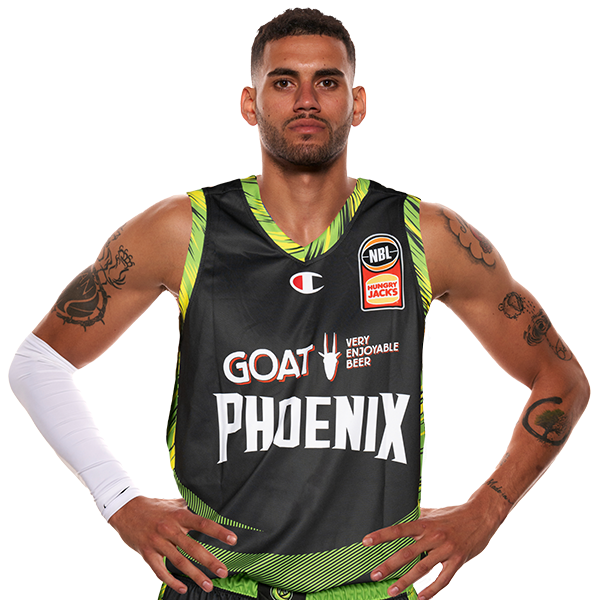
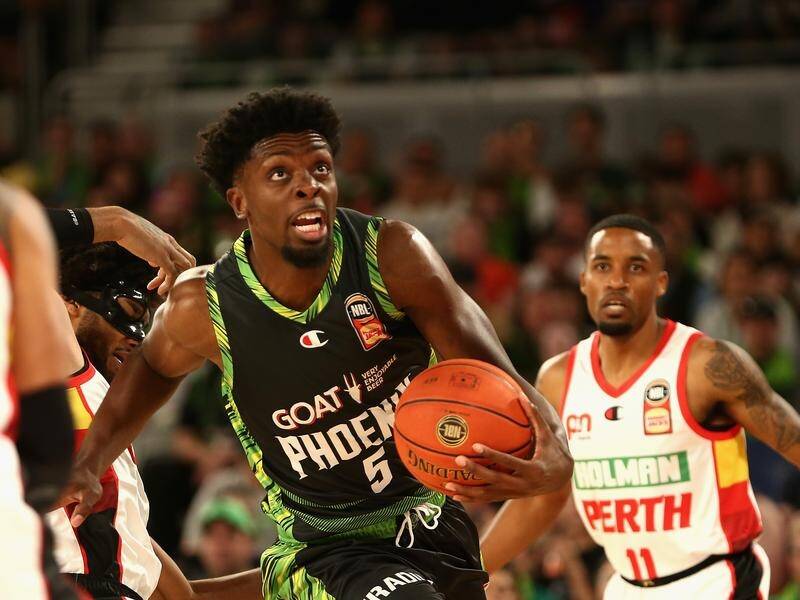
South East Melbourne entered Mike Kelly’s first season as head coach after a 15-13 NBL23 campaign ended with a 106-99 loss to Perth in the Play-In Qualifier. Kyle Adnam (to Sibiu), Trey Kell III (to Adelaide), Ryan Broekhoff (retired) and Dane Pineau (to New Zealand) departed, while Mitch Creek, Alan Williams, Gary Browne, Reuben Te Rangi and Owen Foxwell returned. Kelly added Ben Ayre (via Cairns), Gorjok Gak (via Brisbane), Matt Kenyon (via Tasmania), Rhys Vague (via Kagawa), Craig Moller (via Würzburg) and import Will Cummings (via Zhejiang).
After leaving the NBL in 2021 to play in Germany, Moller returned to Australia and signed a one-year deal with South East Melbourne for NBL24. His time with Würzburg had been derailed when he shattered his left kneecap in April 2022, keeping him out of basketball for more than a year before returning to the court with the Phoenix. Moller reunited with Kelly, who had been part of Melbourne United’s 2018 championship team and had also coached him at the 2017 World University Games alongside new Phoenix teammates Vague and Kenyon.
“I hope to bring leadership and professionalism to the group, having played with some of Australia’s best earlier in my NBL career. It helps knowing the league, many familiar faces, the pace it’s played at, how its refereed, so I’ll hopefully be able to slot straight back in,” Moller said after signing the deal.
South East Melbourne opened the season against Melbourne United at John Cain Arena on September 28, where Moller (9 points and 7 rebounds) started and played 22 minutes in an 82-67 loss. Ayre (17 points) and Cummings (14 points, 3 rebounds, 3 assists, and 3 steals) led the Phoenix, while Travers (20 points and 8 rebounds) was Melbourne’s best.
Moller (6.2 points and 5.3 rebounds across 12 games) started 11 of his 12 appearances and averaged 22.4 minutes as Kelly used his length and versatility alongside Creek in the starting lineup. His impact extended beyond his scoring, with Moller sitting 10th in the NBL for overall plus-minus at +45 by Round 7, while no other Phoenix player ranked inside the league’s top 25 at that point. His defence and work on the offensive glass had become an important part of South East Melbourne’s early-season success.
Moller’s best game came against Melbourne United at John Cain Arena on November 12, where Moller (12 points, 9 rebounds, 1 assist, 2 steals, and 1 block) made four of six shots and two three-pointers, but United defeated South East Melbourne 92-83. Creek (19 points and 5 rebounds) and Browne (16 points, 4 rebounds, and 4 assists) led the Phoenix, while Goulding (27 points) was Melbourne’s leading scorer.
Moller’s comeback season ended against New Zealand on December 2 when he injured his right knee during the first quarter and took no further part in the game. Moller (3 points) had played only five minutes before leaving the court as South East Melbourne defeated the Breakers 90-79, with Creek (26 points, 7 rebounds, 2 assists, and 3 steals) and Cummings (15 points, 3 rebounds, and 3 assists) leading the Phoenix while Le’afa (17 points and 3 rebounds) was New Zealand’s top scorer. Scans confirmed Moller had ruptured the patella tendon in his right knee, requiring surgery and ruling him out for the remainder of NBL24, his second serious knee injury in consecutive years.
Creek (20.8 points and 6.7 rebounds across 23 games) led South East Melbourne in scoring and earned All-NBL Second Team honours, while Williams (16.7 points and 10.9 rebounds across 15 games) led the NBL in rebounding. Cummings (14.5 points, 3.3 rebounds, and 1.7 steals across 12 games) was released during December and replaced by Abdel Nader (14.4 points and 3.9 rebounds across 8 games), while Browne (13.2 points, 3.8 rebounds, 4.6 assists, and 1.2 steals across 20 games) battled injuries throughout the year. Cook (13.3 points and 7 rebounds across 3 games) had earlier served as Williams’ injury replacement, while Ayre (10.7 points across 27 games), Kenyon (5.9 points and 5.1 rebounds across 25 games), Te Rangi (5.8 points across 26 games) and Gak (5.4 points and 4.9 rebounds across 17 games) were the other main contributors.
Moller remained sidelined as South East Melbourne closed the season against Sydney at John Cain Arena on February 17, where Foxwell (16 points, 4 rebounds, and 3 assists) and Creek (13 points and 3 rebounds) led the Phoenix, but Hogg (25 points and 7 rebounds) powered the Kings to a club-record 122-67 victory as South East Melbourne finished last with a 10-18 record.
Craig Moller played six seasons across three NBL teams. This included the Sydney Kings, Melbourne United and South East Melbourne Phoenix. He averaged 4.8 points, 3.7 rebounds, and 1 assists in 147 NBL games.
| SEASON | AGE | TEAM | TEAM RECORD | GP | MINS | PTS | REB | AST | OR | DR | STL | BLK | TO | PF | FGM | FGA | FG% | 3PM | 3PA | 3P% | FTM | FTA | FT% | TS% | EFG% | HS |
|---|---|---|---|---|---|---|---|---|---|---|---|---|---|---|---|---|---|---|---|---|---|---|---|---|---|---|
| 2023-24 | 29 | South East Melbourne | 10-18 (10) | 12 | 268.4 | 74 | 63 | 6 | 25 | 38 | 9 | 6 | 13 | 20 | 27 | 64 | 42% | 8 | 29 | 28% | 12 | 20 | 60% | 50% | 48% | 12 |
| 2020-21 | 26 | Sydney | 19-17 (5) | 36 | 734.5 | 231 | 204 | 71 | 69 | 135 | 19 | 23 | 25 | 65 | 85 | 188 | 45% | 22 | 58 | 38% | 39 | 54 | 72% | 54% | 51% | 20 |
| 2019-20 | 25 | Sydney | 20-8 (1) | 17 | 268.5 | 104 | 59 | 18 | 22 | 37 | 7 | 2 | 9 | 24 | 37 | 84 | 44% | 7 | 36 | 19% | 23 | 26 | 88% | 54% | 48% | 13 |
| 2018-19 | 24 | Melbourne | 18-10 (2) | 34 | 398.6 | 132 | 93 | 24 | 32 | 61 | 9 | 6 | 15 | 52 | 50 | 120 | 42% | 15 | 51 | 29% | 17 | 25 | 68% | 50% | 48% | 11 |
| 2017-18 | 23 | Melbourne | 20-8 (1) | 35 | 455.3 | 124 | 95 | 26 | 38 | 57 | 11 | 9 | 18 | 68 | 46 | 127 | 36% | 13 | 49 | 27% | 19 | 31 | 61% | 44% | 41% | 12 |
| 2016-17 | 22 | Sydney | 13-15 (7) | 13 | 111.1 | 43 | 30 | 4 | 13 | 17 | 1 | 4 | 2 | 16 | 15 | 31 | 48% | 3 | 13 | 23% | 10 | 10 | 100% | 60% | 53% | 9 | Totals | 147 | 2236 | 708 | 544 | 149 | 199 | 345 | 56 | 50 | 82 | 245 | 260 | 614 | 42.3% | 68 | 236 | 28.8% | 120 | 166 | 72.3% | 52% | 48% | 20 |
| SEASON | AGE | TEAM | TEAM RECORD | GP | MINS | PTS | REB | AST | OR | DR | STL | BLK | TO | PF | FGM | FGA | FG% | 3PM | 3PA | 3P% | FTM | FTA | FT% | TS% | EFG% | HS |
|---|---|---|---|---|---|---|---|---|---|---|---|---|---|---|---|---|---|---|---|---|---|---|---|---|---|---|
| 2023-24 | 29 | South East Melbourne | 10-18 (10) | 12 | 22.4 | 6.2 | 5.3 | 0.5 | 2.1 | 3.2 | 0.8 | 0.5 | 1.1 | 1.7 | 2.3 | 5.3 | 42% | 0.7 | 2.4 | 28% | 1.0 | 1.7 | 60% | 50% | 48% | 12 |
| 2020-21 | 26 | Sydney | 19-17 (5) | 36 | 20.4 | 6.4 | 5.7 | 2.0 | 1.9 | 3.8 | 0.5 | 0.6 | 0.7 | 1.8 | 2.4 | 5.2 | 45% | 0.6 | 1.6 | 38% | 1.1 | 1.5 | 72% | 54% | 51% | 20 |
| 2019-20 | 25 | Sydney | 20-8 (1) | 17 | 15.8 | 6.1 | 3.5 | 1.1 | 1.3 | 2.2 | 0.4 | 0.1 | 0.5 | 1.4 | 2.2 | 4.9 | 44% | 0.4 | 2.1 | 19% | 1.4 | 1.5 | 88% | 54% | 48% | 13 |
| 2018-19 | 24 | Melbourne | 18-10 (2) | 34 | 11.7 | 3.9 | 2.7 | 0.7 | 0.9 | 1.8 | 0.3 | 0.2 | 0.4 | 1.5 | 1.5 | 3.5 | 42% | 0.4 | 1.5 | 29% | 0.5 | 0.7 | 68% | 50% | 48% | 11 |
| 2017-18 | 23 | Melbourne | 20-8 (1) | 35 | 13.0 | 3.5 | 2.7 | 0.7 | 1.1 | 1.6 | 0.3 | 0.3 | 0.5 | 1.9 | 1.3 | 3.6 | 36% | 0.4 | 1.4 | 27% | 0.5 | 0.9 | 61% | 44% | 41% | 12 |
| 2016-17 | 22 | Sydney | 13-15 (7) | 13 | 8.5 | 3.3 | 2.3 | 0.3 | 1.0 | 1.3 | 0.1 | 0.3 | 0.2 | 1.2 | 1.2 | 2.4 | 48% | 0.2 | 1.0 | 23% | 0.8 | 0.8 | 100% | 60% | 53% | 9 | Total | 147 | 15.2 | 4.8 | 3.7 | 1.0 | 1.4 | 2.3 | 0.4 | 0.3 | 0.6 | 1.7 | 1.8 | 4.2 | 42.3% | 0.0 | 0.0 | 28.8% | 0.5 | 1.6 | 72.3% | 52% | 48% | 20 |
| POINTS | REBOUNDS | ASSISTS | STEALS | BLOCKS | TURNOVERS | TRIPLE DOUBLES | 20 | 11 | 6 | 3 | 3 | 4 | 0 |
|---|
During the 2016 off-season, Craig Moller played state league basketball with the Sutherland Sharks in the Waratah League. Mid-season, he transferred to the Ballarat Miners in the South East Australian Basketball League (SEABL) to help cover team injuries.
On 23 November 2016, Moller re-signed with the Ballarat Miners for the 2017 SEABL season. He was named SEABL Player of the Week twice—once in Round 3 (11 April 2017) and again in Round 11 (19 June 2017). Across 22 games that season, he averaged 17.7 points, 10.8 rebounds, and 3.0 assists per game.
On 5 January 2018, Moller signed with the Hobart Chargers for the 2018 SEABL season. On 25 May 2018, he delivered a standout performance with 43 points and 15 rebounds in a 95–86 win over the Ballarat Miners, earning SEABL Player of the Week for Round 8. In August, he helped lead the Chargers to the SEABL Championship. Over 23 games, Moller averaged 23.2 points, 12.1 rebounds, 3.0 assists, and 1.2 steals per game.
In February 2022, Moller was named in a 17-man Boomers squad ahead of the FIBA World Cup Qualifiers in Japan. He went on to play three games during the 2023 FIBA World Cup Qualifiers, averaging 7.3 points, 8 rebounds, and 3.7 assists per game.
Following the 2018–19 season, Craig Moller joined the Southern Huskies for their debut campaign in the New Zealand NBL. He played for the Huskies in what would be their only season in the league, averaging 15.9 points, 10.3 rebounds, and 2.2 assists across 16 games.
After two seasons of steady contributions to the Sydney Kings’ rotation, Moller embarked on his first European stint, signing with Würzburg in Germany’s Basketball Bundesliga in June 2021. Late in his first season, he suffered a broken leg that ruled him out of the 2022 playoffs and forced him to miss the entire 2022–23 season.
In 2025, Moller signed a tryout contract with Brose Bamberg in the German Bundesliga, returning from a second knee injury sustained during the 2023–24 NBL season. In his comeback, he averaged (1.9 points, 1.9 rebounds, and 0.6 assists) in limited minutes while shooting 30.6% from the field and 21.4% from three across the 2024–25 international season.
After wrapping up his stint in Germany, Moller spent the remainder of the 2025 NBL offseason playing for the Taranaki Airs in the NZNBL. There he played alongside fellow NBL talent Carlin Davison. Some of of his best games included his 19 points, 11 rebounds, and 1 assist on 8/16 shooting (50%) in an 84–72 win over the Hawkes Bay Hawks. Another came in a 98–89 win over Canterbury, where he tallied (27 points, 11 rebounds, and 7 assists) while shooting 9-of-11 from three-point range (81%) in a performance that helped lift Taranaki to third on the ladder.
- SEABL champion (2018)
-
2× All-SEABL First Team (2017, 2018)
Whilst we try to source as much information as we can for every player who has ever played in the NBL some information on a player profile may be missing. If you have additional information on a player you'd like us to add to a profile, please send it to us using the enquiry form below.
Submissions are then sent to info@aussiehoopla.com