

In order to survive and prosper in the competitive Australian sporting market a sport must be able to market itself in a way that attracts the corporate dollar through sponsorship and media deals. The corporate dollar wants value for money and a product that makes good business sense.
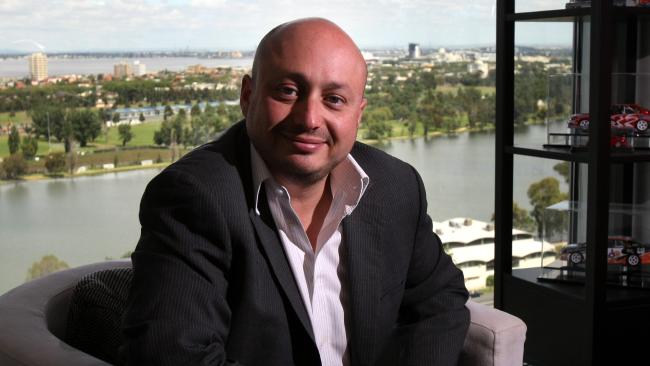
Media outlets need viewers in order to remain commercially viable and profitable and sponsors need to be associated with a brand that enhances their product. Therefore it is vital to build a brand that is desirable and this is the challenge that presents itself to Larry Kestelman, the new executive director of the National Basketball League.
Since 1979 when the NBL commenced, the success of the competition has fluctuated: from attracting record crowds in the mid 1990’s to the competition struggling to survive in recent history with several clubs going into voluntary administration and little television coverage of the sport. Larry Kestelman recently stated,
‘We have a very progressive agenda to position the NBL as the number one sports entertainment product in Australia’.
This is a very bold statement considering the competitive sports market that currently exists in Australia and the inability in the past for the NBL to grow and prosper in Australia.
Before investigating in more detail what Larry Kestelman’s agenda for the NBL entails, it is necessary to look briefly at what has brought the NBL to this point.
Prior to Kestelman purchasing a controlling stake in the competition in May 2015 with an injection of six million dollars, there were talks that that NBL was in doubt for the 2015/16 season. Out of the eight clubs two, the Townsville Crocodiles and the Wollongong Hawks, had gone into voluntary administration over the off season. In the 2014/2015 season the league had minimum television coverage with two games a week being shown on free to air television, Channel Ten and sometimes its secondary channel, Channel One.
The finals series between the New Zealand Breakers and the Cairns Taipans, received delayed coverage. The crowds at games were poor for most clubs except two exceptions: Melbourne United who under the ownership of Kestelman had marketed the clubs assets successfully to spectators and corporations alike and the Perth Wildcats who have been the competitions most successful franchise making the play-offs twenty-nine years in a row. Coming into the 2015/16 season the NBL had not secured any media deal, had no sponsors and the brand was virtually invisible with little to no marketing in any mainstream media outlets.
In thirty-six years since the leagues inception in 1979, thirty-two teams have folded or merged with other teams. The amount of clubs to cease operations since 2005 is six, two of those being in the important south-east Queensland market, the Brisbane Bullets in 2008 and the Gold Coast Blaze in 2012.
The NBL’s struggle, particularly over the last two decades, can be attributed to several factors such as sub-standard or non-existent television coverage, little to no marketing of the league or players and the financial struggle of clubs that have not attracted the ‘right’ ownership and have not taken advantage of their commercial assets or marketed their assets successfully.
The responsibility for the failure of the league and the afore-mentioned struggles is a legacy of an ineffective governing body. As Paul Suttor from the Sydney Morning Herald stated,
‘Over the past decade there has been a raft of structural changes from Basketball Australia taking over (the NBL) to the ‘de-merger’ where control of the competition was handed back to the clubs’.
Both of these models of governance and those in leadership positions have failed to grow the sport despite a game that has one of the largest grassroots participation levels in Australia and where both male and female national teams have been exceptionally successful on the world stage with the female national team, the Opals, currently ranked third in the world and the male national team, the Boomers, currently ranked ninth in the world.
With all this in mind, leading into the 2015/16 season the outlook for the NBL did not look promising. Until Larry Kestelman stepped in. As stated earlier, in May 2015 Kestelman took a 51% controlling stake in the NBL which all seven other club owners signed off on.
There are fans of the NBL that believe that as Kestelman is the owner of Melbourne United, a conflict of interest exists and he cannot be a club owner and the controlling owner of the NBL. This is a valid point but without the injection of funds from Kestelman then there was a real prospect of the NBL folding. Only time will tell if this potential conflict of interest becomes a problem but until then most of those involved in the sport welcome the injection of cash and business expertise that Kestelman brings.
Before exploring his vision for the NBL it is important to briefly look at the background of Larry Kestelman.
He is a businessman who made his fortune via the property and internet markets. His interest in basketball began with his attendance at Melbourne Tigers (now known as Melbourne United) games, followed by becoming a sponsor of the team to owning the team. He states,
‘It is an amazing event that we (his family) fell in love with from an entertainment point of view. You don’t have to be a basketball expert, it’s just a great way to spend two or three hours with family, friends and business.’
It is this idea as ‘sports entertainment’ that Kestelman and others believe is the key to the success of the NBL. It is more about how the game can be packaged in order to make it desirable to broadcasters which then makes it desirable to the sponsors. The more viewers, the more exposure the sponsors achieve for their products. As Kestelman stated
‘it’s not just the game of basketball, it’s what happens in between; the interviews, the entertainment, the cheerleaders, the engagement with the fans and how that all presents.’
Devotees of the NBL agree that the quality of the play has been excellent over the years but the league has not been a commercial success due to the lack of product marketing and exposure of the game to mass audiences.
A successful business model is what has been lacking and this is what the fans of the game hope that Larry Kestelman can bring to the table. His agenda includes ‘an overall statement of creating what will be a professional business of entertainment with the actual centre being the game of basketball’.
His agenda of making basketball the number one sports entertainment product in Australia is ambitious as it competes with football (soccer) and cricket in the summer.
In order to compete with Cricket Australia’s Big Bash Summer League the NBL has recently announced its 2015/16 fixtures will include moving from a weekend only playing schedule to a Wednesday to Sunday five day schedule, pitting the NBL against the Big Bash Summer League in a fight for market share of mid-week sports fans.
From the beginning Kestelman has stated that the cornerstone of his business model was to secure a broadcast rights deal for the NBL. In order to achieve this he saw a need to ‘refresh’ the brand as a signal to commercial interests that the NBL was entering a new era. Other than re-branding the product and securing a broadcast rights deal his agenda included:
- improving the governance of the league by ensuring the ‘right’ people are running the NBL,
- attracting sponsors, which the re-branding and broadcast rights deal would encourage,
- supporting the existing clubs in order for them to take full advantage of their assets and become profitable,
- expanding into key markets, both in Australia and Asia, and lastly
- creating a high quality digital multi-media experience for fans which includes improving the NBL website and giving fans access to games via live streaming on digital devices.
As stated the first step in achieving Kestelman’s agenda was to put in place improved governance.
Kestelman recruited the following influential and experienced people to the NBL Board:
Bob Elphinstone -a former president of the sport’s world governing body (FIBA) and a foundation NBL board member;
Laura Anderson- an international company director and adviser to government and industry who sits on the board of the Australian Grand Prix Corporation;
and Colin Smith- a sports media rights specialist.
They joined Chairman Graeme Wade and leading accountant Adrian Garrone.
In addition the NBL sought the help of leading media rights consultant, Shane Mattiske, to help broker a broadcast deal. Mattiske had a key role in the National Rugby League’s recent record-breaking $1.2 billion contract. He quit as the NRL’s head of strategy last year.
Finally the NBL announced that Jeremy Loeliger was to become the NBL’s new General Manager.
Loeliger’s background is a partner at leading commercial law firm. The appointment of this highly credentialed board by Kestelman, with their strong business, legal and sports backgrounds was a clear indication that Kestelman was entering into this new business venture with all guns blazing.
The next step in Kestelman’s vision was to rebrand his product, the NBL. This was a vital step as in order to have the business confidence of potential sponsors and broadcasters then it had to be clear to these commercial interests that the league was changing.
The financial instability and irresponsible management that threatened the leagues self-destruction in the past, and the changes to the rules under the governance of Basketball Australia which turned many fans off the league, needed to be put in the past. Kestelman engaged Publicis Mojo and Fox Sports Pulse to rebrand the NBL which resulted in a new and improved ‘classic’ style logo and a new and improved website.
The NBL has also been pushing the hashtag #HARDBALL. Unfortunately for many fans this has caused some frustration because if you type this hashtag into Twitter then it takes you to an American political show called ‘Hardball’. Kestelman committed 1.5 million dollars to a national marketing campaign for which the launch has strategically been scheduled to begin after the AFL and NRL Grand Finals.
It is important to remember that Kestelman only took the league over in June 2015 and has given himself a 100 day time-frame, before the start of the league on the 7th of October 2015, to start realising his vision.
Once rebranded, the number one priority for Kestelman was to negotiate a broadcast deal for the NBL. He stated,
‘I think what we will have to do is learn how to play the games in a commercial way which means to the rule of the broadcasters. They will give us a window… and it’s for us to figure out how we will fit into that window and deliver what they need from us.’
This statement clearly places the broadcaster’s needs at the forefront. Kestelman realises that his product, the NBL, must fit into the needs of the broadcaster and is willing to alter the product in order to achieve this.
Many sport puritans object to this but in order for the product (NBL) to be sold then it needs to fit the needs of the consumer (broadcaster) who are paying for the product. This means players being available for interviews during breaks and TV time outs being instituted. As Kestelman has stated,
‘they (broadcasters) need to see us behave in a way befitting a television, entertainment sport. They need to see a quality product week in, week out.’
Again the game of basketball is central to the entertainment but only one part of the entertainment experience. It is how that basketball is packaged within the allotted time frame, dictated by the broadcaster, which is paramount.
True to his word on the 3rd of September 2015, the NBL announced a five year partnership with Fox Sports to broadcast all games live in High Definition in Australia. The amount the deal was worth was not disclosed and it is to be reviewed after the first year.

This was exciting news for fans as television coverage of the league in previous years had been below par. Never before had all games been broadcast and in high definition. Kestelman stated,
‘Fans love watching live sport- and being able to deliver basketball, produced to the high standards for which Fox Sports are renowned, live to our fans is of fundamental importance to being a premier summer-sport in Australia’.
A part of the broadcast deal was that the NBL would ensure that a Brisbane team would re-enter the competition in the 2016/17 season. As south-east Queensland is predicted to have the largest growth in population of any region in Australia in the next thirty years it is a vital market for all sports to enter and a market that the broadcasters view as essential in order to be commercially successful as possible.
The NBL announced soon after the broadcast deal was finalised that a Brisbane team would definitely re-enter the competition in 2016/17.
Furthermore on the 29th of September, 2015 the NBL announced a similar deal with the New Zealand pay TV Company, Sky Television, to broadcast every New Zealand Breakers game home or away live on Sky Sport.
Sky is contracted to show at least three live games each week (including the New Zealand Breakers) with all other games throughout the season to be shown on a delayed basis.
Another broadcasting option for the NBL is broadcasting at least one game on free-to-air television per week. The NBL understands the importance of this in order to raise the game’s profile in Australia and is currently in negotiations with all three of the commercial networks in order to achieve this. Loeliger, the NBL General Manager, stated that he would like to see a deal that involves a rights fee rather than the league effectively buying air time via sponsorship’.
Once the broadcasting deal was secured then the sponsors that the NBL coveted began to emerge. Chemist Warehouse came on board as a major ‘partner’ of the NBL. Like all sponsors that followed, the press releases that accompanied the announcement highlighted how the sponsor’s product aligned with the NBL as a product. The NBL media release read,
‘Playing elite sport requires our athletes to look after their bodies, and live a clean, healthy lifestyle. Chemist Warehouse is the premier destination for people who practice a fitness lifestyle in a healthy way, providing great synergies with the NBL brand….We are committed to repositioning the NBL as the number-one summer entertainment sport in this country and working with partners who support that vision. Chemist Warehouse have dominated their own market in recent years with an aggressive growth strategy, and understand our vision to do the same’.
This clever marketing strategy which aligns the two products in a meaningful way was continued when media releases announced other sponsor signings: Wilson Basketballs, US athletic products McDavid and Shock Doctor, Europcar Car Rentals, Virgin Airlines and Telstra. The media release announcing Telstra read:
‘Today’s announcement marks an exciting milestone for the NBL. We have a real agenda to create Australia’s most innovative, technology-driven sports brand where fans can access content 24/7 from wherever they are in Australia. With Telstra on board, we can genuinely strive to be the most connected game ever’.
This partnership signalled an important part of Kestelman’s vision for the NBL. He believes that the demand for local basketball will only be fuelled when a high quality product is made available to the fans on their digital devices.
In the past NBL TV offered this live streaming of NBL games but the product was sub-standard and unreliable and a constant frustration to fans. At present Fox Sports have the digital rights for NBL games and will stream them to subscribers via digital platforms, but the league has retained the right to have a third party create a subscription streaming product for fans without pay television. The NBL are currently in negotiation with digital providers in a view to having this option available to the fans in the near future.
Kestelman’s vision is to give the league a much improved digital presence ‘which will include NBA (National Basketball Association), NBL and overseas club basketball coverage to encourage fans of overseas basketball to increase their interest in the local competition’. An exceptional product, linking NBL and NBA, is essential in order to encourage NBA fans, of which there are many, to also consume the local game.
The next step in Kestelman’s progressive agenda to make basketball the number one summer sports entertainment product in Australia is ensuring that existing clubs are commercially viable and expanding the league. Kestelman recognises that if the smaller regional clubs such as Townsville Crocodiles and Illawarra Hawks are to survive then they must be given the tools to prosper.
He believes the clubs have a strong product that needs to be marketed not only at a national level but at a local level. The selling of corporate seating and signage at the stadiums must be a priority for clubs in order to raise revenue and Kestelman has provided the clubs with the ‘know how’ to build sustainable business plans that take advantage of what is widely acknowledged as a high quality product.
As stated earlier Brisbane was a priority for expansion into the all-important south-east Queensland market and this has been confirmed with the Brisbane Bullets set to be apart of the 2016/17 season.
Expansion into Asia is also seen as a high priority. Kestelman has stated,
‘we have a big vision of both delivering our product into Asia and also a longer-term vision of attracting a number of Asian clubs to play as a part of our competition’.
In order to tap into this potentially lucrative market the NBL has plans from the 2016/17 season to allow each team to have an Asian player sit outside the salary cap as is the case with the two marquee players allowed at present.
Expanding into Asia makes good business sense as, like football (soccer), basketball is extremely popular in Asian countries and large populations such as China present a potentially lucrative market for the NBL to tap into.
In May 2015 when Larry Kestelman first proposed his vision to make basketball the number one sports entertainment product in Australia, Nick Smart commented in the Herald Sun,
‘Kestelman wants to lead the NBL out of the abyss and turn it into a viable commercial venture.’
Most would agree that he has gone a long way to achieving this and in a short amount of time. The television broadcast deal and sponsors on board for the upcoming season give those involved in the league, and the fans in particular, optimism for the future of the league, particularly when compared to the end of the 2014/15 season when the league was on the verge of collapse.
If Kestelman and his Board of Directors continue on this path then the vision he has for professional basketball in Australia is definitely achievable.