Rob Baker
October 27, 2025


BIO: Max Darling was born in Nelson (New Zealand).
Max Darling made his NBL debut with the Illawarra Hawks at 20 years of age. He went scoreless in his first NBL game.
As part of Brian Goorjian’s rebuilt Hawks roster, Max Darling (via Croatia) signed a three-year contracted deal after spending two professional seasons with KK Vrijednosnice Osijek. The New Zealand junior had bypassed college to play professionally in Europe before joining Illawarra as a young reserve forward. “I’ve always wanted to play in the NBL and this is the greatest opportunity for me to do so. I’ve heard he (Goorjian) is an amazing coach and I can’t wait to get to work. I’m happy to do whatever they need from me,” Darling said.
Darling (0 points) made his NBL debut against Cairns on January 18, playing 3:30 as the Hawks defeated the Taipans 92-76 behind Harvey (25 points, 7 assists, and 2 steals), Jessup (24 points, 5 rebounds, and 2 steals) and Simon (10 points, 12 rebounds, and 4 blocks), while Majok Deng (20 points and 4 rebounds) led Cairns.
Darling (0.7 points across 14 games) remained deep in Goorjian’s rotation and was used primarily for short stretches off the bench. He did not suffer a documented injury during the season, with his limited appearances resulting from his role and competition for minutes rather than injury.
Darling scored his first NBL points against New Zealand on February 22, where Darling (2 points and 1 rebound) played 3:16 as Illawarra defeated the Breakers 102-88 behind Harvey (22 points, 4 assists, and 3 steals), Jessup (20 points and 3 steals) and Bairstow (17 points), while Corey Webster (22 points) and Tai Webster (20 points, 9 rebounds, and 7 assists) led New Zealand.
Darling’s best game came against Melbourne on March 21, where Darling (3 points and 1 rebound) played 4:26 and made one of his three field-goal attempts, but United defeated Illawarra 75-65. Jessup (13 points, 4 rebounds, and 4 steals), Froling (11 points and 11 rebounds) and Harvey (11 points, 5 rebounds, and 2 steals) led the Hawks, while Jock Landale (19 points and 8 rebounds) and Chris Goulding (16 points and 5 assists) led Melbourne.
With Illawarra missing several regular rotation players against Sydney on April 24, Darling (2 points and 2 rebounds) received 9:18 off the bench as the Hawks pushed the Kings into overtime. Froling (22 points, 12 rebounds, and 2 blocks), Harvey (18 points, 6 rebounds, and 3 assists) and Simon (16 points, 7 rebounds, 3 assists, 5 steals, and 2 blocks) led Illawarra, while Casper Ware (18 points and 4 assists), Jordan Hunter (16 points, 10 rebounds, and 2 blocks) and Craig Moller (12 points, 9 rebounds, and 2 blocks) led Sydney to a 79-75 win.
Harvey (20 points, 3.6 rebounds, 3.1 assists, and 1.5 steals across 37 games) led Illawarra in scoring, Froling (11.3 points, 7 rebounds, and 1.5 blocks across 39 games) won the NBL Most Improved Player award and Simon (8.7 points, 5.6 rebounds, and 1.8 steals across 39 games) won the Damian Martin Trophy as the Hawks finished third with a 20-16 record. Darling’s limited role ultimately led the Hawks and Darling to mutually agree to part ways after the season, with Darling looking for greater playing opportunities.
Darling did not enter game one of the semifinals at RAC Arena, where Jessup (17 points and 4 rebounds), Simon (16 points, 9 rebounds, 3 assists, and 2 steals), Froling (10 points, 7 rebounds, 4 assists, 2 steals, and 2 blocks) and Harvey (10 points, 3 rebounds, and 2 steals) led Illawarra, while Blanchfield (24 points) and Mooney (13 points and 15 rebounds) led Perth. Simon’s putback dunk with 15 seconds remaining gave the Hawks a 74-72 win.
Game two moved to the WIN Entertainment Centre, where Darling did not enter the game as Harvey (24 points and 4 steals), Jessup (11 points) and Deng (9 points and 4 rebounds) led Illawarra, while Mooney (18 points and 10 rebounds), Travers (13 points, 10 rebounds, and 3 assists) and Steindl (12 points) led Perth to a 79-71 win.
Darling did not play in game three at RAC Arena, where Froling (14 points, 8 rebounds, and 4 blocks), Harvey (10 points) and Simon (9 points, 11 rebounds, and 4 assists) led Illawarra, while Blanchfield (24 points, 5 rebounds, and 3 steals), Mooney (16 points and 15 rebounds) and Norton (15 points, 4 rebounds, 2 assists, and 2 steals) led Perth to a 79-71 win.
NEW ZEALAND BREAKERS
2023/24
Seeking another championship opportunity after losing the NBL23 decider, New Zealand retained William McDowell-White, Cameron Gliddon, Izayah Le’Afa and captain Thomas Abercrombie. Coach Mody Maor recruited Finn Delany (via Bonn), Mangok Mathiang (via Hapoel Eilat), Dane Pineau (via South East Melbourne), Mantas Rubstavicius (via Lietkabelis), Parker Jackson-Cartwright (via Besiktas), Zylan Cheatham (via Bayern Munich) and Justinian Jessup (via Zaragoza) after Barry Brown Jr., Jarrell Brantley and Dererk Pardon exited.
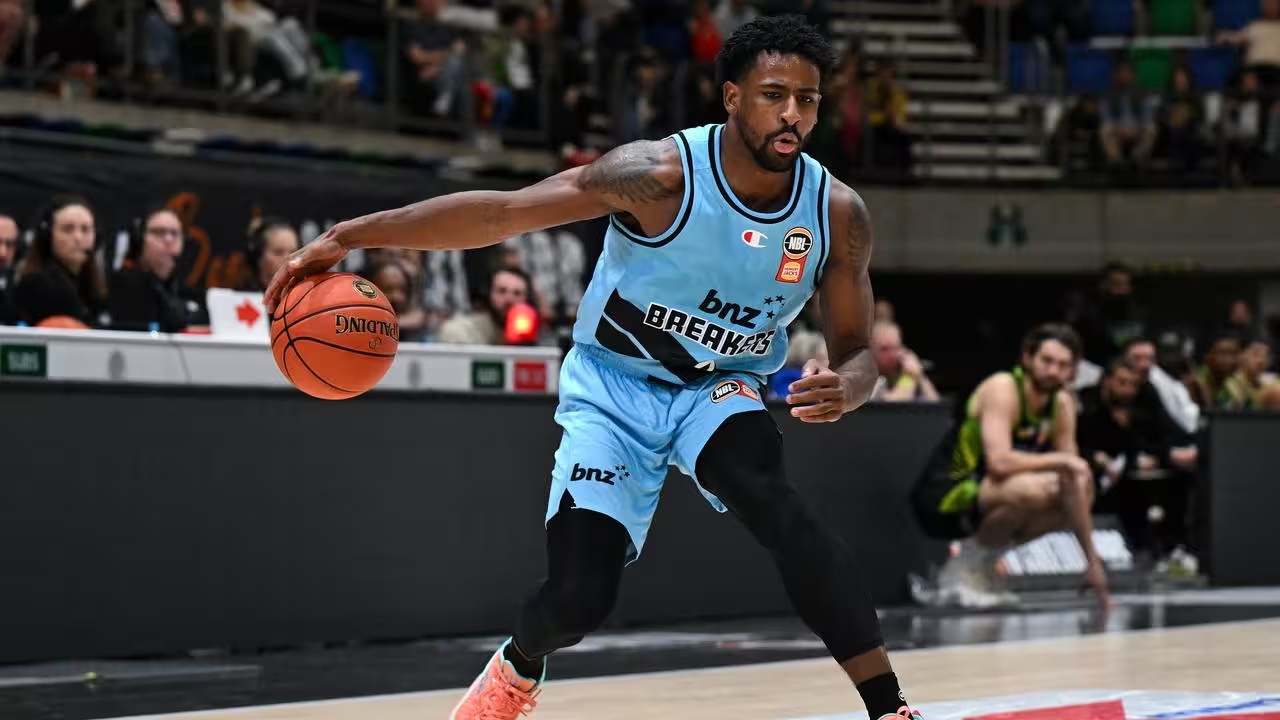
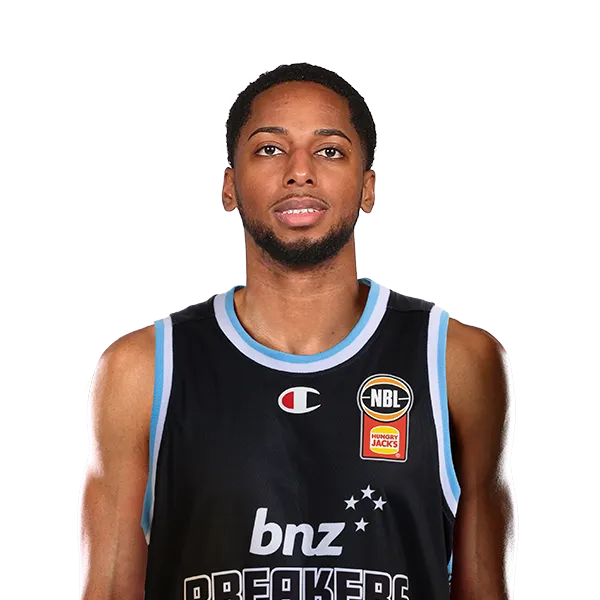
Darling joined on a two-year development player agreement containing a mutual option for a full roster position during the third season.
Darling made his NBL debut in his hometown of Christchurch against Adelaide on November 30, becoming the 150th player to represent the Breakers. Darling (0 points) played the final 57 seconds as Lamb (24 points, 6 rebounds, and 6 assists) and Le’Afa (21 points and 2 steals) led New Zealand, while Vasiljevic (14 points, 5 rebounds, and 4 assists) was Adelaide’s best in a 96-83 victory.
Darling (0 points across 1 game) remained a development player and did not receive another appearance. New Zealand finished sixth with a 13-15 record before defeating Sydney 83-76 and losing 88-85 to Illawarra, with Darling remaining unused during both postseason games.
2024/25
New Zealand entered the off-season after finishing sixth with a 13-15 record, defeating Sydney 83-76 in the first play-in game before an 88-85 loss to Illawarra ended its season. Anthony Lamb (to Trento), William McDowell-White (to Berlin), Izayah Le’Afa (to Sydney), Justinian Jessup (to Ulm), Finn Delany (to Shizuoka), Mantas Rubstavicius (to Panevezys), Zylan Cheatham (to Nagoya), Mangok Mathiang (to Ningbo), Dan Fotu and Dom Kelman-Poto exited the team, while Thomas Abercrombie and Cameron Gliddon retired.
Parker Jackson-Cartwright, Dane Pineau, Carlin Davison and Alex McNaught returned, while development player Max Darling was elevated to the full roster on a two-year deal with a third-year team option. Head coach Mody Maor (to Nagasaki) was replaced by Petteri Koponen (via Helsinki), who added Matt Mooney (via Trento), Sam Mennenga (via Cairns), Mojave King (via Indiana), Mitch McCarron (via Adelaide), Jonah Bolden (via Sydney), Sean Bairstow (via Richmond), Grant Anticevich (via Gottingen), Freddie Gillespie (via Belgrade), Karim Lopez (via Badalona) and Kaia Isaac (via Canterbury).
The former development player earned his promotion after helping Canterbury win consecutive NZNBL championships. “It’s an amazing feeling to be elevated to a full roster spot. Reaching this position has been my number one goal,” he said.
New Zealand opened the season at HoopsFest in Perth with a 91-87 win over Brisbane, where the newly elevated forward (1 assist) started and played 16 minutes. Mennenga (22 points and 7 rebounds) and Jackson-Cartwright (20 points, 3 rebounds, 11 assists, and 1 steal) led the Breakers, while Keandre Cook (25 points, 4 rebounds, 2 assists, 2 steals, and 1 block) was Brisbane’s best as New Zealand held on after building a 26-point lead.
Darling (5.4 points across 21 games) made nine starts and shot 50 percent from the field and 35 percent from three, providing size, floor spacing and frontcourt depth during his first season as a fully contracted player.
Darling’s best game of the season came against Perth at Spark Arena on October 19, where he made four three-pointers and finished with 15 points, 4 rebounds, 1 assist, and 2 blocks on 5-of-7 shooting. Mooney (28 points, 4 rebounds, 5 assists, and 2 steals) and Jackson-Cartwright (13 points, 3 rebounds, 9 assists, 5 steals, and 1 block) also contributed, while Tai Webster (20 points, 6 rebounds, and 6 assists) led Perth as New Zealand won 89-85 and improved to 3-1.
A groin injury then ruled Darling out of New Zealand’s next six games against South East Melbourne, Sydney, Adelaide, Melbourne, Tasmania and Cairns. The Breakers continued their strong start during his absence and entered the FIBA break sitting second with a 7-3 record.
During the break, Gillespie (6.9 points, 5.3 rebounds, and 1.8 blocks across 9 games) requested his release (to Milan) and was replaced by Fall (11.4 points, 6.6 rebounds, and 1.5 blocks across 18 games), who joined New Zealand (via Nanjing) on a contract through the end of the 2025/26 season.
Darling returned after more than a month on the sidelines against Illawarra on November 28, finishing with 3 points and 1 rebound in nine minutes. Jackson-Cartwright (19 points, 3 rebounds, 3 assists, and 1 steal) and King (11 points and 2 rebounds) led New Zealand, while Lachlan Olbrich (21 points and 3 rebounds) led the Hawks to a 109-71 win.
He was listed but not used against Perth on December 1, with no further injury reason confirmed, before producing his second-best scoring performance against Melbourne four days later. Darling (12 points, 6 rebounds, 1 assist, and 2 blocks) shot 4-of-5 from the field and made both of his three-point attempts, while Mennenga (17 points, 4 rebounds, and 2 assists) and Mooney (17 points, 4 rebounds, and 2 assists) led the Breakers, but Rob Loe (25 points, 3 rebounds, 3 assists, 1 steal, and 1 block) powered United to a 97-70 win.
New Zealand lost its first eight games following the FIBA break before returning to the winner’s list against Cairns on New Year’s Eve, where Darling (9 points and 1 steal) shot 3-of-5 from the field. Mooney (23 points, 3 rebounds, 10 assists, and 3 steals) and Fall (21 points, 12 rebounds, and 1 block) led the Breakers, while Tanner Groves (21 points, 8 rebounds, 1 steal, and 1 block) was Cairns’ best as New Zealand won 92-68.
Darling missed New Zealand’s February 1 win over Cairns through illness, completing the eight games he did not play during the season.
Jackson-Cartwright (18.6 points, 3.5 rebounds, 6.5 assists, and 1.6 steals across 21 games) and Mooney (16.1 points, 4.4 assists, and 1.6 steals across 29 games) led New Zealand’s backcourt, while Mennenga (11.7 points and 5.3 rebounds across 29 games), Lopez (9.6 points and 4.7 rebounds across 25 games), King (8.5 points across 17 games) and Bolden (6 points and 5.8 rebounds across 24 games) provided the other main contributions. Jackson-Cartwright won the Breakers’ MVP and Members Choice awards, King was named Defensive Player of the Year and Mennenga’s 29-point and 9-rebound performance against Tasmania was voted the Fans’ Moment of the Year.
After beginning the season 6-2 and entering the FIBA break at 7-3, New Zealand won only three of its final 19 games and finished ninth with a 10-19 record, missing the postseason.
New Zealand closed the season against Illawarra at Spark Arena on February 5, where Darling (10 points) shot 4-of-5 from the field and made both of his three-point attempts in nine minutes. Fall (16 points, 5 rebounds, 2 assists, 1 steal, and 3 blocks) and Lopez (12 points, 6 rebounds, 2 assists, and 1 block) led the Breakers, while Tyler Harvey (29 points, 5 rebounds, and 8 assists) led the Hawks to a 96-82 win.
2025/26
Following a 10-19 season that left New Zealand ninth and outside the playoffs, the Breakers entered 2025/26 without Matt Mooney, Jonah Bolden (to Illawarra), Mojave King (to Cairns), Grant Anticevich, Freddie Gillespie, Tacko Fall, Tai Wynyard, Dane Pineau (retired) and Mitch McCarron (retired), while Parker Jackson-Cartwright, Sam Mennenga, Karim Lopez, Sean Bairstow and Carlin Davison returned.
After returning as President of Basketball Operations in March 2025, Dillon Boucher worked with second-year head coach Petteri Koponen to rebuild around a stronger New Zealand playing core. In April, Boucher said the Breakers had contacted virtually every New Zealander playing outside New Zealand or Australia, directly or through their agents, with Finn Delany and Yanni Wetzell among the overseas players publicly discussed as potential recruits.
Coach Petteri Koponen returned for a second season and added Reuben Te Rangi (via Tasmania), Izayah Le’Afa (via Sydney), Rob Loe (via Melbourne), Taylor Britt (via Canterbury), Izaiah Brockington (via Vancouver) and Rob Baker II (via Berlin).
Max Darling returned for the second season of the two-year full-roster agreement he signed in 2024, which included a third-year team option.
Darling (2.8 points and 1.4 rebounds across 22 games) appeared mainly off the bench and made one start, with a fractured eye socket requiring surgery and sidelining him for six weeks during the middle of the season.
His best game came against Adelaide on January 24, where Darling (12 points, 2 rebounds, and 1 block) made all four three-point attempts in 11 minutes as New Zealand lost 112-110 in overtime, with Brockington (24 points, 4 rebounds, and 3 assists) and Lopez (21 points and 11 rebounds) leading the Breakers while Bryce Cotton (33 points, 5 rebounds, and 9 assists) starred for Adelaide.
Jackson-Cartwright (17.9 points, 4.4 rebounds, 7.4 assists, and 1.8 steals across 34 games) and Mennenga (17.8 points and 6.8 rebounds across 28 games) led New Zealand, with Brockington (16.1 points and 3.8 rebounds across 33 games) and Lopez (11.9 points, 6.1 rebounds, and 1.2 steals across 31 games) providing further support. Jackson-Cartwright earned All-NBL Second Team honours and Mennenga won the NBL’s Next Generation Award.
Darling (1 assist) played 11 minutes in New Zealand’s final regular-season game on February 19 as Mennenga (32 points, 9 rebounds, and 3 assists) and Jackson-Cartwright (19 points and 13 assists) led the Breakers to a 115-84 win over Cairns, leaving New Zealand seventh with a 13-20 record and outside the postseason.
The separate Ignite Cup Final was played three days later, where Darling (2 points and 1 assist) appeared for six minutes as New Zealand defeated Adelaide 111-107.
Max Darling played four seasons in the NBL, playing for both the New Zealand Breakers and the Illawarra Hawks. He averaged 3.2 points, 1.5 rebounds, and 0.4 assists in 58 NBL games.
| SEASON | AGE | TEAM | TEAM RECORD | GP | MINS | PTS | REB | AST | OR | DR | STL | BLK | TO | PF | FGM | FGA | FG% | 3PM | 3PA | 3P% | FTM | FTA | FT% | TS% | EFG% | HS |
|---|---|---|---|---|---|---|---|---|---|---|---|---|---|---|---|---|---|---|---|---|---|---|---|---|---|---|
| 2025-26 | 25 | New Zealand | 13-20 (7) | 22 | 205 | 61 | 30 | 10 | 10 | 20 | 4 | 3 | 4 | 35 | 23 | 50 | 46% | 8 | 24 | 33% | 7 | 13 | 54% | 54% | 54% | 12 |
| 2024-25 | 24 | New Zealand | 10-19 (9) | 21 | 311 | 114 | 45 | 11 | 10 | 35 | 5 | 5 | 13 | 43 | 40 | 80 | 50% | 17 | 48 | 35% | 17 | 29 | 59% | 61% | 61% | 15 |
| 2023-24 | 23 | New Zealand | 13-15 (6) | 1 | 1 | 0 | 0 | 0 | 0 | 0 | 0 | 0 | 0 | 1 | 0 | 0 | 0% | 0 | 0 | 0% | 0 | 0 | 0% | 0% | 0% | 0 |
| 2020-21 | 20 | Illawarra | 20-16 (3) | 14 | 67 | 10 | 13 | 3 | 6 | 7 | 0 | 1 | 1 | 14 | 4 | 16 | 25% | 0 | 8 | 0% | 2 | 6 | 33% | 27% | 25% | 3 | Totals | 58 | 584 | 185 | 88 | 24 | 26 | 62 | 9 | 9 | 18 | 93 | 67 | 146 | 45.9% | 25 | 80 | 31.3% | 26 | 48 | 54.2% | 55% | 54% | 15 |
| SEASON | AGE | TEAM | TEAM RECORD | GP | MINS | PTS | REB | AST | OR | DR | STL | BLK | TO | PF | FGM | FGA | FG% | 3PM | 3PA | 3P% | FTM | FTA | FT% | TS% | EFG% | HS |
|---|---|---|---|---|---|---|---|---|---|---|---|---|---|---|---|---|---|---|---|---|---|---|---|---|---|---|
| 2025-26 | 25 | New Zealand | 13-20 (7) | 22 | 9.3 | 2.8 | 1.4 | 0.5 | 0.5 | 0.9 | 0.2 | 0.1 | 0.2 | 1.6 | 1.0 | 2.3 | 46% | 0.4 | 1.1 | 33% | 0.3 | 0.6 | 54% | 54% | 54% | 12 |
| 2024-25 | 24 | New Zealand | 10-19 (9) | 21 | 14.8 | 5.4 | 2.1 | 0.5 | 0.5 | 1.7 | 0.2 | 0.2 | 0.6 | 2.0 | 1.9 | 3.8 | 50% | 0.8 | 2.3 | 35% | 0.8 | 1.4 | 59% | 61% | 61% | 15 |
| 2023-24 | 23 | New Zealand | 13-15 (6) | 1 | 1.0 | 0.0 | 0.0 | 0.0 | 0.0 | 0.0 | 0.0 | 0.0 | 0.0 | 1.0 | 0.0 | 0.0 | 0% | 0.0 | 0.0 | 0% | 0.0 | 0.0 | 0% | 0% | 0% | 0 |
| 2020-21 | 20 | Illawarra | 20-16 (3) | 14 | 4.8 | 0.7 | 0.9 | 0.2 | 0.4 | 0.5 | 0.0 | 0.1 | 0.1 | 1.0 | 0.3 | 1.1 | 25% | 0.0 | 0.6 | 0% | 0.1 | 0.4 | 33% | 27% | 25% | 3 | Total | 58 | 10.1 | 3.2 | 1.5 | 0.4 | 0.4 | 1.1 | 0.2 | 0.2 | 0.3 | 1.6 | 1.2 | 2.5 | 45.9% | 0.0 | 0.0 | 31.3% | 0.4 | 1.4 | 54.2% | 55% | 54% | 15 |
| POINTS | REBOUNDS | ASSISTS | STEALS | BLOCKS | TURNOVERS | TRIPLE DOUBLES | 15 | 6 | 2 | 2 | 2 | 2 | 0 |
|---|
On November 3, 2024, Darling was named in the Tall Blacks squad for the November FIBA Asia Cup 2025 qualifying window. A groin injury prevented him travelling for the November 21 game against the Philippines, and Basketball New Zealand confirmed on November 22 that he was ruled out of the November 25 game against Chinese Taipei. Shea Ili replaced Darling in the squad; Darling did not play in either qualifier.
Darling joined the Canterbury Rams for the 2017 New Zealand NBL season, playing his first season in New Zealand and appearing in two games while averaging 4.0 points per game.
Darling returned to Canterbury for the 2018 New Zealand NBL season and averaged 9.3 points, 5.8 rebounds, and 0.7 assists across 18 games, earning the league’s Rookie of the Year award in 2018 after that campaign.
On 18 August 2018, Darling signed a multi-year deal with Croatian top-division club Vrijednosnice Osijek, beginning a European stint that ran through the 2019–20 season, when he averaged 10.2 points and 5.4 rebounds in 28.4 minutes per game before the season ended early due to the COVID-19 pandemic.
Darling, a Vincentian-New Zealand forward born in Saint Vincent and the Grenadines, returned to the Canterbury Rams for the 2021 New Zealand NBL season and later spent the 2021–22 season in Romania with Athletic Constanța, where he averaged 9.8 points and 5.8 rebounds across 24 games.
He continued with Canterbury in 2022, averaging 12.4 points, 5.6 rebounds and 1.9 assists per game across 17 appearances.
Back in New Zealand with Canterbury, Darling won consecutive New Zealand NBL championships in 2023 and 2024, and in the 2023 title season he averaged 12.9 points and 5.4 rebounds per game for the Rams.
Darling averaged 9.9 points and 4.8 rebounds for Canterbury in 2024 while shooting 35.0 percent from three-point range, then re-signed with the Rams on 31 January 2025, declaring, “Cant wait to be back in Christchurch and run it back with the boys!” He played 20 games in the 2025 season, averaging 9.3 points, 4.9 rebounds and 1.0 assist per game.
On 20 January 2026, Darling signed with the Southland Sharks for the 2026 New Zealand NBL season following a multi-season run with Canterbury that included his 2017 debut and the later championship campaigns.
A calf injury delayed Darling’s Southland debut and he appeared in three games during the 2026 season, averaging 7.7 points, 1.7 rebounds and 1.0 assist in 14.7 minutes per game. His three appearances included 10-point games against Franklin and Nelson.
Darling was later sidelined again and did not play in the postseason, while Southland went on to defeat Canterbury 84–74 in the semi-finals and Wellington 104–101 in overtime in the Grand Final to win the 2026 Sal’s NBL championship.
Whilst we try to source as much information as we can for every player who has ever played in the NBL some information on a player profile may be missing. If you have additional information on a player you'd like us to add to a profile, please send it to us using the enquiry form below.
Submissions are then sent to info@aussiehoopla.com