

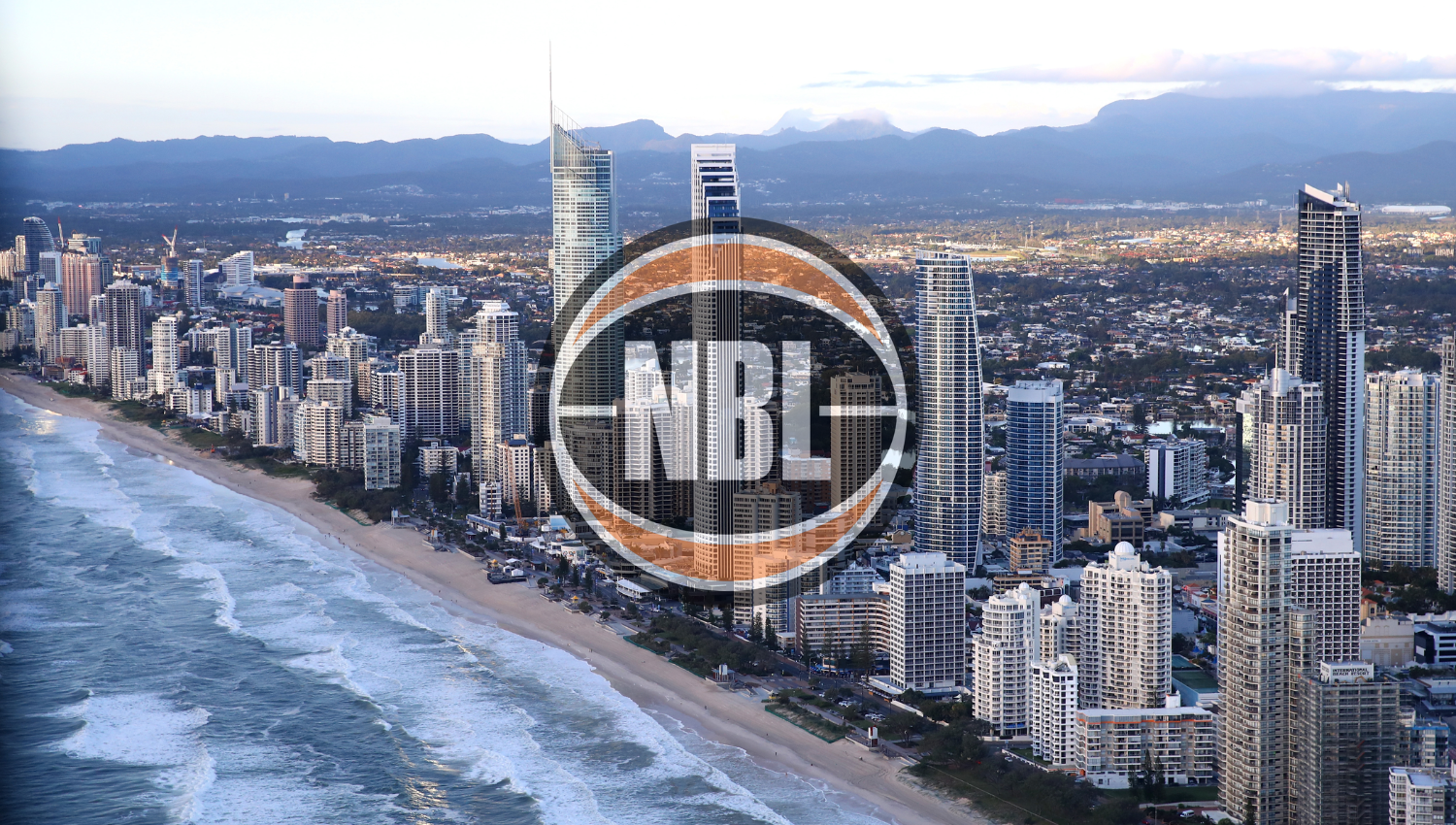
A new funding proposal, a crucial November meeting and renewed interest from the NBL could finally provide a pathway for professional basketball to return to the Gold Coast.
The Gold Coast’s long-running push to return to the NBL has reached another critical stage, with Mayor Tom Tate preparing to meet Queensland Deputy Premier Jarrod Bleijie in November to discuss the future of the proposed $1 billion Gold Coast Arena.
After years of negotiations, changing timelines and funding setbacks, the city’s hopes of securing an NBL franchise now hinge on finding a financially viable way to deliver the 12,000-seat indoor venue at Carey Park in Southport.
According to the Gold Coast Bulletin on October 15, Tate remains confident a deal can be reached, despite the Queensland Government refusing to contribute direct funding towards the project.
Instead, the Mayor is proposing a compromise involving state-owned land, which could be used to help bridge the estimated $400 million funding gap.
It represents another significant development in a campaign to bring NBL basketball back to the Gold Coast for the first time since the Blaze folded in 2012.
However, the arena is only one part of the equation. The city must also convince the NBL that its proposed franchise has the ownership, corporate backing and long-term financial security needed to succeed.
THE $400 MILLION PROBLEM THAT MUST BE SOLVED FIRST
The Gold Coast Arena has been central to the city’s NBL ambitions for several years.
Aussie Hoopla reported in November 2024 that plans for a 12,000-seat stadium in Southport had positioned the Gold Coast as a leading expansion candidate, with hopes that a new franchise could enter the competition by 2027.
Those ambitions have since encountered significant financial obstacles.
The arena’s estimated cost has grown to approximately $1 billion, while previous reporting identified a requirement for $600 million in public contributions, with the council able to provide around $200 million.
That leaves a potential $400 million shortfall.
In July, councillors voted to pause planning while alternative funding arrangements were investigated.
The Queensland Government has remained unwilling to provide the additional money directly, but Tate believes there may be another solution.
Rather than requesting cash, the Mayor intends to ask the state to contribute underutilised government land that could be incorporated into a broader development arrangement.
The value created by developing that land could then help offset the cost of building the arena.
Speaking to the Gold Coast Bulletin, Tate explained that the council was not seeking a conventional cash contribution but would instead explore how dormant land could create value to support construction.
The proposal could potentially extend the project beyond a sporting and entertainment venue, incorporating hotels, restaurants and other commercial development.
It is an approach designed to make the project more financially attractive to private investors while delivering longer-term economic benefits for Southport and the surrounding Gold Coast CBD.
However, the specific land involved, its value and the amount of funding the arrangement could generate have yet to be confirmed publicly.
Those questions will be critical to determining whether the proposal is achievable.
NOVEMBER’S MEETING EXPECTED TO DECIDE THE ARENA’S FUTURE
The next significant development is expected in mid-November, when Tate meets Deputy Premier Jarrod Bleijie.
Before that meeting, Invest Gold Coast is working on a feasibility and funding model demonstrating how the project could proceed.
Tate told the Gold Coast Bulletin he expected to have enough information by then to explain how the proposed funding arrangement and public-private partnership would operate.
Premier David Crisafulli has also expressed confidence that the arena could still be delivered in time for the 2032 Brisbane Olympic and Paralympic Games, provided the council finds a workable financial solution.
This Olympic connection could prove important.
The Queensland Government faces substantial infrastructure commitments ahead of 2032, making further direct spending difficult. However, the Gold Coast Arena has been identified as a potential Olympic venue and a significant piece of long-term infrastructure for the region.
Its benefits could extend well beyond basketball, attracting major concerts, international entertainment, sporting events and visitors to Southport.
That broader economic argument will be central to negotiations.
A successful November meeting would not automatically mean construction could begin. The council and state would still need to agree on the assets involved, their valuation and how those assets could support the financing model.
Nevertheless, an agreement in principle could remove the biggest obstacle currently delaying the arena.
A DEVELOPER IS ALREADY WAITING TO MOVE FORWARD
One positive for the Gold Coast is that the arena project already has an experienced private-sector consortium involved.
In March 2026, Invest Gold Coast announced AmplifyGC as its shortlisted proponent to progress the development.
The consortium includes:
- Plenary Group: Infrastructure development, investment and public-private partnerships.
- Live Nation: Live entertainment and venue operations.
- Built: Australian construction and property development company.
- Cox Architecture and 3XN: Lead architectural partners.
The group is working with Invest Gold Coast through the Request for Proposal process to develop the project’s design, investment structure and delivery model.
According to Invest Gold Coast’s published project information, the intended timeline remains an agreement in early 2027, followed by construction and an opening in 2030.
These dates are targets rather than guaranteed milestones, particularly while the funding arrangements remain unresolved.
The preferred proponent would also need to secure the necessary development approvals before construction could proceed.
For NBL supporters, however, the involvement of established stadium developers and a major international entertainment operator means the project has progressed considerably further than simply proposing a new arena.
The remaining challenge is turning that proposal into a commercially viable, legally binding agreement.
THE NBL WANTS THE GOLD COAST, BUT THE ARENA REMAINS THE KEY
While negotiations around the stadium continue, the NBL has repeatedly expressed interest in returning to the Gold Coast.
In May, NBL Executive Director Larry Kestelman met with Gold Coast councillors to discuss what would be required to secure an expansion licence.
Speaking at the time, Kestelman said:
“Whether it happens in this round or the next round, I won’t stop until there’s a team here on the Gold Coast.”
NBL Group CEO David Stevenson has also been clear about what the league expects from any new franchise.
Speaking during the inaugural Ignite Cup Final on the Gold Coast in February, Stevenson identified three key requirements: fan support, corporate backing and a suitable arena.
He indicated that the league’s growth made smaller venues increasingly unsuitable for permanent NBL franchises, with the competition now targeting arenas capable of accommodating crowds exceeding 10,000.
That makes the planned Southport venue particularly appealing.
The proposed arena would satisfy the NBL’s preferred capacity while providing additional corporate hospitality, commercial facilities and opportunities for other events.
The Gold Coast can also point to significant growth in basketball participation.
Stevenson said local basketball participation had increased from approximately 1,000 when the Gold Coast Blaze operated to around 12,000.
The region has also hosted NBL Blitz events and the inaugural Ignite Cup Final, giving the league opportunities to assess local interest.
But the most convincing recent evidence of the city’s basketball strength might be coming from the competition directly below the NBL.
In August, the Gold Coast Rollers won both the NBL1 North championship and the NBL1 National Championship, defeating the Forestville Eagles 70–67 in the national final.
Coached by former NBL player Anthony Petrie, the Rollers achieved their national title despite missing several leading players, including Jensen Bradtke, Preston Le Gassick and James Whitt.
The Gold Coast has also developed several notable NBL players, including Jack McVeigh, a North Gold Coast Seahawks junior before representing Australia at the Paris Olympics, earning an NBA contract with Houston and tearing up the NBL with Cairns.
The club’s success and the calibre of players developed locally demonstrate the basketball talent already emerging from the region.
It also reinforces the opportunity for a future NBL franchise to establish meaningful connections with existing local clubs and junior pathways.
CARMELO ANTHONY AND KENNY SMITH COULD PROVIDE THE OWNERSHIP
Another piece of the Gold Coast expansion puzzle is the involvement of two former NBA stars.
In May, the NBL reported that Carmelo Anthony and Kenny Smith were behind a proposed ownership group seeking to establish a franchise on the Gold Coast.
Both are already involved with the NBL’s Next Stars program, with Anthony serving as a Global Ambassador and Smith taking on the role of Head of Next Stars Player Initiatives in North America.
Their connection to Next Stars also raises the possibility of the Gold Coast becoming a development-focused franchise, combining NBA prospects from around the world with experienced NBL players and Australian talent.
Aussie Hoopla previously examined whether the Gold Coast could become home to a franchise built around the league’s Next Stars initiative, potentially featuring multiple international prospects on the same roster.
Former NBL CEO Jeremy Loeliger acknowledged on the Aussie Hoopla podcast that discussions about such a model had been taking place, although no commitment was made to establishing it.
“There’s certainly a conversation that has been discussed for quite a long time now… It’s still a bit of an unknown and being worked through if indeed it happens at all,” said Loeliger.
An ownership group involving Anthony and Smith would be a significant development, but there is still no publicly confirmed expansion licence, final ownership agreement or approved roster model.
The NBL would need to formally approve the proposed franchise, its financial arrangements and its operating structure.
This is particularly important given the Gold Coast’s NBL history.
The Gold Coast Rollers competed in the national league from 1990 to 1996, followed by the Gold Coast Blaze from 2007 to 2012.
Both clubs eventually folded.
The NBL’s experience with the Tasmania JackJumpers has since demonstrated what can be achieved when ownership, community support and a suitable venue come together.
For the Gold Coast’s third attempt to succeed, the league will want evidence that those foundations can support a franchise for decades rather than just a few seasons.
It’s also possible that an NBL franchise could begin playing before the proposed arena opens in 2030, with previous Gold Coast expansion discussions including temporary home games at Carrara Indoor Sports Stadium or the Gold Coast Convention and Exhibition Centre while the new Southport venue is constructed.
SO WHAT HAPPENS NEXT?
The coming months should provide a clearer indication of whether the Gold Coast’s NBL ambitions can finally become reality.
The first step is for Invest Gold Coast to finalise its feasibility and funding proposal before Tate meets Bleijie in November.
If that meeting produces an agreement on how state-owned land or other assets could contribute to the project, the council and AmplifyGC would then need to finalise a viable financial model and move towards a formal development agreement.
That would allow the arena to progress through planning approvals, detailed design and ultimately construction.
At the same time, the NBL would need to establish firm franchise ownership arrangements, secure the necessary commercial backing and agree on an entry date.
None of those steps is guaranteed.
But the key difference between the Gold Coast’s position today and its position two years ago is that there is now a shortlisted development consortium, a proposed alternative funding mechanism and an NBL leadership group that has openly expressed its commitment to the region.
The Gold Coast also has a growing basketball community and, following the Rollers’ national championship, a successful local program showing what the region can produce.
The missing pieces are no longer enthusiasm or ambition.
They are a completed arena funding deal, a firm commitment to construction and an approved NBL franchise.
If those pieces can come together, the Gold Coast could finally have a realistic pathway back into the NBL.