Marc Ridlen
March 19, 2021


BIO: Born in Sydney, New South Wales, Dalton attended St. Augustine’s College in Brookvale, a suburb on the Northern Beaches of Sydney. He is the older brother of former NBL player and Olympian, Mark Dalton and brother of Karen Dalton, who also represented Australia at the 1984 and 1988 Summer Olympics.
FAMILY: Brad’s brother, Mark Dalton also played 421 games in the NBL.
Brad Dalton made his NBL debut with the City of Sydney Astronauts at 19 years of age. He scored two points in his first game.
Bradley Dalton played a key role for the City of Sydney Astronauts during the inaugural 1979 NBL season, coached by Charlie Zammit. The Astronauts featured in the very first game in NBL history, a narrow 68–65 loss to the Glenelg Tigers at the Apollo Entertainment Centre. David Leslie (25 points) led the way for Sydney, supported by Claude Williams (8 points) and Ian Robilliard (8 points), while Dalton contributed 2 points and battled through foul trouble in limited minutes. Glenelg were paced by Rick Hodges (16 points) and David Smyth (15 points).
City of Sydney lost their opening five games before finally getting on the board in a dramatic 81–80 rematch win over Glenelg. Dalton delivered one of his best outings of the season with 12 points on 50% shooting and an 80% clip from the free throw line. He was joined in double figures by Claude Williams (16 points), Peter Donnelly (14 points), and David Leslie (12 points), while Glenelg’s attack was led by Steve Sparrow (24 points) and Gerry Clarke (23 points).
The Astronauts built momentum after their breakthrough, stringing together six consecutive wins with victories over teams like Brisbane, Wollongong, and Canberra. David Leslie (20.4 points) and Claude Williams (14.7 points) powered much of the offence, with Dalton serving as a dependable contributor across all 18 games, averaging 8.6 points per contest.
Despite the mid-season surge, City of Sydney faltered down the stretch, winning just once in their final six games and dropping their last three to end the regular season. The Astronauts finished the year with an 8–10 record, placing seventh overall in the league standings.
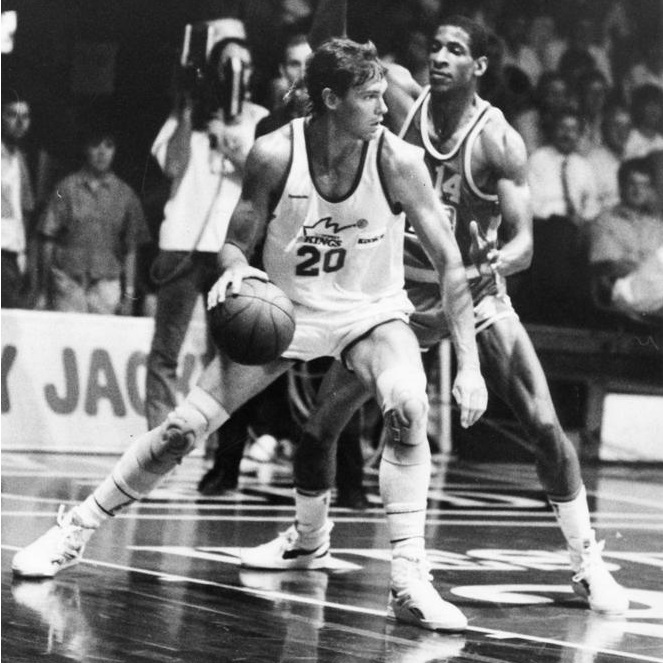
Brad Dalton played thirteen seasons across four NBL teams. This included the City of Sydney Astronauts, West Adelaide Bearcats, Geelong Cats, Sydney Supersonics and Sydney Kings. He averaged 9.1 points, 6.4 rebounds, and 1.1 assists in 290 NBL games.
CAREER RANKINGS:
– 28th in total blocks
| SEASON | AGE | TEAM | TEAM RECORD | GP | MINS | PTS | REB | AST | OR | DR | STL | BLK | TO | PF | FGM | FGA | FG% | 3PM | 3PA | 3P% | FTM | FTA | FT% | TS% | EFG% | HS |
|---|---|---|---|---|---|---|---|---|---|---|---|---|---|---|---|---|---|---|---|---|---|---|---|---|---|---|
| 1991 | 32 | Sydney | 14-12 (7) | 15 | 348 | 50 | 77 | 14 | 20 | 57 | 16 | 14 | 19 | 48 | 22 | 52 | 42% | 0 | 5 | 0% | 6 | 9 | 67% | 44% | 42% | 11 |
| 1990 | 30 | Sydney | 16-10 (6) | 29 | 859 | 185 | 233 | 48 | 74 | 159 | 24 | 26 | 49 | 89 | 85 | 154 | 55% | 3 | 10 | 30% | 12 | 31 | 39% | 55% | 56% | 19 |
| 1989 | 30 | Sydney | 15-9 (5) | 30 | 894 | 188 | 212 | 37 | 90 | 122 | 29 | 32 | 62 | 77 | 86 | 187 | 46% | 3 | 6 | 50% | 13 | 20 | 65% | 48% | 47% | 15 |
| 1988 | 28 | Sydney | 10-14 (10) | 14 | 401 | 91 | 101 | 9 | 44 | 57 | 13 | 7 | 16 | 33 | 42 | 90 | 47% | 2 | 2 | 100% | 5 | 5 | 100% | 49% | 48% | 13 |
| 1987 | 28 | Geelong | 13-13 (9) | 10 | 333 | 122 | 68 | 10 | 34 | 34 | 9 | 13 | 15 | 23 | 56 | 95 | 59% | 0 | 3 | 0% | 10 | 16 | 63% | 59% | 59% | 21 |
| 1986 | 27 | Geelong | 14-12 (7) | 25 | 0 | 355 | 330 | 81 | 111 | 219 | 46 | 57 | 58 | 78 | 156 | 304 | 51% | 1 | 6 | 17% | 42 | 61 | 69% | 53% | 51% | 29 |
| 1985 | 26 | Geelong | 15-11 (7) | 26 | 0 | 306 | 268 | 35 | 81 | 187 | 33 | 55 | 58 | 89 | 131 | 243 | 54% | 0 | 1 | 0% | 44 | 60 | 73% | 56% | 54% | 19 |
| 1984 | 24 | Geelong | 21-2 (1) | 26 | 0 | 262 | 215 | 63 | 85 | 130 | 39 | 45 | 62 | 94 | 113 | 227 | 50% | 0 | 0 | 0% | 36 | 51 | 71% | 52% | 50% | 18 |
| 1983 | 23 | Sydney | 19-3 (1) | 25 | 0 | 245 | 186 | 20 | 71 | 115 | 15 | 40 | 34 | 69 | 108 | 227 | 48% | 0 | 0 | 0% | 29 | 39 | 74% | 50% | 48% | 19 |
| 1982 | 22 | West Adelaide | 21-5 (1) | 27 | 0 | 229 | 183 | 7 | 63 | 120 | 0 | 0 | 29 | 74 | 104 | 194 | 54% | 0 | 0 | 0% | 21 | 38 | 55% | 54% | 54% | 20 |
| 1981 | 21 | West Adelaide | 13-9 (3) | 23 | 0 | 188 | 0 | 0 | 0 | 0 | 0 | 0 | 0 | 76 | 78 | 162 | 48% | 0 | 0 | 0% | 32 | 41 | 78% | 52% | 48% | 21 |
| 1980 | 20 | City of Sydney | 7-15 (10) | 22 | 0 | 281 | 0 | 0 | 0 | 0 | 0 | 0 | 0 | 66 | 125 | 250 | 50% | 0 | 0 | 0% | 31 | 49 | 63% | 51% | 50% | 21 |
| 1979 | 19 | City of Sydney | 8-10 (7) | 18 | 0 | 154 | 0 | 0 | 0 | 0 | 0 | 0 | 0 | 60 | 65 | 130 | 50% | 0 | 0 | 0% | 24 | 50 | 48% | 50% | 50% | 16 | Totals | 290 | 2835 | 2656 | 1873 | 324 | 673 | 1200 | 224 | 289 | 402 | 876 | 1171 | 2315 | 50.6% | 9 | 33 | 27.3% | 305 | 470 | 64.9% | 53% | 51% | 29 |
| SEASON | AGE | TEAM | TEAM RECORD | GP | MINS | PTS | REB | AST | OR | DR | STL | BLK | TO | PF | FGM | FGA | FG% | 3PM | 3PA | 3P% | FTM | FTA | FT% | TS% | EFG% | HS |
|---|---|---|---|---|---|---|---|---|---|---|---|---|---|---|---|---|---|---|---|---|---|---|---|---|---|---|
| 1991 | 32 | Sydney | 14-12 (7) | 15 | 23.2 | 3.3 | 5.1 | 0.9 | 1.3 | 3.8 | 1.1 | 0.9 | 1.3 | 3.2 | 1.5 | 3.5 | 42% | 0.0 | 0.3 | 0% | 0.4 | 0.6 | 67% | 44% | 42% | 11 |
| 1990 | 30 | Sydney | 16-10 (6) | 29 | 29.6 | 6.4 | 8.0 | 1.7 | 2.6 | 5.5 | 0.8 | 0.9 | 1.7 | 3.1 | 2.9 | 5.3 | 55% | 0.1 | 0.3 | 30% | 0.4 | 1.1 | 39% | 55% | 56% | 19 |
| 1989 | 30 | Sydney | 15-9 (5) | 30 | 29.8 | 6.3 | 7.1 | 1.2 | 3.0 | 4.1 | 1.0 | 1.1 | 2.1 | 2.6 | 2.9 | 6.2 | 46% | 0.1 | 0.2 | 50% | 0.4 | 0.7 | 65% | 48% | 47% | 15 |
| 1988 | 28 | Sydney | 10-14 (10) | 14 | 28.6 | 6.5 | 7.2 | 0.6 | 3.1 | 4.1 | 0.9 | 0.5 | 1.1 | 2.4 | 3.0 | 6.4 | 47% | 0.1 | 0.1 | 100% | 0.4 | 0.4 | 100% | 49% | 48% | 13 |
| 1987 | 28 | Geelong | 13-13 (9) | 10 | 33.3 | 12.2 | 6.8 | 1.0 | 3.4 | 3.4 | 0.9 | 1.3 | 1.5 | 2.3 | 5.6 | 9.5 | 59% | 0.0 | 0.3 | 0% | 1.0 | 1.6 | 63% | 59% | 59% | 21 |
| 1986 | 27 | Geelong | 14-12 (7) | 25 | 0.0 | 14.2 | 13.2 | 3.2 | 4.4 | 8.8 | 1.8 | 2.3 | 2.3 | 3.1 | 6.2 | 12.2 | 51% | 0.0 | 0.2 | 17% | 1.7 | 2.4 | 69% | 53% | 51% | 29 |
| 1985 | 26 | Geelong | 15-11 (7) | 26 | 0.0 | 11.8 | 10.3 | 1.3 | 3.1 | 7.2 | 1.3 | 2.1 | 2.2 | 3.4 | 5.0 | 9.3 | 54% | 0.0 | 0.0 | 0% | 1.7 | 2.3 | 73% | 56% | 54% | 19 |
| 1984 | 24 | Geelong | 21-2 (1) | 26 | 0.0 | 10.1 | 8.3 | 2.4 | 3.3 | 5.0 | 1.5 | 1.7 | 2.4 | 3.6 | 4.3 | 8.7 | 50% | 0.0 | 0.0 | 0% | 1.4 | 2.0 | 71% | 52% | 50% | 18 |
| 1983 | 23 | Sydney | 19-3 (1) | 25 | 0.0 | 9.8 | 7.4 | 0.8 | 2.8 | 4.6 | 0.6 | 1.6 | 1.4 | 2.8 | 4.3 | 9.1 | 48% | 0.0 | 0.0 | 0% | 1.2 | 1.6 | 74% | 49.9% | 48% | 19 |
| 1982 | 22 | West Adelaide | 21-5 (1) | 27 | 0.0 | 8.5 | 6.8 | 0.3 | 2.3 | 4.4 | 0.0 | 0.0 | 1.1 | 2.7 | 3.9 | 7.2 | 54% | 0.0 | 0.0 | 0% | 0.8 | 1.4 | 55% | 54.0% | 54% | 20 |
| 1981 | 21 | West Adelaide | 13-9 (3) | 23 | 0.0 | 8.2 | 0.0 | 0.0 | 0.0 | 0.0 | 0.0 | 0.0 | 0.0 | 3.3 | 3.4 | 7.0 | 48% | 0.0 | 0.0 | 0% | 1.4 | 1.8 | 78% | 51.8% | 48% | 21 |
| 1980 | 20 | City of Sydney | 7-15 (10) | 22 | 0.0 | 12.8 | 0.0 | 0.0 | 0.0 | 0.0 | 0.0 | 0.0 | 0.0 | 3.0 | 5.7 | 11.4 | 50% | 0.0 | 0.0 | 0% | 1.4 | 2.2 | 63% | 51.4% | 50% | 21 |
| 1979 | 19 | City of Sydney | 8-10 (7) | 18 | 0.0 | 8.6 | 0.0 | 0.0 | 0.0 | 0.0 | 0.0 | 0.0 | 0.0 | 3.3 | 3.6 | 7.2 | 50% | 0.0 | 0.0 | 0% | 1.3 | 2.8 | 48% | 50.1% | 50% | 16 | Total | 290 | 9.8 | 9.2 | 6.5 | 1.1 | 2.3 | 4.1 | 0.8 | 1.0 | 1.4 | 3.0 | 4.0 | 8.0 | 50.6% | 0.0 | 0.0 | 27.3% | 0.0 | 0.1 | 64.9% | 53% | 51% | 29 |
| POINTS | REBOUNDS | ASSISTS | STEALS | BLOCKS | TURNOVERS | TRIPLE DOUBLES | 29 | 22 | 8 | 6 | 6 | 9 | 0 |
|---|
Dalton played for national team at the 1984 Olympics in Los Angeles, alongside his brother Mark, where Australia finished seventh. The seventh place finish in 1984 being the Boomers best Olympic result to that date.
Brad and his brother Mark also suited up for Australia at the 1986 FIBA World Championships, a year where the Boomers struggled against much stronger competition. Australia finished with a 2-3 record and failed to progress past the initial stages.
| YEAR | AGE | GP | MINS | PTS | REB | AST | OR | DR | STL | BLK | TO | PF | FGM | FGA | FG% | 3PM | 3PA | 3P% | FTM | FTA | FT% |
|---|---|---|---|---|---|---|---|---|---|---|---|---|---|---|---|---|---|---|---|---|---|
| 1988 | 29 | 5 | 49 | 10 | 12 | 0 | 3 | 9 | 0 | 0 | 2 | 11 | 3 | 9 | 33.3% | 0 | 1 | 0.0% | 4 | 5 | 80.0% |
| 1986 | 27 | 5 | 0 | 25 | 0 | 0 | 0 | 0 | 0 | 0 | 0 | 10 | 0 | 0 | 0.0% | 0 | 0 | 0.0% | 9 | 10 | 90.0% |
| 1984 | 25 | 6 | 98 | 40 | 26 | 8 | 0 | 26 | 3 | 3 | 5 | 17 | 17 | 31 | 54.8% | 0 | 0 | 0.0% | 6 | 9 | 66.7% |
| 1982 | 23 | 7 | 0 | 18 | 0 | 0 | 0 | 0 | 0 | 0 | 0 | 14 | 0 | 0 | 0.0% | 0 | 0 | 0.0% | 0 | 3 | 0.0% | Total | 23 | 147 | 93 | 38 | 8 | 3 | 35 | 3 | 3 | 7 | 52 | 20 | 40 | 50% | 0 | 1 | 0% | 19 | 27 | 70% |
| YEAR | AGE | GP | MINS | PTS | REB | AST | OR | DR | STL | BLK | TO | PF | FGM | FGA | FG% | 3PM | 3PA | 3P% | FTM | FTA | FT% |
|---|---|---|---|---|---|---|---|---|---|---|---|---|---|---|---|---|---|---|---|---|---|
| 1988 | 29 | 5 | 9.8 | 2.0 | 2.4 | 0.0 | 0.6 | 1.8 | 0.0 | 0.0 | 0.4 | 2.2 | 0.6 | 1.8 | 33.3% | 0.0 | 0.2 | 0.0% | 0.8 | 1.0 | 80.0% |
| 1986 | 27 | 5 | 0.0 | 5.0 | 0.0 | 0.0 | 0.0 | 0.0 | 0.0 | 0.0 | 0.0 | 2.0 | 0.0 | 0.0 | 0.0% | 0.0 | 0.0 | 0.0% | 1.8 | 2.0 | 90.0% |
| 1984 | 25 | 6 | 16.3 | 6.7 | 4.3 | 1.3 | 0.0 | 4.3 | 0.5 | 0.5 | 0.8 | 2.8 | 2.8 | 5.2 | 54.8% | 0.0 | 0.0 | 0.0% | 1.0 | 1.5 | 66.7% |
| 1982 | 23 | 7 | 0.0 | 2.6 | 0.0 | 0.0 | 0.0 | 0.0 | 0.0 | 0.0 | 0.0 | 2.0 | 0.0 | 0.0 | 0.0% | 0.0 | 0.0 | 0.0% | 0.0 | 0.4 | 0.0% | Total | 23 | 6.4 | 4.0 | 1.7 | 0.3 | 0.1 | 1.5 | 0.1 | 0.1 | 0.3 | 2.3 | 0.9 | 1.7 | 50% | 0.0 | 0.0 | 0% | 0.8 | 1.2 | 70% |
Whilst we try to source as much information as we can for every player who has ever played in the NBL some information on a player profile may be missing. If you have additional information on a player you'd like us to add to a profile, please send it to us using the enquiry form below.
Submissions are then sent to info@aussiehoopla.com

