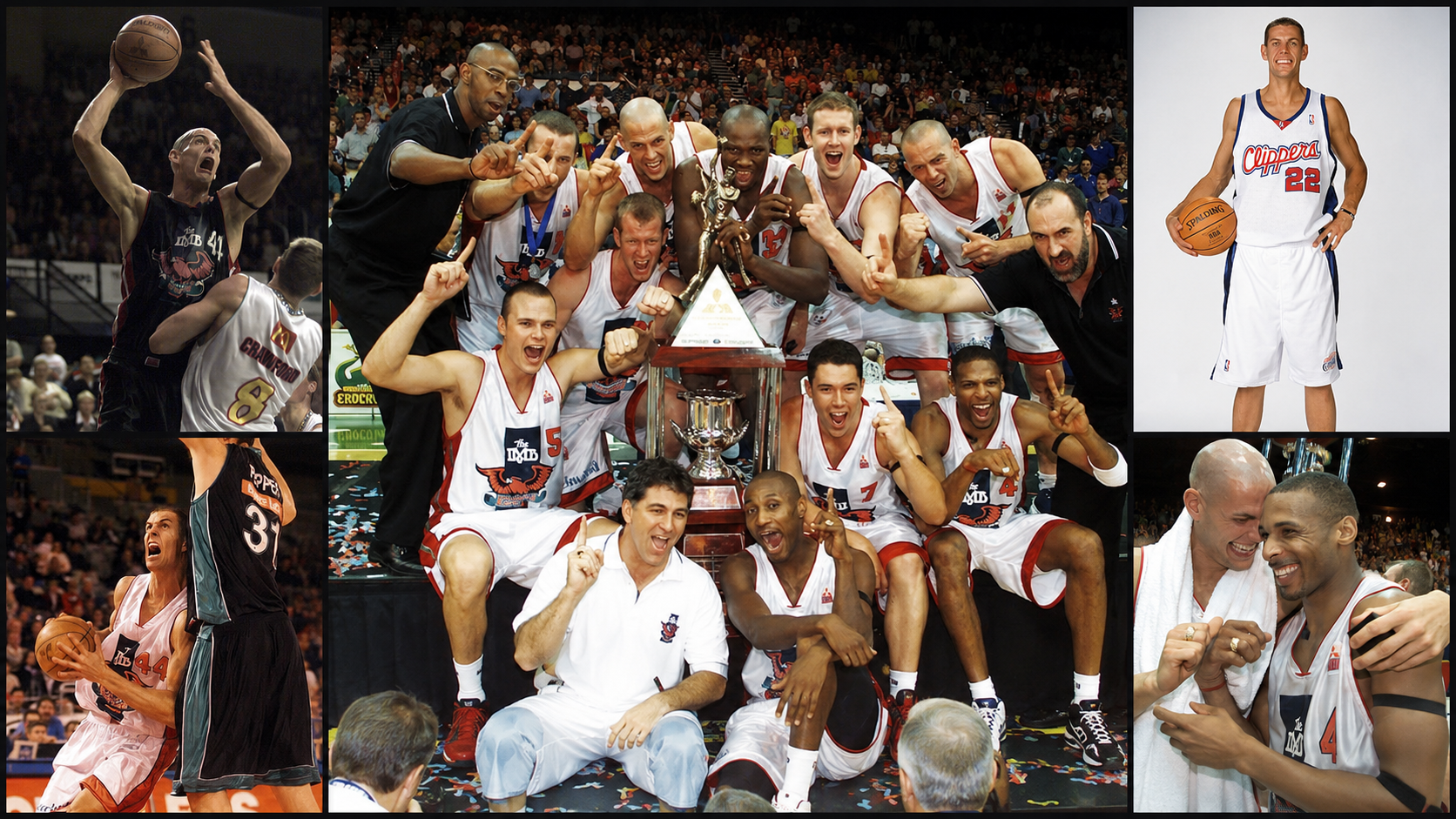
Paul Rees on NBL titles, battles with Brian Goorjian and small town success
October 10, 2026



NICKNAME/S: The General
BIO: Philip John Smyth AM was born in Adelaide (SA) and began playing basketball as a junior with the Sturt basketball program. He is a Australian former professional basketball player and coach.
He won three NBL championships with the Canberra Cannons before going on to be a three-time championship-winning head coach of the NBL’s Adelaide 36ers.
Smyth was a four-time Olympian with the Australian national basketball team.
FAMILY: Phil’s brother, David Smyth also played 18 games in the NBL.
Phil Smyth made his NBL debut with the St Kilda Pumas at 17 years of age. He scored 20 points in his first game.
In 1982, St Kilda entered a reset year after walking away from the 1981 NBL Finals to chase the World Club Championships, and the roster turned over heavily from the championship core as Larry Sengstock and Danny Morseu both left for Brisbane and star import Rocky Smith headed to Brazil after international clubs saw his talent when the Saints competed at the previous year’s FIBA World Cup.
Coach Brian Kerle moved quickly to reshape the backcourt and convinced South Australian Phil Smyth to drive eight hours from Adelaide every weekend to play, with the Adelaide junior and established Boomers guard finally making his long-awaited NBL debut after representing Australia at the 1978 FIBA World Championship and the 1980 Moscow Olympics. The Saints also welcomed rookie Bill Runchey (via State League) and brought Tony Barnett back into the program after a season out of the league. Import Mike Slusher, Steve Breheny, Ken Burbridge and Alan Mikkor all returning to fill out the roster.
St Kilda’s season opened on 6 February in Canberra, where they fell to the Cannons (82–93) despite Smyth (20 points, 5 rebounds) producing a strong first-up effort, supported by Barnett (22 points), Slusher (16 points, 6 rebounds) and rookie Runchey (15 points, 7 rebounds) in the loss.
The Saints responded the next day by edging the Sydney Supersonics (78–77) to split the opening road trip, but February quickly exposed how much work remained as St Kilda were beaten twice by West Adelaide, including a 77–114 loss at the Apollo Entertainment Centre on 20 February.
After a 70–67 home win over Canberra on 28 February, St Kilda produced one of their best early-season results on 6 March in Launceston, defeating reigning champions Launceston Casino City (91–86) as Smyth (33 points, 4 rebounds) erupted to swing the road win, with Slusher (24 points) and Runchey (9 points, 11 rebounds) also contributing.
Nunawading proved a problem match-up and St Kilda dropped both meetings with the Spectres across the year, including an 81–79 loss at Albert Park on 7 March and an 85–77 loss at Burwood Stadium on 28 March.
Even with the uneven patches, the Saints kept banking results through March with wins over Perth (68–62), Wollongong (82–73) and Brisbane (83–66) to hold their ground around the middle of the table.
April remained mixed as St Kilda dropped games to Coburg (87–73) and Newcastle (85–77) but managed to squeeze past Bankstown (67–66) on 25 April to avoid sliding further back.
From May into July, the Saints found more consistency, highlighted by a 101–90 win over Launceston on 23 May and a late-season surge that closed with a 119–87 win over Wollongong at Albert Park on 10 July, where Breheny (31 points, 6 rebounds, 5 assists) and Runchey (22 points, 11 rebounds) featured heavily in the scoring while Smyth (16 points, 10 rebounds, 11 assists) controlled the finish, with Templeton (10 points, 5 rebounds, 6 assists) and Slusher (19 points, 7 rebounds) providing further support.
St Kilda did not qualify for the playoffs in 1982, the first time they missed the finals since the NBL began in 1979, but Smyth’s debut season still ended with major individual recognition as he won the league’s Best Defensive Player award and was named to the All-NBL First Team.
CANBERRA CANNONS
1983
The 1983 season marked a major shift for the Canberra Cannons, who entered a new era under freshly appointed head coach Bob Turner (via Newcastle), signed to a three-year deal. Turner quickly reshaped the team’s identity by building around three American imports—Wade Kirchmeyer, Dave Nelson, and Herb McEachin—and instilling a disciplined, defence-first philosophy that would define the club’s success.
Central to the transformation was Australian Boomers point guard Phil Smyth (14.6 points, 3.1 rebounds, 5.1 assists, and 2.6 steals), who relocated to Canberra after spending the previous season commuting from Adelaide to play for St Kilda. Smyth immediately brought stability, sharp shooting, and elite perimeter defence to the backcourt. He led the NBL in steals and earned All-NBL First Team honours for the second consecutive year—firmly establishing himself as one of the league’s most valuable two-way players.
Canberra delivered a strong regular season campaign, finishing 16–6—good for fourth overall and second in the NBL’s Western Division behind Geelong (18–4). Kirchmeyer (20.9 points, 9.4 rebounds, and 2.0 assists) led the team in scoring, while Nelson (19.4 points, 5.2 rebounds, and 2.0 assists) and McEachin (15.9 points, 4.2 rebounds, 2.5 assists, 1.6 steals, and 1.1 blocks) added a dynamic blend of scoring and defensive versatility.
The 1983 NBL Finals introduced an unusual divisional round-robin format for the top eight teams, with the top two teams in each division not guaranteed advancement. Canberra thrived in the chaos, going undefeated in the group stage with wins over Nunawading (89–81), Geelong (86–81), and St. Kilda (104–85) to book a spot in the semifinals.
In the semifinal against the Coburg Giants, Smyth was again a standout performer. He scored 20 points on 6-of-12 shooting and was a perfect 8-of-8 from the free throw line, showing his trademark composure in crunch time. Kirchmeyer (17 points), Nelson (18 points), and McEachin (18 points) all shot 50% from the field, while Canberra shot 91% from the line as a team to secure an 80–75 win. Smyth’s control of the tempo and defensive leadership proved crucial in a high-pressure elimination game.
Canberra advanced to the Grand Final to face the defending champion West Adelaide Bearcats, led by stars Leroy Loggins (23 points) and Al Green (18 points). In a classic title decider, Smyth contributed 16 points on 8-of-16 shooting as the Cannons edged the Bearcats 75–73. McEachin (18 points) led the scoring, while Kirchmeyer (17 points) and Nelson (10 points) rounded out a balanced attack. Smyth’s perimeter defence helped limit West Adelaide’s rhythm, and his ability to deliver on the biggest stage was a key factor in Canberra securing their first NBL championship.
The title cemented Phil Smyth’s status as one of the premier guards in the country. His leadership, court vision, and defensive excellence were foundational to Canberra’s success in 1983, and he emerged from the season not only as a champion but as a defining figure in the league’s growing legacy.
1984
The 1984 season saw Smyth average 14.4 points, 3.8 rebounds, and 6.1 assists and play a key role in helping the Cannons to a fifth place finish in the regular season with a 16-7 record.
1985
During the 1985 season Smyth averaged 13.3 points, 5.6 rebounds, and 5.3 assists and helped the Cannons finish with a record of 19-7 and end the regular season in fourth place.
1986
During the 1986 season, Smyth averaged 12.2 points, 5.3 rebounds, and 5.4 assists and was a part of the Cannons squad which finished in second place with a record of 19-7.
1987
In 1987, Smyth averaged 18.4 points, 5.3 rebounds, and 5.5 assists as the Cannons finished with a record of 17-9 and in fifth place during the regular season.
1988
In 1988, Smyth averaged 22.3 points, 5.3 rebounds, and 5.5 assists, playing a key role in the Cannons rotation, helping the team finish fourth in the regular season with a 16–8 record.
1989
The 1989 season saw Smyth average 17.4 points, 5.6 rebounds, and 4.9 assists and play a key role in helping the Cannons to a second place finish in the regular season with a 17-7 record.
1990
During the 1990 season Smyth averaged 9.7 points, 3.7 rebounds, and 4.4 assists and helped the Cannons finish with a record of 16-10 and end the regular season in seventh place.
1991
During the 1991 season, Smyth averaged 15.4 points, 3.6 rebounds, and 4.7 assists and was a part of the Cannons squad, which finished in ninth place with a record of 9-17.
1992
In 1992 Smyth averaged 12.9 points and 4.1 rebounds, and 7 assists, and helped guide the Cannons to a sixth-place finish during the regular season with an 11–13 record.
ADELAIDE 36ERS
1993
After two losing seasons under coach Don Shipway, Adelaide hired American Don Monson to replace him and steer the team back to its winning ways of the past decade. With the 36ers still regrouping from the huge loss of Boomers big man Mark Bradtke (who had left for Melbourne), they added young talent in Chris Blakemore (AIS) and Scott Ninnis (South East Melbourne) and veterans Phil Smyth (captain of the Australian Boomers at the time) and Willie Simmons from the Canberra Cannons.
Smyth averaged 10.8 points, 2.6 rebounds, and 4.8 assists while the team improved to a 14–12 record under Monson and made the playoffs by finishing in seventh place.
At the end of the season, Blakemore (5.7 points, 4.9 rebounds, and 0.6 assists) claimed Rookie of the Year honours and while Ninnis (19.4 points, 3.1 rebounds, 4.7 assists, and 1.3 steals) delivered his highest scoring season to date and collected the Most Improved Player award. The 36ers were then eliminated in the Quarterfinals by Ninnis’s former team, the defending NBL champions, South East Melbourne Magic.
1994
Phil Smyth (6.6 points and 1.9 rebounds, and 2.8 assists) delivered the worst season of his career, registering all-time lows in both points and rebounds in 1994 but helped guide the 36ers to a second place finish in the regular season.
SYDNEY KINGS
1995
After a great start to the 1994 season, the Kings collapsed during the second half of the year with the team’s young roster felt to be the cause. Veteran talent Phil Smyth (Adelaide), Justin Withers (Canberra) and import Bruce Bolden (SE Melbourne), who would replace fan favourite Mario Donaldson, would bring the experience required in spades.
The Kings starting lineup had increased from the average age of 28 to 31, which meant although they had added a ton of experience, this roster would only have one or two years to make it count.
The season started with a narrow 85-86 loss to Bolden’s former team, the Magic, before a up-and-down season, where the Kings defeated a number of league’s top team’s but failed to close out games against those at the bottom of the ladder. Sydney would start the season with a 3-6 record, which included wins over Perth and North Melbourne, who would finish first and third, respectively, but suffered back-to-back losses to Canberra (who would finish tenth) and lost games to Townsville (finished 12th) and Gold Coast (finished 13th).
Leon Trimmingham (27.5 points, 11.2 rebounds, 1.8 assists, 2.1 steals and 2.2 blocks) was named Kings team MVP after leading the team in scoring, rebounds, steals and blocks as Bolden (20.5 points, 10.8 rebounds, 2.3 assists and 1.3 steals) and captain Damian Keogh (14.4 points, 4.0 rebounds, 6.1 assists and 1.6 steals) provided the additional scoring power. Sydney finished the season in tenth place with a record of 10-16 and failed to reach the playoffs.
Smyth averaged 6.8 points, 3.3 rebounds, and 3.4 assists for the season and would retire at the end off the year.
Phil Smyth played fourteen seasons across four NBL teams. This included the St Kilda Pumas, Canberra Cannons, Adelaide 36ers and Sydney Kings. He averaged 13.9 points, 4.1 rebounds, and 4.8 assists in 356 NBL games.
CAREER RANKINGS:
– 15th in total assists
– 7th in total steals
– 24th in steals per game.
HIGHLIGHTS:
| SEASON | AGE | TEAM | TEAM RECORD | GP | MINS | PTS | REB | AST | OR | DR | STL | BLK | TO | PF | FGM | FGA | FG% | 3PM | 3PA | 3P% | FTM | FTA | FT% | TS% | EFG% | HS |
|---|---|---|---|---|---|---|---|---|---|---|---|---|---|---|---|---|---|---|---|---|---|---|---|---|---|---|
| 1995 | 31 | Sydney | 10-16 (11) | 16 | 591 | 109 | 53 | 55 | 8 | 45 | 23 | 4 | 18 | 22 | 35 | 96 | 36% | 16 | 54 | 30% | 23 | 27 | 85% | 50% | 45% | 13 |
| 1994 | 30 | Adelaide | 18-8 (2) | 33 | 720 | 219 | 62 | 92 | 22 | 40 | 40 | 3 | 45 | 50 | 68 | 154 | 44% | 47 | 109 | 43% | 36 | 44 | 82% | 63% | 59% | 17 |
| 1993 | 29 | Adelaide | 14-12 (7) | 28 | 1,056 | 302 | 73 | 135 | 16 | 57 | 46 | 4 | 59 | 61 | 98 | 238 | 41% | 51 | 128 | 40% | 55 | 70 | 79% | 56% | 52% | 24 |
| 1992 | 28 | Canberra | 11-13 (8) | 26 | 1,032 | 336 | 106 | 183 | 23 | 83 | 65 | 4 | 50 | 70 | 118 | 220 | 54% | 63 | 118 | 53% | 37 | 45 | 82% | 70% | 68% | 27 |
| 1991 | 27 | Canberra | 9-17 (10) | 24 | 982 | 369 | 87 | 112 | 17 | 70 | 50 | 5 | 51 | 68 | 117 | 300 | 39% | 60 | 161 | 37% | 75 | 88 | 85% | 54% | 49% | 29 |
| 1990 | 26 | Canberra | 16-10 (7) | 22 | 808 | 213 | 82 | 96 | 13 | 69 | 53 | 2 | 39 | 59 | 71 | 191 | 37% | 40 | 109 | 37% | 31 | 36 | 86% | 51% | 48% | 28 |
| 1989 | 25 | Canberra | 18-6 (1) | 28 | 1,241 | 488 | 158 | 137 | 38 | 120 | 92 | 3 | 63 | 70 | 165 | 393 | 42% | 87 | 213 | 41% | 71 | 83 | 86% | 56% | 53% | 35 |
| 1988 | 24 | Canberra | 16-8 (4) | 30 | 1,270 | 669 | 158 | 165 | 48 | 110 | 85 | 7 | 60 | 75 | 234 | 492 | 48% | 88 | 193 | 46% | 113 | 139 | 81% | 60% | 57% | 34 |
| 1987 | 23 | Canberra | 17-9 (5) | 22 | 941 | 404 | 116 | 121 | 21 | 95 | 75 | 11 | 33 | 54 | 138 | 305 | 45% | 67 | 142 | 47% | 61 | 72 | 85% | 60% | 56% | 36 |
| 1986 | 22 | Canberra | 19-7 (2) | 25 | 0 | 304 | 132 | 135 | 25 | 107 | 76 | 10 | 55 | 65 | 101 | 248 | 41% | 31 | 91 | 34% | 71 | 80 | 89% | 53% | 47% | 27 |
| 1985 | 21 | Canberra | 19-7 (4) | 28 | 0 | 372 | 157 | 148 | 32 | 125 | 94 | 6 | 57 | 75 | 137 | 300 | 46% | 42 | 113 | 37% | 56 | 73 | 77% | 56% | 53% | 25 |
| 1984 | 20 | Canberra | 16-7 (5) | 22 | 0 | 317 | 84 | 134 | 33 | 51 | 44 | 4 | 51 | 58 | 117 | 260 | 45% | 35 | 76 | 46% | 48 | 55 | 87% | 55% | 52% | 33 |
| 1983 | 19 | Canberra | 16-6 (4) | 27 | 0 | 393 | 83 | 137 | 22 | 61 | 71 | 11 | 53 | 62 | 151 | 303 | 50% | 0 | 0 | 0% | 91 | 104 | 88% | 56% | 50% | 24 |
| 1982 | 18 | St Kilda | 17-9 (6) | 25 | 0 | 465 | 131 | 67 | 29 | 102 | 0 | 0 | 57 | 70 | 194 | 395 | 49% | 0 | 0 | 0% | 77 | 91 | 85% | 53% | 49% | 33 | Totals | 356 | 8641 | 4960 | 1482 | 1717 | 347 | 1135 | 814 | 74 | 691 | 859 | 1744 | 3895 | 44.8% | 627 | 1507 | 41.6% | 845 | 1007 | 83.9% | 57% | 53% | 36 |
| SEASON | AGE | TEAM | TEAM RECORD | GP | MINS | PTS | REB | AST | OR | DR | STL | BLK | TO | PF | FGM | FGA | FG% | 3PM | 3PA | 3P% | FTM | FTA | FT% | TS% | EFG% | HS |
|---|---|---|---|---|---|---|---|---|---|---|---|---|---|---|---|---|---|---|---|---|---|---|---|---|---|---|
| 1995 | 31 | Sydney | 10-16 (11) | 16 | 36.9 | 6.8 | 3.3 | 3.4 | 0.5 | 2.8 | 1.4 | 0.3 | 1.1 | 1.4 | 2.2 | 6.0 | 36% | 1.0 | 3.4 | 30% | 1.4 | 1.7 | 85% | 50% | 45% | 13 |
| 1994 | 30 | Adelaide | 18-8 (2) | 33 | 21.8 | 6.6 | 1.9 | 2.8 | 0.7 | 1.2 | 1.2 | 0.1 | 1.4 | 1.5 | 2.1 | 4.7 | 44% | 1.4 | 3.3 | 43% | 1.1 | 1.3 | 82% | 63% | 59% | 17 |
| 1993 | 29 | Adelaide | 14-12 (7) | 28 | 37.7 | 10.8 | 2.6 | 4.8 | 0.6 | 2.0 | 1.6 | 0.1 | 2.1 | 2.2 | 3.5 | 8.5 | 41% | 1.8 | 4.6 | 40% | 2.0 | 2.5 | 79% | 56% | 52% | 24 |
| 1992 | 28 | Canberra | 11-13 (8) | 26 | 39.7 | 12.9 | 4.1 | 7.0 | 0.9 | 3.2 | 2.5 | 0.2 | 1.9 | 2.7 | 4.5 | 8.5 | 54% | 2.4 | 4.5 | 53% | 1.4 | 1.7 | 82% | 70% | 68% | 27 |
| 1991 | 27 | Canberra | 9-17 (10) | 24 | 40.9 | 15.4 | 3.6 | 4.7 | 0.7 | 2.9 | 2.1 | 0.2 | 2.1 | 2.8 | 4.9 | 12.5 | 39% | 2.5 | 6.7 | 37% | 3.1 | 3.7 | 85% | 54% | 49% | 29 |
| 1990 | 26 | Canberra | 16-10 (7) | 22 | 36.7 | 9.7 | 3.7 | 4.4 | 0.6 | 3.1 | 2.4 | 0.1 | 1.8 | 2.7 | 3.2 | 8.7 | 37% | 1.8 | 5.0 | 37% | 1.4 | 1.6 | 86% | 51% | 48% | 28 |
| 1989 | 25 | Canberra | 18-6 (1) | 28 | 44.3 | 17.4 | 5.6 | 4.9 | 1.4 | 4.3 | 3.3 | 0.1 | 2.3 | 2.5 | 5.9 | 14.0 | 42% | 3.1 | 7.6 | 41% | 2.5 | 3.0 | 86% | 56% | 53% | 35 |
| 1988 | 24 | Canberra | 16-8 (4) | 30 | 42.3 | 22.3 | 5.3 | 5.5 | 1.6 | 3.7 | 2.8 | 0.2 | 2.0 | 2.5 | 7.8 | 16.4 | 48% | 2.9 | 6.4 | 46% | 3.8 | 4.6 | 81% | 60% | 57% | 34 |
| 1987 | 23 | Canberra | 17-9 (5) | 22 | 42.8 | 18.4 | 5.3 | 5.5 | 1.0 | 4.3 | 3.4 | 0.5 | 1.5 | 2.5 | 6.3 | 13.9 | 45% | 3.0 | 6.5 | 47% | 2.8 | 3.3 | 85% | 60% | 56% | 36 |
| 1986 | 22 | Canberra | 19-7 (2) | 25 | 0.0 | 12.2 | 5.3 | 5.4 | 1.0 | 4.3 | 3.0 | 0.4 | 2.2 | 2.6 | 4.0 | 9.9 | 41% | 1.2 | 3.6 | 34% | 2.8 | 3.2 | 89% | 53% | 47% | 27 |
| 1985 | 21 | Canberra | 19-7 (4) | 28 | 0.0 | 13.3 | 5.6 | 5.3 | 1.1 | 4.5 | 3.4 | 0.2 | 2.0 | 2.7 | 4.9 | 10.7 | 46% | 1.5 | 4.0 | 37% | 2.0 | 2.6 | 77% | 56% | 53% | 25 |
| 1984 | 20 | Canberra | 16-7 (5) | 22 | 0.0 | 14.4 | 3.8 | 6.1 | 1.5 | 2.3 | 2.0 | 0.2 | 2.3 | 2.6 | 5.3 | 11.8 | 45% | 1.6 | 3.5 | 46% | 2.2 | 2.5 | 87% | 55% | 52% | 33 |
| 1983 | 19 | Canberra | 16-6 (4) | 27 | 0.0 | 14.6 | 3.1 | 5.1 | 0.8 | 2.3 | 2.6 | 0.4 | 2.0 | 2.3 | 5.6 | 11.2 | 50% | 0.0 | 0.0 | 0% | 3.4 | 3.9 | 88% | 55.8% | 50% | 24 |
| 1982 | 18 | St Kilda | 17-9 (6) | 25 | 0.0 | 18.6 | 5.2 | 2.7 | 1.2 | 4.1 | 0.0 | 0.0 | 2.3 | 2.8 | 7.8 | 15.8 | 49% | 0.0 | 0.0 | 0% | 3.1 | 3.6 | 85% | 53.1% | 49% | 33 | Total | 356 | 24.3 | 13.9 | 4.2 | 4.8 | 1.0 | 3.2 | 2.3 | 0.2 | 1.9 | 2.4 | 4.9 | 10.9 | 44.8% | 0.0 | 0.0 | 41.6% | 1.8 | 4.2 | 83.9% | 57% | 53% | 36 |
| POINTS | REBOUNDS | ASSISTS | STEALS | BLOCKS | TURNOVERS | TRIPLE DOUBLES | 36 | 13 | 17 | 11 | 2 | 12 | 0 |
|---|
Smyth next represented Australia at the 1982 World Championships in Colombia. The squad, which was in the middle of a rebuilding phase, featured a number of first-time Boomers which included Brad Dalton, Wayne Carroll, Ray Borner, Mark Gaze, Damian Keogh and Robert Scringi. Ian Davies was the teams leading scorer, finishing with the second most total points in the tournament (187), at a average of 23.4 per game. During that time the Boomers would generally fail to reach the medal rounds, finishing in fifth place with a record of 4-4. It was the teams best result at a major FIBA tournament to date.
Smyth continued to play with the national team at the 1984 Olympics in Los Angeles, where Australia finished seventh. The seventh place finish in 1984 being the Boomers best Olympic result to that date.
Smyth suited up for another FIBA World Championships in 1986, a year where the Boomers struggled against much stronger competition. Australia finished with a 2-3 record and failed to progress past the initial stages.
Smyth suited up again for Australia at the 1988 Olympics in Seoul, South Korea. There he helped the team record its best ever finish of fourth place at that time with a 4–4 record. Australia would lose the bronze medal game 49–78 to a United States team which included future NBA players David Robinson and Mitch Richmond as well as NBA players Dan Majerle, Danny Manning and Hersey Hawkins.
Smyths next tournament with the national team was the 1990 FIBA World Championships were Australia delivered another poor showing. With Andrew Gaze (24.3 ppg) leading the team in scoring, finishing the fourth highest scorer at the tournament, the Boomers defeated Brazil in the first stage to advance to the quarterfinals. There they lost to both Puerto Rico (89-79) and USA, which featured Alonzo Mourning, Christian Laettner and Kenny Anderson, by a single point (78-79). The loss saw Australia fail to reach the medal rounds and finish in seventh place overall.
Smyth was then selected for the Australia team that played at the 1992 Olympic Games in Barcelona. Alongside Luc Longley, Andrew Gaze, Andrew Vlahov, Larry Sengstock and Mark Bradtke the Boomers finished in 6th-place finish with a 4–4 record.
The next major tournament for Smyth was the 1994 FIBA World Championships where he made history by playing in his fifth World Championship tournament, equalling the the record for most tournaments participated in by a player. Behind the high scoring of teammate Andrew Gaze, who led the tournament in scoring (23.9 ppg), Australia finished second in their pool to advance to the quarterfinals. There they lost to Russia (76–103) in a game which eliminated them from the medal rounds. The Boomers would finish fifth overall, equalling their best ever result at a World Championship.
| YEAR | AGE | GP | MINS | PTS | REB | AST | OR | DR | STL | BLK | TO | PF | FGM | FGA | FG% | 3PM | 3PA | 3P% | FTM | FTA | FT% |
|---|---|---|---|---|---|---|---|---|---|---|---|---|---|---|---|---|---|---|---|---|---|
| 1994 | 30 | 8 | 102 | 15 | 16 | 7 | 3 | 13 | 5 | 0 | 3 | 5 | 4 | 12 | 33.3% | 2 | 10 | 20.0% | 5 | 6 | 83.3% |
| 1992 | 28 | 8 | 195 | 52 | 7 | 16 | 0 | 7 | 21 | 1 | 5 | 15 | 18 | 40 | 45.0% | 14 | 33 | 42.4% | 2 | 2 | 100.0% |
| 1990 | 26 | 8 | 0 | 60 | 0 | 0 | 0 | 0 | 0 | 0 | 0 | 21 | 0 | 0 | 0.0% | 0 | 0 | 0.0% | 8 | 10 | 80.0% |
| 1988 | 24 | 8 | 266 | 86 | 13 | 11 | 1 | 12 | 11 | 0 | 9 | 14 | 29 | 73 | 39.7% | 18 | 42 | 42.9% | 10 | 11 | 90.9% |
| 1986 | 22 | 5 | 0 | 58 | 0 | 0 | 0 | 0 | 0 | 0 | 0 | 10 | 0 | 0 | 0.0% | 0 | 0 | 0.0% | 15 | 18 | 83.3% |
| 1984 | 20 | 8 | 264 | 106 | 20 | 41 | 0 | 20 | 17 | 0 | 16 | 23 | 44 | 85 | 51.8% | 0 | 0 | 0.0% | 18 | 22 | 81.8% |
| 1982 | 18 | 8 | 0 | 79 | 0 | 0 | 0 | 0 | 0 | 0 | 0 | 22 | 0 | 0 | 0.0% | 0 | 0 | 0.0% | 19 | 29 | 65.5% |
| 1980 | 16 | 7 | 0 | 102 | 18 | 9 | 4 | 14 | 3 | 0 | 17 | 19 | 37 | 77 | 48.1% | 0 | 0 | 0.0% | 28 | 33 | 84.8% |
| 1978 | 14 | 10 | 0 | 0 | 0 | 0 | 0 | 0 | 0 | 0 | 0 | 27 | 0 | 0 | 0.0% | 0 | 0 | 0.0% | 15 | 19 | 78.9% | Total | 70 | 827 | 558 | 74 | 84 | 8 | 66 | 57 | 1 | 50 | 156 | 132 | 287 | 46% | 34 | 85 | 40% | 120 | 150 | 80% |
| YEAR | AGE | GP | MINS | PTS | REB | AST | OR | DR | STL | BLK | TO | PF | FGM | FGA | FG% | 3PM | 3PA | 3P% | FTM | FTA | FT% |
|---|---|---|---|---|---|---|---|---|---|---|---|---|---|---|---|---|---|---|---|---|---|
| 1994 | 30 | 8 | 12.8 | 1.9 | 2.0 | 0.9 | 0.4 | 1.6 | 0.6 | 0.0 | 0.4 | 0.6 | 0.5 | 1.5 | 33.3% | 0.3 | 1.3 | 20.0% | 0.6 | 0.8 | 83.3% |
| 1992 | 28 | 8 | 24.4 | 6.5 | 0.9 | 2.0 | 0.0 | 0.9 | 2.6 | 0.1 | 0.6 | 1.9 | 2.3 | 5.0 | 45.0% | 1.8 | 4.1 | 42.4% | 0.3 | 0.3 | 100.0% |
| 1990 | 26 | 8 | 0.0 | 7.5 | 0.0 | 0.0 | 0.0 | 0.0 | 0.0 | 0.0 | 0.0 | 2.6 | 0.0 | 0.0 | 0.0% | 0.0 | 0.0 | 0.0% | 1.0 | 1.3 | 80.0% |
| 1988 | 24 | 8 | 33.3 | 10.8 | 1.6 | 1.4 | 0.1 | 1.5 | 1.4 | 0.0 | 1.1 | 1.8 | 3.6 | 9.1 | 39.7% | 2.3 | 5.3 | 42.9% | 1.3 | 1.4 | 90.9% |
| 1986 | 22 | 5 | 0.0 | 11.6 | 0.0 | 0.0 | 0.0 | 0.0 | 0.0 | 0.0 | 0.0 | 2.0 | 0.0 | 0.0 | 0.0% | 0.0 | 0.0 | 0.0% | 3.0 | 3.6 | 83.3% |
| 1984 | 20 | 8 | 33.0 | 13.3 | 2.5 | 5.1 | 0.0 | 2.5 | 2.1 | 0.0 | 2.0 | 2.9 | 5.5 | 10.6 | 51.8% | 0.0 | 0.0 | 0.0% | 2.3 | 2.8 | 81.8% |
| 1982 | 18 | 8 | 0.0 | 9.9 | 0.0 | 0.0 | 0.0 | 0.0 | 0.0 | 0.0 | 0.0 | 2.8 | 0.0 | 0.0 | 0.0% | 0.0 | 0.0 | 0.0% | 2.4 | 3.6 | 65.5% |
| 1980 | 16 | 7 | 0.0 | 14.6 | 2.6 | 1.3 | 0.6 | 2.0 | 0.4 | 0.0 | 2.4 | 2.7 | 5.3 | 11.0 | 48.1% | 0.0 | 0.0 | 0.0% | 4.0 | 4.7 | 84.8% |
| 1978 | 14 | 10 | 0.0 | 0.0 | 0.0 | 0.0 | 0.0 | 0.0 | 0.0 | 0.0 | 0.0 | 2.7 | 0.0 | 0.0 | 0.0% | 0.0 | 0.0 | 0.0% | 1.5 | 1.9 | 78.9% | Total | 70 | 11.8 | 8.0 | 1.1 | 1.2 | 0.1 | 0.9 | 0.8 | 0.0 | 0.7 | 2.2 | 1.9 | 4.1 | 46% | 0.5 | 1.2 | 40% | 1.7 | 2.1 | 80% |
- 1x time NBL Finals MVP (1988)
- 4x time NBL Best Defensive Player (1982, 1983, 1988, 1989)
- 6x All-NBL First Team
- 1x All-NBL Second Team
- 1x NBL Assists Leader
- 4x NBL Steals Leader
- Member of NBL 25th Anniversary Team (named 2003)
Smyth gained early senior coaching experience with the South Adelaide Panthers women’s program and later coached South Adelaide to the 1986 Women’s Basketball Conference championship.
While still playing for the Canberra Cannons, Smyth also worked as a part-time specialist basketball coach at the Australian Institute of Sport, with the AIS listing him among its basketball coaches from 1984 to 1988.
After retiring from the NBL, Smyth was appointed head coach of the Adelaide 36ers for the 1998 season, replacing Dave Claxton.
In his first season as an NBL head coach, Smyth guided Adelaide to the 1998 championship, defeating the South East Melbourne Magic in the Grand Final series, and became the first rookie NBL coach since Brian Kerle in the league’s inaugural 1979 season to win the championship.
The 36ers went back-to-back under Smyth in 1998/99, defeating the Victoria Titans in a three-game Grand Final series, before finishing first during the 1999/2000 regular season and reaching the semi-finals.
Adelaide again reached the semi-finals in 2000/01 before Smyth led the club to its third championship in five seasons in 2001/02, defeating the West Sydney Razorbacks in the deciding Game 3 of the Grand Final series.
Smyth was appointed head coach of the Australian Boomers in 2001. Australia lost the 2001 FIBA Oceania Championship series to New Zealand 2-1 and failed to qualify for the 2002 FIBA World Championship, with Smyth leaving the national-team role later that year.
Under Smyth, Adelaide returned to the playoffs in 2002/03 and 2003/04 and reached the postseason again in 2004/05 and 2005/06, before missing the playoffs in both 2006/07 and 2007/08.
Smyth’s Adelaide tenure ended after the 2007/08 season, with former player and assistant coach Scott Ninnis taking over. Across 11 seasons he coached 365 NBL games for the 36ers and won three championships in 1998, 1998/99 and 2001/02.
Smyth later moved into cross-code high-performance mentoring and in 2019 joined the Brisbane Lions as a consultant and coaching mentor to Chris Fagan and the club’s football program, remaining involved through the Lions’ premiership era.
He has also continued working in coach development, serving as a mentor in the Australian Institute of Sport High Performance Coach Mentorship Program, including the 2026 program.
Whilst we try to source as much information as we can for every player who has ever played in the NBL some information on a player profile may be missing. If you have additional information on a player you'd like us to add to a profile, please send it to us using the enquiry form below.
Submissions are then sent to info@aussiehoopla.com