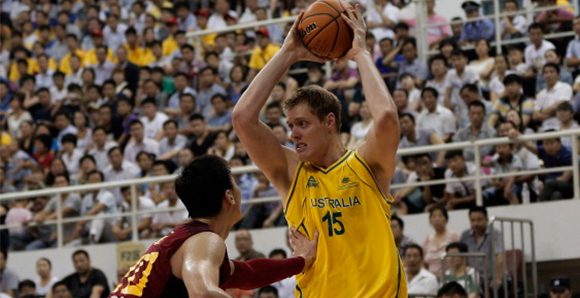
Luke Nevill on his NBL career, NBA experiences and the decline of the big man
March 2, 2021


BIO: Matthew Burston was born in Perth (WA) and began playing basketball as a junior with the Perry Lakes basketball program.
Matthew Burston made his NBL debut with the Perth Wildcats at 18 years of age. He went scoreless in his first NBL game.
Matthew Burston made his debut for the Perth Wildcats in the 2000/01 season, averaging modest numbers of 0.7 points, 0.7 rebounds, and 0.3 assists per game as a rookie. Despite limited playing time, Burston’s early contributions helped the Wildcats to a strong season, finishing third in the standings with a 21-7 record, showcasing the team’s overall depth and strength.
2001/02
In his second season, Burston stepped up his production, averaging 2.3 points, 2.2 rebounds, and 0.1 assists, solidifying his role in the Wildcats’ rotation. His efforts on the court contributed to the Wildcats finishing second in the regular season with a 17-13 record, positioning them as strong contenders heading into the playoffs. Burston’s growth as a young player demonstrated his potential to impact games beyond the stat sheet, providing valuable minutes off the bench and helping maintain the team’s presence in the paint.
2002/03
The 2002/03 season marked a significant shift for the Perth Wildcats as club legend Andrew Vlahov retired, leaving Ricky Grace as the last remaining player from the team’s original championship years. Grace took on the role of captain, leading a revamped squad as the Wildcats moved back to the Superdrome following the closure of the Perth Entertainment Centre. To fill the substantial gap left by Vlahov, Perth brought in Tony Ronaldson, a fellow Australian Boomers veteran, along with Brett Wheeler from the Victoria Titans to strengthen the frontcourt.
With a solid 5-1 start, Perth appeared unfazed by the roster changes. Rob Feaster led the team offensively (19.2 points, 7.6 rebounds, and 3.3 assists), while Wheeler contributed 12.1 points and 8.6 rebounds per game, filling in the shoes left by Paul Rogers. Ricky Grace (18.9 points, 4.6 rebounds, 8.0 assists) led the league in assists, with Matthew Burston stepping up as a crucial player in the rotation, adding 11.6 points and 6.8 rebounds per game. The Wildcats boasted one of the most balanced offenses in the league, with seven players scoring in double figures.
Perth’s strong home record (14-1) helped secure a second-place finish with a 22-8 record, just behind the Sydney Kings. The season was a breakthrough for Burston, who earned the league’s Most Improved Player award for his growth from 2.3 points in limited minutes the previous season to 11.6 points and 6.8 rebounds in 21 minutes per game. Additionally, Stephen Black was named Sixth Man of the Year, and Grace earned a spot on the All-NBL First Team.
In the playoffs, the Wildcats took down the Adelaide 36ers in the Qualifying Finals, with Grace delivering standout performances, including 29 points in Game 1 and 32 points in Game 3. Advancing to the semifinals, Perth swept the Hawks behind strong showings from Grace and Wheeler. However, in the Grand Final series against Sydney, despite Grace’s triple-double in Game 1 and Feaster’s 40-point effort in Game 2, the Wildcats fell short as the Kings claimed their first NBL title.
2003/04
After the Grand Final loss, the Wildcats parted ways with coach Alan Black and appointed club legend Mike Ellis as head coach. The team underwent a significant roster overhaul, retaining only five players, including Grace, Burston, James Harvey, Tony Ronaldson, and Ben Thompson. Due to financial constraints, Brett Wheeler and Rob Feaster departed, making way for imports Reed Rawlings and John Jackson, along with young additions Travis Lane and Liam Rush.
Perth struggled to find consistency, and after an 0-2 start, Rawlings (12.5 points, 2.5 rebounds) was replaced by Rashad Tucker (17.7 points, 9.6 rebounds, 6.6 assists), who provided a versatile presence, filling in at point guard during Grace’s absence due to injury. Tucker quickly made an impact, setting the league record for triple-doubles in a season with six.
James Harvey emerged as the team’s primary offensive threat, increasing his scoring to 20.7 points per game, while Burston continued his upward trajectory, averaging 13.8 points, 9.2 rebounds, and 1.0 assists. Despite their efforts, the Wildcats recorded their first losing season since 1986 (15-18), finishing seventh. In the new play-in format, Perth faced the Cairns Taipans in a qualification game but fell short (103-96), with former Wildcat Anthony Stewart’s 30 points ending Perth’s season.
2004/05
With significant changes both on and off the court, the Perth Wildcats entered the 2004/05 season under new head coach Scott Fisher, who replaced Mike Ellis. Behind the scenes, co-owner Luc Longley also stepped back, handing full ownership of the franchise to Andrew Vlahov. On the roster front, the team faced a major loss with top scorer James Harvey departing for Israel, prompting a retooling of the squad.
Key returnees included captain Ricky Grace, Tony Ronaldson, Liam Rush, Matthew Burston, and Rashad Tucker—who had set multiple triple-double records the season prior. To strengthen their frontcourt, the Wildcats added Peter Crawford from Townsville and signed import Jaron Brown, though he was quickly replaced by Rosell Ellis before the season tipped off. Depth additions included Matthew Shanahan, Braith Cox, and Adrian Majstrovich.
The Wildcats stormed out of the gates with a 4-0 start, notching wins over the Razorbacks (120–97), Cairns (110–93), Hunter (85–72), and Townsville (108–101). Rashad Tucker impressed early, averaging 17.7 points, 8.2 rebounds, 3.9 assists, and 2.5 steals over the first few rounds, earning Player of the Week in Round 1. But despite the strong numbers, concerns grew over Tucker’s attitude and team fit and he was released by Round 9.
Another early standout was emerging big man Matthew Burston, who looked poised for a breakout year. Burston provided athleticism, length, and an inside scoring punch—averaging 14.8 points, 6.0 rebounds, 1.3 assists, and 0.8 blocks across the first eight games of the season. However, a mid-season injury cut short his campaign, dealing a major blow to Perth’s frontcourt rotation.
In response, the Wildcats brought in import forward Ontario Lett, who added size and energy inside, averaging 14.2 points, 6.7 rebounds, and 1.6 blocks across 18 games. Notably, the decision to retain Rosell Ellis—originally earmarked to be released—was reversed following a monster 38-point, 15-rebound performance against Townsville. Tucker was instead cut, and eventually signed with Melbourne.
Despite these adjustments, the Wildcats couldn’t replicate their early momentum. The team struggled to find consistency, particularly on the road, and finished seventh on the ladder for the second straight year with a 17–15 record—including a disappointing 5–11 away record.
Rosell Ellis (17.8 points, 9.6 rebounds, 2.7 assists, and 2.0 steals) was named team MVP after leading the club in scoring and rebounding while shooting an efficient 61% from the field. Peter Crawford (15.9 points, 6.4 rebounds, and 3.8 assists) was named NBL Most Improved Player in his first year with Perth. Tony Ronaldson (15.7 points and 6.3 rebounds) provided veteran steadiness, while Ricky Grace (10.0 points, 4.5 assists) continued to guide the backcourt.
SOUTH DRAGONS
2006/07
In 2006/07, Burston played a supporting role with the South Dragons, averaging 4.3 points and 3.1 rebounds as the team finished in seventh place with a 15-18 record.
2007/08
After playing through multiple injury-plagued seasons, Matthew Burston returned to the South Dragons in 2007 with a clean bill of health and renewed confidence. With the roster undergoing major changes and uncertainty surrounding the frontcourt, Burston was handed a greater role—and responded with the best season of his career to date.
With Shane Heal now in place as player-coach, the South Dragons entered their second season having made several roster changes. Frank Drmic, Kavossy Franklin, and Rosell Ellis departed, replaced by Cortez Groves (via Wollongong), Nick Horvath (via Adelaide), and Luke Martin (via Cairns).
While much of the spotlight was on the new arrivals and second-year swingman Joe Ingles, Burston quietly became a key piece of the rotation. He showed improved touch offensively, held his own defensively against elite bigs, and gave the Dragons a steady presence inside during a chaotic campaign.
Burston immediately benefited from the increased minutes and responsibility. Across 30 games, he posted career-best averages of 11.9 points, 7.0 rebounds, and 1.1 blocks per game—more than doubling his output from the previous year. He was efficient around the rim, reliable on the glass, and emerged as a legitimate interior anchor.
Through all the turbulence, Burston remained a steady contributor. He rounded out a core that included Bakari Hendrix (18.9 points, 6.8 rebounds), Cortez Groves (18.3 points, 3.7 assists), Joe Ingles (15.4 points, 6.3 rebounds, 4.9 assists), and Shane Heal (15.8 points, 3.9 assists). While others shouldered scoring loads, Burston provided balance with his rim protection and hustle.
Despite his emergence, the team struggled mightily. The Dragons dropped their first six games and never recovered—eventually finishing last in the league with a 5–25 record and a woeful 1–14 mark on the road. Assistant coach Michelle Timms exited in January, and Heal was dismissed in February, with Guy Molloy taking over to close out the season.
2008/09
For the 2008/09 season, the South Dragons retained key players Joe Ingles, Matt Burston, Nathan Herbert, Nick Horvath, and Cortez Groves. The exit of the Sydney Kings from the league led to a major acquisition for the Dragons in coach Brian Goorjian, replacing Shane Heal. Adam Gibson, who had previously been with the disbanded Brisbane Bullets, also joined the roster. New additions included Tremmell Darden as the second import, Mika Vukona (via New Zealand) to add physicality, and Rhys Carter, who secured the backup point guard role after impressing in preseason training sessions with Goorjian.
The Dragons’ season began slowly, with losses to Cairns and Townsville and a 2-2 record. However, an eight-game winning streak followed, only interrupted by Groves suffering an injury, leading to his release. Despite Groves’ departure, the Dragons continued their momentum and reached 16-4. During this time, Donta Smith joined the roster after his release from China. Known for his time with the Atlanta Hawks, Smith started slowly but soon found his stride, bolstering the Dragons’ lineup and helping them finish the regular season atop the ladder with a 22-8 record.
Mark Worthington led the Dragons in both scoring and rebounding (16.9 points, 7.1 rebounds, 2.6 assists, and 1.3 steals), with Smith (15 points, 5.2 rebounds, 3.6 assists, and 1.1 steals) close behind. Burston contributed significantly, averaging 8.4 points, 6.2 rebounds, and 1.0 assists. Ahead of the playoffs, Adam Gibson earned Best Defensive Player, and Joe Ingles took home Rookie of the Year honours. The Dragons’ first-place finish earned them a bye in the opening playoff round, and they met Townsville in the semifinals. The Dragons defeated the Crocs in both home games, setting up an all-Melbourne Grand Final against the Melbourne Tigers.
Game one saw the Dragons down the Tigers 93-81, holding Melbourne to only 36 points in the second half. Worthington led with 23 points, while Anstey contributed 21 points and 9 rebounds for Melbourne. In game two, the Tigers responded, overcoming a 14-point deficit to edge out the Dragons 88-83. David Barlow (26 points) and Anstey (21 points, 9 rebounds) were standouts for the Tigers, while Smith led the Dragons with 18 points.
The series heated up in game three after an altercation between Anstey and Rhys Carter, resulting in Anstey’s ejection for a strike and Mika Vukona’s ejection due to the ensuing on-court scuffle. Following Anstey’s exit, the Dragons overpowered Melbourne 84-67 at Hisense Arena, with Donta Smith adding 18 points, including 10 in the final quarter. Although the tribunal chose not to suspend players, Anstey rebounded in game four with a powerful 31-point, 14-rebound, and 4-assist performance, helping Melbourne secure a 108-95 win and pushing the series to a fifth and deciding game.
In the final showdown, 9,000 fans packed Hisense Arena to witness the Dragons clinch the title with a 102-81 victory over Melbourne. Tremmell Darden (31 points) took charge in the fourth quarter, scoring 21 points, while Smith (21 points, 10 rebounds, 7 assists) flirted with a triple-double. Vukona and Worthington contained Anstey, limiting him to 12 points and 3 rebounds, while Ebi Ere and Barlow each contributed 16 points for the Tigers. Smith’s standout performance across the series earned him Finals MVP honours with averages of 18.2 points, 7.4 rebounds, and 5.4 assists over five games.
Despite hopes of defending their title, the Dragons made the unexpected decision to withdraw from the NBL within months of their championship win. Co-owner Mark Cowan cited the league’s instability and the Dragons’ vision for a fully professional, commercially viable competition as reasons for their exit.
“The NBL is a mess,” stated Cowan. “In the last two years, team’s in Brisbane and Sydney have collapsed. Singapore pulled out of the league. Cairns and the Sydney Spirit had major financial crises. Fox Sports severely cut its telecasts, and mainstream media interest has waned. Crowds fall every year. Basketball Australia and the NBL owners decided something had to be done, so we handed in our licences on the condition that a reform process would be undertaken.”
ADELAIDE 36ERS
2009/10
Heading into the 2009/10 season, Adelaide faced significant changes, notably the departures of Luke Schenscher to Perth and Aaron Bruce to the USA. However, the team filled these gaps by signing Matthew Burston, Nathan Herbert, and Cortez Groves following the disbanding of the South Dragons, which left these players without teams. Import John Gilchrist also joined as a replacement for Julius Hodge, while the club embraced a new era after the retirement of long-time captain Brett Maher, who had led the 36ers to three championships (1998, 1999, 2002) across his 525-game career.
Adam Ballinger, entering his third season with Adelaide, gained Australian citizenship in July 2009 and was appointed as the new team captain. Ballinger led the team in scoring (17.6 points, 5.3 rebounds), with Gilchrist close behind, averaging 16.9 points, 5.5 rebounds, and 4.2 assists. Gilchrist made a strong first impression, debuting with a powerful 20-point, 10-rebound, and 6-assist game, but his season was cut short by a serious knee injury that kept him out of the last three games.
Burston played in 22 games, contributing 9.9 points, 6.5 rebounds, and 0.5 assists per game, leading the team in rebounding. Meanwhile, Groves struggled with injuries and delivered his lowest scoring output in an NBL season (9.8 points), marking his final stint in the league. Coach Scott Ninnis faced challenges in steering the team, as they finished at the bottom of the ladder for the first time in the club’s history with a 10-18 record. After this difficult season, Ninnis was replaced by former AIS coach Marty Clarke for the 2010/11 campaign.
MELBOURNE TIGERS
2010/11
The 2010/11 season saw the Tigers finish with their worst record since 1987. This marked the first time Melbourne had taken the court without either Andrew Gaze or Chris Anstey on the roster, ushering in a clear rebuild for the franchise.
The team had undergone a significant roster overhaul following the exits of Julius Hodge, Mark Worthington (to Gold Coast), Luke Kendall (to Gold Coast), Daniel Johnson (to Adelaide), and the retirements of Anstey and Sam MacKinnon. Head coach Al Westover looked to rebuild the lineup by bringing in import guards Eric Devendorf and TJ Campbell, while constructing an oversized frontcourt that featured Cameron Tragardh (via Wollongong), Luke Nevill, Wade Helliwell, and Matt Burston (via Perth). However, the roster’s lack of balance quickly became apparent, and the Tigers struggled to generate consistent performances.
Melbourne’s campaign began with a heavy 68–84 defeat to Sydney and spiralled further as the team opened with four straight losses. TJ Campbell (11.8 points, 3 rebounds, and 2.8 assists across 5 games) was cut early in the season, replaced by 2010 NBL MVP Corey Williams (17.3 points, 6.8 rebounds, and 6.1 assists across 23 games), who had originally committed to play in Greece. Williams joined Devendorf (14.6 points, 2.7 rebounds, and 1.8 assists across 18 games) to form a high-scoring backcourt that still couldn’t drag the team out of the cellar.
Midway through the season, tensions reached boiling point when owner Seamus McPeake stormed the locker room and threatened to withhold player salaries due to poor performance. The team continued to slide, prompting the release of Devendorf and the sacking of head coach Al Westover. Darryl McDonald was promoted to interim coach for the remainder of the season.
Matthew Burston (8.9 points, 6.7 rebounds, and 1.1 steals) emerged as a key figure in the frontcourt throughout the chaos. His consistent minutes helped stabilise Melbourne’s big rotation, especially after Nevill (12.2 points, 7.4 rebounds, and 1.2 blocks) left late in the season to sign with BC Triumph Lyubertsy in Russia.
Although the Tigers managed wins over Sydney, Adelaide, and the Gold Coast Blaze in the second half of the season, they never built serious momentum. Melbourne closed the year with a 10–18 record, their most losses in a season since joining the NBL, finishing seventh and missing the playoffs for a second straight year.
2011/12
The Tigers retooled under new coach Trevor Gleeson, reshaping a roster previously loaded with big men. The exits of Williams, Devendorf, Nevill, and Wade Helliwell opened space for Gleeson to bring in the Cairns Taipans backcourt of Ayinde Ubaka, Ron Dorsey, and Daniel Dillon, pairing them with high-scoring forward Cam Tragardh. With additional players like Daryl Corletto, Liam Rush, Lucas Walker, and team captain Tommy Greer, the Tigers appeared to be on a path to improvement.
However, the NBA lockout added a twist as Australian Boomers guard Patrick Mills, waiting on an NBA contract, signed with Melbourne. To make room, Corletto was released and later joined New Zealand. The Tigers started strong with a 6-3 record before Mills departed for China, leaving the team struggling to find rhythm. Turmoil hit its peak when McPeake stormed into the locker room following a loss to Gold Coast, immediately firing Ubaka (12.0 points, 2.4 rebounds, and 3.3 assists), who was unaware until hearing from teammates. Ubaka quickly joined Wollongong, while the Tigers signed Myron Allen (9.9 points, 5.9 rebounds, and 6.2 assists) as a replacement.
The Tigers lost three consecutive games after Ubaka’s departure, ending the season with a 11-17 record and missing the playoffs. Tragardh (16.3 points, 5.3 rebounds, 1.4 assists) led in scoring, earned team MVP, and made the All-NBL Second Team. Burston averaged 5.6 points, 3.4 rebounds, and 0.3 assists, as Melbourne’s reshuffling ultimately fell short of producing a cohesive campaign.
2012/13
After missing the playoffs, Melbourne Tigers replaced head coach Trevor Gleeson with Chris Anstey, a former Tigers star who had only recently retired from playing. Anstey enlisted another Tigers legend, Darryl McDonald, as his assistant coach.
Anstey’s first signing was 6’10 forward Seth Scott, followed by Nate Tomlinson (University of Colorado) and Adam Ballinger (from Adelaide) to replace Cam Tragardh and Daniel Dillon, both of whom left the Tigers after the season. Shortly before the NBL season started, the Tigers managed to sign Chris Goulding, who became available after the Gold Coast Blaze folded. Goulding, a sought-after free agent, was highly valued, with Anstey calling him “the absolute best Australian player available.”
To complete their roster, the Tigers signed Kevin Braswell, a key figure in New Zealand’s first championship run, under the assumption he’d soon gain New Zealand citizenship. The team also retained Bennie Lewis, Matt Burston, Liam Rush, Lucas Walker, and captain Tommy Greer, setting sights on ending their playoff drought.
However, Braswell (10.0 points, 2.6 rebounds, 5.2 assists, 2.4 steals) struggled with persistent knee issues and was released after five games. The Tigers then signed former sixth overall NBA pick Jonny Flynn, who Anstey described as possibly “the highest credentialed player in his prime to join the NBL.” Flynn quickly turned around the team’s fortunes, helping the Tigers to a 96-66 victory over Adelaide, avenging their season-opening loss.
Flynn (17.4 points, 3.9 rebounds, 5.9 assists) and Goulding (15.4 points, 3.1 rebounds, 2.1 assists) formed a dynamic scoring duo. Although the Tigers pulled themselves off the bottom of the ladder, they finished with a 12-16 record, narrowly missing the top four due to Sydney’s two-point edge in head-to-head matchups. Seth Scott (11.6 points, 6.2 rebounds) earned All-NBL First Team honours, and Flynn made the All-NBL Second Team. Burston contributed 4.5 points, 4.9 rebounds, and 0.4 assists across the season.
2013/14
Burston posted averages of 6.8 points, 5.8 rebounds, and 0.9 assists for the 2013/14 season, aiding the Cairns Taipans to a 12-16 record, finishing fifth in the league.
2014/15
The Cairns Taipans made history in 2015, becoming the first regional team to finish an NBL season in first place since Geelong in 1984, with a 21-7 record. They also set a league first by keeping the same starting five—Scottie Wilbekin, Cameron Gliddon, Stephen Weigh, captain Alex Loughton, and Matt Burston—for all 28 games. Injuries, however, led to training player Nathan Sobey being added mid-season to fill gaps left by Corey Maynard (1.1 points, 1.2 rebounds) and Shaun Bruce (3.7 points, 1.5 rebounds).
In the semifinals, Cairns faced Perth, with Wilbekin (28 points, 10 rebounds, 4 assists) leading them to a game one win (71-64) and sealing the series with 16 points, 11 rebounds, and 6 assists in game two (80-68). The Taipans advanced to the Grand Final against the New Zealand Breakers but lost the series, falling 86-71 in the first game and narrowly losing game two on a buzzer-beater (83-81). Wilbekin led the team in scoring (15.2 points, 3.7 rebounds, 4.3 assists) and was awarded the team MVP, with Burston adding 7.0 points, 5.2 rebounds, and 1 assist per game.
2015/16
In the 2015/16 season, Burston averaged 5.5 points, 5.6 rebounds, and 1.4 assists, contributing to the Taipans’ sixth-place finish with a 12-16 record.
Matthew Burston played sixteen seasons across five NBL teams. This included the Perth Wildcats, South Dragons, Melbourne Tigers, Adelaide 36ers and Cairns Taipans. He averaged 8.4 points, 5.8 rebounds, and 0.7 assists in 379 NBL games.
CAREER RANKINGS:
– 44th in total rebounds
– 37th in total blocks
| SEASON | AGE | TEAM | TEAM RECORD | GP | MINS | PTS | REB | AST | OR | DR | STL | BLK | TO | PF | FGM | FGA | FG% | 3PM | 3PA | 3P% | FTM | FTA | FT% | TS% | EFG% | HS |
|---|---|---|---|---|---|---|---|---|---|---|---|---|---|---|---|---|---|---|---|---|---|---|---|---|---|---|
| 2015-16 | 33 | Cairns | 12-16 (6) | 27 | 495.8 | 149 | 150 | 39 | 50 | 100 | 25 | 8 | 23 | 65 | 57 | 111 | 51% | 0 | 1 | 0% | 35 | 49 | 71% | 55% | 51% | 15 |
| 2014-15 | 32 | Cairns | 21-7 (1) | 32 | 614.0 | 223 | 165 | 32 | 64 | 101 | 21 | 19 | 38 | 104 | 89 | 165 | 54% | 0 | 0 | 0% | 45 | 78 | 58% | 55% | 54% | |
| 2013-14 | 31 | Cairns | 12-16 (5) | 28 | 586.0 | 191 | 161 | 26 | 59 | 102 | 19 | 15 | 27 | 84 | 73 | 138 | 53% | 0 | 1 | 0% | 45 | 80 | 56% | 54% | 53% | |
| 2012-13 | 30 | Melbourne | 12-16 (5) | 28 | 459.0 | 126 | 136 | 11 | 53 | 83 | 18 | 15 | 24 | 66 | 51 | 106 | 48% | 0 | 1 | 0% | 24 | 47 | 51% | 49% | 48% | 16 |
| 2011-12 | 29 | Melbourne | 11-17 (6) | 19 | 281.0 | 107 | 65 | 6 | 26 | 39 | 10 | 7 | 20 | 45 | 36 | 82 | 44% | 0 | 2 | 0% | 35 | 54 | 65% | 50% | 44% | 15 |
| 2010-11 | 28 | Melbourne | 10-18 (7) | 27 | 630.0 | 241 | 181 | 33 | 65 | 116 | 31 | 16 | 45 | 92 | 102 | 202 | 50% | 0 | 2 | 0% | 37 | 68 | 54% | 51% | 50% | 24 |
| 2009-10 | 27 | Adelaide | 10-18 (8) | 22 | 476.0 | 218 | 143 | 12 | 46 | 97 | 21 | 9 | 24 | 70 | 86 | 166 | 52% | 0 | 4 | 0% | 46 | 77 | 60% | 54% | 52% | 19 |
| 2008-09 | 26 | South | 22-8 (1) | 37 | 847.0 | 311 | 228 | 36 | 76 | 152 | 37 | 37 | 41 | 122 | 123 | 228 | 54% | 2 | 6 | 33% | 63 | 95 | 66% | 57% | 54% | 25 |
| 2007-08 | 25 | South | 5-25 (13) | 30 | 755.0 | 358 | 209 | 23 | 79 | 130 | 21 | 34 | 42 | 96 | 128 | 227 | 56% | 0 | 1 | 0% | 102 | 153 | 67% | 60% | 56% | 30 |
| 2006-07 | 24 | South | 15-18 (7) | 14 | 192.0 | 60 | 43 | 4 | 21 | 22 | 5 | 13 | 12 | 32 | 18 | 43 | 42% | 0 | 1 | 0% | 24 | 29 | 83% | 53% | 42% | 16 |
| 2005-06 | 23 | Perth | 16-16 (7) | 25 | 433.0 | 190 | 132 | 15 | 54 | 78 | 8 | 16 | 21 | 63 | 73 | 143 | 51% | 0 | 0 | 0% | 44 | 67 | 66% | 54% | 51% | 17 |
| 2004-05 | 22 | Perth | 17-15 (7) | 8 | 207.0 | 118 | 48 | 10 | 21 | 27 | 8 | 6 | 11 | 28 | 47 | 79 | 59% | 0 | 0 | 0% | 24 | 39 | 62% | 60% | 59% | 35 |
| 2003-04 | 21 | Perth | 15-18 (7) | 34 | 1,006.0 | 468 | 314 | 33 | 156 | 158 | 55 | 31 | 49 | 116 | 182 | 331 | 55% | 0 | 0 | 0% | 104 | 147 | 71% | 58% | 55% | 25 |
| 2002-03 | 20 | Perth | 22-8 (2) | 35 | 726.0 | 405 | 237 | 16 | 94 | 143 | 24 | 28 | 25 | 79 | 153 | 247 | 62% | 0 | 1 | 0% | 99 | 149 | 66% | 64% | 62% | 36 |
| 2001-02 | 19 | Perth | 17-13 (2) | 10 | 61.0 | 23 | 22 | 1 | 10 | 12 | 2 | 1 | 3 | 7 | 10 | 22 | 45% | 0 | 1 | 0% | 3 | 4 | 75% | 48% | 45% | 6 |
| 2000-01 | 18 | Perth | 21-7 (3) | 3 | 11.0 | 2 | 2 | 1 | 1 | 1 | 0 | 0 | 0 | 4 | 1 | 1 | 100% | 0 | 0 | 0% | 0 | 0 | 0% | 100% | 0% | 2 | Totals | 379 | 7780 | 3190 | 2236 | 298 | 875 | 1361 | 305 | 255 | 405 | 1073 | 1229 | 2291 | 53.6% | 2 | 21 | 9.5% | 730 | 1136 | 64.3% | 57% | 54% | 36 |
| SEASON | AGE | TEAM | TEAM RECORD | GP | MINS | PTS | REB | AST | OR | DR | STL | BLK | TO | PF | FGM | FGA | FG% | 3PM | 3PA | 3P% | FTM | FTA | FT% | TS% | EFG% | HS |
|---|---|---|---|---|---|---|---|---|---|---|---|---|---|---|---|---|---|---|---|---|---|---|---|---|---|---|
| 2015-16 | 33 | Cairns | 12-16 (6) | 27 | 18.4 | 5.5 | 5.6 | 1.4 | 1.9 | 3.7 | 0.9 | 0.3 | 0.9 | 2.4 | 2.1 | 4.1 | 51% | 0.0 | 0.0 | 0% | 1.3 | 1.8 | 71% | 55% | 51% | 15 |
| 2014-15 | 32 | Cairns | 21-7 (1) | 32 | 19.2 | 7.0 | 5.2 | 1.0 | 2.0 | 3.2 | 0.7 | 0.6 | 1.2 | 3.3 | 2.8 | 5.2 | 54% | 0.0 | 0.0 | 0% | 1.4 | 2.4 | 58% | 55% | 54% | |
| 2013-14 | 31 | Cairns | 12-16 (5) | 28 | 20.9 | 6.8 | 5.8 | 0.9 | 2.1 | 3.6 | 0.7 | 0.5 | 1.0 | 3.0 | 2.6 | 4.9 | 53% | 0.0 | 0.0 | 0% | 1.6 | 2.9 | 56% | 54% | 53% | |
| 2012-13 | 30 | Melbourne | 12-16 (5) | 28 | 16.4 | 4.5 | 4.9 | 0.4 | 1.9 | 3.0 | 0.6 | 0.5 | 0.9 | 2.4 | 1.8 | 3.8 | 48% | 0.0 | 0.0 | 0% | 0.9 | 1.7 | 51% | 49% | 48% | 16 |
| 2011-12 | 29 | Melbourne | 11-17 (6) | 19 | 14.8 | 5.6 | 3.4 | 0.3 | 1.4 | 2.1 | 0.5 | 0.4 | 1.1 | 2.4 | 1.9 | 4.3 | 44% | 0.0 | 0.1 | 0% | 1.8 | 2.8 | 65% | 50% | 44% | 15 |
| 2010-11 | 28 | Melbourne | 10-18 (7) | 27 | 23.3 | 8.9 | 6.7 | 1.2 | 2.4 | 4.3 | 1.1 | 0.6 | 1.7 | 3.4 | 3.8 | 7.5 | 50% | 0.0 | 0.1 | 0% | 1.4 | 2.5 | 54% | 51% | 50% | 24 |
| 2009-10 | 27 | Adelaide | 10-18 (8) | 22 | 21.6 | 9.9 | 6.5 | 0.5 | 2.1 | 4.4 | 1.0 | 0.4 | 1.1 | 3.2 | 3.9 | 7.5 | 52% | 0.0 | 0.2 | 0% | 2.1 | 3.5 | 60% | 54% | 52% | 19 |
| 2008-09 | 26 | South | 22-8 (1) | 37 | 22.9 | 8.4 | 6.2 | 1.0 | 2.1 | 4.1 | 1.0 | 1.0 | 1.1 | 3.3 | 3.3 | 6.2 | 54% | 0.1 | 0.2 | 33% | 1.7 | 2.6 | 66% | 57% | 54% | 25 |
| 2007-08 | 25 | South | 5-25 (13) | 30 | 25.2 | 11.9 | 7.0 | 0.8 | 2.6 | 4.3 | 0.7 | 1.1 | 1.4 | 3.2 | 4.3 | 7.6 | 56% | 0.0 | 0.0 | 0% | 3.4 | 5.1 | 67% | 60% | 56% | 30 |
| 2006-07 | 24 | South | 15-18 (7) | 14 | 13.7 | 4.3 | 3.1 | 0.3 | 1.5 | 1.6 | 0.4 | 0.9 | 0.9 | 2.3 | 1.3 | 3.1 | 42% | 0.0 | 0.1 | 0% | 1.7 | 2.1 | 83% | 53% | 42% | 16 |
| 2005-06 | 23 | Perth | 16-16 (7) | 25 | 17.3 | 7.6 | 5.3 | 0.6 | 2.2 | 3.1 | 0.3 | 0.6 | 0.8 | 2.5 | 2.9 | 5.7 | 51% | 0.0 | 0.0 | 0% | 1.8 | 2.7 | 66% | 54% | 51% | 17 |
| 2004-05 | 22 | Perth | 17-15 (7) | 8 | 25.9 | 14.8 | 6.0 | 1.3 | 2.6 | 3.4 | 1.0 | 0.8 | 1.4 | 3.5 | 5.9 | 9.9 | 59% | 0.0 | 0.0 | 0% | 3.0 | 4.9 | 62% | 60% | 59% | 35 |
| 2003-04 | 21 | Perth | 15-18 (7) | 34 | 29.6 | 13.8 | 9.2 | 1.0 | 4.6 | 4.6 | 1.6 | 0.9 | 1.4 | 3.4 | 5.4 | 9.7 | 55% | 0.0 | 0.0 | 0% | 3.1 | 4.3 | 71% | 58% | 55% | 25 |
| 2002-03 | 20 | Perth | 22-8 (2) | 35 | 20.7 | 11.6 | 6.8 | 0.5 | 2.7 | 4.1 | 0.7 | 0.8 | 0.7 | 2.3 | 4.4 | 7.1 | 62% | 0.0 | 0.0 | 0% | 2.8 | 4.3 | 66% | 64% | 62% | 36 |
| 2001-02 | 19 | Perth | 17-13 (2) | 10 | 6.1 | 2.3 | 2.2 | 0.1 | 1.0 | 1.2 | 0.2 | 0.1 | 0.3 | 0.7 | 1.0 | 2.2 | 45% | 0.0 | 0.1 | 0% | 0.3 | 0.4 | 75% | 48% | 45% | 6 |
| 2000-01 | 18 | Perth | 21-7 (3) | 3 | 3.7 | 0.7 | 0.7 | 0.3 | 0.3 | 0.3 | 0.0 | 0.0 | 0.0 | 1.3 | 0.3 | 0.3 | 100% | 0.0 | 0.0 | 0% | 0.0 | 0.0 | 0% | 100% | 0% | 2 | Total | 379 | 20.5 | 8.4 | 5.9 | 0.8 | 2.3 | 3.6 | 0.8 | 0.7 | 1.1 | 2.8 | 3.2 | 6.0 | 53.6% | 0.0 | 0.0 | 9.5% | 0.0 | 0.1 | 64.3% | 57% | 54% | 36 |
| POINTS | REBOUNDS | ASSISTS | STEALS | BLOCKS | TURNOVERS | TRIPLE DOUBLES | 36 | 16 | 5 | 5 | 5 | 6 | 0 |
|---|
Burston also played in the State Basketball League (WA) for the Perry Lakes Hawks, in Victorias state league (Big V).
Burston has spent time in the Qatari Basketball League.
- NBL Most Improved Player (2003)- SBL Most Improved Player (2000)
Whilst we try to source as much information as we can for every player who has ever played in the NBL some information on a player profile may be missing. If you have additional information on a player you'd like us to add to a profile, please send it to us using the enquiry form below.
Submissions are then sent to info@aussiehoopla.com

