Nick Rakocevic
October 27, 2025


NICKNAME/S: Finn Diesel
BIO: Finn Delany was born in Nelson (New Zealand).
Finn Delany made his NBL debut with the New Zealand Breakers at 20 years of age. He went scoreless in his first NBL game.
New Zealand entered the 2015/16 NBL season with much of their championship-winning core intact, retaining every player from their title-winning roster except for Rhys Carter, who signed with Sydney, and Ekene Ibekwe, who moved to Europe. To fill these vacancies, the Breakers signed Australian point guard Shane McDonald and rookie American big man Charles Jackson. Finn Delany joined the team as a development player, marking the beginning of his NBL career.
The Breakers faced significant preseason challenges, including Alex Pledger recovering from off-season foot surgery, Thomas Abercrombie sidelined with a hamstring strain, and Corey Webster trialing with the New Orleans Pelicans in the NBA. In response, the team elevated development players Shea Ili and Tai Wynyard and signed Everard Bartlett as a short-term replacement for Webster.
Delany made four appearances during the season, gaining valuable experience while playing alongside the Breakers’ veteran core. New Zealand finished fourth on the ladder with a 16–12 record, securing the final playoff berth. In the semifinals, the Breakers swept ladder leaders Melbourne (2–0), advancing to their fifth Grand Final appearance in six years.
In the Grand Final series, the Breakers faced off against the Perth Wildcats for the second consecutive year. Despite strong performances from Nathan Jawai and Casey Prather, the Wildcats narrowly won Game 1 (82–76). New Zealand responded with a win in Game 2 (72–68) in Auckland, led by Cedric Jackson’s near triple-double (13 points, 9 rebounds, and 8 assists). The deciding Game 3, held in Perth in front of 13,090 fans, saw the Wildcats dominate with a blowout victory (75–52). Casey Prather and Jermaine Beal led the scoring for Perth, but it was Damian Martin’s defensive efforts that earned him the Grand Final MVP after holding Cedric Jackson scoreless. The loss marked the Breakers’ first Grand Final series defeat and their first playoff loss to the Wildcats.
2016/17
Following the 2016 Grand Final loss, the Breakers underwent significant changes. Chief executive Richard Clarke and coach Dean Vickerman departed, with Paul Henare taking over as head coach and Dillon Boucher stepping in as general manager. The team also saw key players Cedric Jackson and Tai Wesley join Melbourne United. However, the Breakers retained Thomas Abercrombie, Corey Webster, Alex Pledger, and Mika Vukona while adding club legend Kirk Penney and imports Ben Woodside and Akil Mitchell. Delany, alongside Shea Ili and Jordan Ngatai, was elevated from a development player to the full-time roster.
The Breakers’ preseason was marred by injuries to Shea Ili (back), Penney (calf), and Webster (hip and back), impacting their early-season performance. Webster returned mid-season but struggled with lingering injuries, seeing his scoring drop from 19.6 points per game to 11.7. Further injuries struck as Abercrombie (11.7 points, 5.1 rebounds, and 1.2 assists) and Woodside (8.8 points, 3.3 rebounds, and 5.5 assists) missed games. In January, Mitchell suffered a severe eye injury during a game against Cairns, sidelining him for the remainder of the season. Despite these challenges, Delany provided consistent contributions, finishing the season with averages of 3.2 points, 2.3 rebounds, and 0.5 assists.
The Breakers made several mid-season roster changes, adding Paul Carter (9.1 points, 4.5 rebounds) and replacing Woodside with David Stockton, who lasted just 10 games before being replaced by Kevin Dillard. Dillard (18.1 points, 4 rebounds, and 4.8 assists) and Penney (17.4 points, 3.4 rebounds, and 2.4 assists) fueled a late-season resurgence, leading the Breakers to a four-game winning streak. However, back-to-back losses in Round 17 ended their playoff hopes as they finished fifth with a 14–14 record.
2017/18
After an injury-riddled 2016/17 season saw New Zealand miss the playoffs with a 14-14 record, the Breakers entered Paul Henare’s second season without Kevin Dillard (to PAOK Thessaloniki), Akil Mitchell (to Long Island Nets), Paul Carter (to Châlons-Reims), David Stockton (to Reno Bighorns) and Ben Woodside (retired). Corey Webster (to Perth) also departed after New Zealand declined the third-year option on his contract, although he was released by the Wildcats before the season to pursue an opportunity overseas. With the NBL allowing teams to carry three imports, New Zealand added Édgar Sosa (via Al Riyadi Beirut), DJ Newbill (via Oostende) and James Hunter (via Southland), while keeping its third import position open.
New Zealand opened the season against Cairns at Spark Arena on October 8, where Delany (0 points and 2 rebounds) played 15 minutes off the bench as the Breakers lost 82-71. Thomas Abercrombie (23 points, 7 rebounds, and 4 blocks), Sosa (15 points) and Newbill (12 points and 5 rebounds) led New Zealand, while Dayshon Smith (18 points and 5 rebounds) and Stephen Weigh (17 points and 7 rebounds) led Cairns.
Delany (5.1 points and 3.4 rebounds across 28 games) entered his second season on the full-time roster after a strong campaign with the Tall Blacks at the FIBA Asia Cup and played all 28 regular-season games without missing time through injury. His role continued to grow off the bench as New Zealand recovered from its opening loss to start 6-1 before a nine-game winning streak carried the Breakers to 9-1 and top spot on the ladder entering the FIBA World Cup qualifying break.
One of Delany’s best games came in Cairns on November 4, where Delany (11 points, 7 rebounds, 1 assist, and 1 steal) provided a spark off the bench as New Zealand defeated the Taipans 73-70 for its sixth consecutive win. Kirk Penney (16 points) and Abercrombie (12 points, 4 rebounds, and 2 blocks) provided support, while Michael Carrera (16 points, 6 rebounds, and 3 assists) led Cairns. With the scores tied, Sosa (9 points, 6 assists, and 1 steal) hit the winning three-pointer with two seconds remaining, saying, “It was a great play by coach, I was supposed to be the decoy but they came out in a zone so I took it.”
Delany produced another of his best games against Adelaide at Spark Arena on December 15, where Delany (11 points, 4 rebounds, 2 assists, and 2 steals) made an impact in less than 10 minutes off the bench, but New Zealand lost 90-75. Alex Pledger (12 points and 7 rebounds) and Penney (11 points and 4 rebounds) provided support, while Ramone Moore (27 points, 4 rebounds, and 6 assists) and Daniel Johnson (22 points, 9 rebounds, and 2 blocks) led Adelaide.
The Breakers struggled following the international break and after losing six of nine games used their vacant third import position on January 8 to sign Rakeem Christmas (via Galatasaray) for the remainder of the season. Hunter (2.5 points across 2 games, released) was waived to open the roster spot despite Henare stressing the decision was not performance related. Christmas (7.6 points and 5.7 rebounds across 12 games) was brought in to provide an additional interior presence, with Henare saying, “Releasing Jimmy was extremely hard, he is a victim of circumstance.”
Delany’s best game of the season came against Illawarra at North Shore Events Centre on February 16, where Delany (23 points, 6 rebounds, 2 assists, and 1 steal) shot 8-of-13 from the field and led New Zealand after Henare turned to his bench with the game on the line. Sosa (16 points and 2 steals) and Shea Ili (14 points, 4 rebounds, and 3 assists) provided support as the Breakers led 69-53 entering the fourth quarter, but Demitrius Conger (24 points, 8 rebounds, and 4 assists) led Illawarra’s comeback before Mitch Norton (13 points and 7 assists) hit a three-pointer with two seconds remaining to give the Hawks an 84-82 win.
Delany (2 points, 3 rebounds, 3 assists, and 1 block) played in New Zealand’s final regular-season game against Sydney at Qudos Bank Arena on February 18, with Jordan Ngatai (17 points), Christmas (13 points and 9 rebounds) and Robert Loe (13 points) leading the Breakers. Jason Cadee (30 points) and Todd Blanchfield (19 points and 6 rebounds) led Sydney to a 101-86 win, handing New Zealand its fourth consecutive loss as the Breakers finished fourth with a 15-13 record.
Sosa (15.8 points and 3.8 assists across 28 games) led New Zealand in scoring and earned All-NBL Second Team honours, while Newbill (13.9 points, 4.3 rebounds, 3.2 assists, and 1.4 steals across 30 games) provided another major backcourt option. Penney (10.1 points across 22 games), Abercrombie (9.9 points, 4.8 rebounds, and 1.4 blocks across 30 games), Ili (9.3 points and 3.1 assists across 30 games), Loe (7.3 points and 4.3 rebounds across 30 games), Pledger (6.4 points and 4.9 rebounds across 28 games) and Mika Vukona (6.2 points and 6.1 rebounds across 30 games) rounded out the main rotation, with Ili named the NBL Most Improved Player.
Following the regular season, Delany played for the Tall Blacks in wins over China and Korea during the FIBA World Cup qualifying window, but was then ruled out of New Zealand’s semifinal series against Melbourne with a concussion. Melbourne opened the series at Hisense Arena with an 88-77 win behind Casper Ware (33 points, 6 rebounds, and 3 assists), Casey Prather (15 points and 5 rebounds) and Tai Wesley (13 points, 5 rebounds, and 4 assists), while Newbill (19 points and 3 steals) and Ili (16 points and 5 assists) led the Breakers.
Delany remained sidelined with concussion for game two at Spark Arena, where Newbill (21 points, 8 rebounds, and 4 assists), Penney (17 points) and Loe (16 points, 4 rebounds, and 2 steals) pushed Melbourne to overtime. Josh Boone (33 points, 15 rebounds, 2 steals, and 2 blocks), Ware (15 points and 6 assists), Chris Goulding (14 points, 5 assists, and 2 steals) and Prather (12 points and 11 rebounds) led United, with Boone scoring the winning put-back in the final second as Melbourne won 88-86 and completed the 2-0 sweep in Penney’s final NBL game.
2018/19
In 2018, a new regime was brought about at the Breakers organisation. In February, a consortium headed by former NBA player Matt Walsh became the majority shareholders via a newly formed company called Breakers Basketball Ltd, thus ending the 13-year Liz and Paul Blackwell ownership team.
Next came the exodus of four of the franchise’s most long-serving figures during the off-season. Paul Henare’s 15 years as player and coach came to an end, New Zealand’s all-time leading scorer Kirk Penney retired, and Alex Pledger (to Melbourne), Mika Vukona (to Brisbane), and Robert Loe (to Cairns) all signed deals elsewhere. Thomas Abercrombie stepped into the role of captain with Vukona’s exit, and former Breakers guard Kevin Braswell became head coach. Tai Wesley (via Melbourne), Corey Webster (via Europe), Jarrad Weeks (via Cairns), Majok Majok (via Melbourne), Patrick Richard, Armani Moore, and Shawn Long were added to the roster.
Having initially joined New Zealand as a development player in 2015 before earning a full roster position, Finn Delany re-committed to the Breakers on a two-year deal during the off-season. He had continued to develop the previous season, averaging 5.2 points and 3.3 rebounds across 28 games, before winning bronze with New Zealand at the 2018 Commonwealth Games.
The Breakers headed to the United States during the preseason to face the Phoenix Suns in their first NBLxNBA game. Delany played five minutes and scored 2 points as New Zealand pushed the Suns before falling 86-91, with Webster (27 points and 7 assists) and Wesley (15 points and 7 rebounds) leading the Breakers, while Deandre Ayton (21 points and 15 rebounds) led Phoenix.
New Zealand opened the regular season against Brisbane at Spark Arena on October 11, where he came off the bench for 2 points and 2 rebounds in a 73-86 loss. Webster (23 points) and Wesley (12 points, 4 rebounds, and 3 steals) led the Breakers, while Cameron Gliddon (29 points, 6 rebounds, and 2 steals) was Brisbane’s best.
Delany (8 points across 25 games) took another step forward during his fourth NBL season, increasing his scoring from 5.2 points the previous year while continuing to come exclusively from the bench. A knee injury interrupted his season in late November and forced him to withdraw from New Zealand’s World Cup qualifying games against Jordan and Syria so he could seek further treatment, with Tall Blacks coach Paul Henare saying, “right now the priority has to be for him to seek further treatment and get healthy.” He was absent from the Breakers’ November 23 and November 25 games against Perth and December 9 game against Sydney, the only three games he missed during the season, before returning in mid-December.
Delany’s best game of the season came against Adelaide on October 28, when Delany (27 points, 5 rebounds, and 2 assists) came off the bench and made 12-of-18 from the field as New Zealand recovered from an early 14-point deficit to defeat the 36ers 114-94 and claim its first home victory of the season. Moore (17 points, 5 rebounds, and 3 assists) and Webster (16 points, 5 rebounds) provided support, while Jacob Wiley (23 points) led Adelaide.
Another strong performance came in Adelaide on December 30, when Delany (18 points and 5 rebounds) made all six of his field goal attempts, his only three-point attempt, and all five free throws. Ili (19 points and 4 steals) and Weeks (18 points) also contributed, but Daniel Johnson (28 points and 7 rebounds) led Adelaide to a 109-98 victory that left New Zealand seventh on the ladder entering the new year.
With the Breakers trying to remain in the playoff race, Delany (17 points, 4 rebounds, and 5 assists) erupted for 10 points in the third quarter against Brisbane on January 27 and helped New Zealand pull away for a 109-96 victory. Long (23 points, 6 rebounds, 3 steals, and 2 blocks) and Weeks (20 points) led the scoring alongside him, while Lamar Patterson (18 points, 5 rebounds, and 2 steals) was Brisbane’s best as the win kept the Breakers’ finals hopes alive.
Long (18.3 points, 9.1 rebounds, and 1.5 blocks) emerged as New Zealand’s leading scorer and finished second in the NBL in both rebounding and blocked shots, earning All-NBL Second Team honours and the Breakers Club MVP award. Wesley (14.5 points, 5.4 rebounds, and 3.5 assists) remained one of the team’s most consistent players, while Richard (11 points and 3.6 rebounds), Webster (10.4 points), Weeks (10.1 points), Abercrombie (8.5 points and 5.1 rebounds), Ili (7.9 points), and Moore (7.1 points and 4.3 rebounds) rounded out the main contributors. New Zealand struggled to find consistency throughout the season, winning only four of its first 12 games and enduring a five-game losing streak through November and December.
Once New Zealand’s NBL season was completed, Delany (to FMP Belgrade) signed with Serbian club FMP for the remainder of the 2018/19 Serbian League season, giving him his first opportunity to play professionally in Europe. He appeared in 13 games for FMP before joining the Dallas Mavericks for the 2019 NBA Summer League. The move to Serbia did not end his time with New Zealand, with the second year of the two-year Breakers contract he had signed before the season keeping him on the roster for 2019/20.
New Zealand closed the season in Brisbane on February 16, where Delany (9 points) came off the bench while Long (23 points, 10 rebounds, and 3 blocks) and Wesley (17 points, 8 rebounds, and 3 assists) led the Breakers, but Patterson (23 points, 7 rebounds, and 4 assists) carried Brisbane to an 84-78 victory that secured the Bullets’ first playoff appearance since 2008 as New Zealand finished sixth with a 12-16 record.
2019/20
After a breakout 2018/19 season which saw him named the Breakers’ Most Improved Player and earn his first European contract with FMP Belgrade, Finn Delany joined the Dallas Mavericks for NBA Summer League before representing New Zealand at the 2019 FIBA World Cup. The Breakers had finished sixth with a 12-16 record the previous season and replaced Kevin Braswell with Dan Shamir as coach and Director of Basketball. Shea Ili (to Melbourne), Shawn Long (to Melbourne) and Tai Wesley (to South East Melbourne) departed, while general manager Dillon Boucher and assistant coach Michael Fitchett also left the club. Rob Loe (via Cairns) returned to New Zealand, RJ Hampton (via Little Elm High School) joined through the NBL’s Next Stars program and imports Scotty Hopson (via Hapoel Holon), Sek Henry (via Pınar Karşıyaka) and Brandon Ashley (via APOEL Nicosia) were added.
Following an impressive FIBA World Cup campaign, Corey Webster sought a release to join Darüşşafaka in Turkey, offering $100,000 towards his own buyout while the Turkish club offered another $25,000, but New Zealand rejected the deal. Reports that co-owner Matt Walsh had described Webster as the “worst statistical starting shooting guard in the NBL” added to the dispute, although Walsh later clarified the comment related to statistical comparisons from the previous season.
A pre-season ankle injury kept him sidelined as New Zealand began the regular season and the injury continued to trouble him through October, forcing him to miss the Breakers’ first eight games. Delany (11.8 points and 5.7 rebounds across 20 games) returned in mid-November and played every remaining game, coming off the bench in his first appearance before starting the final 19 games. The Breakers were 2-8 after ten games and later fell to 4-10 as injuries to a number of key players disrupted the first half of the season.
One of Delany’s biggest moments came against South East Melbourne on January 5, where Delany (18 points and 6 rebounds) hit a clutch three-pointer in the final minutes to seal a 97-92 victory at the State Basketball Centre. Abercrombie (24 points and 4 rebounds) provided further support, while Dane Pineau (17 points and 19 rebounds) was one of the Phoenix’s best as New Zealand collected its fifth consecutive victory and continued its unlikely push towards the playoffs.
Delany’s best scoring game of the season came against Adelaide at Spark Arena on January 31, where Delany (21 points, 10 rebounds, and 2 blocks) shot 8-of-11 from the field and helped New Zealand produce its highest score of the season in a 113-89 victory. Daniel Johnson (24 points and 9 rebounds) led Adelaide as the Breakers improved to 12-13 and remained alive in the playoff race.
Hopson (18.3 points, 5.7 rebounds, and 4.5 assists across 21 games), Henry (13.2 points and 3.4 assists across 26 games), Abercrombie (11.8 points and 4.3 rebounds across 28 games), Ashley (10.5 points and 6.3 rebounds across 28 games), Loe (9.3 points and 4 rebounds across 20 games), Hampton (8.8 points and 3.8 rebounds across 15 games) and Jarrad Weeks (5.6 points across 25 games) were New Zealand’s other major contributors. Webster (19.5 points, 3.8 rebounds, and 4.3 assists across 11 games) returned to being one of the league’s leading scorers before being bought out of his contract in December (to China), while Hampton later left the team (to United States) to continue rehabilitating a hip injury and prepare for the NBA Draft. Glen Rice Jr (25 points, 6.7 rebounds, 3.7 assists, and 1.3 steals across 3 games) was signed as an injury replacement for Hopson but was suspended following an off-court incident and ultimately released after a second arrest. Abercrombie became the first New Zealander and only the second NBL player after Daniel Kickert to complete a 50-40-90 season and was named the Breakers’ MVP and Defensive Player of the Year, while Hopson earned All-NBL Second Team honours and was named the Members Choice MVP.
New Zealand’s turnaround saw it win 11 of its final 14 games after falling to 4-10, with the late-season surge earning the Breakers the description “the team no one wants to play in the playoffs.” Delany credited the change under Shamir, saying, “I’ve really enjoyed the change. I loved the Breakers before and I love it now but kinda for different reasons.”
New Zealand entered its final game still fighting for the last playoff position and defeated South East Melbourne 92-83 in Christchurch on February 14, where Delany (8 points) played 31 minutes. Hopson (23 points, 5 rebounds, 10 assists, and 2 steals) and Abercrombie (18 points and 5 rebounds) led the Breakers, while John Roberson (15 points and 8 assists) led the Phoenix. New Zealand finished sixth at 15-13 and missed the playoffs on points percentage.
2020/21
After finishing sixth with a 15-13 record and missing the playoffs in 2019/20, New Zealand entered NBL21 with Dan Shamir returning as head coach. Scotty Hopson (to Melbourne), RJ Hampton (to Denver), Sek Henry (to Turkey), Jordan Ngatai (to Cairns), Brandon Ashley and Ater Majok departed, while Tai Webster (via Turkey), Lamar Patterson (via Brisbane), Colton Iverson (via Russia), Dan Trist (via South East Melbourne) and Rasmus Bach (via Denmark) were added alongside development players Kyrin Galloway, Taine Murray and Isaac Davidson. Tai Webster returned to the Breakers after last playing for the club in 2013 before heading to Nebraska. COVID-19 restrictions forced New Zealand to relocate to Australia and play its first 29 regular-season games outside New Zealand, including several designated home games in Tasmania, while Corey Webster suffered a severed nerve in his hand cutting an avocado and missed the opening month.
New Zealand opened its season against Adelaide at the Adelaide Entertainment Centre on January 22, where Delany (16 points, 8 rebounds, 1 steal, and 2 blocks) supported Tai Webster (34 points, 5 rebounds, and 8 assists) and Patterson (16 points, 6 rebounds, 2 assists, and 2 steals), but Isaac Humphries (24 points, 11 rebounds, and 7 blocks) led Adelaide to a 94-91 overtime win.
Delany (16.2 points and 6.8 rebounds across 36 games) produced the best season of his career, lifting his scoring from 11.8 points the previous year. Despite New Zealand’s injury problems, he was the only Breaker to appear in all 36 games and did not miss a game through injury.
His best scoring game came against Melbourne at John Cain Arena on April 10, where Delany (33 points, 5 rebounds, 2 assists, and 1 steal) made 12-of-18 shots from the field, while Corey Webster (13 points) and Randolph (11 points) were next best for New Zealand. Scotty Hopson (19 points, 3 rebounds, and 3 assists) led Melbourne to an 84-78 win. “He took advantage of it, came very focused and really had a great game,” Shamir said.
After New Zealand’s preparation was disrupted by being forced into isolation following its return from Perth, Delany (32 points, 6 rebounds, 3 assists, 1 steal, and 1 block) made 13-of-20 shots against South East Melbourne on May 12, with Loe (19 points and 7 rebounds) and McDowell-White (14 points and 5 assists) providing support. Keifer Sykes (21 points) led the Phoenix to a 91-82 win.
His best game of the season came when the Breakers finally returned to New Zealand on May 20, playing in front of their home fans for the first time in more than a year. Delany (28 points, 13 rebounds, 4 assists, and 2 steals) made 9-of-16 shots and four three-pointers, while Randolph (13 points and 7 rebounds) and McDowell-White (12 points, 4 rebounds, and 7 assists) helped New Zealand defeat Sydney 89-81 at Trusts Arena, with Casper Ware (20 points, 4 rebounds, and 3 assists) leading the Kings. “I’m just trying to play free, play in the moment and try to get wins ultimately,” Delany said.
?? FINN DIESEL = HIGHLY FLAMMABLE ?@finndelany leads all scorers with 26 points.#NBL21 pic.twitter.com/dJDCD9xlHh
— The NBL (@NBL) May 20, 2021
Away from New Zealand, the Breakers won only one of their first eight games and had fallen to 4-9 after 13. Patterson (10.8 points and 3.6 rebounds across 6 games) suffered a knee injury against Illawarra on February 22 before being released on March 16. Shamir said, “Lamar got to us 12 days before game one, and unfortunately, he was not in top shape to play, and it was a difficult situation. It influenced how he played, and it influenced the whole team. He was getting in shape and getting better, then he got hurt.”
Jeremy Kendle (7 points across 3 games) was added as a short-term replacement, while William McDowell-White (7.9 points, 4.2 rebounds, and 5.1 assists across 20 games) joined as a nominated replacement player for the injured Corey Webster. Levi Randolph (14.8 points and 3.4 rebounds across 15 games) was then signed to replace Patterson, bringing Kendle’s stint with the team to an end. Jarrad Weeks (3.7 points across 18 games) was also released before joining Sydney (to Sydney) for the final eight games of the season.
Injuries and personal issues continued to disrupt New Zealand throughout the season. Robert Loe (6.2 points and 3.9 rebounds across 17 games) returned home for personal reasons and appeared in only 17 games, while Thomas Abercrombie (10.6 points and 3.4 rebounds across 27 games), Corey Webster (13.4 points, 3.2 rebounds, and 3 assists across 28 games) and Tai Webster (17.2 points, 4.8 rebounds, 5 assists, and 1.2 steals across 29 games) all missed significant time. Corey Webster’s return from his hand injury was followed by a knee injury in March which kept him out for another four weeks, while Iverson (8.8 points and 8.6 rebounds across 36 games) remained one of the few players available throughout the campaign.
Tai Webster led New Zealand in scoring, while Delany finished second and was named the Breakers’ Club MVP and selected to the All-NBL Second Team. Captain Abercrombie also passed Kirk Penney as the club’s all-time leader in three-pointers made during his 350th appearance before playing his 355th game on April 28 to pass Mika Vukona as the Breakers’ all-time games leader.
The Breakers returned to New Zealand for their final seven games and went 3-4 over that stretch. New Zealand closed the season against South East Melbourne at Trusts Arena on June 5, where Delany (18 points, 7 rebounds, and 4 assists), Tai Webster (26 points, 4 rebounds, and 3 steals) and Iverson (10 points, 12 rebounds, and 2 blocks) led the Breakers, while Sykes (29 points, 7 rebounds, and 5 assists) carried the Phoenix to an 83-78 win as New Zealand finished eighth with a 12-24 record.
2021/22
After playing 29 of their 36 games in Australia and finishing eighth with a 12-24 record the previous season, the New Zealand Breakers were again forced to play their entire NBL22 campaign away from home. Corey Webster (to Egypt) was released to continue his career overseas, while Tai Webster (to Lithuania) departed after choosing not to meet the NBL’s COVID-19 vaccination requirements. Coach Dan Shamir rebuilt around William McDowell-White and returning forwards Thomas Abercrombie, Robert Loe, Finn Delany and Kyrin Galloway, adding Yanni Wetzell (via South East Melbourne), Peyton Siva (via Berlin), Hugo Besson (via France), Jeremiah Martin (via Cleveland) and Next Star Ousmane Dieng (via France).
New Zealand entered the season following a team-wide COVID-19 outbreak, with Shamir unavailable and Abercrombie sidelined through injury. The Breakers opened against South East Melbourne at John Cain Arena on December 4, where Delany (18 points and 9 rebounds) led New Zealand, with Siva (11 points) and Galloway (10 points and 7 rebounds) providing support, while Xavier Munford (27 points, 7 rebounds, 5 assists, and 3 steals) led the Phoenix as the Breakers lost 65-89.
Delany (10 points and 5.6 rebounds across 26 games) started every game he played but was unable to reproduce the career-best form which earned him All-NBL Second Team honours and the Breakers’ club MVP the previous season. Despite receiving interest from European clubs, he allowed the overseas option in his contract to expire and returned for the final year of his deal with New Zealand.
“I definitely have unfinished business with the Breakers and this league and I really want to find success with this team,” Delany said.
His highest-scoring game came in the rematch against South East Melbourne at John Cain Arena on December 10, where Delany (23 points) made five three-pointers. Besson (26 points and 8 rebounds), Wetzell (18 points and 4 rebounds) and McDowell-White (11 points, 4 rebounds, and 8 assists) also contributed, but Siva suffered a hamstring injury less than three minutes into the game and Mitch Creek (36 points) led the Phoenix as New Zealand lost 88-95.
Delany produced one of his strongest games in New Zealand’s second win of the season against Sydney at Qudos Bank Arena on January 16, finishing with 21 points and 9 rebounds as the Breakers closed the game with an 18-1 run and won 82-75. Martin (22 points, 4 rebounds, and 4 assists) and Siva (17 points, 5 rebounds, 5 assists, and 3 steals) led the comeback alongside him, while Xavier Cooks (19 points and 12 rebounds) was Sydney’s best.
Early injuries to Siva (11.8 points, 4.9 assists, and 2 steals across 23 games) and Abercrombie, combined with the club’s COVID outbreak, resulted in Chasson Randle (via Orlando) joining as an injury replacement as the Breakers began the season with six consecutive losses. Once Siva returned, New Zealand agreed to release Martin (12.3 points and 3.6 assists across 10 games), retaining Randle (7.8 points across 17 games) for the remainder of the season. Plans to play home games later in the campaign were abandoned because of continuing border restrictions, leaving the Breakers based primarily in Tasmania as they fell to 4-10 by the middle of February.
Delany played New Zealand’s opening 20 games before missing contests against Brisbane on March 24 and Cairns on March 27. The NBL listed him as sidelined for the first game, but neither the league nor the club publicly disclosed a specific injury, illness or selection reason for the two-game absence. No confirmed injury was reported during his season.
Delany’s best all-around game came against Sydney at Bendigo Basketball Stadium on April 12, where he made four three-pointers and finished with 18 points, 5 rebounds, 5 assists, and 2 steals without committing a turnover. Wetzell (22 points and 14 rebounds) and Besson (16 points and 4 rebounds) provided support, while Jaylen Adams (19 points, 6 rebounds, and 5 assists) led Sydney as New Zealand lost 70-76.
Wetzell (17.7 points, 8.2 rebounds, and 1.5 steals across 22 games) led New Zealand in scoring and rebounding and was named club MVP despite being released (to Spain) to join Baskonia before the final two games. Besson (13.9 points and 3.9 rebounds across 25 games), Dieng (8.9 points and 3.2 rebounds across 23 games), McDowell-White (6.6 points, 3.2 rebounds, and 3.7 assists across 24 games) and Abercrombie (7.4 points across 13 games) were the team’s other major contributors. Besson and Dieng returned (to France) before the final game to begin preparing for the NBA draft, while Delany left New Zealand following the season and signed with Telekom Baskets Bonn (to Germany).
“The club gave me an opportunity to chase my ambitions. I’m grateful for the many ups and downs with amazing teammates, coaches and staff,” Delany said.
With Wetzell, Besson and Dieng unavailable, Delany (9 points and 6 rebounds), Randle (14 points) and Rasmus Bach (14 points) led New Zealand against Adelaide at MyState Bank Arena on April 24, while Sunday Dech (19 points, 7 rebounds, 4 assists, and 4 steals) led the 36ers as the Breakers lost 60-93. It was New Zealand’s tenth consecutive loss as the club finished tenth with a franchise-worst 5-23 record.
2023/24
Finn Delany returned to New Zealand on a two-year deal after spending the previous season with Telekom Baskets Bonn in Germany. Delany helped Bonn win the Basketball Champions League and reach the German Bundesliga finals before representing New Zealand at the 2023 FIBA World Cup, where he averaged 16.4 points across five games and scored 27 points in an 88-86 victory over Egypt.
The Breakers also re-signed William McDowell-White and retained captain Thomas Abercrombie, Cameron Gliddon and Izayah Le’Afa. Mangok Mathiang (via Hapoel Eilat), Dane Pineau (via South East Melbourne) and Next Star Mantas Rubstavicius (via Lietkabelis) were added, while Parker Jackson-Cartwright, Zylan Cheatham and Justinian Jessup replaced outgoing imports Barry Brown Jr., Jarrell Brantley and Dererk Pardon.
Delany immediately returned to the starting lineup and finished with 18 points and 2 steals in New Zealand’s season-opening 98-87 victory over Cairns. Jackson-Cartwright (25 points, 4 rebounds, 8 assists, and 6 steals), Jessup (15 points) and Mathiang (11 points, 5 rebounds, and 2 blocks) provided support as the Breakers celebrated Abercrombie’s 400th NBL appearance.
A groin injury then kept Delany out of New Zealand’s 89-85 loss to Brisbane and the club’s NBLxNBA trip to the United States, where the Breakers faced the Portland Trail Blazers and Utah Jazz. He returned against Melbourne on October 22 before producing one of his best all-round performances four days later against Adelaide.
Delany finished with 17 points and 3 blocks against the 36ers, while Anthony Lamb (25 points) and Cheatham (17 points) also contributed. DJ Vasiljevic (24 points and 5 assists) led Adelaide to a 97-85 victory, extending New Zealand’s early-season struggles.
Two days later, Delany delivered his highest-scoring performance of the season against South East Melbourne, making 9-of-17 field goals to finish with 21 points, 4 rebounds, 2 assists, and 3 blocks. Jackson-Cartwright added 33 points and 8 assists as the Breakers recovered from a 16-point deficit and scored 32 points during the fourth quarter, but Alan Williams (21 points and 13 rebounds), Mitch Creek (20 points) and Gary Browne (18 points and 10 assists) helped the Phoenix hold on for a 103-100 victory.
Delany (8.8 points, 3.5 rebounds, 0.9 assists, 0.8 steals, and 0.3 blocks across 19 games) provided New Zealand with shooting, defensive versatility and the ability to play either frontcourt position. However, the groin injury that interrupted the opening weeks was followed by a torn calf suffered before Christmas, ruling him out for another four to six weeks.
Dom Kelman-Poto was added as injury cover while Delany rehabilitated, with the forward beginning running and change-of-direction work during January. He returned to the active roster in early February and scored 6 points in an 89-78 road victory over Perth, helping the Breakers collect their first win at RAC Arena since 2021.
Jackson-Cartwright (20.6 points and 5.8 assists), Lamb (19.5 points and 6 rebounds) and Cheatham (15.3 points and 6.8 rebounds) carried most of the offensive load, while Delany settled into a reduced role following his return. New Zealand recovered from an 8-12 record to win five of its final eight regular-season games and finish sixth at 13-15, advancing ahead of Brisbane through points percentage.
The Breakers defeated Sydney 83-76 in the Play-In Qualifier behind Jackson-Cartwright’s 34 points, 5 rebounds, and 6 assists. Delany then scored 8 points and made two three-pointers against Illawarra, but Justin Robinson (26 points) and Sam Froling (21 points and 9 rebounds) led the Hawks to an 88-85 victory, ending New Zealand’s season one game short of the semifinals.
Delany and the Breakers parted ways during the off-season, ending his return after one season of the two-year agreement.
MELBOURNE UNITED
2025/26
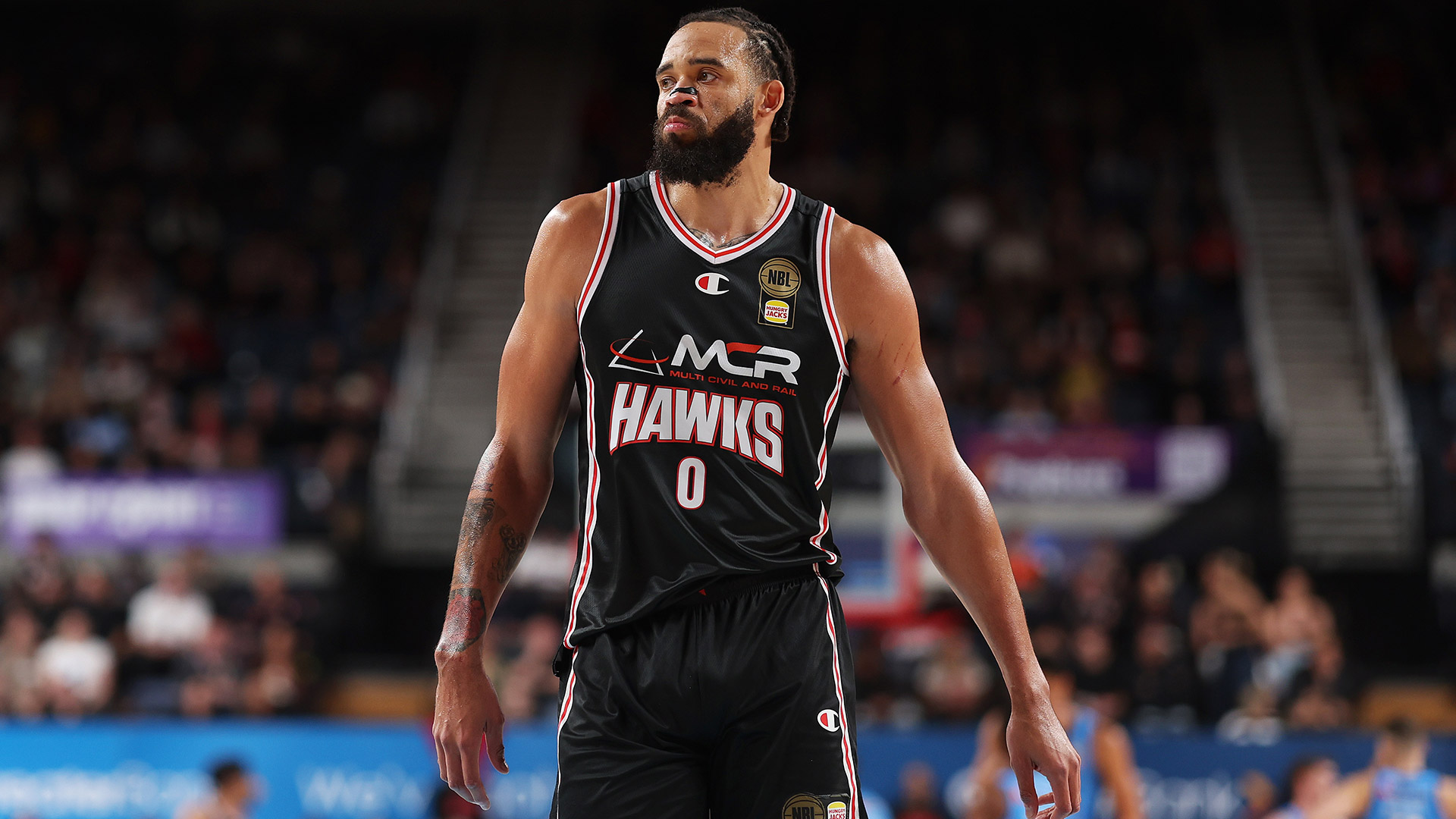
Melbourne’s off-season followed another Championship Series defeat, with Dean Vickerman keeping Chris Goulding, Shea Ili, Tanner Krebs and Kyle Bowen as the main returning pieces. Matthew Dellavedova (to Sydney), Flynn Cameron (to Adelaide), Akech Aliir (to South East Melbourne), Rob Loe (to New Zealand), Marcus Lee (to Cairns), Jack White (to Turkey), Ian Clark (to South East Melbourne) and Joel Foxwell (to NCAA) moved on, while Vickerman added Milton Doyle (via Tasmania), Finn Delany (via Japan), Fabijan Krslovic (via Tasmania), Tyson Walker (via Texas Legends), Jesse Edwards (via Iowa Wolves), Tom Wilson (via Melbourne Tigers) and Next Star Dash Daniels (via Centre of Excellence).
Melbourne opened the season in Hobart on September 18, where Delany (12 points, 8 rebounds, 2 assists, and 2 steals) started at power forward and helped United defeat Tasmania 88-84, with Doyle (22 points and 3 assists) and Walker (14 points and 3 steals) leading the scoring, while Bryce Hamilton (24 points) was Tasmania’s best.
Delany (11.4 points and 5.5 rebounds across 33 games) gave Melbourne another experienced frontcourt piece, returning to the NBL after time in Japan and starting throughout the season. His best regular-season scoring game came in Wollongong on November 5, where Delany (21 points and 3 assists) led Melbourne, but Illawarra defeated United 107-93 behind JaVale McGee (37 points and 14 rebounds), while Edwards (19 points and 6 rebounds) and Doyle (16 points and 11 assists) were Melbourne’s next best.
Delany had one of his biggest moments later that month against Illawarra on November 21, hitting the go-ahead three-pointer in the final seconds and finishing with 13 points and 5 rebounds as Melbourne defeated the Hawks 105-102, with Goulding (23 points) and Doyle (19 points and 7 assists) leading United, while McGee (28 points and 12 rebounds) and Quentin Peterson (22 points) kept Illawarra close.
Another strong game came in Adelaide on December 12, where Delany (20 points and 9 rebounds) helped Melbourne erase an 18-point deficit before falling 114-105 in overtime, with Goulding (24 points) and Doyle (17 points) supporting him, while Bryce Cotton (33 points, 7 rebounds, and 13 assists) led the 36ers. Six days later, Delany (18 points, 7 rebounds, 4 assists, and 3 steals) helped Melbourne snap a four-game losing streak with a 97-75 win over Illawarra, with Walker (21 points and 10 assists) and Krebs (17 points) leading United, while McGee (18 points and 10 rebounds) and Tyler Harvey (18 points) were Illawarra’s best.
Doyle (16 points, 3.5 rebounds, and 4.3 assists) led Melbourne in scoring, while Walker (14.2 points, 4.4 assists, and 1.6 steals) gave United another creator and point-of-attack defender. Edwards (13.3 points and 8.4 rebounds) anchored the interior and won Melbourne’s club MVP award, while Goulding (12.8 points), Delany, Krebs (7.9 points and 3.3 rebounds) and Ili (7.3 points and 3.1 assists) rounded out the main contributors. Krslovic (4.4 points, 4.8 rebounds, and 1.2 blocks) won the SHARE award and Bowen won the United Belt.
Melbourne opened 9-0 before a difficult December and January stretch dropped United from the top of the ladder into the play-in race. United closed the regular season against South East Melbourne on February 19, where Delany (7 points, 9 rebounds, and 3 assists) helped Melbourne defeat the Phoenix 95-91, with Doyle (25 points) and Walker (23 points and 5 assists) leading the scoring, while Nathan Sobey (29 points and 7 rebounds) led South East Melbourne as United finished fifth with a 20-13 record.
Melbourne hosted Tasmania in the Play-In Qualifier at John Cain Arena, where Delany (33 points, 6 rebounds, and 2 assists) delivered his biggest game for United and led them to a 82-68 win, with Doyle (19 points, 5 rebounds, and 6 assists) and Krebs (11 points) supporting him, while Nick Marshall (20 points and 6 rebounds), David Johnson (16 points) and Josh Bannan (16 points and 5 rebounds) led an injury-depleted Tasmania.
The Play-In Game moved to RAC Arena, where Perth ended Melbourne’s season 95-77 behind Lual-Acuil Jr (28 points, 12 rebounds, and 4 blocks), Doolittle (24 points, 7 rebounds, and 6 assists) and Windler (18 points and 9 rebounds), while Doyle (13 points), Walker (12 points) and Edwards (12 points and 8 rebounds) led United, and Delany (7 points, 7 rebounds, 3 assists, and 2 steals) played 23:56 minutes in the 95-77 loss.
Finn Delany currently plays for the Melbourne United and has played 216 games in his NBL career. He has averaged 9.4 points, 4.5 rebounds, and 1.5 assists since entering the league in 2015.
| SEASON | AGE | TEAM | TEAM RECORD | GP | MINS | PTS | REB | AST | OR | DR | STL | BLK | TO | PF | FGM | FGA | FG% | 3PM | 3PA | 3P% | FTM | FTA | FT% | TS% | EFG% | HS |
|---|---|---|---|---|---|---|---|---|---|---|---|---|---|---|---|---|---|---|---|---|---|---|---|---|---|---|
| 2025-26 | 30 | Melbourne | 20-13 (5) | 33 | 351 | 376 | 183 | 77 | 56 | 127 | 29 | 4 | 53 | 72 | 133 | 293 | 45% | 32 | 108 | 30% | 78 | 93 | 84% | 56% | 51% | 33 |
| 2023-24 | 28 | New Zealand | 13-15 (6) | 19 | 446 | 167 | 66 | 18 | 16 | 50 | 15 | 5 | 28 | 52 | 57 | 141 | 40% | 21 | 61 | 34% | 32 | 40 | 80% | 52% | 48% | 21 |
| 2021-22 | 26 | New Zealand | 5-23 (10) | 26 | 832 | 261 | 145 | 54 | 22 | 123 | 16 | 3 | 59 | 73 | 93 | 236 | 39% | 35 | 118 | 30% | 58 | 118 | 49% | 45% | 47% | 23 |
| 2020-21 | 25 | New Zealand | 12-24 (8) | 36 | 1,205 | 584 | 243 | 77 | 41 | 202 | 20 | 12 | 89 | 81 | 205 | 443 | 46% | 69 | 201 | 34% | 105 | 127 | 83% | 58% | 54% | 33 |
| 2019-20 | 24 | New Zealand | 15-13 (6) | 20 | 563 | 235 | 113 | 38 | 23 | 90 | 10 | 8 | 22 | 43 | 74 | 157 | 47% | 32 | 80 | 40% | 55 | 69 | 80% | 62% | 57% | 21 |
| 2018-19 | 23 | New Zealand | 12-16 (6) | 25 | 374 | 201 | 69 | 31 | 28 | 41 | 7 | 2 | 22 | 52 | 73 | 126 | 58% | 14 | 36 | 39% | 41 | 59 | 69% | 65% | 63% | 27 |
| 2017-18 | 22 | New Zealand | 15-13 (4) | 28 | 421 | 142 | 95 | 22 | 29 | 66 | 10 | 5 | 21 | 57 | 56 | 113 | 50% | 6 | 27 | 22% | 50 | 86 | 58% | 46% | 52% | 23 |
| 2016-17 | 21 | New Zealand | 14-14 (5) | 25 | 229 | 81 | 58 | 13 | 20 | 38 | 4 | 1 | 18 | 36 | 30 | 57 | 53% | 7 | 15 | 47% | 14 | 19 | 74% | 61% | 59% | 13 |
| 2015-16 | 20 | New Zealand | 16-12 (4) | 4 | 9 | 0 | 3 | 1 | 0 | 3 | 0 | 0 | 0 | 0 | 0 | 1 | 0% | 0 | 1 | 0% | 0 | 0 | #DIV/0! | 0% | 0% | 0 | Totals | 216 | 4429 | 2047 | 975 | 331 | 235 | 740 | 111 | 40 | 312 | 466 | 721 | 1567 | 46.0% | 216 | 647 | 33.4% | 433 | 611 | 70.9% | 56% | 53% | 33 |
| SEASON | AGE | TEAM | TEAM RECORD | GP | MINS | PTS | REB | AST | OR | DR | STL | BLK | TO | PF | FGM | FGA | FG% | 3PM | 3PA | 3P% | FTM | FTA | FT% | TS% | EFG% | HS |
|---|---|---|---|---|---|---|---|---|---|---|---|---|---|---|---|---|---|---|---|---|---|---|---|---|---|---|
| 2025-26 | 30 | Melbourne | 20-13 (5) | 33 | 10.6 | 11.4 | 5.5 | 2.3 | 1.7 | 3.8 | 0.9 | 0.1 | 1.6 | 2.2 | 4.0 | 8.9 | 45% | 1.0 | 3.3 | 30% | 2.4 | 2.8 | 84% | 56% | 51% | 33 |
| 2023-24 | 28 | New Zealand | 13-15 (6) | 19 | 23.5 | 8.8 | 3.5 | 0.9 | 0.8 | 2.6 | 0.8 | 0.3 | 1.5 | 2.7 | 3.0 | 7.4 | 40% | 1.1 | 3.2 | 34% | 1.7 | 2.1 | 80% | 52% | 48% | 21 |
| 2021-22 | 26 | New Zealand | 5-23 (10) | 26 | 32.0 | 10.0 | 5.6 | 2.1 | 0.8 | 4.7 | 0.6 | 0.1 | 2.3 | 2.8 | 3.6 | 9.1 | 39% | 1.3 | 4.5 | 30% | 2.2 | 4.5 | 49% | 45% | 47% | 23 |
| 2020-21 | 25 | New Zealand | 12-24 (8) | 36 | 33.5 | 16.2 | 6.8 | 2.1 | 1.1 | 5.6 | 0.6 | 0.3 | 2.5 | 2.3 | 5.7 | 12.3 | 46% | 1.9 | 5.6 | 34% | 2.9 | 3.5 | 83% | 58% | 54% | 33 |
| 2019-20 | 24 | New Zealand | 15-13 (6) | 20 | 28.1 | 11.8 | 5.7 | 1.9 | 1.2 | 4.5 | 0.5 | 0.4 | 1.1 | 2.2 | 3.7 | 7.9 | 47% | 1.6 | 4.0 | 40% | 2.8 | 3.5 | 80% | 62% | 57% | 21 |
| 2018-19 | 23 | New Zealand | 12-16 (6) | 25 | 15.0 | 8.0 | 2.8 | 1.2 | 1.1 | 1.6 | 0.3 | 0.1 | 0.9 | 2.1 | 2.9 | 5.0 | 58% | 0.6 | 1.4 | 39% | 1.6 | 2.4 | 69% | 65% | 63% | 27 |
| 2017-18 | 22 | New Zealand | 15-13 (4) | 28 | 15.0 | 5.1 | 3.4 | 0.8 | 1.0 | 2.4 | 0.4 | 0.2 | 0.8 | 2.0 | 2.0 | 4.0 | 50% | 0.2 | 1.0 | 22% | 1.8 | 3.1 | 58% | 46% | 52% | 23 |
| 2016-17 | 21 | New Zealand | 14-14 (5) | 25 | 9.2 | 3.2 | 2.3 | 0.5 | 0.8 | 1.5 | 0.2 | 0.0 | 0.7 | 1.4 | 1.2 | 2.3 | 53% | 0.3 | 0.6 | 47% | 0.6 | 0.8 | 74% | 61% | 59% | 13 |
| 2015-16 | 20 | New Zealand | 16-12 (4) | 4 | 2.2 | 0.0 | 0.8 | 0.3 | 0.0 | 0.8 | 0.0 | 0.0 | 0.0 | 0.0 | 0.0 | 0.3 | 0% | 0.0 | 0.3 | 0% | 0.0 | 0.0 | #DIV/0! | 0% | 0% | 0 | Total | 216 | 20.5 | 9.5 | 4.5 | 1.5 | 1.1 | 3.4 | 0.5 | 0.2 | 1.4 | 2.2 | 3.3 | 7.3 | 46.0% | 0.0 | 0.0 | 33.4% | 1.0 | 3.0 | 70.9% | 56% | 53% | 33 |
| POINTS | REBOUNDS | ASSISTS | STEALS | BLOCKS | TURNOVERS | TRIPLE DOUBLES | 33 | 14 | 7 | 3 | 2 | 6 | 0 |
|---|
Delany’s sustained rise earned him a central role during New Zealand’s qualification campaign for the 2019 FIBA Basketball World Cup. Spanning windows in November 2017, 2018, and February 2019, he appeared in nine qualifying games and averaged (7.2 points, 3.8 rebounds, and 1.1 assists), providing reliable energy, rebounding, and defensive presence. He was ultimately selected to represent New Zealand at the 2019 FIBA World Cup in China—his first major global tournament. With legends such as Kirk Penney, Mika Vukona, Phil Jones, and Pero Cameron having all retired, Delany was among a younger generation tasked with carrying the Tall Blacks into a new era.
New Zealand opened their World Cup campaign with a tough 94–102 loss to Brazil before bouncing back to defeat Montenegro 93–83. A 103–97 loss to Greece then eliminated the Tall Blacks from medal contention. Delany contributed (3.2 points and 3.0 rebounds) across five tournament appearances, often matched against larger opponents in New Zealand’s undersized frontcourt. The team closed strong, beating Japan 111–81 and edging Turkey 102–101 in the classification rounds to secure a 19th-place finish. The campaign was headlined by Corey Webster’s (22.8 points and 5.6 assists per game), but also served as an important development step for Delany as a future leader.
Delany returned to the national team for additional qualification games in 2022, helping New Zealand secure their place in the 2023 FIBA World Cup. At the 2023 tournament, Delany assumed a more prominent role, starting all five games and leading the Tall Blacks with averages of (16.4 points, 6.6 rebounds, and 2.2 assists). Despite a challenging draw and eventual 22nd-place finish, Delany emerged as one of the team’s most consistent performers, showcasing improved scoring range and rebounding tenacity. His lead-in to the tournament included a 14-point, 7-rebound effort during the final Asian Qualifiers window, further cementing his role in the starting lineup.
Delany’s international duties continued in 2024, when he featured at the Olympic Qualifying Tournament in Greece. Across two games, he averaged (5.5 points, 8.5 rebounds, and 1.0 assist), providing defensive versatility and interior rebounding as New Zealand battled for a spot at Paris 2024. In May 2025, Delany was again selected for the Tall Blacks’ trans-Tasman series against Australia, marking his continued presence as a mainstay of the senior men’s national program.
Through 28 official senior FIBA appearances, Delany holds cumulative averages of (9.8 points, 6.0 rebounds, and 0.9 assists), reflecting a steady rise in both production and leadership over successive campaigns. From his early years as a developing contributor to becoming one of the Tall Blacks’ most reliable forwards, Delany’s international résumé is built on consistent impact, adaptability, and an unwavering commitment to national team success.
Delany made the New Zealand team for the 2027 FIBA World Cup qualifiers in November 2025.
| YEAR | AGE | GP | MINS | PTS | REB | AST | OR | DR | STL | BLK | TO | PF | FGM | FGA | FG% | 3PM | 3PA | 3P% | FTM | FTA | FT% |
|---|---|---|---|---|---|---|---|---|---|---|---|---|---|---|---|---|---|---|---|---|---|
| 2023 | 28 | 5 | 159 | 82 | 33 | 11 | 7 | 26 | 3 | 1 | 13 | 13 | 27 | 58 | 46.6% | 12 | 27 | 44.4% | 16 | 20 | 80.0% |
| 2019 | 24 | 5 | 71 | 16 | 15 | 0 | 6 | 9 | 5 | 12 | 0 | 1 | 7 | 14 | 50.0% | 0 | 3 | 0.0% | 2 | 2 | 100.0% | Total | 10 | 230 | 98 | 48 | 11 | 13 | 35 | 8 | 13 | 13 | 14 | 34 | 72 | 47% | 12 | 30 | 40% | 18 | 22 | 82% |
| YEAR | AGE | GP | MINS | PTS | REB | AST | OR | DR | STL | BLK | TO | PF | FGM | FGA | FG% | 3PM | 3PA | 3P% | FTM | FTA | FT% |
|---|---|---|---|---|---|---|---|---|---|---|---|---|---|---|---|---|---|---|---|---|---|
| 2023 | 28 | 5 | 31.8 | 16.4 | 6.6 | 2.2 | 1.4 | 5.2 | 0.6 | 0.2 | 2.6 | 2.6 | 5.4 | 11.6 | 46.6% | 2.4 | 5.4 | 44.4% | 3.2 | 4.0 | 80.0% |
| 2019 | 24 | 5 | 14.2 | 3.2 | 3.0 | 0.0 | 1.2 | 1.8 | 1.0 | 2.4 | 0.0 | 0.2 | 1.4 | 2.8 | 50.0% | 0.0 | 0.6 | 0.0% | 0.4 | 0.4 | 100.0% | Total | 10 | 23.0 | 9.8 | 4.8 | 1.1 | 1.3 | 3.5 | 0.8 | 1.3 | 1.3 | 1.4 | 3.4 | 7.2 | 47% | 1.2 | 3.0 | 40% | 1.8 | 2.2 | 82% |
In July 2019, he joined the Dallas Mavericks for the 2019 NBA Summer League.
Finn Delany launched his international basketball career as a teenager with the Nelson Giants in the New Zealand NBL, debuting during the 2013 season while still attending high school. Over his first few years, he steadily developed into a dominant frontcourt presence. After averaging just 1.6 points per game in 2013, he lifted his numbers to 5.2 points and 3.6 rebounds in 2014 and continued to rise, posting 6.1 points and 3.3 rebounds in 2015. That same year, his performances earned him a development contract with the New Zealand Breakers in the Australian NBL.
Delany continued to return to the Giants during NBL off-seasons, and his improvement accelerated. In 2016, he averaged 15.5 points, 7.2 rebounds, and 1.6 assists across 15 NZNBL games. In 2017, he lifted his scoring again to 18.0 points and 6.1 rebounds, and by 2018 was one of the league’s elite talents, averaging 19.9 points, 7.7 rebounds, and 2.5 assists on 57% shooting. That season he was named NZNBL Most Outstanding Forward, Most Outstanding Kiwi Forward/Centre, and selected to the All-Star Five.
Seeking new challenges in 2019, Delany signed with Serbian club FMP for the remainder of the 2018–19 season. His standout performance came in a matchup against EuroLeague powerhouse Crvena zvezda, where he delivered 18 points, 4 rebounds, and 3 assists on 89% shooting. It was his first experience in a European league, and it highlighted his capacity to contribute at a high level internationally.
Delany returned to Europe in 2022, signing with Telekom Baskets Bonn of the German Bundesliga and Basketball Champions League on July 12. He helped guide Bonn to the pinnacle of the 2022–23 season, capturing the Basketball Champions League title and finishing as Bundesliga runners-up. His contributions as a versatile forward were integral to one of the most successful seasons in club history.
On March 7, 2024, Delany joined Spanish side Basket Zaragoza for the remainder of the 2023–24 Liga ACB season. He then shifted to Japan, signing with Veltex Shizuoka of the B.League on June 17, 2024. There, he continued his run of success by helping lead the team to the Basketball Champions League Asia Finals and earning selection to the BCL Asia All-Star Five for 2025.
On June 5, 2025, Finn Delany signed a short-term contract with reigning B.League champions Utsunomiya Brex to represent the club in the 2025 Basketball Champions League Asia tournament, held in Dubai from June 7–13.
He was joined at the event by fellow standouts Thon Maker and Jaylen Adams.
Delany played a pivotal role throughout the tournament as Utsunomiya Brex went on to claim the BCL Asia championship, adding another continental title to his international resume.
Finn Delany spent the 2014–15 season with Southwest Baptist (NCAA Division II), appearing in 29 games (20 starts) as the Bearcats finished 11–18 overall (6–14 conference). He averaged 7.3 points and 3.9 rebounds in 19.8 minutes per game, shooting 46.3% from the field (62-of-134) and 80.4% from the free-throw line (86-of-107), with 24 assists across the season as he settled into a frontcourt rotation role.
Delany’s best scoring stretch came around mid-season, including 15 points on 6-of-8 shooting in the 65–68 loss to Missouri Southern (Jan 29, 2015), where he also went 3-of-5 at the line.
His top points performance on the year came against Pittsburg State (Dec 20, 2014), where he scored 16 points on 6-of-8 shooting, hit his lone three (1-of-1), and added 7 rebounds in 31 minutes as Southwest Baptist fell 72–73.
- 1x All-NBL Second Team- NZNBL Most Outstanding Forward (2018)
-
NZNBL Most Outstanding Kiwi Forward/Centre (2018)
-
NZNBL All-Star Five (2018)
Whilst we try to source as much information as we can for every player who has ever played in the NBL some information on a player profile may be missing. If you have additional information on a player you'd like us to add to a profile, please send it to us using the enquiry form below.
Submissions are then sent to info@aussiehoopla.com