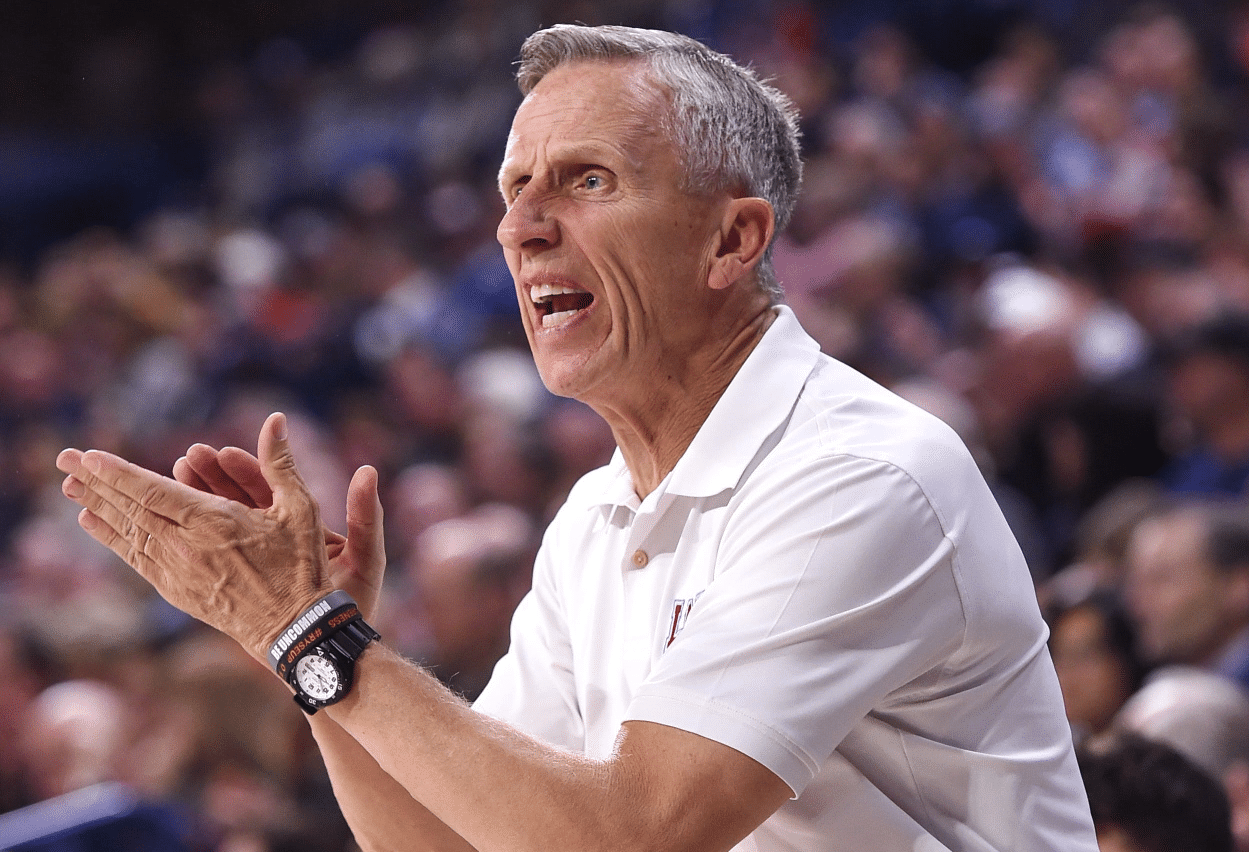
Mike Dunlap reflects on his time coaching the Adelaide 36ers, winning an NBA championship with Milwaukee and learnings from his coaching journey
November 13, 2023



NICKNAME/S: Mahervellous
BIO: Brett Maher was born in Adelaide (SA) and began playing basketball as a junior with the Sturt basketball program where was spotted playing for the Sturt Sabres in the Australian Basketball Association. His outstanding form soon saw him earn a contract with the Adelaide 36ers. Maher received a scholarship to attend the Australian Institute of Sport (Canberra) in 1989. He spent three years year there and played for the program’s state league team (1989, 1990, 1991).
Brett Maher made his NBL debut with the Adelaide 36ers at 18 years of age. He scored 11 points in his first game.
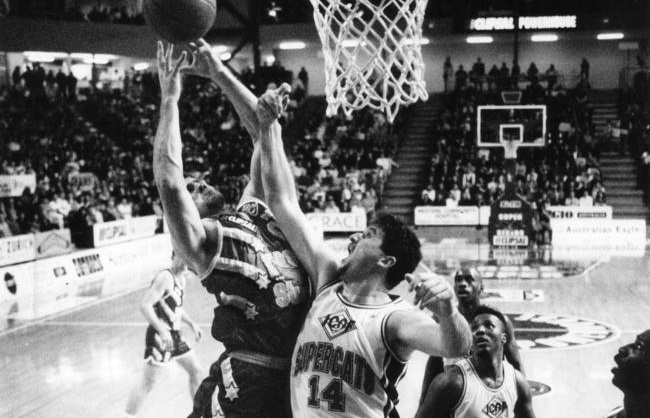
Adelaide had played at the Apollo Stadium since the team’s inception in 1982, but by the early 1990s, ticket demand was far too great to remain there, and the team moved into the 8,000 seat Clipsal Powerhouse prior to the 1992 season. During the off-season, the team was able to retain import point guard Butch Hays and captain Mark Davis but saw local favourite and former captain Darryl Pearce sign with the North Melbourne Giants.
The venue quickly became a fortress for the 36ers, with every game played in front of a sell-out crowd. The increased fan support saw Adelaide open the year with a 106-84 victory over the North Melbourne Giants. After this initial success, however, the team failed to win again across their next seven games, including losses to perennial easy beats like Hobart and Newcastle.
The 36ers would then face a major hurdle after the league’s mid-season break to accommodate the Barcelona Olympics. After the Boomers finished the tournament in fourth place, Bradtke returned with the announcement that he had accepted a lucrative deal (reportedly worth $200,000) to finish the season playing for Spanish team Juver Murcia. In his 17 games prior to the break, Bradtke had clearly become the best local big man in the competition. In his last game wearing a 36ers jersey, he scored a career-high 43 points, grabbed 25 boards against Geelong at home and averaged 20.1 points, 14.8 rebounds, and 1.9 assists for the season.
The 36ers, although never looking like a playoff team, were never able to fill the gap left by Bradtke and limped home to a 11-13 record, finishing in the ninth spot.
Davis again led the team with his spectacular all-around game, averaging 23.5 points, 14.2 rebounds, 2.3 assists, 1.2 steals and 1.1 blocks per game.
Despite the disappointing season, two positives in 1992 were the rookie debuts of local teenagers Maher, who averaged 2.2 points in 8 minutes per game and Paul Rogers, who appeared in five games and Davis becoming a Australian citizen and able to play as a local thereafter.
1993
After two losing seasons under coach Don Shipway, Adelaide hired American Don Monson to replace him and steer the team back to its winning ways of the past decade. With the 36ers still regrouping from the huge loss of Boomers big man Mark Bradtke (who left for Melbourne) they added young talent in Chris Blakemore (AIS) and Scott Ninnis (South East Melbourne) and veterans Phil Smyth (captain of the Australian Boomers at the time) and Willie Simmons from the Canberra Cannons.
Maher averaged 8.3 points, 3 rebounds, and 2.7 assists while the team improved to a 14–12 record under Monson and made the playoffs by finishing in 7th place.
At the end of the season Blakemore claimed Rookie of the Year honours and while Ninnis was named the NBL’s Most Improved Player, scoring a career best 20.1 points and 4.4 assists per game after returning to the club after two seasons playing in Melbourne. The 36ers were then eliminated in the Quarterfinals by Ninnis former team, the defending NBL champions, South East Melbourne Magic.
1994
In 1994, Maher averaged 13.3 points and 4.4 rebounds, and helped guide the 36ers to a second place finish in the regular season with a 18-8 record.
1995
The 1995 season saw Maher average 14.1 points, 4.9 rebounds, and 3.7 assists and play a key role in helping the 36ers to a sixth-place finish during the regular season with a 17-9 record.
1996
After losing to Perth in the semifinals in 1995, a series which included a vicious elbow from Chris Blakemore to the head of Wildcats forward Martin Cattalini, head coach Mike Dunlap had lost favour with Blakemore and 36ers MVP Robert Rose, who both left the team and signed with the Canberra Cannons. Long distance specialist Mike McKay also found Dunlap hard to play for a he left to play with the Brisbane Bullets.
Despite this the 36ers recruited well going into the 1996 NBL season, signing slam dunking forward Leon Trimmingham from the Sydney Kings and, funnily enough, Martin Cattalini from the championship winning Perth Wildcats. John Rillie, who was coming off a Rookie of the Year winning season with Brisbane also signed to play alongside Maher and new import Rick Brunson (who had just narrowly missed out on being drafted to the NBA) in the backcourt.
Maher averaged 15.5 points, 4.1 rebounds, and 3 assists alongside stars Trimmingham (22 points per game), Brunson (19 points and 7 assists per game), John Rillie (14 points per game) and Davis (13 points and 8 rebounds per game).
Maher also be selected in the Australian Boomers Olympic squad which ffinished fourth at the 1996 Olympics, held during miiddle of the NBL season.
Following the sudden death of his father after the 1996 season, coach Dunlap return home to the United States and decided to stay there to be closer to his family. The team finished in sixth place with a record of 16-10.
The 36ers defeated the the arch rivals Perth Wildcats in the Quarterfinals before being eliminated in the semifinals by eventual champs the South East Melbourne Magic in two straight games.
This season would also be Dunlap’s last with the team after he requested the team release 36ers legend Mark Davis and focus on the team’s younger players. Since joining the 36ers, Dunlap had been systematically removing the older players from the squad, but the club board instead retained Davis (who went on to play another four seasons) and agreed that Dunlap would not return as coach.
1997
Having just shown head coach Mike Dunlap the door, the 36ers hired his assistant and former Gold Coast Rollers coach Dave Claxton as his replacement for the 1997 NBL season. While Adelaide was able to retain the majority of its roster this season, the only changes being the addition of Rupert Sapwell (Geelong) and replacing import guard Rick Brunson, who returned to the US, with ibig man Jeff Brown. Perhaps the biggest change to the roster wasn’t during free agency, but when Brett Maher was handed the team captaincy from club legend Mark Davis (something he would hold until his retirement in 2009).
Brett Maher, who early in his career was stuck at the end of a very stacked 36ers bench behind legendary guards like Butch Hays, Mick McKay and Phil Smyth had a breakout season in 1997. Maher delivered 18.8 points, 4.2 rebounds, and 5 assists per game while being ranked in the top five players in the league for three point percentage and free throw percentage. While Brown had been signed to pair with 36ers leading scorer Leon Trimmingham and Mark Davis it became apparent six games that he wasn’t the player the 36ers needed and he was quickly replaced with 35 year old, former 36ers big man Willie Simmons who hadn’t played in the NBL since 1994. Needless to say Adelaide struggled through the remaining games and finished in 7th place (with a 14–16 record) and missed the playoffs for the first time since 1992.
1998
At the end of 1997 the 36ers replaced head coach Dave Claxton, who was only signed by the club at the last moment due to unexpectedly losing Mike Dunlap, was only signed for one season and following the 1997 season was replaced by rookie coach and former player Phil Smyth. Smyth had been hired without any head coaching experience, in fact, his only previous coaching experience being a specialist coach at the Australian Institute of Sport during his playing days in Canberra.
During the off-season local product Brett Maher engaged in serious talks with the Sydney Kings and almost moved to the nation’s capital to form a all-Australian backcourt with Aaron Trahair. Ultimately, he decided to re-sign with the Adelaide 36ers, who then recruited 205 cm centre Paul Rees (via North Melbourne). After former Denver Nuggets Darnell Mee (who previously played with Canberra) signed on to play for the team, he recommended his former teammate Kevin Brooks to the 36ers and they signed the former NBA forward to a two-year deal. After his first training session with the team, Brooks’ teammates thought he wouldn’t last a week in the NBL with a shooting style that saw him release the ball almost from behind his head. However, they soon found Brooks (19.1 points, 6.7 rebounds and 1.3 assists) was for real as he went on to lead the team in points per game with Brett Maher (17.8 points, 4.8 rebounds, and 3.7 assists) and Mee (14.8 points, 6.5 rebounds, and 4 assists) providing the additional scoring punch.
The 36ers gamble on Smyth’s playing experience translating into coaching success also paid off, with Adelaide recording the most wins since 1988 and finished in second place (19–11).
Brett Maher’s first game as Adelaide’s captain in a playoff series concluded with the 36ers delivering a emphatic 114-97 punch to Perth’s play-off chin, setting up a 2-0 semifinal knock-out. The 36ers seized a 1-0 lead in their best-of-three Semi Final series behind a sensational 36-point career-high game by Maher, who also led the Sixers with six assists (shooting 74 percent, including 7-of-11 three-pointers). Darnell Mee was his usual effective self, adding a game-high 14 rebounds to his 16 points as he terrorised Perth’s backcourt and set a aggressive defensive tone from the outset. Adelaide would defeat Perth just as easily as it had in game one, winning 117–110 to set up a Grand Final matchup against the South East Melbourne Magic.
Adelaide was not expected to defeat the Brian Goorjian led Magic, who had compiled a 26-4 record during the regular season and then swept the Brisbane Bullets in the semifinals. In game one, Brooks finished game high scorer with 24 points (10/18 shooting) and 8 rebounds as the 36ers stunned all, delivering a 100-93 defeat to the defending champs on their home court. Amazingly, game one of the Grand Final was only the second time the 36ers had defeated the Magic since the Eastside Melbourne Spectres and Southern Melbourne Saints had merged to form the Magic in 1992.
The 36ers, who had started the season off slowly, had really found their form by the time of the Grand Final series and come game two, obliterated the Magic at home (90-62). Adelaide held the Magic to less than 15 points in three of the game’s quarters. Brooks (21 points, 6 rebounds, 2 assists and 2 blocks) and Martin Cattalini (20 points and 6 rebounds) were brilliant for the 36ers in a game decided by turnovers and free throws, with South East Melbourne finishing with 26 turnovers and 6 of 8 from the free throw line to Adelaide’s 14 turnovers and 25 of 33 from the stripe.
Adelaide collected their first NBL championship since 1986 and Kevin Brooks was named Grand Final MVP in what was the last winter season for the National Basketball League.
”
1998/99
The NBL’s move to summer didn’t stop the defending champions, Adelaide, as they finished the 1998-99 regular season with their first minor premiership since 1988 with a 18–8 record. Adelaide was able to return with almost their entire championship team from 1998, the only key change being John Rillie, who left for more playing opportunities in West Sydney. The team replaced Rillie with David Stiff, who was able to pair with Mark Davis as the team’s ‘two-headed’ centre.
Captain Brett Maher (19.2 points, 4.3 rebounds, 2.8 assists and 1.7 steals) led the team in most categories, alongside high scoring forward Martin Cattalini (14.9 points and 7.0 rebounds) and import duo Kevin Brooks (17.3 points and 6.1 rebounds) and Darnell Mee (14.8 points, 7.0 rebounds, 4.0 assists and 2.0 steals), who both elevated their games in the second season.
The 36ers made their way into the grand final undefeated in the postseason, eliminating Perth in the Qualifying Finals and Wollongong in the semifinals, both in two straight games. Once into the Grand Final, Adelaide faced off against the Victoria Titans, a team comprised mostly from the roster of the South East Melbourne Magic roster whom they defeated in the previous year’s grand final.
The opening matchup delivered a battle of the point guards with McDonald (23 points, 6 rebounds, 9 assists and 2 steals) and 36ers import Darnell Mee (25 points, 6 rebounds, 6 assists, 2 steals and 2 blocks) led both team’s in scoring. Mee was able to come out on top in this one, with Adelaide winning the game (104-94) and Mee also forcing McDonald into making 8 turnovers.
The Titans would even the series in game two, winning 88-82. Brett Maher led Adelaide with 25 points, but the Titans’ defence saw the remainder of the 36ers struggle, with no one else able to score more than 12 points and the team shooting 39% from the field. Tony Ronaldson (22 points), Brett Wheeler (18 points, 9 rebounds) and McDonald (12 points, 6 rebounds and 7 assists) doing most of the damage for the Titans.
With the 36ers finishing in first place during the regular season the deciding game would be held in Adelaide where more than 7,000 Sixers fans willed the team over the line to become back-to-back NBL champions. Martin Cattalini (19 points and 9 rebounds) led the 36ers in scoring while Brett Maher (15 points and 7 rebounds) was named Grand Final MVP. Ben Pepper (15 points) top scored for the Titans who shot a woeful 26/78 from the field (38%) in the deciding game.
Adelaide became three-time NBL champions and the first team to win back-to-back titles since Perth in 1990 and 1991. Captain Brett Maher was voted the Grand Final MVP, and coach Phil Smyth claimed his second championship win in just two years of coaching in the NBL.
1999/00
Coming off winning back-to-back championships, Adelaide seemed primed for a NBL dynasty and bolstered their roster by signing Paul Maley. Maley, who had contemplated retiring after his experience with the Victoria Titans, was thought to be everything the team needed to achieve a three-peat, but then, economic factors impacted the 36ers’ season in a way no one could have predicted.
The NBL wasn’t in as good a financial shape as the 36ers, and in a cost-cutting move aimed at assisting struggling NBL clubs, the league reduced the league salary cup from $70,000 to $625,000. This reduction in cap resulted in the team being unable to re-sign star Kevin Brooks for the same money without breaching the cap, considering it also had added Maley only a few weeks earlier. Although the league applied for consideration on this, it was denied, and Brooks was forced to make a move to Sydney to play with the Kings.
Days later, high-scoring forward Martin Cattalini agreed to play in France for ASVEL Villeranne, which would have been ‘double whammy’, but prior to the season tipping off, he backflipped and re-signed with Adelaide in the hopes that a big year would result in being selected for the 2000 Olympics to be held in Sydney.
The season kicked off the season with a 109–89 win over Perth at home, with the 36ers fielding a starting lineup of leading scorer Martin Cattalini (20.3 points, 7.5 rebounds and 2.6 assists), team captain Brett Maher (20.2 points, 4.3 rebounds and 2.9 assists), Darnell Mee (13.6 points, 7.0 rebounds, 4.7 assists, 2.2 steals and 1.2 blocks) who filled almost every category on the stat sheet and veterans Paul Rees (7.8 points, 5.2 rebounds and 1.5 assists) and Paul Maley (12.3 points, 6.1 rebounds and 1.2 assists).
As a result of winning the 1999 NBL championship, the 36ers were again invited to participate in the McDonald’s Cup, held at the 12,000 seat Fila Forum in Milan, Italy which was scheduled during the first month of the regular season. After losing their first game 90–79 to Brazilian side CR Vasco da Gama (who went all the way to meet the San Antonio Spurs in the final), the team won the 5–6 place playoff 91–84 over Lebanese team Hekmeh BC.
After returning to Australia, Adelaide never skipped a beat. They won three straight games before heading to Townsville, a game where Maher nailed five from five threes, scored 15 points in the first quarter, and finished with a career-high 40 points as Adelaide lost its first game of the season in overtime.
Maley missed a number of games due to a recurring back injury which saw David Stiff enter the starting lineup, where he responded with a career-high 35-point game (70% from the field) in a 111-103 win over Wollongong.
On 6 February 2000, the 36ers participated in the league’s first ‘open air’ game where 10,318 fans gathered to see the Titans deliver a rare loss (83-75) at Melbourne Park.
Adelaide again finished in first place during the regular season (22–6). Due to finishing in the top two, both Adelaide and Townsville were given first-round byes. The elimination finals saw Perth defeat West Sydney on one side of the bracket, and Victoria knock out Melbourne on the other, resulting in the 36ers facing off against a Brian Goorjian led team for the third year in a row.
The Titans, who had discarded Paul Maley (12.3 points and 6.1 rebounds per game) to see him become a valuable bench contributor for Adelaide, entered the series as favourites. The Titans would win game one 101-86 in Melbourne, with Ronaldson leading the team with 26 points and 5 rebounds and MacDonald filling the box score with 24 points, 6 rebounds, 8 assists, 2 steals and 3 blocks before the series moved to Adelaide for game two and three.
Game two saw the 36ers return to their high-scoring offence, which had proven unstoppable over the past two seasons. Martin Cattalini’s 24 points and 7 rebounds, combined with Darnell Mee’s all-around brilliance, collecting 22 points,7 rebounds, 6 assists and 4 steals, the 36ers evened the series with a 95-72 win.
With many pencilling in another Titans elimination from the 36ers, the team rallied behind MacDonald, who again impacted the game from every angle, finishing with 24 points, 7 rebounds, 6 assists and 3 steals. His counterpart Darnell Mee seemed equally up to the task and finished with 22 points, 6 rebounds, 5 assists, and 2 steals, but the remaining 36ers squad struggled to score through the impenetrable Titans defence, and with Victoria winning the decider 89-93 the Titans celebrated as though they’d shaken King Kong off their back.
It was a year of upsets with Townsville being eliminated by Perth in the other semi final bracket in three games. Not surprisingly, Victoria had nothing left for Perth in the Grand Final and lost in two straight games
Following the 1999/00 season, Brett Maher and Martin Cattalini were both selected to represent the Australian Boomers at the 2000 Olympics in Sydney.
2000/01
In 2000/01, Maher averaged 20.9 points, 5.0 rebounds, and 4.5 assists as the 36ers finished with a record of 16-12 and in sixth place during the regular season.
2001/02
Following a semi-final exit in 2001, Adelaide 36ers head coach Phil Smyth made the bold decision to overhaul his roster. Legendary import duo Kevin Brooks and Darnell Mee, along with veteran forwards Paul Maley (34 years old) and Mark Davis (40 years old), were not re-signed as the club aimed to rebuild with a younger roster.
Smyth traveled to the Long Beach Summer League in the United States, where he scouted and signed 26-year-old Willie Farley, a high-scoring shooting guard whom he believed could replace Mee. Unlike previous seasons, the 36ers entered 2001/02 with only one import, placing greater responsibility on local stars Brett Maher, David Stiff, Paul Rees, Rupert Sapwell, and Mark Nash. The team also introduced promising local juniors Oscar Forman and Jacob Holmes.
The roster shake-up proved to be a success, as Farley (25.5 points, 4.5 rebounds, and 2.7 assists) quickly became a fan favorite in his first NBL season, finishing as the league’s second-leading scorer behind Brisbane’s Randy Rutherford. His high-energy play and ability to take over games complemented team captain Brett Maher (21.9 points, 5.7 rebounds, and 4.8 assists), while David Stiff (12.3 points, 8.5 rebounds, and 2.9 assists) and Paul Rees (10.2 points and 7.2 rebounds) provided a strong interior presence.
The 36ers started the season 6-4 and were in playoff contention, but when financial difficulties forced the Cairns Taipans to release import Matt Garrison—who had played a key role in the Wollongong Hawks’ 2001 NBL Championship—Smyth quickly signed him for the remainder of the season. The move paid off, with Garrison (10.8 points, 4.2 rebounds, and 1.7 assists) playing the final 26 games and helping Adelaide finish the regular season in third place (17-13).
Adelaide opened their playoff campaign against Wollongong in the Qualifying Finals. The 36ers stunned the defending champions with a 107-90 victory at WIN Entertainment Centre, with Farley (26 points, 5 rebounds, and 3 steals), Sapwell (19 points and 11 rebounds), and Maher (16 points and 6 assists) doing most of the damage before closing out the series at home with a 101-95 win. Farley (33 points, 6 rebounds, 5 assists, and 3 steals) and Maher (26 points, 4 rebounds, and 5 assists) delivered huge performances to seal the series.
In the semi-finals, Adelaide faced Victoria, where, in a major upset, they claimed a road victory in Game 1 (99-92) behind Farley (25 points and 4 rebounds) and Maher (23 points and 8 rebounds), continuing to be a nightmare for opposition teams.
The Titans responded with an 86-81 victory in Adelaide, holding Farley (24 points) and Maher (15 points) to their lowest combined total of the postseason.
Adelaide bounced back at home, however, securing a 103-92 win behind another dominant performance from Farley (33 points, 8 rebounds, and 6 assists), Maher (16 points, 6 rebounds, and 6 assists), and big man Paul Rees (16 points and 9 rebounds), helping to book their place in the Grand Final.
Adelaide entered their sixth NBL Grand Final, facing the West Sydney Razorbacks, who were making their first-ever championship appearance. Game 1 saw the 36ers claim a 106-97 victory at Adelaide Arena, led by Farley (34 points, 4 rebounds, 4 assists, and 6 steals) and Maher (25 points, 8 assists, and 8 rebounds).
Game 2 saw Defensive Player of the Year Simon Dwight (20 points, 21 rebounds, and 4 blocks) and former Adelaide guard John Rillie (28 points – 7/12 from three) deliver monster performances for West Sydney, evening the series with a nail-biting win at the State Sports Centre (103-100). Farley (24 points and 8 rebounds) and Maher (25 points and 7 assists) couldn’t prevent the series from heading to a winner-takes-all Game 3.
There, the 36ers delivered one of the most dominant performances in NBL Grand Final history. They set a record-breaking 19-of-31 (61.2%) from three-point range—an NBL Grand Final record—and exploded for 125 points, the highest score ever recorded in an NBL Grand Final game. Farley (22 points, 5 rebounds, and 4 assists) and Maher (30 points, 11 rebounds, and 8 assists) torched the Razorbacks, securing a 125-107 victory and the club’s fourth NBL championship.
Maher would go on to collect the Finals MVP trophy, averaging 26.7 points, 7.7 rebounds, 7.7 assists, and 1.3 steals over the three-game series.
2002/03
In 2002/03, Maher averaged 5.8 points and 5.1 rebounds, and helped guide the 36ers to a fifth place finish in the regular season with a 16-14 record.
2003/04
The 2003/04 season saw Maher average 17.5 points, 3.2 rebounds, and 4.5 assists and play a key role in helping the 36ers to a eighth place finish in the regular season with a 14-19 record.
2004/05
During the 2004/05 season, Maher averaged 19.2 points, 4.3 rebounds, and 7 assists and helped the 36ers finish with a record of 19-13 and end the regular season in fourth place.
2005/06
During the 2005/06 season, Maher averaged 18.6 points, 5 rebounds, and 6.8 assists and was a part of the 36ers squad which finished in a fourth place with a record of 19-13.
2006/07
In 2006/07 Maher averaged 18.9 points and 4.8 rebounds, and helped guide the 36ers to a first place finish in the regular season with a 11-22 record.
2007/08
In the 2007 off-season, Adelaide chose not to re-sign Adrian Majstrovich, Brett Wheeler, and Marcus Timmons. To fill the gaps, veteran guard Brad Davidson (via Singapore) joined the squad, while import duo Willie Farley and Nick Horvath (to South Dragons) were replaced by Mike Chappell (via New Zealand) and Adam Ballinger (via Wollongong).
Coach Joey Wright signed Ballinger (22.5 points, 8.1 rebounds, and 1.5 assists across 30 games) based on a recommendation from NBL legend Cal Bruton, who had initially intended to recruit Ballinger to the Hunter Pirates had the franchise survived after replacing Bruton’s Canberra Cannons. Wright praised Ballinger early in training sessions, stating, “I think he’s somewhere between [Scott] Fisher and [Tim] Dillon – he’s got Fisher’s strength and Dillon’s touch. He’s got that three-point range.”
Long-time team captain Brett Maher (16.6 points, 4.3 rebounds, and 4.2 assists across 18 games) remained central to Adelaide’s plans despite battling injuries and missing 12 games during the season. Maher consistently delivered standout performances, notably a season-high 27 points (7–10 3P), 4 rebounds, and 5 assists in a narrow 109–116 loss to New Zealand.
Other top performances included nearly recording a double-double against Gold Coast, posting 24 points, 6 rebounds, and 9 assists in a tight 94–98 loss, and scoring 26 points (9–16 FG, 4–8 3P) along with 4 rebounds and 5 assists in an emotional game against Melbourne, where former teammate Lanard Copeland had his jersey retired by the Tigers—a game where Chris Anstey (29 points) made sure the 36ers went home empty handed (92–110).
Mid-season adversity struck when import Mike Chappell (11.1 points, 4.2 rebounds, and 1.6 assists across) succumbed to injury, prompting Adelaide to reluctantly release him after 15 games. They quickly filled this void by signing Julius Hodge (via Italy) on December 21, 2007. Hodge (6 points, 5 rebounds, 3 assists, and 2 steals) debuted against the South Dragons on Boxing Day, contributing to Adelaide’s 119–114 victory.
Adam Ballinger (22.5 points, 8.1 rebounds, and 1.5 assists) delivered an outstanding season, earning selection to the All-NBL Second Team. Additional key contributors included Brad Davidson (13.3 points, 3.3 rebounds, and 4.5 assists), Darren Ng (13.3 points, 4.5 rebounds, and 1.8 assists), and veteran Lanard Copeland (9.7 points, 2.5 rebounds, and 1.5 assists).
Despite their individual successes, the 36ers struggled with consistency throughout the season. A late playoff push saw them win their final two contests against Cairns (113–104) on February 9 and Singapore (126–97) on February 13, with Maher notably contributing 16 points (7–14 FG, 2–7 3P), 7 rebounds, and 1 assist in the latter matchup. However, this late surge fell short; Adelaide narrowly missed the playoffs, finishing ninth with a 14–16 record, just behind eighth-placed Gold Coast Blaze (15–15).
2008/09
Adelaide entered the 2008/09 season with significant roster turnover. Lanard Copeland, Axel Dench, and Neil Mottram all retired, while Darren Ng departed to join the Singapore Slingers. Former club captain Jacob Holmes returned to the 36ers following a stint with the South Dragons. Additional additions included Brad Hill (via South Dragons), Ryan Kersten, and Paora Winitana (both via New Zealand).
The 36ers opened the campaign with Adam Ballinger and Mark Tyndale as their imports. Tyndale (13 points, 6.6 rebounds, and 3.9 assists) showed promise but was ultimately released mid-season after a string of inconsistent outings, including a three-point, seven-turnover performance against the South Dragons. In his place, the club re-signed 2007/08 star Julius Hodge (26.3 points, 8 rebounds, and 6 assists), who had just returned from an NBA stint with the New Jersey Nets. Despite protracted negotiations, Hodge officially rejoined the team on November 15 and immediately delivered, earning Round 10 Player of the Week honours after averaging 26.5 points, 10.5 rebounds, and 6 assists. His 27-point, 8-rebound, and 8-assist game against the South Dragons prompted Boomers coach Brian Goorjian to label him “possibly the best player in the league.”
Hodge continued to dominate, collecting another Player of the Week award in Round 15 after tallying 31 points (13–19 FG) and 8 rebounds in a crucial win over Melbourne. However, his tenure would end abruptly. In early January, after the team had won four of six games, Hodge failed to show for a home fixture against Wollongong, citing unresolved payment issues. Despite the club claiming his salary had been advanced, the relationship deteriorated rapidly. His departure caused confusion within the locker room and fractured communication with teammates. He was later replaced by Rod Grizzard (10 points, 5.5 rebounds, and 2.4 assists), who played the final eight games of the season.
Brett Maher (12.5 points, 3 rebounds, and 3.4 assists) captained Adelaide in his 14th and final NBL season. After overcoming injury setbacks in the previous year, Maher remained a steadying force throughout the campaign. Despite roster instability, he guided a rejuvenated squad back to playoff contention. On February 7, 2009, in front of over 8,000 fans at the Dome, the court was officially renamed The Brett Maher Court to honour his legacy. The venue had served as Maher’s home floor throughout his career, with the club moving into the then-named Clipsal Powerhouse during his rookie season. Maher was also one of only four players to have his number retired by the club.
Maher’s accolades were extensive. He helped lead Adelaide to three championships (1998, 1998/99, and 2001/02), won the club MVP award six times, and was named to four NBL All-Star Games (1996, 1997, 2005, 2006). He earned All-NBL First Team honours in 2000 and 2003, Second Team selections in 1997 and 1998, and Third Team recognition in 1999 and 2002. He is one of only two players to win the NBL Grand Final MVP twice, claiming the Larry Sengstock Medal in both 1999 and 2002. The other is Perth Wildcats legend Ricky Grace.
Maher retired as the 36ers’ all-time leader in games played (526), points (8,941), field goals (3,140), three-pointers made (1,162), assists (2,267), and steals (703). He is one of only four players to win three or more titles with the club and one of only two championship-winning captains alongside Bill Jones.
Led by Maher, Ballinger (20.4 points, 7.9 rebounds, and 1.3 assists), and returning NBA center Luke Schenscher (16.9 points, 10.8 rebounds, and 1.5 assists), the 36ers re-established their interior dominance. Ballinger and Schenscher were both named to the All-NBL Second Team. First-year point guard Aaron Bruce (9.7 points, 2.5 rebounds, and 5.1 assists) won NBL Rookie of the Year. Key contributors included Holmes (9.5 points and 6.7 rebounds), Hill (8.5 points and 3.7 rebounds), and Davidson (5.7 points and 2.5 assists).
Adelaide finished the regular season at 15–15, securing sixth place and their first playoff berth since 2005/06. Their campaign ended with a 131–101 Elimination Final loss to the New Zealand Breakers in Auckland—Maher’s final appearance in a storied career that defined an era for the 36ers.
Brett Maher played eighteen seasons the Adelaide 36ers. He averaged 16 points, 4.4 rebounds, and 4.3 assists in 525 NBL games.
CAREER RANKINGS:
– 7th in total games played.
– 14th in total points
– 42nd in total rebounds
– 7th in total assists
– 11th in total steals
| SEASON | AGE | TEAM | TEAM RECORD | GP | MINS | PTS | REB | AST | OR | DR | STL | BLK | TO | PF | FGM | FGA | FG% | 3PM | 3PA | 3P% | FTM | FTA | FT% | TS% | EFG% | HS |
|---|---|---|---|---|---|---|---|---|---|---|---|---|---|---|---|---|---|---|---|---|---|---|---|---|---|---|
| 2008-09 | 35 | Adelaide | 15-15 (5) | 27 | 763.0 | 338 | 82 | 93 | 19 | 63 | 16 | 5 | 38 | 30 | 117 | 273 | 43% | 58 | 144 | 40% | 46 | 57 | 81% | 56% | 53% | 21 |
| 2007-08 | 34 | Adelaide | 14-16 (9) | 18 | 624.0 | 299 | 77 | 76 | 17 | 60 | 15 | 2 | 19 | 18 | 109 | 231 | 47% | 44 | 107 | 41% | 37 | 45 | 82% | 59% | 57% | 27 |
| 2006-07 | 33 | Adelaide | 11-22 (11) | 27 | 1,102.0 | 510 | 129 | 179 | 26 | 103 | 27 | 2 | 72 | 42 | 178 | 395 | 45% | 61 | 154 | 40% | 93 | 102 | 91% | 58% | 53% | 29 |
| 2005-06 | 32 | Adelaide | 19-13 (4) | 29 | 1,162.0 | 539 | 144 | 197 | 37 | 107 | 43 | 1 | 74 | 40 | 191 | 446 | 43% | 64 | 169 | 38% | 93 | 108 | 86% | 54% | 50% | 31 |
| 2004-05 | 31 | Adelaide | 19-13 (4) | 27 | 1,112.0 | 519 | 116 | 189 | 30 | 86 | 32 | 3 | 70 | 30 | 176 | 420 | 42% | 56 | 150 | 37% | 111 | 135 | 82% | 54% | 49% | 28 |
| 2003-04 | 30 | Adelaide | 14-19 (8) | 24 | 850.0 | 419 | 77 | 109 | 14 | 63 | 33 | 3 | 35 | 26 | 148 | 340 | 44% | 53 | 128 | 41% | 70 | 82 | 85% | 55% | 51% | 35 |
| 2002-03 | 29 | Adelaide | 16-14 (5) | 31 | 1,345.0 | 179 | 158 | 184 | 37 | 158 | 38 | 1 | 76 | 37 | 232 | 528 | 44% | 79 | 198 | 40% | 129 | 149 | 87% | 15% | 51% | 39 |
| 2001-02 | 29 | Adelaide | 17-13 (3) | 38 | 1,600.0 | 834 | 215 | 183 | 54 | 161 | 52 | 3 | 99 | 49 | 307 | 663 | 46% | 83 | 196 | 42% | 137 | 157 | 87% | 57% | 53% | 39 |
| 2000-01 | 28 | Adelaide | 16-12 (6) | 33 | 1,313.0 | 689 | 165 | 147 | 45 | 120 | 38 | 7 | 61 | 44 | 256 | 541 | 47% | 79 | 181 | 44% | 98 | 109 | 90% | 58% | 55% | 41 |
| 1999-00 | 26 | Adelaide | 22-6 (1) | 31 | 1,230.0 | 625 | 134 | 90 | 47 | 87 | 24 | 5 | 56 | 32 | 214 | 481 | 44% | 83 | 192 | 43% | 114 | 133 | 86% | 57% | 53% | 40 |
| 1998-99 | 25 | Adelaide | 18-9 (1) | 32 | 1,281.0 | 613 | 136 | 91 | 41 | 95 | 54 | 4 | 55 | 25 | 211 | 474 | 45% | 88 | 228 | 39% | 103 | 129 | 80% | 57% | 54% | 31 |
| 1998 | 25 | Adelaide | 19-11 (2) | 34 | 1,248.0 | 604 | 164 | 126 | 55 | 109 | 44 | 5 | 48 | 36 | 211 | 469 | 45% | 89 | 221 | 40% | 93 | 110 | 85% | 58% | 54% | 36 |
| 1997 | 24 | Adelaide | 14-16 (8) | 30 | 1,288.0 | 563 | 126 | 150 | 45 | 81 | 56 | 4 | 71 | 35 | 192 | 411 | 47% | 112 | 241 | 46% | 67 | 84 | 80% | 62% | 60% | 30 |
| 1996 | 23 | Adelaide | 16-10 (6) | 31 | 1,123.0 | 479 | 128 | 93 | 57 | 71 | 59 | 2 | 45 | 58 | 169 | 389 | 43% | 78 | 190 | 41% | 63 | 69 | 91% | 57% | 53% | 37 |
| 1995 | 22 | Adelaide | 17-9 (6) | 31 | 1,154.0 | 437 | 153 | 116 | 68 | 85 | 68 | 5 | 51 | 57 | 151 | 360 | 42% | 53 | 138 | 38% | 82 | 92 | 89% | 54% | 49% | 27 |
| 1994 | 21 | Adelaide | 18-8 (2) | 33 | 1,111.0 | 438 | 146 | 102 | 68 | 78 | 57 | 4 | 58 | 59 | 145 | 314 | 46% | 63 | 135 | 47% | 85 | 102 | 83% | 60% | 56% | 23 |
| 1993 | 20 | Adelaide | 14-12 (7) | 26 | 587.0 | 217 | 77 | 70 | 30 | 47 | 21 | 4 | 28 | 28 | 78 | 186 | 42% | 16 | 40 | 40% | 45 | 57 | 79% | 51% | 46% | 19 |
| 1992 | 19 | Adelaide | 11-13 (9) | 23 | 588.0 | 146 | 86 | 72 | 30 | 56 | 26 | 4 | 42 | 27 | 55 | 151 | 36% | 3 | 23 | 13% | 33 | 44 | 75% | 42% | 37% | 18 | Totals | 525 | 19481 | 8448 | 2313 | 2267 | 720 | 1630 | 703 | 64 | 998 | 673 | 3140 | 7072 | 44.4% | 1162 | 2835 | 41.0% | 1499 | 1764 | 85.0% | 54% | 53% | 41 |
| SEASON | AGE | TEAM | TEAM RECORD | GP | MINS | PTS | REB | AST | OR | DR | STL | BLK | TO | PF | FGM | FGA | FG% | 3PM | 3PA | 3P% | FTM | FTA | FT% | TS% | EFG% | HS |
|---|---|---|---|---|---|---|---|---|---|---|---|---|---|---|---|---|---|---|---|---|---|---|---|---|---|---|
| 2008-09 | 35 | Adelaide | 15-15 (5) | 27 | 28.3 | 12.5 | 3.0 | 3.4 | 0.7 | 2.3 | 0.6 | 0.2 | 1.4 | 1.1 | 4.3 | 10.1 | 43% | 2.1 | 5.3 | 40% | 1.7 | 2.1 | 81% | 56% | 53% | 21 |
| 2007-08 | 34 | Adelaide | 14-16 (9) | 18 | 34.7 | 16.6 | 4.3 | 4.2 | 0.9 | 3.3 | 0.8 | 0.1 | 1.1 | 1.0 | 6.1 | 12.8 | 47% | 2.4 | 5.9 | 41% | 2.1 | 2.5 | 82% | 59% | 57% | 27 |
| 2006-07 | 33 | Adelaide | 11-22 (11) | 27 | 40.8 | 18.9 | 4.8 | 6.6 | 1.0 | 3.8 | 1.0 | 0.1 | 2.7 | 1.6 | 6.6 | 14.6 | 45% | 2.3 | 5.7 | 40% | 3.4 | 3.8 | 91% | 58% | 53% | 29 |
| 2005-06 | 32 | Adelaide | 19-13 (4) | 29 | 40.1 | 18.6 | 5.0 | 6.8 | 1.3 | 3.7 | 1.5 | 0.0 | 2.6 | 1.4 | 6.6 | 15.4 | 43% | 2.2 | 5.8 | 38% | 3.2 | 3.7 | 86% | 54% | 50% | 31 |
| 2004-05 | 31 | Adelaide | 19-13 (4) | 27 | 41.2 | 19.2 | 4.3 | 7.0 | 1.1 | 3.2 | 1.2 | 0.1 | 2.6 | 1.1 | 6.5 | 15.6 | 42% | 2.1 | 5.6 | 37% | 4.1 | 5.0 | 82% | 54% | 49% | 28 |
| 2003-04 | 30 | Adelaide | 14-19 (8) | 24 | 35.4 | 17.5 | 3.2 | 4.5 | 0.6 | 2.6 | 1.4 | 0.1 | 1.5 | 1.1 | 6.2 | 14.2 | 44% | 2.2 | 5.3 | 41% | 2.9 | 3.4 | 85% | 55% | 51% | 35 |
| 2002-03 | 29 | Adelaide | 16-14 (5) | 31 | 43.4 | 5.8 | 5.1 | 5.9 | 1.2 | 5.1 | 1.2 | 0.0 | 2.5 | 1.2 | 7.5 | 17.0 | 44% | 2.5 | 6.4 | 40% | 4.2 | 4.8 | 87% | 15% | 51% | 39 |
| 2001-02 | 29 | Adelaide | 17-13 (3) | 38 | 42.1 | 21.9 | 5.7 | 4.8 | 1.4 | 4.2 | 1.4 | 0.1 | 2.6 | 1.3 | 8.1 | 17.4 | 46% | 2.2 | 5.2 | 42% | 3.6 | 4.1 | 87% | 57% | 53% | 39 |
| 2000-01 | 28 | Adelaide | 16-12 (6) | 33 | 39.8 | 20.9 | 5.0 | 4.5 | 1.4 | 3.6 | 1.2 | 0.2 | 1.8 | 1.3 | 7.8 | 16.4 | 47% | 2.4 | 5.5 | 44% | 3.0 | 3.3 | 90% | 58% | 55% | 41 |
| 1999-00 | 26 | Adelaide | 22-6 (1) | 31 | 39.7 | 20.2 | 4.3 | 2.9 | 1.5 | 2.8 | 0.8 | 0.2 | 1.8 | 1.0 | 6.9 | 15.5 | 44% | 2.7 | 6.2 | 43% | 3.7 | 4.3 | 86% | 57% | 53% | 40 |
| 1998-99 | 25 | Adelaide | 18-9 (1) | 32 | 40.0 | 19.2 | 4.3 | 2.8 | 1.3 | 3.0 | 1.7 | 0.1 | 1.7 | 0.8 | 6.6 | 14.8 | 45% | 2.8 | 7.1 | 39% | 3.2 | 4.0 | 80% | 57% | 54% | 31 |
| 1998 | 25 | Adelaide | 19-11 (2) | 34 | 36.7 | 17.8 | 4.8 | 3.7 | 1.6 | 3.2 | 1.3 | 0.1 | 1.4 | 1.1 | 6.2 | 13.8 | 45% | 2.6 | 6.5 | 40% | 2.7 | 3.2 | 85% | 58% | 54% | 36 |
| 1997 | 24 | Adelaide | 14-16 (8) | 30 | 42.9 | 18.8 | 4.2 | 5.0 | 1.5 | 2.7 | 1.9 | 0.1 | 2.4 | 1.2 | 6.4 | 13.7 | 47% | 3.7 | 8.0 | 46% | 2.2 | 2.8 | 80% | 62% | 60% | 30 |
| 1996 | 23 | Adelaide | 16-10 (6) | 31 | 36.2 | 15.5 | 4.1 | 3.0 | 1.8 | 2.3 | 1.9 | 0.1 | 1.5 | 1.9 | 5.5 | 12.5 | 43% | 2.5 | 6.1 | 41% | 2.0 | 2.2 | 91% | 57% | 53% | 37 |
| 1995 | 22 | Adelaide | 17-9 (6) | 31 | 37.2 | 14.1 | 4.9 | 3.7 | 2.2 | 2.7 | 2.2 | 0.2 | 1.6 | 1.8 | 4.9 | 11.6 | 42% | 1.7 | 4.5 | 38% | 2.6 | 3.0 | 89% | 54% | 49% | 27 |
| 1994 | 21 | Adelaide | 18-8 (2) | 33 | 33.7 | 13.3 | 4.4 | 3.1 | 2.1 | 2.4 | 1.7 | 0.1 | 1.8 | 1.8 | 4.4 | 9.5 | 46% | 1.9 | 4.1 | 47% | 2.6 | 3.1 | 83% | 60% | 56% | 23 |
| 1993 | 20 | Adelaide | 14-12 (7) | 26 | 22.6 | 8.3 | 3.0 | 2.7 | 1.2 | 1.8 | 0.8 | 0.2 | 1.1 | 1.1 | 3.0 | 7.2 | 42% | 0.6 | 1.5 | 40% | 1.7 | 2.2 | 79% | 51% | 46% | 19 |
| 1992 | 19 | Adelaide | 11-13 (9) | 23 | 25.6 | 6.3 | 3.7 | 3.1 | 1.3 | 2.4 | 1.1 | 0.2 | 1.8 | 1.2 | 2.4 | 6.6 | 36% | 0.1 | 1.0 | 13% | 1.4 | 1.9 | 75% | 42% | 37% | 18 | Total | 525 | 37.1 | 16.1 | 4.4 | 4.3 | 1.4 | 3.1 | 1.3 | 0.1 | 1.9 | 1.3 | 6.0 | 13.5 | 44.4% | 0.0 | 0.0 | 41.0% | 2.2 | 5.4 | 85.0% | 54% | 53% | 41 |
| POINTS | REBOUNDS | ASSISTS | STEALS | BLOCKS | TURNOVERS | TRIPLE DOUBLES | 41 | 13 | 15 | 6 | 2 | 8 | 0 |
|---|
Australia headed into the 1998 FIBA World Championships without Luc Longley and Mark Bradtke. This saw a influx of young talent join the Boomers, with Frank Drmic, Simon Dwight, Ben Melmeth, Chris Anstey and Paul Rogers all making their senior squad debuts. With Shane Heal (17 ppg), and Andrew Gaze (16.9ppg) leading the way in scoring, Maher and the Boomers lost to both Argentina and Spain in the opening rounds and failed to move past the group stages. Australia (5-3) finished the tournament in a disappointing ninth place.
Mahers next major tournament with the mens national team came at the 2000 Summer Olympic Games in Sydney. There, in front of 14,833 fans at the Sydney Super Dome, Australia equalled their highest finish ever (fourth) after losing the bronze medal playoff to Lithuania (71-89). The Sydney 2000 Olympics was the end of a era for the Boomers program, with stalwarts Andrew Gaze, Luc Longley, Mark Bradtke, Andrew Vlahov and Shane Heal all deciding to retire from FIBA competition at the conclusion of the games.
Maher remained a part of the national team as Australia looked to rebound from losing to New Zealand and missing out on the 2002 World Championships. Phil Smyth was replaced as head coach by Brian Goorjian who immediately convinced Shane Heal to return to the national program (he had retired after the 2000 Olympics) and build the team around teenage big man Andrew Bogut. In his first Olympics Bogut (13.7 points, 9 rebounds, and 1.2 blocks) was the teams starting centre and leading rebounder while Heal (16.7 points and 3.5 assists) would lead the team in scoring and assists. selected a part of the national program as the team. Due to the teams inexperience, the Boomers (1-5) lost to every team in their pool bar Angola, missing the quarterfinals. Australia would then defeat New Zealand, 98-80, to determine who finished the tournament in ninth place.
Maher was a member of the Australian Boomers program from 1993 to 2004. Maher played over 100 games for the Boomers and had the honor of captaining his country at the 2001 Goodwill Games.
Maher gained his highest international basketball honour when he captained the Boomers at the 2001 Goodwill Games in Brisbane.
| YEAR | AGE | GP | MINS | PTS | REB | AST | OR | DR | STL | BLK | TO | PF | FGM | FGA | FG% | 3PM | 3PA | 3P% | FTM | FTA | FT% |
|---|---|---|---|---|---|---|---|---|---|---|---|---|---|---|---|---|---|---|---|---|---|
| 2004 | 31 | 6 | 110 | 50 | 10 | 2 | 1 | 9 | 8 | 0 | 3 | 3 | 18 | 36 | 50.0% | 9 | 23 | 39.1% | 5 | 5 | 100.0% |
| 2000 | 27 | 1 | 3 | 2 | 0 | 1 | 0 | 0 | 0 | 0 | 0 | 0 | 1 | 1 | 100.0% | 0 | 0 | 0.0% | 0 | 0 | 0.0% |
| 1998 | 25 | 8 | 65 | 25 | 5 | 2 | 1 | 4 | 6 | 0 | 0 | 4 | 8 | 19 | 42.1% | 6 | 11 | 54.5% | 3 | 5 | 60.0% |
| 1996 | 23 | 4 | 29 | 3 | 5 | 5 | 4 | 1 | 2 | 0 | 4 | 0 | 1 | 10 | 10.0% | 0 | 4 | 0.0% | 1 | 2 | 50.0% | Total | 19 | 207 | 80 | 20 | 10 | 6 | 14 | 16 | 0 | 7 | 7 | 28 | 66 | 42% | 15 | 38 | 39% | 9 | 12 | 75% |
| YEAR | AGE | GP | MINS | PTS | REB | AST | OR | DR | STL | BLK | TO | PF | FGM | FGA | FG% | 3PM | 3PA | 3P% | FTM | FTA | FT% |
|---|---|---|---|---|---|---|---|---|---|---|---|---|---|---|---|---|---|---|---|---|---|
| 2004 | 31 | 6 | 18.3 | 8.3 | 1.7 | 0.3 | 0.2 | 1.5 | 1.3 | 0.0 | 0.5 | 0.5 | 3.0 | 6.0 | 50.0% | 1.5 | 3.8 | 39.1% | 0.8 | 0.8 | 100.0% |
| 2000 | 27 | 1 | 3.0 | 2.0 | 0.0 | 1.0 | 0.0 | 0.0 | 0.0 | 0.0 | 0.0 | 0.0 | 1.0 | 1.0 | 100.0% | 0.0 | 0.0 | 0.0% | 0.0 | 0.0 | 0.0% |
| 1998 | 25 | 8 | 8.1 | 3.1 | 0.6 | 0.3 | 0.1 | 0.5 | 0.8 | 0.0 | 0.0 | 0.5 | 1.0 | 2.4 | 42.1% | 0.8 | 1.4 | 54.5% | 0.4 | 0.6 | 60.0% |
| 1996 | 23 | 4 | 7.3 | 0.8 | 1.3 | 1.3 | 1.0 | 0.3 | 0.5 | 0.0 | 1.0 | 0.0 | 0.3 | 2.5 | 10.0% | 0.0 | 1.0 | 0.0% | 0.3 | 0.5 | 50.0% | Total | 19 | 10.9 | 4.2 | 1.1 | 0.5 | 0.3 | 0.7 | 0.8 | 0.0 | 0.4 | 0.4 | 1.5 | 3.5 | 42% | 0.8 | 2.0 | 39% | 0.5 | 0.6 | 75% |
- 2x time NBL Finals MVP (1999)
- 3x All-NBL First Team
- 3x All-NBL Second Team
- 2x All-NBL Third Team
- 1x NBL Assists Leader
Whilst we try to source as much information as we can for every player who has ever played in the NBL some information on a player profile may be missing. If you have additional information on a player you'd like us to add to a profile, please send it to us using the enquiry form below.
Submissions are then sent to info@aussiehoopla.com