

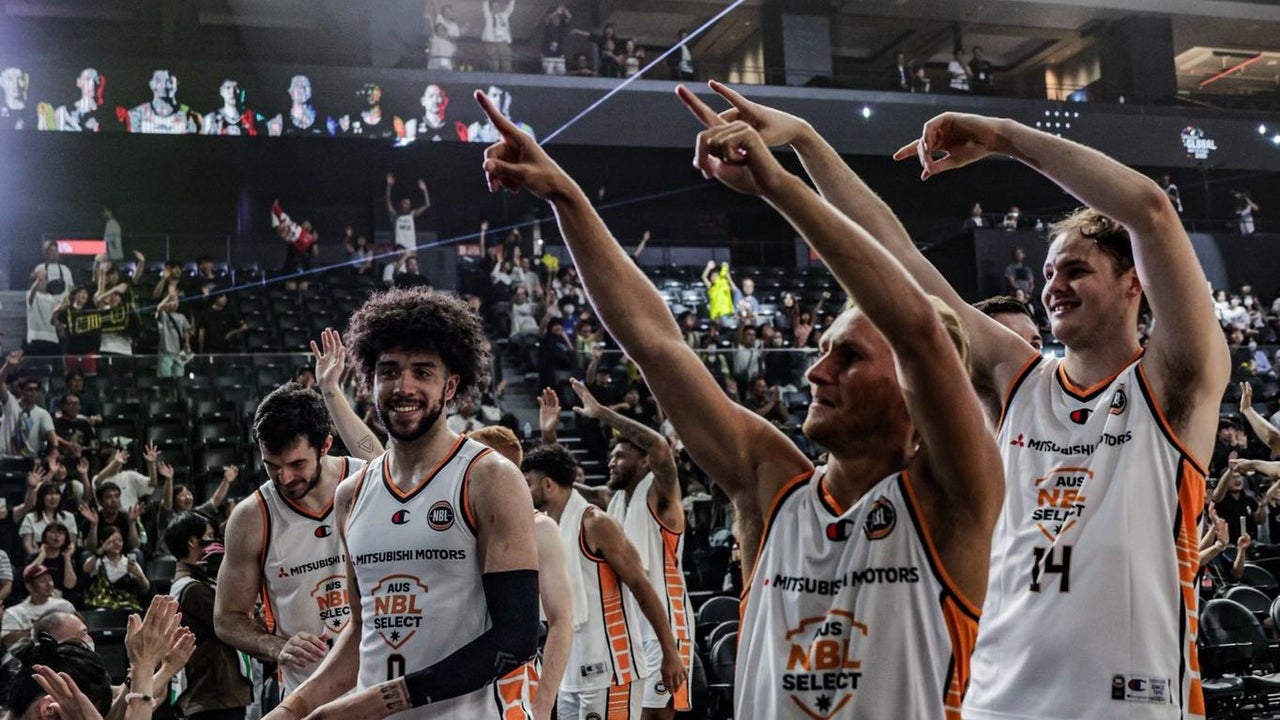
Five to ten years ago, if an Australian headed to Japan, it was typically because of not making NBL roster spots. Players like Venky Jois, Daniel Dillon and Rhys Vague fit this profile. Now Australian basketballers looking to play overseas rarely viewed Japan as a serious career destination. The traditional pathways pointed elsewhere, but that perception has shifted rapidly. Today, Japan’s B.League has emerged as a legitimate and increasingly attractive option for Australian players seeking strong contracts, defined roles, and long-term professional stability.
Today, that narrative has shifted. Japan’s B.League has transformed from a perceived “last resort” into a genuine strategic career destination. It is no longer just a landing spot for final roster cuts and is instead attracting established members of the national program like Nick Kay and Keanu Pinder, who can often earn 20% – 30% more than what many NBL or European teams can offer.
“I came over to Japan on the first year of the B.League in its existence eight years ago, and this is going to its ninth season…Watching the league get stronger each year, you know, each year the coaching’s gotten better, each year the caliber of imports gotten better, and it just continues to grow” says former NBL coach Shawn Dennis, who has coached in Japan for the past decade.
As Japan builds toward its 2030 goal of becoming a global basketball powerhouse, the path to the top no longer requires a 24-hour flight to Europe but a much shorter hop to the cherry blossoms in the North.
While marquee stars like Andrew Bogut, Bryce Cotton and Jack McVeigh have commanded million dollar deals in Australia, the NBL is a ten-team league with only one number of “marquee” slots available per team. In contrast, the B.League’s massive scale, consisting of 24 teams in the first division alone creates a large volume of high paying opportunities that the NBL cannot match. With more than double the number of franchises, Japan offers dozens of “franchise player” roles, allowing a much larger pool of Australians to earn life changing money while being the main showrunner on an elite squad.
“The salary cap [in Japan] is going to be a lot more than the Australian NBL, probably seven to eight times the amount,” says Dennis, now Head Coach of the Nagoya Diamond Dolphins, on a recent Aussie Hoopla podcast.
“From a financial point of view, we can pay imports a lot more money… they can come here and really make life-changing type money if they’re good enough.”
Dennis also noted that Japanese clubs are specifically headhunting Australians to inject a specific brand of professionalism. They aren’t just buying points; they are buying the “Australian System” defined as a mix of high basketball IQ, defensive grit and a relentless practice culture.
“The other thing the Japanese love about the Australians is how hard they play and how hard they practice,” Dennis notes. “That’s a real thing in Japan.”
Japan is intentionally building a destination league. This shift is not accidental. The B.League has openly framed itself as a league in transition, designed to learn from global basketball standards and fast track its development by importing experience, leadership and professionalism. Australians fit exactly what Japan says it wants. Players who understand systems, play both ends of the floor and raise standards within a locker room, not just on a box score. That lines up perfectly with how Australians are viewed internationally.
The transition to Japan does come with unique changes. The B.League is a 60-game marathon compared to the NBL’s 30-game season.
For an NBL player used to a lighter schedule, the Japanese “double-header” weekends and midweek fixtures offer a level of game ready conditioning that is hard to replicate. It turns the region into a massive development lab where players get more “reps” under higher pressure game conditions.
“We have periods of time where you’ll play Saturday, Sunday, Wednesday… for three weeks,” says Dennis. “I have a little bit of a giggle sometimes when some of the Australian teams complain about their schedule.”
A Structural Evolution: B.Premier and the NBL
The relationship between the two leagues is moving beyond individual player contracts and into formal institutional partnerships. As the B.League prepares for its next evolution, the infrastructure is beginning to mirror the NBA’s professional standards.
The most significant shift is the B.Premier reform scheduled for 2026. This new elite tier will enforce strict requirements on financial liquidity and arena capacity (4,000+ attendance), ensuring NBA-style facilities and contract security.
However, the most significant shift for Australians might be the strengthening tie between the NBL and its northern neighbors. The NBL recently signed a Memorandum of Understanding (MOU) with the B.League, exploring everything from pre-season tournaments to the potential of a Japanese team one day joining the NBL.
The MOU has seen regular pre-season games held between Japanese teams and the Perth Wildcats, an official partnership between the Sydney Kings and Chiba Jets aimed at unlocking training, commercial, and talent opportunities for the two elite basketball clubs.
This also follows a MOU which has been in place between Japan and Basketball Australia since 2018.
While a Japanese team playing in the NBL is nowhere close to happening, both organisations have agreed to explore the feasibility of Japanese BLG teams competing in NBL pre-season events in the near future.
Are these two leagues set to collide?
For the NBL, the biggest competitive advantage remains access to Australia’s NBA and national program pipeline. But the league’s most obvious structural limitation is also clear. It is a ten team competition. That reality creates a limited number of premium roster spots, a limited number of marquee level contracts, and a spending environment where only a small handful of clubs can consistently afford to pay multiple elite salaries.
At the top end, there are only so many major deals available and only so many clubs that can realistically carry more than one star. Adelaide can, and they have been among the league’s two highest spenders over the past five years, but most clubs simply do not operate in that financial lane.
Japan does not face the same constraint. The B League has 24 first division teams, a far larger salary cap, and a deeper pool of clubs willing to spend heavily to secure elite imports and high level local talent. That scale creates dozens of genuine franchise player opportunities that simply do not exist in Australia, and it is already pulling proven national program players across the water. Nick Kay and Keanu Pinder are not outliers. They are early indicators of a broader shift.
Australia is producing more NBA and Boomers calibre talent than ever before. That should be celebrated. But it also means more elite players searching for elite situations. As Japan continues to build itself as a destination league and accelerate its ambitions through the B Premier model, this dynamic feels less like a looming threat and more like an inevitability.
Over time, Japan will sign more of Australia’s best players, particularly at the top end of the market. MOU or no MOU… It’ll be interesting to see how the NBL will respond once that increases.