

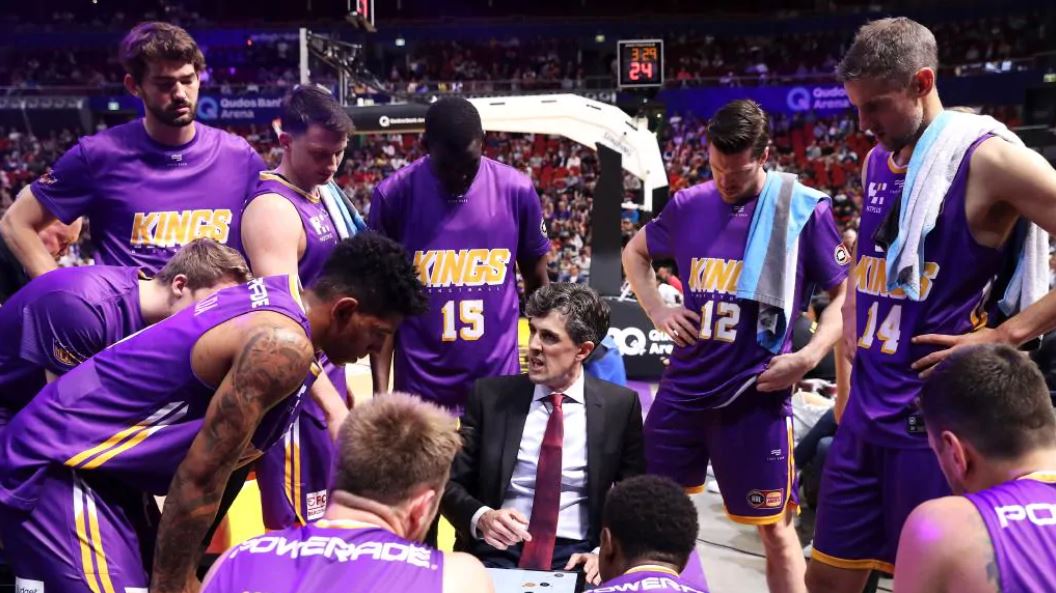
In the heat of the game, the decision to make a change – or to stay the course – is one instance when coaches can impact the outcome of the game in real-time.
Whether it is a change in the coverage of an action, how an individual player is defended, or where to attack offensively, any number of changes (or non-changes) made by coaches can influence player success.
One of the key changes that coaches make throughout a game is the substitution. I wanted to look into some different ways coaches rotate players to increase my awareness of the nuances in this area of game management.
A change in personnel can completely transform a team and there are many different substitution philosophies which can be impacted by the answers to questions like:
- Is player development most important or is winning more of a priority?
- Which player errors, if any, will result in coming out of the game?
- What lineup is best for the current time, score, and situation – and when does this matter?
- Does the number of fouls and time remaining in the game influence substitution patterns?
- How long can players play without a break?
- Is consistency in the substitution pattern important to our team?
Decisions on subs were made easy for me when I was coaching youth recreation teams. In this setting, there is a focus on getting players equal playing time to aid their development and enjoyment. In my experience, when equal time isn’t what is best for the team, the decisions surrounding the rotation is one area that coaches spend considerable time on.
Below are a couple of thoughts on substitution patterns I have considered that might impact some of those difficult coaching decisions around change.
A Framework for Change
It was impressed upon me that putting thought into a framework for change is an important part of the lead-up to decision-making situations. In his presentation, former NBA Assistant Coach, Kevin Eastman explained the philosophy behind some of the decisions regarding their defensive scheme that would be made during a game.
If something or someone is hurting their defense, before making a change in scheme, they wanted to:
- Do it Harder (do it with more effort, energy, enthusiasm)
- then Do it Better (do it with better execution and greater attention to detail)
- then Sub (different players do it)
- then Change Scheme

The specificity of this framework was the takeaway for me at the time, but is not necessarily the case now. This concept of a framework surrounding decisions and change can be snapped into other situations. Having, and understanding, my process that drives decision-making when considering changes is a valuable tool for me as a coach.
While developing the framework itself is a philosophical decision to make, how long to stay at each phase within a given framework is a more moment-to-moment decision for a coach. I like that coaches using any kind of system like this are clear in their progressions when assessing the decision to change.
As with most things regarding coaching and coaching philosophy, there are many examples of successful coaches that have different philosophies around decision-making and also for rotating players.
MapQuest or A Compass?
Regardless of your substitution philosophy, I think it is important to have one.
An overarching thought to consider – will the rotations be Fixed or Flexible?
Depending on the level of play, media timeouts provide structured breaks which might allow for a more fixed substitution schedule. With fewer built-in stoppages, a player may be sitting at the scorer’s table for a couple of minutes which might lend itself to a more flexible plan.

Sydney Kings Head Coach Will Weaver sticks closely to a substitution pattern to maintain consistency in player minutes and workload. I think of this as using MapQuest to navigate. MapQuest provides a fixed set of all the instructions, which roads to take, and an exact path to a specific destination.
Without the consistent structure of scheduled timeouts, substitution opportunities are much more unpredictable. At lower levels, it is not like driving on the road where MapQuest is a viable option – it’s more like sailing in a rough ocean where we can be pushed off course.
In this case, having a plan that allows enough space to make decisions based on the flow of the game might be more applicable. I think of this as using a compass to navigate. The precise path might be a little less clear but the general direction of where to go is always available. (I find myself leaning toward this type of general substitution philosophy).
“Plans are of little importance, but planning is essential” – Winston Churchill
(Full disclosure: I first saw the MapQuest vs Compass analogy from Bret Burchard in a different context after reading one of his ChampionShift emails. Definitely check out his new book Catching Confetti: Developing the Mindset of a Champion)
Wherever your philosophy lies on the fixed or flexible continuum, I think it can serve as a look into your deeper philosophy on the choices surrounding change.
Determining not just the right choice, but when and how to make those choices, is yet another place where the science and art of coaching intersect – and another reason why I enjoy the challenge of this profession.
Thanks for reading! I’d love to hear how you go about making decisions, especially around changes in personnel – so please reach out or leave a reply below to share your thoughts!
Hope this adds some value.