
Coach Woodcock: Developing Your Coaching Philosophy

  • August 5, 2020
  • Matt Woodcock
  • NBL News
  • 0
  • 1569 Views

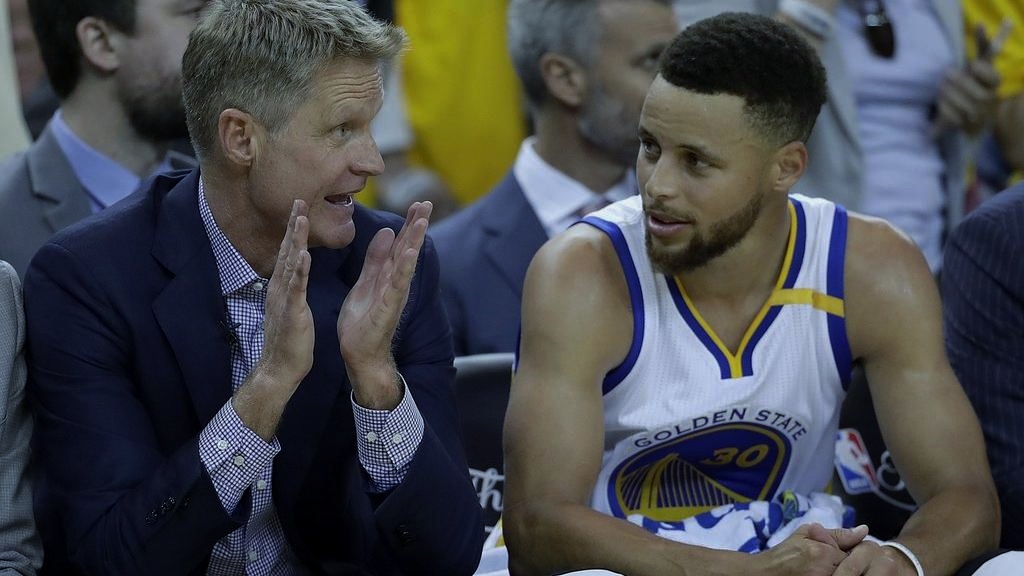
The biggest reasons for which I write down my thoughts on coaching is for reflection, clarity of thought, and to improve the way I can communicate those thoughts to others. Recently, the premiere episode of the Flying Coach with Steve Kerr and Pete Carroll Podcast (which I thoroughly enjoyed and highly recommend) stimulated my thinking of how I want to Coach and a couple of X’s and O’s chats with some fantastic Coaches reinforced the need for clarity in all areas of my coaching. The subsequent post is some of the questions and thoughts that have come up as I aim to put into words a clear and succinct coaching philosophy.


What is a Coaching Philosophy?

The question that Carroll put to Kerr – “so how are you going to coach your team?” – is at the center of what I understand to be a coaching philosophy. We all have philosophies and beliefs which shape the daily choices we make and it is the evaluation of these unique choices that is such an important (and challenging) part of determining how we will coach our respective teams.

“Any time you deal with any situation you are making a statement about who you are and what you are about”
– Pete Carroll


Building Your Philosophy

Both Kerr and Carroll talked about the self-discovery journey required to determine their coaching philosophy. Asking questions like: Who are you as a coach? What are you all about? What is important to you? What are your uncompromising principles? Help discover a personal coaching identity and uncover which values you will impress upon your team. Coaching presents a tremendous opportunity (and forces coaches) to find out exactly who they are and what is important to them. Coaches must be able to effectively communicate a clear set of values to everyone in the program in order to create the necessary space for people to perform.

“I think the biggest thing is everybody has to coach to their personality; they have to coach to who they want to be.”
– Brad Stevens


Be Who You Are

The best coaches I have been around and had the opportunity to study from afar all have their own unique style. There is a balance to strike between sharing similar values to others and defining your distinctive philosophy which I have found difficult. There seems to be a battle as I am thinking about my personal coaching values, questioning myself – Am I using too much from this coach? Not enough from that one? What do I like and don’t like? Is this an uncompromising principle for me? – but I find myself coming back to the central idea of taking pieces of what I’ve learned from others and balancing that with what I truly believe (which is often a product of that learning). The purpose of striking that balance is to live my personal approach to coaching and so that ultimately it can show itself to the players.

“Coaches, be passionate about what you do. You can’t fake passion, your players can spot that. Be real, genuine, and build trust”
– Steve Fisher

When the core values of the program come alive in the behaviours and words of the people in the program – to me that’s culture. The consistency required to establish enough trust with the players that they internalize the coach’s core values makes it tough to fake. It is easy to see when someone isn’t being genuine or if they are saying something they don’t believe – So as a coach, it will show over time whether what you say is really something you believe – Carroll references this in the pod.

The big take away I had from the podcast: I have to put in the work to know myself well enough so I can get these things right. The best way I have seen coaches have consistent alignment in their thoughts, words, and actions are to be truly authentic. Taking time to unveil who I am as a coach (currently working on it), developing a clear set of values that I am all about (part of the challenge in writing this post) and then making it come alive every day are the steps I feel give me some direction for trying to be the best coach I can be.

“The point is not what core values you have, but that you have core values at all, that you know what they are, that you build them explicitly into your organization, and that you preserve them over time”
– Jim Collins, Good to Great


I hope that some of these questions give you something to think about, I know it has helped me think. It would be great to hear your thoughts – reach out any time!
All this will continue to evolve for me over time, but at this stage, I have been able to define 4 core values in my coaching philosophy. Communication, Consistency, Care and Compete. I found it best to think about it in three parts: the core value, my definition of that value, and an example behaviour to make it come alive.

My Coaching Philosophy and Core Values
Help people realize their potential
Communication

  • Definition: Figure it out together
  • Example: Listen to understand

Consistency

  • Show up ready to grow every day
  • Be on time

Care

  • Attach importance to the success of others
  • Be a great teammate

Compete

  • Win the moment you are in and have fun doing it
  • Give your best effort

Hope this adds some value to all of you coaches out there.

Share:

Leave a Reply

Your email address will not be published. Required fields are marked *

  • MELBOURNE UNITED NEEDS TO DECIDE: Are they the Tigers or not?

    Jensen Bradtke wearing his father Mark’s famous No. 50 should be one of the great stories of NBL27. Instead, it has again exposed a question Melbourne United has never properly answered: when does Melbourne Tigers history belong to United, and when doesn’t it? Seeing BRADTKE and No. 50 together on a Melbourne basketball jersey again should be nothing other than a celebration. Jensen Bradtke is beginning his first season with Melbourne United, wearing the same number his father Mark wore through one of the great…

    READ MORE
  • The Next Step: Breakout player candidates for NBL27

    Every NBL pre-season, there is plenty of attention on players around the league who could take the next step in their professional basketball journey. A breakout can happen in different ways. For some players, it’s getting more opportunity. For an established player, it can mean building on what they have already achieved and elevating their game to another level. For others, it may simply take a new home where their skills can be maximised. Below are four players who I think are ready to break…

    READ MORE
  • Mario Donaldson on THAT 1994 NBL Dunk Contest and his time playing with Sydney & Canberra

    Former Sydney Kings and Canberra Cannons import Mario Donaldson joins the podcast to revisit his time in the NBL, including competing in the famous 1994 NBL Dunk Contest, the highs and lows of his seasons in Sydney and Canberra, and the success he found playing around the world. Host Dan Boyce chats with Donaldson about arriving in Sydney in 1994 and playing alongside Leon Trimmingham, helping the Kings return to the playoffs and establishing himself as one of the league’s best outside shooters. Visit dunk.com.au…

    READ MORE
  • Mitch McCarron on What Went Wrong in Adelaide, United’s 2021 Championship & Overachieving in Cairns

    Former NBL champion and Australian Boomer Mitch McCarron joins the podcast to reflect on retiring from professional basketball at just 32, what went wrong during his three seasons with the Adelaide 36ers, and narrowly missing out on representing Australia at an Olympics or World Cup. Visit dunk.com.au for your next set of basketball uniforms. Host Dan Boyce chats with McCarron about the injuries which ultimately ended his NBL career, his transition into coaching and player relations, and why he continues to play basketball with Eltham…

    READ MORE
  • Darnell Mee on Adelaide’s 2001 Heartbreak, Defending NBL legends and more

    Two-time NBL champion and five-time NBL Best Defensive Player Darnell Mee returns to the podcast to revisit the unfinished stories from one of the greatest careers in Australian basketball, including Adelaide’s heartbreaking 2001 playoff exit, his decision to leave the 36ers and the fight to keep the Cairns Taipans alive. Visit dunk.com.au for your next set of basketball uniforms. Host Dan Boyce chats with Mee about watching his son Micale build his own basketball career in Australia, the chemistry behind Adelaide’s back-to-back championships, becoming teammates…

    READ MORE
  • Australia’s Greatest Basketball Associations

    Junior basketball development is where the Australian basketball journey begins. Before players represent Australia or reach the NBL, most first learn the game through their local basketball association. While hundreds of rookies have entered the NBL over the years, the same junior basketball programs regularly appear in their backgrounds. Some associations have developed significantly more NBL talent than others, establishing themselves as important pathways into professional basketball. Until now, a complete record of the junior association responsible for developing every player to have competed in…

    READ MORE
  • Matt Garrison on Winning Back-to-Back Titles with Multiple NBL Teams, NBA Opportunities and Aussie Hoops Impact Overseas

    Two-time NBL champion Matt Garrison joins the podcast to reflect on winning back-to-back championships with two different teams, helping the Wollongong Hawks claim their first NBL title in 2001 before joining the Adelaide 36ers and winning it all again in 2002. Visit dunk.com.au for your next set of basketball uniforms. Host Dan Boyce chats with Garrison about arriving in Wollongong as a mid-season import, adjusting from being a high-scoring starter to an important role off the bench, and being part of the Hawks team that…

    READ MORE
  • Beyond the Arc: The Greatest Shooters in NBL History

    In 1984, the NBL introduced the three-point line, forever altering the geometry of Australian basketball. Since then, the league has seen traditional snipers, stretch bigs and volume scorers completely revolutionise how offenses operate and defenses scramble. But as the modern game places a premium on spacing and perimeter shooting, a critical question arises: Who are the most efficient and devastating shooters in the 40-year history of the NBL? To cut through the noise, we have to look beyond raw percentages. By combining historical spreadsheet data…

    READ MORE

sekolahtoto